- Excursions in Egypt
- Egypt Tour Packages
- Cairo Tours and Excursions
- Hurghada Tours and Excursions
- Soma Bay Tours and Excursions
- Makadi Bay Tours and Excursions
- Sahl Hasheesh Tours and Excursions
- El Gouna Tours and Excursions
- Marsa Alam Tours and Excursions
- Port Ghalib Tours and Excursions
- El Quseir Tours and Excursions
- Dendera and Abydos Day Tours
- Aswan Tours and Excursions
- Luxor Tours and Excursions
- Sharm El Sheikh Tours and Excursions
- Top Rated Egypt Tours in 2026
- Optional Excursions in Egypt
- Private Transfer
- Blogs About egypt
- Ancient Egypt
- Historical Sites in Egypt
- Cairo
- Alexandria
- Luxor
- Aswan
- The Red Sea
- Dendera Temple
- El Fayoum Oasis
- Bahariya Oasis
- Siwa Oasis
- Al Alamein
- Marsa Matruh
- Why Egypt Is One of the Safest Countries to Visit in the Middle East
- What You Need To know Before Your First Trip To Egypt
- Egypt Travel Costs in 2026 Full Budget Guide
- Top 10 Tourist Activities in Egypt
- Top 50 Activities You Can’t Miss in Egypt in 2026
- The Guide to Guided Tours in Egypt
- Egypt’s Ancient and Modern History
- The Nile River
- The Deserts of Egypt
- Ancient Egyptian gods
- famous Egyptian dishes
- UNESCO World Heritage sites
- About Us
- Egypt Hotels and Resorts
- Excursions in Egypt
- Egypt Tour Packages
- Cairo Tours and Excursions
- Hurghada Tours and Excursions
- Soma Bay Tours and Excursions
- Makadi Bay Tours and Excursions
- Sahl Hasheesh Tours and Excursions
- El Gouna Tours and Excursions
- Marsa Alam Tours and Excursions
- Port Ghalib Tours and Excursions
- El Quseir Tours and Excursions
- Dendera and Abydos Day Tours
- Aswan Tours and Excursions
- Luxor Tours and Excursions
- Sharm El Sheikh Tours and Excursions
- Top Rated Egypt Tours in 2026
- Optional Excursions in Egypt
- Private Transfer
- Blogs About egypt
- Ancient Egypt
- Historical Sites in Egypt
- Cairo
- Alexandria
- Luxor
- Aswan
- The Red Sea
- Dendera Temple
- El Fayoum Oasis
- Bahariya Oasis
- Siwa Oasis
- Al Alamein
- Marsa Matruh
- Why Egypt Is One of the Safest Countries to Visit in the Middle East
- What You Need To know Before Your First Trip To Egypt
- Egypt Travel Costs in 2026 Full Budget Guide
- Top 10 Tourist Activities in Egypt
- Top 50 Activities You Can’t Miss in Egypt in 2026
- The Guide to Guided Tours in Egypt
- Egypt’s Ancient and Modern History
- The Nile River
- The Deserts of Egypt
- Ancient Egyptian gods
- famous Egyptian dishes
- UNESCO World Heritage sites
- About Us
- Egypt Hotels and Resorts
Welcome to
Meidum Pyramid: History, Facts, Location & Ancient Egyptian Architecture
The Meidum Pyramid is one of the most fascinating and historically important pyramids in Egypt. Located near the modern village of Meidum in the Beni Suef Governorate, south of Cairo, this ancient monument represents an important stage in the development of Egyptian pyramid architecture. Often recognized by its unusual tower-like appearance, the Meidum Pyramid provides valuable evidence about how ancient Egyptian builders gradually developed the techniques that eventually led to the construction of the great pyramids of Giza. Although much of the original pyramid has disappeared, its remaining structure continues to attract archaeologists, historians, and travelers interested in ancient Egypt.
The pyramid is traditionally associated with Pharaoh Sneferu, the founder of the Fourth Dynasty and one of the most important pyramid builders in ancient Egyptian history. Sneferu is also associated with the Bent Pyramid and the Red Pyramid at Dahshur, making the Meidum Pyramid an important part of his architectural legacy. However, archaeological evidence indicates that the construction of the monument may have begun under Pharaoh Huni, the last ruler of the Third Dynasty, before being completed and transformed during Sneferu’s reign.
The Pyramid of Meidum is particularly significant because it appears to have undergone several stages of construction. It began as a step pyramid and was later modified into a more traditional smooth-sided pyramid. This transformation provides researchers with important information about the evolution of pyramid design in ancient Egypt.
Today, the Meidum Pyramid is an excellent destination for travelers who want to explore Egypt beyond the crowded tourist attractions of Giza. Its remote location and unusual appearance create a different archaeological experience. A visit to Meidum can also be combined with other historical sites in the region, making it a valuable addition to a private Cairo day trip or an Egypt archaeology tour.
1. Where Is the Meidum Pyramid Located?
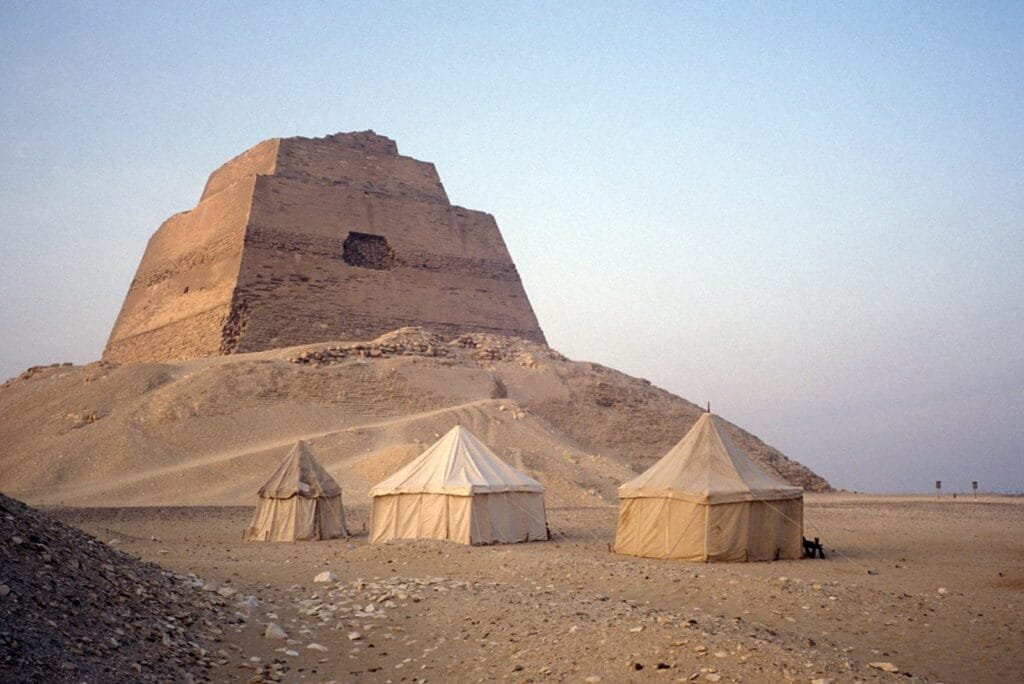
The Meidum Pyramid is located near the modern village of Meidum in Egypt's Beni Suef Governorate, approximately 100 kilometers south of Cairo. The site lies on the western edge of the Nile Valley, in an area that was particularly suitable for ancient Egyptian royal construction because of its proximity to fertile agricultural land and the desert plateau. Its location makes it an interesting archaeological destination for travelers exploring the history of ancient Egyptian pyramids beyond the famous monuments of Giza. Meidum was strategically positioned between the major centers of ancient Egypt. Its location provided access to the Nile and the agricultural lands of the valley while also offering the dry desert environment considered ideal for royal tombs and funerary complexes. Ancient Egyptian architects commonly built pyramids and other burial monuments on the western side of the Nile because the west was associated with the setting sun and the realm of the dead. The surrounding landscape is significantly quieter than the busy archaeological zone around the Giza Pyramids. Visitors arriving at Meidum can appreciate the monument's unusual shape and the open desert landscape surrounding it. The pyramid rises above the surrounding area like a large stone tower, making it immediately recognizable from a distance. For travelers staying in Cairo, visiting the Meidum Pyramid can be arranged as part of a private archaeological excursion. It can also be combined with other ancient sites in the region, depending on the travel itinerary. The journey provides an opportunity to explore a lesser-known monument while learning about the development of pyramid construction during Egypt's early dynastic period. The location of Meidum is particularly valuable for understanding how Egyptian royal architecture expanded southward from the traditional centers of power. The monument represents an important connection between the pyramid-building traditions of the Third and Fourth Dynasties and the architectural achievements that followed. For anyone interested in Egyptian history, ancient pyramids, archaeology, and the evolution of pyramid construction, the Meidum Pyramid offers a fascinating destination away from the usual tourist route.
2. Who Built the Meidum Pyramid?
The history of who built the Meidum Pyramid is one of the most interesting questions surrounding this ancient Egyptian monument. The pyramid is strongly associated with Pharaoh Sneferu, the first ruler of Egypt's Fourth Dynasty, but archaeological evidence suggests that the original construction may have begun under Pharaoh Huni, the final ruler of the Third Dynasty. Sneferu is one of the most important figures in the history of Egyptian pyramid construction. During his reign, Egyptian architects experimented with different pyramid designs and construction methods. These experiments eventually resulted in the successful construction of the Red Pyramid at Dahshur, which is generally considered the first true smooth-sided pyramid in Egypt. The Meidum Pyramid appears to have been one of the earliest stages in this architectural development. The original monument was likely designed as a step pyramid, consisting of several levels of stone rising toward a central point. During Sneferu's reign, the pyramid was expanded and modified, with additional layers added to create a smoother, more pyramid-like form. The exact role of Huni in the construction remains a subject of scholarly discussion. There is no definitive evidence proving that Huni was the original owner of the pyramid, but some Egyptologists believe that construction began during his reign. Sneferu's connection with the monument is much stronger, and the pyramid was likely completed or significantly redesigned under his rule. Sneferu's involvement makes Meidum particularly important because he commissioned several major pyramid projects. By comparing the Meidum Pyramid, Bent Pyramid, and Red Pyramid, historians can observe the development of ancient Egyptian architectural techniques over a relatively short period. The monument therefore represents more than the burial tradition of a single pharaoh. It is evidence of a period of experimentation that helped Egyptian architects solve the engineering challenges involved in creating a stable, smooth-sided pyramid. The lessons learned at Meidum and Dahshur contributed to the architectural knowledge that eventually made the construction of the Great Pyramid of Giza possible.
3. How Was the Meidum Pyramid Built?
The Meidum Pyramid is particularly important because its construction reveals how ancient Egyptian architects experimented with pyramid design before achieving the classic smooth-sided form. The monument appears to have started as a step pyramid, similar in concept to the earlier Step Pyramid of Djoser at Saqqara. Over time, however, its design was modified through several stages, transforming it into a monument that more closely resembled the later true pyramids. The original pyramid was constructed from large limestone blocks arranged in layers. Ancient Egyptian builders gradually added additional layers around the original step structure, increasing its size and changing its external appearance. The final stage appears to have involved filling the steps and creating a smooth outer casing of limestone. If completed as intended, this would have produced a large smooth-sided pyramid rising dramatically above the surrounding desert. The construction process required enormous organization. Workers had to quarry limestone, transport the blocks, shape them, and position them accurately. Building a pyramid also required careful planning of the internal chambers, entrance passages, funerary structures, and surrounding temples. These projects demonstrate the remarkable administrative and engineering abilities of the ancient Egyptian state. One of the most intriguing features of the Pyramid of Meidum is its current appearance. Much of the outer casing and supporting material collapsed or was removed over time, leaving the inner core exposed. The surviving central structure now resembles a tall stone tower rising from a broad base of debris. This unusual appearance has led to the pyramid being given distinctive descriptions by modern visitors. The exact reason for the collapse of the outer layers remains debated. Possible explanations include structural weaknesses created by the method used to transform the step pyramid into a smooth-sided monument, changes in the foundation, or the removal of supporting material in later periods. Whatever the precise cause, the remains provide valuable evidence of the challenges faced by ancient Egyptian architects. The Meidum Pyramid therefore represents a crucial stage in the evolution of pyramid architecture. By studying its construction, historians can better understand how Egyptian builders moved from stepped monuments toward the smooth, geometric pyramids that became the defining symbols of ancient Egypt.
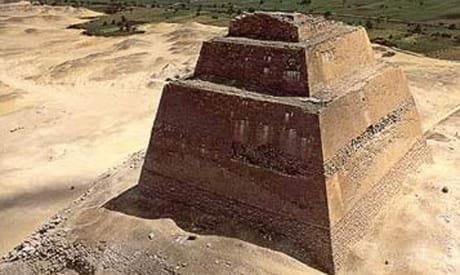
4. Why Does the Meidum Pyramid Look Like a Tower?
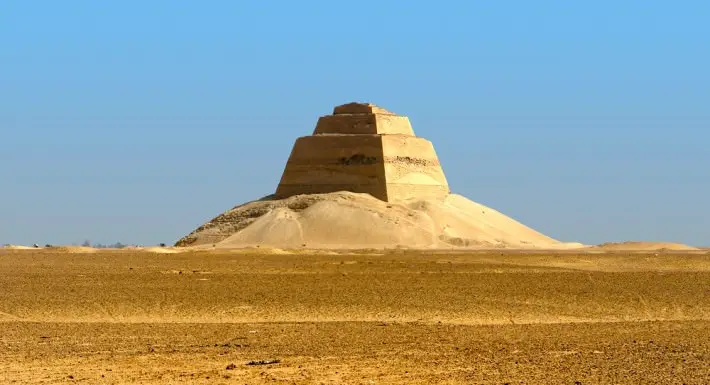
One of the most remarkable things about the Meidum Pyramid is its unusual appearance. Unlike the familiar smooth-sided pyramids of Giza and Dahshur, the surviving monument looks more like a large stone tower rising from a wide mound of rubble. This distinctive shape is the result of the pyramid's complicated construction history and the loss of much of its original outer structure over thousands of years. The Pyramid of Meidum was not originally designed in the form visitors see today. Archaeological evidence suggests that construction began as a step pyramid, with several levels of limestone blocks arranged one above another. During the reign of Pharaoh Sneferu, the structure was expanded and modified. Builders added additional layers and attempted to fill the stepped exterior to create a smooth-sided pyramid. The outer casing was made from limestone and would originally have covered the pyramid's underlying structure. When intact, this casing would have produced a clean, geometric appearance similar to the later pyramids built by Sneferu. However, much of the casing disappeared over time, exposing the central core and creating the distinctive tower-like structure visible today. The collapse of the outer layers is one of the most debated aspects of the monument. Some Egyptologists believe that the pyramid experienced structural problems because of the way its later stages were constructed. Others have suggested that changes in the foundation, environmental factors, or the removal of the outer casing contributed to its present condition. There is no single universally accepted explanation for every detail of the collapse. The unusual appearance makes Meidum Pyramid especially valuable to archaeologists because it allows visitors to see the different stages of Egyptian pyramid development. Rather than seeing only the final smooth surface, the monument provides clues about how ancient builders experimented with construction techniques. For travelers interested in ancient Egyptian architecture, Meidum offers a rare opportunity to observe the transition between the earlier step pyramids and the true pyramids of the Fourth Dynasty. Its unique shape is not simply a result of destruction; it is also evidence of an important period of architectural experimentation that helped shape the future of pyramid building in Egypt.
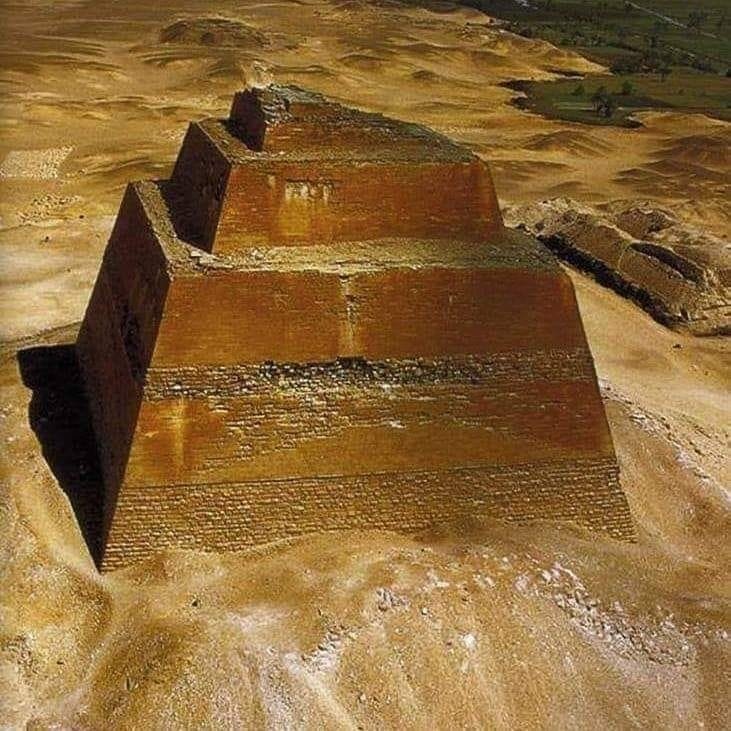
5. The Meidum Pyramid and Pharaoh Sneferu
The Meidum Pyramid is closely connected with Pharaoh Sneferu, one of the most important pyramid builders in ancient Egyptian history. Sneferu ruled during the Fourth Dynasty, a period when Egyptian royal architecture reached a new level of sophistication. His reign is particularly significant because he commissioned several major pyramid projects, allowing ancient Egyptian architects to experiment with different designs and construction methods. Sneferu is traditionally associated with three major pyramids: the Meidum Pyramid, the Bent Pyramid, and the Red Pyramid at Dahshur. Together, these monuments provide an extraordinary record of the development of ancient Egyptian pyramid architecture. The progression from Meidum to Dahshur demonstrates how builders gradually solved the engineering problems involved in constructing large, stable, smooth-sided pyramids. The Meidum project appears to have involved the transformation of an earlier step pyramid into a more advanced form. During Sneferu's reign, additional construction stages were added, and the monument was apparently intended to have a smooth outer surface. Although the final structure did not survive in its original condition, the project contributed to the architectural knowledge used in Sneferu's later pyramids. Sneferu was not only a pyramid builder but also a powerful ruler who helped establish the prosperity and stability of the Fourth Dynasty. His reign provided the resources and organization required for enormous construction projects. Thousands of workers, craftsmen, engineers, quarrymen, and administrators would have been involved in the construction and maintenance of royal monuments. The connection between Sneferu and Meidum is particularly important when studying the history of the Egyptian pyramids. The monument represents an experimental phase in which architects were moving away from the traditional stepped pyramid concept toward the smooth-sided form that became the classic pyramid shape. The lessons learned at Meidum were highly significant. Sneferu's later pyramids at Dahshur demonstrate improvements in design and structural stability, culminating in the Red Pyramid. These developments occurred shortly before the reign of Khufu, whose Great Pyramid at Giza became the most famous pyramid in Egypt. For this reason, visiting the Meidum Pyramid is like exploring an important chapter in the story that eventually led to the construction of the Great Pyramid of Giza.
6. The Meidum Pyramid Complex and Its Ancient Temple
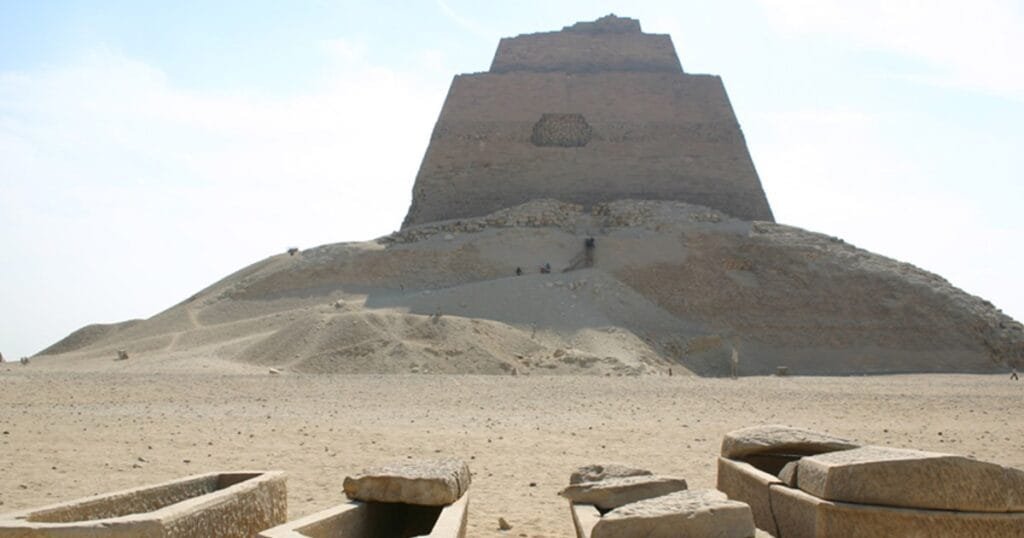
The Meidum Pyramid was not built as an isolated monument. Like other royal pyramids in ancient Egypt, it formed part of a larger funerary complex designed to support the religious rituals associated with the deceased king. The complex included important structures such as a mortuary temple, a causeway, and other elements connected with the royal burial and funerary cult. The pyramid itself represented the central focus of the complex. Ancient Egyptians believed that the pharaoh continued to exist after death and required ongoing religious ceremonies and offerings. The surrounding structures provided spaces where priests could perform these rituals, ensuring that the deceased king could continue his existence in the afterlife. One of the important structures associated with the Meidum Pyramid complex is the mortuary temple located on the eastern side of the pyramid. The temple was connected to the pyramid through a causeway, creating a carefully planned relationship between the burial monument and the ritual areas. Archaeological remains from the complex have helped researchers understand how early pyramid complexes were organized. The Meidum complex is particularly valuable because it dates to an important period in the development of Egyptian royal funerary architecture. Earlier monuments, such as the Step Pyramid of Djoser at Saqqara, established the concept of monumental royal pyramid construction. Later complexes at Giza became much larger and more sophisticated. Meidum occupies an important position between these architectural traditions. The surrounding archaeological area has also produced evidence that helps researchers understand the people connected with the construction and use of the monument. Discoveries in the wider region have provided information about ancient Egyptian burial practices, architecture, and daily life during the early Fourth Dynasty. For modern visitors, the remains of the Meidum Pyramid complex provide more than a view of an ancient pyramid. They offer an opportunity to understand how Egyptian religious beliefs influenced architecture and how a royal burial monument functioned as part of a much larger sacred landscape. Exploring Meidum with an experienced Egyptologist can make the site especially interesting because many of its most important features are no longer completely preserved. A guide can explain the original layout, the pyramid's construction phases, and its role in the evolution of ancient Egyptian funerary architecture.
7. The Interior of the Meidum Pyramid
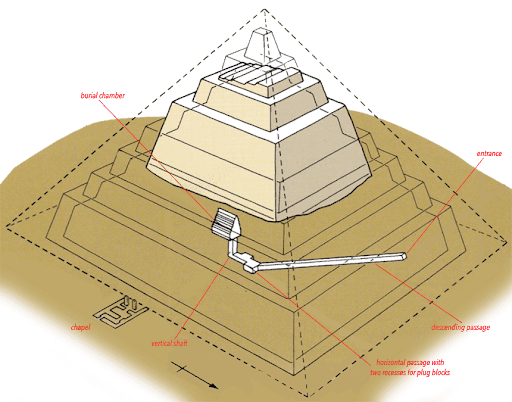
The interior of the Meidum Pyramid provides an interesting glimpse into the burial architecture developed by ancient Egyptian builders during the Fourth Dynasty. Although the monument has suffered significant damage over thousands of years, its internal passages and chambers remain important for understanding the evolution of Egyptian pyramid construction. Unlike the elaborate decorated tombs found in later periods, the interior of Meidum is relatively simple, reflecting the architectural traditions of the early pyramid-building era. The original entrance to the pyramid is located on the northern side, following a tradition that became common in Egyptian royal pyramid architecture. From the entrance, a descending passage leads into the interior of the monument. The passage eventually connects with a series of internal spaces designed to provide access to the burial area. One of the most distinctive features inside the Pyramid of Meidum is the use of a vertical shaft and internal chambers. The burial chamber is positioned within the core of the pyramid rather than beneath the monument in a deep underground complex. This arrangement represents an important stage in the development of royal burial architecture. The interior construction also demonstrates the technical challenges faced by ancient Egyptian architects. Builders had to support enormous amounts of stone above internal chambers while preventing the structure from collapsing. The solutions developed at Meidum contributed to later innovations in pyramid construction. When the pyramid was first built, its interior would have been carefully sealed after the burial of the pharaoh. Ancient Egyptian funerary traditions required the tomb to protect the king's body and burial equipment while allowing the deceased ruler to continue his journey into the afterlife. Today, access to the interior may depend on conservation conditions and regulations at the archaeological site. Visitors should always follow the instructions of site authorities and guides when exploring ancient monuments. For anyone interested in Egyptian pyramids and ancient Egyptian archaeology, the interior of Meidum is particularly valuable because it demonstrates the transition between earlier royal tomb designs and the more sophisticated internal systems used in later pyramids at Dahshur and Giza.
8. The Meidum Pyramid and the Evolution of Egyptian Pyramids
The Meidum Pyramid occupies an important place in the history of ancient Egyptian architecture because it represents one of the key stages in the transformation from the traditional step pyramid to the smooth-sided pyramid. Understanding this development helps explain how Egyptian architects eventually created the iconic pyramids of Giza. The earliest monumental Egyptian pyramid was the Step Pyramid of Djoser at Saqqara, built during the Third Dynasty. It consisted of several stepped layers rising toward the sky. This design represented a major architectural innovation, but it was different from the smooth geometric pyramids that later became the most recognizable symbols of ancient Egypt. The Meidum project appears to have begun with a similar stepped design. During the construction process, however, the pyramid was enlarged and modified. Additional layers were added, and builders attempted to create a smooth outer surface. This transformation represents a major architectural experiment. The challenges encountered at Meidum likely contributed to improvements in later pyramid construction. Pharaoh Sneferu's Bent Pyramid at Dahshur provides another important example of experimentation. The angle of the Bent Pyramid changes partway up the monument, possibly reflecting an attempt to reduce structural pressure and prevent instability during construction. Sneferu's final major pyramid, the Red Pyramid, demonstrates a much more successful smooth-sided design. Its stable structure and clear geometric form show how Egyptian architects had learned from earlier projects. Shortly afterward, the architectural knowledge developed during this period contributed to the construction of the enormous pyramids at Giza. The Great Pyramid of Giza, built for Pharaoh Khufu, represents the culmination of these early experiments. Its precise proportions, enormous scale, and engineering complexity would have been impossible without generations of architectural development. For this reason, the Meidum Pyramid should not be viewed simply as a damaged ancient monument. It is an important piece of the story of how Egyptian pyramid architecture evolved. Studying Meidum allows visitors to see the experimentation and engineering challenges that preceded the construction of Egypt's most famous pyramids. A visit to Meidum can therefore be especially rewarding for anyone interested in the history of the Egyptian pyramids, architecture, engineering, and the achievements of the Fourth Dynasty.
9. Archaeological Discoveries at the Meidum Pyramid
The archaeological exploration of the Meidum Pyramid has provided historians with valuable information about ancient Egyptian architecture, royal burial traditions, and the development of pyramid construction. The site attracted the attention of archaeologists and explorers because of its unusual appearance and its connection with Pharaoh Sneferu, making it an important location for studying Egypt's early Fourth Dynasty. One of the most famous archaeologists associated with the site was William Matthew Flinders Petrie, who conducted important excavations at Meidum during the nineteenth century. His archaeological work helped document the remains of the pyramid and surrounding complex and contributed to the broader understanding of ancient Egyptian chronology and architecture. Excavations at Meidum revealed important architectural elements, including parts of the pyramid complex, temples, the causeway, and surrounding structures. Archaeologists also studied the construction techniques used in the pyramid, helping researchers reconstruct its different building phases. The area surrounding the pyramid also contains ancient tombs and mastabas belonging to members of the royal court and other important individuals. These tombs provide valuable evidence about the society that existed during the period when the pyramid was constructed and used. Some of the tombs contain beautifully decorated scenes showing agricultural activities, offerings, animals, workers, and aspects of everyday life. Among the most famous discoveries connected with Meidum are the Meidum Geese, a remarkable painted scene found in the tomb of Nefermaat, a relative of Pharaoh Sneferu. The artwork is considered an important example of ancient Egyptian painting and demonstrates the high level of artistic skill achieved during the Fourth Dynasty. These discoveries show that the importance of Meidum extends beyond the pyramid itself. The archaeological site provides evidence about architecture, religion, art, administration, and daily life in ancient Egypt. Today, archaeological research continues to help specialists understand the construction history and original appearance of the monument. The discoveries made at Meidum have also helped historians compare the site with other important pyramid complexes at Saqqara, Dahshur, and Giza. For visitors, these archaeological discoveries add another layer of interest to the Meidum Pyramid. The site is not only an ancient royal monument but also a valuable source of information about one of the most important periods in the history of Egyptian civilization.
10. What Can You See at the Meidum Pyramid?
A visit to the Meidum Pyramid offers travelers the opportunity to explore one of Egypt's most unusual and historically important ancient monuments. Unlike the famous pyramids of Giza, Meidum has a distinctive appearance that immediately shows how much the monument has changed since ancient times. The exposed central structure, surrounded by the remains of the collapsed outer layers, provides visitors with a rare opportunity to observe the construction of an ancient Egyptian pyramid from a different perspective. The main attraction is the Pyramid of Meidum, which rises above the surrounding desert landscape. Visitors can observe the remaining limestone core and the large mound of debris surrounding the monument. This unusual shape makes it possible to understand the different stages of construction and the changes that occurred to the pyramid over thousands of years. The archaeological site also contains remains of the pyramid's mortuary temple and causeway. Although much of the original complex has disappeared, the surviving foundations provide evidence of the scale and organization of the royal funerary project. An experienced Egyptologist can help visitors visualize how the complete complex would have looked during the Fourth Dynasty. The surrounding area is also significant because it contains several ancient tombs and mastabas. These structures belonged to members of the royal family and important officials associated with the reign of Pharaoh Sneferu. Some of the discoveries from these tombs have provided valuable information about ancient Egyptian art and daily life. The famous Meidum Geese painting, discovered in the nearby tomb of Nefermaat, is another important part of the archaeological history of the area. Although the original artwork is associated with the tomb rather than the pyramid itself, it demonstrates the extraordinary artistic achievements of the people who lived during the period. For travelers interested in ancient Egyptian history, archaeology, and pyramid architecture, Meidum offers a fascinating experience. The site is generally quieter than the Giza Plateau, allowing visitors to explore the monument and its surrounding landscape at a more relaxed pace.
11. How to Visit the Meidum Pyramid from Cairo
The Meidum Pyramid can be visited as part of a private archaeological tour from Cairo. Located south of the capital in the Beni Suef region, the site is an interesting option for travelers who want to discover lesser-known Egyptian pyramids and learn about the early development of royal architecture. A private car is one of the most comfortable ways to travel to Meidum, especially because the site is located outside the main Cairo tourist areas. A private Egyptologist guide can accompany visitors throughout the journey, explaining the history of Pharaoh Sneferu, the construction stages of the pyramid, and the archaeological discoveries made in the surrounding area. Travelers can also combine Meidum with other ancient Egyptian attractions depending on the available time and itinerary. A carefully planned private tour may include additional archaeological sites in the area, allowing visitors to explore several important monuments in one day. This makes Meidum particularly attractive for travelers who have already visited the Giza Pyramids and want to discover another chapter of Egypt's ancient history. Because the site is located in an open desert environment, visitors should prepare for strong sunlight and warm temperatures, particularly during the summer. Comfortable walking shoes, lightweight clothing, a hat, sunglasses, sunscreen, and sufficient drinking water are recommended. The archaeological area may require walking across uneven ground, so comfortable footwear is especially useful. Travelers interested in entering the pyramid should also check the current site regulations and access conditions before visiting, as access to ancient monuments can change according to conservation requirements. Choosing a private Meidum Pyramid tour from Cairo provides greater flexibility than joining a large group. Visitors can spend more time learning about the monument, taking photographs, and exploring the surrounding archaeological remains. For history lovers, photographers, and travelers interested in ancient Egyptian pyramids, Meidum is a rewarding destination. Its unusual structure and historical connection with Sneferu make it an important stop for anyone who wants to understand how Egypt's famous pyramid tradition developed.
12. Why Visit the Meidum Pyramid in Egypt?
The Meidum Pyramid is one of the most important monuments for understanding the evolution of ancient Egyptian pyramid architecture. Although it may not be as famous as the Great Pyramid of Giza, its historical importance is exceptional. The monument represents a period of experimentation during which Egyptian architects developed new ideas that eventually led to the successful construction of the great smooth-sided pyramids of Egypt. One of the main reasons to visit Meidum is its unique appearance. The remains look dramatically different from the traditional pyramid shape, allowing visitors to see the internal structure and construction stages that are hidden beneath the outer surfaces of more intact pyramids. The monument therefore provides a rare architectural perspective on how pyramids were actually constructed. The connection with Pharaoh Sneferu adds another important reason to visit. Sneferu was responsible for several major pyramid projects, including Meidum, the Bent Pyramid, and the Red Pyramid. Together, these monuments demonstrate the remarkable architectural progress achieved during his reign. By visiting Meidum, travelers can explore the beginning of a development that eventually culminated in the Great Pyramid of Giza. The surrounding archaeological area also adds considerable historical value. Ancient tombs, mastabas, temples, and artistic discoveries such as the famous Meidum Geese provide evidence about the culture and society of the Fourth Dynasty. Another advantage of visiting the Pyramid of Meidum is the atmosphere. Compared with the extremely popular Giza Plateau, Meidum is a quieter archaeological destination. Travelers can often enjoy the monument and surrounding desert landscape without the same level of crowds found at Egypt's most famous tourist sites. For anyone interested in Egyptian history, ancient pyramids, archaeology, architecture, and Pharaoh Sneferu, Meidum is a destination worth adding to an Egypt itinerary. It tells an important story of experimentation, engineering, religion, and royal power. Exploring the Meidum Pyramid is ultimately a journey into one of the most fascinating chapters of ancient Egyptian civilization. From its early step-pyramid design to its attempted transformation into a smooth-sided pyramid, the monument provides a remarkable link between the earliest pyramid builders and the magnificent pyramids that later defined Egypt's ancient landscape.