- Excursions in Egypt
- Egypt Tour Packages
- Cairo Tours and Excursions
- Hurghada Tours and Excursions
- Soma Bay Tours and Excursions
- Makadi Bay Tours and Excursions
- Sahl Hasheesh Tours and Excursions
- El Gouna Tours and Excursions
- Marsa Alam Tours and Excursions
- Port Ghalib Tours and Excursions
- El Quseir Tours and Excursions
- Dendera and Abydos Day Tours
- Aswan Tours and Excursions
- Luxor Tours and Excursions
- Sharm El Sheikh Tours and Excursions
- Top Rated Egypt Tours in 2026
- Optional Excursions in Egypt
- Private Transfer
- Blogs About egypt
- Ancient Egypt
- Historical Sites in Egypt
- Cairo
- Alexandria
- Luxor
- Aswan
- The Red Sea
- Dendera Temple
- El Fayoum Oasis
- Bahariya Oasis
- Siwa Oasis
- Al Alamein
- Marsa Matruh
- Why Egypt Is One of the Safest Countries to Visit in the Middle East
- What You Need To know Before Your First Trip To Egypt
- Egypt Travel Costs in 2026 Full Budget Guide
- Top 10 Tourist Activities in Egypt
- Top 50 Activities You Can’t Miss in Egypt in 2026
- The Guide to Guided Tours in Egypt
- Egypt’s Ancient and Modern History
- The Nile River
- The Deserts of Egypt
- Ancient Egyptian gods
- famous Egyptian dishes
- UNESCO World Heritage sites
- About Us
- Egypt Hotels and Resorts
- Excursions in Egypt
- Egypt Tour Packages
- Cairo Tours and Excursions
- Hurghada Tours and Excursions
- Soma Bay Tours and Excursions
- Makadi Bay Tours and Excursions
- Sahl Hasheesh Tours and Excursions
- El Gouna Tours and Excursions
- Marsa Alam Tours and Excursions
- Port Ghalib Tours and Excursions
- El Quseir Tours and Excursions
- Dendera and Abydos Day Tours
- Aswan Tours and Excursions
- Luxor Tours and Excursions
- Sharm El Sheikh Tours and Excursions
- Top Rated Egypt Tours in 2026
- Optional Excursions in Egypt
- Private Transfer
- Blogs About egypt
- Ancient Egypt
- Historical Sites in Egypt
- Cairo
- Alexandria
- Luxor
- Aswan
- The Red Sea
- Dendera Temple
- El Fayoum Oasis
- Bahariya Oasis
- Siwa Oasis
- Al Alamein
- Marsa Matruh
- Why Egypt Is One of the Safest Countries to Visit in the Middle East
- What You Need To know Before Your First Trip To Egypt
- Egypt Travel Costs in 2026 Full Budget Guide
- Top 10 Tourist Activities in Egypt
- Top 50 Activities You Can’t Miss in Egypt in 2026
- The Guide to Guided Tours in Egypt
- Egypt’s Ancient and Modern History
- The Nile River
- The Deserts of Egypt
- Ancient Egyptian gods
- famous Egyptian dishes
- UNESCO World Heritage sites
- About Us
- Egypt Hotels and Resorts
Welcome to
The Great Sphinx of Giza: The Eternal Guardian of the Golden Sands
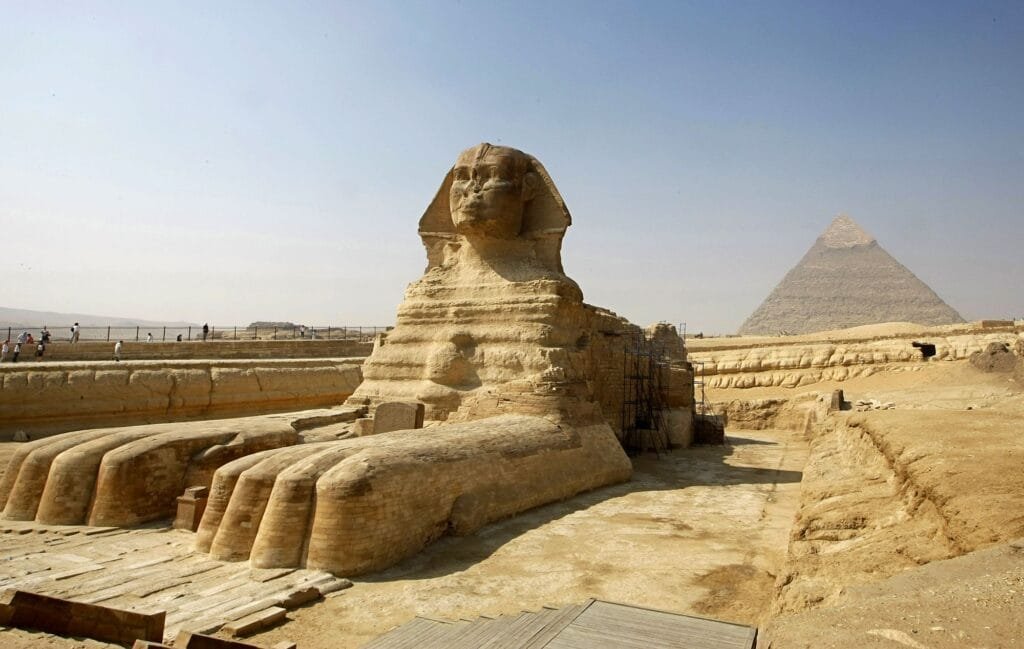
Few monuments in the history of human civilization evoke as much mystery, awe, and speculation as the Great Sphinx of Giza. Carved from a single massive ridge of limestone on the Giza Plateau, this colossal figure of a reclining lion with a human head has stood as a silent sentinel for over 4,500 years, guarding the path to the majestic pyramids of Khufu and Khafre. Known to the ancient Egyptians as Shesep-Ankh (The Living Image) and to the modern world as a symbol of eternal wisdom, the Sphinx is the oldest known monumental sculpture in Egypt. Its sheer scale—measuring 73 meters long and 20 meters high—makes it an architectural wonder that defies the limitations of the Old Kingdom’s technology. Yet, despite its fame, the Sphinx remains a “riddle in stone,” a masterpiece that continues to challenge archaeologists and historians with questions about its true origins, its hidden chambers, and the identity of the face that gazes so serenely toward the rising sun.
For the modern traveler, a visit to the Great Sphinx is a rite of passage, a chance to stand in the shadow of a monument that has witnessed the rise and fall of empires, the birth of religions, and the dawn of the modern age. Whether you view it through the lens of mainstream Egyptology, which attributes it to the Pharaoh Khafre, or through more esoteric theories that suggest a much older lineage, the Sphinx never fails to inspire a sense of profound wonder. This article will embark on an exhaustive 18-paragraph journey into the heart of the Sphinx’s story. We will explore its meticulous construction, the symbolism of its dual nature, the legendary “Dream Stele” nestled between its paws, and the Herculean efforts taken to preserve its fragile limestone body from the sands of time. Prepare to solve the riddle of the sands as we unveil the history and the majesty of the world’s most iconic guardian.
1: The Geological Foundation – Carving a Legend from the Bedrock
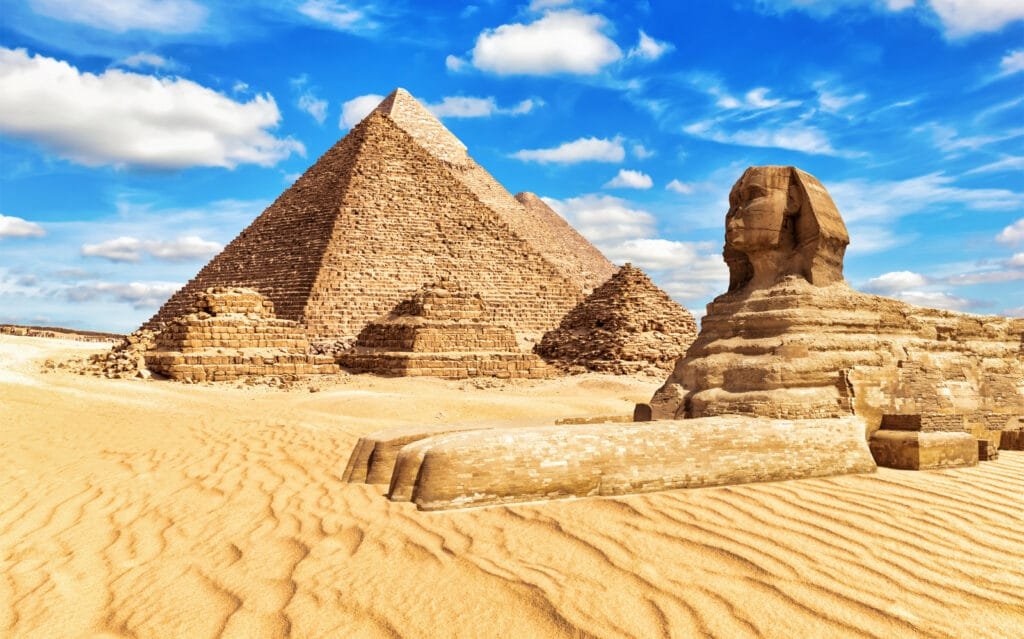
Unlike the nearby pyramids, which were constructed using millions of transported limestone and granite blocks, the Great Sphinx of Giza is a feat of "subtractive" architecture. It was carved directly out of the natural limestone bedrock of the Giza Plateau, a massive outcropping that the ancient engineers transformed into a living god. Geologically, the Sphinx is composed of different layers of limestone: the hard base, the softer middle section (which has suffered the most erosion over the millennia), and the slightly harder head. This geological composition is crucial for scientists to understand, as it explains why the body of the Sphinx appears so weathered while the head remains relatively intact. The builders of the Old Kingdom showed an incredible understanding of the landscape, choosing a site that allowed them to turn a geological "imperfection" into the largest monolithic statue on the planet. The process of carving the Sphinx was an immense logistical undertaking. Thousands of tons of stone had to be quarried away just to reveal the shape of the lion's body, and much of this excavated stone was actually used to build the nearby Sphinx Temple. This reveals a level of integrated urban planning that is staggering for a society living 4,500 years ago. For the modern visitor, understanding that the Sphinx is part of the very Earth it sits upon adds a layer of spiritual gravity to the experience. It is not just a statue placed on the sand; it is the Giza Plateau itself, sculpted into a divine protector. This unique monolithic construction method is what makes the Sphinx so vulnerable to the elements but also what makes it so incredibly permanent—a true anchor of Egyptian history that cannot be moved, only revealed.
2: The Face of a King – The Debate Over Khafre’s Image
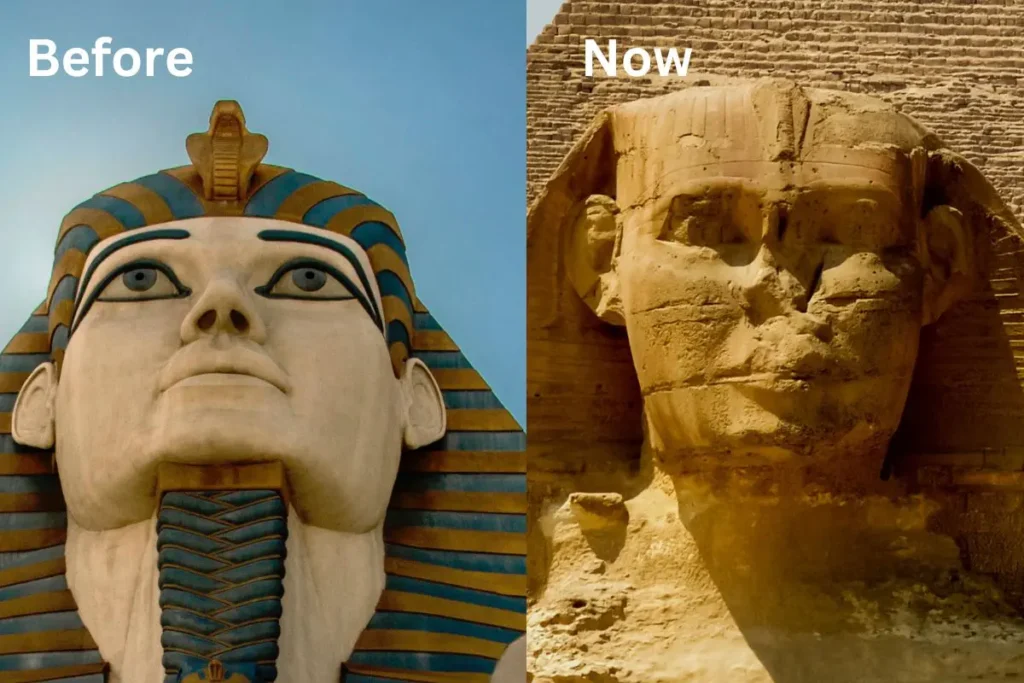
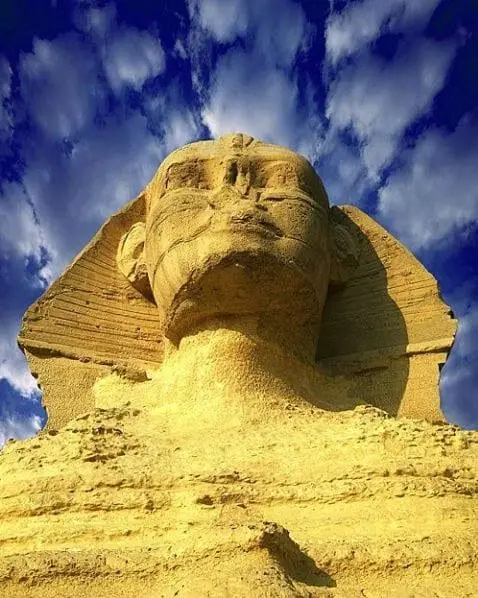
The identity of the face on the Great Sphinx is perhaps the most debated topic in all of Egyptology. The mainstream consensus, supported by the majority of archaeologists, is that the Sphinx was commissioned by Pharaoh Khafre (builder of the second Great Pyramid) around 2500 BC. This theory is supported by the Sphinx’s proximity to Khafre’s pyramid complex and the architectural similarities between the Sphinx Temple and Khafre’s Valley Temple. The face is believed to be a portrait of the king, wearing the royal Nemes headdress and the uraeus (cobra) symbol of sovereignty. For the ancient Egyptians, this would have been a powerful statement of the king’s divine nature—a visual fusion of the Pharaoh’s intellect and the lion’s raw power, guarding the sacred necropolis for eternity. However, the "Riddle of the Sphinx" persists because some scholars and independent researchers suggest alternative theories. Some argue that the facial features more closely resemble Khafre’s father, Khufu, or even his older brother, Djedefre. Others point to the disproportionate size of the head compared to the body, suggesting the head might have been re-carved during the Middle or New Kingdom from an even older, perhaps more zoomorphic, original. Despite these debates, the face of the Sphinx remains the ultimate icon of Old Kingdom royalty. When you stand before it, the serenity of the expression, despite the damage caused by time and human interference, still conveys a sense of absolute authority. For the cultural traveler, this debate doesn't detract from the monument’s beauty; it adds a layer of intellectual mystery, making every glance at the Sphinx a personal attempt to solve a 4,000-year-old puzzle.
3: Symbolism of the Dual Nature – The Lion and the Pharaoh
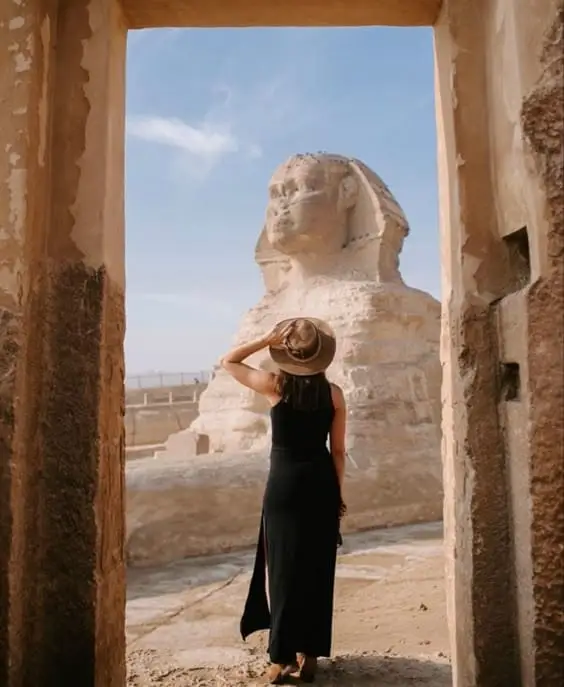
The form of the Great Sphinx—the body of a lion and the head of a human—is a profound symbolic expression of the ancient Egyptian worldview. In their mythology, the lion was the ultimate symbol of solar power, strength, and protection. By merging the king’s head with the lion’s body, the creators of the Sphinx were illustrating the concept of the "Living Image" (Shesep-Ankh), where the Pharaoh channels the untamable energy of nature to serve the divine order of Maat. This dual nature represents the balance between physical might and intellectual wisdom. The Sphinx is positioned facing due east, greeting the rising sun each morning, which aligns it with the solar god Harmakhis (Horus-in-the-Horizon). This solar alignment confirms its role as a cosmic guardian, watching over the cycle of rebirth and eternity. For the ancient visitors who traveled to Giza, the Sphinx was a terrifyingly beautiful reminder of the king’s reach. It sat at the edge of the desert, a threshold between the world of the living (the Nile Valley) and the world of the dead (the Pyramid plateau). This sacred symbolism evolved over time; during the New Kingdom, the Sphinx became a popular site of pilgrimage, and kings like Amenhotep II built temples nearby to honor it as a manifestation of the sun god. Today, the symbolic power of the Sphinx remains just as potent. It represents the height of Pharaonic ideology, where the ruler is seen as the bridge between the human and the divine. As a tourist, standing between the paws of this lion-king is a way to touch the very philosophy that built the pyramids—a philosophy that viewed the king as the eternal protector of the cosmos.
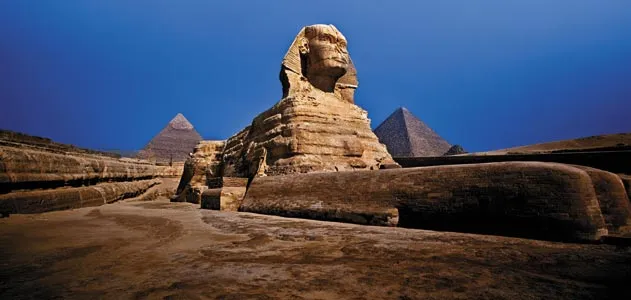
4: The Dream Stele of Thutmose IV – A Royal Promise in Stone
Nestled directly between the massive paws of the Great Sphinx stands a tall granite slab known as the Dream Stele. This monument, erected by Pharaoh Thutmose IV around 1401 BC, tells a fascinating story of political legitimacy and divine intervention. According to the inscription, while Thutmose was still a young prince, he fell asleep in the shadow of the Sphinx after a hunting expedition. At that time, the Sphinx was buried up to its neck in the desert sands, forgotten and neglected. In a dream, the Sphinx—appearing as the sun god Horemakhet—spoke to the prince, promising him that he would become the next King of Egypt if he cleared the encroaching sands and restored the monument to its former glory. Despite not being the first in line for the throne, Thutmose fulfilled his promise, and miraculously, he indeed became Pharaoh. The Dream Stele is a crucial historical artifact because it proves that even for the New Kingdom Egyptians, the Sphinx was already an "ancient" and mysterious monument that required protection. It also highlights the Sphinx's role as a political tool; by claiming a direct divine mandate from the "Guardian of Giza," Thutmose IV successfully solidified his right to rule. For the modern visitor, the stele provides a rare opportunity to read a direct dialogue between an ancient king and a god. It reminds us that for thousands of years, the Sphinx was a site of active pilgrimage and worship, not just a silent statue. Standing before the paws and seeing this granite slab is a moving experience that connects the mythical world of dreams with the cold reality of royal politics in Ancient Egypt.
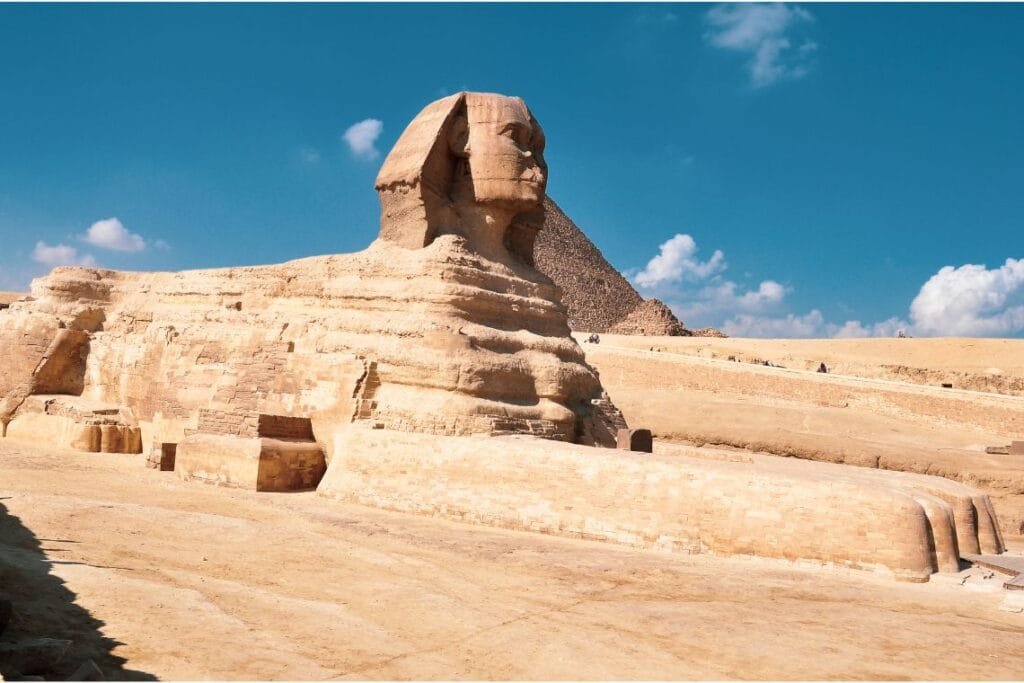
5: The Erosion Controversy – Water vs. Wind
One of the most intense scientific debates surrounding the Great Sphinx of Giza involves the patterns of erosion found on its body. While mainstream Egyptologists argue that the Sphinx has been weathered by wind and sand over the millennia, a vocal group of geologists, most notably Dr. Robert Schoch, suggests a much more radical theory. They argue that the deep, vertical fissures and rounded weathering on the Sphinx's enclosure walls are characteristic of heavy rainfall erosion. Since Egypt has been an arid desert for the last 5,000 years, this theory suggests that the Sphinx must have been carved much earlier—perhaps as far back as 7,000 or even 10,000 BC—during a period when the North African climate was significantly wetter. This "Water Erosion Hypothesis" challenges the traditional dating of the Sphinx and has sparked a global debate about the true age of Egyptian civilization. However, the majority of the archaeological community remains skeptical, pointing to the lack of other artifacts or structures from such a remote period. They argue that the softer layers of limestone in the Sphinx’s body are simply more prone to flaking and that the "water" patterns could be the result of salt crystal exfoliation or ancient groundwater seepage. Regardless of which side one takes, the geological mystery of the Sphinx adds an incredible layer of intrigue to any visit. It forces travelers to look closer at the stones themselves and realize that the Sphinx is a giant scientific puzzle. Whether it is 4,500 or 10,000 years old, the monument’s survival remains a miracle of human (and natural) history, making it a focal point for anyone interested in alternative archaeology and geology.
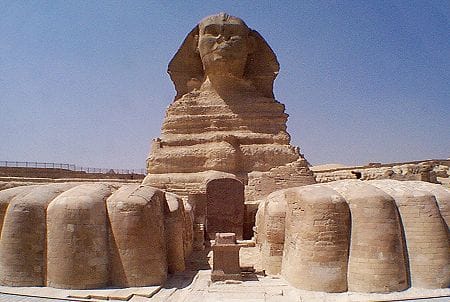
6: The Lost Nose and Beard – Myths and Realities
Perhaps no part of the Sphinx’s anatomy has inspired more myths than its missing nose. A popular legend, frequently repeated in tour groups, claims that the nose was shot off by Napoleon Bonaparte’s soldiers during his Egyptian campaign in the late 18th century. However, historical evidence—including sketches made by European explorers decades before Napoleon’s birth—proves that the nose was missing long before the French arrived. Arab historians, such as Al-Maqrizi, suggest a more likely culprit: a 14th-century Sufi Muslim named Sa'im al-Dahr, who reportedly vandalized the face in an act of religious zealotry to discourage the local population from making offerings to the "heathen" idol. This act of iconoclasm is a testament to the strong emotional and religious reactions the Great Sphinx has provoked throughout the ages. Similarly, the Sphinx once sported a magnificent royal plaited beard, fragments of which were found in the 19th century and are now housed in the British Museum in London and the Egyptian Museum in Cairo. Many historians believe the beard was not part of the original Old Kingdom design but was added during the New Kingdom restoration to align the Sphinx with the contemporary image of a divine king. The absence of these features today gives the Sphinx its uniquely weathered and haunting appearance, but it also invites visitors to use their imagination to reconstruct its original glory. Understanding the archaeological history of the Sphinx’s features helps clear away the "tourist myths" and allows for a deeper appreciation of the monument as a living object that has been altered by humans, nature, and the passage of time for over forty centuries.
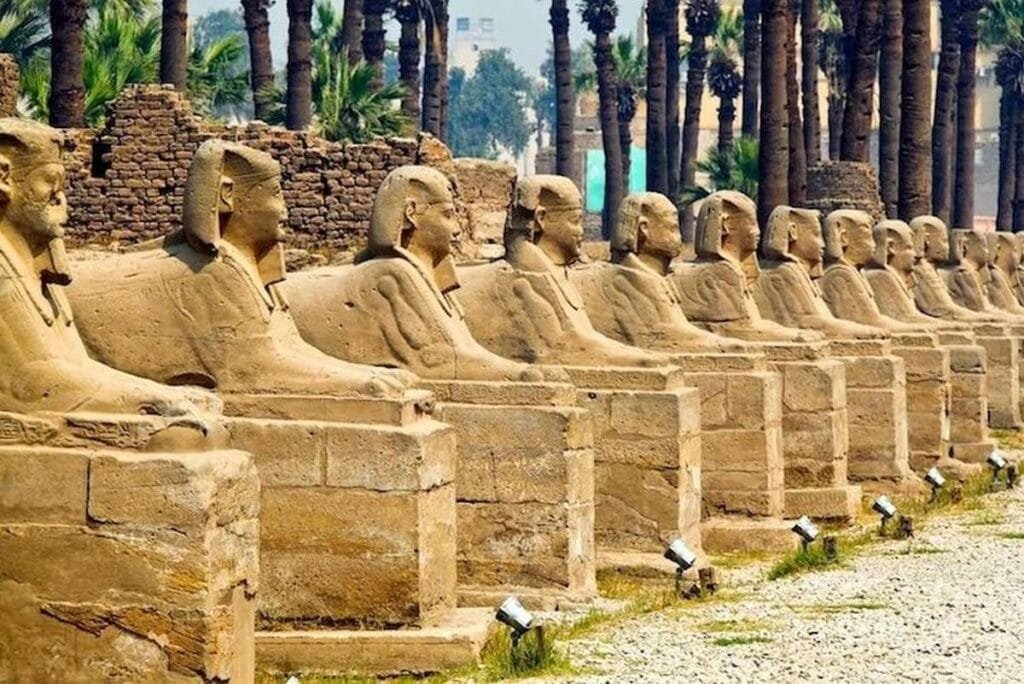
7: The Sphinx Temple – Solar Architecture and Sacred Rituals
Directly in front of the Great Sphinx lies a structure that is often overshadowed by the statue itself: the Sphinx Temple. This massive limestone edifice is an architectural marvel of the Old Kingdom, built with colossal blocks that weigh up to 100 tons each. The temple is a masterpiece of "solar architecture," designed to harmonize with the movements of the sun. It features a central courtyard with 24 columns, representing the 24 hours of the day, and its primary axis is aligned perfectly with the equinoxes. When the sun rises on the spring or autumn equinox, it appears directly over the shoulder of the Sphinx and enters the temple’s sanctuary, a phenomenon that illustrates the ancient Egyptians’ mastery of astronomical precision. For the visitor, standing within these ruins provides a sense of the highly ritualized life that once took place here, where priests performed daily ceremonies to honor the sun god in his various forms. The relationship between the Sphinx and its temple is symbiotic; the stone for the temple was actually quarried from the ditch surrounding the Sphinx, meaning the two structures were born from the same piece of earth at the same time. Unlike later temples that were filled with hieroglyphs, the Sphinx Temple is strikingly austere, relying on the sheer scale of its granite and alabaster surfaces to convey a sense of divine permanence. This "Megalithic" style is characteristic of the Age of the Pyramid Builders and serves as a silent witness to the sophisticated religious philosophy of the 4th Dynasty. For history buffs, the Sphinx Temple is a crucial site to explore because it contextualizes the statue not just as a piece of art, but as a functional "machine for eternity," designed to harness the power of the sun to ensure the king’s eternal life.
8: The Hidden Passageways – Secrets Beneath the Lion’s Paws
For centuries, legends have persisted about a "Hall of Records" or a network of secret tunnels hidden beneath the Great Sphinx. These stories were popularized by the American psychic Edgar Cayce, who claimed that the records of the lost civilization of Atlantis were buried under the Sphinx’s right paw. While modern archaeology has not found an Atlantean library, scientific surveys using ground-penetrating radar (GPR) and seismic tests have indeed confirmed the existence of several cavities and man-made shafts within and beneath the monument. One well-known shaft exists at the rear of the Sphinx, near the tail, while another leads deep into the bedrock from the top of the head. However, most of these appear to be burial shafts or exploratory tunnels dug by later treasure hunters and archaeologists rather than a secret labyrinth. The mystery of these underground chambers continues to fuel the imagination of travelers and "alternative" historians alike. In the 1990s, research teams identified a large rectangular anomaly deep beneath the front paws, but drilling has yet to yield a definitive answer as to whether it is a natural cavern or a man-made chamber. The Egyptian Ministry of Antiquities maintains a strict policy regarding excavation around the Sphinx to ensure its structural integrity, meaning many of these "voids" remain unexplored. For the curious traveler, the knowledge that there is more to the Sphinx than meets the eye adds an element of "Indiana Jones" excitement to the site. It reminds us that even the most famous monuments on Earth still hold secrets that are waiting for the right technology—and the right moment—to be revealed.
9: The Sphinx and the Stars – Archaeoastronomy at Giza
The Great Sphinx of Giza is not just a terrestrial monument; it is a celestial one, built to mirror the heavens. This field of study, known as archaeoastronomy, suggests that the entire Giza Plateau was laid out as a map of the stars. The most famous theory, the "Orion Correlation Theory," suggests the pyramids represent the belt of Orion, but the Sphinx has its own stellar role. It faces the exact east, marking the point where the sun rises on the equinox, acting as a giant "equinoctial marker." Some researchers, such as Robert Bauval and Graham Hancock, go further, suggesting that in the year 10,500 BC, the Sphinx would have looked directly at its own celestial counterpart—the constellation of Leo—as it rose on the horizon. This alignment, they argue, points to a much older "First Time" or Zep Tepi in Egyptian mythology. Whether one accepts the radical dating or adheres to the traditional 4th Dynasty timeline, the astronomical alignment of the Sphinx is undeniable. It demonstrates that the ancient Egyptians viewed their architecture as a way to anchor the Earth to the cosmos. For a visitor watching the sunrise at Giza, the sight of the Sphinx greeting the solar disc is a powerful reminder of how the ancients perceived time—not as a linear progression, but as a series of eternal cycles. This cosmic connection turns the Sphinx into a giant "clock in stone," tracking the movements of the stars over thousands of years. For the spiritual traveler, this aspect of the Sphinx provides a profound sense of connection to the universe, showing that this monument was built by a people who looked at the night sky with the same wonder and scientific curiosity that we do today.
10: The Restoration History – Saving a Crumbling Giant
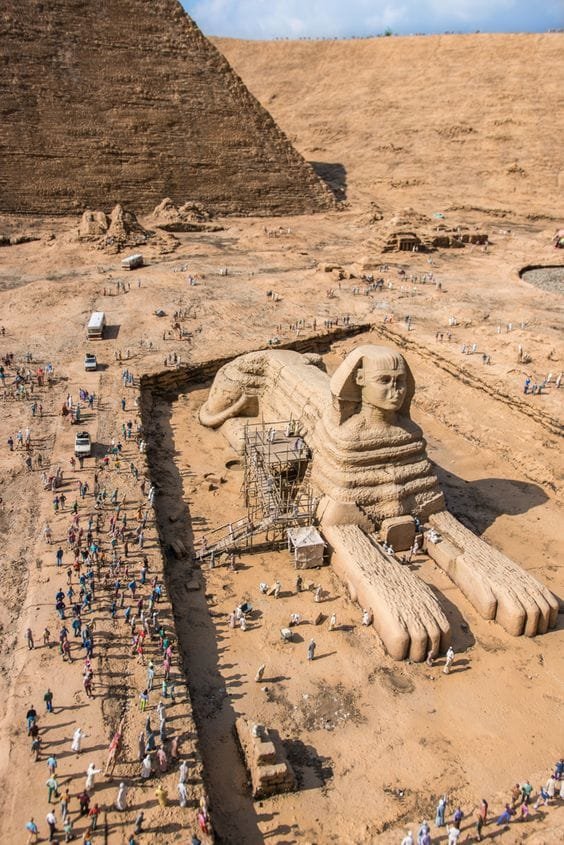
The Great Sphinx of Giza is perhaps the most frequently restored monument in history, a testament to its fragile relationship with the environment. Because it was carved from a single ridge of limestone, it contains layers of varying durability; the softer middle section has been particularly susceptible to "exfoliation" caused by salt in the groundwater and the abrasive desert winds. The first recorded restoration was by Thutmose IV in the 18th Dynasty, who cleared the sands and added protective masonry. Later, the Romans and even the modern Egyptian government in the 20th century undertook massive efforts to stabilize the structure. However, some early modern attempts actually caused more harm than good; the use of cement in the 1980s trapped moisture within the limestone, causing the stone to "sweat" and crumble from the inside. In recent decades, the Ministry of Tourism and Antiquities has adopted a more scientific approach to Sphinx preservation. The cement was carefully removed and replaced with traditional lime-based mortars that allow the stone to breathe. Large-scale masonry work on the paws and sides was completed using limestone blocks that match the original quarry’s composition. For the modern tourist, these layers of restoration are visible upon close inspection, showing the "patches" of history that have kept the monument standing. This ongoing battle against decay is a reminder of the monument’s mortality; without constant human intervention, the Sphinx would have long ago returned to the bedrock from which it was born. Supporting cultural heritage conservation is a key part of the modern visitor's responsibility, ensuring this "Living Image" survives for another four millennia.

11: The Sphinx in Popular Culture – From Hollywood to Literature
Beyond the field of archaeology, the Great Sphinx has carved a permanent place for itself in the global collective consciousness. It has become the ultimate symbol of mystery and ancient wisdom, appearing in countless films, novels, and works of art. From the romantic paintings of 19th-century European orientalists to the high-octane action of Hollywood blockbusters like The Mummy or Transformers, the Sphinx is often portrayed as a gateway to hidden power or a silent witness to epic struggles. In literature, it has been a source of inspiration for poets like Ralph Waldo Emerson and Oscar Wilde, who used the "Riddle of the Sphinx" as a metaphor for the unknowable nature of the human soul. This pop culture legacy has made the Sphinx one of the most recognizable icons on Earth, often used as a shorthand for "mystery" itself. For the cultural traveler, seeing the Sphinx in person is often a surreal experience because it feels so familiar from the screen and the page. However, the reality of the Giza Plateau often defies these Hollywood portrayals; the Sphinx is more intimate, more weathered, and more grounded in its geographical context than any CGI recreation. Its influence extends to architecture around the world, from the Luxor Hotel in Las Vegas to various sphinx-like monuments in Paris and London, reflecting a global obsession known as "Egyptomania." Understanding the Sphinx’s role in modern media helps us realize that it is no longer just an Egyptian monument; it is a global one. It belongs to the imagination of every person who has ever wondered about the secrets of the past, making it a universal ambassador for the enduring power of human creativity.

12: The Sound and Light Show – A Nighttime Spectacle of History
One of the most evocative ways to experience the Great Sphinx is through the world-famous Sound and Light Show at Giza. As the sun sets and the desert heat begins to fade, the Giza Plateau is transformed into a massive outdoor theater. Using a sophisticated system of colored lights and dramatic narration, the show tells the story of the building of the pyramids and the history of the Sphinx itself. The most captivating part of the performance is that the narration is "voiced" by the Sphinx, who speaks as the eternal witness to the ages, saying: "I have seen the sun rise for five thousand years." This nighttime tourism experience provides a different emotional resonance, as the shadows dance across the weathered face of the monument, highlighting features that are often washed out by the bright midday sun. For many visitors, the Sound and Light Show is the highlight of their trip to Cairo. It combines history, drama, and technology to make the ancient world feel immediate and alive. The show is available in multiple languages, making it a truly international cultural event. While some might find the narration theatrical, there is no denying the power of standing in the dark, with the Great Pyramid and the Sphinx illuminated against the black velvet of the desert sky. It offers a moment of reflection that is often difficult to find during the busy daytime hours. If you are planning a visit, this is an essential part of the Giza experience, providing a narrative framework that helps connect the dots between the stones, the kings, and the stars that have watched over them since the beginning of time.

13: The Sphinx Enclosure – Exploring the "Ditch" of Discovery
To truly appreciate the scale of the Great Sphinx, one must look at the "Sphinx Enclosure," the massive U-shaped trench from which the monument was carved. This area, often referred to by archaeologists as the "ditch," is essentially a negative space that reveals the sheer volume of rock removed to create the lion’s form. Walking along the viewing platform that overlooks this enclosure, visitors can see the stratified layers of the Giza Plateau’s limestone, which act like a geological timeline. The walls of the enclosure show clear signs of historical quarrying, where the massive blocks for the Sphinx Temple were extracted. For the archaeology enthusiast, this area is a goldmine of information, showing where ancient workers left their mark with copper chisels and wooden wedges. The enclosure also plays a significant role in the ongoing debates regarding the Sphinx’s age. The deep weathering patterns on the enclosure walls are often more pronounced than those on the Sphinx itself, leading some to believe the enclosure was carved out long before the final shaping of the statue. During the Old Kingdom, this area would have been kept meticulously clear of sand, but for much of history, the enclosure acted as a "sand trap," burying the Sphinx up to its neck and inadvertently protecting its body from the harsher wind erosion. Today, the Ministry of Antiquities works to keep the enclosure clear and monitors the groundwater levels beneath the floor, which is a constant threat to the monument’s foundation. Understanding the enclosure is key to understanding the Sphinx as a piece of "landscape art," a monument that didn't just stand on the plateau but was born from its very depths.
14: The Sphinx and the Nile – A Changing Waterscape
In antiquity, the relationship between the Great Sphinx of Giza and the Nile was far more intimate than it is today. Thousands of years ago, a branch of the Nile flowed much closer to the Giza Plateau, and a man-made canal likely reached the foot of the Sphinx Temple. This meant that the Sphinx served as a "harbor guardian," the first magnificent sight for travelers and pilgrims arriving by boat from the capital of Memphis. The rising and falling of the Nile’s annual flood would have brought the water right to the edge of the sacred precinct, reflecting the Sphinx’s image in the water and reinforcing its connection to the solar and river deities. This dynamic landscape was essential for the logistical success of the pyramid builders, allowing them to transport heavy granite from Aswan directly to the construction site. Over the millennia, the Nile shifted eastward, leaving the Sphinx stranded in a more arid environment. However, the legacy of the river remains in the form of the high groundwater table that currently poses a significant challenge to the monument’s stability. Capillary action draws moisture up through the porous limestone, bringing salts to the surface that crystallize and cause the stone to flake away—a process known as salt weathering. For the eco-conscious traveler, this highlights the delicate balance between the monument and its environment. The Sphinx is a victim of its own geography, standing at the crossroads of the desert and the river valley. Modern engineering projects have installed pumping stations around the site to lower the water level, a silent but vital effort to ensure the Sphinx doesn't "drown" in the very water that once gave it its majestic harbor setting.

15: Photography at the Sphinx – Capturing the Eternal Guardian
For most visitors, capturing the perfect photograph of the Great Sphinx is a top priority, but the monument’s unique position and scale require a bit of strategic thinking. The classic "postcard shot" is usually taken from the viewing platform next to the Valley Temple of Khafre, which provides a clear side-profile view of the Sphinx with the Great Pyramid of Khufu towering in the background. However, for a more creative perspective, photographers often wait for the late afternoon light, which creates deep shadows in the limestone’s weathered crevices, emphasizing the texture and ancient "soul" of the stone. This is also the best time to capture the "Kissing the Sphinx" forced-perspective photo, a popular trend among Instagram travelers that adds a touch of modern playfulness to the ancient site. Professional photographers often suggest focusing on the details: the subtle curve of the royal headdress, the massive scale of the front paws, or the way the morning sun illuminates the Dream Stele. Because the Sphinx faces east, early morning is the only time to see its face fully lit by the sun, making a sunrise visit essential for high-quality portrait shots. It is also worth exploring the area around the Sphinx’s rear to capture the dramatic contrast between the lion’s tail and the vastness of the plateau. By varying your angles and paying attention to the solar alignment, you can move beyond the typical tourist snapshots and create a visual story that honors the monument’s grandeur. Whether you are using a professional DSLR or a smartphone, the Sphinx remains one of the most photogenic subjects on Earth, a timeless model that has been posing for the world for over 4,500 years.
16: Access and Visiting Logistics – Navigating the Plateau
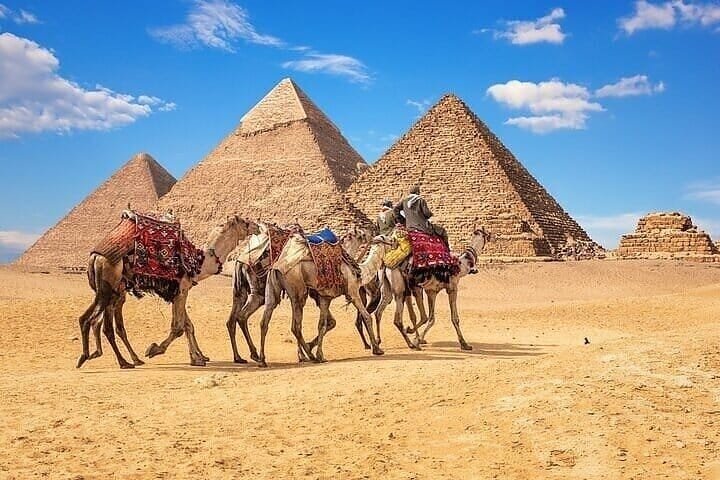
To witness the Great Sphinx of Giza in person, a bit of logistical planning is essential to avoid the midday heat and the largest crowds. The monument is located within the Giza Necropolis, and the most common point of entry for those focusing on the Sphinx is the gate near the "Sound and Light" theater in the village of Nazlet El Semman. Most international travelers choose to purchase a general plateau ticket, which includes access to the Sphinx viewing area. It is highly recommended to arrive as soon as the gates open at 8:00 AM; not only is the morning light perfect for photography, but you also beat the large tour buses that typically arrive after 10:00 AM. While you cannot physically walk between the paws of the Sphinx without a special (and often expensive) private permit, the viewing platform provides an intimate enough proximity to appreciate the fine details of the Pharaonic craftsmanship. Practicality should be a priority: wear sturdy walking shoes, as the terrain is sandy and uneven, and carry plenty of water. Beware of the "unofficial" guides and camel handlers who frequent the area; for a stress-free experience, it is best to hire a licensed guide through your hotel or a reputable agency. Many visitors combine their Sphinx viewing with a visit to the Valley Temple of Khafre, which is located immediately adjacent and offers a fascinating look at Old Kingdom megalithic architecture. Whether you arrive via a modern air-conditioned coach or choose the traditional charm of a horse and carriage, the approach to the Sphinx remains one of the most exhilarating moments in travel. The first glimpse of the lion’s head rising above the limestone enclosure is a memory that stays with a cultural tourist for a lifetime.
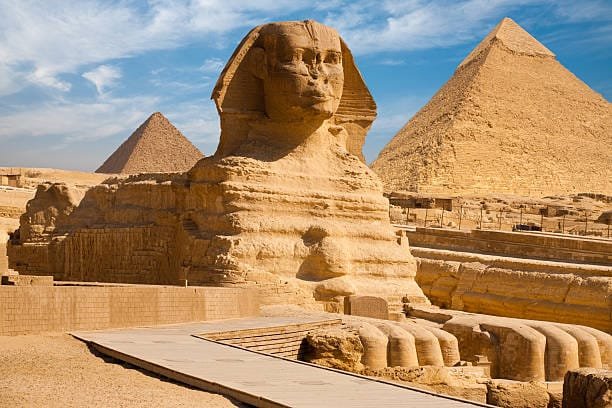
17: The Symbol of a Nation – The Sphinx in Modern Egypt
In the 21st century, the Great Sphinx has transcended its role as an archaeological relic to become a powerful symbol of modern Egyptian identity. It is the face of the nation, appearing on everything from the country's currency (the 100-pound note) to official government seals and tourism branding. For Egyptians, the Sphinx represents "asala" (authenticity) and a continuous link to a glorious past that predates the Greek, Roman, and Islamic eras. It serves as a reminder of Egyptian ingenuity and the ability to create something that defies the passage of time. During national celebrations or international sporting events, the image of the Sphinx is often used to evoke a sense of pride and unity, proving that the Old Kingdom's legacy is still a vital part of the country's psychological landscape. This national pride is also reflected in the intense local interest in the monument’s preservation. Egyptian archaeologists and conservators are at the forefront of the efforts to protect the Sphinx, viewing it not just as a job, but as a sacred duty to their ancestors. For the global traveler, seeing the Sphinx through the eyes of the locals adds a layer of respect to the visit. It is not just a "sight" to be checked off a bucket list; it is a living entity that continues to inspire a sense of belonging for millions. The Sphinx has become a silent ambassador, inviting the world to look beyond the headlines and appreciate the deep, historical roots of Egyptian culture. As you stand among the crowds of locals and tourists alike, you realize that the Sphinx belongs to everyone, yet its heart remains firmly rooted in the soil of Giza.
18: The Future of the Sphinx – Will the Riddle Ever Be Solved?
As we look toward the future, the Great Sphinx of Giza remains as much a mystery today as it was to the Greeks and Romans. With the advancement of non-invasive technologies like Muon tomography and even more sensitive ground-penetrating radar, the hope of discovering the rumored "Hall of Records" or hidden internal chambers remains alive. Every decade brings a new wave of scientific interest, and as our understanding of 4th Dynasty climate and technology evolves, so too does our interpretation of the Sphinx. However, there is a certain beauty in the idea that the "Riddle of the Sphinx" may never be fully solved. The monument's power lies in its silence and its ability to act as a mirror for our own questions about the origins of human civilization. The ultimate goal for the coming century is to ensure the Sphinx’s survival against the growing threats of climate change and urban encroachment. The "Great Sphinx" has survived the rise and fall of the Pharaohs, the sands of the Sahara, and the birth of the modern world; it is our collective responsibility to ensure it survives for the generations yet to come. Whether you believe it is a portrait of Khafre or a relic from a lost epoch, the Sphinx remains the ultimate guardian of our shared history. As the sun continues to rise over its limestone head each morning, it serves as a reminder that some things are truly eternal. The Sphinx is not just a statue; it is a challenge to the human spirit—a call to keep searching, keep dreaming, and keep exploring the wonderful mysteries of our past.