

- Excursions in Egypt
- Egypt Tour Packages
- Cairo Tours and Excursions
- Hurghada Tours and Excursions
- Soma Bay Tours and Excursions
- Makadi Bay Tours and Excursions
- Sahl Hasheesh Tours and Excursions
- El Gouna Tours and Excursions
- Marsa Alam Tours and Excursions
- Port Ghalib Tours and Excursions
- El Quseir Tours and Excursions
- Dendera and Abydos Day Tours
- Aswan Tours and Excursions
- Luxor Tours and Excursions
- Sharm El Sheikh Tours and Excursions
- Top Rated Egypt Tours in 2026
- Optional Excursions in Egypt
- Private Transfer
- Blogs About egypt
- Ancient Egypt
- Historical Sites in Egypt
- Cairo
- Alexandria
- Luxor
- Aswan
- The Red Sea
- Dendera Temple
- El Fayoum Oasis
- Bahariya Oasis
- Siwa Oasis
- Al Alamein
- Marsa Matruh
- Why Egypt Is One of the Safest Countries to Visit in the Middle East
- What You Need To know Before Your First Trip To Egypt
- Egypt Travel Costs in 2026 Full Budget Guide
- Top 10 Tourist Activities in Egypt
- Top 50 Activities You Can’t Miss in Egypt in 2026
- The Guide to Guided Tours in Egypt
- Egypt’s Ancient and Modern History
- The Nile River
- The Deserts of Egypt
- Ancient Egyptian gods
- famous Egyptian dishes
- UNESCO World Heritage sites
- About Us
- Egypt Hotels and Resorts
- Excursions in Egypt
- Egypt Tour Packages
- Cairo Tours and Excursions
- Hurghada Tours and Excursions
- Soma Bay Tours and Excursions
- Makadi Bay Tours and Excursions
- Sahl Hasheesh Tours and Excursions
- El Gouna Tours and Excursions
- Marsa Alam Tours and Excursions
- Port Ghalib Tours and Excursions
- El Quseir Tours and Excursions
- Dendera and Abydos Day Tours
- Aswan Tours and Excursions
- Luxor Tours and Excursions
- Sharm El Sheikh Tours and Excursions
- Top Rated Egypt Tours in 2026
- Optional Excursions in Egypt
- Private Transfer
- Blogs About egypt
- Ancient Egypt
- Historical Sites in Egypt
- Cairo
- Alexandria
- Luxor
- Aswan
- The Red Sea
- Dendera Temple
- El Fayoum Oasis
- Bahariya Oasis
- Siwa Oasis
- Al Alamein
- Marsa Matruh
- Why Egypt Is One of the Safest Countries to Visit in the Middle East
- What You Need To know Before Your First Trip To Egypt
- Egypt Travel Costs in 2026 Full Budget Guide
- Top 10 Tourist Activities in Egypt
- Top 50 Activities You Can’t Miss in Egypt in 2026
- The Guide to Guided Tours in Egypt
- Egypt’s Ancient and Modern History
- The Nile River
- The Deserts of Egypt
- Ancient Egyptian gods
- famous Egyptian dishes
- UNESCO World Heritage sites
- About Us
- Egypt Hotels and Resorts
Welcome to
Edfu Temple: The Falcon God’s Fortress of Eternal Victory
If the ancient world preserved a sanctuary where myth and architecture merge into a living legend, it is undoubtedly the Temple of Edfu Temple. More than a monument of stone, Edfu is a complete and perfectly preserved epic—a sacred narrative carved into sandstone, recounting the eternal struggle between divine order and chaotic darkness. For the ancient Egyptians, this was not merely a place of worship, but a cosmic stage where the triumph of the falcon god Horus over his rival Seth was ritually reenacted, ensuring the stability of the universe itself. Rising on the west bank of the Nile River between Luxor and Aswan, Edfu stands as one of the most complete temples ever built, a rare window into a world that has otherwise faded into fragments.
To pass through the monumental gateway of Edfu is to step into a realm where time has been held captive. Unlike many ancient sites reduced to ruins, this temple rises almost intact, its towering pylons, vast courtyards, and shadowed halls preserving the full grandeur of its original design. Built during the Ptolemaic Period, it reflects a deliberate attempt by later rulers to revive and immortalize the traditions of the pharaohs, blending classical Egyptian theology with the political ambitions of a new dynasty. Every surface within its walls is covered in intricate reliefs and hieroglyphics, forming one of the most comprehensive records of temple rituals, sacred texts, and divine ceremonies ever discovered.
Edfu is not simply a relic of the past; it is a fully realized vision of ancient Egyptian belief, frozen in stone with astonishing clarity. From the sunlit courtyard where priests once gathered to the dark inner sanctuary where the sacred statue of Horus was kept, the temple unfolds as a spiritual journey from the earthly to the divine. It is a place where architecture becomes theology, where myth becomes history, and where the enduring power of faith is etched into every column and corridor. In its silence, Edfu still speaks—telling a story of gods, kings, and a civilization that sought nothing less than eternity.
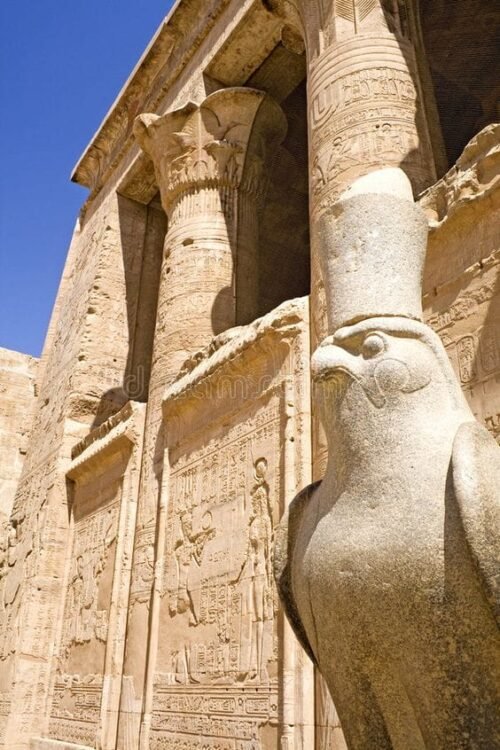
1. Edfu: The Sacred City of Horus and the Living Legacy of Ancient Egypt
On the tranquil west bank of the Nile River lies the ancient city of Edfu, a place where the rhythm of modern life flows quietly alongside the enduring echoes of a sacred past. Known in antiquity as “Behdet,” this city was once one of the most important religious centers in Egypt, devoted to the worship of the falcon god Horus. Unlike the grand urban sprawl of Luxor or the southern charm of Aswan, Edfu offers a more intimate encounter with history—one where the past feels astonishingly close, preserved not only in monuments but in the very spirit of the land. Surrounded by fertile fields and traditional villages, the temple rises unexpectedly from the landscape like a vision from another world, its massive stone walls contrasting sharply with the simplicity of its surroundings. For centuries, the temple remained buried beneath layers of sand and the gradual encroachment of human settlement, hidden from the world yet remarkably protected from destruction. When it was rediscovered and excavated in the 19th century, what emerged was not a ruin, but a nearly complete temple complex—an archaeological revelation that transformed our understanding of ancient Egyptian architecture and religious practice. The preservation of Edfu is so extraordinary that it allows visitors to experience the temple much as it would have appeared over two thousand years ago, with clearly defined spaces, intact reliefs, and a coherent architectural layout that is rarely found elsewhere. Today, Edfu stands as a bridge between worlds—a place where the continuity of Egyptian life can be felt across millennia. The same Nile that nourished the ancient city still flows beside it, and the same sun that illuminated its sacred rituals continues to cast its golden light upon its walls. It is a destination that does not merely display history but immerses visitors within it, offering a profound sense of connection to a civilization that shaped the very foundations of human culture and belief.

2. The Spiritual Heart: The Temple of Horus at Edfu
At the core of this ancient city stands the magnificent Temple of Edfu Temple, a structure that embodies the spiritual and political power of the falcon god Horus. Built between 237 and 57 BCE during the Ptolemaic Period, the temple represents a conscious revival of traditional Egyptian religious architecture at a time when the country was under Greek rule. Rather than introducing foreign elements, the rulers of this era sought legitimacy by embracing the ancient traditions of the pharaohs, commissioning a temple that would rival the great sanctuaries of earlier dynasties in both scale and symbolism. The design of the temple follows the classic Egyptian layout, beginning with a monumental pylon that serves as both a physical and symbolic gateway between the human and divine realms. Beyond this towering entrance lies an open courtyard, where rituals and public ceremonies once took place under the open sky. As one moves deeper into the temple, the spaces become progressively darker and more restricted, reflecting a spiritual journey toward the hidden presence of the god. This carefully orchestrated progression from light to shadow is not merely architectural—it is deeply theological, guiding worshippers from the visible world into the mysterious domain of the divine. What makes Edfu truly exceptional is the completeness of its decorative program. The walls are covered from floor to ceiling with hieroglyphic inscriptions and reliefs that document every aspect of temple life, from daily offerings and priestly duties to complex festivals and mythological narratives. These carvings transform the temple into a vast repository of knowledge, preserving the rituals and beliefs of ancient Egypt with unparalleled clarity. In Edfu, architecture and storytelling become inseparable, creating a sacred space that is both a physical structure and a living text.
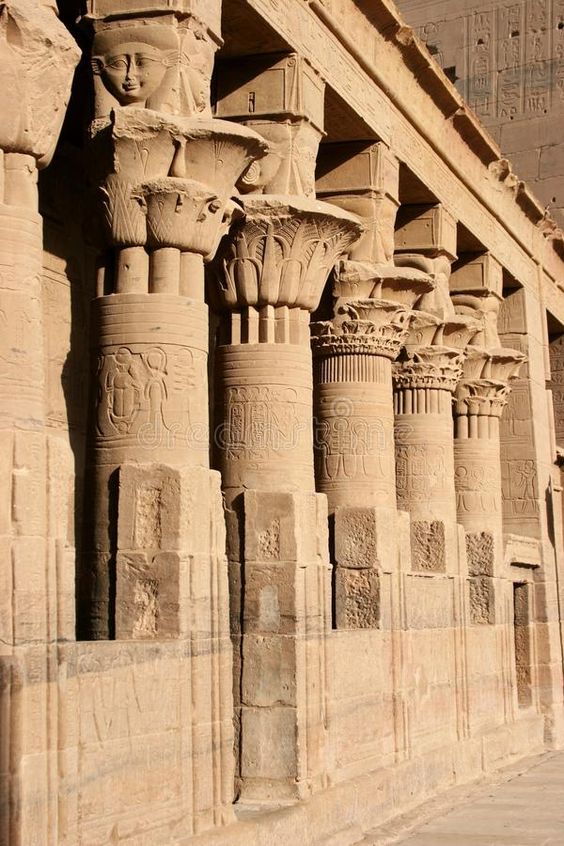
3. The Architecture of Eternity: A Masterpiece of Sacred Design
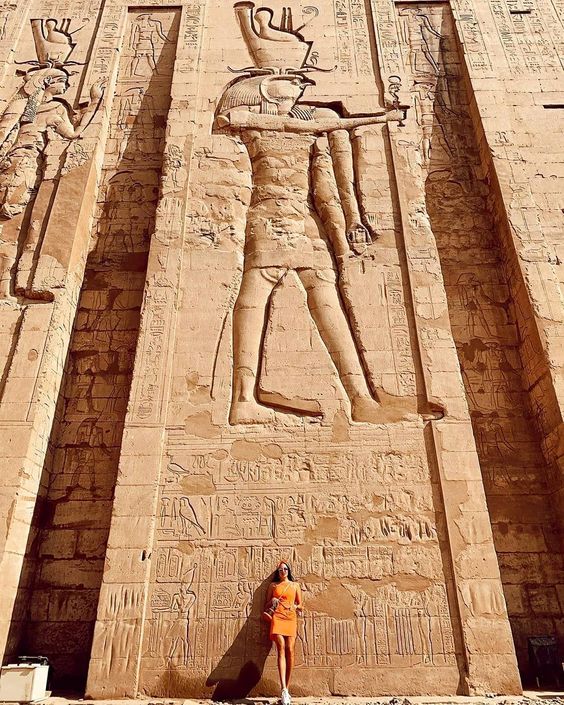
The architectural brilliance of Edfu Temple lies not only in its scale but in its perfect harmony of proportion, symbolism, and function. The massive entrance pylon, rising to nearly 36 meters, dominates the skyline and serves as a powerful statement of divine authority. Decorated with dramatic scenes of the pharaoh smiting his enemies before the gods, it reinforces the idea that the ruler was both protector and servant of cosmic order. Flanking the entrance stands the imposing granite statue of Horus in falcon form, a silent guardian whose presence still commands awe and reverence. Beyond the pylon, the temple unfolds with a sense of deliberate rhythm and balance. The open courtyard leads to a hypostyle hall supported by towering columns, their capitals shaped like lotus and papyrus plants—symbols of creation and rebirth. The ceilings above once painted with celestial scenes, would have transformed the interior into a microcosm of the universe, where the heavens themselves seemed to rest upon the pillars of the earth. As one proceeds further inward, the halls become smaller and darker, culminating in the sanctuary where the sacred statue of Horus was once housed. This inner chamber, hidden from all but the highest-ranking priests, represents the ultimate point of contact between the human and divine worlds. Every element of the temple’s design serves a purpose beyond aesthetics. The alignment of the structure, the progression of spaces, and the intricate carvings all work together to create a unified spiritual experience. It is a place where architecture becomes ritual, guiding both movement and meaning through its carefully constructed spaces. In its precision and grandeur, Edfu stands as one of the finest examples of ancient Egyptian design—a testament to a civilization that built not only for the present, but for eternity itself.

4. The Myth of Horus and Seth: A Cosmic Battle Etched in Stone
Within the sacred walls of the Edfu Temple unfolds one of the most powerful and enduring myths of ancient Egypt—the eternal conflict between Horus and his chaotic rival Seth. This was not merely a story told for entertainment; it was a cosmic drama that symbolized the fundamental struggle between order and disorder, light and darkness, justice and violence. The temple itself serves as a monumental stage for this myth, with its walls acting as a vast illustrated manuscript that records every detail of the divine conflict. According to ancient belief, Horus, the rightful heir to the throne of Egypt, sought to avenge his father Osiris and reclaim kingship from Seth, who had plunged the world into chaos. The battles between them were fierce and symbolic, often depicted in dramatic reliefs throughout the temple. In these carvings, Horus appears as a victorious falcon, spearing Seth—sometimes represented as a hippopotamus—while the gods look on in approval. These images were not simply decorative; they were magical acts, believed to reinforce the triumph of order every time they were seen or recited by priests. The importance of this myth extended far beyond the temple walls. It formed the ideological foundation of kingship itself, with every pharaoh identifying as the living embodiment of Horus, tasked with maintaining balance in the universe. By celebrating this eternal victory, the Temple of Edfu became a spiritual fortress, protecting Egypt from the forces of chaos both seen and unseen. Even today, as sunlight falls upon these ancient carvings, the story continues to resonate—reminding us of humanity’s timeless desire to overcome darkness and restore harmony to the world.
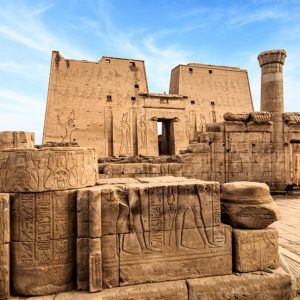
5. The Sacred Rituals: Daily Life Within the Temple Walls
Behind the monumental façade of the Edfu Temple existed a highly structured and deeply spiritual daily routine, carried out by a dedicated community of priests who served the god Horus. Far from being a place of public worship in the modern sense, the temple functioned as a divine residence, where the statue of the god was treated as a living being. Each day began with rituals of purification, as priests bathed, shaved, and adorned themselves in spotless linen garments before entering the sacred spaces. The morning ceremonies were among the most important, involving the unveiling of the divine statue within the sanctuary. The priests would open the shrine, present offerings of food, incense, and sacred oils, and recite hymns that invoked the presence and blessing of Horus. These rituals were believed to sustain the god, ensuring his continued protection over the land of Egypt. Every gesture, every word, and every offering followed a precise order, recorded meticulously in the temple inscriptions that still survive today. Beyond the daily rituals, the temple also hosted grand festivals that brought the wider community into its sacred orbit. During these occasions, the statue of Horus would be placed in a ceremonial barque and carried in procession, accompanied by music, chanting, and celebration. These events blurred the boundary between the divine and the human, allowing ordinary people to participate in the sacred life of the temple. Through these rituals, Edfu was not just a static monument but a vibrant center of spiritual activity—a place where the rhythms of devotion shaped every aspect of existence.
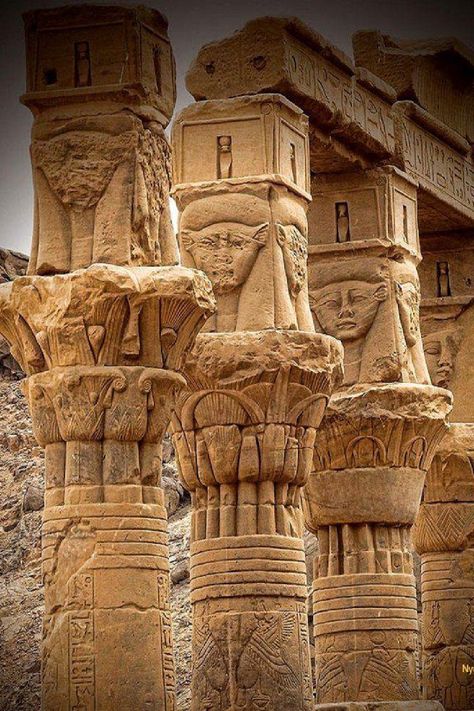
6. The Ptolemaic Vision: Reviving the Glory of the Pharaohs
The construction of the Edfu Temple during the Ptolemaic Period represents one of the most fascinating chapters in Egyptian history—a time when foreign rulers sought to legitimize their power by embracing the traditions of the land they governed. The Ptolemies, descendants of Alexander the Great, understood that to rule Egypt effectively, they had to present themselves not merely as kings, but as pharaohs chosen by the gods. Building temples like Edfu was a powerful way to achieve this, connecting their reign to the sacred legacy of the past. What is remarkable about Edfu is how faithfully it adheres to traditional Egyptian architectural and religious principles. Despite being constructed centuries after the height of the New Kingdom, the temple follows the same design conventions, symbolic layouts, and ritual practices as its ancient predecessors. This was not an act of imitation, but a deliberate effort to preserve and revive a cultural identity that was deeply rooted in religion and mythology. In doing so, the Ptolemies created a structure that feels authentically Egyptian in every detail, bridging the gap between two very different eras. At the same time, subtle influences of the Hellenistic world can be detected in the precision of the carvings and the organization of the inscriptions, reflecting a fusion of artistic traditions. This blending of cultures adds another layer of depth to the temple, making it not only a monument of religious devotion but also a symbol of cultural continuity and adaptation. Edfu stands today as a testament to the resilience of Egyptian identity—a place where the ancient and the foreign came together to create something timeless, powerful, and enduring.
7. The Inner Sanctuary: The Hidden Chamber of Divine Presence
At the deepest and most sacred point within the Edfu Temple lies the inner sanctuary—a chamber shrouded in darkness and mystery, where the divine presence of Horus was believed to reside. Unlike the sunlit courtyards and grand halls open to priests and ceremonies, this space was accessible only to the highest-ranking clergy and, symbolically, to the pharaoh himself. It was here that the boundary between the human and the divine dissolved completely, creating a sacred environment charged with spiritual intensity. At the center of the sanctuary once stood a granite naos, a shrine that housed the sacred statue of Horus. This statue was not merely an object of worship; it was considered the physical embodiment of the god on earth. Every ritual performed within this chamber—from the offering of incense to the recitation of sacred hymns—was intended to sustain the divine essence and maintain the cosmic order of the universe. The silence of this room, broken only by whispered prayers and ritual chants, must have created an atmosphere of profound reverence and awe. Even today, stepping into this darkened chamber evokes a powerful sense of connection to the ancient past. The air feels heavier, the light dimmer, and the walls seem to close in, guiding the visitor into a deeply introspective experience. It is here, more than anywhere else in the temple, that one truly understands the spiritual purpose of Edfu—not as a monument for display, but as a living house of the gods, where eternity was not imagined, but experienced.

8. The Nilometer and Sacred Geometry: Measuring the Lifeblood of Egypt
Beyond its religious significance, the Edfu Temple also reflects the practical and scientific ingenuity of ancient Egyptian civilization. One of the most fascinating features associated with the temple is the nilometer—a structure used to measure the annual flooding of the Nile River. This was no ordinary measurement; the level of the Nile determined the prosperity of the entire country, influencing agriculture, taxation, and survival itself. The nilometer functioned as both a scientific instrument and a sacred device. Priests would carefully observe and record the water levels, interpreting them as signs of divine favor or warning. A high flood promised abundant crops and wealth, while a low flood signaled hardship and potential famine. In this way, the natural rhythms of the river were deeply intertwined with religious belief, reinforcing the idea that the gods governed every aspect of life. The placement and design of such structures within the temple complex also reveal a sophisticated understanding of geometry and spatial planning. Every axis, every alignment, and every measurement within Edfu was calculated with precision, reflecting a worldview in which harmony and balance were essential. The temple was not only a place of worship but a center of knowledge, where science, religion, and architecture came together to create a unified vision of the universe—one in which humanity existed in constant dialogue with the forces of nature.
9. The Journey Through Time: Rediscovery and Preservation of Edfu
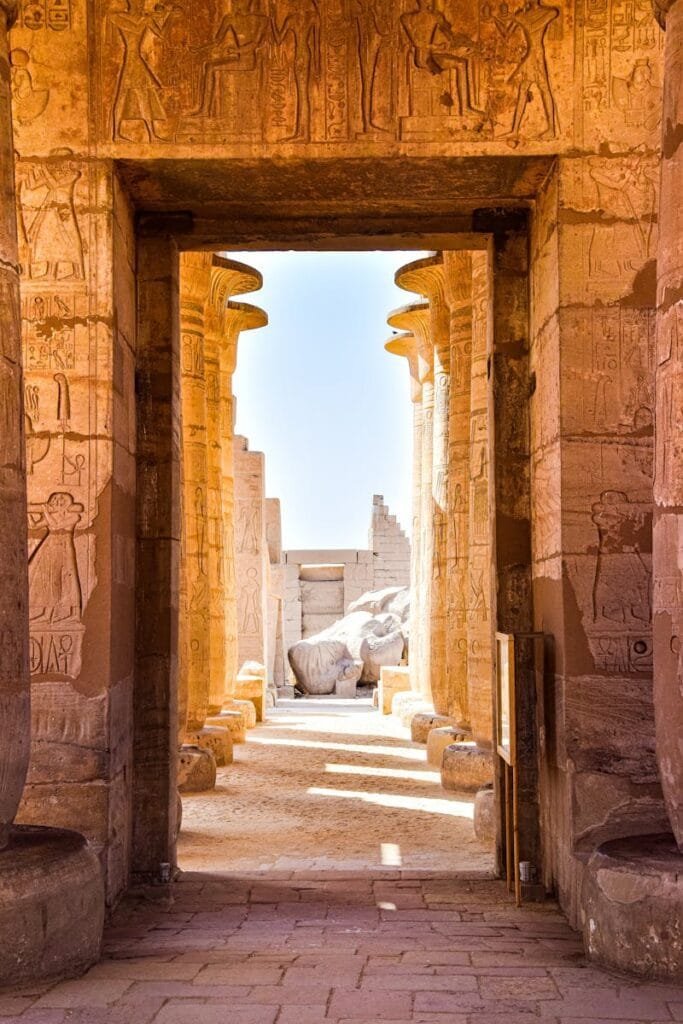
For centuries after the decline of ancient Egyptian civilization, the Edfu Temple lay hidden beneath layers of sand and the gradual accumulation of human settlement. Houses were built over its buried structures, and the once-great temple faded from memory, becoming part of the landscape rather than a monument recognized by history. Yet this long period of concealment proved to be a blessing in disguise, protecting the temple from the destruction that befell many other ancient sites. It was not until the 19th century that systematic excavations began to reveal the true extent of Edfu’s grandeur. As archaeologists cleared away the sand and debris, they uncovered a temple of astonishing completeness—its walls intact, its carvings preserved, and its architectural layout almost perfectly maintained. This discovery marked a turning point in Egyptology, providing scholars with an unprecedented opportunity to study a fully realized temple complex in its original form. Today, Edfu stands as one of the best-preserved monuments of the ancient world, a testament to both the skill of its original builders and the dedication of those who have worked to protect it. Visitors who walk through its gates are not simply observing ruins; they are stepping into a space that has survived the passage of time with remarkable integrity. In its silence and strength, Edfu continues to tell its story—one of creation, devotion, loss, and rediscovery—inviting each generation to uncover its secrets anew.
10. The Festival of Victory: Celebrating the Triumph of Horus
Among the many sacred events associated with the Edfu Temple, none was more powerful or symbolically charged than the Festival of Victory, a grand religious celebration dedicated to the triumph of Horus over the forces of chaos embodied by Seth. This festival was not merely a commemoration of myth but an active ritual reenactment, believed to renew the cosmic balance and ensure the continued harmony of the universe. Within the temple’s sacred walls, priests performed elaborate ceremonies that brought the ancient story to life, transforming myth into living reality. The rituals often included processions, symbolic battles, and the recitation of sacred texts that detailed the victories of Horus. In some ceremonies, effigies representing Seth were ritually defeated, reinforcing the idea that chaos could be subdued through divine power and human devotion. These performances were deeply theatrical, blending religion, art, and community participation into a unified spiritual experience. The temple itself became a stage where gods and humans interacted, where the boundaries between the physical and the divine momentarily dissolved. For the people of ancient Egypt, such festivals were essential to maintaining Ma’at—the principle of cosmic order and balance. By celebrating the victory of Horus, they reaffirmed their belief in a universe governed by justice and harmony. Even today, the echoes of these ancient celebrations seem to linger within the temple’s walls, reminding visitors that Edfu was once a vibrant center of ritual life, where the forces of good were not only believed in but actively sustained through devotion and ceremony.

11. The Walls of Knowledge: Hieroglyphs as a Sacred Library
Every surface within the Edfu Temple is covered with intricate carvings, transforming the entire structure into a vast and enduring library of ancient knowledge. These hieroglyphs are far more than decorative elements; they are carefully composed texts that document religious rituals, mythological narratives, and detailed instructions for temple ceremonies. In many ways, Edfu provides one of the most complete records of ancient Egyptian religious practice ever discovered, offering invaluable insights into a civilization that viewed writing as a sacred act. The inscriptions are remarkably well-preserved, allowing modern scholars to study them with an extraordinary level of clarity. They include detailed descriptions of the daily rituals performed by priests, the festivals celebrated throughout the year, and the complex theology that underpinned Egyptian belief. Some texts even provide architectural guidelines, revealing how temples were designed and constructed according to divine principles. This wealth of information makes Edfu not just an archaeological site, but a key source of historical and cultural understanding. Walking through the temple, one is surrounded by these ancient voices, frozen in stone yet still capable of communicating across millennia. The hieroglyphs invite visitors to look beyond the surface, to see the temple not only as a physical structure but as a repository of ideas, beliefs, and knowledge. In this sense, Edfu stands as a bridge between past and present, preserving the intellectual and spiritual achievements of ancient Egypt in a form that continues to inspire awe and curiosity.
12. Edfu at Sunset: A Timeless Dialogue Between Light and Stone
As the day draws to a close and the golden light of the setting sun begins to wash over the Edfu Temple, the temple undergoes a transformation that reveals a different dimension of its beauty. The harsh brightness of midday gives way to soft shadows and warm hues, accentuating the depth of the carvings and the grandeur of the architecture. The towering pylons glow with a rich amber color, while the reliefs etched into their surfaces come alive with a subtle play of light and shadow. In these quiet moments, the temple feels less like a historical monument and more like a living entity, breathing with the rhythms of the natural world. The silence becomes more profound, broken only by the distant sounds of the surrounding town and the gentle whisper of the wind. It is easy to imagine how the ancient priests might have experienced this same moment, watching as the sun—so central to their beliefs—completed its daily journey across the sky. Sunset at Edfu is not just a visual experience; it is an emotional and spiritual one. It invites reflection on the passage of time, the endurance of human achievement, and the deep connection between nature and belief that defined ancient Egyptian civilization. In this fleeting interplay of light and stone, the temple reveals its true essence—a timeless masterpiece that continues to evolve with every changing moment of the day.
13. The Sound and Silence: The Atmosphere of a Living Temple
Within the towering walls of the Edfu Temple, there exists a unique balance between sound and silence—a subtle atmosphere that gives the temple an almost living presence. In ancient times, this space would have been filled with the rhythmic chants of priests, the burning scent of incense, and the echo of sacred hymns reverberating through the hypostyle halls. Every column, every corridor, and every chamber was designed not only to be seen but to be experienced through sound, amplifying the spiritual intensity of rituals performed within. Today, the temple stands in quiet stillness, yet that silence feels far from empty. It carries a depth that allows visitors to sense the echoes of the past, as if the voices of ancient ceremonies still linger within the stone. The enclosed spaces create a natural acoustics that magnifies even the softest footsteps, reminding each visitor of the sacred nature of the site. This interplay between past sound and present silence transforms a simple walk through the temple into a deeply immersive experience. In this atmosphere, Edfu reveals itself not just as an architectural masterpiece but as a sensory journey. It invites reflection, encouraging visitors to slow down and absorb the environment in a way that transcends ordinary tourism. The temple does not merely display history—it allows you to feel it, to hear it, and to connect with it on a profoundly human level.
14. The Guardians of the Temple: Symbolism in Statues and Reliefs
Standing watch at the entrance of the Edfu Temple is the imposing figure of Horus, carved from dark granite and radiating a sense of divine authority. This statue is more than a decorative element; it is a symbolic guardian, representing protection, power, and the eternal vigilance of the god over his sacred domain. Its presence sets the tone for the entire temple, reminding visitors that they are entering a space governed by divine forces. Throughout the temple, countless reliefs and statues reinforce this sense of symbolism. The walls depict scenes of the pharaoh making offerings to the gods, emphasizing his role as an intermediary between the human and divine worlds. These images are not merely historical records; they are visual affirmations of cosmic order, designed to maintain balance and harmony through their very existence. Every figure, every gesture, and every symbol carries meaning, forming a complex visual language that communicates the core beliefs of ancient Egyptian society. The repetition of these motifs creates a powerful sense of continuity, linking every part of the temple into a unified whole. As visitors move from one chamber to another, they are guided by this symbolic narrative, gradually uncovering the deeper layers of meaning embedded within the structure. In this way, the temple becomes more than a physical space—it becomes a story told in stone, where every detail contributes to a larger vision of the universe.
15. The Nile Connection: Life, Trade, and Sacred Geography
The location of the Edfu Temple along the fertile banks of the Nile River was no coincidence. The Nile was the lifeblood of ancient Egypt, shaping not only its agriculture and economy but also its spiritual worldview. For the people of Edfu, the river was more than a source of water—it was a sacred entity, a divine force that connected the earthly realm with the gods. The temple’s proximity to the Nile facilitated both practical and ceremonial functions. Goods, offerings, and building materials could be transported بسهولة along the river, linking Edfu to other major centers such as Luxor and Aswan. At the same time, the river played a central role in religious processions, with sacred barques carrying the statue of Horus across its waters during festivals. These journeys symbolized the god’s connection to the wider cosmos, reinforcing the idea that the Nile itself was part of a divine network. Even today, the presence of the Nile enhances the experience of visiting Edfu, providing a sense of continuity that bridges past and present. Watching the river flow beside the ancient temple, one cannot help but reflect on its enduring role in shaping Egyptian civilization. It is a reminder that while empires rise and fall, the fundamental forces of nature—and the human connection to them—remain constant.
16. The Living City Around the Temple: Edfu Then and Now
Surrounding the monumental structure of the Edfu Temple is the modern town of Edfu, a place where the rhythms of daily Egyptian life continue in close proximity to one of the most complete temples of antiquity. Unlike remote archaeological sites isolated in the desert, Edfu exists within a living environment, where the echoes of history blend seamlessly with the sounds of bustling streets, traditional markets, and the steady movement of horse-drawn carriages that carry visitors toward the temple gates. This coexistence creates a rare atmosphere in which the ancient and the modern are not divided by centuries but woven together into a single, continuous experience. In antiquity, Edfu was far more than a religious center; it was a thriving hub of economic, cultural, and administrative life. The temple stood at the heart of this activity, employing priests, artisans, scribes, and laborers who lived in its shadow and contributed to its daily function. Offerings were prepared, rituals were conducted, and knowledge was recorded, making the temple a cornerstone of both spiritual devotion and societal organization. Today, although the rituals have ceased, the sense of continuity remains palpable. The fertile land still flourishes along the Nile River, and the local community continues to live in harmony with the environment that sustained their ancestors thousands of years ago. This living connection between past and present gives Edfu a unique character among Egypt’s archaeological sites. It is not merely a place to observe history, but a place to experience its ongoing presence. Visitors who explore the temple and then step into the surrounding streets gain a deeper understanding of how ancient traditions have shaped modern identity, creating a cultural landscape that feels both timeless and alive.
17. The Journey of Discovery: Edfu in the Eyes of Travelers
For centuries, the Edfu Temple has captivated the imagination of travelers, explorers, and scholars who journey along the Nile River in search of Egypt’s hidden treasures. Long before modern tourism, early visitors recorded their awe at the temple’s massive walls and remarkably preserved reliefs, often describing it as one of the most complete and impressive monuments they had ever encountered. Its rediscovery in the modern era transformed it into a cornerstone of Egyptology, offering invaluable insights into the architecture and religious practices of the Ptolemaic Period. Today, Edfu remains a highlight of any journey through Upper Egypt, often visited as part of a Nile cruise between Luxor and Aswan. Approaching the temple from the river, travelers experience a sense of anticipation that builds with every step, culminating in the breathtaking view of its towering pylons. Inside, the scale and detail of the carvings create an immersive environment that transports visitors back to a time when the temple was alive with ritual and devotion. What makes Edfu particularly special in the eyes of modern travelers is its sense of completeness. Unlike many ancient sites that survive only in fragments, Edfu offers a coherent and fully realized vision of an Egyptian temple. This allows visitors to move through its spaces with a clear understanding of their purpose and significance, transforming a simple visit into a meaningful journey through history. It is a place that not only impresses but educates, leaving a lasting impression on all who pass through its gates.
18. The Eternal Legacy: Why Edfu Temple Still Inspires the World
As one reflects upon the enduring majesty of the Edfu Temple, it becomes clear that this is far more than an ancient structure—it is a timeless testament to the power of human creativity, belief, and ambition. Built over two thousand years ago, yet preserved with astonishing clarity, the temple stands as one of the most complete expressions of ancient Egyptian civilization. Its walls continue to speak, its spaces continue to inspire, and its presence continues to captivate all who encounter it. Edfu represents a unique moment in history when tradition and transformation came together to create something extraordinary. Under the rule of the Ptolemaic Period, the temple preserved the essence of pharaonic culture while adapting to a changing world, ensuring that its legacy would endure far beyond its own time. This ability to bridge past and present is what gives Edfu its lasting significance, making it not only a monument of history but a symbol of cultural resilience and continuity. In the end, Edfu remains a place where the boundaries between myth and reality, past and present, human and divine, begin to blur. It invites every visitor to step beyond the ordinary and into a world shaped by faith, artistry, and the eternal quest for meaning. Whether admired for its architectural perfection, its rich symbolism, or its spiritual depth, Edfu Temple continues to stand as one of the greatest achievements of the ancient world—an enduring beacon of history that will inspire generations to come.
