

- Excursions in Egypt
- Egypt Tour Packages
- Cairo Tours and Excursions
- Hurghada Tours and Excursions
- Soma Bay Tours and Excursions
- Makadi Bay Tours and Excursions
- Sahl Hasheesh Tours and Excursions
- El Gouna Tours and Excursions
- Marsa Alam Tours and Excursions
- Port Ghalib Tours and Excursions
- El Quseir Tours and Excursions
- Dendera and Abydos Day Tours
- Aswan Tours and Excursions
- Luxor Tours and Excursions
- Sharm El Sheikh Tours and Excursions
- Top Rated Egypt Tours in 2026
- Optional Excursions in Egypt
- Private Transfer
- Blogs About egypt
- Ancient Egypt
- Historical Sites in Egypt
- Cairo
- Alexandria
- Luxor
- Aswan
- The Red Sea
- Dendera Temple
- El Fayoum Oasis
- Bahariya Oasis
- Siwa Oasis
- Al Alamein
- Marsa Matruh
- Why Egypt Is One of the Safest Countries to Visit in the Middle East
- What You Need To know Before Your First Trip To Egypt
- Egypt Travel Costs in 2026 Full Budget Guide
- Top 10 Tourist Activities in Egypt
- Top 50 Activities You Can’t Miss in Egypt in 2026
- The Guide to Guided Tours in Egypt
- Egypt’s Ancient and Modern History
- The Nile River
- The Deserts of Egypt
- Ancient Egyptian gods
- famous Egyptian dishes
- UNESCO World Heritage sites
- About Us
- Egypt Hotels and Resorts
- Excursions in Egypt
- Egypt Tour Packages
- Cairo Tours and Excursions
- Hurghada Tours and Excursions
- Soma Bay Tours and Excursions
- Makadi Bay Tours and Excursions
- Sahl Hasheesh Tours and Excursions
- El Gouna Tours and Excursions
- Marsa Alam Tours and Excursions
- Port Ghalib Tours and Excursions
- El Quseir Tours and Excursions
- Dendera and Abydos Day Tours
- Aswan Tours and Excursions
- Luxor Tours and Excursions
- Sharm El Sheikh Tours and Excursions
- Top Rated Egypt Tours in 2026
- Optional Excursions in Egypt
- Private Transfer
- Blogs About egypt
- Ancient Egypt
- Historical Sites in Egypt
- Cairo
- Alexandria
- Luxor
- Aswan
- The Red Sea
- Dendera Temple
- El Fayoum Oasis
- Bahariya Oasis
- Siwa Oasis
- Al Alamein
- Marsa Matruh
- Why Egypt Is One of the Safest Countries to Visit in the Middle East
- What You Need To know Before Your First Trip To Egypt
- Egypt Travel Costs in 2026 Full Budget Guide
- Top 10 Tourist Activities in Egypt
- Top 50 Activities You Can’t Miss in Egypt in 2026
- The Guide to Guided Tours in Egypt
- Egypt’s Ancient and Modern History
- The Nile River
- The Deserts of Egypt
- Ancient Egyptian gods
- famous Egyptian dishes
- UNESCO World Heritage sites
- About Us
- Egypt Hotels and Resorts
Welcome to
Tomb of Tutankhamun (KV62): The World's Most Famous Royal Tomb
The Tomb of Tutankhamun (KV62) is undoubtedly the most famous archaeological discovery in the history of Ancient Egypt and one of the greatest treasures of world civilization. Hidden beneath the golden sands of the Valley of the Kings on the west bank of Luxor, this remarkable royal tomb belonged to Pharaoh Tutankhamun, the young king of the Eighteenth Dynasty who ruled Egypt during the New Kingdom around 1332–1323 BC. Although Tutankhamun’s reign lasted only about nine years and he died at approximately eighteen or nineteen years of age, his tomb transformed the world’s understanding of Ancient Egyptian civilization after its spectacular discovery by British archaeologist Howard Carter on 4 November 1922. Unlike almost every other royal tomb in the Valley of the Kings, KV62 was discovered largely intact, containing more than 5,000 priceless artifacts, including the world-famous golden funerary mask, gilded shrines, chariots, jewelry, furniture, weapons, clothing, musical instruments, statues, ceremonial objects, and countless personal belongings that accompanied the young king into eternity. The tomb provides an extraordinary snapshot of royal life, religious beliefs, funerary customs, artistic achievements, and craftsmanship during the height of the New Kingdom. Despite being one of the smallest royal tombs in the Valley of the Kings, KV62 remains one of the most important archaeological sites ever discovered because of the exceptional preservation of its treasures and the invaluable historical information it continues to reveal. Today, millions of visitors travel to Luxor every year to stand inside the original burial place of the famous Boy King and experience one of humanity’s greatest archaeological wonders. This comprehensive guide explores every aspect of the Tomb of Tutankhamun, including the life of the young pharaoh, the discovery of the tomb, its architecture, treasures, religious symbolism, conservation efforts, and enduring global legacy.
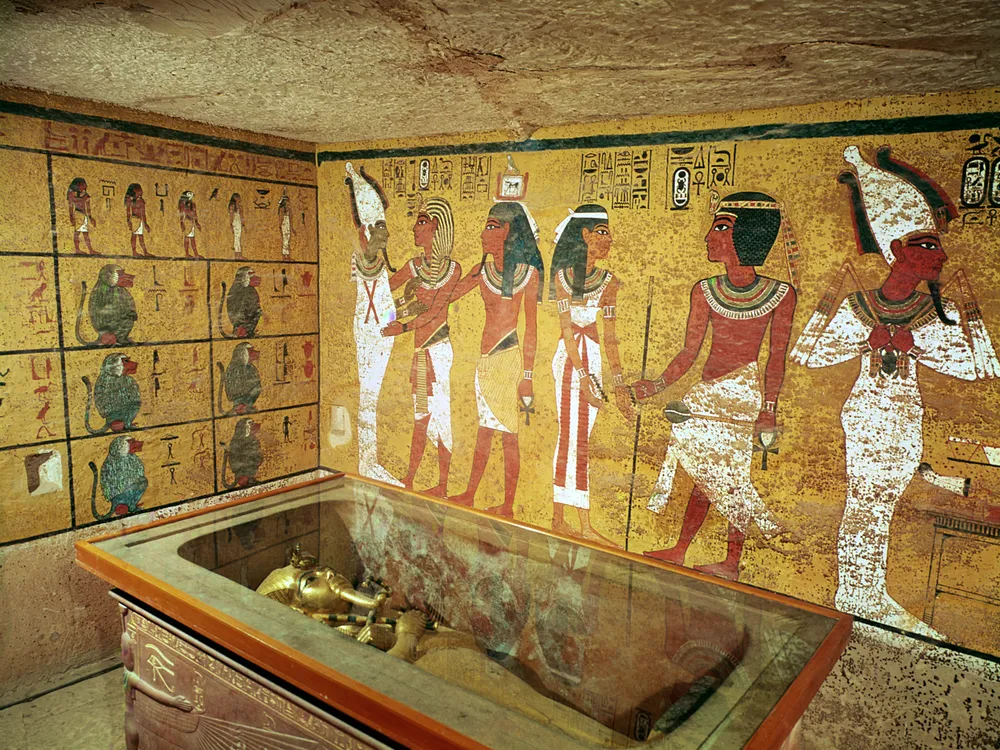
1. Who Was Tutankhamun? The Boy King of Ancient Egypt
Tutankhamun, often called the Boy King, remains one of the most recognizable figures in world history despite ruling Egypt for less than a decade. Born around 1341 BC, he became pharaoh at approximately eight or nine years old during one of the most turbulent periods in Ancient Egyptian history. Tutankhamun belonged to the Eighteenth Dynasty, a royal family that ruled during the height of the New Kingdom, often regarded as Ancient Egypt's Golden Age. He was most likely the son of Akhenaten, the controversial pharaoh who introduced the worship of a single solar deity, the Aten, abandoning Egypt's traditional gods and disrupting centuries of religious tradition. After ascending the throne, the young king—guided by experienced advisors such as Ay and Horemheb—reversed these radical religious reforms. One of his first actions was changing his name from Tutankhaten, meaning "Living Image of the Aten," to Tutankhamun, meaning "Living Image of Amun," symbolizing the restoration of the powerful cult of Amun and the return to traditional Egyptian religion. During his reign, temples dedicated to the ancient gods were repaired, priesthoods were re-established, and political stability gradually returned to Egypt. Although Tutankhamun achieved relatively little militarily or architecturally compared to great rulers like Ramesses II or Thutmose III, his historical significance became immense because of the remarkable preservation of his burial. Tutankhamun married his half-sister Ankhesenamun, the daughter of Akhenaten and Nefertiti, but the couple had no surviving heirs. Scientific examinations of his mummy suggest that he suffered from several congenital health conditions, including a clubfoot and malaria, which may have contributed to his early death at around eighteen or nineteen years of age. Following his death, he was buried in the Valley of the Kings in a relatively modest tomb that was likely intended for another royal official. Ironically, the tomb's small size and concealed entrance protected it from large-scale looting for more than three thousand years. Today, Tutankhamun is remembered not for the achievements of his reign but because his tomb provides the most complete surviving picture of royal life, death, and burial in Ancient Egypt.
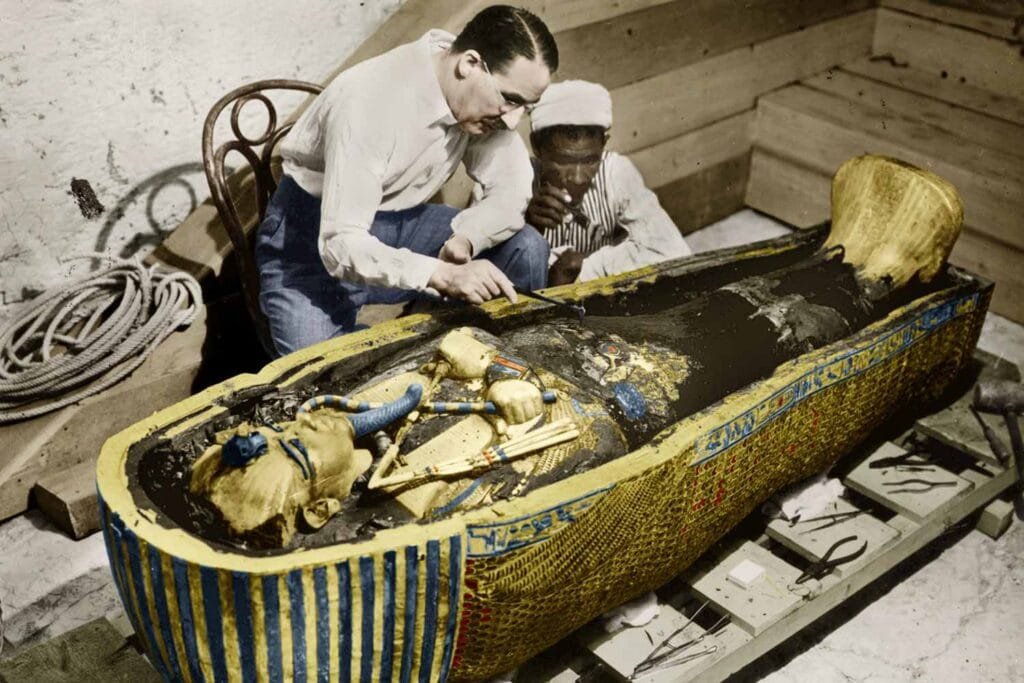
2. The Discovery of Tutankhamun's Tomb by Howard Carter
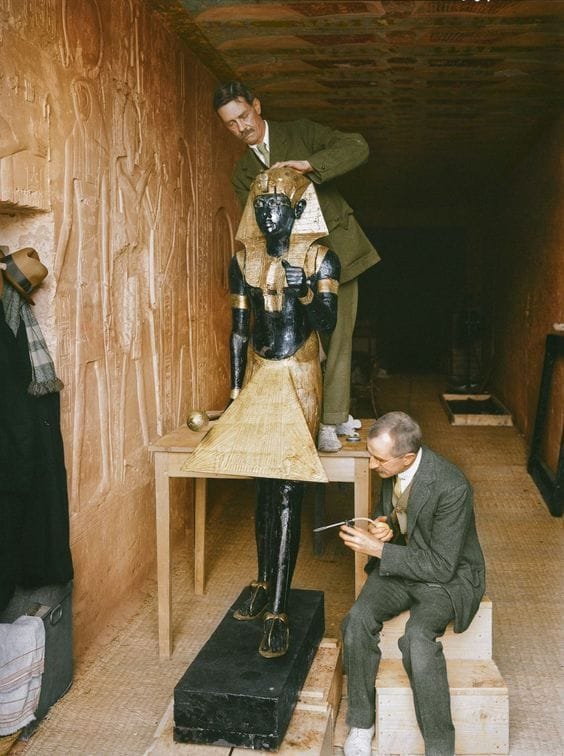
The discovery of the Tomb of Tutankhamun (KV62) on 4 November 1922 is widely regarded as the greatest archaeological achievement of the twentieth century. For years, British archaeologist Howard Carter searched the Valley of the Kings, convinced that the tomb of the young pharaoh remained hidden despite many experts believing the valley had already been fully explored. Carter's excavations were financed by Lord Carnarvon, an English aristocrat whose patience and financial support made the search possible. After several unsuccessful excavation seasons, Carter's team uncovered a stone step buried beneath the remains of ancient workers' huts. Continued excavation revealed a sealed doorway bearing the royal cartouches of Tutankhamun. On 26 November 1922, Carter made a small opening in the sealed doorway and famously peered inside by candlelight. When Lord Carnarvon asked if he could see anything, Carter replied with the now legendary words, "Yes, wonderful things." Beyond the doorway lay a chamber overflowing with golden treasures unlike anything the modern world had ever witnessed. Unlike nearly every other royal tomb in Egypt, KV62 had escaped major looting despite minor ancient intrusions shortly after the burial. Inside were more than 5,000 objects, including gilded shrines, ceremonial chariots, royal furniture, jewelry, weapons, statues, alabaster vessels, clothing, food offerings, musical instruments, and magnificent funerary equipment. The burial chamber itself contained four enormous gilded shrines surrounding a quartzite sarcophagus, which enclosed three nested coffins, the innermost crafted from solid gold and containing the mummy of Tutankhamun wearing the now world-famous golden funerary mask. Carter spent nearly ten years carefully documenting, photographing, conserving, and removing every object from the tomb, establishing new standards for archaeological excavation and preservation. Newspapers around the globe reported every stage of the discovery, creating unprecedented international fascination with Ancient Egypt and inspiring what became known as "Tutmania." The discovery transformed Egyptology forever by providing historians with an unparalleled collection of royal artifacts preserved almost exactly as they had been placed more than 3,300 years earlier. Even today, the discovery of KV62 remains one of the greatest moments in archaeological history and continues to captivate millions of people worldwide.
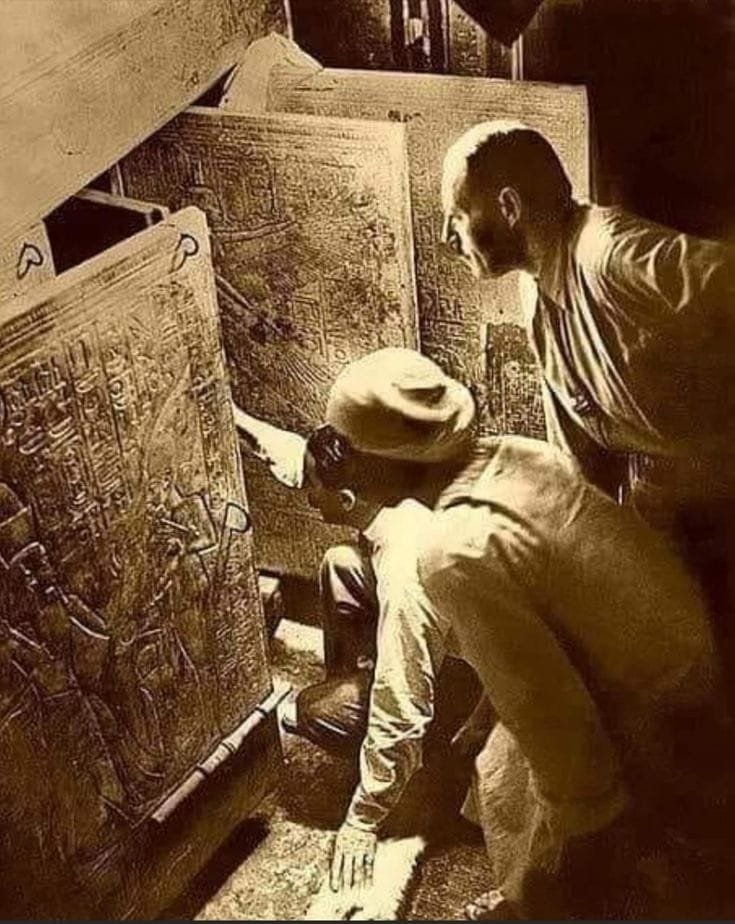
3. The Architecture and Layout of KV62
Although the Tomb of Tutankhamun (KV62) is the most famous royal tomb in Egypt, it is surprisingly one of the smallest tombs in the Valley of the Kings. Egyptologists believe the tomb was probably never intended for Tutankhamun himself but was originally prepared for a high-ranking royal official before being adapted following the king's unexpected death. Unlike the vast and elaborate tombs of Seti I (KV17) or Ramesses II (KV7), KV62 consists of only four principal chambers: the Antechamber, Annex, Burial Chamber, and Treasury. Despite its modest size, every room was filled almost to the ceiling with extraordinary treasures carefully arranged for the king's eternal journey into the afterlife. Visitors enter through a descending staircase leading to a corridor that opens into the crowded Antechamber, where ceremonial beds, dismantled chariots, gilded furniture, statues, weapons, and numerous everyday objects were originally discovered. A smaller side room known as the Annex contained food, wine jars, oils, clothing, baskets, games, and household equipment intended to serve the king forever. The heart of the tomb is the Burial Chamber, the only room decorated with painted wall scenes depicting Tutankhamun's funeral, his transformation into Osiris, and his acceptance among the gods by Ay, Anubis, Horus, and Nut. At the center of this chamber stood four magnificent gilded wooden shrines nested one inside another, surrounding a quartzite sarcophagus that contained three anthropoid coffins. The innermost coffin, crafted from solid gold, enclosed the king's beautifully mummified body beneath the iconic golden funerary mask. Beyond the Burial Chamber lies the Treasury, where archaeologists discovered the king's canopic shrine, guardian statues, ritual objects, model boats, and the famous black jackal shrine representing Anubis. Although compact, the architectural design reflects sophisticated religious planning, ensuring the king's successful rebirth and eternal union with the gods. Today, KV62 remains one of the most visited archaeological monuments in the world, proving that historical significance is measured not by size but by the extraordinary stories and treasures preserved within its walls.
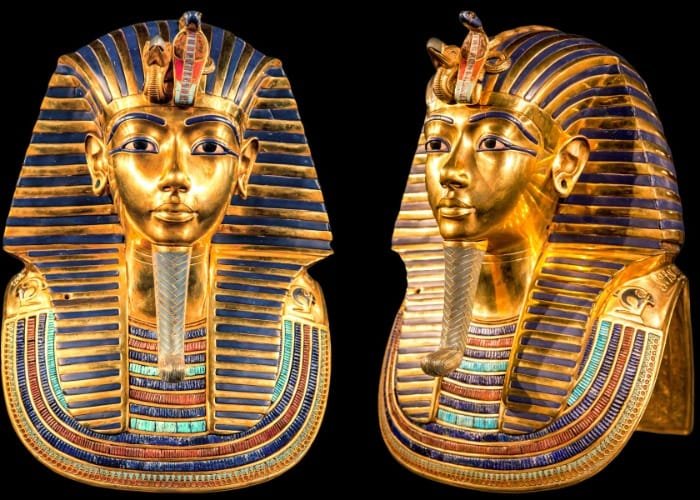
4. The Golden Treasures of Tutankhamun's Tomb
The golden treasures of Tutankhamun's Tomb (KV62) represent one of the most spectacular collections of ancient artifacts ever discovered. When Howard Carter first entered the tomb in 1922, he found more than 5,000 priceless objects, many covered in gold or crafted from precious materials such as silver, ebony, ivory, faience, glass, and semi-precious gemstones. These treasures provided an unparalleled glimpse into the wealth, artistry, and religious beliefs of the New Kingdom. The most famous object is undoubtedly Tutankhamun's golden funerary mask, a masterpiece weighing approximately 10.23 kilograms (22.5 pounds) of solid gold. Decorated with lapis lazuli, quartz, obsidian, colored glass, and intricate inlays, the mask depicts the young king wearing the royal nemes headdress with the protective cobra and vulture representing Upper and Lower Egypt. It has become one of the most recognizable symbols of Ancient Egypt and one of the greatest masterpieces of ancient craftsmanship. Beyond the mask, Carter uncovered three nested coffins, the innermost made entirely of solid gold, enclosed within a quartzite sarcophagus surrounded by four enormous gilded wooden shrines. The tomb also contained magnificent ceremonial chariots, royal thrones decorated with gold and silver, elegant beds shaped like sacred animals, jewelry, crowns, necklaces, rings, bracelets, pectorals, ceremonial daggers, walking sticks, bows, arrows, shields, sandals, clothing, perfumes, cosmetics, musical instruments, alabaster vessels, statues, model boats, food offerings, wine jars, and hundreds of ritual objects intended to accompany the king throughout eternity. Many objects display extraordinary craftsmanship, combining precious metals with ebony, ivory, colored glass, and rare stones imported from distant lands. The treasures also reveal the exceptional skills of Egyptian goldsmiths, carpenters, sculptors, and jewelers, whose techniques continue to amaze modern experts. Today, most of these remarkable artifacts are preserved in the Grand Egyptian Museum (GEM) near the Giza Pyramids, where they are displayed together for the first time since their discovery. Collectively, the treasures of KV62 provide the most complete surviving royal burial assemblage from Ancient Egypt and remain one of humanity's greatest archaeological legacies.
5. The Burial Chamber, Sarcophagus, and Golden Coffins
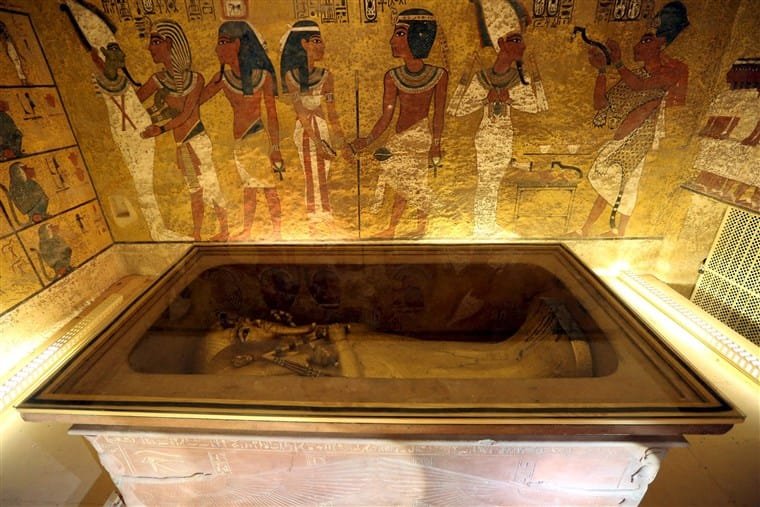
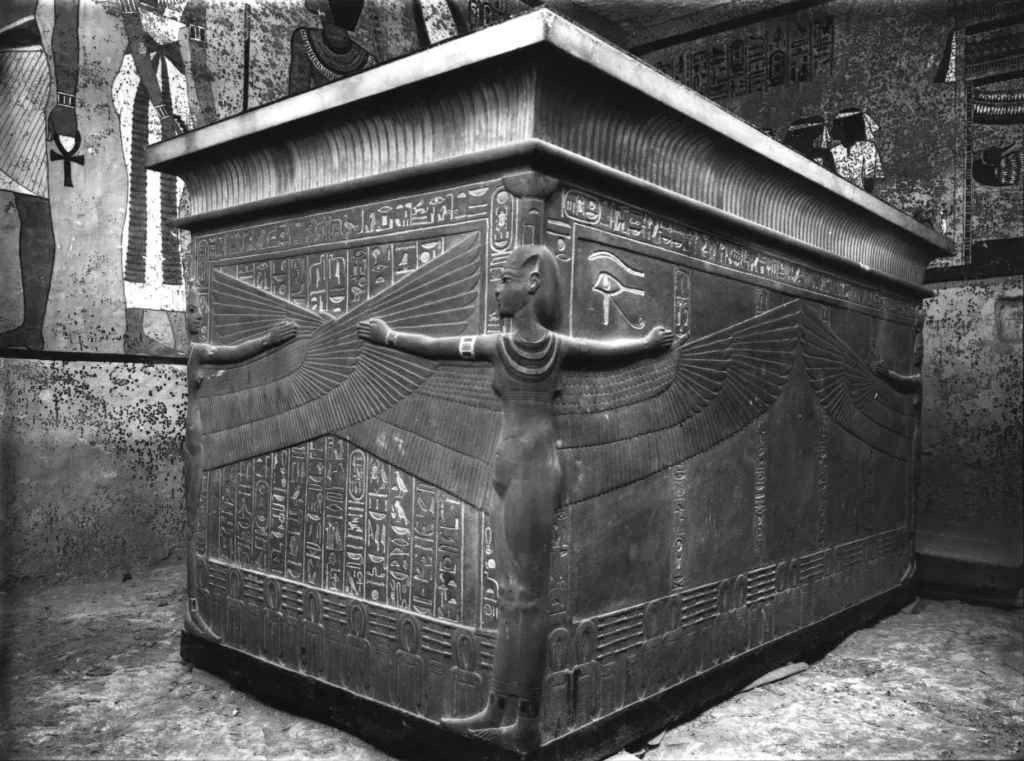
The Burial Chamber is the most sacred and historically significant room inside the Tomb of Tutankhamun (KV62). Although relatively small compared to the burial chambers of other New Kingdom pharaohs, it contained one of the most elaborate royal burial arrangements ever discovered. The walls are decorated with brightly painted scenes depicting the king's funeral, religious ceremonies, and his transformation into the god Osiris, symbolizing resurrection and eternal life. Unlike the richly decorated corridors found in larger royal tombs, the burial chamber is the only painted room in KV62, emphasizing its unique religious importance. At the center of the chamber stood four enormous gilded wooden shrines nested one inside another. These shrines occupied almost the entire room and formed a protective enclosure around the king's quartzite sarcophagus. Inside the sarcophagus were three anthropoid coffins, each placed inside the next like Russian nesting dolls. The outer two coffins were crafted from gilded wood and richly decorated with colored glass, faience, and semi-precious stones. The innermost coffin, however, is one of the most extraordinary funerary objects ever created. Made from approximately 110 kilograms (242 pounds) of solid gold, it depicts Tutankhamun holding the royal crook and flail while wearing the traditional nemes headdress. Resting over the king's head and shoulders was the world-famous golden funerary mask, designed not only as a portrait but also as a magical object ensuring the pharaoh's transformation into an immortal god. The mummy itself had been carefully wrapped in fine linen and protected by hundreds of amulets, jewelry pieces, and sacred charms placed between the bandages to guard the king throughout eternity. Modern CT scans have provided valuable information about Tutankhamun's health, injuries, and mummification without disturbing the remains. Today, the king's mummy remains inside KV62 in a climate-controlled display case, while the famous coffins and funerary mask are preserved in the Grand Egyptian Museum. Together, the burial chamber, sarcophagus, coffins, and golden mask represent the pinnacle of Ancient Egyptian funerary art, reflecting both extraordinary craftsmanship and profound religious beliefs about death and rebirth.

6. The Religious Symbolism and Wall Paintings of KV62
Although the Tomb of Tutankhamun (KV62) is relatively modest in size, its religious symbolism is among the most significant in all of Ancient Egyptian archaeology. Every object, painting, inscription, and architectural feature was carefully designed to help the young king complete his journey through the afterlife and achieve eternal existence alongside the gods. Unlike larger royal tombs that contain lengthy religious texts covering multiple corridors, the decoration in KV62 is concentrated within the Burial Chamber, where beautifully painted scenes illustrate the most important stages of the king's spiritual transformation. One wall depicts Ay, Tutankhamun's successor, performing the sacred Opening of the Mouth Ceremony, an essential ritual believed to restore the king's senses so he could breathe, eat, speak, and live again in the afterlife. Another wall shows Tutankhamun embraced by Osiris, the god of the underworld, confirming his successful rebirth as an immortal divine ruler. Other scenes portray the king welcomed by Nut, the sky goddess, while Anubis, the jackal-headed protector of mummies, oversees the burial and ensures the preservation of the king's body. The walls are painted using bright yellow backgrounds symbolizing eternal gold and the divine flesh of the gods, while carefully executed hieroglyphs record prayers, blessings, and magical formulas. Throughout the tomb, sacred symbols such as the Ankh (life), Djed Pillar (stability), Eye of Horus (protection), Was Scepter (power), Scarab Beetle (rebirth), and Solar Disk reinforce the concepts of resurrection and divine kingship. The thousands of objects discovered inside the tomb also carried religious meaning. Guardian statues protected the burial chamber, while amulets hidden within the mummy's wrappings provided magical defense against evil spirits. Even everyday items such as furniture, sandals, clothing, food, and games reflected the Egyptian belief that the king would continue living much as he had on earth. Collectively, the paintings, religious symbols, and funerary equipment transformed KV62 into a sacred gateway between the human world and eternity. For historians and Egyptologists, the tomb remains one of the finest surviving examples of how Ancient Egyptians understood death, resurrection, divine kingship, and the eternal journey into the afterlife.

7. The Mummy of Tutankhamun and Modern Scientific Discoveries
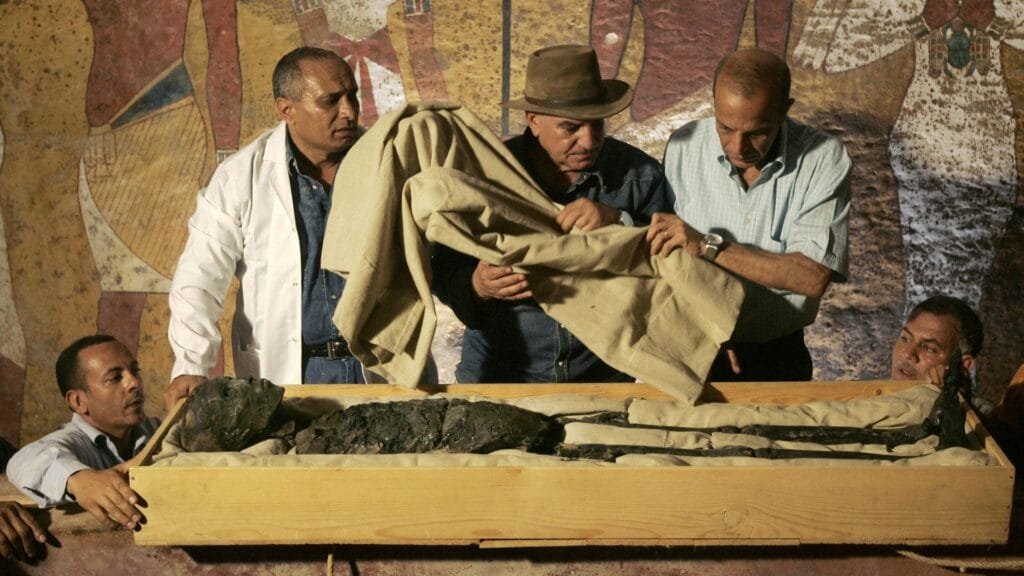
The mummy of Tutankhamun is one of the most intensively studied human remains in the history of archaeology. Since Howard Carter uncovered the young pharaoh's burial in 1922, generations of scientists have used increasingly advanced technologies to investigate his health, family lineage, cause of death, and mummification process. Unlike many royal mummies that were relocated during antiquity, Tutankhamun's body remained inside KV62, making it one of the few royal mummies still resting in its original tomb. Carter's team initially faced significant challenges because the mummy had become firmly attached to the solid gold coffin by hardened embalming resins. To remove the body without destroying the coffin, conservators carefully separated the mummy, although some damage occurred during the process. Today, non-invasive scientific techniques such as X-rays, CT scans, DNA analysis, and 3D imaging have revolutionized our understanding of the Boy King without disturbing his remains. Studies indicate that Tutankhamun died at approximately 18 or 19 years of age and stood around 167 centimeters (5 feet 6 inches) tall. DNA evidence strongly suggests he was the son of Akhenaten and a close royal relative, reflecting the practice of intermarriage within the royal family. Researchers have identified several congenital conditions, including a clubfoot, mild scoliosis, and bone disorders that likely required him to use walking sticks—more than 130 of which were discovered inside the tomb. Genetic studies also confirmed that Tutankhamun contracted malaria, while skeletal evidence points to injuries in his left leg that may have become infected before his death. Although theories involving assassination once attracted widespread attention, most modern Egyptologists believe a combination of illness, weakened health, and complications from a leg fracture probably contributed to his early death. The exceptional preservation of the mummy has also provided valuable information about New Kingdom embalming techniques, linen wrapping methods, resin application, and funerary rituals. Today, Tutankhamun's mummy remains inside a climate-controlled glass display case in the Burial Chamber of KV62, allowing visitors to view the remains of one of history's most famous pharaohs while ensuring long-term preservation. Ongoing scientific research continues to reveal new details about the young king, making his mummy one of the most valuable sources of information about royal life and medicine in Ancient Egypt.
8. Why Tutankhamun's Tomb Changed the World of Archaeology
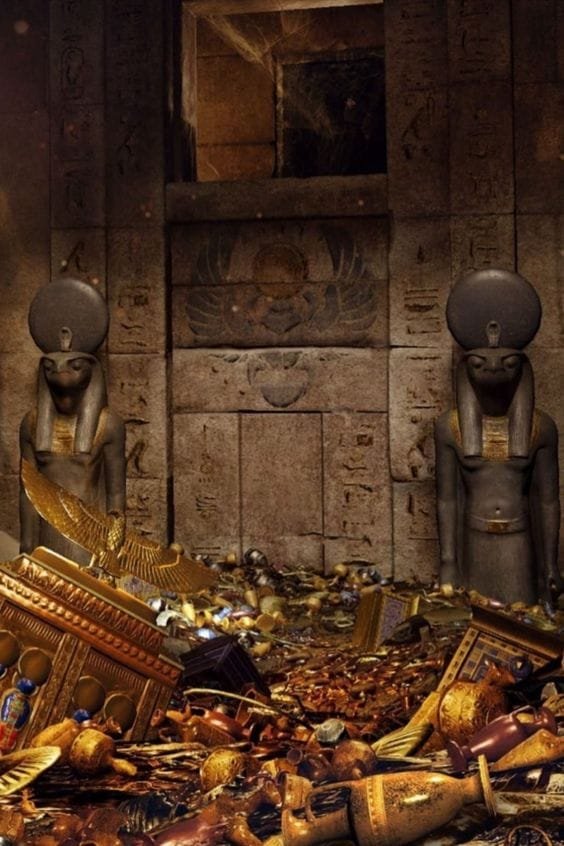
Few archaeological discoveries have had a greater global impact than the Tomb of Tutankhamun (KV62). Before its discovery in 1922, scholars possessed only a limited understanding of what an intact royal burial from Ancient Egypt actually looked like because nearly every other royal tomb in the Valley of the Kings had been looted during antiquity. The discovery of KV62 transformed Egyptology forever by providing an almost complete royal burial preserved for more than 3,300 years. Howard Carter's meticulous excavation established new international standards for archaeological documentation, conservation, photography, cataloging, and artifact preservation. Instead of removing treasures as quickly as possible, Carter carefully recorded the exact location of every object, creating an invaluable scientific record that continues to benefit researchers today. The discovery also sparked an unprecedented wave of public fascination with Ancient Egypt, often referred to as "Tutmania." Newspapers around the world published daily reports about the excavation, while museums organized exhibitions that attracted millions of visitors. Egyptian-inspired art, fashion, jewelry, architecture, and interior design became enormously popular throughout Europe and North America during the 1920s and 1930s. The tomb also inspired generations of archaeologists, historians, filmmakers, writers, and artists, making Tutankhamun one of the best-known historical figures in the world. Scientifically, the discovery provided unparalleled evidence about royal burial customs, religious beliefs, craftsmanship, trade networks, medicine, agriculture, diplomacy, and daily life during the New Kingdom. Thousands of artifacts demonstrated the extraordinary skills of Egyptian goldsmiths, carpenters, sculptors, textile makers, painters, and jewelers. Modern conservation methods developed during the study of Tutankhamun's treasures continue to influence museum practices worldwide. Even a century after Carter's discovery, researchers are still analyzing objects from KV62 using advanced technologies including digital imaging, chemical analysis, CT scanning, and artificial intelligence. No other archaeological discovery has contributed so much to our understanding of Ancient Egyptian civilization, and the legacy of Tutankhamun's tomb remains one of the greatest success stories in the history of archaeology.
9. Visiting Tutankhamun's Tomb Today: What Every Traveler Should Know
Visiting the Tomb of Tutankhamun (KV62) is one of the most unforgettable experiences for anyone exploring Luxor and the Valley of the Kings. Unlike many famous archaeological sites where treasures have been removed, visitors can still enter the original burial chamber where the Boy King was laid to rest more than 3,300 years ago. The tomb is one of the few royal burials in Egypt that still contains the original mummy, displayed inside a specially designed climate-controlled glass case that protects the fragile remains while allowing visitors a close view. Although the spectacular golden treasures—including the famous funerary mask, coffins, jewelry, shrines, and ceremonial objects—have been transferred to the Grand Egyptian Museum (GEM) for preservation and exhibition, standing inside the actual burial chamber provides a unique emotional connection to one of history's greatest archaeological discoveries. Visitors descend a short staircase before entering the compact tomb, where they can admire the beautifully painted burial chamber walls depicting scenes of Tutankhamun's funeral, his transformation into Osiris, and his acceptance among the gods. Because KV62 is one of the most visited attractions in Egypt, purchasing the required separate entry ticket and arriving early in the morning are highly recommended to avoid crowds. Comfortable walking shoes, lightweight clothing, sunscreen, and plenty of water are essential, particularly during the hot summer months. Photography policies may change according to regulations issued by the Egyptian Ministry of Tourism and Antiquities, so visitors should always check the latest guidelines before entering. Hiring a licensed Egyptologist guide greatly enhances the visit by explaining the symbolism of the wall paintings, the story of Howard Carter's discovery, and the significance of the thousands of treasures originally found inside the tomb. Many travelers combine KV62 with visits to nearby attractions such as the Tomb of Seti I (KV17), Ramesses VI (KV9), Hatshepsut's Mortuary Temple, Karnak Temple, Luxor Temple, and the Colossi of Memnon to gain a deeper understanding of New Kingdom Egypt. A visit to KV62 is not simply a tour of an ancient tomb—it is an opportunity to stand inside one of the most extraordinary archaeological discoveries ever made, experiencing firsthand the remarkable legacy of Tutankhamun, the legendary Boy King.

10. Conservation and Preservation of Tutankhamun's Tomb
The Tomb of Tutankhamun (KV62) is one of the most carefully protected archaeological sites in the world. Since its discovery by Howard Carter in 1922, millions of visitors have entered the tomb, creating significant conservation challenges for Egyptian authorities and international experts. Human breath, body heat, humidity, dust, and vibrations from daily tourism gradually affect the fragile painted walls and the delicate microclimate inside the burial chamber. Unlike many larger royal tombs in the Valley of the Kings, KV62 is relatively small, meaning environmental changes occur more rapidly and can threaten the preservation of its priceless wall paintings and ancient plaster. Recognizing these risks, the Egyptian Ministry of Tourism and Antiquities, together with international conservation organizations, has undertaken extensive restoration and preservation projects to ensure the tomb survives for future generations. Specialists have cleaned centuries of accumulated dust from the painted walls, stabilized fragile plaster, repaired cracks, monitored humidity and temperature levels, and installed advanced climate-control systems that reduce environmental damage caused by visitors. Modern LED lighting has replaced older systems that generated unnecessary heat, while carefully designed walkways help protect the ancient floor. Detailed laser scanning, digital photography, and three-dimensional documentation have created highly accurate records of every surface inside the tomb, allowing researchers to monitor even the smallest changes over time. The mummy of Tutankhamun is now displayed inside a specially designed climate-controlled glass case that protects it from fluctuations in temperature and humidity while allowing visitors to observe it safely. Conservation experts also study microorganisms that naturally occur inside enclosed archaeological spaces to prevent biological damage to the paintings and limestone walls. Thanks to these ongoing efforts, KV62 remains one of the best-preserved royal tombs in Egypt and serves as a global model for archaeological conservation. Every restoration project not only protects this extraordinary monument but also ensures that future generations can continue to experience the original burial place of one of history's most famous pharaohs.
11. Fascinating Facts About Tutankhamun's Tomb
The Tomb of Tutankhamun (KV62) is filled with remarkable stories and unique discoveries that continue to fascinate historians, archaeologists, and travelers around the world. One of the most astonishing facts is that although Tutankhamun was a relatively minor pharaoh who ruled for only about nine years, his tomb became the most famous in history because it was discovered almost intact. More than 5,000 artifacts were carefully packed into the tomb, making it the richest royal burial ever found in Ancient Egypt. The famous golden funerary mask, crafted from over 10 kilograms of solid gold, has become the universal symbol of Ancient Egypt and one of the world's greatest artistic masterpieces. Another extraordinary fact is that the tomb remained hidden for more than 3,300 years, partly because debris from later tomb construction covered its entrance, protecting it from extensive looting. Howard Carter spent nearly a decade cataloging and removing every object, setting new archaeological standards that are still followed today. The tomb also contained more than 130 walking sticks, suggesting that Tutankhamun experienced mobility problems during his lifetime. Scientific research has identified traces of malaria parasites and congenital medical conditions, providing valuable insight into the king's health. Unlike many royal mummies that were relocated during antiquity, Tutankhamun still rests inside his original tomb, making KV62 one of the few royal burials where visitors can see the actual mummy in its original location. The famous story of the "Curse of the Pharaohs" also became associated with the tomb after several people connected to the excavation died in the years following the discovery, although historians and scientists consider these events to be coincidental rather than supernatural. Today, the treasures from KV62 are displayed primarily in the Grand Egyptian Museum (GEM), where visitors can admire the complete collection together for the first time. More than a century after its discovery, Tutankhamun's tomb continues to inspire new documentaries, scientific studies, museum exhibitions, and archaeological research, proving that its historical importance extends far beyond its remarkable treasures.
12. The Legacy and Historical Importance of Tutankhamun's Tomb
The Tomb of Tutankhamun (KV62) remains one of the greatest archaeological discoveries ever made and continues to shape our understanding of Ancient Egypt more than one hundred years after its excavation. Although Tutankhamun himself ruled for only a short period and accomplished relatively little compared to legendary rulers such as Ramesses II, Thutmose III, or Seti I, the exceptional preservation of his burial transformed him into the world's most famous pharaoh. Before the discovery of KV62, historians had never witnessed an almost complete royal burial from the New Kingdom, making the tomb an unparalleled source of information about Egyptian religion, royal ceremonies, artistic achievements, craftsmanship, diplomacy, trade, medicine, and daily life. The more than 5,000 objects recovered from the tomb provide a detailed picture of the wealth, technology, and cultural sophistication of one of the world's earliest civilizations. The discovery also revolutionized archaeological methods by demonstrating the importance of careful excavation, scientific recording, conservation, and artifact preservation. Today, researchers continue to study Tutankhamun's treasures using advanced technologies such as CT scanning, DNA analysis, multispectral imaging, chemical testing, and three-dimensional digital modeling, revealing new information that was impossible to obtain a century ago. The global popularity of Tutankhamun has also played an important role in promoting Egyptian tourism, museum exhibitions, historical education, and international appreciation for cultural heritage. Millions of travelers visit the Valley of the Kings, the Grand Egyptian Museum, and other ancient sites every year because of their fascination with the Boy King and the incredible story of his discovery. Beyond its archaeological significance, KV62 reminds humanity of the importance of preserving historical monuments for future generations. As new research continues and conservation techniques evolve, Tutankhamun's tomb remains a symbol of the enduring brilliance of Ancient Egyptian civilization. Its extraordinary combination of historical importance, artistic beauty, religious symbolism, and unparalleled preservation ensures that KV62 will continue to captivate scholars, travelers, and history enthusiasts for centuries to come.
Tutankhamun's Tomb (KV62) vs. Seti I's Tomb (KV17): Which Royal Tomb Is More Impressive?
The Tomb of Tutankhamun (KV62) and the Tomb of Seti I (KV17) are the two most famous royal tombs in the Valley of the Kings, but they are celebrated for very different reasons. KV62 became world-famous because it was discovered almost completely intact in 1922, preserving thousands of priceless treasures, while KV17 is widely regarded as the finest masterpiece of Ancient Egyptian funerary architecture and art, featuring the most spectacular wall reliefs and religious decorations ever created inside a royal tomb.
If you are planning to visit the Valley of the Kings or simply want to understand the greatest achievements of the New Kingdom, the comparison below explains the key differences between these two extraordinary monuments.
| Feature | Tutankhamun’s Tomb (KV62) | Seti I’s Tomb (KV17) |
|---|---|---|
| Pharaoh | Tutankhamun (Boy King) | Seti I |
| Dynasty | Eighteenth Dynasty | Nineteenth Dynasty |
| Reign | c. 1332–1323 BC | c. 1294–1279 BC |
| Age at Death | About 18–19 years | Around 40–50 years |
| Tomb Number | KV62 | KV17 |
| Location | Valley of the Kings, Luxor | Valley of the Kings, Luxor |
| Discovery Date | 4 November 1922 | 16 October 1817 |
| Discovered By | Howard Carter | Giovanni Battista Belzoni |
| Overall Size | One of the smallest royal tombs | Largest and longest royal tomb in the Valley |
| Length | Approximately 30 meters (98 ft) | Approximately 137 meters (450 ft) |
| Architecture | Four main chambers | Multiple corridors, pillared halls, chambers, and long passageways |
| Wall Decorations | Decorated mainly in the burial chamber | Nearly every chamber is richly decorated |
| Artistic Quality | Elegant but relatively simple | Considered the finest artwork in any Egyptian royal tomb |
| Religious Texts | Limited funerary scenes | Amduat, Book of Gates, Litany of Ra, Book of the Heavenly Cow, Book of the Dead |
| Burial Chamber | Compact but richly furnished | Large pillared chamber with astronomical ceiling |
| Treasures Found | Over 5,000 artifacts discovered | Most treasures looted in antiquity |
| Golden Mask | Yes | No |
| Royal Mummy | Found inside the tomb | Moved in antiquity to the Royal Cache (DB320) |
| Current Mummy Location | Still inside KV62 | National Museum of Egyptian Civilization (NMEC) |
| Current Condition | Well preserved | Some flood and ancient damage but exceptional decoration survives |
| Main Attraction | Golden treasures and intact burial | Magnificent architecture and artistic decoration |
| Tourist Experience | Compact but unforgettable | Immersive walk through one of Egypt’s greatest masterpieces |
Which Tomb Is Better for Art and Architecture?
If you appreciate Ancient Egyptian art, colorful wall paintings, hieroglyphics, and religious symbolism, Seti I’s Tomb (KV17) is widely considered the greatest royal tomb ever built. Its beautifully carved reliefs, astronomical ceilings, and extensive funerary texts make it the artistic masterpiece of the Valley of the Kings.
Which Tomb Is Better for Treasures?
If you want to experience the excitement of the greatest archaeological discovery in history, Tutankhamun’s Tomb (KV62) is unmatched. Although most of its treasures are now displayed in the Grand Egyptian Museum (GEM), the tomb remains the original resting place of the Boy King and still contains his mummy.
Final Verdict
Both tombs deserve a place on every Egypt itinerary because they represent different aspects of Ancient Egyptian civilization:
- Choose KV62 if you want to experience the world’s most famous archaeological discovery and learn about the incredible treasures of Tutankhamun.
- Choose KV17 if you want to admire the finest royal tomb decoration, stunning religious artwork, and the most impressive architecture in the Valley of the Kings.
- Visit both for the ultimate Valley of the Kings experience. Together, they offer the most complete understanding of Ancient Egyptian royal burials, combining spectacular treasures with breathtaking artistic and architectural achievements.
Frequently Asked Questions (FAQs) About the Tomb of Tutankhamun (KV62)
The Tomb of Tutankhamun (KV62) is located in the Valley of the Kings on the west bank of the Nile River near Luxor, Egypt. It is one of the most visited royal tombs in the valley and remains the original burial place of the famous Boy King.
The tomb was discovered by British archaeologist Howard Carter on 4 November 1922 after years of excavation funded by Lord Carnarvon. It is considered one of the greatest archaeological discoveries in history.
Tutankhamun’s tomb became world-famous because it was discovered largely intact, containing more than 5,000 priceless artifacts, including the iconic golden funerary mask, golden coffins, jewelry, chariots, and royal furniture.
Tutankhamun was an Eighteenth Dynasty pharaoh who ruled Egypt from approximately 1332 to 1323 BC. He became king at around nine years old and died at about eighteen or nineteen.
He is known as the Boy King because he became pharaoh while still a child and died before reaching adulthood.
KV stands for Kings’ Valley, while 62 indicates that it was the 62nd tomb officially cataloged in the Valley of the Kings.
Howard Carter documented more than 5,000 individual objects, making it the richest and most complete royal burial ever discovered in Ancient Egypt.
The famous golden funerary mask is displayed in the Grand Egyptian Museum (GEM) together with many other treasures from the tomb.
Yes. Unlike most royal mummies, Tutankhamun’s mummy remains inside KV62, displayed in a climate-controlled glass case within the burial chamber.
The entrance was hidden beneath debris and workers’ huts built during the construction of later tombs, helping protect it from large-scale tomb robbers for more than 3,000 years.
The mask is crafted from approximately 10.23 kilograms (22.5 pounds) of solid gold and decorated with lapis lazuli, obsidian, quartz, colored glass, and other precious materials.
The tomb contains four main chambers:
- The Antechamber
- The Annex
- The Burial Chamber
- The Treasury
Despite its small size, every room was packed with extraordinary treasures
Although the exact cause remains uncertain, modern research suggests a combination of malaria, congenital health conditions, and complications from a severe leg fracture may have contributed to his death.
Yes. KV62 is open to visitors in the Valley of the Kings with a separate entrance ticket, allowing travelers to see the original burial chamber and the king’s mummy.
Although the tomb was discovered in 1922, Carter spent nearly ten years documenting, conserving, and removing every artifact with extraordinary care.
KV62 provides the most complete picture of a New Kingdom royal burial, helping historians understand Ancient Egyptian religion, burial customs, royal life, medicine, craftsmanship, and daily activities.
The walls depict the Opening of the Mouth Ceremony, Tutankhamun’s transformation into Osiris, and his acceptance among the gods, including Anubis, Nut, and Horus.
Most of the treasures from KV62 are preserved and displayed in the Grand Egyptian Museum (GEM) near the Giza Pyramids, where visitors can admire the complete collection.
Although Tutankhamun’s Tomb (KV62) is one of the smallest royal tombs in the Valley of the Kings, it is by far the most famous because it was discovered almost completely intact. Larger tombs such as Seti I’s Tomb (KV17) and Ramesses II’s Tomb (KV7) feature more elaborate architecture, longer corridors, and more extensive religious decorations. However, both of those tombs were heavily looted and damaged over time. In contrast, KV62 preserved an extraordinary collection of more than 5,000 artifacts, including the famous golden funerary mask, solid gold coffin, jewelry, chariots, and royal furniture. For visitors interested in ancient treasures and archaeology, KV62 offers an unmatched experience, while travelers fascinated by monumental architecture and religious artwork may also wish to explore the larger royal tombs nearby.
Visiting the Tomb of Tutankhamun (KV62) is one of the highlights of any trip to Luxor and the Valley of the Kings. Standing inside the original burial place of the Boy King allows visitors to experience one of the greatest archaeological discoveries ever made. Although the magnificent treasures are now displayed in the Grand Egyptian Museum (GEM), the tomb still contains the king’s original burial chamber, beautifully painted walls, and Tutankhamun’s actual mummy preserved in a climate-controlled display case. Combined with nearby attractions such as Karnak Temple, Luxor Temple, the Temple of Hatshepsut, the Colossi of Memnon, and other royal tombs in the Valley of the Kings, KV62 offers an unforgettable journey into the heart of Ancient Egyptian civilization. Whether you are passionate about history, archaeology, photography, or cultural heritage, a visit to Tutankhamun’s tomb provides a once-in-a-lifetime opportunity to connect with one of the world’s most iconic historical treasures.