- Excursions in Egypt
- Egypt Tour Packages
- Cairo Tours and Excursions
- Hurghada Tours and Excursions
- Soma Bay Tours and Excursions
- Makadi Bay Tours and Excursions
- Sahl Hasheesh Tours and Excursions
- El Gouna Tours and Excursions
- Marsa Alam Tours and Excursions
- Port Ghalib Tours and Excursions
- El Quseir Tours and Excursions
- Dendera and Abydos Day Tours
- Aswan Tours and Excursions
- Luxor Tours and Excursions
- Sharm El Sheikh Tours and Excursions
- Top Rated Egypt Tours in 2026
- Optional Excursions in Egypt
- Private Transfer
- Blogs About egypt
- Ancient Egypt
- Historical Sites in Egypt
- Cairo
- Alexandria
- Luxor
- Aswan
- The Red Sea
- Dendera Temple
- El Fayoum Oasis
- Bahariya Oasis
- Siwa Oasis
- Al Alamein
- Marsa Matruh
- Why Egypt Is One of the Safest Countries to Visit in the Middle East
- What You Need To know Before Your First Trip To Egypt
- Egypt Travel Costs in 2026 Full Budget Guide
- Top 10 Tourist Activities in Egypt
- Top 50 Activities You Can’t Miss in Egypt in 2026
- The Guide to Guided Tours in Egypt
- Egypt’s Ancient and Modern History
- The Nile River
- The Deserts of Egypt
- Ancient Egyptian gods
- famous Egyptian dishes
- UNESCO World Heritage sites
- About Us
- Egypt Hotels and Resorts
- Excursions in Egypt
- Egypt Tour Packages
- Cairo Tours and Excursions
- Hurghada Tours and Excursions
- Soma Bay Tours and Excursions
- Makadi Bay Tours and Excursions
- Sahl Hasheesh Tours and Excursions
- El Gouna Tours and Excursions
- Marsa Alam Tours and Excursions
- Port Ghalib Tours and Excursions
- El Quseir Tours and Excursions
- Dendera and Abydos Day Tours
- Aswan Tours and Excursions
- Luxor Tours and Excursions
- Sharm El Sheikh Tours and Excursions
- Top Rated Egypt Tours in 2026
- Optional Excursions in Egypt
- Private Transfer
- Blogs About egypt
- Ancient Egypt
- Historical Sites in Egypt
- Cairo
- Alexandria
- Luxor
- Aswan
- The Red Sea
- Dendera Temple
- El Fayoum Oasis
- Bahariya Oasis
- Siwa Oasis
- Al Alamein
- Marsa Matruh
- Why Egypt Is One of the Safest Countries to Visit in the Middle East
- What You Need To know Before Your First Trip To Egypt
- Egypt Travel Costs in 2026 Full Budget Guide
- Top 10 Tourist Activities in Egypt
- Top 50 Activities You Can’t Miss in Egypt in 2026
- The Guide to Guided Tours in Egypt
- Egypt’s Ancient and Modern History
- The Nile River
- The Deserts of Egypt
- Ancient Egyptian gods
- famous Egyptian dishes
- UNESCO World Heritage sites
- About Us
- Egypt Hotels and Resorts
Welcome to
Islamic Cairo: A Timeless Journey Through the City of a Thousand Minarets
Step into the labyrinthine heart of Egypt’s capital, where the air is thick with the scent of ancient spices and the sky is pierced by countless elegant spires. Islamic Cairo, a UNESCO World Heritage site, is not merely a historical district; it is a sprawling, open-air museum that preserves the soul of the medieval world within its sandstone walls. Known globally as the “City of a Thousand Minarets,” this area offers an unparalleled journey through the golden ages of Islamic civilization, from the Fatimid and Ayyubid dynasties to the grandeur of the Mamluks and Ottomans. As you walk through its monumental gates, such as Bab Zuweila, you are instantly transported back to an era of caliphs, scholars, and legendary travelers. The architecture here is a symphony of intricate geometry, soaring domes, and delicate arabesque carvings that tell stories of power, piety, and artistic brilliance. For the modern explorer, Islamic Cairo is a sensory masterpiece where the rhythmic hammering of coppersmiths blends with the hauntingly beautiful call to prayer echoing from historic mosques. It is a place where every narrow alleyway leads to a hidden gem, whether it be a majestic sultan’s complex, a quiet fountain house, or a bustling medieval market like Khan el-Khalili. This district represents the pinnacle of Islamic urban design, where the spiritual and the secular coexist in perfect harmony. Whether you are marveling at the sheer scale of the Citadel of Saladin or admiring the quiet elegance of a hidden courtyard, Islamic Cairo promises an experience that captures the imagination and touches the spirit. It is the beating heart of Egyptian culture, a timeless treasure that invites you to uncover the layers of history, faith, and architectural wonder that have defined this magnificent city for over a thousand years.
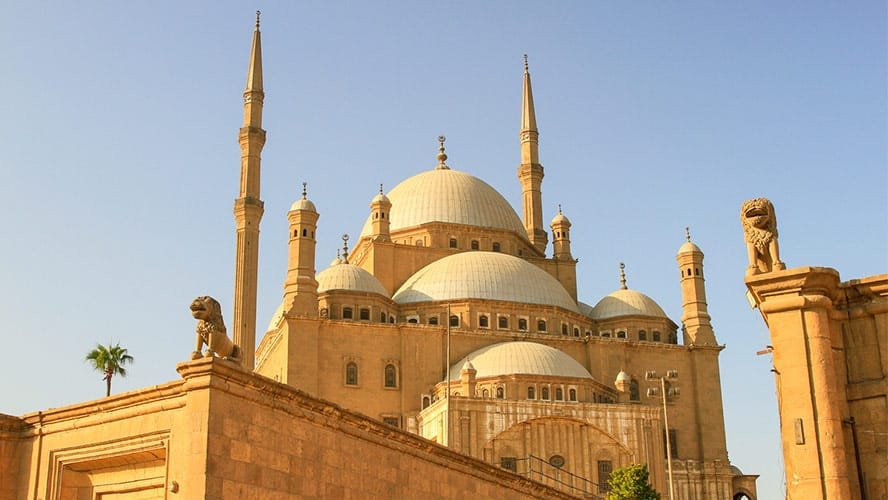
1. The Citadel of Saladin: A Fortress of Power and Majesty
Perched high upon the Muqattam Hills, the Citadel of Saladin stands as a grand sentinel guarding the city of Cairo for over eight hundred years. Built by the legendary Sultan Salah al-Din in 1176, this massive fortification was designed to protect the city from Crusader threats, serving as the seat of Egyptian government for centuries. As you pass through its imposing gates, the sheer scale of the limestone walls and defensive towers takes your breath away, offering a tangible link to the military brilliance of the Middle Ages. The Citadel is not just a military fortress; it is a complex layer of history, housing several mosques, palaces, and museums that reflect the changing dynasties of Egypt. From its elevated terraces, you are treated to the most spectacular panoramic view of Cairo, where the modern skyline meets the endless sea of historic domes and minarets. The strategic importance of this site cannot be overstated, as it provided a vantage point that controlled the entire Nile Valley. Walking along its ramparts, you can feel the weight of the decisions made here that shaped the fate of the Middle East. The blend of rugged military architecture with the refined beauty of the royal residences within creates a fascinating contrast. For the traveler, the Citadel serves as the perfect starting point to understand the grandeur of Islamic Cairo. It represents the strength and resilience of a civilization that flourished at the crossroads of the world. Whether you are exploring the deep well of Joseph or wandering through the military museum, the Citadel offers a profound sense of continuity, standing as a timeless monument to the sultan who sought to unite the Islamic world under one banner of defense and cultural pride.
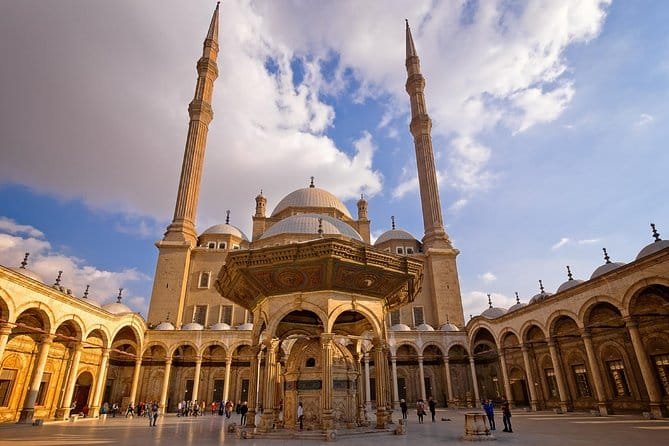
2. The Mosque of Muhammad Ali: The Alabaster Icon
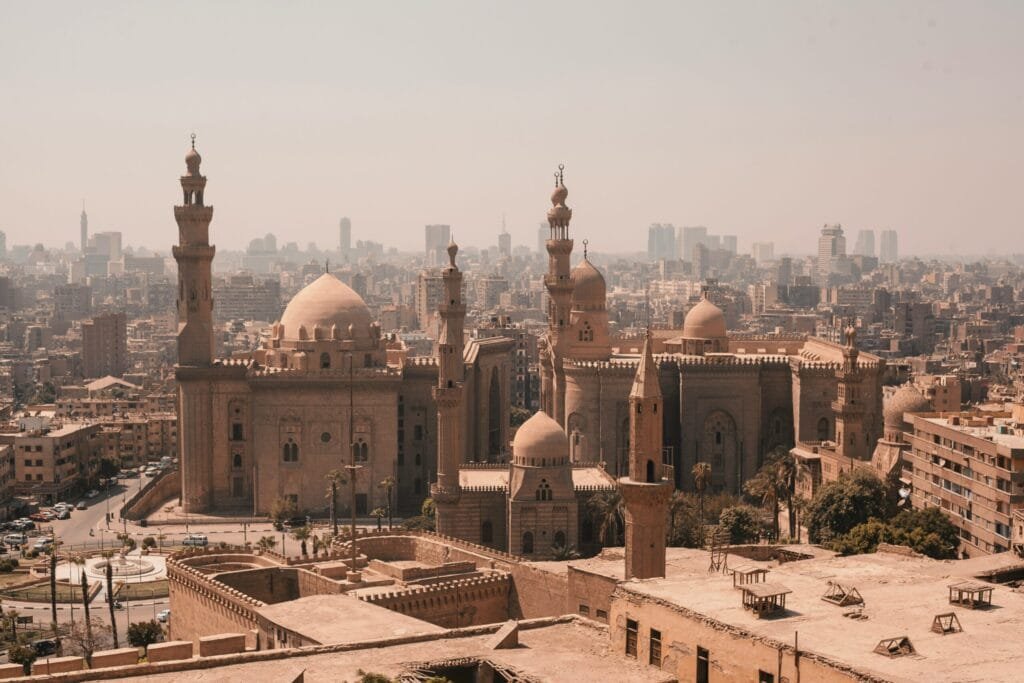
Dominating the skyline of the Citadel is the magnificent Mosque of Muhammad Ali, often referred to as the Alabaster Mosque due to the extensive use of this fine stone on its exterior and interior walls. Commissioned in the mid-19th century by the founder of modern Egypt, Muhammad Ali Pasha, the mosque was designed in the grand Ottoman style, characterized by its towering, needle-like minarets and a massive central dome that seems to touch the clouds. Its architecture was a deliberate departure from the traditional Mamluk styles found elsewhere in Cairo, intended to signal a new era of Egyptian power and international influence. As you step inside, the sheer volume of the prayer hall is breathtaking, illuminated by a colossal ornate chandelier and hundreds of smaller lamps that create a celestial glow. The walls are adorned with intricate floral patterns and inscriptions, while the marble floors reflect the soft light filtering through the stained-glass windows. The courtyard, with its elegant fountain and ornate clock tower—a gift from King Louis Philippe of France—offers a serene space for reflection amidst the grandeur. This mosque is not only a masterpiece of religious architecture but also the final resting place of Muhammad Ali himself, whose white marble tomb is a site of great historical interest. For visitors, the Alabaster Mosque is the most visible symbol of Cairo’s Islamic identity, offering a blend of spiritual tranquility and imperial opulence. The view from its outer courtyard, looking out over the sprawling city toward the distant Pyramids of Giza on a clear day, is a moment of pure magic that captures the layered beauty of Egypt’s long and diverse history.
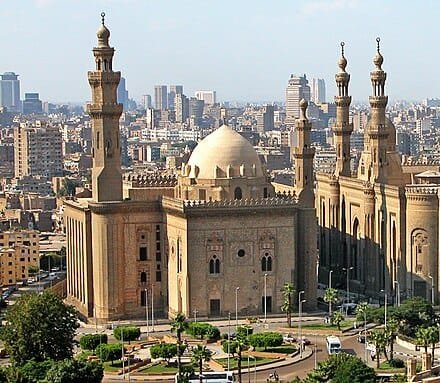
3. Sultan Hassan Mosque: The Pyramid of Islamic Architecture
Directly facing the Citadel lies the Mosque-Madrasa of Sultan Hassan, widely considered by historians and architects as one of the most significant Islamic monuments ever built. Constructed between 1356 and 1363, this massive complex is often called "The Pyramid of Islamic Architecture" due to its colossal size and innovative engineering. The entrance portal alone is a marvel of masonry, soaring high above the street and decorated with intricate stone carvings that demonstrate the peak of Mamluk craftsmanship. Once inside, the layout follows a classic cruciform design, with a central open courtyard surrounded by four massive vaulted halls, or iwans, each dedicated to one of the four schools of Sunni Islamic jurisprudence. The scale of the arches is staggering, creating a sense of awe that was intended to reflect the greatness of the Creator. The use of multicolored marble in the qibla wall and the finely carved wooden pulpit are among the finest examples of medieval art in the world. Despite its age, the mosque possesses a modern sense of minimalism and geometric purity that continues to inspire architects today. Sultan Hassan intended this building to be a world-class center of learning, housing hundreds of students in the surrounding quarters. Although the sultan himself was murdered before the project was finished and his body never found, his legacy lives on through this monumental structure. For the traveler, standing in the center of the courtyard and looking up at the towering walls is a humbling experience. It is a place where the power of the state and the devotion of the faith were fused into stone, creating a sanctuary of intellectual and spiritual light that has survived centuries of political turmoil and natural disasters.
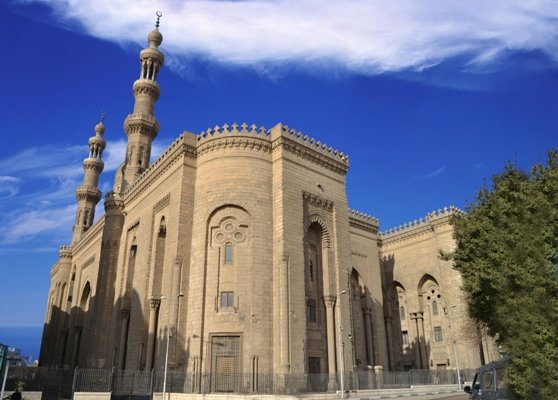
4. Al-Rifa'i Mosque: The Royal Mausoleum of Modernity
Standing in the shadow of the Sultan Hassan Mosque is its architectural twin and rival, the Al-Rifa'i Mosque. While it looks centuries old, this massive structure was actually completed in 1912 to serve as a royal mausoleum for the Muhammad Ali dynasty. The mosque was commissioned to provide a grand final resting place for Egypt's modern kings, including King Farouk, the last reigning monarch of the country. Architecturally, Al-Rifa'i was designed to complement the neighboring Mamluk mosque, utilizing grand proportions and intricate stone carvings that mimic the medieval style, yet it incorporates modern engineering and materials of the early 20th century. Inside, the mosque is a dazzling display of opulence; the ceilings are hand-painted and gilded, while the floors are covered in rare, multicolored marbles imported from all over the world. One of the most fascinating aspects for international travelers is the presence of the tomb of the last Shah of Iran, Mohammad Reza Pahlavi, who was buried here in 1980. The mosque’s interior is divided into several prayer halls and burial chambers, each more ornate than the last, creating an atmosphere of regal solemnity. The sheer volume of the space and the height of the minarets make it a landmark that cannot be missed. Walking through its halls, you feel the transition from Egypt’s medieval past to its modern royal era. It is a place where history, politics, and religion converge in a magnificent display of architectural ambition. For the visitor, Al-Rifa'i represents the enduring desire of Egypt’s rulers to connect their legacy with the glorious traditions of the past, ensuring that even in the modern age, the spirit of Islamic Cairo continues to flourish with grace, power, and unmatched artistic beauty.
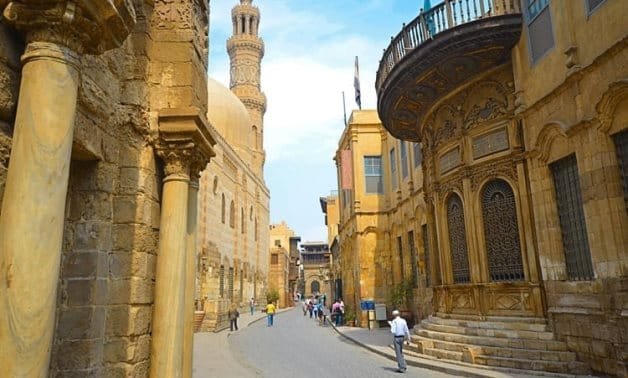
5. Al-Muizz Street: The Golden Corridor of History
Al-Muizz li-Din Allah al-Fatimi Street is often described as the "world's greatest concentration of medieval architectural treasures." Named after the Fatimid Caliph who founded the city in 969 AD, this street serves as the main artery of Islamic Cairo and acts as a living chronological map of the city’s evolution. Stretching approximately one kilometer, the street is lined on both sides with a dense forest of mosques, madrasas, sabils (fountain houses), and kuttabs (schools) that represent every major dynasty that ruled Egypt. Walking down Al-Muizz is a dizzying sensory experience; the golden limestone of the buildings glows under the Egyptian sun, while the intricate copper work and carved wooden balconies provide a feast for the eyes. This street was the ceremonial heart of the city, where royal processions once marched and where the finest scholars of the Islamic world gathered to teach. Today, it remains a bustling center of commerce and social life, where the calls of street vendors mingle with the timeless architecture. Among the most significant stops along the street is the Qalawun Complex, which featured a hospital, a school, and a mausoleum, showcasing the advanced social services provided by medieval rulers. The street has been beautifully restored, making it a pedestrian-friendly zone that allows travelers to linger over the fine details of the masonry and the geometric harmony of the domes. For anyone seeking to capture the "true" essence of Cairo, Al-Muizz Street is an absolute necessity. It is the place where the glory of the past is not tucked away in a museum but is an active part of the daily rhythm of life, offering a profound and intimate connection to the heart of Islamic civilization.
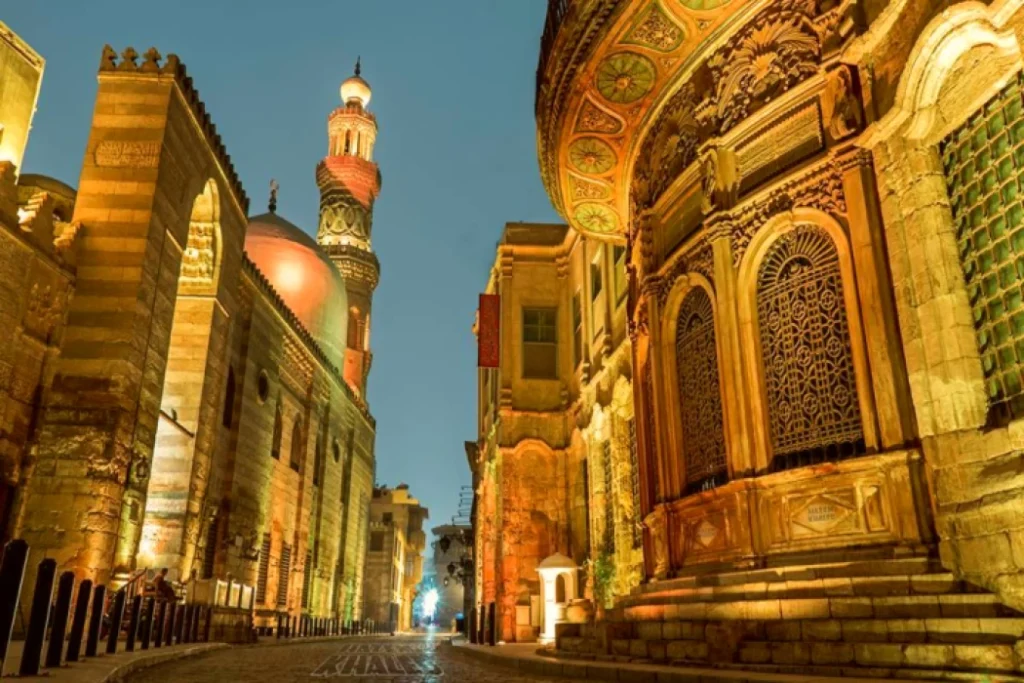
6. The Qalawun Complex: A Masterpiece of Mamluk Art
Situated in the heart of Al-Muizz Street, the Complex of Sultan al-Mansur Qalawun is a breathtaking ensemble of architecture that perfectly encapsulates the power and sophistication of the Mamluk era. Built in 18 months between 1284 and 1285, the complex is remarkable for its tripartite function, housing a madrasa (school), a mausoleum, and a maristan (hospital). The hospital was particularly famous in its time, offering free medical care to all, regardless of status, and utilizing advanced techniques like music therapy to treat the mentally ill. The mausoleum of Qalawun is often cited as the second most beautiful in the world, surpassed only by the Taj Mahal. Its interior is a riot of color and texture, featuring marble mosaics, mother-of-pearl inlays, and stained-glass windows that cast a kaleidoscopic light over the sultan’s resting place. The dome is supported by massive columns that echo the Roman and Byzantine influences that the Mamluks integrated into their unique style. The madrasa portion, with its soaring arches and quiet courtyard, provided a sanctuary for students of theology and law for centuries. What makes the Qalawun Complex truly special is its ability to evoke a sense of spiritual and intellectual grandeur simultaneously. Every square inch of the walls is decorated with intricate Kufic calligraphy and floral motifs that invite close inspection. For the traveler, this complex serves as a masterclass in Islamic decorative arts, revealing the high level of scientific and artistic achievement reached during the 13th century. It stands as a monument to a ruler who believed that greatness was achieved not just through military conquest, but through the patronage of art, education, and the well-being of his people, creating a legacy that still inspires wonder today.
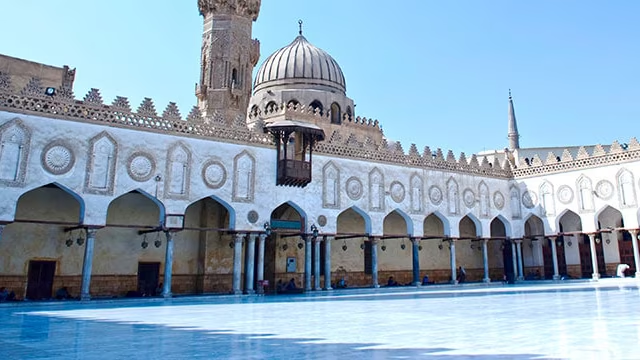
7. Al-Azhar Mosque: The Beacon of Islamic Knowledge
Founded in 970 AD by the Fatimids, Al-Azhar Mosque is not merely a place of worship; it is the spiritual and intellectual heart of the Sunni Islamic world. As the first mosque established in Cairo, it quickly evolved into one of the world’s oldest continuously operating universities, attracting scholars from every corner of the globe. The architecture of Al-Azhar is a fascinating palimpsest of Egyptian history, with each dynasty—from the Ayyubids to the Ottomans—adding its own minarets, gates, and prayer halls. Entering through the "Gate of the Barbers," you are greeted by a vast, white marble courtyard that reflects the brilliance of the Egyptian sun, creating an atmosphere of celestial purity. The mosque’s five distinct minarets, each featuring a different architectural style, represent the layers of time that have shaped this institution. Inside, the forest of columns in the prayer hall provides a sanctuary for both worshippers and students who sit in traditional circles, or halaqas, to discuss theology and law. For the traveler, Al-Azhar offers a profound sense of continuity; it is a place where the medieval tradition of learning is still very much alive. The quiet hum of recitation and the sight of students from Africa, Asia, and Europe remind us of Cairo’s historical role as the "Mother of the World." Visiting Al-Azhar is an exercise in humility and wonder, as you stand in a space that has guided the moral and intellectual compass of millions for over a millennium. It remains a beacon of moderation and scholarship, bridging the gap between ancient tradition and the challenges of the modern world. Its influence is felt far beyond the limestone walls of the old city, making it a vital stop for any cultural pilgrim.
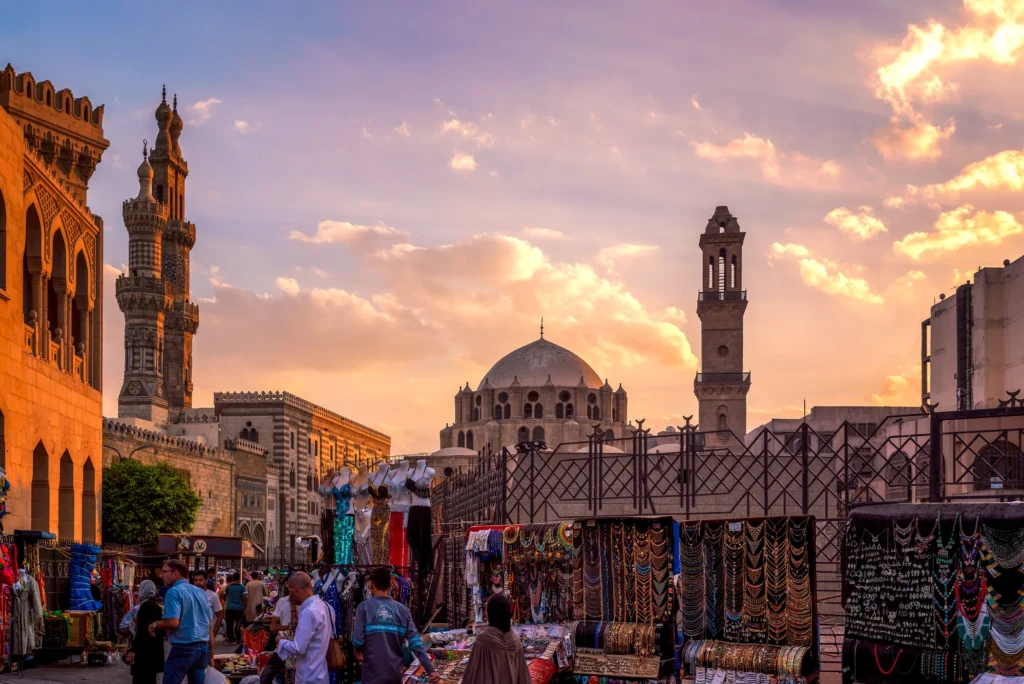
8. Khan el-Khalili: The Pulse of Medieval Commerce
No visit to Islamic Cairo is complete without losing oneself in the vibrant, labyrinthine alleys of Khan el-Khalili, one of the most famous souks in the world. Established in the 14th century during the Mamluk era as a center for trade, this bustling market remains the commercial soul of the city. As you step into the bazaar, your senses are immediately overwhelmed by a kaleidoscope of colors, sounds, and scents. The aroma of freshly ground cumin and coriander mingles with the sweet fragrance of jasmine oil and the smoky scent of traditional oud. The narrow streets are lined with tiny shops overflowing with shimmering copper lanterns, intricate silver jewelry, hand-woven carpets, and vibrant stained glass that catches the light in a mesmerizing dance. Khan el-Khalili is more than just a place to shop; it is a social theater where the ancient art of bargaining is still a mandatory performance. Between the stalls, you will find historic caravanserais, or wikalas, which once housed traveling merchants and their camels, now serving as silent reminders of Cairo’s position on the Great Silk Road. For a break from the excitement, a stop at the legendary El Fishawy cafe is essential. Having served tea and shisha for over two centuries, its mirror-lined walls have witnessed generations of writers, artists, and travelers. The market is a living bridge between the medieval past and the energetic present, where the craftsmanship of the ancestors is still practiced by local artisans in hidden workshops. Navigating this maze is a rite of passage for every traveler, offering an authentic taste of the chaotic, beautiful, and enduring spirit of Egyptian trade that has defined the city’s character for hundreds of years.
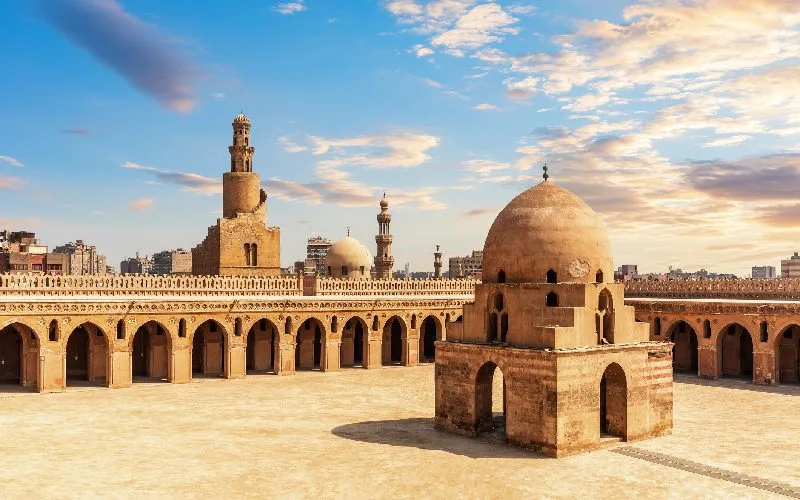
9. The Mosque of Ibn Tulun: A Symphony of Simplicity
Among the grand monuments of the city, the Mosque of Ibn Tulun stands as a unique masterpiece of early Islamic architecture, characterized by its majestic simplicity and monumental scale. Completed in 879 AD, it is the oldest mosque in Cairo that survives in its original form, offering a rare glimpse into the Samarran style imported from Iraq. Unlike the ornate marble and gold of later mosques, Ibn Tulun relies on the raw beauty of red brick and carved stucco to create an atmosphere of profound serenity. The mosque is famous for its vast open courtyard, which was designed to hold the sultan’s entire army during Friday prayers, and its iconic spiral minaret, which features an external staircase reminiscent of the Great Mosque of Samarra. As you walk through the pointed arches—some of the earliest examples in architectural history—you are struck by the rhythmic repetition of geometric patterns and Cufic inscriptions carved into the plaster. The sheer lack of clutter allows the mind to focus on the play of light and shadow across the ancient floors. Climbing the spiral minaret provides one of the most rewarding experiences in Islamic Cairo; from the top, you gain a bird’s-eye view of the surrounding medieval quarters and the distant Citadel. The mosque is surrounded by a ziyada, an outer courtyard that acts as a buffer against the noise of the city, ensuring that the inner sanctuary remains a place of absolute peace. For the traveler, Ibn Tulun is a lesson in the power of restraint. It proves that grandeur does not always require opulence, but can be found in the perfect harmony of proportions and the timeless whisper of the desert wind through its silent, sun-drenched arcades.
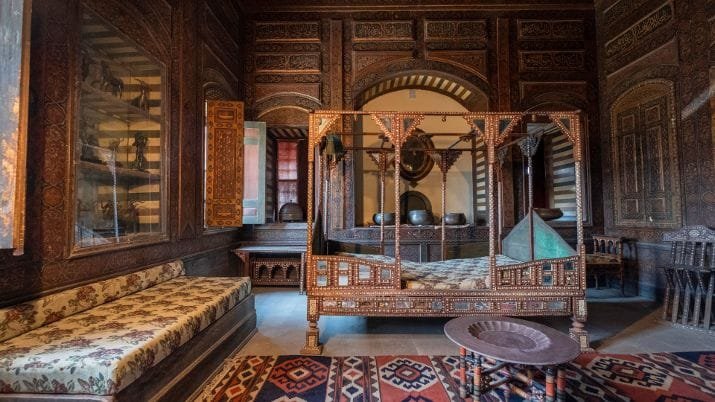
10. The Gayer-Anderson Museum: A House of Legends
Tucked against the walls of the Mosque of Ibn Tulun lies the Gayer-Anderson Museum, one of the best-preserved examples of 17th-century domestic architecture in Cairo. The museum is actually composed of two historic houses, the Beit al-Kiridliyya and the Beit Amna bint Salim, which were joined together by a British army doctor and avid collector, John Gayer-Anderson, in the 1930s. Walking through its rooms is like stepping into a story from the "Thousand and One Nights." Each chamber is themed and decorated with an eclectic mix of Oriental furniture, Persian carpets, and Pharaonic antiquities, reflecting the doctor’s obsession with Egyptian history and art. The house is famous for its intricate mashrabiya windows, which allowed the ladies of the harem to look out at the street without being seen, and its hidden "secret" rooms used for eavesdropping. The central courtyard, with its cooling marble fountain, serves as the heart of the home, showcasing how medieval architecture used nature to combat the Egyptian heat. Legends say the house was built on the spot where Noah’s Ark rested after the flood, and the museum’s well is said to have magical healing properties. For the traveler, the Gayer-Anderson Museum offers a rare, intimate look at the private side of Islamic Cairo, away from the public grandeur of mosques and fortresses. It captures the domestic spirit of the Ottoman era, where beauty was tucked away behind plain limestone walls. Exploring its labyrinthine corridors, rooftop terraces, and the magnificent "Damascus Room" provides a vivid picture of the luxurious lifestyle of Cairo’s elite. It is a place where art, history, and folklore intertwine, offering a personal narrative of the city’s enduring and mysterious charm.
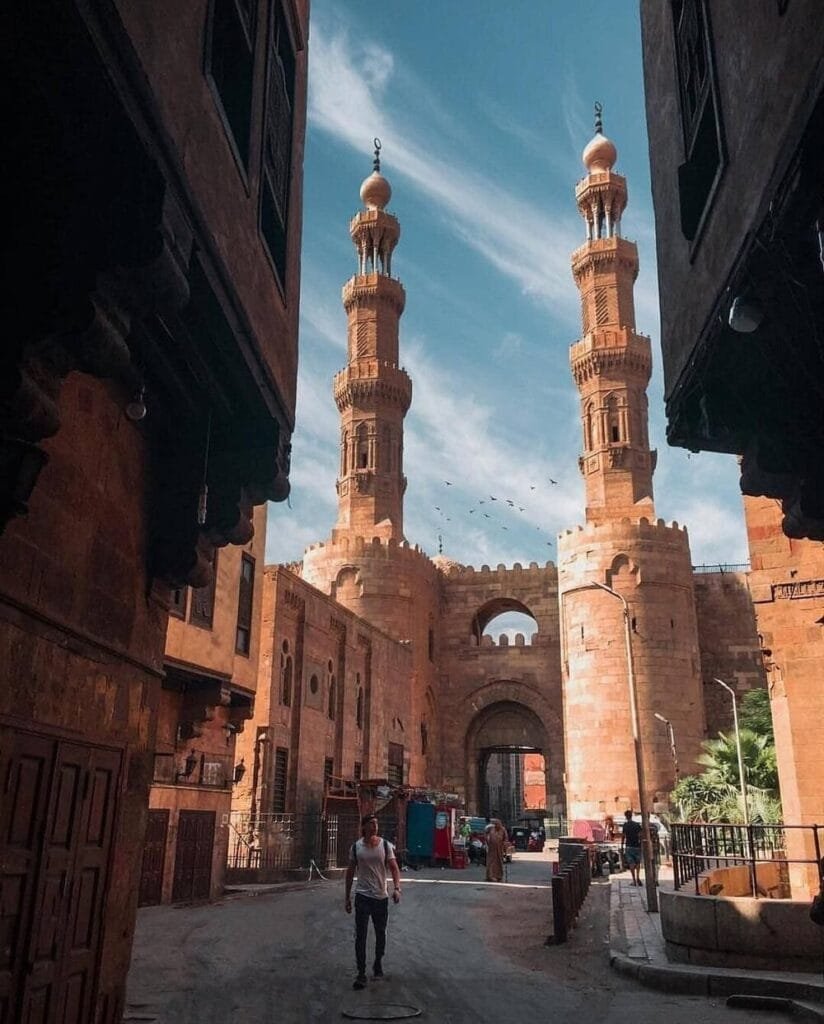
11. Bab Zuweila: The Gate of History and Spirits
Bab Zuweila is one of the three remaining gates in the walls of the Old City of Cairo, and perhaps the most legendary. Built in 1092 by the Fatimid vizier Badr al-Jamali, this massive stone gateway served as the southern entrance to the royal city of Al-Qahira. Its name comes from the Zuweila tribe, Berber soldiers who were stationed nearby to guard the caliph. The gate is famous for its twin towers, which were later used as the base for the minarets of the adjacent Mosque of Sultan al-Mu’ayyad Sheikh. Historically, Bab Zuweila was the site of royal proclamations and, more notoriously, the place where the severed heads of executed criminals and enemies were displayed to the public. Today, the gate has a much more peaceful reputation; it is believed by many locals to be the dwelling place of the "spirit of the saint" Al-Metwalli, where people leave scraps of cloth or strands of hair in exchange for blessings and healing. Climbing the narrow, winding stairs to the top of the towers is a must for any visitor. From the summit, you are rewarded with a breathtaking, close-up view of the minarets and the bustling market of the tent-makers below. The gate stands as a symbol of the city's transition from a guarded royal enclave to a sprawling, inclusive metropolis. For the modern traveler, Bab Zuweila is a portal into the past, where the sheer thickness of the stone walls reminds us of a time when the city's survival depended on its defenses. It is a place of dramatic history and deep-seated folk traditions, marking the southern boundary of a walk that encompasses the very soul of the medieval Islamic world.

12. The Tent-Makers Market: The Last of the Craft
Just outside Bab Zuweila lies the Street of the Tent-Makers, or Sharia al-Khiyamia, the last remaining covered market in Cairo. This historic alleyway has been the center of the city’s textile industry for centuries, specializing in the art of Khayamiya—a form of intricate appliqué work that was originally used to decorate the interior of nomadic tents and royal pavilions. As you walk under the high wooden roof of the market, you see master craftsmen sitting cross-legged in their tiny shops, skillfully stitching complex geometric and floral patterns onto heavy canvas. The designs are a vibrant fusion of Islamic geometry, Cufic calligraphy, and scenes from ancient Egyptian life. While the demand for traditional tents has decreased, these artisans have adapted their craft to create stunning wall hangings, pillowcases, and bedspreads that are prized by collectors worldwide. The atmosphere here is quieter and more focused than the chaotic Khan el-Khalili, allowing you to witness the rhythmic, meditative nature of the work. Each piece can take weeks or even months to complete, representing a level of dedication that is rare in the modern world. For the traveler, the Tent-Makers Market is a living testament to Cairo's artistic resilience. It is one of the few places where you can still see a medieval craft being practiced exactly as it was hundreds of years ago. Purchasing a piece of Khayamiya is not just buying a souvenir; it is supporting the survival of a vanishing heritage. The market serves as a colorful bridge between the practical needs of the past and the aesthetic desires of the present, ensuring that the manual brilliance of Cairo’s artisans continues to thrive in the heart of the old city.
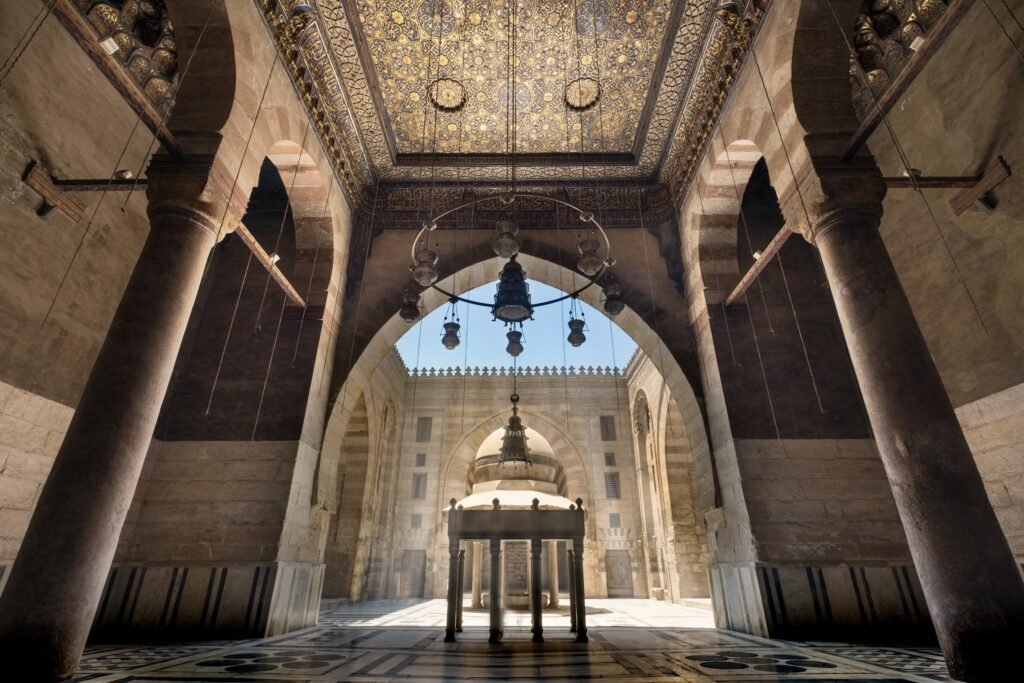
13. The Complex of Sultan Barquq: Mamluk Architectural Elegance
In the heart of the Nahhasin district along Al-Muizz Street stands the monumental Complex of Sultan Barquq, a breathtaking example of Circassian Mamluk architecture. Built between 1384 and 1386, this complex was the first to be established during the Burji Mamluk era, serving as a mosque, a madrasa for the four Islamic schools of law, and a khanqah for Sufis. The building is renowned for its massive bronze-plated door, which is intricately inlaid with silver, leading visitors into a world of refined stone craftsmanship. One of the most striking features of the complex is its unique minaret, which boasts three tiers of exquisite carvings, and its magnificent dome, which was originally made of wood before being reconstructed in stone. Inside, the open courtyard is paved with multicolored marble in complex geometric patterns, while the prayer hall features a ceiling of painted wood and gold leaf that glitters in the natural light. The dikka of the movers and the marble minbar are considered among the finest examples of medieval woodwork and masonry. For the traveler, Sultan Barquq’s complex offers a sense of monumental balance; it feels both immense and intimately detailed. The presence of the Sufi cells reminds us of the spiritual and social role these buildings played, acting as centers for mystical devotion and education. Exploring this site allows you to appreciate the architectural transition that occurred during the 14th century, where the Mamluks reached a peak of decorative sophistication. It remains a silent witness to a time when Cairo was the undisputed intellectual capital of the Islamic world, blending the power of the state with the timeless beauty of sacred art.
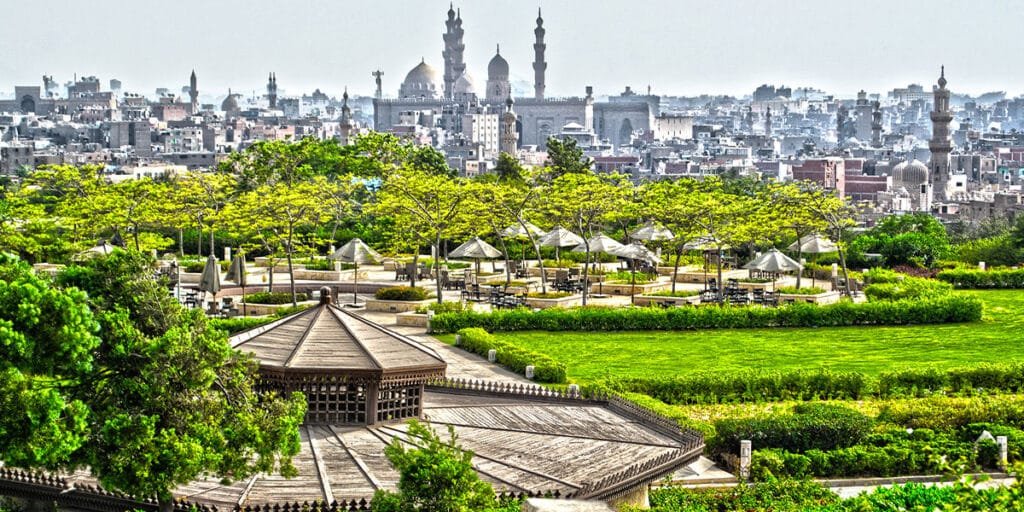
14. Al-Azhar Park: A Green Oasis Amidst Stone
While not a medieval monument itself, Al-Azhar Park is an essential part of the Islamic Cairo experience, offering a breathtaking green sanctuary that was reclaimed from a centuries-old landfill. Opened in 2005 as a gift from the Aga Khan Trust for Culture, this 74-acre park is a miracle of urban landscape architecture, designed to reflect the traditional Islamic garden aesthetic with its fountains, shaded walkways, and aromatic flora. However, the park's true significance lies in what it uncovered during its construction: the 12th-century Ayyubid wall built by Saladin to protect the city. As you stroll through the lush gardens, you can see the beautifully restored limestone fortifications that once defended Cairo from invaders. The park is strategically situated on high ground, providing what is arguably the most stunning vantage point in the entire city. From the park’s terraces, you can look out over the "City of a Thousand Minarets," watching the sunset cast a golden glow over the Citadel and the massive domes of Sultan Hassan. For the traveler, Al-Azhar Park provides a necessary moment of peace and perspective. It allows you to see the layout of the medieval city from above, understanding the relationship between the various landmarks you have explored on foot. The park’s restaurants, built in a modern-Islamic style, offer the perfect setting for a traditional meal with a view that spans over a thousand years of history. It is a place where the environmental future of Cairo meets its glorious past, proving that the city's heritage can be a catalyst for modern renewal and a source of tranquility for both locals and international visitors alike.
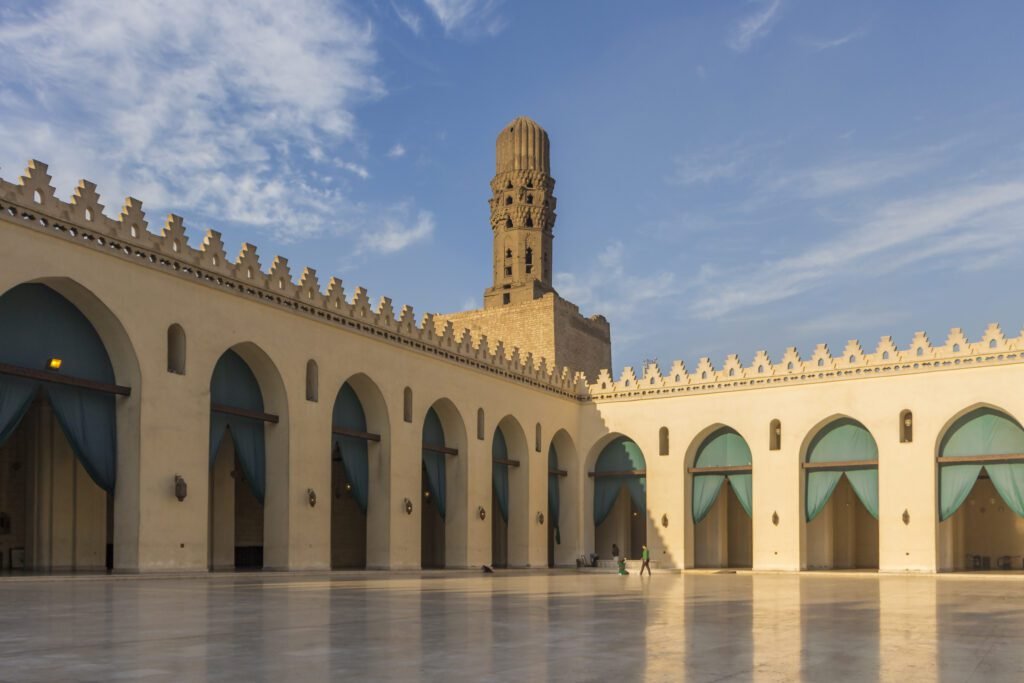
15. The Mosque of Al-Hakim bi-Amr Allah: The Luminous Sanctuary
Located at the northern end of Al-Muizz Street, near the monumental gate of Bab al-Futuh, stands the Mosque of Al-Hakim bi-Amr Allah, a place of mystery and immense spiritual aura. Completed in 1013, this mosque is the second largest Fatimid congregational mosque in Cairo and is named after the sixth Fatimid caliph, a figure known for his eccentric and enigmatic rule. The mosque is famous for its unique minarets, which are the oldest surviving minarets in the city; they are encased in massive square bases that were added later for reinforcement. As you enter the vast open courtyard, you are struck by the sense of light and space. The arches are supported by heavy brick piers and decorated with elegant Cufic inscriptions that praise the divine. The mosque has undergone significant restorations over the centuries, most notably by the Dawoodi Bohra community, which has returned the building to its former glory with gleaming white marble and polished brass. There is a specific stillness within these walls that is different from the busier mosques in the center of the city. For the traveler, Al-Hakim’s mosque offers a chance to explore the Fatimid legacy in its purest architectural form. The contrast between the stark, white interior and the ancient, weathered stone of the exterior minarets creates a powerful visual experience. It is a site that feels deeply connected to the early foundations of Cairo, standing as a sentinel at the edge of the old city walls. Visiting this sanctuary at dawn or dusk, when the light play on the marble is at its most dramatic, provides a hauntingly beautiful conclusion to a journey through the northern reaches of Islamic Cairo.
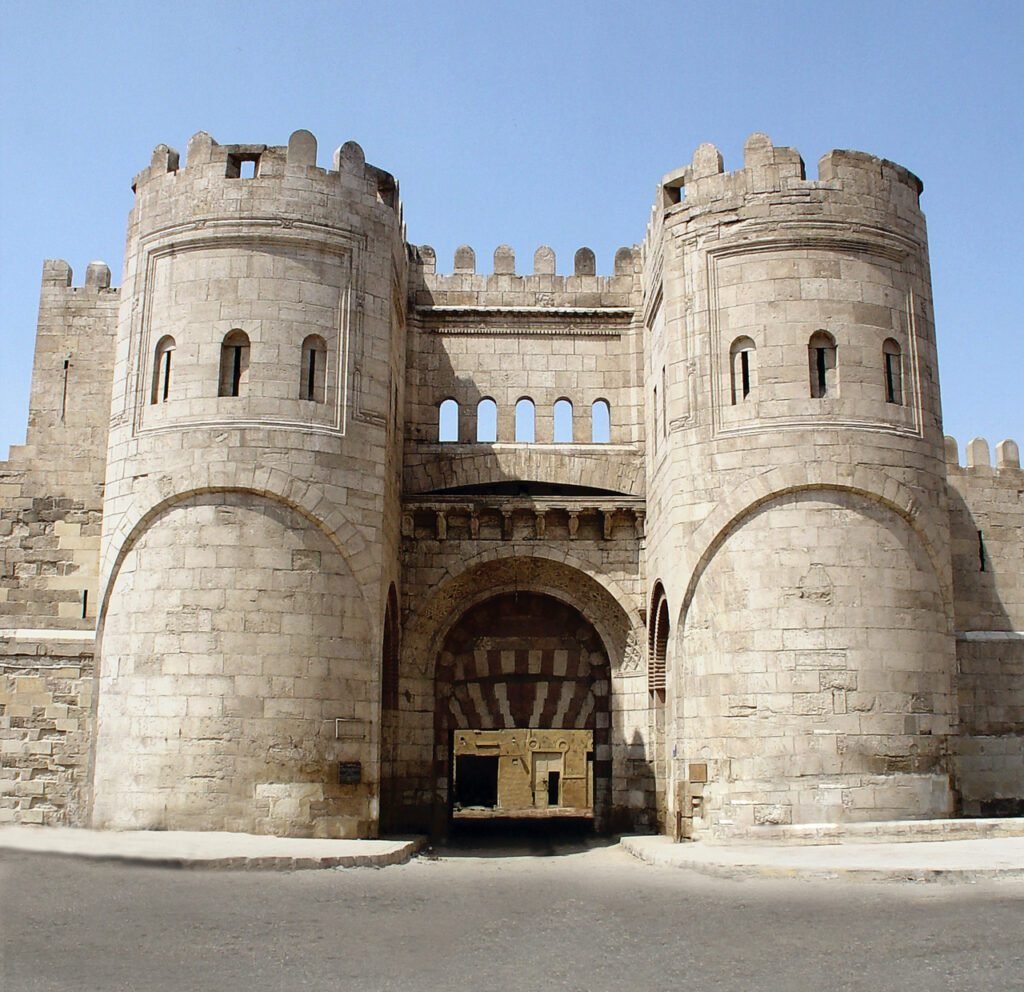
16. The Northern Gates: Bab al-Futuh and Bab al-Nasr
As you reach the northern edge of the historic enclave, you are confronted by the sheer architectural might of Bab al-Futuh and Bab al-Nasr. These twin gateways, built in 1087 by the Fatimid vizier Badr al-Jamali, are masterpieces of medieval military engineering that have survived nearly a millennium of urban change. Bab al-Futuh, or the "Gate of Conquests," is famous for its rounded towers and intricate stone carvings, including decorative motifs that were revolutionary for their time. Bab al-Nasr, the "Gate of Victory," presents a more austere and rectangular silhouette, symbolizing the strength and permanence of the Fatimid caliphate. These gates were not merely defensive structures; they were grand ceremonial entrances where sultans returned in triumph after successful military campaigns. Walking through the massive arched passages, you can observe the precision of the stone masonry and the defensive slots used for pouring boiling oil on invaders. The architecture reflects a unique blend of Byzantine and local Egyptian influences, showcasing the cosmopolitan nature of Cairo's early builders. For the modern traveler, these gates mark the definitive boundary of the old royal city. Standing between them, you can look down the long stretch of Al-Muizz Street and visualize the medieval city as a fortified sanctuary. Exploring the rooftops and the inner chambers of the gates provides a rare perspective on the strategic brilliance that allowed Cairo to remain an unconquered capital for centuries. They stand as silent, stony guardians of history, reminding every visitor that behind the beauty of the mosques lay a formidable power capable of defending the "Jewel of the East" against any threat, ensuring the survival of the treasures we admire today.
17. The Sabil-Kuttab of Katkhuda: A Charity of Art
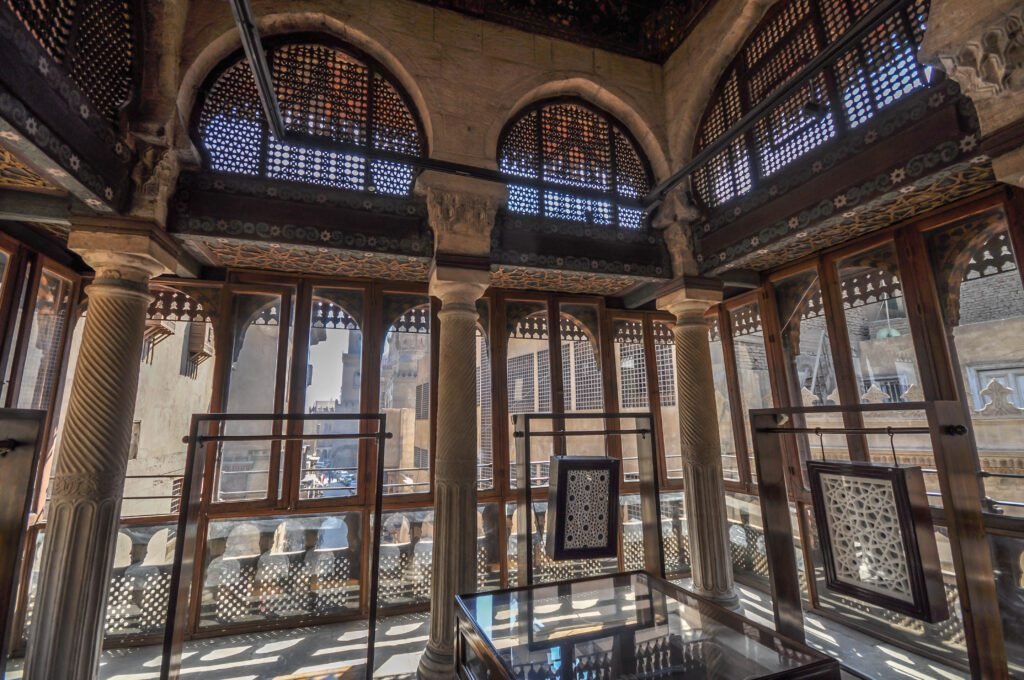
One of the most visually captivating structures along Al-Muizz Street is the Sabil-Kuttab of Abd al-Rahman Katkhuda. Built in 1744, this building represents a unique and essential Islamic social institution that combined a public water fountain (sabil) with an elementary school for orphans (kuttab). Architecturally, it is a gem of the Ottoman-Mamluk transition, featuring a highly decorative facade with three open sides that allow for natural light and ventilation. The lower level, where the water was distributed, is adorned with intricate marble mosaics and Iznik-style tiles that reflect a sense of cool serenity. The upper level, where children once learned the Quran and basic mathematics, features delicate wooden latticework that allowed the students to study while overlooking the bustling street below. This building embodies the Islamic concept of Waqf, or charitable endowment, where the wealthy provided for the basic needs and education of the community. For the traveler, the Sabil-Kuttab of Katkhuda is a masterpiece of small-scale architecture; it proves that even the most functional public services were treated with the highest level of artistic care. The building occupies a prominent triangular plot, making it one of the most photographed landmarks in Islamic Cairo. Its elegant proportions and the contrast between the stone carvings and the vibrant tiles create a mesmerizing effect. Visiting this site offers a glimpse into the daily social fabric of 18th-century Cairo, showing how beauty and charity were woven into the very architecture of the city. It remains a poignant reminder of a society that valued the quenching of thirst and the lighting of the mind as twin pillars of a civilized and compassionate urban life.
18. The Night of Old Cairo: A Spiritual Finale
As the sun sets over the Muqattam Hills, Islamic Cairo undergoes a magical transformation, turning into a dreamscape of light and shadow. The "Night of Old Cairo" is an experience that every traveler should witness to fully grasp the spiritual and social depth of the city. As the modern streetlights and the traditional lanterns of the mosques flicker to life, the golden limestone of the minarets begins to glow against the deep indigo sky. The evening call to prayer (Adhan) echoes from a thousand steeples in a haunting, polyphonic symphony that seems to vibrate through the very stones of the city. The bustling energy of Khan el-Khalili takes on a more festive tone, with the steam from tea glasses and the scent of grilled meats filling the air. Cultural centers like the Wekalet el-Ghouri come alive with the mesmerizing swirls of the Tannoura Sufi dancers, whose rhythmic movements represent a cosmic journey toward the divine. For the traveler, this is the perfect time for a final, slow walk through the illuminated alleys. The chaos of the day is replaced by a sense of timeless reverence, where the boundary between the past and the present feels thinner than ever. Planning your visit to include an evening walk allows you to see the city not just as a historical site, but as a living, breathing emotional experience. As you take your final steps through this ancient quarter, the images of soaring domes, intricate carvings, and the warmth of the Egyptian people coalesce into a memory that is both profound and permanent. Islamic Cairo is not just a destination; it is a spiritual journey that stays with you, inviting you to return to its mysteries again and again.