- Excursions in Egypt
- Egypt Tour Packages
- Cairo Tours and Excursions
- Hurghada Tours and Excursions
- Soma Bay Tours and Excursions
- Makadi Bay Tours and Excursions
- Sahl Hasheesh Tours and Excursions
- El Gouna Tours and Excursions
- Marsa Alam Tours and Excursions
- Port Ghalib Tours and Excursions
- El Quseir Tours and Excursions
- Dendera and Abydos Day Tours
- Aswan Tours and Excursions
- Luxor Tours and Excursions
- Sharm El Sheikh Tours and Excursions
- Top Rated Egypt Tours in 2026
- Optional Excursions in Egypt
- Private Transfer
- Blogs About egypt
- Ancient Egypt
- Historical Sites in Egypt
- Cairo
- Alexandria
- Luxor
- Aswan
- The Red Sea
- Dendera Temple
- El Fayoum Oasis
- Bahariya Oasis
- Siwa Oasis
- Al Alamein
- Marsa Matruh
- Why Egypt Is One of the Safest Countries to Visit in the Middle East
- What You Need To know Before Your First Trip To Egypt
- Egypt Travel Costs in 2026 Full Budget Guide
- Top 10 Tourist Activities in Egypt
- Top 50 Activities You Can’t Miss in Egypt in 2026
- The Guide to Guided Tours in Egypt
- Egypt’s Ancient and Modern History
- The Nile River
- The Deserts of Egypt
- Ancient Egyptian gods
- famous Egyptian dishes
- UNESCO World Heritage sites
- About Us
- Egypt Hotels and Resorts
- Excursions in Egypt
- Egypt Tour Packages
- Cairo Tours and Excursions
- Hurghada Tours and Excursions
- Soma Bay Tours and Excursions
- Makadi Bay Tours and Excursions
- Sahl Hasheesh Tours and Excursions
- El Gouna Tours and Excursions
- Marsa Alam Tours and Excursions
- Port Ghalib Tours and Excursions
- El Quseir Tours and Excursions
- Dendera and Abydos Day Tours
- Aswan Tours and Excursions
- Luxor Tours and Excursions
- Sharm El Sheikh Tours and Excursions
- Top Rated Egypt Tours in 2026
- Optional Excursions in Egypt
- Private Transfer
- Blogs About egypt
- Ancient Egypt
- Historical Sites in Egypt
- Cairo
- Alexandria
- Luxor
- Aswan
- The Red Sea
- Dendera Temple
- El Fayoum Oasis
- Bahariya Oasis
- Siwa Oasis
- Al Alamein
- Marsa Matruh
- Why Egypt Is One of the Safest Countries to Visit in the Middle East
- What You Need To know Before Your First Trip To Egypt
- Egypt Travel Costs in 2026 Full Budget Guide
- Top 10 Tourist Activities in Egypt
- Top 50 Activities You Can’t Miss in Egypt in 2026
- The Guide to Guided Tours in Egypt
- Egypt’s Ancient and Modern History
- The Nile River
- The Deserts of Egypt
- Ancient Egyptian gods
- famous Egyptian dishes
- UNESCO World Heritage sites
- About Us
- Egypt Hotels and Resorts
Welcome to
The Ben Ezra Synagogue: A Bridge of Peace and the Treasure of the Geniza
In the heart of Coptic Cairo, standing in silent harmony alongside ancient churches and historic mosques, lies the Ben Ezra Synagogue, the oldest and most legendary Jewish house of prayer in Egypt. This sacred site is far more than a place of worship; it is a repository of a thousand years of history and a symbol of the profound religious pluralism that has defined Egyptian civilization for millennia. Built on the spot where tradition says the baby Moses was found in the bulrushes, and where the prophet Jeremiah gathered his followers, the synagogue is a spiritual anchor for the Jewish heritage of the Middle East. While its architecture is a stunning blend of Basilica-style grandeur and intricate “Arabesque” decoration, its global fame comes from the Cairo Geniza—a hidden chamber that preserved hundreds of thousands of medieval documents, offering the world an unprecedented window into the daily lives of people in the Middle Ages. To enter Ben Ezra is to step into a sanctuary of tolerance, where the shared roots of the Abrahamic faiths are written in stone and light.
1. The Legend of Moses: A Site of Biblical Beginnings
The ground upon which the Ben Ezra Synagogue stands is saturated with biblical lore, making it a site of pilgrimage for centuries. According to local Jewish and Egyptian tradition, this is the exact location where the basket of the infant Moses was discovered by Pharaoh’s daughter among the reeds of the Nile. While the river has since shifted its course, the spiritual memory of this event remains anchored to the site. Furthermore, tradition holds that the Prophet Jeremiah sought refuge here during the Babylonian exile, and that the synagogue’s original well provided water for his followers. These layers of sacred history turned the site into a "Makam" (a holy station) long before a formal structure was ever erected. For the visitor, this legendary backdrop provides a sense of profound continuity. It suggests that Ben Ezra is not just a building from the Middle Ages, but a continuation of a story that began at the dawn of monotheism. Early travelers and pilgrims often described the site as having a unique "Baraka" or divine blessing, noting that it felt like a crossroads of prophecy. This historical weight is why the Coptic community and the Jewish community have both revered the site for nearly two millennia. When you stand within the synagogue today, you are not just standing in a museum; you are standing on a piece of geography that the ancient world believed was a direct portal to the divine, where the destinies of prophets were shaped by the waters of the Nile.
2. From Church to Synagogue: The Tale of the 9th Century Sale
The architectural history of Ben Ezra is a fascinating story of interfaith economics and survival. Originally, the site housed a Christian building known as the Church of the Levant (Al-Shamiyyin). However, in 882 AD, during the reign of Ahmad ibn Tulun, the Coptic Church faced immense financial pressure due to high taxes imposed by the local government. To save their other sanctuaries, the Coptic Patriarch was forced to sell the building and the surrounding land. It was purchased by Abraham Ben Ezra, a wealthy and influential Jewish scholar from Jerusalem, for 20,000 dinars. Under his stewardship, the building was transformed into a synagogue that would serve as the spiritual home for the Jewish community of Fustat (Old Cairo). This transaction is often cited by historians as a unique example of the pragmatic relationship between religious communities in medieval Egypt. Rather than being a site of conflict, the conversion of the building was a cooperative effort to ensure that the land remained dedicated to the worship of God. Despite the change in religious identity, the building’s "Basilica" layout—a central nave with two side aisles—was preserved, reflecting its Christian origins. This structural "DNA" makes Ben Ezra a rare hybrid of architectural styles, a physical bridge between the Coptic and Jewish traditions. For over a thousand years, the Ben Ezra family and their descendants maintained the site, ensuring that the synagogue remained the premier Jewish institution in Egypt until the modern era.

3. The Cairo Geniza: The World’s Greatest Historical Time Capsule
While the architecture of Ben Ezra is magnificent, its most significant contribution to humanity was hidden for centuries in a secret room known as the Geniza. In Jewish law, any document containing the name of God cannot be thrown away; it must be stored in a Geniza until it can be buried. However, the Jewish community of Fustat went far beyond this, depositing almost every piece of written paper—personal letters, marriage contracts, shopping lists, magical amulets, and even children’s school exercises—into a tall, windowless chamber in the synagogue’s attic. Because of Egypt's dry climate, these papers did not rot. They remained untouched and forgotten for nearly eight hundred years. When the chamber was "rediscovered" in the late 19th century by scholars like Solomon Schechter, it unleashed a tidal wave of historical knowledge. The Cairo Geniza contained over 300,000 fragments of paper and parchment, providing the most detailed look at medieval life ever discovered. It revealed the secrets of the trans-Saharan trade, the intimate details of family disputes, and even the original drafts of works by the great philosopher Maimonides. It proved that the medieval Mediterranean was a vibrantly interconnected world where Jews, Muslims, and Christians lived and worked side-by-side. For historians, the Ben Ezra Synagogue is the "Holy Grail" of archives; the documents found here have rewritten the history of the Middle Ages, proving that ordinary lives are just as important as the lives of kings.
4. The Architectural Style: An Arabesque Masterpiece
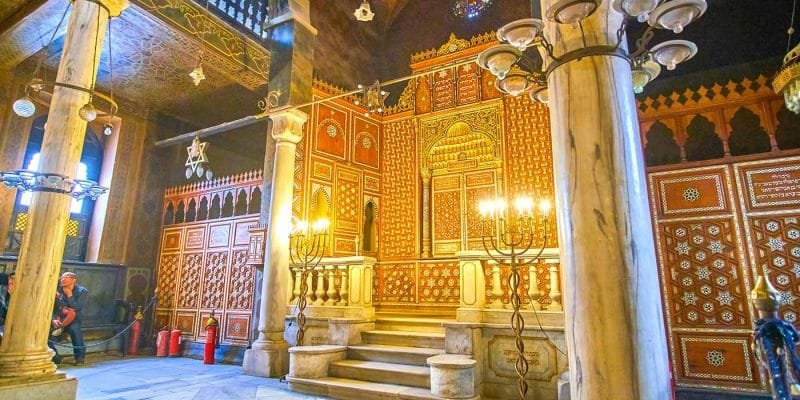
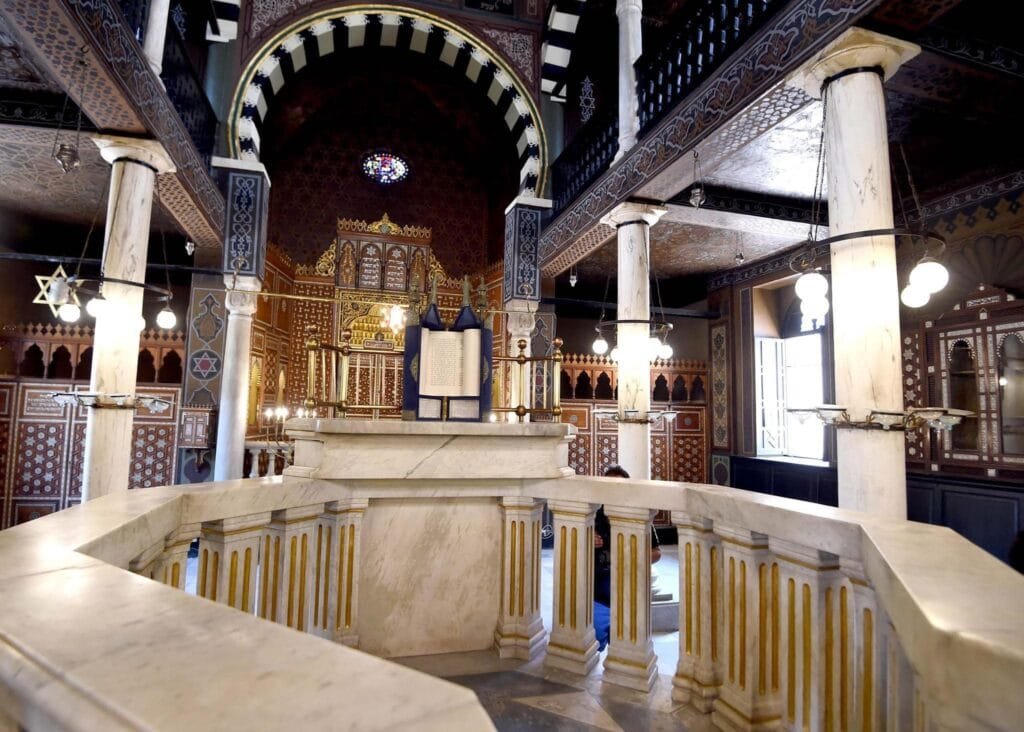
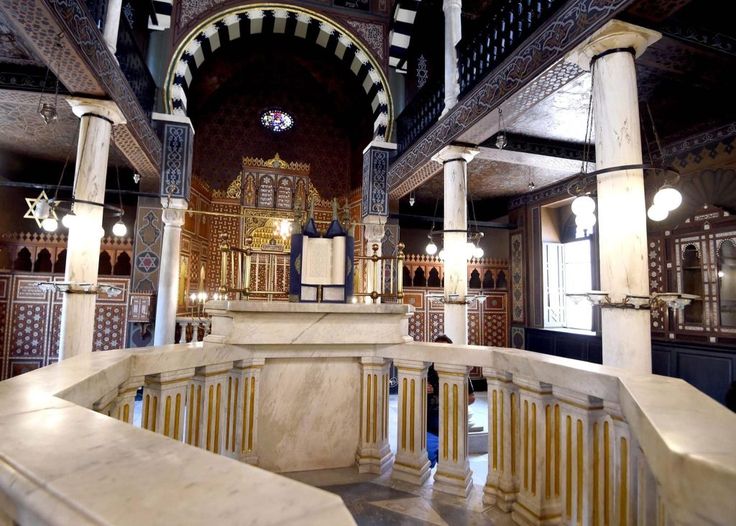
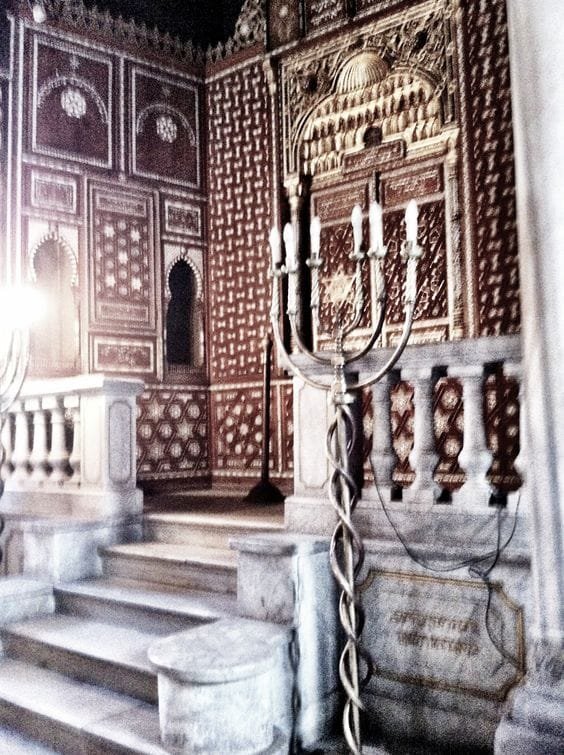
The Ben Ezra Synagogue is a breathtaking example of cultural and artistic synthesis, representing an era where the lines between Jewish, Christian, and Islamic art were beautifully blurred. While the building follows the traditional "Basilica" layout—a legacy of its origin as a Coptic church—the interior decoration is a masterpiece of Arabesque design. Visitors are greeted by a central nave separated from two side aisles by twelve elegant marble columns, which support the upper gallery reserved for women. The walls and ceilings are covered in intricate geometric and floral patterns that mirror the decorative language found in the neighboring Fatimid mosques and Coptic churches of Old Cairo. This shared aesthetic proves that the craftsmen of medieval Egypt worked within a unified artistic tradition, regardless of the faith of the building they were adorning. The wooden ceiling is particularly remarkable, featuring painted patterns where the Star of David is woven into complex interlocking shapes and eastern motifs. The "Mashrabiya" (turned-wood) screens surrounding the upper floor add a touch of traditional Cairene domestic architecture to the sacred space. This architectural fusion suggests that Ben Ezra was not an isolated enclave, but a vibrant part of the Egyptian landscape. For the modern observer, the synagogue serves as a visual reminder of a "Golden Age" of coexistence. The harmony of the marble pillars, the soft glow of the hanging lamps, and the intricate plasterwork create a space that feels both intimate and grand. It is a structure that speaks the language of the Orient, proving that Jewish life in Cairo was deeply integrated into the artistic and social fabric of the city.
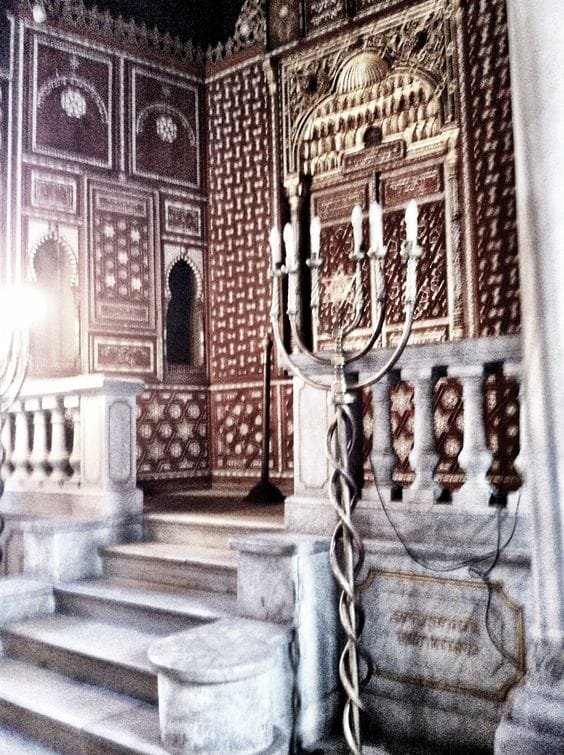
5. The Presence of Maimonides: The "Eagle of Cairo" at Ben Ezra
The spiritual and intellectual prestige of the Ben Ezra Synagogue is forever tied to the legacy of Moses Maimonides, known in Arabic as Musa ibn Maymun and nicknamed the "Eagle of Cairo." After fleeing persecution in Spain and North Africa in the 12th century, Maimonides settled in Fustat and became the personal physician to the legendary Sultan Saladin. More importantly, he served as the Nagid (leader) of the Egyptian Jewish community. Ben Ezra was his primary place of worship and the center where he delivered his profound lectures on philosophy, law, and medicine. His presence transformed the synagogue from a local house of prayer into a global center of enlightenment, attracting scholars from across the Mediterranean who wished to hear his synthesis of Aristotelian reason and religious faith. It was during his time in Cairo that Maimonides wrote some of his most influential works, including the Guide for the Perplexed and the Mishneh Torah. His philosophy was deeply influenced by the cosmopolitan and intellectually open atmosphere of Egypt, and Ben Ezra provided the sanctuary where these ideas could flourish. Even today, the "spirit of Maimonides" is palpable within the synagogue’s walls. There is a commemorative area dedicated to his memory, reminding visitors that this building once echoed with the voice of a man who bridged the gap between Greek philosophy, Jewish law, and Islamic thought. For the modern visitor, Ben Ezra is a pilgrimage site for the mind, representing a time when Cairo was the intellectual capital of the world, and Maimonides was its most brilliant light.
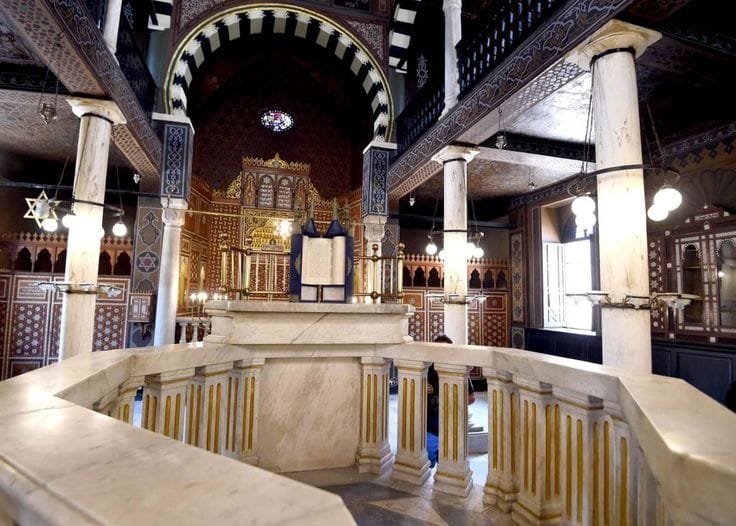
6. The Reconstruction of the 1890s: Rebuilding a Legend
The structure that stands today is not the 9th-century original, but the result of a massive reconstruction project completed in 1892. By the late 19th century, the ancient synagogue had fallen into a state of severe disrepair and was considered structurally unsound. The Jewish community of Cairo decided to demolish the old building and rebuild it on the same foundations, ensuring that the legendary site would survive for future generations. This project was a "fortunate accident" of history; it was during the demolition of the old walls and roof that the hidden Geniza chamber was finally breached, revealing the mountain of medieval documents that had been sealed away for eight hundred years. The 1892 reconstruction was funded by the wealthy Jewish elite of Cairo, who spared no expense in using the finest marble, timber, and decorative materials. They were careful to preserve the original Basilica plan, honoring the site’s long history while adding modern structural integrity. This era of rebuilding represents the "Silver Age" of the Egyptian Jewish community—a period of prosperity and cultural confidence. For historians, the 1892 building is a fascinating architectural document in its own right, as it reflects the 19th-century "Revivalist" movement in Islamic and Oriental art. The synagogue was restored again in the late 20th century by the Egyptian government, ensuring that the 1892 masterpiece remains a pristine landmark in the Multi-Religious Complex of Old Cairo, standing as a solid monument to the continuity of faith and the preservation of history.
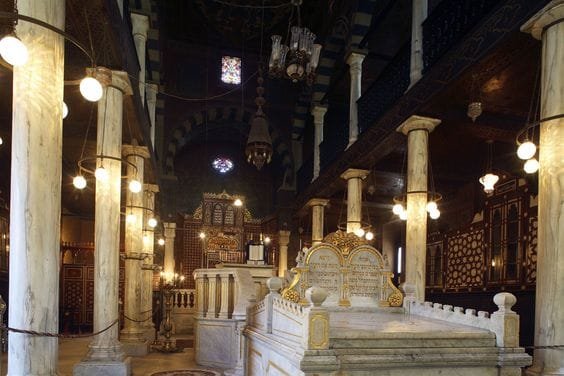
7. The Sacred Bimah: The Elevated Heart of the Sanctuary
The Bimah, or reading platform, stands at the very center of the Ben Ezra Synagogue, serving as the literal and figurative heart of the congregation’s liturgical life. In accordance with Sephardic and Middle Eastern Jewish tradition, the Bimah is an elevated structure from which the Torah is read to the assembly. At Ben Ezra, this platform is a masterpiece of refined craftsmanship, constructed from dark, polished wood and inlaid with delicate mother-of-pearl and ivory, echoing the decorative motifs found on the synagogue’s entrance screens. Raised several steps above the main floor, the Bimah represents the "mount" from which the divine word is proclaimed, commanding a clear view of both the Torah Ark and the congregation below. For the visitor, the Bimah is not merely a piece of furniture; it is a point of acoustic and symbolic focus. It is from this vantage point that the prayers of a millennium have been chanted. The design of the Bimah reflects the communal nature of the synagogue, where the leader of the service stands among the people rather than apart from them. Its placement in the center of the hall encourages a circular flow of energy and sound, creating an atmosphere of shared reverence. Observing the Bimah today, one can easily imagine the scholars of the Cairo Geniza era—including Maimonides himself—standing upon this very spot to interpret the scriptures. It remains a poignant reminder of the synagogue’s primary purpose: to be a place where the community gathers to engage with the text, ensuring that the ancient stories continue to live and breathe in the modern world.

8. The Torah Ark: A Shrine of Exquisite Woodwork
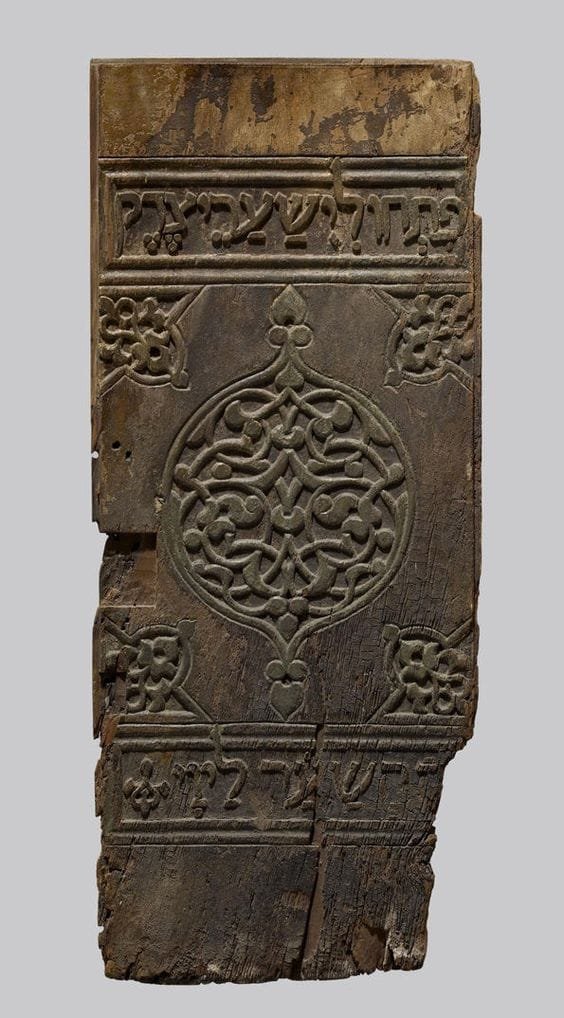
Dominating the eastern wall of the Ben Ezra Synagogue—oriented toward Jerusalem—is the Heikhal, or Torah Ark. This is the holiest part of the synagogue, housing the sacred scrolls of the Torah, which contain the Five Books of Moses written on parchment. The Ark at Ben Ezra is a stunning architectural "shrine," protected by intricately carved wooden doors that showcase the peak of Egyptian woodcraft. The wood is dark, aged, and rich with the patina of time, while the carvings feature symbolic motifs such as lions, crowns, and floral garlands that represent the majesty of the Law. The Ark is further adorned with velvet hangings, embroidered in gold and silver thread, which are changed according to the liturgical season. The Ark is more than a storage cabinet; it is a doorway between the earthly sanctuary and the divine. When the doors of the Ark are opened during services, the congregation rises, and a profound silence descends upon the room—a tradition that has persisted for centuries. For the visitor, the sight of the Ark is a masterclass in religious devotion. The craftsmanship of the woodwork, combined with the solemnity of the space, creates an aura of sacred mystery. It reflects the deep respect that the Jewish community of Fustat had for the written word, treating the Torah scrolls as living guests. The Ark remains the final destination for every eye in the room, acting as the spiritual anchor that holds the entire building together, connecting the ancient prayers of the Geniza scholars to the reverence of every pilgrim who visits today.
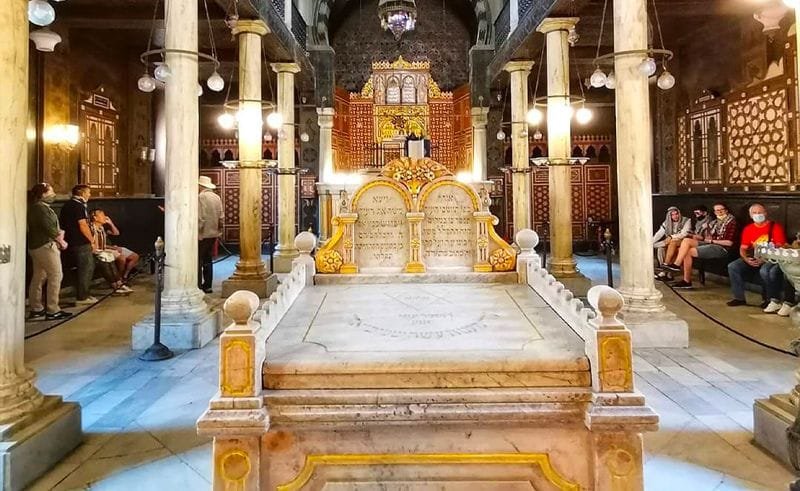
9. The Mikvah: Ritual Purification and the Sacred Well
Beneath the floor of the Ben Ezra Synagogue lies one of the most essential, yet often overlooked, elements of Jewish life: the Mikvah, or ritual bath. In accordance with Jewish law, a Mikvah must be fed by "living water," which refers to natural sources such as rain, springs, or flowing rivers. Because of the synagogue's location near the ancient banks of the Nile, the Mikvah at Ben Ezra was traditionally fed by a deep, stone-lined well that tapped into the subterranean water table of the Nile Delta. This ritual space was used for spiritual purification, marking the transition from a mundane state to a holy one, particularly before the Sabbath or high holy days. The existence of the well and the Mikvah adds a tangible, elemental layer to the synagogue's history. It connects the site to the very geography of Egypt; the same life-giving waters that fed the land also facilitated the spiritual cleanliness of the congregation. For the archaeologist, the well is a fascinating piece of hydraulic engineering that allowed the synagogue to remain functional even during dry seasons. For the visitor, the memory of the Mikvah serves as a reminder of the physical discipline of faith. It highlights that the Jewish life in Fustat was not just about intellectual study and the writing of documents; it was a life of daily rituals that involved the body, the earth, and the water. The well remains a silent witness to centuries of devotion, proving that Ben Ezra was a self-contained world, equipped with everything necessary to sustain both the soul and the body in the heart of Old Cairo.

10. The Geniza Chamber: Unlocking the Medieval Mind
The most famous architectural feature of the Ben Ezra Synagogue is not something visible from the outside, but a hidden, windowless room located in the upper reaches of the attic: the Geniza. The term "Geniza" comes from the Hebrew word for "to hide" or "to store," and in Jewish tradition, it refers to a storage area for documents that contain the name of God, which are considered too holy to be thrown away but are no longer fit for use. For eight hundred years, the Jewish community of Fustat deposited their worn-out scrolls and papers into this secret chamber through a small opening in the wall. Because the room had no doors and was only accessible by ladder, the documents remained undisturbed, protected from the elements by the dry, stable climate of Egypt. This chamber was more than just a religious archive; it became an accidental "time capsule" of humanity. Unlike official state archives that only record the lives of kings and generals, the Geniza at Ben Ezra captured the voices of everyone—from the poorest laborer to the wealthiest merchant. When scholars finally entered the chamber in the late 19th century, they found a mountain of paper that reached the ceiling. This discovery fundamentally changed our understanding of the Middle Ages. It proved that the synagogue was not just a house of prayer, but the "filing cabinet" of an entire civilization. Today, while the original documents have been moved to libraries around the world for preservation, the empty chamber remains a site of intellectual pilgrimage, standing as a silent monument to the power of the written word and the incredible accidents of history that allow the past to speak to the present.
11. The Cairo Geniza Documents: A Window into Daily Life
The collection of documents found within the Ben Ezra Synagogue, known collectively as the Cairo Geniza, consists of over 300,000 fragments that provide the most detailed record of medieval life ever discovered. What makes these documents revolutionary is their diversity. While they include sacred texts and legal rulings, the vast majority are "secular" papers: business contracts, marriage licenses, doctors' prescriptions, magical amulets, and even children's homework. These fragments have allowed historians to reconstruct the "Mediterranean World" of the 10th through 13th centuries with photographic clarity. We now know what people ate, how they dressed, how they argued in court, and even how they expressed their love and grief across the vast distances of the Silk Road and the Sahara. One of the most significant revelations of the Geniza documents is the degree of interfaith cooperation that existed in medieval Cairo. Many of the documents are written in Judeo-Arabic—Arabic language written in Hebrew script—showing how deeply integrated the Jewish community was into the broader Islamic culture. The papers record business partnerships between Jews, Muslims, and Christians, and they show that Jewish merchants were key players in the global trade networks connecting India to Spain. The Geniza even preserved the personal letters of Maimonides, offering a glimpse into his struggles and his work as a physician. By preserving these fragments, the Ben Ezra Synagogue did more than save religious texts; it saved the shared history of the Middle East, proving that the medieval era was a time of intense connection, vibrant trade, and complex human stories that transcend religious boundaries.

12. Interfaith Harmony: The Multi-Religious Complex
The Ben Ezra Synagogue does not stand in isolation; it is a vital pillar of the Multi-Religious Complex of Old Cairo, an area where the footprints of Judaism, Christianity, and Islam are physically intertwined. Within a few hundred meters of the synagogue, one can find the Hanging Church, the Church of St. Sergius, and the Mosque of Amr ibn al-As. This geographic proximity is not a coincidence; it is a physical manifestation of Egypt’s long-standing tradition of religious pluralism. For centuries, these communities lived in a shared neighborhood, and the architecture of Ben Ezra—with its Christian-style layout and Islamic-style decorations—reflects this cultural exchange. The synagogue is a testament to the fact that Cairo has always been a "melting pot" where different faiths influenced one another's art, music, and daily customs. For the modern visitor, walking through the alleyways that connect Ben Ezra to its neighbors is a lesson in tolerance. It is one of the few places in the world where you can hear the church bells, the call to prayer, and the echoes of ancient Hebrew liturgy within the same city block. This "Complex of Religions" serves as a powerful symbol of national unity and a reminder that Egyptian history is a mosaic of many colors. The Egyptian government has invested heavily in the restoration of Ben Ezra, recognizing it as an inseparable part of the national heritage. Standing in the courtyard of the synagogue, looking toward the minarets and bell towers of the surrounding district, one realizes that Ben Ezra is not a relic of a vanished people, but a living bridge that connects the different chapters of Egypt’s eternal story, proving that harmony is built on the shared respect for the sacred.
13. The Upper Gallery: The Role of Women in the Synagogue
The architectural design of the Ben Ezra Synagogue includes an essential social and religious component: the Upper Gallery. Elevated above the side aisles and supported by the twelve marble pillars of the nave, this balcony was traditionally reserved for female worshippers. In the Orthodox and Sephardic traditions that governed Ben Ezra for centuries, men and women were separated during prayer to maintain a focus on the liturgical service. However, the gallery was not an isolated space; it was designed with open-work wooden screens, or Mashrabiya, which allowed women to see and hear the service on the ground floor while remaining discrete. This layout ensured that the entire community, regardless of gender, could participate in the spiritual life of the synagogue. Beyond its religious function, the Upper Gallery was a place of social gathering and education for the women of Fustat. From this vantage point, they witnessed the reading of the Torah and the delivery of sermons by scholars like Maimonides. For the historian, the gallery offers insights into the domestic and social hierarchies of medieval Cairo. Many of the personal letters found in the Geniza—written by or addressed to women—speak of their involvement in business, their concerns for their children's education, and their active role in the community's welfare. Today, the gallery provides visitors with a unique perspective of the synagogue’s interior, offering a bird's-eye view of the intricate floor mosaics and the central Bimah. It stands as a reminder that the history of Ben Ezra is not just a history of male scholars and merchants, but a story of families and a collective community that functioned as a cohesive whole for over a thousand years.
14. The Modern Restoration: Renewing the Light of Ben Ezra
In the late 20th and early 21st centuries, the Ben Ezra Synagogue underwent a series of meticulous restoration projects led by the Egyptian Ministry of Tourism and Antiquities. These efforts were essential to combat the effects of rising groundwater, which had begun to threaten the structural integrity of the foundations, and to repair the delicate decorative elements that had faded over time. The most recent and comprehensive restoration, completed in 2023, involved a deep cleaning of the marble columns, the reinforcement of the wooden ceilings, and the careful preservation of the Arabesque wall paintings. Specialist restorers used traditional techniques to ensure that the vibrant colors and patterns were returned to their original 19th-century splendor without losing their historical patina. The restoration of Ben Ezra is a powerful statement of Egypt’s commitment to its multi-layered identity. By investing in the preservation of a Jewish site, the Egyptian state honors the diverse cultural threads that have woven the fabric of its history. This project involved international cooperation and the use of modern seismic sensors to ensure the building can withstand the tremors of a bustling modern metropolis. For the visitor, the results are stunning; the synagogue glows with a renewed light, from the polished wooden Ark to the gleaming copper chandeliers. This restoration ensures that Ben Ezra is not a crumbling relic but a living monument, capable of welcoming millions of people and serving as a high-standard example of heritage conservation in the Middle East.
15. The Synagogue Today: A Monument of Heritage and Tourism
Today, the Ben Ezra Synagogue no longer hosts a large active congregation, but it has transitioned into one of the most significant museum-monuments in the world. As a crown jewel of the Old Cairo religious district, it attracts thousands of international tourists, historians, and diplomats every year. Its primary role in the 21st century is that of an educator; it stands as a physical proof of a time when the Middle East was a center of cosmopolitanism and religious diversity. Visitors from across the globe walk through its doors to witness the site where the Cairo Geniza was found and to admire the artistic harmony that exists between its Jewish purpose and its Egyptian-Islamic aesthetic. As a part of the UNESCO World Heritage area of Historic Cairo, the synagogue is protected as a global treasure. It serves as a vital stop on the "Trail of Religions," a walking route that allows visitors to move from the early Christian churches to the first mosque in Africa and finally to this ancient synagogue. This proximity encourages a narrative of peace and mutual respect. For the modern traveler, Ben Ezra offers more than just a history lesson; it offers a vision of a world where different faiths lived in the same neighborhoods, shared the same artistic tastes, and contributed to a collective intellectual heritage. The synagogue remains a quiet, resplendent witness to the endurance of the Jewish spirit in Egypt and a cornerstone of the country’s proud, pluralistic legacy.
16. The Spiritual Vibe: Silence in the Center of the City
Stepping into the Ben Ezra Synagogue offers a profound sensory shift. While it is located in one of the most historically dense and bustling areas of Old Cairo, the interior of the synagogue is characterized by a "heavy," respectful silence. Unlike the grand, echoing chambers of nearby mosques or the incense-filled corridors of the Coptic churches, Ben Ezra feels like a library of the soul. The sunlight filters through high, narrow windows, illuminating the dust motes and casting long shadows across the marble floor. There is a sense of "intellectual peace" here—a feeling that this space was built not just for the heart to pray, but for the mind to study and record. For many visitors, the experience is deeply contemplative. Even without a full congregation, the building feels occupied by the "ghosts" of the scholars, merchants, and families whose names were recorded in the Geniza fragments. The air is cool and still, providing a psychological buffer from the heat and chaos of the Cairo streets. It is a place that invites you to slow down and consider the sheer scale of time it has witnessed. Whether you are standing by the central Bimah or looking up at the empty Geniza chamber, there is an unmistakable energy of "preservation"—the feeling that this building has acted as a protective shell for a thousand years of human thought, ensuring that nothing, not even a scrap of paper, was ever truly lost.
17. A Practical Guide for Visitors: Security and Etiquette
Visiting the Ben Ezra Synagogue is a straightforward process, but it requires an awareness of its unique status as a high-security heritage site. Located in the heart of the Mar Girgis (Old Cairo) district, it is part of the pedestrianized religious complex. Upon entering the district, visitors must pass through a standard security checkpoint. There is no entrance fee for the synagogue, but it is essential to check the opening hours, as it generally follows a 9:00 AM to 5:00 PM schedule and may be closed on certain Jewish holidays or during state visits. As with all religious sites in Egypt, modest dress is required—shoulders and knees should be covered. Within the synagogue, a quiet and reverent demeanor is expected. While photography is generally permitted, it is important to respect signs indicating where flash is prohibited to protect the delicate wooden carvings and paintwork. A visit to Ben Ezra is best paired with the Coptic Museum and the Hanging Church, which are only a few steps away. For the best experience, consider hiring a local guide who can point out the specific location of the Geniza opening and explain the nuances of the Arabesque patterns, as much of the synagogue’s magic lies in the details that are not immediately obvious to the untrained eye.
18. Conclusion: The Immortal Library of the Soul
The Ben Ezra Synagogue stands today as one of the world’s most important monuments to the endurance of history. It is a building that has served many roles: a Pharaonic legend, a Coptic sanctuary, a Jewish house of prayer, and finally, a global archive of the human experience. It is the only place on earth where the mundane details of medieval life—from grocery lists to marriage disputes—were treated with the same sanctity as the Word of God, resulting in a historical treasure that has no equal. Ben Ezra reminds us that history is not just made by kings and conquerors, but by the ordinary people who lived, traded, and prayed within these walls. As a crown jewel of Egypt’s Multi-Religious Complex, the synagogue is a symbol of a future built on the foundations of a pluralistic past. It proves that different faiths can not only live side-by-side but can share an artistic and intellectual language that enriches the entire nation. By preserving the Ben Ezra Synagogue, Egypt preserves a vital piece of its own soul—a reminder that its identity is a tapestry of many faiths and many stories. For the traveler, a visit to this resplendent sanctuary is a journey into the heart of human memory, leaving one with the profound realization that as long as we keep our stories, we are never truly gone.