

- Excursions in Egypt
- Egypt Tour Packages
- Cairo Tours and Excursions
- Hurghada Tours and Excursions
- Soma Bay Tours and Excursions
- Makadi Bay Tours and Excursions
- Sahl Hasheesh Tours and Excursions
- El Gouna Tours and Excursions
- Marsa Alam Tours and Excursions
- Port Ghalib Tours and Excursions
- El Quseir Tours and Excursions
- Dendera and Abydos Day Tours
- Aswan Tours and Excursions
- Luxor Tours and Excursions
- Sharm El Sheikh Tours and Excursions
- Top Rated Egypt Tours in 2026
- Optional Excursions in Egypt
- Private Transfer
- Blogs About egypt
- Ancient Egypt
- Historical Sites in Egypt
- Cairo
- Alexandria
- Luxor
- Aswan
- The Red Sea
- Dendera Temple
- El Fayoum Oasis
- Bahariya Oasis
- Siwa Oasis
- Al Alamein
- Marsa Matruh
- Why Egypt Is One of the Safest Countries to Visit in the Middle East
- What You Need To know Before Your First Trip To Egypt
- Egypt Travel Costs in 2026 Full Budget Guide
- Top 10 Tourist Activities in Egypt
- Top 50 Activities You Can’t Miss in Egypt in 2026
- The Guide to Guided Tours in Egypt
- Egypt’s Ancient and Modern History
- The Nile River
- The Deserts of Egypt
- Ancient Egyptian gods
- famous Egyptian dishes
- UNESCO World Heritage sites
- About Us
- Egypt Hotels and Resorts
- Excursions in Egypt
- Egypt Tour Packages
- Cairo Tours and Excursions
- Hurghada Tours and Excursions
- Soma Bay Tours and Excursions
- Makadi Bay Tours and Excursions
- Sahl Hasheesh Tours and Excursions
- El Gouna Tours and Excursions
- Marsa Alam Tours and Excursions
- Port Ghalib Tours and Excursions
- El Quseir Tours and Excursions
- Dendera and Abydos Day Tours
- Aswan Tours and Excursions
- Luxor Tours and Excursions
- Sharm El Sheikh Tours and Excursions
- Top Rated Egypt Tours in 2026
- Optional Excursions in Egypt
- Private Transfer
- Blogs About egypt
- Ancient Egypt
- Historical Sites in Egypt
- Cairo
- Alexandria
- Luxor
- Aswan
- The Red Sea
- Dendera Temple
- El Fayoum Oasis
- Bahariya Oasis
- Siwa Oasis
- Al Alamein
- Marsa Matruh
- Why Egypt Is One of the Safest Countries to Visit in the Middle East
- What You Need To know Before Your First Trip To Egypt
- Egypt Travel Costs in 2026 Full Budget Guide
- Top 10 Tourist Activities in Egypt
- Top 50 Activities You Can’t Miss in Egypt in 2026
- The Guide to Guided Tours in Egypt
- Egypt’s Ancient and Modern History
- The Nile River
- The Deserts of Egypt
- Ancient Egyptian gods
- famous Egyptian dishes
- UNESCO World Heritage sites
- About Us
- Egypt Hotels and Resorts
Welcome to
El-Alamein War Museum – A Guide to Egypt’s World War II History
El-Alamein War Museum is one of the most important historical museums in Egypt for understanding the events of World War II in North Africa. Located in the coastal town of El Alamein on Egypt’s Mediterranean coast, the museum preserves the history of the famous Battle of El Alamein, a major turning point in the North African campaign during the Second World War.
The museum offers visitors an opportunity to learn about the military operations that took place across the Egyptian desert between Allied and Axis forces. Through photographs, military equipment, maps, documents, weapons, uniforms, and other exhibits, visitors can gain a clearer understanding of the scale and significance of the conflict.
The El-Alamein War Museum was established to document the events of the battles and the soldiers who participated in them. Its exhibits explain the different stages of the campaign and highlight the military strategies used by the opposing forces.
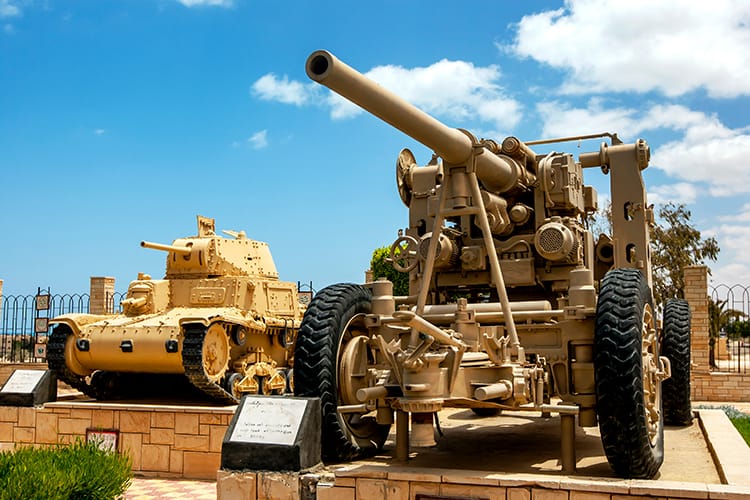
One of the most interesting aspects of visiting the museum is its collection of World War II military vehicles and equipment. Visitors can see tanks, artillery pieces, armored vehicles, and other military objects connected with the North African campaign.
The museum is also an important stop for travelers interested in combining Egypt’s ancient history with its more recent past. A trip to El Alamein can include the museum, the El Alamein Commonwealth War Cemetery, and the German and Italian military cemeteries in the surrounding area.
For travelers searching for El-Alamein War Museum Egypt, El Alamein World War II history, Battle of El Alamein Museum, things to do in El Alamein, World War II sites in Egypt, and El Alamein tours, the museum provides an educational and historically significant experience.
Visiting El-Alamein War Museum helps travelers understand that Egypt’s history extends far beyond the ancient pharaohs. The region also played a major role in one of the most important conflicts of the twentieth century.
1. Where Is El-Alamein War Museum Located?
The El-Alamein War Museum is located in El Alamein, on Egypt's Mediterranean coast, approximately 100 kilometers west of Alexandria. Its location places it close to the historic battlefield where the famous Battle of El Alamein took place during World War II. El Alamein is now a popular coastal destination known for its Mediterranean beaches and modern resorts, but the surrounding area also contains numerous historical sites connected with the North African campaign. The museum is situated near the former battlefield and provides an accessible introduction to the military history of the region. Visitors can combine a museum visit with other important World War II memorials and cemeteries in the area. The journey from Alexandria to El Alamein is relatively straightforward by road, making the museum suitable for a day trip. Travelers coming from Cairo can also visit El Alamein as part of a longer Alexandria and North Coast itinerary. The surrounding landscape is quite different from Egypt's major archaeological destinations. Instead of ancient temples and monuments, visitors encounter Mediterranean scenery alongside historical military sites and memorials. For travelers searching for where El-Alamein War Museum is located, El Alamein Museum from Cairo, El Alamein Museum from Alexandria, World War II sites near Alexandria, and El Alamein attractions, the museum is an important historical stop along Egypt's Mediterranean coast. Its location is particularly significant because the museum is not simply displaying objects from a distant conflict. It stands close to the actual landscape where major military operations took place. This makes a visit more meaningful for travelers interested in military history, World War II, and the history of North Africa.

2. Why Is El-Alamein War Museum Famous?
The El-Alamein War Museum is famous because it preserves the history of the Battle of El Alamein, one of the most significant campaigns of World War II in North Africa. The battles fought in this region played an important role in stopping the Axis advance toward Egypt and the Suez Canal. The museum explains the military campaign through a collection of historical materials, including photographs, maps, documents, uniforms, weapons, and military vehicles. One of the museum's major attractions is its collection of tanks and artillery. These large military exhibits help visitors understand the type of equipment used during the battles and the difficult conditions faced by soldiers fighting across the desert. The museum also presents information about the main forces involved in the North African campaign. Visitors can learn about the Allied and Axis armies, their commanders, military strategies, and the major stages of the fighting. The Second Battle of El Alamein, fought in October and November 1942, is particularly important. The Allied victory under British command marked a major setback for Axis forces in North Africa and helped change the direction of the campaign. The museum's location adds to its importance. Visitors can explore the exhibits and then visit nearby cemeteries and memorials associated with soldiers who died during the campaign. For tourists searching for why El-Alamein War Museum is famous, Battle of El Alamein history, World War II Egypt, El Alamein attractions, and North Africa World War II sites, the museum offers an excellent introduction to this important period. A visit is especially valuable for travelers who want to understand Egypt's modern history alongside its ancient civilization. El-Alamein War Museum connects the exhibits inside the museum with the real battlefield surrounding it, making it one of the most significant World War II historical attractions in Egypt.

3. History of the Battle of El Alamein
The history of the Battle of El Alamein is closely connected with the wider struggle for control of North Africa during World War II. El Alamein became strategically important because of its location between the Mediterranean Sea and the Qattara Depression, creating a relatively narrow area through which large military forces could move toward Egypt. The first major battle took place in July 1942, when Allied forces stopped the advance of the Axis armies toward Alexandria and the Suez Canal. Although the fighting did not immediately produce a decisive victory, it prevented the Axis forces from continuing their advance into Egypt. The most famous confrontation was the Second Battle of El Alamein, which began on October 23, 1942. British and Commonwealth forces under General Bernard Montgomery launched a major offensive against the German and Italian armies commanded by Field Marshal Erwin Rommel. The battle involved intense artillery fire, minefields, armored units, infantry, and air forces. The desert terrain presented enormous logistical challenges, while both sides attempted to break through heavily defended positions. After weeks of fighting, Axis forces were forced to withdraw westward. The Allied victory became a major turning point in the North African campaign. The significance of El Alamein extended beyond the battlefield itself. The victory prevented Axis forces from reaching Alexandria and potentially threatening the Suez Canal, one of the most strategically important transportation routes in the world. Today, the El-Alamein War Museum helps visitors understand this history through maps, photographs, military equipment, and explanations of the different stages of the campaign. For travelers searching for Battle of El Alamein history, Second Battle of El Alamein, World War II Egypt, Montgomery and Rommel, and North African campaign, the museum provides valuable historical context. Understanding the battles also makes visiting the surrounding cemeteries and memorials more meaningful, as the region contains numerous reminders of the thousands of soldiers who fought and died during the campaign. The Battle of El Alamein remains one of the most important chapters in Egypt's modern history and a defining episode of World War II in North Africa.

4. What Can You See Inside El-Alamein War Museum?
Visitors to the El-Alamein War Museum can explore a collection of exhibits dedicated to the military history of the North African campaign. The museum combines historical information with original objects and military equipment to help explain what happened during the battles around El Alamein. One of the most noticeable parts of the museum is its collection of military vehicles, tanks, and artillery pieces. These large exhibits provide a visual understanding of the technology used by Allied and Axis forces during the Second World War. Inside the museum, visitors can also find photographs, maps, documents, weapons, uniforms, and other military artifacts. These exhibits help explain the progression of the campaign and the different stages of the fighting. Maps are particularly useful because the battles covered a large desert area. They show military positions, movements, defensive lines, and the direction of the major offensives. The museum also presents information about the different armies involved in the conflict. Visitors can learn about the British and Commonwealth forces as well as the German and Italian forces that participated in the North African campaign. The exhibits provide an overview of the harsh conditions of desert warfare. Soldiers had to deal with extreme temperatures, vast distances, minefields, limited water supplies, and difficult transportation conditions. Another important feature is the museum's explanation of the Second Battle of El Alamein and its importance in changing the direction of the North African campaign. For travelers searching for El-Alamein War Museum exhibits, tanks in El Alamein Museum, World War II artifacts Egypt, El Alamein military museum, and things to see in El Alamein, the museum offers a fascinating historical experience. The combination of original military equipment and historical explanations makes the visit more engaging than simply reading about the battle. For anyone interested in military history, the museum provides a valuable opportunity to see physical reminders of the conflict and understand the events that transformed El Alamein into one of the most famous World War II battlefields in North Africa.

5. El-Alamein War Museum and World War II Memorials
A visit to the El-Alamein War Museum can be combined with several important World War II memorials and cemeteries located around El Alamein. Together, these sites provide a broader understanding of the human cost and historical significance of the North African campaign. The region contains several military cemeteries where soldiers who died during the fighting were laid to rest. The El Alamein Commonwealth War Cemetery is one of the best-known memorial sites and contains thousands of graves associated with the campaigns in North Africa. There are also German and Italian military cemeteries in the El Alamein area. These sites commemorate soldiers from the Axis forces who died during the battles. Visiting the cemeteries after the museum can provide a different perspective on the conflict. While the museum focuses on military history, equipment, maps, and strategy, the cemeteries emphasize the personal cost of war and the lives lost during the campaign. The memorials are generally peaceful and carefully maintained, creating an atmosphere that encourages reflection and remembrance. Travelers interested in World War II history in Egypt can therefore create a complete El Alamein itinerary by combining the War Museum with one or more of the nearby cemeteries. The experience also demonstrates how international the North African campaign was. Soldiers from Britain, Australia, New Zealand, India, South Africa, and other countries participated in the Allied forces, while German and Italian troops fought on the opposite side. For tourists searching for El Alamein War Cemetery, World War II memorials in Egypt, El Alamein Commonwealth Cemetery, German cemetery El Alamein, Italian cemetery El Alamein, and El Alamein historical sites, these locations provide important context beyond the battlefield itself. A visit should always be approached respectfully, as these are memorial sites rather than ordinary tourist attractions. Combining the museum with the surrounding memorials makes an El Alamein trip much more meaningful. Together, they tell the story of the battles, the soldiers who fought them, and the lasting legacy of World War II in North Africa.

6. The Importance of El Alamein During World War II
The importance of El Alamein during World War II comes largely from its strategic location in northern Egypt. During the North African campaign, control of Egypt was extremely important because of the Suez Canal, a major route connecting Europe with Asia and an important link for Allied military supplies and communications. The geography around El Alamein also played a major role. To the south was the Qattara Depression, a vast area of difficult terrain that made large-scale military movement extremely challenging. This helped limit the possible routes through which armies could advance toward Alexandria and the Nile Delta. In 1942, Axis forces under Erwin Rommel had advanced across Libya toward Egypt. The possibility of an Axis breakthrough created a serious threat to British positions and the strategic interests of the Allies in the region. The fighting around El Alamein stopped this advance. The First Battle of El Alamein in July 1942 prevented the Axis forces from continuing toward Alexandria, while the Second Battle later that year resulted in a decisive Allied victory. The victory in the Second Battle of El Alamein forced Axis forces to retreat westward and contributed to the eventual Allied advance across North Africa. The battle therefore became an important turning point in the wider war. It demonstrated that Axis forces could be stopped and pushed back in North Africa. Today, the El-Alamein War Museum preserves this history and explains the strategic importance of the battlefield through maps, photographs, military equipment, and historical information. For travelers searching for El Alamein World War II history, importance of El Alamein, Suez Canal World War II, Rommel Egypt, and North African campaign, understanding the strategic geography helps explain why this relatively small coastal area became so important. The story of El Alamein is not only about one battle. It is about control of vital transportation routes, military supply lines, North Africa, and access to Egypt. El Alamein became a turning point because the Allied victory there stopped the Axis advance toward Egypt and helped change the course of the North African campaign.

7. Bernard Montgomery and Erwin Rommel at El Alamein
The history of El Alamein is closely associated with two famous World War II commanders: Field Marshal Bernard Montgomery of the Allied forces and Field Marshal Erwin Rommel, the German commander of the Axis forces in North Africa. Rommel became famous for his desert warfare tactics and was widely known as the “Desert Fox.” His forces had achieved significant victories across North Africa before advancing toward Egypt in 1942. By the time of the Second Battle of El Alamein, the Axis forces were facing a major Allied offensive. Montgomery had taken command of the British Eighth Army and began preparing a large-scale operation designed to break through the Axis defensive positions. The battle began on October 23, 1942, with a massive artillery bombardment followed by Allied attacks against the Axis defensive lines. The fighting involved tanks, infantry, artillery, aircraft, and extensive minefields. Montgomery's forces eventually succeeded in breaking through the Axis positions. The resulting retreat marked a major change in the North African campaign. Rommel was not present for the entire battle because he had been away in Europe when the offensive began, but he returned to North Africa as the fighting developed. He eventually recognized that his forces were in an increasingly difficult position and began withdrawing westward. The confrontation between Montgomery and Rommel has become one of the most famous military rivalries of World War II. The El-Alamein War Museum provides visitors with historical information about the commanders, their forces, and the strategies used during the campaign. For travelers searching for Montgomery El Alamein, Rommel El Alamein, Desert Fox Egypt, Battle of El Alamein commanders, and World War II military history, the museum offers valuable context for understanding the leadership behind the battles. The story of these two commanders is an important part of the museum experience, but the battle involved thousands of soldiers from many different countries. The history of Montgomery and Rommel helps visitors understand the military strategy behind El Alamein while the museum's artifacts reveal the reality of the conflict on the ground.

8. El Alamein War Museum for History and Military Enthusiasts
The El-Alamein War Museum is an excellent destination for travelers interested in military history, World War II, and the modern history of Egypt. Unlike Egypt's ancient archaeological attractions, the museum focuses on events that occurred during the twentieth century and their impact on North Africa. Military enthusiasts can explore a variety of exhibits connected with the North African campaign, including armored vehicles, artillery, weapons, uniforms, photographs, and maps. The collection of military vehicles is particularly interesting because it gives visitors a visual impression of the equipment used during desert warfare. Tanks and artillery pieces demonstrate the importance of armored warfare during the battles around El Alamein. The museum's maps and photographs are also valuable for understanding the scale of the campaign. They help explain the movement of armies and the challenges involved in fighting across the desert. History enthusiasts can use the museum as a starting point for exploring the wider El Alamein battlefield. Nearby cemeteries and memorials provide additional information about the soldiers who participated in the campaign. The museum is also suitable for visitors who are not military experts. The displays provide historical context that can help anyone understand why El Alamein became an important turning point in World War II. For tourists searching for El-Alamein War Museum for history lovers, military museums in Egypt, World War II attractions Egypt, El Alamein battlefield tour, and historical places near Alexandria, the museum offers a worthwhile experience. A visit can be especially interesting when combined with Alexandria and the Mediterranean coast, allowing travelers to explore both Egypt's ancient heritage and its modern history during the same trip. The museum provides a different perspective on Egypt and demonstrates the country's role in international events during the twentieth century. For anyone fascinated by World War II, military strategy, or the history of North Africa, El-Alamein War Museum offers a unique opportunity to connect historical events with the actual landscape where they unfolded.

9. Best Time to Visit El-Alamein War Museum
The best time to visit El-Alamein War Museum is generally during the cooler months, when temperatures along Egypt's Mediterranean coast are more comfortable for sightseeing. Since a visit to the museum is often combined with other outdoor historical sites, choosing a pleasant season can make the overall El Alamein experience more enjoyable. The period from October to April is particularly suitable for exploring El Alamein. During these months, the weather is generally more comfortable for visiting the museum, walking around nearby memorials, and exploring the surrounding historical sites. Winter can be an excellent time for travelers interested in history because the cooler temperatures make it easier to spend several hours visiting different attractions. However, evenings can feel cool, so carrying a light jacket is recommended. Spring is also a pleasant period to visit, particularly for travelers combining El Alamein with Alexandria or other destinations along the Mediterranean coast. Summer is the busiest season along Egypt's North Coast because of its beaches and resorts. Temperatures can become high, but the museum itself provides an indoor environment where visitors can escape the heat. Travelers visiting during summer may prefer to schedule outdoor cemetery and memorial visits during the morning or late afternoon. The time of day can also affect the experience. Visiting earlier in the day can provide more comfortable conditions for combining the museum with nearby historical sites. For travelers searching for best time to visit El-Alamein War Museum, El Alamein weather, El Alamein tours, World War II sites in Egypt, and things to do in El Alamein, the cooler months are generally the most comfortable choice. A visit can also be planned as part of a wider Alexandria and El Alamein day trip, allowing travelers to experience both Egypt's ancient Mediterranean history and its twentieth-century military heritage. Regardless of the season, visitors should allow enough time to explore the museum without rushing, particularly if they are interested in the military equipment, maps, photographs, and historical explanations.

10. How to Visit El-Alamein War Museum
A visit to the El-Alamein War Museum can easily be included in an Egypt travel itinerary, particularly for travelers exploring Alexandria, the North Coast, or Egypt's Mediterranean region. The museum is accessible by road and can be visited as part of a private El Alamein tour. Travelers coming from Cairo can organize a day trip that includes El Alamein and other nearby attractions, while visitors staying in Alexandria can make the museum part of a shorter excursion. The journey from Cairo takes several hours depending on traffic and the exact starting point. Travelers staying in Alexandria have a shorter journey, making it convenient to combine the museum with other attractions in and around the city. A typical El Alamein historical itinerary may begin with the El-Alamein War Museum, followed by visits to nearby World War II cemeteries and memorials. The museum provides the historical background needed to understand the battlefield, while the surrounding memorials offer a more personal perspective on the soldiers who lost their lives during the campaign. Travelers interested in military history can spend additional time examining the tanks, artillery, photographs, maps, and documents displayed inside the museum. A private vehicle is particularly convenient because it allows visitors to move between the museum and the different memorial sites without depending on public transportation. For tourists searching for how to visit El-Alamein War Museum, El Alamein tour from Cairo, El Alamein tour from Alexandria, World War II tour Egypt, and El Alamein battlefield tour, a private organized trip offers flexibility and convenience. The museum can also be included in a longer itinerary combining Alexandria, El Alamein, and the Mediterranean coast. Because several historical sites are spread around the area, planning the route in advance can help travelers make the most of their visit.

11. What to Know Before Visiting El-Alamein War Museum
Before visiting the El-Alamein War Museum, travelers should understand that the destination focuses primarily on twentieth-century military history rather than ancient Egyptian civilization. The museum provides a different perspective on Egypt and is especially interesting for visitors fascinated by World War II and the history of North Africa. Comfortable shoes are recommended if you plan to combine the museum with nearby cemeteries and memorials. Some parts of the experience involve walking outdoors, particularly when visiting the surrounding historical sites. During the warmer months, visitors should carry water, sunscreen, sunglasses, and a hat, especially if they plan to spend time outside after leaving the museum. Travelers should also allow sufficient time to explore the exhibits. The museum contains military equipment, photographs, maps, documents, and other historical materials that can be more meaningful when viewed without rushing. If you are visiting with children, the museum can provide an educational introduction to World War II, although parents may want to explain the historical context beforehand. Photography policies may vary inside individual exhibition areas, so visitors should follow the museum's instructions regarding photography and filming. When visiting the nearby military cemeteries, travelers should behave respectfully. These locations are memorials dedicated to soldiers who died during the North African campaign and should be treated accordingly. For tourists searching for El-Alamein War Museum travel tips, what to see in El Alamein, El Alamein museum guide, World War II museum Egypt, and El Alamein historical sites, planning ahead can make the experience much more rewarding. Combining the museum with the nearby cemeteries is particularly recommended because it gives visitors a broader understanding of the conflict. Most importantly, remember that El Alamein is a place of historical remembrance as well as a tourist destination. Taking time to understand the events and respect the memorials makes the visit more meaningful.

12. Why Visit El-Alamein War Museum?
The El-Alamein War Museum is an important destination for anyone interested in World War II, military history, and the modern history of Egypt. While Egypt is internationally famous for its ancient pyramids, temples, and archaeological treasures, El Alamein provides travelers with an opportunity to explore a completely different period of the country's history. One of the main reasons to visit is the museum's connection with the Battle of El Alamein, one of the most important military campaigns of World War II in North Africa. The battles fought in this region helped stop the Axis advance toward Egypt and contributed to a major turning point in the North African campaign. The museum's collection of tanks, artillery, weapons, uniforms, photographs, maps, and military documents gives visitors a visual understanding of the conflict. These exhibits help explain how soldiers fought across the difficult desert environment and how military strategies developed during the campaign. Another important reason to visit is the opportunity to combine the museum with nearby World War II cemeteries and memorials. These sites provide a more personal perspective on the thousands of soldiers who lost their lives during the fighting. El Alamein is also an excellent destination for travelers visiting Alexandria and Egypt's Mediterranean coast. A private day trip can combine the museum with other historical attractions, creating a varied itinerary that covers both ancient and modern Egyptian history. For travelers searching for El-Alamein War Museum Egypt, Battle of El Alamein, World War II sites in Egypt, things to do in El Alamein, El Alamein historical tours, and military museums in Egypt, the museum offers an educational and memorable experience. The visit is particularly valuable for travelers who want to understand Egypt's role in international history during the twentieth century. It shows how the country's strategic location made it a crucial part of the North African campaign. From its military vehicles and historical documents to the nearby cemeteries and battlefield landscape, El-Alamein War Museum provides a powerful connection to one of the most significant chapters of World War II in North Africa.
