- Excursions in Egypt
- Egypt Tour Packages
- Cairo Tours and Excursions
- Hurghada Tours and Excursions
- Soma Bay Tours and Excursions
- Makadi Bay Tours and Excursions
- Sahl Hasheesh Tours and Excursions
- El Gouna Tours and Excursions
- Marsa Alam Tours and Excursions
- Port Ghalib Tours and Excursions
- El Quseir Tours and Excursions
- Dendera and Abydos Day Tours
- Aswan Tours and Excursions
- Luxor Tours and Excursions
- Sharm El Sheikh Tours and Excursions
- Top Rated Egypt Tours in 2026
- Optional Excursions in Egypt
- Private Transfer
- Blogs About egypt
- Ancient Egypt
- Historical Sites in Egypt
- Cairo
- Alexandria
- Luxor
- Aswan
- The Red Sea
- Dendera Temple
- El Fayoum Oasis
- Bahariya Oasis
- Siwa Oasis
- Al Alamein
- Marsa Matruh
- Why Egypt Is One of the Safest Countries to Visit in the Middle East
- What You Need To know Before Your First Trip To Egypt
- Egypt Travel Costs in 2026 Full Budget Guide
- Top 10 Tourist Activities in Egypt
- Top 50 Activities You Can’t Miss in Egypt in 2026
- The Guide to Guided Tours in Egypt
- Egypt’s Ancient and Modern History
- The Nile River
- The Deserts of Egypt
- Ancient Egyptian gods
- famous Egyptian dishes
- UNESCO World Heritage sites
- About Us
- Egypt Hotels and Resorts
- Excursions in Egypt
- Egypt Tour Packages
- Cairo Tours and Excursions
- Hurghada Tours and Excursions
- Soma Bay Tours and Excursions
- Makadi Bay Tours and Excursions
- Sahl Hasheesh Tours and Excursions
- El Gouna Tours and Excursions
- Marsa Alam Tours and Excursions
- Port Ghalib Tours and Excursions
- El Quseir Tours and Excursions
- Dendera and Abydos Day Tours
- Aswan Tours and Excursions
- Luxor Tours and Excursions
- Sharm El Sheikh Tours and Excursions
- Top Rated Egypt Tours in 2026
- Optional Excursions in Egypt
- Private Transfer
- Blogs About egypt
- Ancient Egypt
- Historical Sites in Egypt
- Cairo
- Alexandria
- Luxor
- Aswan
- The Red Sea
- Dendera Temple
- El Fayoum Oasis
- Bahariya Oasis
- Siwa Oasis
- Al Alamein
- Marsa Matruh
- Why Egypt Is One of the Safest Countries to Visit in the Middle East
- What You Need To know Before Your First Trip To Egypt
- Egypt Travel Costs in 2026 Full Budget Guide
- Top 10 Tourist Activities in Egypt
- Top 50 Activities You Can’t Miss in Egypt in 2026
- The Guide to Guided Tours in Egypt
- Egypt’s Ancient and Modern History
- The Nile River
- The Deserts of Egypt
- Ancient Egyptian gods
- famous Egyptian dishes
- UNESCO World Heritage sites
- About Us
- Egypt Hotels and Resorts
Welcome to
The Great Pyramids of Giza: Eternal Monuments of Ancient Egypt
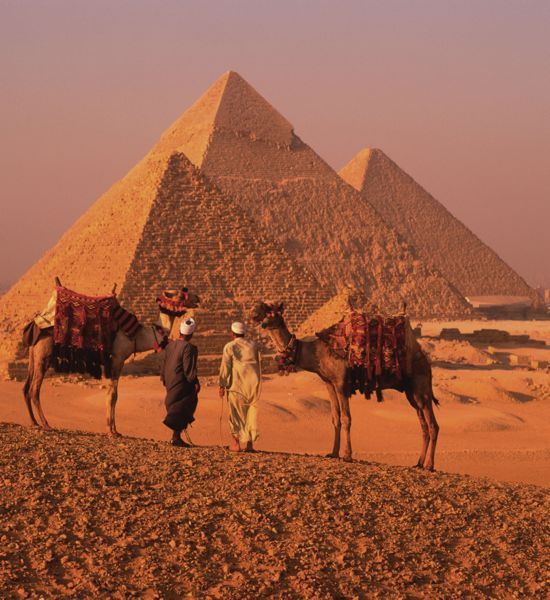
Rising from the golden sands on the edge of the desert, the Giza Pyramids stand as some of the most extraordinary and enduring achievements in human history. Located just outside Cairo, these monumental structures have captivated travelers, scholars, and explorers for thousands of years. Built over 4,500 years ago during the Old Kingdom, the pyramids were constructed as royal tombs for the pharaohs, reflecting both their power on earth and their belief in the afterlife.
The complex includes three main pyramids—the Great Pyramid of Khufu, the Pyramid of Khafre, and the Pyramid of Menkaure—each showcasing remarkable engineering precision and architectural brilliance. The largest, built for Pharaoh Khufu, was originally the tallest man-made structure in the world and remains the only surviving wonder of the ancient world. These pyramids were not built in isolation; they are part of a vast funerary landscape that includes temples, smaller pyramids, and the iconic Great Sphinx of Giza, a mysterious guardian carved from a single block of limestone.
More than just tombs, the pyramids represent a sophisticated understanding of mathematics, astronomy, and organization. Their alignment, construction techniques, and scale continue to inspire debate and admiration today. For visitors, standing before the Pyramids of Giza is more than a sightseeing experience—it is a moment of connection with one of the greatest civilizations in history, where ambition, belief, and ingenuity came together to create monuments that have truly stood the test of time.

1. The Origins of the Great Pyramids: Vision, Power, and Belief
The origins of the Giza Pyramids lie deep within the religious beliefs, political power, and cultural identity of ancient Egypt during the Old Kingdom. These monumental structures were not built merely as tombs, but as eternal gateways designed to ensure the immortality of the pharaohs who ruled as both kings and divine figures. The ancient Egyptians believed that life continued after death, and that the soul required a preserved body and a sacred space to transition into the afterlife. This belief system gave rise to one of the most ambitious architectural traditions in human history. The pyramids at Giza were constructed during the Fourth Dynasty, a period marked by strong centralized authority and remarkable advancements in engineering and organization. The most famous of these structures, the Great Pyramid, was built for Khufu, followed by the pyramids of Khafre and Menkaure. Each pyramid was part of a larger funerary complex that included temples, causeways, and smaller tombs for nobles and officials, all carefully planned to reflect the social and religious hierarchy of the time. The choice of location was also significant. The Giza Plateau, situated near the Nile River and close to what is now Cairo, provided both practical and symbolic advantages. The western bank of the Nile was associated with the land of the dead, as it is where the sun sets, making it an ideal setting for burial monuments. This combination of belief, geography, and royal ambition led to the creation of the Giza pyramids—structures that continue to embody the vision and power of ancient Egypt thousands of years after their construction.
2. The Great Pyramid of Khufu: A Masterpiece of Engineering
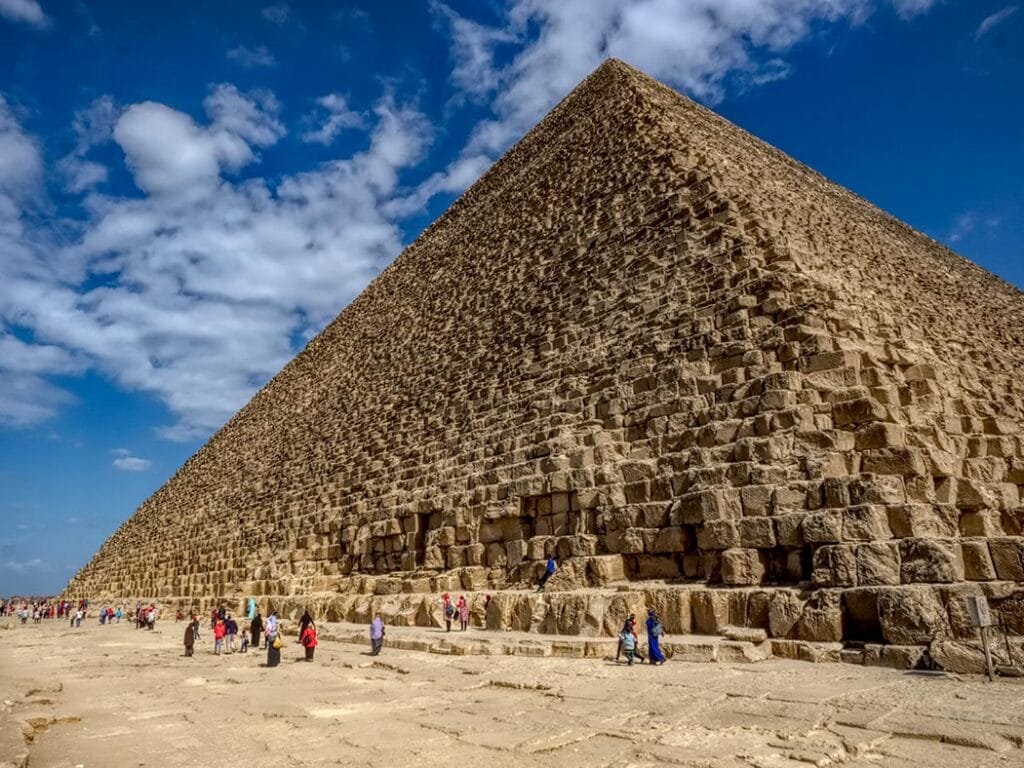
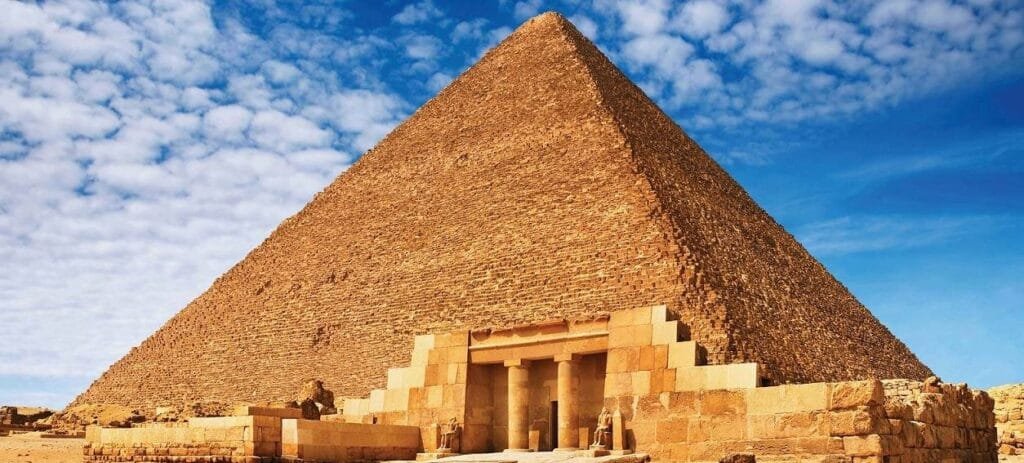
The most remarkable structure within the Giza Pyramids complex is undoubtedly the Great Pyramid of Khufu, an architectural masterpiece that continues to astonish the world with its scale, precision, and mystery. Built for the pharaoh Khufu during the Fourth Dynasty, this pyramid was originally constructed to a height of about 146 meters, making it the tallest man-made structure on Earth for over 3,800 years. Even today, despite the loss of its outer casing stones, it remains one of the most impressive feats of engineering ever achieved. What makes the Great Pyramid truly extraordinary is not only its size, but the level of accuracy with which it was built. The structure is composed of millions of limestone and granite blocks, each carefully cut and positioned with remarkable precision. The base is almost perfectly level, and the sides are aligned closely with the cardinal points of north, south, east, and west. This suggests that the ancient Egyptians possessed advanced knowledge of mathematics and astronomy, enabling them to design and execute such a complex project with incredible consistency. Inside the pyramid lies a network of passages and chambers, including the King’s Chamber, the Queen’s Chamber, and the Grand Gallery, all constructed with a level of skill that continues to puzzle modern engineers. The purpose of some of these internal features remains debated, adding to the enduring mystery of the monument. The Great Pyramid of Khufu is not just a tomb; it is a symbol of human ambition, intelligence, and organization. It reflects a society capable of mobilizing vast resources and labor to create a structure that has stood for millennia, defying time and continuing to inspire awe in all who encounter it.

3. The Pyramid of Khafre and the Great Sphinx: Power and Symbolism
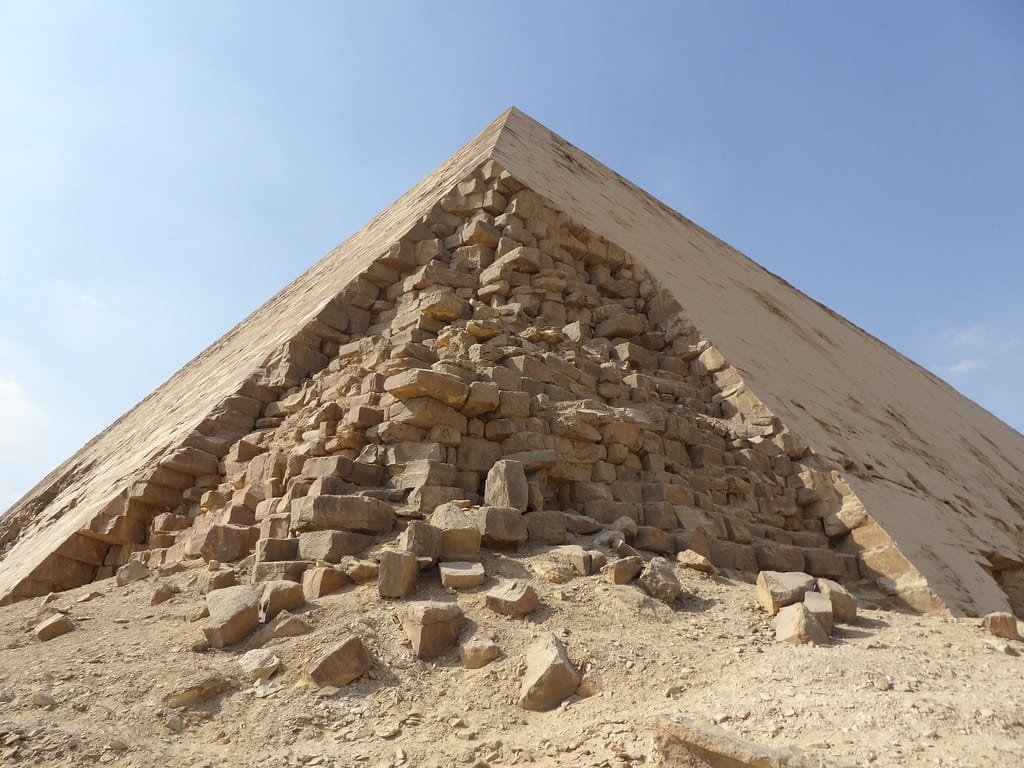
The Pyramid of Khafre, the second-largest structure within the Giza Pyramids complex, stands as a powerful symbol of royal authority and architectural refinement. Built for the pharaoh Khafre, this pyramid appears taller than the Great Pyramid of Khufu due to its elevated position on the Giza Plateau, even though it is slightly smaller in actual height. One of its most distinctive features is the partial remains of its original smooth limestone casing at the top, offering a rare glimpse of how all the pyramids once looked when fully covered in polished white stone that reflected the sunlight brilliantly. The Pyramid of Khafre is part of a larger funerary complex that includes a mortuary temple, a causeway, and a valley temple, all carefully designed to support the rituals associated with the king’s journey into the afterlife. This integration of architectural elements highlights the importance of both physical structure and spiritual function in ancient Egyptian burial practices. The careful planning and execution of these components demonstrate a high level of organization and a deep understanding of religious symbolism. Adjacent to Khafre’s pyramid stands one of the most iconic monuments in the world—the Great Sphinx of Giza. Carved directly from the limestone bedrock, the Sphinx features the body of a lion and the head of a king, widely believed to represent Khafre himself. This colossal statue serves as a guardian of the pyramids, symbolizing strength, wisdom, and divine protection. Together, the Pyramid of Khafre and the Great Sphinx form a powerful visual and symbolic statement about kingship, authority, and the eternal nature of the pharaoh’s role in both the earthly and spiritual realms.

4. The Pyramid of Menkaure: Elegance in Modest Scale
The Pyramid of Menkaure, the smallest of the three main pyramids within the Giza Pyramids complex, offers a unique perspective on royal architecture and design during the Fourth Dynasty. Built for the pharaoh Menkaure, this pyramid may not match the colossal scale of the pyramids of Khufu and Khafre, but it compensates with refined craftsmanship and distinctive architectural features. Standing at approximately 65 meters in height, it represents a shift toward more intricate detailing rather than overwhelming size, suggesting a nuanced evolution in pyramid construction. One of the most remarkable aspects of Menkaure’s pyramid is its use of materials. Unlike the other pyramids, which are primarily constructed from limestone, the lower portion of this pyramid was originally clad in polished red granite, a material sourced from Aswan. This choice not only enhanced the visual appearance of the structure but also demonstrated the ability of ancient Egyptian builders to transport and work with extremely heavy and durable stone over long distances. The contrast between the granite base and the limestone upper sections would have created a striking visual effect, emphasizing both strength and elegance. The pyramid complex of Menkaure also includes several smaller satellite pyramids, believed to be associated with queens or members of the royal family. In addition, the valley temple connected to the pyramid has yielded some of the finest statues of the Old Kingdom, including lifelike representations of the king that reveal a more human and approachable artistic style. These elements together highlight a subtle but important transformation in royal expression, where power was balanced with refinement. The Pyramid of Menkaure stands as a testament to the idea that greatness in ancient Egypt was not defined solely by scale, but also by artistry, precision, and symbolic depth.
5. Construction Techniques: How the Pyramids Were Built
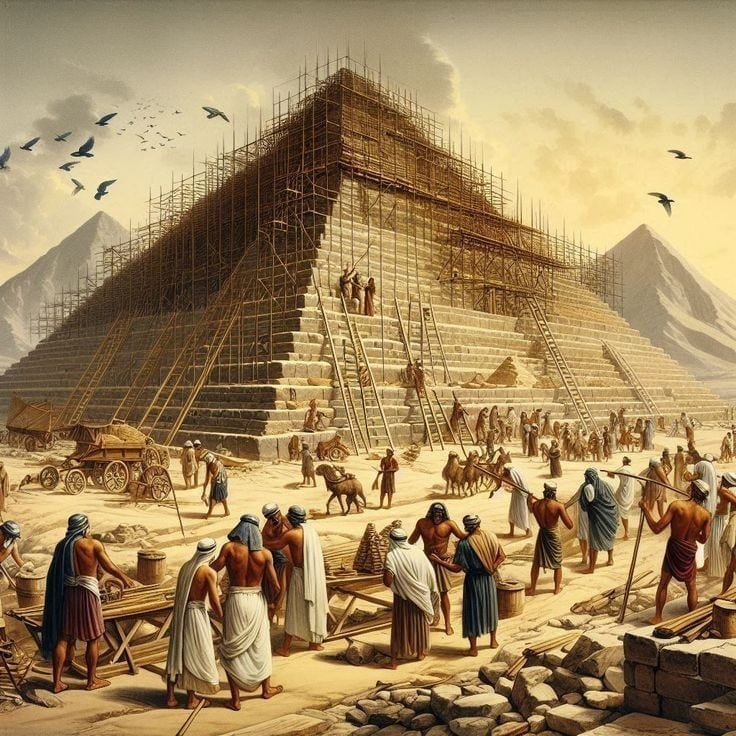
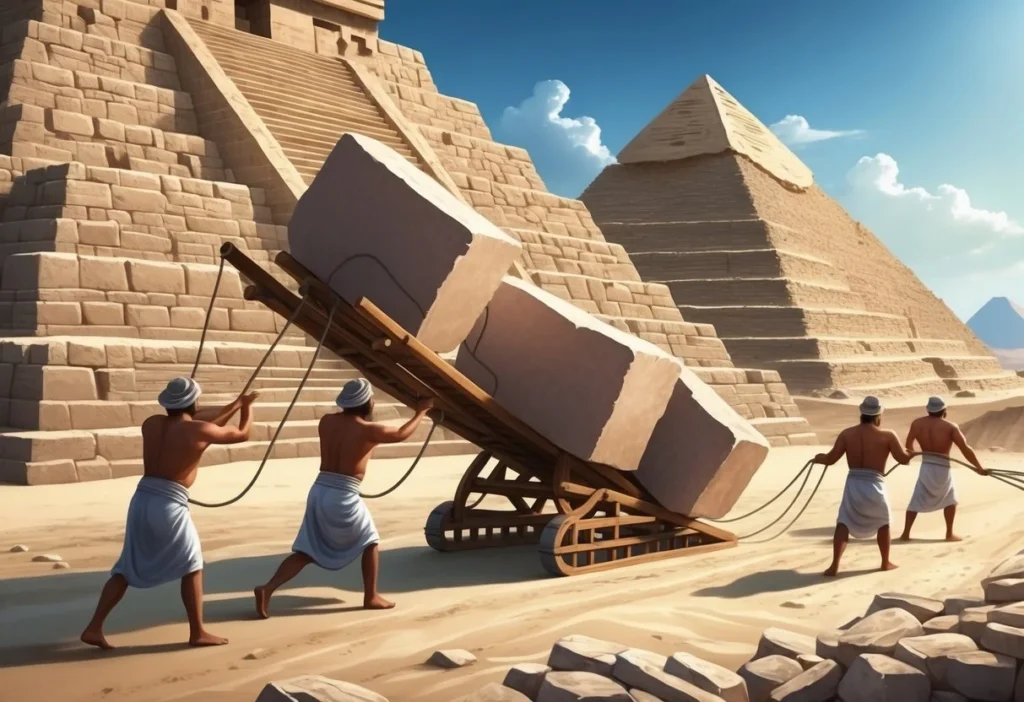
The construction of the Giza Pyramids remains one of the greatest engineering achievements in human history, and it continues to inspire both admiration and debate. Built over 4,500 years ago during the Old Kingdom, these massive structures were created without modern machinery, yet they demonstrate a level of precision and organization that rivals contemporary engineering projects. Understanding how the ancient Egyptians accomplished this feat requires examining their tools, methods, and the social system that supported such an ambitious undertaking. The pyramids were constructed using millions of stone blocks, primarily limestone, with some granite used in key internal structures. These blocks were quarried locally and transported to the construction site, likely using a combination of sledges, ramps, and human labor. Workers may have used water to reduce friction when moving the stones across the desert surface, allowing them to transport heavy materials more efficiently. The exact design of the ramps used to lift the stones to higher levels is still debated, with theories ranging from straight ramps to spiral or zigzagging structures built around the pyramid itself. Equally impressive is the organization of the workforce. Contrary to earlier beliefs that slaves built the pyramids, archaeological evidence suggests that skilled laborers, craftsmen, and seasonal workers were responsible for the construction. These workers were housed, fed, and organized into teams, indicating a highly structured and cooperative system. The alignment of the pyramids with the cardinal directions also suggests a sophisticated understanding of astronomy and measurement. Altogether, the construction techniques of the Giza pyramids reveal not only technical skill, but also a remarkable level of planning, coordination, and collective effort that made these timeless monuments possible.
6. The Workers of the Pyramids: Organization, Skill, and Daily Life
The construction of the Giza Pyramids was not the result of forced labor by slaves, as once commonly believed, but rather the achievement of a highly organized workforce composed of skilled laborers, craftsmen, and seasonal workers. Archaeological discoveries near the Giza Plateau have revealed entire workers’ villages, providing valuable insight into the lives of those who built these monumental structures. These findings show that the workers were an essential part of society, supported by the state and respected for their contributions to one of the most important projects in ancient Egypt. The workforce was carefully structured into teams, each with specific roles and responsibilities. Some workers specialized in quarrying stone, others in transporting blocks, while skilled artisans were responsible for carving, shaping, and finishing the materials. Engineers and overseers coordinated the overall construction process, ensuring that every stage followed a precise plan. Evidence suggests that workers were organized into rotating crews, allowing the project to continue efficiently over many years. This level of organization highlights the administrative sophistication of ancient Egyptian society and its ability to manage large-scale operations. Daily life for these workers was demanding but not without support. Excavations have uncovered bakeries, storage facilities, and living quarters, indicating that workers were provided with food, shelter, and medical care. Diets likely included bread, beer, and protein sources such as fish and meat, ensuring that laborers had the energy required for their physically intensive tasks. In addition, the sense of purpose associated with building a monument for the pharaoh, who was considered a divine ruler, may have given their work a spiritual significance. The story of the pyramid workers reveals not only the human effort behind these structures but also the social systems that made such an extraordinary achievement possible.

7. The Religious Meaning of the Pyramids: Pathway to Eternity
The true significance of the Giza Pyramids cannot be fully understood without exploring the religious beliefs that inspired their construction. For the ancient Egyptians, death was not an end but a transition into another form of existence, and the pyramids were designed as sacred structures to facilitate this journey. They were built to serve as eternal resting places for the pharaohs, who were believed to be divine beings with a unique role in maintaining cosmic order even after death. Central to this belief system was the concept of the soul, which consisted of different elements such as the “ka” and the “ba.” The preservation of the physical body was essential, as it provided a home for these spiritual components. This is why mummification was practiced, and why the pyramids were constructed with such care and precision. Inside the pyramid, the burial chamber was placed deep within the structure, protected by massive stone blocks and hidden passages to ensure that the king’s body and treasures remained secure for eternity. The shape of the pyramid itself also carried symbolic meaning. Its smooth, sloping sides are thought to represent the rays of the sun, connecting the pharaoh to the sun god Ra and aiding his ascent to the heavens. The alignment of the pyramids with the cardinal directions further reflects a connection to the cosmos, suggesting that the builders had a sophisticated understanding of astronomy. In this way, the pyramids were not just physical monuments, but spiritual instruments designed to guide the king’s soul toward immortality. They stand as a powerful expression of a civilization deeply concerned with life after death and the eternal order of the universe.
8. The Pyramid Complex: Temples, Causeways, and Sacred Design
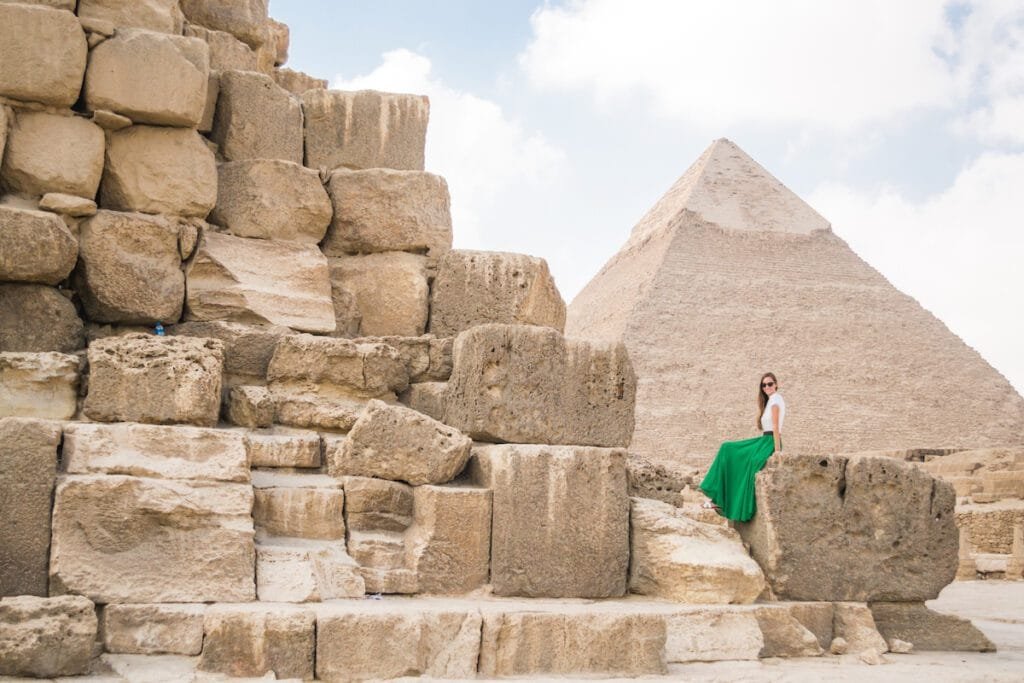
The Giza Pyramids were never intended to stand alone as isolated structures; instead, each pyramid was part of a carefully planned funerary complex that combined architecture, ritual, and symbolism into a unified sacred landscape. These complexes were designed to support the pharaoh’s journey into the afterlife, ensuring that every stage of burial, worship, and remembrance was carried out according to deeply rooted religious traditions. The pyramid itself was only one element within a much larger and more intricate system. At the heart of each complex was the mortuary temple, located near the base of the pyramid. This temple served as the center for religious rituals, where priests performed daily offerings to honor the deceased king and sustain his spirit in the afterlife. From the mortuary temple, a long, covered causeway extended toward the valley temple, which was situated closer to the Nile River. The valley temple played a crucial role in the funeral process, as it was the location where the pharaoh’s body was received and prepared before being transported up the causeway to the pyramid. Surrounding the main pyramid were smaller structures, including satellite pyramids for queens, tombs for nobles and officials, and storage facilities for offerings and equipment. This arrangement created a sacred environment where the king remained at the center of both physical space and spiritual importance. The layout of the complex reflected a deep understanding of religious symbolism, connecting the earth, the Nile, and the heavens in a harmonious design. Together, these elements formed a complete funerary system that ensured the continuity of royal power beyond death, demonstrating the sophistication and spiritual depth of ancient Egyptian civilization.
9. The Alignment and Astronomy of the Pyramids: Precision Beyond Time
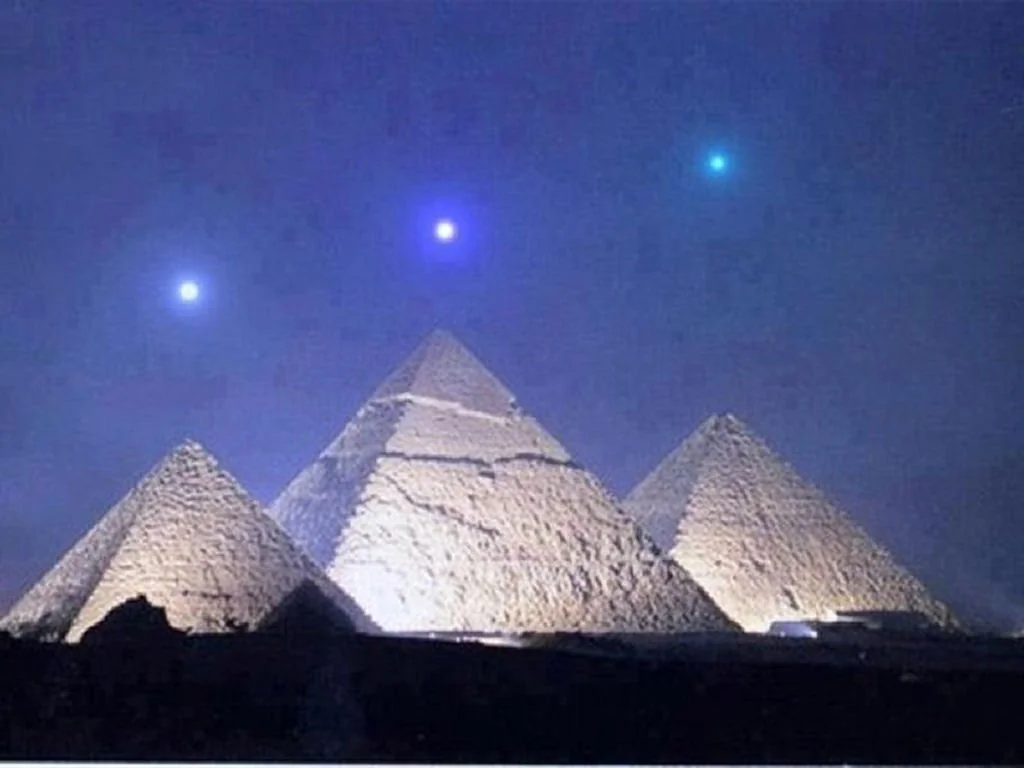
The extraordinary precision of the Giza Pyramids is not limited to their construction alone; it also extends to their remarkable alignment with the natural world and the cosmos. One of the most fascinating aspects of these ancient structures is how accurately they are oriented to the cardinal directions—north, south, east, and west. The sides of the Great Pyramid, in particular, are aligned with incredible precision, deviating only slightly from true north. This level of accuracy suggests that the ancient Egyptians possessed advanced knowledge of astronomy and geometry, allowing them to achieve results that continue to impress modern scientists. Scholars believe that the builders may have used the stars as reference points to determine orientation. By observing the movement of certain stars across the night sky, they could establish a fixed north-south axis and apply this knowledge to the layout of the pyramid. This connection between the pyramids and the heavens was not merely technical—it was deeply symbolic. The ancient Egyptians associated the stars, especially those that never set, with eternity and the afterlife. Aligning the pyramids with these celestial patterns may have been intended to help guide the soul of the pharaoh toward the eternal realm. In addition to their directional alignment, some researchers have proposed connections between the pyramids and specific constellations, suggesting that their arrangement on the Giza Plateau may reflect patterns seen in the night sky. While these theories remain debated, they highlight the ongoing mystery and fascination surrounding the pyramids. What is certain, however, is that the builders achieved a level of precision that required careful observation, planning, and execution. The alignment of the pyramids stands as a testament to the intellectual achievements of ancient Egypt, demonstrating a sophisticated understanding of both the earth and the universe.
10. Materials and Craftsmanship: The Art Behind the Stone
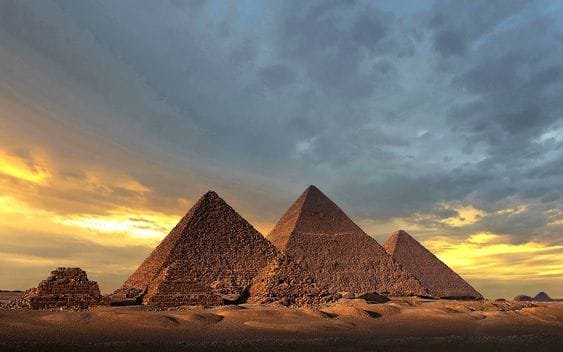
The enduring strength and beauty of the Giza Pyramids are the result of extraordinary materials and craftsmanship that reflect the advanced skills of ancient Egyptian builders. Every block used in the construction of the pyramids was carefully selected, shaped, and positioned with a level of precision that continues to impress engineers and historians today. The choice of materials was not random; it was guided by both practical considerations and symbolic meaning, ensuring that the pyramids would stand the test of time while also fulfilling their spiritual purpose. The primary material used in the construction was limestone, which was quarried locally on the Giza Plateau. This stone formed the core structure of the pyramids, providing stability and strength. For more critical architectural elements, such as the internal chambers and structural supports, the builders used granite, a much harder and more durable stone transported from quarries in Aswan. The use of granite in key areas highlights the importance of durability and protection, especially in spaces associated with the burial of the pharaoh. Equally remarkable was the craftsmanship involved in shaping and placing these stones. Workers used simple tools made of copper and stone, yet they achieved smooth surfaces and tight joints between blocks, minimizing gaps and ensuring structural integrity. The outer casing stones, many of which have been lost over time, were originally polished to a fine finish, creating a smooth, reflective surface that would have gleamed under the sunlight. This attention to detail demonstrates that the pyramids were not only functional structures but also works of art. The combination of high-quality materials and skilled craftsmanship allowed these monuments to endure for thousands of years, standing as a testament to the ingenuity and dedication of their builders.

11. Exploration and Discovery: Uncovering the Secrets of the Pyramids
The Giza Pyramids have fascinated explorers, scholars, and travelers for centuries, leading to a long history of exploration and discovery that continues to this day. From early visitors in antiquity to modern archaeologists equipped with advanced technology, each generation has sought to understand the purpose, construction, and hidden mysteries of these monumental structures. This ongoing process of investigation has transformed the pyramids from silent stone monuments into dynamic sources of knowledge about ancient Egyptian civilization. In earlier periods, much of the exploration focused on uncovering treasures and hidden chambers, often driven by curiosity and a desire for discovery rather than scientific study. Over time, however, archaeological methods became more systematic and careful, emphasizing documentation, preservation, and analysis. Excavations around the pyramids have revealed not only the internal structures of the monuments themselves but also the surrounding workers’ villages, temples, and burial sites. These findings have provided valuable insights into the lives of those who built and maintained the pyramids, expanding our understanding beyond the pharaohs to include the broader society. Modern technology has opened new possibilities for exploration without causing damage to the structures. Techniques such as ground-penetrating radar and scanning technologies have allowed researchers to detect hidden voids and study internal features that were previously inaccessible. These discoveries continue to generate new questions and interpretations, showing that the pyramids still hold secrets waiting to be revealed. The process of exploration and discovery is therefore ongoing, reminding us that even the most ancient monuments can continue to teach us about the past while inspiring curiosity and innovation in the present.
12. The Pyramids in History: From Ancient Wonder to Global Icon
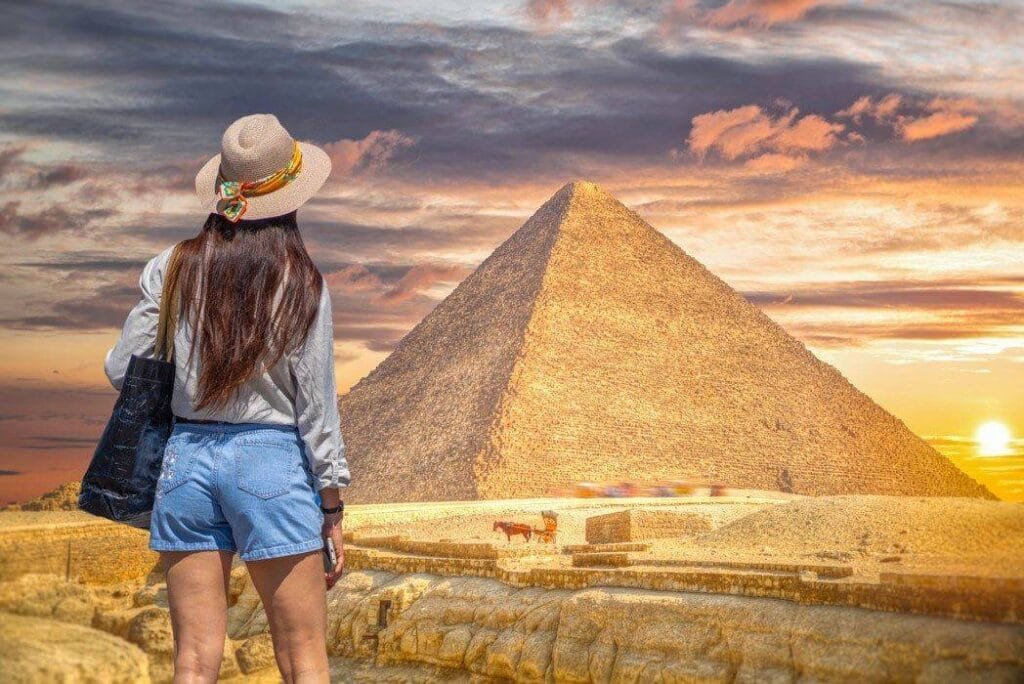
The Giza Pyramids have held a unique place in human history, evolving from sacred royal tombs in ancient Egypt to universally recognized symbols of human achievement. When they were first constructed during the Old Kingdom, these monuments were deeply connected to religious beliefs, royal authority, and the concept of eternal life. Over time, however, their meaning expanded beyond their original purpose, capturing the imagination of different civilizations and cultures across centuries. In antiquity, the pyramids were already considered extraordinary. They were included among the Seven Wonders of the Ancient World, a list that celebrated the most impressive architectural and artistic achievements known at the time. Remarkably, the Great Pyramid is the only one of these wonders that still survives today, standing as a testament to the durability and vision of its builders. Greek and Roman historians wrote about the pyramids with awe, attempting to explain their construction and significance, often blending fact with legend. These early accounts helped spread the fame of the pyramids far beyond Egypt. In the modern era, the pyramids have become global icons, representing not only ancient Egypt but also the broader idea of human ingenuity and ambition. They attract millions of visitors each year and are featured in countless books, films, and educational materials. Their image has become synonymous with mystery, history, and exploration. Despite centuries of study, the pyramids continue to inspire new interpretations and theories, ensuring their place at the center of historical and cultural discussions. From sacred tombs to worldwide symbols, the pyramids have transcended time, maintaining their status as one of the most powerful and enduring achievements in human history.

13. Tourism and Visitor Experience: Discovering the Pyramids Today
Visiting the Giza Pyramids today is a unique and unforgettable experience that combines history, culture, and personal discovery in one extraordinary setting. Located just outside Cairo, the pyramids are easily accessible, yet they offer a sense of awe that feels far removed from the modern world. As visitors approach the Giza Plateau, the sheer size and presence of these ancient structures become immediately apparent, creating a powerful first impression that few places on earth can match. The contrast between the surrounding desert landscape and the distant urban skyline adds another layer of depth to the experience. Exploring the site allows visitors to engage with history in a direct and meaningful way. Walking around the base of the pyramids reveals the scale of the stone blocks and the precision of their construction, while entering the interior chambers offers a more intimate perspective on their design. Nearby, the Great Sphinx of Giza stands as a silent guardian, adding to the sense of mystery and grandeur that defines the entire complex. Guided tours, informational displays, and modern facilities help visitors better understand the historical and cultural significance of the site. Beyond the physical exploration, the experience of visiting the pyramids is also emotional and reflective. Standing before structures that have existed for thousands of years invites a sense of connection with the past and a deeper appreciation for human achievement. Whether viewed at sunrise, under the bright midday sun, or during sunset when the stones glow with warm colors, the pyramids offer different perspectives that make each visit unique. This combination of history, atmosphere, and personal reflection ensures that a journey to the pyramids remains one of the most memorable travel experiences in the world.

14. Preservation and Conservation: Protecting the Pyramids for the Future
The preservation of the Giza Pyramids is a critical responsibility that reflects the global importance of these ancient monuments. For thousands of years, the pyramids have withstood natural forces such as wind erosion, temperature changes, and shifting sands, yet modern challenges have introduced new threats that require careful management and long-term planning. Environmental factors, urban expansion from nearby Cairo, and the impact of increasing tourism all contribute to the need for continuous conservation efforts. Preservation strategies focus on maintaining the structural stability of the pyramids while also protecting their surrounding environment. Experts work to monitor the condition of the stone blocks, repair areas affected by damage, and control factors such as humidity and pollution that can accelerate deterioration. Conservation is not only about protecting the visible structures but also about safeguarding the archaeological context, including nearby tombs, temples, and pathways that form part of the larger historical landscape. These efforts require a balance between allowing public access and ensuring that the site is not harmed by excessive human activity. International cooperation has played a significant role in supporting these preservation initiatives, bringing together specialists in archaeology, engineering, and environmental science. Advances in technology, such as digital mapping and non-invasive scanning, have made it possible to study the pyramids in detail without causing damage. These tools help researchers understand structural conditions and plan effective conservation strategies. Ultimately, the goal is to ensure that the pyramids remain intact for future generations, preserving their historical, cultural, and symbolic value. Protecting the pyramids is not only a national responsibility but a shared global commitment to safeguarding one of humanity’s greatest achievements.
15. The Legacy of the Pyramids: A Timeless Symbol of Human Achievement
The enduring legacy of the Giza Pyramids extends far beyond their original purpose as royal tombs, transforming them into one of the most powerful and recognizable symbols of human achievement in history. Built over 4,500 years ago, these monumental structures have survived the passage of time, natural forces, and countless generations, maintaining their presence as a testament to the ingenuity, ambition, and organization of ancient Egyptian civilization. Their influence has reached far beyond Egypt, inspiring cultures, scholars, and creators across the world. Throughout history, the pyramids have represented different ideas to different societies. For ancient Egyptians, they symbolized the divine power of the pharaoh and the promise of eternal life. For later civilizations, including the Greeks and Romans, they became objects of curiosity and admiration, often surrounded by mystery and legend. In the modern world, the pyramids have taken on an even broader meaning, representing not only the achievements of a single civilization but also the potential of humanity to create something lasting and extraordinary. Their image is recognized globally, appearing in art, literature, film, and education as a symbol of history and discovery. The legacy of the pyramids also lies in the knowledge they continue to provide. Ongoing research and exploration reveal new details about their construction, purpose, and cultural context, ensuring that they remain relevant in contemporary discussions about history and science. At the same time, they inspire millions of visitors each year, offering a direct connection to the ancient past. The pyramids remind us that great achievements are built through vision, cooperation, and perseverance. They stand not only as monuments of stone, but as enduring symbols of what humanity is capable of achieving when imagination and determination come together.
16. Cultural Influence of the Pyramids: Inspiration Across Civilizations
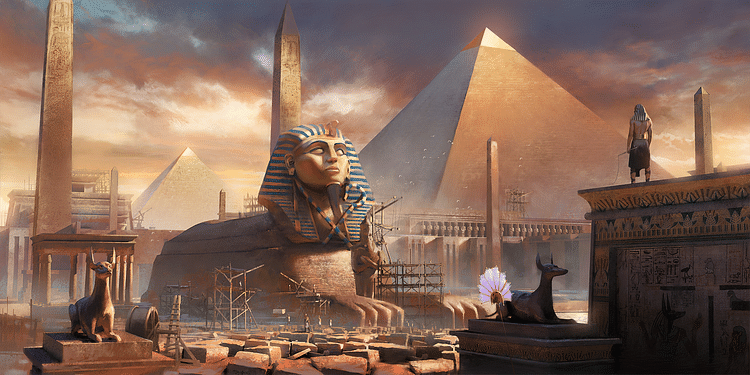
The cultural influence of the Giza Pyramids has extended far beyond the borders of ancient Egypt, shaping artistic, intellectual, and symbolic traditions across civilizations and throughout history. These monumental structures have long captured the imagination of people from different cultures, becoming a universal symbol of mystery, power, and human achievement. Their distinct geometric form and massive scale have inspired countless interpretations, making them one of the most recognized and influential architectural icons in the world. In ancient times, travelers and historians from civilizations such as Greece and Rome visited the pyramids and documented their impressions, often blending observation with myth. These early accounts helped spread the fame of the pyramids across the Mediterranean world, establishing them as wonders that challenged understanding and inspired curiosity. In later periods, especially during the Renaissance and beyond, the pyramids became symbols of ancient wisdom and hidden knowledge, influencing philosophy, art, and even early scientific thought. Their image was associated with stability, eternity, and the pursuit of deeper meaning. In the modern era, the influence of the pyramids can be seen in a wide range of fields, from architecture and design to literature, cinema, and popular culture. Their form has been adapted in buildings and monuments around the world, while their symbolism continues to appear in stories and visual media that explore themes of mystery and discovery. The pyramids have also become central to educational and cultural discourse, serving as a gateway to understanding ancient Egypt and human history more broadly. This enduring influence demonstrates that the pyramids are not just relics of the past, but living symbols that continue to inspire creativity, curiosity, and admiration across generations.
17. Mysteries and Theories: Questions That Still Remain
Despite centuries of research, the Giza Pyramids continue to be surrounded by mysteries and unanswered questions that capture the imagination of scholars and visitors alike. While many aspects of their construction and purpose are well understood, there are still details that remain uncertain, leading to ongoing debates and a wide range of theories. These questions are part of what makes the pyramids so fascinating, as they invite continuous exploration and interpretation rather than offering simple, final answers. One of the most discussed mysteries involves the exact methods used to transport and position the massive stone blocks. Although several theories have been proposed, including the use of ramps, sledges, and coordinated labor, no single explanation has been universally accepted as definitive. Similarly, the internal design of the pyramids, particularly hidden chambers and unexplored spaces, continues to intrigue researchers. Modern scanning technologies have revealed voids within the structures that have not yet been fully examined, raising new questions about their purpose and construction. In addition to engineering mysteries, there are also symbolic and astronomical theories that attempt to explain the deeper meaning behind the pyramids’ design and alignment. Some researchers suggest connections to specific stars or constellations, while others focus on the religious and spiritual significance of their orientation. While not all of these ideas are supported by strong evidence, they reflect the enduring curiosity that the pyramids inspire. Ultimately, the mysteries of the pyramids remind us that even the most studied monuments can still hold secrets, encouraging future generations to continue exploring, questioning, and learning from these remarkable structures.

18. The Enduring Power of the Pyramids: A Monument Beyond Time
The enduring power of the Giza Pyramids lies in their ability to transcend time, culture, and geography, standing as one of the most extraordinary achievements in human history. For over four millennia, these monumental structures have remained a constant presence on the landscape of Egypt, witnessing the rise and fall of civilizations, the transformation of societies, and the evolution of human thought. Their survival alone is a testament to the skill and vision of the ancient Egyptians, who created something that could withstand both natural forces and the passage of centuries. What makes the pyramids truly remarkable is not only their physical scale but also their symbolic depth. They represent a fusion of science, religion, and art, reflecting a civilization that sought to understand its place in the universe and to secure a form of immortality for its rulers. The alignment, design, and construction of the pyramids reveal a sophisticated understanding of mathematics, engineering, and cosmology. At the same time, they embody a powerful belief in life after death and the eternal nature of the soul. This combination of practical knowledge and spiritual meaning gives the pyramids a significance that goes far beyond their role as tombs. Today, the pyramids continue to inspire millions of people around the world, serving as a bridge between the ancient past and the modern present. They are not only historical monuments but also symbols of what humanity can achieve through determination, creativity, and collaboration. Whether studied by scholars, admired by visitors, or represented in global culture, the pyramids remain a source of wonder and inspiration. Their enduring presence reminds us that while civilizations may change, the desire to create something meaningful and lasting is a timeless aspect of the human experience.