- Excursions in Egypt
- Egypt Tour Packages
- Cairo Tours and Excursions
- Hurghada Tours and Excursions
- Soma Bay Tours and Excursions
- Makadi Bay Tours and Excursions
- Sahl Hasheesh Tours and Excursions
- El Gouna Tours and Excursions
- Marsa Alam Tours and Excursions
- Port Ghalib Tours and Excursions
- El Quseir Tours and Excursions
- Dendera and Abydos Day Tours
- Aswan Tours and Excursions
- Luxor Tours and Excursions
- Sharm El Sheikh Tours and Excursions
- Top Rated Egypt Tours in 2026
- Optional Excursions in Egypt
- Private Transfer
- Blogs About egypt
- Ancient Egypt
- Historical Sites in Egypt
- Cairo
- Alexandria
- Luxor
- Aswan
- The Red Sea
- Dendera Temple
- El Fayoum Oasis
- Bahariya Oasis
- Siwa Oasis
- Al Alamein
- Marsa Matruh
- Why Egypt Is One of the Safest Countries to Visit in the Middle East
- What You Need To know Before Your First Trip To Egypt
- Egypt Travel Costs in 2026 Full Budget Guide
- Top 10 Tourist Activities in Egypt
- Top 50 Activities You Can’t Miss in Egypt in 2026
- The Guide to Guided Tours in Egypt
- Egypt’s Ancient and Modern History
- The Nile River
- The Deserts of Egypt
- Ancient Egyptian gods
- famous Egyptian dishes
- UNESCO World Heritage sites
- About Us
- Egypt Hotels and Resorts
- Excursions in Egypt
- Egypt Tour Packages
- Cairo Tours and Excursions
- Hurghada Tours and Excursions
- Soma Bay Tours and Excursions
- Makadi Bay Tours and Excursions
- Sahl Hasheesh Tours and Excursions
- El Gouna Tours and Excursions
- Marsa Alam Tours and Excursions
- Port Ghalib Tours and Excursions
- El Quseir Tours and Excursions
- Dendera and Abydos Day Tours
- Aswan Tours and Excursions
- Luxor Tours and Excursions
- Sharm El Sheikh Tours and Excursions
- Top Rated Egypt Tours in 2026
- Optional Excursions in Egypt
- Private Transfer
- Blogs About egypt
- Ancient Egypt
- Historical Sites in Egypt
- Cairo
- Alexandria
- Luxor
- Aswan
- The Red Sea
- Dendera Temple
- El Fayoum Oasis
- Bahariya Oasis
- Siwa Oasis
- Al Alamein
- Marsa Matruh
- Why Egypt Is One of the Safest Countries to Visit in the Middle East
- What You Need To know Before Your First Trip To Egypt
- Egypt Travel Costs in 2026 Full Budget Guide
- Top 10 Tourist Activities in Egypt
- Top 50 Activities You Can’t Miss in Egypt in 2026
- The Guide to Guided Tours in Egypt
- Egypt’s Ancient and Modern History
- The Nile River
- The Deserts of Egypt
- Ancient Egyptian gods
- famous Egyptian dishes
- UNESCO World Heritage sites
- About Us
- Egypt Hotels and Resorts
Welcome to
Colossi of Memnon: The Silent Guardians of a Lost Empire
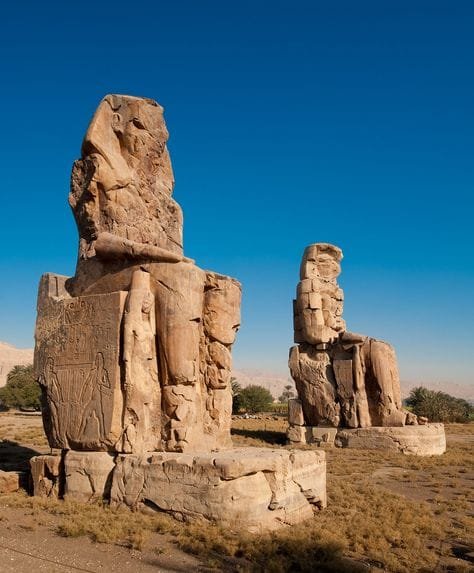
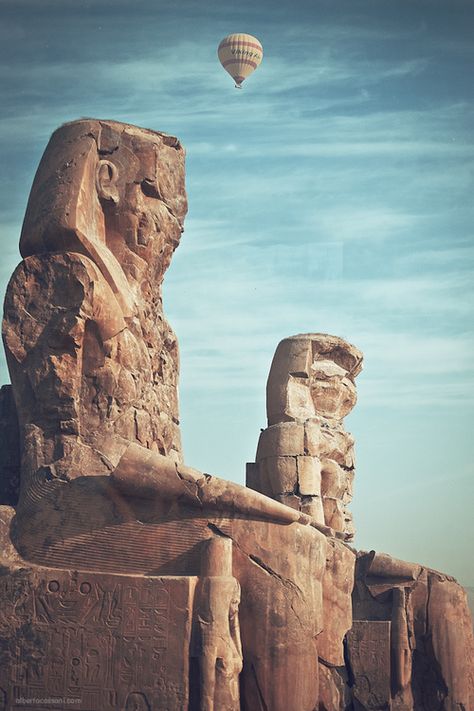
Rising majestically from the fertile plains of the West Bank of Luxor, the Colossi of Memnon stand as two of the most iconic and mysterious monuments of ancient Egypt. These towering statues, each reaching approximately eighteen meters in height, represent Pharaoh Amenhotep III seated on his throne, gazing eternally toward the rising sun in the east. Though time has worn their features and earthquakes have left their marks, their presence remains powerful and deeply evocative, capturing the imagination of visitors for centuries. They are not merely statues, but enduring symbols of royal authority, divine connection, and the grandeur of a civilization that sought immortality through stone.
Originally, these colossal figures stood at the entrance of a vast mortuary temple built to honor Amenhotep III, one of the most prosperous rulers of the 18th Dynasty. This temple was once the largest of its kind in Egypt, surpassing even the scale of the temples at Karnak. However, over the centuries, natural disasters and the reuse of building materials led to its near complete destruction, leaving the Colossi as the most visible remnants of what was once a magnificent complex. Their survival is a testament to the durability of ancient Egyptian craftsmanship and the enduring legacy of the pharaoh they represent.
Today, the Colossi of Memnon continue to stand as silent witnesses to history, bridging the gap between past and present. They invite visitors to reflect on the rise and fall of empires and to marvel at the timeless ambition of those who built monuments not just for their lifetime, but for eternity itself.
1. Amenhotep III: The Pharaoh Behind the Colossi
The imposing figures of the Colossi of Memnon are not merely artistic achievements; they are monumental representations of one of ancient Egypt’s most powerful and influential rulers, Amenhotep III. Reigning during the height of the 18th Dynasty, Amenhotep III presided over a period of unprecedented prosperity, stability, and cultural flourishing known as Egypt’s Golden Age. His reign was marked not by war, but by diplomacy, artistic innovation, and ambitious construction projects that sought to glorify both his rule and the gods who legitimized his authority. The Colossi were originally constructed as guardians of his vast mortuary temple, serving both a symbolic and practical function. Positioned at the grand entrance, they were intended to project the image of the king as eternal and divine, watching over his temple and the surrounding land for all time. Seated in a position of calm authority, the statues reflect the idealized image of kingship in ancient Egypt—powerful, composed, and eternally connected to the gods. Their gaze toward the east aligns them with the rising sun, reinforcing themes of rebirth and renewal that were central to Egyptian religious beliefs. Beyond their symbolic significance, the statues also demonstrate the incredible technical skill of ancient Egyptian artisans. Carved from massive blocks of quartzite sandstone transported from distant quarries, the Colossi represent a remarkable feat of engineering and coordination. Even after thousands of years of exposure to the elements, they continue to inspire awe, standing as enduring testaments to the vision and ambition of a king who sought to secure his legacy for eternity.
2. The Lost Mortuary Temple: A Monument Greater Than Karnak
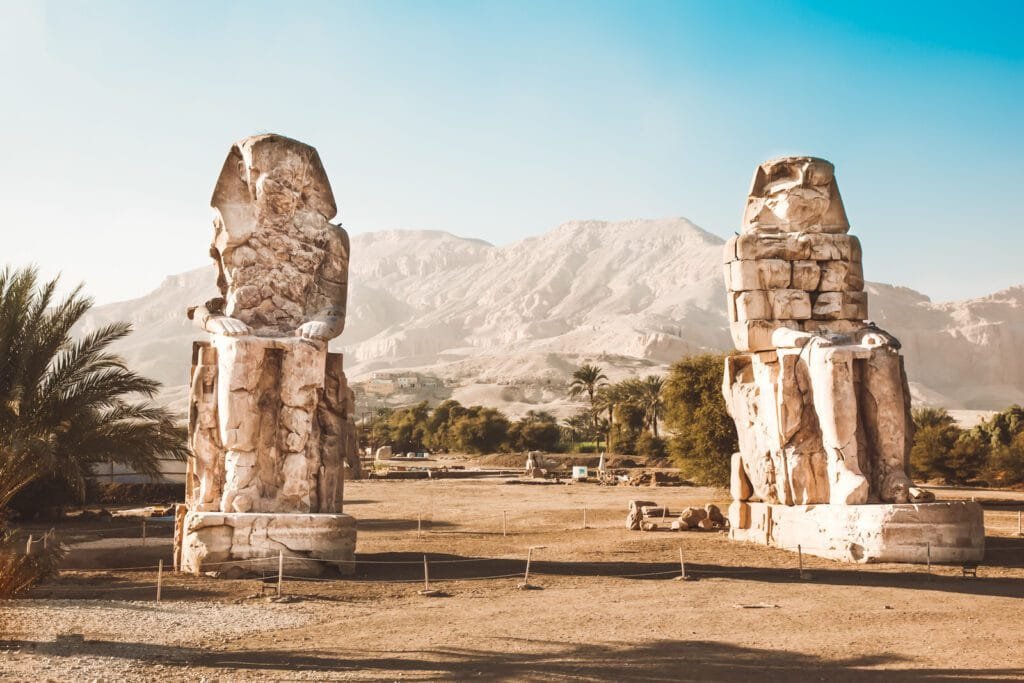
Long before the Colossi of Memnon became isolated landmarks in the open fields of the West Bank, they formed the grand entrance to one of the most ambitious architectural projects ever undertaken in ancient Egypt—the mortuary temple of Amenhotep III. This vast complex, now largely lost to time, once stretched across a massive area and was considered even larger than the famed Karnak Temple Complex. It was designed as a place where the king would be worshipped after death, ensuring his eternal presence among both the gods and the living. The temple was built primarily from mudbrick and limestone, materials that, while easier to work with, proved less durable than the stone used in other monuments. Over centuries, flooding from the Nile, earthquakes, and the systematic reuse of building materials by later civilizations led to its gradual destruction. What remains today are scattered ruins, foundations, and fragments that hint at the temple’s former grandeur, with the Colossi standing as its most visible and enduring elements. Despite its disappearance, archaeological excavations continue to reveal new insights into the temple’s scale and significance. Statues, inscriptions, and structural remains have been uncovered, offering glimpses into a complex that once rivaled the greatest monuments of ancient Egypt. The story of this lost temple adds a layer of mystery and intrigue to the Colossi, transforming them from solitary statues into gateways to a forgotten world of immense architectural and spiritual ambition.

3. The Singing Statues: Legend, Mystery, and Ancient Phenomena
One of the most intriguing features of the Colossi of Memnon is the enduring legend of the “singing statue,” a phenomenon that fascinated ancient visitors and continues to spark curiosity today. After a powerful earthquake struck in 27 BCE, the northern colossus developed visible cracks within its massive stone structure. Soon after, travelers began reporting a strange and mysterious sound that occurred at sunrise. As the first rays of light touched the statue, it would emit a faint tone, often described as a soft hum, a whisper, or even a distant voice. This unusual event transformed the statue into a subject of wonder, blending natural occurrence with spiritual interpretation. Greek and Roman visitors quickly connected this mysterious sound to the legend of Memnon, a heroic king from Ethiopian mythology who was believed to have died in the Trojan War. According to their interpretation, the sound was the voice of Memnon greeting his mother, Eos, the goddess of the dawn, each morning as she rose into the sky. This belief gave the statues their modern name and elevated their status beyond Egyptian history, turning them into a point of fascination for the wider ancient world. Emperors, scholars, and travelers journeyed to witness the phenomenon, often leaving inscriptions on the stone to document their experience. Modern scientific explanations suggest that the sound was caused by temperature changes at dawn, which led to the expansion of air trapped within the stone’s cracks, creating vibrations that produced the audible tone. When Roman restorations later repaired the damaged statue, the sound disappeared entirely. Despite this, the legend remains one of the most captivating stories in Luxor.
4. Engineering Marvels: The Construction and Transportation of the Colossi
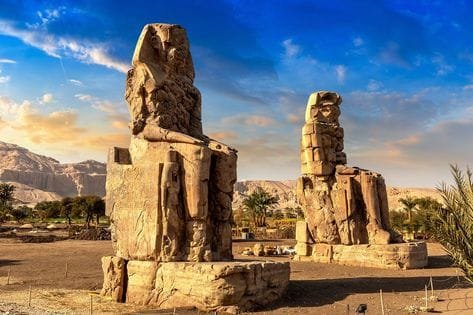
The creation of the Colossi of Memnon stands as one of the most extraordinary engineering accomplishments of ancient Egypt, reflecting both technical brilliance and organizational mastery. Each statue was carved from a single massive block of quartzite sandstone, a material prized for its durability and ability to withstand the harsh desert environment. What makes this achievement even more remarkable is that the stone was quarried near modern-day Cairo, meaning it had to be transported over hundreds of kilometers to reach its final destination on the West Bank of Luxor. Moving such colossal blocks, each weighing hundreds of tons, required not only physical strength but also advanced planning and coordination. The Nile River played a central role in this process, serving as the primary transportation route for these enormous stones. During the annual inundation, when water levels rose significantly, workers loaded the stone blocks onto large wooden barges designed to carry extreme weight. These barges then traveled south along the river toward Thebes, taking advantage of the natural flow of the Nile. Upon reaching the site, the blocks were unloaded and carefully transported across land using wooden sledges. Teams of laborers pulled these sledges with ropes, while others poured water onto the sand to reduce friction and ease movement, demonstrating a sophisticated understanding of physics in practical application. Once the stones arrived at the construction site, skilled artisans began the complex process of shaping them into the seated figure of Amenhotep III. Using basic tools made from stone and copper, they achieved an astonishing level of precision and detail.
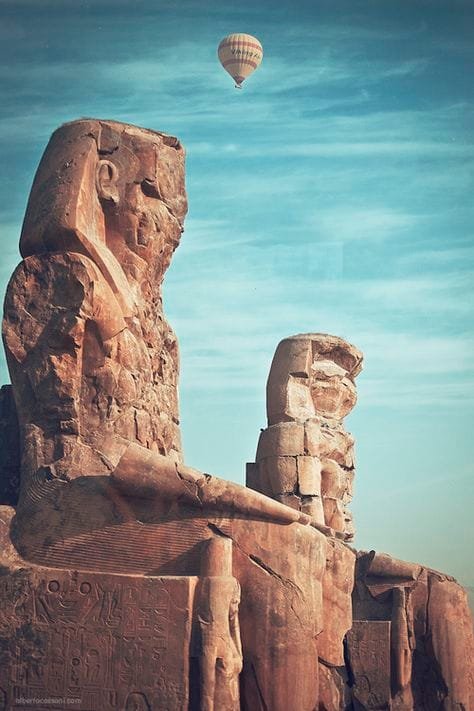
5. Symbolism and Power: What the Colossi Represented in Ancient Egypt
Beyond their immense size and visual impact, the Colossi of Memnon carried deep symbolic meaning within ancient Egyptian culture. These statues were not simply decorative or commemorative; they were powerful representations of kingship, divine authority, and eternal presence. Depicting Amenhotep III seated on his throne, the Colossi were designed to convey stability, strength, and the unchanging nature of royal power. Their massive scale reinforced the idea that the pharaoh was more than human—he was a divine figure whose influence extended beyond life into eternity. The orientation of the statues toward the east is particularly significant, as it aligns them with the rising sun. In ancient Egyptian belief, the sun symbolized rebirth and renewal, and by facing east, the king was eternally connected to the daily cycle of regeneration. This alignment reinforced the idea that the pharaoh would continue to be reborn each day, maintaining his presence in both the earthly and divine realms. The statues also served as guardians of the mortuary temple behind them, protecting the sacred space where rituals were performed to honor the king in the afterlife. Additionally, the smaller figures carved alongside the legs of the Colossi represent members of the royal family, further emphasizing the continuity of the royal lineage. Together, these elements created a powerful visual statement that communicated authority, spirituality, and the eternal legacy of the king to all who approached the temple.
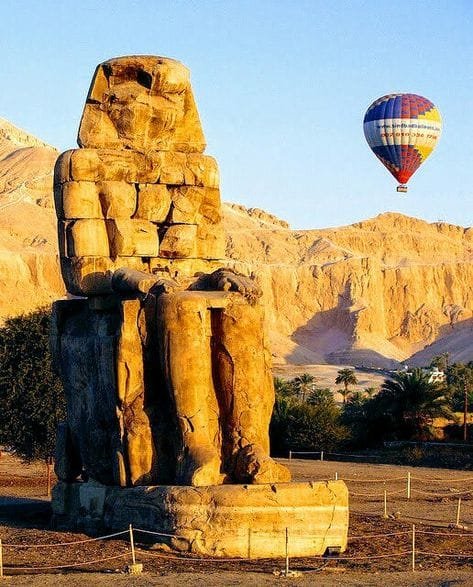
6. The West Bank Setting: The Landscape of Eternity and the Afterlife
The location of the Colossi of Memnon on the West Bank of Luxor is deeply connected to ancient Egyptian beliefs about life, death, and the afterlife. In Egyptian cosmology, the west was associated with the setting sun and therefore symbolized the realm of the dead. It was believed that just as the sun disappeared below the horizon each evening, the soul would journey into the afterlife, beginning its passage through the underworld. For this reason, the West Bank became the chosen location for tombs, mortuary temples, and monuments dedicated to eternal life. The Colossi stand at the edge of this sacred landscape, marking the entrance to what was once a grand mortuary complex. Behind them stretch the vast desert plains and the rugged limestone hills that house the tombs of kings and nobles. This dramatic contrast between the fertile land of the Nile and the barren desert creates a powerful visual representation of the transition between life and death. The Colossi themselves act as silent guardians of this boundary, standing watch over the eternal resting place of a great king. Today, the surrounding landscape remains one of the most evocative in Egypt. Visitors standing before the Colossi can look beyond them toward the Valley of the Kings and the Theban hills, gaining a deeper understanding of how geography, religion, and architecture were interconnected in ancient Egyptian thought. This setting transforms the Colossi into more than just statues, making them part of a larger spiritual landscape that continues to captivate the imagination.
7. Enduring Legacy: The Colossi Through Time and History
Over the course of thousands of years, the Colossi of Memnon have witnessed the rise and fall of civilizations, remaining as enduring symbols of ancient Egypt’s grandeur and resilience. Despite earthquakes, erosion, and the passage of time, these monumental statues continue to stand, their weathered forms telling a story of survival and transformation. In antiquity, they were already famous, attracting visitors from across the ancient world who came to admire their scale and mystery, particularly the phenomenon of the “singing statue.” During the Greco-Roman period, the Colossi gained new layers of meaning as foreign visitors interpreted them through their own cultural perspectives. Inscriptions left by travelers, including Roman emperors, can still be seen on the statues, providing valuable historical records of how they were perceived in different eras. These inscriptions reflect a continuity of fascination that has persisted for centuries, bridging ancient and modern interpretations of the monuments. Today, the Colossi remain one of the most visited landmarks in Luxor, drawing travelers, historians, and photographers from around the world. They serve as a powerful reminder of the achievements of ancient Egyptian civilization and its ability to create monuments that transcend time. Standing before them, one cannot help but feel a deep connection to the past, as these silent guardians continue to inspire awe, curiosity, and admiration in all who encounter them.
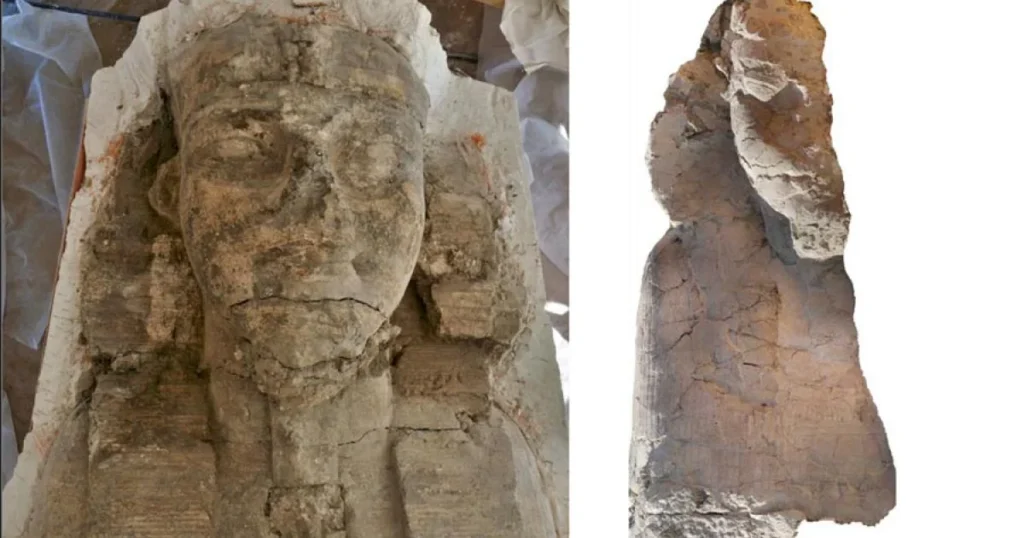
8. Archaeological Discoveries: Uncovering the Lost Temple of Amenhotep III
For centuries, the Colossi of Memnon stood as isolated monuments, seemingly disconnected from the grand complex they once guarded. However, modern archaeological efforts have gradually begun to uncover the remains of the vast mortuary temple of Amenhotep III, revealing new insights into its scale, design, and significance. Excavations in the surrounding area have brought to light foundations, statues, and architectural fragments that paint a clearer picture of a structure that was once among the largest and most magnificent in ancient Egypt. Archaeologists have discovered numerous statues of the king, as well as figures representing gods and deities associated with the afterlife. These findings suggest that the temple was not only a place of worship but also a center of ritual activity dedicated to maintaining the king’s eternal presence. Among the most remarkable discoveries are the remains of colossal statues that once rivaled the Colossi themselves, indicating that the temple complex was filled with monumental art designed to inspire awe and reinforce royal authority. The ongoing excavation work continues to transform our understanding of the site, demonstrating that the Colossi were only a small part of a much larger architectural vision. Each new discovery adds depth to the story of Amenhotep III’s reign and highlights the importance of preserving and studying ancient monuments. Through these efforts, the lost temple is gradually being brought back into the light, allowing modern audiences to reconnect with a forgotten chapter of Egyptian history.

9. Artistic Details: The Hidden Stories Carved in Stone
While the sheer size of the Colossi of Memnon often captures immediate attention, a closer look reveals a wealth of intricate artistic details that provide valuable insights into ancient Egyptian culture. Carved directly into the stone surfaces of the statues are smaller figures and decorative elements that add layers of meaning to the monumental forms. These details were carefully designed to complement the overall symbolism of the Colossi, reinforcing themes of power, family, and divine protection. At the base of each statue, smaller carvings depict members of the royal family, including the queen and the king’s mother. These figures are not merely decorative; they emphasize the importance of lineage and continuity in ancient Egyptian society. By including these individuals alongside the colossal representation of the king, the artists highlighted the unity and strength of the royal household. Additionally, inscriptions and decorative patterns can be found on various parts of the statues, offering clues about religious beliefs and artistic conventions of the time. The craftsmanship displayed in these details is remarkable, especially considering the scale of the project. Even after thousands of years of exposure to natural elements, many of these carvings remain visible, allowing visitors to appreciate the skill and precision of ancient artisans. These artistic elements transform the Colossi from simple statues into complex narratives carved in stone, telling stories that continue to be studied and admired by historians and visitors alike.

10. Visiting the Colossi Today: A Timeless Encounter with Ancient Egypt
Today, visiting the Colossi of Memnon offers a unique opportunity to experience one of the most iconic landmarks of ancient Egypt in an open and accessible setting. Located on the West Bank of Luxor, the Colossi are easily reached and often serve as the first stop on tours exploring the Theban Necropolis. Their position in the fertile fields, surrounded by palm trees and farmland, creates a striking contrast with the desert landscape that lies just beyond. Standing before these towering statues, visitors are immediately struck by their scale and presence. Despite the damage they have sustained over the centuries, the Colossi retain a powerful sense of authority and mystery. The early morning hours are often considered the best time to visit, as the soft light of sunrise enhances the textures of the stone and creates a peaceful atmosphere. This moment allows visitors to imagine how the statues once greeted the rising sun thousands of years ago. In addition to their historical significance, the Colossi provide an excellent introduction to the broader West Bank experience. From this starting point, visitors can continue their journey to nearby sites such as the Valley of the Kings and the Temple of Hatshepsut. Together, these locations create a comprehensive exploration of ancient Egyptian beliefs, architecture, and artistry, making the Colossi an essential part of any visit to Luxor.

11. Cultural Impact: The Colossi in Ancient and Modern Imagination
Throughout history, the Colossi of Memnon have captured the imagination of countless civilizations, becoming far more than simple statues. In ancient times, they were already considered wonders, attracting visitors from across the Greek and Roman worlds. Travelers documented their experiences, leaving inscriptions that still remain visible today, offering a rare glimpse into how these monuments were perceived thousands of years ago. The mysterious phenomenon of the “singing statue” only increased their fame, turning them into a legendary destination for those seeking both knowledge and spiritual experience. In later centuries, the Colossi continued to inspire artists, historians, and explorers. During the nineteenth century, European travelers and archaeologists documented the statues through drawings, paintings, and early photography, helping to introduce them to a global audience. These representations played a key role in shaping Western fascination with ancient Egypt, contributing to what became known as Egyptomania. The Colossi, with their massive scale and weathered beauty, became symbols of the mystery and grandeur associated with the ancient world. Today, the Colossi remain powerful cultural icons, frequently featured in books, documentaries, and digital media. They continue to inspire curiosity and admiration, bridging the gap between ancient history and modern imagination. Their enduring presence reminds us that great works of art and architecture can transcend time, continuing to influence how humanity understands and appreciates its past.
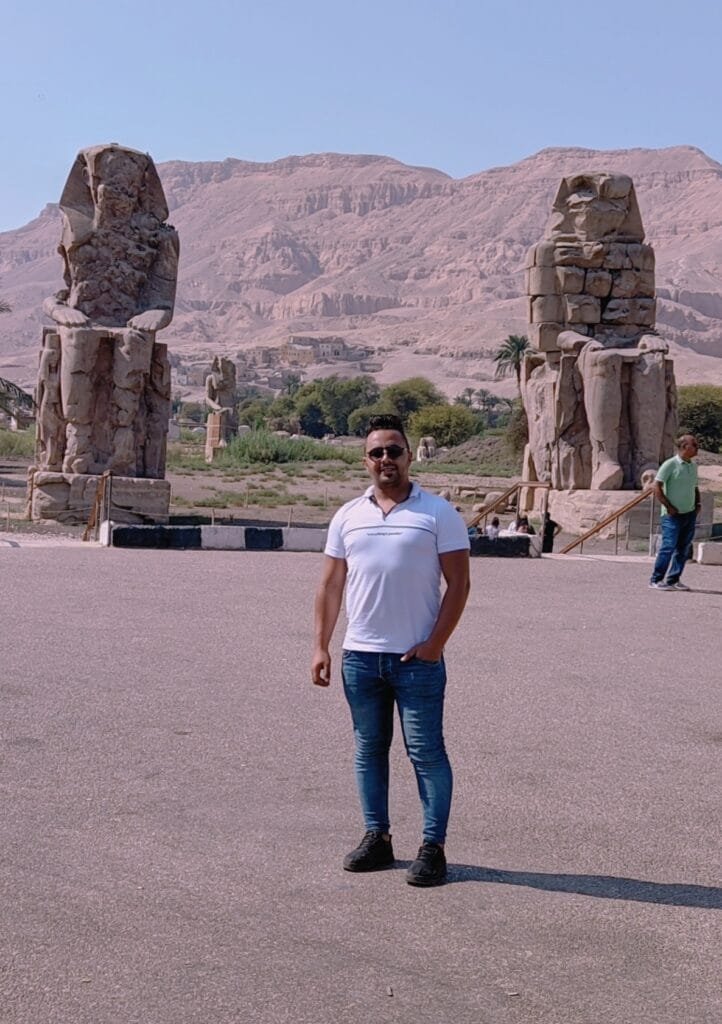
12. Preservation and Challenges: Safeguarding the Colossi for Future Generations
Despite their immense strength and remarkable endurance, the Colossi of Memnon continue to face a range of challenges that threaten their long-term preservation. Natural elements such as wind erosion, extreme temperature fluctuations, and rising groundwater levels gradually impact the integrity of the stone. Over time, these environmental factors can weaken the structure, causing surface damage and subtle structural stress. In addition, human activity, including increasing tourism and surrounding agricultural expansion, introduces further risks that must be carefully managed to ensure the monuments remain intact. To address these concerns, archaeologists and conservation specialists are implementing advanced preservation strategies that combine modern technology with traditional restoration methods. Continuous monitoring systems are used to track structural stability and environmental conditions, allowing experts to respond quickly to any signs of deterioration. Efforts also include stabilizing the surrounding soil, managing water levels to prevent seepage, and carefully cleaning the stone surfaces to remove salts and pollutants that can cause long-term damage. These interventions are carried out with extreme precision to maintain the authenticity and historical value of the statues. International collaboration plays a vital role in these preservation efforts, as organizations and research teams from around the world contribute expertise, funding, and innovative solutions. Equally important is raising public awareness about the significance of protecting such heritage sites. By encouraging responsible tourism and respectful interaction with the monuments, visitors become part of the preservation process. Safeguarding the Colossi ensures that these timeless symbols of ancient Egypt will continue to inspire and educate future generations.
13. The Eternal Guardians: A Lasting Symbol of Ancient Egypt
As the sun rises over the West Bank of Luxor, the Colossi of Memnon continue their silent vigil, standing as timeless guardians of a lost world. These monumental statues, carved more than three thousand years ago, remain among the most powerful symbols of ancient Egyptian civilization. Their presence speaks of a time when kings were considered divine, and when architecture was used to express eternal truths about life, death, and the universe. Despite the disappearance of the great temple they once protected, the Colossi have retained their significance, becoming enduring landmarks that connect the past with the present. They remind visitors of the achievements of a civilization that mastered engineering, art, and spiritual expression on an unparalleled scale. Standing before them, one can feel a profound sense of continuity, as if the boundary between ancient and modern time has momentarily dissolved. In the end, the Colossi of Memnon are more than historical monuments; they are symbols of humanity’s desire to be remembered. They represent the ambition to create something lasting, something that will endure beyond a single lifetime. As long as they continue to stand, they will inspire wonder, reflection, and admiration, ensuring that the legacy of ancient Egypt remains alive for generations to come.
14. Sunrise at the Colossi: A Timeless Moment of Light and Silence
Experiencing sunrise at the Colossi of Memnon is one of the most powerful and unforgettable moments a visitor can have in Luxor. As the first light of day slowly emerges over the eastern horizon, the statues begin to glow with warm golden hues, revealing textures and details that are often hidden during the brighter hours of the day. The soft light gently illuminates the weathered surfaces of the stone, emphasizing the monumental scale of the statues while creating a calm and almost spiritual atmosphere. In the early morning, the surrounding landscape is quiet and peaceful, allowing visitors to fully absorb the presence of these ancient guardians without distraction. The stillness of the air, combined with the gradual rise of the sun, creates a moment of reflection that connects the present with the distant past. It is easy to imagine how the statues once greeted the sunrise thousands of years ago, symbolizing rebirth and the eternal cycle of life that was so central to ancient Egyptian belief. This experience is not only visually stunning but also deeply emotional. Standing before the Colossi at dawn allows visitors to appreciate their purpose and symbolism in a more profound way. It transforms a simple visit into a meaningful encounter with history, where light, silence, and ancient stone come together to create a timeless and unforgettable memory.
15. The Colossi and the West Bank Experience: Gateway to Ancient Wonders
A visit to the Colossi of Memnon is often the perfect introduction to the wider West Bank experience in Luxor, where some of the most significant archaeological treasures of ancient Egypt are located. Positioned at the entrance of the Theban Necropolis, the Colossi serve as a symbolic gateway to a landscape rich in history, mystery, and monumental achievement. From this starting point, visitors can continue their journey to world-renowned sites such as the Valley of the Kings and the Mortuary Temple of Hatshepsut, creating a comprehensive exploration of ancient Egyptian civilization. The strategic location of the Colossi allows travelers to easily access multiple sites within a single itinerary, making them an essential part of any West Bank tour. Their presence sets the tone for what lies ahead, offering a powerful first impression of the scale and ambition that define the monuments of this region. As visitors move beyond the statues into the desert landscape, they begin to understand the deep connection between geography, religion, and architecture that shaped ancient Egyptian beliefs about life and the afterlife. Together with nearby temples and tombs, the Colossi form part of a larger narrative that reveals the complexity and brilliance of ancient Egypt. They are not just standalone monuments, but key elements in a vast historical and spiritual landscape that continues to inspire awe and fascination in all who explore it.
16. Photography at the Colossi: Capturing Scale, Light, and History
For photographers and travelers alike, the Colossi of Memnon present one of the most visually powerful scenes in Luxor. Rising dramatically from the open fields of the West Bank, these colossal statues create a striking contrast between human history and the vast natural landscape. Their sheer scale, combined with the simplicity of their surroundings, allows for compositions that are both dramatic and deeply evocative. Whether set against the warm glow of sunrise or the crisp clarity of a bright blue sky, the Colossi offer endless opportunities to capture images that convey both grandeur and emotion. A key technique for photographing the statues is to introduce a sense of scale by including people, palm trees, or nearby elements within the frame. This contrast emphasizes the monumental size of the figures and highlights the ambition of the ancient builders. Shooting from a low angle can further enhance the towering presence of the statues, making them appear even more imposing and powerful. Wide shots capture the full scene and environment, while closer compositions reveal the intricate textures and weathered details carved into the stone over thousands of years. Lighting plays a defining role in the photographic experience. The early morning and late afternoon hours are particularly ideal, as the softer light creates long shadows and enhances the depth of the statues’ surfaces. These moments reveal details that are often lost under harsh midday sunlight, adding dimension and atmosphere to every shot. Ultimately, photographing the Colossi is not just about technique, but about capturing a timeless connection between past and present.
17. Travel Tips: Making the Most of Your Visit to the Colossi
Planning a visit to the Colossi of Memnon can greatly enhance the overall experience when approached with a few practical considerations in mind. Due to their location on the West Bank of Luxor, the Colossi are often included as part of a larger tour that explores nearby sites. Starting your day early is highly recommended, not only to avoid the intense midday heat but also to enjoy the peaceful atmosphere of the morning hours when the site is less crowded. Comfortable clothing, sun protection, and sufficient water are essential, especially during the warmer months. Since the Colossi are located in an open area, there is limited shade, making preparation important for a comfortable visit. Hiring a knowledgeable guide can also add significant value, providing historical context and insights that bring the statues and their surroundings to life. Another important tip is to take time to observe the details rather than rushing through the visit. While the Colossi may appear as a quick stop, their historical significance and symbolic meaning deserve careful attention. By slowing down and appreciating the environment, visitors can gain a deeper understanding of their role within the broader landscape of ancient Thebes. With thoughtful planning, a visit to the Colossi becomes not just a stop on an itinerary, but a meaningful and memorable experience.
18. The Eternal Presence: Why the Colossi Continue to Inspire the World
Standing silently for over three thousand years, the Colossi of Memnon remain among the most enduring symbols of ancient Egyptian civilization. Despite the loss of the great temple they once guarded, these monumental statues continue to command attention and admiration from visitors around the world. Their weathered surfaces tell a story of resilience, survival, and the passage of time, reminding us that even the greatest creations are subject to change, yet can still endure. The Colossi represent more than the image of a single king; they embody the ideals of a civilization that sought to achieve immortality through art, architecture, and belief. Their presence reflects a deep understanding of symbolism, where every element—from their size to their orientation—was designed to communicate power, continuity, and divine connection. This ability to convey meaning across thousands of years is what makes them truly remarkable. Today, the Colossi continue to inspire not only historians and archaeologists but also travelers, artists, and dreamers. They stand as a bridge between ancient and modern worlds, inviting every visitor to reflect on humanity’s desire to create something lasting. As long as they remain on the West Bank of Luxor, they will continue to tell their silent story, preserving the legacy of a civilization that changed the course of history forever.