- Excursions in Egypt
- Egypt Tour Packages
- Cairo Tours and Excursions
- Hurghada Tours and Excursions
- Soma Bay Tours and Excursions
- Makadi Bay Tours and Excursions
- Sahl Hasheesh Tours and Excursions
- El Gouna Tours and Excursions
- Marsa Alam Tours and Excursions
- Port Ghalib Tours and Excursions
- El Quseir Tours and Excursions
- Dendera and Abydos Day Tours
- Aswan Tours and Excursions
- Luxor Tours and Excursions
- Sharm El Sheikh Tours and Excursions
- Top Rated Egypt Tours in 2026
- Optional Excursions in Egypt
- Private Transfer
- Blogs About egypt
- Ancient Egypt
- Historical Sites in Egypt
- Cairo
- Alexandria
- Luxor
- Aswan
- The Red Sea
- Dendera Temple
- El Fayoum Oasis
- Bahariya Oasis
- Siwa Oasis
- Al Alamein
- Marsa Matruh
- Why Egypt Is One of the Safest Countries to Visit in the Middle East
- What You Need To know Before Your First Trip To Egypt
- Egypt Travel Costs in 2026 Full Budget Guide
- Top 10 Tourist Activities in Egypt
- Top 50 Activities You Can’t Miss in Egypt in 2026
- The Guide to Guided Tours in Egypt
- Egypt’s Ancient and Modern History
- The Nile River
- The Deserts of Egypt
- Ancient Egyptian gods
- famous Egyptian dishes
- UNESCO World Heritage sites
- About Us
- Egypt Hotels and Resorts
- Excursions in Egypt
- Egypt Tour Packages
- Cairo Tours and Excursions
- Hurghada Tours and Excursions
- Soma Bay Tours and Excursions
- Makadi Bay Tours and Excursions
- Sahl Hasheesh Tours and Excursions
- El Gouna Tours and Excursions
- Marsa Alam Tours and Excursions
- Port Ghalib Tours and Excursions
- El Quseir Tours and Excursions
- Dendera and Abydos Day Tours
- Aswan Tours and Excursions
- Luxor Tours and Excursions
- Sharm El Sheikh Tours and Excursions
- Top Rated Egypt Tours in 2026
- Optional Excursions in Egypt
- Private Transfer
- Blogs About egypt
- Ancient Egypt
- Historical Sites in Egypt
- Cairo
- Alexandria
- Luxor
- Aswan
- The Red Sea
- Dendera Temple
- El Fayoum Oasis
- Bahariya Oasis
- Siwa Oasis
- Al Alamein
- Marsa Matruh
- Why Egypt Is One of the Safest Countries to Visit in the Middle East
- What You Need To know Before Your First Trip To Egypt
- Egypt Travel Costs in 2026 Full Budget Guide
- Top 10 Tourist Activities in Egypt
- Top 50 Activities You Can’t Miss in Egypt in 2026
- The Guide to Guided Tours in Egypt
- Egypt’s Ancient and Modern History
- The Nile River
- The Deserts of Egypt
- Ancient Egyptian gods
- famous Egyptian dishes
- UNESCO World Heritage sites
- About Us
- Egypt Hotels and Resorts
Welcome to
Citadel of Qaitbay: The Majestic Guardian of Alexandria’s Mediterranean Coast
Standing proudly at the edge of Alexandria’s ancient harbor, the magnificent Citadel of Qaitbay is one of Egypt’s most iconic coastal landmarks and one of the Mediterranean’s greatest surviving military fortresses. Rising above the crashing waves of the Mediterranean Sea, the citadel combines centuries of history, Islamic architecture, maritime heritage, and breathtaking panoramic views into one unforgettable destination. Built during the 15th century by Sultan Al-Ashraf Qaitbay, the fortress was constructed on the exact site of the legendary Lighthouse of Alexandria, also known as the Lighthouse of Pharos, one of the Seven Wonders of the Ancient World. Using stones taken from the ruins of the destroyed lighthouse, Sultan Qaitbay created a powerful defensive structure designed to protect Egypt’s northern coastline from foreign invasions and naval attacks. Over the centuries, the citadel witnessed some of the most important historical events in Alexandria’s long and dramatic history, serving as a strategic military base during the Mamluk and Ottoman periods. Today, the fortress stands not only as a symbol of military strength but also as one of Alexandria’s most beautiful and romantic attractions. Visitors exploring the citadel can walk through massive stone corridors, climb ancient towers, admire historic cannons, and enjoy spectacular views of the Mediterranean coastline, fishing boats, and Alexandria’s modern skyline. The sound of waves crashing against the fortress walls creates a magical atmosphere that transports travelers back to an era of sailors, merchants, and great naval battles. Beyond its architectural and historical significance, the Citadel of Qaitbay represents the enduring spirit of Alexandria itself—a city shaped by the sea, enriched by civilizations, and protected by centuries of resilience. For travelers visiting Alexandria, the citadel offers a perfect introduction to the city’s fascinating blend of ancient heritage, Islamic history, and Mediterranean beauty, making it one of the most unforgettable landmarks in all of Egypt.
1. The Legendary Site of the Ancient Lighthouse of Pharos
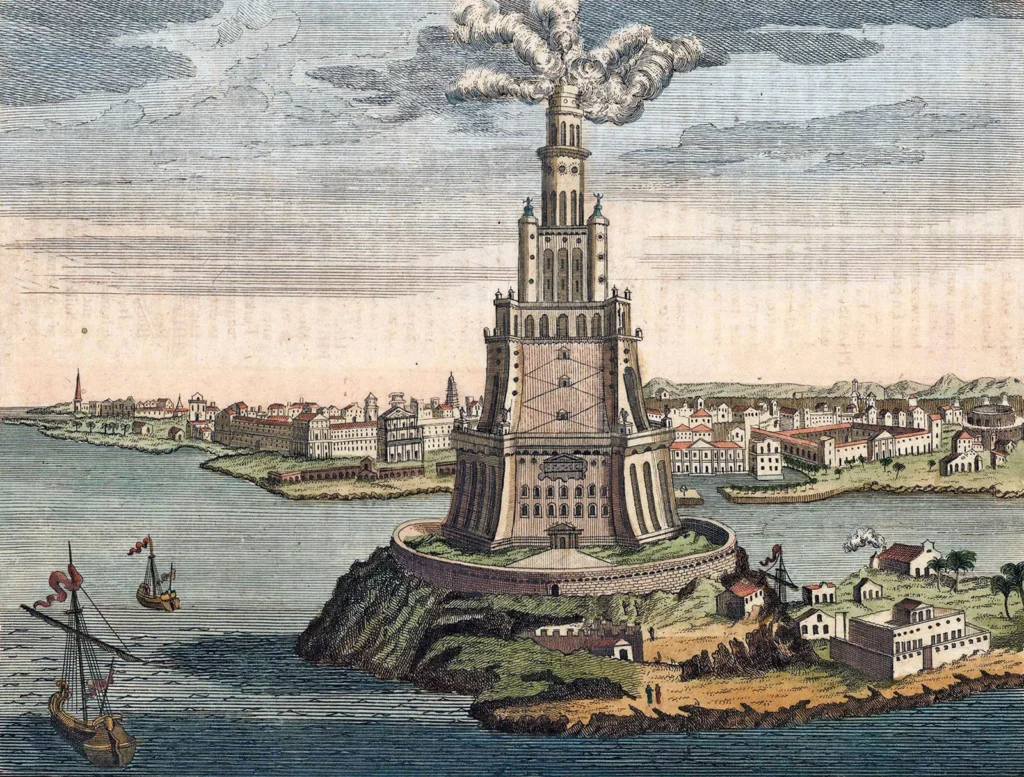
Long before the construction of the magnificent Citadel of Qaitbay, this strategic location was home to one of the greatest architectural achievements of the ancient world: the legendary Lighthouse of Alexandria, also known as the Lighthouse of Pharos. Built during the reign of the Ptolemaic Dynasty in the 3rd century BC under King Ptolemy II, the lighthouse stood as a symbol of Alexandria’s maritime power and intellectual greatness for centuries. Rising more than one hundred meters above the Mediterranean Sea, the lighthouse was considered one of the Seven Wonders of the Ancient World and served as a guiding beacon for ships approaching Alexandria’s busy harbor from across the Mediterranean. Ancient historians described the structure as an extraordinary engineering masterpiece featuring multiple levels, massive stone walls, elegant statues, and a powerful fire at its summit that reflected across polished mirrors to guide sailors during the night. The lighthouse not only ensured safe navigation but also symbolized Alexandria’s status as one of the world’s greatest centers of trade, culture, and civilization. However, centuries of earthquakes gradually weakened the structure until it was eventually destroyed during the medieval period. Rather than allowing the site to disappear into history, Sultan Qaitbay later used stones recovered from the ruins of the lighthouse to construct the fortress that stands there today. As a result, the Citadel of Qaitbay carries within its walls the physical and symbolic legacy of one of humanity’s most famous monuments. Visitors standing beside the fortress today are actually standing on the exact ground where the ancient lighthouse once illuminated the Mediterranean horizon thousands of years ago. The sound of the sea, the strategic harbor location, and the endless views across the water continue to preserve the spirit of Alexandria’s ancient maritime glory. Exploring this historic site allows travelers to experience a rare connection between two different eras of Egyptian history: the Hellenistic world of ancient Alexandria and the Islamic military architecture of the Mamluk period. This extraordinary historical continuity makes the Citadel of Qaitbay one of the most culturally significant landmarks in Egypt and the entire Mediterranean region.
2. Sultan Qaitbay and the Construction of the Fortress
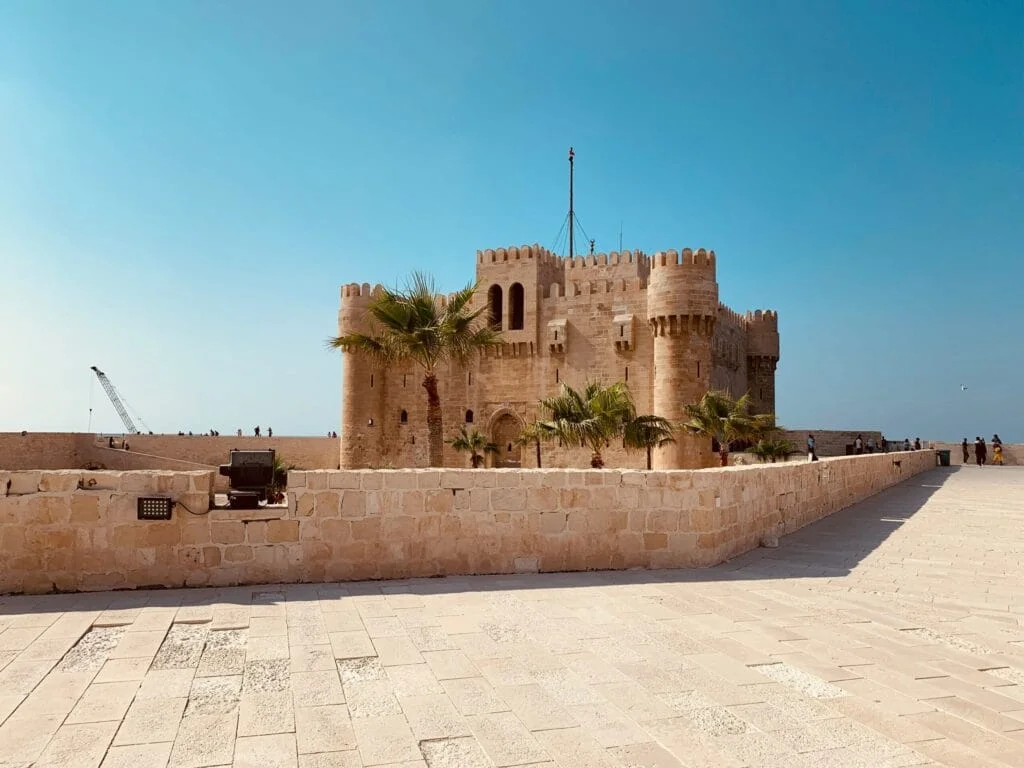
The creation of the magnificent Citadel of Qaitbay during the 15th century marked one of the most important military and architectural achievements of the Mamluk era in Egypt. Sultan Al-Ashraf Qaitbay, one of the greatest rulers of the Mamluk Sultanate, ordered the construction of the fortress in 1477 AD to strengthen Egypt’s northern defenses against increasing threats from foreign naval powers expanding across the Mediterranean Sea. During this period, Alexandria remained a vital strategic port connecting Egypt to Europe, North Africa, and the wider Islamic world. Protecting the harbor became essential for maintaining Egypt’s security, trade routes, and political stability. Recognizing the importance of the ancient lighthouse location, Sultan Qaitbay selected the ruins of the destroyed Lighthouse of Pharos as the ideal site for building a massive defensive fortress overlooking the Mediterranean coastline. The construction project required highly skilled architects, engineers, craftsmen, and laborers who worked together to create one of the strongest coastal fortifications in the region. Many stones recovered from the collapsed lighthouse were reused in the walls and towers of the new citadel, giving the fortress a direct physical connection to Alexandria’s ancient heritage. The completed structure featured thick defensive walls, watchtowers, cannon positions, internal courtyards, and military barracks designed to resist naval attacks and protect the harbor entrance. The fortress quickly became a symbol of Mamluk military power and architectural sophistication. Beyond its defensive role, the citadel reflected Sultan Qaitbay’s broader vision of strengthening Egypt culturally, politically, and economically during a time of regional instability. Visitors exploring the fortress today can still observe the impressive engineering techniques and strategic planning that allowed the structure to survive centuries of conflict, weather, and political change. Walking through the narrow stone corridors and climbing the defensive towers provides a vivid glimpse into the military life of medieval Alexandria and the determination of the Mamluks to protect their empire from external threats. The Citadel of Qaitbay remains one of the finest surviving examples of Islamic military architecture in Egypt and a lasting tribute to Sultan Qaitbay’s leadership, vision, and contribution to Alexandria’s long and fascinating history beside the Mediterranean Sea.
3. Islamic Military Architecture and the Fortress Design
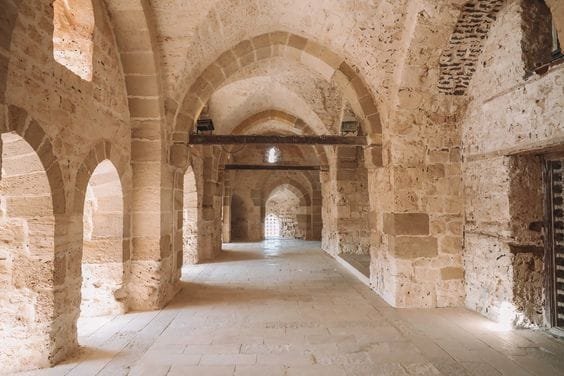
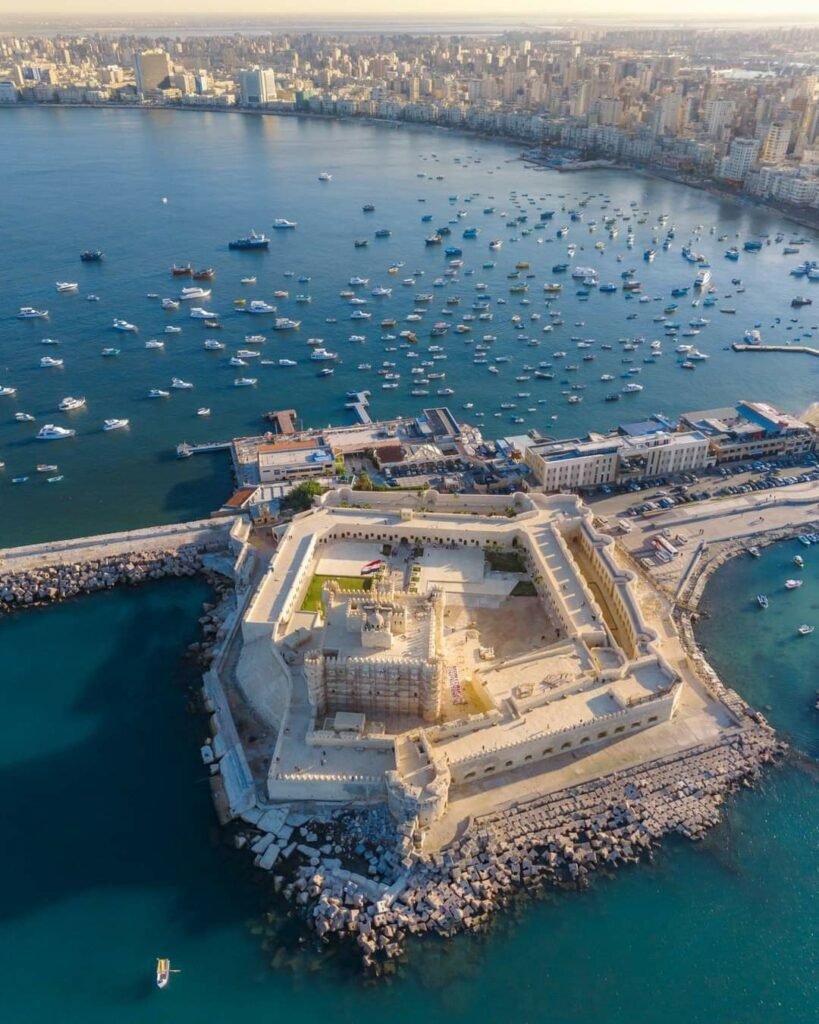
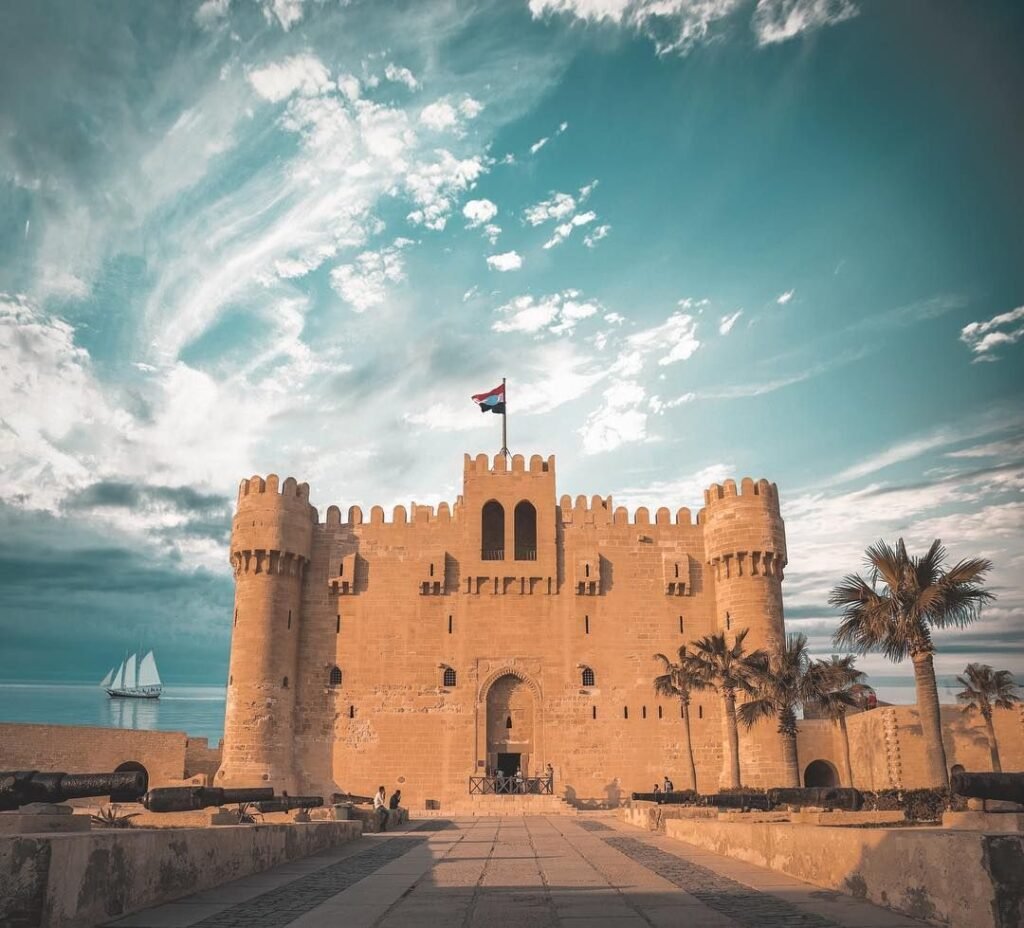
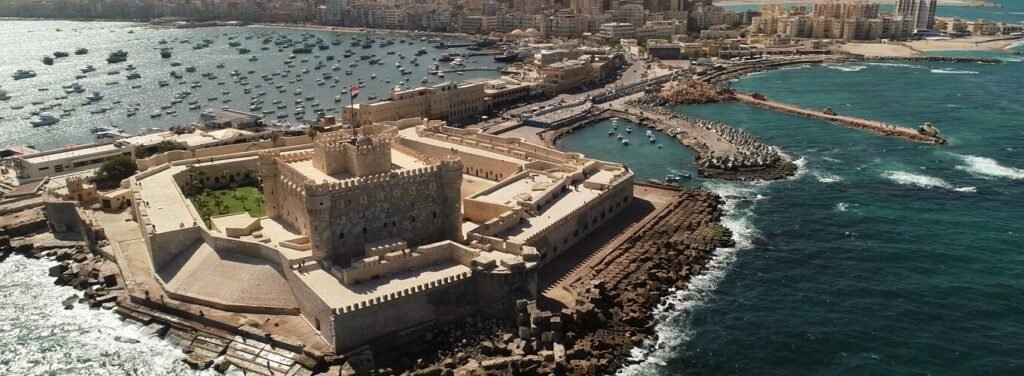
The extraordinary design of Citadel of Qaitbay represents one of the finest surviving examples of Islamic military architecture in the Mediterranean region. Built during the Mamluk period, the fortress was carefully designed to combine defensive strength with architectural elegance, reflecting the advanced engineering knowledge of medieval Islamic civilization. From a distance, the citadel appears as a massive stone guardian rising directly from the sea, with thick limestone walls and powerful towers strategically positioned to monitor every approach to Alexandria’s harbor. The fortress was constructed using durable local stone, including materials recovered from the ruins of the ancient Lighthouse of Pharos, giving the structure both historical significance and exceptional strength. The citadel’s square layout and defensive towers were specifically designed to resist naval invasions and artillery attacks, which were becoming increasingly common during the fifteenth century. Narrow windows and openings within the walls allowed soldiers to observe enemy ships and fire arrows or cannons while remaining protected inside the fortress. The main tower, positioned at the center of the structure, served as the command point and offered panoramic views across the Mediterranean coastline and Alexandria harbor. Inside the citadel, visitors can explore stone staircases, military chambers, observation posts, and internal courtyards that once housed soldiers, weapons, and supplies. The design of the fortress also included sophisticated ventilation systems and defensive passageways that improved communication and movement during military operations. Despite its defensive purpose, the citadel still displays remarkable artistic beauty through its geometric patterns, carved decorations, and balanced architectural proportions characteristic of Islamic design. The harmony between military functionality and visual elegance reflects the architectural philosophy of the Mamluk era, where even defensive structures were created with attention to artistic detail and symbolic power. Standing within the fortress today, visitors can still imagine the lives of soldiers guarding Alexandria’s coast centuries ago while listening to the waves crashing against the ancient walls below. The Citadel of Qaitbay continues to impress historians, architects, and travelers alike because it represents not only a military stronghold but also a masterpiece of engineering and Islamic architectural achievement that has successfully survived the passage of time beside the Mediterranean Sea.
4. The Strategic Importance of Alexandria’s Harbor
The location of Citadel of Qaitbay was never chosen by coincidence; it occupied one of the most strategically important positions in the entire Mediterranean world. Since the founding of Alexandria by Alexander the Great in 331 BC, the city’s harbor served as a vital gateway connecting Egypt to Europe, Asia, and North Africa through maritime trade and naval communication. Ships carrying spices, grain, textiles, gold, glass, and knowledge arrived daily from distant civilizations, transforming Alexandria into one of history’s greatest commercial and cultural capitals. Because of this immense importance, protecting the harbor became essential for every ruler who governed Egypt across different eras. The Citadel of Qaitbay was strategically positioned at the entrance of the Eastern Harbor, allowing soldiers to monitor all approaching vessels and defend the coastline against foreign invasions. During the Mamluk and Ottoman periods, Mediterranean naval powers constantly competed for influence and control over trade routes, making Alexandria a valuable and vulnerable target. The fortress therefore functioned as both a military defense center and a symbol of Egypt’s sovereignty over its northern coast. From the upper towers of the citadel, guards could observe ships arriving from great distances while maintaining visual communication with other coastal defense points surrounding the city. The fortress also protected merchants, fishermen, and travelers entering Alexandria’s busy port, ensuring economic stability and maritime security. Visitors standing on the citadel walls today can easily understand why this location held such strategic value throughout history. The panoramic views across the Mediterranean reveal the natural advantages of the harbor, where calm waters and coastal geography created ideal conditions for navigation and trade. Even in the modern era, Alexandria’s harbor continues to play an important role in Egypt’s economy and identity, while the Citadel of Qaitbay remains a visible reminder of the city’s centuries-old connection to the sea. Exploring the fortress allows travelers to appreciate not only its architectural beauty but also the immense geopolitical importance of Alexandria as one of the Mediterranean’s most influential coastal cities throughout history.
5. Walking Through the Citadel: Corridors, Towers, and Ancient Defenses
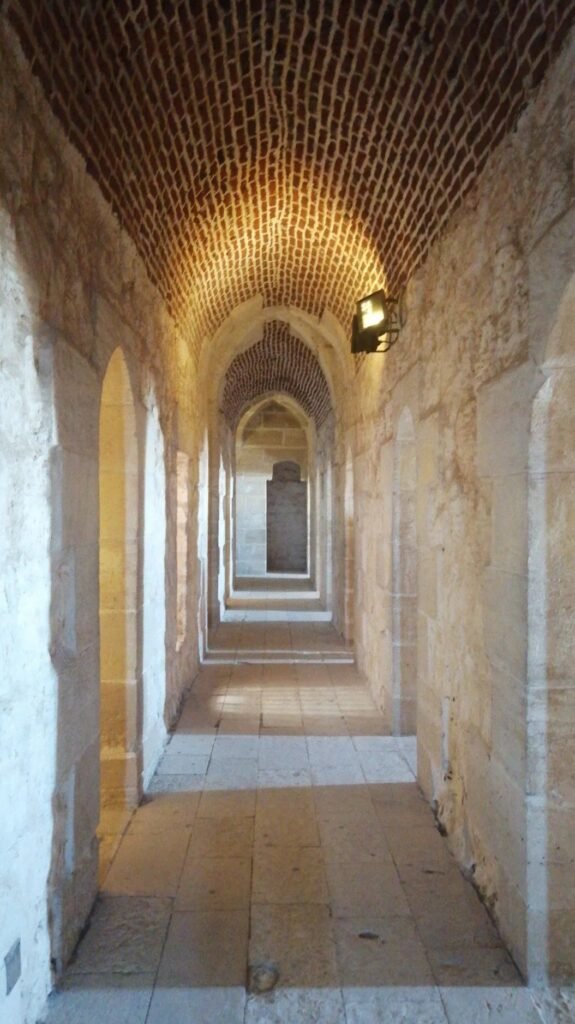
Exploring the interior of Citadel of Qaitbay offers visitors a fascinating journey into the military world of medieval Alexandria, where every corridor, staircase, and defensive wall tells a story of strategy, survival, and power. From the moment travelers pass through the fortress entrance, they are surrounded by the atmosphere of a historical stronghold built to protect Egypt’s northern coastline against foreign threats. Massive stone walls rise on every side, while narrow passageways and hidden chambers create a sense of mystery and adventure throughout the structure. The fortress was carefully designed to confuse invading forces while allowing defenders to move quickly between strategic positions. Visitors climbing the stone staircases discover multiple levels containing observation towers, military rooms, storage areas, and open terraces overlooking the Mediterranean Sea. One of the most impressive experiences inside the citadel is reaching the upper defensive platforms, where ancient cannons still face the horizon as silent reminders of centuries of naval conflict. These elevated positions provide breathtaking panoramic views of Alexandria’s harbor, fishing boats, modern skyline, and the endless Mediterranean waters stretching toward the horizon. The sea breeze moving through the fortress walls adds to the emotional atmosphere, making visitors feel deeply connected to the maritime history of the city. Inside the fortress, several chambers contain displays related to naval defense, military architecture, and the historical role of the citadel across different periods of Egyptian history. The thick walls and defensive openings demonstrate the advanced engineering techniques used by Mamluk architects to withstand attacks and protect soldiers during battles. Walking through the citadel also reveals the contrast between the harsh military purpose of the structure and the peaceful beauty of its coastal surroundings. Photographers, historians, and travelers alike find endless inspiration within the fortress because every corner combines historical authenticity with spectacular scenery. The sound of waves crashing against the stone foundations below creates a dramatic and unforgettable atmosphere that transports visitors back to a time when Alexandria stood at the center of Mediterranean trade and military power. The Citadel of Qaitbay remains one of Egypt’s most immersive historical experiences, allowing modern travelers to physically step inside the world of medieval Islamic fortifications beside the sea.
6. The Mediterranean Views: Alexandria’s Most Scenic Coastal Landmark
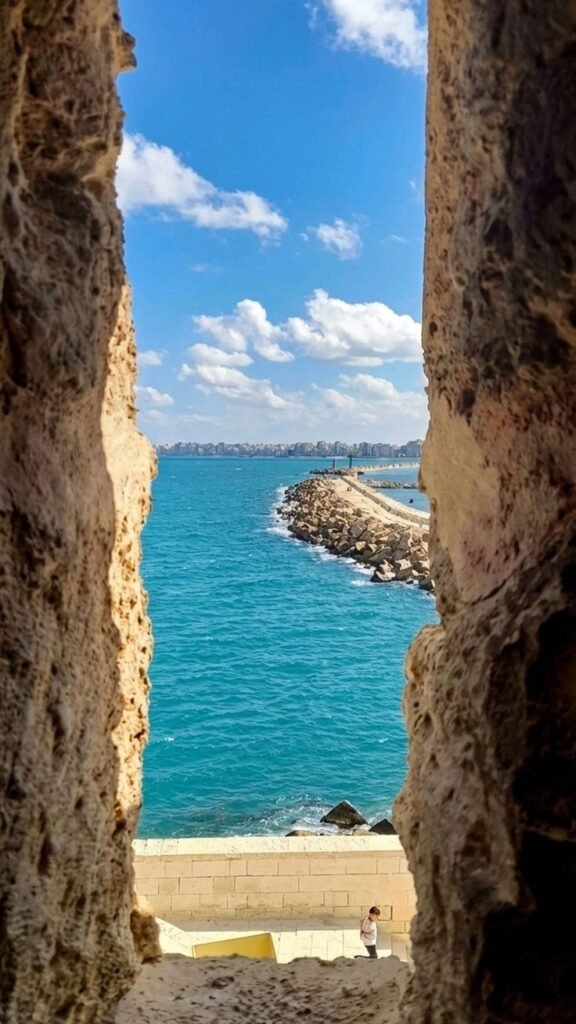
One of the most unforgettable aspects of visiting Citadel of Qaitbay is the extraordinary panoramic beauty surrounding the fortress from every direction. Positioned directly beside the Mediterranean Sea, the citadel offers some of the most spectacular coastal views in all of Egypt, creating a magical atmosphere where history and nature blend together perfectly. Visitors standing atop the fortress walls are greeted by endless blue waters stretching toward the horizon, while fishing boats, sailing vessels, and colorful harbor scenes bring life to the historic coastline below. The refreshing Mediterranean breeze, combined with the sound of waves crashing against the ancient stone foundations, creates a peaceful and romantic setting unlike any other historical site in Egypt. During sunrise, the fortress is illuminated by soft golden light reflecting across the sea, while sunset transforms the sky into dramatic shades of orange, pink, and deep blue behind the silhouette of the citadel towers. These moments attract photographers, artists, couples, and travelers searching for one of Alexandria’s most visually stunning experiences. From the upper terraces, visitors can also admire Alexandria’s modern skyline, the bustling Corniche, nearby fishing ports, and the surrounding harbor areas that have connected civilizations for thousands of years. The contrast between the ancient stone fortress and the vibrant Mediterranean scenery gives the citadel a timeless beauty that continues to inspire visitors from around the world. Many travelers choose to spend long periods simply sitting beside the fortress walls, enjoying the calm atmosphere and observing the movement of the sea below. The location also provides a unique opportunity to understand Alexandria’s deep historical relationship with maritime life, trade, and exploration. Restaurants and cafés near the fortress further enhance the visitor experience by offering fresh seafood and seaside dining with magnificent views of the citadel and harbor. Even outside the fortress itself, the surrounding coastal promenade has become one of Alexandria’s most popular gathering places for families, tourists, and local residents seeking relaxation beside the sea. The Citadel of Qaitbay therefore offers far more than historical significance; it delivers an emotional and sensory experience where architecture, history, and Mediterranean beauty combine to create one of Egypt’s most memorable and breathtaking destinations.
7. The Citadel During the Ottoman and Modern Eras
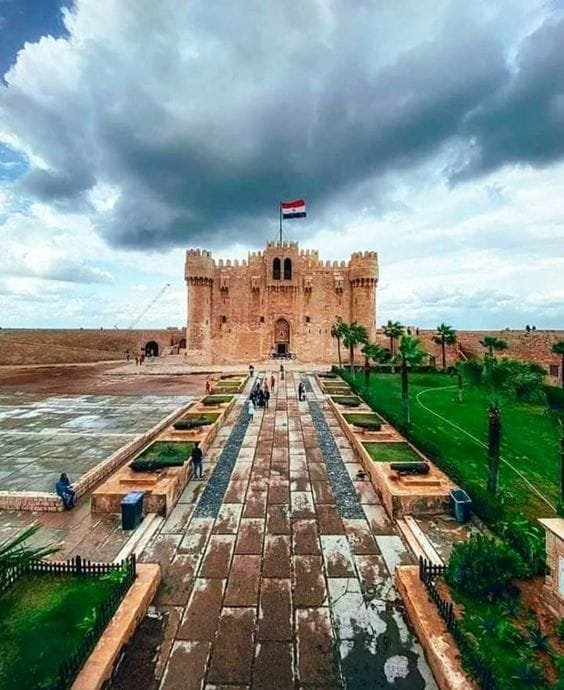
Throughout its long history, Citadel of Qaitbay continued to play a major military and political role far beyond the Mamluk period in which it was originally constructed. After the Ottoman Empire conquered Egypt in 1517, the fortress became an important defensive base protecting Alexandria’s harbor and Mediterranean coastline. The Ottomans recognized the immense strategic value of the citadel and introduced several modifications to strengthen its military capabilities in response to the evolving technology of naval warfare and artillery. Additional defensive walls, cannon platforms, storage facilities, and military barracks were added to improve the fortress’s ability to resist attacks from enemy fleets operating across the Mediterranean Sea. During this period, Alexandria remained a crucial port connecting the Ottoman Empire to North Africa and the wider Mediterranean trade network, making the protection of the harbor essential for political and economic stability. The fortress also witnessed the dramatic events of the French campaign led by Napoleon Bonaparte in 1798, when Alexandria became a battleground during the French invasion of Egypt. Later, during the nineteenth century, the citadel continued serving Egypt’s coastal defense system under the rule of Muhammad Ali Pasha and his successors, who modernized parts of the military infrastructure surrounding Alexandria. One of the most destructive moments in the fortress’s modern history occurred during the British bombardment of Alexandria in 1882, when parts of the citadel suffered significant damage during naval attacks targeting the city. Despite destruction and periods of neglect, restoration efforts throughout the twentieth century successfully preserved the fortress and transformed it into one of Egypt’s most important historical monuments and tourist attractions. Today, visitors exploring the citadel can still observe traces of its different historical phases, from Mamluk stonework to Ottoman defensive modifications and modern restoration projects. The fortress therefore represents not just a single historical period but a living record of Alexandria’s military and political evolution across centuries. Its survival through wars, invasions, and natural challenges reflects the resilience of Alexandria itself, allowing modern travelers to experience the layers of history that shaped one of the Mediterranean’s most iconic coastal fortresses beside the timeless sea.
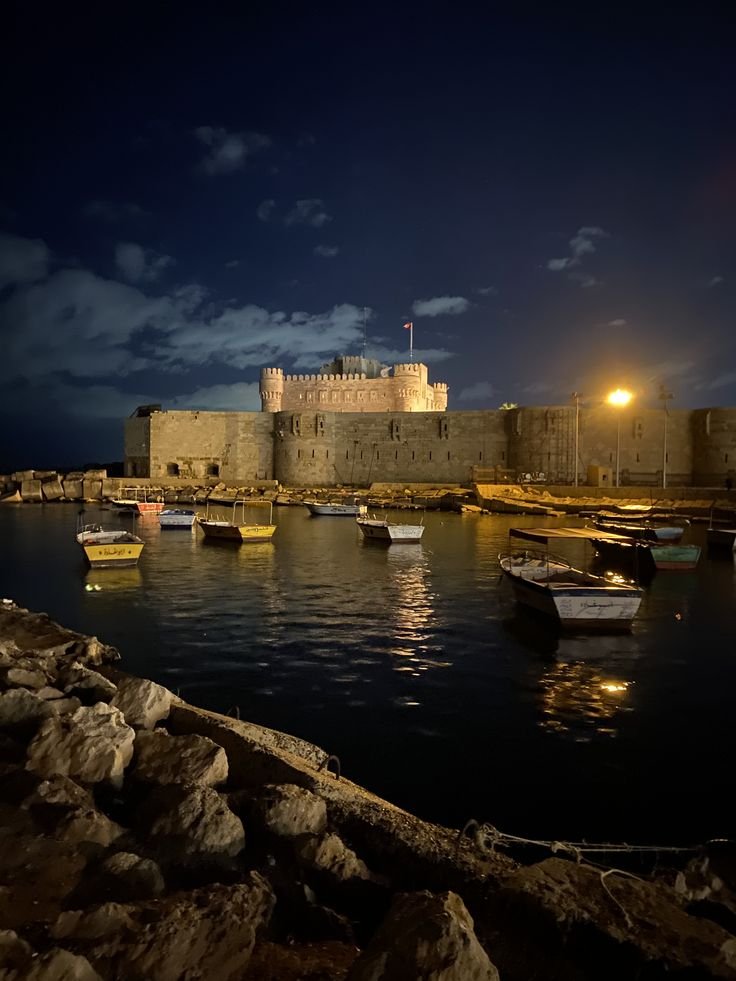
8. The Citadel of Qaitbay at Night: A Romantic Mediterranean Experience
As the sun disappears beneath the Mediterranean horizon, Citadel of Qaitbay transforms into one of the most magical and romantic locations in all of Alexandria. The fortress, illuminated by golden lights against the dark blue sea and night sky, creates a breathtaking atmosphere that captivates both local residents and international visitors. During the evening hours, the sound of crashing waves becomes more pronounced, while the cool Mediterranean breeze adds a sense of peace and tranquility to the entire area surrounding the citadel. Couples, photographers, families, and travelers often gather along the nearby Corniche and harbor promenade to admire the spectacular nighttime views of the fortress reflected across the water. The illuminated towers and ancient stone walls create a dramatic contrast against the surrounding sea, making the citadel appear almost timeless, as if it were floating between the past and present. Walking beside the fortress at night offers a completely different emotional experience compared to daytime visits. The busy energy of the city gradually softens, allowing visitors to appreciate the beauty of Alexandria’s maritime atmosphere in a more intimate and contemplative way. Nearby cafés and seafood restaurants become lively gathering places where guests enjoy traditional Egyptian dishes, fresh Mediterranean seafood, and panoramic views of the glowing fortress. Street musicians, local vendors, and fishermen contribute to the unique charm of the area, creating a vibrant yet relaxing coastal environment filled with the spirit of Alexandria. The nighttime atmosphere also enhances the historical imagination of visitors, making it easy to picture ancient ships approaching the harbor centuries ago under the protection of the fortress walls. Photographers especially consider the citadel one of the best locations in Egypt for capturing dramatic nighttime images combining architecture, reflections, and Mediterranean scenery. For many travelers, visiting the Citadel of Qaitbay after sunset becomes one of the most memorable highlights of their journey through Alexandria. The fortress at night symbolizes the romantic soul of the city itself—a place where history, sea, light, and culture merge together beautifully beside the Mediterranean coast. It remains one of Egypt’s most enchanting evening destinations and a timeless icon of Alexandria’s coastal identity.
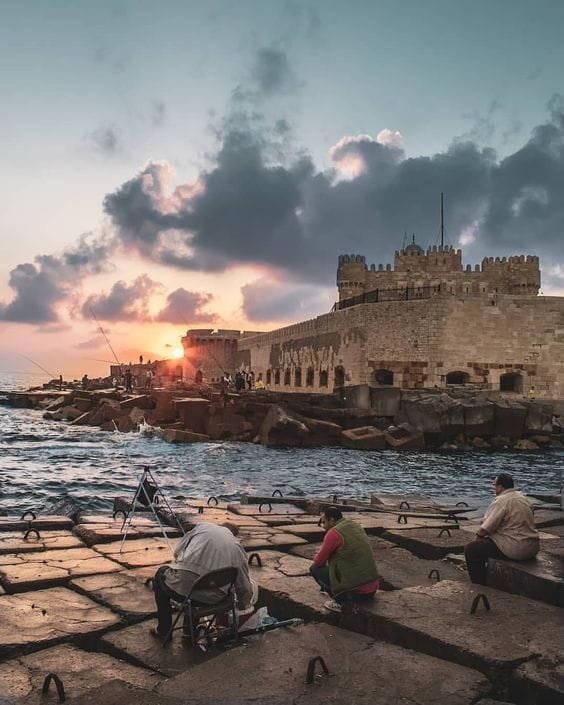
9. Maritime Heritage and Alexandria’s Connection to the Sea
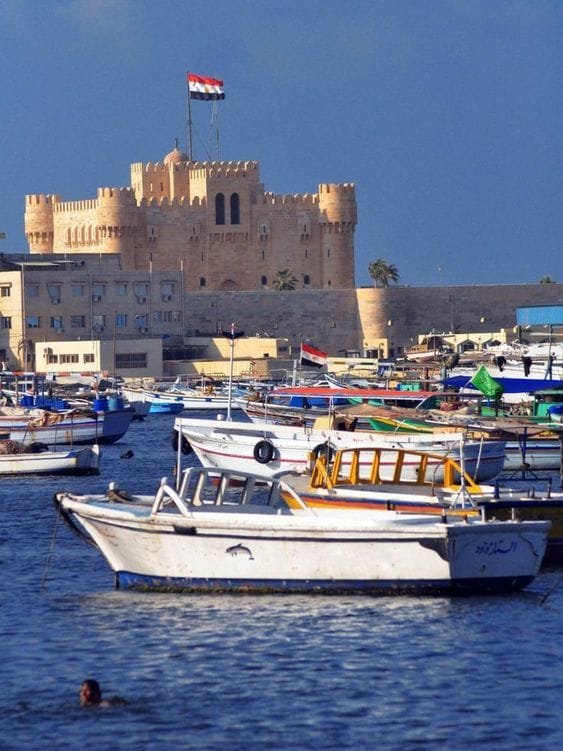
The history of Citadel of Qaitbay cannot be separated from Alexandria’s deep and enduring relationship with the Mediterranean Sea. Since its foundation by Alexander the Great, Alexandria developed into one of the greatest maritime cities in human history, serving as a gateway for trade, exploration, naval power, and cultural exchange between continents. The citadel stands at the heart of this maritime legacy, positioned directly at the entrance of the ancient harbor where countless ships once arrived carrying goods, scholars, travelers, and ideas from every corner of the known world. For centuries, Alexandria’s prosperity depended on the sea, and the fortress played a vital role in protecting the city’s economic and strategic interests from naval threats. Fishing communities surrounding the citadel continue to preserve aspects of this ancient maritime culture even today. Visitors exploring the harbor near the fortress can observe colorful fishing boats, traditional wooden vessels, and local fishermen practicing techniques passed down through generations. The harbor itself remains filled with life and activity, reflecting the city’s ongoing connection to the Mediterranean despite centuries of political and technological change. Inside the citadel, several exhibitions and displays focus on naval defense, maritime history, and the importance of Alexandria as a center of Mediterranean commerce and communication. Ancient anchors, maritime artifacts, and historical illustrations help visitors understand how the sea shaped every aspect of life in Alexandria across different civilizations. The Mediterranean environment surrounding the fortress also influenced the city’s architecture, cuisine, economy, and cultural identity, giving Alexandria a character distinct from other Egyptian cities. Travelers visiting the citadel often describe a unique emotional feeling created by the constant presence of the sea—the endless horizon, salty air, and rhythmic movement of the waves combine to create a powerful sense of timelessness and connection to history. Standing beside the fortress walls while watching boats move across the harbor allows visitors to imagine the countless sailors, merchants, and explorers who once entered Alexandria seeking opportunity, knowledge, and adventure. The Citadel of Qaitbay therefore represents more than a military monument; it stands as a lasting symbol of Alexandria’s identity as one of the Mediterranean’s great maritime civilizations and a city forever shaped by its relationship with the sea.
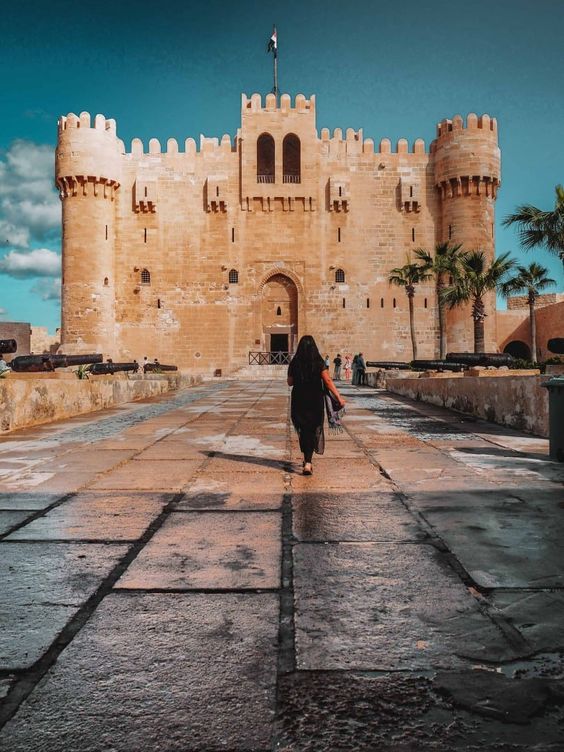
10. Photography and Artistic Inspiration at the Citadel of Qaitbay
Few locations in Egypt provide the same visual beauty and artistic atmosphere as Citadel of Qaitbay, making it one of the country’s most beloved destinations for photographers, painters, filmmakers, and creative travelers. The combination of medieval Islamic architecture, dramatic Mediterranean scenery, changing natural light, and centuries of history creates an environment filled with endless artistic inspiration. From sunrise until late evening, the fortress constantly transforms in appearance as sunlight reflects across the sea and illuminates the massive stone walls from different angles throughout the day. Early morning offers soft golden light and peaceful harbor scenes, while sunset surrounds the citadel with rich orange and crimson tones reflected across the Mediterranean waters. These moments attract photographers from around the world seeking to capture one of Alexandria’s most iconic landscapes. The contrast between the fortress’s ancient stone architecture and the vibrant blue sea provides extraordinary opportunities for both professional and amateur photography. Inside the citadel, narrow corridors, towering walls, defensive cannons, and shadow-filled staircases create dramatic compositions that transport visitors into the atmosphere of medieval history. Artists and painters have long considered the citadel one of Alexandria’s greatest muses because of its emotional and visual power. Many local art exhibitions and cultural projects feature the fortress as a symbol of the city’s identity, resilience, and connection to the sea. Filmmakers and content creators are equally drawn to the location because it offers a cinematic setting filled with romance, history, and natural beauty. Couples often choose the citadel and its surrounding harbor promenade for wedding photography sessions due to the breathtaking coastal scenery and timeless atmosphere. Even visitors without professional artistic interests frequently find themselves inspired to pause, reflect, and admire the harmony between architecture and nature surrounding the fortress. The emotional effect of the citadel is especially powerful during quiet moments when the sea breeze moves through the ancient walls while fishing boats drift slowly across the harbor below. The Citadel of Qaitbay therefore functions not only as a historical monument but also as a living source of artistic creativity that continues to inspire generations of travelers, photographers, and creators beside the timeless Mediterranean coast of Alexandria.
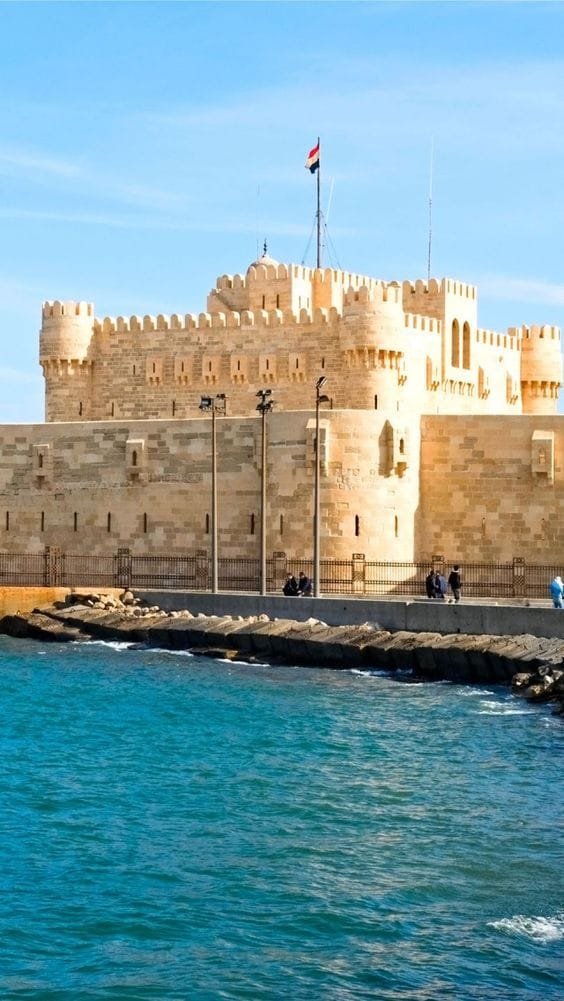
11. Local Life Around the Citadel: Fishermen, Cafés, and Coastal Culture
Beyond the fortress itself, the area surrounding Citadel of Qaitbay offers visitors a vibrant glimpse into the daily coastal life and unique Mediterranean culture of Alexandria. The harbor district around the citadel remains one of the city’s most authentic and lively neighborhoods, where fishing traditions, local cafés, seafood restaurants, and bustling waterfront activity create an unforgettable atmosphere filled with character and charm. Throughout the day, local fishermen can be seen preparing nets, repairing boats, and returning from the sea with fresh catches that supply nearby seafood markets and restaurants. These scenes preserve a maritime lifestyle that has shaped Alexandria for centuries and continues to connect the city to its ancient identity as one of the Mediterranean’s great harbor centers. Walking along the harbor promenade near the fortress allows visitors to observe the rhythm of local life unfolding beside the sea. Families gather to enjoy the cool breeze, children play near the waterfront, and street vendors sell traditional snacks, roasted nuts, tea, and fresh juices to travelers exploring the area. The cafés surrounding the citadel are especially popular gathering places where both locals and tourists sit for hours drinking Egyptian tea or coffee while admiring panoramic sea views and the silhouette of the fortress rising above the harbor. Seafood restaurants near the citadel are famous throughout Alexandria for serving freshly grilled fish, shrimp, calamari, and traditional Mediterranean dishes prepared using recipes passed down through generations. The atmosphere becomes even more magical during the evening hours when the fortress lights reflect across the water and the harbor fills with conversation, music, and the scent of the sea. Local artists, musicians, and photographers often gather in the area, contributing to the cultural energy surrounding the citadel. Visitors quickly realize that the experience of Qaitbay extends far beyond its historical walls because the surrounding neighborhood itself represents a living continuation of Alexandria’s maritime heritage and coastal identity. For travelers seeking authentic cultural experiences, the area around the citadel offers a perfect combination of history, local traditions, Mediterranean hospitality, and everyday life beside the sea. This unique atmosphere helps make the Citadel of Qaitbay not only one of Egypt’s most important historical landmarks but also one of Alexandria’s most beloved social and cultural spaces.
12. The Citadel as a Symbol of Alexandria’s Identity
Over the centuries, Citadel of Qaitbay has become far more than a historical fortress or tourist attraction; it has evolved into one of the most powerful symbols of Alexandria’s identity, spirit, and cultural memory. For both local residents and international visitors, the citadel represents the enduring connection between the city, the Mediterranean Sea, and the countless civilizations that shaped Alexandria throughout history. Its silhouette rising above the harbor has become one of Egypt’s most recognizable coastal images, appearing in films, paintings, literature, tourism campaigns, and cultural celebrations associated with Alexandria. The fortress symbolizes resilience because it has survived wars, invasions, earthquakes, political changes, and centuries of environmental challenges while continuing to stand proudly beside the sea. For Alexandrians, the citadel represents more than stone walls and military history; it embodies memories of childhood visits, family gatherings, evening walks along the Corniche, and emotional connections to the sea itself. The location where the fortress stands also carries profound historical symbolism because it links two of the greatest periods in Alexandria’s history: the ancient era of the legendary Lighthouse of Pharos and the Islamic era of the Mamluk Sultanate. This continuity gives the citadel a unique emotional depth that reflects Alexandria’s identity as a city built upon layers of civilizations and historical transformation. Visitors often describe feeling a special atmosphere around the fortress, where the combination of sea air, historical architecture, and panoramic views creates a sense of timelessness rarely experienced elsewhere. The citadel also serves as an important symbol of Egyptian cultural heritage and national pride, attracting millions of visitors who come to experience one of the country’s greatest historical landmarks. Educational programs, cultural festivals, artistic exhibitions, and tourism activities centered around the fortress help preserve its importance for future generations while strengthening Alexandria’s position as one of the Mediterranean’s leading cultural destinations. Even in the modern age of rapid urban development and technological change, the Citadel of Qaitbay continues to define Alexandria’s image and identity beside the sea. It stands as a reminder that the city’s true strength lies not only in its ancient monuments but also in its enduring relationship with history, culture, resilience, and the Mediterranean world that has shaped Alexandria for more than two thousand years.
13. Visiting the Citadel of Qaitbay: A Complete Traveler Experience
For anyone exploring the Mediterranean city of Alexandria, visiting Citadel of Qaitbay is considered one of the most unforgettable experiences in all of Egypt. The fortress offers far more than a simple historical tour; it provides visitors with a complete cultural, architectural, and emotional journey where history and coastal beauty merge together perfectly. From the moment travelers approach the citadel along the scenic Corniche, the dramatic sight of the fortress rising above the Mediterranean instantly creates excitement and anticipation. The surrounding harbor atmosphere, filled with fishing boats, sea breezes, and panoramic ocean views, sets the tone for an extraordinary experience before visitors even enter the fortress itself. Once inside, travelers can explore multiple levels of defensive towers, narrow corridors, ancient staircases, cannon platforms, and observation terraces that reveal breathtaking views of Alexandria’s coastline. Every section of the fortress tells a different chapter of Egyptian history, from the Mamluk era and Ottoman rule to the modern restoration efforts that preserved the monument for future generations. Photography enthusiasts are especially drawn to the citadel because every angle provides spectacular visual compositions combining medieval architecture with Mediterranean scenery. The fortress is also ideal for travelers interested in archaeology, military history, architecture, and cultural heritage, offering educational value alongside its visual beauty. Guided tours provide deeper insights into the history of the ancient Lighthouse of Pharos that once stood on the same site, helping visitors understand the unique historical continuity of the location. Outside the fortress, the surrounding cafés, seafood restaurants, and harbor promenade allow travelers to continue enjoying Alexandria’s vibrant coastal atmosphere long after the tour ends. Sunset visits are particularly popular because the golden Mediterranean light transforms the citadel into one of the most romantic and picturesque scenes in Egypt. Families, couples, solo travelers, and history enthusiasts all find something meaningful within the experience of Qaitbay. For many visitors, the emotional impact of standing beside the fortress while listening to the waves and watching the endless sea horizon becomes one of the defining memories of their journey through Alexandria. The Citadel of Qaitbay therefore remains not only a historical monument but also a complete traveler experience that captures the timeless beauty and spirit of Egypt’s Mediterranean coast.
14. The Best Time to Visit the Citadel of Qaitbay
Choosing the right time to visit Citadel of Qaitbay can greatly enhance the overall experience, as the fortress and its surrounding Mediterranean environment transform beautifully throughout different seasons and times of day. Alexandria’s coastal climate is significantly milder than most Egyptian cities, making the citadel an attractive destination almost year-round. However, the most comfortable and visually rewarding months for visiting are typically between October and April, when temperatures remain pleasant and the Mediterranean breeze creates ideal conditions for walking and outdoor exploration. During these cooler months, visitors can comfortably spend hours exploring the fortress towers, harbor promenade, and nearby cafés without the intense summer heat experienced in other parts of Egypt. Winter in Alexandria also offers dramatic seascapes, where powerful Mediterranean waves crash against the fortress walls, creating breathtaking photography opportunities and an unforgettable atmosphere. Spring brings clear skies, vibrant coastal energy, and beautiful lighting conditions that make the citadel especially attractive for photographers and travelers seeking scenic experiences. Summer remains lively as well, particularly during evenings when local residents and tourists gather around the harbor to enjoy the refreshing sea air and illuminated views of the fortress after sunset. One of the most magical times to visit the citadel is during sunrise or sunset, when the Mediterranean light transforms the ancient stone walls into glowing shades of gold, orange, and soft pink. These moments create a peaceful and romantic atmosphere that highlights the beauty of Alexandria’s coastline and the timeless silhouette of the fortress against the sea. Evening visits are equally memorable because the illuminated citadel becomes one of the city’s most enchanting landmarks, surrounded by lively cafés and reflections shimmering across the water. Travelers interested in avoiding crowds often prefer early morning visits, when the harbor is calm and the fortress feels more intimate and contemplative. Seasonal festivals and national holidays may also influence the atmosphere around the citadel, bringing additional cultural activities and local celebrations to the surrounding area. Regardless of the season, the Citadel of Qaitbay offers a constantly changing experience shaped by the Mediterranean climate, natural light, and the timeless relationship between Alexandria and the sea.
15. The Citadel in Literature, Cinema, and Popular Culture
Over the years, Citadel of Qaitbay has become deeply embedded in Egyptian literature, cinema, photography, and popular culture, transforming the fortress into one of the most recognizable symbols of Alexandria’s identity and artistic imagination. Writers, poets, filmmakers, and painters have long been inspired by the citadel’s dramatic setting beside the Mediterranean Sea and its connection to centuries of history, romance, and cultural memory. In Egyptian literature, Alexandria is often portrayed as a mysterious and nostalgic city where different civilizations and emotions coexist, and the Citadel of Qaitbay frequently appears as a central symbol of resilience, beauty, and timelessness within these narratives. The fortress has been featured in numerous novels, travel writings, and historical works describing Alexandria’s maritime atmosphere and rich multicultural heritage. Egyptian filmmakers also use the citadel as a cinematic backdrop because of its visual power and emotional atmosphere. Movies and television productions frequently include scenes filmed beside the fortress walls, harbor promenade, or Mediterranean shoreline to capture the romantic and historical spirit of Alexandria. The combination of ancient architecture, crashing sea waves, fishing boats, and dramatic sunsets creates a setting perfectly suited for storytelling and visual art. Painters and photographers are equally fascinated by the fortress, producing countless artistic works that celebrate the beauty of Qaitbay and its surrounding coastal scenery. Social media and modern tourism photography have further strengthened the citadel’s global popularity, making it one of Egypt’s most photographed landmarks. For many Egyptians, the fortress also represents childhood memories, family outings, and emotional connections to Alexandria’s Mediterranean lifestyle. Songs, documentaries, travel programs, and cultural festivals regularly feature the citadel as a symbol of the city’s unique identity and historical continuity. The emotional impact of the fortress comes not only from its military history but also from the atmosphere it creates—a blend of sea, memory, architecture, and imagination that continues to inspire creative expression across generations. The Citadel of Qaitbay therefore exists not only as a physical monument but also as a living cultural icon woven deeply into the artistic and emotional identity of Alexandria and modern Egyptian society beside the Mediterranean coast.

16. The Citadel of Qaitbay for Families and Young Travelers
Visiting Citadel of Qaitbay offers an exciting and educational experience for families, children, and young travelers seeking to combine history, adventure, and Mediterranean beauty within one unforgettable destination. Unlike many historical monuments that focus solely on academic interest, the citadel creates an interactive atmosphere where visitors of all ages can actively explore ancient corridors, climb defensive towers, and imagine the lives of soldiers who once protected Alexandria’s harbor centuries ago. Children are often fascinated by the fortress’s massive stone walls, narrow staircases, old cannons, and panoramic observation points overlooking the sea. The structure feels almost like a giant medieval castle rising from the Mediterranean coastline, transforming history into a real-life adventure rather than a distant subject from textbooks. Families visiting the citadel can enjoy walking together through the fortress while learning about Alexandria’s maritime history, the ancient Lighthouse of Pharos, and the role of Sultan Qaitbay in defending Egypt’s northern coast. Parents often appreciate the educational value of the experience because it introduces younger generations to important aspects of Egyptian heritage in an engaging and visually memorable way. The surrounding harbor area also provides plenty of recreational opportunities for families, including seaside walks, traditional cafés, seafood restaurants, and boat-filled promenades where children can observe local fishing culture and Mediterranean life. The refreshing sea breeze and open coastal atmosphere create a relaxing environment that encourages visitors to spend extended periods exploring the fortress and nearby attractions. Photography sessions beside the ancient walls and panoramic sea views become treasured family memories, especially during sunset when the Mediterranean light creates spectacular scenery. Educational tours and local guides further enhance the experience by presenting historical information through stories and visual details that keep younger visitors interested and curious. Many families combine their visit to the citadel with nearby attractions such as the Alexandria Corniche, seafood markets, and coastal gardens, transforming the day into a complete Mediterranean cultural experience. The Citadel of Qaitbay therefore succeeds not only as a historical monument but also as one of Alexandria’s most enjoyable family destinations, where history, imagination, and the beauty of the sea come together to create meaningful memories for visitors of every generation.
17. Nearby Attractions Around the Citadel of Qaitbay
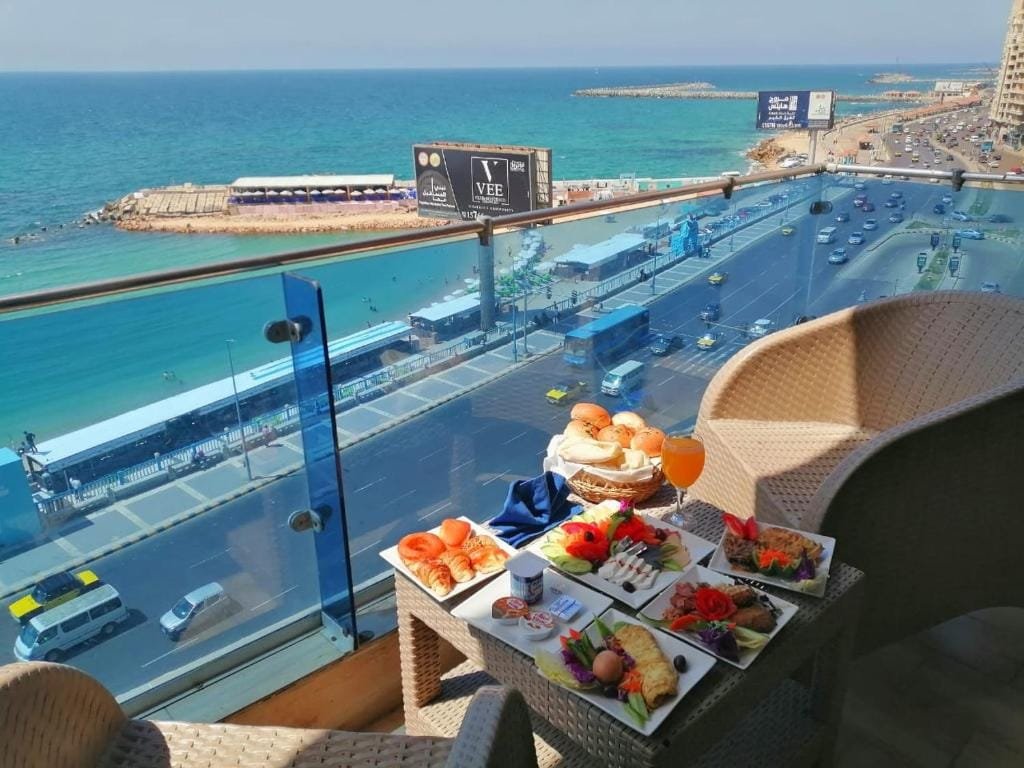
The area surrounding Citadel of Qaitbay contains some of Alexandria’s most fascinating cultural, historical, and recreational attractions, making the fortress an ideal starting point for exploring the rich coastal heritage of the city. Visitors arriving at the citadel quickly discover that the surrounding harbor district is filled with landmarks, museums, cafés, seafood restaurants, and scenic Mediterranean promenades that extend the travel experience far beyond the fortress walls. Just a short distance away lies the famous Alexandria Corniche, one of Egypt’s most beautiful coastal roads, stretching for kilometers beside the Mediterranean Sea and offering panoramic views of beaches, fishing harbors, and the city skyline. Travelers often enjoy walking along the Corniche after visiting the citadel, especially during sunset when the sea breeze and colorful sky create a magical atmosphere. Nearby seafood restaurants are among Alexandria’s most celebrated culinary destinations, serving freshly caught fish, shrimp, calamari, and traditional Mediterranean dishes in authentic harbor settings overlooking the sea. The historic Anfushi district surrounding the fortress also preserves elements of old Alexandria’s maritime character, with narrow streets, fishing communities, and traditional cafés filled with local life and cultural charm. Visitors interested in deeper historical exploration can continue toward the Bibliotheca Alexandrina, one of the world’s greatest modern cultural institutions, located along the Mediterranean coastline not far from the citadel. Boat tours operating near the harbor allow travelers to admire the fortress from the sea while learning about Alexandria’s ancient ports and underwater archaeological discoveries connected to Cleopatra’s royal city. Street vendors and local markets around the harbor also offer traditional souvenirs, handmade crafts, and snacks that reflect Alexandria’s coastal identity and vibrant street culture. During evenings and weekends, the area becomes especially lively as families, tourists, photographers, and musicians gather beside the illuminated fortress and bustling waterfront. The combination of historical monuments, seaside scenery, cultural attractions, and authentic local atmosphere makes the district surrounding the Citadel of Qaitbay one of the most rewarding and enjoyable areas to explore in Alexandria. For travelers seeking a complete Mediterranean experience filled with history, food, culture, and relaxation, the surroundings of the citadel provide an unforgettable journey through the heart of Egypt’s most iconic coastal city.
18. The Eternal Legacy of the Citadel of Qaitbay
In the end, Citadel of Qaitbay remains far more than an ancient fortress guarding the Mediterranean coast; it stands as one of Egypt’s most enduring symbols of history, resilience, maritime heritage, and cultural identity. Rising proudly on the exact site where the legendary Lighthouse of Alexandria once illuminated the ancient world, the citadel carries within its walls the memory of civilizations that shaped human history across thousands of years. From the glory of the Ptolemaic era and the legendary Pharos lighthouse to the military achievements of Sultan Qaitbay and the strategic struggles of later empires, the fortress represents a remarkable continuity between ancient and medieval Alexandria. Every stone within the citadel reflects centuries of architectural brilliance, political transformation, naval defense, and Mediterranean cultural exchange. Visitors walking through its corridors today are not simply exploring a monument; they are experiencing the living story of Alexandria itself—a city defined by the sea, enriched by diverse civilizations, and protected by generations of resilience and ambition. The emotional atmosphere of the fortress, strengthened by the sound of crashing waves and endless sea views, creates a powerful connection between travelers and the timeless spirit of the Mediterranean world. The citadel also continues to inspire artists, writers, historians, photographers, and filmmakers who view it as one of the most iconic and visually captivating landmarks in Egypt. Beyond its historical significance, the fortress remains an active part of Alexandria’s modern identity and daily life, surrounded by vibrant harbor culture, seafood traditions, and coastal social gatherings that preserve the city’s maritime character. Families, couples, scholars, and travelers from around the globe continue to visit the citadel not only to learn about history but also to experience the beauty, romance, and atmosphere that make Alexandria unique among the world’s coastal cities. As modern development continues transforming urban landscapes around the Mediterranean, the Citadel of Qaitbay remains a timeless guardian overlooking the sea, preserving the memory of Alexandria’s extraordinary past while continuing to inspire future generations. It stands proudly as a symbol of Egypt’s connection to the Mediterranean, a masterpiece of Islamic military architecture, and one of the most unforgettable historical treasures in the entire Middle East and North Africa.