- Excursions in Egypt
- Egypt Tour Packages
- Cairo Tours and Excursions
- Hurghada Tours and Excursions
- Soma Bay Tours and Excursions
- Makadi Bay Tours and Excursions
- Sahl Hasheesh Tours and Excursions
- El Gouna Tours and Excursions
- Marsa Alam Tours and Excursions
- Port Ghalib Tours and Excursions
- El Quseir Tours and Excursions
- Dendera and Abydos Day Tours
- Aswan Tours and Excursions
- Luxor Tours and Excursions
- Sharm El Sheikh Tours and Excursions
- Top Rated Egypt Tours in 2026
- Optional Excursions in Egypt
- Private Transfer
- Blogs About egypt
- Ancient Egypt
- Historical Sites in Egypt
- Cairo
- Alexandria
- Luxor
- Aswan
- The Red Sea
- Dendera Temple
- El Fayoum Oasis
- Bahariya Oasis
- Siwa Oasis
- Al Alamein
- Marsa Matruh
- Why Egypt Is One of the Safest Countries to Visit in the Middle East
- What You Need To know Before Your First Trip To Egypt
- Egypt Travel Costs in 2026 Full Budget Guide
- Top 10 Tourist Activities in Egypt
- Top 50 Activities You Can’t Miss in Egypt in 2026
- The Guide to Guided Tours in Egypt
- Egypt’s Ancient and Modern History
- The Nile River
- The Deserts of Egypt
- Ancient Egyptian gods
- famous Egyptian dishes
- UNESCO World Heritage sites
- About Us
- Egypt Hotels and Resorts
- Excursions in Egypt
- Egypt Tour Packages
- Cairo Tours and Excursions
- Hurghada Tours and Excursions
- Soma Bay Tours and Excursions
- Makadi Bay Tours and Excursions
- Sahl Hasheesh Tours and Excursions
- El Gouna Tours and Excursions
- Marsa Alam Tours and Excursions
- Port Ghalib Tours and Excursions
- El Quseir Tours and Excursions
- Dendera and Abydos Day Tours
- Aswan Tours and Excursions
- Luxor Tours and Excursions
- Sharm El Sheikh Tours and Excursions
- Top Rated Egypt Tours in 2026
- Optional Excursions in Egypt
- Private Transfer
- Blogs About egypt
- Ancient Egypt
- Historical Sites in Egypt
- Cairo
- Alexandria
- Luxor
- Aswan
- The Red Sea
- Dendera Temple
- El Fayoum Oasis
- Bahariya Oasis
- Siwa Oasis
- Al Alamein
- Marsa Matruh
- Why Egypt Is One of the Safest Countries to Visit in the Middle East
- What You Need To know Before Your First Trip To Egypt
- Egypt Travel Costs in 2026 Full Budget Guide
- Top 10 Tourist Activities in Egypt
- Top 50 Activities You Can’t Miss in Egypt in 2026
- The Guide to Guided Tours in Egypt
- Egypt’s Ancient and Modern History
- The Nile River
- The Deserts of Egypt
- Ancient Egyptian gods
- famous Egyptian dishes
- UNESCO World Heritage sites
- About Us
- Egypt Hotels and Resorts
Welcome to
The Dahshur Pyramids: The Birthplace of Architectural Perfection
While the Great Pyramids of Giza often steal the global spotlight, the true secrets of ancient Egypt’s architectural evolution are hidden beneath the golden sands of the Dahshur necropolis. Located approximately 40 kilometers south of Cairo, Dahshur represents one of the most critical turning points in human history—the moment when the Pharaohs mastered the art of building the perfect pyramid. This UNESCO World Heritage site was the royal playground of King Sneferu, the founder of the Fourth Dynasty and the father of Khufu. It was here that Sneferu’s engineers embarked on a daring journey of trial and error, moving away from the traditional “step” designs of the past toward the smooth-sided, majestic structures that would define the Old Kingdom’s glory. For the traveler seeking a more profound and intimate connection with antiquity, Dahshur offers an experience that Giza cannot provide: a sense of serene isolation and raw, ancient power. The landscape is dominated by two massive structures that tell a story of ambition and engineering resilience: the enigmatic Bent Pyramid and the sublime Red Pyramid. These monuments are not just tombs; they are stone-clad chronicles of a civilization learning to touch the sky. At Dahshur, the air is quieter, the desert is more vast, and the history feels almost tactile. Visitors have the rare opportunity to descend into deep, hauntingly beautiful chambers without the overwhelming crowds, allowing the spirit of the Pharaohs to resonate in the silence. From the unique silhouette of the “Bent” angles to the gleaming crimson hue of the “Red,” Dahshur is a testament to the courage of those who dared to innovate. It is a sacred landscape where the bridge between the ancient and the eternal was first built, inviting every modern explorer to witness the literal “rise” of the pyramids in their most authentic and breathtaking form.
1. King Sneferu: The Pharaoh of Innovation
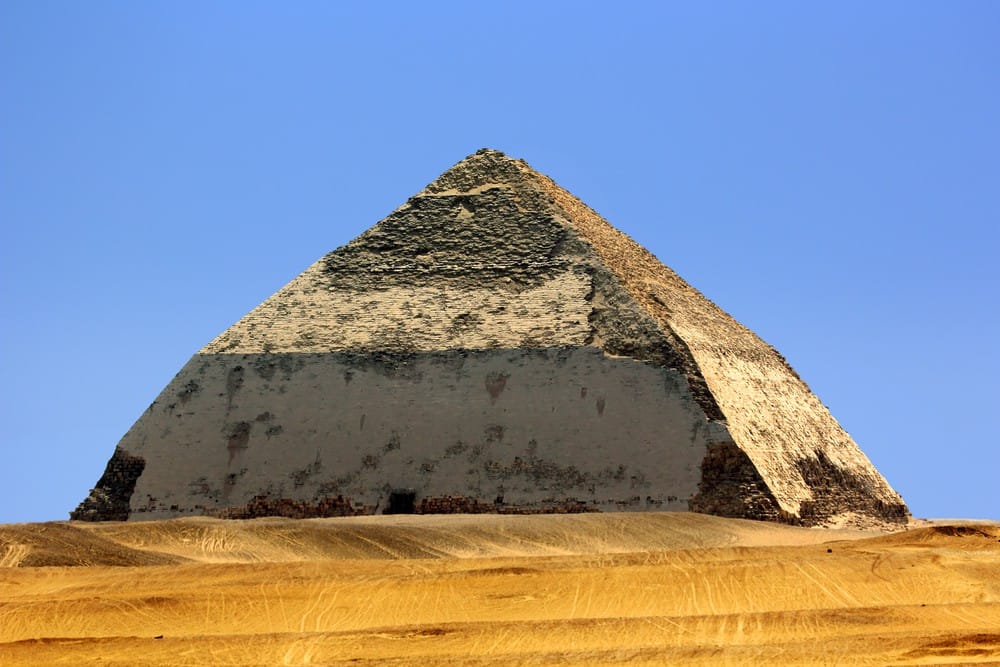
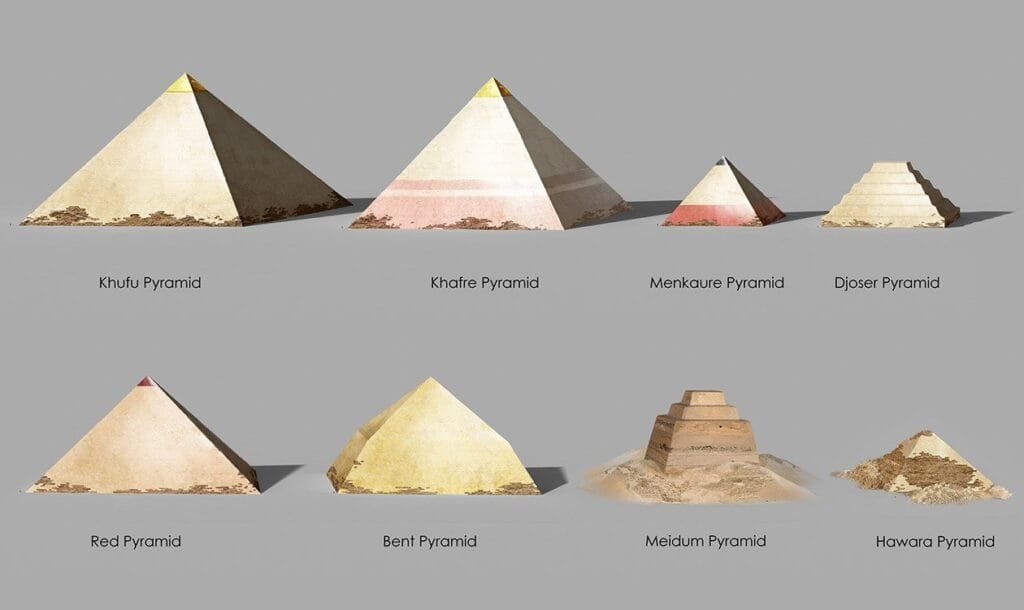
To understand the majesty of Dahshur, one must first understand the man behind its most iconic monuments: King Sneferu. As the founding Pharaoh of the Fourth Dynasty, Sneferu was more than just a ruler; he was a visionary who obsessed over the quest for architectural perfection. Unlike his predecessors who were satisfied with the Step Pyramid design at Saqqara, Sneferu sought to create a monument with smooth, gleaming sides that would serve as a literal ramp to the heavens. His reign was a period of unprecedented prosperity and technical experimentation, which allowed him to commission not one, but three massive pyramids during his lifetime. This feat remains unmatched in Egyptian history, making him the greatest builder of the Old Kingdom. Sneferu’s legacy is defined by his willingness to learn from failure and his relentless drive to innovate. At Dahshur, his engineers faced immense challenges, battling shifting desert sands and structural pressures that would have discouraged a lesser king. Sneferu’s character as a "benevolent ruler" is also noted in ancient records, but it is his architectural ambition that truly immortalized him. By moving the royal necropolis to the virgin grounds of Dahshur, he created a laboratory for structural engineering that paved the way for his son, Khufu, to build the Great Pyramid at Giza. For the traveler, standing before Sneferu’s monuments is a chance to connect with the mind of a pioneer. You are not just looking at tombs; you are looking at the tangible results of a Pharaoh who dared to redefine the possible. Sneferu’s pyramids at Dahshur are the physical manifestation of a golden age, representing the moment when Egypt transitioned from the experimental stages of the Early Dynastic period into the full, breathtaking glory of the Pyramid Age.
2. The Bent Pyramid: A Lesson in Stone
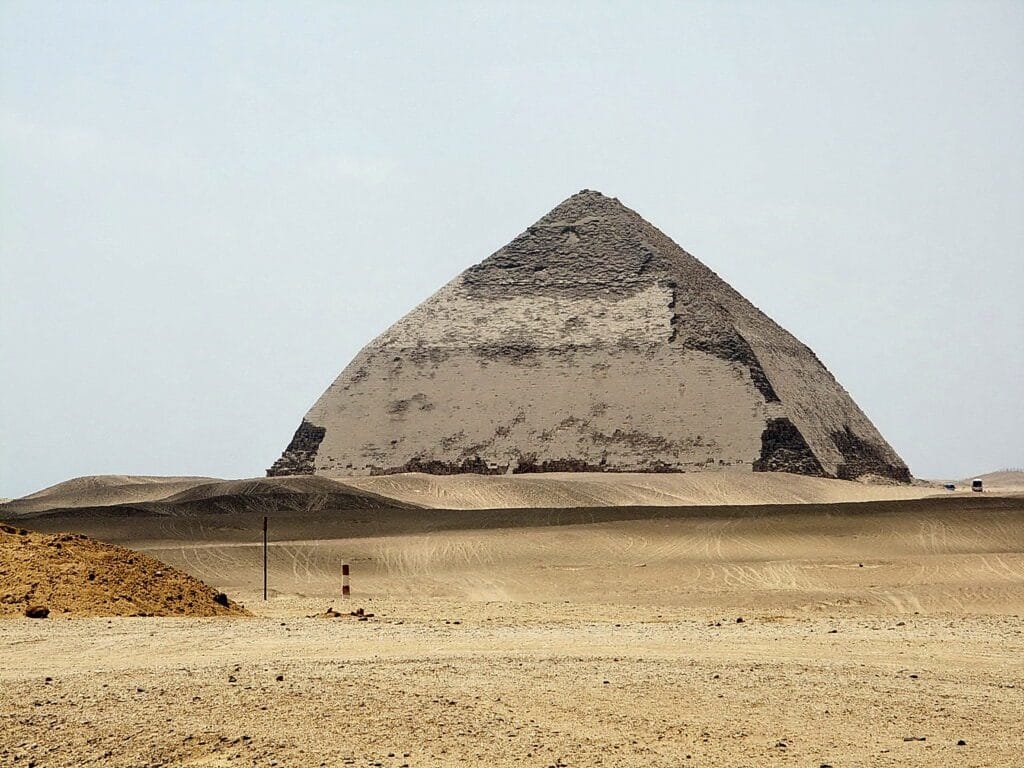
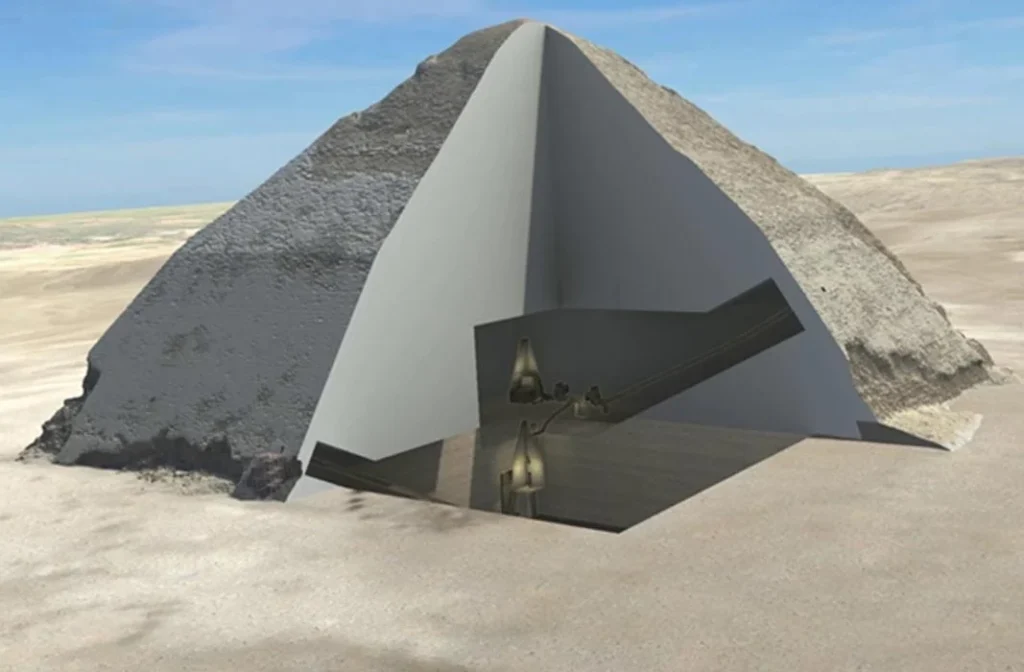
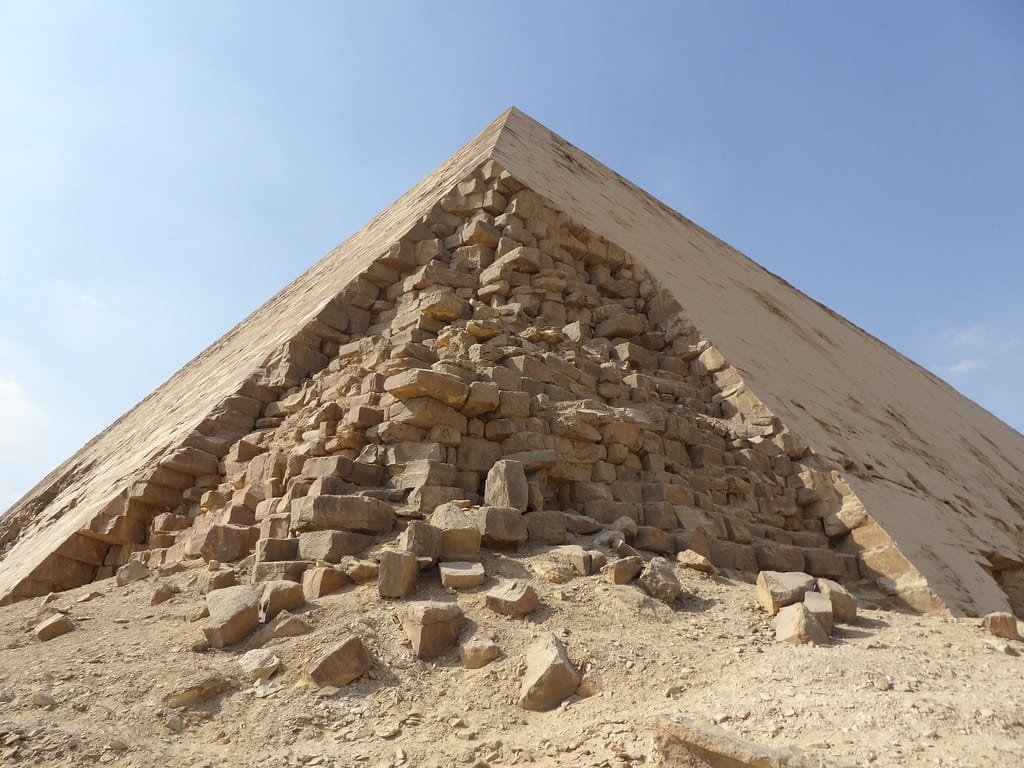
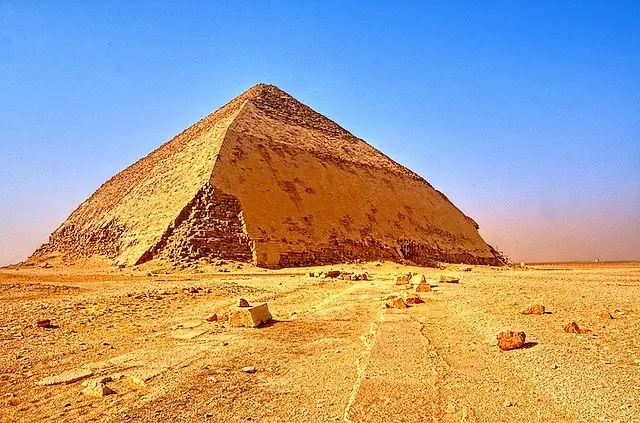
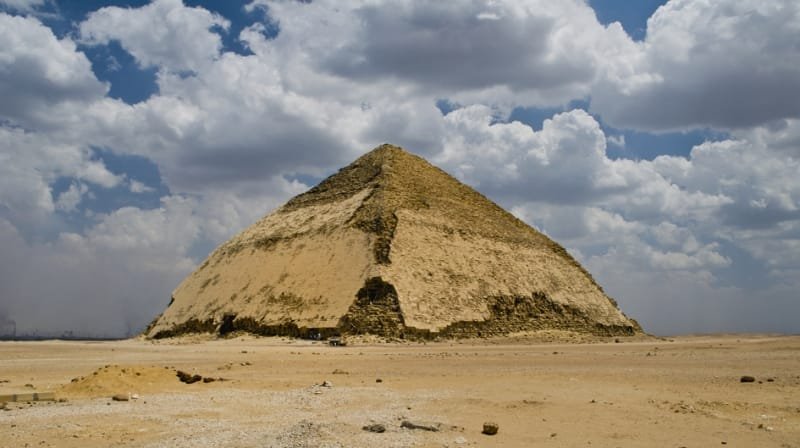
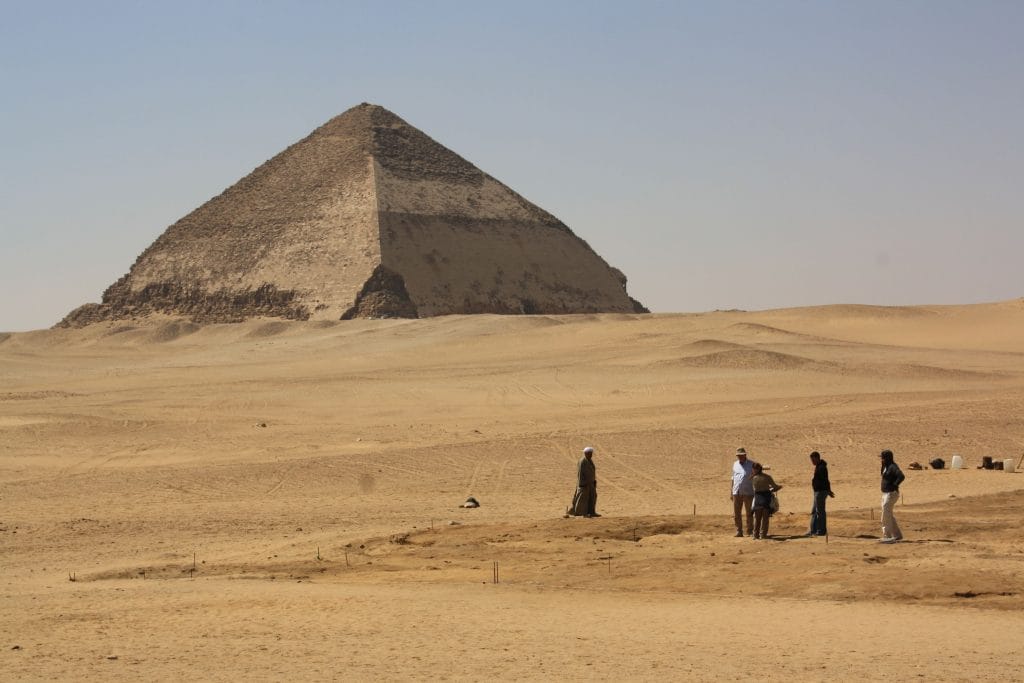
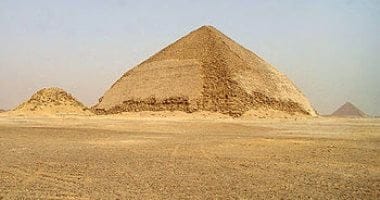
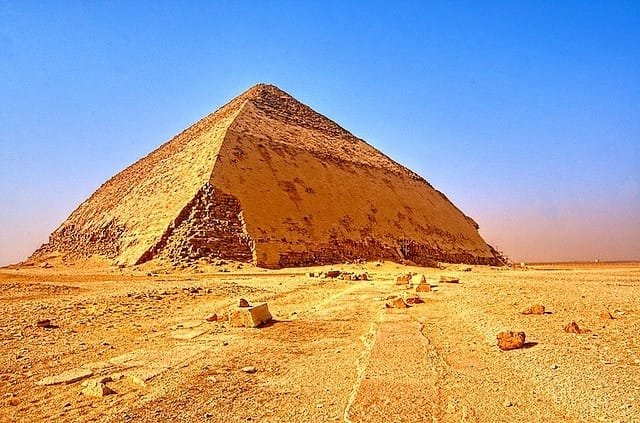
The Bent Pyramid is perhaps the most intriguing structure in all of Egypt, offering a rare and visible glimpse into the "trial and error" process of ancient engineering. Standing tall with its unique, two-tiered silhouette, it begins at a steep 54-degree angle before abruptly shifting to a shallower 43 degrees halfway up. This distinctive "bend" was not an aesthetic choice but a brilliant, mid-construction correction. As the pyramid rose, the massive weight of the stone blocks began to cause internal instability, forcing Sneferu’s architects to change the angle to prevent a catastrophic collapse. For the modern visitor, this makes the Bent Pyramid a fascinating case study in ancient problem-solving. It is also remarkably well-preserved, retaining more of its original smooth limestone casing than almost any other pyramid in Egypt. Seeing the gleaming white exterior as it would have appeared thousands of years ago provides a stunning visual link to the past. The interior of the Bent Pyramid is equally adventurous, featuring two separate entrances—one on the north and one on the west—leading to a complex system of corbelled chambers. Recently reopened to the public, the descent into its depths is a thrill for any explorer, involving narrow passages and ancient wooden beams that have supported the structure for millennia. The Bent Pyramid stands as a monument to resilience; it is the bridge between the stepped designs of the past and the true pyramids of the future. It teaches us that even the Great Pharaohs faced setbacks and that greatness is often born from the courage to adapt. Exploring this site allows you to appreciate the human element behind the stones, where every shift in angle represents a desperate and successful attempt to save a royal dream from the brink of ruin.
3. The Red Pyramid: The First Perfect Peak
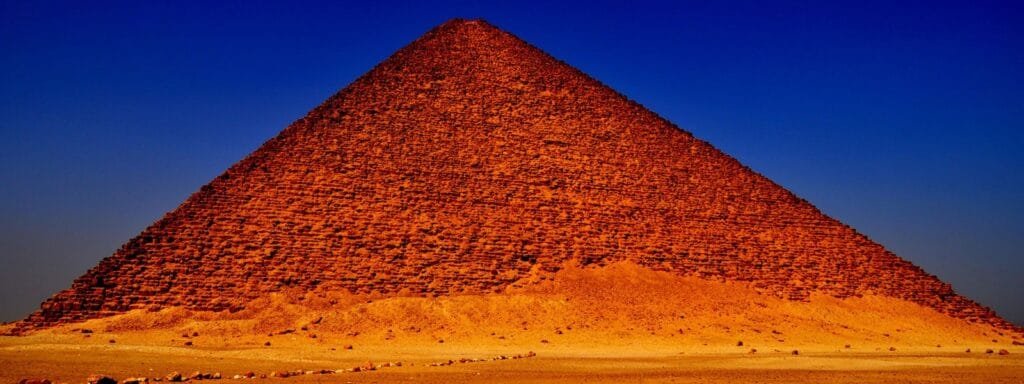
Following the structural challenges of the Bent Pyramid, King Sneferu finally achieved his ultimate goal with the construction of the Red Pyramid. This magnificent structure is the world’s first successful smooth-sided, "true" pyramid, representing the pinnacle of ancient Egyptian engineering before the Great Pyramid of Giza. Its name is derived from the reddish hue of the local limestone used for its core, which glows with a warm, crimson intensity during the golden hours of sunrise and sunset. Originally, however, it was encased in fine white Tura limestone, making it a brilliant, shining beacon in the desert. The Red Pyramid is celebrated for its perfect 43-degree angle—the same angle adopted for the upper half of the Bent Pyramid—which ensured its stability for eternity. For the traveler, the Red Pyramid offers one of the most rewarding interior experiences in Egypt. Unlike the crowded corridors of Giza, here you can often find yourself alone as you descend the long, straight shaft leading to the heart of the structure. The interior features three magnificent corbelled ceilings, where the stone blocks are stepped inward with such precision that they create soaring, cathedral-like vaults that have remained perfectly intact for over 4,500 years. The sheer scale and silence of the central burial chamber are breathtaking, offering a profound sense of the sacred. The Red Pyramid is the silent hero of Egyptian architecture; it proved that a smooth-sided monument of such scale was possible, setting the standard for all royal tombs that followed. It is a monument of triumph and harmony, standing as a testament to the fact that through persistence and ingenuity, Sneferu finally mastered the geometry of the gods, leaving behind a legacy of stone that continues to inspire awe in all who behold it.
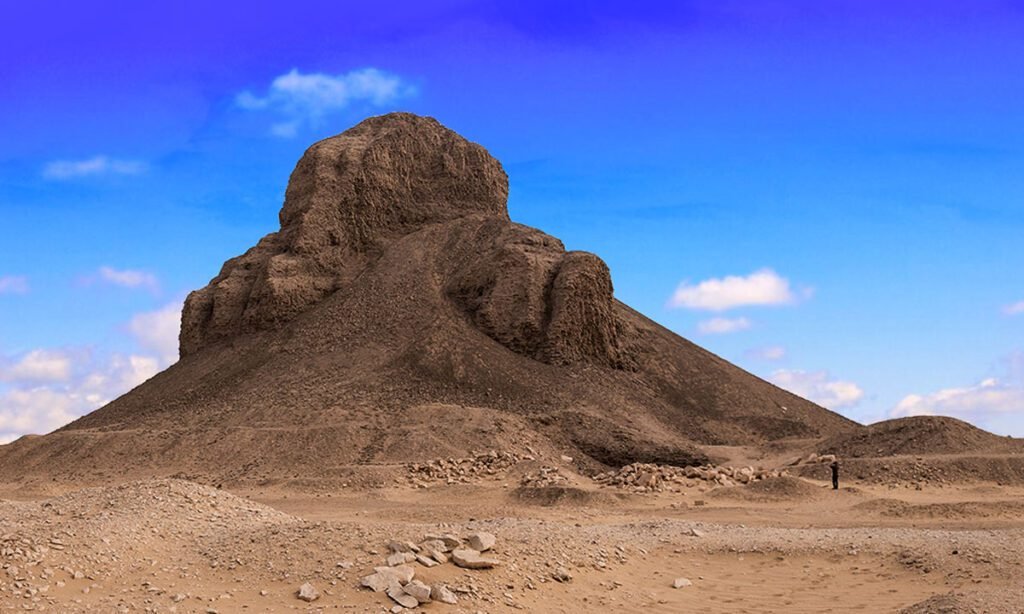
4. The Black Pyramid: The Middle Kingdom’s Shadow
Rising like a dark, jagged mountain against the desert sky, the Black Pyramid of Amenemhat III provides a haunting contrast to the smooth limestone monuments of the Old Kingdom. Built nearly 600 years after Sneferu’s reign, this structure represents the architectural ambitions of the Twelfth Dynasty. Unlike the solid stone pyramids of earlier eras, the Black Pyramid was constructed using a core of mudbricks encased in a shell of basalt and limestone. Over the millennia, the outer casing was stripped away, leaving the mudbrick core to erode into the mysterious, crumbling peak that visitors see today. Despite its decayed appearance, the Black Pyramid was a marvel of subterranean engineering. Its interior features an incredibly complex labyrinth of interconnected galleries, burial chambers, and secret passages designed to confuse grave robbers. It was also unique for being one of the first pyramids designed to house not only the Pharaoh but also several royal princesses. However, the site was plagued by geological misfortune; built too close to the Nile Valley, the ground was unstable, and the heavy structure began to sink and crack even before it was finished. This led Amenemhat III to abandon it as his primary tomb in favor of a second pyramid at Hawara. For the traveler, the Black Pyramid offers a strikingly different aesthetic—one of raw, melancholic beauty. It stands as a reminder that even the most powerful rulers struggled against the elements. Viewing its dark silhouette from a distance, you feel the passage of time and the shift in royal priorities. It serves as a somber and beautiful testament to the Middle Kingdom’s attempt to reclaim the glory of the Pyramid Age, providing a fascinating counterpoint to the triumphant stone peaks of Sneferu that dominate the northern horizon.
5. Beneath the Sands: The Mystery of the Mastabas
While the towering pyramids of Sneferu and Amenemhat III command the most attention, the ground of Dahshur is also home to a vast network of mastabas—flat-roofed, rectangular tombs that served as the final resting places for high-ranking officials and royal family members. These tombs are essential to understanding the social hierarchy and daily life of the Old and Middle Kingdoms. Many of these mastabas were exquisitely decorated with relief carvings and vibrant paintings that depicted scenes of farming, hunting, and religious offerings, though many remain buried or partially excavated to protect their delicate interiors. One of the most significant discoveries at Dahshur was the treasure of the princesses, found in tombs near the pyramids. Archaeologists unearthed breathtaking collections of jewelry, including gold pectorals, amethyst necklaces, and silver mirrors, which now grace the halls of the Egyptian Museum. For the curious traveler, the presence of these smaller tombs adds layers of depth to the necropolis. They remind us that the pyramids did not exist in isolation; they were the centers of bustling cities of the dead, supported by a complex network of priests, workers, and courtiers. Exploring the areas around the main pyramids reveals the foundations of these smaller structures, offering a more intimate look at ancient funerary rites. The mastabas represent the human scale of Dahshur, bridging the gap between the divine aspirations of the Pharaoh and the earthly lives of those who served him. By acknowledging these silent neighbors, the visitor gains a holistic view of the necropolis, seeing it not just as a collection of monuments, but as a sacred landscape where an entire civilization sought to ensure their passage into the eternal afterlife through art, loyalty, and stone.
6. Dahshur vs. Giza: The Intimate Alternative
For the modern explorer, the choice between Dahshur and the Giza Plateau is often a matter of atmosphere and depth. While Giza is home to the last remaining Wonder of the Ancient World, its proximity to the city often brings overwhelming crowds, persistent vendors, and a hurried pace. In contrast, Dahshur offers a serene, almost meditative experience that many travelers find far more authentic. Located within a military zone that was closed to the public for decades, the site feels like a well-kept secret. Here, you can stand in the shadow of a massive pyramid and hear nothing but the wind whistling through the limestone blocks. There are no barriers to keep you at a distance, and the lack of commercialization allows you to truly contemplate the scale of human achievement. One of the greatest advantages of Dahshur is the freedom to explore the interiors of the Red and Bent Pyramids without the long queues and stifling heat of the Great Pyramid. The descent into these chambers is a raw, physical adventure that makes you feel like an early explorer discovering a lost world. Furthermore, the surrounding landscape remains largely as it was thousands of years ago—a stark, beautiful desert border where the green of the Nile Valley meets the orange sands of the Sahara. For those who value photography, the unobstructed views and the shifting light on the Red Pyramid’s crimson stone provide endless opportunities for the perfect shot. Dahshur is the "connoisseur’s choice"—a place for those who want to escape the tourist trail and engage with the history of the Pharaohs on a personal and profound level. It is a site where the silence is as powerful as the stone, leaving an indelible mark on the soul of every traveler.
7. The Science of the Sacred: Geometry and Alignment
The pyramids of Dahshur are not merely haphazard piles of stone; they are the result of a sophisticated understanding of mathematics, astronomy, and geology. Sneferu’s engineers were the first to transition from the intuitive building methods of the early dynasties to a rigorous, scientific approach. At Dahshur, the alignment of the Red and Bent Pyramids with the cardinal points—North, South, East, and West—is nearly perfect, showing that ancient architects used the stars to orient these massive structures. This precision was essential for the king’s spiritual journey, as the pyramid was seen as a machine designed to launch the soul toward the "imperishable stars" of the northern sky. The mathematical transition seen in the Bent Pyramid’s angle change proves that these builders were constantly monitoring structural stress, using geometry to calculate how to distribute weight across the shifting desert floor. Furthermore, the internal corbelled ceilings found within the Red Pyramid represent a peak in ancient masonry. By stepping each layer of stone slightly inward, they created vaulted chambers capable of supporting millions of tons of limestone above. For the traveler, understanding this technical brilliance adds a layer of awe to the visit. You are not just looking at a tomb; you are looking at a milestone in the history of human thought. The mastery of angles, the calculation of volume, and the logistics of transporting thousands of blocks daily from local and distant quarries reflect a society with a high degree of organization and intellectual curiosity. Dahshur serves as a monument to the moment when human beings first mastered the laws of physics to create something that would defy the erosion of time, proving that the Pharaohs were as much masters of science as they were of men.
8. The Treasure of Dahshur: Gold of the Middle Kingdom
While the pyramids themselves are the main attraction, Dahshur is also famous among archaeologists for the "Dahshur Treasure," a stunning collection of Middle Kingdom jewelry that redefined our understanding of ancient Egyptian craftsmanship. In the late 19th century, excavations near the pyramids of Amenemhat II and Senusret III revealed hidden caches of jewelry belonging to royal princesses. These items, now primarily housed in the Egyptian Museum, include breathtaking pectorals of solid gold, delicate amethyst beads, and intricate crowns adorned with lapis lazuli and carnelian. The level of detail in these pieces is staggering; some of the gold-working techniques used by the Middle Kingdom artisans were so advanced that they were not replicated for another millennium. For the traveler, knowing that this barren desert once yielded such opulence changes the perspective of the landscape. It suggests that Dahshur was once a place of incredible wealth and vibrant royal activity, far beyond the silent ruins we see today. These treasures were more than just ornaments; they were powerful amulets designed to protect the royal ladies in the afterlife, often featuring symbols of the goddess Hathor or the protective Eye of Horus. Although you cannot see the jewelry at the site today, visiting the locations where they were found allows you to visualize the grand funerals and the protective measures taken to secure the royal legacy. The "Dahshur Treasure" serves as a poignant reminder that while the stones of the pyramids are the most visible legacy of the Pharaohs, their true wealth was also found in the delicate, beautiful objects that reflected their deep connection to the divine and their mastery over the most precious materials of the earth.
9. Sunset over Dahshur: A Spiritual Conclusion
As the day draws to a close, there is no experience in Egypt quite as moving as watching the sunset over the Dahshur necropolis. As the harsh glare of the midday sun fades, the landscape is bathed in a soft, ethereal light that transforms the stone of the pyramids. The Red Pyramid begins to glow with an intense, fiery crimson, while the unique silhouette of the Bent Pyramid casts a long, dramatic shadow across the orange dunes. This is the time when the true spiritual power of the site becomes most apparent. The silence of the desert deepens, and the modern world feels miles away, allowing you to connect with the ancient belief that the western horizon was the gateway to the Duat, or the afterlife. For the traveler, this is the moment for final reflection. You have walked through the labs of the world’s first great architects and descended into the hearts of the mountains they built. The journey through Dahshur is a lesson in human ambition, the courage to fail, and the eventual triumph of perfection. As the stars begin to appear above the peaks of Sneferu, you realize that these monuments have fulfilled their purpose; they have kept the names of their creators alive for over four and a half thousand years. Leaving the site, you carry with you a sense of the eternal—a realization that while civilizations rise and fall, the quest to build something meaningful and lasting is a universal human drive. Dahshur remains a quiet, powerful testament to that drive, inviting every visitor to look up at the stars and wonder at the brilliance of those who first dared to reach for them. It is the perfect, hauntingly beautiful end to a journey through the cradle of the Pyramid Age.

10. Practical Magic: Planning Your Dahshur Visit
To experience the wonders of Dahshur without the stress often associated with major tourist hubs, a bit of strategic planning is essential. Because the site is located about 40 kilometers south of Cairo, the most efficient way to reach it is by hiring a private driver for the day or joining a specialized small-group tour. Unlike Giza, there is no metro access, and the local taxis may not be familiar with the specific desert tracks leading to the pyramids. It is highly recommended to combine your visit to Dahshur with a trip to Saqqara, as they are geographically close and together provide a complete narrative of pyramid evolution. The best time to arrive is early in the morning, around 8:00 AM, when the air is crisp and the light is perfect for photography. As Dahshur is still technically located within a military zone, you must bring your original passport for security checks at the entrance. Facilities at the site are minimal; there are no sprawling gift shops or luxury cafes, so packing plenty of water and a light snack is crucial for a comfortable exploration. Dressing in layers is also wise, as the desert heat can be intense under the midday sun, yet the interior chambers of the pyramids can feel surprisingly cool and damp. Most importantly, ensure your camera batteries are fully charged, as the unobstructed views of the Red and Bent Pyramids against the vast Sahara backdrop are some of the most photogenic scenes in all of Egypt. By preparing for the rustic nature of the site, you allow yourself to focus entirely on the historical majesty and the rare sense of peace that this desert sanctuary provides to every visitor.
11. The Interior Adventure: Descending into the Deep
For many travelers, the highlight of Dahshur is the physically demanding yet exhilarating experience of entering the pyramids themselves. Unlike the Great Pyramid of Giza, which often requires a separate, expensive ticket and a long wait, the Red and Bent Pyramids offer a more accessible and raw adventure into the ancient world. Entering the Red Pyramid involves a long, steep descent through a narrow wooden shaft that plunges deep into the heart of the structure. The air grows thick and warm as you move downward, but the reward is the sight of three magnificent corbelled chambers with soaring ceilings that reach nearly 15 meters in height. The Bent Pyramid, recently reopened to the public, offers an even more complex journey, featuring a labyrinthine series of passages and a second, western entrance that reveals the internal struggles of its ancient builders. It is important to note that these descents require a reasonable level of physical fitness, as you will be crouching and climbing in confined spaces for several minutes. However, the feeling of standing in the silent, dark burial chamber of King Sneferu, far beneath millions of tons of stone, is a profound experience that few other sites can match. The lack of crowds means you can take your time to examine the precision of the masonry and the ancient cedar beams that still support the internal shafts. This is not just a tour; it is a physical connection to the past, where the smell of the stone and the absolute stillness create a hauntingly beautiful atmosphere of reverence. For those who brave the climb, the interior of Dahshur’s pyramids provides a visceral understanding of the Pharaoh’s quest for immortality, making the effort a truly unforgettable part of the journey.
12. Dahshur’s Place in the Future of Tourism
As Egypt continues to modernize its archaeological sites, Dahshur stands at a fascinating crossroads between preservation and development. For decades, the site was a quiet outpost known only to scholars and intrepid explorers, but there is a growing movement to make this "architectural laboratory" a central part of the Egyptian travel experience. Efforts are currently underway to improve the roads leading to the necropolis and to enhance the visitor centers without compromising the site's unique, isolated charm. The future of Dahshur lies in "sustainable heritage tourism," where the goal is to provide a high-quality, educational experience that protects the delicate mudbrick of the Black Pyramid and the limestone casing of the Bent Pyramid. For the traveler, this means that now is the perfect time to visit—while the site still retains its raw, authentic energy, yet is becoming more accessible than ever before. Dahshur serves as a vital educational tool, helping us understand that the Great Pyramids were not built in a vacuum, but were the result of centuries of learning, failure, and ultimate triumph. As new discoveries are made in the surrounding sands, Dahshur continues to remind us that Egypt still has many secrets left to tell. By choosing to visit this quiet giant of the desert, you are supporting the diversification of Egyptian tourism and ensuring that the legacy of King Sneferu receives the global recognition it deserves. Dahshur is a place that honors the process of creation as much as the final result, offering a timeless lesson in human perseverance that will continue to inspire and awe generations of travelers for centuries to come. It is, and always will be, the true cradle of the pyramid age.
13. The Valley Temple of the Bent Pyramid: A Sacred Threshold
While the pyramid itself dominates the horizon, the often-overlooked Valley Temple of the Bent Pyramid is a site of immense archaeological importance. Located about 700 meters east of the pyramid, this temple served as the grand entrance to the funerary complex and the starting point for the royal funeral procession. It is one of the earliest examples of a pyramid temple that features exquisite decorative reliefs, showcasing the transition from the simple structures of the Third Dynasty to the elaborate temple complexes of the Fourth. Although much of the limestone casing was removed in later periods, the foundations and remaining walls reveal a sophisticated layout of courts and pillared halls. Excavations here have uncovered beautiful statues of King Sneferu and delicate carvings depicting the different provinces of Egypt bringing offerings to the king. For the traveler, visiting the remains of the Valley Temple provides a crucial sense of scale and context. It allows you to visualize the pyramid not just as a solitary tomb, but as the centerpiece of a bustling religious city where priests performed daily rituals to sustain the king's soul. The walk between the temple and the pyramid follows the path of the ancient causeway, offering a moment to reflect on the grandeur of the ceremonies that once took place on this very ground. This temple is a silent witness to the logistical and spiritual sophistication of Sneferu’s reign, proving that every inch of the Dahshur landscape was meticulously planned to serve the pharaoh's journey into eternity. Understanding this lower temple completes the architectural puzzle of the site, revealing the full extent of the royal ambition that transformed this desert plateau into a sacred gateway between worlds.
14. Dahshur and the Nile: The Logistics of Eternity
The existence of the massive monuments at Dahshur was entirely dependent on the proximity and the power of the Nile River. In ancient times, the Nile flowed much closer to the desert edge than it does today, providing a vital liquid highway for the transport of materials and labor. The millions of tons of local limestone, as well as the fine white Tura limestone used for the casing and the pink granite from Aswan, were all brought to the site via a sophisticated network of canals and harbors. During the annual inundation, when the river flooded the valley, the water level rose high enough to allow heavy barges to dock almost at the foot of the pyramid plateau. This seasonal rhythm of the river dictated the pace of construction, with thousands of skilled workers and farmers arriving during the flood months to contribute their labor as a form of religious and civic duty. For the modern visitor, looking out from the high ground of the Red Pyramid toward the lush green valley of the Nile provides a stunning visual representation of this ancient relationship. The contrast between the fertile life of the river and the stark silence of the desert necropolis is a powerful reminder of the Egyptian worldview—a cycle of life, death, and rebirth. Dahshur was strategically chosen not only for its stable bedrock but for its accessibility to the lifeblood of the nation. Without the Nile, the engineering marvels of Sneferu would have been impossible dreams. Recognizing this connection allows the traveler to appreciate the pyramids as part of a larger ecological and economic system, where the natural resources of the land were harnessed with incredible precision to create the most enduring symbols of human faith and architectural mastery in history.
15. The Eternal Echo: Why Dahshur Matters Today
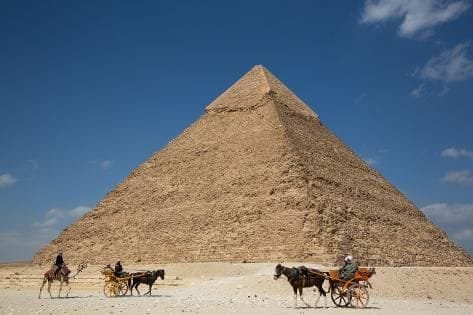
As you take your final steps across the wind-swept sands of Dahshur, it becomes clear that this site is much more than a collection of ancient ruins; it is a profound monument to the human spirit’s refusal to accept the limitations of the possible. Dahshur represents the "Golden Age" of learning, a time when humanity was literally figuring out how to build toward the clouds. The lessons learned here—through the structural "failure" of the Bent Pyramid and the ultimate "success" of the Red Pyramid—formed the blueprint for all the architectural wonders that followed, from the Giza Plateau to the soaring cathedrals of Europe. For the global traveler, Dahshur offers a rare and precious gift: the opportunity to witness the raw process of creation in its purest form. In an age of digital perfection and instant results, the stones of Dahshur remind us that greatness is earned through persistence, adaptation, and the courage to innovate in the face of uncertainty. The site remains a sanctuary of quietude in a noisy world, a place where one can still feel the presence of the ancient builders and the weight of four and a half millennia of history. As the desert wind erodes the limestone and the stars continue their silent trek above the peaks of Sneferu, Dahshur stands as a timeless beacon of inspiration. It teaches us that while our physical lives are brief, the things we build with passion and intellect can achieve a form of immortality. Whether you leave as a historian, a photographer, or a spiritual seeker, the image of these great pyramids against the vast Saharan sky will remain etched in your memory—a hauntingly beautiful reminder of the day you stood at the very birthplace of the perfect pyramid and witnessed the dawn of human architectural glory.
16. The Workers of Dahshur: The Human Foundation
Behind the staggering geometry of the Red and Bent Pyramids lies the story of the thousands of men who dedicated their lives to their construction. Contrary to the outdated myths of slave labor, archaeological evidence suggests that the workers at Dahshur were a highly organized force of skilled laborers and seasonal farmers who viewed their work as a sacred duty. Near the pyramids, remains of worker settlements, bakeries, and granaries have been discovered, providing a glimpse into the logistical nightmare of feeding and housing an army of builders in the desert. These men were masters of the lever, the ramp, and the copper chisel, working in grueling conditions to move blocks that weighed several tons with nothing but muscle and ingenuity. For the modern traveler, acknowledging the human effort is essential to grasping the true scale of Dahshur. Every tool mark on the limestone and every perfectly leveled course of stone is a signature of an ancient craftsman. These workers were the true pioneers of the Fourth Dynasty, developing the techniques that would eventually allow for the creation of the Great Pyramid. Standing in the shadow of these monuments, you are not just looking at the tomb of a Pharaoh, but at a collective masterpiece of an entire society. The sheer discipline required to coordinate such a massive project speaks to the advanced social structure of Sneferu’s Egypt. It is a humbling realization that these stones were placed by human hands—hands that shaped the very identity of a nation. Their sweat and skill are woven into the fabric of the desert, making Dahshur a monument to the endurance and brilliance of the common man in the service of an eternal vision.
17. The Symbolic Landscape: Dahshur as a Cosmic Map
To the ancient Egyptians, Dahshur was not just a graveyard; it was a carefully constructed landscape that mirrored the celestial order of the universe. The placement of the pyramids was not random; it was a deliberate attempt to align the earthly realm with the divine "Duat" or afterlife. The two great pyramids of Sneferu were likely intended to represent the dual nature of the Egyptian state—Upper and Lower Egypt—and the balance of Ma'at, the cosmic principle of truth and order. For the spiritual traveler, this adds a layer of metaphysical wonder to the site. The way the light interacts with the angles of the Bent Pyramid at different times of the year suggests that the architects were acutely aware of solar cycles, using the sun’s path to activate the pyramid’s role as a resurrection machine. The vast, empty spaces between the monuments are as important as the structures themselves, creating a sense of "sacred silence" that was meant to protect the King’s eternal sleep. Exploring Dahshur today, you can still feel the intentionality of this layout. The transition from the green valley to the stark desert serves as a ritual boundary, moving the visitor from the world of the living to the world of the ancestors. It is a site that invites you to look beyond the physical stone and contemplate the ancient philosophy that sought to harmonize human life with the rhythms of the stars. Dahshur is a stone-carved prayer for stability and eternity, a place where the geography of the earth meets the geography of the soul, offering a profound sense of connection to the ancient mind’s quest for a meaningful place in the cosmos.
18. The Final Reflection: Dahshur’s Unbroken Silence
As your journey through the Dahshur necropolis comes to an end, the most lasting impression is often the quality of the silence that blankets this ancient plateau. Unlike the bustling energy of modern Cairo or the crowded plazas of Giza, Dahshur retains an unbroken, majestic stillness that allows the weight of four and a half millennia to truly sink in. It is a place that demands a slower pace and a deeper breath. The pyramids of Sneferu have stood as silent witnesses to the rise and fall of countless empires, yet they remain as solid and imposing as the day they were completed. For the traveler, this silence is a rare gift—a chance to disconnect from the frantic pace of the 21st century and reconnect with the primal awe of human history. Dahshur is a reminder that while our technology changes, our fundamental desire to understand our place in the world and to leave a lasting legacy remains the same. Whether you are descending into the dark, cool chambers of the Red Pyramid or simply standing on the sand watching the wind whip around the "Bent" peak, you are part of a continuous chain of human wonder. As you leave the site and the pyramids fade into the distance, they remain etched in your mind not just as architectural feats, but as symbols of what is possible when ambition, science, and faith collide. Dahshur is the quiet heart of the Pyramid Age, a sanctuary of history that continues to inspire, challenge, and move everyone who ventures into its golden sands. It is the beginning of the story of the true pyramids, and it is a story that ends in the eternal peace of the desert, inviting you to return whenever you seek the timeless.