

- Excursions in Egypt
- Egypt Tour Packages
- Cairo Tours and Excursions
- Hurghada Tours and Excursions
- Soma Bay Tours and Excursions
- Makadi Bay Tours and Excursions
- Sahl Hasheesh Tours and Excursions
- El Gouna Tours and Excursions
- Marsa Alam Tours and Excursions
- Port Ghalib Tours and Excursions
- El Quseir Tours and Excursions
- Dendera and Abydos Day Tours
- Aswan Tours and Excursions
- Luxor Tours and Excursions
- Sharm El Sheikh Tours and Excursions
- Top Rated Egypt Tours in 2026
- Optional Excursions in Egypt
- Private Transfer
- Blogs About egypt
- Ancient Egypt
- Historical Sites in Egypt
- Cairo
- Alexandria
- Luxor
- Aswan
- The Red Sea
- Dendera Temple
- El Fayoum Oasis
- Bahariya Oasis
- Siwa Oasis
- Al Alamein
- Marsa Matruh
- Why Egypt Is One of the Safest Countries to Visit in the Middle East
- What You Need To know Before Your First Trip To Egypt
- Egypt Travel Costs in 2026 Full Budget Guide
- Top 10 Tourist Activities in Egypt
- Top 50 Activities You Can’t Miss in Egypt in 2026
- The Guide to Guided Tours in Egypt
- Egypt’s Ancient and Modern History
- The Nile River
- The Deserts of Egypt
- Ancient Egyptian gods
- famous Egyptian dishes
- UNESCO World Heritage sites
- About Us
- Egypt Hotels and Resorts
- Excursions in Egypt
- Egypt Tour Packages
- Cairo Tours and Excursions
- Hurghada Tours and Excursions
- Soma Bay Tours and Excursions
- Makadi Bay Tours and Excursions
- Sahl Hasheesh Tours and Excursions
- El Gouna Tours and Excursions
- Marsa Alam Tours and Excursions
- Port Ghalib Tours and Excursions
- El Quseir Tours and Excursions
- Dendera and Abydos Day Tours
- Aswan Tours and Excursions
- Luxor Tours and Excursions
- Sharm El Sheikh Tours and Excursions
- Top Rated Egypt Tours in 2026
- Optional Excursions in Egypt
- Private Transfer
- Blogs About egypt
- Ancient Egypt
- Historical Sites in Egypt
- Cairo
- Alexandria
- Luxor
- Aswan
- The Red Sea
- Dendera Temple
- El Fayoum Oasis
- Bahariya Oasis
- Siwa Oasis
- Al Alamein
- Marsa Matruh
- Why Egypt Is One of the Safest Countries to Visit in the Middle East
- What You Need To know Before Your First Trip To Egypt
- Egypt Travel Costs in 2026 Full Budget Guide
- Top 10 Tourist Activities in Egypt
- Top 50 Activities You Can’t Miss in Egypt in 2026
- The Guide to Guided Tours in Egypt
- Egypt’s Ancient and Modern History
- The Nile River
- The Deserts of Egypt
- Ancient Egyptian gods
- famous Egyptian dishes
- UNESCO World Heritage sites
- About Us
- Egypt Hotels and Resorts
Welcome to
Aswan High Dam: The Monument Where Modern Egypt Harnessed the Nile
If ancient Egypt was defined by its temples and eternal monuments, then modern Egypt found its identity in one colossal achievement—the Aswan High Dam. Rising in commanding strength across the legendary Nile River near the southern city of Aswan, this vast engineering masterpiece is far more than a dam; it is a symbol of national ambition, resilience, and the transformation of a civilization that has depended on the Nile for thousands of years. Where ancient builders once carved temples to honor the gods of nature, modern Egypt reshaped nature itself—taming the river that had long dictated the rhythm of life.
Constructed in the mid-20th century under the leadership of Gamal Abdel Nasser, the Aswan High Dam represents a turning point in Egyptian history—a moment when the country stepped boldly into the modern era. For centuries, the Nile’s annual floods brought both life and destruction, nourishing the land while threatening communities with unpredictable force. The dam was designed to end this cycle, to regulate the river’s flow, generate electricity, and secure Egypt’s agricultural future. In doing so, it became one of the most ambitious engineering projects ever undertaken in the developing world.
Yet, like the great temples of the past, the High Dam is not merely a functional structure—it is a monument of human will. Behind its massive walls stretches the vast expanse of Lake Nasser, one of the largest man-made lakes on Earth, a silent testament to the scale of this achievement. Together, the dam and the lake represent a new chapter in Egypt’s long relationship with the Nile—a chapter where control, innovation, and vision redefine the ancient bond between land, water, and civilization.

1. Aswan: The Gateway to Nubia and the Southern Frontier of Egypt
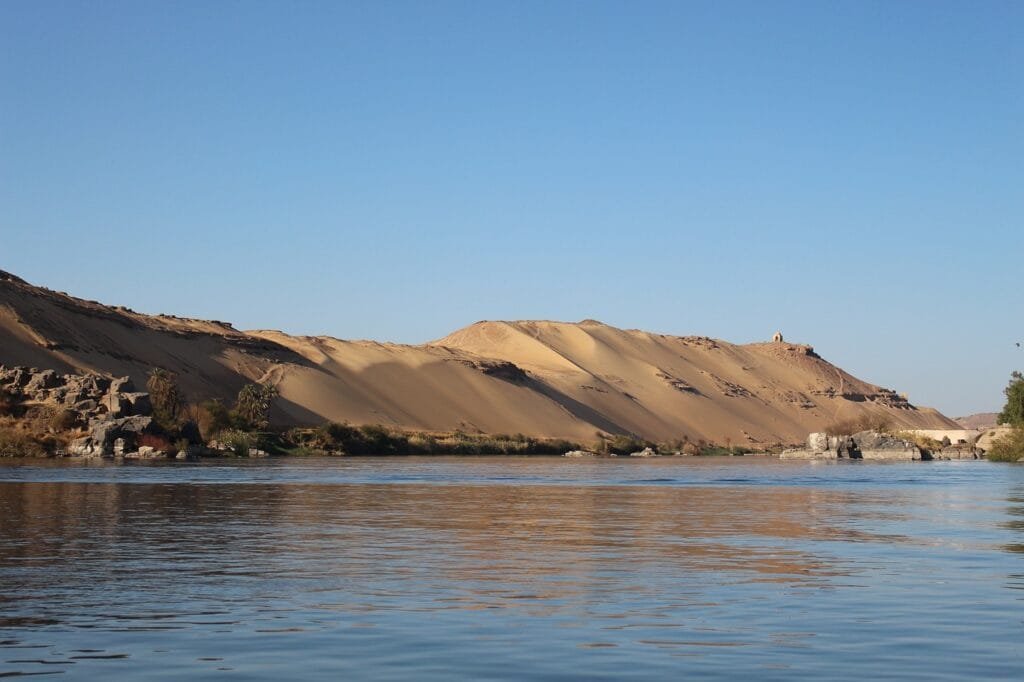
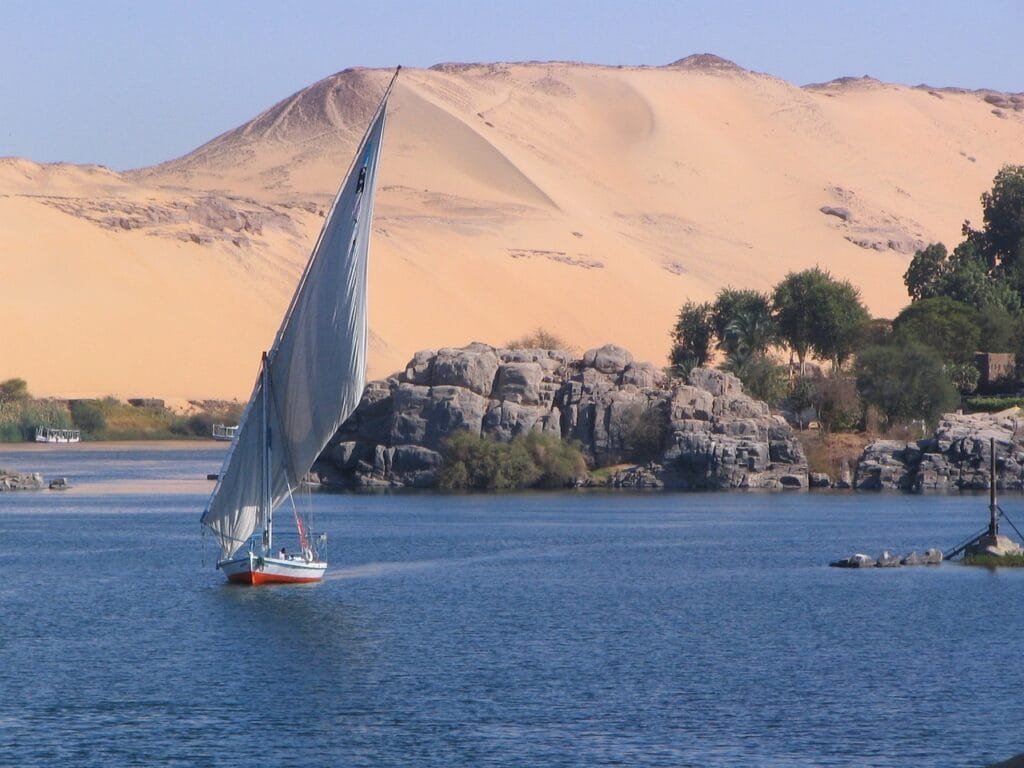
At the southern edge of Egypt lies the timeless city of Aswan, a place where ancient history and modern ambition converge along the banks of the Nile River. Known for centuries as Egypt’s gateway to Nubia, Aswan has always held strategic and cultural importance, serving as a meeting point between civilizations, trade routes, and traditions. Its landscape—marked by granite quarries, golden desert horizons, and scattered islands—has inspired some of the greatest achievements of ancient Egypt, from towering obelisks to sacred temples that still stand today as silent witnesses to a glorious past. In the modern era, Aswan took on a new identity, becoming the focal point of one of the most ambitious engineering projects in history—the construction of the Aswan High Dam. This transformation elevated the city from a historic frontier to a symbol of national progress and technological advancement. The serene beauty that once defined Aswan now coexists with the immense presence of the dam, creating a striking contrast between the calm rhythm of nature and the bold force of human innovation. Despite these changes, Aswan has preserved its cultural richness and tranquil charm. The rhythms of daily life along the Nile continue much as they have for generations, with traditional feluccas gliding across the water and Nubian villages adding vibrant color to the landscape. This unique blend of heritage and modernity makes Aswan not only the home of the High Dam but also a living testament to Egypt’s enduring ability to evolve while remaining deeply connected to its roots.
2. The Vision of a Nation: Building the Aswan High Dam
The story of the Aswan High Dam is, at its core, the story of a nation determined to shape its own destiny. Under the leadership of Gamal Abdel Nasser, Egypt embarked on a bold journey to control the unpredictable forces of the Nile and secure a stable future for its people. For thousands of years, the river’s annual floods dictated agricultural success or failure, bringing both life-giving silt and devastating destruction. The High Dam was conceived as a solution to this ancient challenge—a way to harness the power of the river rather than remain at its mercy. Construction began in 1960 and continued for a decade, involving tens of thousands of workers, engineers, and technicians. The scale of the project was unprecedented, requiring the movement of millions of tons of earth and rock to create a barrier capable of holding back one of the world’s longest rivers. International cooperation, particularly with the Soviet Union, played a crucial role in providing the expertise and resources needed to bring this vision to life. By 1970, the dam was completed, marking a historic milestone in Egypt’s journey toward modernization and self-sufficiency. The completion of the High Dam was more than an engineering success—it was a moment of national pride. It demonstrated Egypt’s ability to undertake and achieve projects of global significance, redefining its place in the modern world. Like the temples built by ancient pharaohs, the dam stands as a powerful statement of human determination, symbolizing a new era in which the forces of nature could be understood, managed, and transformed for the benefit of society.

3. The Engineering Marvel: Structure, Scale, and Power
The sheer scale of the Aswan High Dam places it among the greatest engineering achievements of the modern world. Stretching over 3.8 kilometers in length and rising to a height of more than 100 meters, the dam forms a massive barrier across the Nile River, controlling its flow with remarkable precision. Constructed primarily from rockfill and clay, its design allows it to withstand immense pressure while maintaining stability over decades of continuous operation, making it one of the most resilient large-scale infrastructures ever built. At the heart of the dam lies its hydroelectric power station, a critical component that transformed Egypt’s energy landscape. With massive turbines generating electricity from the controlled flow of water, the dam supplies a significant portion of the country’s power needs, supporting industries, cities, and millions of households. This reliable energy source marked a turning point in Egypt’s development, enabling rapid industrialization and improving the overall quality of life across the nation. Behind the dam stretches the vast expanse of Lake Nasser, one of the largest artificial lakes on Earth. This immense reservoir serves as a strategic water reserve, storing billions of cubic meters of water to safeguard Egypt against droughts and seasonal fluctuations. Together, the dam and the lake form a unified system that has fundamentally reshaped Egypt’s relationship with the Nile, transforming it from an unpredictable force into a controlled and sustainable lifeline for the entire country.

4. Lake Nasser: The Vast Reservoir of Modern Egypt
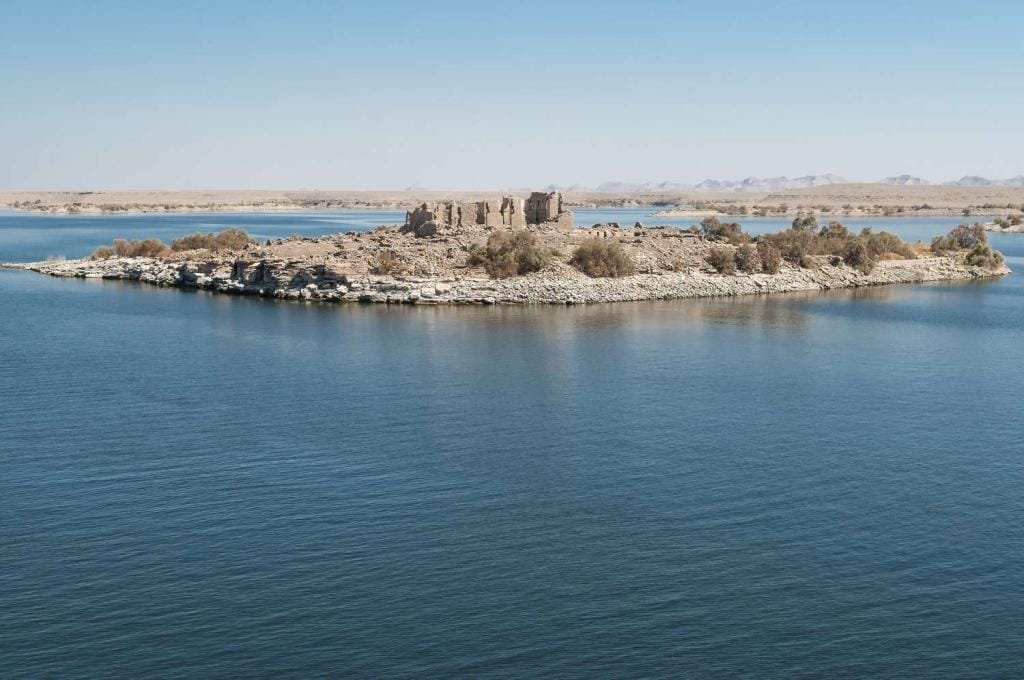
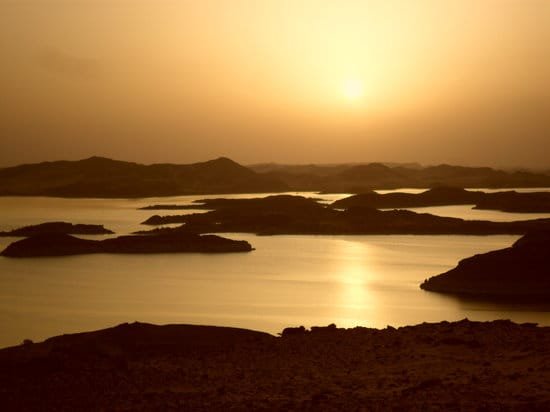
Stretching endlessly beyond the southern horizon, Lake Nasser stands as one of the most dramatic consequences of the construction of the Aswan High Dam. Formed by the controlled waters of the Nile River, this immense reservoir extends for more than 500 kilometers, reaching deep into Sudan, where it is known as Lake Nubia. Its vast scale transforms the surrounding desert into a striking landscape of water and sky, creating a new geographical reality in southern Egypt that did not exist before the mid-20th century. The creation of Lake Nasser brought both immense opportunity and profound challenges. On one hand, it provided Egypt with a strategic reserve of water, ensuring stability during droughts and allowing for year-round irrigation across the country. On the other hand, the rising waters submerged vast areas of land, including ancient settlements and archaeological treasures that had stood for millennia. This transformation represents one of the most significant environmental and cultural shifts in Egypt’s modern history. Today, Lake Nasser plays a crucial role in supporting Egypt’s economy and sustainability. It sustains fisheries, enhances water security, and acts as a protective buffer against climate fluctuations. At the same time, its tranquil surface and remote beauty offer a sense of timelessness, echoing the ancient landscapes that once defined the Nile Valley. In its scale and significance, Lake Nasser is not merely a byproduct of the dam—it is a defining element of its legacy.
5. Saving the Past: The Relocation of Abu Simbel and Nubian Heritage
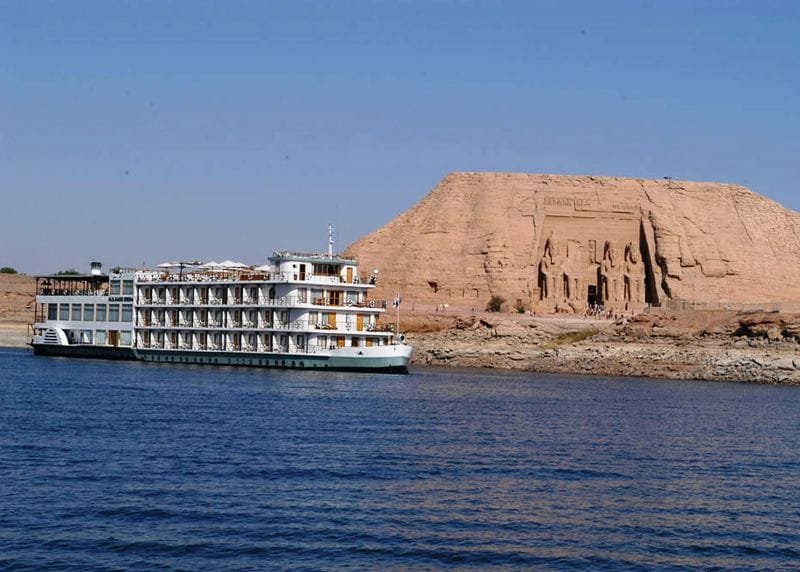
One of the most extraordinary chapters in the story of the Aswan High Dam is the global effort to preserve the ancient monuments threatened by the rising waters of Lake Nasser. Among these, the temples of Abu Simbel—built by the powerful pharaoh Ramesses II—stood as the most iconic and vulnerable. Facing complete submersion, an unprecedented international rescue mission was launched under the guidance of UNESCO, bringing together expertise and resources from around the world. The relocation of Abu Simbel was a feat of remarkable precision and innovation. The temples were carefully cut into massive blocks, each meticulously numbered and transported to a higher location, where they were reassembled to mirror their original form and alignment. This process preserved not only the physical structure of the temples but also their astronomical and symbolic significance, ensuring that their connection to the rising sun remained intact. While the rescue of these monuments is often celebrated as a triumph of preservation, it also highlights the human cost of such transformation. Thousands of Nubians were displaced from their ancestral lands as villages disappeared beneath the waters of the new lake. Their history, culture, and connection to the land form an essential part of this story, reminding us that progress often comes with deep and lasting consequences. Together, these efforts reflect a delicate balance between safeguarding heritage and embracing the future.

6. Controlling the Nile: From Flood to Stability
For thousands of years, the mighty Nile River dictated the fate of Egypt, its annual floods bringing both life and uncertainty. These seasonal inundations enriched the soil with fertile silt, yet their unpredictable nature often placed entire communities at risk. Some years brought generous floods that ensured prosperity, while others resulted in drought or destructive overflow, shaping a cycle that defined Egyptian civilization for millennia. The Nile was not just a river—it was the heartbeat of the nation, powerful and uncontrollable. The construction of the Aswan High Dam marked a historic turning point in this relationship. For the first time, Egypt gained the ability to regulate the flow of the river, transforming unpredictability into stability. Water could now be stored in the vast reservoir of Lake Nasser and released in controlled amounts throughout the year. This innovation allowed for continuous irrigation, enabling farmers to cultivate crops in multiple seasons and significantly increasing agricultural productivity across the country. However, this control came with new challenges. The fertile silt that once enriched the Nile Valley is now largely trapped behind the dam, reducing the natural renewal of the soil and increasing reliance on artificial fertilizers. Additionally, the altered flow of the river has affected ecosystems and coastal environments. Despite these complexities, the ability to manage the Nile remains one of Egypt’s most transformative achievements, redefining its relationship with the river and shaping the future of the nation.
7. The Power of Electricity: Lighting a Nation
One of the most transformative achievements of the Aswan High Dam lies in its ability to convert the immense force of the Nile River into a continuous and reliable source of electricity for Egypt. Before its construction, energy resources were limited and unevenly distributed, restricting industrial expansion and affecting daily life for millions. The High Dam changed this reality entirely, ushering in an era where electricity became accessible across cities, villages, and remote regions, fundamentally transforming the nation’s infrastructure. At the core of the dam, powerful turbines harness the kinetic energy of flowing water, converting it into electrical power that fuels factories, lights homes, and supports essential services. This steady supply of energy played a crucial role in Egypt’s industrial growth during the late 20th century, enabling the development of manufacturing sectors, transportation systems, and modern urban life. The dam did not simply generate electricity—it powered a national transformation that reshaped the country’s economic future. Beyond its practical benefits, this achievement symbolizes a deeper shift in human capability. Where the Nile once dictated the limits of civilization, it now contributes to its expansion, providing energy that drives innovation and progress. In this way, the High Dam stands as a testament to humanity’s ability to harness nature and redirect its power toward building a more stable and prosperous future.
8. Environmental Impact: Balancing Progress and Nature
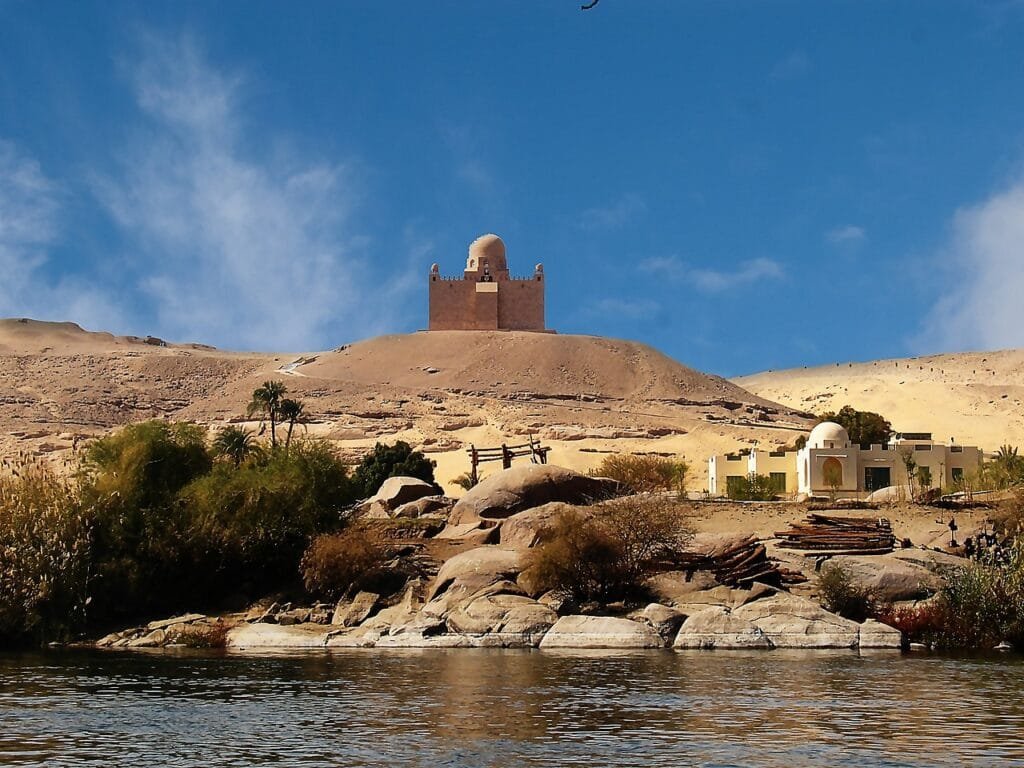
While the Aswan High Dam brought undeniable benefits, it also reshaped the delicate ecological balance of the Nile River in ways that continue to be studied today. For thousands of years, the Nile’s natural flooding cycle deposited nutrient-rich silt along its banks, renewing the fertility of the land without human intervention. With the construction of the dam, this ancient process was fundamentally altered, as much of the sediment is now trapped behind the structure within Lake Nasser. This shift has required Egyptian agriculture to adapt, with farmers increasingly depending on artificial fertilizers to maintain crop productivity. At the same time, the reduced flow of silt downstream has contributed to coastal erosion in the Nile Delta, gradually affecting one of the most important agricultural regions in Egypt. Changes in water flow, temperature, and sediment levels have also influenced aquatic ecosystems, impacting fish populations and altering habitats that have existed for centuries. Despite these challenges, the High Dam remains a powerful example of how large-scale development must be carefully balanced with environmental responsibility. It highlights the complexity of managing natural systems while striving for economic progress. In this ongoing balance between innovation and preservation, the dam stands as both an extraordinary achievement and a reminder of the long-term impact of human intervention in the natural world.
9. A Symbol of National Pride and Global Influence
Beyond its engineering and environmental significance, the Aswan High Dam has become a defining symbol of national pride for Egypt. Its construction marked a turning point in modern Egyptian history, demonstrating the nation’s ability to undertake ambitious projects that shape its future. For many, the dam represents independence, resilience, and the determination to transform challenges into opportunities. On the global stage, the High Dam stands as one of the most influential infrastructure projects of the 20th century. It has been widely studied as a model of water management, hydroelectric power generation, and large-scale engineering. Its success has inspired similar developments in other countries, highlighting Egypt’s role in pioneering solutions to complex environmental and economic challenges. Today, the dam continues to attract visitors, engineers, and historians who come to witness its scale and significance. Like the monumental temples of ancient Egypt, it reflects a civilization’s desire to leave a lasting legacy. In its strength and purpose, the Aswan High Dam bridges the ancient relationship between Egypt and the Nile with a modern vision of control, sustainability, and progress, ensuring its place as one of the most iconic achievements in the country’s history.

10. Tourism at the High Dam: A Modern Landmark in Upper Egypt
Beyond its functional and historical significance, the Aswan High Dam has become one of the most important modern tourist attractions in Aswan. Visitors from around the world come not only to witness its immense scale but to experience a different chapter of Egyptian history—one that tells the story of modern ambition rather than ancient mythology. Standing atop the dam, overlooking the vast waters of Lake Nasser on one side and the flowing Nile River on the other, offers a powerful visual contrast that captures the essence of human control over nature. The site provides panoramic views that allow visitors to fully appreciate the magnitude of the structure and its surroundings. Informational displays and guided tours help explain the engineering, history, and impact of the dam, making it not just a scenic destination but an educational experience. Nearby monuments, including Soviet-Egyptian friendship memorials, add another layer of historical context, reflecting the international cooperation that made the project possible. For many travelers, a visit to the High Dam is an essential part of exploring Upper Egypt, often combined with trips to nearby sites such as Philae Temple and Unfinished Obelisk. Together, these locations create a unique narrative that connects ancient achievements with modern innovation, offering a comprehensive understanding of Egypt’s evolving relationship with the Nile.
11. The Human Story: Communities and Cultural Transformation
Behind the monumental presence of the Aswan High Dam lies a deeply human narrative—one that extends far beyond engineering and into the lives of the people whose world was transformed by its construction. The creation of Lake Nasser required the relocation of tens of thousands of Nubians, whose ancestral villages along the Nile River were submerged beneath its rising waters. These communities, rooted in traditions that stretched back centuries, faced the challenge of leaving behind not only their homes but a way of life intimately connected to the river. Resettled in newly planned areas, many Nubians began the complex process of rebuilding their communities while striving to preserve their unique cultural identity. Despite the disruption, Nubian heritage has endured with remarkable strength—expressed through vibrant architecture, colorful homes, music, language, and deep communal bonds. Their story reflects resilience in the face of transformation, illustrating how culture can survive even when geography is fundamentally altered. This human dimension adds a profound layer to the legacy of the High Dam. It reminds us that great achievements are never purely technical—they are deeply intertwined with the lives of people. The dam stands not only as a symbol of national progress but also as a testament to the adaptability and enduring spirit of the communities who continue to carry their heritage forward.
12. Aswan by Night: A Modern Monument Under the Stars
As night falls over Aswan, the Aswan High Dam reveals a completely different character—one defined by calm, silence, and quiet majesty. The immense structure, softly illuminated against the darkness, stands like a modern monument carved not from stone, but from ambition and vision. On one side, the vast waters of Lake Nasser stretch endlessly into the night, while on the other, the controlled flow of the Nile River continues its timeless journey northward, linking past and present in a single, continuous rhythm. In this tranquil atmosphere, the energy of the day fades, replaced by a stillness that allows the true scale of the dam to be fully appreciated. The absence of crowds and noise transforms the site into a space of reflection, where the relationship between humanity and nature feels more intimate and profound. The cool desert air, the faint shimmer of water, and the quiet glow of lights create an almost meditative experience, inviting visitors to pause and contemplate the magnitude of what stands before them. Under a sky filled with stars, the High Dam becomes more than an engineering achievement—it becomes a symbol of continuity. It exists within the same landscape that witnessed the rise of ancient temples and the flow of civilizations along the Nile for thousands of years. In the stillness of night, the dam stands as a bridge between eras, reminding us that while the methods of construction may change, the human desire to create, to endure, and to leave a lasting mark upon the world remains eternal.
13. The Aswan Low Dam: The First Step Toward Controlling the Nile
Long before the rise of the Aswan High Dam, the foundations of modern water management in Egypt were laid with the construction of the Aswan Low Dam. Completed in 1902 during the period of British administration, this earlier structure marked the first serious attempt to regulate the powerful and unpredictable flow of the Nile River. Though modest in comparison to the High Dam, it represented a revolutionary step in Egypt’s long struggle to harness the life-giving waters of the Nile. Engineered to store floodwaters during the high season and release them gradually during times of scarcity, the Low Dam brought a new level of stability to agriculture and daily life along the Nile Valley. As the demands of a growing population increased, the dam was raised twice, in 1912 and 1933, expanding its capacity and extending its usefulness. Yet, despite these enhancements, it became increasingly clear that the scale of Egypt’s needs required a far more ambitious solution—one that would eventually take form in the High Dam. Today, the Aswan Low Dam stands as a silent witness to the beginning of a transformative era. Positioned just downstream from its massive successor, it serves as both a functional structure and a historical milestone, representing the first step in Egypt’s long journey toward controlling the Nile. In its enduring presence, we see the origins of a vision that would grow to redefine an entire nation, linking early innovation with the monumental achievements that followed.
14. Engineering Legacy: A Blueprint for Modern Infrastructure
The Aswan High Dam stands as a cornerstone in the history of modern engineering, representing a moment when Egypt transformed ambition into reality on an unprecedented scale. Built across the powerful Nile River, the dam reshaped not only the landscape but the very concept of how nations could interact with natural forces. It proved that with vision, planning, and determination, even the most formidable challenges could be overcome and redirected toward progress. From a technical standpoint, the High Dam became a global reference for large-scale infrastructure. Engineers and experts from around the world studied its design to understand how to regulate vast water systems, generate hydroelectric power efficiently, and maintain long-term structural stability. Its success inspired similar projects in different regions, where controlling rivers became essential for agriculture, energy production, and economic growth. The dam thus evolved into more than a national project—it became a blueprint for development on a global level. Yet the legacy of the High Dam extends far beyond engineering. It represents a shift in human thinking—a move from adapting to nature toward actively managing it. Like the great monuments of ancient Thebes, it reflects a civilization’s ambition to leave a lasting mark on history. In its scale, purpose, and enduring impact, the dam stands as a timeless symbol of progress, innovation, and the limitless potential of human achievement.

15. The Nile Reimagined: A New Chapter in an Ancient Story
For thousands of years, the Nile River was the uncontested master of Egypt, dictating the rhythms of life, agriculture, and survival. With the construction of the Aswan High Dam, that ancient relationship was fundamentally redefined. The river, once a force to be respected and feared, became a resource to be managed, controlled, and optimized for the needs of a modern nation. This transformation marked the beginning of a new chapter in Egypt’s long and complex history with the Nile. The unpredictable cycles of flood and drought gave way to stability and planning, allowing the country to expand its agricultural lands, support a growing population, and build a more resilient economy. The Nile, while still central to Egypt’s identity, now flows within a framework shaped by human design, reflecting a shift from coexistence with nature to active management of it. Yet, despite this transformation, the essence of the Nile remains unchanged. It continues to flow northward, as it has for millennia, connecting the past with the present. The High Dam does not erase the river’s history—it adds to it, becoming part of a continuous story that stretches from the temples of ancient Thebes to the modern landscapes of Aswan. In this evolving narrative, the Nile is not just a river, but a symbol of continuity, adaptation, and the enduring relationship between humanity and the natural world.
16. The Visitor Experience: Standing at the Edge of Power
To stand atop the Aswan High Dam is to experience one of the most striking encounters between nature and human ambition. From this commanding position, visitors witness a breathtaking contrast—on one side, the vast, tranquil waters of Lake Nasser stretch endlessly into the horizon, while on the other, the controlled current of the Nile River flows steadily northward through Egypt. This powerful visual duality captures the essence of the dam’s purpose: transforming an ancient, unpredictable force into a stable and life-sustaining system. Walking along the crest of the dam, one begins to comprehend its immense scale and precision. The structure, built from millions of tons of rock and earth, stands as a testament to meticulous planning and engineering mastery. Informational displays and guided experiences provide deeper insight into its construction and function, allowing visitors to move beyond admiration and truly understand the complexity behind this modern wonder. It is not merely a viewpoint—it is a place where history, science, and human determination converge. For many, the moment becomes deeply reflective. The High Dam evokes the same sense of awe as Egypt’s ancient monuments, yet it speaks a modern language—one of progress, innovation, and national vision. It stands not as a relic of the past, but as a living symbol of a nation’s determination to shape its future, offering every visitor a powerful and unforgettable experience.
17. The High Dam in Global Memory: Politics, Power, and Identity
The legacy of the Aswan High Dam extends far beyond its physical structure, reaching deep into the realms of politics, identity, and global influence. Its construction under the leadership of Gamal Abdel Nasser marked a pivotal moment in the modern history of Egypt. At a time of shifting global alliances, the dam became a bold declaration of independence and national sovereignty, symbolizing Egypt’s determination to control its own resources and shape its own destiny. The project also carried immense international significance. Built with support from the Soviet Union, it reflected the geopolitical tensions of the Cold War, positioning Egypt at the crossroads of global power dynamics. The High Dam became more than an engineering project—it was a strategic statement, demonstrating how infrastructure could serve as a tool of diplomacy, influence, and national pride. It showed the world that Egypt was capable of executing projects of extraordinary scale and importance, reinforcing its position on the international stage. Today, the High Dam remains deeply embedded in global memory as more than just an engineering marvel. It represents a moment when a nation asserted its identity through action, reshaping both its physical landscape and its place in the world. In its enduring presence, the dam continues to tell a story of power, ambition, and the determination of a people to define their own future.
18. The Eternal Legacy: A Modern Monument for the Ages
As we reflect on the journey of the Aswan High Dam, it becomes clear that this structure is far more than a feat of engineering—it is a modern monument that carries the spirit of an ancient civilization into the present. Just as the temples of Thebes once symbolized divine power and eternal order, the High Dam represents humanity’s enduring desire to shape the world and secure its future. It stands at the intersection of history and progress, where the legacy of the past meets the possibilities of the future. The dam has transformed Egypt’s relationship with the Nile River, turning an unpredictable force into a controlled lifeline that sustains millions. It has powered cities, expanded agriculture, and protected the nation from the uncertainties of nature. Yet beyond these practical achievements, it holds a deeper meaning—it is a testament to what can be achieved when vision, determination, and innovation come together in pursuit of a common goal. In its scale, significance, and lasting impact, the High Dam stands as one of the defining landmarks of modern Egypt. It is a symbol of resilience, ambition, and continuity, linking the ancient rhythms of the Nile with the demands of a changing world. As generations continue to visit and reflect upon its величие, the dam remains a powerful reminder that the story of Egypt is not confined to the past—it is an ongoing narrative of creativity, strength, and the pursuit of greatness.
