- Excursions in Egypt
- Egypt Tour Packages
- Cairo Tours and Excursions
- Hurghada Tours and Excursions
- Soma Bay Tours and Excursions
- Makadi Bay Tours and Excursions
- Sahl Hasheesh Tours and Excursions
- El Gouna Tours and Excursions
- Marsa Alam Tours and Excursions
- Port Ghalib Tours and Excursions
- El Quseir Tours and Excursions
- Dendera and Abydos Day Tours
- Aswan Tours and Excursions
- Luxor Tours and Excursions
- Sharm El Sheikh Tours and Excursions
- Top Rated Egypt Tours in 2026
- Optional Excursions in Egypt
- Private Transfer
- Blogs About egypt
- Ancient Egypt
- Historical Sites in Egypt
- Cairo
- Alexandria
- Luxor
- Aswan
- The Red Sea
- Dendera Temple
- El Fayoum Oasis
- Bahariya Oasis
- Siwa Oasis
- Al Alamein
- Marsa Matruh
- Why Egypt Is One of the Safest Countries to Visit in the Middle East
- What You Need To know Before Your First Trip To Egypt
- Egypt Travel Costs in 2026 Full Budget Guide
- Top 10 Tourist Activities in Egypt
- Top 50 Activities You Can’t Miss in Egypt in 2026
- The Guide to Guided Tours in Egypt
- Egypt’s Ancient and Modern History
- The Nile River
- The Deserts of Egypt
- Ancient Egyptian gods
- famous Egyptian dishes
- UNESCO World Heritage sites
- About Us
- Egypt Hotels and Resorts
- Excursions in Egypt
- Egypt Tour Packages
- Cairo Tours and Excursions
- Hurghada Tours and Excursions
- Soma Bay Tours and Excursions
- Makadi Bay Tours and Excursions
- Sahl Hasheesh Tours and Excursions
- El Gouna Tours and Excursions
- Marsa Alam Tours and Excursions
- Port Ghalib Tours and Excursions
- El Quseir Tours and Excursions
- Dendera and Abydos Day Tours
- Aswan Tours and Excursions
- Luxor Tours and Excursions
- Sharm El Sheikh Tours and Excursions
- Top Rated Egypt Tours in 2026
- Optional Excursions in Egypt
- Private Transfer
- Blogs About egypt
- Ancient Egypt
- Historical Sites in Egypt
- Cairo
- Alexandria
- Luxor
- Aswan
- The Red Sea
- Dendera Temple
- El Fayoum Oasis
- Bahariya Oasis
- Siwa Oasis
- Al Alamein
- Marsa Matruh
- Why Egypt Is One of the Safest Countries to Visit in the Middle East
- What You Need To know Before Your First Trip To Egypt
- Egypt Travel Costs in 2026 Full Budget Guide
- Top 10 Tourist Activities in Egypt
- Top 50 Activities You Can’t Miss in Egypt in 2026
- The Guide to Guided Tours in Egypt
- Egypt’s Ancient and Modern History
- The Nile River
- The Deserts of Egypt
- Ancient Egyptian gods
- famous Egyptian dishes
- UNESCO World Heritage sites
- About Us
- Egypt Hotels and Resorts
Welcome to
Coptic Cairo: A Journey Through the Holy Path of History
Welcome to a place where time stands still and the echoes of ancient hymns bounce off limestone walls that have guarded secrets for millennia. Coptic Cairo, or Masr al-Qadima, is not merely a district; it is a living sanctuary of faith, a testament to Egypt’s Christian heritage, and a physical chronicle of the Holy Family’s journey. Stepping into this enclave is like walking through a portal into the Roman, Byzantine, and early Islamic eras simultaneously. For the modern traveler, it offers a serene escape from the bustling Cairo metropolis, replacing car horns with the scent of incense and the sight of intricate wood carvings. Whether you are a history enthusiast, a spiritual seeker, or a lover of unique architecture, this sacred ground promises an experience that transcends the typical tourist trail. Let’s embark on an exhaustive exploration of the narrow alleys, soaring steeples, and underground crypts that make this UNESCO World Heritage site the beating heart of Egypt’s Coptic soul. This area represents a unique religious harmony, where the whispers of the past meet the devotion of the present. As you wander through its corridors, you will discover that every stone has a story to tell about resilience and peace. From the majestic heights of the Hanging Church to the humble depths of the sacred crypts, Coptic Cairo stands as a bridge between the Pharaonic roots of the land and its Christian flourishing. It is a destination that captures the imagination, offering a profound sense of tranquility and a deep connection to the roots of human civilization. Prepare to lose yourself in the beauty of its icons, the majesty of its history, and the spiritual aura that defines this timeless Egyptian treasure, making it a must-visit landmark for anyone exploring the wonders of the Nile.
1. The Fortress of Babylon: Rome’s Lasting Shadow
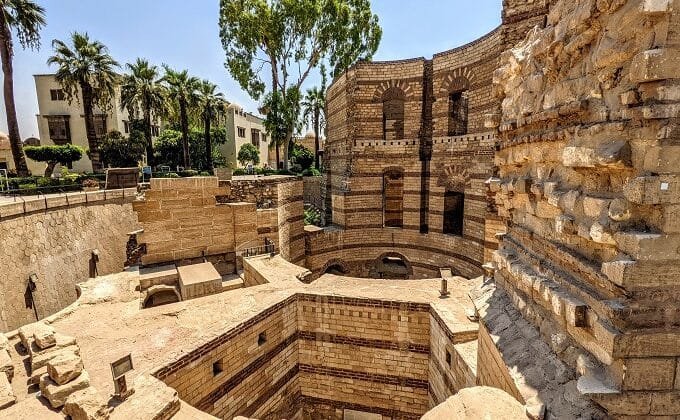
The historical foundation of Coptic Cairo begins with the towering walls of the Babylon Fortress, an architectural marvel that served as the defensive anchor of the Nile Delta for centuries. Built primarily by the Romans, these massive bastions and circular towers provided the literal and figurative base upon which the most famous churches in Egypt were eventually perched. Walking past these weathered limestone blocks, you can almost hear the rhythmic marching of Roman legions, reminding us that this Christian sanctuary rose directly from the ruins of a pagan empire. The fortress was strategically positioned at the boundary between Lower and Middle Egypt, where the Nile’s waters once lapped against its sturdy gates. Today, the remnants of the fortress stand as a silent witness to the transition of power from the Roman governors to the early Coptic community. For the visitor, the fortress represents the beginning of a layered history; it is the physical skeleton that holds the flesh and spirit of the district together. Its preservation is a miracle in itself, surviving waves of conquest and urban expansion. As you stand in the shadow of these walls, you realize that the safety they once provided to soldiers later became the sanctuary for a faith that was seeking a home. This blend of military might and spiritual peace creates a unique atmosphere that is found nowhere else in the world. It is the gateway to your journey, a threshold that separates the chaotic energy of modern Cairo from the hushed, hallowed halls of the ancient world. Exploring the fortress allows you to appreciate the sheer resilience of Egyptian construction and the strategic brilliance of the Roman engineers who first recognized the importance of this sacred ground.
2. The Hanging Church: Suspended in Divine Grace
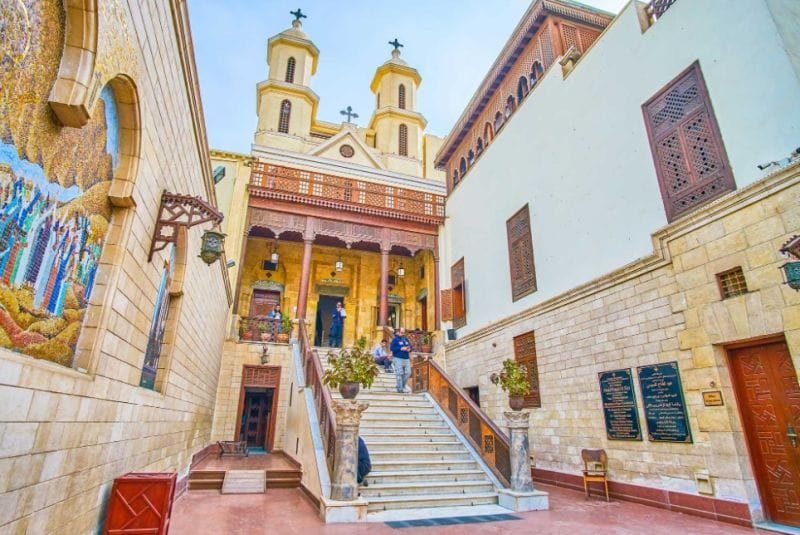
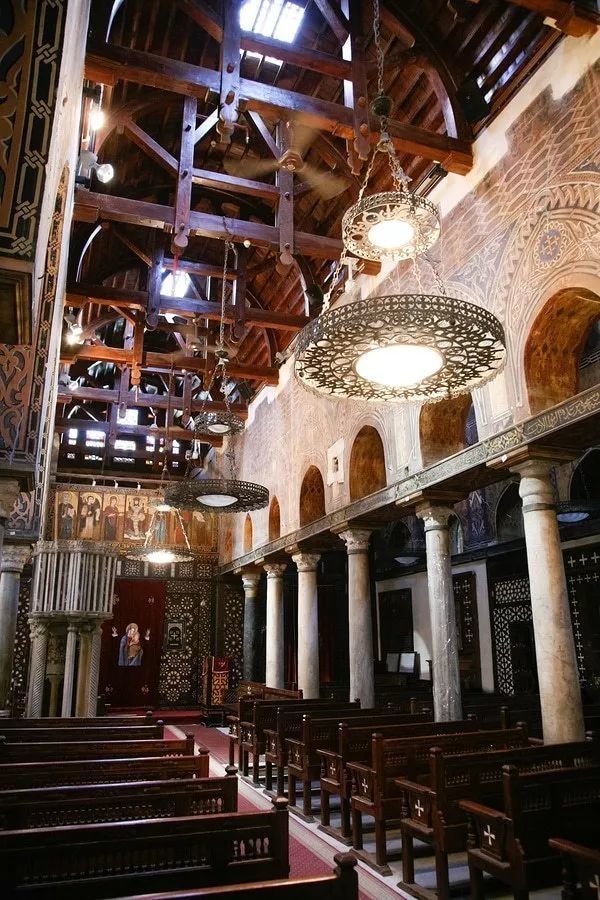
Known locally as Al-Muallaqa, the Hanging Church is arguably Egypt’s most famous Christian monument and a masterpiece of architectural ingenuity. It earns its evocative name by being built atop the gatehouse of the ancient Roman fortress of Babylon, giving it the appearance of hanging over the street level. This elevation was not just a practical choice but a symbolic one, lifting the place of worship toward the heavens. As you climb the twenty-nine steps to the entrance, the hustle of the city fades, replaced by a sense of awe. Inside, the church is a treasure trove of artistic brilliance; the wooden ceiling is expertly shaped like an inverted Noah’s Ark, serving as a reminder of salvation and divine protection. The interior is adorned with thirteen magnificent marble pillars, representing Jesus and his twelve disciples, one of which is dark grey to symbolize the betrayal of Judas. The intricate wood carvings, inlaid with ivory and ebony, showcase a level of craftsmanship that has survived for over a millennium. This church has served as the seat of the Coptic Pope for centuries, making it a central pillar of the faith’s administrative and spiritual life. Every corner of the sanctuary is filled with the soft glow of candles and the scent of ancient incense, creating a portal to the early days of Christianity. The icons lining the walls are windows into the souls of the saints, painted in a style that is uniquely Egyptian yet universally moving. Visiting the Hanging Church is not just a sightseeing stop; it is an immersion into a living tradition that has remained unbroken despite the passage of time. It stands as a beacon of beauty and a testament to the enduring power of faith.
3. The Holy Family’s Refuge: Abu Serga’s Sacred Crypt
The Church of Saints Sergius and Bacchus, commonly known as Abu Serga, holds a spiritual weight that is arguably unparalleled in the Christian world. It is traditionally and fervently believed to be built over the exact cave where the Holy Family—Joseph, Mary, and the infant Jesus—sought refuge during their flight into Egypt to escape the wrath of King Herod. This historical and biblical connection transforms the church from a mere building into a site of profound pilgrimage. Standing in the cool, subterranean air of the crypt, which is located ten meters below the modern ground level, one feels a physical and emotional connection to a narrative that has shaped human history for two thousand years. The crypt often floods when the Nile rises, adding a sense of elemental mystery to the site. Above the crypt, the church itself is a stunning example of the early basilican style, with three naves and a wooden roof that mirrors the craftsmanship of the era. The columns are decorated with faded paintings of the apostles, whispering stories of a time when the faith was young and vibrant. For many visitors, this is the emotional climax of their tour through Coptic Cairo. There is a palpable stillness here, a sacred silence that invites reflection on the themes of displacement, sanctuary, and divine providence. The church is dedicated to two soldier-saints who were martyred in the fourth century, further emphasizing the theme of sacrifice that runs through the history of the district. Whether you are a believer or a historian, the atmosphere of Abu Serga is deeply moving, offering a rare opportunity to stand on the very ground where a world-changing journey once paused for rest and safety.
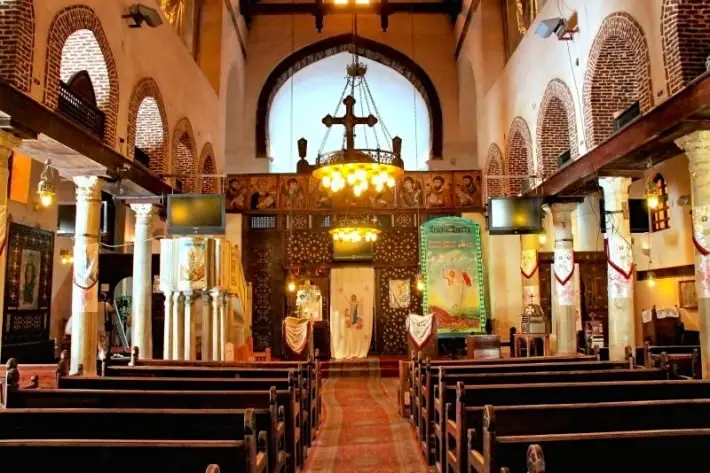
4. Saint Barbara: A Beacon of Martyrdom and Art
Dedicated to the young and courageous martyr Barbara of Nicomedia, the Church of Saint Barbara stands as a stunning example of classic Coptic basilican architecture. This sacred structure, tucked quietly within the labyrinthine streets of the quarter, offers a hushed atmosphere of reverence that immediately envelops every visitor who crosses its threshold. The church is famous for its soaring wooden roof and majestic marble columns, which create a sense of verticality and grace. Legend tells of Barbara’s unwavering faith in the face of immense family pressure and Roman persecution, a story that continues to inspire the local community today. Beyond its spiritual significance, the church is a gallery of historical treasures; it houses a collection of some of the most intricate icons and woodworks in the region. The sanctuary’s layout, with its three distinct aisles separated by rows of columns, allows for a flow of light that illuminates the ancient stone floors. For the traveler, this church provides a moment of profound quietude, far removed from the sensory overload of the capital. The intricate screens, or iconostases, are masterpieces of ivory-inlaid ebony, showcasing the geometric precision that Coptic artisans perfected over centuries. As you walk through the aisles, you are reminded that Saint Barbara’s legacy is not just one of suffering, but of the enduring beauty that arises from conviction. This site serves as a vital link in the chain of Coptic history, preserving the memory of the early martyrs while offering a sanctuary for modern prayer. It is a place where art and devotion are inextricably linked, inviting you to slow down and appreciate the delicate details of a faith that has survived against all odds.
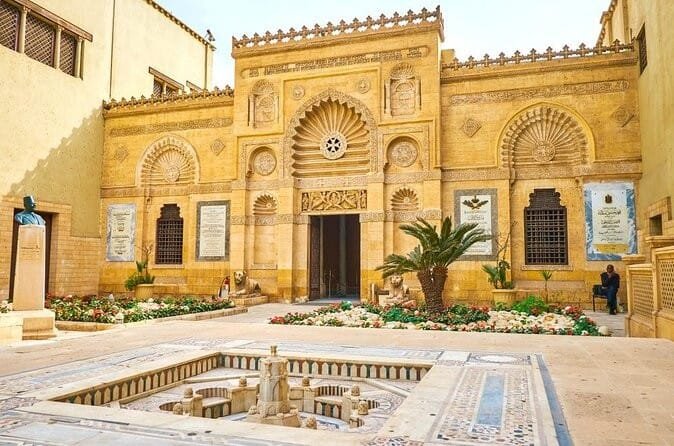
5. The Coptic Museum: A Treasury of Rare Artifacts
No exploration of this district is truly complete without spending significant time within the Coptic Museum, an institution that houses the world's largest and most important collection of Coptic Christian art. Established in 1908, the museum serves as a bridge between the Pharaonic era and the Islamic age, showcasing a unique "Egyptian-Christian" aesthetic that is both haunting and historically vital. The building itself is an architectural gem, featuring exquisite mashrabiya windows and carved ceilings that reflect the very art it protects. Inside, the galleries are filled with thousands of artifacts, ranging from the world-famous Nag Hammadi library’s Gnostic gospels to incredibly preserved textiles that look as vibrant today as they did over a thousand years ago. You will find massive stone friezes depicting mythological and biblical scenes, intricate metalwork used in ancient liturgies, and delicate pottery that reveals the daily lives of early Egyptian Christians. The museum highlights how Coptic art evolved by blending Greek, Roman, and Pharaonic influences into a distinct style characterized by symbolic depth and emotional honesty. One of the most moving sections is the hall of funerary stelae, where the transition from the Ankh to the Cross is visible in the stone carvings. For the modern visitor, the Coptic Museum provides the necessary context to understand the sites surrounding it. It is not merely a storehouse of relics; it is a narrative of cultural survival and creative brilliance. By walking through these halls, you gain a deeper appreciation for the Coptic contribution to the global identity of Egypt, proving that the nation’s history is a rich, continuous tapestry of many different threads.
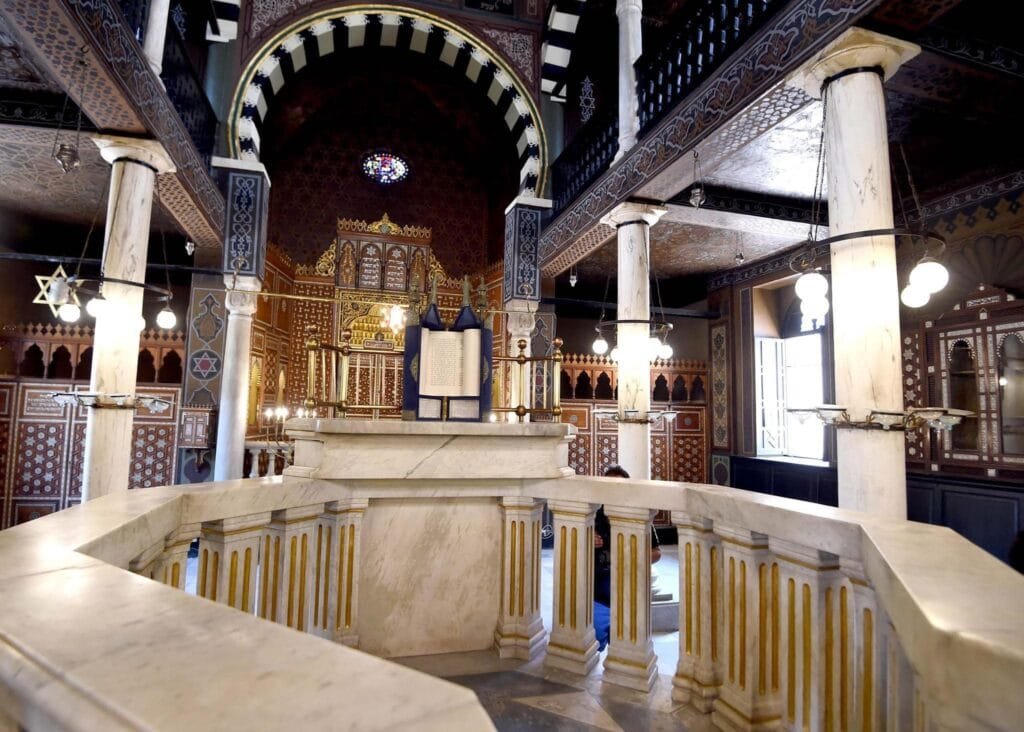
6. The Ben Ezra Synagogue: A Multi-Faith Crossroads
In a beautiful and powerful display of Egypt's historical religious tapestry, the Ben Ezra Synagogue sits nestled peacefully within the heart of the Coptic quarter. This site is a profound reminder of a time when Cairo was a true melting pot of faiths, where different communities lived and worshipped in close proximity. Local legends suggest that this very spot is where the infant Moses was found in the bulrushes, adding a layer of biblical mystery to the location. Architecturally, the synagogue is a marvel, having been rebuilt and renovated several times over the centuries. Its current form reflects a stunning mix of decorative styles, featuring intricate geometric patterns that mirror the artistic traditions of both its Christian and Muslim neighbors. However, the synagogue’s greatest contribution to world history was the discovery of its Geniza—a hidden room or storeroom where worn-out religious documents were traditionally kept. When this "Geniza of Old Cairo" was uncovered, it revealed over 300,000 document fragments that provided historians with the most detailed and intimate record of medieval Mediterranean life ever found. These papers detailed everything from wedding contracts and business deals to personal letters, painting a vivid picture of a diverse and interconnected society. For the visitor, walking into the Ben Ezra Synagogue is an act of acknowledging Egypt’s pluralistic past. It stands as a silent sentinel of tolerance and shared heritage, located just steps away from some of the world’s oldest churches. It reminds us that the history of Coptic Cairo is not an isolated one, but part of a larger, grander story of humanity’s search for the divine and the community's ability to coexist through the ages.
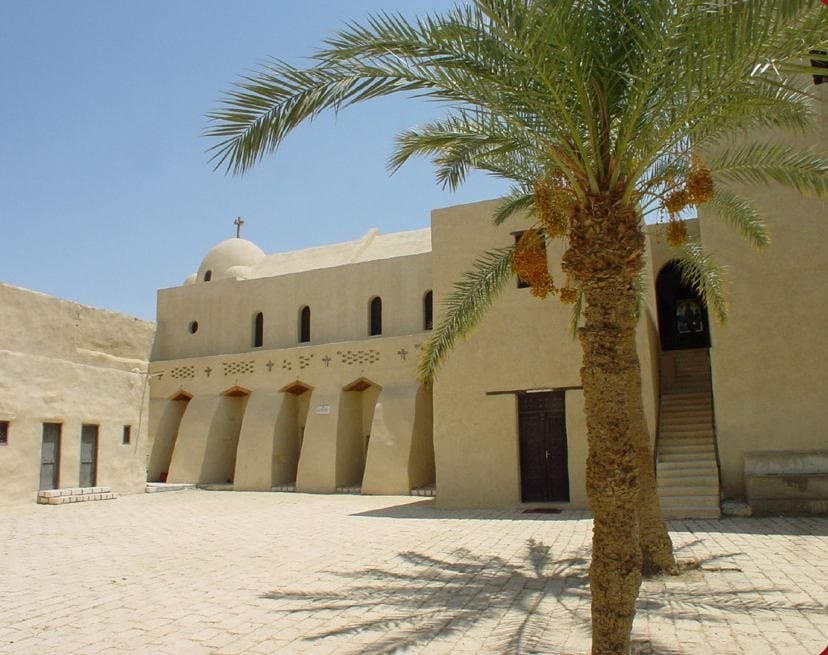
7. Monastery of St. George: The Greek Orthodox Sentinel
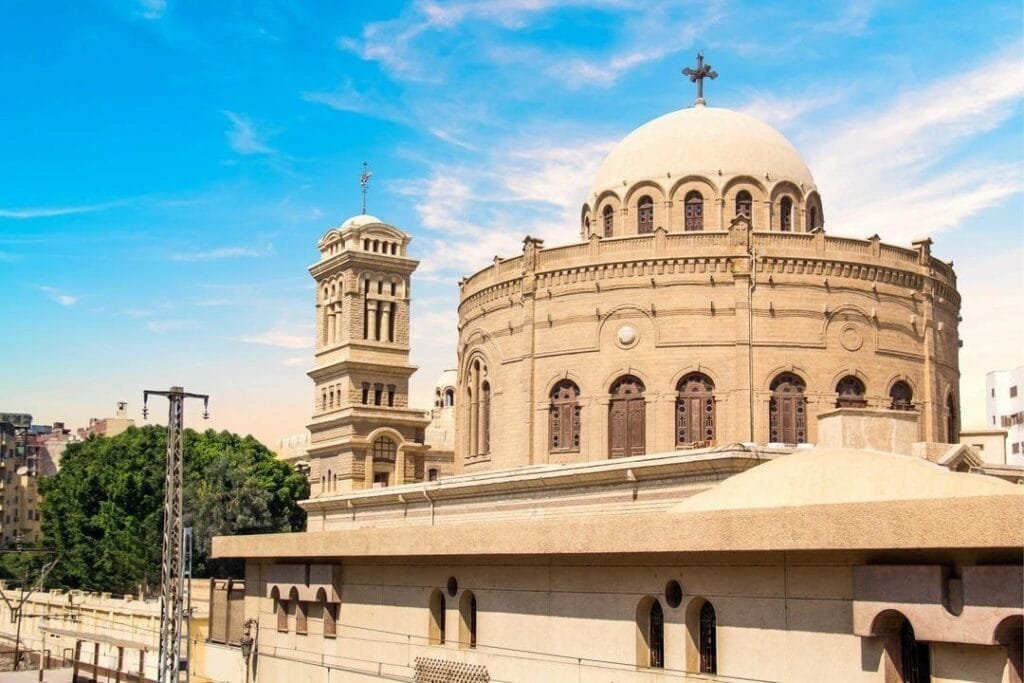
The Monastery and Church of St. George is a striking architectural anomaly in the heart of Coptic Cairo, serving as the only round church in all of Egypt. Built directly atop the foundations of a massive Roman tower belonging to the Babylon Fortress, its circular design is a nod to the classic rotunda style of the Byzantine era. As you approach the grand staircase leading to its entrance, the massive dome dominates the skyline, signaling its importance as the seat of the Greek Orthodox Patriarchate of Alexandria. Inside, the atmosphere is heavy with the scent of incense and the weight of history. The walls are adorned with vivid frescoes depicting the life and martyrdom of St. George, the dragon-slayer, who remains one of the most beloved figures in Eastern Christianity. One of the most moving and unique features of this site is the "Chain of St. George." Located in a small room near the entrance, visitors from all over the world still come to wrap this heavy iron chain around their bodies. This act is steeped in centuries of folk piety, with many seeking the saint’s miraculous intercession for healing or protection. The church's interior is a masterpiece of marble and gold, reflecting light in a way that feels both ethereal and grounded. For the modern traveler, the Monastery of St. George offers a different cultural perspective within the district, highlighting the diversity of Christian traditions that have called Egypt home for millennia. It stands as a sentinel of faith, where the echoes of Greek liturgies blend seamlessly with the ancient stones of the Roman Empire, creating a spiritual experience that is as visually stunning as it is emotionally profound.
8. Architectural Wonders: The Khayamiya and Woodwork
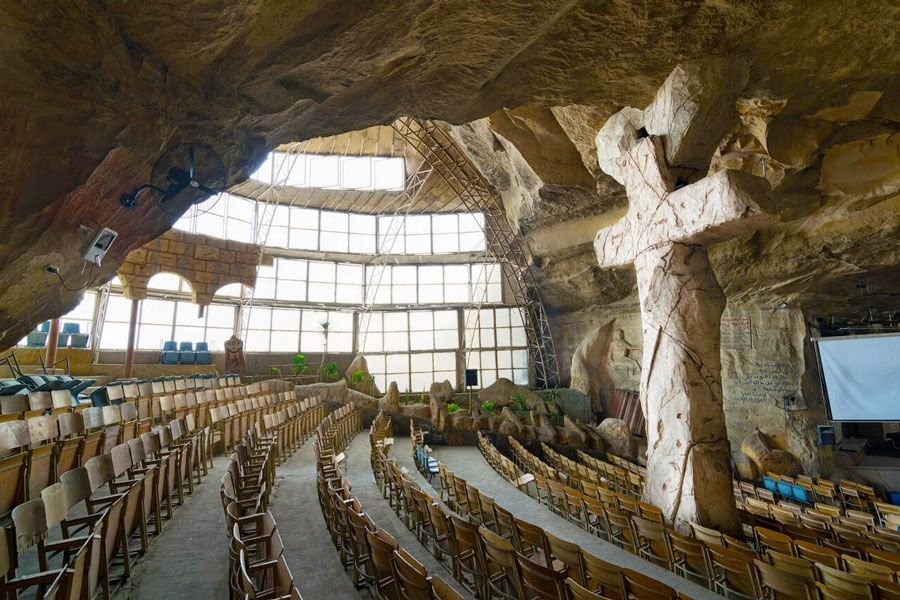
As you wander through the ancient structures of Coptic Cairo, it is essential to look closely at the intricate details that adorn the screens, pulpits, and ceilings, for they reveal the genius of Coptic woodcraft. The art of Mashrabiya (lattice-work) and ivory-inlaid ebony screens are masterpieces of geometric precision that define the district’s aesthetic. These handcrafted designs were not merely decorative; they served practical purposes of ventilation and privacy while creating a mesmerizing play of light and shadow within the sacred spaces. This specific style of Egyptian woodcraft significantly influenced later Islamic art, demonstrating that Egyptian creativity was a continuous, evolving flow rather than a series of disconnected eras. The precision required to fit thousands of tiny pieces of ivory into dark ebony wood without the use of glue is a testament to the patience and skill of the Coptic artisans. Furthermore, the textile arts, known as Khayamiya, find their roots in the ancient Coptic weaving traditions. Many of the patterns you see in the churches—crosses, grapes, and wheat—are symbolic of the Eucharist and have been passed down through generations of craftsmen. For the design-conscious traveler, these architectural details offer a masterclass in symbolism and symmetry. They represent a bridge between the Pharaonic past and the medieval world, showing how the Coptic community preserved the artistic soul of Egypt through their devotion. Exploring these textures allows you to appreciate the district not just as a religious site, but as a living museum of human skill. Every carved panel and woven thread tells a story of a community that found beauty in the details of their faith, creating a lasting legacy that continues to inspire artists and architects around the globe today.
9. The Nunnery of St. George: A Quiet Path of Devotion
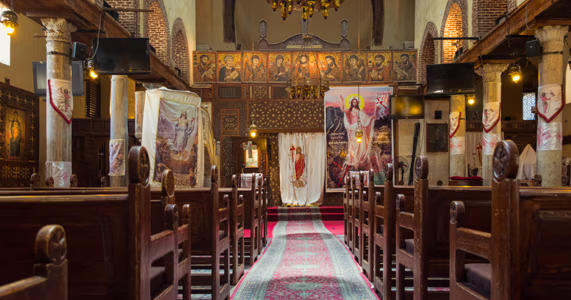
Tucked away from the main tourist thoroughfares and the larger, more famous churches lies the Nunnery of St. George, a place of profound silence and spiritual intensity. While many visitors focus on the grand architecture of the cathedrals, the nunnery offers a rare and intimate glimpse into the living monastic tradition of Egypt’s Christian women. Here, the sisters maintain a rhythm of life that has remained largely unchanged for generations, centered on service, prayer, and the preservation of sacred relics. As you enter the small courtyard, the noise of Cairo’s streets is instantly replaced by the soft murmur of prayers and the gentle rustle of leaves in the garden. The nunnery houses a series of small chapels and a room where the legendary chains of St. George are kept, which are used by pilgrims in a ritual of deep faith. The architecture here is more modest than the surrounding churches, yet it carries a powerful aura of peace that many travelers find to be the most moving part of their journey. The walls are lined with simple but beautiful icons, many of which are modern, showing that Coptic art is still a living, breathing practice. For the seeker of spiritual depth, the Nunnery of St. George is a sanctuary of the soul. It reminds us that Coptic Cairo is not just a collection of historical monuments, but a home to a vibrant community that continues to practice their faith with the same fervor as the early desert fathers and mothers. Visiting this quiet corner provides a moment of reflection, allowing you to connect with the human side of history and the enduring power of a life dedicated to the divine in the heart of the city.
10. Symbols of Faith: The Story of the Coptic Cross
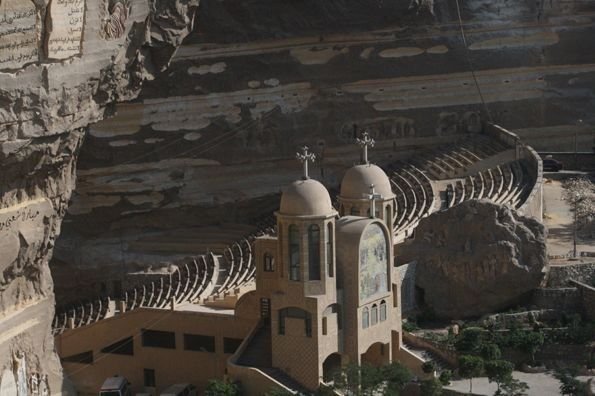
Throughout your walk in this historic district, your eyes will frequently land upon the Coptic Cross, a distinct and beautiful emblem that serves as the visual heartbeat of the community. Unlike the traditional Latin cross, the Coptic version is often characterized by its equal-armed design, with each arm ending in three points representing the Holy Trinity. Frequently, you will see four smaller crosses tucked into the corners, symbolizing the four evangelists who spread the word of God to the corners of the earth. However, the true fascination of this symbol lies in its evolutionary history. Scholars and locals alike point to the striking resemblance between the Coptic Cross and the ancient Egyptian Ankh, the hieroglyphic symbol for "eternal life." This was not a coincidence but a deliberate and poetic bridge; the early Egyptian Christians adopted the familiar shape of the Ankh to express the new promise of everlasting life through Christ. This blend of Pharaonic heritage and Christian symbolism is the very essence of Coptic identity, marking a spiritual transition that didn't erase the past but fulfilled it. You will find this cross carved into ancient stone lintels, tattooed on the wrists of the faithful, and woven into the intricate textiles of the museum. For the modern traveler, understanding the Coptic Cross provides a deeper lens through which to view the landscape. It is a reminder that in Egypt, nothing is ever truly lost; history simply changes its form. The cross stands as a silent witness to the resilience of a people who have maintained their unique character for nearly two millennia. It is more than just a religious icon; it is a badge of survival, a piece of ancient geometry, and a symbol of a faith that remains deeply rooted in the soil of the Nile.
11. St. Mary’s Church: The Mystery of the Apparitions
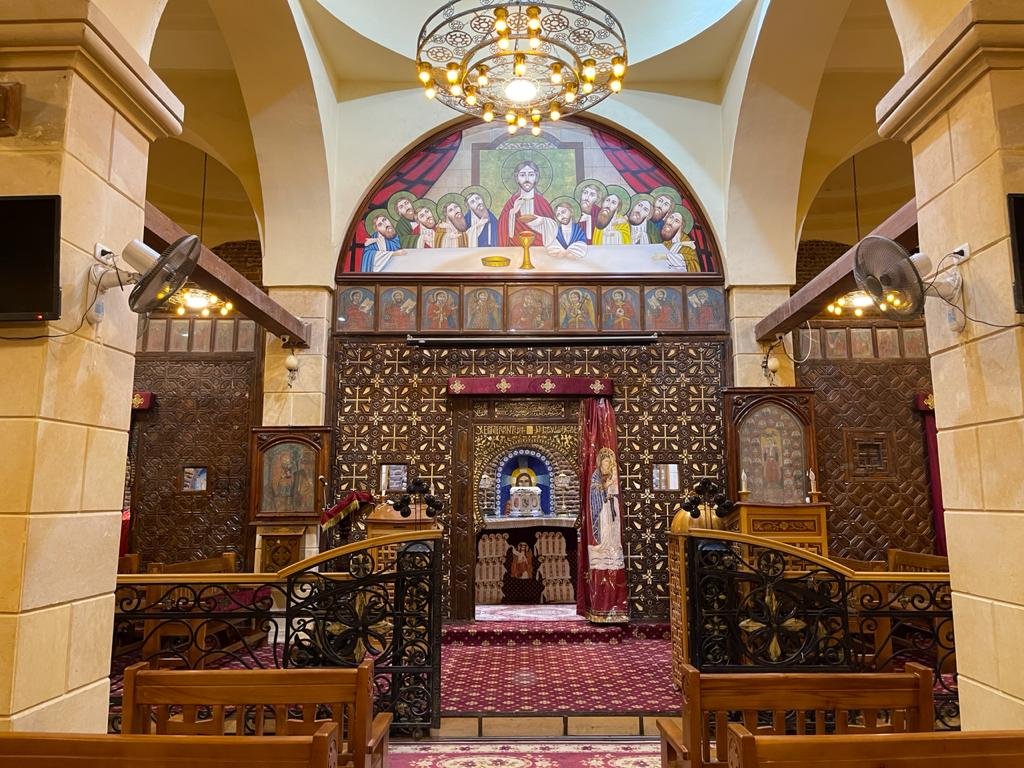
While several churches within the enclave are dedicated to the Virgin Mary, the one located in the heart of Old Cairo carries a special, almost magnetic aura. Throughout the long history of the Coptic Church, the Virgin Mary has held a position of supreme honor, often referred to as the Theotokos, or Mother of God. This particular sanctuary is shrouded in modern and ancient mysteries, as locals have frequently reported miraculous events, including visions of divine light and the inexplicable scent of incense emanating from the altars during times of deep prayer. These reports are not just ancient legends; even in the late 20th century, thousands of people—Christians and Muslims alike—gathered at various sites in Cairo to witness what they believed were apparitions of Mary. Whether you approach these stories as a believer in miracles or a curious historian, the sheer devotion of the pilgrims who flock here is a powerful and moving sight that defines the spiritual landscape of Egypt. Inside the church, the atmosphere is heavy with the smoke of beeswax candles, each one lit by a visitor carrying a personal prayer or a heavy burden. The icons of Mary are often draped with lace and surrounded by flowers, reflecting the deep personal affection the community feels for her. For the traveler, sitting in the pews of St. Mary’s offers a chance to observe the raw, emotional side of Egyptian Christianity. It is a place where the supernatural feels tangible and where the barrier between the earthly and the divine seems remarkably thin. The church serves as a reminder that for the people of Coptic Cairo, faith is not a dusty historical concept but a living, breathing presence that offers hope and comfort in the face of life’s daily challenges.
12. The Art of the Icon: Windows into the Soul
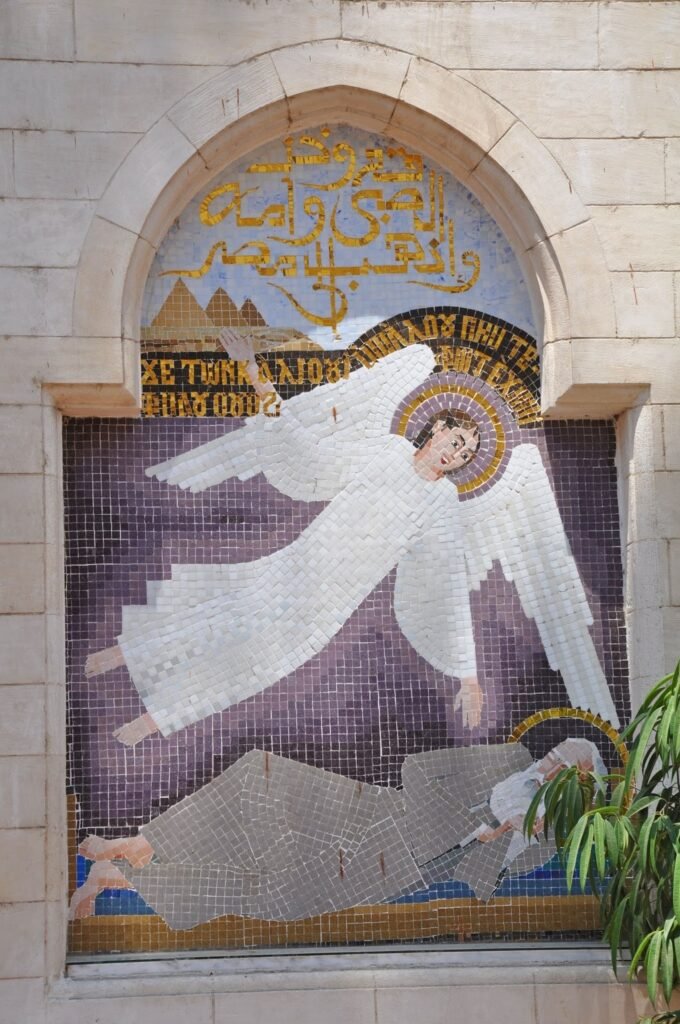
Coptic icons are among the most recognizable and emotionally resonant forms of Christian art in the world, characterized by their large, expressive eyes and a deliberate lack of three-dimensional perspective. This style was not born from a lack of technical skill but from a profound theological choice. The icons were designed as "windows into heaven," intended to draw the viewer into a spiritual realm rather than reflecting the physical world. The large eyes symbolize a soul that is fully awake and focused on the divine, while the small mouths represent the silence and humility of the saints. These paintings, often executed on wood using the ancient technique of egg tempera or encaustic wax, tell the stories of biblical events and legendary martyrs with a raw, honest simplicity that predates the Western Renaissance by centuries. Many of the techniques used by Coptic iconographers can be traced back to the Fayum mummy portraits of the Roman era, showing once again the continuity of Egyptian artistic tradition. When you stand before an icon in the Hanging Church or the Coptic Museum, you are not just looking at a painting; you are engaging in a spiritual dialogue. The saints are depicted with a sense of peace and triumph, regardless of the suffering they endured. For the modern visitor, these icons offer a masterclass in symbolism, where every color and gesture has a specific meaning—gold for the light of God, blue for the heavens, and red for the blood of the martyrs. Exploring this art form allows you to see the world through the eyes of the early church, providing a glimpse into a culture that valued the eternal over the temporary. It is an art of the soul, frozen in time, yet still speaking to those who stop to listen.
13. Navigating the Alleys: A Sensory Experience
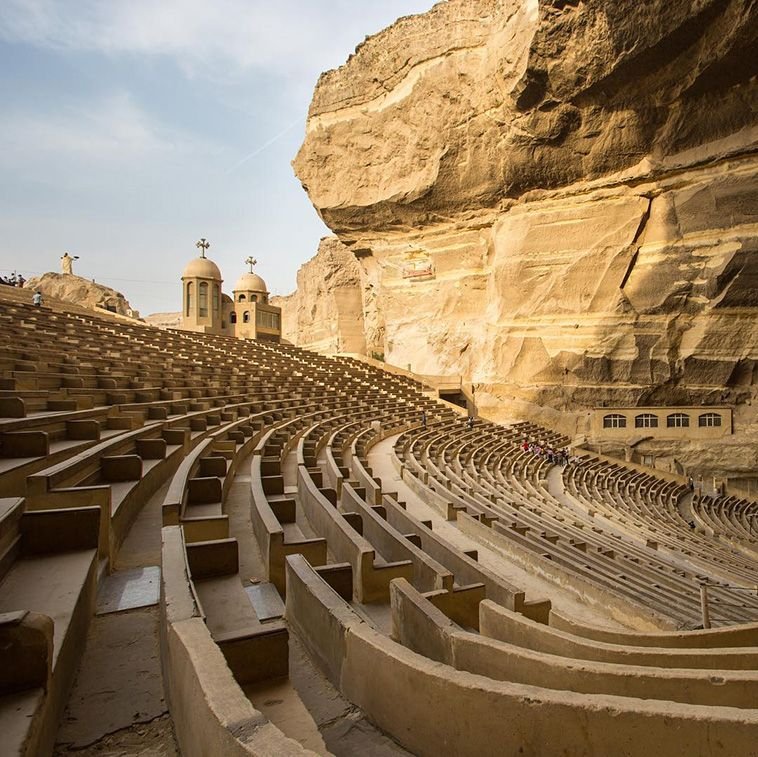
Beyond the monumental churches and the grand history of the fortresses, the true charm of Coptic Cairo lies in its narrow, winding, and sun-dappled cobblestone alleys. Stepping away from the main tourist plazas and into these ancient passages is a complete immersion into a sensory world that feels largely untouched by the modern era. Walking through these corridors, your nostrils are immediately greeted by the sweet, heavy scent of frankincense drifting from open church doors, mingling with the earthy aroma of damp stone and the occasional whiff of fresh bread from a nearby hidden bakery. The soundscape is equally captivating; the distant, rhythmic chanting of the Coptic liturgy, spoken in a language that sounds like the speech of the Pharaohs, bounces off the high limestone walls, while the soft cooing of pigeons nesting in the Roman ruins provides a peaceful backbeat. The walls themselves are a tactile history book, with uneven surfaces worn smooth by centuries of passing shoulders and hands seeking balance. You will find small, tucked-away shops selling handmade olive-wood crosses, intricate hand-painted icons, and vibrant woven textiles that reflect the artistic heritage of the people who live here. There is a specific kind of light in these alleys—a golden, filtered glow that shifts as the sun moves across the Egyptian sky, casting long shadows that dance over the ancient ground. For the traveler, this is where the "magic" of the district is truly found. It is an experience that grounds the grand historical narratives in a living, breathing reality, allowing you to feel the pulse of a community that has navigated these same paths for nearly two thousand years. It is a place to lose your sense of time and simply exist within the layers of history.
14. The Cemetery of Old Cairo: Resting Place of Generations
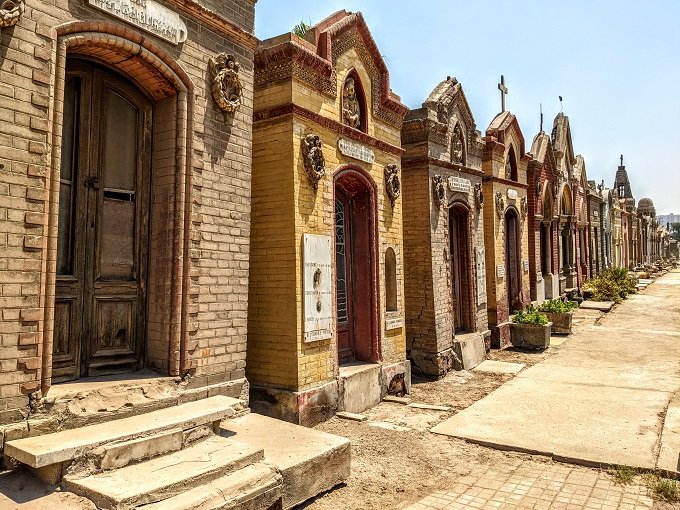
Adjacent to the historic churches and the Coptic Museum lies the sprawling and architecturally fascinating Coptic Cemetery. While cemeteries may seem like somber places to some, this site is actually a magnificent outdoor museum of mausoleums, vaults, and family chapels that tells the story of Cairo's Christian population over the centuries. It is an architectural marvel where death is treated with a grand, reverent beauty that mirrors the community's belief in eternal life. As you walk through the rows of tombs, you will see a stunning variety of styles, from simple stone markers to elaborate neo-Gothic and neo-Byzantine structures that look like miniature cathedrals. The cemetery serves as a physical record of the social and cultural history of the city, housing the remains of the elite, the intellectual, and the humble alike. Many of the inscriptions are carved in both Arabic and Coptic, providing a linguistic bridge that highlights the dual identity of the Egyptian people. The quietude here is profound, offering a sharp contrast to the chaotic traffic of the surrounding city. It is a place for reflection, where the names on the stones remind visitors of the families who have called this ancient land home for nearly two millennia. The cemetery is often shaded by old, gnarled trees that have watched over the dead for generations, adding a sense of natural peace to the man-made monuments. For the historian or the curious traveler, the cemetery offers a unique perspective on the Coptic identity, showcasing how they have honored their ancestors while looking toward the future. It is a site of deep dignity and historical importance, proving that even in silence, the stories of Coptic Cairo continue to resonate with power and grace.
15. Culinary Delights: Tastes of the Old Quarter
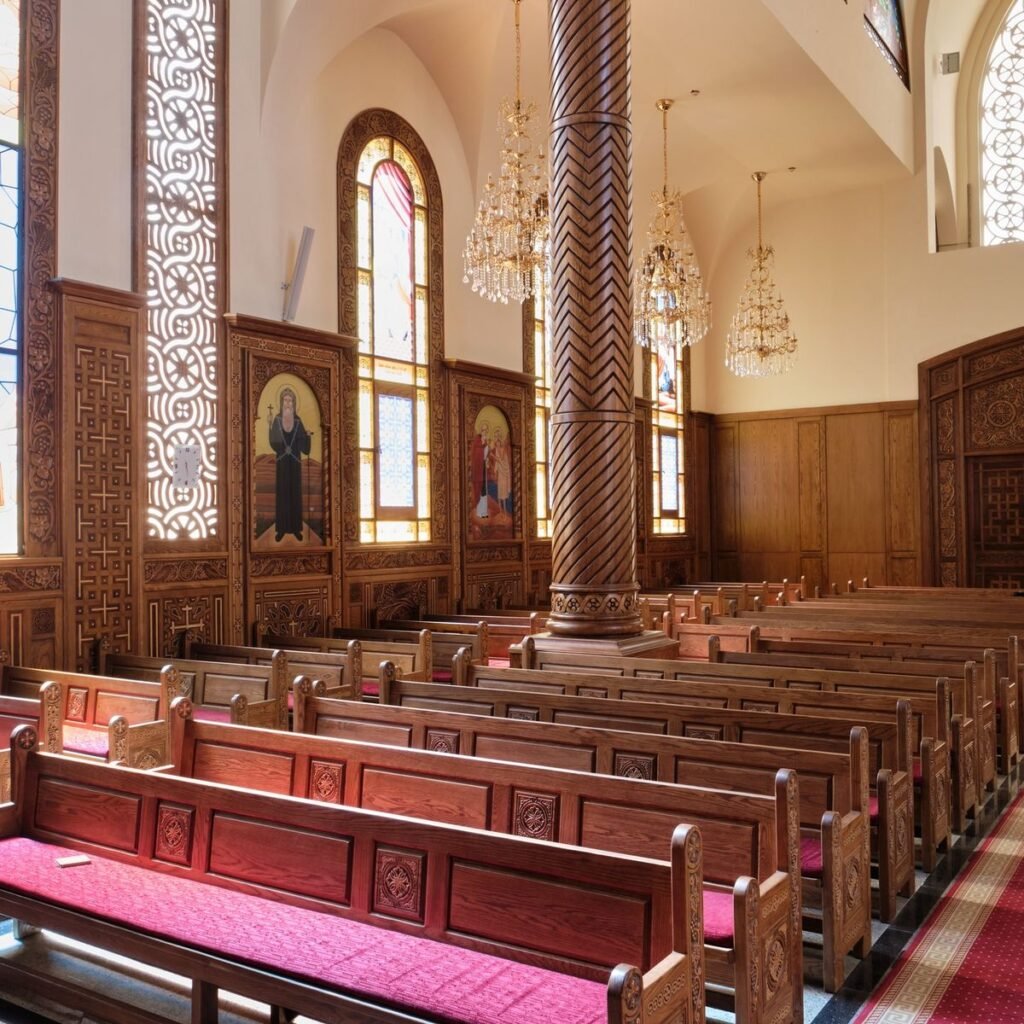
After hours of intensive exploration through the crypts, museums, and winding alleys of the district, the local cafes and small eateries near the entrance offer a perfect sanctuary for rest and a taste of authentic Egyptian hospitality. Eating in the shadow of the Roman walls provides a moment of reflection and a chance to fuel up on the traditional flavors that have sustained this city for centuries. You might find yourself seated on a wooden bench, sipping a steaming cup of sweet mint tea or a thick, aromatic Turkish coffee that wakes up the senses. The food here is simple, hearty, and deeply connected to the land. You can enjoy a bowl of Koshary, Egypt's national dish, which is a comforting mix of pasta, rice, lentils, and chickpeas topped with a spicy tomato sauce and crispy fried onions. Alternatively, you might try fresh Falafel (known as Ta'ameya in Egypt) served in warm, fluffy Aish Baladi bread, perhaps accompanied by creamy tahini and pickled vegetables that burst with flavor. These culinary experiences are more than just meals; they are an extension of the cultural journey. The vendors and cafe owners often have stories to share, having spent their lives in the shadow of the Hanging Church. There is a sense of communal warmth in these spaces, where tourists and locals sit side-by-side, sharing a meal in one of the most historic locations on earth. The simple joy of a well-prepared meal, combined with the view of ancient steeples and Roman towers, creates a memory that is as much about the spirit as it is about the palate. It is the perfect way to conclude a morning of discovery, allowing the flavors of Egypt to settle into your soul alongside the history you have just witnessed.
16. The Legacy of the Nile: Why the Location Matters
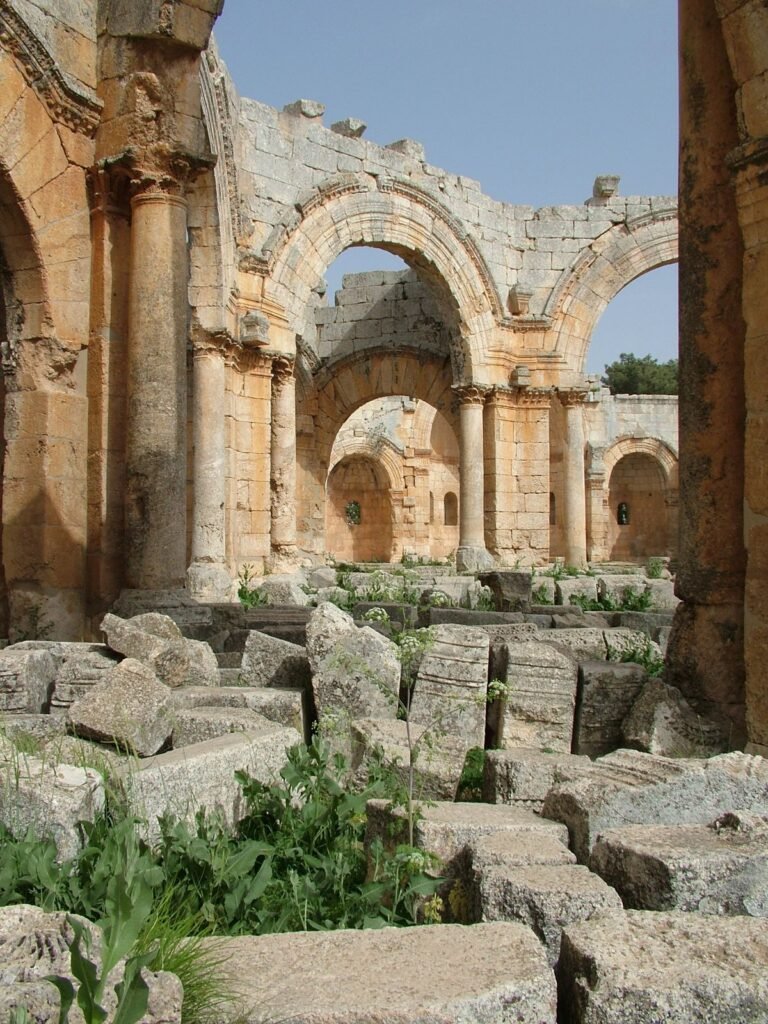
To understand the strategic importance of Coptic Cairo, one must look toward the life-giving waters of the Nile. In ancient times, the river’s course was significantly different, flowing much closer to the fortress walls than it does today. This proximity was not accidental; it allowed the Roman occupiers to control the vital trade routes between Upper and Lower Egypt. For the early Christians, this location offered both a practical and a spiritual advantage. Water has always been a symbol of purification and rebirth in the Coptic faith, and being near the Nile meant a constant supply for both daily life and religious rituals, including the Great Epiphany celebrations. The river acted as a natural moat, providing a layer of protection for the community during times of political upheaval. As you stand on the elevated ground of the Babylon Fortress, you can visualize how the ancient harbor once hummed with the sound of boats transporting grain, incense, and pilgrims. This geographical placement ensured that the district remained a central hub of activity, even as the capital of Egypt moved from Fustat to Cairo. Today, although the Nile has receded, the legacy of its influence remains etched in the very layout of the streets. The coolness of the river breeze still reaches the higher balconies of the Hanging Church on summer afternoons. Understanding the Nile's role helps visitors appreciate why this specific patch of land became the focal point for Roman power and, subsequently, the bedrock of Christian survival in the heart of Egypt. It is a reminder that the history of faith is often deeply intertwined with the physical landscape, where the flow of water and the flow of time move together in a continuous, sacred cycle.
17. The Modern Coptic Community: A Living Heritage
It is essential for every visitor to recognize that Coptic Cairo is not a stagnant museum or a collection of abandoned ruins; it is a vibrant, active, and deeply devoted religious center. Every Sunday, and during the many feast days that dot the Coptic calendar, the ancient churches are packed to capacity with worshippers whose families have lived in the shadow of these steeples for generations. Seeing the community engage with their heritage—witnessing baptisms, traditional weddings, and the daily lighting of candles—breathes life into the ancient stones and ensures that the traditions of the early church remain relevant in the 21st century. The air is often filled with the sound of the Coptic language being used in liturgy, a tongue that serves as the last living link to the language of the ancient Pharaohs. This continuity is a source of immense pride for the Coptic people, who see themselves as the direct descendants of the builders of the pyramids. The district also serves as a social hub, where children learn the art of traditional hymns and elders share stories of the miracles they have witnessed. By observing the modern community, you gain a perspective that history books cannot provide. You see the resilience of a minority that has maintained its identity with grace and strength through centuries of change. The smiles of the shopkeepers, the focus of the deacons, and the hospitality of the locals all contribute to an atmosphere of warmth and welcome. This living heritage is what makes Coptic Cairo truly unique; it is a place where the past is not just remembered, but lived every single day, making it a heartbeat of spirituality that continues to pulse with unwavering faith and enduring hope.
18. Planning Your Visit: Tips for the Soul Traveler
To truly appreciate the depth and beauty of Coptic Cairo, a bit of thoughtful planning is required to ensure your journey is as smooth and spiritually rewarding as possible. It is highly recommended to arrive early in the morning, just as the gates open, to experience the district before the larger crowds and heat of the day arrive. Dressing modestly is not just a suggestion but a sign of respect for the sacred spaces you are entering; covering shoulders and knees is appreciated by the local community. While admission to the quarter itself and most of its historic churches is free, the Coptic Museum requires a ticket, which is a small price to pay for the wealth of knowledge and beauty found within its halls. Photography is often limited or requires a special permit inside the sanctuaries, so it is best to check the signs or ask the helpful guards before snapping pictures of ancient icons. Carrying a small bottle of water and wearing comfortable walking shoes is essential for navigating the uneven cobblestone paths. Beyond the physical preparations, the most important tip is to arrive with an open heart and a slow pace. Do not rush from one church to the next; instead, take a moment to sit in the pews of the Hanging Church or stand in silence near the sacred crypt of Abu Serga. The true essence of this place is found in the quiet moments of reflection. As you leave the district and re-enter the bustling streets of modern Cairo, the memory of the golden light filtering through the ancient domes and the scent of frankincense will stay with you, providing a sense of peace that lingers long after your Egyptian holiday has ended. It is a journey for the soul that you will never forget.