- Excursions in Egypt
- Egypt Tour Packages
- Cairo Tours and Excursions
- Hurghada Tours and Excursions
- Soma Bay Tours and Excursions
- Makadi Bay Tours and Excursions
- Sahl Hasheesh Tours and Excursions
- El Gouna Tours and Excursions
- Marsa Alam Tours and Excursions
- Port Ghalib Tours and Excursions
- El Quseir Tours and Excursions
- Dendera and Abydos Day Tours
- Aswan Tours and Excursions
- Luxor Tours and Excursions
- Sharm El Sheikh Tours and Excursions
- Top Rated Egypt Tours in 2026
- Optional Excursions in Egypt
- Private Transfer
- Blogs About egypt
- Ancient Egypt
- Historical Sites in Egypt
- Cairo
- Alexandria
- Luxor
- Aswan
- The Red Sea
- Dendera Temple
- El Fayoum Oasis
- Bahariya Oasis
- Siwa Oasis
- Al Alamein
- Marsa Matruh
- Why Egypt Is One of the Safest Countries to Visit in the Middle East
- What You Need To know Before Your First Trip To Egypt
- Egypt Travel Costs in 2026 Full Budget Guide
- Top 10 Tourist Activities in Egypt
- Top 50 Activities You Can’t Miss in Egypt in 2026
- The Guide to Guided Tours in Egypt
- Egypt’s Ancient and Modern History
- The Nile River
- The Deserts of Egypt
- Ancient Egyptian gods
- famous Egyptian dishes
- UNESCO World Heritage sites
- About Us
- Egypt Hotels and Resorts
- Excursions in Egypt
- Egypt Tour Packages
- Cairo Tours and Excursions
- Hurghada Tours and Excursions
- Soma Bay Tours and Excursions
- Makadi Bay Tours and Excursions
- Sahl Hasheesh Tours and Excursions
- El Gouna Tours and Excursions
- Marsa Alam Tours and Excursions
- Port Ghalib Tours and Excursions
- El Quseir Tours and Excursions
- Dendera and Abydos Day Tours
- Aswan Tours and Excursions
- Luxor Tours and Excursions
- Sharm El Sheikh Tours and Excursions
- Top Rated Egypt Tours in 2026
- Optional Excursions in Egypt
- Private Transfer
- Blogs About egypt
- Ancient Egypt
- Historical Sites in Egypt
- Cairo
- Alexandria
- Luxor
- Aswan
- The Red Sea
- Dendera Temple
- El Fayoum Oasis
- Bahariya Oasis
- Siwa Oasis
- Al Alamein
- Marsa Matruh
- Why Egypt Is One of the Safest Countries to Visit in the Middle East
- What You Need To know Before Your First Trip To Egypt
- Egypt Travel Costs in 2026 Full Budget Guide
- Top 10 Tourist Activities in Egypt
- Top 50 Activities You Can’t Miss in Egypt in 2026
- The Guide to Guided Tours in Egypt
- Egypt’s Ancient and Modern History
- The Nile River
- The Deserts of Egypt
- Ancient Egyptian gods
- famous Egyptian dishes
- UNESCO World Heritage sites
- About Us
- Egypt Hotels and Resorts
Welcome to
Memphis City: Journeying to the First Capital of a Unified World
To visit Memphis is to stand at the absolute epicenter of human history, the very birthplace of the Pharaonic state that would go on to fascinate the world for millennia. Known anciently as Ineb-Hedj (The White Walls) and later as Men-Nefer, Memphis was founded by the legendary King Menes (Narmer) around 3100 BC, strategically placed at the apex of the Nile Delta. As the first capital of a unified Egypt, it served as the heart of political, religious, and economic life for over eight consecutive dynasties. For any traveler exploring Egypt’s ancient heritage, Memphis is not just an archaeological site; it is a sacred ground where the concept of a divine monarchy was born. Today, the open-air museum at Mit Rahina offers a serene and evocative glimpse into this once-sprawling metropolis, which was once the most populous and powerful city on Earth.
While the towering pyramids of Giza and Saqqara often steal the spotlight, it was Memphis that provided the administrative and spiritual power to build those eternal monuments. The city was dedicated to Ptah, the patron god of craftsmen and architects, a fitting deity for a place that saw the birth of monumental stone architecture. As you walk through the shaded groves of the modern-day village of Mit Rahina, you are walking over layers of history that influenced the Greco-Roman, Coptic, and Islamic eras. The Memphis open-air museum houses treasures that defy imagination, including the colossal fallen statue of Ramses II and the magnificent Alabaster Sphinx. This article will take you on a comprehensive journey through the 18 chapters of Memphis’s glory, exploring its rise, its legendary temples, its mysterious necropolis, and its enduring legacy as the foundation of Egyptian civilization. Prepare to step back in time to where the story of the Pharaohs truly began.
1: The Strategic Heart – Why Memphis Controlled the Ancient World
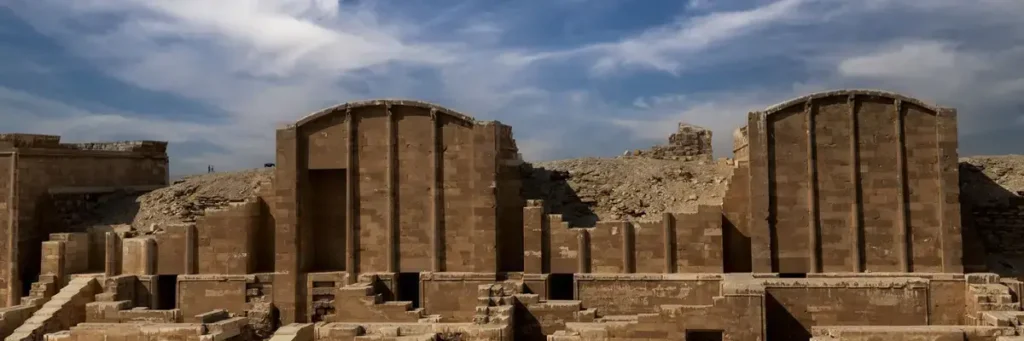
The selection of the site for Memphis was a masterclass in ancient geopolitics and environmental strategy. Situated at the "Balance of the Two Lands," Memphis sat precisely at the junction where the narrow Nile Valley of Upper Egypt opens into the broad, fertile Delta of Lower Egypt. This strategic location allowed the early Pharaohs to maintain a firm grip on both the northern and southern regions, effectively controlling trade, communication, and military movements along the river. By establishing the capital here, King Menes ensured that any goods or people traveling between the Mediterranean and the African interior had to pass through the gates of Memphis. This central position turned the city into a vibrant economic powerhouse, a place where the wealth of the Nile flowed directly into the royal treasuries. Beyond its political advantages, the geography of Memphis was deeply symbolic. It was built on the west bank of the Nile, a location that offered protection from the annual floods while remaining close enough to the river to facilitate massive construction projects. The fertile plains surrounding the city provided an endless supply of food for its growing population, which included the elite, the military, and the most skilled artisans of the Early Dynastic Period. For the modern traveler, understanding the geography of Memphis is key to understanding why it remained a capital for so long. It wasn't just a city; it was the "White Walls" that held the newly unified nation together. Today, as you stand in Mit Rahina, you can still feel the echoes of this ancient strategic brilliance, realizing that you are at the very point where the geography of the Nile created the destiny of a nation.
2: The Legend of King Menes – The Birth of a Unified Kingdom
The history of Memphis is inseparable from the legendary figure of King Menes, often identified with King Narmer, the visionary ruler who unified Upper and Lower Egypt. According to ancient traditions recorded by the historian Manetho, Menes ordered the diversion of the Nile’s course to create a massive reclaimed area of land for his new capital. This act of engineering was one of the first of its kind in human history, signaling the beginning of a new era where man controlled nature to serve the state. The founding of Memphis was the physical manifestation of the Unification of the Two Lands, a theme that would dominate Egyptian art and ideology for the next 3,000 years. The city was designed to be a "neutral" ground, a place where the traditions of the Red Crown of the North and the White Crown of the South could merge into a single, divine identity. At Memphis, the Pharaoh was not just a king but a living god, the "Uniter of the Two Lands." The city became the stage for the Sed Festival, where the king’s power was ritually renewed, ensuring the continued prosperity of the people. This era of Memphis saw the establishment of the first royal bureaucracy, the first standardized writing systems, and the first formal religious hierarchies. For visitors exploring the site, the legacy of Menes is felt in the sheer scale of the ruins; even in its state as an open-air museum, the weight of being the "first city" of the first great empire is palpable. Memphis served as the laboratory for Pharaonic culture, where the laws, the religion, and the artistic canon were perfected before spreading across the globe. It is the spiritual home of the Egyptian crown and the cornerstone of the nation’s political history.
3: The Temple of Ptah – The Spiritual Source of Creation
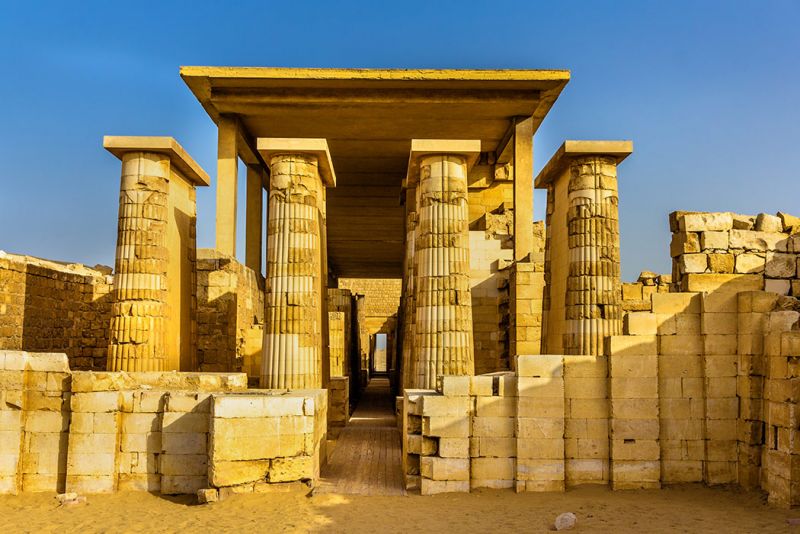
At the spiritual center of Memphis stood the Great Temple of Ptah, known as Hut-ka-Ptah (The Enclosure of the Spirit of Ptah). This massive religious complex was one of the most important in all of ancient Egypt, rivaling the later Temple of Amun at Karnak in size and influence. Ptah was the creator god, the "Divine Craftsman" who was believed to have spoken the world into existence. As the patron of Memphis, his temple was the heart of the city's intellectual and artistic life. It was here that the finest sculptors and architects were trained, creating the masterpieces that we now see in the National Museum of Egyptian Civilization. The name of this temple, Hut-ka-Ptah, eventually evolved through the Greek language to become "Aigyptos," giving the modern country of Egypt its name. The Temple of Ptah was not just a place of worship; it was a vast city within a city, housing thousands of priests, scribes, and administrators. Over the centuries, every great Pharaoh, from the builders of the pyramids to Ramses the Great, felt compelled to add to its grandeur, erecting colossal statues, massive pylons, and ornate chapels. Although much of the temple was unfortunately dismantled in later centuries to build Islamic Cairo, the remains found at the Memphis Open-Air Museum—including the breathtaking Alabaster Sphinx—offer a glimpse into its former glory. This sphinx, carved from a single block of calcite, likely stood guard at one of the temple’s entrances, symbolizing the protective power of the king over the divine precinct. For the cultural tourist, the site of the Temple of Ptah is a place of profound energy, where the ancient world’s philosophy of creation and the divine craftsmanship of the Egyptian people still resonate today.
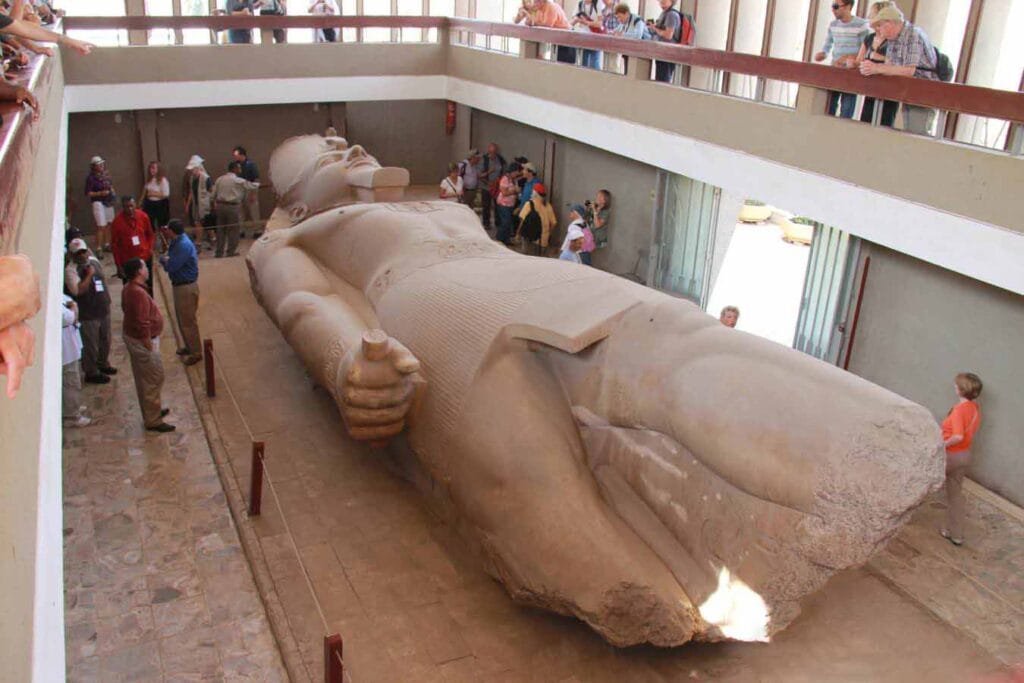
4: The Colossus of Ramses II – A Giant Sleeping Through the Ages
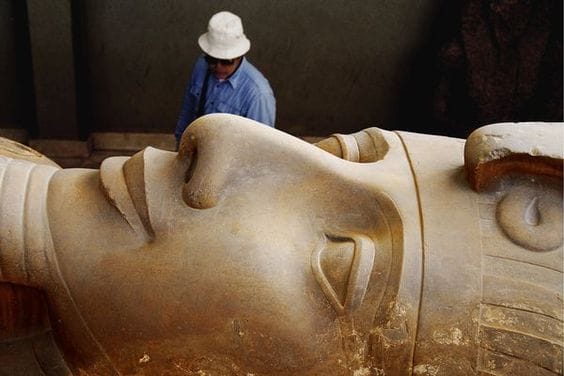
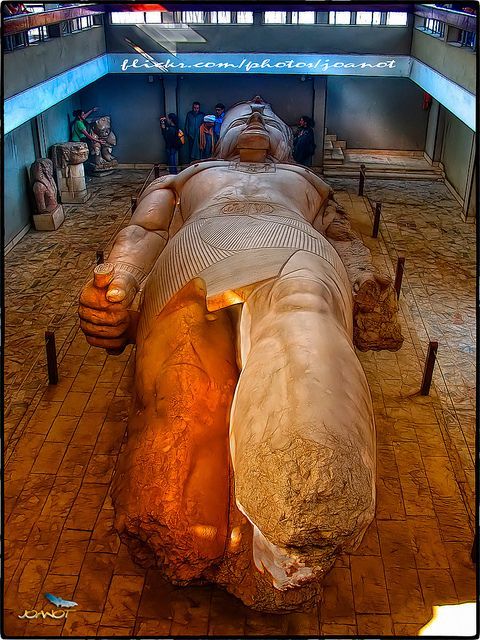
The crowning jewel of the Memphis Open-Air Museum at Mit Rahina is, without question, the fallen Colossus of Ramses II. This gargantuan statue, carved from a single block of fine limestone, originally stood at the entrance of the Temple of Ptah, reaching an estimated height of nearly 13 meters. Even in its prone position, the sheer scale of the sculpture is enough to take a visitor's breath away. The level of detail preserved on the stone is a testament to the peak of New Kingdom artistry; the intricate carvings of the king’s cartouches, the subtle musculature of his torso, and the serene, powerful expression on his face remain as crisp as they were over 3,200 years ago. For any traveler interested in ancient Egyptian sculpture, standing beside this giant provides a humbling perspective on the power and ego of Egypt’s most prolific builder. Ramses the Great was determined to leave an indelible mark on Memphis, and this colossus served as a permanent reminder of his divine right to rule. The statue depicts the king wearing the Double Crown of Upper and Lower Egypt, symbolizing his role as the "Uniter of the Two Lands"—a title that originated in this very city. The preservation of the statue is remarkable, considering it lay buried in the silt of the Nile for centuries before being rediscovered in 1820 by Italian explorer Giovanni Caviglia. Today, a specially built viewing gallery allows tourists to walk around the statue at an elevated level, providing a perfect angle for travel photography. This monument is more than just a piece of carved stone; it is a physical manifestation of the grandeur that once defined Memphis, representing a time when the city was the most opulent political and religious center on the planet.
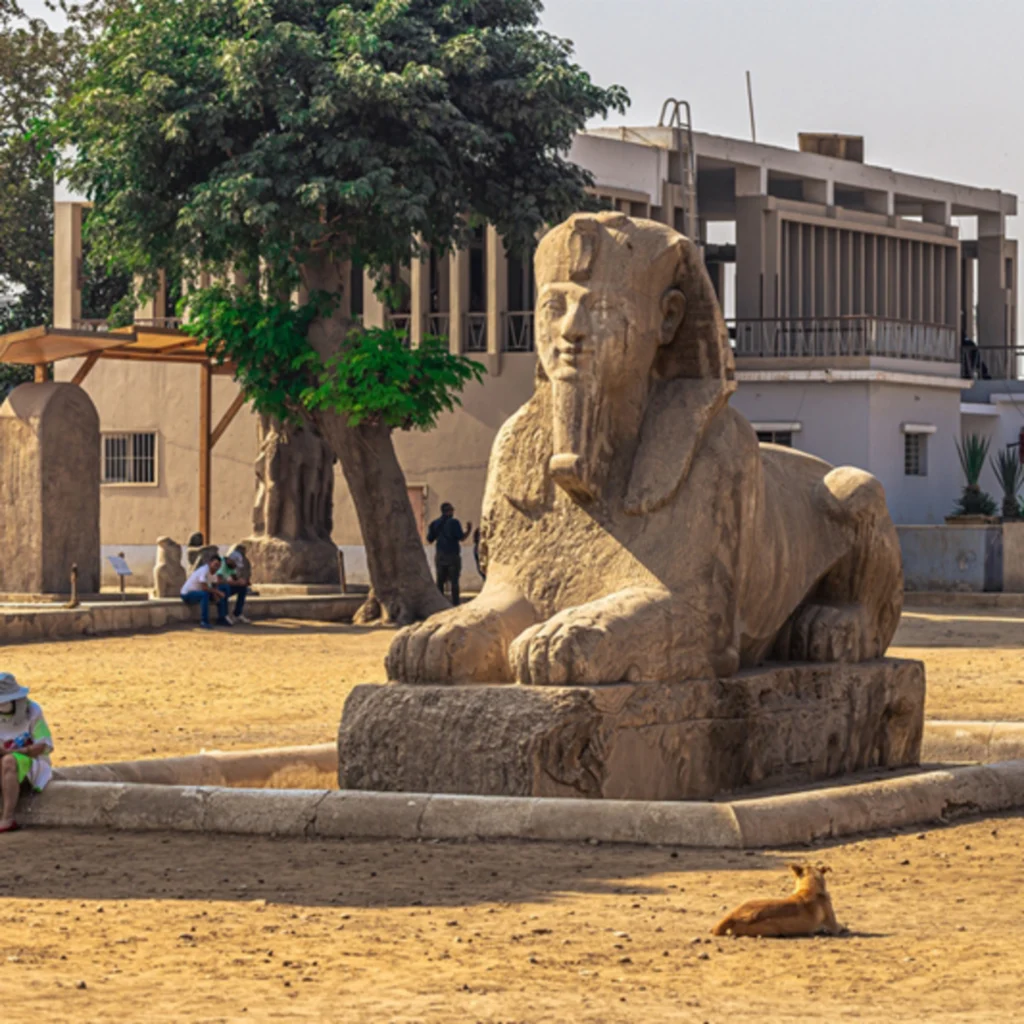
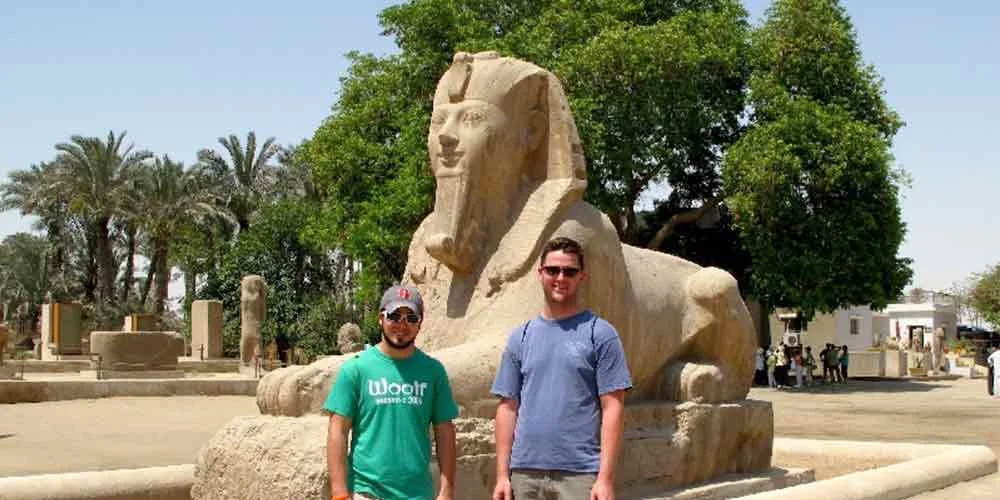
5: The Alabaster Sphinx – The Silent Guardian of Mit Rahina
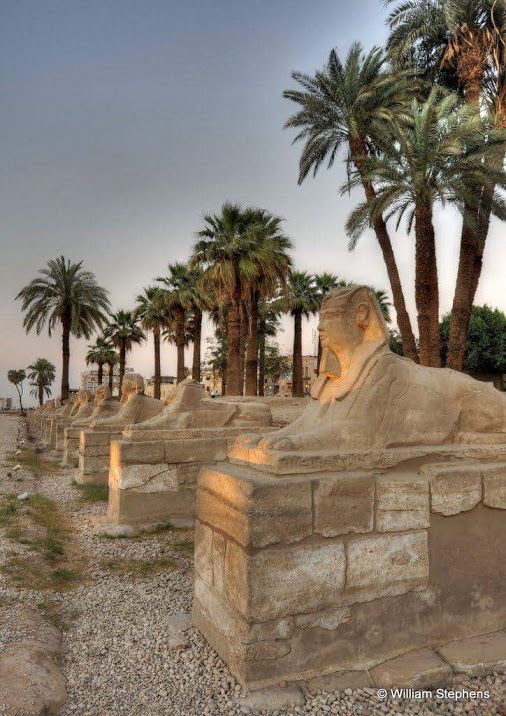
While the Great Sphinx of Giza is world-famous, the Alabaster Sphinx of Memphis holds a unique charm and mystery of its own. Carved from a massive, single block of translucent calcite (often referred to as Egyptian alabaster), this statue is the largest of its kind ever discovered. It dates back to the 18th or 19th Dynasty—possibly representing Queen Hatshepsut or Amenhotep II—and it stands as a silent sentinel in the museum’s courtyard. Unlike the weathered Giza Sphinx, the Memphis version has retained much of its smooth, polished surface, allowing visitors to appreciate the incredible skill required to work with such a delicate and heavy material. The sphinx serves as a symbol of the "Lion-King," combining human intelligence with the raw power of the beast, a theme central to Pharaonic ideology. The discovery of the Alabaster Sphinx in 1912 added a significant chapter to the archaeological story of Memphis. It is believed to have stood at the southern gateway of the Temple of Ptah, acting as a spiritual protector for the sacred precinct. For the cultural traveler, this monument is a must-see because of its accessibility; unlike Giza, you can stand just inches away from this masterpiece, noticing the faint traces of the ceremonial beard and the regal "Nemes" headdress. The way the sunlight interacts with the pale stone gives the sphinx an almost ethereal glow, making it one of the most photogenic spots in Old Cairo’s outskirts. It serves as a hauntingly beautiful reminder that Memphis was a city of gold and white stone, a place designed to reflect the light of the gods onto the world of men.

6: The Memphis Necropolis – From the City of the Living to the City of the Dead
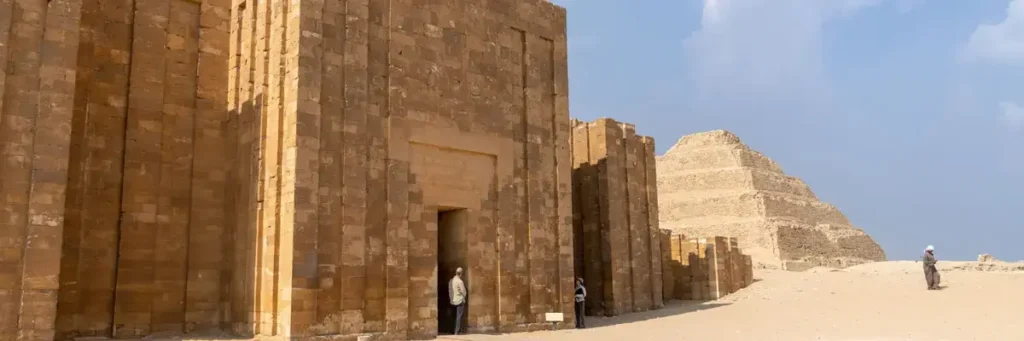
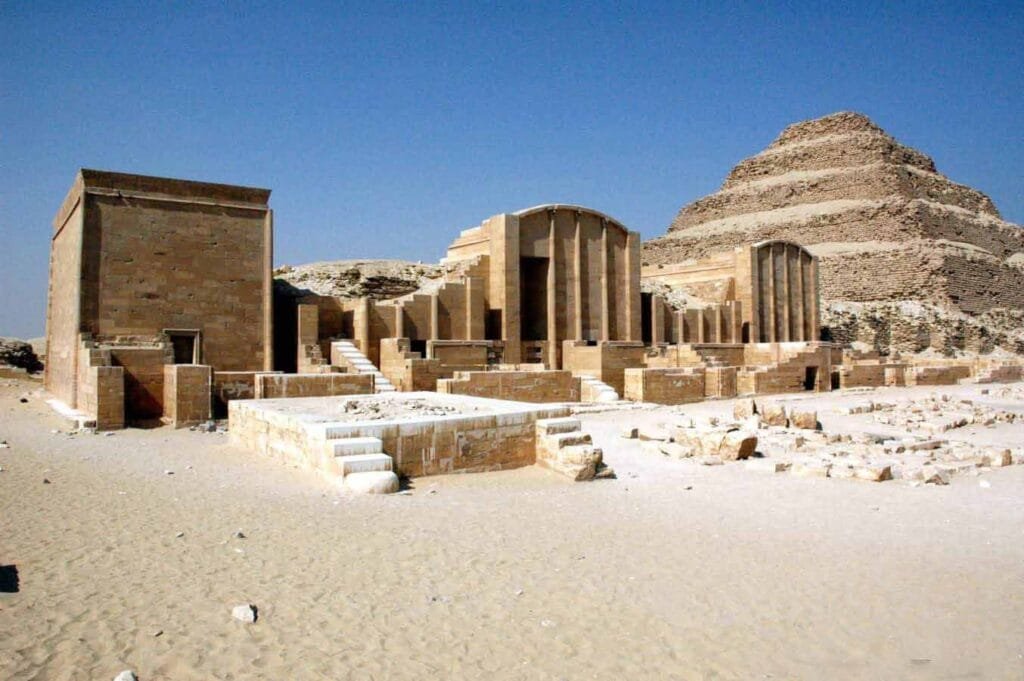
One cannot truly understand Memphis without exploring its deep connection to its vast necropolis, primarily located at the nearby site of Saqqara. In the ancient Egyptian worldview, the west bank of the Nile was the realm of the setting sun and the afterlife, and Memphis was the gateway to this eternal kingdom. For over 3,000 years, the officials, priests, and commoners of Memphis were buried in the plateau of Saqqara, which stretches over seven kilometers. This relationship between the "Living City" and the "City of the Dead" created a unique urban landscape where the daily activities of trade and government were constantly overlooked by the towering Step Pyramid of Djoser. The wealth generated in Memphis was directly funneled into the construction of these magnificent tombs, making the city a hub for the most advanced engineering and artistic movements in history. The Memphis Necropolis is not just about pyramids; it is home to the Serapeum, where the sacred Apis Bulls—the living incarnations of Ptah—were buried in massive granite sarcophagi. This underscores the religious continuity of Memphis; the god who was worshipped in the city’s heart was honored in death on the neighboring plateau. Today, tourists often visit Memphis and Saqqara as a combined trip, which is essential for a complete Egyptology experience. Walking through Memphis gives you the context of the people’s lives, while Saqqara shows you their hopes for eternity. This synergy makes Memphis more than just an archaeological site; it is a key that unlocks the meaning behind the grandest monuments of the Old Kingdom, proving that the roots of the pyramids are buried deep in the administrative soil of this ancient capital.
7: The Cult of the Apis Bull – Divinity in the Flesh
One of the most fascinating aspects of religious life in Memphis was the worship of the Apis Bull, a living deity believed to be the herald of the god Ptah. Unlike other gods who were represented by statues, the Apis was a physical, living bull chosen by priests based on specific sacred markings, such as a white triangle on its forehead and a crescent moon on its flank. The bull lived a life of ultimate luxury within the city, housed in a magnificent stable known as the Apeion, where it was consulted as an oracle by everyone from commoners to Pharaohs. This cult highlights the unique theological sophistication of Memphis, where the divine was seen as directly manifesting in the natural world. For the ancient Memphites, the health and vitality of the Apis Bull were directly tied to the prosperity of the entire nation. The death of an Apis Bull was a period of national mourning, followed by an elaborate mummification process that rivaled that of the Pharaohs themselves. The bull was eventually transported across the desert to the Serapeum of Saqqara, where it was laid to rest in a massive granite sarcophagus. Visitors to the Memphis area can still see the Embalming House of the Apis Bulls, one of the few surviving structures of its kind. Here, archaeologists discovered the massive stone tables where the sacred animals were prepared for eternity. This cult remained a powerful force in Egyptian religion well into the Greco-Roman period, illustrating the incredible longevity of Memphite traditions. Understanding the Apis Bull is essential for any cultural traveler looking to grasp the deep, symbolic connection between ancient Egyptian spirituality and the animal kingdom.
8: The Pulse of the Metropolis – Daily Life in Ancient Memphis
Beyond the shadow of the temples and royal monuments, Memphis was a thriving, cosmopolitan metropolis teeming with life and diversity. As the administrative capital, it was home to a complex social hierarchy that included high-ranking viziers, foreign diplomats, wealthy merchants, and a massive middle class of skilled artisans. This paragraph of the city’s history reveals a world of bustling markets where grain, linen, and papyrus were traded for cedar from Lebanon and gold from Nubia. Excavations in the residential quarters of Memphis have uncovered a wealth of domestic artifacts, including cosmetic jars, children’s toys, and intricate jewelry, proving that the citizens of Memphis enjoyed a high standard of living. The city’s "White Walls" protected a hub of innovation where the first organized legal and educational systems were perfected. Living in Memphis meant being at the center of the world's first global superpower. The city’s layout was a mix of grand ceremonial avenues and narrow, winding streets filled with the sounds of copper-smiths and potters. Because Memphis was the seat of the Royal Treasury, it attracted the best minds and talents from across the Nile Valley. For the modern tourist, imagining the daily life of a Memphite citizen adds a human layer to the ruins. These were people who celebrated festivals with music and wine, navigated a complex bureaucracy, and held a deep-seated belief in "Maat" or social order. The National Museum of Egyptian Civilization often displays the personal belongings of such citizens, but standing on the ground of Memphis itself allows you to feel the true scale of the city that once served as the blueprint for urban civilization.

9: The New Kingdom Renaissance – A Second Golden Age
While Memphis is often associated with the Old Kingdom "Pyramid Builders," it experienced a spectacular New Kingdom Renaissance that solidified its status as a global icon. During the 18th and 19th Dynasties, great warrior kings like Thutmose III and Amenhotep III recognized the city’s strategic importance and poured immense wealth into its restoration. Memphis became the primary military headquarters for campaigns into Asia, and its shipyards were the busiest in the empire. This era saw the city transformed into a "World City," where the traditional Egyptian style was enriched by influences from the Hittites, Mittani, and Minoans. It was during this period that Ramses the Great made Memphis his secondary residence, adorning the city with the colossal statues and pylons that still define the site today. The New Kingdom was a time of immense architectural ambition in Memphis. The city was expanded with new palaces, villas, and secondary temples dedicated to gods like Anat and Astarte, reflecting the empire's expanding horizons. This architectural evolution is crucial for history buffs to understand, as it shows that Memphis was never a stagnant relic of the past; it was a dynamic, evolving capital that adapted to the heights of Egypt’s imperial power. The ruins we see today at Mit Rahina are largely the remnants of this second golden age. For visitors, this layer of history provides a bridge between the ancient origins of the city and the peak of Pharaonic internationalism. Memphis in the New Kingdom was a city of light, power, and unprecedented wealth—a true testament to the enduring resilience of the "First Capital."
10: The Twilight of a Capital – The Rise of Alexandria and the Decline of Memphis
The story of Memphis is not only one of rise and glory but also of a long, dignified transition as the centers of power shifted. Following the conquest of Alexander the Great in 332 BC, the foundation of Alexandria on the Mediterranean coast marked the beginning of a new era. Gradually, the administrative functions that had defined Memphis for millennia began to migrate toward the sea. However, it is a common misconception that Memphis vanished overnight. For centuries during the Ptolemaic and Roman periods, the city remained a vital religious and traditional stronghold. It was seen as the "Old World" counterweight to the Hellenistic "New World" of Alexandria. Even when the kings lived in the north, they still came to Memphis to be crowned in the Temple of Ptah, honoring the ancient traditions that gave them legitimacy in the eyes of the Egyptian people. The true decline of the city began with the rise of Christianity and later the Islamic conquest. As the ancient temples were closed and the worship of Ptah and the Apis Bull faded, the massive stone structures of Memphis were repurposed. The city became a "quarry" for the building of Medieval Cairo; much of the limestone that once formed the "White Walls" now rests in the foundations of the city’s historic mosques and fortifications. For the modern traveler, this history adds a layer of poignancy to the site. Walking through Mit Rahina, you are witnessing the bones of a city that literally gave birth to the current capital. The decline of Memphis was not an end, but a transformation, as its physical substance was woven into the fabric of the Islamic and modern eras, ensuring that its essence remains part of Egypt’s living landscape.

11: A Global Treasure – Memphis as a UNESCO World Heritage Site
In 1979, the immense cultural value of the city was officially recognized when the "Memphis and its Necropolis" were designated as a UNESCO World Heritage Site. This prestigious status encompasses not just the ruins at Mit Rahina, but the entire pyramid field from Giza to Dahshur. UNESCO recognizes Memphis as the ultimate symbol of the Old Kingdom’s brilliance and as the laboratory where the world’s first large-scale stone architecture was perfected. This international protection is crucial for the preservation of Egyptian heritage, as it provides a framework for managing the site amidst the encroaching modern villages. For the environmentally and culturally conscious traveler, visiting a UNESCO site like Memphis is a way to support the global effort to protect our shared human history. The designation highlights the "Outstanding Universal Value" of the site, asserting that the history of Memphis belongs to the entire world, not just Egypt. Efforts are constantly underway to improve the tourist infrastructure while ensuring that archaeological excavations can continue without damaging the sensitive remains. The Memphis Open-Air Museum is a key part of this strategy, allowing visitors to appreciate the grandeur of the artifacts in a controlled, educational environment. As you explore the site, you can see the ongoing work of conservators who are stabilizing the Alabaster Sphinx and the Colossus of Ramses II. This status ensures that future generations will still be able to stand in the shadow of these giants and learn the story of the city that laid the foundation for organized society and monumental art.
12: The Archaeological Rediscovery – Unearthing the Secrets of Mit Rahina
The rediscovery of Memphis is a thrilling chapter in the history of archaeology, a puzzle that scientists have been piecing together for over two centuries. For a long time, the city was hidden beneath the silt deposited by the Nile’s annual floods and the lush palm groves of Mit Rahina. It wasn't until the 19th century, during the Napoleonic expedition and later works by figures like Giovanni Caviglia and Flinders Petrie, that the true scale of the city began to emerge. These early explorers had to battle rising groundwater and dense vegetation to reveal the masterpieces we see today. The discovery of the Colossus of Ramses II was a global sensation, sparking a renewed interest in the "lost capital" and leading to systematic excavations that continue to this day. Modern archaeology in Memphis has moved beyond just finding statues; it now focuses on understanding the lives of the people who lived there. Using satellite imagery and geophysical surveys, researchers are mapping the buried streets, houses, and workshops of the ancient metropolis without even breaking the ground. These non-invasive techniques are revealing the complexity of the city's urban plan, from its grand ceremonial plazas to its industrial quarters. For visitors, this means that the story of Memphis is constantly being updated. Every year, new insights into the city's drainage systems, its foreign quarters, and its culinary habits are uncovered. The Memphis archaeological mission is a testament to the persistence of human curiosity, proving that even after 5,000 years, the "White Walls" still have many secrets left to tell those who know how to listen to the stones.
13: Architectural Gems – The Small Temple of Ptah and the Palace of Apries
Beyond the massive enclosures that once defined the city center, Memphis was home to specialized structures that showcased the evolution of Egyptian royalty. One of the most significant sites for history enthusiasts is the Palace of Apries, located on the northern edge of the city. Dating back to the 26th Dynasty (the Saite Period), this palace stood on a massive mud-brick platform, designed to give the Pharaoh a commanding view over his capital and the Nile. Although much of its upper structure has vanished, the surviving columns and foundation walls provide a rare glimpse into the residential architecture of Ancient Egyptian kings. This was a time of nationalistic revival, where the rulers of the Saite era looked back to the Old Kingdom for inspiration, attempting to recreate the glory of their ancestors within the very walls of Memphis. Adjacent to these palatial ruins are the remains of smaller temples, such as the Small Temple of Ptah, built during the reign of Ramses II. While smaller in scale than the Great Temple, these structures are crucial for understanding the "Thematic Landscape" of the city. They were often dedicated to specific aspects of the god Ptah or his consort, the lioness-goddess Sekhmet. For the educational tourist, these ruins offer a chance to see how different eras overlapped; you might find a New Kingdom lintel reused in a Late Period gateway. The site illustrates the density of the city, where sacred and royal buildings were woven together in a complex tapestry. Exploring these lesser-known corners of Mit Rahina allows you to appreciate the architectural diversity that made Memphis the cultural capital of the ancient world for millennia.
14: Memphis in the Greco-Roman Period – The Persistence of Tradition
When Alexander the Great arrived in Egypt, he did not head straight to the coast; he traveled to Memphis to be crowned as a Pharaoh. This act was deeply symbolic, proving that even under Greek rule, Memphis remained the heart of legitimate power. During the Greco-Roman period, the city became a fascinating cultural laboratory where Hellenistic art met Pharaonic tradition. The Ptolemaic kings continued to patronize the Temple of Ptah, and the city remained a center for the influential "High Priests of Memphis," who acted as intermediaries between the Greek court and the Egyptian people. Visitors to the museum can see statues from this era that feature a unique "Alexandrian" style—realistic Greek facial features combined with the traditional Egyptian stiff posture and royal regalia. This period was also characterized by a booming international population. Memphis became home to large communities of Greeks, Jews, and Phoenicians, making it one of the most multicultural cities of antiquity. The "Serapeum" cult, which combined the Egyptian Osiris and Apis with Greek deities, flourished during this time, drawing pilgrims from across the Mediterranean. For the modern traveler, this era of Memphis is a reminder of the city's incredible resilience. It didn't simply fade away when Alexandria was built; instead, it adapted, becoming a bastion of traditional Egyptian culture in an increasingly Hellenized world. Understanding this late-stage glory is essential for a complete view of Egyptian history, showing how the ancient capital continued to influence global thought, religion, and art long after its political peak had passed.
15: The Mastery of Stone – The Craftsmanship of Memphite Artisans
The true legacy of Memphis lies in the hands of its artisans, the "Children of Ptah," who set the world standard for craftsmanship. As the city was dedicated to the god of craftsmen, it naturally became the world's most prestigious school for sculptors, jewelers, and architects. The Memphite style is characterized by its perfect proportions, its ability to breathe life into hard stones like granite and basalt, and its incredible attention to anatomical detail. Every masterpiece you see in the National Museum of Egyptian Civilization—from the delicate diorite statues to the massive sarcophagi—was likely created by an artist trained in the workshops of Memphis. These artisans were the keepers of the "Canon of Proportion," the mathematical system that ensured Egyptian art remained consistent and harmonious for 3,000 years. This concentration of talent turned Memphis into an industrial powerhouse for luxury goods. The city was famous for its "Egyptian Faience," a glazed ceramic that mimicked the color of turquoise and lapis lazuli, and its exquisite stone vessels that were traded as far as Crete and Mesopotamia. For the cultural traveler, seeing the tool marks on the unfinished statues at the Memphis site is a moving experience; it connects you directly to the human effort behind the monuments. These craftsmen were not just laborers; they were the intellectuals of their time, translating complex religious concepts into tangible form. The influence of the Memphite workshops can be seen across all of Egypt’s history, and their work remains the benchmark for artistic excellence today. When you visit Memphis, you aren't just seeing ruins; you are seeing the birthplace of professional art and the highest achievements of human creativity.
16: The Liquid Highway – Memphis and its Dynamic Relationship with the Nile
The survival and prosperity of Memphis were inextricably linked to the Nile, but this relationship was far more complex than it appears. Throughout the millennia, the Nile was not a static feature; its course shifted eastward, a geological phenomenon that forced the city to physically "follow" the water. This movement explains why the archaeological remains of Memphis are spread across such a wide area today. The city’s ingenious engineers built massive embankments and quay walls to protect the "White Walls" from the fierce annual inundation, turning Memphis into a fortified island of civilization during the flood months. This mastery of hydrology and river engineering was what allowed the city to remain a powerhouse for so long. For the modern visitor, the lush green fields of Mit Rahina provide a stark contrast to the nearby desert, serving as a living reminder of the fertile "black land" (Kemet) that the Nile provided. The river was also the city’s primary commercial artery, connecting Memphis to the Mediterranean in the north and the gold mines of Nubia in the south. The city’s docks were once crowded with ships carrying cedar from Lebanon, olive oil from Greece, and incense from Punt. This maritime history is crucial for understanding why Memphis became such a cosmopolitan melting pot. As you stand near the ruins of the ancient harbor areas, you can imagine the cacophony of different languages and the smell of exotic spices that once filled the air. The Nile wasn't just a source of water; it was the lifeblood of the Egyptian economy, and Memphis was its most important pulse point. Today, as the river flows a few kilometers away, the silence of the ruins at Mit Rahina reflects the profound shift in the landscape, yet the spirit of the river remains embedded in the very silt that preserves the city’s secrets.
17: Navigating Mit Rahina – Tips for an Authentic Visitor Experience
A visit to the Memphis Open-Air Museum at Mit Rahina offers a significantly different experience from the high-energy crowds of the Giza Pyramids. It is a place of quiet contemplation, shaded by towering palm trees and surrounded by the rhythms of rural Egyptian life. To make the most of your Memphis travel itinerary, it is best to visit in the early morning when the light is soft, highlighting the textures of the Alabaster Sphinx and the fallen Colossus of Ramses II. The site is easily accessible via a short drive from the Saqqara complex, and many travelers choose to combine these two locations for a full day of "Old Kingdom" exploration. It is recommended to hire a local guide who can help you navigate the less-obvious ruins, such as the Embalming House of the Apis Bulls, which might otherwise be missed. Practicality is key when exploring this outdoor site. Wear comfortable walking shoes and bring a hat, as much of the museum and the surrounding excavations are exposed to the sun. Unlike the more commercialized areas, the village of Mit Rahina offers a glimpse into authentic Egyptian hospitality; you can often find small local cafes where you can enjoy traditional tea while looking out over the fields. Photography is highly encouraged, and the unique outdoor lighting makes it a paradise for travel bloggers and photographers. By taking the time to slow down and wander through the village and its museum, you gain a deeper, more personal connection to the history. Memphis is not a place to be rushed; it is a place to be felt, allowing the weight of five thousand years of history to settle into your consciousness.
18: The Future of Memphis – Preservation, Technology, and New Horizons
As we look toward the future, the National Museum of Egyptian Civilization and the Ministry of Tourism are working tirelessly to ensure that Memphis remains a centerpiece of global heritage. The "Memphis Development Project" aims to enhance the site's accessibility while employing cutting-edge preservation technology to protect the limestone and alabaster monuments from environmental erosion. There are plans to expand the museum’s footprint, creating a more interactive experience that uses augmented reality to show visitors how the Temple of Ptah would have looked in its prime. This fusion of ancient history and 21st-century innovation ensures that the story of Memphis remains relevant for the digital generation. The city that was the "First Capital" is now becoming a model for sustainable archaeological tourism. The future of Memphis also lies in the ground. Massive areas of the ancient city remain unexcavated, buried beneath the modern houses and palm groves. Every new discovery, whether it’s a small domestic hearth or a royal decree, adds another piece to the puzzle of human civilization. The ongoing collaboration between Egyptian and international archaeological missions ensures that the secrets of the "White Walls" are being uncovered with the highest level of scientific rigor. For the global community, Memphis stands as a symbol of our shared origins and our collective responsibility to safeguard the past. As the sun rises over the ruins of Mit Rahina each day, it illuminates a site that is not dead, but waiting—a city that continues to inspire awe, curiosity, and a deep respect for the enduring brilliance of the Egyptian spirit.