- Excursions in Egypt
- Egypt Tour Packages
- Cairo Tours and Excursions
- Hurghada Tours and Excursions
- Soma Bay Tours and Excursions
- Makadi Bay Tours and Excursions
- Sahl Hasheesh Tours and Excursions
- El Gouna Tours and Excursions
- Marsa Alam Tours and Excursions
- Port Ghalib Tours and Excursions
- El Quseir Tours and Excursions
- Dendera and Abydos Day Tours
- Aswan Tours and Excursions
- Luxor Tours and Excursions
- Sharm El Sheikh Tours and Excursions
- Top Rated Egypt Tours in 2026
- Optional Excursions in Egypt
- Private Transfer
- Blogs About egypt
- Ancient Egypt
- Historical Sites in Egypt
- Cairo
- Alexandria
- Luxor
- Aswan
- The Red Sea
- Dendera Temple
- El Fayoum Oasis
- Bahariya Oasis
- Siwa Oasis
- Al Alamein
- Marsa Matruh
- Why Egypt Is One of the Safest Countries to Visit in the Middle East
- What You Need To know Before Your First Trip To Egypt
- Egypt Travel Costs in 2026 Full Budget Guide
- Top 10 Tourist Activities in Egypt
- Top 50 Activities You Can’t Miss in Egypt in 2026
- The Guide to Guided Tours in Egypt
- Egypt’s Ancient and Modern History
- The Nile River
- The Deserts of Egypt
- Ancient Egyptian gods
- famous Egyptian dishes
- UNESCO World Heritage sites
- About Us
- Egypt Hotels and Resorts
- Excursions in Egypt
- Egypt Tour Packages
- Cairo Tours and Excursions
- Hurghada Tours and Excursions
- Soma Bay Tours and Excursions
- Makadi Bay Tours and Excursions
- Sahl Hasheesh Tours and Excursions
- El Gouna Tours and Excursions
- Marsa Alam Tours and Excursions
- Port Ghalib Tours and Excursions
- El Quseir Tours and Excursions
- Dendera and Abydos Day Tours
- Aswan Tours and Excursions
- Luxor Tours and Excursions
- Sharm El Sheikh Tours and Excursions
- Top Rated Egypt Tours in 2026
- Optional Excursions in Egypt
- Private Transfer
- Blogs About egypt
- Ancient Egypt
- Historical Sites in Egypt
- Cairo
- Alexandria
- Luxor
- Aswan
- The Red Sea
- Dendera Temple
- El Fayoum Oasis
- Bahariya Oasis
- Siwa Oasis
- Al Alamein
- Marsa Matruh
- Why Egypt Is One of the Safest Countries to Visit in the Middle East
- What You Need To know Before Your First Trip To Egypt
- Egypt Travel Costs in 2026 Full Budget Guide
- Top 10 Tourist Activities in Egypt
- Top 50 Activities You Can’t Miss in Egypt in 2026
- The Guide to Guided Tours in Egypt
- Egypt’s Ancient and Modern History
- The Nile River
- The Deserts of Egypt
- Ancient Egyptian gods
- famous Egyptian dishes
- UNESCO World Heritage sites
- About Us
- Egypt Hotels and Resorts
Welcome to
The West Bank of Luxor: The Sacred Realm of Eternity and the Hidden Treasures of Ancient Egypt
Across the timeless waters of the Nile River, opposite the vibrant temples and bustling streets of the East Bank, lies the mysterious and breathtaking West Bank of Luxor—one of the most extraordinary archaeological landscapes in human history. Known to the ancient Egyptians as the sacred realm of the dead, the West Bank represented the spiritual world of eternity, rebirth, and the afterlife. Because the sun disappeared into the western horizon each evening, ancient Egyptian belief associated the west with death and the journey into the underworld. For this reason, the pharaohs of the New Kingdom chose the desert cliffs and valleys of western Thebes as the location for their royal tombs, mortuary temples, and hidden necropolises designed to preserve their souls forever. Unlike the East Bank, which symbolized life and public worship, the West Bank possesses a quieter, more mystical atmosphere where golden desert mountains rise dramatically above ancient burial grounds and monumental temples. Here, travelers encounter some of Egypt’s greatest archaeological treasures, including the legendary Valley of the Kings, the magnificent Mortuary Temple of Hatshepsut, the Valley of the Queens, and the towering Colossi of Memnon. The West Bank is also home to hidden workers’ villages, noble tombs, ancient monasteries, and colorful burial chambers decorated with astonishingly preserved scenes from Egyptian mythology and daily life. Walking through these sacred landscapes feels like stepping directly into the pages of ancient history, where every cliff, tomb, and temple carries the memory of kings, queens, priests, and artisans who shaped one of the world’s greatest civilizations. At sunrise, the desert mountains glow with shades of gold and crimson, creating an atmosphere of spiritual beauty and timeless silence unlike anywhere else on Earth. For historians, archaeologists, photographers, and travelers alike, the West Bank of Luxor represents the ultimate gateway into the mysteries of ancient Egyptian religion, royal ambition, and humanity’s eternal fascination with immortality beside the sacred Nile River.
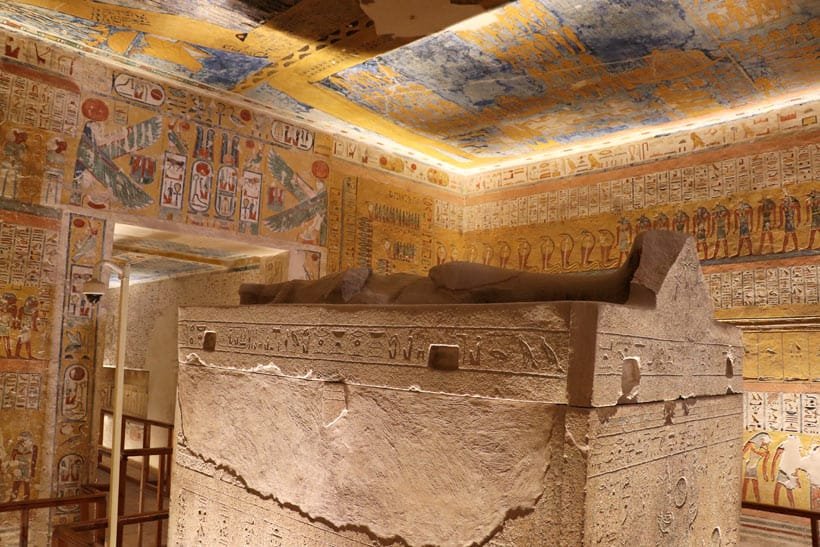
1. Valley of the Kings: The Eternal Resting Place of the Pharaohs
Hidden deep within the desert cliffs of the West Bank of Luxor lies one of the most famous archaeological sites in the world: the legendary Valley of the Kings. This sacred valley served as the royal burial ground for the pharaohs of Egypt’s 18th, 19th, and 20th Dynasties during the New Kingdom period, becoming the final resting place of some of history’s most powerful rulers. Unlike the massive pyramids of Giza, the kings of Thebes chose hidden rock-cut tombs carved deep into the desert mountains in hopes of protecting their treasures and mummies from tomb robbers. Today, the valley contains more than sixty discovered tombs, each varying in size, decoration, and complexity. Walking through the Valley of the Kings feels like entering an underground world of mythology, art, and royal symbolism where hieroglyphics and vividly painted scenes still cover the walls after more than three thousand years. The most famous tomb in the valley remains the Tomb of Tutankhamun, discovered in 1922 by Howard Carter almost completely intact with its treasures, golden coffin, and royal mummy. Other spectacular tombs include those of Ramses VI, Seti I, and Thutmose III, each containing elaborate funerary texts designed to guide the pharaoh safely through the dangers of the afterlife. Ancient Egyptians believed that preserving the king’s body and spirit was essential for cosmic balance and eternal rebirth, making the valley one of the holiest places in ancient Thebes. The surrounding desert landscape adds to the mystical atmosphere, especially beneath the pyramid-shaped peak of El-Qurn towering above the necropolis like a natural monument guarding the royal dead. Archaeologists continue making discoveries in the valley today, proving that many secrets of the ancient pharaohs may still remain hidden beneath the desert sands. Visitors exploring the tombs are often amazed by the vivid colors, artistic detail, and emotional power preserved within the underground chambers. The Valley of the Kings therefore stands not only as Egypt’s most important royal cemetery but also as one of humanity’s greatest achievements in art, religion, and funerary architecture beside the timeless Nile River.

2. The Temple of Hatshepsut: The Masterpiece of a Female Pharaoh
Among the towering cliffs of Deir el-Bahari on the West Bank of Luxor stands one of the most elegant and architecturally unique monuments in ancient Egypt: the magnificent Mortuary Temple of Hatshepsut. Built for the powerful female pharaoh Hatshepsut during the 18th Dynasty, the temple represents a masterpiece of harmony between architecture and nature. Unlike traditional Egyptian temples characterized by enclosed spaces and massive pylons, Hatshepsut’s temple rises gracefully in three terraced levels connected by wide ramps that blend seamlessly into the surrounding limestone cliffs behind it. Designed by her brilliant architect Senenmut, the temple symbolized both royal power and divine legitimacy at a time when female rulers were extremely rare in Egyptian history. The walls of the temple contain beautifully preserved relief carvings depicting Hatshepsut’s divine birth, religious ceremonies, and her famous trade expedition to the mysterious Land of Punt, where Egyptians imported incense, ebony, gold, and exotic animals. These scenes provide valuable historical evidence about ancient trade networks and political propaganda used to strengthen the queen’s authority. Visitors walking through the temple experience a remarkable sense of symmetry, openness, and tranquility enhanced by the dramatic desert landscape surrounding the monument. The colonnaded terraces create stunning photographic perspectives, especially during sunrise when golden light illuminates the sandstone walls against the cliffs of western Thebes. Although later rulers attempted to erase Hatshepsut’s memory from history by damaging statues and inscriptions, much of her temple survived and remains one of Egypt’s most admired archaeological treasures. The site also demonstrates the extraordinary artistic sophistication of New Kingdom architecture and religious symbolism. Historians regard Hatshepsut as one of Egypt’s most successful rulers because her reign brought economic prosperity, monumental building projects, and political stability. Today, her temple continues attracting travelers from around the world who come to admire its beauty and learn about one of history’s most fascinating queens. The Temple of Hatshepsut therefore remains a timeless symbol of ambition, innovation, and feminine power standing proudly among the sacred mountains of Luxor’s West Bank beside the eternal Nile River.
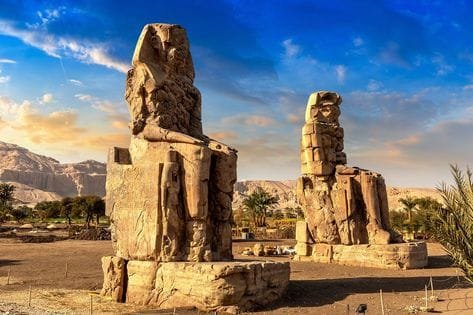
3. The Colossi of Memnon: Guardians of Ancient Thebes
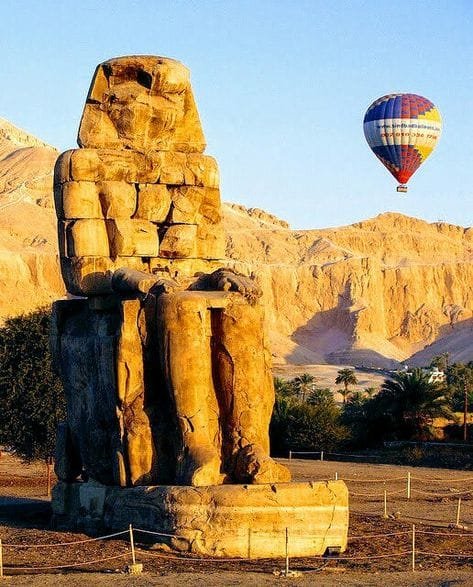
Standing silently at the entrance of the West Bank necropolis of Luxor are the monumental Colossi of Memnon, two gigantic stone statues that have watched over the Theban landscape for more than three thousand years. These colossal seated figures depict Pharaoh Amenhotep III, one of the most powerful rulers of the 18th Dynasty, whose reign marked a golden age of wealth, diplomacy, and monumental construction in ancient Egypt. Rising approximately eighteen meters high and carved from massive blocks of quartzite sandstone transported from distant quarries near Cairo, the statues once stood proudly at the entrance of Amenhotep III’s enormous mortuary temple, which was considered one of the largest and most magnificent religious complexes in ancient Egypt before earthquakes and Nile floods gradually destroyed it over the centuries. Today, the Colossi remain the most visible surviving remnants of that once-glorious temple. Ancient Greek travelers associated the northern statue with the mythical Ethiopian king Memnon, giving the monument its modern name. During the Roman period, the damaged northern statue became famous for producing mysterious sounds at dawn caused by temperature changes within cracked stone after an earthquake. Many ancient visitors believed the statue was singing or greeting the rising sun, transforming the Colossi into one of the ancient world’s earliest tourist attractions. Travelers, emperors, and poets journeyed to Thebes hoping to hear the legendary “Voice of Memnon.” Modern visitors continue feeling amazed by the enormous scale and emotional presence of the statues standing against the dramatic backdrop of the Theban mountains. The surrounding archaeological area also reveals ongoing excavation projects uncovering additional remains from Amenhotep III’s vast temple complex, including statues, sphinxes, and ceremonial structures buried beneath the desert sands. At sunrise and sunset, the Colossi become especially atmospheric as warm golden light highlights the weathered surfaces and creates striking shadows across the surrounding fields and desert landscape. The site serves as a symbolic gateway to the royal tombs and sacred temples hidden deeper within the West Bank. The Colossi of Memnon therefore remain not only remarkable achievements of ancient engineering and sculpture but also enduring symbols of Egypt’s royal grandeur, mystery, and connection to eternity beside the timeless Nile River.
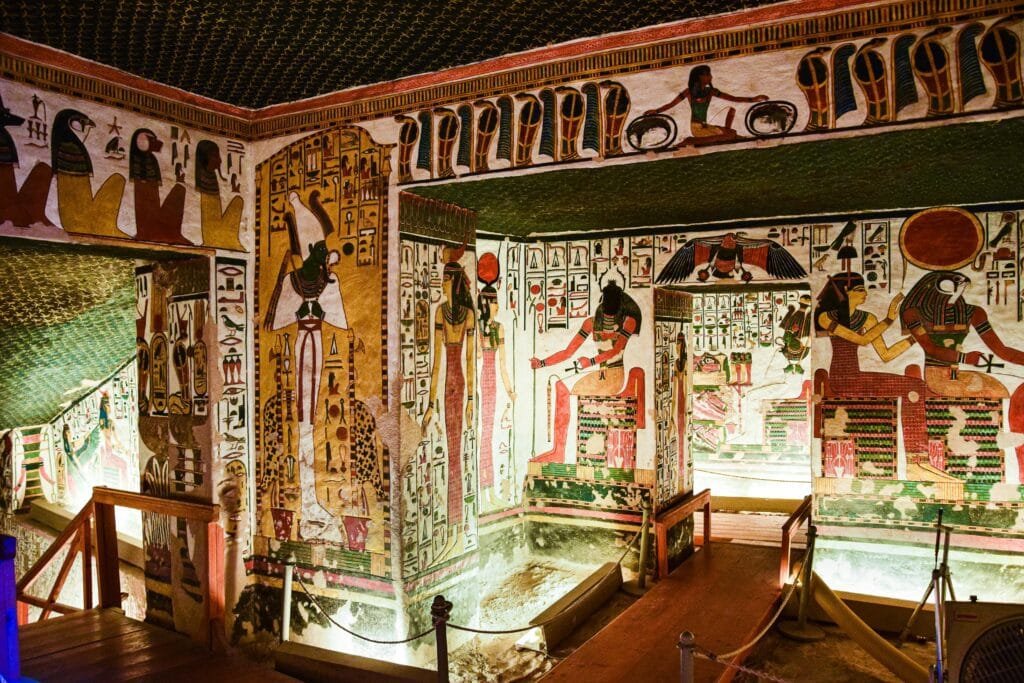
4. The Valley of the Queens: The Sacred Resting Place of Royal Women
Hidden within the desert valleys of the West Bank of Luxor lies the beautiful and deeply spiritual Valley of the Queens, the royal necropolis where the wives, princes, princesses, and noble children of ancient Egypt were buried during the New Kingdom period. Known in ancient times as “Ta-Set-Neferu,” meaning “The Place of Beauty,” the valley served as the eternal resting place for the royal women who played essential roles within the pharaonic court. Unlike the Valley of the Kings, which emphasized royal authority and cosmic power, the Valley of the Queens possesses a quieter and more intimate atmosphere filled with artistic elegance and emotional beauty. The valley contains nearly one hundred tombs carved into the limestone cliffs, many decorated with colorful scenes showing the deceased journeying safely into the afterlife under the protection of Egyptian gods and goddesses. The most famous tomb in the valley belongs to Queen Nefertari, the beloved wife of Ramses II. Often described as the “Sistine Chapel of Ancient Egypt,” her tomb is considered one of the greatest masterpieces of ancient Egyptian art ever discovered. The brilliantly preserved paintings covering the walls depict Nefertari interacting with deities such as Isis, Hathor, and Osiris while traveling toward eternal life. The vivid colors, graceful figures, and remarkable artistic detail continue astonishing archaeologists and visitors alike. Because of its fragile condition and extraordinary importance, access to Nefertari’s tomb remains carefully controlled to preserve the delicate paintings for future generations. Other tombs within the valley reveal important information about royal family life, funerary beliefs, and artistic traditions during the New Kingdom. Walking through the valley creates a strong sense of peace and reverence enhanced by the surrounding silence of the desert mountains. Historians emphasize that the Valley of the Queens demonstrates the high status and spiritual importance granted to royal women within ancient Egyptian society. At sunrise and sunset, the cliffs surrounding the valley glow with golden light, creating a magical atmosphere that reflects the ancient Egyptian belief in rebirth and eternity. The Valley of the Queens therefore remains one of Luxor’s most extraordinary archaeological treasures and a timeless monument to beauty, devotion, and eternal life beside the sacred Nile River.
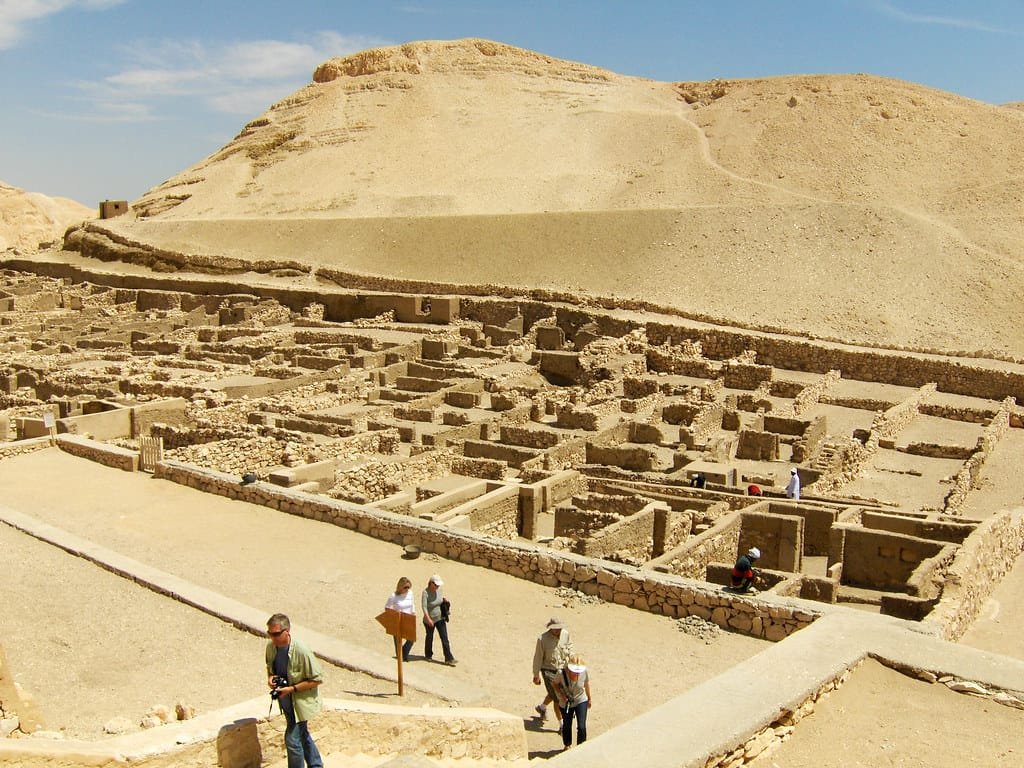
5. Deir el-Medina: The Village of the Royal Tomb Builders
Among the most fascinating and historically important sites on the West Bank of Luxor is the remarkable ancient settlement of Deir el-Medina, often called the Village of the Royal Tomb Builders. This unique community housed the highly skilled craftsmen, artists, sculptors, and laborers responsible for constructing and decorating the royal tombs in the Valley of the Kings and Valley of the Queens during the New Kingdom period. Unlike the pharaohs and nobles whose lives were recorded through monumental temples and official inscriptions, the people of Deir el-Medina left behind detailed records of ordinary daily life, making the site one of the most valuable archaeological sources for understanding ancient Egyptian society. Archaeologists discovered houses, workshops, personal letters, legal documents, medical texts, and beautifully decorated private tombs revealing intimate details about family relationships, religion, work conditions, and social organization within the village. The workers of Deir el-Medina were highly respected specialists who possessed extraordinary artistic and technical knowledge passed down across generations. Their tombs contain colorful paintings depicting farming, banquets, religious rituals, and scenes from the afterlife that reflect both personal devotion and artistic creativity. One of the most famous tombs belongs to Sennedjem, whose burial chamber remains exceptionally well preserved with vibrant scenes showing paradise-like visions of eternal life. Visitors exploring Deir el-Medina often feel a stronger personal connection to ancient Egypt because the site reveals the lives of ordinary people rather than kings alone. Historians consider the village especially important because it contains some of the earliest recorded labor strikes in human history, demonstrating that workers occasionally protested when food supplies and wages were delayed. The surrounding desert hills and quiet atmosphere create a peaceful environment ideal for reflection and exploration away from larger tourist crowds. Walking through the narrow village streets allows travelers to imagine the daily routines of the artisans who created many of Egypt’s greatest masterpieces hidden within the royal tombs nearby. Deir el-Medina therefore remains one of the most human and intellectually fascinating sites on Luxor’s West Bank, preserving the voices, talents, and experiences of the people who built the eternal monuments of ancient Egypt beside the timeless Nile River.
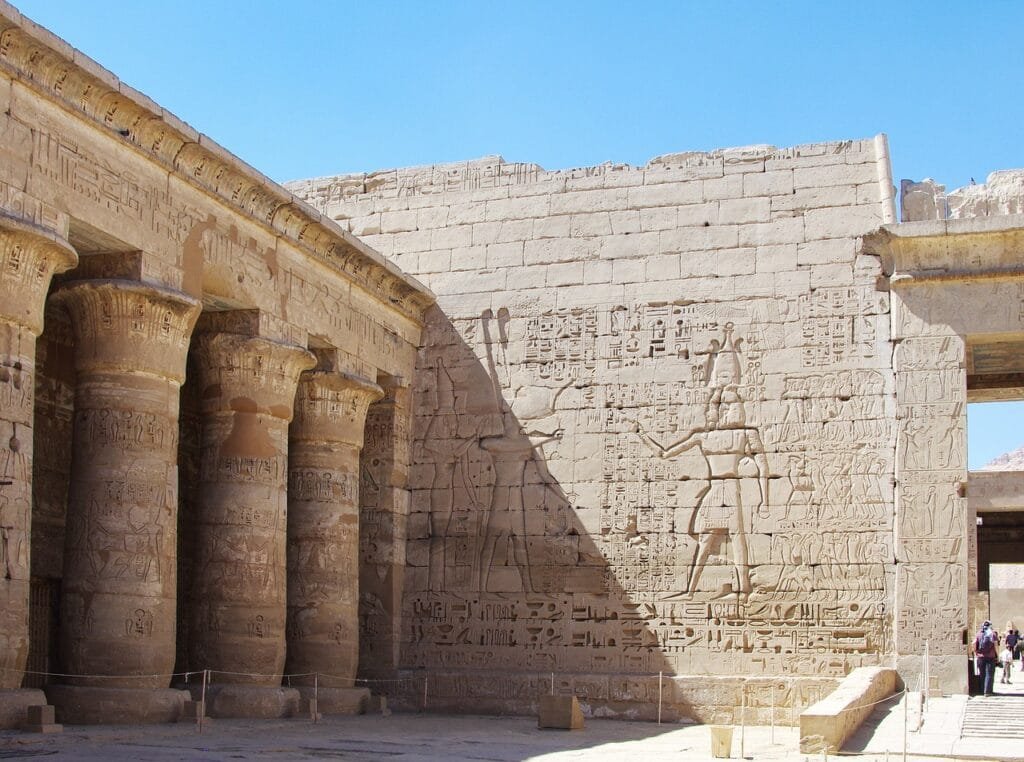
6. Medinet Habu: The Fortress Temple of Ramses III
One of the most impressive yet often overlooked monuments on the West Bank of Luxor is the magnificent Mortuary Temple of Ramesses III at Medinet Habu, commonly known as Medinet Habu. Built primarily during the reign of Pharaoh Ramses III of the 20th Dynasty, this enormous mortuary temple stands as one of the best-preserved temple complexes in all of Egypt. Surrounded by massive mudbrick walls resembling a fortified city, Medinet Habu combines religious, political, military, and ceremonial functions within a single architectural masterpiece. Visitors approaching the temple immediately notice its monumental gateway inspired by Syrian fortress architecture, reflecting Egypt’s international connections during the late New Kingdom period. Inside the complex, colossal statues, towering columns, colorful reliefs, and enormous courtyards reveal the extraordinary artistic and engineering achievements of Ramses III’s reign. The walls of the temple are especially famous for their detailed battle scenes depicting the pharaoh’s victories against the mysterious Sea Peoples who threatened Egypt during a period of regional instability across the ancient Mediterranean world. These reliefs provide some of the most valuable historical records of warfare, military technology, and foreign enemies preserved from ancient Egypt. Unlike many temples damaged by time and flooding, large sections of Medinet Habu still retain traces of their original vibrant paint, allowing visitors to imagine how colorful Egyptian temples once appeared in antiquity. The temple also contains chapels, sacred spaces, royal inscriptions, priestly areas, and remains from later Christian settlements built within the complex centuries after the decline of Pharaonic civilization. Historians regard Medinet Habu as one of the most important sources for understanding the political and military history of late New Kingdom Egypt. The site’s relative quietness compared to Karnak or the Valley of the Kings allows visitors to explore its vast spaces peacefully while appreciating the scale and detail of the surviving architecture. At sunrise and sunset, warm desert light illuminates the sandstone walls and creates dramatic shadows across the temple courtyards, enhancing the mystical atmosphere of the West Bank. Medinet Habu therefore remains one of Luxor’s hidden masterpieces and a remarkable testament to the resilience, artistry, and military power of ancient Egypt beside the eternal Nile River.
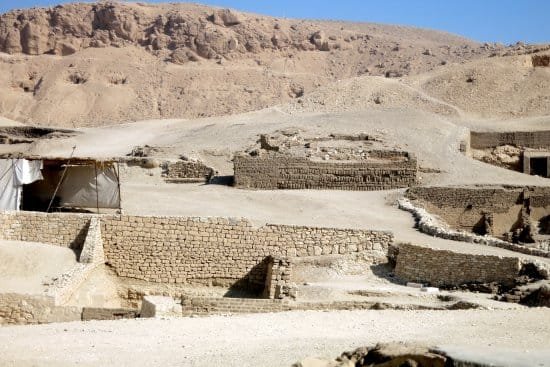
7. The Tombs of the Nobles: Hidden Masterpieces of Daily Life
Beyond the famous royal tombs and monumental temples of the West Bank of Luxor lies a remarkable collection of private burial chambers known as the Tombs of the Nobles, one of the most fascinating yet underrated archaeological treasures in ancient Thebes. These tombs belonged to high-ranking officials, priests, governors, scribes, military commanders, and administrators who served the pharaohs during the New Kingdom period. Unlike the royal tombs of the Valley of the Kings, which focus heavily on divine mythology and the pharaoh’s journey into the afterlife, the Tombs of the Nobles preserve incredibly detailed scenes from everyday Egyptian life. The walls depict farming, fishing, banquets, hunting, religious ceremonies, music, craftsmanship, family gatherings, and Nile activities with astonishing realism and artistic sophistication. These colorful paintings provide historians with invaluable information about ancient Egyptian society, economy, clothing, agriculture, and social customs. Some of the most famous tombs include those of Rekhmire, Ramose, Nakht, Menna, and Sennefer, each displaying unique artistic styles and themes reflecting the status and professions of their owners. Walking through these tombs feels deeply personal because visitors encounter scenes of ordinary human life rather than purely royal propaganda. The paintings often show smiling family members, workers harvesting crops, musicians entertaining guests, and servants preparing food, creating a vivid portrait of daily existence along the Nile thousands of years ago. Many ceilings are decorated with floral patterns, grapevines, and astronomical motifs that remain brilliantly preserved despite the passage of centuries. The tombs are carved into the desert hills overlooking fertile farmland and the Nile Valley, creating beautiful panoramic views across Luxor. Because these sites receive fewer tourists than larger monuments, visitors often enjoy a quieter and more intimate archaeological experience. Historians regard the Tombs of the Nobles as essential for understanding the human side of ancient Egyptian civilization beyond kings and temples alone. The artistic quality and emotional warmth preserved within these burial chambers continue inspiring archaeologists, historians, and travelers from around the world. The Tombs of the Nobles therefore remain one of the West Bank’s most valuable cultural treasures and a remarkable window into the lives, dreams, and beliefs of ancient Egypt’s elite society beside the timeless Nile River.
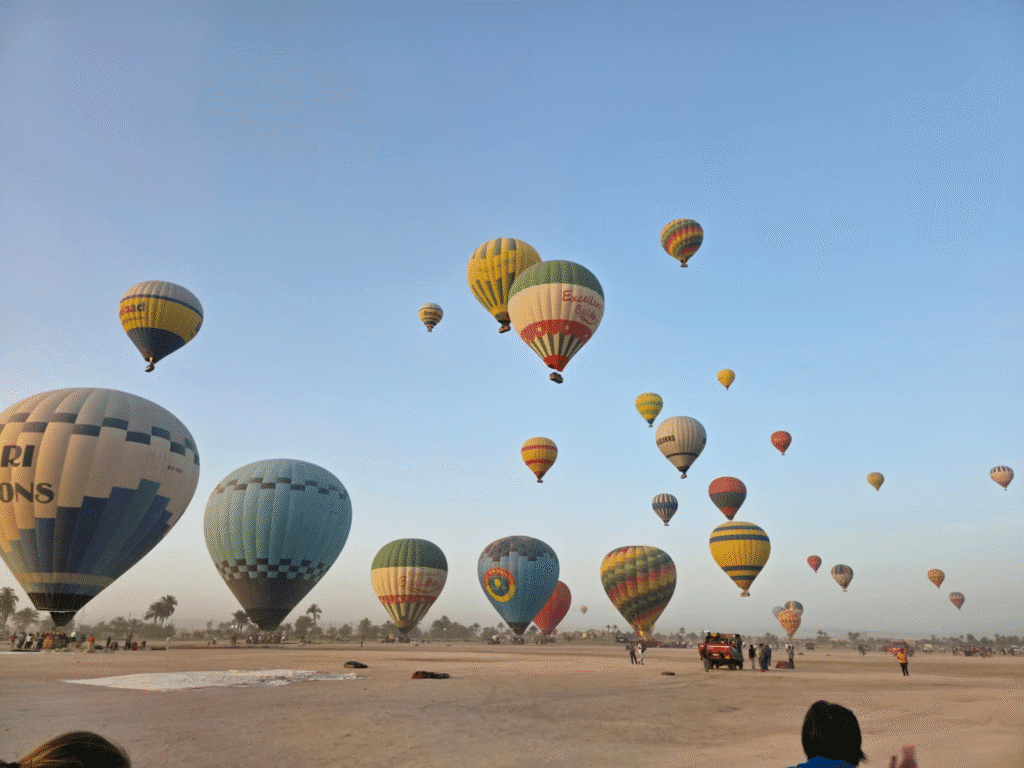
8. Hot Air Balloon Rides Above the West Bank
One of the most unforgettable experiences on the West Bank of Luxor is taking a sunrise hot air balloon ride above the ancient necropolis and desert landscape of western Thebes. Widely considered one of the greatest ballooning destinations in the world, the West Bank offers travelers an extraordinary opportunity to witness Egypt’s archaeological wonders from high above the Nile Valley as the first light of dawn illuminates the temples, mountains, and royal tombs below. Before sunrise, visitors gather near the Nile while enormous colorful balloons slowly rise into the cool desert air against the backdrop of dark mountains and the awakening city of Luxor. As the balloon gently ascends, breathtaking panoramic views begin unfolding across the entire Theban landscape. From above, travelers can clearly see the contrast between the fertile green farmland surrounding the Nile and the golden desert cliffs hiding the Valley of the Kings, the Valley of the Queens, and countless ancient tombs. The aerial perspective reveals the vast scale of the archaeological landscape in a way impossible to appreciate from the ground alone. Floating silently above the Mortuary Temple of Hatshepsut and the Colossi of Memnon while the rising sun paints the desert in shades of gold, orange, and crimson creates an emotional and almost spiritual experience for many travelers. The calm atmosphere of early morning enhances the sense of timeless beauty surrounding the ancient monuments below. Photographers especially value the balloon rides because they provide unique angles and lighting conditions ideal for capturing Luxor’s dramatic landscapes and temple architecture. Local pilots often guide passengers through the historical significance of the visible sites, combining adventure with educational storytelling. The activity has become one of Luxor’s most iconic tourism experiences and attracts visitors from around the world seeking both excitement and breathtaking scenery. Historians note that viewing the West Bank from the sky also helps travelers understand why ancient Egyptians selected these mountains and valleys as sacred burial grounds associated with the afterlife and the setting sun. Hot air balloon rides therefore offer far more than adventure tourism; they provide a unique opportunity to appreciate the spiritual geography, natural beauty, and monumental scale of ancient Thebes beside the eternal Nile River.
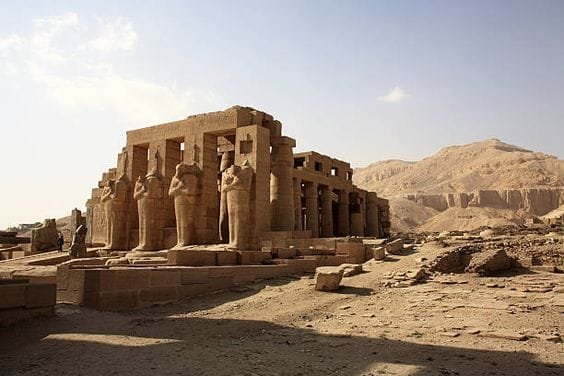
9. The Ramesseum: The Temple of Ramses the Great
Among the monumental ruins scattered across the West Bank of Luxor stands the majestic Ramesseum, the mortuary temple of the legendary Pharaoh Ramesses II, often known as Ramses the Great. Built during the 19th Dynasty, the Ramesseum once served as a grand ceremonial complex dedicated both to the worship of the gods and the eternal cult of Ramses II himself, who ruled Egypt for more than sixty years during one of the most powerful periods in Egyptian history. Although partially ruined today, the temple still preserves an atmosphere of grandeur and mystery that reflects the enormous ambition of its creator. Visitors approaching the site encounter the shattered remains of a colossal seated statue of Ramses II that once stood over seventeen meters high and weighed nearly one thousand tons. Fragments of this gigantic sculpture lie dramatically scattered across the ground, inspiring poets and travelers for centuries, including the famous poem “Ozymandias” by Percy Bysshe Shelley, which reflects on the impermanence of power and empires. The temple’s walls contain impressive relief carvings depicting military victories, religious rituals, and scenes from the famous Battle of Kadesh fought between Egypt and the Hittites. These carvings provide valuable historical evidence about warfare, diplomacy, and royal propaganda during the New Kingdom period. Massive columns, courtyards, storage halls, chapels, and sacred chambers reveal the immense scale of the original complex, which once included libraries, workshops, and priestly quarters. Despite centuries of damage caused by earthquakes, Nile floods, and stone reuse in later periods, the surviving architecture continues demonstrating the artistic sophistication and engineering skill of ancient Egyptian builders. The surrounding landscape of fields, desert hills, and distant mountains creates a beautiful and peaceful setting ideal for historical exploration and photography. Compared to more crowded monuments, the Ramesseum offers visitors a quieter atmosphere that encourages deeper reflection upon Egypt’s ancient past. Historians regard Ramses II as one of the greatest builders in human history, and the Ramesseum stands as one of his most important surviving monuments. The temple therefore remains a powerful symbol of royal ambition, artistic mastery, and the eternal desire for immortality beside the sacred Nile River.
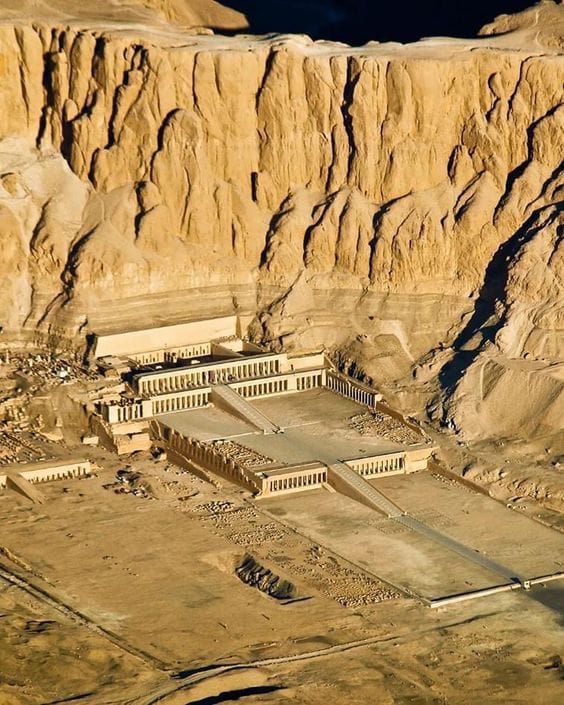
10. The Desert Landscape and Sacred Mountains of the West Bank
The dramatic desert landscape of the West Bank of Luxor plays an essential role in the spiritual atmosphere and historical significance of ancient Thebes. Unlike the greener and more populated East Bank, the western side of the Nile is dominated by golden cliffs, barren valleys, and towering limestone mountains that create a breathtaking natural setting unlike anywhere else in Egypt. Ancient Egyptians carefully selected this landscape for their royal tombs and funerary temples because they believed the western horizon symbolized death, rebirth, and the entrance to the afterlife where the sun disappeared each evening. The most recognizable natural landmark of the West Bank is the pyramid-shaped peak known as El-Qurn, whose pointed summit resembles a natural pyramid rising above the Valley of the Kings. Historians believe this unique mountain formation strongly influenced the decision to bury the pharaohs within the surrounding valleys rather than constructing giant pyramids like those at Giza. The desert silence, harsh sunlight, and immense open spaces create an atmosphere of mystery and eternity that perfectly matched ancient Egyptian funerary beliefs. Walking through the valleys at sunrise or sunset allows visitors to experience the same dramatic scenery that inspired priests, kings, and artisans thousands of years ago. The contrast between the fertile green fields beside the Nile and the barren desert mountains further emphasizes the symbolic transition between life and death central to Egyptian religion. The shifting colors of the cliffs throughout the day create constantly changing landscapes as sunlight transforms the mountains from pale gold to deep orange and crimson. Archaeologists also value the desert environment because the dry climate helped preserve tomb paintings, mummies, and ancient structures for millennia. The mountains surrounding the West Bank contain hidden tombs, caves, monasteries, and archaeological sites still being explored today, proving that many secrets may remain undiscovered beneath the desert sands. Visitors often describe the landscape itself as one of the most emotionally powerful aspects of the West Bank because it creates a deep connection between nature, spirituality, and history. The sacred mountains therefore remain inseparable from the identity of ancient Thebes and continue standing as eternal guardians over the royal necropolis beside the timeless Nile River.
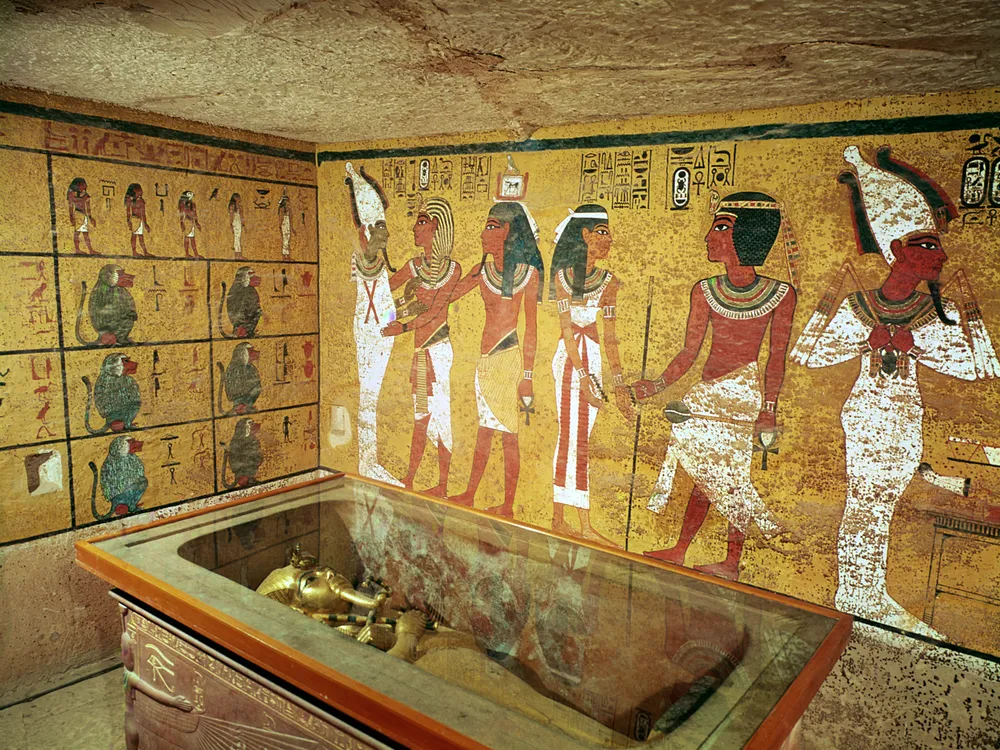
11. Howard Carter and the Discovery of Tutankhamun’s Tomb
The West Bank of Luxor became the center of worldwide attention in 1922 when British archaeologist Howard Carter made one of the greatest discoveries in archaeological history within the Valley of the Kings: the nearly intact tomb of the young pharaoh Tutankhamun. After years of difficult excavations and financial support from Lord Carnarvon, Carter uncovered hidden steps leading beneath the desert floor to a sealed royal burial chamber untouched by major looting for more than three thousand years. When Carter famously peered through a small opening and was asked if he could see anything, he replied with the legendary words, “Yes, wonderful things.” Inside the tomb, archaeologists discovered an extraordinary collection of treasures including golden shrines, chariots, jewelry, statues, furniture, ceremonial weapons, and the iconic solid-gold funerary mask that later became one of the most famous symbols of ancient Egypt worldwide. The discovery transformed global understanding of Egyptian archaeology because it provided an unprecedented look into royal burial customs, craftsmanship, religion, and luxury during the New Kingdom period. Unlike many tombs that had been heavily looted in antiquity, Tutankhamun’s tomb preserved thousands of objects arranged almost exactly as they had been placed during the king’s burial around 1323 BCE. News of the discovery created international excitement and sparked worldwide fascination with ancient Egypt that continues today. Rumors of a mysterious “curse of the pharaohs” spread rapidly after several individuals connected to the excavation died unexpectedly, further increasing public interest and mythological speculation surrounding the tomb. Visitors exploring the Valley of the Kings today can still enter Tutankhamun’s tomb and observe the pharaoh’s mummy resting inside the burial chamber beneath painted walls depicting scenes from the afterlife. Howard Carter’s discovery remains one of the defining moments in modern archaeology and forever linked Luxor’s West Bank with one of history’s greatest archaeological triumphs. The tomb of Tutankhamun continues attracting millions of visitors who seek to experience the mystery, beauty, and historical importance of the ancient world. The discovery therefore cemented the West Bank’s reputation as one of the most significant archaeological landscapes on Earth beside the eternal Nile River.

12. Monasteries and Christian Heritage on the West Bank
Although the West Bank of Luxor is most famous for its Pharaonic monuments, the region also preserves important traces of Egypt’s early Christian history, demonstrating the remarkable continuity of sacred life within the Theban mountains across thousands of years. After the decline of ancient Egyptian religion and the spread of Christianity throughout Egypt during the Roman and Byzantine periods, many abandoned tombs and temples on the West Bank were transformed into monasteries, churches, and hermit settlements by Coptic monks seeking isolation and spiritual devotion within the desert landscape. One of the most important Christian sites is the Monastery of Saint Epiphanius near Deir el-Bahari, where monks lived among the cliffs close to ancient royal temples and tombs. Archaeologists discovered inscriptions, manuscripts, and simple living quarters revealing how these religious communities adapted ancient structures for Christian worship and daily monastic life. The desert environment of the West Bank attracted hermits because the silence and isolation were considered ideal for prayer, meditation, and spiritual discipline. Some ancient tombs were converted into chapels decorated with crosses, biblical scenes, and Coptic inscriptions layered directly over older Pharaonic artwork, creating fascinating visual evidence of Egypt’s evolving religious history. Historians regard the West Bank as an important center of early Christian monasticism because it reflects the transition from ancient Egyptian beliefs about the afterlife toward Christian spiritual traditions focused on asceticism and devotion. Visitors exploring these sites experience a unique blend of archaeological periods rarely found elsewhere in Egypt. The coexistence of temples, tombs, monasteries, and churches within the same landscape highlights the enduring sacred character of the Theban mountains across multiple civilizations. Even after the decline of ancient Thebes, the West Bank remained a place associated with spirituality, isolation, and eternal reflection. The contrast between monumental Pharaonic architecture and the simplicity of early Christian monastic life creates a deeply moving historical narrative that enriches the visitor experience beyond archaeology alone. Today, the monasteries and Christian remains of the West Bank continue attracting historians, pilgrims, and travelers interested in Egypt’s religious diversity and cultural continuity. These sacred desert communities therefore form an essential chapter in the long spiritual history of Luxor’s West Bank beside the timeless Nile River.
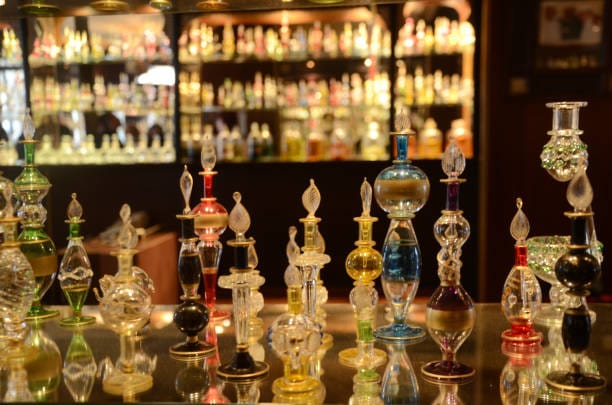
13. The Local Villages and Traditional Life of the West Bank
Beyond the famous temples and royal tombs, the West Bank of Luxor is also home to vibrant villages and traditional farming communities that preserve many aspects of Upper Egyptian rural life beside the Nile River. Villages such as Gurna, Al-Bairat, and surrounding settlements stretch between fertile agricultural fields and the desert mountains, creating a striking contrast between daily life and the ancient monuments rising nearby. For centuries, local families have lived among the archaeological sites, developing a unique cultural connection to the history surrounding them. Walking through these villages allows visitors to experience a quieter and more authentic side of Luxor beyond the large tourist crowds of the temples and museums. Mudbrick houses, narrow streets, colorful markets, palm groves, and fields of sugarcane, wheat, and vegetables create a peaceful landscape shaped by the rhythms of the Nile and traditional agriculture. Many residents continue working as farmers, craftsmen, boatmen, guides, and artisans whose livelihoods remain closely connected to tourism and archaeology. Local workshops produce alabaster carvings, handmade jewelry, woven textiles, pottery, and traditional crafts inspired by ancient Egyptian art and symbols. Horse-drawn carriages, donkeys, and bicycles remain common forms of transportation within many village areas, preserving a slower pace of life rarely found in large modern cities. Visitors often enjoy interacting with local residents, drinking tea in family cafés, or sharing meals prepared with fresh ingredients grown in nearby fields. The hospitality of Upper Egypt is especially visible on the West Bank, where many families warmly welcome travelers interested in learning about local traditions and daily routines. Children frequently play beside ancient ruins while farmers work within sight of temples thousands of years old, creating a remarkable coexistence between living culture and ancient history. The villages also reveal the challenges of balancing archaeological preservation with the needs of modern communities living within one of the world’s most important historical landscapes. Historians emphasize that understanding the human life of the West Bank today adds important depth to the visitor experience because Luxor remains not only an archaeological site but also a living Egyptian city. The local villages therefore form an essential part of the West Bank’s identity, connecting modern traditions with the timeless spirit of ancient Thebes beside the eternal Nile River.
14. Exploring the West Bank by Bicycle, Horse Carriage, and Felucca
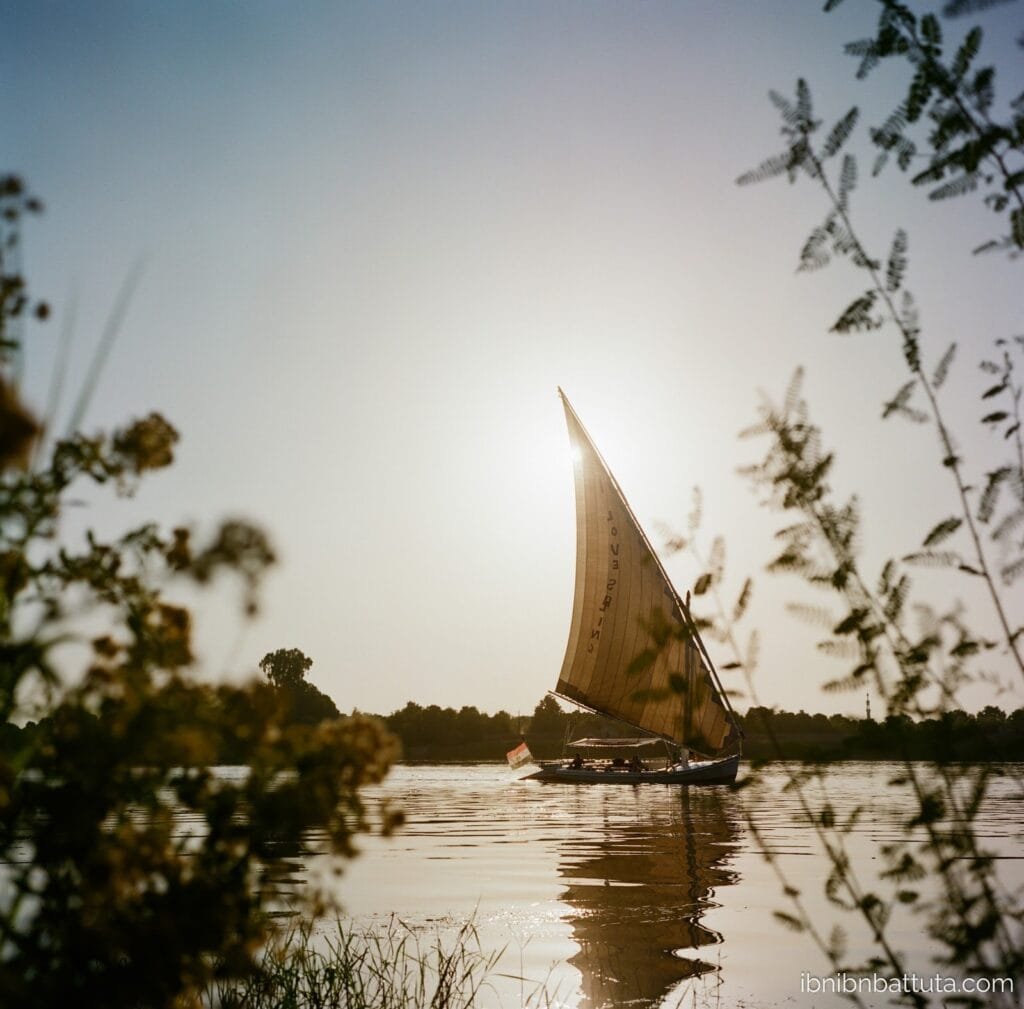
One of the most enjoyable aspects of visiting the West Bank of Luxor is the variety of traditional and scenic ways travelers can explore its remarkable landscapes, villages, temples, and archaeological treasures. Unlike many crowded urban destinations, the West Bank offers a slower and more peaceful atmosphere ideal for outdoor exploration and immersive cultural experiences. Bicycles have become especially popular among visitors because the flat roads winding between farmland, villages, and ancient monuments allow travelers to move comfortably through the landscape while enjoying the beauty of the Nile Valley at a relaxed pace. Cycling through green agricultural fields with the desert mountains rising in the distance creates one of the most memorable experiences in Luxor. Many travelers stop along the way to observe local farming life, photograph traditional mudbrick homes, or visit smaller archaeological sites hidden away from larger tourist routes. Horse-drawn carriages also remain a classic form of transportation across the West Bank, adding a romantic and nostalgic atmosphere to the journey. Riding beside palm trees and ancient temples while hearing the sounds of horses and village life allows visitors to experience Luxor in a more traditional way connected to the region’s historical character. For shorter distances, donkeys are still used by local residents and sometimes by travelers exploring remote desert areas. Another unforgettable way to experience the West Bank is by crossing the Nile aboard a traditional felucca sailboat. These elegant wooden boats powered by wind have sailed the Nile for centuries and provide breathtaking views of Luxor’s temples, fields, and desert cliffs from the water. Many travelers enjoy sunset felucca rides between the East and West Banks while watching golden light reflect across the river. The peaceful rhythm of sailing creates a timeless atmosphere that helps visitors appreciate the central importance of the Nile in Egyptian civilization. Exploring the West Bank through these slower forms of travel allows travelers to notice details often missed during fast bus tours or crowded itineraries. Historians and cultural travelers especially appreciate how these experiences connect modern tourism with the ancient landscapes and transportation traditions of Upper Egypt. Whether by bicycle, carriage, or felucca, exploring the West Bank becomes not only a sightseeing activity but also a deeply personal journey through one of the world’s most extraordinary historical environments beside the eternal Nile River.
15. The Best Time to Visit the West Bank of Luxor
The climate and seasonal atmosphere of the West Bank of Luxor play a major role in shaping the visitor experience because the region’s desert environment creates dramatic differences between summer and winter conditions throughout the year. Located in Upper Egypt, Luxor experiences a classic hot desert climate characterized by intense sunlight, dry air, and very limited rainfall, making careful planning especially important for travelers hoping to explore the archaeological wonders of the West Bank comfortably. The most popular and enjoyable period to visit is generally between October and April, when daytime temperatures remain mild and pleasant, often ranging from twenty to twenty-five degrees Celsius. During these cooler months, visitors can spend long hours exploring the Valley of the Kings, the Temple of Hatshepsut, Medinet Habu, and other open-air sites without suffering from extreme heat. Winter mornings on the West Bank are especially beautiful because soft golden sunlight gradually illuminates the desert mountains and ancient temples while cool breezes move across the Nile Valley. Sunrise excursions, particularly hot air balloon rides above the necropolis, become unforgettable experiences during this season due to the clear skies and comfortable temperatures. Evenings are also pleasant for walking through villages or enjoying traditional dinners overlooking the Nile. The summer months from May through September, however, bring extremely high temperatures that frequently exceed forty degrees Celsius, especially during midday. Although summer conditions can be challenging, some travelers prefer this season because tourist crowds decrease significantly and hotel prices become more affordable. Visitors exploring during summer are advised to begin sightseeing very early in the morning, rest during the hottest afternoon hours, and remain well hydrated throughout the day. Lightweight clothing, hats, sunscreen, and comfortable walking shoes are essential year-round because many West Bank sites require extended walking across exposed desert terrain. Historians and photographers often recommend visiting during winter or early spring because the lighting conditions enhance the beauty of the monuments and surrounding landscapes. Regardless of the season, the West Bank remains one of the world’s most extraordinary archaeological destinations where ancient temples, royal tombs, and sacred mountains continue preserving the timeless spirit of ancient Egypt beside the eternal Nile River.
16. The West Bank for Families and Educational Tourism
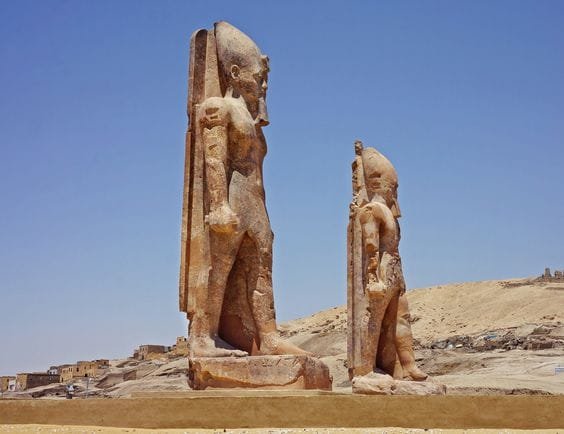
The West Bank of Luxor has become one of the most fascinating educational destinations in the world for families, students, historians, and cultural travelers seeking to experience ancient history beyond textbooks and documentaries. Visiting the West Bank is not simply a sightseeing excursion; it is an immersive journey into the beliefs, architecture, art, and daily life of one of humanity’s greatest civilizations. Children and young travelers are often captivated by the mystery surrounding hidden tombs, mummies, pharaohs, and colorful hieroglyphics carved into the walls of ancient burial chambers. Exploring the Valley of the Kings feels like entering a real-life adventure where stories of ancient rulers, sacred rituals, and buried treasures suddenly become tangible and alive. Educational guides and family-friendly tours frequently use storytelling techniques to explain Egyptian mythology, the process of mummification, and the symbolic meaning behind tomb paintings, making archaeology accessible and exciting for all ages. Sites such as the Mortuary Temple of Hatshepsut and Deir el-Medina also introduce children to themes of leadership, architecture, craftsmanship, and community life within ancient Egypt. Many schools and universities from around the world organize educational trips to Luxor because the West Bank provides unparalleled opportunities to study history, religion, engineering, and art directly within their original environment. Families often combine archaeological exploration with cultural experiences such as felucca rides, village visits, bicycle tours, and traditional Egyptian meals that create lasting memories for younger travelers. Modern tourism facilities on the West Bank increasingly cater to families through comfortable transportation, interactive museum exhibits, and educational workshops focused on hieroglyphics, papyrus art, and ancient Egyptian crafts. Parents frequently describe the experience as transformative because children develop a deeper appreciation for world heritage and cultural preservation after witnessing monuments that have survived for thousands of years. The peaceful desert landscapes and dramatic mountain scenery also create a strong emotional atmosphere that inspires curiosity and imagination. The West Bank therefore serves not only as a monumental archaeological treasure but also as one of the world’s greatest open-air classrooms where ancient history becomes vivid, engaging, and unforgettable beside the timeless Nile River.

17. Archaeological Discoveries and Ongoing Excavations on the West Bank
The West Bank of Luxor continues to be one of the most active and important archaeological regions in the world, where new discoveries constantly reshape humanity’s understanding of ancient Egyptian civilization. Although the area has been explored by archaeologists for more than two centuries, experts believe that many tombs, temples, burial shafts, workshops, and hidden settlements still remain buried beneath the sands and cliffs of western Thebes. Every year, international archaeological missions conduct excavations across the West Bank, uncovering extraordinary artifacts, statues, coffins, inscriptions, mummies, and architectural remains that reveal previously unknown details about life and death in ancient Egypt. Some of the most exciting discoveries in recent decades include hidden royal tombs, colorful sarcophagi, funerary workshops, and large collections of sealed coffins remarkably preserved for thousands of years. Excavations near the Valley of the Kings and the tombs of nobles continue providing new information about burial practices, royal ceremonies, and the complex organization of the Theban necropolis. Archaeologists also study ancient graffiti, tools, food remains, textiles, and workers’ settlements to better understand the daily lives of the craftsmen who created the royal tombs. Modern technology such as ground-penetrating radar, digital mapping, and 3D scanning has revolutionized archaeological research on the West Bank, allowing scientists to locate hidden chambers and preserve fragile paintings more effectively than ever before. One of the most remarkable recent discoveries was the uncovering of an ancient “lost golden city” near Luxor linked to the reign of Amenhotep III, revealing streets, houses, bakeries, workshops, and objects frozen in time beneath the desert sands. These discoveries demonstrate that the West Bank still contains countless secrets waiting to be revealed. Archaeological preservation remains equally important because rising tourism, environmental conditions, and time itself threaten delicate tomb paintings and ancient structures. Conservation teams work continuously to protect the monuments while allowing visitors to experience their historical beauty responsibly. Travelers visiting the West Bank today therefore witness not only the achievements of ancient Egypt but also the ongoing global effort to preserve humanity’s shared cultural heritage. The West Bank remains a living archaeological landscape where the mysteries of ancient Thebes continue emerging from the desert beside the eternal Nile River.
18. The West Bank of Luxor: The Eternal City of Silence and Immortality
In conclusion, the West Bank of Luxor stands as one of the most extraordinary cultural and spiritual landscapes ever created by human civilization. More than a simple collection of temples and tombs, the West Bank represents the ancient Egyptian vision of eternity, rebirth, and the sacred journey into the afterlife. Every valley, cliff, and monument across this vast necropolis carries the memory of kings, queens, priests, artisans, and ordinary people who dedicated their lives to preparing for immortality beneath the desert mountains of Thebes. From the hidden chambers of the Valley of the Kings to the elegant terraces of the Mortuary Temple of Hatshepsut and the peaceful villages scattered among the fields, the West Bank offers travelers an unmatched journey through the artistic, religious, and emotional world of ancient Egypt. The silence of the desert landscape, interrupted only by the wind moving across the mountains and the distant sounds of the Nile, creates an atmosphere unlike anywhere else on Earth. Here, visitors feel connected not only to history but also to humanity’s timeless desire to understand life, death, and eternity. The West Bank continues inspiring archaeologists, historians, photographers, and travelers because it preserves both monumental grandeur and deeply personal human stories within the same sacred environment. Ancient tomb paintings still glow with vivid colors after thousands of years, royal statues continue standing proudly against the desert horizon, and new archaeological discoveries constantly reveal hidden chapters of Egypt’s past. At sunrise, the mountains become illuminated with golden light symbolizing rebirth, while sunset transforms the valleys into a realm of mystery and reflection connected to the ancient Egyptian cycle of life and death. Yet despite its ancient origins, the West Bank remains alive through the culture, traditions, and hospitality of modern Luxor’s communities who continue living beside these timeless monuments. The relationship between nature, religion, architecture, and human memory reaches its highest expression within this sacred landscape. As long as the Nile flows beside the cliffs of western Thebes, the West Bank of Luxor will remain an eternal symbol of ancient Egypt’s greatness, spirituality, artistic brilliance, and everlasting quest for immortality beside the sacred river that gave birth to civilization itself.