

- Excursions in Egypt
- Egypt Tour Packages
- Cairo Tours and Excursions
- Hurghada Tours and Excursions
- Soma Bay Tours and Excursions
- Makadi Bay Tours and Excursions
- Sahl Hasheesh Tours and Excursions
- El Gouna Tours and Excursions
- Marsa Alam Tours and Excursions
- Port Ghalib Tours and Excursions
- El Quseir Tours and Excursions
- Dendera and Abydos Day Tours
- Aswan Tours and Excursions
- Luxor Tours and Excursions
- Sharm El Sheikh Tours and Excursions
- Top Rated Egypt Tours in 2026
- Optional Excursions in Egypt
- Private Transfer
- Blogs About egypt
- Ancient Egypt
- Historical Sites in Egypt
- Cairo
- Alexandria
- Luxor
- Aswan
- The Red Sea
- Dendera Temple
- El Fayoum Oasis
- Bahariya Oasis
- Siwa Oasis
- Al Alamein
- Marsa Matruh
- Why Egypt Is One of the Safest Countries to Visit in the Middle East
- What You Need To know Before Your First Trip To Egypt
- Egypt Travel Costs in 2026 Full Budget Guide
- Top 10 Tourist Activities in Egypt
- Top 50 Activities You Can’t Miss in Egypt in 2026
- The Guide to Guided Tours in Egypt
- Egypt’s Ancient and Modern History
- The Nile River
- The Deserts of Egypt
- Ancient Egyptian gods
- famous Egyptian dishes
- UNESCO World Heritage sites
- About Us
- Egypt Hotels and Resorts
- Excursions in Egypt
- Egypt Tour Packages
- Cairo Tours and Excursions
- Hurghada Tours and Excursions
- Soma Bay Tours and Excursions
- Makadi Bay Tours and Excursions
- Sahl Hasheesh Tours and Excursions
- El Gouna Tours and Excursions
- Marsa Alam Tours and Excursions
- Port Ghalib Tours and Excursions
- El Quseir Tours and Excursions
- Dendera and Abydos Day Tours
- Aswan Tours and Excursions
- Luxor Tours and Excursions
- Sharm El Sheikh Tours and Excursions
- Top Rated Egypt Tours in 2026
- Optional Excursions in Egypt
- Private Transfer
- Blogs About egypt
- Ancient Egypt
- Historical Sites in Egypt
- Cairo
- Alexandria
- Luxor
- Aswan
- The Red Sea
- Dendera Temple
- El Fayoum Oasis
- Bahariya Oasis
- Siwa Oasis
- Al Alamein
- Marsa Matruh
- Why Egypt Is One of the Safest Countries to Visit in the Middle East
- What You Need To know Before Your First Trip To Egypt
- Egypt Travel Costs in 2026 Full Budget Guide
- Top 10 Tourist Activities in Egypt
- Top 50 Activities You Can’t Miss in Egypt in 2026
- The Guide to Guided Tours in Egypt
- Egypt’s Ancient and Modern History
- The Nile River
- The Deserts of Egypt
- Ancient Egyptian gods
- famous Egyptian dishes
- UNESCO World Heritage sites
- About Us
- Egypt Hotels and Resorts
Welcome to
Tomb of Ramesses II (KV7): The Largest Royal Tomb in the Valley of the Kings
The Tomb of Ramesses II (KV7) is one of the most significant royal tombs in the Valley of the Kings, serving as the original burial place of Pharaoh Ramesses II, also known as Ramesses the Great. As one of the longest-reigning and most powerful rulers in Ancient Egyptian history, Ramesses II transformed Egypt into a military, political, and architectural superpower during the Nineteenth Dynasty (c. 1279–1213 BC). His reign lasted more than 66 years, during which he constructed legendary monuments such as Abu Simbel, the Ramesseum, and numerous temples across Egypt and Nubia. It is only fitting that his royal tomb was designed on an equally grand scale. Located in the heart of the Valley of the Kings on the west bank of Luxor, KV7 was built to reflect the divine status, immense wealth, and eternal legacy of one of Egypt’s greatest pharaohs. Although centuries of flooding and ancient tomb robbery severely damaged the monument, modern archaeological excavations continue to reveal its original magnificence through surviving reliefs, architectural remains, inscriptions, and thousands of recovered artifacts. The tomb is notable for its enormous size, complex floor plan, beautifully carved corridors, multiple burial chambers, and extensive religious decorations illustrating the king’s journey through the afterlife. Today, KV7 remains one of the most important archaeological sites in Egypt, providing valuable insights into New Kingdom funerary architecture, Ancient Egyptian religion, royal burial customs, and the extraordinary achievements of Ramesses II. This comprehensive guide explores the history, construction, discovery, artistic decoration, religious symbolism, treasures, restoration, and lasting legacy of the Tomb of Ramesses II, explaining why KV7 continues to fascinate historians, archaeologists, Egyptologists, and travelers from around the world.
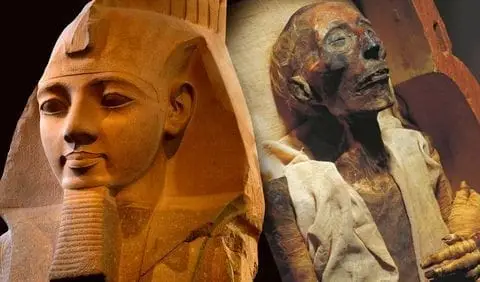
1. Who Was Ramesses II? Egypt's Greatest Pharaoh
Ramesses II, often called Ramesses the Great, is widely regarded as the most famous and influential ruler of Ancient Egypt. Born around 1303 BC, he became pharaoh in 1279 BC and ruled for approximately 66 years, making him one of the longest-serving monarchs in recorded history. As the third king of the Nineteenth Dynasty, Ramesses II inherited a prosperous kingdom from his father, Seti I, but expanded Egypt's power, wealth, and international influence to unprecedented levels. Throughout his reign, he led numerous military campaigns into Syria, Canaan, Libya, and Nubia, with his most celebrated achievement being the famous Battle of Kadesh against the Hittite Empire. Although the battle ended without a decisive victory, it eventually led to the world's earliest known surviving peace treaty, marking a milestone in diplomatic history. Beyond his military accomplishments, Ramesses II became Egypt's greatest builder. He commissioned hundreds of temples, statues, obelisks, palaces, and monuments, many of which still dominate the Egyptian landscape today. His colossal statues at Abu Simbel, the magnificent Ramesseum on Luxor's west bank, additions to the Temple of Karnak, and numerous construction projects across Egypt demonstrate both his immense resources and his desire to leave an everlasting legacy. Ramesses II also fathered an exceptionally large royal family, with historical records suggesting he had more than one hundred children through multiple queens and royal wives, including the famous Queen Nefertari. As a living god in the eyes of his people, Ramesses carefully promoted his image through monumental art, inscriptions, and temple reliefs that celebrated his victories and divine authority. His burial in KV7 reflected this same ambition, creating a royal tomb worthy of Egypt's greatest pharaoh. Although his mummy was later moved to protect it from tomb robbers and now rests in the National Museum of Egyptian Civilization (NMEC), the original tomb remains a testament to his extraordinary reign. Today, Ramesses II continues to symbolize the height of Ancient Egyptian civilization, representing military strength, architectural brilliance, political stability, religious devotion, and one of the most remarkable royal legacies in world history.
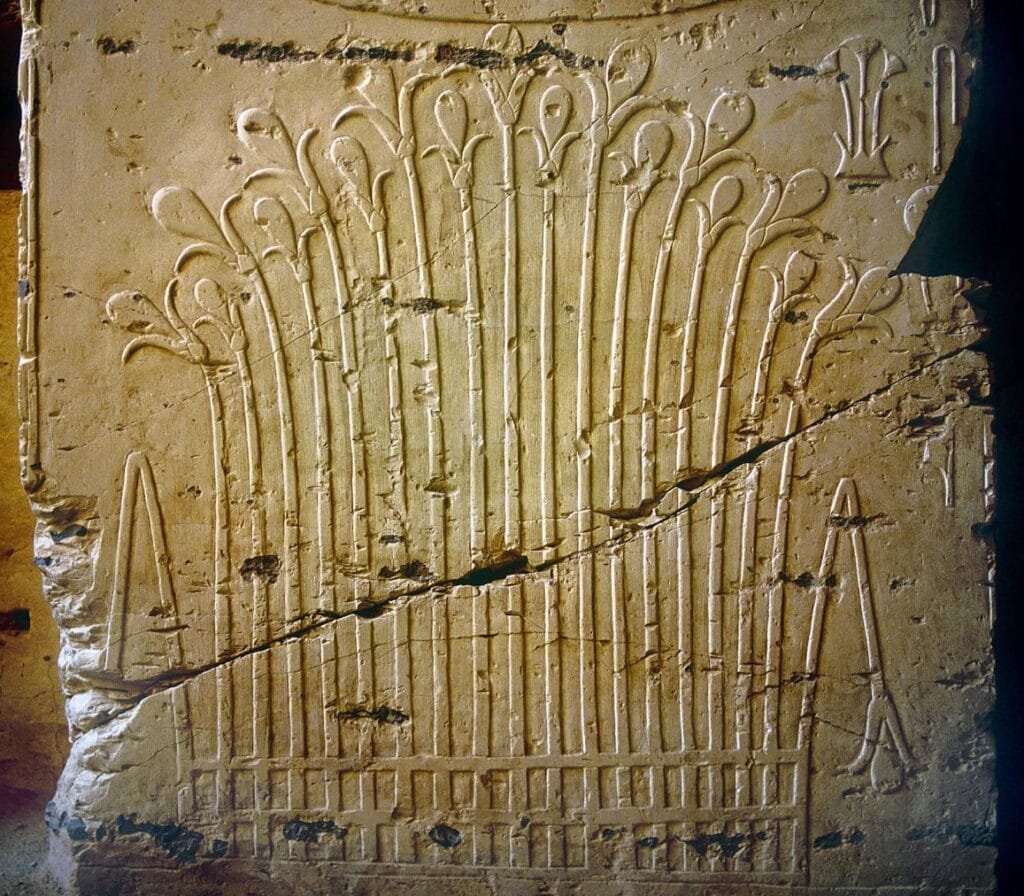
2. The Location and Architectural Design of KV7
The Tomb of Ramesses II (KV7) occupies a prominent position within the Valley of the Kings, one of the world's most famous archaeological sites on the west bank of the Nile opposite modern Luxor. Unlike the pyramids of the Old Kingdom, the royal tombs of the New Kingdom were carved directly into the limestone cliffs to provide greater protection from tomb robbers while symbolizing the king's descent into the underworld. KV7 lies close to the center of the valley, near several other important royal tombs, including KV5, the enormous tomb built for the sons of Ramesses II, and the famous Tomb of Tutankhamun (KV62). Its location reflects the importance of Ramesses II's reign, placing his burial among the greatest rulers of the New Kingdom. Architecturally, KV7 follows the general design tradition established during the Nineteenth Dynasty but expands it on a much larger scale. The tomb originally consisted of a series of descending staircases, broad corridors, pillared halls, side chambers, storage rooms, and a spacious burial chamber intended to house the king's magnificent sarcophagus and funerary equipment. Massive stone pillars supported the central chambers, while carefully carved walls provided vast surfaces for religious reliefs and painted scenes. Unfortunately, KV7 suffered repeated flooding throughout antiquity because its entrance lies directly beneath a natural drainage channel. Seasonal flash floods carried mud, rocks, and debris deep into the monument, causing severe structural damage and burying many chambers beneath thick layers of sediment. These floods also weakened wall plaster, destroyed painted decorations, and complicated later archaeological excavations. Despite this damage, surviving architectural elements reveal the remarkable scale and sophistication of the tomb's original design. Modern excavations have uncovered fragments of decorated walls, painted ceilings, column bases, doorways, and numerous architectural features that allow Egyptologists to reconstruct much of its original appearance. Advanced laser scanning and digital mapping continue to improve our understanding of KV7's layout, demonstrating that it was among the largest and most ambitious royal tombs ever built in the Valley of the Kings. Even in its damaged state, the tomb remains a remarkable example of Ancient Egyptian engineering, reflecting the immense prestige of the king for whom it was constructed.
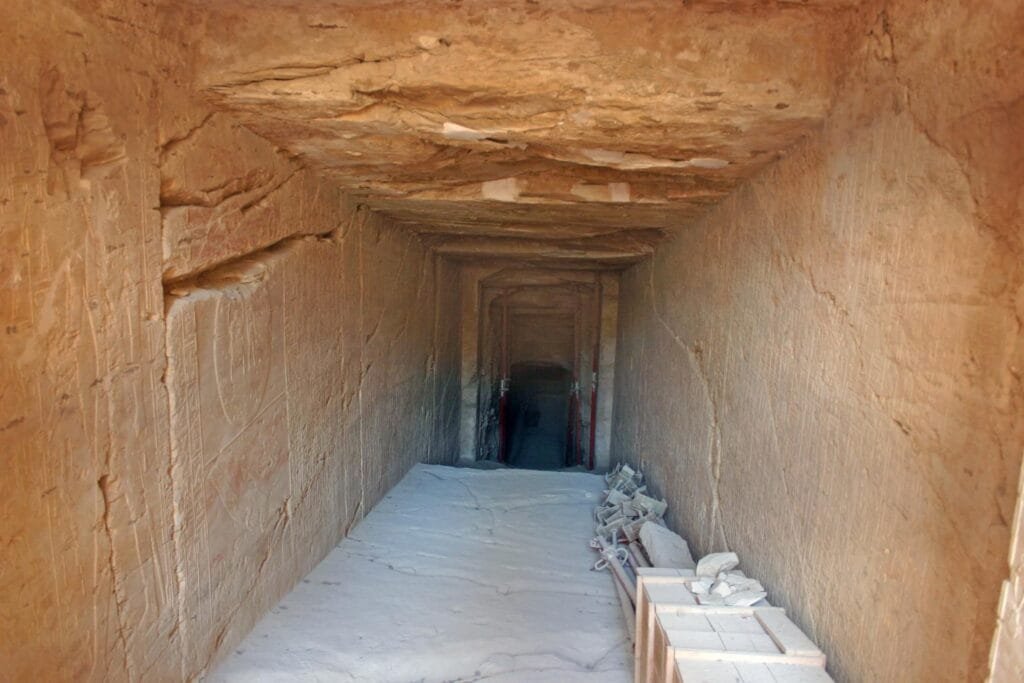
3. The Construction of KV7 and Its Religious Purpose
The construction of the Tomb of Ramesses II (KV7) was one of the largest royal building projects undertaken during the New Kingdom, requiring decades of planning, excavation, decoration, and artistic craftsmanship. Work likely began shortly after Ramesses II ascended the throne, following the long-established Egyptian tradition of preparing a pharaoh's eternal resting place early in his reign. The project was overseen by highly skilled royal architects, engineers, stonecutters, sculptors, painters, and scribes, many of whom lived in the famous workers' village of Deir el-Medina. These craftsmen were among the most talented artisans in the ancient world, responsible for creating the magnificent royal tombs throughout the Valley of the Kings. Using copper and bronze tools, stone hammers, wooden mallets, and measuring instruments, they carefully excavated the tomb into the limestone mountain before smoothing every wall and ceiling for decoration. Once the architecture was complete, teams of artists carved detailed reliefs into the stone before applying brilliant mineral pigments made from natural materials such as red ochre, yellow ochre, malachite, gypsum, carbon black, and Egyptian blue. The religious purpose of KV7 extended far beyond serving as a burial place. Ancient Egyptians believed that the pharaoh became one with the gods after death, embarking on a perilous journey through the underworld before being reborn each morning with the sun god Ra. To ensure this transformation, the walls of KV7 were decorated with sacred funerary texts, magical spells, hymns, protective deities, and scenes depicting Ramesses II making offerings to powerful gods including Osiris, Anubis, Horus, Isis, Thoth, and Hathor. These images functioned as magical guides, helping the king overcome the dangers of the underworld and achieve eternal life. Every corridor represented another stage of this sacred journey, while the burial chamber symbolized the place where earthly existence ended and divine eternity began. Although much of the decoration has been damaged by floods and the passage of time, surviving relief fragments reveal exceptional artistic quality comparable to other royal tombs of the Nineteenth Dynasty. Today, KV7 remains one of the most important monuments for understanding Ancient Egyptian funerary beliefs, royal ideology, religious symbolism, and the sophisticated engineering techniques employed by the builders of one of history's greatest pharaohs.
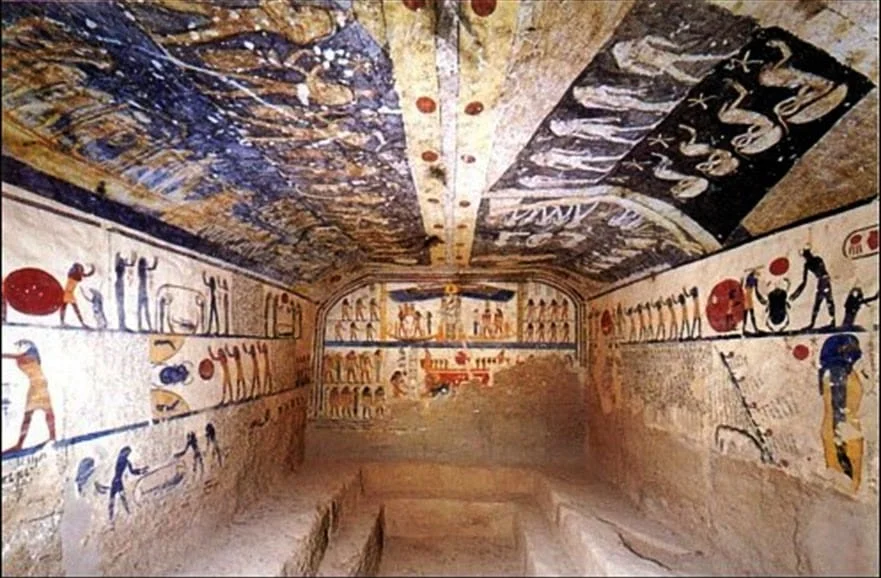
4. The Wall Decorations and Religious Artwork Inside KV7
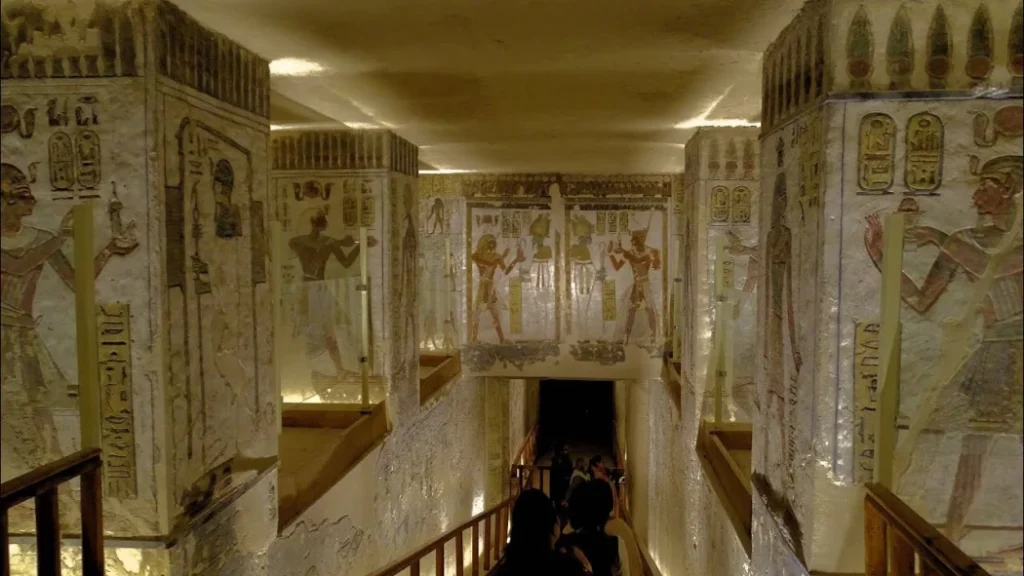
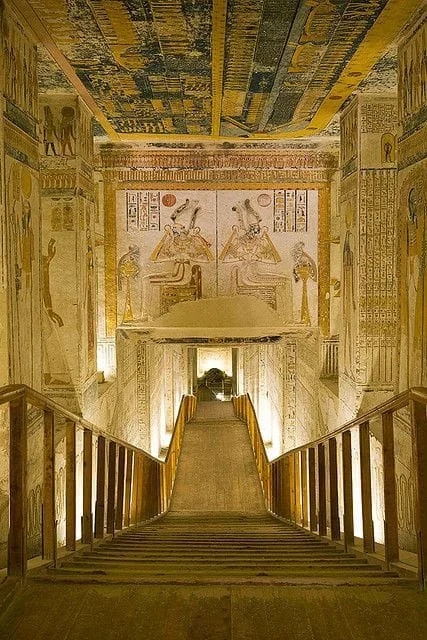
Although the Tomb of Ramesses II (KV7) has suffered extensive damage from ancient flooding, collapsed ceilings, and centuries of natural erosion, it still preserves important evidence of what was once one of the most beautifully decorated royal tombs in the Valley of the Kings. Archaeologists believe that nearly every corridor, chamber, and hall was originally covered with finely carved reliefs and brightly painted scenes illustrating the king's journey through the afterlife. Like other royal tombs of the Nineteenth Dynasty, the decoration combined magnificent artistic craftsmanship with profound religious symbolism. Skilled artisans from Deir el-Medina first carved the figures into the limestone walls before applying vivid mineral pigments including Egyptian blue, malachite green, red ochre, yellow ochre, black carbon, and white gypsum. Although many paintings have disappeared due to repeated flooding, surviving fragments reveal remarkably elegant artistic styles comparable to those found in the tombs of Seti I (KV17) and Ramesses VI (KV9). The walls originally depicted Ramesses II standing before major Egyptian gods such as Ra, Osiris, Anubis, Horus, Isis, Hathor, Thoth, Ptah, and Ma'at, receiving divine protection and blessings for his eternal journey. Sacred hieroglyphic inscriptions accompanied each scene, recording prayers, magical spells, hymns, and ritual formulas intended to protect the king from supernatural dangers. Many ceilings were decorated with astronomical scenes showing stars, constellations, celestial boats, and heavenly deities, emphasizing the pharaoh's union with the eternal cosmos. Archaeological excavations have uncovered thousands of painted plaster fragments that allow scholars to digitally reconstruct portions of the tomb's original decoration. These reconstructions demonstrate the remarkable artistic quality that once filled KV7 before floodwaters destroyed much of its painted surfaces. Despite its damaged condition, the remaining reliefs continue to provide valuable information about the evolution of New Kingdom royal art, the techniques of ancient Egyptian painters, and the religious beliefs surrounding the death and resurrection of the pharaoh. Every surviving fragment contributes to the ongoing effort to restore the visual appearance of one of the greatest royal tombs ever built in Ancient Egypt.
5. The Burial Chamber and the Royal Sarcophagus of Ramesses II
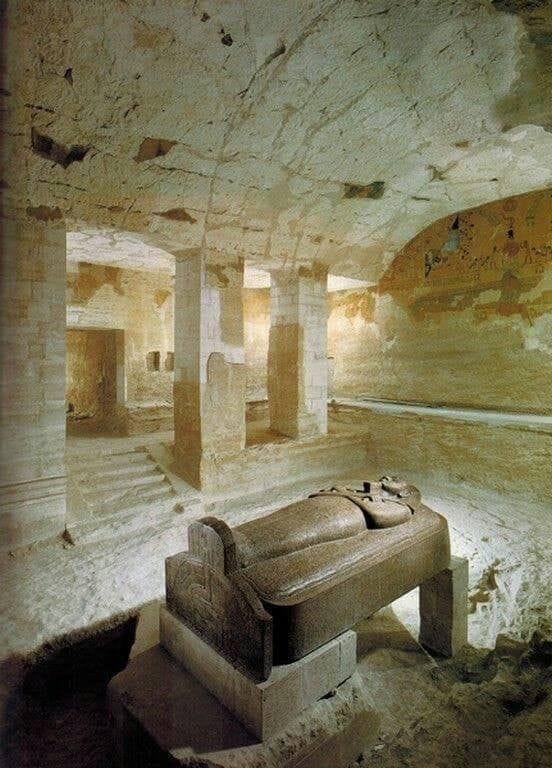
The burial chamber of the Tomb of Ramesses II (KV7) was designed as the sacred heart of the monument, where the body of Egypt's greatest pharaoh would rest for eternity surrounded by divine protection and magnificent funerary equipment. Like the rest of the tomb, the burial chamber was carefully planned to symbolize the final stage of the king's transformation from mortal ruler to immortal god. Ancient Egyptian religion taught that the deceased pharaoh would join Osiris, the god of the underworld, before being reborn each day with the sun god Ra. The burial chamber therefore represented the place where earthly life ended and eternal existence began. Archaeological evidence indicates that the chamber was originally supported by massive stone pillars and decorated with elaborate religious scenes carved into smooth limestone walls. These reliefs likely illustrated sacred texts such as the Book of Gates, the Amduat, and other funerary compositions commonly used in royal tombs of the Nineteenth Dynasty. Unfortunately, centuries of devastating flash floods filled the chamber with mud, stones, and debris, severely damaging much of its architecture and decoration. The original royal sarcophagus was also heavily damaged, surviving only in scattered fragments discovered during modern excavations. These fragments suggest that the sarcophagus was carved from high-quality stone and decorated with finely engraved hieroglyphic inscriptions invoking divine protection for the king's eternal journey. Around the sarcophagus, the burial chamber would have contained nested wooden coffins covered with gold leaf, ritual furniture, protective statues, canopic equipment, ceremonial weapons, jewelry, and hundreds of magical objects designed to accompany Ramesses II into the afterlife. Although most of these treasures disappeared during ancient robberies, the surviving architectural remains reveal the immense scale and importance of the chamber. Modern archaeological teams have painstakingly documented every fragment of stone, plaster, and decoration to reconstruct the original appearance of the room. Digital technologies, including three-dimensional scanning and computer modeling, continue to provide new insights into how the burial chamber once looked before thousands of years of natural disasters altered its condition. Today, the burial chamber of KV7 remains one of the most important sources of information about royal funerary practices during the reign of Ramesses the Great, offering valuable evidence of the artistic and religious traditions that defined the height of Ancient Egyptian civilization.
6. The Discovery and Archaeological Excavations of KV7
The Tomb of Ramesses II (KV7) has a long and fascinating history of exploration, archaeological investigation, and scientific excavation. Unlike the relatively well-preserved Tomb of Tutankhamun (KV62), KV7 had already suffered extensive damage from flooding and tomb robbery long before modern archaeologists began studying it. Ancient records indicate that the tomb was entered repeatedly during antiquity, and by the end of the New Kingdom, many of its valuable treasures had already been removed. Early European explorers visiting the Valley of the Kings during the eighteenth and nineteenth centuries identified the entrance to KV7, but the enormous quantities of flood debris filling its corridors prevented detailed exploration. Thick deposits of hardened mud, broken limestone, collapsed plaster, and fallen architectural blocks completely buried many sections of the monument. Serious archaeological work did not begin until the twentieth century, when systematic excavations gradually revealed the true scale of the tomb. One of the most important research projects was carried out by the Theban Mapping Project in collaboration with the Egyptian Ministry of Tourism and Antiquities, using modern archaeological techniques to clear debris, stabilize damaged walls, and accurately document every surviving feature. Excavators recovered thousands of fragments of painted plaster, carved reliefs, architectural blocks, pottery, faience, wooden objects, stone vessels, and pieces of the king's funerary equipment. These discoveries have allowed Egyptologists to reconstruct many aspects of the tomb's original decoration despite the extensive flood damage. Advanced technologies such as laser scanning, photogrammetry, digital mapping, and three-dimensional reconstruction now provide highly accurate records of KV7's architecture and surviving artwork. Archaeologists have also identified evidence of multiple ancient restoration attempts, showing that Egyptian priests and officials tried to repair the tomb after early flood events. Research continues today, with every excavation season revealing new information about the construction techniques, decorative program, and burial equipment of Ramesses II. Although much of the monument remains damaged, KV7 has become one of the most intensively studied royal tombs in the Valley of the Kings. Ongoing conservation and archaeological work continue to transform our understanding of this extraordinary monument, ensuring that the legacy of Egypt's greatest pharaoh remains preserved for future generations while providing historians with invaluable insights into Ancient Egyptian architecture, religion, and royal burial customs.
7. The Royal Treasures and Burial Equipment of Ramesses II
When Pharaoh Ramesses II was laid to rest in the Tomb of Ramesses II (KV7), his burial was undoubtedly one of the most magnificent royal funerals in the history of Ancient Egypt. As the most powerful ruler of the Nineteenth Dynasty and one of Egypt's longest-reigning kings, Ramesses II was buried with an extraordinary collection of treasures designed to ensure his comfort, protection, and divine status in the afterlife. Ancient Egyptian religious beliefs held that life after death mirrored earthly existence, meaning the king required everything he had enjoyed during his lifetime. Although the majority of these priceless objects were stolen by tomb robbers during antiquity, archaeological discoveries and comparisons with other royal burials provide valuable insight into what originally filled KV7. At the center of the burial chamber stood the king's massive stone sarcophagus, surrounded by nested wooden coffins decorated with gold leaf and precious stones. Nearby would have been beautifully crafted canopic jars containing the king's preserved internal organs, protected by the Four Sons of Horus. Hundreds of ushabti figures—small servant statues inscribed with magical texts—were placed inside the tomb to perform labor for the king in the afterlife. Exquisite gold jewelry, ceremonial crowns, necklaces, bracelets, rings, amulets, pectorals, and sacred scarabs would have accompanied the king's mummy, reflecting both his immense wealth and divine authority. Richly decorated wooden furniture, alabaster vessels, cosmetic containers, ritual weapons, ceremonial chariots, linen garments, food offerings, wine jars, perfumes, and religious statues likely filled the surrounding chambers. Archaeologists have recovered fragments of pottery, faience objects, painted plaster, wooden artifacts, stone vessels, and pieces of funerary equipment, confirming the original richness of the burial. Unfortunately, repeated tomb robberies and severe flooding scattered or destroyed much of the burial assemblage. Even so, surviving evidence demonstrates that KV7 once rivaled the finest royal burials of the New Kingdom. Every recovered artifact contributes to our understanding of Ancient Egyptian funerary traditions, revealing the extraordinary craftsmanship and religious devotion invested in preparing the eternal resting place of one of history's greatest rulers. The treasures of KV7 may no longer remain intact, but they continue to inspire archaeological research and offer a fascinating glimpse into the royal splendor that once surrounded Ramesses the Great.
8. The Mummy of Ramesses II and Its Journey Through History
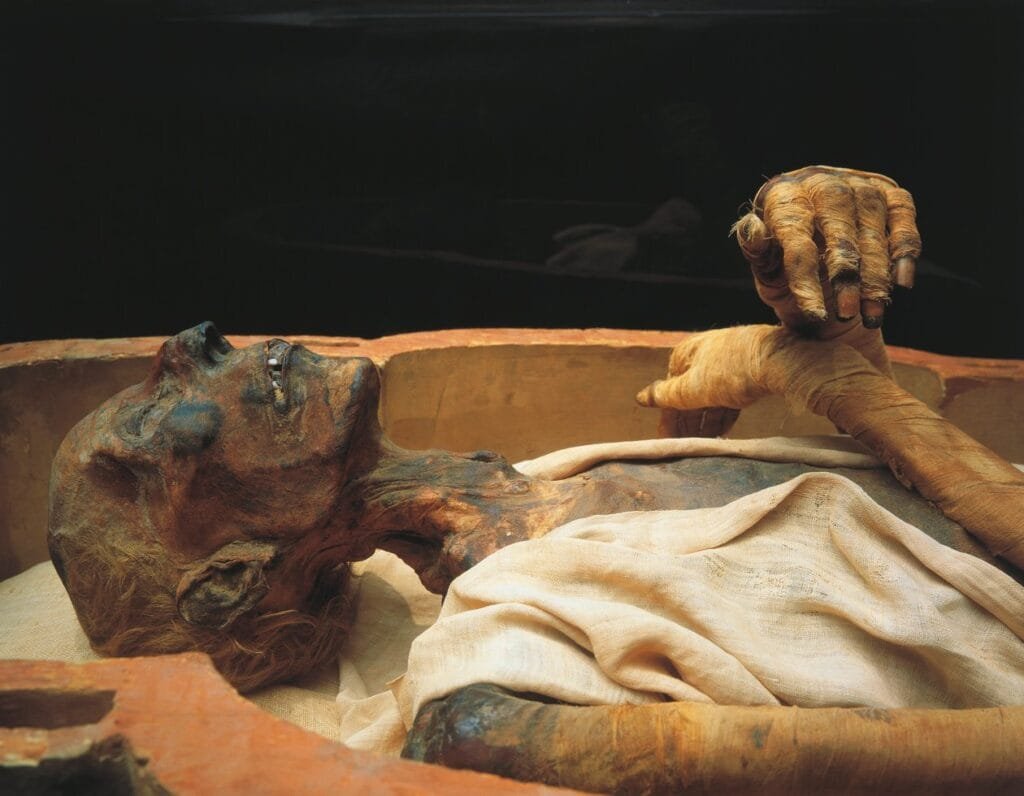
Although the Tomb of Ramesses II (KV7) was constructed as the king's eternal resting place, the mummy of Ramesses the Great does not remain inside the tomb today. Like many royal burials in the Valley of the Kings, KV7 was repeatedly targeted by tomb robbers during the late New Kingdom, forcing Egyptian priests to take extraordinary measures to protect the bodies of their former kings. During the Twenty-first Dynasty, priests carefully removed the royal mummy from its original burial, rewrapped it, and secretly transferred it to the hidden Royal Cache (DB320) at Deir el-Bahari. There, Ramesses II rested alongside dozens of other pharaohs, including Seti I, Thutmose III, Amenhotep I, and Seqenenre Tao, safely concealed for nearly three thousand years. The cache remained undiscovered until 1881, when one of the greatest archaeological discoveries in Egyptian history revealed an extraordinary collection of royal mummies. Ramesses II's mummy proved to be remarkably well preserved thanks to the exceptional embalming techniques developed during the New Kingdom. Standing approximately 1.7 meters (about 5 feet 7 inches) tall, the mummy retains many recognizable facial features, including his prominent nose, strong jawline, and reddish hair, which has fascinated scientists for generations. Modern medical examinations using X-rays and CT scans have revealed that Ramesses II lived to approximately 90 years of age, an extraordinary lifespan for the ancient world. Scientific studies suggest he suffered from arthritis, severe dental problems, spinal degeneration, and age-related health conditions, yet remained active throughout much of his long reign. In 1976, the mummy made international headlines when it was transported to Paris for emergency conservation treatment after fungal growth threatened its preservation. Because the mummy was officially recognized as a head of state, it was issued an Egyptian passport listing Ramesses II's occupation as "King (deceased)." Today, the mummy is displayed in the National Museum of Egyptian Civilization (NMEC) in Cairo, where visitors can come face to face with one of the greatest rulers in world history. Together, the mummy and the remains of KV7 provide an extraordinary connection to Ancient Egypt, preserving the physical legacy of the king whose monuments still dominate the Egyptian landscape more than three millennia after his death.
9. Conservation, Restoration, and Modern Research at KV7
The Tomb of Ramesses II (KV7) presents one of the greatest conservation challenges in the Valley of the Kings due to the extensive damage caused by natural disasters, environmental conditions, and human activity over thousands of years. Unlike many other royal tombs, KV7 was built directly beneath a natural drainage channel, making it particularly vulnerable to seasonal flash floods. These powerful floods repeatedly filled the tomb with mud, rocks, and debris, damaging painted reliefs, collapsing ceilings, eroding walls, and burying entire chambers beneath thick layers of sediment. In addition to natural destruction, ancient tomb robbers removed many valuable treasures, while early explorers unintentionally caused further deterioration before modern archaeological standards were established. Recognizing the immense historical importance of KV7, Egyptian authorities and international conservation teams have spent decades working to stabilize the monument and preserve its surviving architectural features. One of the most significant contributions has come from the Theban Mapping Project, whose detailed surveys, architectural drawings, and digital documentation have transformed scholarly understanding of the tomb. Conservation specialists have carefully removed flood deposits, strengthened unstable limestone, repaired structural cracks, consolidated fragile plaster, and documented every surviving fragment of painted decoration. Modern technology plays an increasingly important role in protecting KV7. High-resolution laser scanning, digital photogrammetry, three-dimensional modeling, multispectral photography, and computer reconstruction allow researchers to study the tomb without causing additional physical damage. These methods have helped archaeologists identify the original positions of collapsed reliefs, reconstruct damaged scenes, and better understand the monument's architectural development. Environmental monitoring systems also measure humidity, temperature, and air quality to reduce further deterioration. Because of its fragile condition, public access to KV7 has remained restricted while restoration work continues. Researchers hope that ongoing conservation will eventually allow more visitors to appreciate this remarkable monument without compromising its preservation. Every excavation season uncovers new fragments of decoration, inscriptions, pottery, and architectural elements that contribute to the reconstruction of the tomb's original appearance. Today, KV7 stands as both an archaeological treasure and a conservation success story, demonstrating how modern science and international cooperation can help preserve one of the greatest monuments of Ancient Egyptian civilization for future generations.
10. Visiting the Tomb of Ramesses II (KV7): What Tourists Should Know
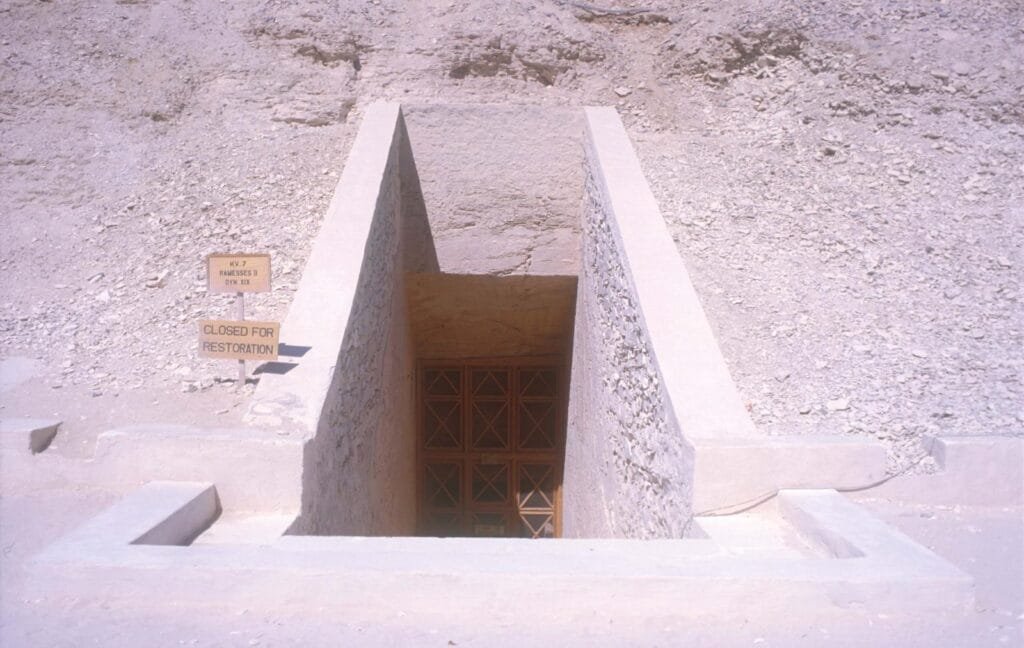
The Tomb of Ramesses II (KV7) is one of the most historically important monuments in the Valley of the Kings, attracting archaeologists, Egyptologists, historians, and travelers eager to explore the original burial place of Ramesses the Great. However, unlike some of the valley's more accessible royal tombs, KV7 has remained largely closed to regular visitors for many years because of its fragile condition and the extensive conservation work required to preserve the monument. Centuries of destructive flash floods caused significant structural damage, making large sections of the tomb unstable and unsuitable for mass tourism. As a result, visitors planning a trip to the Valley of the Kings should understand that access to KV7 is generally restricted, although restoration projects continue to improve the monument's long-term prospects. Travelers interested in the legacy of Ramesses II can still experience many remarkable sites connected with his reign, including the Ramesseum, Abu Simbel, Karnak Temple, Luxor Temple, and the nearby KV5, the enormous tomb built for many of his sons. These monuments provide valuable context for understanding the extraordinary achievements of Egypt's greatest builder and military leader. If KV7 is opened for special visits in the future, visitors can expect to walk through broad corridors, pillared halls, and large chambers that once displayed magnificent religious artwork illustrating the king's journey through the afterlife. Comfortable walking shoes, drinking water, and lightweight clothing are essential for exploring the Valley of the Kings, especially during the hot summer months when temperatures frequently exceed 40°C (104°F). Visiting early in the morning provides the most comfortable conditions and fewer crowds. Hiring a licensed Egyptologist guide greatly enriches the experience, offering detailed explanations of Ramesses II's reign, the architecture of KV7, and the symbolism behind the surviving reliefs. Photography regulations vary according to current policies established by the Egyptian Ministry of Tourism and Antiquities, so travelers should always check the latest visitor guidelines before entering any royal tomb. Even if direct access to KV7 remains limited, learning about the monument while visiting the Valley of the Kings provides a deeper appreciation of the extraordinary civilization that created one of the largest and most ambitious royal tombs in Ancient Egypt.
11. Fascinating Facts About the Tomb of Ramesses II (KV7)
The Tomb of Ramesses II (KV7) is filled with remarkable historical details that make it one of the most fascinating monuments in the Valley of the Kings. Although much of its original decoration has been damaged, ongoing archaeological research continues to uncover new discoveries that highlight the importance of this extraordinary royal burial. One of the most impressive facts about KV7 is that it was built for Ramesses II, who ruled Egypt for approximately 66 years, making him one of the longest-reigning monarchs in world history. The tomb itself was among the largest ever constructed in the valley and featured an elaborate architectural design with broad corridors, multiple pillared halls, storage chambers, and a spacious burial chamber. Unlike many royal tombs that survived relatively intact, KV7 suffered repeated flash floods because it was positioned beneath a natural water channel in the valley. These floods buried the monument under tons of mud and debris, making excavation one of the most challenging archaeological projects ever undertaken in Luxor. Another fascinating fact is that although the tomb was robbed in antiquity, the mummy of Ramesses II survived because Egyptian priests secretly relocated it to the Royal Cache at Deir el-Bahari, where it remained hidden for nearly three thousand years before its discovery in 1881. Modern scientific examinations have revealed that Ramesses II lived to around ninety years of age, an exceptionally long lifespan for the ancient world. Archaeologists have recovered thousands of fragments of painted plaster from KV7, allowing specialists to digitally reconstruct portions of the original wall decorations. The tomb also lies close to KV5, the enormous burial complex constructed for many of Ramesses II's sons, creating one of the largest concentrations of royal monuments in the Valley of the Kings. Recent conservation projects using laser scanning, three-dimensional mapping, and digital modeling continue to reveal new architectural details that were impossible to study only a few decades ago. Every excavation season contributes additional evidence about the construction, decoration, and religious significance of the tomb. Although visitors cannot fully appreciate its original splendor today, KV7 remains one of the most important archaeological monuments associated with Egypt's greatest pharaoh and continues to play a central role in research on Ancient Egyptian royal burials and New Kingdom history.
12. The Legacy and Historical Importance of the Tomb of Ramesses II
The Tomb of Ramesses II (KV7) stands as one of the most important monuments of Ancient Egyptian civilization, preserving the legacy of a ruler whose influence extended far beyond his own lifetime. Although the tomb no longer retains the magnificent treasures and complete wall decorations that once filled its chambers, its historical value remains immeasurable. Built for the pharaoh who transformed Egypt into one of the greatest powers of the ancient world, KV7 reflects the political strength, religious beliefs, engineering expertise, and artistic achievements of the New Kingdom at its height. The monument also illustrates how royal burial practices evolved during the Nineteenth Dynasty, with increasingly complex architectural layouts and richly decorated funerary programs designed to ensure the king's successful journey into the afterlife. Despite suffering extensive flood damage over thousands of years, KV7 has become one of the most significant archaeological laboratories in the Valley of the Kings. Modern excavations continue to recover architectural fragments, painted reliefs, inscriptions, pottery, and funerary objects that expand scholarly knowledge of royal tomb construction and burial customs. The tomb has also contributed greatly to the understanding of Ancient Egyptian religion, particularly the use of sacred funerary texts, protective deities, astronomical symbolism, and magical rituals associated with the resurrection of the pharaoh. The story of KV7 also highlights the importance of archaeological conservation. International restoration efforts have demonstrated how advanced technologies such as laser scanning, photogrammetry, digital reconstruction, and environmental monitoring can preserve fragile monuments threatened by natural disasters and the passage of time. Beyond archaeology, KV7 represents the enduring legacy of Ramesses the Great, whose temples, statues, military campaigns, diplomatic achievements, and monumental building projects continue to define the image of Ancient Egypt around the world. While many visitors know Ramesses II through the colossal temples of Abu Simbel or the magnificent Ramesseum, his original tomb provides a more personal glimpse into the beliefs surrounding death, immortality, and kingship in Ancient Egypt. Today, the Tomb of Ramesses II remains an enduring symbol of one of history's greatest civilizations, inspiring researchers, historians, and travelers alike. As conservation and archaeological investigations continue, KV7 will undoubtedly reveal even more secrets about the reign of Egypt's greatest pharaoh, ensuring that his extraordinary legacy lives on for generations to come.
Ramesses II's Tomb (KV7) vs. Tutankhamun's Tomb (KV62): Which Royal Tomb Is More Impressive?
The Tomb of Ramesses II (KV7) and Tutankhamun’s Tomb (KV62) are two of the most famous royal tombs in the Valley of the Kings, yet they became legendary for very different reasons. KV7 was built for Ramesses the Great, Egypt’s most powerful and longest-reigning pharaoh, and was designed as one of the largest and most elaborate royal tombs ever constructed. In contrast, KV62 belonged to the young King Tutankhamun and achieved worldwide fame after Howard Carter discovered it almost completely intact in 1922, filled with thousands of priceless treasures.
While Tutankhamun’s tomb is celebrated for its spectacular golden artifacts, Ramesses II’s tomb represents the ambition, engineering, and religious sophistication of the New Kingdom at its height. The comparison below highlights the key differences between these two remarkable monuments.
| Feature | Tomb of Ramesses II (KV7) | Tutankhamun’s Tomb (KV62) |
|---|---|---|
| Pharaoh | Ramesses II (Ramesses the Great) | Tutankhamun (King Tut) |
| Dynasty | Nineteenth Dynasty | Eighteenth Dynasty |
| Reign | c. 1279–1213 BC | c. 1332–1323 BC |
| Length of Reign | About 66 years | About 9 years |
| Tomb Number | KV7 | KV62 |
| Location | Valley of the Kings, Luxor | Valley of the Kings, Luxor |
| Discovery | Known since antiquity; scientifically excavated during the modern era | Discovered on 4 November 1922 |
| Discovered By | Explored by early Egyptologists; extensively excavated by modern archaeological teams | Howard Carter |
| Overall Size | One of the largest royal tombs in the Valley | One of the smallest royal tombs |
| Architecture | Long corridors, pillared halls, multiple chambers, large burial chamber | Compact layout with four main rooms |
| Wall Decorations | Originally extensive religious reliefs and painted scenes throughout the tomb | Decorations mainly limited to the burial chamber |
| Artistic Style | Monumental New Kingdom reliefs with religious texts | Elegant but simpler paintings focused on the burial ritual |
| Religious Texts | Book of Gates, Amduat, Litany of Ra, and other funerary compositions | Limited funerary scenes and protective texts |
| Burial Chamber | Large chamber designed for a great pharaoh | Small but richly equipped burial chamber |
| Treasures Found | Most treasures lost to ancient tomb robbers | More than 5,000 objects discovered almost intact |
| Golden Mask | No surviving golden mask | World-famous solid gold funerary mask |
| Royal Mummy | Removed in antiquity and found in the Royal Cache (DB320) | Found inside the tomb in 1922 |
| Current Location of Mummy | National Museum of Egyptian Civilization (NMEC), Cairo | Still displayed inside KV62 in the Valley of the Kings |
| Condition Today | Heavily damaged by floods and ancient looting | Remarkably preserved due to being sealed for over 3,000 years |
| Historical Importance | Burial place of Egypt’s greatest pharaoh | Greatest archaeological discovery of the 20th century |
| Main Attraction | Architecture, history, and religious symbolism | Incredible treasures and intact royal burial |
| Visitor Experience | Usually closed or limited because of conservation | Open to visitors with a separate ticket |
Which Tomb Is Better for History Lovers?
If you are fascinated by Ancient Egyptian architecture, royal engineering, and religious beliefs, the Tomb of Ramesses II (KV7) offers a deeper understanding of how Egypt’s greatest ruler prepared for eternity. Although much of the decoration has been damaged, the tomb’s enormous scale, complex layout, and historical significance make it one of the most important monuments in the Valley of the Kings.
If your interest lies in golden treasures, perfectly preserved artifacts, and one of archaeology’s greatest discoveries, Tutankhamun’s Tomb (KV62) is the clear winner. The tomb provides an unparalleled glimpse into a royal burial that remained largely untouched for more than 3,000 years.
Why Is Tutankhamun More Famous Than Ramesses II?
Despite Ramesses II being one of the greatest pharaohs in Egyptian history, Tutankhamun became more famous because his tomb was discovered almost intact. Howard Carter’s discovery revealed thousands of treasures, including the iconic golden funerary mask, golden shrines, jewelry, chariots, furniture, and ceremonial objects. In contrast, KV7 was robbed in antiquity and later devastated by repeated floods, leaving archaeologists with only fragments of its original splendor.
Final Verdict
Both tombs deserve a place on every Egypt travel itinerary because they represent different aspects of Ancient Egyptian civilization:
- Choose KV7 if you want to explore the legacy of Ramesses the Great, Egypt’s most powerful builder and warrior, and learn about the evolution of royal tomb architecture.
- Choose KV62 if you want to experience the excitement of the world’s most famous archaeological discovery and stand in the burial place of the legendary Boy King.
- Visit both to gain a complete understanding of the royal burial traditions, artistic achievements, and religious beliefs of the New Kingdom. Together, KV7 and KV62 tell one of the greatest stories in the history of Ancient Egypt.
Frequently Asked Questions (FAQs) About the Tomb of Ramesses II (KV7)
The Tomb of Ramesses II (KV7) is located in the Valley of the Kings on the west bank of the Nile River near Luxor, Egypt. It lies close to several other famous royal tombs, including Tutankhamun’s Tomb (KV62) and KV5, the enormous tomb built for many of Ramesses II’s sons.
Ramesses II, also known as Ramesses the Great, was the third pharaoh of the Nineteenth Dynasty. He ruled Egypt for approximately 66 years (1279–1213 BC) and is considered one of the greatest rulers in Egyptian history because of his military victories, massive building projects, and long, prosperous reign.
KV7 is famous because it was the original burial place of Ramesses the Great, one of the most powerful pharaohs of Ancient Egypt. It is also one of the largest royal tombs in the Valley of the Kings and remains a key archaeological site despite suffering extensive flood damage.
The entrance to KV7 has been known since ancient times, and early European explorers documented the tomb during the eighteenth and nineteenth centuries. Modern archaeological excavations have continued to uncover new information about the tomb through systematic research and conservation.
No. The mummy of Ramesses II was removed by ancient Egyptian priests during the Twenty-first Dynasty to protect it from tomb robbers. It was hidden in the Royal Cache (DB320) at Deir el-Bahari and was rediscovered in 1881.
Today, the mummy of Ramesses II is displayed in the National Museum of Egyptian Civilization (NMEC) in Cairo, where visitors can see one of the best-preserved royal mummies from Ancient Egypt.
The tomb suffered repeated flash floods over thousands of years because it was constructed beneath a natural drainage channel in the Valley of the Kings. Floodwater carried mud, rocks, and debris into the tomb, severely damaging its architecture and decorations.
Generally, KV7 is not open for regular public visits because of its fragile condition and ongoing conservation work. Access may occasionally be granted for special archaeological or conservation purposes.
Like other royal tombs of the New Kingdom, KV7 was decorated with important funerary texts, including scenes inspired by the Book of Gates, the Amduat, the Litany of Ra, and other sacred compositions that guided the king through the afterlife.
Most of the original treasures were stolen by tomb robbers during antiquity. However, archaeologists have recovered fragments of pottery, painted plaster, stone vessels, funerary equipment, and pieces of the royal sarcophagus.
KV7 is the tomb of Ramesses II, while KV5 is the enormous nearby tomb built for many of his sons. Together, they form one of the most significant royal burial complexes in the Valley of the Kings.
He earned this title because of his extraordinary achievements in warfare, diplomacy, architecture, and governance. His reign lasted more than six decades, and he commissioned famous monuments including Abu Simbel, the Ramesseum, and major additions to Karnak Temple and Luxor Temple.
Even though the tomb was damaged, ongoing excavations continue to reveal new information about Ancient Egyptian architecture, royal burial customs, religious beliefs, construction techniques, and artistic traditions of the Nineteenth Dynasty.
KV7 is historically important because it preserves the original burial place of one of Egypt’s greatest pharaohs. It offers valuable evidence about the evolution of royal tomb architecture and New Kingdom funerary practices.
Visitors interested in the legacy of Ramesses II should also explore the Ramesseum, Abu Simbel Temples, Karnak Temple, Luxor Temple, KV5, Tutankhamun’s Tomb (KV62), the Temple of Hatshepsut, and the Colossi of Memnon.
Although no ancient record gives the exact construction period, Egyptologists believe work began shortly after Ramesses II became pharaoh and continued for many years, with craftsmen decorating the tomb throughout much of his reign.
Many of the original paintings and reliefs were damaged or destroyed by repeated flooding. However, thousands of surviving fragments have allowed archaeologists to digitally reconstruct portions of the tomb’s original decoration.
The Tomb of Ramesses II remains one of the most valuable archaeological sites in Egypt. It provides historians with critical evidence about the reign of Ramesses the Great, while ongoing conservation and excavation projects continue to uncover new details about one of the most remarkable royal tombs in the Valley of the Kings.
Although both tombs are located in the Valley of the Kings, they are famous for different reasons. KV7, the tomb of Ramesses II, is significantly larger and was originally one of the grandest royal tombs ever constructed during the New Kingdom. It featured an extensive architectural layout with multiple corridors, pillared halls, side chambers, and elaborate religious decorations. Unfortunately, centuries of flooding and ancient tomb robbery caused severe damage, leaving only fragments of its original splendor. In contrast, Tutankhamun’s Tomb (KV62) is much smaller but became world-famous because it was discovered nearly intact in 1922 by Howard Carter, containing more than 5,000 priceless treasures, including the iconic golden funerary mask. While KV62 is celebrated for its spectacular artifacts, KV7 is admired for its historical importance, architectural scale, and association with one of Ancient Egypt’s greatest pharaohs. Together, the two tombs provide complementary insights into royal burial traditions during different periods of the New Kingdom.
The Tomb of Ramesses II (KV7) offers a remarkable opportunity to understand the life, achievements, and religious beliefs of one of the most influential rulers in world history. Although much of the tomb has been damaged over time, it remains an invaluable archaeological site that continues to reveal new discoveries through modern research and conservation. Studying KV7 helps visitors appreciate the incredible engineering skills of Ancient Egyptian builders, the complexity of royal funerary rituals, and the artistic traditions that flourished during the Nineteenth Dynasty. Combined with nearby monuments such as the Ramesseum, Abu Simbel, Karnak Temple, and the National Museum of Egyptian Civilization, the tomb tells the complete story of Ramesses the Great—from his powerful reign and monumental building projects to his carefully planned journey into eternity. For anyone interested in Ancient Egypt, Luxor, Egyptology, or the Valley of the Kings, KV7 remains an essential part of understanding the enduring legacy of one of history’s greatest civilizations.