

- Excursions in Egypt
- Egypt Tour Packages
- Cairo Tours and Excursions
- Hurghada Tours and Excursions
- Soma Bay Tours and Excursions
- Makadi Bay Tours and Excursions
- Sahl Hasheesh Tours and Excursions
- El Gouna Tours and Excursions
- Marsa Alam Tours and Excursions
- Port Ghalib Tours and Excursions
- El Quseir Tours and Excursions
- Dendera and Abydos Day Tours
- Aswan Tours and Excursions
- Luxor Tours and Excursions
- Sharm El Sheikh Tours and Excursions
- Top Rated Egypt Tours in 2026
- Optional Excursions in Egypt
- Private Transfer
- Blogs About egypt
- Ancient Egypt
- Historical Sites in Egypt
- Cairo
- Alexandria
- Luxor
- Aswan
- The Red Sea
- Dendera Temple
- El Fayoum Oasis
- Bahariya Oasis
- Siwa Oasis
- Al Alamein
- Marsa Matruh
- Why Egypt Is One of the Safest Countries to Visit in the Middle East
- What You Need To know Before Your First Trip To Egypt
- Egypt Travel Costs in 2026 Full Budget Guide
- Top 10 Tourist Activities in Egypt
- Top 50 Activities You Can’t Miss in Egypt in 2026
- The Guide to Guided Tours in Egypt
- Egypt’s Ancient and Modern History
- The Nile River
- The Deserts of Egypt
- Ancient Egyptian gods
- famous Egyptian dishes
- UNESCO World Heritage sites
- About Us
- Egypt Hotels and Resorts
- Excursions in Egypt
- Egypt Tour Packages
- Cairo Tours and Excursions
- Hurghada Tours and Excursions
- Soma Bay Tours and Excursions
- Makadi Bay Tours and Excursions
- Sahl Hasheesh Tours and Excursions
- El Gouna Tours and Excursions
- Marsa Alam Tours and Excursions
- Port Ghalib Tours and Excursions
- El Quseir Tours and Excursions
- Dendera and Abydos Day Tours
- Aswan Tours and Excursions
- Luxor Tours and Excursions
- Sharm El Sheikh Tours and Excursions
- Top Rated Egypt Tours in 2026
- Optional Excursions in Egypt
- Private Transfer
- Blogs About egypt
- Ancient Egypt
- Historical Sites in Egypt
- Cairo
- Alexandria
- Luxor
- Aswan
- The Red Sea
- Dendera Temple
- El Fayoum Oasis
- Bahariya Oasis
- Siwa Oasis
- Al Alamein
- Marsa Matruh
- Why Egypt Is One of the Safest Countries to Visit in the Middle East
- What You Need To know Before Your First Trip To Egypt
- Egypt Travel Costs in 2026 Full Budget Guide
- Top 10 Tourist Activities in Egypt
- Top 50 Activities You Can’t Miss in Egypt in 2026
- The Guide to Guided Tours in Egypt
- Egypt’s Ancient and Modern History
- The Nile River
- The Deserts of Egypt
- Ancient Egyptian gods
- famous Egyptian dishes
- UNESCO World Heritage sites
- About Us
- Egypt Hotels and Resorts
Welcome to
The Treasures of King Tutankhamun in the Grand Egyptian Museum: A Celestial Journey Reborn
The Treasures of King Tutankhamun in the Grand Egyptian Museum represent the single most ambitious archaeological display in human history, marking a definitive moment where the legacy of the Boy King finally meets its eternal home. Situated on the edge of the Giza Plateau, the Grand Egyptian Museum (GEM) serves as a breathtaking portal that connects the dust of the 14th century BCE to the cutting-edge technology of the third millennium. For over a hundred years, the world has viewed this collection in fragments, scattered across overcrowded rooms or tucked away in subterranean vaults, but here, under the shadow of the Great Pyramids, the narrative of Tutankhamun is finally told in its absolute entirety. This exhibition is far more than a showcase of opulence; it is a meticulously engineered odyssey that invites the visitor to step out of time and into the divine presence of a Pharaoh. As you cross the threshold into the golden galleries, the air itself seems to shift, charged with the weight of 5,000 artifacts that have been reunited for the first time since their discovery in 1922. The GEM does not just display these items; it creates a spiritual and intellectual environment where every golden chariot, every lapis-lazuli amulet, and every linen tunic acts as a storyteller, revealing the human heart beneath the golden mask and the profound cosmic vision of an empire that refused to let its King be forgotten by history.
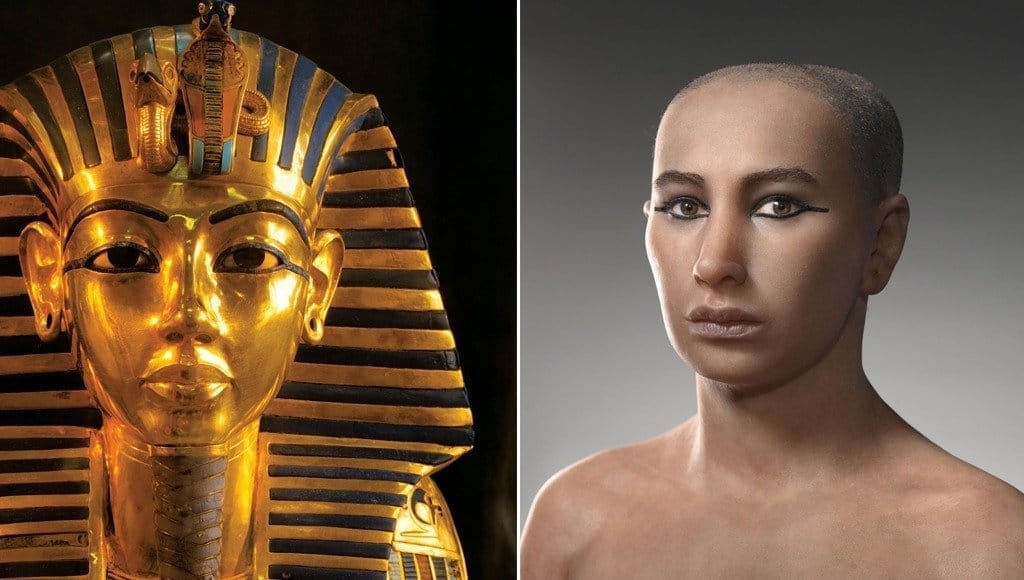
1. The Reunification of a Divided Legacy: Five Thousand Wonders
The historical significance of the Grand Egyptian Museum lies primarily in its role as a grand reunifier for a collection that has been physically and intellectually fragmented since its discovery in 1922. When Howard Carter first broke the seal of KV62 in the Valley of the Kings, he uncovered a staggering array of items that defied contemporary categorization. However, due to the logistical constraints of the 20th century, only a fraction of these items—mostly the famous gold masks and jewelry—were ever placed on permanent display for the public. Thousands of other artifacts, including the king's mundane daily objects like linen undergarments, jars of honey, and intricate leather sandals, remained hidden in dark storerooms, accessible only to specialized researchers. The GEM changes this paradigm by dedicating over 7,000 square meters of gallery space solely to the boy king. For the first time, the "complete Tutankhamun" is revealed. Visitors can now see the grand chariots alongside the smallest amulets, understanding how the king lived in his palace just as clearly as how he was prepared for his tomb. This reunification allows for a deeper scholarly understanding of the Amarna transition and the restoration of the traditional Egyptian pantheon. By seeing the collection in its entirety, we move past the "Tutmania" of the 1920s and into a more sophisticated era of Egyptology where the context of each object—from the royal throne to the simple reed basket—contributes to a holistic portrait of a lost world.
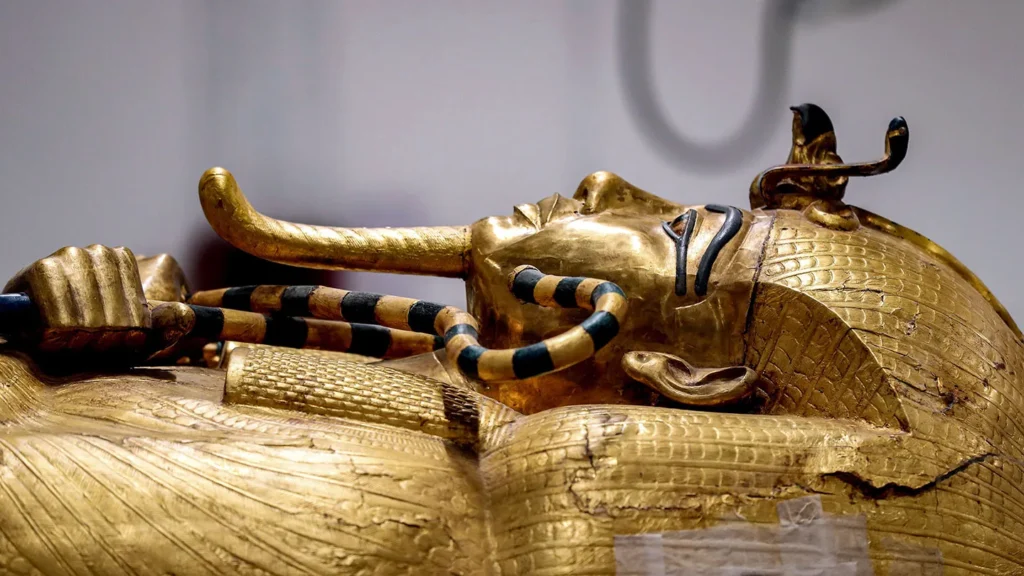
2. Architectural Symbiosis: Mapping the Tomb in the Museum
The design of the Tutankhamun galleries within the Grand Egyptian Museum is a feat of psychological and spatial engineering, intended to mimic the sequence of discovery while providing the grandeur a Pharaoh deserves. Unlike traditional museums that place objects in static glass boxes, the GEM utilizes a "narrative layout" that follows the king’s funeral procession and the subsequent discovery by Howard Carter. As visitors move through the halls, the ceiling heights and lighting intensities shift, subtly evoking the feeling of descending into a subterranean sanctuary. The architects utilized the museum’s massive floor plan to create a sense of scale that was previously impossible. For example, the four massive gilded shrines, which were nested inside one another like a set of Russian dolls, can finally be viewed with enough clearance for visitors to walk around them and inspect the delicate hieroglyphic spells carved into their surfaces. These shrines were designed to protect the king’s sarcophagus, and in their new home, they are positioned to reflect their original orientation toward the cardinal points. This spatial arrangement serves a dual purpose: it honors the religious intent of the ancient builders while satisfying the curiosity of the modern explorer. The interaction between the museum's sharp, modern lines and the organic, ancient curves of the artifacts creates a powerful aesthetic tension. It reminds us that while the stones have aged, the genius of the design remains contemporary, proving that the ancient Egyptians were masters of space and light.
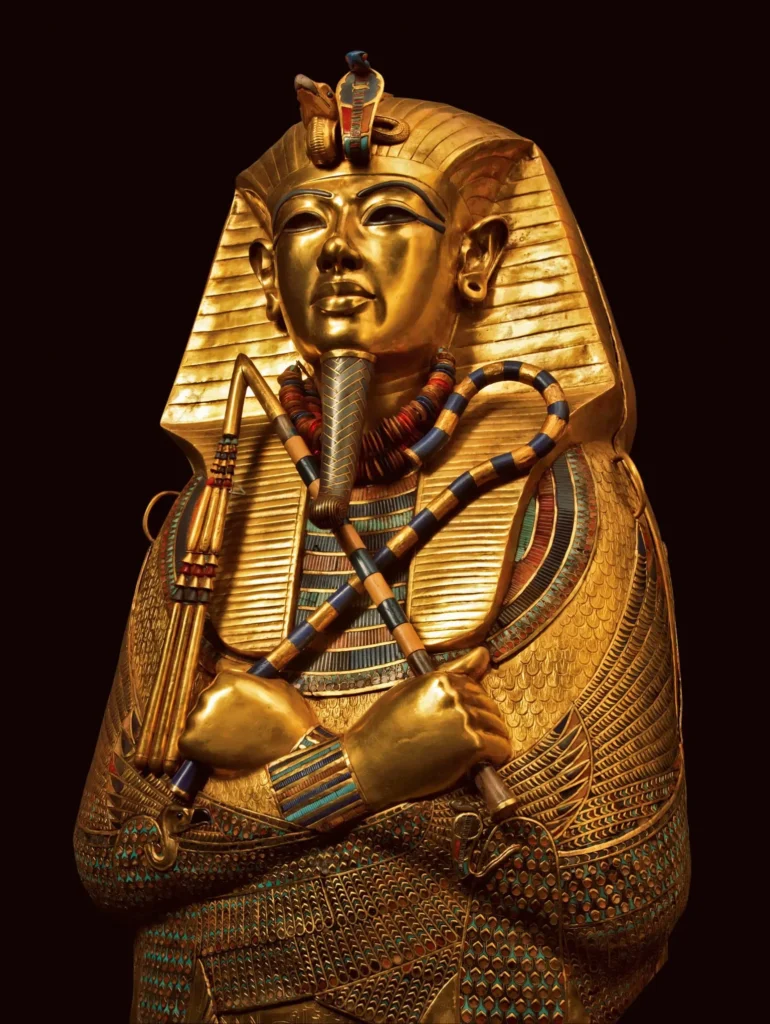
3. The Golden Mask: Beyond the Icon of the Boy King
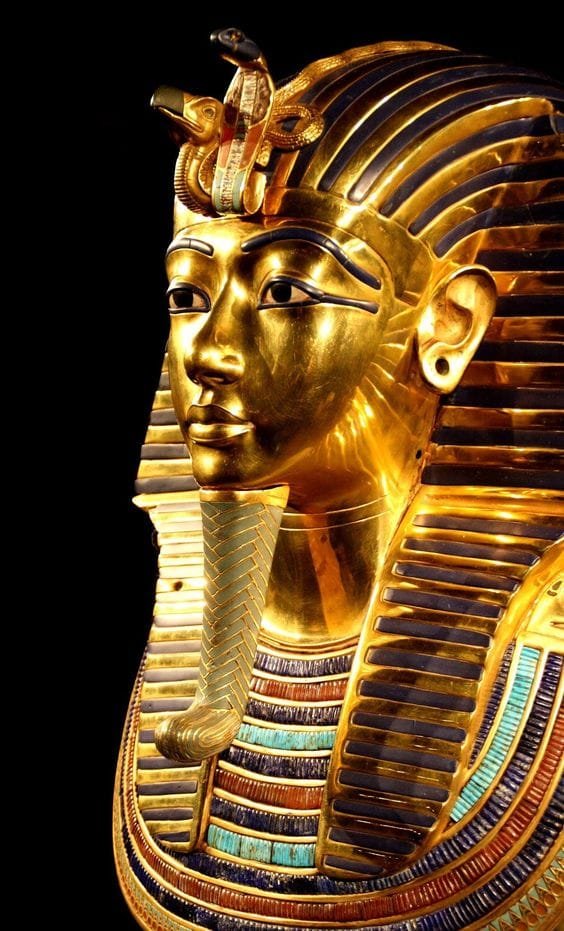
No object in the history of archaeology carries the weight of the funerary mask of Tutankhamun, a 10-kilogram masterpiece of solid gold and semi-precious stones that has become the universal face of ancient Egypt. In the Grand Egyptian Museum, this icon is given a place of ultimate honor, housed in a high-security, climate-controlled chamber that utilizes "invisible glass" to allow for an unobstructed view of its mesmerizing detail. While the mask is famous for its beauty, the GEM’s presentation encourages a deeper technical appreciation. The mask is not a single piece but a complex assembly of gold sheets, meticulously hammered and inlaid with lapis lazuli, quartz, and obsidian. The blue stripes of the nemes headcloth and the protective cobra and vulture on the brow are symbols of a unified Egypt, representing the king’s role as the maintainer of cosmic order. Scholars believe the mask was not just a portrait, but a magical engine meant to transform the deceased into a "shining one" or an Akh. In its new display, the lighting is calibrated to highlight the subtle differences in the gold’s purity, which shifts slightly between the face and the headdress. This level of detail allows visitors to appreciate the individual handiwork of the royal goldsmiths who worked in the palace workshops three millennia ago. The mask remains the emotional heart of the collection, a hauntingly beautiful bridge between the mortal and the divine, staring out from the past with eyes that seem to see into the very future of the Nile.
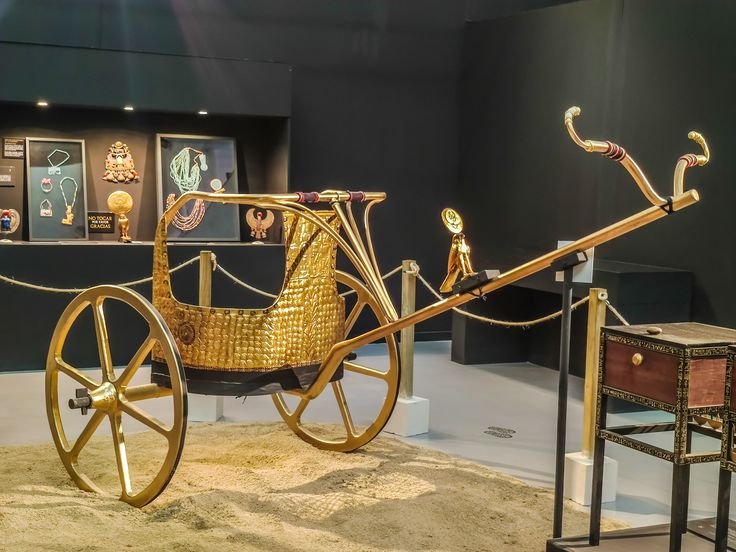
4. The Chariots of Fire: Engineering Ancient Speed and Power
Among the most technically sophisticated artifacts in the Grand Egyptian Museum are the six royal chariots found in the tomb's antechamber and treasury. In the new galleries, these vehicles are displayed with unprecedented space, allowing visitors to appreciate the incredible engineering that defined New Kingdom military and courtly life. These chariots were the "supercars" of their day, constructed from heat-bent wood, leather, and gold leaf. The GEM’s presentation highlights the remarkable suspension systems and the lightweight design that allowed these vehicles to achieve high speeds across the desert sands. For the first time, visitors can see the intimate details of the decorative panels, which depict the King as a conqueror trampling his enemies, symbolizing his role as the defender of Egypt’s borders. Scholars have used the move to the GEM to conduct deeper analysis, revealing that the chariots were not merely ceremonial; several show signs of wear and tear, suggesting that the young Tutankhamun actually rode them during hunts or military parades. This adds a visceral, human element to the display, shifting our perception of the Pharaoh from a fragile child to an active, vigorous leader. The chariots occupy a central axis in the gallery, their golden wheels seeming ready to roll into the afterlife, serving as a powerful reminder of the speed at which the 18th Dynasty moved through history and the sheer craftsmanship required to merge functional machinery with divine artistry.
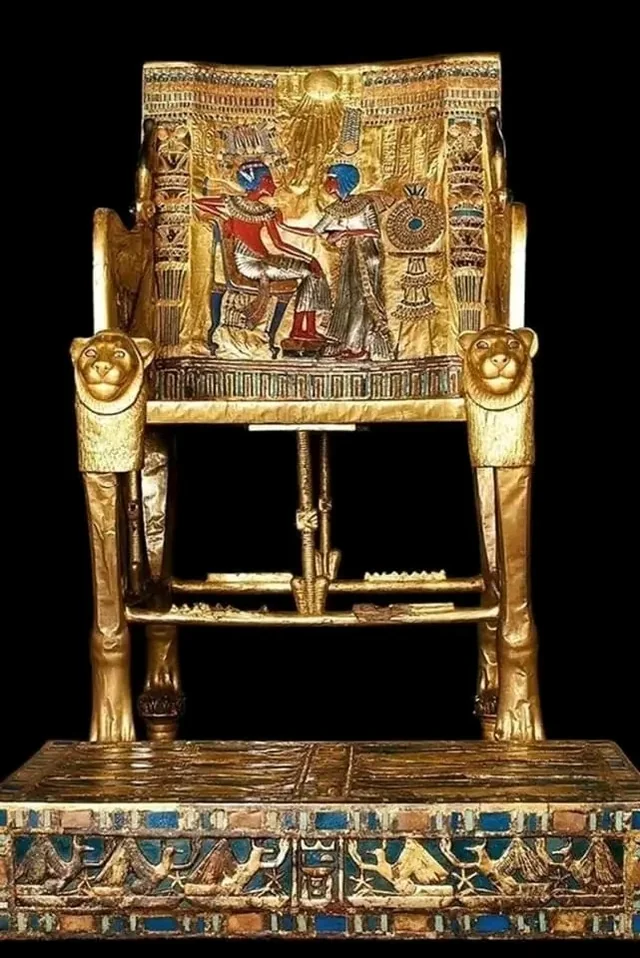
5. The Golden Throne: A Masterpiece of Domestic Intimacy
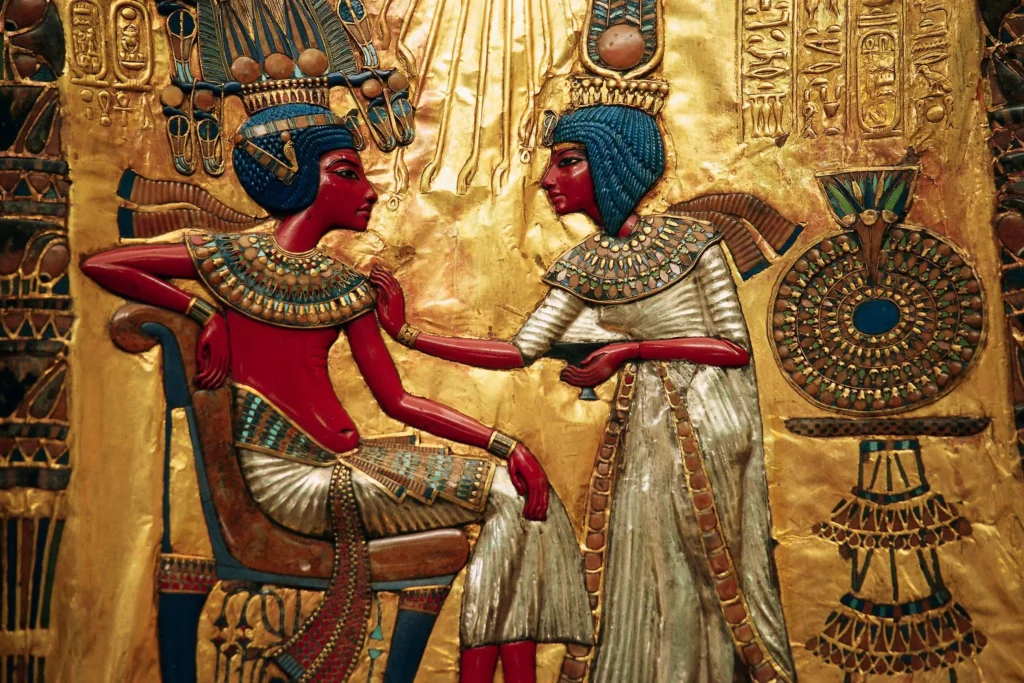
The Golden Throne of Tutankhamun is arguably the most beautiful piece of furniture ever recovered from antiquity, and its display in the Grand Egyptian Museum provides a rare look into the private life of the royal family. Carved from wood and covered in a thick layer of gold, the throne is famously inlaid with silver, glass, and semi-precious stones. The scene on the backrest is the true highlight, showing the young Queen Ankhesenamun lovingly anointing the King under the rays of the sun god, Aten. In the GEM, the lighting is specifically designed to hit the throne at an angle that mimics the natural sunlight of the Amarna period, bringing the vibrant colors of the inlay to life. This piece represents a critical transition in Egyptian art, where the rigid formality of the past was momentarily replaced by a more naturalistic and intimate style. The throne’s legs are shaped like lion’s paws, and the armrests feature protective winged serpents wearing the double crown, symbolizing the King's authority over Upper and Lower Egypt. Standing before this artifact in the expansive space of the GEM, visitors can feel the warmth of the royal court. It is a piece that bridges the gap between the monumental and the personal, reminding us that behind the gold and the titles was a young couple navigating the complexities of a vast empire. The throne is not just a seat of power; it is a profound artistic statement about love, divinity, and the light of a fading religious revolution.
6. The Military Arsenal: Protecting the Divine Body
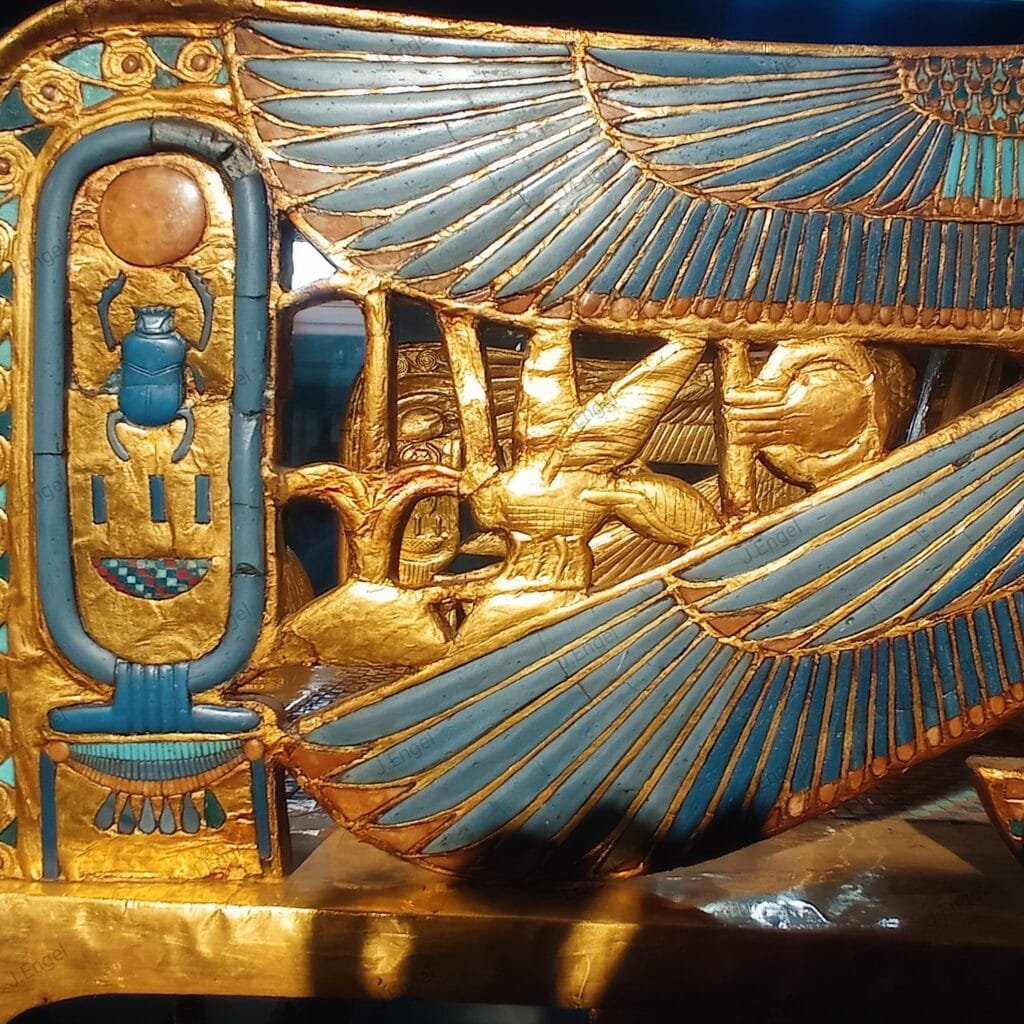
While King Tutankhamun is often remembered for his golden treasures, his military equipment in the Grand Egyptian Museum reveals the more defensive and strategic aspects of his kingship. The collection includes a vast array of composite bows, bronze daggers, and intricately decorated shields that were intended to protect the King in his journey through the dangerous underworld. The GEM displays these weapons in a way that emphasizes their lethal precision as well as their aesthetic beauty. Of particular interest is the collection of bows, which were cutting-edge technology for the time, featuring layers of wood, bone, and sinew to provide maximum tension and range. These artifacts dispel the myth that Tutankhamun’s tomb was purely a repository of riches; it was a functional arsenal designed for a King who was expected to lead a spiritual army against the forces of chaos. The shields, some covered in animal skins and others in gilded wood, feature depictions of the King as a fierce lion or a warrior crushing his foes. In the museum’s curated environment, the juxtaposition of these deadly instruments with the delicate jewelry and furniture creates a holistic view of the Pharaoh’s responsibilities. He was both a priest and a protector, a man of peace and a man of war. By examining these weapons, we gain a clearer understanding of the physical world of the 18th Dynasty, where the threat of foreign invasion and internal strife required a King to be eternally vigilant, even in the silence of the tomb.
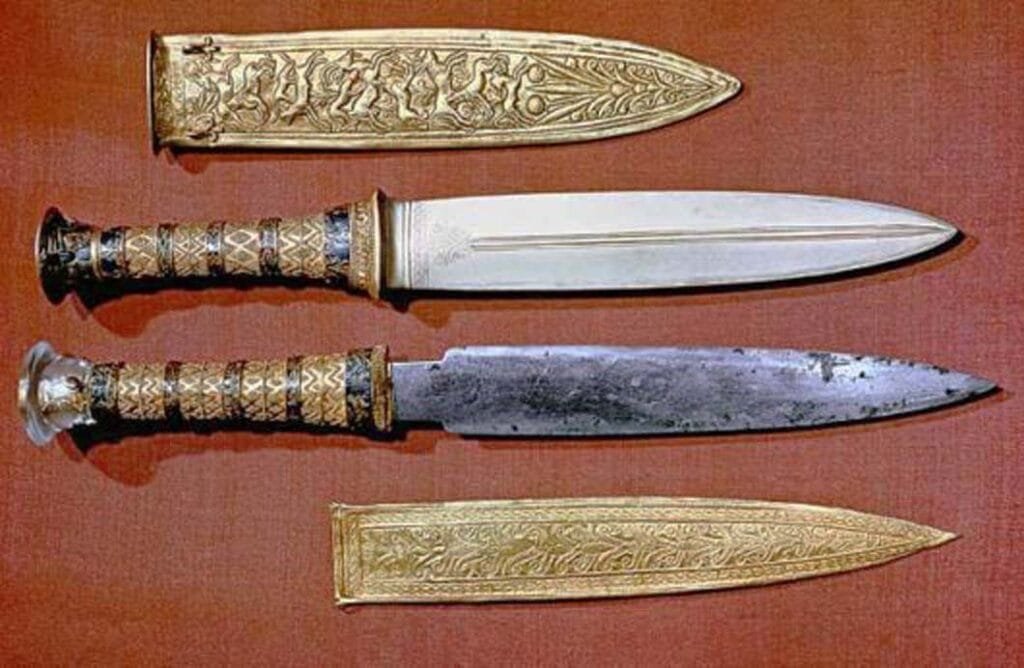
7. The Dagger of the Stars: A Gift from the Heavens
One of the most enigmatic and scientifically significant artifacts in the Grand Egyptian Museum is the iron dagger found strapped to the thigh of Tutankhamun’s mummy. In an era when iron was more precious than gold because the technology to smelt it from terrestrial ore did not yet exist, this blade represented the absolute pinnacle of luxury and divine connection. Recent X-ray fluorescence spectrometry has confirmed what the ancient Egyptians likely suspected: the iron for this blade came from a meteorite, making it literally a gift from the stars. In the GEM’s specialized lighting, the high nickel content of the blade gives it a distinctive, silvery sheen that remains remarkably free of rust after three thousand years. The hilt is a masterpiece of granulated gold work, decorated with lapis lazuli and rock crystal, while the gold sheath features a delicate lily and feather pattern. For the visitor, this dagger is a bridge between ancient metallurgy and the cosmic beliefs of the Pharaohs, who viewed iron as the "metal of heaven." Its presence in the tomb suggests that the King was equipped with the most advanced and spiritually potent technology available. Displaying this "extra-terrestrial" weapon in the expansive, modern setting of the GEM highlights the sophisticated trade networks and celestial observations of the New Kingdom, reminding us that the Egyptians were as much explorers of the unseen universe as they were masters of the Nile.
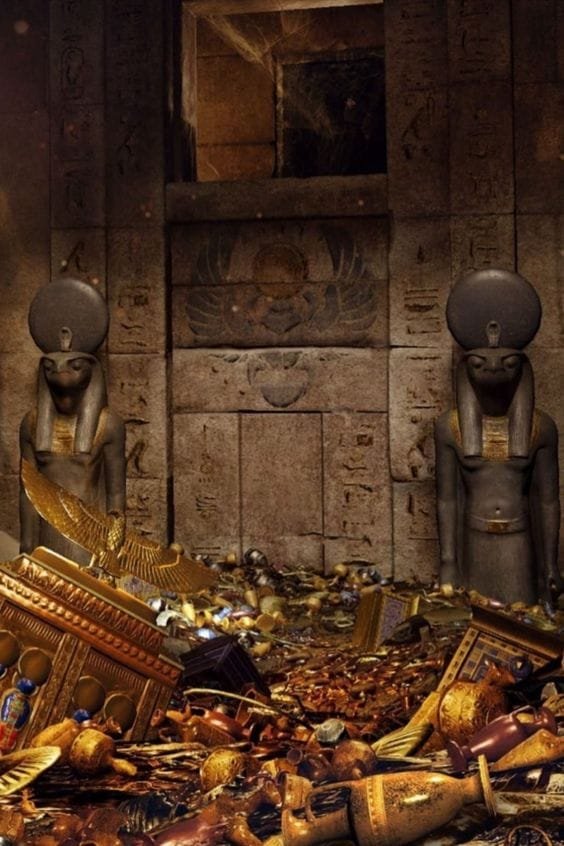
8. The Guardian of the Necropolis: The Anubis Shrine
Standing as a silent, black-and-gold sentinel at the entrance to the Tutankhamun galleries, the Anubis Shrine is one of the most evocative symbols of ancient Egyptian protection and fidelity. The jackal god, carved from wood and covered in layers of black resin, rests atop a gilded pylon-shaped shrine that was originally used to carry the King’s internal organs during the funeral procession. In the Grand Egyptian Museum, the shrine is positioned to recreate its original role as a guardian, staring eternally forward with eyes made of gold, obsidian, and calcite. The contrast between the sleek, midnight-black body of the jackal and its gleaming gold collar and ears creates a powerful visual impact that resonates with the mystery of the afterlife. For the traveler, this artifact represents the bridge between life and death; Anubis was the god who guided souls through the hall of judgment and protected the sanctity of the tomb. The shrine itself is a functional object, equipped with poles for carrying and containing hidden compartments that once held ritualistic materials. In the GEM’s spacious environment, the silhouette of Anubis is stark and majestic, capturing the essence of the god who never sleeps. It serves as a reminder that the King’s treasures were never meant for human eyes, but for the gods themselves, guarded by a deity who promised that the King’s name would live forever in the silent halls of eternity.
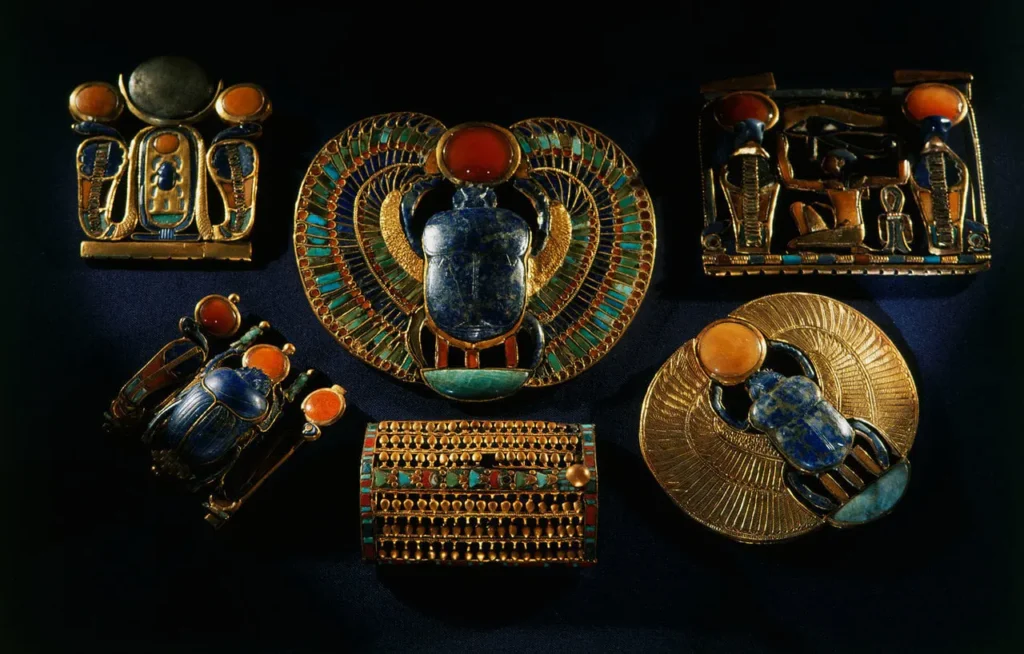
9. The Royal Wardrobe: Textiles and the Human Pharaoh
While the gold and jewels often steal the spotlight, the Grand Egyptian Museum’s display of King Tutankhamun’s textiles offers the most profound connection to his daily human existence. The collection includes hundreds of garments, ranging from ceremonial tunics and leopard-skin robes to hundreds of linen loincloths and delicate children's socks. These organic materials are incredibly fragile, and the GEM has utilized world-class conservation techniques to display them in a way that prevents deterioration while showcasing their intricate weaves. Seeing the actual clothes that the King wore—complete with signs of tailoring and personal use—strips away the myth of the remote god-king and replaces it with the reality of a young man. The collection even includes the King’s elaborate leather sandals, some of which are decorated with images of Egypt’s traditional enemies on the insoles, meaning that with every step, the Pharaoh was symbolically trampling his foes. For the visitor, these textiles provide a tactile sense of the New Kingdom's luxury; the linen is so finely spun that it was often referred to as "woven air." This intimate look at the King’s wardrobe reveals the sophisticated fashion and social hierarchy of the 18th Dynasty, where every thread was a statement of status. By preserving these soft, silent witnesses of history, the GEM allows us to imagine the King not just as a statue, but as a living person who moved through the halls of his palace in the cool, white breeze of Egyptian linen.
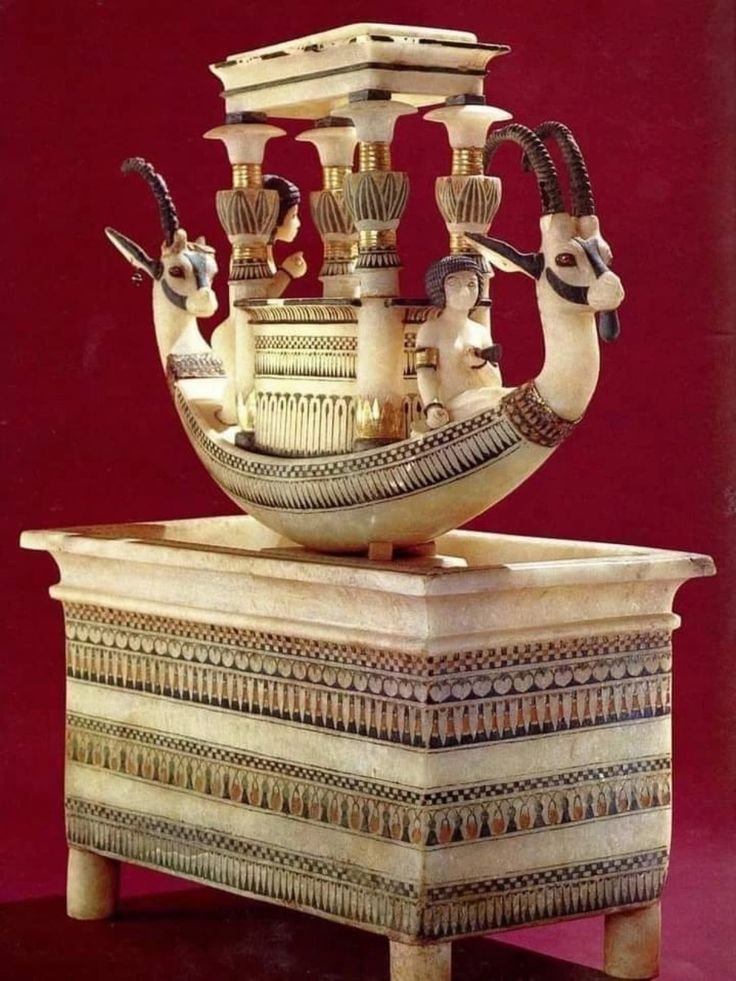
10. The Alabaster Vessels: Containers of the Eternal Breath
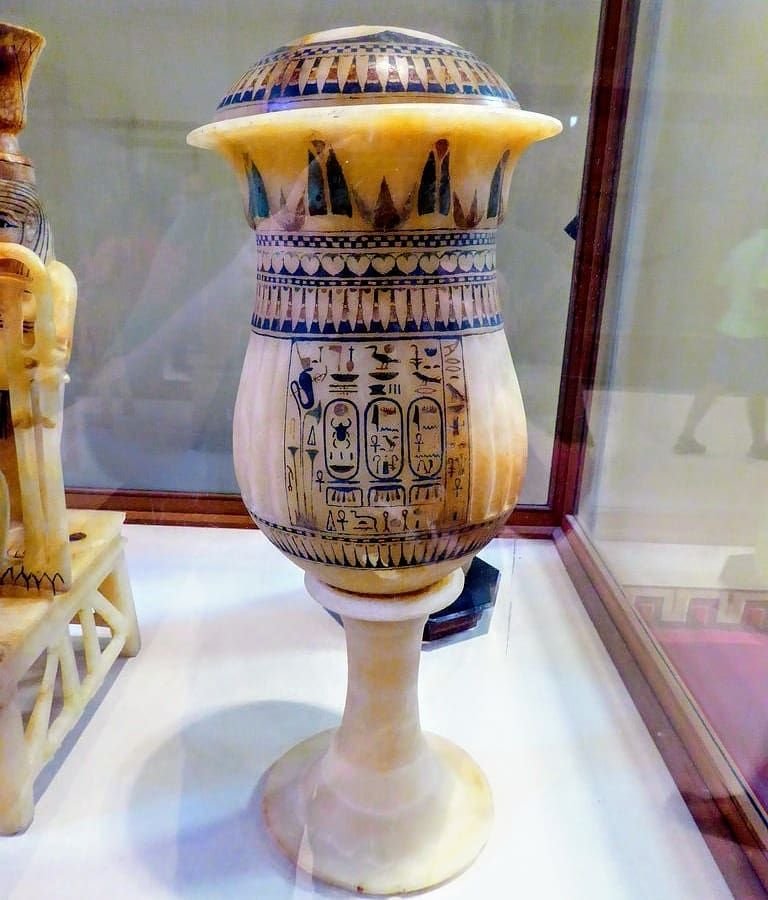
Among the most delicate and ethereal artifacts in the Grand Egyptian Museum are the translucent alabaster (calcite) vessels that once held the King’s ritual oils, perfumes, and internal organs. These objects represent a pinnacle of stone-carving technology, where the hardness of the rock is transformed into something that appears as soft and glowing as frozen light. The GEM’s specialized lighting galleries are particularly effective here, allowing light to pass through the thin walls of the stone to reveal the natural veining and the intricate hieroglyphic inscriptions carved into their surfaces. The most famous of these is the "Wishing Cup," a lotus-shaped chalice that bears a prayer for the King’s soul to live for millions of years. In the museum’s expansive setting, these jars are displayed not just as containers, but as sculptures of profound religious significance. The Egyptians believed that scents and oils were essential for the reanimation of the senses in the afterlife, and these vessels were the "batteries" of that spiritual energy. The craftsmanship involved in hollowing out these solid blocks of stone without modern machinery remains a point of fascination for visitors and scholars alike. Standing before them, one can almost sense the fragrant atmosphere of the royal court. They serve as a reminder that for the ancient Egyptians, the transition to the afterlife was a sensory journey, requiring the finest materials of the earth to preserve the breath of the soul through the vacuum of eternity.
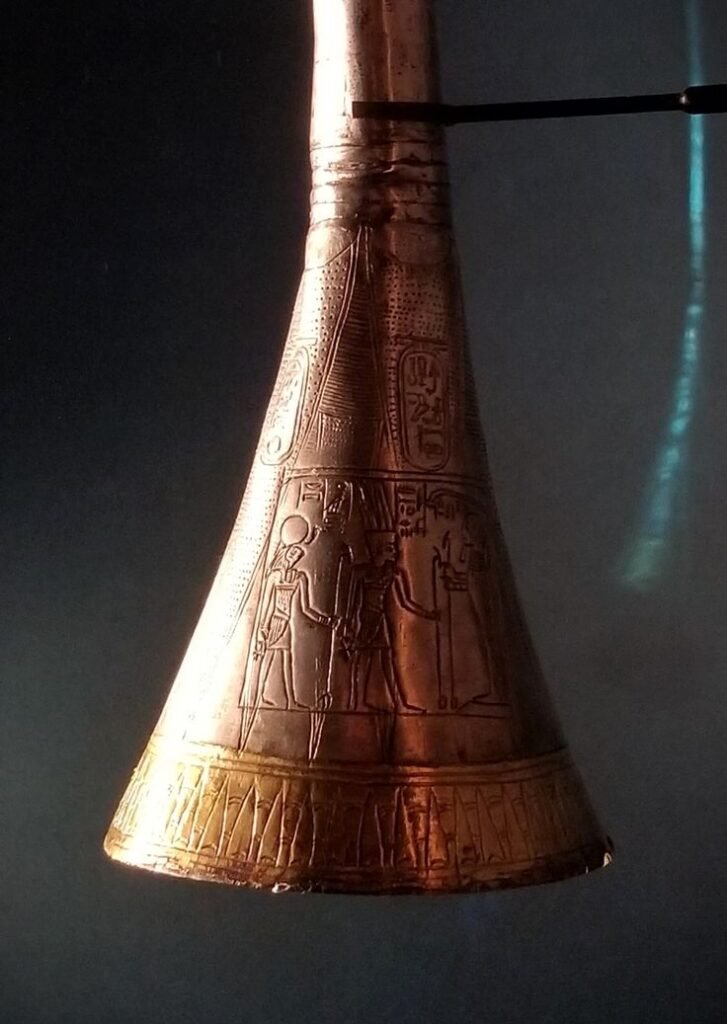
11. The Silver and Bronze Trumpets: The Voice of Ancient War
The Grand Egyptian Museum houses two of the oldest functioning musical instruments in the world: the military trumpets of King Tutankhamun, one made of silver and the other of bronze. These instruments are not merely museum pieces; they are the literal voices of the 18th Dynasty, capable of producing a haunting, piercing sound that once signaled the movement of armies or the arrival of the Pharaoh. The silver trumpet, decorated with the images of the gods Ra-Horakhty, Ptah, and Amun, represents the King’s divine authority over the military. In the GEM, these trumpets are displayed with an emphasis on their acoustic and historical power. There is a famous legend that whenever these trumpets are blown, they precede a period of conflict or global upheaval, a myth that has only added to their mystique. Beyond the superstition, the technical skill required to forge such thin, resonant metal tubes is remarkable. The instruments were found wrapped in protective reeds, showing how much they were valued by the King’s attendants. For the visitor, seeing these trumpets provides an auditory connection to the past; it allows one to imagine the clamor of the royal palace or the silent tension of a battlefield. They are symbols of communication and command, reminding us that the Pharaoh was the ultimate conductor of Egypt’s national rhythm, his voice carried across the desert by the brilliant, metallic flare of these ancient horns.
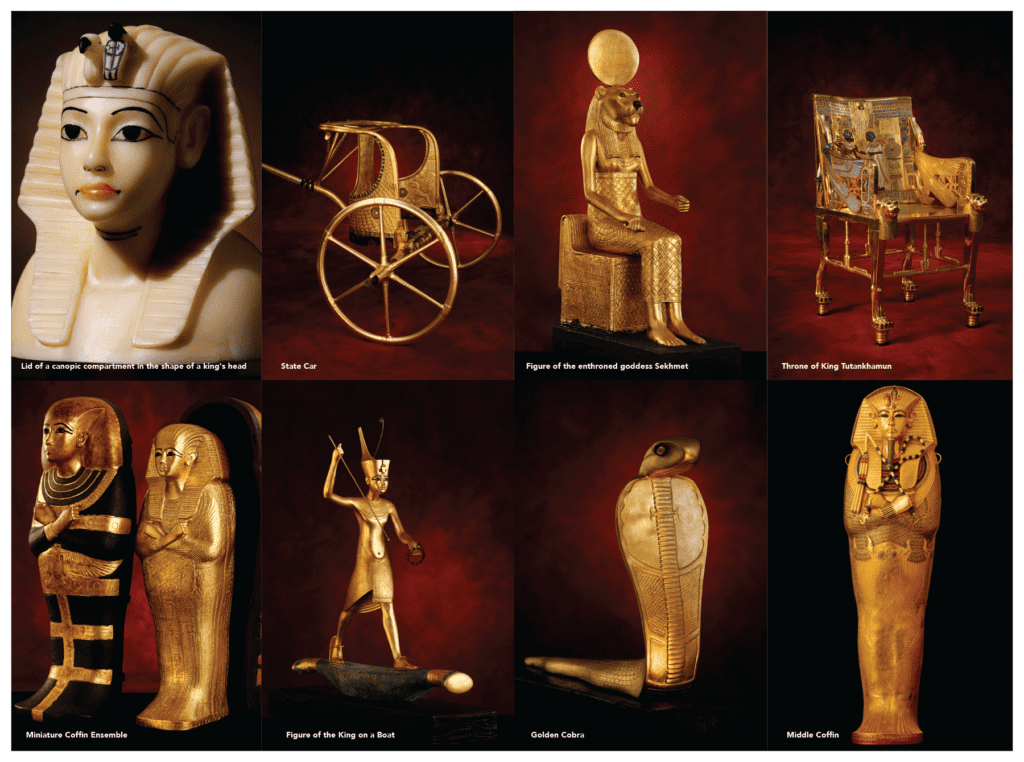
12. The Shabti Army: Servants for the Celestial Fields
Within the golden galleries of the GEM, a silent army of over 400 miniature figures known as Shabtis stands ready to serve their King. These figurines, ranging from a few centimeters to half a meter in height, were intended to act as magical substitutes for the Pharaoh should he be called upon to perform manual labor in the afterlife’s agricultural fields. The collection at the museum is breathtaking in its variety, with figures made from wood, turquoise-blue faience, alabaster, and granite. Each Shabti is inscribed with a spell from the Book of the Dead, and many hold miniature copper tools such as hoes and baskets. The Grand Egyptian Museum’s display allows visitors to see the individual craftsmanship of each piece; some are masterfully carved with the King’s realistic features, while others are more stylized and symbolic. This "army of the dead" reflects the Egyptian preoccupation with order and the meticulous planning for a comfortable eternity. By displaying them in large, organized ranks, the GEM recreates the sense of overwhelming abundance that Howard Carter felt when he first discovered them packed into wooden crates. For the visitor, the Shabtis provide a window into the ancient Egyptian work ethic and their belief that even a God-King must be prepared to contribute to the cosmic balance of the universe. They are the small, silent laborers of the afterlife, ensuring that for all eternity, King Tutankhamun would live a life of leisure while his stone and wooden surrogates toiled in the fields of paradise.
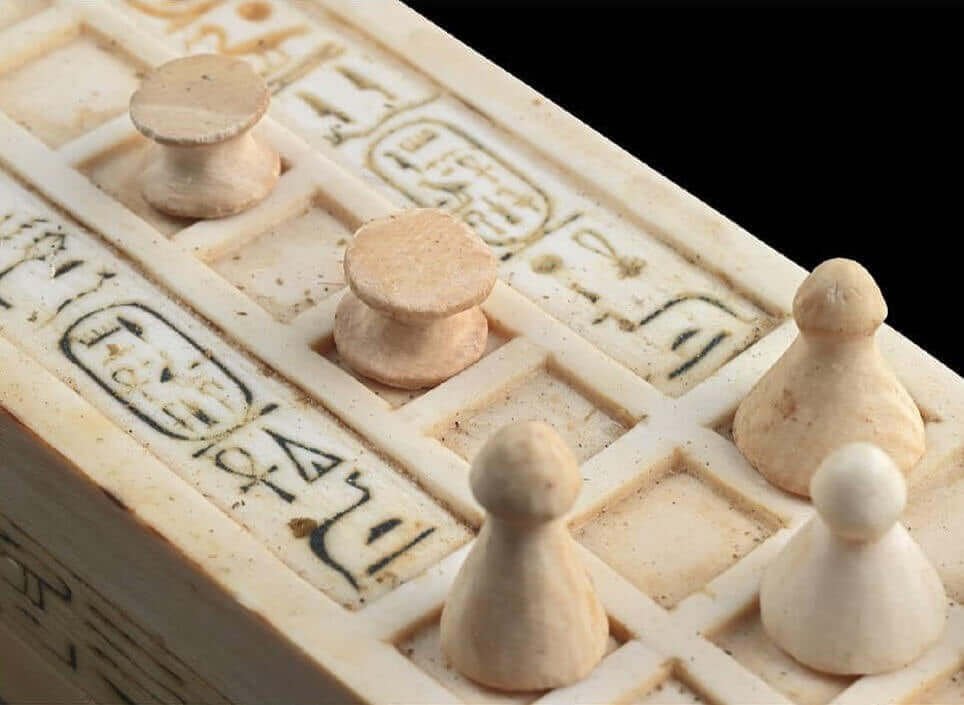
13. The Game of Senet: Strategy and Fate in the Afterlife
Among the personal items in the Grand Egyptian Museum, the collection of Senet boards reveals a fascinating intersection between royal leisure and spiritual high stakes. King Tutankhamun was buried with several of these game boards, some made of precious ebony and ivory with delicate drawer compartments for the playing pieces. However, for the ancient Egyptians, Senet was far more than a pastime; it was a symbolic map of the journey through the Duat, or the underworld. Winning the game was synonymous with the soul successfully navigating the obstacles of the afterlife to reach the fields of reeds. The GEM displays these boards in a way that emphasizes their exquisite craftsmanship and their philosophical depth. Each square on the board had a specific meaning, with the final squares representing the water of chaos or the house of happiness. For the modern visitor, seeing these game pieces—worn by the touch of a King who lived over 3,000 years ago—provides an incredibly humanizing connection. It suggests a young monarch who enjoyed the thrill of strategy and competition, yet was deeply aware that his ultimate "game" would be played against the forces of eternity. The presence of Senet in the tomb ensures that the King would never be without entertainment, but more importantly, it provided him with a ritual tool to secure his victory over death itself, one move at a time, in the eternal play of fate.
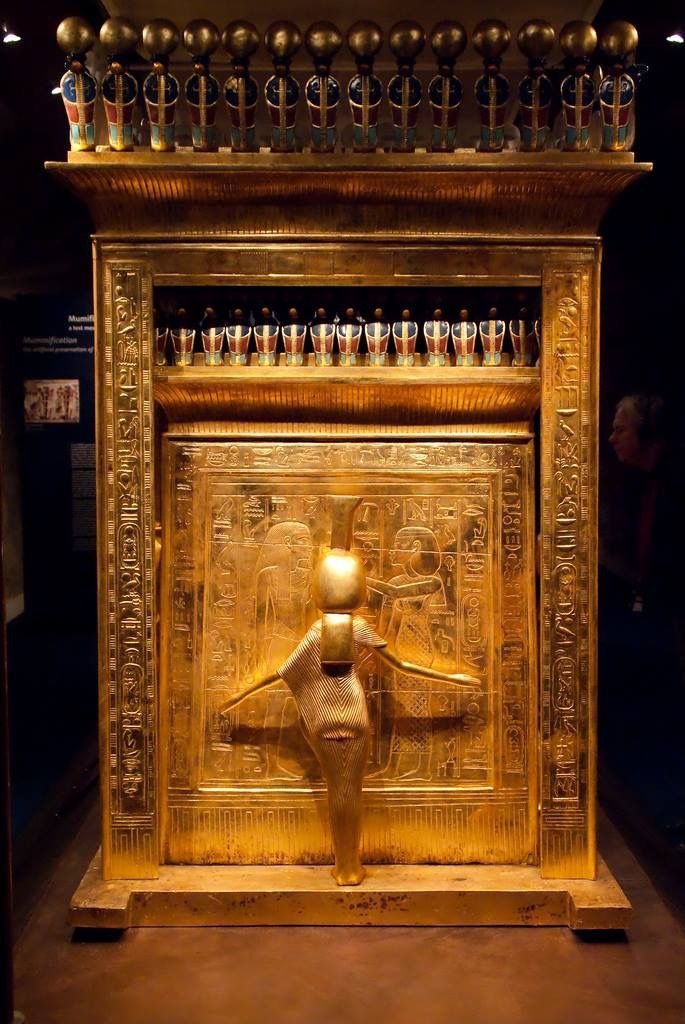
14. The Gilded Shrines: Architecture of the Divine Nest
The four massive gilded wood shrines that once nested inside each other to protect the King’s sarcophagus are among the most imposing architectural feats within the Grand Egyptian Museum. These structures are so large that Howard Carter famously had to disassemble them just to remove them from the burial chamber, and their reassembly in the GEM is a triumph of modern conservation. Each shrine is covered in a thin layer of gold and decorated with dense rows of protective spells and deities from the "Book of the Dead" and the "Amduat." In the museum's vast galleries, these shrines are positioned to allow visitors to appreciate the staggering scale of the New Kingdom’s funerary industry. The innermost shrines feature "winged" goddesses like Isis and Nephthys, whose outstretched arms wrap around the corners in a gesture of eternal embrace. The GEM’s lighting highlights the shimmering texture of the gold, which was intended to act as a "skin of the gods," impervious to decay. Walking between these colossal boxes, one feels the physical layers of protection that were deemed necessary to shield the royal mummy from the chaotic forces of the universe. They are not merely boxes; they are portable temples, a series of golden horizons that the King had to pass through to reach the sun god. Their presence in the GEM transforms the gallery into a sacred landscape, reminding us of the immense resources the state dedicated to ensuring that the Pharaoh’s transition to the afterlife was structurally and spiritually impenetrable.
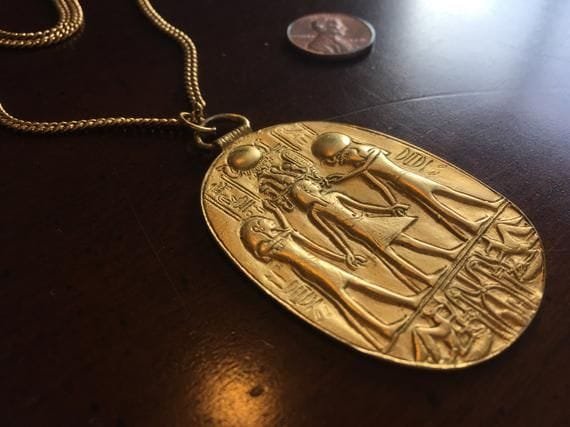
15. The Ritual Jewelry: Talismans of Cosmic Authority
The Grand Egyptian Museum houses an unparalleled collection of King Tutankhamun’s jewelry, which includes hundreds of pectorals, bracelets, rings, and collars that are as technologically advanced as they are beautiful. These pieces were never intended as mere decoration; they were high-functioning talismans, each stone and symbol chosen for its specific magical properties. The GEM’s display uses high-definition "invisible" glass to allow visitors to see the microscopic detail of the cloisonné work, where tiny cells of gold were filled with precisely cut pieces of lapis lazuli, carnelian, and turquoise. One of the most famous pieces is the scarab pectoral, featuring a sun-disk and a winged beetle, which represents the god Khepri and the concept of eternal rebirth. The vibrant blues and deep reds of the stones were not just aesthetic choices—they represented the life-giving waters of the Nile and the protective blood of Isis. For the visitor, this jewelry serves as a masterclass in ancient metallurgy and symbolic language. The weight and complexity of these pieces suggest a King who was literally draped in the protection of the gods. In the GEM, these treasures are organized to show their evolution from early childhood pieces to the heavy, formal regalia worn during the King’s brief reign. They remain the ultimate symbols of Fourth Dynasty status, proving that in the ancient world, beauty was the highest form of power, and gold was the permanent medium through which a King spoke to the divine.
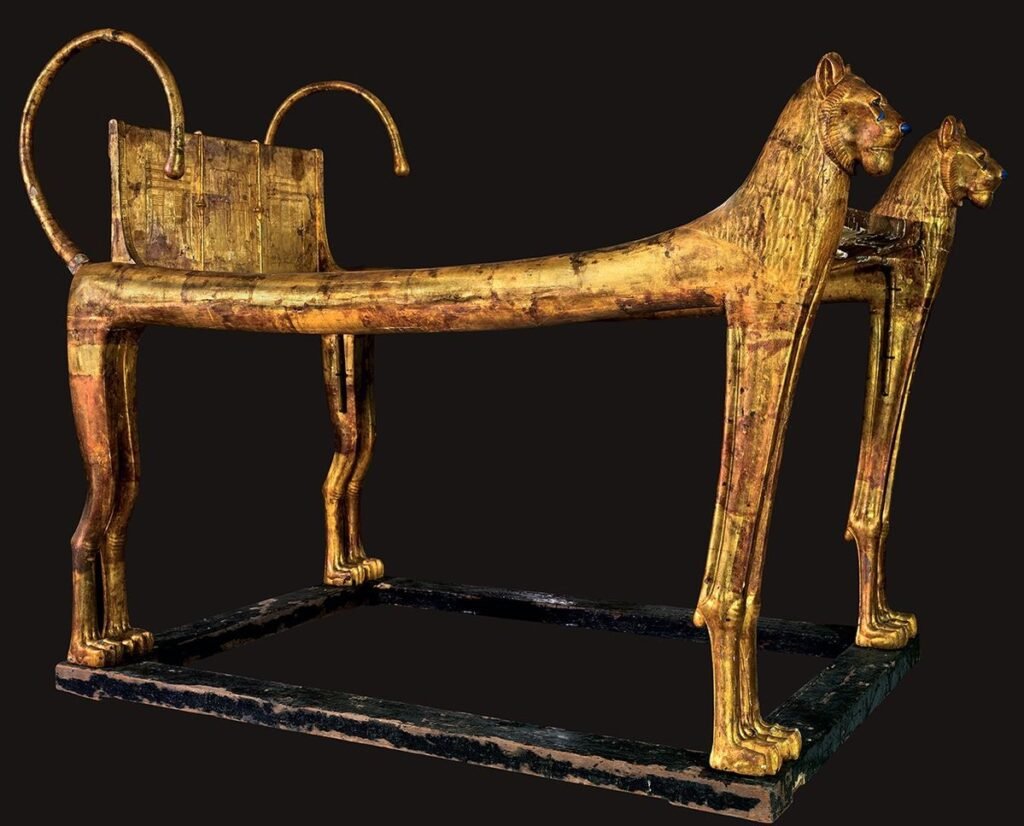
16. The Ritual Beds: Sleeping with the Gods of the Horizon
Among the most striking pieces of furniture in the Grand Egyptian Museum are the three colossal gilded ritual beds, which feature the elongated bodies of lions, hippopotamuses, and cows. These beds were not designed for the living; they were high-concept religious tools meant to assist the King in his resurrection. The lion bed, representing the goddess Mehit, symbolized the strength and protection required to traverse the dangerous hours of the night. In the GEM, these beds are displayed with sufficient space to appreciate their sheer vertical presence and the detailed carving of the deities’ heads. The cow-headed bed represents Mehet-Weret, the "Great Flood," who was believed to carry the sun god—and by extension, the Pharaoh—across the celestial waters of the sky. For the visitor, the high-gloss gilding and the stylized, almost surreal proportions of these animals create an atmosphere of otherworldly majesty. The design of these beds, with their high footboards and slatted surfaces, provided a literal and figurative platform for the King’s transformation. They demonstrate the Egyptian belief that sleep was a precursor to death, and therefore, the bed was the primary site of rebirth. Standing before these golden beasts in the museum’s quiet halls, one can sense the profound effort to make the King’s transition into the afterlife as stable and divine as possible, turning the simple act of rest into a cosmic event.
17. The Guardian Ka Statues: Sentinels of the Threshold
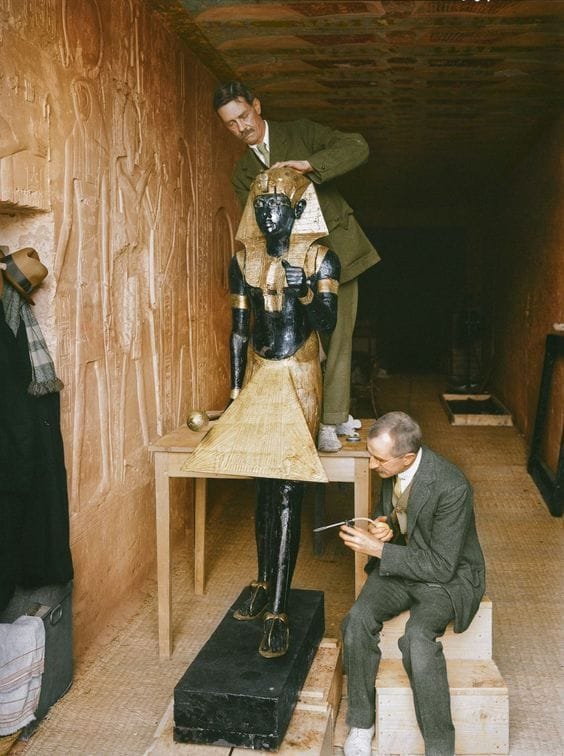
The two life-sized "Ka" statues of Tutankhamun, which famously stood like sentries outside the sealed burial chamber, are among the most imposing figures in the Grand Egyptian Museum. Carved from wood and covered in a layer of black bitumen, with their eyes, headdresses, and kilts gilded in brilliant gold, these statues represent the King’s "Ka," or his vital life force. The choice of black was deeply symbolic, representing the fertile silt of the Nile and the concept of regeneration. In the GEM, these statues are positioned to recreate their original defensive posture, clutching maces and staffs as they stare eternally at those who enter the gallery. The detail of the carving is exceptional, capturing the specific Amarna-influenced anatomy of the King, including his slightly protruding belly and high waist. For the traveler, coming face-to-face with these guardians is a chilling and awe-inspiring experience. They were designed to protect the internal secrets of the tomb from spiritual and physical intruders, acting as a magical boundary between the world of the living and the world of the dead. Their presence in the museum reminds us that for the Egyptians, a statue was not just a piece of art; it was a living vessel for the soul. The contrast between the dark skin and the golden regalia creates a visual intensity that commands respect, ensuring that even in a modern museum, the authority of the Pharaoh remains undisputed.
18. The Royal Provisions: A Banquet for Eternity
One of the most fascinating yet often overlooked aspects of the Tutankhamun collection is the massive array of food and drink provisions intended to sustain the King for millions of years. The Grand Egyptian Museum has dedicated specialized sections to these organic remains, which include dozens of dried ducks, geese, and cuts of beef, all carefully mummified and placed in wooden "picnic" baskets. There are also jars of honey, sycamore figs, dates, and even a collection of over 30 jars of vintage wine, each labeled with the year of the vintage, the vineyard, and the name of the head vintner. For the visitor, these items provide a startlingly intimate look at the 18th-century royal diet and the incredible logistics of the funerary cult. The GEM utilizes advanced climate control to preserve these 3,300-year-old organic materials, which are still remarkably intact. These provisions were not merely symbolic; the Egyptians believed the King’s soul would physically consume the essence of these foods in the afterlife. Seeing the actual seeds and bones from the King’s last meal creates a bridge across the millennia that gold alone cannot achieve. It reminds us that the Pharaoh was a living, breathing human being with a taste for the finer things in life. This display transforms the gallery into a royal dining hall of the dead, highlighting a culture that saw no boundary between the physical pleasures of the world and the spiritual requirements of the eternal.
19. The Scepters of Power: Symbols of Divine Rule
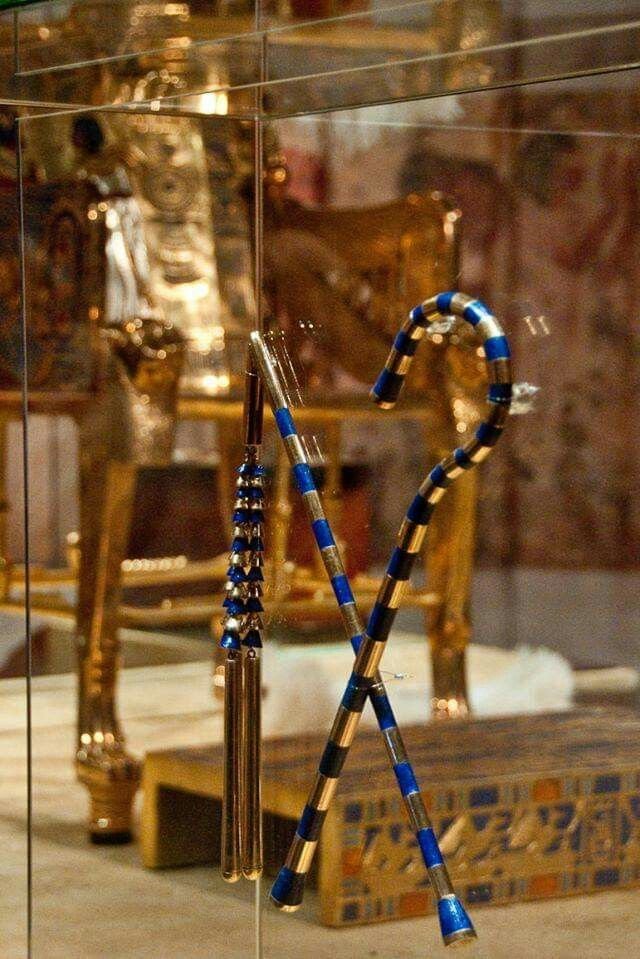
Within the Grand Egyptian Museum’s treasury of Tutankhamun, the collection of royal scepters stands as a definitive statement on the nature of 18th Dynasty sovereignty. The most recognizable are the Heka crook and the Nekhakha flail, the twin symbols of the Pharaoh’s authority over the land and its people. Carved from alternating bands of gold and deep-blue glass, these scepters were found placed across the chest of the King’s mummy, signifying his role as the "Good Shepherd" and the provider of justice. The GEM’s display allows visitors to inspect the incredible precision of these ceremonial tools, which were designed to be both portable and highly visible during royal processions. Beyond the crook and flail, the collection includes various Was scepters, representing dominion and power. In the expansive light of the museum, these objects radiate a sense of absolute order. They were not merely ornamental; they were the physical manifestations of Ma'at, the cosmic balance that the King was sworn to protect. For the visitor, standing before these symbols provides a profound understanding of the weight of the crown. They represent a political and religious ideology where the King was the sole intermediary between the gods and the Egyptian people. Seeing them in such a pristine state reminds us that while the King was young, his office was ancient and immutable, a pillar of stability in a world of constant change.
20. The Royal Vanity: Cosmetics and the Art of Appearance
The Grand Egyptian Museum offers a surprisingly intimate look at the King’s personal grooming habits through an extensive collection of cosmetic jars, mirrors, and kohl tubes. For the ancient Egyptians, physical appearance was deeply linked to spiritual purity and health. The collection features exquisite jars carved from translucent alabaster and obsidian, which once held expensive unguents and perfumed oils that were worth their weight in gold. One of the highlights is the silver mirror, shaped like an Ankh symbol, which reflected the King’s image back to him—a metaphor for the reflection of the soul. The kohl tubes, used to apply the heavy black eye makeup that protected against the sun’s glare and evil spirits, are decorated with delicate patterns of flowers and animals. In the GEM’s modern galleries, these items reveal the sophisticated "beauty industry" of the royal court. For the traveler, these artifacts humanize the Pharaoh, showing a teenager who cared about his scent, his skin, and his presentation. The presence of these items in the tomb ensures that the King would be "forever beautiful" in the presence of the gods. This display underscores a cultural philosophy where the body was a temple that required constant care and refinement. It bridges the gap between our modern obsession with self-care and an ancient tradition where the art of the vanity was a sacred duty, essential for the King's social and divine standing.
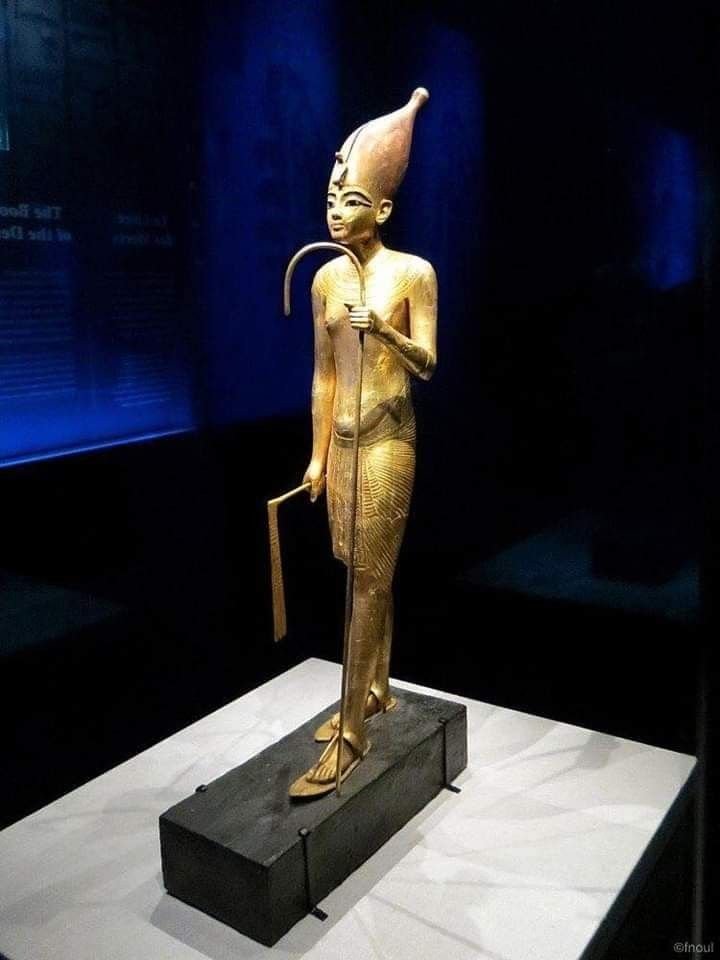
21. The Ritual Sticks and Boomerangs: Tools of the Celestial Hunter
Among the more curious items in the Tutankhamun collection at the Grand Egyptian Museum is a vast array of over 130 walking sticks and a series of ivory and wood boomerangs. At first glance, these might seem like simple tools for a King who suffered from a clubfoot, but closer inspection reveals they were objects of high ritual significance. Many of the walking sticks are masterpieces of decorative art, with handles shaped like the heads of Egypt’s traditional enemies—Nubians and Asiatics—allowing the King to symbolically "crush" his foes with every step. The boomerangs, some designed to return and others for direct flight, were used for hunting birds in the marshes of the Nile, a favorite royal pastime that also symbolized the subduing of chaotic forces. The GEM’s display highlights the diversity of these objects, showing that they were both functional aids and magical weapons. Some sticks are encased in gold leaf, while others feature intricate marquetry of ebony and ivory. For the visitor, this collection provides a window into the King’s physical life and his recreational activities. It suggests a monarch who, despite his physical ailments, was deeply engaged in the traditional activities of his ancestors. By preserving these objects, the museum tells a story of resilience and ritual, where even a walking stick was a scepter of power, and a simple hunt in the marshes was a reenactment of the divine victory of order over chaos.
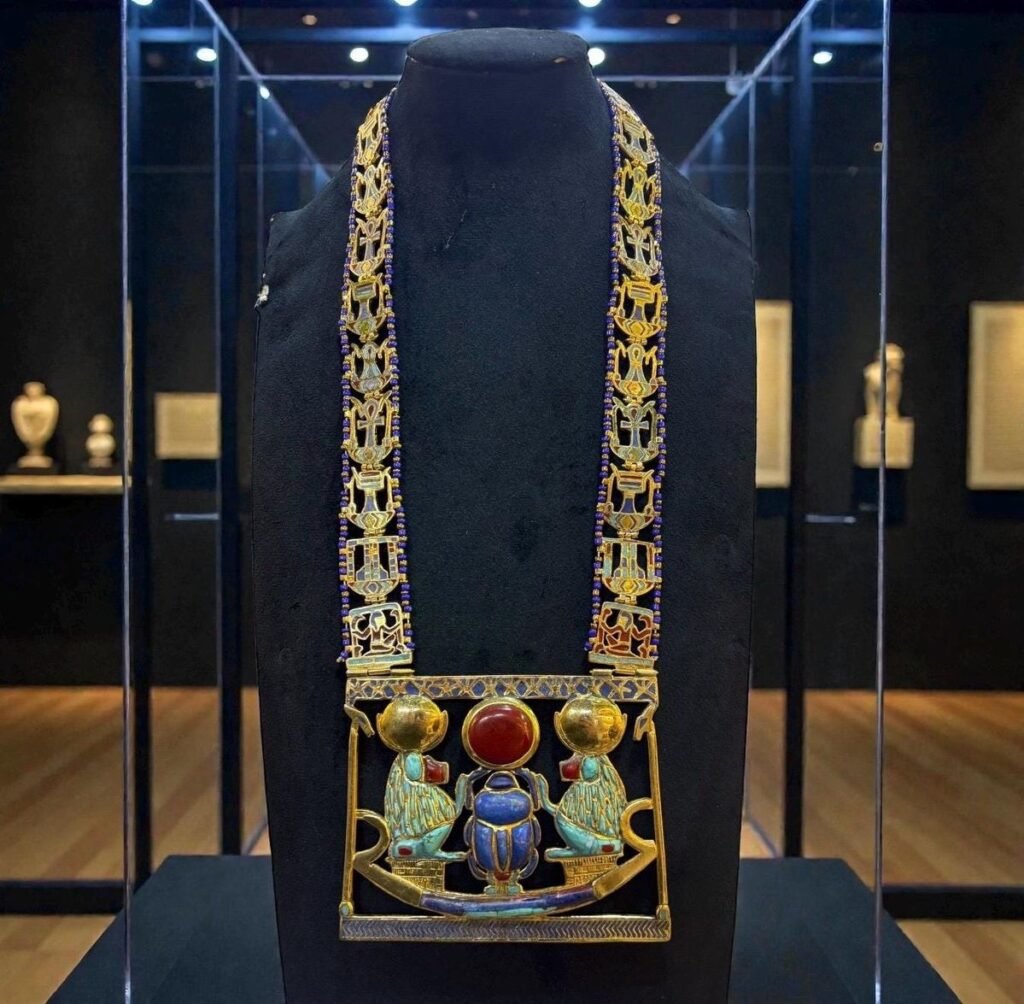
22. The Pectorals of Rebirth: Jewelry for the Eternal Heart
One of the most breathtaking displays in the Grand Egyptian Museum is the specialized gallery housing the pectorals, or large chest ornaments, that were found within the layers of the King’s mummy wrappings. These pieces represent the highest achievement of New Kingdom jewelry making, combining gold, glass, and semi-precious stones into complex theological diagrams. Each pectoral was designed to protect the King's heart and lungs, the vital centers of his being, during the weighing of the heart in the afterlife. The GEM’s presentation uses ultra-clear glass and focused lighting to reveal the "cloisonné" technique, where thousands of tiny stone inlays were fitted into gold cells. One standout piece features the solar boat of the morning sun, flanked by protective cobras and goddesses. For the visitor, these are not just ornaments but "magical machines" intended to ensure the King’s resurrection. The vibrant blues of lapis lazuli and the deep reds of carnelian were chosen for their solar and life-giving associations. Standing before these masterpieces, one realizes that for Tutankhamun, beauty was a shield. The complexity of these pectorals suggests that the royal court spared no expense to equip the King with the most powerful talismans available. In the modern setting of the GEM, these jewels glow with an intensity that seems to defy their 3,300-year history, serving as a testament to the eternal human desire to adorn the soul for its greatest journey.
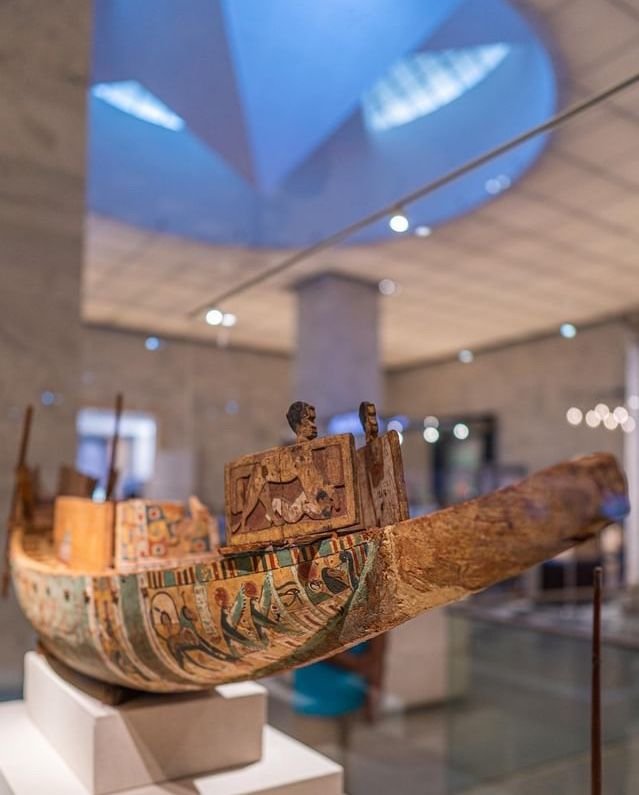
23. The Model Boats: Navigating the Celestial Nile
In the Grand Egyptian Museum, a fleet of over 30 model boats provides a fascinating look at how King Tutankhamun expected to travel through the afterlife. These models, ranging from simple reed skiffs for hunting to elaborate royal barges with gilded cabins, were magical substitutes for real vessels. The Egyptians believed that the afterlife was a watery landscape—a celestial Nile—and the King required a diverse navy to accompany the sun god Ra on his daily journey across the sky and his nightly voyage through the underworld. The GEM’s display highlights the incredible detail of these models, including miniature oars, rigging, and even tiny steering paddles. Some boats feature the King’s throne or a kiosk where his spirit could sit and watch the divine scenery. For the visitor, these boats are a masterclass in ancient maritime technology and spiritual imagination. They symbolize the concept of transition and movement; the King was never meant to be static in his tomb but was expected to be a perpetual traveler. By preserving these models in a spacious, modern environment, the museum allows us to appreciate the logistical scale of the Pharaoh’s "heavenly fleet." They remind us that for the ancient Egyptians, the Nile was the literal and metaphorical center of existence, and even in death, the ability to navigate its currents remained the ultimate mark of a successful transition into eternity.
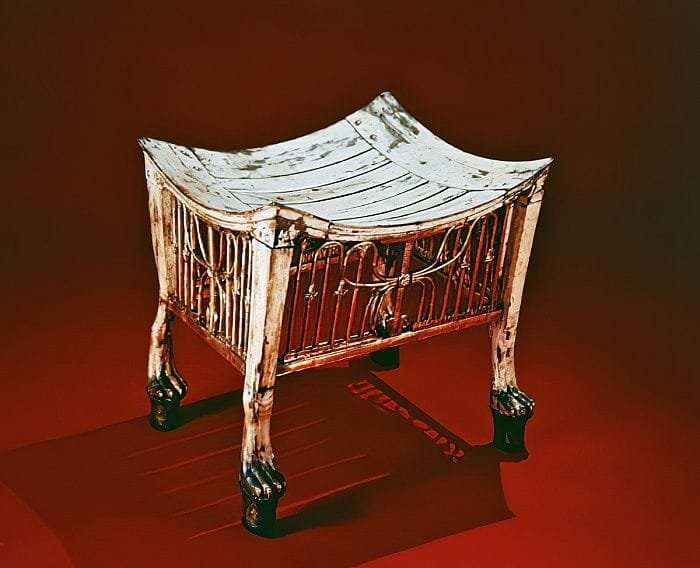
24. The Royal Footstools: Stepping Over the Forces of Chaos
Among the furniture collection in the Grand Egyptian Museum, the royal footstools of Tutankhamun offer a startlingly direct look at the political ideology of the New Kingdom. These small, gilded, and painted objects were not merely for comfort; they were powerful symbols of the King’s dominance over the world. Many of the footstools are decorated with images of the "Nine Bows," representing the traditional enemies of Egypt, such as the Nubians, Libyans, and Hittites. By resting his feet on these images, the King was symbolically—and physically—keeping the forces of chaos under his control. The GEM’s display allows visitors to see the intricate marquetry and the vivid colors used to depict these bound captives. This artistic choice reflects the concept of Isfet (chaos) being subdued by Ma'at (order). For the modern traveler, these footstools provide a visceral understanding of the Pharaoh’s role as the guardian of the state. Even in the intimacy of his private chambers, the King was reminded of his duty to protect the borders of Egypt. The craftsmanship of these items is exceptional, featuring delicate inlays of ebony and ivory that have been preserved perfectly by the desert sands. In the context of the museum, these footstools serve as a reminder that every object in the royal household, no matter how small, was part of a larger symbolic language designed to reinforce the King’s status as a divine conqueror and the master of the known world.
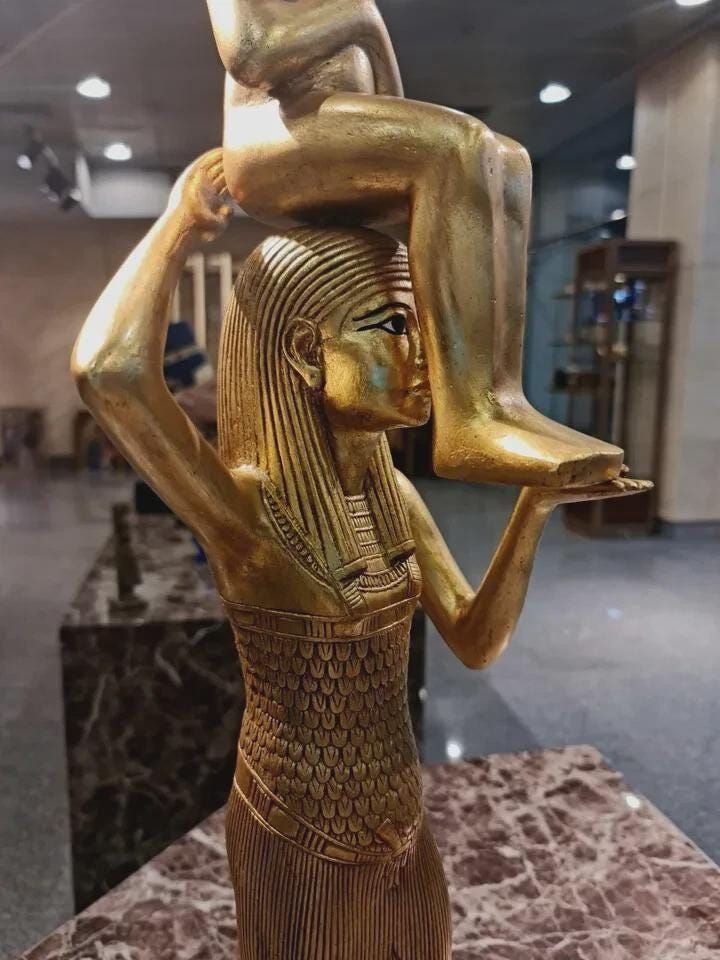
25. The Ritual Figurines: Actors in the Divine Drama
Within the Grand Egyptian Museum’s treasury, a captivating collection of 32 ritual figurines carved from wood and gilded in gold offers a glimpse into the complex theology of the 18th Dynasty. These statues, found in black-painted wooden chests, depict the King in various divine roles or represent the gods themselves in the act of protecting the Pharaoh. In the GEM’s darkened galleries, the golden surfaces of these figures seem to flicker with a life of their own. One of the most famous figures shows Tutankhamun standing on the back of a black leopard, symbolizing his journey through the shadows of the underworld. Another depicts him harpooning the forces of chaos in the form of an invisible hippopotamus. For the visitor, these are not merely statues; they are frozen moments of a sacred performance. The GEM’s layout allows for a 360-degree view, revealing the intricate carving of the King’s anatomy and the delicate application of gold leaf. These figurines were intended to act as magical participants in the King’s resurrection, ensuring that every ritual necessary for his deification was performed for all eternity. They represent the "hidden" knowledge of the Egyptian priesthood, providing a profound insight into a worldview where the King was the primary actor in a cosmic drama that sustained the very existence of the world.
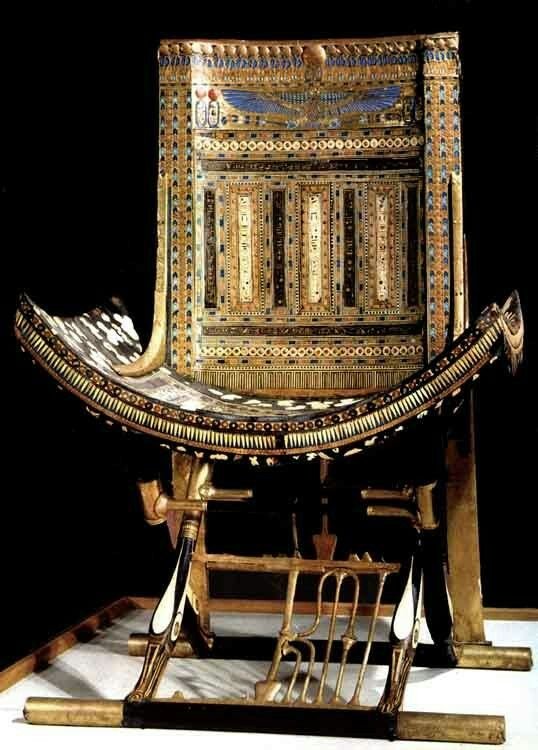
26. The Folding Furniture: Innovation for the Mobile Pharaoh
The Grand Egyptian Museum showcases an aspect of ancient Egyptian life that is surprisingly modern: the King’s collection of high-tech, portable furniture. Among the treasures are folding stools and a unique three-way folding bed, which represent the pinnacle of 14th-century BCE carpentry and mechanical innovation. These items were designed for a Pharaoh who was often on the move, whether traveling to distant palaces, hunting in the desert, or perhaps accompanying his army. The GEM’s display highlights the complex bronze hinges and the interlocking wooden slats that allowed these pieces to be collapsed into a fraction of their size for easy transport. For the traveler, these artifacts dispel the notion that ancient furniture was heavy and static. The folding stool, featuring legs shaped like duck heads and inlaid with ebony and ivory to mimic animal skin, is a masterpiece of both aesthetics and utility. It shows that the royal court valued efficiency and comfort as much as it did grandeur. By exhibiting these pieces in the modern, minimalist setting of the GEM, the museum underscores the timeless nature of good design. They serve as a reminder that the ancient Egyptians were master problem-solvers who applied the same level of genius to a portable stool as they did to the construction of the Great Pyramids, proving that luxury and practicality have always been two sides of the royal coin.
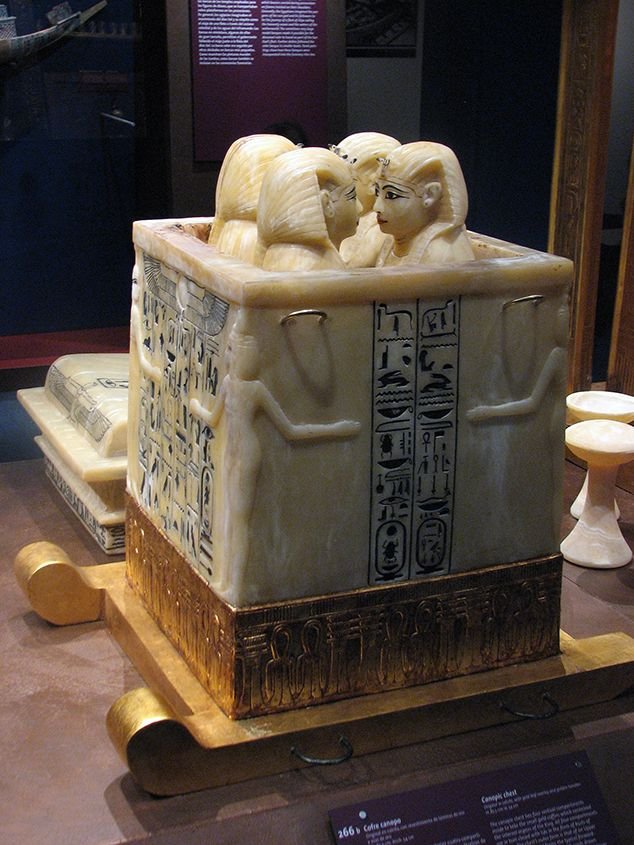
27. The Canopic Shrine: Protecting the Royal Essence
At the spiritual core of the treasury in the Grand Egyptian Museum stands the magnificent Canopic shrine, a golden structure protected by four free-standing goddesses: Isis, Nephthys, Selket, and Neith. This shrine was designed to house the alabaster chest containing the King’s internal organs, which were essential for his physical reanimation in the afterlife. In the GEM, the shrine is positioned so that visitors can appreciate the exquisite detail of the four goddesses, who stand with their arms outstretched in a gesture of eternal protection. Each goddess looks slightly to the side, ensuring that every direction of the compass is under her divine gaze. The shrine itself is topped with a row of protective cobras and covered in inscriptions from the Book of the Dead. For the visitor, the emotional impact of this piece is profound; it represents the ultimate act of care for the King’s physical self. The translucent alabaster of the internal jars, visible through the golden outer shell, creates a beautiful contrast between the permanence of stone and the radiance of gold. This artifact encapsulates the Egyptian concept of "totality"—where every part of the King’s body and spirit had to be accounted for and protected to achieve immortality. It is a monument to the sanctity of life and the intricate rituals that the Egyptians believed could conquer the finality of death.
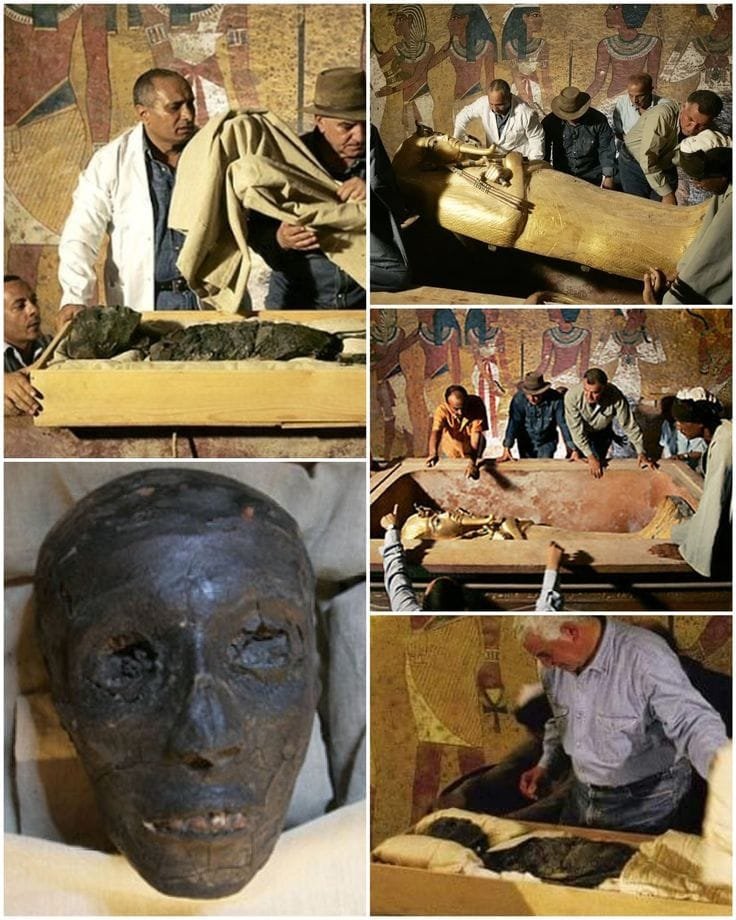
28. The Science of Eternity: Conservation at the GEM
The Grand Egyptian Museum is not just a gallery; it is home to the world’s most advanced archaeological conservation center, which has played a critical role in preparing the Tutankhamun collection for its debut. Over the past decade, a team of dedicated Egyptian and international specialists has worked tirelessly to stabilize artifacts that had spent a century in less-than-ideal conditions. In the GEM’s state-of-the-art laboratories, the King’s organic treasures—including leather, wood, and ancient seeds—were treated with non-invasive techniques such as laser cleaning and 3D scanning. For the visitor, understanding this "unseen" part of the museum adds a layer of profound respect for the objects on display. Several of the King's more fragile garments and sandals, which were previously too delicate to move, can now be exhibited thanks to innovative mounting systems that support the ancient fibers without causing stress. This section of the museum’s story emphasizes that the GEM is a living institution, dedicated to the long-term survival of human heritage. By applying 21st-century science to 33-century-old objects, the museum ensures that the gold of Tutankhamun will never lose its luster and that the stories carved into his stone vessels will remain legible for generations to come. It is a triumph of human ingenuity, proving that our commitment to the past is as strong as our hope for the future.
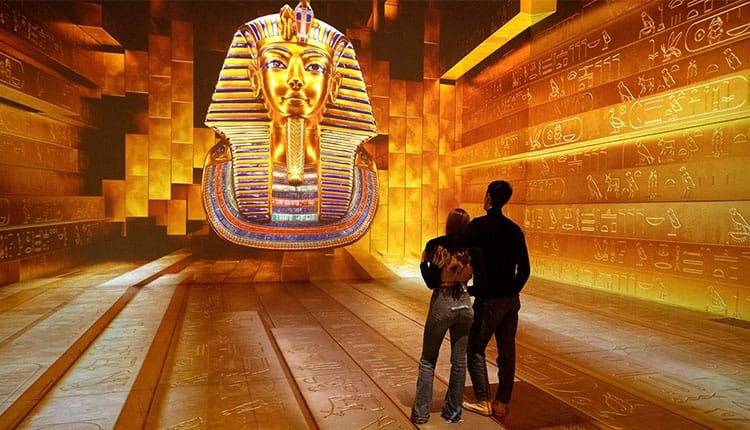
29. The Giza Connection: A Landscape of Kings
One of the most breathtaking aspects of viewing the treasures of Tutankhamun in the Grand Egyptian Museum is the physical and symbolic relationship between the artifacts and the Great Pyramids of Giza. The museum’s architecture features massive glass facades and specific visual axes that align the galleries with the pyramids of Khufu, Khafre, and Menkaure. For the traveler, this creates a powerful historical dialogue; while Tutankhamun lived over a thousand years after the pyramids were built, he was the restorer of the traditional Egyptian order that those monuments represent. As you stand among the golden shrines and look through the museum’s windows at the stone giants on the horizon, you realize that the GEM has successfully recontextualized the Boy King. He is no longer an isolated discovery from a remote valley in Luxor, but a vital part of the grand timeline of Egyptian kingship. This visual link reinforces the idea of Ma'at—the eternal continuity of the Egyptian state. The GEM’s location acts as a bridge, allowing the visitor to experience the monumental scale of the Old Kingdom and the artistic refinement of the New Kingdom in a single, coherent gaze. It reminds us that the spirit of the Pharaohs is rooted in the very earth of the plateau, a place where the sun continues to rise and set over the most enduring monuments ever created by human hands.
30. The Eternal Return: Tutankhamun’s Final Victory
As you reach the end of the 30th chapter of this narrative and prepare to exit the golden world of the Grand Egyptian Museum, the final reflection is one of awe and permanence. King Tutankhamun’s life was short, and his reign was marked by the shadows of religious upheaval, yet in his death, he achieved a level of fame that no other monarch in history can claim. The GEM is the fulfillment of the ancient Egyptian promise: "To speak the name of the dead is to make them live again." By housing his treasures in this architectural masterpiece, we have ensured that the King’s name will be spoken in every language on Earth for centuries to find. The journey through these 30 aspects of his world—from his meteorite dagger to his ritual beds—reveals a civilization that did not fear death, but saw it as a grand transition to a more beautiful reality. The Boy King has finally returned to his people, not as a mummy in a dark hole, but as a golden ambassador of human potential and artistic brilliance. Leaving the museum, one carries a sense of the infinite; the treasures are no longer just "things," but echoes of a soul that successfully navigated the currents of time. Tutankhamun’s final victory is not found in his gold, but in the wonder he continues to ignite in the eyes of every person who walks through the halls of the Grand Egyptian Museum, forever the King of the past, the present, and the eternal future.