- Excursions in Egypt
- Egypt Tour Packages
- Cairo Tours and Excursions
- Hurghada Tours and Excursions
- Soma Bay Tours and Excursions
- Makadi Bay Tours and Excursions
- Sahl Hasheesh Tours and Excursions
- El Gouna Tours and Excursions
- Marsa Alam Tours and Excursions
- Port Ghalib Tours and Excursions
- El Quseir Tours and Excursions
- Dendera and Abydos Day Tours
- Aswan Tours and Excursions
- Luxor Tours and Excursions
- Sharm El Sheikh Tours and Excursions
- Top Rated Egypt Tours in 2026
- Optional Excursions in Egypt
- Private Transfer
- Blogs About egypt
- Ancient Egypt
- Historical Sites in Egypt
- Cairo
- Alexandria
- Luxor
- Aswan
- The Red Sea
- Dendera Temple
- El Fayoum Oasis
- Bahariya Oasis
- Siwa Oasis
- Al Alamein
- Marsa Matruh
- Why Egypt Is One of the Safest Countries to Visit in the Middle East
- What You Need To know Before Your First Trip To Egypt
- Egypt Travel Costs in 2026 Full Budget Guide
- Top 10 Tourist Activities in Egypt
- Top 50 Activities You Can’t Miss in Egypt in 2026
- The Guide to Guided Tours in Egypt
- Egypt’s Ancient and Modern History
- The Nile River
- The Deserts of Egypt
- Ancient Egyptian gods
- famous Egyptian dishes
- UNESCO World Heritage sites
- About Us
- Egypt Hotels and Resorts
- Excursions in Egypt
- Egypt Tour Packages
- Cairo Tours and Excursions
- Hurghada Tours and Excursions
- Soma Bay Tours and Excursions
- Makadi Bay Tours and Excursions
- Sahl Hasheesh Tours and Excursions
- El Gouna Tours and Excursions
- Marsa Alam Tours and Excursions
- Port Ghalib Tours and Excursions
- El Quseir Tours and Excursions
- Dendera and Abydos Day Tours
- Aswan Tours and Excursions
- Luxor Tours and Excursions
- Sharm El Sheikh Tours and Excursions
- Top Rated Egypt Tours in 2026
- Optional Excursions in Egypt
- Private Transfer
- Blogs About egypt
- Ancient Egypt
- Historical Sites in Egypt
- Cairo
- Alexandria
- Luxor
- Aswan
- The Red Sea
- Dendera Temple
- El Fayoum Oasis
- Bahariya Oasis
- Siwa Oasis
- Al Alamein
- Marsa Matruh
- Why Egypt Is One of the Safest Countries to Visit in the Middle East
- What You Need To know Before Your First Trip To Egypt
- Egypt Travel Costs in 2026 Full Budget Guide
- Top 10 Tourist Activities in Egypt
- Top 50 Activities You Can’t Miss in Egypt in 2026
- The Guide to Guided Tours in Egypt
- Egypt’s Ancient and Modern History
- The Nile River
- The Deserts of Egypt
- Ancient Egyptian gods
- famous Egyptian dishes
- UNESCO World Heritage sites
- About Us
- Egypt Hotels and Resorts
Welcome to
Crystal Mountain – A Natural Wonder in Egypt’s Eastern Desert
Crystal Mountain, also known as Gebel El-Izaz, is one of the most remarkable natural landmarks in Egypt’s Eastern Desert. Famous for its sparkling quartz crystals and dramatic rocky landscape, this unusual geological formation has become a popular stop for travelers exploring Egypt’s desert routes between the Bahariya Oasis, the White Desert, and other Western Desert attractions.
Unlike Egypt’s famous archaeological monuments, Crystal Mountain was created entirely by natural geological processes. The site is characterized by a rocky ridge containing veins and fragments of quartz crystals that can sparkle brightly when exposed to sunlight. This distinctive appearance has given the mountain its famous name and made it an interesting destination for photographers, nature lovers, and desert adventure enthusiasts.
A visit to Crystal Mountain Egypt offers travelers an opportunity to see a completely different side of the country. Instead of temples, pyramids, and ancient tombs, visitors encounter rugged mountains, open desert, golden sand, and unusual mineral formations. The landscape demonstrates the extraordinary geological diversity of Egypt.
Crystal Mountain is particularly popular as a stop during Egypt desert safaris. Travelers crossing the Western Desert can pause at the mountain to explore the landscape, take photographs, and learn about the geological features of the area. Its location along major desert travel routes also makes it possible to combine Crystal Mountain with destinations such as the Black Desert, White Desert, Bahariya Oasis, and the Valley of the Golden Mummies.
The surrounding desert creates a spectacular setting, especially when sunlight illuminates the quartz crystals and rocky surfaces. Sunrise and sunset can produce beautiful colors across the surrounding mountains and sand.
For travelers searching for Crystal Mountain Egypt, Gebel El-Izaz, Crystal Mountain Bahariya, things to do in the Egyptian desert, Western Desert attractions, and Egypt desert safari, this unusual geological landmark is well worth including in a desert adventure.
1. Where Is Crystal Mountain Located?
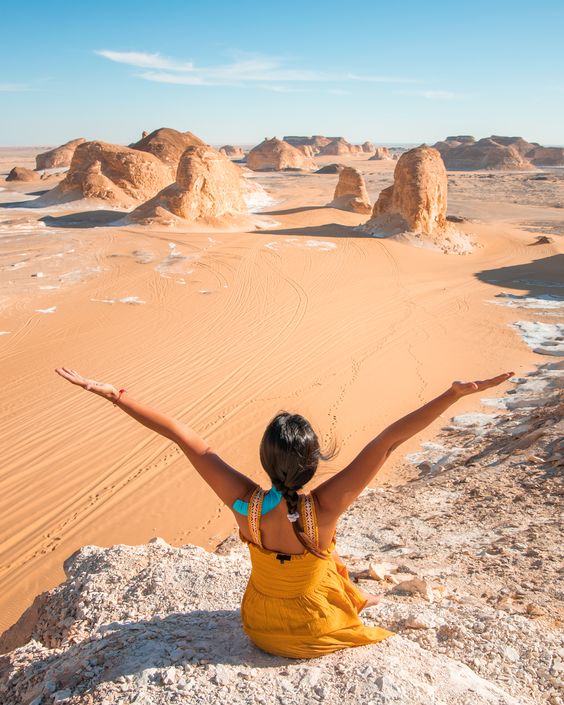
Crystal Mountain, or Gebel El-Izaz, is located in Egypt’s Western Desert and is commonly visited during desert journeys between the Bahariya Oasis and the Farafra Oasis. Its position along the desert route makes it a convenient and memorable stop for travelers exploring the famous landscapes of Egypt’s Western Desert. The mountain is surrounded by vast desert scenery, with rocky formations, sand, and open horizons extending in every direction. This remote setting is an important part of the attraction because it allows visitors to experience the dramatic environment of the Egyptian desert away from major cities. Travelers visiting Crystal Mountain Egypt often reach the area as part of a multi-day desert safari. A typical itinerary may begin in Cairo before continuing to Bahariya Oasis, where travelers can explore the Black Desert and other attractions. From there, the journey can continue toward the White Desert and Crystal Mountain before reaching Farafra. The exact route and stops can vary depending on the tour itinerary and local desert conditions. Because the region is remote, visitors should explore it with experienced local drivers and guides who are familiar with desert routes and conditions. The surrounding landscape is particularly impressive because Crystal Mountain rises from an otherwise open desert environment. The contrast between the rocky formation and the surrounding sand makes the mountain easy to recognize and provides excellent opportunities for landscape photography. The location also makes Crystal Mountain an ideal stop for travelers interested in geology. The area demonstrates the variety of rock and mineral formations found throughout Egypt's deserts. For tourists searching for where Crystal Mountain is located, Crystal Mountain Egypt location, Gebel El-Izaz, Bahariya Oasis desert tours, White Desert tours, and Western Desert attractions, the mountain is an important landmark to include when planning a desert adventure. Although Crystal Mountain is not a traditional archaeological site, its unusual geology and spectacular surroundings make it one of the most memorable natural stops in the Egyptian desert.
2. Why Is Crystal Mountain Called Crystal Mountain?
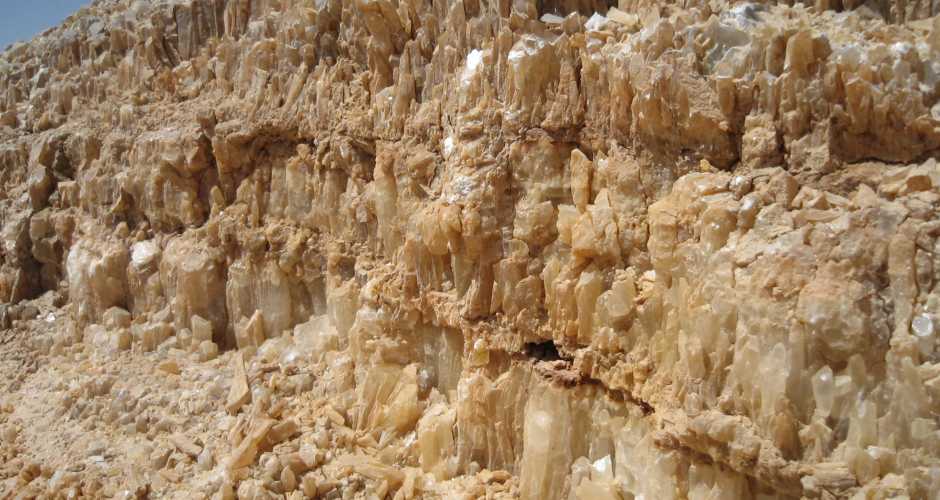
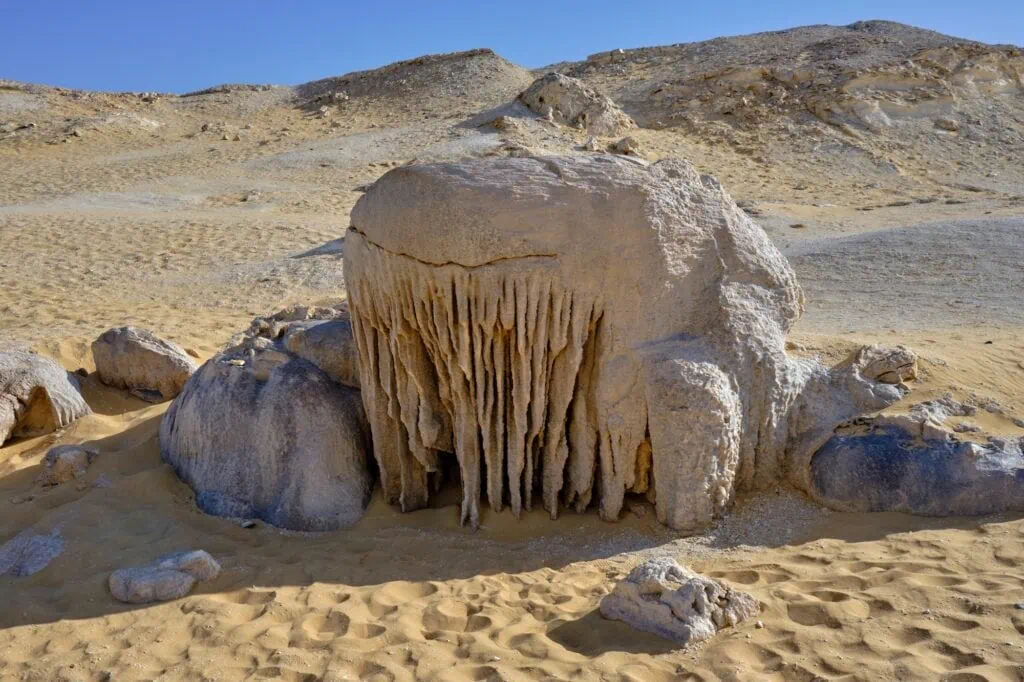
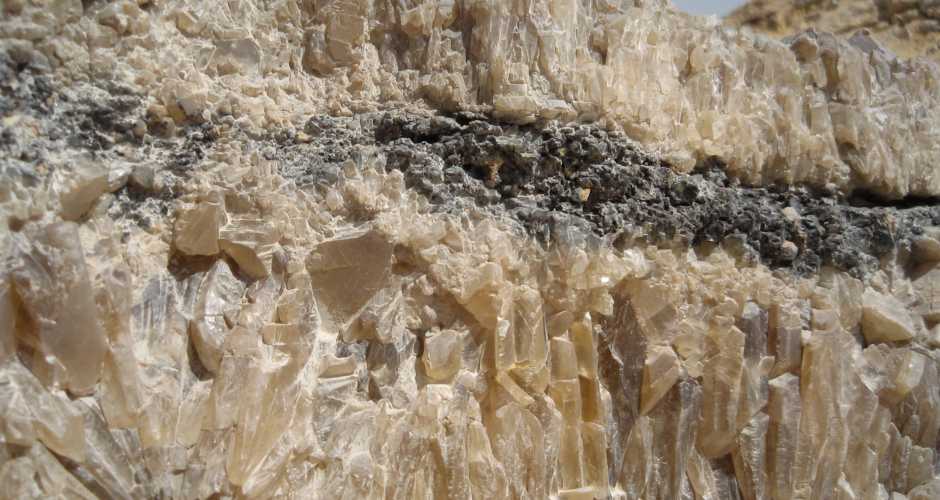
The name Crystal Mountain comes from the quartz crystals and mineral-rich formations found within the rocky structure. When sunlight strikes the exposed crystals, they can reflect light and create a sparkling appearance, giving the mountain its distinctive name. The Arabic name commonly associated with the site is Gebel El-Izaz, and the formation has attracted attention because of its unusual geological appearance. Unlike ordinary desert hills, Crystal Mountain contains visible mineral deposits that stand out against the surrounding rocks and sand. Quartz is one of the most common minerals found in the Earth's crust, but seeing crystal-rich formations exposed within an isolated desert landscape makes this location particularly interesting for visitors. The crystals and mineral veins provide evidence of the geological processes that shaped the region over long periods of time. The appearance of the crystals can change depending on the angle and intensity of sunlight. During bright daylight, some surfaces may sparkle as light reflects from quartz fragments. This effect is one reason photographers enjoy visiting the mountain. Visitors should remember that Crystal Mountain is a natural geological site, and the crystals and rocks should be treated as part of the natural environment. Travelers should avoid removing rocks or crystals from the area and should follow local guidance when exploring the site. The mountain is also an excellent example of the geological diversity of Egypt. The country's deserts contain mountains, valleys, fossils, volcanic-looking formations, sand dunes, and mineral deposits, demonstrating that the desert is much more than a landscape of sand. For travelers searching for why Crystal Mountain is called Crystal Mountain, quartz crystals in Egypt, Gebel El-Izaz geology, Crystal Mountain Bahariya, Egyptian desert minerals, and natural attractions in Egypt, the site provides a fascinating introduction to the geological history of the Western Desert. The combination of sparkling mineral formations and dramatic desert scenery makes Crystal Mountain one of Egypt's most unusual natural landmarks, offering travelers an experience that is very different from the country's famous ancient monuments.
3. The Geology of Crystal Mountain
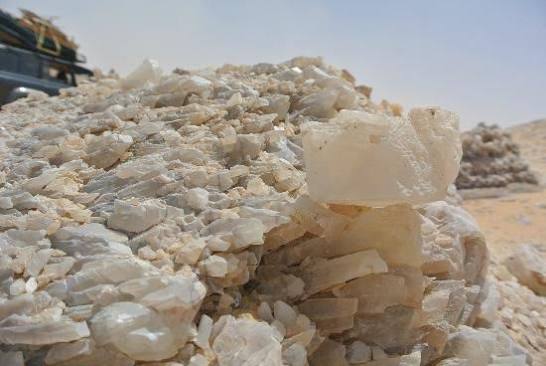
The geology of Crystal Mountain Egypt is one of the main reasons this unusual destination attracts visitors interested in nature, minerals, and the landscapes of the Egyptian desert. Known locally as Gebel El-Izaz, the formation contains quartz and other mineral-rich rocks that stand out against the surrounding desert landscape. Crystal Mountain is not a traditional mountain in the sense of a massive high peak. Instead, it is a relatively small but distinctive rocky formation that has become famous because of the crystalline material visible within its rocks. The formation reflects the complex geological history of the Western Desert, where tectonic activity, heat, pressure, erosion, and mineral-rich fluids have shaped the landscape over millions of years. Quartz is one of the most common minerals on Earth and is composed primarily of silicon and oxygen. Its crystals can appear transparent, white, or slightly colored depending on impurities and the surrounding geological environment. At Crystal Mountain, exposed quartz fragments can catch sunlight and create the sparkling effect that inspired the site's popular name. The surrounding region also contains a variety of sedimentary and volcanic-looking rock formations, demonstrating the geological diversity of Egypt's Western Desert. Travelers moving between Bahariya and Farafra can observe how the landscape changes from one formation to another. The geological importance of Crystal Mountain is especially interesting when considered alongside nearby attractions. The White Desert is famous for its unusual chalk formations, while the Black Desert contains dark volcanic hills and rocks. Wadi Al-Hitan, farther east in Fayoum, provides evidence of ancient marine environments through its fossilized whale remains. Together, these destinations demonstrate the extraordinary geological diversity of Egypt. For visitors searching for Crystal Mountain geology, quartz crystals Egypt, Gebel El-Izaz, Western Desert geology, natural landmarks in Egypt, and geological attractions near Bahariya Oasis, Crystal Mountain offers a fascinating opportunity to see Earth's geological history directly within the desert landscape. The site also provides an excellent reminder that Egypt's natural heritage extends far beyond its famous archaeological monuments.
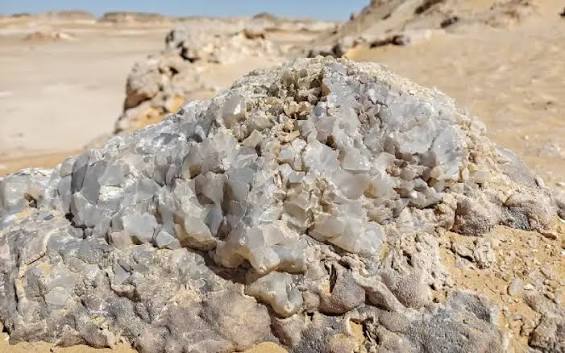
4. Crystal Mountain and the Bahariya Oasis
Crystal Mountain and Bahariya Oasis are closely associated with many desert safari itineraries in Egypt. Bahariya Oasis is one of the most important gateways to the Western Desert and provides access to several spectacular natural and archaeological attractions, including the Black Desert, the White Desert, and Crystal Mountain. The Bahariya Oasis itself is a fertile depression surrounded by desert. Palm groves, agricultural areas, springs, and small communities create a striking contrast with the surrounding arid landscape. Travelers can experience this contrast before beginning their journey deeper into the desert. Crystal Mountain is often visited as part of a route connecting Bahariya with the White Desert and Farafra Oasis. The journey allows visitors to experience a succession of dramatically different landscapes. After leaving the green areas of Bahariya, the scenery gradually becomes more rugged and isolated. One of the highlights of the journey is the Black Desert, where dark hills and volcanic-looking rocks contrast with the golden sand. After continuing through the desert, travelers can reach Crystal Mountain and then proceed toward the White Desert, where enormous white chalk formations create an almost otherworldly landscape. This combination makes a Bahariya Oasis desert safari particularly attractive for adventure travelers and photographers. Each stop provides a completely different visual experience. Crystal Mountain is generally a short stop compared with destinations where travelers spend several hours exploring. Visitors can walk around the formation, observe the crystals and rocks, photograph the landscape, and learn about its geological significance before continuing their journey. For travelers interested in geology and natural history, the route between Bahariya and Farafra is especially rewarding because it demonstrates how dramatically the landscape can change over relatively short distances. For anyone searching for Crystal Mountain and Bahariya Oasis, Bahariya desert safari, Crystal Mountain Egypt tour, Black Desert and White Desert tour, and Western Desert attractions, combining these destinations creates one of the most memorable desert experiences in Egypt.
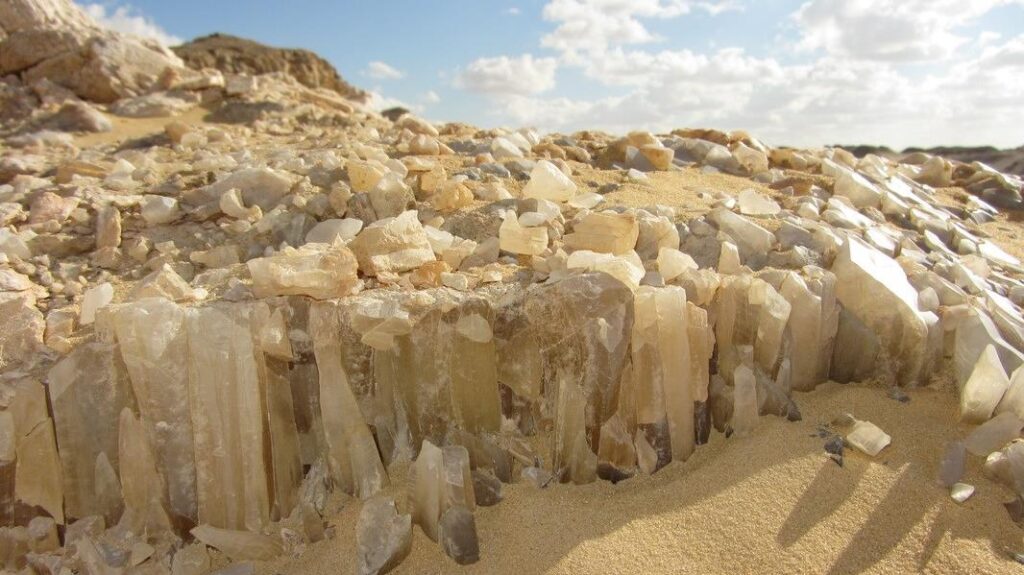
5. Crystal Mountain as Part of an Egypt Desert Safari
Including Crystal Mountain in an Egypt desert safari allows travelers to experience one of the country's most unusual natural landmarks while exploring the vast landscapes of the Western Desert. The mountain is particularly suitable for visitors who want to combine adventure, photography, geology, and remote desert exploration. A typical desert safari involving Crystal Mountain may begin in Cairo and continue toward Bahariya Oasis. Depending on the itinerary, travelers can visit the oasis before entering the desert with an experienced driver and guide. The journey itself is an important part of the experience. The landscape changes from cultivated oasis land to rocky desert, golden sand dunes, and dramatic geological formations. Travelers may encounter the Black Desert before continuing toward Crystal Mountain and the White Desert. At Crystal Mountain, visitors usually have time to explore the rocky formation and observe the quartz crystals. The stop provides a welcome opportunity to stretch, take photographs, and appreciate the unusual geology of the region. The adventure can continue to the White Desert, where travelers can see giant chalk formations shaped by wind and erosion. Many multi-day tours include an overnight camping experience in the desert, allowing visitors to enjoy sunset, dinner, and the night sky far from city lights. The next morning, travelers can continue exploring the desert before returning toward Bahariya or continuing to Farafra, depending on the itinerary. A desert safari should always be organized with experienced local professionals. The Western Desert is remote, and routes can be difficult to navigate without knowledge of the terrain and current conditions. For tourists searching for Egypt desert safari, Crystal Mountain tour, Bahariya Oasis safari, White Desert camping, Black Desert Egypt, and Western Desert adventure, including Crystal Mountain adds an unusual geological highlight to an already spectacular journey. The experience is especially rewarding for travelers who want to discover an Egypt beyond the pyramids and temples and explore the country's extraordinary natural landscapes.
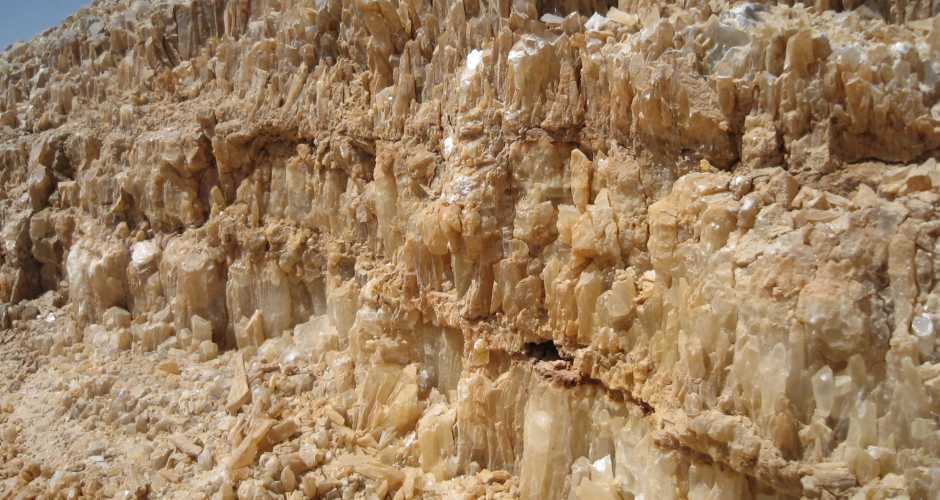
6. Crystal Mountain for Photography and Nature Lovers
Crystal Mountain Egypt is an excellent destination for photographers and nature lovers who want to experience the unusual beauty of the Western Desert. Although the mountain is relatively small compared with Egypt's famous peaks, its distinctive quartz formations and remote surroundings create a unique landscape that is very different from the country's traditional tourist attractions. The combination of rocky formations, golden sand, open skies, and sparkling mineral crystals provides many opportunities for desert photography in Egypt. The natural contrast between the pale rocks and surrounding desert can produce striking landscape photographs, particularly when the sunlight hits the quartz. Early morning and late afternoon are especially attractive times for photography. The lower position of the sun creates softer light and longer shadows across the rocks, while sunrise and sunset can add warm colors to the surrounding desert. Photographers can capture both detailed images of the crystals and wide panoramic views of the landscape. Nature lovers can also appreciate the peaceful atmosphere around Gebel El-Izaz. Unlike busy tourist attractions in Cairo or Luxor, Crystal Mountain is located in a remote desert environment where visitors can enjoy wide open spaces and a sense of isolation. The mountain is also an interesting stop for travelers who enjoy geology. Observing the exposed quartz and surrounding rock formations provides a simple way to appreciate the geological processes that shaped the Western Desert over millions of years. A visit to Crystal Mountain is often combined with other natural attractions, including the Black Desert and White Desert. These locations offer dramatically different landscapes and make excellent subjects for photography. Travelers should avoid removing crystals or rocks from the site. Protecting natural geological formations is important for preserving the area for future visitors. For anyone searching for Crystal Mountain photography, desert photography Egypt, Crystal Mountain sunset, nature attractions in the Western Desert, and things to do near Bahariya Oasis, this location offers a memorable combination of geology and scenery. Whether you use professional photography equipment or simply take photographs with your phone, the unusual rocks, desert horizon, and changing light make Crystal Mountain an excellent place to capture memorable images.
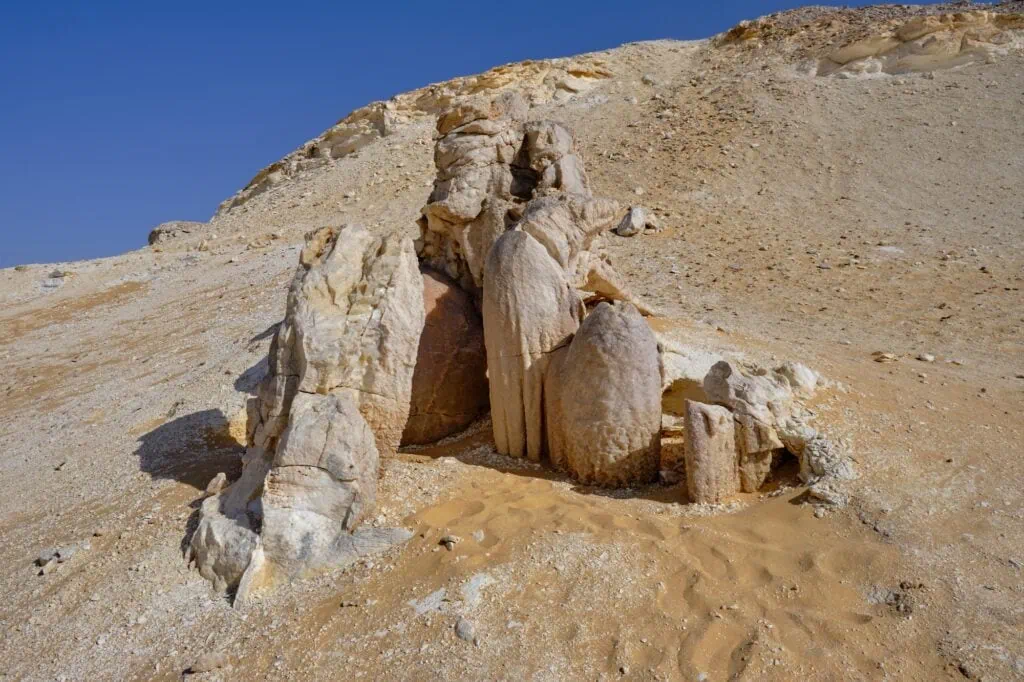
7. Crystal Mountain and the Black Desert
Combining Crystal Mountain and the Black Desert is one of the most popular ways to explore the geological diversity of Egypt's Western Desert. Although the two destinations are located within the same broader desert region, their landscapes are remarkably different. The Black Desert is characterized by dark-colored hills, volcanic-looking rocks, and rugged terrain spread across the golden desert. The dark formations create a dramatic contrast with the surrounding sand and are one of the most recognizable landscapes near Bahariya Oasis. Crystal Mountain provides a completely different experience. Instead of dark hills, visitors encounter a rocky formation associated with visible quartz crystals and mineral deposits. When sunlight reaches the crystals, some surfaces can sparkle, creating a striking contrast with the surrounding desert. Visiting both locations during the same Bahariya Oasis desert safari allows travelers to appreciate how varied the geology of the Western Desert can be. The short distance between different geological formations can produce dramatic changes in color, texture, and landscape. The Black Desert is particularly attractive from elevated viewpoints. Travelers can climb or approach suitable hills with their guide to enjoy panoramic views across the dark rocky landscape. Crystal Mountain, meanwhile, is best appreciated at closer range, where visitors can examine the rocks and quartz formations. The journey between the two destinations is also an important part of the experience. Traveling through the open desert provides opportunities to see sand dunes, rocky valleys, and distant mountain formations. Photographers often enjoy combining both destinations because they provide completely different visual subjects. The dark hills of the Black Desert contrast beautifully with the lighter rocks and sparkling minerals of Crystal Mountain. For travelers searching for Black Desert and Crystal Mountain, Bahariya Oasis tours, Crystal Mountain Egypt, Black Desert Egypt safari, Western Desert attractions, and things to do in Bahariya, visiting both destinations creates an exciting geological journey. Together, the Black Desert and Crystal Mountain demonstrate why the Western Desert is one of Egypt's most fascinating areas for nature and adventure tourism.
8. Crystal Mountain and the White Desert
A journey to Crystal Mountain and the White Desert offers travelers the opportunity to experience two of Egypt's most unusual geological landscapes during the same desert adventure. Both destinations are famous for their distinctive rock formations, but each has a completely different appearance. The White Desert, located near Farafra Oasis, is famous for its enormous white chalk formations. Wind and erosion have shaped the soft rock into unusual forms that resemble mushrooms, animals, towers, and other imaginative shapes. The bright white landscape creates an almost surreal environment. Crystal Mountain provides a striking contrast. Instead of a vast white chalk landscape, visitors encounter a smaller rocky formation containing quartz crystals and mineral-rich material. The surrounding golden desert and darker rocks make the sparkling crystals particularly noticeable under sunlight. Many travelers visit both destinations as part of a Bahariya Oasis to White Desert safari. The journey commonly includes the Black Desert, Crystal Mountain, and the White Desert before reaching a desert camping location. For adventure travelers, the experience combines driving through remote desert terrain with opportunities to stop, explore, photograph, and learn about the geological features of each location. The White Desert is also famous for overnight camping. Spending the night among the white formations provides a completely different experience from visiting the area during the day. Travelers can watch the sunset transform the color of the rocks before enjoying the quiet desert evening. Crystal Mountain is usually a shorter sightseeing stop, but its unusual geology makes it an important highlight along the route. For tourists searching for Crystal Mountain and White Desert Egypt, White Desert safari from Cairo, Bahariya Oasis desert tour, Crystal Mountain geology, and Egypt desert camping, combining the two destinations creates one of the most visually impressive journeys in the Egyptian Western Desert. The contrast between sparkling quartz, dark volcanic-looking hills, golden sand, and white chalk formations demonstrates the extraordinary diversity of Egypt's desert landscapes.
9. Best Time to Visit Crystal Mountain
The best time to visit Crystal Mountain Egypt is generally during the cooler months, when temperatures in the Western Desert are more comfortable for outdoor activities. Since Crystal Mountain is located in a remote desert environment with very little shade, weather conditions can have a significant effect on the overall experience. The period from October to April is usually more suitable for exploring the Egyptian desert. During these months, daytime temperatures are generally more comfortable for walking around Crystal Mountain, photographing the landscape, and continuing to nearby attractions such as the Black Desert and White Desert. Winter can be particularly pleasant during the daytime. However, desert temperatures can drop significantly after sunset, especially during overnight camping trips. Travelers planning to camp in the White Desert should bring warm clothing, even if daytime temperatures are comfortable. Spring and autumn are also excellent seasons for a Crystal Mountain and Bahariya Oasis tour. These periods often provide a good balance between comfortable temperatures and clear desert skies. Summer travel is possible, but the heat can be intense. Visitors exploring Crystal Mountain during the summer should start outdoor activities early in the morning, drink plenty of water, wear lightweight clothing, and use sunscreen, sunglasses, and a hat. The time of day also affects the appearance of the landscape. Early morning and late afternoon provide softer sunlight, which can make the quartz crystals and surrounding rocks particularly attractive for photography. Sunset is especially beautiful across the wider desert landscape. Travelers should also consider the itinerary when choosing their travel dates. A multi-day Western Desert safari may involve long periods outdoors, desert driving, and overnight camping, so cooler weather generally makes the experience more comfortable. For visitors searching for the best time to visit Crystal Mountain, Crystal Mountain weather, Bahariya Oasis tours, White Desert camping, and Egypt desert safari, the cooler months from October through April are generally the most comfortable. Regardless of the season, travelers should explore the area with experienced desert guides and follow local advice regarding weather and road conditions.
10. How to Visit Crystal Mountain from Cairo
A Crystal Mountain tour from Cairo is usually organized as part of a wider journey through Egypt's Western Desert. Because Crystal Mountain is located in a remote area, visiting it is different from visiting easily accessible attractions in Cairo, Luxor, or Giza. The journey commonly begins with transportation from Cairo to Bahariya Oasis. From Bahariya, travelers continue into the desert with an experienced local driver and guide. Depending on the selected itinerary, the tour can include the Black Desert, Crystal Mountain, the White Desert, and other desert attractions. The road journey itself is an important part of the experience. As travelers leave Cairo and approach Bahariya, the landscape gradually changes from the Nile Valley environment to vast stretches of desert. Once inside the Western Desert, the scenery becomes increasingly rugged and remote. At Crystal Mountain, visitors can stop to explore the rocky formation, observe the quartz crystals, take photographs, and learn about the geology of the region. The visit is usually combined with other attractions rather than being a standalone destination. A private desert safari offers greater flexibility because travelers can organize the itinerary according to their interests and available time. Some visitors prefer focusing on geological formations and photography, while others want to include adventure activities such as sandboarding and desert camping. A multi-day tour can also include an overnight stay in the White Desert. Camping beneath the stars is one of the most memorable experiences associated with this region. Because the Western Desert is remote, travelers should not attempt to explore isolated desert areas independently. Experienced local drivers understand the routes, terrain, and conditions and can help ensure a smoother journey. For tourists searching for how to visit Crystal Mountain from Cairo, Crystal Mountain tour, Bahariya Oasis from Cairo, White Desert safari, and private Egypt desert tours, a professionally organized desert itinerary is the most practical way to experience the region.
11. Things to Know Before Visiting Crystal Mountain
Before visiting Crystal Mountain Egypt, travelers should prepare for the conditions of the Western Desert. Although the mountain is an accessible stop during organized desert safaris, its remote location means that visitors should take several practical considerations into account. First, comfortable clothing and suitable footwear are important. Visitors may walk over uneven rocky surfaces while exploring Gebel El-Izaz, so comfortable closed shoes are recommended. Sun protection is also essential. The desert can be extremely bright during the day, and there may be limited shade around Crystal Mountain. Travelers should bring sunglasses, sunscreen, a hat, and lightweight clothing. Drinking water should always be available. Even during the cooler months, travelers can become dehydrated while spending time outdoors. It is also important to protect the natural environment. The quartz crystals and geological formations are part of the site's natural heritage. Visitors should not remove crystals, rocks, or other natural materials from the area. Because Crystal Mountain is located in a remote desert environment, visitors should travel with an experienced local driver or guide. Desert routes can change, and professional drivers are familiar with the terrain and the locations of the main attractions. Travelers should also be prepared for limited mobile-phone coverage in some parts of the desert. It is therefore better to rely on an organized tour with experienced guides rather than attempting to navigate remote areas independently. If the itinerary includes White Desert camping, travelers should bring warmer clothing for the evening. Desert temperatures can fall considerably after sunset. Photography equipment should also be protected from dust and sand. A small protective bag or case can help keep cameras and phones safe during desert driving. For travelers searching for Crystal Mountain travel tips, what to bring to Crystal Mountain, Egypt desert safari tips, Bahariya Oasis travel guide, and White Desert camping, preparing properly will make the journey much more comfortable. With suitable clothing, sufficient water, sun protection, responsible behavior, and experienced local support, visiting Crystal Mountain can be a safe and memorable part of an Egyptian desert adventure.
12. Why Visit Crystal Mountain in Egypt?
Crystal Mountain is one of Egypt's most unusual natural attractions and deserves attention from travelers who want to explore the country's landscapes beyond the traditional pyramids and temples. Its distinctive quartz formations, remote desert location, and connection with the famous Western Desert safari route make it a memorable destination. One of the main reasons to visit Gebel El-Izaz is its geological character. The presence of quartz crystals within the rocky formation gives the mountain an appearance that is completely different from ordinary desert landscapes. The surrounding environment is equally impressive. Travelers can experience vast open spaces, golden sand, rocky mountains, and clear desert skies. The absence of urban development creates a peaceful atmosphere that is difficult to find in Egypt's major cities. Crystal Mountain is also valuable because it can be combined with several other destinations. A well-planned Egypt desert safari can include Bahariya Oasis, the Black Desert, Crystal Mountain, the White Desert, and Farafra Oasis. For photographers, the area offers countless opportunities to capture dramatic landscapes. The combination of sparkling quartz, rugged rocks, sand, and changing sunlight creates distinctive images throughout the day. Adventure travelers can also enjoy the wider desert experience through 4x4 excursions, sandboarding, desert camping, and exploring remote landscapes. For anyone searching for Crystal Mountain Egypt, Gebel El-Izaz, Crystal Mountain Bahariya, things to do in the Western Desert, Egypt desert safari, and natural attractions in Egypt, this remarkable geological site offers a different perspective on the country's natural heritage. Ultimately, Crystal Mountain is more than a quick stop along a desert road. It is part of a much larger landscape that reveals the geological diversity and natural beauty of Egypt's Western Desert. From the sparkling quartz crystals of Crystal Mountain to the dark hills of the Black Desert and the extraordinary chalk formations of the White Desert, this region offers an unforgettable journey through some of Egypt's most spectacular natural landscapes.