- Excursions in Egypt
- Egypt Tour Packages
- Cairo Tours and Excursions
- Hurghada Tours and Excursions
- Soma Bay Tours and Excursions
- Makadi Bay Tours and Excursions
- Sahl Hasheesh Tours and Excursions
- El Gouna Tours and Excursions
- Marsa Alam Tours and Excursions
- Port Ghalib Tours and Excursions
- El Quseir Tours and Excursions
- Dendera and Abydos Day Tours
- Aswan Tours and Excursions
- Luxor Tours and Excursions
- Sharm El Sheikh Tours and Excursions
- Top Rated Egypt Tours in 2026
- Optional Excursions in Egypt
- Private Transfer
- Blogs About egypt
- Ancient Egypt
- Historical Sites in Egypt
- Cairo
- Alexandria
- Luxor
- Aswan
- The Red Sea
- Dendera Temple
- El Fayoum Oasis
- Bahariya Oasis
- Siwa Oasis
- Al Alamein
- Marsa Matruh
- Why Egypt Is One of the Safest Countries to Visit in the Middle East
- What You Need To know Before Your First Trip To Egypt
- Egypt Travel Costs in 2026 Full Budget Guide
- Top 10 Tourist Activities in Egypt
- Top 50 Activities You Can’t Miss in Egypt in 2026
- The Guide to Guided Tours in Egypt
- Egypt’s Ancient and Modern History
- The Nile River
- The Deserts of Egypt
- Ancient Egyptian gods
- famous Egyptian dishes
- UNESCO World Heritage sites
- About Us
- Egypt Hotels and Resorts
- Excursions in Egypt
- Egypt Tour Packages
- Cairo Tours and Excursions
- Hurghada Tours and Excursions
- Soma Bay Tours and Excursions
- Makadi Bay Tours and Excursions
- Sahl Hasheesh Tours and Excursions
- El Gouna Tours and Excursions
- Marsa Alam Tours and Excursions
- Port Ghalib Tours and Excursions
- El Quseir Tours and Excursions
- Dendera and Abydos Day Tours
- Aswan Tours and Excursions
- Luxor Tours and Excursions
- Sharm El Sheikh Tours and Excursions
- Top Rated Egypt Tours in 2026
- Optional Excursions in Egypt
- Private Transfer
- Blogs About egypt
- Ancient Egypt
- Historical Sites in Egypt
- Cairo
- Alexandria
- Luxor
- Aswan
- The Red Sea
- Dendera Temple
- El Fayoum Oasis
- Bahariya Oasis
- Siwa Oasis
- Al Alamein
- Marsa Matruh
- Why Egypt Is One of the Safest Countries to Visit in the Middle East
- What You Need To know Before Your First Trip To Egypt
- Egypt Travel Costs in 2026 Full Budget Guide
- Top 10 Tourist Activities in Egypt
- Top 50 Activities You Can’t Miss in Egypt in 2026
- The Guide to Guided Tours in Egypt
- Egypt’s Ancient and Modern History
- The Nile River
- The Deserts of Egypt
- Ancient Egyptian gods
- famous Egyptian dishes
- UNESCO World Heritage sites
- About Us
- Egypt Hotels and Resorts
Welcome to
Catacombs of Kom El Shoqafa: Alexandria’s Underground City of Mystery and Ancient Wonders
Hidden beneath the busy streets of Alexandria lies one of Egypt’s most mysterious and fascinating archaeological treasures: the extraordinary Catacombs of Kom El Shoqafa. Often described as one of the Seven Wonders of the Middle Ages, these underground catacombs represent a breathtaking fusion of Egyptian, Greek, and Roman artistic traditions unlike anything else in the ancient world. Dating back to the 2nd century AD during the Roman period in Egypt, the Catacombs of Kom El Shoqafa served as a vast subterranean necropolis where wealthy Alexandrian families buried their dead in elaborately decorated tomb chambers deep beneath the earth. The site remained hidden for centuries until its accidental rediscovery in 1900, when a donkey reportedly fell through the ground into one of the underground chambers, revealing an astonishing archaeological complex buried beneath the city. Today, visitors descending into the catacombs enter a hauntingly beautiful underground world filled with spiral staircases, stone corridors, funerary chambers, statues, reliefs, and ancient carvings illuminated by soft underground light. What makes the site especially remarkable is the unique artistic blend created by Alexandria’s multicultural society during the Roman era. Egyptian gods appear dressed in Roman armor, Greek decorative styles mix with Pharaonic symbolism, and ancient funerary traditions merge into a completely original artistic identity found nowhere else in Egypt. The catacombs provide an extraordinary glimpse into the cultural diversity that once defined Alexandria as one of the Mediterranean’s greatest cosmopolitan cities. Beyond their archaeological importance, the underground atmosphere itself creates a powerful emotional experience. The silence, cool stone walls, hidden burial chambers, and ancient carvings transport visitors into a mysterious realm where history, mythology, and death intertwine beneath the surface of the modern city. For travelers exploring Alexandria, the Catacombs of Kom El Shoqafa offer one of the most unforgettable and immersive historical experiences in Egypt, revealing a hidden side of ancient civilization preserved beneath the Mediterranean coast for nearly two thousand years.
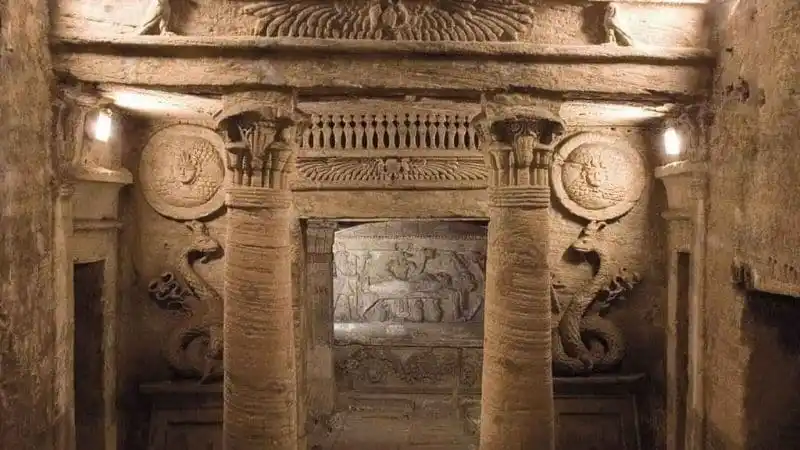
1. The Discovery of the Catacombs: Alexandria’s Hidden Underground Treasure
The remarkable Catacombs of Kom El Shoqafa remained hidden beneath the streets of Alexandria for centuries before their dramatic rediscovery at the beginning of the twentieth century. According to local accounts, the site was discovered accidentally in 1900 when a donkey pulling a cart suddenly fell through the ground into a hidden underground chamber, revealing the existence of one of the most extraordinary archaeological complexes in Egypt. This unexpected discovery shocked archaeologists and historians, who quickly realized that they had uncovered a massive subterranean necropolis dating back to the Roman era of Alexandria. Excavations soon revealed a vast network of underground tombs, burial chambers, corridors, statues, and ceremonial halls carved deep into the rock beneath the city. The catacombs were found to extend across multiple levels underground, making them one of the largest and most sophisticated burial complexes ever discovered in Egypt. Archaeologists believe the site originally began as a private family tomb during the second century AD before gradually expanding into a larger communal necropolis used by wealthy Alexandrian families. The rediscovery of the catacombs provided historians with valuable insights into Alexandria’s multicultural society during the Roman period, where Egyptian, Greek, and Roman traditions blended together in everyday life, religion, and funerary practices. The underground chambers preserved extraordinary examples of artistic fusion, including sculptures, carvings, and architectural features combining symbols from different civilizations. Despite centuries buried beneath the earth, many decorative elements remained remarkably well preserved due to the stable underground environment protecting them from weather and sunlight. The accidental discovery also added to the mysterious reputation of the catacombs, increasing public fascination with Alexandria’s hidden underground history. Today, visitors entering the site experience the same sense of wonder felt by the archaeologists who first descended into the darkness more than a century ago. The story of the catacombs’ rediscovery reminds travelers that Alexandria still hides countless secrets beneath its modern streets, waiting to reveal new chapters of ancient history. The Catacombs of Kom El Shoqafa therefore represent not only an archaeological masterpiece but also one of Egypt’s greatest accidental discoveries, reconnecting the modern world with a forgotten underground civilization preserved beneath the Mediterranean city for nearly two thousand years.
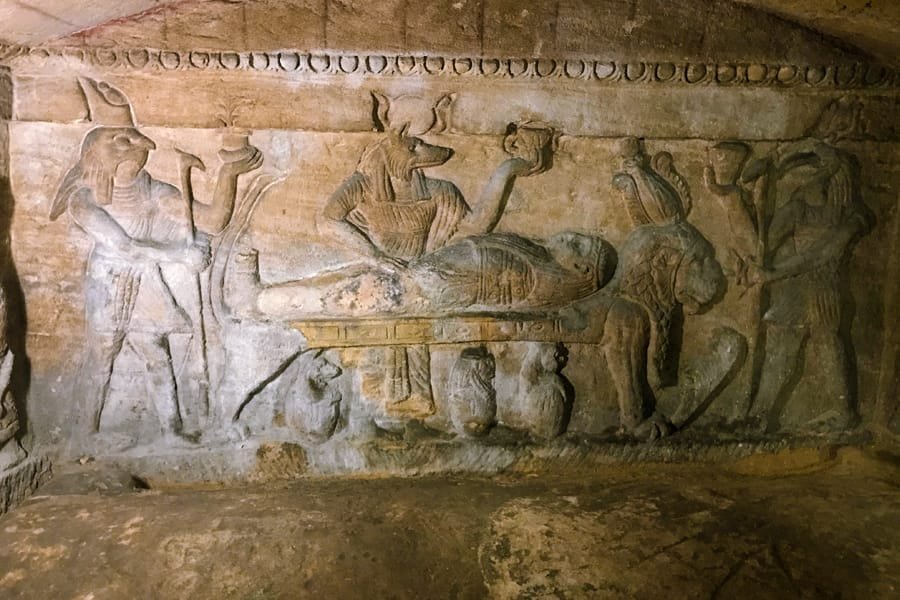
2. The Meaning of “Kom El Shoqafa” and the Site’s Historical Origins
The name Catacombs of Kom El Shoqafa carries important historical meaning that reflects the long and fascinating story of the site itself. “Kom El Shoqafa” translates roughly to “Mound of Shards” or “Hill of Broken Pottery,” a name inspired by the large quantities of broken jars and pottery fragments once scattered around the area above the underground tombs. These pottery pieces were left behind by visitors and mourning families who brought food and wine offerings to the deceased during ancient funerary ceremonies. According to local custom, families would break the clay containers after use rather than carry them home from a place associated with death and burial rituals. Over centuries, these broken fragments accumulated on the ground above the catacombs, eventually giving the site its modern Arabic name. Historically, the catacombs date back to the second century AD during the Roman rule of Egypt, a period when Alexandria stood as one of the most important cities in the Mediterranean world. Founded by Alexander the Great centuries earlier, Alexandria had developed into a multicultural metropolis where Egyptians, Greeks, Romans, Jews, and other communities lived together and exchanged cultural traditions. This unique environment directly influenced the design and symbolism of the catacombs. Archaeologists believe the necropolis originally served as a private family burial complex for a wealthy Alexandrian household before expanding gradually into a larger communal cemetery used by elite members of society. The underground architecture reflects the blending of Egyptian funerary traditions with Greek artistic styles and Roman engineering techniques. The catacombs therefore provide rare physical evidence of Alexandria’s cosmopolitan identity during the Roman period, when different civilizations merged to create entirely new cultural expressions. The site also demonstrates how ancient burial customs evolved over time in response to changing religious beliefs and social influences. Visitors exploring the catacombs today can clearly observe this remarkable cultural fusion in the statues, reliefs, carvings, and architectural details decorating the underground chambers. The historical origins of Kom El Shoqafa make it one of the most unique archaeological sites in Egypt because it represents not a single civilization, but the complex interaction between multiple worlds that once flourished together beneath the Mediterranean skies of Alexandria.
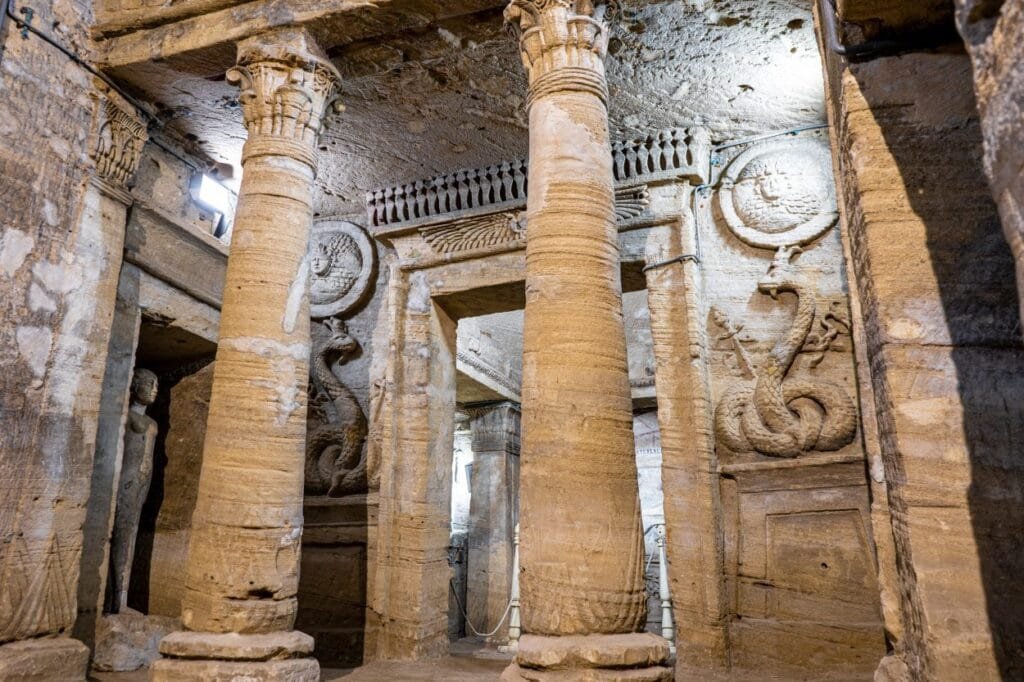
3. The Spiral Staircase and the Journey Into the Underground World
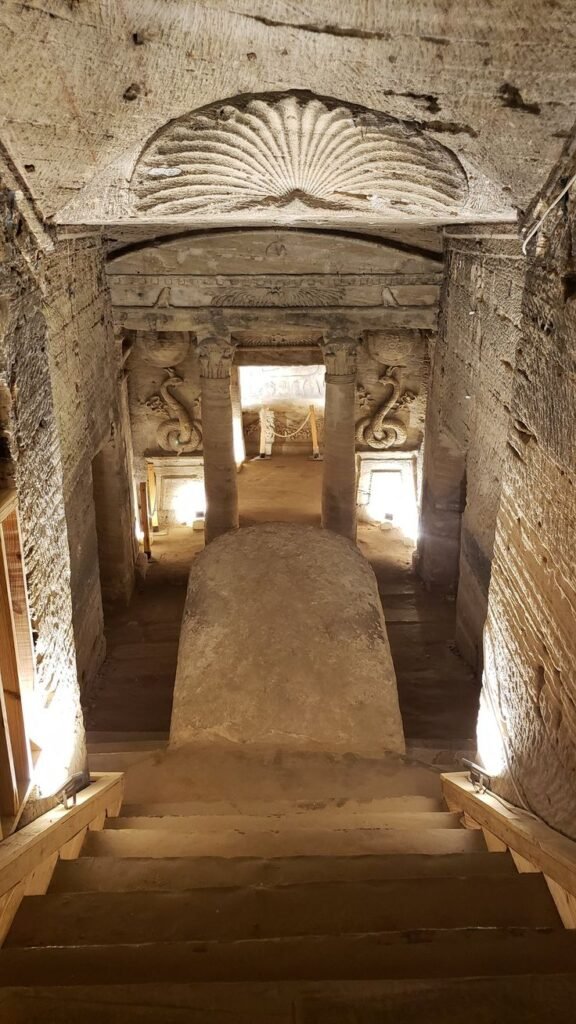
One of the most unforgettable experiences at Catacombs of Kom El Shoqafa begins with the dramatic descent into the underground necropolis through its famous spiral staircase. As visitors slowly move downward beneath the surface of Alexandria, the atmosphere changes completely, creating a powerful sense of mystery, anticipation, and connection to the ancient world. Carved directly into the rock, the circular staircase winds deep into the earth around a central shaft that once allowed bodies and funerary materials to be lowered into the burial chambers below using ropes and pulleys. The architectural design demonstrates the advanced engineering skills of the Roman period while also creating an emotional transition from the world of the living into the sacred realm of the dead. The deeper visitors descend, the cooler and quieter the environment becomes, heightening the feeling of entering a hidden underground city preserved for nearly two thousand years beneath modern Alexandria. Soft lighting illuminating the stone walls reveals intricate carvings, ancient architectural details, and traces of history surrounding every step. The spiral staircase itself is considered one of the most iconic features of the catacombs because it creates a symbolic and physical journey into the ancient concept of the afterlife. Ancient mourners and funeral processions once used this same path while carrying offerings and honoring the deceased within the underground chambers. The descent therefore carries both historical and emotional significance, allowing modern visitors to experience the site in a way similar to ancient Alexandrians centuries ago. Reaching the lower levels of the catacombs reveals a fascinating network of corridors, burial niches, ceremonial rooms, and decorated tomb chambers extending beneath the earth in multiple directions. The underground atmosphere feels haunting yet beautiful, filled with silence and echoes that strengthen the emotional impact of the experience. Many travelers describe the descent into Kom El Shoqafa as one of the most immersive archaeological experiences in Egypt because it combines architecture, history, symbolism, and emotion within one extraordinary setting. The spiral staircase serves not merely as an entrance but as a powerful introduction to Alexandria’s hidden world of ancient burial traditions, multicultural artistry, and underground mystery preserved beneath the Mediterranean city for centuries.
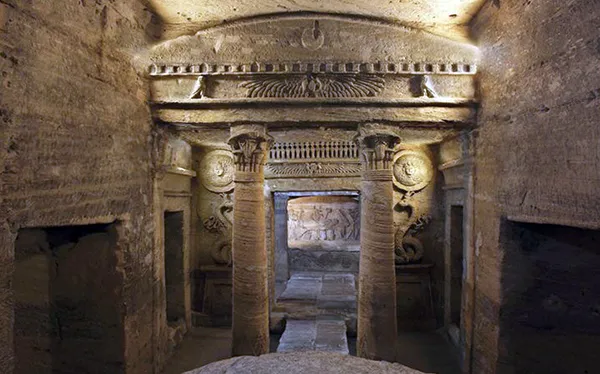
4. The Fusion of Egyptian, Greek, and Roman Art
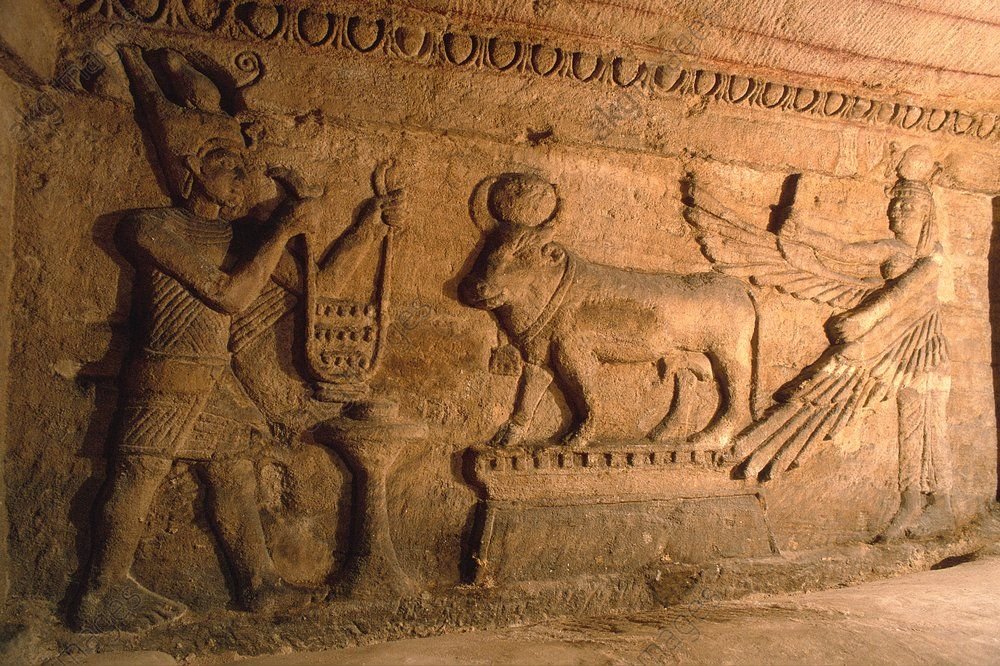
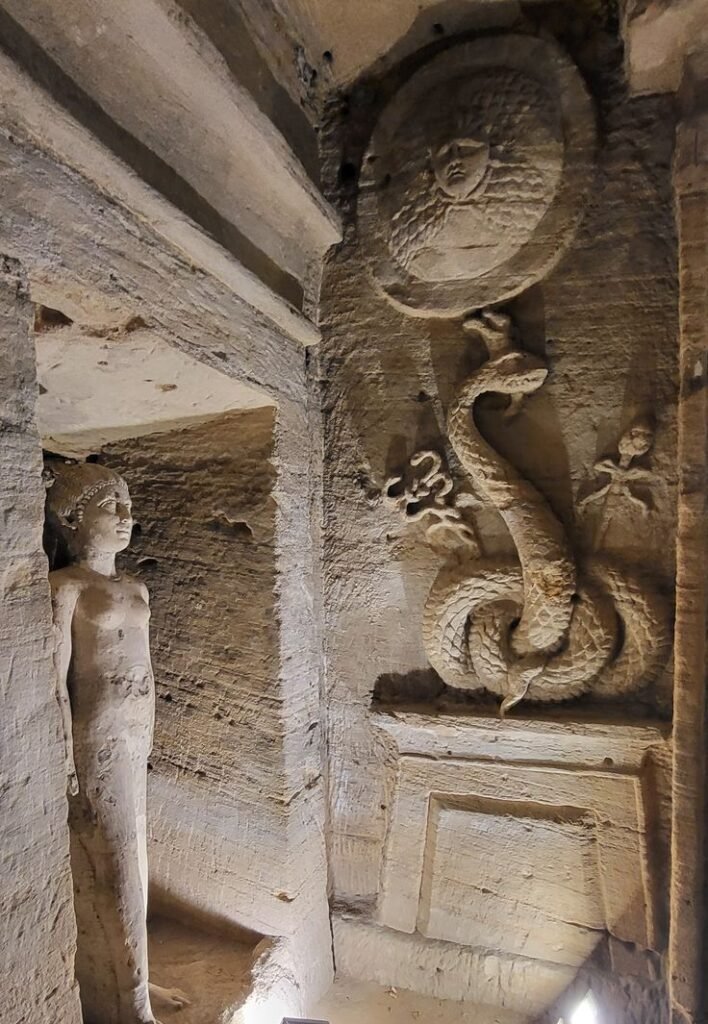
One of the most extraordinary features of Catacombs of Kom El Shoqafa is the remarkable artistic fusion that combines Egyptian, Greek, and Roman cultural traditions into a completely unique visual style rarely found anywhere else in the ancient world. Alexandria during the Roman period was one of the Mediterranean’s greatest cosmopolitan cities, where different civilizations interacted daily through trade, education, religion, and politics. This multicultural environment profoundly influenced the design of the catacombs, creating burial chambers decorated with symbols and artistic elements from multiple cultures existing side by side in perfect harmony. Visitors exploring the underground tombs quickly notice how Egyptian gods appear wearing Roman military clothing, while Greek artistic techniques blend naturally with traditional Pharaonic funerary imagery. Statues and carvings throughout the catacombs display this fascinating cultural mixture in extraordinary detail. The god Anubis, traditionally associated with mummification and the afterlife in ancient Egyptian religion, is represented in Roman armor while still maintaining his jackal-headed Egyptian appearance. Serpents, Medusa heads, lotus flowers, Roman wreaths, and Pharaonic symbols all appear together within the same decorative spaces, demonstrating how Alexandria’s residents combined different religious and artistic identities into a new cultural expression unique to their city. The architectural design itself reflects this fusion, with Roman burial niches and banquet halls integrated alongside Egyptian funerary traditions and Greek decorative motifs. Historians consider the catacombs one of the clearest surviving examples of cultural blending during the Roman era in Egypt because the site reveals how ordinary people adapted ancient traditions to fit their changing multicultural society. Rather than replacing one culture with another, the art of Kom El Shoqafa demonstrates coexistence and creative integration between civilizations. Visitors often find this artistic diversity deeply fascinating because it transforms the catacombs into far more than a burial site; the underground complex becomes a visual representation of Alexandria’s identity as a meeting place between worlds. The carvings and sculptures preserved within the chambers continue to inspire archaeologists, artists, and historians studying the evolution of Mediterranean civilization. The Catacombs of Kom El Shoqafa therefore stand as one of the greatest surviving monuments to cultural exchange in the ancient world, preserving beneath the earth the artistic dialogue between Egypt, Greece, and Rome that once defined Alexandria’s extraordinary character.
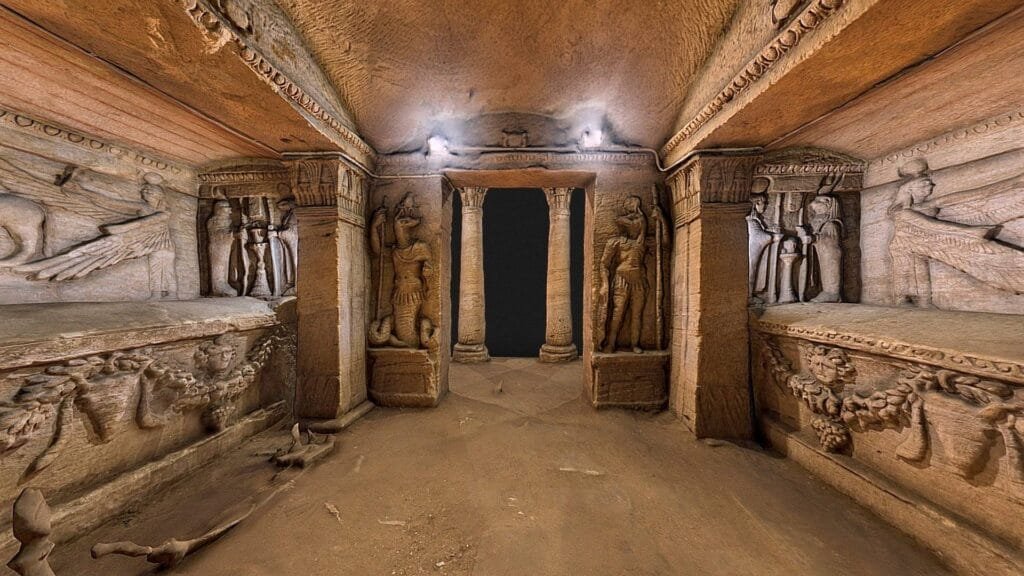
5. The Main Tomb Chamber and Funerary Symbolism
At the heart of Catacombs of Kom El Shoqafa lies the magnificent main tomb chamber, one of the most visually impressive and symbolically rich burial spaces in all of Roman Egypt. Reaching this chamber after descending through the underground corridors creates a powerful emotional experience, as visitors suddenly encounter elaborate carvings, statues, and architectural details illuminated within the silence of the subterranean necropolis. The chamber was originally designed for a wealthy Alexandrian family and reflects the importance of status, religion, and the afterlife within ancient funerary traditions. Massive stone sarcophagi line the walls, carved directly into the rock and decorated with artistic motifs blending Egyptian and Greco-Roman symbolism. The central burial chamber contains reliefs depicting scenes connected to death, rebirth, protection, and divine judgment, all intended to ensure safe passage for the deceased into the afterlife. One of the most remarkable features is the representation of Egyptian gods in hybrid artistic forms influenced by Roman aesthetics. Anubis appears dressed as a Roman soldier while performing traditional Egyptian funerary rituals, symbolizing the merging of religious beliefs within Alexandria’s multicultural society. Decorative serpents wearing crowns guard the tomb entrance, while carvings of lotus flowers, solar disks, and mythological figures reinforce themes of immortality and resurrection. The ceiling and surrounding walls are carefully arranged to create a sacred atmosphere emphasizing both protection and eternal continuity. Historians believe that funerary ceremonies and family gatherings honoring the dead were performed within nearby banquet halls connected to the tomb complex, reflecting Roman customs integrated into Egyptian burial practices. The emotional atmosphere of the chamber is intensified by the underground silence and soft lighting reflecting against ancient stone surfaces preserved for nearly two thousand years. Visitors often describe feeling transported into another world where mythology, death, and history coexist beneath the modern city above. Every artistic detail within the main tomb chamber was carefully designed to communicate spiritual meaning and preserve the memory of the deceased for eternity. The chamber therefore serves not only as an archaeological masterpiece but also as a deeply symbolic expression of Alexandria’s unique cultural and religious identity during the Roman era. The Catacombs of Kom El Shoqafa remain one of Egypt’s most fascinating examples of how ancient civilizations understood death, memory, and the eternal journey of the human soul.
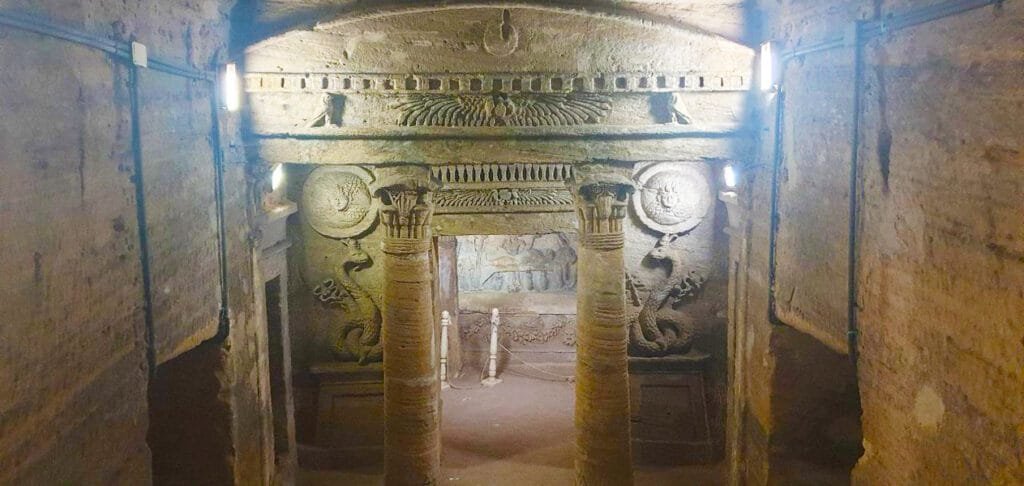
6. The Hall of Caracalla and the Mystery of the Bones
Among the most mysterious and haunting sections of Catacombs of Kom El Shoqafa is the famous Hall of Caracalla, a chamber filled with human and animal remains that continues to fascinate historians and visitors alike. This underground room receives its name from the Roman Emperor Caracalla, who ruled during the early third century AD and was associated with one of Alexandria’s darkest historical episodes. According to historical accounts, Caracalla ordered a brutal massacre of young Alexandrian men after mocking comments about him spread throughout the city. Some archaeologists believe the skeletal remains discovered inside this chamber may belong to victims connected to those violent events, although the exact origins of the bones remain uncertain. The chamber contains large piles of skeletal remains, including both human bones and animal remains, creating a haunting atmosphere unlike any other section of the catacombs. The discovery of horse bones alongside human skeletons has added further mystery to the site, leading scholars to debate whether the chamber may have been used as a temporary burial place during periods of violence, plague, or political unrest. Unlike the elaborately decorated family tombs elsewhere in the necropolis, the Hall of Caracalla appears more chaotic and disturbing, emphasizing the tragic realities of death and instability during the Roman period in Alexandria. Visitors entering the chamber often experience a profound emotional reaction due to the eerie silence and visible evidence of ancient mortality preserved beneath the earth. The dim underground environment, combined with the mysterious history surrounding the skeletal remains, creates one of the most unforgettable experiences within the catacombs. Historians continue studying the chamber in hopes of understanding more about the political conflicts, burial practices, and social conditions of Roman Alexandria. The Hall of Caracalla also highlights the darker side of ancient history, reminding visitors that beneath Alexandria’s reputation as a center of knowledge and culture existed periods of violence, political tension, and human suffering. For many travelers, this chamber represents the emotional and psychological heart of Kom El Shoqafa because it confronts visitors directly with the fragility of life and the mysteries of the ancient world. The Hall of Caracalla therefore remains one of the most compelling and enigmatic spaces within Alexandria’s underground necropolis, preserving unanswered questions that continue to intrigue archaeologists and historians today.
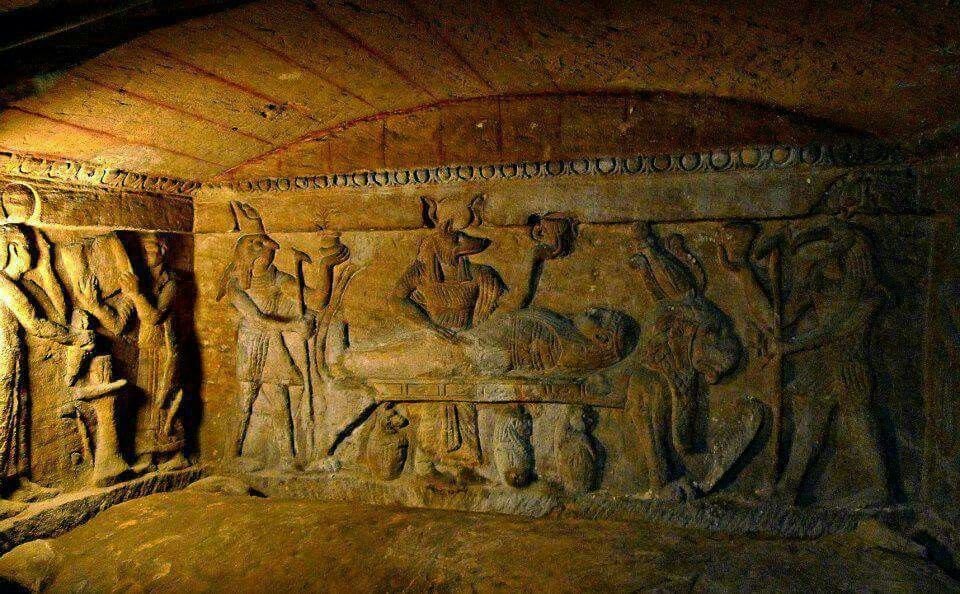
7. Ancient Burial Rituals and the Culture of the Afterlife
The extraordinary Catacombs of Kom El Shoqafa offers visitors a fascinating insight into the burial rituals and beliefs about the afterlife that shaped daily life in Roman Alexandria nearly two thousand years ago. For the ancient inhabitants of the city, death was not viewed as an ending but as a transition into another realm where the soul would continue its eternal journey. The catacombs were therefore designed not only as burial spaces but also as sacred environments intended to protect, honor, and spiritually support the deceased. Families visiting the tombs performed ceremonies, brought offerings, and gathered in special banquet halls connected to the burial chambers to maintain symbolic relationships with their dead relatives. These practices reflected a combination of Egyptian religious traditions, Greek customs, and Roman social rituals that merged together within Alexandria’s multicultural society. The architecture of the catacombs itself reinforced these beliefs through symbolic design elements representing protection, rebirth, immortality, and divine guidance. Serpents, lotus flowers, solar symbols, and depictions of gods such as Anubis and Osiris appear throughout the underground chambers, serving spiritual purposes connected to the safe passage of the soul into the afterlife. Burial niches carved into the stone walls held the bodies of the deceased alongside funerary objects, offerings, and decorative carvings intended to preserve memory and status for eternity. Archaeologists believe funeral processions likely descended through the spiral staircase carrying bodies, oil lamps, flowers, and ceremonial objects into the sacred underground world below the city. The catacombs therefore functioned as both a physical cemetery and a spiritual gateway between life and death. Visitors walking through the silent corridors today often feel a strong emotional connection to these ancient beliefs because the underground atmosphere preserves a sense of mystery and sacredness rarely experienced at other archaeological sites. The cool air, dim lighting, and elaborate symbolism surrounding the burial chambers create an environment that encourages reflection on mortality, memory, and human spirituality across civilizations. The Catacombs of Kom El Shoqafa remain one of the best-preserved examples of ancient funerary culture in Egypt, allowing modern travelers to understand how Alexandria’s people combined religion, art, architecture, and ritual into a deeply meaningful vision of eternal life beneath the Mediterranean city.
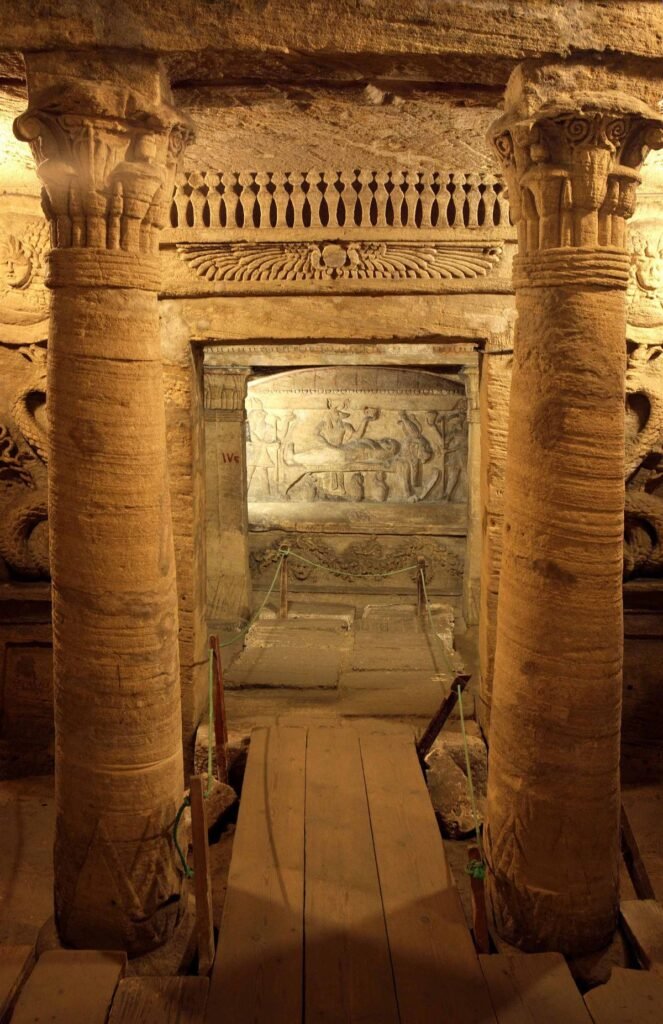
8. Engineering and Architecture Beneath the Surface
The architectural and engineering achievements displayed within Catacombs of Kom El Shoqafa continue to impress archaeologists, historians, and architects because the entire underground complex was constructed with remarkable precision beneath the surface of Alexandria nearly two thousand years ago. Carved directly into solid rock during the Roman period, the catacombs extend across multiple underground levels connected through staircases, corridors, burial chambers, and ceremonial halls designed to function efficiently while preserving structural stability. The most famous architectural feature remains the massive spiral staircase descending deep into the earth around a central shaft once used to lower bodies and funerary objects into the necropolis below. This sophisticated design demonstrates the advanced engineering knowledge possessed by the builders, who successfully created a functional underground system capable of supporting heavy stone structures while resisting collapse over centuries. Ventilation and lighting were also carefully considered within the architectural plan. Openings and passageways allowed air circulation through the underground chambers, helping preserve the interior environment and making the space usable during funerary ceremonies. The builders skillfully integrated decorative elements into the architecture itself, transforming walls, columns, ceilings, and entrances into artistic surfaces filled with carvings and symbolic imagery. The burial niches and sarcophagi were carved directly into the stone, maximizing available space while maintaining structural balance throughout the complex. Water management presented another major engineering challenge because Alexandria’s proximity to the Mediterranean created risks of underground flooding. Over time, parts of the lower catacomb levels became submerged due to rising groundwater, limiting access to certain sections of the necropolis today. Despite these challenges, large portions of the catacombs remain remarkably preserved, proving the effectiveness of the original engineering techniques. Visitors exploring the underground chambers often feel amazed by the complexity and scale of the site hidden beneath the modern city above. The architectural design also contributes emotionally to the visitor experience by creating gradual transitions between spaces, from narrow corridors and shadow-filled staircases to larger ceremonial chambers decorated with carvings and statues. The Catacombs of Kom El Shoqafa therefore represent not only an archaeological treasure but also a masterpiece of Roman-era engineering and underground architectural planning. The site demonstrates how ancient builders successfully combined technical innovation, artistic creativity, and spiritual symbolism to create one of the Mediterranean world’s most extraordinary subterranean monuments beneath the streets of Alexandria.
9. The Atmosphere of Mystery and Underground Exploration
Few archaeological sites in Egypt create the same emotional atmosphere of mystery and discovery as Catacombs of Kom El Shoqafa. From the moment visitors begin descending into the underground chambers, the experience feels less like a traditional museum visit and more like entering a hidden world preserved beneath the surface of modern Alexandria for nearly two thousand years. The transition from the bright Mediterranean sunlight above to the cool, shadow-filled corridors below creates an immediate sense of separation from ordinary reality. Stone walls carved with ancient symbols, dimly illuminated passageways, silent burial chambers, and echoing underground spaces combine to produce an atmosphere that is both haunting and fascinating at the same time. The catacombs awaken a powerful sense of curiosity because every corridor seems to lead deeper into forgotten history and hidden secrets of the ancient world. Visitors often describe the site as cinematic or dreamlike due to the dramatic contrast between darkness and light throughout the underground complex. The silence within the chambers further intensifies the emotional experience, allowing travelers to imagine the funeral ceremonies, mourners, priests, and ancient rituals that once took place beneath the city centuries ago. The mixture of Egyptian, Greek, and Roman artistic styles also strengthens the mysterious atmosphere because the site feels unlike any other historical monument in Egypt. Strange hybrid statues, symbolic carvings, hidden niches, and underground halls create the impression of a lost civilization existing between multiple worlds and traditions. Photographers and history enthusiasts are especially drawn to the catacombs because of their unique visual character and immersive environment. Unlike open-air temples or monumental pyramids, Kom El Shoqafa surrounds visitors completely, making them active participants within the archaeological space rather than distant observers. The underground setting naturally inspires reflection about death, memory, spirituality, and the passage of time. Even modern lighting and restoration efforts have carefully preserved the mysterious character of the site, allowing visitors to experience the emotional atmosphere without losing the authenticity of the ancient necropolis. The Catacombs of Kom El Shoqafa therefore remain one of Egypt’s most unforgettable archaeological destinations because they offer far more than historical information; they provide an immersive journey into the hidden depths of Alexandria’s ancient soul beneath the Mediterranean city above.
10. The Catacombs and Alexandria’s Multicultural Identity
The extraordinary Catacombs of Kom El Shoqafa serves as one of the clearest surviving symbols of Alexandria’s multicultural identity during the Roman period, reflecting the unique mixture of civilizations that transformed the city into one of the ancient world’s greatest cosmopolitan centers. Founded by Alexander the Great and later ruled by the Ptolemies and Romans, Alexandria became a meeting place where Egyptians, Greeks, Romans, Jews, and many other communities lived together while exchanging ideas, languages, religious beliefs, artistic traditions, and cultural practices. This extraordinary diversity shaped every aspect of Alexandrian life, from philosophy and science to architecture and burial customs. The catacombs perfectly preserve this cultural blending through their remarkable artistic style and funerary symbolism. Egyptian religious imagery appears beside Roman decorative forms, while Greek artistic influences shape statues, carvings, and architectural layouts throughout the underground necropolis. Rather than existing separately, these traditions merge together naturally, creating a completely unique visual language found nowhere else in Egypt. Visitors exploring the catacombs can observe how Alexandria’s residents adapted ancient customs to fit the realities of their multicultural society, preserving traditional beliefs while embracing new cultural influences from across the Mediterranean world. This blending of civilizations demonstrates that Alexandria’s identity was never based on a single culture or religion but instead evolved through continuous interaction between different peoples and traditions. Historians consider Kom El Shoqafa one of the most important archaeological examples of cultural coexistence in antiquity because the site reveals how individuals expressed multiple identities simultaneously within daily life and spiritual practice. The catacombs therefore provide valuable insight into the social and cultural complexity of Roman Alexandria beyond the political histories usually associated with the city. Modern visitors are often fascinated by how naturally the artistic elements combine inside the underground chambers, reflecting a society where cultural exchange was part of ordinary existence rather than conflict. The emotional atmosphere of the catacombs is strengthened by this sense of historical diversity preserved beneath the earth for centuries. The Catacombs of Kom El Shoqafa remain not only an archaeological treasure but also a powerful reminder of Alexandria’s historic role as one of the Mediterranean’s greatest crossroads of civilization, knowledge, religion, and artistic creativity.
11. Photography and Visual Beauty Inside the Catacombs
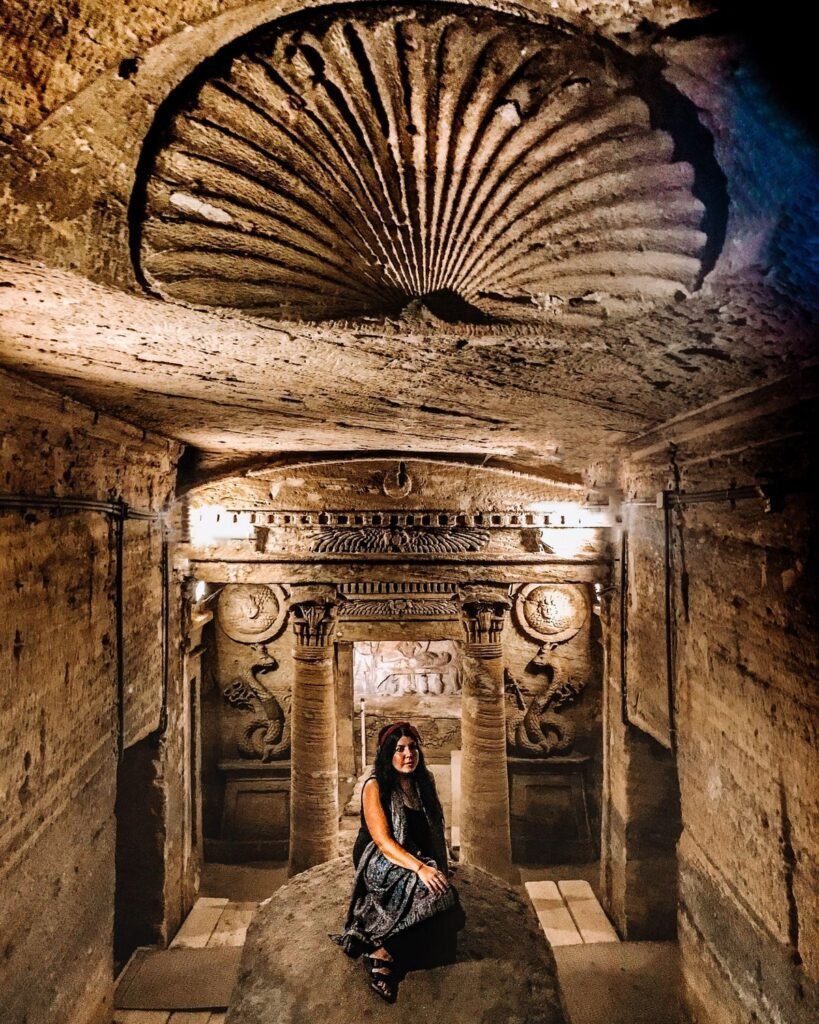
Despite being an underground burial complex, Catacombs of Kom El Shoqafa possesses a striking visual beauty that fascinates photographers, artists, historians, and travelers from around the world. The catacombs create a dramatic and atmospheric environment unlike any other archaeological site in Egypt, combining ancient carvings, shadow-filled corridors, mysterious lighting, and intricate architectural details into a visually unforgettable experience. Every section of the underground complex offers unique photographic opportunities where light and darkness interact across textured stone walls and centuries-old sculptures. The famous spiral staircase descending deep into the earth creates one of the site’s most iconic visual scenes, especially when soft light illuminates the circular architecture and reveals the depth of the underground necropolis. Inside the main tomb chambers, visitors encounter elaborately carved reliefs, statues, and funerary decorations that blend Egyptian, Greek, and Roman artistic styles into extraordinary visual compositions. The combination of ancient symbolism and underground atmosphere gives the catacombs a cinematic quality that strongly appeals to photographers and filmmakers seeking dramatic historical settings. The underground environment naturally enhances contrasts between illuminated spaces and dark passageways, creating emotional visual effects that intensify the sense of mystery surrounding the site. Visitors often describe feeling transported into another world where every corridor and chamber appears frozen in time beneath modern Alexandria. Artists are particularly inspired by the hybrid statues and symbolic carvings representing gods, serpents, funerary rituals, and mythological imagery preserved throughout the necropolis. The catacombs also attract travelers interested in atmospheric photography because the underground chambers offer visual experiences very different from Egypt’s sunlit temples and desert landscapes. The silence and enclosed spaces create a feeling of intimacy and emotional depth that enhances the artistic impact of the site. Even simple details such as worn stone surfaces, carved burial niches, and ancient staircases contribute to the extraordinary visual character of Kom El Shoqafa. Modern preservation and lighting systems have been carefully designed to protect the site while maintaining its mysterious atmosphere and visual authenticity. The Catacombs of Kom El Shoqafa therefore stand not only as an archaeological monument but also as one of Alexandria’s most visually captivating and artistically inspiring destinations hidden beneath the Mediterranean city.
12. Visiting the Catacombs: A Journey Into Alexandria’s Ancient Soul
For travelers exploring Alexandria, visiting Catacombs of Kom El Shoqafa offers one of the most immersive and unforgettable historical experiences in all of Egypt. Unlike traditional open-air temples or monumental pyramids, the catacombs invite visitors into a hidden underground world where history surrounds them completely from every direction. The journey begins with the descent through the famous spiral staircase, immediately creating a sense of adventure and anticipation as travelers move beneath the modern city into chambers carved nearly two thousand years ago. The cool underground air, dim lighting, and silence of the corridors establish an emotional atmosphere filled with mystery and reflection. Exploring the catacombs feels like stepping directly into the ancient world rather than simply observing it from a distance. Visitors can walk through burial chambers, ceremonial halls, and passageways decorated with carvings and sculptures that reveal the fascinating blend of Egyptian, Greek, and Roman cultures once thriving together in Alexandria. Guided tours often explain the symbolism behind the statues, funerary scenes, and hybrid artistic styles found throughout the site, helping travelers understand the deeper spiritual and cultural meanings preserved within the underground complex. The catacombs are especially popular among history enthusiasts, archaeologists, photographers, and travelers seeking experiences beyond Egypt’s more famous tourist attractions. Many visitors describe Kom El Shoqafa as one of the most atmospheric archaeological sites in the country because the underground setting creates a personal and emotional connection to the ancient past rarely experienced elsewhere. The contrast between the bustling streets of modern Alexandria above and the silent necropolis below further enhances the uniqueness of the visit. Travelers often emerge from the underground chambers with a deeper appreciation for Alexandria’s multicultural history and the complexity of life during the Roman period in Egypt. The site also encourages reflection about mortality, memory, and the enduring human desire to preserve identity across generations. Nearby museums, cafés, and historical attractions allow visitors to continue exploring Alexandria’s rich heritage after leaving the catacombs. The Catacombs of Kom El Shoqafa therefore offer far more than a historical excursion; they provide a profound journey into the hidden soul of ancient Alexandria beneath the Mediterranean coast.
13. The Hall of Banquets and Ancient Funeral Gatherings
One of the most fascinating sections within Catacombs of Kom El Shoqafa is the Hall of Banquets, a ceremonial chamber that reveals the deeply social and spiritual nature of ancient funerary traditions in Roman Alexandria. Unlike modern concepts of cemeteries as silent places visited only briefly, ancient burial culture often involved gatherings where families and friends shared meals, honored the deceased, and maintained symbolic connections with loved ones who had passed into the afterlife. The Hall of Banquets was specifically designed for these memorial ceremonies, providing a space where mourners could gather before or after visiting the underground burial chambers. Stone benches carved directly into the walls surrounded the room, allowing participants to sit together while sharing food, wine, prayers, and ritual offerings dedicated to the dead. Historians believe these ceremonies reflected both Roman social customs and older Egyptian beliefs concerning the continued relationship between the living and the deceased. Families considered remembrance essential for preserving the soul’s eternal peace, and these gatherings strengthened emotional bonds across generations. The existence of such a hall within the catacombs demonstrates that Kom El Shoqafa functioned not only as a burial site but also as a sacred social space connected to memory, ritual, and family identity. Visitors entering the chamber today can easily imagine the flickering oil lamps, conversations, prayers, and emotional ceremonies that once filled the underground room centuries ago. The atmosphere of the hall remains powerful because the stone architecture and underground silence preserve a sense of intimacy rarely found at other archaeological sites. Decorative elements surrounding the chamber further emphasize themes of protection, eternity, and spiritual continuity associated with the afterlife. Archaeologists consider the Hall of Banquets especially important because it provides rare physical evidence of ancient funerary practices beyond the tomb itself, helping historians understand how ordinary people interacted emotionally and socially with death during the Roman era. For modern travelers, the chamber offers a deeply human perspective on ancient civilization by revealing that beneath the grandeur of monuments and mythology existed universal emotions of grief, remembrance, love, and family connection. The Hall of Banquets therefore remains one of the most emotionally meaningful spaces within the Catacombs of Kom El Shoqafa and one of the clearest windows into the personal lives of Alexandria’s ancient inhabitants beneath the Mediterranean city.
14. Preservation, Archaeology, and Modern Restoration Efforts
Preserving Catacombs of Kom El Shoqafa presents a significant challenge for archaeologists and conservation specialists because the underground necropolis faces constant threats from humidity, groundwater, environmental conditions, and urban development surrounding modern Alexandria. Since the accidental rediscovery of the catacombs in 1900, Egyptian and international archaeological teams have worked continuously to study, protect, and restore this extraordinary underground monument while maintaining its historical authenticity and mysterious atmosphere. One of the greatest challenges involves water infiltration caused by Alexandria’s proximity to the Mediterranean Sea and the rising underground water table. Over time, parts of the lower levels of the catacombs became flooded, making certain chambers inaccessible and threatening delicate carvings, sculptures, and architectural structures. Engineers and preservation experts introduced advanced drainage systems, structural reinforcements, and environmental monitoring technologies to stabilize the underground environment and reduce damage caused by moisture and erosion. Restoration specialists also carefully cleaned and preserved the artistic details decorating the tomb chambers, including reliefs, statues, painted surfaces, and carved funerary symbols blending Egyptian, Greek, and Roman artistic traditions. Every restoration decision requires extreme caution because preserving the authenticity of the site remains essential for both historical research and visitor experience. Archaeological studies conducted within the catacombs continue to provide valuable information about Roman Alexandria, burial customs, multicultural identity, and underground engineering techniques used nearly two thousand years ago. Researchers constantly analyze skeletal remains, architectural features, and symbolic artwork to deepen understanding of the ancient society that created this remarkable necropolis. Modern visitor management systems and controlled lighting have also been implemented to balance tourism with long-term preservation, ensuring future generations can continue experiencing the catacombs without causing irreversible damage. Visitors exploring the site today benefit directly from these conservation efforts because they can safely descend into chambers that survived centuries underground beneath the city. The preservation of Kom El Shoqafa represents not only the protection of an archaeological site but also the safeguarding of Alexandria’s cultural memory and historical identity. The Catacombs of Kom El Shoqafa therefore remain a powerful example of how modern archaeology and conservation can preserve humanity’s ancient heritage while allowing contemporary travelers to connect emotionally with the hidden underground world of the past.
15. The Best Time to Visit the Catacombs of Kom El Shoqafa
Choosing the right time to visit Catacombs of Kom El Shoqafa can greatly enhance the overall experience because the atmosphere, lighting, and visitor conditions inside the underground necropolis change throughout the year and different times of day. Alexandria’s Mediterranean climate makes the city comfortable for tourism during most seasons, but the ideal period for exploring the catacombs is generally between October and April, when cooler temperatures create pleasant conditions for walking through the city and visiting historical attractions. During these months, travelers can comfortably combine the underground visit with other nearby landmarks such as the Alexandria Corniche, museums, and coastal sites without facing the intense summer heat common in other parts of Egypt. One of the unique advantages of the catacombs is that the underground environment remains naturally cooler than the outside streets, making the site especially attractive during warmer days. The cool stone chambers and underground corridors create a refreshing contrast to Alexandria’s busy urban atmosphere above ground. Early morning visits are often recommended because the site tends to be quieter, allowing travelers to experience the mysterious atmosphere of the catacombs with fewer crowds and more opportunities for reflection and photography. The soft morning light entering certain sections near the entrance also creates dramatic visual effects that enhance the beauty of the spiral staircase and underground architecture. Visitors interested in photography or detailed exploration often prefer quieter hours because the emotional impact of the site becomes even stronger in silence. Weekdays generally provide a calmer experience compared to weekends and public holidays when local tourism activity increases significantly. Seasonal weather can also influence the atmosphere around the site, particularly during winter when Alexandria’s cloudy skies and Mediterranean breezes add to the mysterious character of the underground necropolis. Travelers should wear comfortable footwear because the stone staircases and underground surfaces can become slightly uneven or slippery in certain areas. Guided tours are highly recommended for first-time visitors because they provide historical explanations that greatly enrich the experience of exploring the burial chambers and symbolic artwork. Regardless of the season, visiting the Catacombs of Kom El Shoqafa remains one of Alexandria’s most unforgettable historical adventures, offering travelers a rare opportunity to descend beneath the modern city into a hidden world of ancient mystery, multicultural artistry, and underground history preserved for centuries.
16. The Catacombs of Kom El Shoqafa for Families and Young Explorers
Visiting Catacombs of Kom El Shoqafa offers families and young travelers a unique opportunity to experience history in an exciting and immersive way that feels more like an underground adventure than a traditional museum visit. Children and teenagers are often fascinated by the mysterious atmosphere of the catacombs, especially the spiral staircase, hidden corridors, ancient carvings, and underground chambers carved deep beneath the city of Alexandria. Unlike open-air monuments where history can sometimes feel distant, the catacombs create an interactive environment where visitors physically descend into the ancient world and explore spaces that once held funerary ceremonies and burial rituals nearly two thousand years ago. Families visiting the site often find that the dramatic underground setting naturally captures children’s imagination, encouraging curiosity about archaeology, mythology, ancient civilizations, and historical storytelling. Young visitors are particularly interested in the mysterious statues, hybrid Egyptian-Roman gods, underground tunnels, and stories surrounding the rediscovery of the catacombs after centuries hidden beneath the earth. Guided tours designed for families help explain the symbolism and history of the site in engaging ways that make learning enjoyable for all ages. The catacombs also provide an excellent educational experience because they demonstrate how different civilizations interacted and influenced one another within ancient Alexandria’s multicultural society. Parents frequently appreciate the opportunity to introduce children to themes of history, art, architecture, and cultural diversity through direct exploration rather than classroom learning alone. The underground atmosphere itself creates excitement and emotional impact, making the experience memorable long after the visit ends. Teenagers and photography enthusiasts often enjoy capturing the dramatic visual contrasts between shadow, stone architecture, and ancient carvings throughout the chambers. Because the catacombs remain cooler than the outside streets, families also find them comfortable to visit during warmer months in Alexandria. Nearby attractions, cafés, museums, and the Mediterranean Corniche allow visitors to combine the catacombs with a full day of cultural exploration throughout the city. For many families, the visit becomes one of the highlights of their journey through Alexandria because it blends education, mystery, adventure, and imagination into one unforgettable historical experience. The Catacombs of Kom El Shoqafa therefore remain one of Egypt’s most engaging destinations for travelers of all ages seeking to explore the hidden underground world of Alexandria’s ancient past beneath the Mediterranean coast.

17. Nearby Attractions Around the Catacombs of Kom El Shoqafa
The area surrounding Catacombs of Kom El Shoqafa contains several important historical and cultural attractions that allow visitors to transform their underground exploration into a complete journey through Alexandria’s fascinating heritage. Located in one of the city’s oldest districts, the catacombs provide an excellent starting point for discovering the many layers of history that shaped Alexandria across ancient, Roman, Islamic, and modern eras. One of the closest and most significant nearby landmarks is Pompey's Pillar, a towering Roman column standing proudly above the surrounding landscape. This massive granite monument, dating back to the late Roman period, offers visitors another glimpse into Alexandria’s importance during the Roman Empire and provides excellent panoramic views of the surrounding district. Nearby archaeological remains and smaller ruins further reveal the city’s long and complex history beneath modern urban life. Visitors often combine the catacombs with trips to the famous Bibliotheca Alexandrina, where modern architecture and global culture celebrate the intellectual legacy of ancient Alexandria. The city’s Mediterranean Corniche also remains easily accessible from the catacombs, allowing travelers to relax beside the sea after exploring the underground chambers. Alexandria’s coastal cafés, seafood restaurants, and local markets provide opportunities to experience the city’s famous hospitality and maritime culture while enjoying views of the Mediterranean. Museums throughout Alexandria further enrich the historical journey by displaying statues, artifacts, manuscripts, and discoveries connected to the civilizations represented within the catacombs themselves. Travelers interested in religion and architecture can also explore Alexandria’s historic mosques, churches, and multicultural neighborhoods that reflect the city’s centuries of cultural coexistence. The surrounding streets near Kom El Shoqafa maintain an authentic local atmosphere filled with daily life, traditional shops, and hidden corners that reveal Alexandria beyond its major tourist attractions. Many visitors appreciate this contrast between the ancient underground necropolis and the vibrant modern city existing directly above it. Exploring nearby attractions after visiting the catacombs helps travelers understand Alexandria not simply as a collection of isolated monuments, but as a living city shaped continuously by thousands of years of civilization, trade, migration, and cultural exchange beside the Mediterranean Sea.
18. The Eternal Mystery of the Catacombs of Kom El Shoqafa
In the end, Catacombs of Kom El Shoqafa remains one of Egypt’s most mysterious, emotional, and unforgettable archaeological treasures. Hidden beneath the modern streets of Alexandria for centuries, the catacombs preserve an extraordinary underground world where history, art, spirituality, and cultural diversity merge together in complete silence beneath the Mediterranean city above. Unlike the monumental temples and pyramids that dominate Egypt’s historical landscape, Kom El Shoqafa offers a far more intimate and immersive experience, inviting visitors to physically descend into the hidden depths of ancient civilization. Every corridor, staircase, burial chamber, and carved relief reflects the unique identity of Alexandria during the Roman era—a city where Egyptian, Greek, and Roman traditions interacted daily to create new forms of artistic expression and spiritual belief. The underground atmosphere of the catacombs creates a profound emotional connection between modern travelers and the ancient people who once walked these same chambers while honoring their dead and contemplating the mysteries of the afterlife. The silence, dim lighting, cool stone walls, and haunting symbolism preserved throughout the necropolis continue to inspire feelings of wonder, curiosity, and reflection among visitors from around the world. Historians and archaeologists regard Kom El Shoqafa as one of the finest surviving examples of multicultural life in the ancient Mediterranean because the site demonstrates how civilizations could coexist, influence one another, and create something entirely original together. The catacombs also remind humanity of universal themes that transcend time, including memory, mortality, family, spirituality, and the desire to preserve identity beyond death. For travelers exploring Alexandria, visiting the catacombs becomes far more than a historical excursion; it becomes an emotional journey into the hidden soul of the city itself. The site continues to fascinate scholars, photographers, artists, and adventurers because it combines mystery, architecture, mythology, and history within one unforgettable underground environment. Even after centuries beneath the earth, the Catacombs of Kom El Shoqafa remain alive with stories waiting to be discovered by every new visitor descending into their depths. They stand today not only as an archaeological monument but also as a timeless symbol of Alexandria’s extraordinary heritage, cultural complexity, and enduring connection between the worlds of the living and the dead beneath the Mediterranean coast of Egypt.