

- Excursions in Egypt
- Egypt Tour Packages
- Cairo Tours and Excursions
- Hurghada Tours and Excursions
- Soma Bay Tours and Excursions
- Makadi Bay Tours and Excursions
- Sahl Hasheesh Tours and Excursions
- El Gouna Tours and Excursions
- Marsa Alam Tours and Excursions
- Port Ghalib Tours and Excursions
- El Quseir Tours and Excursions
- Dendera and Abydos Day Tours
- Aswan Tours and Excursions
- Luxor Tours and Excursions
- Sharm El Sheikh Tours and Excursions
- Top Rated Egypt Tours in 2026
- Optional Excursions in Egypt
- Private Transfer
- Blogs About egypt
- Ancient Egypt
- Historical Sites in Egypt
- Cairo
- Alexandria
- Luxor
- Aswan
- The Red Sea
- Dendera Temple
- El Fayoum Oasis
- Bahariya Oasis
- Siwa Oasis
- Al Alamein
- Marsa Matruh
- Why Egypt Is One of the Safest Countries to Visit in the Middle East
- What You Need To know Before Your First Trip To Egypt
- Egypt Travel Costs in 2026 Full Budget Guide
- Top 10 Tourist Activities in Egypt
- Top 50 Activities You Can’t Miss in Egypt in 2026
- The Guide to Guided Tours in Egypt
- Egypt’s Ancient and Modern History
- The Nile River
- The Deserts of Egypt
- Ancient Egyptian gods
- famous Egyptian dishes
- UNESCO World Heritage sites
- About Us
- Egypt Hotels and Resorts
- Excursions in Egypt
- Egypt Tour Packages
- Cairo Tours and Excursions
- Hurghada Tours and Excursions
- Soma Bay Tours and Excursions
- Makadi Bay Tours and Excursions
- Sahl Hasheesh Tours and Excursions
- El Gouna Tours and Excursions
- Marsa Alam Tours and Excursions
- Port Ghalib Tours and Excursions
- El Quseir Tours and Excursions
- Dendera and Abydos Day Tours
- Aswan Tours and Excursions
- Luxor Tours and Excursions
- Sharm El Sheikh Tours and Excursions
- Top Rated Egypt Tours in 2026
- Optional Excursions in Egypt
- Private Transfer
- Blogs About egypt
- Ancient Egypt
- Historical Sites in Egypt
- Cairo
- Alexandria
- Luxor
- Aswan
- The Red Sea
- Dendera Temple
- El Fayoum Oasis
- Bahariya Oasis
- Siwa Oasis
- Al Alamein
- Marsa Matruh
- Why Egypt Is One of the Safest Countries to Visit in the Middle East
- What You Need To know Before Your First Trip To Egypt
- Egypt Travel Costs in 2026 Full Budget Guide
- Top 10 Tourist Activities in Egypt
- Top 50 Activities You Can’t Miss in Egypt in 2026
- The Guide to Guided Tours in Egypt
- Egypt’s Ancient and Modern History
- The Nile River
- The Deserts of Egypt
- Ancient Egyptian gods
- famous Egyptian dishes
- UNESCO World Heritage sites
- About Us
- Egypt Hotels and Resorts
Welcome to
Secrets of the Pyramids: Unraveling the Mysteries of Ancient Egypt's Greatest Wonders
The pyramids of Egypt are among the most extraordinary monuments ever built by human hands, standing as timeless symbols of Ancient Egyptian civilization, engineering genius, and spiritual belief. For more than 4,500 years, the Great Pyramids of Giza have dominated the Egyptian landscape, inspiring wonder, curiosity, and countless theories about their construction and purpose. Despite centuries of archaeological research and scientific investigation, many secrets of the pyramids continue to fascinate historians, engineers, archaeologists, and travelers from around the world. These colossal structures are far more than ancient tombs; they represent the ambitions, beliefs, and technological achievements of one of history’s greatest civilizations.
The pyramids were built during Egypt’s Old Kingdom, a period often called the Age of the Pyramids. Their massive scale, precise alignment, and extraordinary durability have led many people to question how Ancient Egyptians achieved such remarkable feats with the tools available at the time. Modern research has revealed important clues, but numerous mysteries remain unresolved. Hidden chambers, unexplained construction methods, astronomical alignments, and religious symbolism continue to fuel debates among experts and enthusiasts alike.
The Great Pyramid of Khufu, the largest pyramid ever constructed in Egypt, remains the only surviving Wonder of the Ancient World. Together with the pyramids of Khafre and Menkaure, it forms one of the most iconic archaeological sites on Earth. These monuments offer a window into the world of the pharaohs and reveal a civilization that combined science, religion, architecture, and state organization on an unprecedented scale.
Exploring the secrets of the pyramids allows us to better understand Ancient Egypt’s extraordinary achievements and the enduring mysteries that continue to surround these legendary monuments. From hidden chambers and ancient engineering techniques to religious beliefs and astronomical knowledge, the pyramids remain one of humanity’s greatest enigmas.
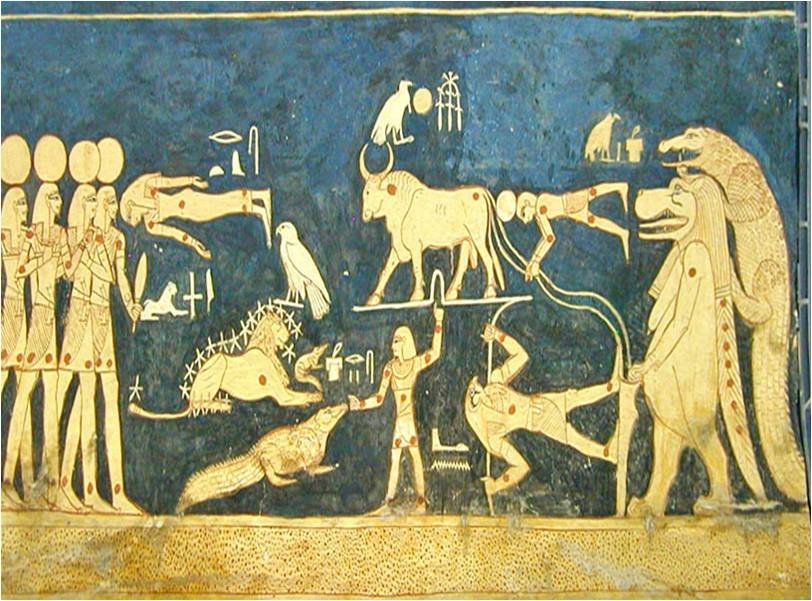
1. Why Were the Pyramids Really Built?
One of the greatest secrets of the pyramids concerns their true purpose. While modern archaeology generally agrees that the pyramids served as royal tombs for pharaohs, their role extended far beyond simply housing a king's burial chamber. For Ancient Egyptians, the pyramid was a sacred structure designed to ensure the pharaoh's successful journey into the afterlife and his transformation into an eternal divine being. Egyptians believed that death was not the end of existence but rather the beginning of a new life in the next world. The pyramid acted as a spiritual gateway connecting the earthly realm with the heavens. The shape of the pyramid may have symbolized the rays of the sun, allowing the deceased pharaoh to ascend and join the sun god Ra in the sky. Religious texts discovered in later pyramids support this interpretation, describing the king's journey among the stars and gods. The pyramid complex itself was carefully designed to support this process. Mortuary temples, causeways, subsidiary pyramids, offering chapels, and ceremonial structures surrounded the main monument. Priests performed rituals and presented offerings to sustain the pharaoh's spirit for eternity. The entire complex functioned as a sacred landscape dedicated to royal resurrection. Although tomb robbery removed many treasures from the pyramids over the centuries, archaeological evidence strongly supports their funerary purpose. Nevertheless, questions remain about specific religious functions, symbolic meanings, and architectural features that continue to intrigue scholars. The pyramids were not merely tombs but highly sophisticated religious monuments that reflected Ancient Egypt's complex beliefs about death, kingship, and immortality.
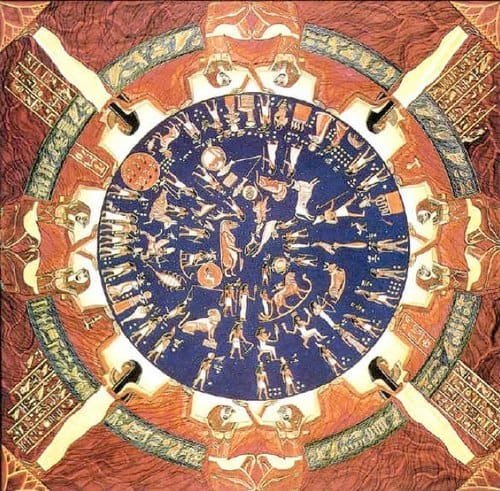
2. The Mystery of How the Pyramids Were Constructed
Perhaps the most famous mystery surrounding the pyramids is how Ancient Egyptians managed to build such enormous structures without modern machinery. The Great Pyramid of Khufu consists of approximately 2.3 million stone blocks, many weighing several tons. Even today, the precision and scale of the construction astonish engineers and architects. For centuries, numerous theories have been proposed regarding pyramid construction. Some early writers suggested supernatural assistance or lost technologies, while others promoted speculative ideas involving extraterrestrials. However, archaeological discoveries increasingly point to the ingenuity and organizational skills of Ancient Egyptian workers and engineers. Evidence indicates that large labor forces consisting of skilled workers, craftsmen, engineers, and seasonal laborers participated in construction projects. Excavations near Giza have uncovered workers' villages, bakeries, medical facilities, and administrative buildings that supported these labor forces. Contrary to popular myths, the pyramids were not built by slaves but by organized teams of workers supplied by the state. Researchers believe that stone blocks were transported using sledges pulled across specially prepared surfaces. Ramps likely played an important role in moving materials to higher levels during construction, although the exact design of these ramps remains debated. Advanced surveying techniques allowed builders to align the pyramids with remarkable accuracy. While many details have been uncovered, the complete construction process is still not fully understood. New archaeological discoveries and technological studies continue to reveal clues about one of the greatest engineering achievements in human history.
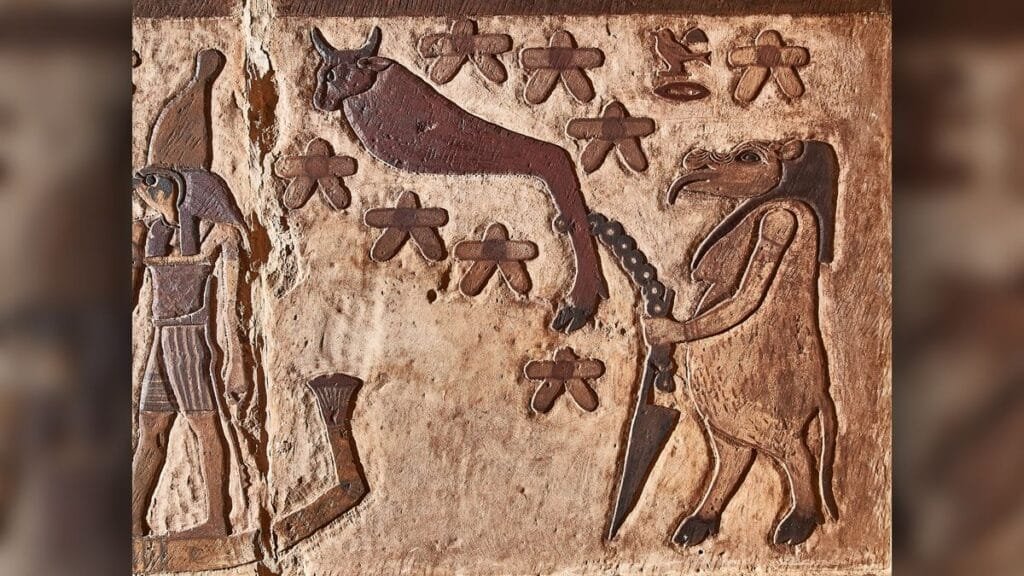
3. Hidden Chambers and Undiscovered Rooms
One of the most exciting secrets of the pyramids involves the possibility of hidden chambers and undiscovered passages concealed within these ancient monuments. Despite centuries of exploration, archaeologists believe that parts of some pyramids may still remain unexplored. Advances in modern technology have allowed researchers to investigate the interior of pyramids without damaging the structures, leading to remarkable discoveries. In recent years, scientists involved in the ScanPyramids project used cosmic-ray imaging technology to examine the Great Pyramid of Khufu. Their research revealed a previously unknown void located above the Grand Gallery. This large hidden space generated worldwide excitement because its purpose remains unknown. Some researchers believe it may be a structural feature, while others speculate that it could lead to additional chambers or reveal new information about pyramid construction. The Great Pyramid already contains several well-known spaces, including the King's Chamber, Queen's Chamber, Grand Gallery, and subterranean chamber. However, the discovery of hidden voids suggests that the internal design may be more complex than previously believed. Similar mysteries exist within other pyramids across Egypt, many of which have not been fully explored. Ancient Egyptian architects often incorporated symbolic and practical elements into their designs. Hidden passages may have been intended to protect royal burials, conceal sacred spaces, or serve structural purposes. The possibility that undiscovered rooms still exist inside the pyramids continues to inspire archaeologists and capture public imagination. As technology advances, future investigations may reveal new chambers, artifacts, inscriptions, or architectural features that deepen our understanding of the pyramids. These hidden spaces remain among the most intriguing mysteries of Ancient Egypt and demonstrate that the pyramids still have secrets waiting to be uncovered.
4. The Astronomical Alignment of the Pyramids
One of the most fascinating secrets of the pyramids is their extraordinary astronomical alignment. The Great Pyramid of Khufu is aligned almost perfectly with the cardinal directions—north, south, east, and west—with an accuracy that rivals modern surveying techniques. This precision has puzzled researchers for centuries and has led many scholars to investigate the relationship between Ancient Egyptian architecture and astronomy. Ancient Egyptians closely observed the movements of the sun, moon, and stars. Astronomy played a vital role in agriculture, religion, and royal ceremonies. Many researchers believe that pyramid builders used observations of specific stars to establish accurate alignments during construction. The northern sky was particularly important because Egyptians associated the circumpolar stars, which never disappeared below the horizon, with eternity and immortality. Pharaohs hoped to join these eternal stars after death. Some theories suggest that the layout of the Giza pyramids reflects celestial patterns, including possible connections to the constellation Orion, which was associated with the god Osiris, ruler of the afterlife. While scholars continue to debate these interpretations, there is little doubt that astronomy influenced Egyptian religious thought and architectural planning. The pyramid's internal shafts have also attracted attention. Certain shafts appear to point toward significant stars that were visible during the Old Kingdom. These alignments may have symbolized pathways through which the pharaoh's spirit could travel to the heavens. Such features demonstrate that the pyramids were not merely engineering projects but sacred monuments designed according to complex religious and astronomical principles. The remarkable precision of the pyramids continues to inspire modern scientists and engineers. Their alignment serves as evidence of the advanced observational skills possessed by Ancient Egyptian astronomers and reinforces the idea that the pyramids embodied a sophisticated understanding of the cosmos.
5. The Secret Workforce Behind the Monuments
For many years, popular culture portrayed pyramid builders as enslaved laborers forced to work under harsh conditions. However, modern archaeological discoveries have revealed a very different story. One of the most important secrets of the pyramids is the identity and organization of the workforce responsible for constructing these monumental structures. Excavations near the Giza Plateau have uncovered extensive workers' settlements that provide valuable insights into the lives of pyramid builders. Archaeologists discovered housing complexes, bakeries, kitchens, storage facilities, medical areas, and administrative buildings. These findings suggest that workers were part of a highly organized labor force supported by the state rather than enslaved populations. The workforce likely consisted of skilled craftsmen, engineers, stonecutters, surveyors, laborers, and seasonal agricultural workers. During the Nile flood season, many farmers were unable to work their fields and may have participated in construction projects as part of a national labor system. Workers received food, clothing, medical care, and housing while contributing to these monumental endeavors. Evidence also indicates that labor teams developed strong identities and pride in their work. Inscriptions discovered within the pyramids include names such as "Friends of Khufu" and "Drunkards of Menkaure," suggesting that workers belonged to organized groups with distinct responsibilities. These discoveries humanize the builders and highlight the collaborative effort required to complete such extraordinary monuments. Understanding the workforce behind the pyramids reveals the remarkable administrative capabilities of Ancient Egypt. The construction of the pyramids was not simply a display of royal power but also a demonstration of national organization, cooperation, and technical expertise. The true builders of the pyramids remain among the greatest unsung heroes of Ancient Egyptian civilization.
6. The Mystery of the Missing Pyramid Treasures
Another enduring secret of the pyramids involves the treasures that once filled these royal monuments. Ancient Egyptian pharaohs were buried with vast collections of gold, jewelry, furniture, statues, ceremonial objects, weapons, clothing, and sacred artifacts intended to support them in the afterlife. Yet when most pyramids were explored by archaeologists, these treasures were nowhere to be found. The absence of pyramid treasures has long puzzled researchers and visitors alike. Historical evidence strongly suggests that most pyramids were robbed in antiquity. Tomb robbers targeted royal burials in search of valuable materials, often shortly after the pharaoh's death. Precious metals and gemstones could be easily removed and reused, making royal tombs attractive targets despite protective measures. Ancient Egyptian authorities attempted to prevent theft through hidden chambers, sealed passages, massive stone blocks, and curses inscribed on tomb walls. Nevertheless, many robbers succeeded in penetrating burial chambers and removing valuable objects. Some thefts may even have involved corrupt officials or workers familiar with the pyramid's design. The discovery of Tutankhamun's nearly intact tomb in the Valley of the Kings demonstrates what pyramid burials may once have contained. His tomb revealed thousands of treasures, including the famous golden mask, elaborate jewelry, chariots, furniture, and religious artifacts. Such discoveries provide clues about the immense wealth that likely existed within earlier pyramid burials. Although most pyramid treasures have vanished, archaeologists continue to search for undiscovered tombs and hidden chambers that may still contain untouched artifacts. The mystery of the missing treasures remains one of the most captivating aspects of pyramid research and serves as a reminder of how much of Ancient Egypt's history has been lost—or may still await discovery beneath the sands.
7. Pyramid Texts and Hidden Religious Knowledge
Among the most important secrets of the pyramids are the sacred inscriptions known as the Pyramid Texts. These ancient writings, carved onto the walls of royal burial chambers, are the oldest known religious texts in the world. First appearing during the Fifth and Sixth Dynasties of the Old Kingdom, the Pyramid Texts provide invaluable insight into Ancient Egyptian beliefs about death, resurrection, divine kingship, and the afterlife. They reveal that the pyramids were not simply monumental tombs but also spiritual machines designed to guide the pharaoh's soul into eternity. The Pyramid Texts consist of hundreds of spells, prayers, hymns, and magical formulas intended to protect the deceased king and ensure his successful journey through the afterlife. These inscriptions describe how the pharaoh could overcome supernatural dangers, ascend to the heavens, join the gods, and achieve eternal life. Many passages emphasize the king's connection to powerful deities such as Ra, Osiris, Horus, and Nut. One of the most fascinating aspects of these texts is their complexity. They contain symbolic language, mythical narratives, and references to celestial bodies that continue to challenge scholars. Some passages describe the king climbing a heavenly ladder, traveling among the stars, or transforming into divine beings. These ideas reveal a sophisticated religious system that linked royal power with cosmic order and immortality. The Pyramid Texts later evolved into the Coffin Texts and eventually the Book of the Dead, making them the foundation of Ancient Egyptian funerary literature. Their preservation within royal pyramids has provided archaeologists with an extraordinary source of information about Egyptian spirituality. The hidden religious knowledge contained within these inscriptions remains one of the greatest intellectual treasures of Ancient Egypt and continues to deepen our understanding of pyramid symbolism and purpose.
8. The Mystery of the Pyramid Shafts
One of the most debated secrets of the Great Pyramid of Giza involves a series of narrow shafts extending from the King's Chamber and Queen's Chamber. These mysterious passages have puzzled researchers for decades because their exact purpose remains uncertain. Unlike the larger corridors used by visitors today, these shafts are extremely narrow and were clearly not intended for human movement. Their existence has inspired numerous theories ranging from practical engineering functions to profound religious symbolism. The shafts from the King's Chamber extend all the way to the exterior of the pyramid, while those from the Queen's Chamber terminate within the structure itself. Their precise orientation has attracted particular interest because some appear to align with important stars visible during the Old Kingdom. Scholars have suggested connections with stars associated with Osiris and the imperishable circumpolar stars, which Egyptians linked to eternal life. According to one theory, the shafts served as symbolic pathways allowing the pharaoh's spirit to ascend to the heavens after death. The Egyptians believed that the king would join the gods among the stars, and the shafts may have represented celestial routes connecting the burial chamber to the divine realm. This interpretation is supported by religious texts describing the king's journey through the sky. Modern robotic explorations have added new dimensions to the mystery. Small robots sent into the shafts discovered sealed stone doors, copper fittings, and previously unknown chambers. These findings generated excitement because they suggested that hidden features still exist within the pyramid. While subsequent investigations provided some answers, many questions remain unresolved. The pyramid shafts continue to be studied using advanced technologies, including robotic cameras and digital mapping systems. Their purpose remains one of the most intriguing mysteries of Ancient Egypt, demonstrating how even well-studied monuments can continue to surprise modern researchers
9. Unfinished Pyramids and What They Reveal
While the Great Pyramids often capture most of the world's attention, some of the most important clues about pyramid construction come from unfinished pyramids scattered throughout Egypt. These incomplete monuments provide archaeologists with a rare opportunity to study building techniques, planning methods, and construction processes that are often hidden within completed structures. In many ways, unfinished pyramids reveal secrets that finished monuments cannot. One notable example is the unfinished pyramid at Zawyet El Aryan, while other incomplete structures can be found at sites such as Meidum, Abu Rawash, and Saqqara. These monuments preserve evidence of quarrying techniques, construction ramps, foundation preparation, and architectural modifications. Because work stopped before completion, researchers can examine stages of construction that would normally be concealed beneath outer casing stones and finished surfaces. Some unfinished pyramids were abandoned due to political instability, the death of a pharaoh, engineering challenges, or changing royal priorities. In certain cases, structural weaknesses became apparent during construction, forcing builders to alter their plans. The Bent Pyramid of Pharaoh Sneferu provides a famous example of design modification, as its angle changes midway through construction, likely in response to concerns about stability. These unfinished monuments demonstrate that pyramid building involved experimentation, adaptation, and continuous learning. Ancient Egyptian architects refined their techniques over generations, gradually improving the design and construction of royal tombs. The lessons learned from earlier projects contributed directly to the success of later masterpieces such as the Great Pyramid of Khufu. For archaeologists, unfinished pyramids function like ancient construction manuals preserved in stone. They reveal the practical challenges faced by Egyptian builders and provide valuable evidence about labor organization, engineering methods, and architectural innovation. Far from being failures, these incomplete monuments have become essential sources of knowledge that continue to unlock the secrets of pyramid construction.
10. The Secret of the Pyramid's Perfect Precision
One of the most astonishing secrets of the pyramids is the incredible precision with which they were constructed. The Great Pyramid of Khufu, built more than 4,500 years ago, displays a level of accuracy that continues to impress modern architects, engineers, and surveyors. Its base is remarkably level, its sides are aligned almost perfectly with the cardinal directions, and its dimensions demonstrate an extraordinary understanding of geometry and measurement. The question of how Ancient Egyptians achieved such precision using simple tools remains one of the most fascinating mysteries of pyramid construction. Modern surveys have shown that the Great Pyramid deviates from true north by only a tiny fraction of a degree. This level of accuracy would be impressive even with modern equipment, making it even more remarkable when considering the technological limitations of the Old Kingdom. Researchers believe that Egyptian surveyors relied on astronomical observations, carefully tracking the movements of stars to establish precise alignments before construction began. The pyramid's stone blocks were cut and positioned with exceptional skill. In some areas, the joints between stones are so narrow that it is difficult to insert a blade between them. Builders carefully measured and adjusted each block to ensure stability and uniformity. The outer casing stones, most of which have disappeared over time, were originally polished to create smooth surfaces that reflected sunlight brilliantly. Many scholars believe that the Egyptians achieved this precision through generations of accumulated knowledge, skilled craftsmanship, and rigorous planning. Surveyors used measuring rods, plumb lines, leveling instruments, and geometric calculations to guide construction. Every stage of the project was carefully organized and supervised by experienced architects and engineers. The remarkable accuracy of the pyramids continues to challenge assumptions about ancient technology. Their precision stands as powerful evidence of the scientific and engineering capabilities of Ancient Egyptian civilization and remains one of the greatest achievements in the history of architecture.
11. Lost Technologies of Ancient Egypt
Among the most intriguing secrets of the pyramids is the possibility that some Ancient Egyptian technologies have been lost to history. While archaeologists have uncovered many tools and techniques used by pyramid builders, certain aspects of construction remain difficult to explain completely. This has led researchers to investigate whether specialized knowledge, methods, or technologies once existed that have not survived in the archaeological record. Ancient Egyptians left behind relatively few detailed descriptions of how the pyramids were built. As a result, scholars must reconstruct construction techniques using physical evidence, experimental archaeology, and surviving tools. Copper chisels, stone hammers, wooden sledges, ropes, and measuring instruments have all been discovered, demonstrating the practical technologies available to Egyptian workers. However, questions remain regarding how millions of massive stone blocks were moved and positioned with such efficiency. Some researchers have suggested that Egyptians developed sophisticated systems of ramps, counterweights, and transportation networks that have largely disappeared over time. Others point to evidence of advanced organizational methods that enabled thousands of workers to coordinate their efforts on large-scale projects. These systems may have been just as important as physical tools in making pyramid construction possible. The concept of "lost technology" does not necessarily imply mysterious or supernatural methods. Instead, it highlights the reality that many ancient techniques were transmitted through generations of craftsmen rather than recorded in written manuals. When those traditions ended, valuable knowledge may have vanished as well. Modern experiments continue to demonstrate that many pyramid-building tasks can be accomplished using ancient tools and methods. Nevertheless, the full range of technologies employed by Egyptian engineers may never be completely understood. The possibility that important techniques remain undiscovered continues to fuel research into one of humanity's greatest architectural achievements.
12. The Hidden Symbolism of Pyramid Architecture
Beyond their role as royal tombs, the pyramids were filled with symbolic meaning that reflected Ancient Egyptian religious beliefs and understanding of the universe. Every aspect of pyramid architecture—from its shape and orientation to its internal chambers and surrounding structures—appears to have been carefully designed to communicate spiritual ideas. Understanding this symbolism provides important clues to some of the deepest secrets of the pyramids. The pyramid's distinctive shape is widely believed to represent the rays of the sun descending from the heavens. Ancient Egyptians associated the sun god Ra with creation, kingship, and eternal life. By constructing tombs in the form of pyramids, they may have intended to create a symbolic pathway connecting the deceased pharaoh with the divine realm. The pyramid's upward-pointing form suggested ascension, transformation, and rebirth. The orientation of the pyramid toward the cardinal directions also carried symbolic significance. Egyptians viewed cosmic order as an essential principle governing both the universe and society. Aligning royal monuments with celestial and geographic directions reflected the pharaoh's role in maintaining this sacred order. The pyramid thus became a physical expression of Ma'at, the concept of balance, truth, and harmony. Internal chambers and passageways were similarly rich in symbolism. The burial chamber represented the place of transformation where the king would be reborn into eternal life. Corridors, shafts, and hidden spaces may have symbolized stages of the soul's journey through the afterlife. Religious texts later inscribed within pyramids reinforced these ideas by describing the king's ascent to the heavens and union with the gods. The surrounding pyramid complex—including temples, causeways, and subsidiary structures—formed part of a larger sacred landscape designed to support royal resurrection. Every element contributed to a carefully planned spiritual system intended to ensure the pharaoh's immortality. The hidden symbolism of pyramid architecture reveals that these monuments were far more than engineering marvels. They were profound expressions of Ancient Egyptian religion, cosmology, and royal ideology, preserving sacred meanings that continue to captivate researchers and visitors today.
13. Pyramid Curses: Myth or Reality?
Few secrets of the pyramids have captured the public imagination as strongly as the legend of the pyramid curse. Stories of mysterious warnings, supernatural punishments, and unexplained deaths have surrounded Egyptian tombs for generations. These tales became especially popular after the discovery of Pharaoh Tutankhamun's tomb in 1922, when a series of unexpected deaths among people connected to the excavation fueled rumors of an ancient curse protecting the pharaoh's resting place. According to popular legend, anyone who disturbed a royal tomb would suffer misfortune, illness, or death. Newspapers of the early twentieth century eagerly reported stories linking accidents and deaths to the so-called "Curse of the Pharaohs." The sudden death of Lord Carnarvon, who financed Howard Carter's excavation of Tutankhamun's tomb, became one of the most famous examples. Many believed his death was evidence that an ancient curse had been unleashed. However, scientific investigations have found little evidence supporting the existence of supernatural curses. Most researchers attribute the reported incidents to coincidence, natural causes, or media exaggeration. Many individuals involved in the excavation of Egyptian tombs lived long and healthy lives, which contradicts the idea of a deadly curse affecting all intruders. Some scholars suggest that stories of curses may have originated from warning inscriptions designed to discourage tomb robbers. Ancient Egyptians certainly wished to protect their tombs from theft and desecration. Religious texts often threatened divine punishment against those who disturbed sacred places. These warnings reflected spiritual beliefs rather than literal magical traps. Despite the lack of scientific evidence, the legend of pyramid and tomb curses continues to fascinate people around the world. Movies, novels, documentaries, and popular culture have transformed these stories into enduring myths. Whether viewed as superstition, psychological influence, or cultural folklore, the mystery of the pyramid curse remains one of the most intriguing legends associated with Ancient Egypt.
14. The Connection Between the Sphinx and the Pyramids
Standing guard near the pyramids of Giza is one of the most iconic monuments in the world: the Great Sphinx. This colossal statue, carved from a single limestone outcrop, combines the body of a lion with the head of a human and has watched over the Giza Plateau for thousands of years. The relationship between the Sphinx and the pyramids remains one of the most fascinating secrets of Ancient Egypt. Most Egyptologists believe that the Great Sphinx was constructed during the reign of Pharaoh Khafre, whose pyramid stands nearby. The monument is thought to represent the king himself, symbolizing royal power, wisdom, and divine authority. The lion's body reflected strength and protection, while the human head emphasized intelligence and kingship. Together, these elements created a powerful guardian figure associated with the pharaoh and the sun god. The placement of the Sphinx appears to have been carefully planned within the larger Giza pyramid complex. It faces east toward the rising sun, reinforcing connections with solar worship and rebirth. Ancient Egyptians believed that the sun's daily cycle symbolized death and resurrection, themes that were central to royal funerary beliefs. Over the centuries, the Sphinx became buried beneath desert sands multiple times and was repeatedly restored by later rulers. One of the most famous restoration efforts occurred during the reign of Pharaoh Thutmose IV, who erected the Dream Stela between the Sphinx's paws. According to the inscription, the young prince dreamed that the Sphinx promised him kingship if he cleared away the surrounding sand. Although much has been learned about the Sphinx, important questions remain unanswered. Researchers continue to debate aspects of its construction, symbolism, and relationship to the surrounding monuments. The connection between the Sphinx and the pyramids highlights the complexity of the Giza Plateau and demonstrates how these monuments formed part of a unified sacred landscape dedicated to kingship, eternity, and the divine order of Ancient Egypt.
15. Modern Discoveries That Are Rewriting Pyramid History
Even after centuries of exploration, the pyramids continue to reveal new secrets. Advances in technology and ongoing archaeological research have transformed our understanding of these ancient monuments, challenging long-held assumptions and opening exciting new avenues of investigation. Modern discoveries are helping scholars uncover details about pyramid construction, internal design, workforce organization, and religious significance that were previously unknown. One of the most important recent projects is ScanPyramids, an international research initiative that uses advanced technologies such as muon tomography, infrared thermography, and 3D imaging to study the Great Pyramid without damaging it. These techniques led to the discovery of a large hidden void above the Grand Gallery, one of the most significant pyramid findings in recent decades. Although the purpose of this space remains uncertain, its existence demonstrates that important features may still be concealed within the monument. Archaeological excavations around Giza have also revealed extensive evidence about the workers who built the pyramids. Settlements, bakeries, workshops, cemeteries, and administrative facilities provide valuable information about the organization of labor and daily life during construction. These discoveries have helped dispel myths that the pyramids were built by slaves and instead highlight the role of skilled workers and state planning. New studies of ancient papyri have also contributed to pyramid research. The discovery of the Diary of Merer, one of the oldest known papyrus documents, provided firsthand evidence about the transportation of limestone blocks used in the construction of the Great Pyramid. This remarkable text offers rare insight into the logistics and administration behind one of history's greatest building projects. As scientific tools continue to improve, researchers are uncovering information that previous generations could not have imagined. Hidden chambers, new inscriptions, advanced scanning technologies, and fresh archaeological discoveries are steadily rewriting pyramid history. These findings remind us that the pyramids remain active subjects of research and that many of their secrets may still be waiting to be uncovered beneath the sands of Egypt.
16. Unsolved Mysteries of the Pyramids
Despite centuries of exploration, excavation, and scientific study, many mysteries surrounding the pyramids remain unsolved. These unanswered questions continue to inspire debate among archaeologists, engineers, historians, and enthusiasts around the world. While modern research has revealed much about Ancient Egyptian civilization, the pyramids still guard secrets that may never be fully understood. One of the greatest mysteries concerns the complete construction process of the Great Pyramid. Although scholars generally agree that ramps, sledges, skilled labor, and careful planning played major roles, no definitive evidence has been found showing exactly how the massive stone blocks were raised and positioned. Various theories have been proposed, including straight ramps, spiral ramps, internal ramp systems, and combinations of different techniques. The lack of surviving construction manuals leaves room for continued investigation. Another mystery involves hidden chambers and unexplored spaces within the pyramids. Recent scanning technologies have identified previously unknown voids, but their purpose remains unclear. Researchers continue to wonder whether additional chambers, artifacts, inscriptions, or architectural features remain concealed within these monuments. Questions also persist regarding the symbolic meanings of certain pyramid features, the precise functions of the internal shafts, and the full extent of astronomical knowledge possessed by Ancient Egyptian architects. Some mysteries may eventually be solved through future discoveries, while others may remain forever hidden. These unresolved questions are part of what makes the pyramids so fascinating. Every new discovery provides answers while simultaneously raising new questions. The pyramids continue to challenge our understanding of the ancient world and remind us that even humanity's most famous monuments can still hold secrets waiting to be uncovered.
17. What the Pyramids Teach Us About Ancient Egypt
The pyramids are far more than impressive stone structures; they are extraordinary sources of information about Ancient Egyptian civilization. Through their architecture, inscriptions, surrounding complexes, and archaeological remains, the pyramids reveal valuable insights into Egyptian religion, government, science, technology, economy, and social organization. They serve as lasting records of a civilization that flourished for thousands of years along the Nile River. One of the most important lessons the pyramids teach us is the central role of religion in Ancient Egyptian life. The immense resources devoted to royal tombs demonstrate the Egyptians' strong belief in the afterlife and the divine nature of kingship. Every aspect of pyramid construction was influenced by spiritual concepts involving resurrection, immortality, and cosmic order. The pyramids also showcase the remarkable administrative capabilities of the Egyptian state. Organizing thousands of workers, transporting construction materials, managing food supplies, and coordinating large-scale building projects required an efficient government and sophisticated bureaucracy. These monuments provide evidence of a highly organized society capable of achieving extraordinary goals through planning and cooperation. From an engineering perspective, the pyramids demonstrate advanced knowledge of mathematics, surveying, astronomy, and construction techniques. Their precision reflects generations of accumulated expertise and innovation. Archaeological discoveries at workers' villages further reveal details about daily life, labor organization, healthcare, and social structure during the Old Kingdom. Ultimately, the pyramids teach us that Ancient Egypt was a civilization of remarkable creativity, intelligence, and ambition. They stand as enduring symbols of human achievement and provide an unparalleled window into one of history's greatest cultures.
18. Why the Secrets of the Pyramids Continue to Fascinate the World
More than four and a half millennia after their construction, the pyramids remain among the most famous and admired monuments on Earth. Millions of visitors travel to Egypt each year to witness these extraordinary structures, while countless books, documentaries, films, and research projects continue to explore their mysteries. The enduring fascination with the pyramids stems from a unique combination of history, science, religion, engineering, and unanswered questions. The sheer scale of the pyramids inspires awe. The Great Pyramid of Khufu remained the tallest man-made structure in the world for nearly 4,000 years, a testament to the ambition and capabilities of its builders. Even in the modern age, visitors struggle to comprehend how such enormous monuments could have been created using ancient technology. The mysteries surrounding the pyramids add another layer of intrigue. Hidden chambers, unexplained architectural features, lost treasures, construction techniques, and astronomical alignments continue to fuel curiosity and debate. Every new discovery generates excitement because it has the potential to change our understanding of Ancient Egypt and reveal secrets hidden for thousands of years. The pyramids also represent something universal about humanity. They reflect the desire to achieve greatness, preserve memory, understand the cosmos, and overcome mortality. These themes resonate across cultures and generations, making the pyramids relevant far beyond their original historical context. As technology advances and archaeological research continues, new discoveries will undoubtedly emerge. Yet it is likely that some mysteries will remain forever unsolved. This balance between knowledge and mystery is precisely what keeps the pyramids so captivating. They are not only monuments of stone but also monuments of human imagination, reminding us that the ancient world still has much to teach us about creativity, determination, and the pursuit of the unknown.