

- Excursions in Egypt
- Egypt Tour Packages
- Cairo Tours and Excursions
- Hurghada Tours and Excursions
- Soma Bay Tours and Excursions
- Makadi Bay Tours and Excursions
- Sahl Hasheesh Tours and Excursions
- El Gouna Tours and Excursions
- Marsa Alam Tours and Excursions
- Port Ghalib Tours and Excursions
- El Quseir Tours and Excursions
- Dendera and Abydos Day Tours
- Aswan Tours and Excursions
- Luxor Tours and Excursions
- Sharm El Sheikh Tours and Excursions
- Top Rated Egypt Tours in 2026
- Optional Excursions in Egypt
- Private Transfer
- Blogs About egypt
- Ancient Egypt
- Historical Sites in Egypt
- Cairo
- Alexandria
- Luxor
- Aswan
- The Red Sea
- Dendera Temple
- El Fayoum Oasis
- Bahariya Oasis
- Siwa Oasis
- Al Alamein
- Marsa Matruh
- Why Egypt Is One of the Safest Countries to Visit in the Middle East
- What You Need To know Before Your First Trip To Egypt
- Egypt Travel Costs in 2026 Full Budget Guide
- Top 10 Tourist Activities in Egypt
- Top 50 Activities You Can’t Miss in Egypt in 2026
- The Guide to Guided Tours in Egypt
- Egypt’s Ancient and Modern History
- The Nile River
- The Deserts of Egypt
- Ancient Egyptian gods
- famous Egyptian dishes
- UNESCO World Heritage sites
- About Us
- Egypt Hotels and Resorts
- Excursions in Egypt
- Egypt Tour Packages
- Cairo Tours and Excursions
- Hurghada Tours and Excursions
- Soma Bay Tours and Excursions
- Makadi Bay Tours and Excursions
- Sahl Hasheesh Tours and Excursions
- El Gouna Tours and Excursions
- Marsa Alam Tours and Excursions
- Port Ghalib Tours and Excursions
- El Quseir Tours and Excursions
- Dendera and Abydos Day Tours
- Aswan Tours and Excursions
- Luxor Tours and Excursions
- Sharm El Sheikh Tours and Excursions
- Top Rated Egypt Tours in 2026
- Optional Excursions in Egypt
- Private Transfer
- Blogs About egypt
- Ancient Egypt
- Historical Sites in Egypt
- Cairo
- Alexandria
- Luxor
- Aswan
- The Red Sea
- Dendera Temple
- El Fayoum Oasis
- Bahariya Oasis
- Siwa Oasis
- Al Alamein
- Marsa Matruh
- Why Egypt Is One of the Safest Countries to Visit in the Middle East
- What You Need To know Before Your First Trip To Egypt
- Egypt Travel Costs in 2026 Full Budget Guide
- Top 10 Tourist Activities in Egypt
- Top 50 Activities You Can’t Miss in Egypt in 2026
- The Guide to Guided Tours in Egypt
- Egypt’s Ancient and Modern History
- The Nile River
- The Deserts of Egypt
- Ancient Egyptian gods
- famous Egyptian dishes
- UNESCO World Heritage sites
- About Us
- Egypt Hotels and Resorts
Welcome to
The Ancient Egypt Map: A Complete Guide to the Geography, Cities, and Landmarks of Ancient Egyptian Civilization
The Ancient Egypt Map reveals the geographical foundation of one of the world’s longest-lasting and most influential civilizations. Stretching along the fertile banks of the Nile River, Ancient Egypt developed into a powerful kingdom that thrived for more than three thousand years. Understanding the map of Ancient Egypt helps historians, travelers, and archaeology enthusiasts visualize how geography shaped the political, economic, religious, and cultural development of the ancient world.
Unlike many civilizations that depended on unpredictable weather patterns, Ancient Egypt relied on the annual flooding of the Nile River. This remarkable river transformed an otherwise harsh desert environment into a fertile agricultural corridor capable of supporting millions of people. The Ancient Egypt map is therefore centered on the Nile Valley, which served as the backbone of transportation, agriculture, communication, and trade.
From the bustling cities of Memphis and Thebes to the magnificent temples of Karnak and Abu Simbel, every major settlement was strategically positioned along the Nile. The civilization was traditionally divided into Upper Egypt in the south and Lower Egypt in the north, each possessing unique geographical features and historical importance. Beyond the fertile riverbanks, vast deserts, remote oases, mountain ranges, and international trade routes contributed to Egypt’s prosperity and security.
In this comprehensive guide to the Ancient Egypt map, we will explore the Nile River, the regions of Upper and Lower Egypt, major cities, temples, monuments, trade routes, deserts, oases, and neighboring kingdoms. By examining these important locations, readers can gain a deeper understanding of how geography influenced the rise and success of Ancient Egyptian civilization and why its legacy continues to captivate the world today.
1. The Nile River: The Lifeblood of Ancient Egypt
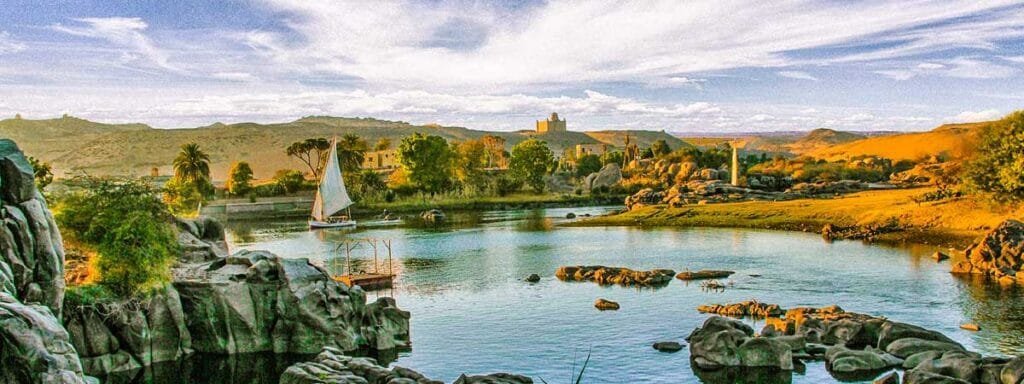
No feature on the Ancient Egypt map was more important than the Nile River. Often called the "Gift of the Nile," this extraordinary waterway shaped every aspect of Ancient Egyptian life and transformed a narrow strip of desert land into one of the most productive agricultural regions in the ancient world. When examining a map of Ancient Egypt, the Nile appears as a long green corridor cutting through vast expanses of desert, highlighting its critical role in sustaining civilization. Originating in East Africa and flowing northward into the Mediterranean Sea, the Nile River stretches more than 6,600 kilometers, making it one of the longest rivers on Earth. Each year, seasonal floods deposited nutrient-rich silt along the riverbanks, creating fertile farmland known as the Black Land. These annual floods allowed farmers to grow wheat, barley, vegetables, flax, and other crops that supported Egypt’s growing population. The Nile also functioned as Ancient Egypt's primary transportation route. Boats carried goods, people, soldiers, and building materials between cities, enabling efficient communication throughout the kingdom. Massive stone blocks used to construct temples, obelisks, and pyramids were transported along the river, demonstrating its importance in Egypt's architectural achievements. Religiously, the Nile held immense significance. Ancient Egyptians believed the river was a divine gift from the gods and associated its life-giving waters with prosperity, rebirth, and fertility. Many religious ceremonies and festivals celebrated the annual inundation, which ensured the survival of the kingdom. On any Ancient Egypt map labeled with major landmarks, the Nile Valley remains the central feature connecting cities such as Memphis, Thebes, Abydos, Edfu, Kom Ombo, and Aswan. Without the Nile River, Ancient Egyptian civilization could never have achieved its extraordinary longevity, wealth, and cultural influence.
2. Upper Egypt: The Southern Heartland of the Pharaohs
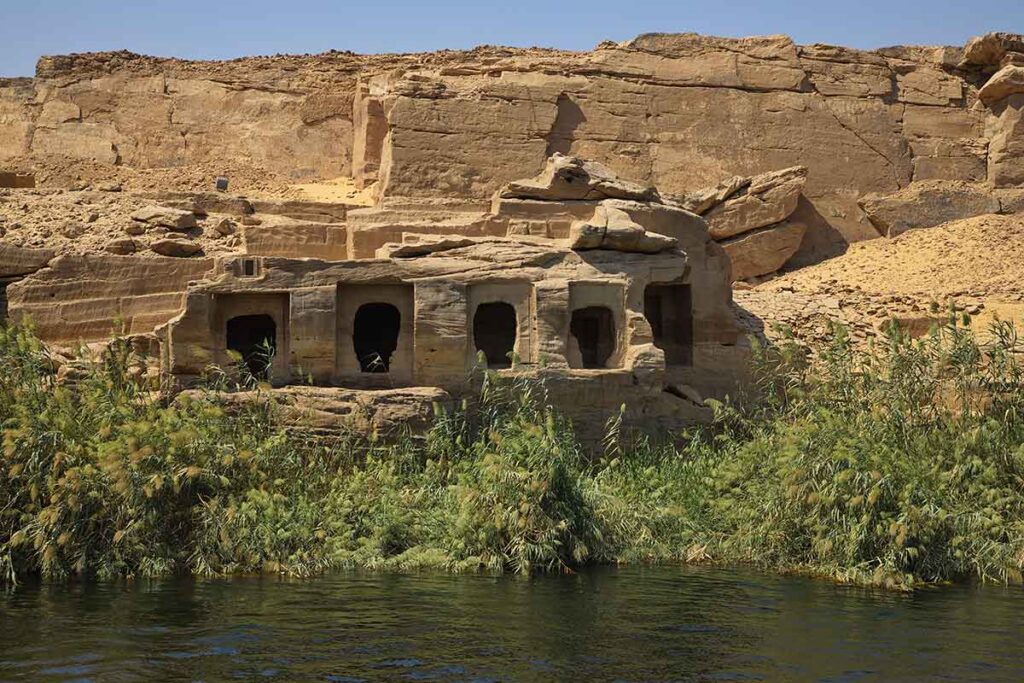
Upper Egypt occupies a prominent place on every Ancient Egypt map and played a vital role in the development of Egyptian civilization. Although it lies in the southern part of modern Egypt, it is called "Upper Egypt" because the Nile River flows from south to north, meaning the southern region is upstream. This fertile corridor stretched from modern-day Cairo southward to Aswan and the borders of ancient Nubia. The geography of Upper Egypt is characterized by a narrow ribbon of fertile land squeezed between towering desert cliffs. Unlike the broad Nile Delta of Lower Egypt, Upper Egypt's agricultural lands were concentrated close to the riverbanks. This unique landscape encouraged the development of powerful regional centers that later became major political and religious capitals. Among the most important locations on the Upper Egypt map is Thebes, known today as Luxor. During the New Kingdom, Thebes became the capital of Ancient Egypt and served as the center of royal power, religion, and monumental construction. The city was home to extraordinary sites such as Karnak Temple, Luxor Temple, the Valley of the Kings, and the Valley of the Queens. These landmarks remain among the most visited archaeological treasures in the world. Other significant cities in Upper Egypt included Abydos, one of Egypt's oldest religious centers, and Edfu, famous for its remarkably preserved Temple of Horus. Further south, Aswan served as a strategic gateway to Nubia and controlled valuable trade routes connecting Egypt with sub-Saharan Africa. The Upper Egypt region was also rich in natural resources, including granite quarries that supplied stone for obelisks, statues, and temples throughout the kingdom. As shown on detailed Ancient Egypt maps, Upper Egypt was not only a political powerhouse but also a center of religion, trade, architecture, and cultural development that profoundly influenced Egyptian history for thousands of years.
3. Lower Egypt: The Fertile Nile Delta and Gateway to the Mediterranean
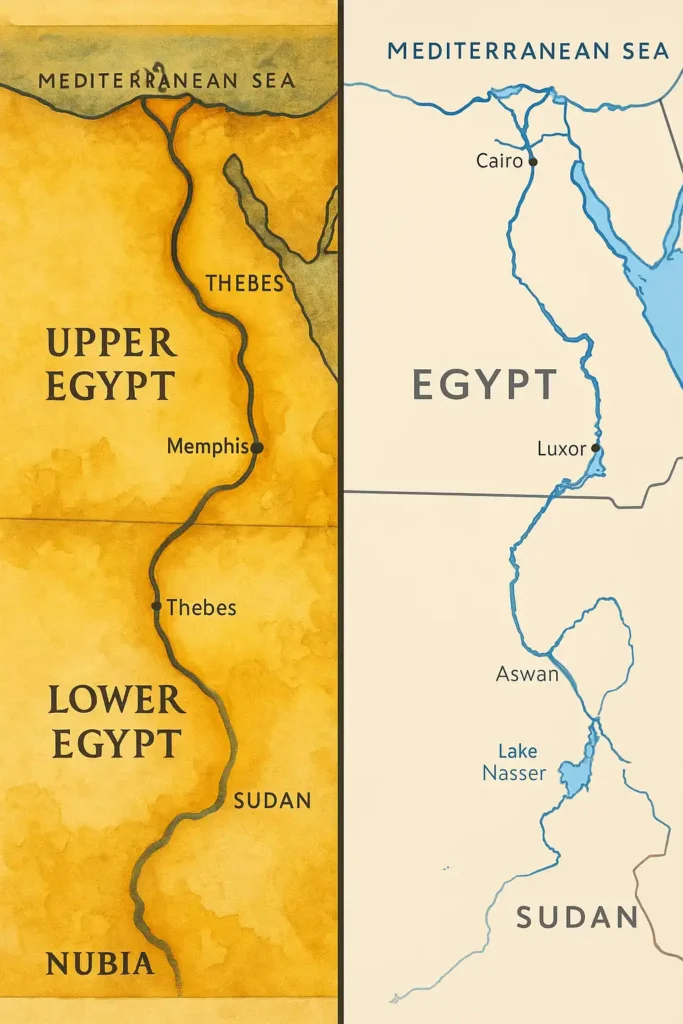
Lower Egypt represents the northern section of the Ancient Egypt map, where the Nile River divides into numerous branches before emptying into the Mediterranean Sea. This vast triangular region, known as the Nile Delta, was one of the most fertile and densely populated areas in the ancient world. The abundance of water, rich soil, and access to international trade routes made Lower Egypt a cornerstone of Egyptian prosperity. The Nile Delta created ideal conditions for agriculture. Farmers cultivated wheat, barley, flax, fruits, vegetables, and papyrus, generating enormous agricultural surpluses that supported the kingdom's economy. The fertile landscape shown on Ancient Egypt maps allowed settlements to flourish across the delta, making the region one of the most productive agricultural zones in antiquity. One of the most important cities in Lower Egypt was Memphis, strategically located near the point where Upper and Lower Egypt met. Founded around 3100 BCE, Memphis served as the capital during much of the Old Kingdom and became a center of government, religion, and commerce. Its location enabled rulers to control both regions of Egypt effectively after the unification of the kingdom. Lower Egypt also acted as Egypt's gateway to the Mediterranean world. Ports along the northern coast facilitated trade with neighboring civilizations, including the peoples of the Levant, Cyprus, Crete, and later Greece. Imported goods such as timber, copper, silver, and luxury products entered Egypt through these northern connections. The symbolic importance of Lower Egypt was reflected in royal traditions. Pharaohs wore the Red Crown of Lower Egypt, and following the unification of the kingdom, they adopted the famous Double Crown representing their rule over both Upper and Lower Egypt. As illustrated on any detailed map of Ancient Egypt, Lower Egypt was essential for agriculture, trade, political administration, and international relations, making it one of the most influential regions in Egyptian history.
4. The Eastern Desert: Egypt’s Source of Gold, Minerals, and Trade Routes
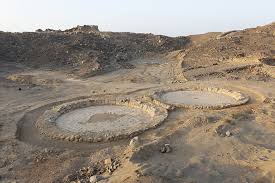
The Eastern Desert occupies a significant area on the Ancient Egypt map, stretching between the Nile River and the Red Sea. Although this rugged landscape appears barren and inhospitable, it played a crucial role in the economic prosperity and expansion of Ancient Egyptian civilization. Rich in natural resources and crossed by important trade routes, the Eastern Desert was far more valuable than its harsh environment might suggest. One of the most important features of the Eastern Desert was its abundance of mineral wealth. Ancient Egyptians established numerous mining expeditions throughout the region to extract gold, copper, emeralds, amethyst, and other valuable stones. Gold from the Eastern Desert helped finance monumental building projects, religious temples, and military campaigns, making Egypt one of the wealthiest civilizations in the ancient world. Many pharaohs considered control of these mining areas essential to maintaining their power and influence. The Eastern Desert also served as a strategic corridor connecting the Nile Valley to the Red Sea. Ancient trade routes crossed the desert, linking Egypt with Arabia, East Africa, and distant lands beyond the Red Sea. Merchants transported incense, spices, exotic animals, precious woods, and luxury goods that enriched Egyptian society and strengthened international trade relationships. Several ancient roads, fortified stations, and wells were established to support travelers crossing this challenging terrain. Archaeological discoveries have revealed evidence of mining camps, workers’ settlements, and inscriptions left by expeditions dating back thousands of years. When examining a detailed Ancient Egypt map, the Eastern Desert emerges not merely as a natural barrier but as a region of immense economic and strategic value. Its mineral resources, trade networks, and connections to foreign markets significantly contributed to Egypt’s prosperity, helping the civilization maintain its position as one of the dominant powers of the ancient world.
5. The Western Desert: Natural Protection and Hidden Oases
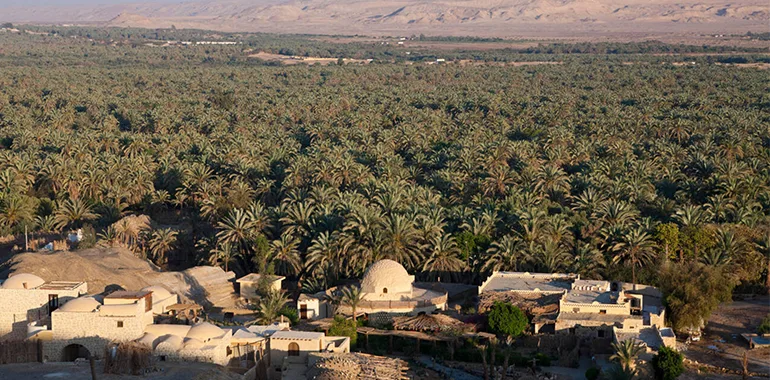
Covering nearly two-thirds of modern Egypt, the Western Desert forms one of the most impressive geographical features on the Ancient Egypt map. Stretching westward from the Nile Valley toward present-day Libya, this vast expanse of sand dunes, rocky plateaus, and remote depressions served both as a natural defense system and a source of valuable resources for Ancient Egypt. The immense size of the Western Desert provided protection against potential invasions from the west. Its harsh climate, limited water sources, and difficult terrain discouraged large-scale military campaigns, allowing Ancient Egypt to focus its defensive efforts on other frontiers. This natural barrier helped preserve Egypt’s security for centuries and contributed to the stability that allowed its civilization to flourish. Despite its seemingly lifeless appearance, the Western Desert contained several fertile oases that became important centers of agriculture, trade, and settlement. These oases were sustained by underground water sources and offered refuge for travelers crossing the desert. Important oases such as Siwa, Bahariya, Farafra, Dakhla, and Kharga appear on many maps of Ancient Egypt and played significant roles throughout Egyptian history. The desert also contained important trade routes connecting Egypt with North Africa and the Mediterranean world. Caravans transported goods through these remote regions, facilitating cultural exchanges and economic growth. In addition, archaeological evidence suggests that some desert regions were used for religious retreats, military outposts, and strategic observation points. The Western Desert remains one of the most fascinating areas on the Ancient Egypt map. Beyond its role as a defensive barrier, it provided access to trade networks, valuable resources, and fertile oases that supported life in one of the world’s driest environments. Its importance demonstrates how Ancient Egyptians successfully adapted to and utilized every aspect of their geographical surroundings.
6. Ancient Egyptian Cities: The Major Urban Centers on the Ancient Egypt Map
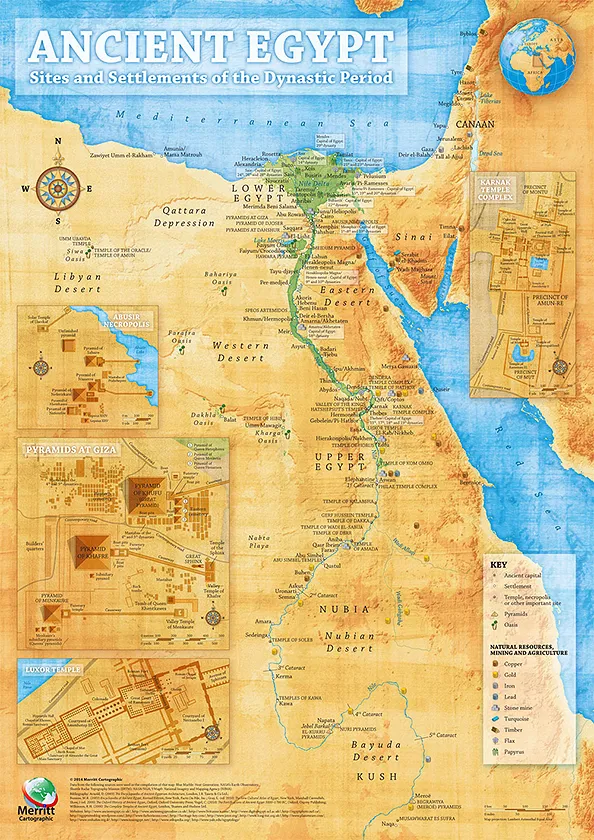
The Ancient Egypt map is marked by a network of influential cities that served as political capitals, religious centers, commercial hubs, and cultural landmarks. These urban centers formed the backbone of Egyptian civilization and played essential roles in shaping its history over more than three millennia. One of the most important cities was Memphis, located near the boundary between Upper and Lower Egypt. Founded during the early dynastic period, Memphis became the capital of the unified kingdom and remained a center of political authority for centuries. Its strategic location allowed rulers to govern both regions efficiently while controlling important trade and transportation routes along the Nile River. Further south stood Thebes, known today as Luxor, which emerged as Egypt’s most powerful city during the New Kingdom. Thebes was home to magnificent temples such as Karnak and Luxor Temple and served as the religious heart of Ancient Egypt. The city’s west bank housed the Valley of the Kings and the Valley of the Queens, where generations of pharaohs and nobles were buried. Other notable cities included Abydos, one of Egypt’s oldest religious centers associated with the god Osiris; Edfu, famous for its Temple of Horus; Kom Ombo, dedicated to Sobek and Horus the Elder; and Aswan, which controlled southern trade routes and access to Nubia. These cities were connected by the Nile River, allowing goods, people, and ideas to move efficiently throughout the kingdom. Their temples, markets, administrative centers, and monuments reflected the sophistication of Ancient Egyptian society. A detailed Ancient Egyptian cities map reveals how these urban centers were carefully positioned to maximize agricultural productivity, trade opportunities, and political control. Together, they formed a thriving network that supported one of the most remarkable civilizations in human history.
7. Memphis: The First Capital of Unified Ancient Egypt
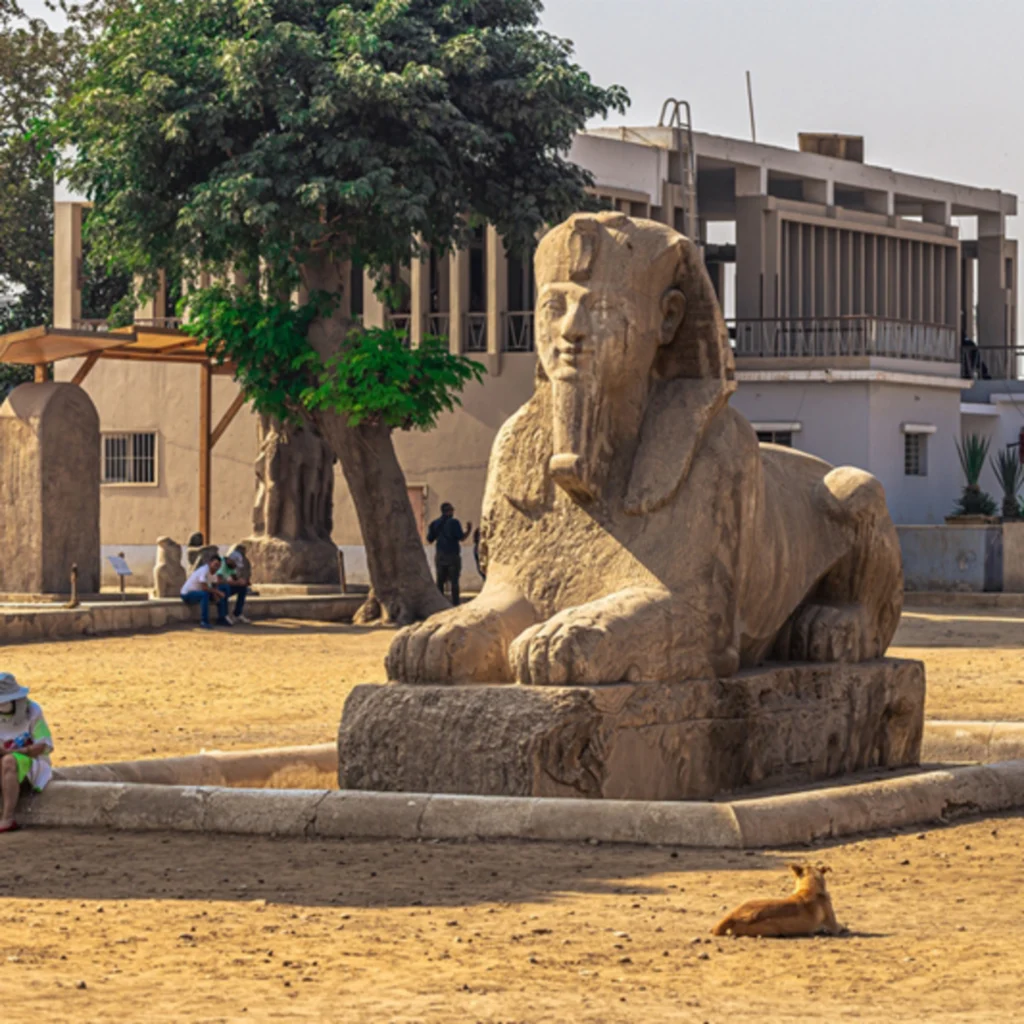
Among the most important cities on the Ancient Egypt map, Memphis stands as one of the oldest and most influential urban centers in Egyptian history. Strategically located near the point where Upper Egypt and Lower Egypt meet, Memphis became the capital of the newly unified kingdom around 3100 BCE under King Narmer, who is traditionally credited with uniting the two lands into a single nation. The location of Memphis gave it enormous political and economic advantages. Positioned at the entrance to the Nile Delta, the city controlled trade routes between northern and southern Egypt while also maintaining access to the Mediterranean world. This strategic placement allowed Memphis to develop into a powerful administrative center that governed the kingdom for many centuries. Memphis was also an important religious center. The city was dedicated to Ptah, the creator god and patron of craftsmen and architects. The Great Temple of Ptah attracted pilgrims, priests, and artisans from across Egypt, making the city a major center of worship and culture. Many of Egypt’s greatest builders and artists worked under the influence of Memphis during the Old Kingdom. The city played a significant role in the construction of nearby monuments, including the pyramids of Saqqara, Dahshur, and Giza. Skilled workers, engineers, and officials based in Memphis helped organize some of the most ambitious construction projects in human history. Even after political power shifted to other cities, Memphis remained a thriving center of religion, trade, and administration. On any detailed Ancient Egypt map, Memphis appears as a crucial link between Upper and Lower Egypt, symbolizing the unity, strength, and longevity of Ancient Egyptian civilization. Its influence continued for thousands of years and helped shape the foundations of one of the world's greatest ancient empires.
8. Thebes: The Religious and Political Capital of the New Kingdom
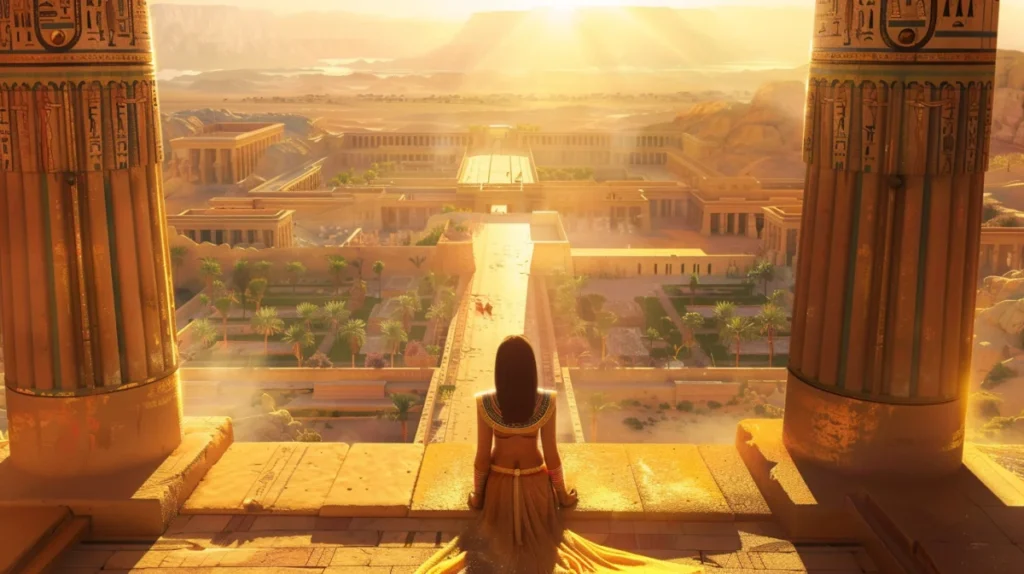
Thebes, known today as Luxor, occupies a prominent position on every Ancient Egypt map and is often considered the greatest city of Ancient Egypt. Located in Upper Egypt along the banks of the Nile River, Thebes rose to prominence during the Middle Kingdom and eventually became the capital of the powerful New Kingdom, a period often regarded as the golden age of Egyptian civilization. The city's wealth and influence were largely derived from its role as the religious center of the kingdom. Thebes was dedicated to the worship of Amun-Ra, one of the most important gods in Ancient Egyptian religion. The magnificent Temple of Karnak, one of the largest religious complexes ever constructed, served as the spiritual heart of the city and attracted pilgrims from across Egypt. Thebes was also home to Luxor Temple, an extraordinary monument connected to Karnak by the Avenue of Sphinxes. These impressive structures reflected the power of the pharaohs and demonstrated Egypt’s architectural and artistic achievements. During major religious festivals, processions traveled between these sacred sites, reinforcing the connection between kingship and divine authority. Across the Nile on the west bank lay the royal necropolis, including the Valley of the Kings, Valley of the Queens, and the Temple of Hatshepsut. These monuments transformed Thebes into one of the most important archaeological landscapes in the world. As shown on any Ancient Egypt map labeled with major landmarks, Thebes was more than just a capital city. It was a center of religion, government, art, architecture, and royal power. The city's extraordinary temples, tombs, and monuments continue to attract millions of visitors and remain among the most iconic symbols of Ancient Egyptian civilization.
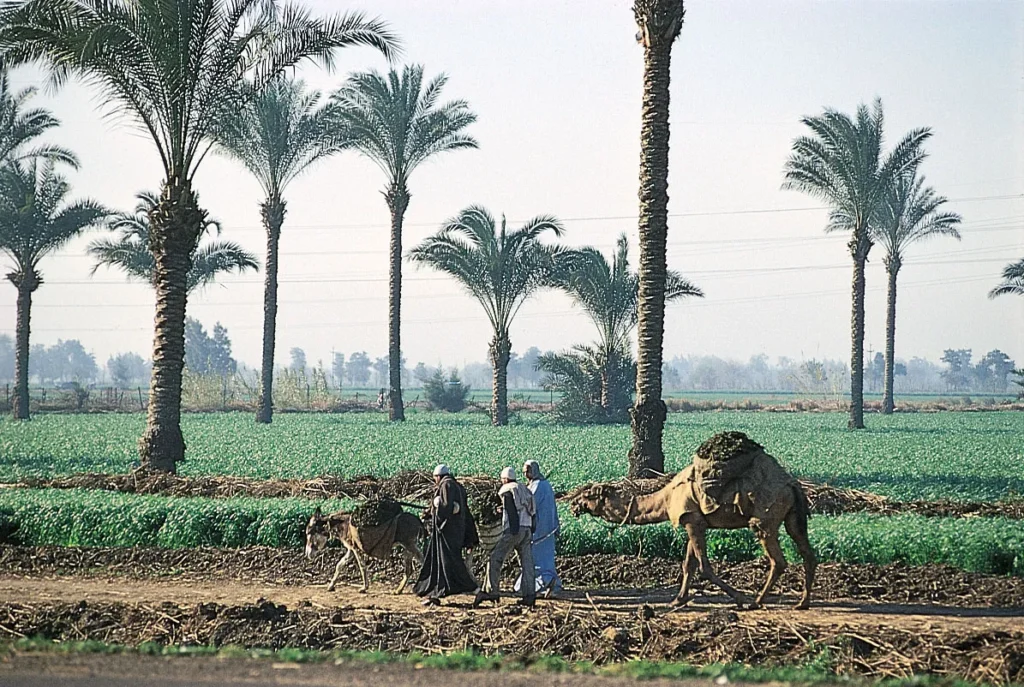
9. The Nile Delta: Egypt’s Agricultural Powerhouse
The Nile Delta is one of the most important geographical features visible on the Ancient Egypt map. Located in Lower Egypt, this vast triangular region forms where the Nile River divides into multiple branches before flowing into the Mediterranean Sea. The fertile delta played a critical role in Egypt’s economic success and supported a large percentage of the population throughout ancient history. The rich soil of the Nile Delta was created by thousands of years of annual flooding. Each inundation deposited fresh layers of nutrient-rich silt, making the region exceptionally productive for agriculture. Farmers cultivated wheat, barley, flax, vegetables, fruits, and papyrus, producing the surplus food necessary to support Egypt’s growing population, military, and monumental building projects. The delta was also home to numerous towns, villages, and administrative centers. Its extensive waterways provided convenient transportation routes that connected settlements and facilitated trade. Goods could easily move between the Mediterranean coast and the interior of Egypt, strengthening economic activity throughout the kingdom. Because of its proximity to the Mediterranean Sea, the Nile Delta served as Egypt’s gateway to international trade. Merchants exchanged Egyptian grain, linen, papyrus, and luxury products for timber, metals, and goods from neighboring civilizations such as the Phoenicians, Greeks, Cypriots, and peoples of the Levant. These trade connections helped expand Egypt’s influence across the ancient world. The Nile Delta also held political significance. Control of this fertile region was essential for maintaining economic stability and royal authority. Throughout Egyptian history, rulers invested heavily in protecting and managing the delta’s agricultural resources. When examining a detailed map of Ancient Egypt, the Nile Delta stands out as one of the civilization’s greatest assets. Its fertile land, strategic location, and economic productivity helped sustain Ancient Egypt for thousands of years and contributed significantly to its lasting success.
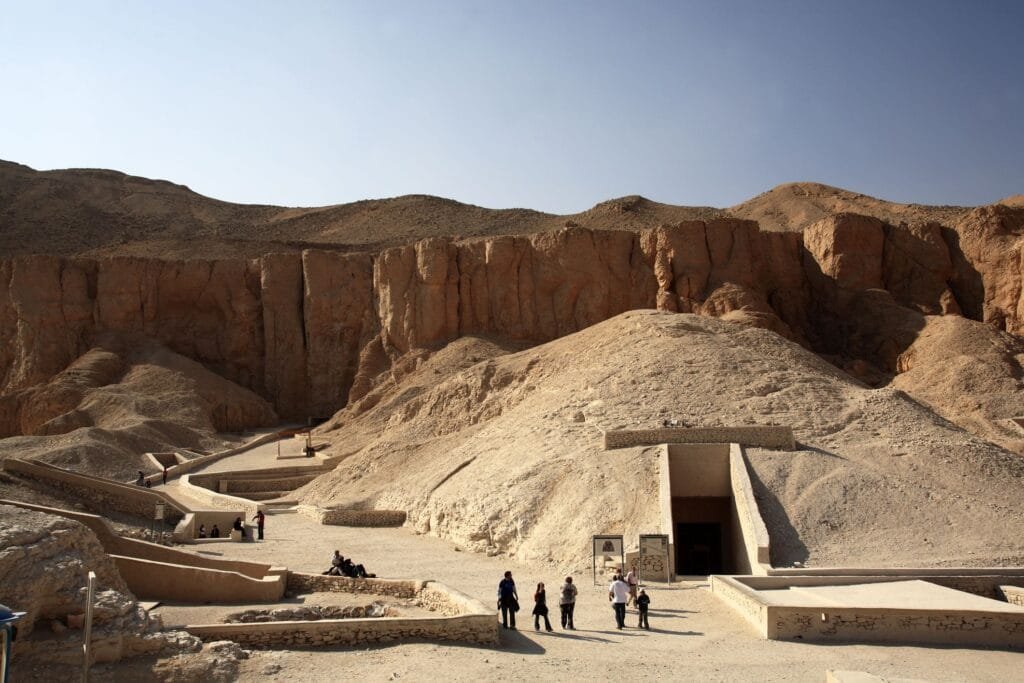
10. The Valley of the Kings: The Royal Necropolis of Ancient Egypt
One of the most famous locations on the Ancient Egypt map is the Valley of the Kings, situated on the west bank of the Nile near Thebes (modern Luxor). This remarkable burial ground served as the final resting place for many pharaohs, queens, and powerful nobles during the New Kingdom, from approximately 1550 BCE to 1070 BCE. Today, it remains one of the most important archaeological sites in the world and a highlight of any Ancient Egyptian landmarks map. Unlike the pyramid complexes of the Old Kingdom, New Kingdom rulers chose to build hidden rock-cut tombs deep within the desert mountains. This decision was intended to protect royal burials from grave robbers while creating elaborate underground chambers decorated with religious texts and scenes depicting the journey to the afterlife. The most famous tomb discovered in the Valley of the Kings belongs to Pharaoh Tutankhamun. Unearthed by Howard Carter in 1922, the tomb contained an extraordinary collection of treasures that provided valuable insights into Ancient Egyptian culture, religion, and royal life. Other notable tombs belong to Ramses II, Seti I, Thutmose III, and many of Egypt’s most powerful rulers. The valley reflects the Egyptians’ strong belief in life after death. Tomb walls were covered with colorful paintings and hieroglyphics intended to guide the deceased safely through the underworld. These artistic masterpieces remain among the finest examples of Ancient Egyptian religious art. On any Ancient Egypt map labeled with major historical sites, the Valley of the Kings stands as a symbol of royal power, religious devotion, and architectural ingenuity. It continues to reveal new discoveries that deepen our understanding of one of the world's most fascinating civilizations.
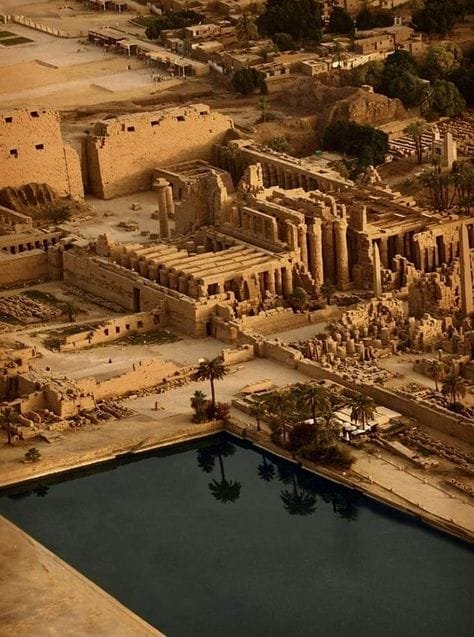
11. Karnak Temple: The Largest Religious Complex in Ancient Egypt
Among the most impressive landmarks on the Ancient Egypt map is Karnak Temple, located in the ancient city of Thebes. Covering more than 200 acres, Karnak was the largest religious complex ever built in Ancient Egypt and remained under construction for over two thousand years. This extraordinary site reflects the immense wealth, power, and spiritual devotion of Egyptian civilization. Dedicated primarily to Amun-Ra, the king of the gods, Karnak served as the religious heart of Ancient Egypt during the New Kingdom. Successive pharaohs expanded the complex by adding temples, chapels, obelisks, pylons, and colossal statues. Each ruler sought to leave a lasting legacy while demonstrating loyalty to the gods. One of the most famous features of Karnak is the Great Hypostyle Hall, an enormous chamber supported by 134 massive columns. These towering pillars are decorated with intricate hieroglyphics and reliefs depicting religious ceremonies, military victories, and royal achievements. The scale and craftsmanship of this hall continue to amaze visitors and historians alike. Karnak was also the center of important religious festivals, particularly the Opet Festival, during which sacred statues of the gods were carried from Karnak Temple to Luxor Temple along the Avenue of Sphinxes. These celebrations reinforced the connection between divine authority and pharaonic rule. The temple complex contains sacred lakes, processional routes, shrines, and monuments dedicated to various gods and goddesses. Archaeologists continue to study Karnak because it provides valuable information about Egyptian religion, politics, architecture, and daily life. As shown on every Ancient Egypt historical map, Karnak Temple was much more than a place of worship. It was a center of national identity, royal legitimacy, and spiritual power that helped shape Egyptian civilization for centuries.
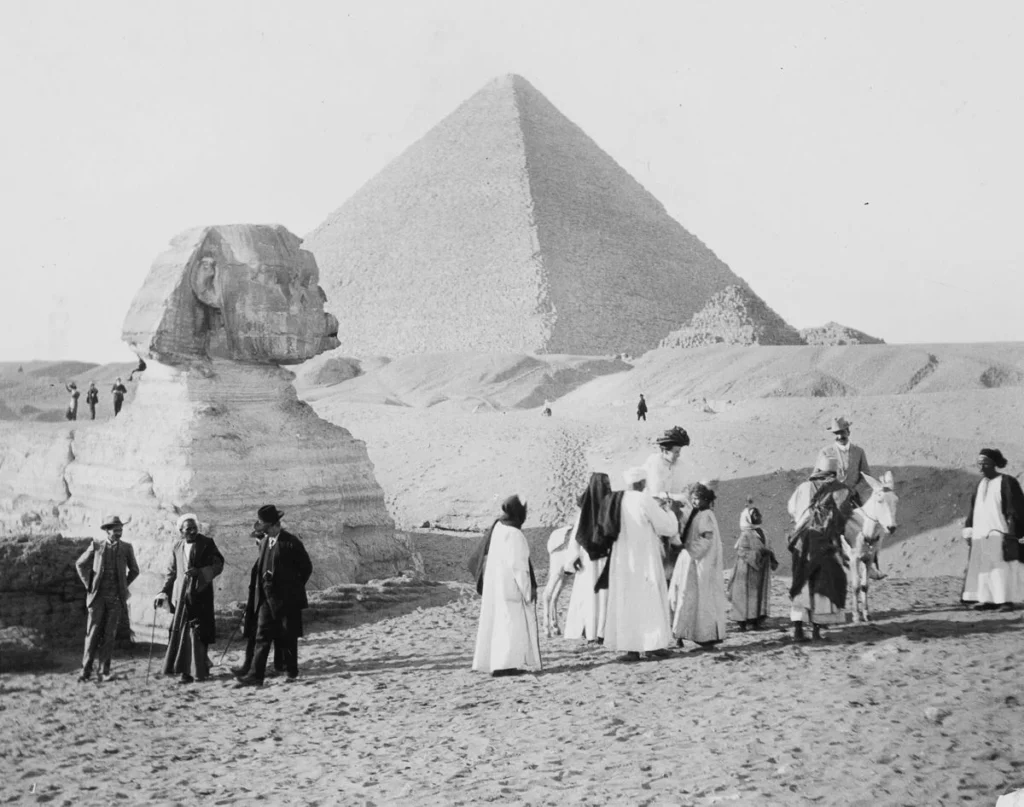
12. The Great Pyramids of Giza: Wonders of the Ancient World
No Ancient Egypt map would be complete without the Great Pyramids of Giza, the most recognizable symbols of Ancient Egyptian civilization. Located on the Giza Plateau near modern Cairo, these monumental structures were constructed during the Old Kingdom and continue to inspire awe more than 4,500 years after their creation. The pyramid complex consists of three main pyramids built for the pharaohs Khufu, Khafre, and Menkaure. The largest, the Great Pyramid of Khufu, originally stood at approximately 146 meters tall and remained the tallest man-made structure in the world for nearly four thousand years. Its precise construction demonstrates the remarkable engineering skills of Ancient Egyptian builders. The pyramids were designed as royal tombs intended to ensure the pharaohs’ successful journey into the afterlife. Ancient Egyptians believed that kings became divine after death and joined the gods in the heavens. As a result, enormous resources were devoted to constructing these monumental burial complexes. Adjacent to the pyramids stands the Great Sphinx of Giza, a colossal limestone statue featuring the body of a lion and the head of a pharaoh. The Sphinx symbolizes royal power, wisdom, and divine protection and remains one of Egypt’s most iconic landmarks. The Giza Plateau also includes temples, causeways, workers’ villages, and smaller pyramids belonging to queens and royal family members. Together, these structures provide valuable insights into the organization, economy, and religious beliefs of Ancient Egyptian society. Featured prominently on every map of Ancient Egypt, the Great Pyramids of Giza represent the peak of Old Kingdom achievement. Their enduring presence serves as a testament to the ambition, creativity, and engineering brilliance that made Ancient Egypt one of the greatest civilizations in human history.
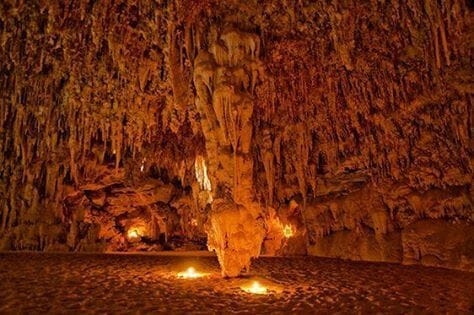
13. The Oases of Ancient Egypt: Life in the Heart of the Desert
Scattered across the vast Western Desert, the oases of Ancient Egypt appear as vital landmarks on the Ancient Egypt map. These fertile islands surrounded by endless desert sands provided fresh water, agricultural land, and strategic stopping points for travelers, traders, and military expeditions. Without these oases, large portions of Egypt’s desert territories would have been nearly impossible to cross or inhabit. Among the most famous oases was Siwa Oasis, located near Egypt’s western frontier. Siwa became renowned for the Temple of Amun and its celebrated oracle, which attracted pilgrims and rulers from across the ancient world. In 332 BCE, Alexander the Great famously visited Siwa to consult the oracle, strengthening the oasis’s reputation as a sacred destination. Other important oases included Kharga, Dakhla, Bahariya, and Farafra. These settlements supported agriculture through underground water sources, allowing residents to cultivate dates, olives, grains, and various fruits despite the surrounding arid environment. Their fertile lands contributed to local economies and supplied caravans traveling through the desert. The oases also served strategic military and commercial purposes. Ancient trade routes connected the Nile Valley with North Africa and the Sahara, passing through these vital water sources. Caravans carrying gold, salt, textiles, and other goods depended on the oases for survival during long desert journeys. Archaeological discoveries in these regions have revealed temples, forts, tombs, and settlements that demonstrate the importance of oasis communities throughout Egyptian history. These findings provide valuable insights into life beyond the Nile Valley and illustrate how Egyptians adapted to challenging environments. On a detailed Ancient Egypt map, the oases stand out as essential centers of agriculture, trade, religion, and communication. They highlight the remarkable ability of Ancient Egyptians to thrive not only along the Nile River but also within some of the harshest desert landscapes on Earth.
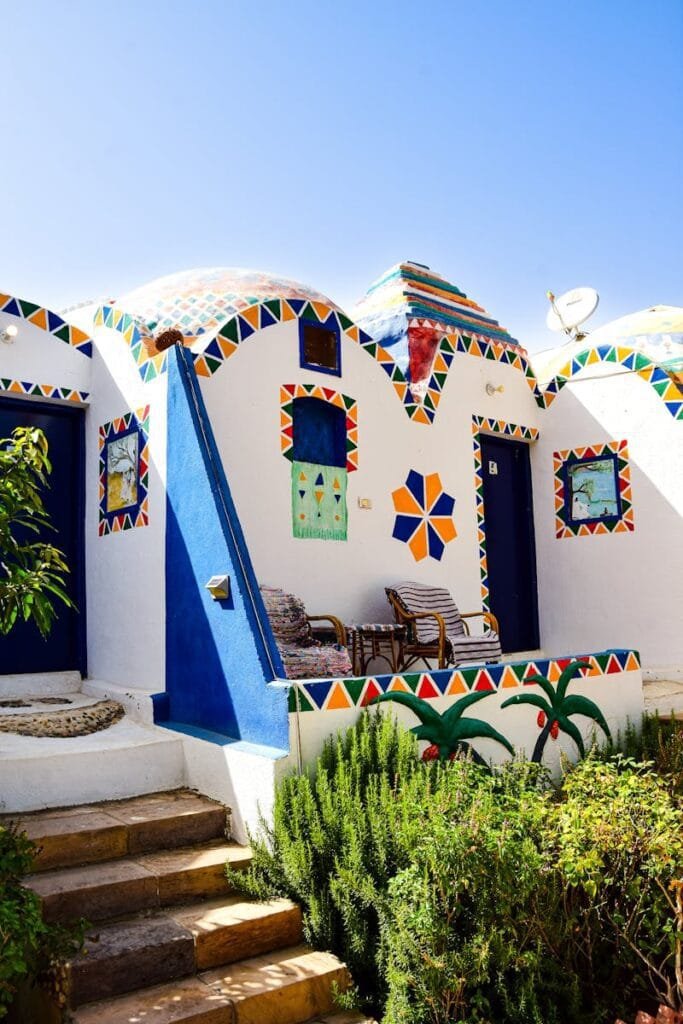
14. Nubia and Egypt: A Powerful Relationship Along the Southern Frontier
South of Ancient Egypt lay Nubia, a region that occupies an important place on many Ancient Egypt maps. Extending along the Nile River through what is now southern Egypt and northern Sudan, Nubia played a crucial role in Egypt’s economy, military campaigns, and cultural development for thousands of years. The relationship between Egypt and Nubia was complex and constantly evolving. At times, the two civilizations engaged in trade and cultural exchange, while at other times they fought for control of valuable resources and strategic territories. Nubia was particularly important because of its rich deposits of gold, which helped finance Egyptian temples, monuments, and royal projects. Trade routes passing through Nubia connected Egypt with sub-Saharan Africa. Through these routes, Egyptians acquired exotic goods such as ivory, ebony, incense, animal skins, precious stones, and rare animals. These luxury items became symbols of wealth and prestige within Egyptian society. Several important fortresses were constructed along Egypt’s southern border to control trade and defend against potential threats. During the New Kingdom, Egypt expanded deep into Nubia and established administrative centers throughout the region. This period resulted in significant cultural interaction, with Egyptian religion, architecture, and language influencing Nubian society. Interestingly, the relationship eventually reversed. During the Twenty-Fifth Dynasty, Nubian kings conquered Egypt and ruled as pharaohs. These rulers embraced Egyptian traditions while also preserving elements of their own cultural identity, creating a unique fusion of influences. When studying an Ancient Egypt historical map, Nubia emerges as more than a neighboring territory. It was a source of wealth, trade, military strength, and cultural exchange that profoundly shaped Egyptian civilization. The enduring connections between Egypt and Nubia remain one of the most fascinating aspects of ancient African history.
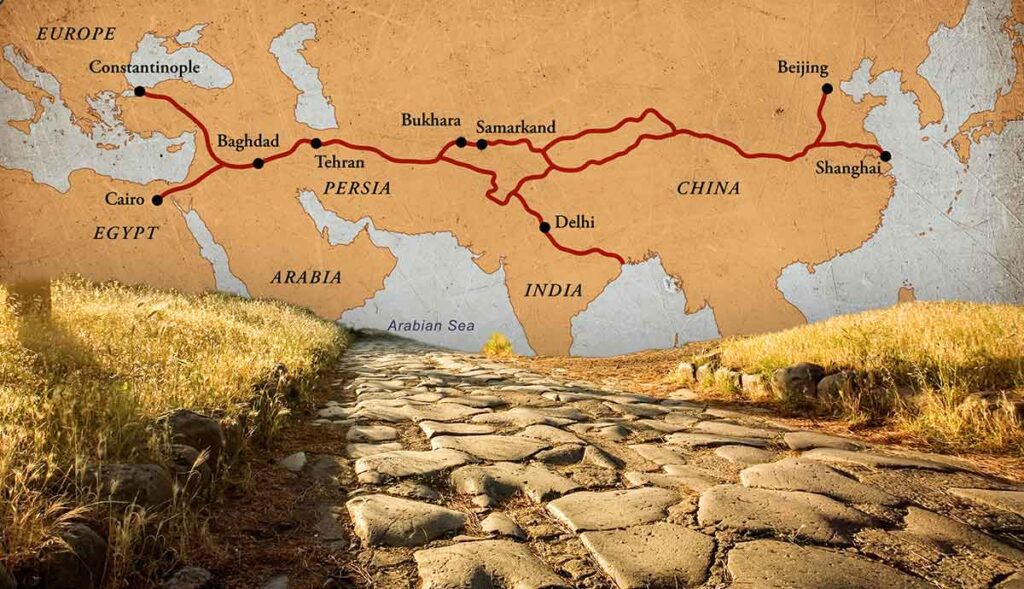
15. Ancient Egyptian Trade Routes: Connecting Egypt to the Ancient World
The Ancient Egypt map reveals a sophisticated network of trade routes that connected the civilization to neighboring regions across Africa, Asia, and the Mediterranean. These routes played a fundamental role in Egypt’s economic success and helped transform the kingdom into one of the most influential powers of the ancient world. The Nile River served as Egypt’s primary transportation corridor. Boats traveled up and down the river carrying grain, stone, papyrus, textiles, livestock, and manufactured goods between cities and provinces. The river allowed efficient communication and trade throughout the kingdom, supporting economic stability and political unity. Beyond the Nile Valley, land routes crossed the Eastern Desert to ports on the Red Sea. From these ports, Egyptian merchants established connections with Arabia, East Africa, and the mysterious Land of Punt, a region believed to have supplied incense, myrrh, ebony, gold, and exotic animals. These valuable imports were highly prized in religious ceremonies and royal courts. Trade routes through the Sinai Peninsula linked Egypt with the Levant and Mesopotamia. Through these connections, Egyptians obtained timber from Lebanon, copper from Sinai, silver from Asia, and various luxury goods unavailable within Egypt itself. The Mediterranean coastline also facilitated trade with Cyprus, Crete, Greece, and other ancient civilizations. To protect commercial interests, Egyptian rulers built fortresses, ports, and administrative centers along key trade corridors. Military expeditions often accompanied trade missions to ensure safe passage and maintain Egyptian influence abroad. A detailed map of Ancient Egypt demonstrates that the civilization was far from isolated. Instead, it participated actively in a vast international network of commerce and cultural exchange. These trade routes enriched Egypt economically, introduced new ideas and technologies, and strengthened its position as one of the dominant civilizations of the ancient world.
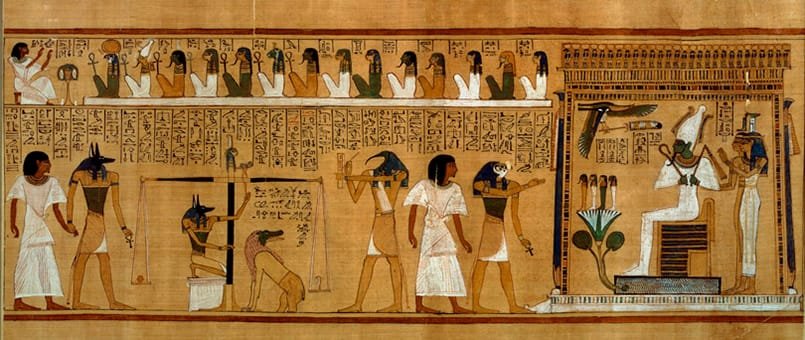
16. Ancient Egyptian Religion and Sacred Geography
Religion influenced nearly every aspect of life in Ancient Egypt, and its impact can be clearly seen on the Ancient Egypt map. Sacred temples, ceremonial centers, burial grounds, and pilgrimage routes were strategically located throughout the Nile Valley, transforming the landscape into a vast network of religious sites. For the Ancient Egyptians, geography was deeply connected to the divine world, and many locations were believed to be chosen by the gods themselves. Major religious centers such as Thebes, Abydos, Memphis, and Heliopolis held special significance because they were associated with powerful deities and creation myths. Abydos became the principal center for the worship of Osiris, the god of the afterlife, while Heliopolis was linked to the sun god Ra and the story of creation. These sacred cities attracted pilgrims from across Egypt who sought blessings, guidance, and spiritual connection. Temples were considered the earthly homes of the gods and served as centers of worship, education, administration, and economic activity. Massive temple complexes such as Karnak, Luxor Temple, and the Temple of Horus at Edfu dominated the landscape and demonstrated the wealth and devotion of Egyptian society. Priests performed daily rituals to maintain harmony between the gods and humanity, a concept known as Ma’at. Natural features also held religious importance. The Nile River symbolized life, fertility, and rebirth, while the western desert became associated with death and the afterlife because the sun set in the west each evening. As a result, many royal tombs and cemeteries were built on the west bank of the Nile. The sacred geography visible on any Ancient Egypt map reveals how closely religion and daily life were intertwined. Every temple, city, and monument contributed to a spiritual landscape that helped define one of the world’s most enduring civilizations.
17. The Borders and Expansion of Ancient Egypt Through the Ages
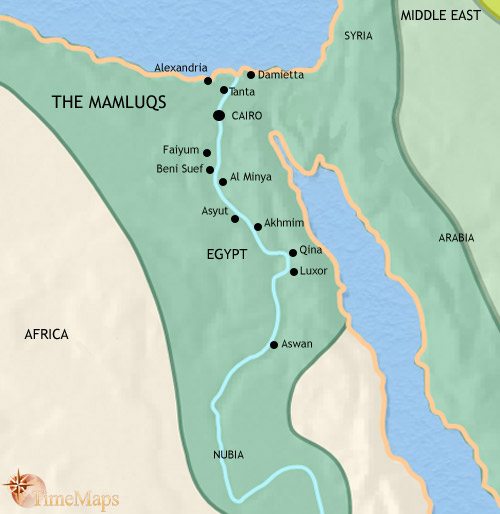
The boundaries shown on an Ancient Egypt map changed significantly throughout the civilization’s long history. Over more than three thousand years, Egypt expanded, contracted, and evolved in response to military victories, foreign invasions, political changes, and economic opportunities. Understanding these shifting borders helps explain how Egypt became one of the most powerful empires of the ancient world. During the Early Dynastic Period, Egypt was largely confined to the Nile Valley following the unification of Upper and Lower Egypt. As the kingdom grew stronger, rulers began extending their influence into neighboring territories. Control of the Sinai Peninsula provided access to valuable copper mines and important trade routes, while campaigns into Nubia secured gold resources and southern trade connections. The greatest territorial expansion occurred during the New Kingdom. Powerful pharaohs such as Thutmose III, Seti I, and Ramses II led military campaigns that extended Egyptian influence deep into the Levant and Nubia. At its peak, the Egyptian Empire stretched from modern-day Syria in the north to regions far south of the First Cataract of the Nile. These conquests brought wealth, tribute, and international prestige. Foreign territories supplied raw materials, luxury goods, skilled labor, and military recruits that strengthened the Egyptian state. Fortresses, administrative centers, and trade stations were established throughout conquered regions to maintain control and facilitate communication. However, maintaining such a vast empire proved challenging. Periods of political instability, economic decline, and foreign invasions gradually reduced Egypt’s territorial holdings. Despite these setbacks, Egypt remained a major cultural and political force for centuries. When examining a historical map of Ancient Egypt, it becomes clear that the civilization’s borders were never static. Instead, they reflected the ambitions, achievements, and challenges faced by generations of pharaohs who sought to expand their influence across the ancient Near East and Africa.
18. Understanding the Ancient Egypt Map and Its Lasting Legacy
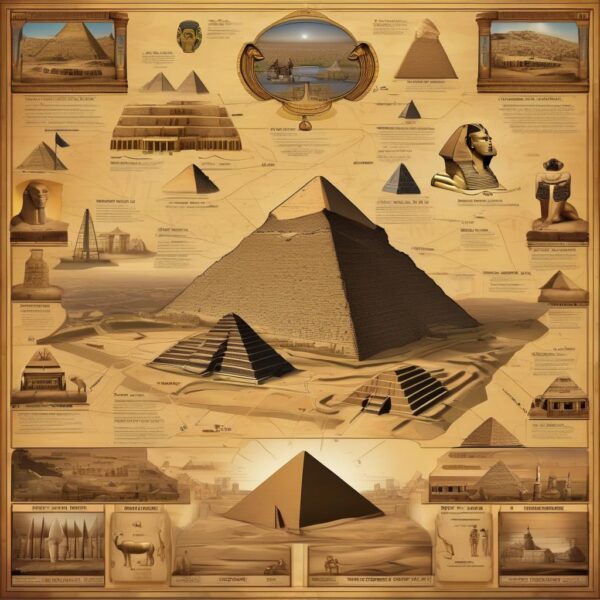
The Ancient Egypt map provides far more than a simple representation of geographical locations. It tells the story of a civilization that successfully transformed a narrow river valley into one of the most powerful, innovative, and influential societies in human history. From the fertile banks of the Nile River to the remote deserts, oases, trade routes, and monumental cities, every feature of the landscape contributed to Egypt’s remarkable success. The Nile River served as the lifeblood of the kingdom, supporting agriculture, transportation, trade, and communication. Upper Egypt and Lower Egypt formed the foundation of a unified state that endured for thousands of years. Great cities such as Memphis and Thebes became centers of political power, religious devotion, and cultural achievement, while monumental landmarks like the Great Pyramids of Giza, Karnak Temple, and the Valley of the Kings showcased the extraordinary capabilities of Ancient Egyptian engineers and architects. The deserts surrounding Egypt provided protection, mineral wealth, and strategic trade corridors. The oases offered life in otherwise inhospitable regions, while connections with Nubia, the Levant, and the Mediterranean world expanded Egypt’s economic and cultural horizons. Together, these geographical features created a unique environment that supported one of history’s longest-lasting civilizations. Today, the map of Ancient Egypt continues to fascinate historians, archaeologists, students, and travelers from around the globe. Its cities, monuments, and landscapes remain among the most visited historical sites in the world, offering valuable insights into the achievements of the ancient Egyptians. Whether studying an Ancient Egypt map labeled with major landmarks, exploring an Upper Egypt map, or examining the geography of the Nile Valley, one can clearly see how geography shaped the rise and longevity of this extraordinary civilization. The enduring legacy of Ancient Egypt remains visible not only in its monuments but also in the landscape that made its greatness possible.
FAQs About the Ancient Egypt Map
The Ancient Egypt map shows the geographical layout of Ancient Egyptian civilization, including the Nile River, Upper Egypt, Lower Egypt, major cities, temples, pyramids, deserts, oases, and trade routes. It helps illustrate how geography influenced the development of one of the world’s greatest civilizations.
The Nile River was the lifeblood of Ancient Egypt. It provided water for agriculture, transportation for trade and communication, and fertile soil through its annual floods. Most ancient Egyptian settlements were located along the Nile Valley.
- Upper Egypt is located in the south and follows the upper course of the Nile River, while Lower Egypt is located in the north where the Nile forms the Delta before reaching the Mediterranean Sea. Despite their names, Upper Egypt is geographically south of Lower Egypt because the Nile flows from south to north.
Some of the most important cities included Memphis, Thebes (Luxor), Abydos, Heliopolis, Edfu, Kom Ombo, and Aswan. These cities served as political capitals, religious centers, and major trade hubs throughout Egyptian history.
The Great Pyramids were built on the Giza Plateau near modern Cairo in Lower Egypt. They were constructed during the Old Kingdom as royal tombs for Pharaohs Khufu, Khafre, and Menkaure.
The Eastern and Western Deserts acted as natural barriers that protected Egypt from invasions. They also contained valuable mineral resources, trade routes, and important oases that supported travel and commerce.
Thebes was the capital of Egypt during much of the New Kingdom and served as the religious center of the country. It was home to Karnak Temple, Luxor Temple, the Valley of the Kings, and many other important monuments.
The oases were fertile areas within the deserts that provided water, farmland, and shelter for travelers. Important oases included Siwa, Kharga, Dakhla, Bahariya, and Farafra, all of which played key roles in trade and settlement.
Ancient Egypt used the Nile River, desert caravan routes, and Red Sea ports to trade with Nubia, the Levant, Mesopotamia, Arabia, and Mediterranean civilizations. Trade brought valuable resources such as gold, timber, copper, incense, and luxury goods.
The Ancient Egypt map helps historians, archaeologists, students, and travelers understand how geography shaped Egyptian civilization. It provides valuable insight into the locations of famous monuments, cities, trade routes, and cultural centers that continue to attract visitors from around the world.