

- Excursions in Egypt
- Egypt Tour Packages
- Cairo Tours and Excursions
- Hurghada Tours and Excursions
- Soma Bay Tours and Excursions
- Makadi Bay Tours and Excursions
- Sahl Hasheesh Tours and Excursions
- El Gouna Tours and Excursions
- Marsa Alam Tours and Excursions
- Port Ghalib Tours and Excursions
- El Quseir Tours and Excursions
- Dendera and Abydos Day Tours
- Aswan Tours and Excursions
- Luxor Tours and Excursions
- Sharm El Sheikh Tours and Excursions
- Top Rated Egypt Tours in 2026
- Optional Excursions in Egypt
- Private Transfer
- Blogs About egypt
- Ancient Egypt
- Historical Sites in Egypt
- Cairo
- Alexandria
- Luxor
- Aswan
- The Red Sea
- Dendera Temple
- El Fayoum Oasis
- Bahariya Oasis
- Siwa Oasis
- Al Alamein
- Marsa Matruh
- Why Egypt Is One of the Safest Countries to Visit in the Middle East
- What You Need To know Before Your First Trip To Egypt
- Egypt Travel Costs in 2026 Full Budget Guide
- Top 10 Tourist Activities in Egypt
- Top 50 Activities You Can’t Miss in Egypt in 2026
- The Guide to Guided Tours in Egypt
- Egypt’s Ancient and Modern History
- The Nile River
- The Deserts of Egypt
- Ancient Egyptian gods
- famous Egyptian dishes
- UNESCO World Heritage sites
- About Us
- Egypt Hotels and Resorts
- Excursions in Egypt
- Egypt Tour Packages
- Cairo Tours and Excursions
- Hurghada Tours and Excursions
- Soma Bay Tours and Excursions
- Makadi Bay Tours and Excursions
- Sahl Hasheesh Tours and Excursions
- El Gouna Tours and Excursions
- Marsa Alam Tours and Excursions
- Port Ghalib Tours and Excursions
- El Quseir Tours and Excursions
- Dendera and Abydos Day Tours
- Aswan Tours and Excursions
- Luxor Tours and Excursions
- Sharm El Sheikh Tours and Excursions
- Top Rated Egypt Tours in 2026
- Optional Excursions in Egypt
- Private Transfer
- Blogs About egypt
- Ancient Egypt
- Historical Sites in Egypt
- Cairo
- Alexandria
- Luxor
- Aswan
- The Red Sea
- Dendera Temple
- El Fayoum Oasis
- Bahariya Oasis
- Siwa Oasis
- Al Alamein
- Marsa Matruh
- Why Egypt Is One of the Safest Countries to Visit in the Middle East
- What You Need To know Before Your First Trip To Egypt
- Egypt Travel Costs in 2026 Full Budget Guide
- Top 10 Tourist Activities in Egypt
- Top 50 Activities You Can’t Miss in Egypt in 2026
- The Guide to Guided Tours in Egypt
- Egypt’s Ancient and Modern History
- The Nile River
- The Deserts of Egypt
- Ancient Egyptian gods
- famous Egyptian dishes
- UNESCO World Heritage sites
- About Us
- Egypt Hotels and Resorts
Welcome to
30 Rare and Strange Marine Creatures in the Red Sea, Egypt
The Red Sea in Egypt is one of the most fascinating marine environments in the world, offering an extraordinary underwater universe filled with colorful coral reefs, rare fish, fascinating sea creatures, marine mammals, sea turtles, rays, sharks, mollusks, crustaceans, and hundreds of other species. Stretching along Egypt’s eastern coastline from the northern Gulf of Suez to the southern waters of Marsa Alam and beyond, the Egyptian Red Sea is internationally recognized as one of the best destinations for scuba diving, snorkeling, underwater photography, marine wildlife encounters, and coral reef exploration.
For travelers searching for the most beautiful and unusual marine life in Egypt, the Red Sea offers something completely different from ordinary beach destinations. Beneath its crystal-clear turquoise waters lies a spectacular ecosystem where colorful reef fish swim between ancient coral formations, sea turtles glide peacefully above seagrass meadows, dolphins travel in groups through offshore waters, and mysterious creatures hide among rocks and coral gardens. Some of these animals are large and easy to recognize, while others are incredibly small, perfectly camouflaged, or so unusual in appearance that they can easily be mistaken for plants, rocks, or strange underwater objects.
The Red Sea marine ecosystem is particularly famous for its extraordinary biodiversity and its impressive coral reefs. The relatively isolated nature of the Red Sea has contributed to the evolution of many species that are restricted to the Red Sea and nearby waters. This makes Red Sea diving in Egypt especially attractive to divers who want to discover marine species that may not be commonly encountered in other tropical destinations.
From the famous waters of Marsa Alam, Abu Dabbab, Elphinstone Reef, Fury Shoals, Sataya, and Wadi El Gemal, to the spectacular diving sites around Hurghada, Giftun Islands, Sharm El Sheikh, Ras Mohammed, Dahab, and the Straits of Tiran, Egypt provides countless opportunities to explore underwater wildlife. Each destination has its own character, and the marine creatures encountered can vary depending on the location, season, water conditions, depth, and time of day.
One of the most exciting aspects of exploring the Red Sea underwater world is that you never know what you may discover. A snorkeling trip near the beach might reveal a green sea turtle feeding over seagrass. A reef dive could uncover a beautifully colored nudibranch hidden beneath a coral ledge. Experienced divers exploring offshore reefs may encounter hammerhead sharks, oceanic whitetip sharks, manta rays, or large schools of pelagic fish.
At the same time, some of the strangest creatures in the Red Sea are not the largest ones. Tiny nudibranchs, ghost pipefish, frogfish, seahorses, shrimp, crabs, and unusual reef fish can be among the most fascinating animals for underwater photographers and macro-diving enthusiasts. Their incredible colors, unusual body shapes, camouflage abilities, and unique behaviors demonstrate just how diverse the marine environment of Egypt really is.
The Red Sea is also an important habitat for several threatened and protected marine animals. Dugongs, dolphins, sea turtles, whale sharks, manta rays, and different species of sharks are among the animals that make these waters so special. Seeing one of these creatures in its natural environment can be an unforgettable experience, but responsible tourism is essential. Divers and snorkelers should observe marine animals without touching, chasing, feeding, or disturbing them and should always avoid damaging coral reefs.
For anyone planning a Red Sea holiday in Egypt, understanding the marine life can make a snorkeling or diving experience even more enjoyable. Instead of simply seeing a colorful fish, you can recognize its species, understand its behavior, and appreciate its role within the reef ecosystem. The more you learn about the underwater world, the more fascinating every dive becomes.
In this guide, we will explore 30 of the rarest, strangest, most fascinating, and most unusual marine creatures that can be encountered in the Red Sea of Egypt. Some are famous icons of Egyptian marine tourism, while others are hidden treasures that only careful divers and experienced underwater photographers may notice.
Whether you are interested in Marsa Alam snorkeling, Hurghada diving, Sharm El Sheikh scuba diving, Red Sea marine animals, coral reef wildlife, underwater photography, rare sea creatures, marine mammals, sharks, rays, sea turtles, or unusual tropical fish, this guide will introduce you to some of the incredible animals living beneath the surface of Egypt’s Red Sea.
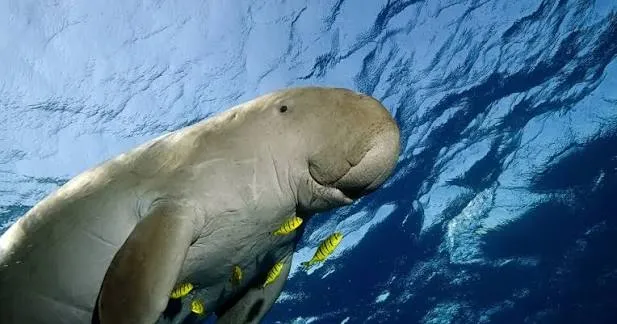
1. Dugong – The Mysterious Sea Cow
The dugong is one of the rarest and most fascinating marine mammals that can be encountered in the Egyptian Red Sea. Often associated with the nickname "sea cow," the dugong is a large herbivorous marine mammal that spends much of its time feeding on seagrass. Unlike dolphins and whales, dugongs are closely related to manatees and have a distinctive rounded body, paddle-like flippers, and a powerful tail. They move slowly and peacefully through shallow coastal waters, usually over seagrass meadows. One of the best-known places associated with dugong sightings in Egypt is Abu Dabbab near Marsa Alam. The area is famous for its seagrass beds and has become one of the most popular destinations for travelers hoping to see this extraordinary animal in its natural habitat. Because dugongs are vulnerable and encounters cannot be guaranteed, responsible wildlife tourism is extremely important. Visitors should maintain a respectful distance and never attempt to touch, chase, or feed a dugong. For travelers searching for Marsa Alam marine life, dugong snorkeling in Egypt, rare marine animals in the Red Sea, or wildlife experiences in Marsa Alam, encountering a dugong can be one of the highlights of an Egyptian Red Sea vacation.
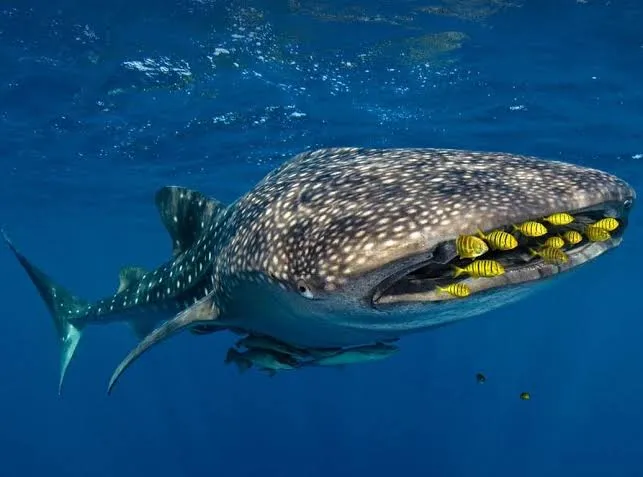
2. Whale Shark – The Gentle Giant
The whale shark is the largest fish in the world, yet despite its enormous size, it is generally a peaceful filter feeder that feeds primarily on plankton and other tiny organisms. Its distinctive body is covered with white spots and patterns that make every individual recognizable. When a whale shark glides through the blue waters of the Red Sea, its enormous size can be breathtaking for divers and snorkelers. Whale sharks are not common sightings, which makes encountering one a particularly memorable experience. They may occasionally appear in different areas of the Egyptian Red Sea, depending on seasonal conditions and food availability. Unlike predatory sharks that actively hunt large prey, whale sharks feed by filtering enormous quantities of water through their mouths. This makes them one of the most fascinating examples of how marine animals have evolved completely different feeding strategies. For visitors interested in whale shark diving in Egypt, Red Sea marine wildlife, large marine animals, and underwater photography, a whale shark encounter represents a true underwater adventure.
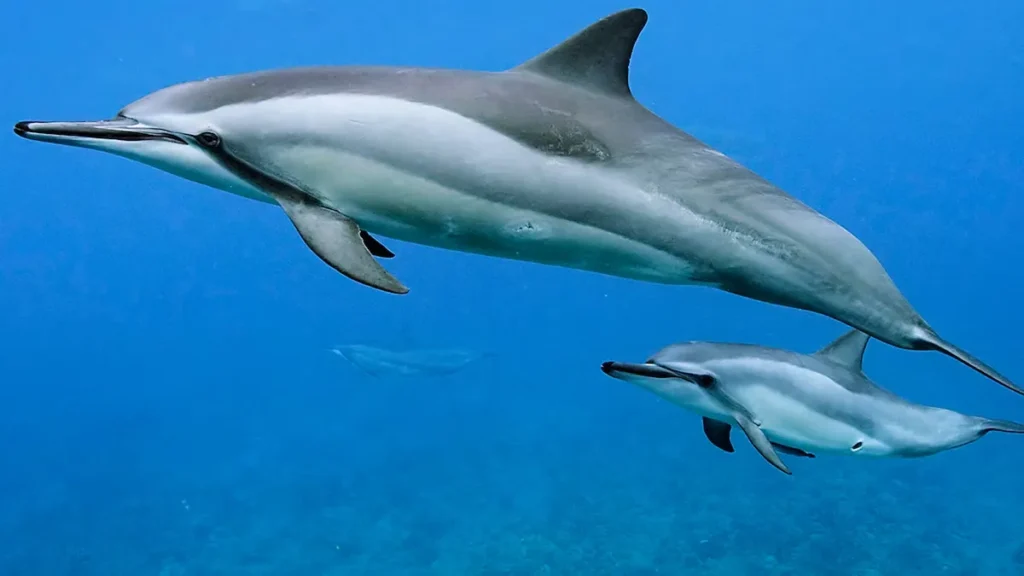
3. Spinner Dolphin – The Acrobat of the Red Sea
The spinner dolphin is one of the most entertaining marine mammals found in the Red Sea. It receives its name from its remarkable ability to leap out of the water and spin repeatedly around its body axis. Spinner dolphins are highly social animals and can travel in groups ranging from small pods to much larger communities. Their intelligence, speed, and playful behavior make them a favorite among wildlife enthusiasts. Southern Egypt is particularly famous for dolphin encounters, especially around offshore reefs and areas such as Sataya and Dolphin House near Marsa Alam. Swimming near a group of dolphins in their natural environment can be an unforgettable experience, but visitors should always allow dolphins to control the encounter rather than chasing or surrounding them. The combination of crystal-clear water, colorful coral reefs, and wild dolphins makes dolphin snorkeling in Marsa Alam one of the most popular marine experiences in Egypt.
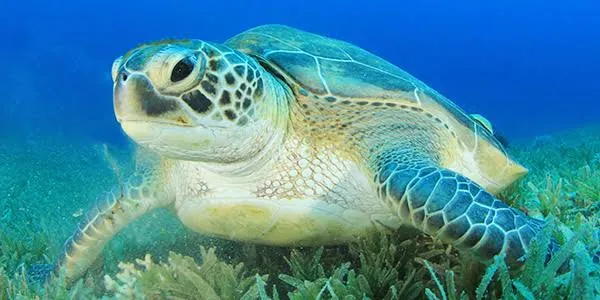
4. Green Sea Turtle – The Ancient Reef Traveler
The green sea turtle is another iconic animal of the Egyptian Red Sea. These graceful reptiles can often be found around shallow reefs and seagrass meadows, where they search for food. Green turtles have powerful front flippers that allow them to travel long distances through the ocean. When swimming underwater, they appear almost weightless as they glide above the reef. Areas around Abu Dabbab, Marsa Alam, and other southern Red Sea locations are well known for turtle encounters. Snorkelers can sometimes observe these animals feeding close to shore. Despite their peaceful appearance, sea turtles face numerous threats worldwide, including habitat loss, pollution, fishing activities, and plastic waste. Protecting their feeding and nesting areas is therefore essential. For anyone searching for sea turtle snorkeling in Egypt, green turtles in Marsa Alam, Red Sea snorkeling tours, or marine wildlife in the Red Sea, seeing a green turtle in clear water is an unforgettable experience.
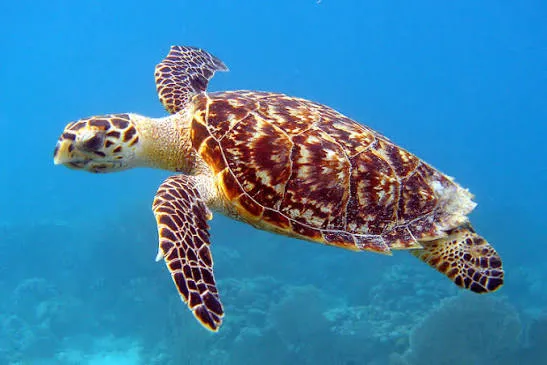
5. Hawksbill Sea Turtle – The Coral Reef Specialist
The hawksbill turtle is smaller and more colorful than many people expect. It is named after its distinctive narrow, pointed beak, which resembles the bill of a bird of prey. Hawksbill turtles are closely associated with coral reef ecosystems. Their specialized beak allows them to reach food from crevices and narrow spaces within the reef. Their shells can display beautiful patterns of brown, amber, yellow, and darker shades, making them particularly attractive to underwater photographers. Because coral reefs provide essential habitat for these turtles, protecting the Red Sea's coral reefs is directly connected to protecting hawksbill populations. A close but respectful encounter with a hawksbill turtle while diving in the Red Sea provides a perfect example of the relationship between marine animals and coral reef ecosystems.
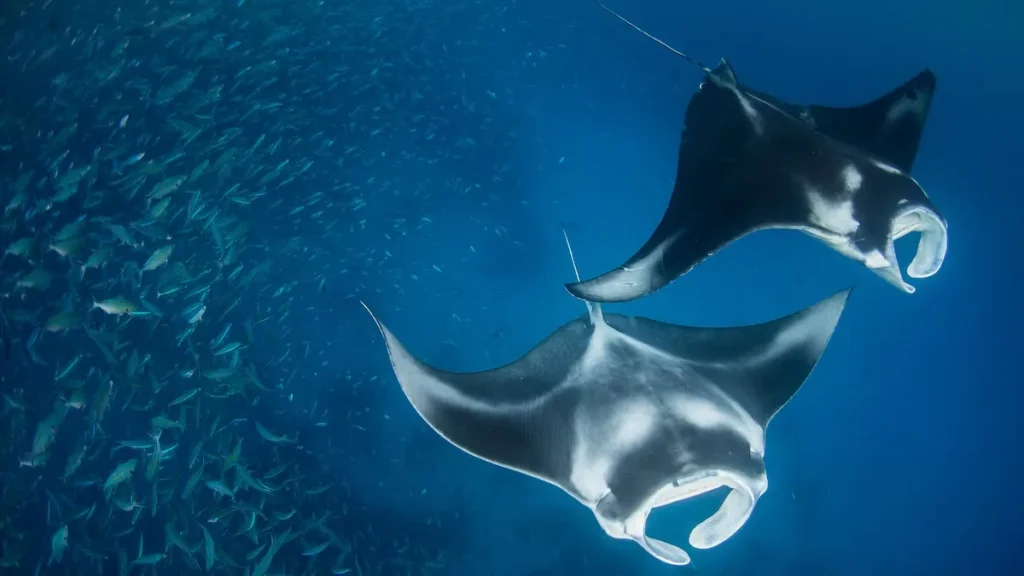
6. Manta Ray – The Flying Giant
Few marine animals look as graceful underwater as the manta ray. With its enormous wing-like pectoral fins, the manta appears to fly through the water rather than swim. Manta rays are filter feeders and use their wide mouths to collect plankton and other tiny organisms. Their movements are slow, elegant, and remarkably controlled. Although manta sightings are not guaranteed, encountering one while diving in the Egyptian Red Sea can be one of the most spectacular experiences for underwater photographers and experienced divers. The sight of a large manta ray passing silently overhead demonstrates the incredible diversity of Red Sea marine life and explains why Egypt remains one of the world's famous scuba diving destinations.
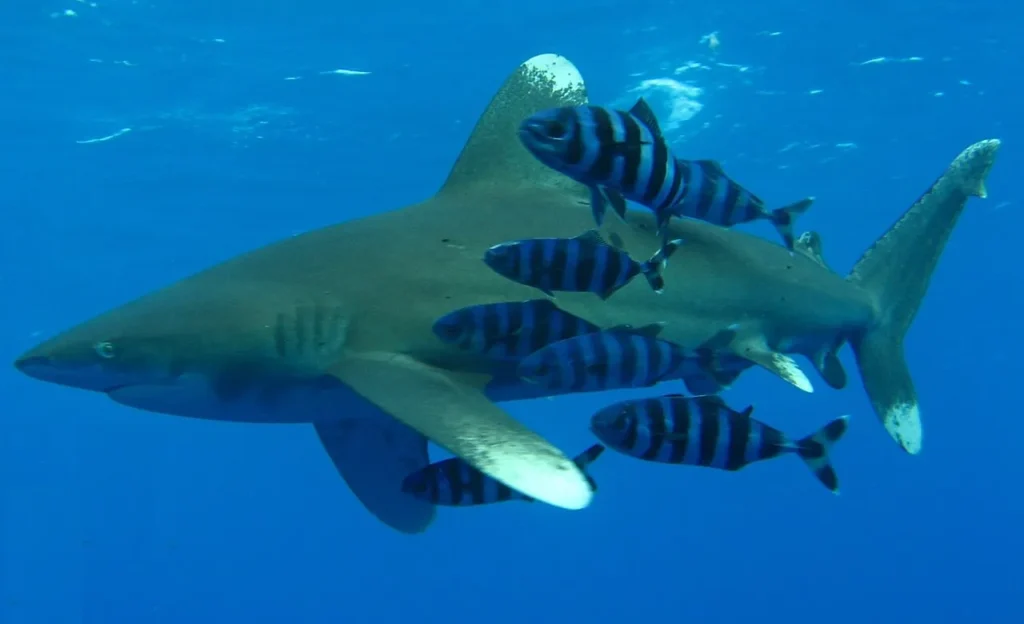
7. Oceanic Whitetip Shark – The Open-Ocean Predator
The oceanic whitetip shark is one of the most famous shark species associated with the deeper waters of the Egyptian Red Sea. It is recognizable by the white markings on the tips of its fins and its broad, powerful body. Unlike reef fish that spend most of their lives around coral formations, oceanic whitetips are strongly associated with open-ocean environments. Sites such as Elphinstone Reef, Daedalus Reef, and the Brothers Islands are famous among experienced divers for encounters with pelagic shark species. Oceanic whitetip sharks are now considered critically endangered, making responsible diving and marine conservation increasingly important. Their presence in the Red Sea highlights the importance of offshore reefs and deep-water ecosystems as habitats for large marine predators.
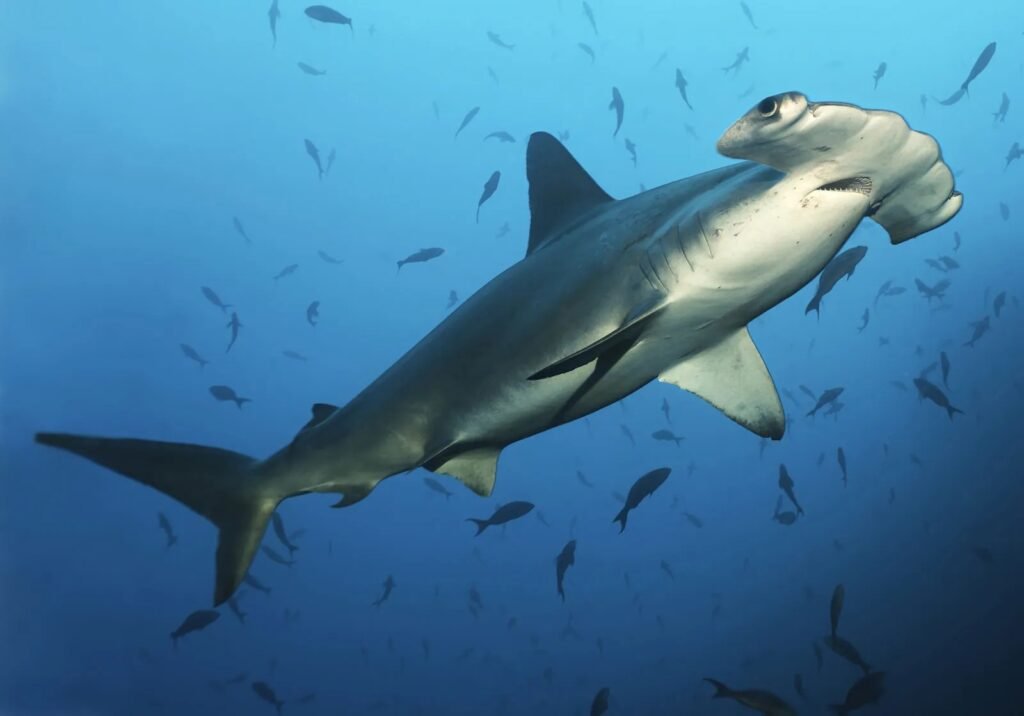
8. Hammerhead Shark – The Shark with the Strange Head
The hammerhead shark is perhaps one of the strangest-looking sharks in the entire ocean. Its most distinctive feature is its unusual hammer-shaped head, known as a cephalofoil. This unique body structure gives the shark a dramatically different appearance from other shark species. Hammerheads can sometimes be encountered by experienced divers at deeper offshore sites in the Red Sea, where currents and depth require advanced diving skills. For scuba divers searching for hammerhead sharks in Egypt, Red Sea shark diving, and advanced diving adventures, encountering a school of hammerheads can be one of the most memorable experiences imaginable.
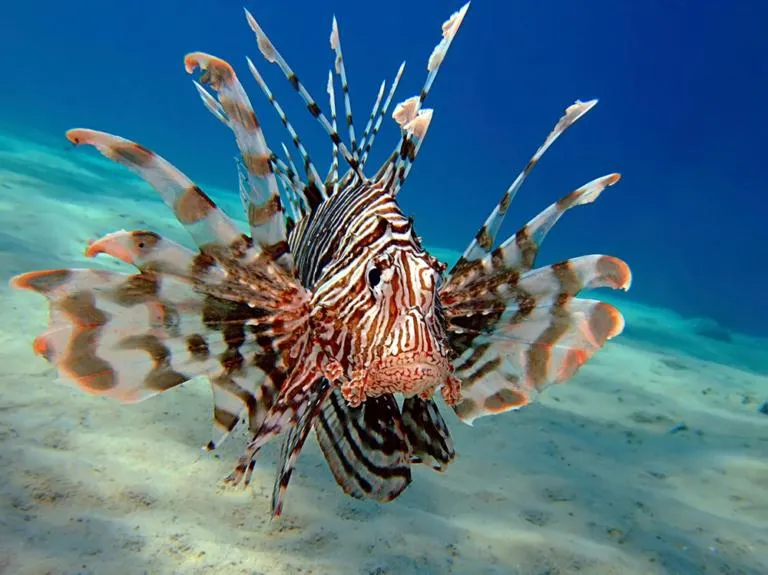
9. Lionfish – Beautiful but Venomous
The lionfish is one of the most beautiful fish in the Red Sea, with long flowing fins and striking stripes. However, its spectacular appearance comes with an important warning. Lionfish have venomous spines that provide an effective defense against predators. They often hover around coral formations, caves, and rocky structures while waiting for smaller fish to approach. Their dramatic appearance makes them one of the favorite subjects for underwater photographers exploring Red Sea coral reefs. Divers should never attempt to touch a lionfish or any other unfamiliar marine animal.
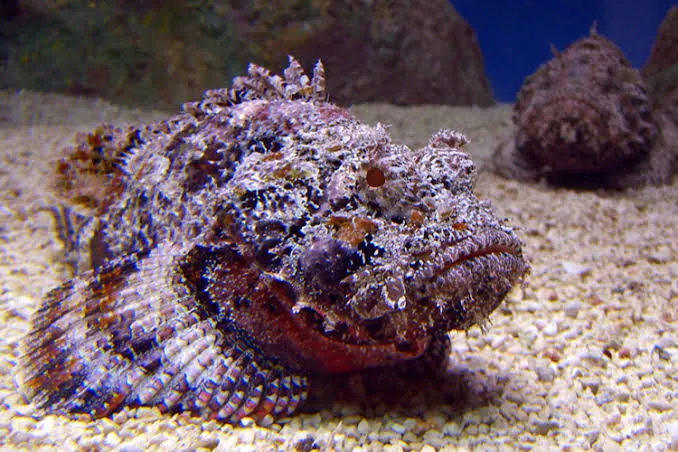
10. Stonefish – The Master of Camouflage
The stonefish is one of the strangest and most difficult marine animals to identify. Its rough body can resemble a rock or piece of coral, allowing it to disappear almost completely into the reef environment. This remarkable camouflage is an important hunting strategy as well as protection from predators. Stonefish possess highly venomous dorsal spines, making them an animal that should never be touched. For macro divers and underwater photographers, discovering a stonefish hiding in plain sight is an exciting challenge. The species demonstrates just how sophisticated marine camouflage in the Red Sea can be.
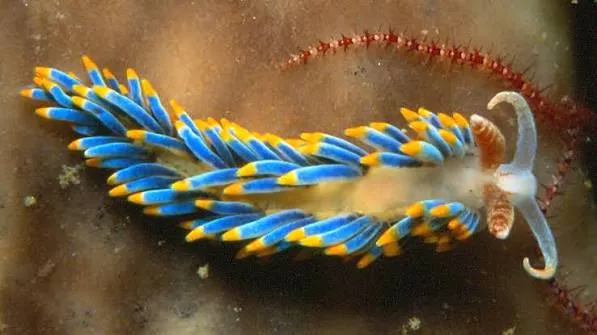
11. Nudibranch – The Colorful Sea Slug
Nudibranchs are among the smallest and strangest animals that divers can discover in the Red Sea. These marine gastropods have no external shell and come in an extraordinary variety of colors and shapes. Some look like tiny flowers, while others resemble colorful underwater creatures from science fiction. Many nudibranch species are only a few centimeters long, meaning that divers must slow down and carefully inspect coral surfaces, rocks, and reef structures to find them. For macro underwater photography, nudibranchs are among the most exciting subjects in the Red Sea. Their incredible colors are not merely decorative; in many species, bright coloration can serve as a warning to predators that the animal is toxic or unpleasant to eat.
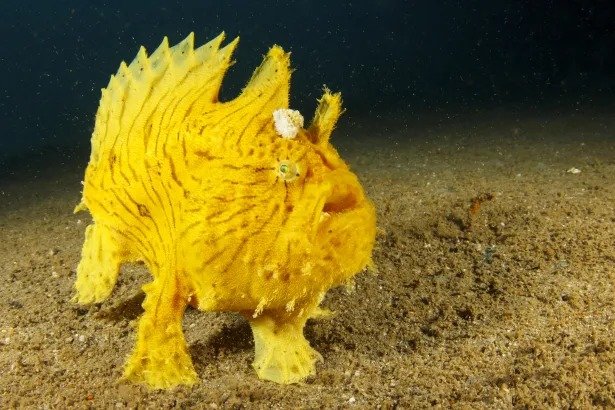
12. Frogfish – The Fish That Looks Like a Rock
The frogfish is one of the strangest fish found in tropical marine environments. Its body is compact and irregular, allowing it to blend into sponges, coral formations, and rocks. Some frogfish can even change their appearance to match their surroundings. Instead of swimming like ordinary fish, frogfish can use modified fins to "walk" across the seafloor. They are also ambush predators capable of opening their mouths extremely quickly to swallow prey. Finding a frogfish while diving is often considered a special discovery because their camouflage can make them extremely difficult to spot.
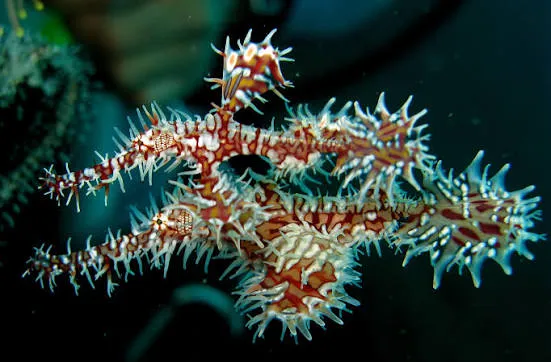
13. Ghost Pipefish – The Invisible Swimmer
The ghost pipefish is another unusual Red Sea creature that seems almost impossible to see. Its thin body, strange posture, and ability to blend with sea fans and other reef structures make it a favorite among experienced macro photographers. Ghost pipefish often move in a way that makes them resemble floating pieces of vegetation rather than animals. Their camouflage is so effective that divers can swim directly past them without realizing they are there.
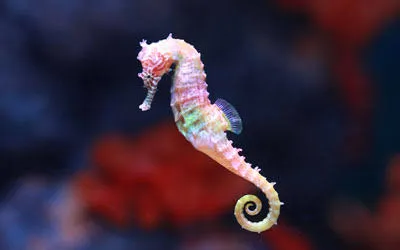
14. Seahorse – The Tiny Marine Wonder
Seahorses are among the most unusual fish in the ocean. Their upright posture, horse-like head, curled tail, and unusual swimming style make them instantly recognizable. Unlike most fish, seahorses are relatively poor swimmers and rely heavily on camouflage and their ability to hold onto vegetation or reef structures with their tails. One of the most fascinating facts about seahorses is their reproductive behavior: the male carries the developing embryos in a specialized pouch. Finding a seahorse in the Red Sea can be difficult because many species are extremely well camouflaged.
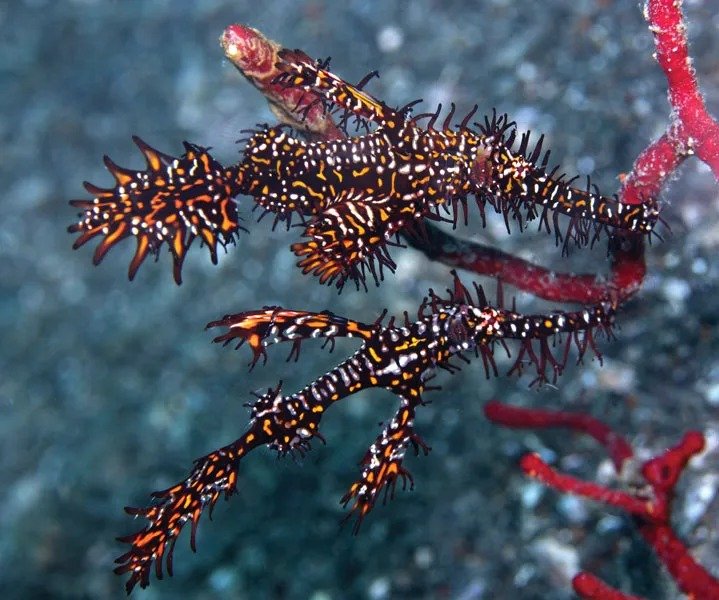
15. Ornate Ghost Pipefish – The Master of Disguise
The ornate ghost pipefish takes camouflage to another level. Its body can resemble pieces of floating seaweed, and its unusual swimming posture makes it almost disappear within the reef environment. These fish are particularly fascinating for underwater photographers because even experienced divers may need several minutes to recognize that what appears to be vegetation is actually a living animal. They represent one of the best examples of underwater camouflage in Red Sea marine life.
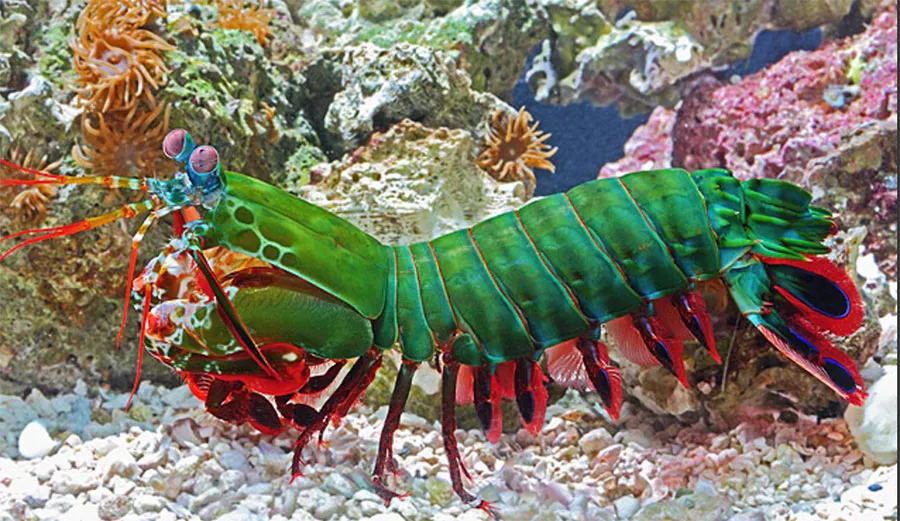
16. Mantis Shrimp – The Underwater Boxer
The mantis shrimp is one of the most extraordinary crustaceans in the ocean. Despite its small size, it possesses powerful appendages capable of delivering extremely rapid strikes. Some species use these appendages to smash hard-shelled prey, while others use spear-like structures to capture soft-bodied animals. Mantis shrimp also have exceptionally sophisticated eyes and can detect types of light that humans cannot see. Their brilliant colors and unusual behavior make them highly sought-after subjects for underwater photographers.
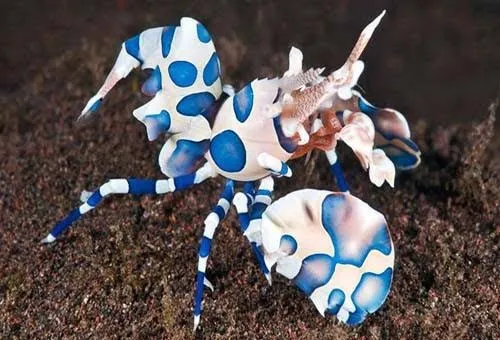
17. Harlequin Shrimp – The Tiny Jewel
The harlequin shrimp is a small but spectacular crustacean recognized for its bright patterns and unusual body shape. These shrimp are usually associated with coral reefs and rocky environments. Their striking appearance makes them look more like a decorative jewel than a wild marine animal. Because they are tiny and often remain close to reef structures, spotting one requires patience and careful observation.
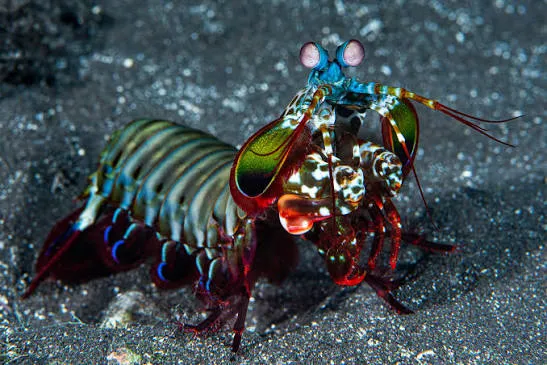
18. Peacock Mantis Shrimp – A Living Rainbow
The peacock mantis shrimp combines extraordinary colors with one of the most unusual hunting systems in the marine world. Its body can display vivid shades of green, blue, red, and orange. Its powerful appendages can strike prey with remarkable speed. The species is also famous for its sophisticated vision, making it one of the most scientifically fascinating animals in the reef ecosystem. Seeing one in the wild can be a highlight of a macro diving experience in the Red Sea.
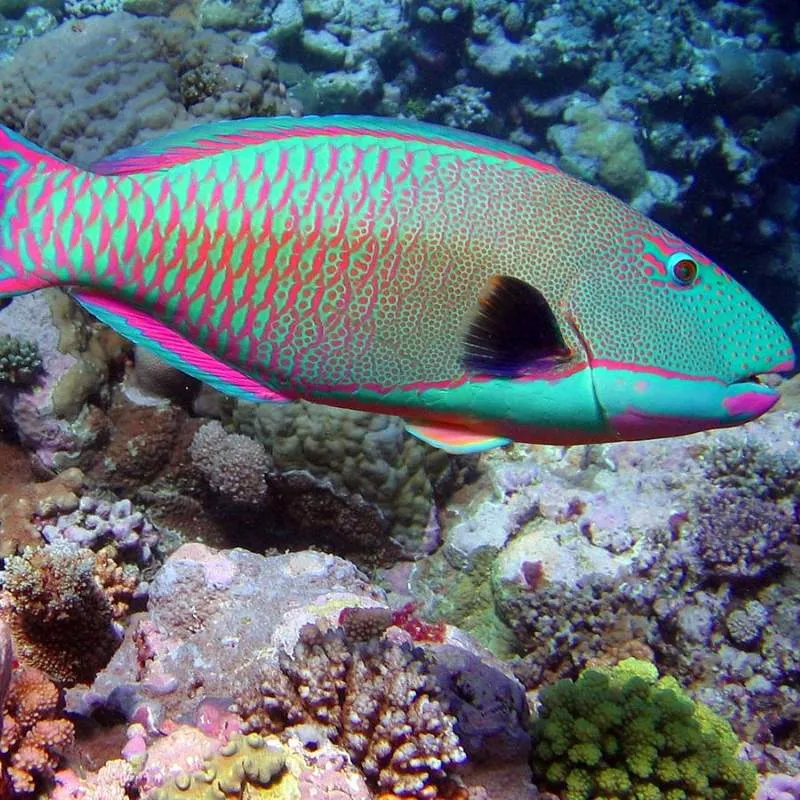
19. Parrotfish – The Reef's Natural Sand Maker
The parrotfish is one of the most important herbivorous fish living around coral reefs. Its unusual teeth are fused together into a powerful beak-like structure, allowing it to scrape algae from rocks and coral surfaces. As it feeds, the fish also consumes small quantities of coral material. The material passes through its digestive system and eventually becomes fine sand. This means that parrotfish play an important role in the creation and maintenance of tropical beaches and reef environments. Their bright colors also make them one of the most beautiful fish commonly seen while snorkeling in the Red Sea.
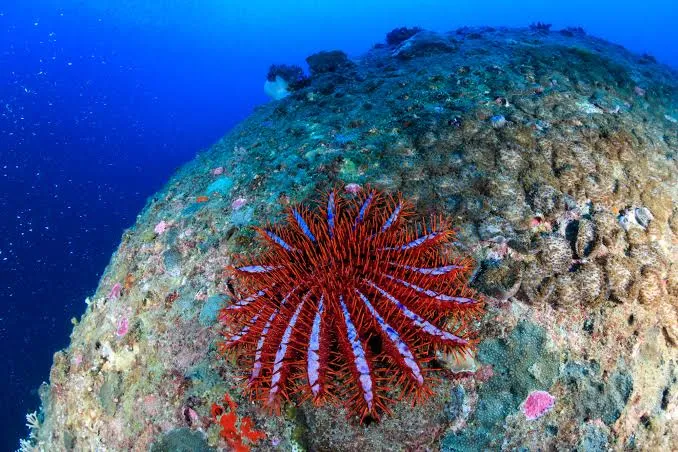
20. Crown-of-Thorns Starfish – The Spiky Coral Eater
The crown-of-thorns starfish looks like an alien creature. It has numerous arms covered with sharp venomous spines and feeds primarily on living coral tissue. Under normal conditions, it is a natural part of the coral reef ecosystem. However, unusually large population outbreaks can put significant pressure on coral reefs. Its strange appearance and ecological importance make it one of the most fascinating invertebrates found in the Red Sea.
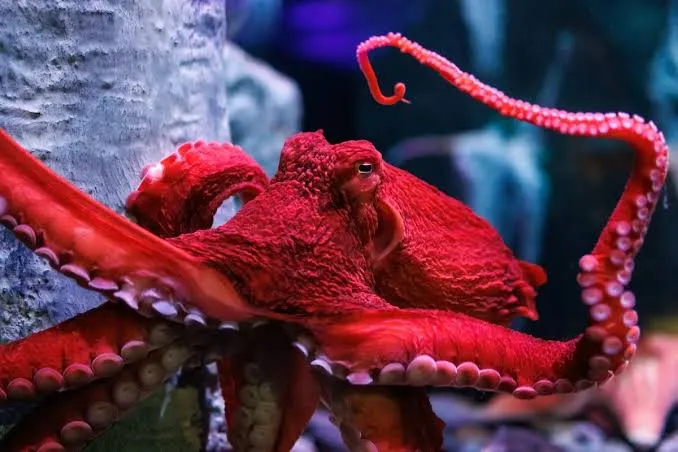
21. Octopus – The Master of Transformation
The octopus is one of the most intelligent and adaptable creatures in the Red Sea. It can change its color, pattern, and sometimes even the apparent texture of its skin to blend into its surroundings. An octopus hiding inside a coral reef can become almost impossible to detect. They are also capable of squeezing through surprisingly small spaces because they have no rigid skeleton. For underwater photographers, watching an octopus change color while moving across the reef is an unforgettable experience.
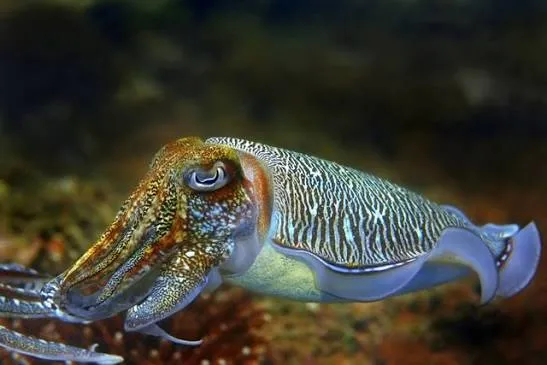
22. Cuttlefish – The Living Screen
The cuttlefish is another extraordinary animal famous for its ability to change colors and patterns. Specialized cells in its skin allow it to create rapidly changing visual displays. These changes can be used for camouflage, communication, courtship, and defense. Cuttlefish can appear dramatically different within seconds, making them one of the most fascinating animals to observe while diving. Their large eyes and unusual body shape add to their mysterious appearance.
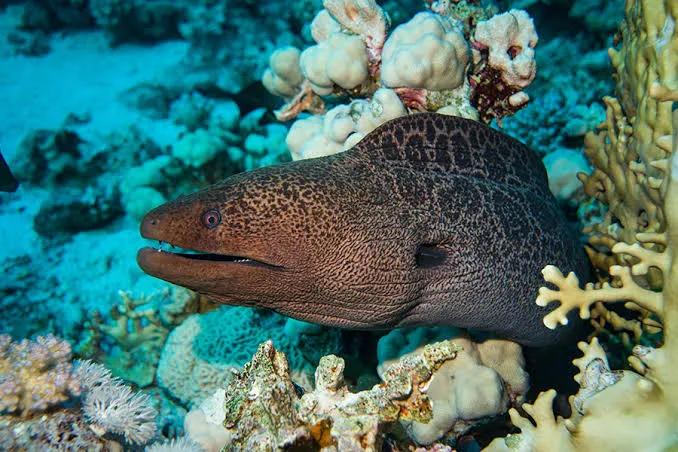
23. Moray Eel – The Hidden Predator
The moray eel is a familiar but still fascinating inhabitant of Red Sea coral reefs. Moray eels usually hide inside holes and crevices, leaving only their heads visible while they wait for prey. Their constantly opening and closing mouths can make them look aggressive, but this behavior is primarily associated with breathing rather than an attempt to threaten divers. Several moray species can be encountered around Egyptian coral reefs.
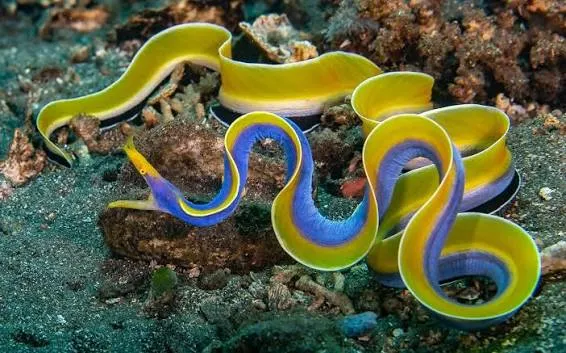
24. Ribbon Eel – The Color-Changing Eel
The ribbon eel is one of the most visually unusual eels. Its long, thin body and distinctive coloration make it easy to recognize once discovered. Young ribbon eels and adults can display dramatically different colors, adding to their mystery. They usually live in burrows within sandy or rocky reef environments, with only part of their bodies visible.
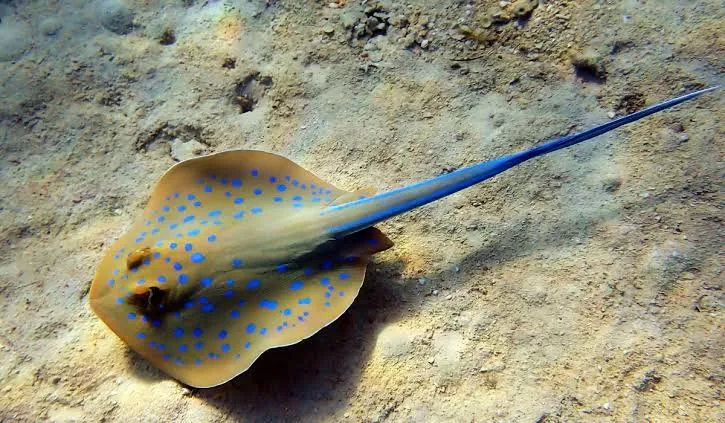
25. Blue-Spotted Stingray – The Beautiful Bottom Dweller
The blue-spotted stingray is a beautiful reef animal recognizable by its vivid blue spots. It spends much of its time close to the seafloor, often resting on sand or moving between coral formations. Although stingrays are generally peaceful, they possess a defensive barb and should never be approached or touched. Seeing a blue-spotted stingray glide across the sandy bottom is a common highlight of reef snorkeling and diving.
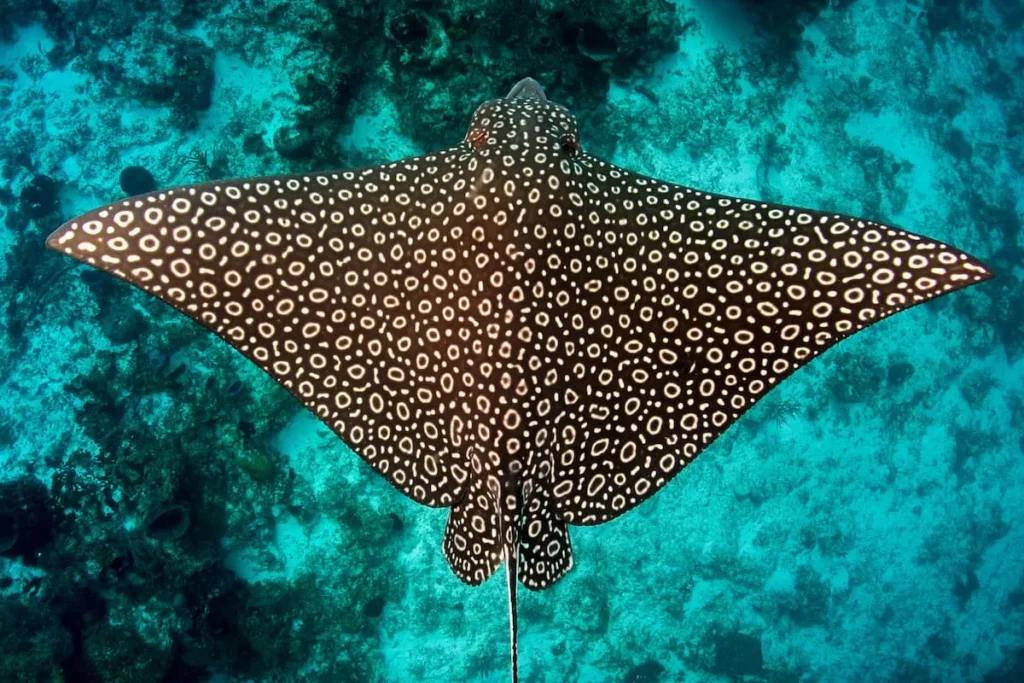
26. Eagle Ray – The Underwater Bird
The eagle ray receives its name from its wide wings and graceful swimming style. Unlike many bottom-dwelling rays, eagle rays can travel through open water and are often seen gliding above sandy areas and reefs. Their long tails and spotted bodies create a striking silhouette against the blue water. An eagle ray appearing suddenly during a dive can transform an ordinary reef dive into an unforgettable wildlife encounter.
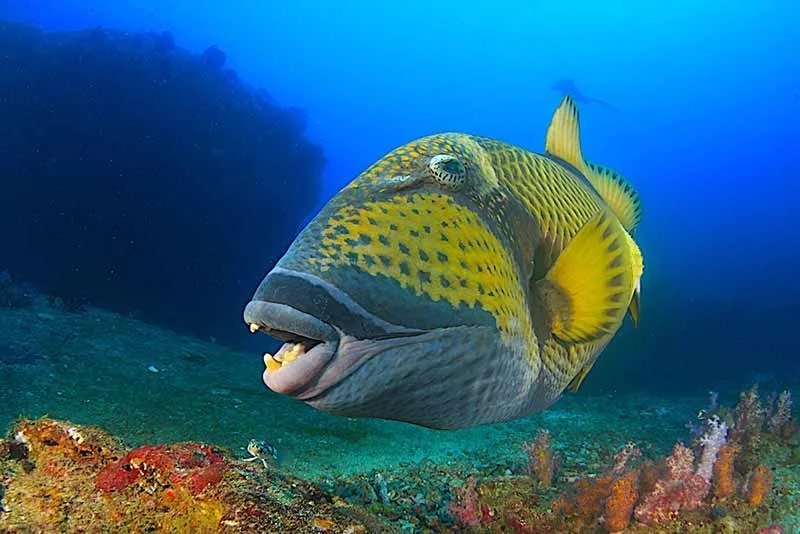
27. Triggerfish – The Reef Guardian
Triggerfish have unusually deep bodies, powerful jaws, and small eyes that give them a distinctive appearance. They are known for their strong personalities and territorial behavior, especially during nesting periods. One of the most recognizable species is the titan triggerfish, a large reef fish capable of becoming highly defensive around its nesting territory. Divers should always give territorial fish plenty of space.
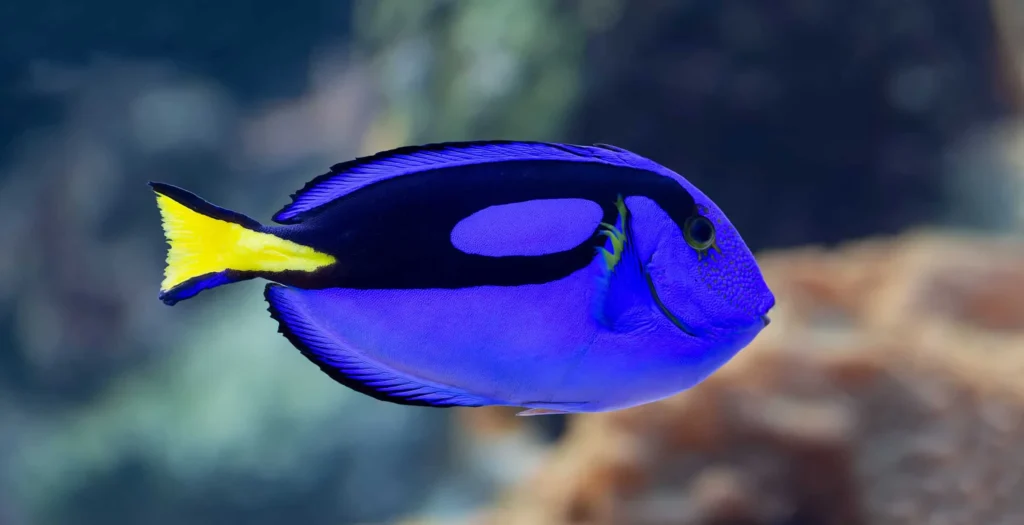
28. Surgeonfish – The Fish with a Hidden Weapon
Surgeonfish are among the most common and colorful inhabitants of tropical coral reefs. They receive their name from sharp spines located near the base of their tails, which resemble surgical blades. These fish often travel in groups while feeding on algae growing across reef surfaces. Their grazing behavior helps prevent algae from overwhelming coral colonies, making them important members of the reef ecosystem.
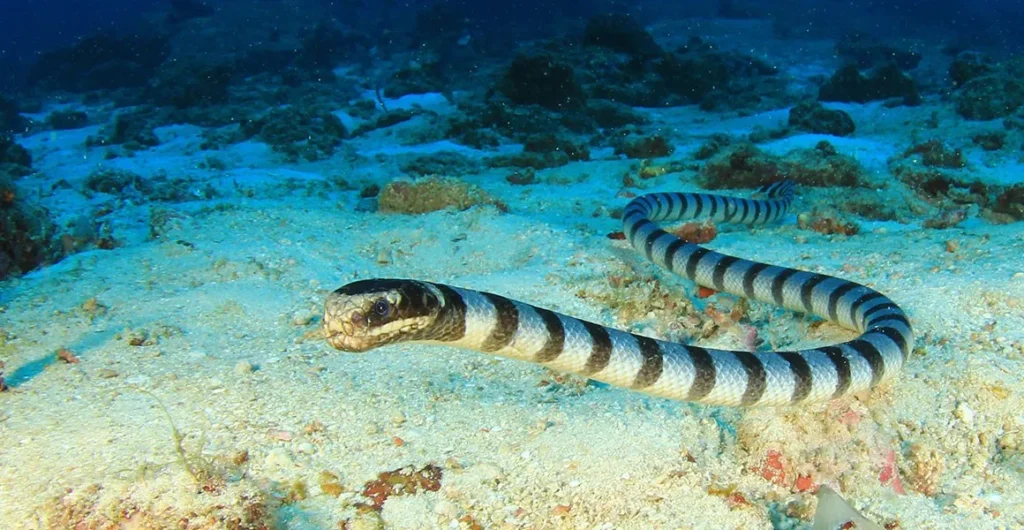
29. Sea Snake – The Mysterious Marine Reptile
Sea snakes are among the most mysterious animals associated with tropical marine ecosystems. Their long, snake-like bodies and powerful swimming abilities make them look very different from ordinary reef fish. Some sea snakes possess highly potent venom, but they generally avoid humans and are not naturally interested in attacking divers. As with every wild marine animal, the safest approach is to observe from a respectful distance and never attempt to touch or handle one.
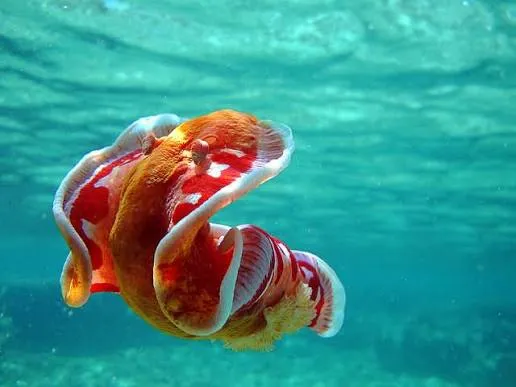
30. Spanish Dancer – The Giant Red Sea Slug
The Spanish dancer is one of the most spectacular nudibranchs in the marine world. Its large size and vivid red coloration make it dramatically different from many smaller nudibranch species. When swimming freely, its body can move in large waves, creating an appearance similar to a dancer's flowing dress. Finding a Spanish dancer during a night dive can be an especially memorable experience because many unusual reef creatures become more active after sunset.
The Best Places to Discover Rare Marine Life in Egypt
The Egyptian Red Sea coastline offers a remarkable variety of marine environments, meaning that different destinations provide different opportunities for wildlife encounters.
Marsa Alam is particularly famous for marine mammals, sea turtles, seagrass habitats, dolphins, and pristine coral reefs. Abu Dabbab is one of the best-known locations for travelers hoping to see turtles and dugongs.
Hurghada offers easy access to numerous snorkeling and diving sites, including offshore reefs and islands where visitors can encounter colorful reef fish, rays, turtles, dolphins, and other marine animals.
Sharm El Sheikh and Ras Mohammed National Park are famous for spectacular coral reefs, clear water, reef fish, rays, and pelagic species. The Straits of Tiran also provide excellent diving opportunities.
For experienced divers, offshore sites such as Elphinstone Reef, Daedalus Reef, and the Brothers Islands are particularly famous for encounters with large pelagic animals and sharks.
Strange Marine Creatures in the Red Sea
Responsible Wildlife Watching in the Red Sea
Seeing a rare marine animal is an exciting experience, but protecting the animal and its environment should always come first.
Never touch sea turtles, dolphins, dugongs, rays, sharks, or other wild animals. Do not chase marine mammals for photographs, and never feed wildlife.
Divers and snorkelers should also avoid standing on coral reefs. Even a small amount of physical contact can damage fragile coral colonies.
Using responsible snorkeling and diving practices helps protect the Red Sea coral reefs and marine biodiversity for future generations
The Red Sea is far more than a beautiful tropical destination. Beneath the surface is an extraordinary ecosystem containing some of the world’s most beautiful, unusual, mysterious, and fascinating marine creatures.
From the peaceful dugong and graceful manta ray to the powerful hammerhead shark, colorful lionfish, invisible ghost pipefish, tiny nudibranchs, intelligent octopuses, unusual seahorses, and brilliantly colored reef fish, every dive can reveal something completely unexpected.
This incredible biodiversity is one of the main reasons why Egypt is one of the world’s best destinations for scuba diving and snorkeling. Whether you are an experienced diver searching for rare Red Sea wildlife or a first-time snorkeler looking to see colorful fish and sea turtles, the Egyptian Red Sea offers an underwater adventure unlike anywhere else.
The next time you visit Marsa Alam, Hurghada, Sharm El Sheikh, Dahab, or another Red Sea destination, remember that the most fascinating discovery may not always be the largest animal. Sometimes the strangest creature is a tiny nudibranch hidden beneath a coral ledge, a perfectly camouflaged frogfish, or a ghost pipefish that looks exactly like a piece of seaweed.
The underwater world of the Red Sea rewards patience, curiosity, and respect—and for those willing to look closely, it reveals a spectacular world of life that most people never get to see.