- Excursions in Egypt
- Egypt Tour Packages
- Cairo Tours and Excursions
- Hurghada Tours and Excursions
- Soma Bay Tours and Excursions
- Makadi Bay Tours and Excursions
- Sahl Hasheesh Tours and Excursions
- El Gouna Tours and Excursions
- Marsa Alam Tours and Excursions
- Port Ghalib Tours and Excursions
- El Quseir Tours and Excursions
- Dendera and Abydos Day Tours
- Aswan Tours and Excursions
- Luxor Tours and Excursions
- Sharm El Sheikh Tours and Excursions
- Top Rated Egypt Tours in 2026
- Optional Excursions in Egypt
- Private Transfer
- Blogs About egypt
- Ancient Egypt
- Historical Sites in Egypt
- Cairo
- Alexandria
- Luxor
- Aswan
- The Red Sea
- Dendera Temple
- El Fayoum Oasis
- Bahariya Oasis
- Siwa Oasis
- Al Alamein
- Marsa Matruh
- Why Egypt Is One of the Safest Countries to Visit in the Middle East
- What You Need To know Before Your First Trip To Egypt
- Egypt Travel Costs in 2026 Full Budget Guide
- Top 10 Tourist Activities in Egypt
- Top 50 Activities You Can’t Miss in Egypt in 2026
- The Guide to Guided Tours in Egypt
- Egypt’s Ancient and Modern History
- The Nile River
- The Deserts of Egypt
- Ancient Egyptian gods
- famous Egyptian dishes
- UNESCO World Heritage sites
- About Us
- Egypt Hotels and Resorts
- Excursions in Egypt
- Egypt Tour Packages
- Cairo Tours and Excursions
- Hurghada Tours and Excursions
- Soma Bay Tours and Excursions
- Makadi Bay Tours and Excursions
- Sahl Hasheesh Tours and Excursions
- El Gouna Tours and Excursions
- Marsa Alam Tours and Excursions
- Port Ghalib Tours and Excursions
- El Quseir Tours and Excursions
- Dendera and Abydos Day Tours
- Aswan Tours and Excursions
- Luxor Tours and Excursions
- Sharm El Sheikh Tours and Excursions
- Top Rated Egypt Tours in 2026
- Optional Excursions in Egypt
- Private Transfer
- Blogs About egypt
- Ancient Egypt
- Historical Sites in Egypt
- Cairo
- Alexandria
- Luxor
- Aswan
- The Red Sea
- Dendera Temple
- El Fayoum Oasis
- Bahariya Oasis
- Siwa Oasis
- Al Alamein
- Marsa Matruh
- Why Egypt Is One of the Safest Countries to Visit in the Middle East
- What You Need To know Before Your First Trip To Egypt
- Egypt Travel Costs in 2026 Full Budget Guide
- Top 10 Tourist Activities in Egypt
- Top 50 Activities You Can’t Miss in Egypt in 2026
- The Guide to Guided Tours in Egypt
- Egypt’s Ancient and Modern History
- The Nile River
- The Deserts of Egypt
- Ancient Egyptian gods
- famous Egyptian dishes
- UNESCO World Heritage sites
- About Us
- Egypt Hotels and Resorts
Welcome to
Karnak: The Empire of Light and the Throne of the King of Gods
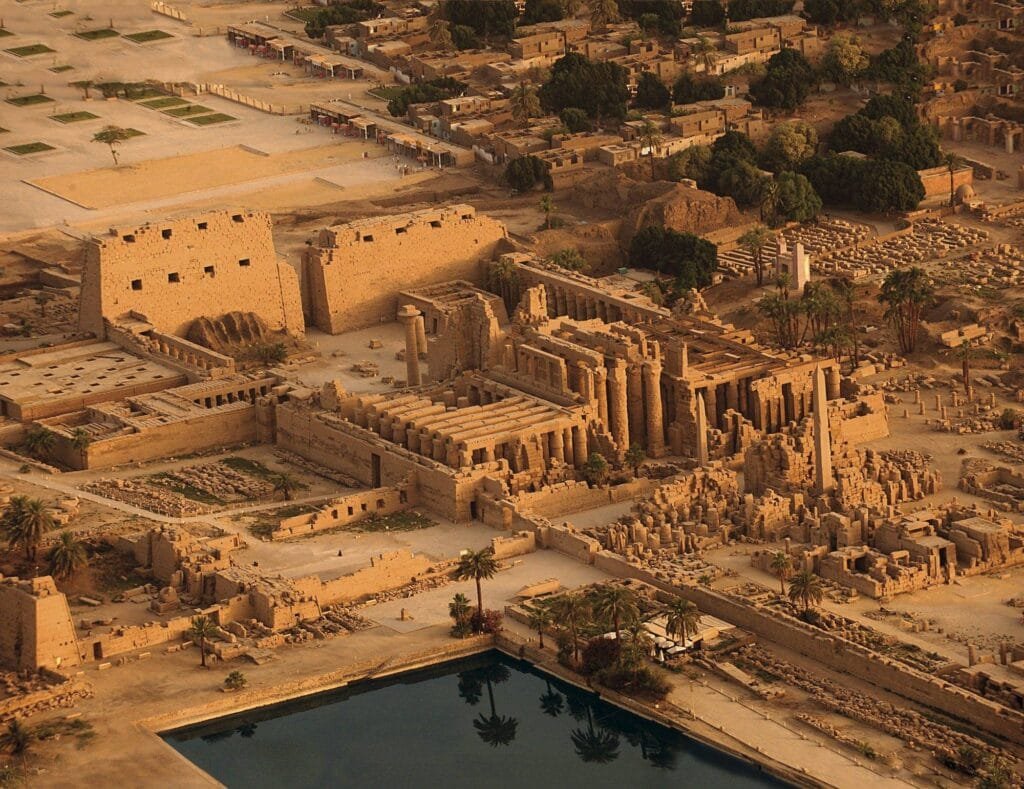
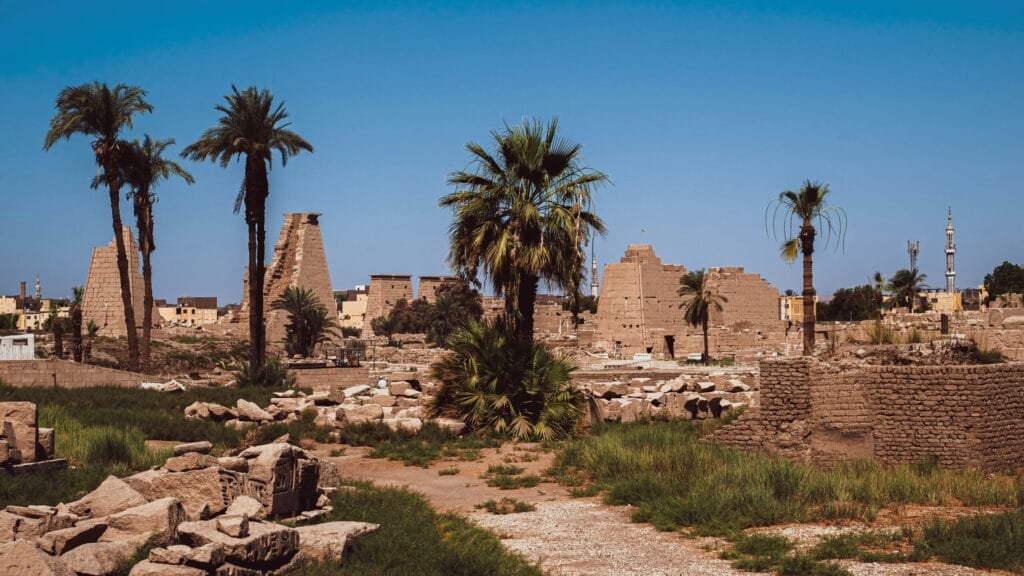
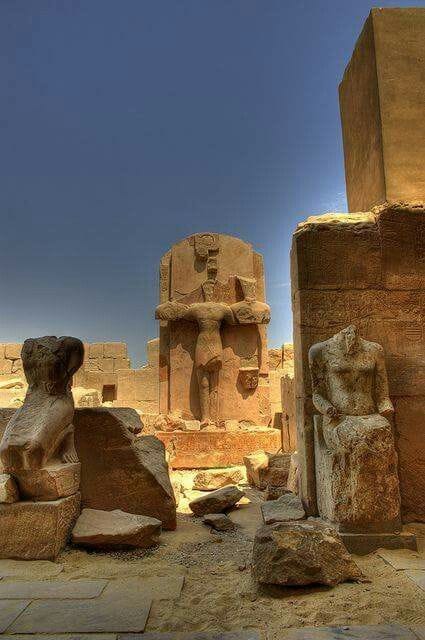
If the world has a spiritual heart made of stone, it is undoubtedly the Karnak Temple Complex. More than just a temple, Karnak is a monumental architectural epic, a stone-carved encyclopedia that chronicles the rise and glory of the Egyptian Empire over nearly two millennia. For the ancient Egyptians, this was Ipet-isut—”The Most Select of Places”—the earthly dwelling of Amun-Ra, the King of the Gods, and the focal point of the cosmic order. Stretching across two hundred acres of the Theban East Bank, Karnak is the largest religious complex ever constructed by human hands, a sprawling labyrinth of soaring pylons, colossal statues, and sky-piercing obelisks that leave the modern world in a state of perpetual awe.
To walk through the gates of Karnak is to witness the collective ambition of over thirty pharaohs, each striving to outdo their predecessors in a divine competition of grandeur. It is a place where the scale of the architecture transcends human proportions, designed to make the worshipper feel the immense power of the divine. From the haunting beauty of the Great Hypostyle Hall, where 134 massive columns rise like a petrified forest toward the heavens, to the sacred stillness of the lake where priests once purified themselves by the light of the moon, Karnak is a masterclass in the fusion of art, engineering, and theology.
Every stone at Karnak breathes with the history of the New Kingdom’s greatest rulers—Thutmose III, Hatshepsut, Seti I, and the legendary Ramses the Great. Their triumphs are etched into the very walls, and their spirits seem to linger in the long shadows cast by the setting sun. This is not merely a ruin; it is a gateway to the ancient mind, a place where the boundaries between the earthly and the eternal dissolve. In the following exploration, we dive deep into the mysteries of this divine city, uncovering the secrets of its sanctuaries and the unparalleled legacy of the craftsmen who turned a desert landscape into the most magnificent temple in the history of civilization.

1. Luxor: The Soul of Ancient Thebes and the Cradle of Civilization
Luxor stands as a timeless testament to the ingenuity and spiritual depth of the human spirit. Known in antiquity as Thebes, the "City of a Hundred Gates," it served as the pulsating heart of the Egyptian Empire during its most prosperous era—the New Kingdom. Today, this city in Upper Egypt is recognized globally as the world’s greatest open-air museum, where every stone tells a story of divine kingship and artistic mastery. Situated along the life-giving banks of the Nile, Luxor is a place where the past is not merely remembered but felt. From the moment the sun rises over the lush East Bank to its dramatic descent behind the limestone cliffs of the West Bank, visitors are enveloped in a landscape that has inspired poets, archaeologists, and travelers for millennia. This is where the glory of the pharaohs reached its zenith, leaving behind a legacy of monuments that continue to defy the passage of time.
2. The Spiritual Epicenter: An Introduction to the Karnak Temple Complex
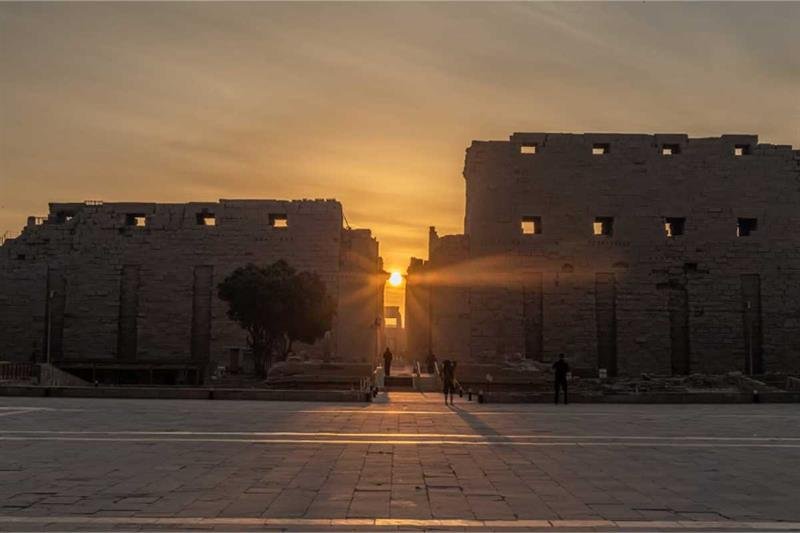
If Luxor is the body of ancient Egyptian history, then the Karnak Temple Complex is undoubtedly its soul. Sprawling across more than 200 acres on the East Bank, Karnak is not merely a temple but a vast religious city that took over 1,500 years to construct. It was the primary place of worship for the god Amun-Ra, the "King of the Gods," and served as the focal point of the Egyptian state's religious life. Each successive pharaoh, from the Middle Kingdom through the Ptolemaic period, sought to leave an indelible mark on this sacred ground by adding pylons, obelisks, and sanctuaries. The result is a staggering architectural labyrinth that reflects the evolution of Egyptian art and theology. Walking through its towering gateways, one feels the immense weight of history and the profound devotion of a civilization that sought to build for eternity.
3. The Architecture of Power: The Great Hypostyle Hall of Amun-Ra
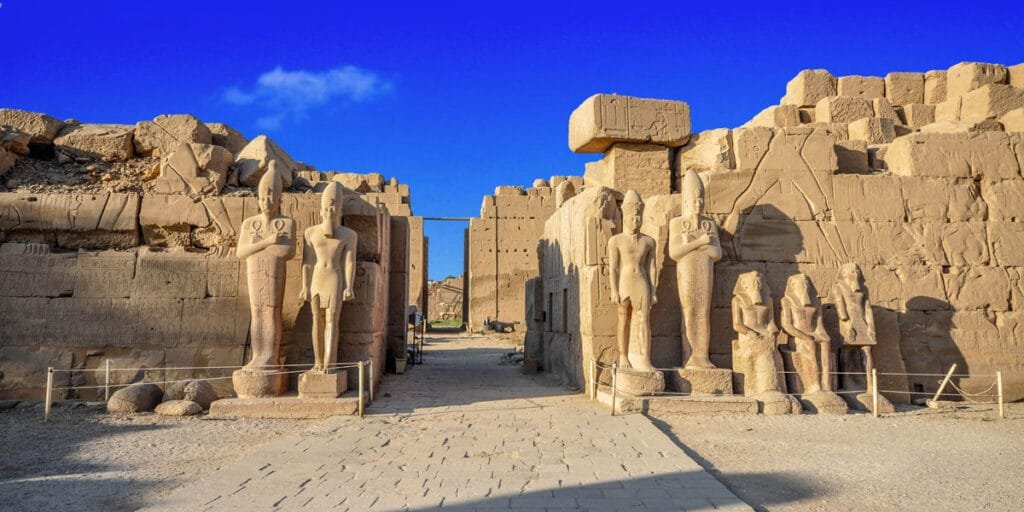
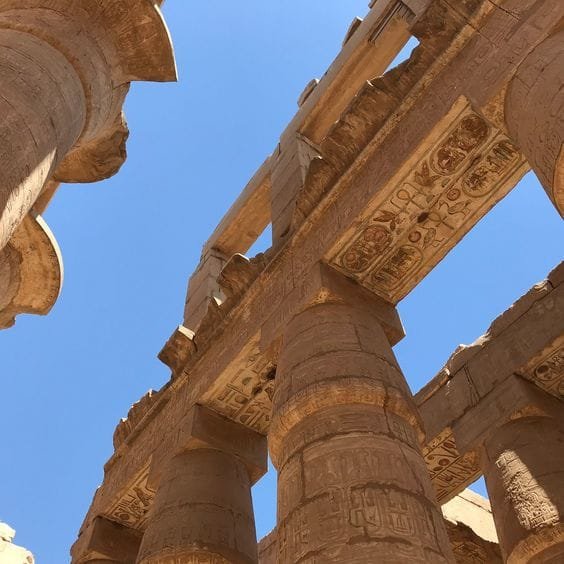
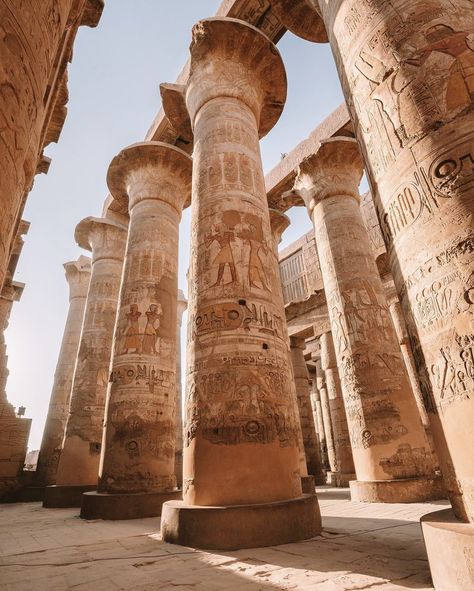
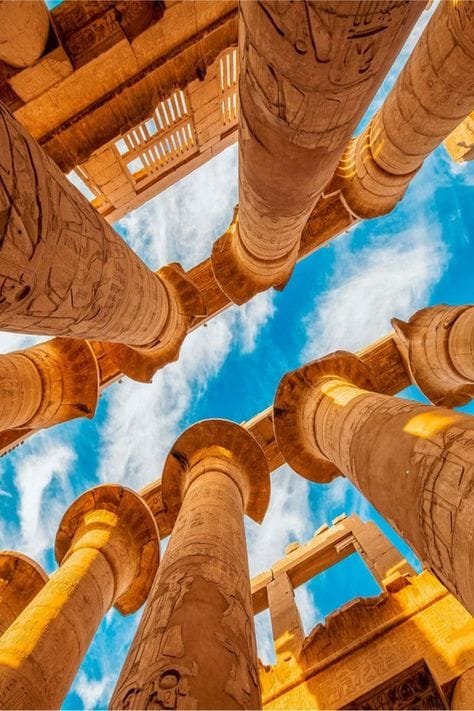
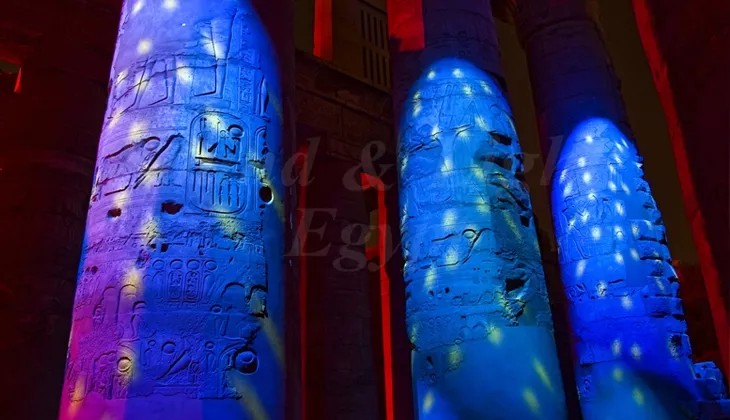
Within the walls of Karnak lies what many consider the greatest architectural achievement of the ancient world: the Great Hypostyle Hall. This immense forest of stone consists of 134 massive sandstone columns, arranged in 16 rows, that once supported a colossal roof. Built primarily during the reigns of Seti I and his son, Ramses the Great, the hall is a masterpiece of engineering and aesthetics. The central columns stand at a staggering height of 21 meters, topped with papyrus capitals so large that a hundred people could stand upon a single one. Every surface of these pillars is intricately carved with reliefs depicting the pharaohs in the presence of the gods, their victories in battle, and the sacred rituals that maintained the balance of the universe. The interplay of light and shadow through these columns at sunset creates a mystical atmosphere, transporting visitors back to a time when these halls were filled with the scent of incense and the chants of high priests.
4. The Avenue of Sphinxes: The Sacred Path of the Opet Festival
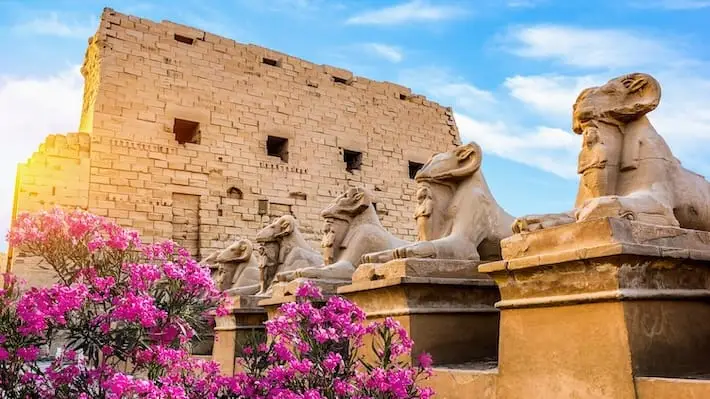
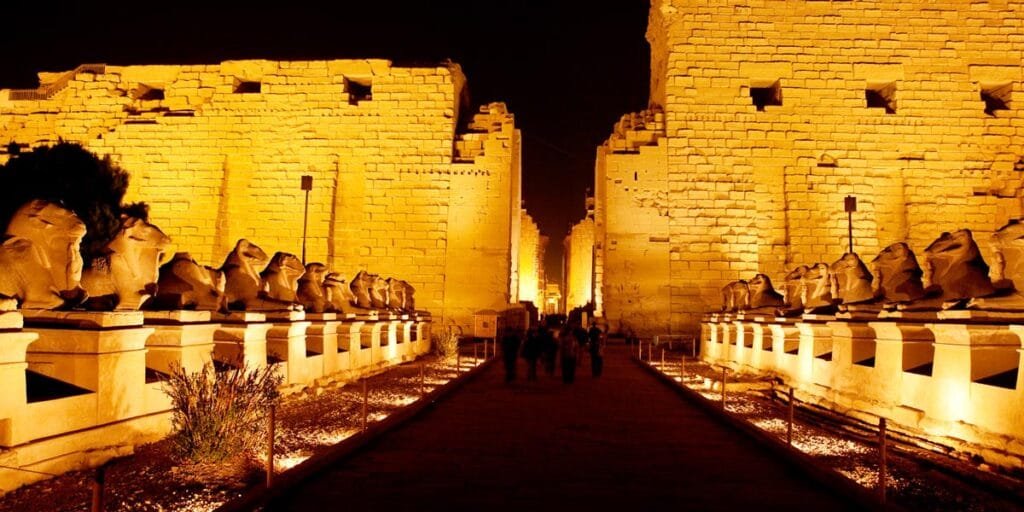
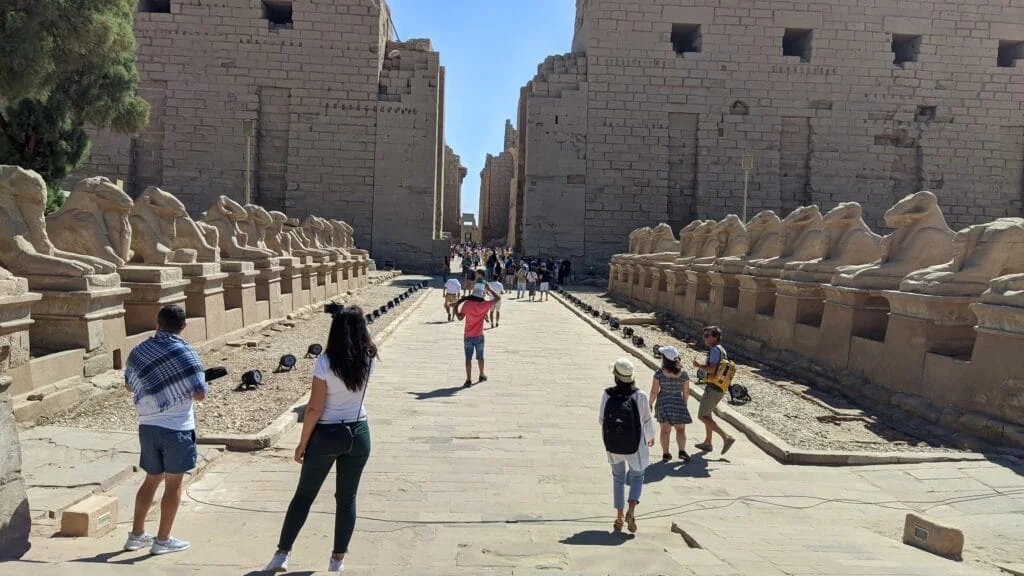
Connecting the two titanic structures of Karnak and Luxor Temple is the legendary Avenue of Sphinxes, a majestic processional route that stretches for nearly three kilometers. This grand boulevard, once paved with sandstone and lined with over a thousand sphinx statues, served as the ceremonial artery of Ancient Thebes. Some of these sphinxes possess the traditional human head, symbolizing the pharaoh’s wisdom, while others feature the ram’s head of Amun, representing divine power and fertility. During the annual Opet Festival—one of the most significant religious events in the Egyptian calendar—the statues of the Theban Triad were carried in golden barques along this very path. The air would have been thick with the sound of flutes, the fragrance of burning myrrh, and the cheers of thousands of citizens celebrating the spiritual rejuvenation of the King and the Nile. Today, walking along this restored avenue offers a rare, uninterrupted link between the two greatest sanctuaries of the East Bank, allowing modern travelers to retrace the footsteps of priests and pharaohs under the vast Egyptian sky.
5. The Obelisks of Karnak: Engineering Marvels of Pink Granite
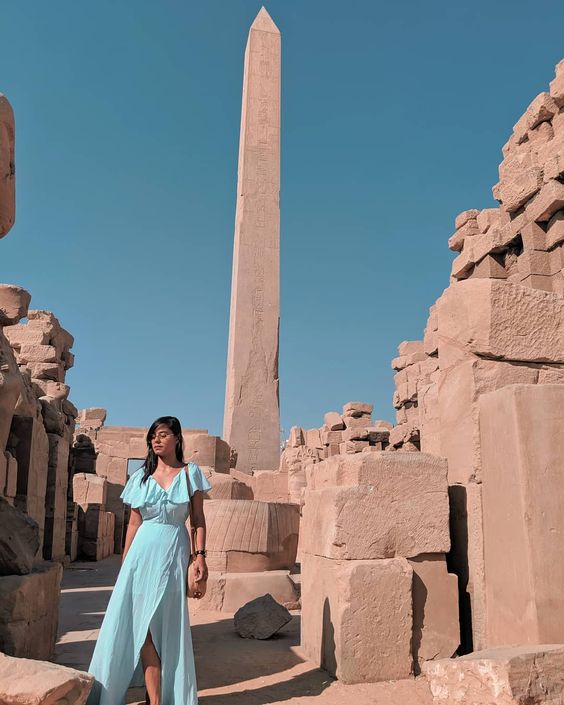
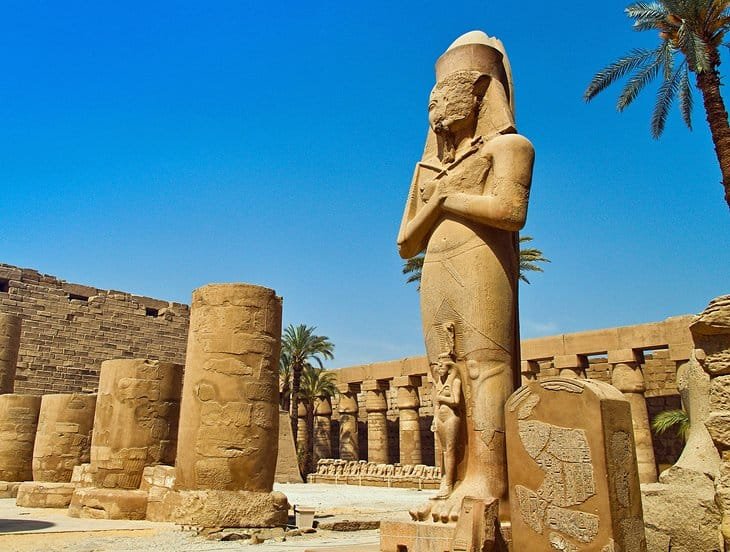
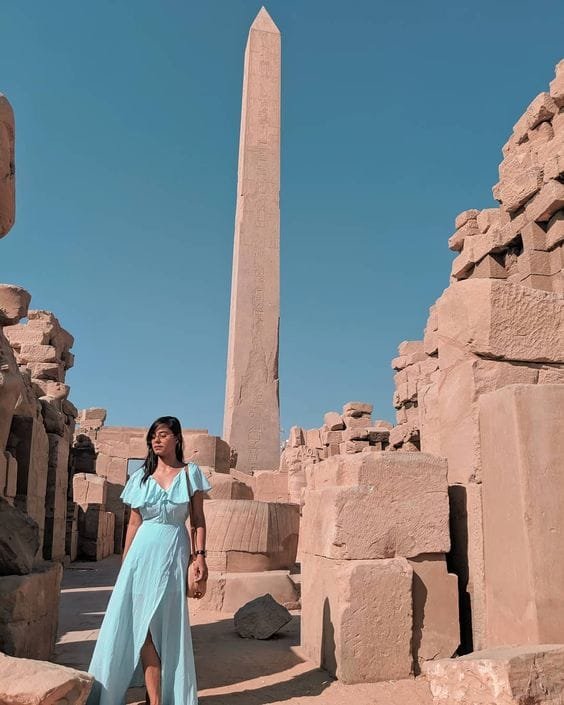
Piercing the azure sky of Upper Egypt, the obelisks of Karnak remain some of the most formidable engineering feats in human history. These monolithic towers, carved from single blocks of solid pink granite in the distant quarries of Aswan, were dedicated to the sun god as rays of petrified light. The most prominent among them is the towering obelisk of Queen Hatshepsut, which stands at nearly thirty meters tall and weighs over three hundred tons. It is a marvel not only of artistry but of logistical genius; transporting such a colossal weight hundreds of miles down the Nile and erecting it with hair-breadth precision is a feat that still baffles modern engineers. The hieroglyphics etched into the granite surfaces remain remarkably crisp, recounting the Queen’s devotion to her father, Amun-Ra, and her rightful claim to the throne. These obelisks were originally capped with electrum, a precious alloy of gold and silver, which would have caught the first rays of the morning sun, reflecting a brilliant, divine glow across the entire city of Thebes.
6. The West Bank: The Silent Necropolis and the Gateway to the Duat
As the sun sets behind the rugged limestone peaks of the Theban Hills, the focus of the journey shifts to the West Bank, the ancient "City of the Dead." In the Egyptian worldview, the West was the realm of the afterlife, where the sun god Ra entered the underworld or "Duat" each night. To ensure their eternal survival, the pharaohs of the New Kingdom abandoned the visible glory of the pyramids for the hidden, rock-cut tombs of the Valley of the Kings. This landscape is a stark, haunting contrast to the lush greenery of the Nile’s edge. Here, the earth is a golden labyrinth of secret chambers and descending corridors, designed to protect the royal mummies and their unimaginable treasures from the eyes of grave robbers. The West Bank is not merely a cemetery; it is a sacred landscape of mortuary temples and royal burials that represents the ultimate human quest for immortality. From the soaring terraces of Hatshepsut’s temple to the silent, echoing depths of the royal tombs, the West Bank remains the most profound archaeological landscape on earth.
7. The Valley of the Kings: A Subterranean Masterpiece of Royal Immortality
Hidden beneath the shadow of the pyramid-shaped peak of El-Qurn, the Valley of the Kings serves as the ultimate sanctuary for the sovereigns of the New Kingdom. This desolate wadi was chosen for its isolation and its limestone cliffs, which offered a perfect canvas for the most sophisticated tomb construction in human history. Each tomb, carved hundreds of feet into the living rock, was designed as a microcosmic map of the afterlife, filled with intricate corridors that descend into the darkness, symbolizing the soul's journey through the twelve hours of the night. The walls are not merely decorated; they are vibrant, pulsating galleries of religious texts like the "Book of the Dead" and the "Amduat," rendered in colors that have remained shockingly vivid for over three thousand years. The discovery of the tomb of Tutankhamun (KV62) in 1922 provided the world with a glimpse of the staggering wealth buried here, but the architectural grandeur of the tombs of Ramses VI and Seti I is what truly defines the valley’s majesty. These eternal dwellings were meant to be secret, yet today they stand as the most famous archaeological site on the planet, inviting the modern world to contemplate the ancient Egyptian vision of eternity and the divine.
8. The Mortuary Temple of Queen Hatshepsut: The Jewel of Deir el-Bahari
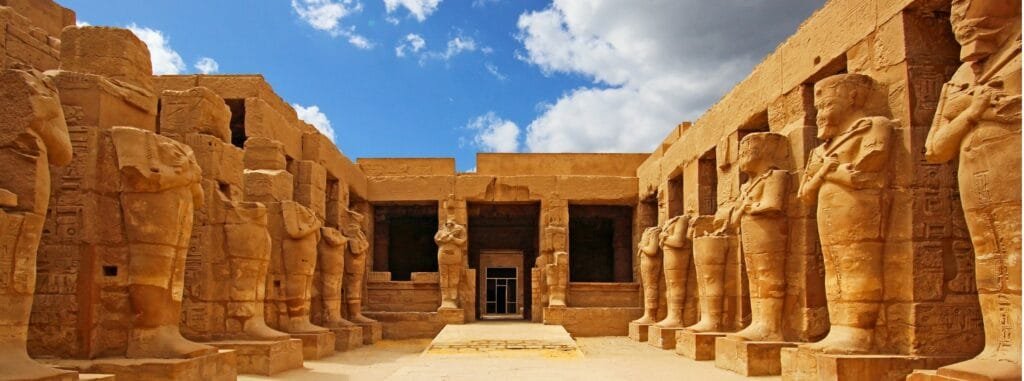
Nestled against the sheer, towering cliffs of the Theban mountain range, the Mortuary Temple of Queen Hatshepsut, known as Djeser-Djeseru ("The Holy of Holies"), represents a radical departure from the architectural norms of its time. Designed by the royal architect Senenmut, the temple is an exquisite series of three rising terraces connected by long ramps, creating a stunning visual harmony with the natural rock formations that cradle it. This temple was more than a place of worship; it was a bold political statement of a female pharaoh who ruled with the absolute authority of a man. The colonnaded porticos are adorned with magnificent reliefs documenting the Queen’s divine birth and her ambitious maritime expedition to the Land of Punt, which brought back exotic trees, incense, and gold. The precision of the carvings, the elegance of the Osiride statues, and the panoramic views of the Nile Valley from the upper terrace make it one of the most photographed and admired structures in the world. It stands as a timeless monument to a woman who shattered the glass ceilings of antiquity, blending masculine power with feminine grace in stone.

9. The Colossi of Memnon: The Weathered Sentinels of a Vanished Temple
Standing in solitary grandeur amidst the green fertile fields of the West Bank are the Colossi of Memnon, two massive quartz-sandstone statues of Pharaoh Amenhotep III. Each statue, reaching nearly eighteen meters in height and weighing an estimated 720 tons, represents the king seated on his throne, gazing eastward toward the rising sun and the Nile. These figures are all that remain of what was once the most sprawling and opulent mortuary temple in Egypt—a complex so vast it surpassed even the Karnak Temple in scale before being reclaimed by the forces of nature and ancient earthquakes. For centuries, these statues have been legendary; in the Greco-Roman era, the northern statue was famous for "singing" at dawn—a mysterious whistling sound caused by the wind passing through cracks in the stone. While the temple behind them has long since crumbled into dust, the Colossi remain as haunting, weathered witnesses to the height of the 18th Dynasty’s prosperity. They serve as a poignant reminder of the fragility of even the greatest empires and the enduring power of monumental art to withstand the ravages of time.
10. Deir el-Medina: The Secrets of the Artisans and the Daily Life of Thebes
While the grand temples and royal tombs celebrate the divinity of kings, Deir el-Medina offers a rare and intimate window into the lives of the ordinary people who made such grandeur possible. Known as the "Place of Truth," this ancient village was home to the highly skilled craftsmen, painters, and stonemasons who dedicated their lives to excavating and decorating the royal tombs in the Valley of the Kings. Unlike the pharaohs, these artisans were not gods, yet their own modest tombs are among the most beautiful in Egypt. The Tomb of Sennedjem, for instance, is a masterpiece of vibrant colors, showing scenes of agricultural abundance in the afterlife that look as if they were painted only yesterday. Exploring the ruins of their stone houses and reading the ostraca (pottery shards) they left behind—which detail everything from legal disputes and medical prescriptions to love letters—humanizes the ancient Egyptians. It transforms them from distant historical figures into living, breathing individuals with families, struggles, and dreams, providing a profound sociological depth to the Luxor experience.
11. The Valley of the Queens and the Radiant Beauty of Nefertari’s Tomb
To the southwest of the royal valley lies the Valley of the Queens, the final resting place for the wives, princes, and princesses of the New Kingdom. While many of the eighty-plus tombs here are simple in design, the valley houses the most spectacular burial chamber ever discovered in Egypt: the Tomb of Queen Nefertari. As the beloved chief wife of Ramses the Great, Nefertari was granted a tomb that reflects her status as "The One for Whom the Sun Shines." Every inch of the walls in this subterranean palace is covered with exquisite, high-relief paintings that depict the Queen’s journey through the celestial realms. The artistry is unparalleled, featuring delicate skin tones, intricate jewelry, and transparent linen garments that showcase the peak of Egyptian artistic refinement. The vividness of the blues, reds, and golds against the white limestone creates a celestial atmosphere that leaves visitors in awe. It is a sanctuary of feminine power and divine beauty, representing the absolute pinnacle of Pharaonic funerary art and a deep emotional tribute from a powerful king to his queen.
12. Luxor Temple by Night: A Symphony of Light and Ancient Majesty
As the fierce Egyptian sun dips below the horizon, the Luxor Temple undergoes a magical transformation, becoming a glowing beacon in the heart of the modern city. Unlike many other temples that sit in isolated desert locations, Luxor Temple is integrated into the urban fabric, creating a stunning juxtaposition between the ancient and the contemporary. When the temple is illuminated at night, the massive pylons, the elegant papyrus columns of Amenhotep III, and the towering statues of Ramses II cast long, dramatic shadows that enhance their architectural detail. Walking through the Peristyle Court under the moonlight offers a tranquil and mystical experience that is entirely different from the daytime heat. The temple was built not for a god, but for the concept of kingship itself, serving as the site where the pharaoh was symbolically reborn. As the soft amber lights play upon the hieroglyphics and the distant sound of the call to prayer echoes from the nearby Abu Haggag Mosque—which sits atop the temple ruins—the continuity of Egyptian history becomes a palpable, breathtaking reality.
13. The Luxor Museum: A Curated Sanctuary of Pharaonic Masterpieces
While the outdoor temples offer a sense of monumental scale, the Luxor Museum provides a refined and intimate encounter with the artistic finesse of the ancient world. Located on the scenic Corniche overlooking the Nile, this museum is often cited as one of the best-curated archaeological institutions in the Middle East. Unlike the sprawling, crowded halls of older museums, Luxor Museum follows a minimalist and modern approach, allowing each artifact to breathe and tell its own story. Among its most prized possessions are the statues discovered in the "Luxor Cachette" in 1989—a collection of perfectly preserved figures that had been buried by priests for safety in antiquity. The museum also houses the royal mummies of Ahmose I and Ramses I, displayed with immense dignity. From the intricate jewelry and military equipment to the massive granite statues that radiate a sense of calm authority, the museum bridges the gap between the archaeological ruins outside and the human craftsmanship that created them. It is an essential stop for any traveler who wishes to appreciate the delicate balance of power, religion, and art that defined the Theban era.
14. Aerial Grandeur: The Spiritual Height of a Hot Air Balloon Flight
To truly grasp the topographical and historical scale of Luxor, one must ascend into the skies at the break of dawn. A Hot Air Balloon ride over the West Bank is not merely a tourist activity; it is a spiritual journey that offers a perspective once reserved only for the gods. As the balloon rises silently into the cool morning air, the landscape below unfolds like a living map of human history. To the east, the Nile glitters like a silver ribbon, dividing the lush green fields of the valley from the harsh, golden desert. Below, the Mortuary Temple of Hatshepsut emerges from the shadows of the cliffs, and the Colossi of Memnon appear as tiny sentinels amidst the vast greenery. From this height, the layout of the royal tombs and the sheer ambition of the Pharaonic builders become crystal clear. Watching the sun ignite the limestone peaks of the Theban Necropolis in shades of fire and gold is a transformative experience, providing a sense of peace and awe that remains etched in the memory of every traveler long after they have returned to the earth.
15. The Eternal Nile: Feluccas, Dahabiyas, and the Rhythm of the River
The Nile is the soul of Luxor, the silent witness to every dynasty and the source of all life in the Egyptian desert. To experience the city without spending time on its waters is to miss the very essence of its charm. The Felucca, a traditional wooden sailboat with a distinctive lateen sail, offers a serene and authentic way to navigate the river's currents. Gliding silently past the reeds and the mud-brick villages of the riverbank, one feels a connection to a pace of life that has remained unchanged for thousands of years. For those seeking more comfort, the Dahabiya—a luxury private sailing barge—provides a nostalgic journey that evokes the "Golden Age" of travel in the 19th century. Whether it is a short sunset sail to Banana Island or a multi-day cruise between Luxor and Aswan, the Nile provides a moving vantage point from which to admire the temples. The reflection of the ancient pylons in the water, the sight of farmers tending their fields, and the cool evening breeze create a symphony of tranquility that perfectly balances the intense historical exploration of the land.
16. The Vibrant Luxor Souq: A Sensory Gateway to Modern Egyptian Culture
No journey through the "City of a Hundred Gates" is complete without immersing oneself in the rhythmic chaos and colorful tapestry of the Luxor Souq. Located just a few blocks away from the majestic Luxor Temple, this bustling marketplace serves as the bridge between the ancient world and the vibrant pulse of contemporary Egypt. As you wander through its narrow, shaded alleyways, your senses are immediately heightened by the pungent aroma of freshly ground spices—turmeric, saffron, and coriander—mingling with the sweet scent of dried hibiscus flowers and handmade perfumes. The souq is a treasure trove of craftsmanship, where local artisans still practice trades passed down through generations. From hand-woven Egyptian cotton textiles and intricate alabaster vases carved in the nearby village of Gurna to shimmering gold and silver jewelry adorned with protective cartouches, the market offers more than just souvenirs; it offers a piece of the Egyptian soul. Engaging in the age-old art of friendly bargaining over a glass of hot mint tea is a cultural ritual in itself, providing a rare opportunity to connect with the warm, hospitable people of Upper Egypt who take immense pride in their city’s dual heritage of ancient glory and modern tradition.
17. The Science of the Afterlife: Exploring the Mummification Museum
To truly understand the ancient Egyptian psyche, one must grapple with their profound obsession with death—or rather, their meticulous preparation for eternal life. The Mummification Museum, located on the scenic Nile Corniche, offers a fascinating and slightly haunting look into the sophisticated chemical and biological processes that allowed the pharaohs to defy biological decay for millennia. This specialized institution is unique in its focus, moving beyond mere artifacts to explain the "how" and "why" of the mummification ritual. Visitors can examine the actual surgical tools used by ancient embalmers, the various types of salts and resins employed for preservation, and the iconic canopic jars designed to protect the internal organs for the afterlife journey. The museum also displays an array of mummified animals, from cats and crocodiles to ibises, reflecting the deep spiritual connection between the animal kingdom and the divine. This site serves as a crucial intellectual anchor, grounding the monumental scale of the tombs in the Valley of the Kings with the clinical and spiritual reality of the preservation techniques that have allowed us to look upon the faces of kings who ruled the earth three thousand years ago.
18. The Eternal Legacy: Why Luxor Remains the Heart of Global Heritage
As we conclude this expansive journey through the sands of time, it becomes clear that Luxor is not merely a destination on a map; it is a sacred archive of human achievement and a testament to the enduring power of belief. From the staggering, forest-like columns of the Karnak Temple Complex to the silent, star-painted ceilings of the royal tombs in the Theban Necropolis, the city offers a spiritual resonance that is found nowhere else on the planet. Luxor has survived the rise and fall of empires, the ravages of time, and the changing tides of history, yet it remains as vital and captivating as it was during the Golden Age of the New Kingdom. It is a place where the boundary between the past and the present grows thin, allowing every visitor to feel the presence of the giants who once walked these halls. Whether you are mesmerized by the engineering genius of the obelisks, the artistic refinement of Nefertari’s tomb, or the tranquil beauty of the Nile at sunset, Luxor leaves an indelible mark on the spirit. It remains the heart of global tourism because it speaks to the universal human desire for immortality, beauty, and connection to the divine, ensuring that the legacy of Ancient Thebes will continue to inspire and awe the world for generations to come.