

- Excursions in Egypt
- Egypt Tour Packages
- Cairo Tours and Excursions
- Hurghada Tours and Excursions
- Soma Bay Tours and Excursions
- Makadi Bay Tours and Excursions
- Sahl Hasheesh Tours and Excursions
- El Gouna Tours and Excursions
- Marsa Alam Tours and Excursions
- Port Ghalib Tours and Excursions
- El Quseir Tours and Excursions
- Dendera and Abydos Day Tours
- Aswan Tours and Excursions
- Luxor Tours and Excursions
- Sharm El Sheikh Tours and Excursions
- Top Rated Egypt Tours in 2026
- Optional Excursions in Egypt
- Private Transfer
- Blogs About egypt
- Ancient Egypt
- Historical Sites in Egypt
- Cairo
- Alexandria
- Luxor
- Aswan
- The Red Sea
- Dendera Temple
- El Fayoum Oasis
- Bahariya Oasis
- Siwa Oasis
- Al Alamein
- Marsa Matruh
- Why Egypt Is One of the Safest Countries to Visit in the Middle East
- What You Need To know Before Your First Trip To Egypt
- Egypt Travel Costs in 2026 Full Budget Guide
- Top 10 Tourist Activities in Egypt
- Top 50 Activities You Can’t Miss in Egypt in 2026
- The Guide to Guided Tours in Egypt
- Egypt’s Ancient and Modern History
- The Nile River
- The Deserts of Egypt
- Ancient Egyptian gods
- famous Egyptian dishes
- UNESCO World Heritage sites
- About Us
- Egypt Hotels and Resorts
- Excursions in Egypt
- Egypt Tour Packages
- Cairo Tours and Excursions
- Hurghada Tours and Excursions
- Soma Bay Tours and Excursions
- Makadi Bay Tours and Excursions
- Sahl Hasheesh Tours and Excursions
- El Gouna Tours and Excursions
- Marsa Alam Tours and Excursions
- Port Ghalib Tours and Excursions
- El Quseir Tours and Excursions
- Dendera and Abydos Day Tours
- Aswan Tours and Excursions
- Luxor Tours and Excursions
- Sharm El Sheikh Tours and Excursions
- Top Rated Egypt Tours in 2026
- Optional Excursions in Egypt
- Private Transfer
- Blogs About egypt
- Ancient Egypt
- Historical Sites in Egypt
- Cairo
- Alexandria
- Luxor
- Aswan
- The Red Sea
- Dendera Temple
- El Fayoum Oasis
- Bahariya Oasis
- Siwa Oasis
- Al Alamein
- Marsa Matruh
- Why Egypt Is One of the Safest Countries to Visit in the Middle East
- What You Need To know Before Your First Trip To Egypt
- Egypt Travel Costs in 2026 Full Budget Guide
- Top 10 Tourist Activities in Egypt
- Top 50 Activities You Can’t Miss in Egypt in 2026
- The Guide to Guided Tours in Egypt
- Egypt’s Ancient and Modern History
- The Nile River
- The Deserts of Egypt
- Ancient Egyptian gods
- famous Egyptian dishes
- UNESCO World Heritage sites
- About Us
- Egypt Hotels and Resorts
Welcome to
The Culinary Foundations of the Nile: An Introduction to Ancient Egyptian Nutrition
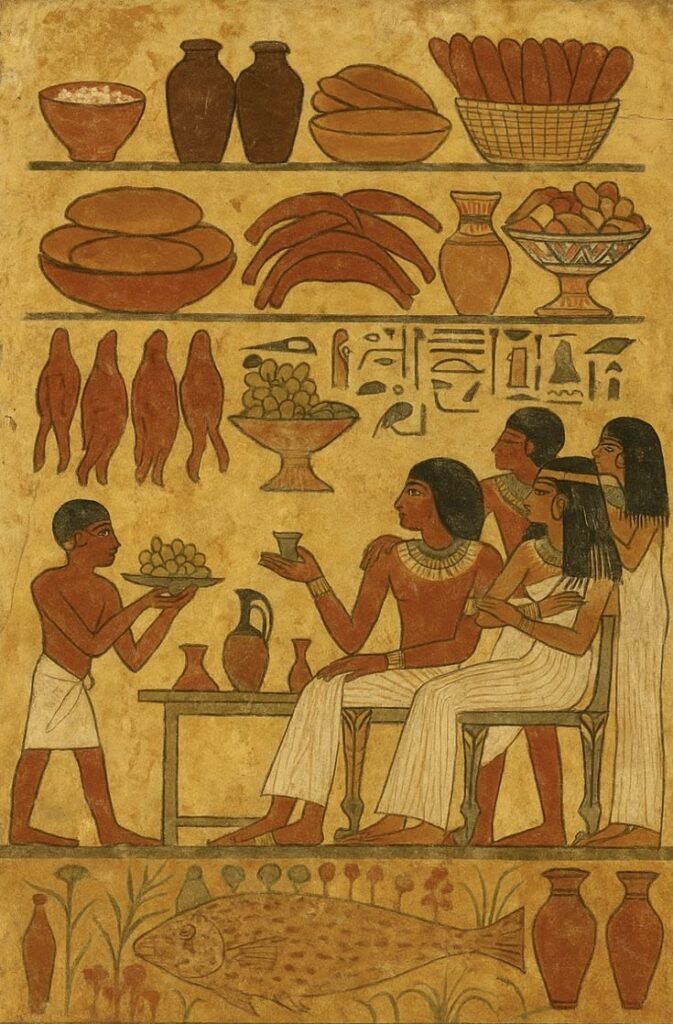
The culinary landscape of ancient Egypt was far more than a mere means of survival; it was a sophisticated reflection of the nation’s unique geography, its rigid social hierarchy, and its deeply held religious convictions. For over three thousand years, the Nile River served as the absolute lifeblood of the civilization, providing a narrow but incredibly fertile strip of silt that allowed for an agricultural abundance unparalleled in the ancient Mediterranean world. This environmental blessing fostered a food culture that was surprisingly diverse, ranging from the simple, hearty staples of the laboring peasant classes to the extravagant, multi-course banquets enjoyed by the pharaonic elite. The ancient Egyptians viewed food as a sacred gift from the gods, specifically Hapi, the deity of the Nile flood, and Osiris, the god of fertility and agriculture. Consequently, the act of producing and consuming food was often intertwined with spiritual rituals, where elaborate offerings were presented in temples to ensure the continued prosperity of the land and the sustenance of the deceased in the afterlife. The diet was primarily centered around grains, particularly emmer wheat and barley, which formed the basis of their bread and beer—the two indispensable pillars of Egyptian life that functioned as both nutrition and currency. However, the proximity to the river and the lush Delta also provided a wealth of vegetables, fruits, legumes, and various proteins, creating a nutritional profile that was remarkably balanced and advanced for its time. To study the food of ancient Egypt is to explore the very heartbeat of their society, revealing how they harnessed their unique environment to build a culture that valued communal dining, culinary innovation, and the eternal preservation of life through the sustenance of both the physical body and the eternal soul.

1. The Staff of Life: Bread and the Art of the Bakery
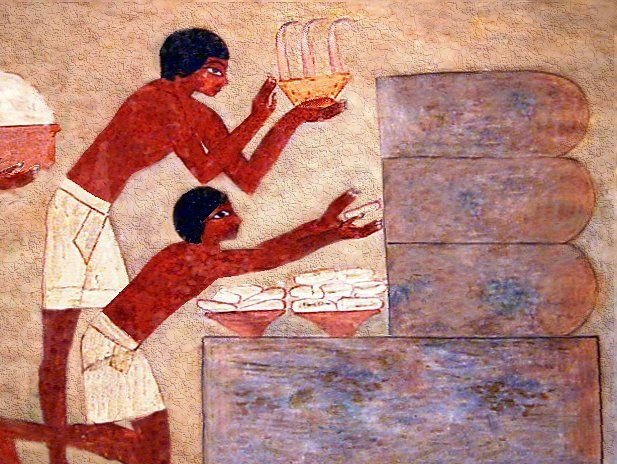
In the hierarchy of ancient Egyptian sustenance, bread was the absolute undisputed king, serving as the fundamental base of every meal for every citizen, from the humble pyramid builder to the Pharaoh himself. The process of bread-making began in the sprawling fields of emmer wheat, a grain that required significant labor to de-husk compared to modern varieties. Once harvested, the grain was ground into flour using heavy stone querns, a grueling task that often left archaeological evidence of dental wear and back strain in the skeletal remains of ancient bakers. Ancient Egyptian bakeries were marvels of early mass production; artistic reliefs in tombs depict a bustling environment where dough was kneaded with the hands or even feet in large vats. The Egyptians were pioneers in leavening, discovering that leaving dough to sit would allow natural yeasts to make it rise, resulting in a lighter, more palatable loaf. They produced over forty different varieties of bread, varying in shape—from flat disks to tall conical loaves—and flavor. For the elite, bread was often enriched with luxurious additives such as honey, dried dates, raisins, and aromatic seeds like cumin or coriander. However, bread was more than just food; it was a form of currency. Workers were frequently paid in units of bread, and it was the primary offering placed in tombs to nourish the deceased for eternity. The grit from the stone grinders often found its way into the dough, leading to the characteristic worn-down teeth seen in many mummies, a small physical price paid for the "staff of life" that fueled the construction of the ancient world.

2. Liquid Gold: The Cultural and Nutritional Role of Beer
If bread was the solid foundation of the Egyptian diet, beer (heket) was its essential liquid counterpart, consumed by men, women, and even children as a safe and nutritious alternative to the often-contaminated waters of the Nile. Ancient Egyptian beer was vastly different from the clear, carbonated lagers of the modern era; it was a thick, porridge-like beverage, rich in B vitamins and proteins, providing a vital caloric boost to the laboring classes. The brewing process was intrinsically linked to baking, as it often involved "beer bread"—partially baked loaves of barley dough that were crumbled into water and left to ferment in large ceramic vats. This fermentation process was seen as a divine gift from the goddess Hathor, the "Mistress of Drunkenness," and the beer was often strained through baskets to remove large clumps before consumption. Because the alcohol content was generally lower than modern spirits, it functioned more like a food group than an intoxicant, although "strong beer" was certainly brewed for festivals and religious celebrations. In the royal court, beer was flavored with dates or honey to create a more refined palate, while the commoners enjoyed the standard barley brew. Beer was so vital to the social fabric that it was used to pay state laborers, including those who built the Great Pyramids at Giza, who received a daily ration of approximately four to five liters. It was the drink of both the physical and spiritual worlds, ensuring that even in the afterlife, an Egyptian would never go thirsty or hungry.

3. From the Black Land: Vegetables, Legumes, and Garden Bounty
The "Black Land" (Kemet), fertilized by the annual inundation of the Nile, provided a staggering variety of vegetables and legumes that added essential vitamins and minerals to the grain-heavy Egyptian diet. Because meat was expensive and largely reserved for festivals or the wealthy, the average Egyptian relied heavily on plant-based proteins. The most common legumes were lentils, chickpeas, fava beans, and green peas, which were often stewed into thick, savory pottages seasoned with garlic and onions. Onions, in particular, held a special place in Egyptian culture; they were consumed raw in massive quantities for their perceived health benefits and were even used in oath-taking and mummification rituals due to their multi-layered structure symbolizing eternal life. Along the marshy banks of the Nile and in well-irrigated gardens, farmers grew leeks, radishes, and various types of lettuce—the latter being associated with Min, the god of fertility, because of its milky sap. Cucumbers and gourds provided hydration during the scorching summer months. These vegetables were typically eaten fresh, dried for preservation, or pickled to ensure a steady food supply during the months when the Nile flooded the fields and halted farming. The sheer variety of produce available meant that even the poorest Egyptians had access to a diet that was, in many ways, more nutritionally diverse than that of many other ancient civilizations. This agricultural abundance allowed the population to thrive, supporting the massive labor force required to maintain the empire’s monumental architectural and political ambitions.

4. Orchards of the Nile: Fruits, Sweets, and Natural Sugars
In the arid climate of Egypt, the lush, irrigated orchards provided a sweet reprieve from the salty and savory staples of bread and onions. Fruit was highly prized both for its immediate nutritional value and its ability to be dried and stored for long periods. The most iconic fruit of the Nile Valley was the date, harvested from the towering date palm. These "natural candies" were eaten fresh, dried into chewy treats, or pressed into a thick syrup that served as a primary sweetener in a world without refined sugar. Figs were another staple, particularly the sycamore fig, which was so beloved that the tree itself was considered a manifestation of the goddess Hathor. Grapes, pomegranates, and watermelons were also widely cultivated, with the latter being especially valued for their high water content during the blistering summer heat. For the upper classes, the orchard was a place of luxury; they enjoyed imported rarities like the persea fruit and, in later periods, citrus and peaches. Because honey was a rare and expensive commodity—harvested by courageous beekeepers from mud-pipe hives—fruit became the most common way for the average Egyptian to satisfy a sweet tooth. In culinary preparations, fruits were often incorporated into breads and cakes to create festive desserts. Beyond their role as food, fruits held deep symbolic significance, frequently appearing in "offering formulas" carved into tomb walls to ensure that the deceased would enjoy the "sweetness of life" even in the dark reaches of the underworld.

5. Protein from the River and Sky: Poultry, Fish, and Game
While the consumption of red meat like beef was a luxury reserved for the wealthy or for major religious festivals, the average Egyptian found abundant protein in the sky and the water. The Nile was teeming with fish—such as perch, catfish, and tilapia—which were caught using sophisticated nets, hooks, and harpoons. Despite some local religious taboos against certain types of fish in specific nomes (provinces), fish was a staple for the laboring classes, often preserved by salting and sun-drying to create a pungent but long-lasting food source known as bouri. Parallel to the river's bounty was the staggering variety of waterfowl that migrated through the Nile Delta. Egyptians were master hunters, using throw-sticks and clap-nets to capture wild ducks, geese, and pigeons. By the New Kingdom, many of these birds were domesticated, and their eggs became a common dietary component. Interestingly, the ancient Egyptians did not eat much chicken, as the bird was not introduced until later in their history; instead, the goose was the "royal bird" of choice. For the elite, the desert fringes offered the thrill of the hunt, providing gazelle, oryx, and ibex meat, which was considered a high-status delicacy. This reliance on a wide array of smaller proteins, rather than large-scale cattle ranching, allowed the Egyptian population to maintain a remarkably high protein intake without exhausting the limited grazing land available in the narrow Nile Valley.
6. The Nectar of the Gods: Viticulture and the Prestige of Wine
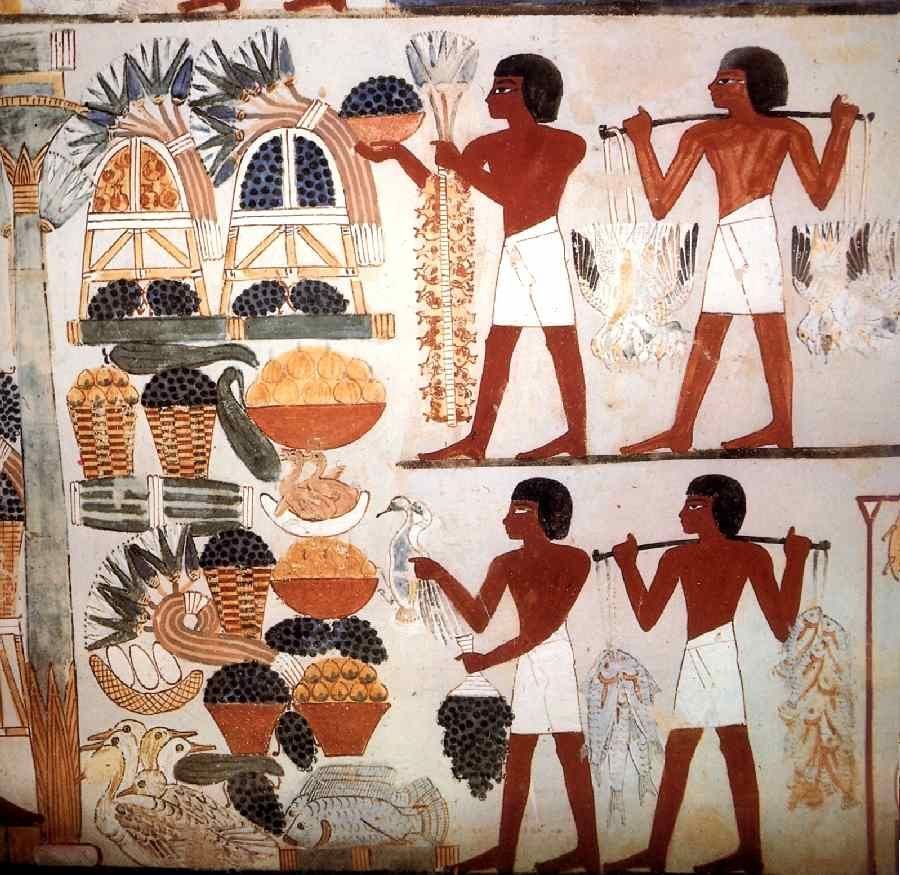
While beer was the drink of the masses, wine (irp) was the sophisticated "liquid of the elite," associated with luxury, foreign trade, and the high priesthood. The art of viticulture was concentrated in the fertile Nile Delta and the lush Oases, where the soil was perfect for grapevines. Ancient Egyptian winemaking was a highly organized industry; tomb paintings vividly depict the entire process, from the careful harvesting of purple grapes to the treading of the fruit in large stone vats while workers held onto overhead ropes for balance. The resulting juice was fermented in ceramic amphorae, which were then sealed and meticulously labeled with the vintage, the vineyard’s name, and the head winemaker—a practice that mirrors modern wine labeling. Unlike beer, wine was often aged, and certain vintages were prized above all others for their complexity and strength. Wine was deeply connected to the cult of Osiris, whose blood was symbolized by the red juice, and it played a central role in the "Festival of Drunkenness" dedicated to the goddess Sekhmet. Because wine was expensive to produce and transport, it became a primary status symbol; to serve fine wine at a banquet was to signal one's wealth and proximity to the royal court. Interestingly, while red wine was the most traditional, recent archaeological finds have confirmed that the Egyptians also produced sophisticated white wines. This "nectar of the gods" was more than an intoxicant; it was a cultural bridge that connected Egypt to the luxury markets of the Mediterranean, cementing the nation’s reputation for culinary refinement and agricultural mastery.

7. The Golden Calf: Beef and the Rarity of Red Meat
In the social hierarchy of ancient Egyptian food, beef stood at the very top as the ultimate luxury and a symbol of divine favor. Cattle were extremely expensive to raise because they required vast amounts of grazing land and grain, resources that were often prioritized for human consumption. Consequently, cattle were rarely slaughtered for a common meal; instead, they were primarily used as sacrificial offerings in temples. After the gods were symbolically "fed," the sanctified meat was redistributed among the priests and the high-ranking elite, making beef a "holy" protein. Tomb scenes frequently depict the "opening of the foreleg" ritual, where the prime cut of a bull was presented to the deceased. For the wealthy, beef was prepared in various ways—roasted on spits, boiled in stews, or salted for preservation. Calves were particularly prized for their tender meat, often being stall-fed to ensure a high fat content. Beyond beef, the Egyptians also consumed sheep and goats, though these were more common among the middle classes and in rural areas. Pigs were also raised and eaten, despite later historical accounts suggesting they were considered "unclean"; archaeological evidence of pig bones in worker villages proves they were a vital, albeit lower-status, source of fat and protein. The presence of beef at a table was a clear indicator of immense wealth, representing the ability to command the resources of the land and the favor of the priesthood.

8. The Essence of Flavor: Oils, Fats, and Dairy
Because the ancient Egyptian diet was heavily based on grains and vegetables, the use of oils and fats was crucial for both flavor and caloric density. The most common source of vegetable oil was flaxseed (linseed oil), though they also produced oils from safflower, sesame, and eventually olives in the later periods. However, the most prized fat in the Egyptian kitchen was animal fat, specifically "smere" (a form of clarified butter or ghee) and rendered waterfowl fat. These fats were used for frying, baking, and as a base for many sauces. Dairy also played a significant role, particularly in the form of milk, cream, and soft cheeses. Since the hot climate caused fresh milk to sour quickly, it was often converted into yogurt or a curd-like cheese similar to modern cottage cheese or Egyptian jibna. These dairy products were typically stored in ceramic jars and were frequently included in temple offerings. For the elite, a specialized form of thickened cream mixed with honey was a decadent treat. Fats were not only used for cooking but were also vital in medicine and cosmetics; the same oils used to sauté vegetables might also be used as a base for expensive perfumes or skin ointments. This dual use of fats underscores the holistic Egyptian view of nature, where the ingredients that sustained the body internally were the same ones used to protect and beautify it externally.

9. Aromatic Alchemy: Spices, Herbs, and Seasoning
The ancient Egyptians were masters of seasoning, using a wide array of indigenous and imported herbs and spices to transform simple grains into complex, aromatic dishes. The foundation of their seasoning was "the pungent duo": garlic and onions. These were eaten in such large quantities that they defined the very scent of the Egyptian kitchen. Beyond these, the fields provided a bounty of herbs like coriander, cumin, dill, and fennel, which were used both for their flavor and their digestive properties. Salt was harvested from the edges of the Delta and the Western Oases, and it was the primary preservative for fish and meat. For those who could afford it, the spice cabinet included luxuries like cinnamon and peppercorns, which arrived via trade routes from the Red Sea and the Levant. Mustard seeds were crushed to add heat, and vinegar—derived from fermented wine or dates—provided acidity. One of the most unique aspects of Egyptian seasoning was the use of seeds like fenugreek and celery seeds to add bitter, earthy undertones to stews. These aromatics were not just culinary choices; they were believed to have magical and medicinal properties. A well-seasoned meal was seen as a defense against illness, with spices like cumin acting as a remedy for stomach ailments. This "aromatic alchemy" allowed the Egyptians to create a cuisine that was as fragrant as it was flavorful, ensuring that every meal was a sensory experience that honored the richness of the earth.
10. The Art of the Feast: Banquets and Social Ceremony
In ancient Egypt, the banquet was the ultimate expression of social status and communal joy. Reserved for the elite and high-ranking officials, these gatherings were meticulously choreographed events that could last for several hours. Guests were greeted with flower garlands and cones of scented fat placed on their heads, which slowly melted to perfume their hair and clothes. The menu at such an event was a display of staggering variety, featuring dozens of types of bread, roasted meats, and jars of the finest vintage wine. Entertainment was as vital as the food; musicians playing harps and lutes, along with acrobats and dancers, provided a festive backdrop. Unlike the casual meals of the peasantry, banquet seating was often segregated by rank, with the most important guests sitting on high-backed chairs while others sat on stools or mats. Hand-washing was a frequent ritual, as many foods were eaten with the fingers. These feasts were not merely for indulgence; they were political and social tools used to cement alliances, celebrate religious festivals, and display the host's wealth and generosity. The sheer abundance of food at these gatherings was meant to mirror the "Perfect Land" of the gods, creating a sensory experience that combined taste, smell, and sound into a single, divine celebration of life’s prosperity.
11. The Ancient Kitchen: Tools, Techniques, and Cooking Methods
The ancient Egyptian kitchen was a bustling center of activity, typically located in a separate building or a shaded courtyard to keep the heat and smoke away from the main living quarters. Cooking was primarily done over open fires or in large clay ovens known as tanours. The equipment was simple but effective: ceramic pots for stews, bronze or copper pans for frying, and stone mortars for grinding spices. Grilling was a popular method for meat and fish, using spits made of wood or metal, while large ceramic vats were used for slow-boiling legumes and cereals. One of the most innovative techniques was "pit cooking," where food was wrapped in leaves and buried with hot coals to steam slowly. Without refrigeration, food safety was managed through rapid consumption or preservation techniques like salting, smoking, and sun-drying. The labor of the kitchen was divided; while men often handled large-scale baking and brewing, women were typically responsible for the daily preparation of family meals. Despite the lack of modern technology, the Egyptian cook was a master of heat management and flavor extraction, utilizing the natural properties of clay and fire to create dishes that were nutritious and satisfying. This culinary ingenuity allowed the Egyptians to maximize the potential of their local ingredients, turning the raw bounty of the Nile into a sophisticated and varied cuisine.
12. The Eternal Banquet: Food in the Afterlife
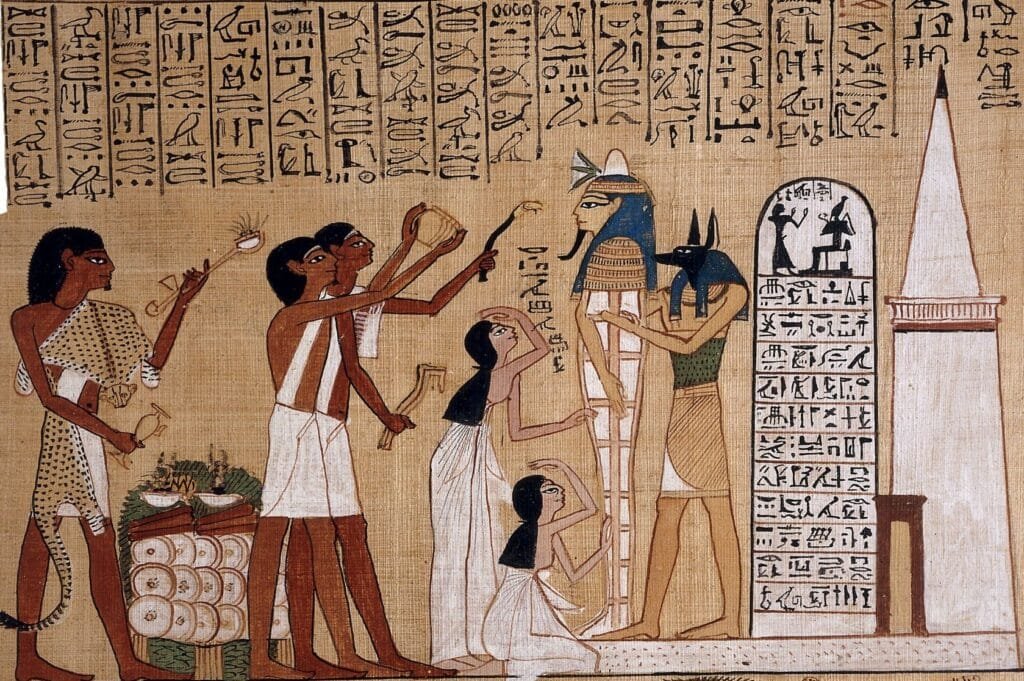
Perhaps the most unique aspect of ancient Egyptian food culture was its extension into the realm of the dead. The Egyptians believed that the hunger and thirst of the physical body continued in the spiritual afterlife, making food offerings an essential part of funerary rites. This belief led to the creation of "tomb models"—exquisite miniature scenes of bakeries, breweries, and granaries—intended to provide the deceased with a magical, never-ending supply of sustenance. In the tombs of the wealthy, actual food was often left in "mummified" form; ducks, beef ribs, and loaves of bread were wrapped in linen and treated with resin to last for eternity. For those who could not afford such luxuries, "Offering Tables" were carved with images of food, which could be "activated" through the recitation of sacred spells. The "Htp-di-nsw" formula, a standard prayer, asked for a "thousand of bread, beer, oxen, and fowl" for the soul of the departed. This obsession with the "Eternal Banquet" ensures that we have a remarkably clear picture of their diet today. By provisioning the dead, the Egyptians demonstrated their ultimate conviction: that the pleasures of the table—the taste of honey, the warmth of bread, and the coldness of beer—were so central to the human experience that they were worth carrying into the stars forever.