- Excursions in Egypt
- Egypt Tour Packages
- Cairo Tours and Excursions
- Hurghada Tours and Excursions
- Soma Bay Tours and Excursions
- Makadi Bay Tours and Excursions
- Sahl Hasheesh Tours and Excursions
- El Gouna Tours and Excursions
- Marsa Alam Tours and Excursions
- Port Ghalib Tours and Excursions
- El Quseir Tours and Excursions
- Dendera and Abydos Day Tours
- Aswan Tours and Excursions
- Luxor Tours and Excursions
- Sharm El Sheikh Tours and Excursions
- Top Rated Egypt Tours in 2026
- Optional Excursions in Egypt
- Private Transfer
- Blogs About egypt
- Ancient Egypt
- Historical Sites in Egypt
- Cairo
- Alexandria
- Luxor
- Aswan
- The Red Sea
- Dendera Temple
- El Fayoum Oasis
- Bahariya Oasis
- Siwa Oasis
- Al Alamein
- Marsa Matruh
- Why Egypt Is One of the Safest Countries to Visit in the Middle East
- What You Need To know Before Your First Trip To Egypt
- Egypt Travel Costs in 2026 Full Budget Guide
- Top 10 Tourist Activities in Egypt
- Top 50 Activities You Can’t Miss in Egypt in 2026
- The Guide to Guided Tours in Egypt
- Egypt’s Ancient and Modern History
- The Nile River
- The Deserts of Egypt
- Ancient Egyptian gods
- famous Egyptian dishes
- UNESCO World Heritage sites
- About Us
- Egypt Hotels and Resorts
- Excursions in Egypt
- Egypt Tour Packages
- Cairo Tours and Excursions
- Hurghada Tours and Excursions
- Soma Bay Tours and Excursions
- Makadi Bay Tours and Excursions
- Sahl Hasheesh Tours and Excursions
- El Gouna Tours and Excursions
- Marsa Alam Tours and Excursions
- Port Ghalib Tours and Excursions
- El Quseir Tours and Excursions
- Dendera and Abydos Day Tours
- Aswan Tours and Excursions
- Luxor Tours and Excursions
- Sharm El Sheikh Tours and Excursions
- Top Rated Egypt Tours in 2026
- Optional Excursions in Egypt
- Private Transfer
- Blogs About egypt
- Ancient Egypt
- Historical Sites in Egypt
- Cairo
- Alexandria
- Luxor
- Aswan
- The Red Sea
- Dendera Temple
- El Fayoum Oasis
- Bahariya Oasis
- Siwa Oasis
- Al Alamein
- Marsa Matruh
- Why Egypt Is One of the Safest Countries to Visit in the Middle East
- What You Need To know Before Your First Trip To Egypt
- Egypt Travel Costs in 2026 Full Budget Guide
- Top 10 Tourist Activities in Egypt
- Top 50 Activities You Can’t Miss in Egypt in 2026
- The Guide to Guided Tours in Egypt
- Egypt’s Ancient and Modern History
- The Nile River
- The Deserts of Egypt
- Ancient Egyptian gods
- famous Egyptian dishes
- UNESCO World Heritage sites
- About Us
- Egypt Hotels and Resorts
Welcome to
White Desert National Park – Egypt
White Desert National Park is one of the most extraordinary natural attractions in Egypt and one of the most recognizable landscapes in the Western Desert. Located near Farafra Oasis, the protected area is famous for its brilliant white chalk formations, unusual rock sculptures, vast desert plains, and spectacular sunsets. For travelers looking to explore the natural side of Egypt, a visit to the White Desert Egypt offers an experience completely different from the country’s famous pyramids, temples, and archaeological sites.
The landscape of White Desert National Park was shaped over millions of years by geological processes, wind, erosion, and changes in the ancient environment. These forces gradually sculpted the soft chalk and limestone formations into remarkable shapes that can resemble giant mushrooms, animals, towers, and other imaginative forms.
The national park is particularly popular as part of a White Desert safari from Cairo or a multi-day Western Desert adventure. Travelers commonly combine it with Bahariya Oasis, the Black Desert, and Crystal Mountain, creating a journey through some of Egypt’s most spectacular geological landscapes.
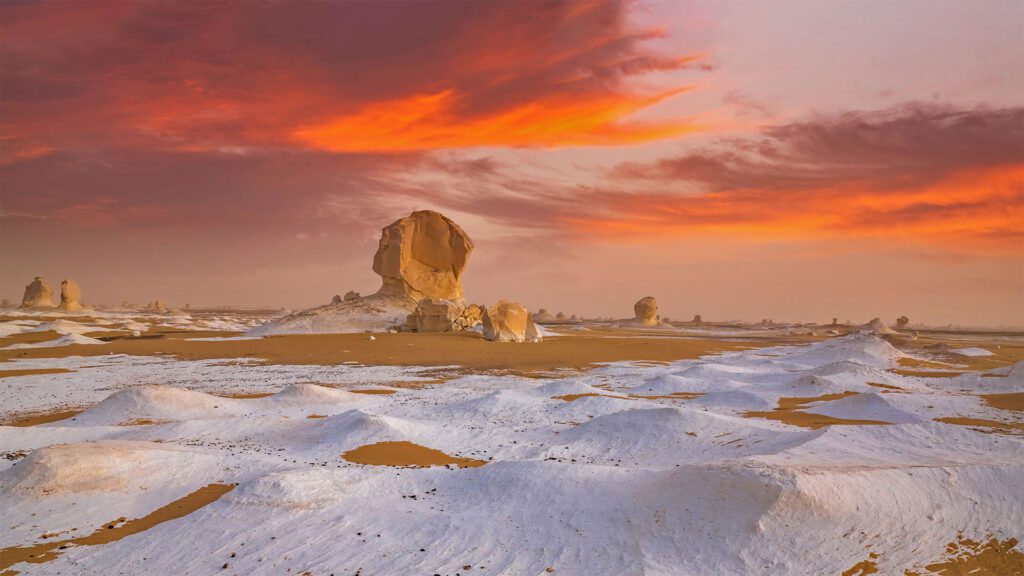
One of the most memorable experiences is watching the sunset over the white formations. As the sunlight changes, the chalk rocks can appear yellow, orange, pink, and eventually gray beneath the evening sky. After sunset, the remote location provides excellent conditions for observing the stars.
Many visitors also choose to spend the night in the desert. White Desert camping allows travelers to experience the silence of the Western Desert, enjoy a traditional desert dinner, and wake up surrounded by the unusual chalk formations.
For travelers searching for White Desert National Park Egypt, White Desert Egypt, White Desert safari, things to do in the White Desert, Farafra Oasis, and Egypt desert camping, this remarkable protected area deserves a place on any Western Desert itinerary.
White Desert National Park is more than a beautiful desert; it is a unique geological environment that showcases the extraordinary natural heritage of Egypt.
1. Where Is White Desert National Park Located?
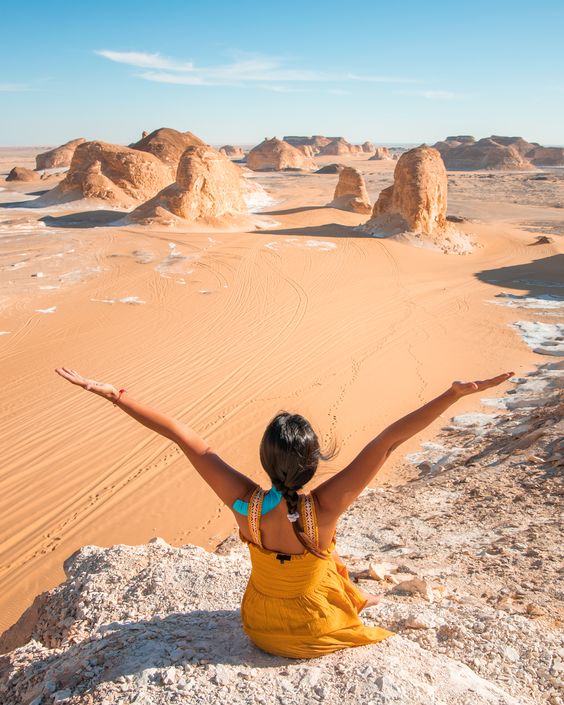
White Desert National Park is located in Egypt's Western Desert, near Farafra Oasis in the New Valley Governorate. The protected area lies within a vast desert landscape between the Bahariya and Farafra regions, making it a popular destination on multi-day desert safaris. The park is relatively remote compared with Egypt's major tourist destinations. This distance from large cities is part of what makes the White Desert so special. Visitors can experience enormous open spaces, unusual rock formations, clear skies, and a peaceful desert atmosphere without the crowds found at more famous archaeological sites. Many travelers reach the White Desert after beginning their journey in Cairo and traveling toward Bahariya Oasis. From Bahariya, the desert route can continue through the Black Desert and Crystal Mountain before reaching the White Desert. The journey itself is one of the highlights. The landscape changes dramatically along the route, moving from the fertile green areas around Bahariya to dark rocky hills, golden sand, mineral-rich formations, and finally the brilliant white chalk formations of the national park. Because the area is remote and the desert routes can be challenging, visitors normally explore White Desert National Park by 4x4 vehicle with an experienced local driver and guide. The route may vary according to local conditions and the selected tour itinerary. Farafra Oasis is the closest major oasis to the White Desert and can be used as a base for exploring the surrounding region. Visitors can also discover local culture, traditional crafts, and the peaceful atmosphere of the oasis. For tourists searching for where White Desert National Park is located, White Desert Egypt location, Farafra Oasis, White Desert tours from Cairo, and Western Desert attractions, this protected area is one of the most important natural destinations in Egypt's Western Desert. Its remote location, unusual geology, and connection with several other desert attractions make White Desert National Park an essential stop for travelers seeking an authentic Egyptian desert adventure.
2. Why Is the White Desert Famous?
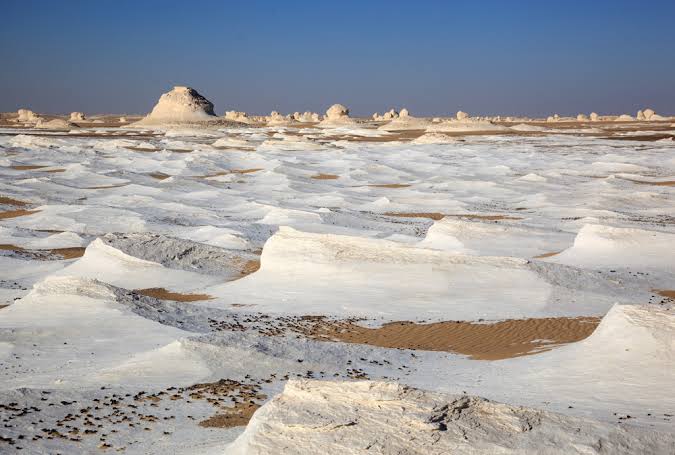
The White Desert is famous for its extraordinary white chalk formations and surreal landscape. Unlike traditional sandy deserts dominated by dunes, this protected area is filled with massive white and cream-colored rock formations sculpted by wind and erosion. Some formations resemble mushrooms, giant pebbles, animals, towers, and other unusual shapes. Their imaginative appearance has made the White Desert one of the most photographed natural attractions in Egypt. The white color comes primarily from the area's chalk and limestone formations. Over thousands and millions of years, natural erosion gradually shaped the soft rock into the forms visitors see today. The landscape becomes particularly spectacular during sunrise and sunset. When sunlight reaches the formations from different angles, the rocks can change color from bright white to golden, orange, pink, and gray. The White Desert is also famous for its remote atmosphere. There are no large buildings or urban developments surrounding the main desert landscape. Visitors can experience a sense of isolation and silence that is increasingly difficult to find in modern destinations. Another reason for the area's popularity is White Desert camping. Many travelers choose to spend the night among the chalk formations, enjoying dinner in the desert and observing the stars far away from city lights. The White Desert is also part of a larger Western Desert route. Travelers often combine it with Bahariya Oasis, the Black Desert, and Crystal Mountain, allowing them to experience several different geological environments in one trip. For anyone searching for why the White Desert is famous, White Desert Egypt attractions, White Desert rock formations, White Desert National Park, and things to do in Farafra, the unusual geology and spectacular scenery are the main reasons for its international popularity. The destination provides a rare combination of natural beauty, geological history, adventure, and peaceful surroundings. White Desert National Park is famous not only because of its white rocks, but because the entire landscape feels unlike almost anywhere else in Egypt.
3. Geology of White Desert National Park
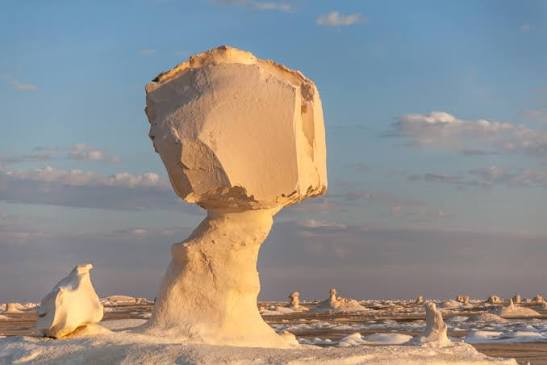
The geology of White Desert National Park is one of the main reasons this protected area has become one of Egypt's most famous natural attractions. The spectacular white formations were created through a combination of ancient geological processes, sedimentation, weathering, and erosion that continued over extremely long periods. Much of the landscape consists of chalk and limestone, which are relatively soft compared with many other types of rock. Wind and sand gradually eroded the exposed surfaces, carving the rocks into unusual shapes. The process continues today, meaning that the landscape is constantly changing, even if the changes are too slow to notice during a single visit. Many of the formations have narrow bases and wider tops. Some resemble giant mushrooms or umbrellas, while others look like animals, towers, or enormous stones. These shapes were created naturally rather than by human activity. The geology of the White Desert becomes even more interesting when compared with nearby attractions. The Black Desert contains dark rocky hills, while Crystal Mountain is known for quartz-rich formations. The contrast between these destinations demonstrates the remarkable geological diversity of Egypt's Western Desert. The area also contains evidence of ancient environmental conditions. Millions of years ago, parts of the region experienced very different climates and were influenced by marine environments. The rocks preserved from these ancient periods help scientists understand how the landscape of the Sahara developed. Visitors exploring the White Desert can observe the effects of wind erosion directly. Smooth surfaces, sharp edges, unusual cavities, and isolated rock formations all demonstrate how natural forces have shaped the landscape. For travelers searching for White Desert geology, White Desert rock formations, chalk formations in Egypt, Western Desert geology, White Desert National Park Egypt, and natural wonders of Egypt, the park provides an extraordinary opportunity to see geological history in a spectacular natural setting. The geology is ultimately what gives the White Desert its unique character. Without millions of years of sedimentation and erosion, the famous white sculptures that attract travelers from around the world would not exist.
4. The Famous Rock Formations of the White Desert
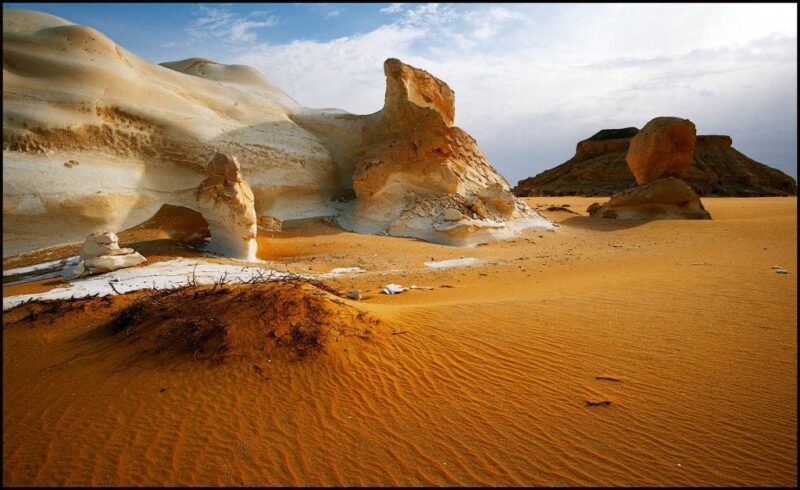
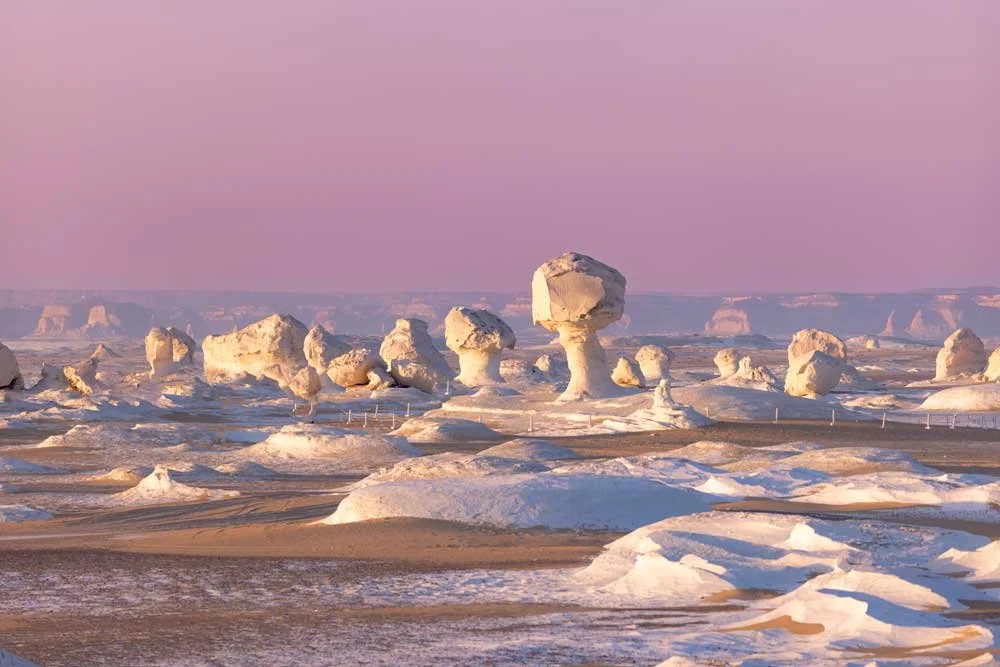
The rock formations of the White Desert are among the most recognizable natural landmarks in Egypt. Their unusual shapes and bright colors have made the area famous worldwide, with many formations appearing to resemble familiar objects, animals, or enormous sculptures. One of the most commonly photographed shapes resembles a giant mushroom or umbrella. Its narrow lower section and broad upper surface were created naturally as wind and sand gradually eroded different parts of the rock at different speeds. Other formations appear like giant birds, animals, towers, columns, or enormous stones. The names given to individual formations can vary between guides and tour operators because visitors naturally interpret the shapes differently. The formations are especially impressive when seen from different angles. A rock that resembles one object from one direction may look completely different when viewed from another. This makes exploring the White Desert an engaging experience for photographers and travelers. The bright white and cream-colored rocks contrast strongly with the surrounding golden desert floor. During the day, the formations can appear almost brilliant white under direct sunlight. Near sunset, they take on warmer shades of yellow, orange, and pink. Wind is one of the most important forces responsible for shaping these formations. Over thousands of years, wind carrying fine particles of sand has slowly worn away exposed surfaces. Softer areas erode faster, leaving behind unusual shapes. Visitors should avoid climbing fragile formations or touching delicate surfaces unnecessarily. The rocks are natural geological features, and protecting them helps preserve the landscape for future generations. Photography is one of the most popular activities in this area. Wide-angle photographs can capture the scale of the desert, while closer images reveal textures, cracks, and patterns in the chalk. For travelers searching for White Desert rock formations, famous White Desert formations, mushroom rocks Egypt, White Desert photography, and things to see in White Desert National Park, exploring these natural sculptures is one of the highlights of any visit. The formations demonstrate how powerful natural forces can transform simple rock into landscapes that look almost artificially designed.
5. White Desert National Park and Farafra Oasis
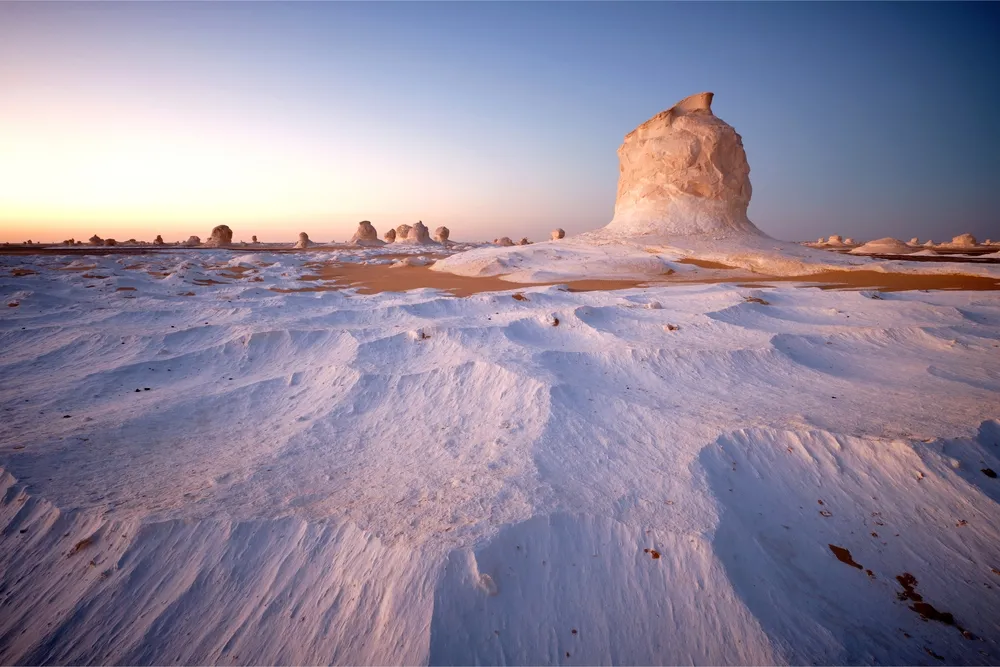
White Desert National Park and Farafra Oasis are closely connected and are often included together in Western Desert travel itineraries. Farafra serves as an important gateway to the White Desert and offers travelers a peaceful introduction to one of Egypt's most remote regions. Farafra Oasis is one of the smaller oases of the Western Desert. It is surrounded by desert and is known for its palm trees, agricultural areas, traditional communities, and relaxed atmosphere. The contrast between the green oasis and the surrounding barren desert makes Farafra particularly attractive to travelers. The journey from Farafra toward White Desert National Park provides an impressive change in scenery. As travelers leave the cultivated oasis, the landscape gradually becomes more open and rugged. Eventually, the famous white chalk formations begin appearing across the desert. Many travelers visit the White Desert as part of a Bahariya Oasis to Farafra desert safari. This route can include several major natural attractions, including the Black Desert and Crystal Mountain before reaching the White Desert. The connection with Farafra also makes it possible to learn more about local culture. Visitors can explore the oasis, see traditional agricultural areas, and discover local handicrafts and art. One notable cultural attraction in Farafra is the Badr Museum, associated with local artist Badr Abdel Moghny. The museum and surrounding artistic environment provide an opportunity to experience a different aspect of Egyptian desert culture. Travelers who spend several days in the Western Desert can combine their visit to the White Desert with an overnight stay in or around Farafra, depending on the itinerary. For tourists searching for White Desert and Farafra Oasis, Farafra Egypt tours, White Desert safari from Farafra, things to do in Farafra, and Western Desert attractions, visiting both destinations provides a more complete experience of the region. The combination of a fertile oasis and spectacular chalk formations demonstrates the remarkable diversity of the Western Desert. Farafra provides the human and agricultural side of the region, while White Desert National Park showcases its extraordinary geological landscape.
6. Things to Do in White Desert National Park
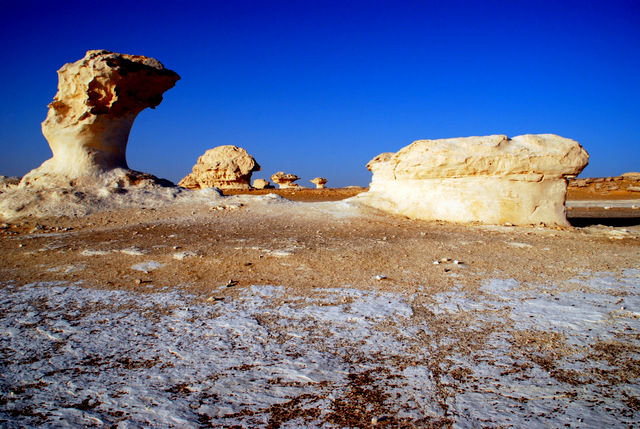
There are many things to do in White Desert National Park, making it one of the best destinations in Egypt for travelers who enjoy nature, adventure, photography, and remote landscapes. Although the park is primarily known for its unusual chalk formations, the overall desert experience offers much more than simply sightseeing. One of the most popular activities is exploring the park by 4x4 desert vehicle. The rugged terrain and remote location make a capable vehicle essential for reaching different areas of the White Desert. An experienced local driver can take visitors between the major formations and viewpoints while navigating the desert tracks. Photography is another major attraction. The unusual white formations create countless opportunities for landscape photography. Visitors can photograph individual rock sculptures, wide desert panoramas, and the contrast between the white chalk and golden sand. Sunset is particularly spectacular. As the sun moves toward the horizon, the white formations gradually change color, creating shades of yellow, orange, pink, and red. Photographers often choose elevated viewpoints to capture the changing light across the desert. Visitors can also explore the area on foot in suitable locations. Walking around the formations allows travelers to examine the textures, shapes, and geological details more closely. Comfortable footwear is recommended because the terrain can be uneven. Another popular activity is desert camping. Spending a night in the White Desert allows visitors to experience the landscape after dark. A traditional desert dinner, peaceful surroundings, and a clear night sky can make the experience especially memorable. Depending on the itinerary, travelers may also enjoy sandboarding in nearby desert areas. This can add an adventurous element to a multi-day Western Desert safari. The White Desert can also be combined with the Black Desert and Crystal Mountain, creating a full day or multi-day geological adventure. For travelers searching for things to do in White Desert Egypt, White Desert safari activities, White Desert camping, desert photography Egypt, 4x4 desert safari, and adventures in Farafra, the national park offers a wide variety of experiences. Whether you prefer photography, sightseeing, adventure, or simply enjoying the silence of the desert, White Desert National Park provides an unforgettable experience for every type of traveler.
7. White Desert Camping and Overnight Experience
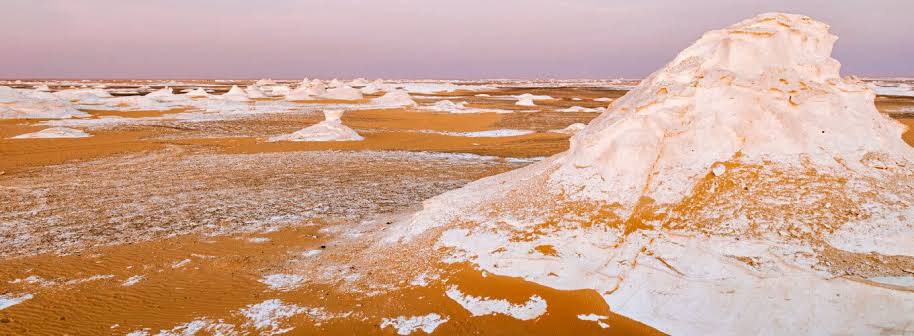
White Desert camping is one of the most memorable experiences available in Egypt's Western Desert. Instead of visiting the national park for only a few hours, travelers can spend the night surrounded by spectacular white chalk formations and experience the desert after sunset. A typical overnight experience begins with exploring the White Desert during the afternoon. Travelers can visit different rock formations, take photographs, and enjoy the changing scenery before stopping at a suitable campsite. One of the main highlights is watching the sunset in the White Desert. As the sun gets lower, the bright white rocks begin to change color. The formations can appear golden, orange, pink, and eventually gray as daylight disappears. After sunset, the atmosphere becomes completely different. The desert becomes extremely quiet, with the absence of city noise creating a remarkable sense of peace. In clear weather, the lack of urban light pollution can also provide excellent views of the night sky. Traditional desert camping usually includes a freshly prepared dinner. Depending on the tour, travelers may enjoy Egyptian dishes, grilled food, tea, and other refreshments while sitting around a campfire. The experience is particularly attractive to photographers and astronomy enthusiasts. The combination of unusual white formations and a star-filled sky creates excellent opportunities for night photography. Travelers should remember that desert temperatures can drop significantly at night, particularly during winter. Warm clothing, a jacket, and suitable sleeping arrangements are therefore important. Camping should always be arranged through experienced local desert professionals who know the area and can select appropriate camping locations. For tourists searching for White Desert camping Egypt, overnight White Desert safari, White Desert sunset, desert camping in Egypt, White Desert overnight tour, and Bahariya desert safari, spending the night in the park provides a much deeper experience than a short daytime visit. The combination of sunset, traditional food, silence, stars, and extraordinary rock formations makes an overnight White Desert experience one of the highlights of a Western Desert adventure.
8. White Desert and the Black Desert
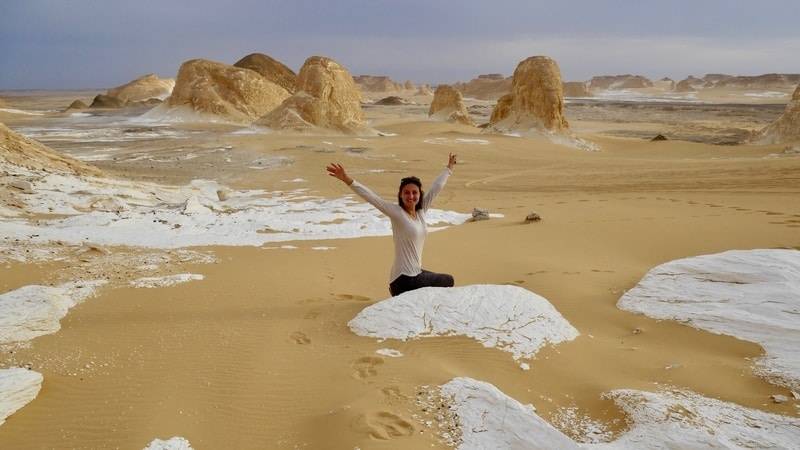
A journey combining the White Desert and Black Desert Egypt is one of the most popular ways to explore the natural attractions of the Western Desert. Although both destinations are located in the same general region, their landscapes are remarkably different. The Black Desert is characterized by dark rocky hills and black-colored stones, while the White Desert is famous for brilliant white chalk formations. Traveling between the two provides an impressive demonstration of the geological diversity of Egypt. Many desert safaris begin at Bahariya Oasis, where travelers can explore the oasis before entering the surrounding desert. The first major attraction may be the Black Desert, where dark hills rise above the golden sand. After exploring the Black Desert, travelers can continue toward Crystal Mountain, another distinctive geological landmark. The route then proceeds toward the White Desert and its famous chalk formations. The changing scenery makes the journey especially enjoyable. Travelers move from green palm groves to dark rocky mountains, then to golden desert landscapes and finally to bright white formations. The contrast is particularly impressive for photographers. The Black Desert provides dark silhouettes and rugged terrain, while the White Desert offers bright formations with smooth, rounded shapes. Many multi-day tours include overnight camping in the White Desert. This allows travelers to watch the sunset among the white formations and experience the desert at night. The route can also include activities such as 4x4 driving, sandboarding, photography, and exploring different geological formations. For travelers searching for White Desert and Black Desert tour, Black Desert Egypt, White Desert safari from Cairo, Bahariya Oasis desert tours, and Western Desert adventure, combining these destinations creates a comprehensive desert experience. Together, the two landscapes show just how dramatically Egypt's desert environment can change. The dark hills of the Black Desert and the brilliant formations of the White Desert create one of the most visually impressive natural journeys in Egypt.
9. Best Time to Visit White Desert National Park
The best time to visit White Desert National Park is generally during the cooler months, when the desert climate is more comfortable for sightseeing, photography, and outdoor activities. Because the park is an open desert environment with limited shade, temperatures can have a significant impact on the overall experience. The period from October to April is usually the most comfortable for a White Desert Egypt tour. During these months, daytime temperatures are generally more pleasant, making it easier to explore the rock formations and travel between different areas of the national park. Winter is particularly popular because daytime conditions can be comfortable for desert activities. However, nighttime temperatures can become very cold, especially when camping in the open desert. Travelers planning an overnight stay should bring warm layers, a jacket, and suitable sleeping equipment. Spring and autumn are also excellent seasons for exploring the White Desert. These months can provide a comfortable balance between daytime temperatures and nighttime conditions. Summer is considerably hotter. Although desert tours can operate during the summer, travelers should be prepared for intense heat, strong sunlight, and long periods outdoors. Early morning and late afternoon are generally more comfortable than the middle of the day. The time of day is also important for photography. Sunrise and sunset are among the most beautiful moments in White Desert National Park. The low sunlight creates long shadows and changes the color of the chalk formations from white to golden, orange, and pink. For travelers searching for the best time to visit White Desert Egypt, White Desert weather, White Desert camping season, Farafra Oasis tours, and Egypt desert safari, the cooler months are generally the most comfortable. Regardless of the season, visitors should carry sufficient water, wear sun protection, and follow the advice of their local driver or guide. Weather and desert conditions can vary, so professional guidance is especially valuable in such a remote environment.
10. How to Visit White Desert National Park from Cairo
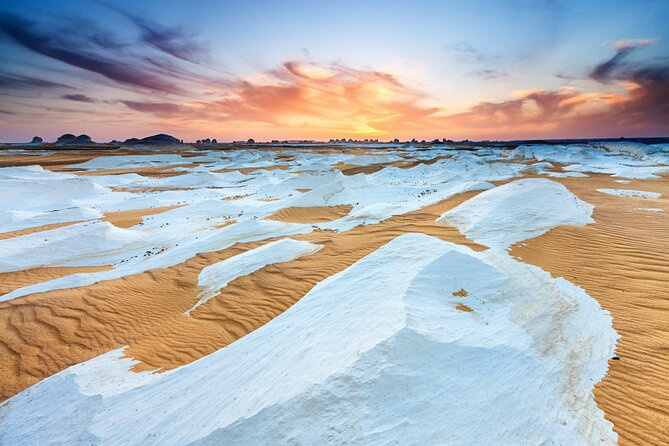
A White Desert tour from Cairo is usually organized as a multi-day Western Desert adventure because of the distance between Cairo and the national park. The journey commonly includes Bahariya Oasis, the Black Desert, Crystal Mountain, and the White Desert. Travelers typically leave Cairo early and travel by road toward Bahariya Oasis. The landscape gradually changes from the Nile Valley and urban environment to vast desert plains. After reaching Bahariya, the adventure continues into the desert using a 4x4 vehicle. Travelers can explore the Black Desert before continuing toward Crystal Mountain and eventually the White Desert. The route is one of the most enjoyable parts of the experience because the landscape changes constantly. Each destination has its own colors, rock formations, and geological characteristics. Upon reaching White Desert National Park, visitors can explore the famous chalk formations, photograph the unusual rocks, and enjoy panoramic views of the surrounding desert. Many travelers choose to stay overnight in the White Desert. This provides the opportunity to watch sunset, enjoy a traditional desert dinner, and experience the stars after dark. The following morning, travelers can enjoy sunrise before continuing the journey. Depending on the itinerary, the tour can return toward Bahariya and Cairo or continue toward Farafra and other destinations. Because the White Desert is remote, travelers should not attempt to navigate the area independently. Experienced local drivers know the desert tracks and can help travelers move safely between the main attractions. A private White Desert safari also offers greater flexibility. Visitors can spend more time photographing the formations, enjoy additional stops, and customize the itinerary according to their interests. For tourists searching for how to visit White Desert National Park from Cairo, White Desert tour from Cairo, White Desert safari Egypt, Bahariya Oasis tour, and private Western Desert tours, an organized multi-day trip is the most practical option. The journey combines transportation, sightseeing, geology, adventure, and camping into one unforgettable Egyptian desert experience.
11. What to Know Before Visiting White Desert National Park
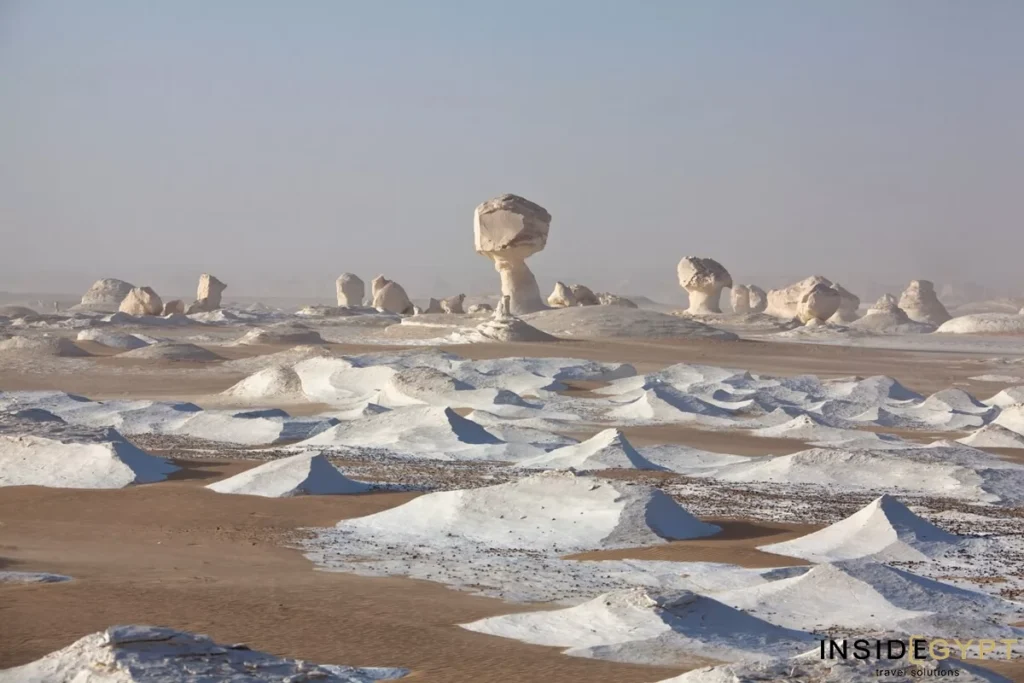
Before visiting White Desert National Park Egypt, travelers should prepare carefully for the desert environment. The park is remote and exposed, so understanding the conditions can help ensure a comfortable and enjoyable journey. The first important consideration is clothing. Lightweight, breathable clothing is useful during the day, while warm layers are essential if you plan to stay overnight. Desert temperatures can drop significantly after sunset, especially during winter. Comfortable closed shoes are also recommended. Although some areas can be explored easily, the terrain around the chalk formations can be uneven and rocky. Sun protection is essential. Travelers should bring sunscreen, sunglasses, and a hat. The bright white rocks can reflect sunlight strongly, increasing exposure during daytime sightseeing. Water is another important consideration. Travelers should always have sufficient drinking water, particularly during warmer months. Visitors should also respect the protected environment. The unusual chalk formations are fragile natural features and should not be climbed, broken, or damaged. Removing rocks or other natural materials should also be avoided. Because the White Desert is located in a remote region, travelers should explore it with an experienced local driver and guide. Desert navigation can be difficult, and professional drivers are familiar with the routes and local conditions. If your itinerary includes White Desert camping, prepare for nighttime temperatures and bring appropriate warm clothing. Travelers interested in photography should also protect their cameras and phones from dust and sand during desert driving. Mobile-phone coverage can be limited in remote areas, so organized tours provide an additional level of convenience and security. For visitors searching for White Desert travel tips, what to bring to White Desert Egypt, White Desert camping advice, Egypt desert safari tips, and Farafra travel guide, proper preparation is essential. With suitable clothing, sufficient water, sun protection, comfortable footwear, and experienced local support, travelers can enjoy the spectacular scenery of White Desert National Park while helping preserve its fragile natural environment.
12. Why Visit White Desert National Park in Egypt?
White Desert National Park is one of the most remarkable natural destinations in Egypt and offers travelers an opportunity to experience a side of the country that is completely different from its famous archaeological attractions. The park's brilliant white chalk formations, dramatic desert scenery, peaceful atmosphere, and extraordinary geology make it an unforgettable destination for nature lovers and adventure travelers. One of the main reasons to visit is the unique landscape. The unusual formations look like giant sculptures created by nature, with some resembling mushrooms, animals, towers, and other imaginative shapes. Wind and erosion have shaped these formations over thousands of years, creating a landscape that seems almost unreal. The White Desert is also an excellent destination for photography. The bright chalk formations contrast beautifully with the surrounding golden desert, while sunrise and sunset create constantly changing colors and shadows. Another major attraction is the opportunity to experience desert camping in Egypt. Spending the night among the white formations allows visitors to escape the noise of cities and enjoy the peaceful atmosphere of the Western Desert. Watching the sunset, enjoying a traditional dinner, and looking at the stars can become one of the most memorable parts of the journey. The park can also be combined with several other Western Desert attractions. A well-planned White Desert safari from Cairo may include Bahariya Oasis, the Black Desert, and Crystal Mountain before reaching the national park. For adventure travelers, the journey offers 4x4 desert driving, hiking in suitable areas, photography, and opportunities to explore remote landscapes. Travelers interested in geology can also observe firsthand how wind, erosion, and ancient geological processes shaped the region. For anyone searching for White Desert National Park Egypt, White Desert Egypt tours, White Desert safari, things to do in White Desert, Farafra Oasis, and Egypt desert camping, this destination deserves a place on any Western Desert itinerary. Ultimately, the White Desert is special because it combines natural beauty, geology, adventure, photography, and tranquility in one extraordinary location. From the dark hills of the Black Desert to the sparkling formations of Crystal Mountain and the brilliant chalk sculptures of White Desert National Park, exploring Egypt's Western Desert reveals a spectacular natural world far beyond the country's ancient monuments.