

- Excursions in Egypt
- Egypt Tour Packages
- Cairo Tours and Excursions
- Hurghada Tours and Excursions
- Soma Bay Tours and Excursions
- Makadi Bay Tours and Excursions
- Sahl Hasheesh Tours and Excursions
- El Gouna Tours and Excursions
- Marsa Alam Tours and Excursions
- Port Ghalib Tours and Excursions
- El Quseir Tours and Excursions
- Dendera and Abydos Day Tours
- Aswan Tours and Excursions
- Luxor Tours and Excursions
- Sharm El Sheikh Tours and Excursions
- Top Rated Egypt Tours in 2026
- Optional Excursions in Egypt
- Private Transfer
- Blogs About egypt
- Ancient Egypt
- Historical Sites in Egypt
- Cairo
- Alexandria
- Luxor
- Aswan
- The Red Sea
- Dendera Temple
- El Fayoum Oasis
- Bahariya Oasis
- Siwa Oasis
- Al Alamein
- Marsa Matruh
- Why Egypt Is One of the Safest Countries to Visit in the Middle East
- What You Need To know Before Your First Trip To Egypt
- Egypt Travel Costs in 2026 Full Budget Guide
- Top 10 Tourist Activities in Egypt
- Top 50 Activities You Can’t Miss in Egypt in 2026
- The Guide to Guided Tours in Egypt
- Egypt’s Ancient and Modern History
- The Nile River
- The Deserts of Egypt
- Ancient Egyptian gods
- famous Egyptian dishes
- UNESCO World Heritage sites
- About Us
- Egypt Hotels and Resorts
- Excursions in Egypt
- Egypt Tour Packages
- Cairo Tours and Excursions
- Hurghada Tours and Excursions
- Soma Bay Tours and Excursions
- Makadi Bay Tours and Excursions
- Sahl Hasheesh Tours and Excursions
- El Gouna Tours and Excursions
- Marsa Alam Tours and Excursions
- Port Ghalib Tours and Excursions
- El Quseir Tours and Excursions
- Dendera and Abydos Day Tours
- Aswan Tours and Excursions
- Luxor Tours and Excursions
- Sharm El Sheikh Tours and Excursions
- Top Rated Egypt Tours in 2026
- Optional Excursions in Egypt
- Private Transfer
- Blogs About egypt
- Ancient Egypt
- Historical Sites in Egypt
- Cairo
- Alexandria
- Luxor
- Aswan
- The Red Sea
- Dendera Temple
- El Fayoum Oasis
- Bahariya Oasis
- Siwa Oasis
- Al Alamein
- Marsa Matruh
- Why Egypt Is One of the Safest Countries to Visit in the Middle East
- What You Need To know Before Your First Trip To Egypt
- Egypt Travel Costs in 2026 Full Budget Guide
- Top 10 Tourist Activities in Egypt
- Top 50 Activities You Can’t Miss in Egypt in 2026
- The Guide to Guided Tours in Egypt
- Egypt’s Ancient and Modern History
- The Nile River
- The Deserts of Egypt
- Ancient Egyptian gods
- famous Egyptian dishes
- UNESCO World Heritage sites
- About Us
- Egypt Hotels and Resorts
Welcome to
Cleopatra’s Spring in Siwa – A Complete Guide to Cleopatra’s Bath
Cleopatra’s Spring, also known as Cleopatra’s Bath, is one of the most famous natural attractions in Siwa Oasis, Egypt. Surrounded by palm trees and the peaceful landscapes of the Western Desert, this natural freshwater spring is a popular stop for travelers exploring Siwa’s unique combination of nature, history, and traditional oasis life.
The spring is a natural pool fed by underground groundwater, and its clear, warm water makes it a refreshing place to visit, particularly after exploring Siwa’s archaeological sites or traveling through the desert.
Despite its famous name, there is no definitive historical evidence that Cleopatra actually visited or bathed in this particular spring. The name is part of the local tradition and has helped make the attraction one of Siwa’s most recognizable landmarks.
The spring is located near Siwa’s agricultural areas, where visitors can see palm trees, olive groves, and traditional oasis landscapes. The surrounding greenery creates a beautiful contrast with the dry desert beyond.
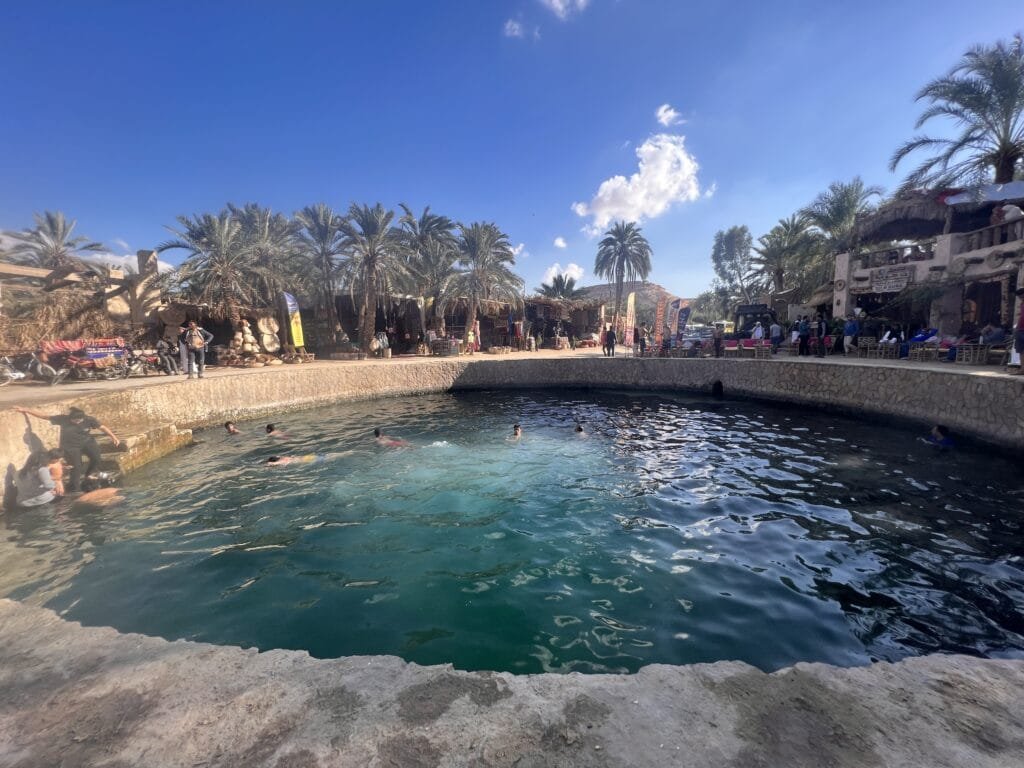
Swimming is one of the most popular activities at Cleopatra’s Spring. Visitors can enter the circular pool and enjoy the naturally warm freshwater while surrounded by palm trees.
The spring is also conveniently located near several other Siwa attractions, making it easy to include in a sightseeing itinerary. Travelers can combine it with Shali Fortress, the Oracle Temple of Amun, the Salt Lakes, Fatnas Island, and a desert safari.
For travelers searching for Cleopatra’s Spring Siwa, Cleopatra’s Bath Egypt, Siwa natural springs, swimming in Siwa Oasis, things to do in Siwa, and Siwa Oasis attractions, this spring is one of the experiences worth including in a visit.
Cleopatra’s Spring offers a refreshing natural experience in the heart of the Sahara and provides a beautiful glimpse into the water-rich environment that makes Siwa Oasis possible.

1. Where Is Cleopatra’s Spring Located in Siwa?
Cleopatra’s Spring is located in Siwa Oasis, in Egypt’s Western Desert, surrounded by the palm groves and agricultural landscapes that make the oasis so distinctive. The spring is situated close to Siwa town, making it relatively easy to include in a sightseeing itinerary. The area around the spring is noticeably greener than the surrounding desert. Date palms, olive trees, and other vegetation grow throughout the nearby agricultural areas because of Siwa's abundant underground water resources. Its convenient location means travelers can visit Cleopatra's Spring while exploring several of the oasis's major attractions. It is often combined with Shali Fortress, the Oracle Temple of Amun, the Siwa Salt Lakes, and Fatnas Island. The spring itself is a natural pool fed by underground water. Its circular shape and clear water have made it one of the most recognizable natural attractions in Siwa. Visitors can relax around the pool, enjoy the surrounding palm trees, or enter the water for a refreshing swim. For travelers searching for where is Cleopatra's Spring Siwa, Cleopatra's Bath location, Siwa Oasis natural springs, Siwa swimming spots, and how to visit Cleopatra's Spring, its location makes it a convenient stop during a tour of the oasis. The surrounding landscape also provides excellent opportunities for photography, particularly where the green vegetation contrasts with the golden desert. Located within the fertile heart of Siwa Oasis, Cleopatra’s Spring offers travelers an easy way to experience the natural freshwater resources that have sustained life in this remote desert region for thousands of years.

2. Why Is Cleopatra’s Spring Famous?
Cleopatra’s Spring is famous for its natural freshwater pool, beautiful oasis setting, and traditional association with Cleopatra VII, the last active ruler of the Ptolemaic Kingdom of Egypt. According to local tradition, Cleopatra visited the spring and bathed in its waters. This story has given the attraction its famous name and made it one of the most recognizable landmarks in Siwa. However, visitors should understand that there is no conclusive historical evidence proving that Cleopatra actually bathed at this specific spring. The association remains an important part of the local tradition and tourism history of the site. The spring is popular primarily because of its natural beauty. Clear freshwater emerges from underground sources and fills the stone-lined pool, while palm trees and agricultural areas surround the attraction. Swimming is one of the most popular activities. The warm freshwater provides a refreshing break, especially after a day spent exploring the desert or archaeological sites. The spring also represents the importance of water in Siwa. Underground water sources have allowed the oasis to support agriculture and human settlement despite being surrounded by the Sahara. For travelers searching for why is Cleopatra's Spring famous, Cleopatra's Bath Siwa, Cleopatra in Siwa Oasis, famous springs in Egypt, and things to do in Siwa, the combination of legend, nature, and local culture makes the attraction especially appealing. Whether or not Cleopatra herself visited the spring, its beautiful setting and long-standing connection with one of Egypt's most famous queens have made it an essential stop for visitors to Siwa Oasis.

3. Swimming at Cleopatra’s Spring
Swimming at Cleopatra’s Spring is one of the most popular experiences in Siwa Oasis. The natural freshwater pool provides visitors with an opportunity to relax in a peaceful environment surrounded by palm trees and the distinctive landscape of the oasis. Unlike the highly saline Siwa Salt Lakes, Cleopatra's Spring contains freshwater, making the swimming experience completely different. Visitors can enjoy the water without the strong buoyancy associated with the salt lakes. The spring is naturally fed by underground water, and the water temperature can feel pleasantly warm depending on the season and conditions. Many travelers visit the spring after exploring Siwa's historical attractions or before continuing to other natural sites. The pool provides a refreshing break during a busy sightseeing day. Visitors should follow local guidance regarding swimming conditions and take normal precautions around natural water. Comfortable footwear can also be useful when walking around the surrounding area. The setting is particularly attractive for photography. Palm trees, clear water, traditional buildings, and the surrounding oasis vegetation create a classic Siwan landscape. For travelers searching for swimming in Cleopatra's Spring, Cleopatra's Bath Siwa swimming, freshwater springs in Siwa, Siwa swimming attractions, and things to do in Siwa Oasis, taking a swim at this famous spring can be one of the highlights of the trip. The experience is also easy to combine with nearby attractions, making it a convenient part of a private Siwa tour. Swimming in Cleopatra’s Spring offers a refreshing freshwater experience in the middle of the Sahara and allows visitors to enjoy one of Siwa Oasis's most famous natural landmarks.

4. The History and Legend of Cleopatra’s Spring
The history of Cleopatra’s Spring in Siwa combines ancient Egyptian heritage with one of the most famous legends associated with the oasis. The spring is traditionally connected with Cleopatra VII, the renowned queen of Ptolemaic Egypt, although there is no definitive archaeological evidence confirming that she personally visited this particular spring. The association with Cleopatra has nevertheless become an important part of the site's identity. Over time, the name Cleopatra's Bath became widely used by locals and travelers, helping transform the natural spring into one of Siwa's best-known attractions. Cleopatra ruled Egypt during the first century BC, a period when Siwa remained an important oasis in the Western Desert. The region had already been famous for centuries because of the Oracle of Amun and its connections with the ancient Mediterranean world. The spring itself is much more important as a natural feature than as a documented royal site. Underground water emerges naturally in the oasis, creating freshwater pools and supporting the palm groves and agricultural land surrounding Siwa. This relationship between water and life is central to understanding the history of Siwa. Without its natural water resources, the oasis could not have supported the communities and agriculture that developed there over thousands of years. Today, visitors can enjoy the spring while learning about the legends surrounding Cleopatra and the ancient history of Siwa. For travelers searching for Cleopatra's Spring history, Cleopatra's Bath Siwa legend, Cleopatra in Siwa Oasis, Cleopatra Egypt history, and ancient Siwa attractions, the combination of historical tradition and natural beauty makes the spring especially interesting. Cleopatra’s Spring may be surrounded by legend rather than definitive historical evidence, but its story has become an enduring part of Siwa's cultural identity and tourism heritage.

5. Cleopatra’s Spring and the Natural Water of Siwa
The importance of Cleopatra’s Spring goes beyond its famous name. The spring is part of the natural water system that has allowed Siwa Oasis to exist and flourish in the middle of the Sahara Desert. Siwa is located in a large desert depression where underground groundwater reaches areas relatively close to the surface. This creates numerous springs, wells, lakes, and other water sources throughout the oasis. Cleopatra's Spring is one of the best-known examples of these freshwater sources. Its water supports the surrounding vegetation and provides a natural swimming location for visitors. The contrast between the spring and the surrounding desert is one of the most remarkable features of Siwa. A traveler can stand beside a freshwater pool surrounded by lush palm trees while the vast Sahara stretches beyond the oasis. The availability of water has also shaped traditional agriculture. Siwa is famous for its date palms and olive trees, along with other crops grown in fertile areas around the natural water sources. This makes Cleopatra's Spring an excellent place to understand the relationship between water, agriculture, and human settlement in the Western Desert. For travelers searching for Cleopatra's Spring natural water, Siwa freshwater springs, water sources in Siwa Oasis, oasis agriculture Egypt, and Siwa natural attractions, the spring provides a fascinating example of how water transforms the desert. Visitors can combine the spring with the Salt Lakes to experience two completely different types of water environments within the same oasis. Cleopatra’s Spring is a reminder that Siwa's extraordinary green landscape exists because of the hidden underground water resources beneath the desert.

6. The Surroundings of Cleopatra’s Spring
The area around Cleopatra’s Spring is characterized by the beautiful combination of freshwater, palm trees, agricultural land, and traditional oasis scenery. This makes the attraction enjoyable even for visitors who do not plan to swim. The surrounding palm groves are among the most recognizable features of Siwa. Tall date palms create shade and provide an important agricultural resource for the local community. Olive trees and other crops can also be found throughout the oasis, creating a green landscape that contrasts dramatically with the golden desert beyond. The spring is located in an area where visitors can experience a more relaxed side of Siwa. Instead of simply moving between archaeological monuments, travelers can slow down and enjoy the natural environment. Photography is particularly rewarding around the spring. The water, palm trees, traditional structures, and desert scenery provide numerous opportunities for landscape and travel photography. The location also makes a convenient stop during a wider tour. Visitors can explore Shali Fortress, the Oracle Temple of Amun, the Salt Lakes, and other Siwa attractions before or after visiting the spring. For travelers searching for Cleopatra's Spring surroundings, Siwa Oasis palm groves, Siwa photography, Cleopatra's Bath Egypt, and natural attractions near Siwa town, the area offers an excellent introduction to the natural character of the oasis. The peaceful atmosphere can be especially enjoyable after a desert safari or a long journey through the Western Desert. The surroundings of Cleopatra’s Spring demonstrate the unique beauty of Siwa, where freshwater and fertile vegetation create a green oasis surrounded by the vast Sahara.

7. Cleopatra’s Spring and Siwa Oasis Culture
Cleopatra’s Spring is more than a natural swimming pool; it is also part of the cultural landscape of Siwa Oasis. Water has always been central to life in the oasis, influencing agriculture, settlement, traditions, and the daily activities of the local community. The spring is surrounded by the characteristic landscape of Siwa, where palm trees and olive groves grow around natural water sources. These agricultural areas have supported generations of Siwan families and remain an important part of the local economy. Visitors can experience this traditional environment while exploring the area around the spring. The combination of freshwater, palm trees, traditional architecture, and desert scenery provides an authentic introduction to oasis life. Siwa is also known for its distinctive local culture, traditional handicrafts, food, and agricultural products. Dates and olives are particularly associated with the oasis, while locally made crafts provide visitors with opportunities to learn more about the region. A visit to Cleopatra's Spring can therefore be combined with exploring Siwa town, Shali Fortress, local markets, and traditional agricultural areas. For travelers searching for Cleopatra's Spring Siwa culture, Siwan traditions, traditional life in Siwa Oasis, Siwa local culture, and authentic Siwa experiences, the spring provides a natural setting in which to appreciate the connection between the local community and its environment. The attraction also demonstrates how natural resources have influenced the development of Siwa over centuries. Visiting Cleopatra’s Spring offers travelers more than a chance to swim; it provides a glimpse into the traditional oasis lifestyle that has developed around Siwa’s precious water resources.

8. Best Time to Visit Cleopatra’s Spring
The best time to visit Cleopatra’s Spring in Siwa is generally during the cooler months, when temperatures are more comfortable for swimming, sightseeing, and exploring the surrounding oasis. The period from October to April is particularly popular for visiting Siwa. During this season, daytime temperatures are generally more pleasant than during the intense summer heat of the Western Desert. Autumn and spring are excellent periods for combining Cleopatra's Spring with other outdoor activities. Travelers can explore archaeological sites, visit the Salt Lakes, and enjoy desert excursions without facing the highest summer temperatures. Winter is also a good time to visit. Days can be comfortable and sunny, although temperatures may become cold after sunset. Visitors staying overnight in Siwa or going on desert camping trips should bring warm clothing. During the summer months, temperatures can become very high, especially around midday. Travelers visiting between June and September may prefer to visit the spring in the early morning or late afternoon. Early morning can provide a peaceful atmosphere and comfortable temperatures, while late afternoon offers softer sunlight that is particularly attractive for photography. Sun protection remains important throughout the year. Visitors should bring sunscreen, sunglasses, a hat, and plenty of drinking water when exploring the outdoor attractions of Siwa. For travelers searching for best time to visit Cleopatra's Spring, Siwa weather, best season for Siwa Oasis, Cleopatra's Bath swimming, and Siwa travel tips, the cooler months generally provide the most comfortable experience. Visiting Cleopatra’s Spring during the cooler season allows travelers to enjoy the water, surrounding palm groves, and other Siwa attractions comfortably while avoiding the most intense desert heat.

9. Cleopatra’s Spring for Photography
Cleopatra’s Spring is one of the most recognizable photography locations in Siwa Oasis, offering travelers an opportunity to capture freshwater, palm trees, traditional surroundings, and desert scenery in a single location. The circular spring provides an attractive focal point for photographs, while the surrounding vegetation creates a strong contrast with the arid landscape beyond the oasis. The palm trees are particularly important to the visual character of the area. Their tall trunks and green leaves create a classic desert-oasis atmosphere that is strongly associated with Siwa. Visitors can photograph the spring from different angles, including wider landscape shots showing the surrounding vegetation and closer images focusing on the water. Early morning and late afternoon are generally excellent times for photography because the sunlight is softer and produces warmer tones across the landscape. Travelers who enjoy taking photographs while swimming can also capture memorable images from the edge of the pool, although protecting phones and cameras from water is recommended. The spring can also be included in a larger photography itinerary around Siwa, with stops at the Salt Lakes, Fatnas Island, Shali Fortress, the Oracle Temple, and the Great Sand Sea. For travelers searching for Cleopatra's Spring photography, Siwa Oasis photography, best photography spots in Siwa, Cleopatra's Bath photos, and Siwa travel photography, the spring offers a combination of natural and cultural scenery. The attraction is particularly appealing to visitors who want photographs that show the contrast between Egypt's desert environment and its fertile oasis landscapes. With clear water, lush palms, traditional surroundings, and the golden Sahara nearby, Cleopatra’s Spring provides one of the most distinctive photographic settings in Siwa Oasis.

10. Cleopatra’s Spring vs. Siwa Salt Lakes
Cleopatra’s Spring and the Salt Lakes of Siwa are two of the most popular natural attractions in Siwa Oasis, but they offer completely different experiences. Visiting both is an excellent way to discover the remarkable variety of water environments found within the oasis. The main difference is the type of water. Cleopatra’s Spring is a freshwater spring, while the Salt Lakes contain extremely saline water with a much higher salt concentration. Because of this difference, visitors can swim normally at Cleopatra's Spring, while the high density of the Salt Lakes allows people to float naturally on the surface. The surroundings are also different. Cleopatra's Spring is surrounded by palm trees, agricultural areas, and the green landscape of the oasis. The Salt Lakes are characterized by turquoise water, white salt deposits, and a more dramatic desert environment. Both locations provide excellent opportunities for photography. Cleopatra's Spring offers a traditional oasis atmosphere, while the Salt Lakes provide striking contrasts between blue water, white salt, and golden desert. Many Siwa tours include both attractions because they complement each other perfectly. Travelers can enjoy a freshwater swim at Cleopatra's Spring and later experience the unusual buoyancy of the Salt Lakes. For travelers searching for Cleopatra's Spring vs Salt Lakes Siwa, Siwa swimming attractions, freshwater and saltwater in Siwa, things to do in Siwa Oasis, and Siwa natural attractions, visiting both provides a more complete experience. The two attractions also demonstrate the importance and diversity of water within the oasis. Cleopatra’s Spring offers a refreshing freshwater experience, while the Salt Lakes provide a unique floating experience—making both essential stops for travelers exploring the natural wonders of Siwa.

11. Things to Do Near Cleopatra’s Spring
A visit to Cleopatra’s Spring can easily be combined with several of the most important attractions in Siwa Oasis, making it a convenient stop during a full-day sightseeing itinerary. One of the most famous nearby attractions is Shali Fortress, the historic mud-brick settlement that forms the heart of Siwa's old town. Exploring its ruins provides an insight into the traditional architecture and history of the oasis. Travelers can also visit the Oracle Temple of Amun, located on Aghurmi Hill. The temple is famous for its ancient oracle and its association with Alexander the Great. The Siwa Salt Lakes are another essential stop. Visitors can float in the highly saline water and enjoy the striking turquoise and white landscape. For a relaxing experience, Fatnas Island offers beautiful views across the water and palm groves and is particularly popular around sunset. Adventure travelers can continue to the surrounding desert for a 4x4 safari, with activities such as dune driving and sandboarding in the Great Sand Sea. Visitors can also explore local markets and traditional shops to discover Siwan handicrafts, dates, olives, and other local products. For travelers searching for things to do near Cleopatra's Spring, Siwa Oasis attractions, Siwa itinerary, Siwa desert safari, Shali Fortress, Salt Lakes, and Fatnas Island, combining several attractions allows visitors to experience the oasis's history, nature, and culture in one trip. Cleopatra’s Spring is an ideal stop within a wider Siwa itinerary, allowing travelers to combine swimming and relaxation with ancient history, desert adventure, and traditional oasis experiences.
12. Why Visit Cleopatra’s Spring in Siwa?
Cleopatra’s Spring is one of the attractions that should not be missed when exploring Siwa Oasis. Its combination of natural freshwater, beautiful palm-filled surroundings, local tradition, and convenient location makes it a memorable stop for travelers. One of the main reasons to visit is the opportunity to experience a natural freshwater spring in the middle of the Sahara. The contrast between clear water and the surrounding desert makes the experience particularly special. Swimming in the spring provides a refreshing break from sightseeing, especially after exploring Siwa's archaeological sites or traveling through the desert. The spring is also connected with the famous legend of Cleopatra, although there is no definitive historical evidence that the queen actually visited the site. The story nevertheless remains an important part of the attraction's identity. Another reason to visit is the surrounding landscape. Palm trees, olive groves, agricultural areas, and desert scenery create a classic Siwan atmosphere that is ideal for photography and relaxation. Cleopatra's Spring can also be easily combined with the Salt Lakes, Shali Fortress, Oracle Temple of Amun, Fatnas Island, and Great Sand Sea. For travelers searching for why visit Cleopatra's Spring, Cleopatra's Bath Siwa, things to do in Siwa Oasis, Siwa natural attractions, Siwa swimming, and Siwa tours, the spring offers an excellent combination of nature, relaxation, history, and local culture. Unlike many of Egypt's famous archaeological sites, Cleopatra's Spring is an attraction where visitors can actively enjoy the natural environment rather than simply observe ancient monuments. Whether you come to swim, photograph the oasis, learn about the Cleopatra legend, or simply relax beneath the palm trees, Cleopatra’s Spring offers a refreshing and memorable experience in the heart of Siwa Oasis.
