

- Excursions in Egypt
- Egypt Tour Packages
- Cairo Tours and Excursions
- Hurghada Tours and Excursions
- Soma Bay Tours and Excursions
- Makadi Bay Tours and Excursions
- Sahl Hasheesh Tours and Excursions
- El Gouna Tours and Excursions
- Marsa Alam Tours and Excursions
- Port Ghalib Tours and Excursions
- El Quseir Tours and Excursions
- Dendera and Abydos Day Tours
- Aswan Tours and Excursions
- Luxor Tours and Excursions
- Sharm El Sheikh Tours and Excursions
- Top Rated Egypt Tours in 2026
- Optional Excursions in Egypt
- Private Transfer
- Blogs About egypt
- Ancient Egypt
- Historical Sites in Egypt
- Cairo
- Alexandria
- Luxor
- Aswan
- The Red Sea
- Dendera Temple
- El Fayoum Oasis
- Bahariya Oasis
- Siwa Oasis
- Al Alamein
- Marsa Matruh
- Why Egypt Is One of the Safest Countries to Visit in the Middle East
- What You Need To know Before Your First Trip To Egypt
- Egypt Travel Costs in 2026 Full Budget Guide
- Top 10 Tourist Activities in Egypt
- Top 50 Activities You Can’t Miss in Egypt in 2026
- The Guide to Guided Tours in Egypt
- Egypt’s Ancient and Modern History
- The Nile River
- The Deserts of Egypt
- Ancient Egyptian gods
- famous Egyptian dishes
- UNESCO World Heritage sites
- About Us
- Egypt Hotels and Resorts
- Excursions in Egypt
- Egypt Tour Packages
- Cairo Tours and Excursions
- Hurghada Tours and Excursions
- Soma Bay Tours and Excursions
- Makadi Bay Tours and Excursions
- Sahl Hasheesh Tours and Excursions
- El Gouna Tours and Excursions
- Marsa Alam Tours and Excursions
- Port Ghalib Tours and Excursions
- El Quseir Tours and Excursions
- Dendera and Abydos Day Tours
- Aswan Tours and Excursions
- Luxor Tours and Excursions
- Sharm El Sheikh Tours and Excursions
- Top Rated Egypt Tours in 2026
- Optional Excursions in Egypt
- Private Transfer
- Blogs About egypt
- Ancient Egypt
- Historical Sites in Egypt
- Cairo
- Alexandria
- Luxor
- Aswan
- The Red Sea
- Dendera Temple
- El Fayoum Oasis
- Bahariya Oasis
- Siwa Oasis
- Al Alamein
- Marsa Matruh
- Why Egypt Is One of the Safest Countries to Visit in the Middle East
- What You Need To know Before Your First Trip To Egypt
- Egypt Travel Costs in 2026 Full Budget Guide
- Top 10 Tourist Activities in Egypt
- Top 50 Activities You Can’t Miss in Egypt in 2026
- The Guide to Guided Tours in Egypt
- Egypt’s Ancient and Modern History
- The Nile River
- The Deserts of Egypt
- Ancient Egyptian gods
- famous Egyptian dishes
- UNESCO World Heritage sites
- About Us
- Egypt Hotels and Resorts
Welcome to
Tomb of King Seti I (KV17): The Most Beautiful Royal Tomb in the Valley of the Kings
The Tomb of King Seti I (KV17) is widely regarded as the most magnificent and artistically accomplished tomb ever discovered in the Valley of the Kings. Hidden beneath the limestone cliffs on the west bank of Luxor, this extraordinary royal burial place showcases the peak of Ancient Egyptian architecture, religious beliefs, funerary art, and engineering during the New Kingdom. Constructed for Pharaoh Seti I, the second ruler of the Nineteenth Dynasty, the tomb reflects the wealth, power, and spiritual devotion of one of Egypt’s greatest kings. Stretching more than 130 meters into the mountain, KV17 is not only the longest royal tomb in the Valley of the Kings but also one of the most elaborately decorated, featuring hundreds of colorful reliefs, sacred inscriptions, astronomical ceilings, and scenes from the most important Egyptian funerary texts.
Discovered in 1817 by the famous Italian explorer Giovanni Battista Belzoni, the tomb revolutionized the world’s understanding of ancient Egyptian burial traditions. Every chamber reveals breathtaking artwork that remains among the finest surviving examples of New Kingdom wall paintings, preserving scenes from the Book of the Dead, the Book of Gates, the Amduat, the Book of Heavenly Cow, and other sacred texts that guided the king through the dangerous journey into the afterlife. The tomb also demonstrates the extraordinary skills of Egyptian craftsmen, whose vivid colors and precise carvings have survived for more than 3,200 years.
Today, the Tomb of Seti I remains one of Egypt’s most treasured archaeological masterpieces and a highlight for visitors exploring the Valley of the Kings. Although conservation concerns limit public access, KV17 continues to fascinate historians, archaeologists, Egyptologists, photographers, and travelers from around the world. This comprehensive guide explores the history, construction, discovery, decoration, religious symbolism, treasures, preservation efforts, and lasting legacy of the tomb, revealing why KV17 is considered the crown jewel of ancient Egyptian royal tombs.

1. Who Was King Seti I? The Great Pharaoh Behind KV17
King Seti I was one of the greatest rulers of the New Kingdom of Ancient Egypt, reigning from approximately 1294 to 1279 BC during the powerful Nineteenth Dynasty. As the son of Ramesses I and the father of the legendary Ramesses II, Seti I played a crucial role in restoring Egypt's political stability, military strength, and religious traditions after the religious upheavals of the Amarna Period. His reign marked the beginning of a golden age that would eventually reach its height under his famous son, but many historians believe that Seti I himself laid the foundations for this era of prosperity. Throughout his reign, Seti I launched successful military campaigns into Canaan, Syria, Libya, and Nubia, re-establishing Egyptian authority over territories that had weakened under previous rulers. His victories are immortalized on the walls of the Temple of Karnak and the magnificent Temple of Abydos, where detailed reliefs celebrate his military achievements and devotion to the gods. Beyond warfare, Seti I became renowned for commissioning some of the finest architectural projects in Egyptian history. His temple at Abydos remains one of the best-preserved temples in Egypt, famous for the Abydos King List, which records the names of many earlier pharaohs. The creation of KV17 reflected Seti I's desire to secure eternal life through elaborate religious rituals and magnificent artistic expression. Unlike earlier royal tombs that emphasized grandeur through scale alone, Seti's tomb combined exceptional architectural planning with richly detailed decoration. Every corridor, chamber, and ceiling was carefully designed to illustrate the king's spiritual journey through the underworld and his eventual rebirth alongside the sun god Ra. The artisans responsible for decorating KV17 achieved an unprecedented level of realism and elegance, producing reliefs with remarkable depth, delicate facial expressions, and vibrant pigments that remain visible today. Their work established artistic standards that influenced later royal tombs throughout the Nineteenth and Twentieth Dynasties. Seti I's mummy was eventually discovered in the famous Royal Cache (DB320) at Deir el-Bahari after priests secretly moved many royal mummies to protect them from tomb robbers. Remarkably well preserved, his mummy confirms ancient accounts describing him as a tall and dignified ruler. Although his original burial treasures largely disappeared due to ancient looting, his magnificent tomb continues to preserve his legacy. Today, Seti I is remembered not only as a victorious warrior and accomplished builder but also as the visionary king responsible for creating one of the greatest masterpieces of ancient Egyptian civilization.
2. The Location of KV17 in the Valley of the Kings
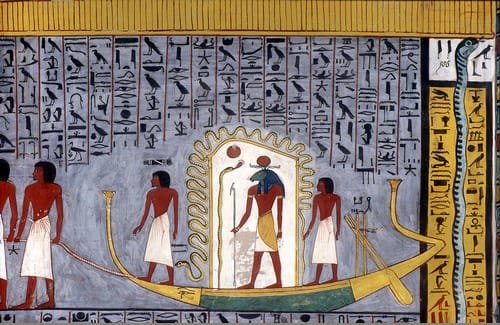
The Tomb of Seti I (KV17) lies deep within the famous Valley of the Kings, located on the west bank of the Nile River opposite modern Luxor. This isolated desert valley served as the royal burial ground for the pharaohs of the Eighteenth, Nineteenth, and Twentieth Dynasties, replacing the pyramid complexes of the Old Kingdom with hidden underground tombs carved directly into the limestone mountains. Ancient Egyptians believed that the western horizon symbolized the realm of the dead because the sun disappeared there each evening before being reborn at dawn. This powerful symbolism made the Valley of the Kings the ideal resting place for Egypt's divine rulers. Among more than sixty known royal tombs, KV17 occupies a particularly significant position due to its impressive size and sophisticated design. The tomb extends approximately 137 meters, making it the longest royal tomb discovered in the valley. Its entrance blends naturally into the surrounding cliffs, reflecting Egyptian efforts to conceal royal burials from tomb robbers. Beyond the entrance lies a carefully planned sequence of descending staircases, sloping corridors, pillared halls, side chambers, and burial rooms that lead progressively deeper beneath the mountain. This architectural progression symbolized the pharaoh's gradual journey through the underworld toward eternal life. The geological conditions of the valley influenced every stage of the tomb's construction. Ancient engineers had to navigate natural cracks within the limestone while maintaining structural stability throughout the excavation process. Despite these challenges, they succeeded in producing remarkably straight corridors and spacious chambers, many of which feature perfectly carved walls ready to receive elaborate painted reliefs. The ceilings were transformed into astronomical masterpieces depicting stars, constellations, and celestial deities, emphasizing the king's connection with the heavens. The location of KV17 also places it near several other famous royal tombs, including those of Ramesses II, Merneptah, and Tutankhamun, creating one of the world's richest archaeological landscapes. Modern visitors walking through the Valley of the Kings can appreciate how Seti I's architects selected an area that combined geological stability with religious symbolism and practical security. Although centuries of flash floods, earthquakes, and human activity have threatened the monument, KV17 remains one of the valley's most extraordinary achievements. Its strategic location, remarkable preservation, and unparalleled artistic decoration continue to make it one of the most celebrated archaeological sites in Egypt and one of the greatest royal tombs ever created.
3. The Discovery of the Tomb of Seti I by Giovanni Belzoni
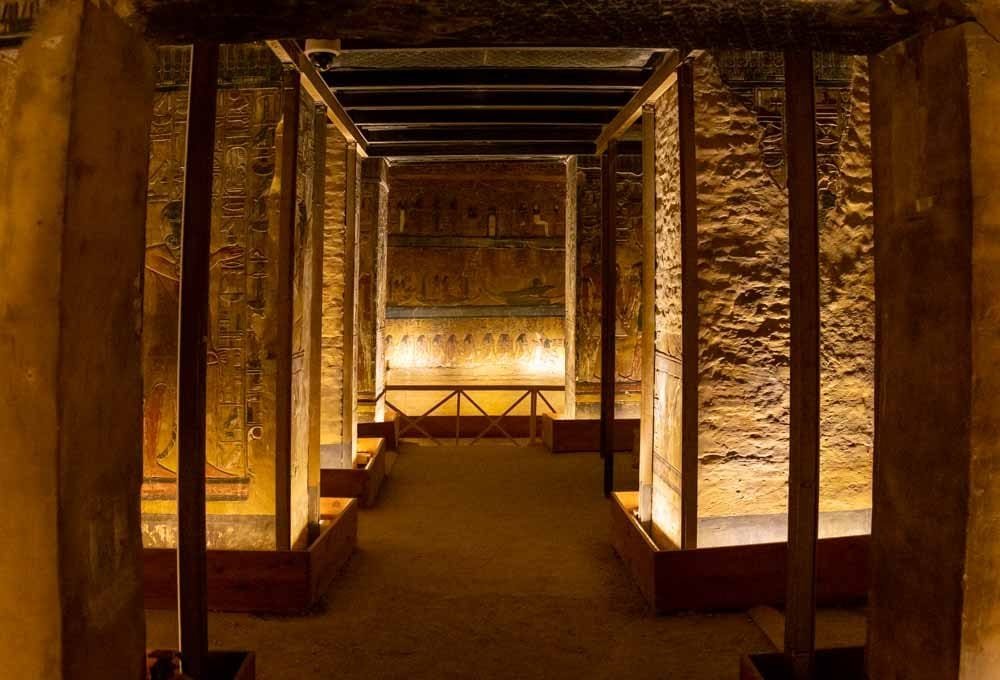
For centuries, the magnificent Tomb of Seti I remained hidden beneath layers of rock, sand, and debris, its entrance gradually disappearing from view as nature reclaimed the Valley of the Kings. Ancient tomb robbers had entered the burial long before modern archaeology existed, removing many of its treasures while leaving behind much of its extraordinary decoration. Despite these ancient intrusions, the tomb itself remained largely forgotten until the early nineteenth century, when European explorers began systematically searching Egypt for lost monuments. On 16 October 1817, the Italian explorer Giovanni Battista Belzoni uncovered the entrance to KV17, making one of the greatest archaeological discoveries of his era. Belzoni immediately recognized that he had found an exceptional royal tomb unlike any previously explored. As he descended through the long corridors illuminated by torchlight, he encountered brilliantly preserved reliefs, colorful paintings, and finely carved hieroglyphs covering almost every surface. Unlike many other tombs that had suffered severe damage, KV17 retained an astonishing level of artistic detail. Belzoni described the experience with great excitement, noting the vivid colors, elegant craftsmanship, and immense scale of the monument. His discovery transformed European understanding of ancient Egyptian royal burial customs and attracted worldwide attention to the Valley of the Kings. One of Belzoni's most remarkable finds was the magnificent alabaster sarcophagus of Seti I, carved from a single block of translucent calcite and decorated with intricate hieroglyphic inscriptions from the Book of Gates. Although the king's mummy was no longer present, the sarcophagus itself represented one of the finest examples of royal funerary craftsmanship ever discovered. It was eventually transported to London, where it remains one of the highlights of the Sir John Soane's Museum. Belzoni also produced detailed drawings and descriptions of the tomb, preserving valuable records of decorations that have since faded due to humidity, tourism, and environmental changes. Although Belzoni's methods reflected the standards of nineteenth-century exploration rather than modern archaeology, his discovery of KV17 remains one of the defining moments in Egyptology. Later archaeologists returned to document the monument with greater scientific precision, revealing additional chambers, unfinished passages, and new insights into its construction. Today, the discovery of Seti I's tomb is celebrated as a milestone in archaeological history, opening a window into the artistic brilliance, religious beliefs, and engineering achievements of Ancient Egypt while inspiring generations of researchers to continue exploring the mysteries hidden beneath the Valley of the Kings.

4. The Architecture and Layout of the Tomb of Seti I (KV17)
The Tomb of King Seti I (KV17) is considered the finest example of Ancient Egyptian royal tomb architecture, representing the peak of engineering, artistic planning, and religious symbolism during the New Kingdom. Unlike many earlier royal tombs, KV17 was carefully designed to create a symbolic journey into the underworld, allowing the deceased pharaoh to pass through a series of sacred spaces before reaching eternal life. Stretching approximately 137 meters (450 feet) into the limestone cliffs of the Valley of the Kings, it remains the longest royal tomb ever discovered in the valley. Every corridor, staircase, chamber, and pillar was intentionally placed to reflect the spiritual transformation of King Seti I as he traveled through the realm of the gods. The tomb consists of descending staircases, sloping corridors, pillared halls, side chambers, storerooms, an unfinished tunnel, and the magnificent burial chamber. Unlike the relatively simple layouts of earlier royal burials, KV17 displays an advanced architectural plan that demonstrates the remarkable skills of Egyptian engineers and architects. Each section served both practical and religious purposes, ensuring the king's safe passage into eternity while protecting his burial from intruders. Massive stone doorways, carefully carved passages, and hidden chambers reveal the extraordinary precision of the workers from Deir el-Medina, the royal village whose craftsmen created Egypt's greatest monuments. The burial chamber itself forms the heart of the tomb, featuring six beautifully decorated pillars that support the ceiling and create an atmosphere worthy of a divine king. Beyond the burial chamber lies one of KV17's greatest mysteries—an unfinished descending corridor extending more than one hundred meters deeper into the mountain. Egyptologists continue to debate its intended purpose, with theories ranging from a symbolic path to the underworld to an unfinished extension abandoned after Seti I's death. The ceilings throughout the tomb are decorated with astronomical scenes depicting stars, constellations, and celestial deities, reinforcing the connection between the king and the heavens. Every wall was smoothed to perfection before artists carved delicate reliefs and painted vivid colors that remain remarkably preserved more than three millennia later. Even today, modern architects admire KV17 as one of the greatest engineering achievements of Ancient Egypt, demonstrating unparalleled planning, symmetry, and artistic excellence that influenced nearly every royal tomb built afterward.
5. The Stunning Wall Paintings and Reliefs Inside KV17
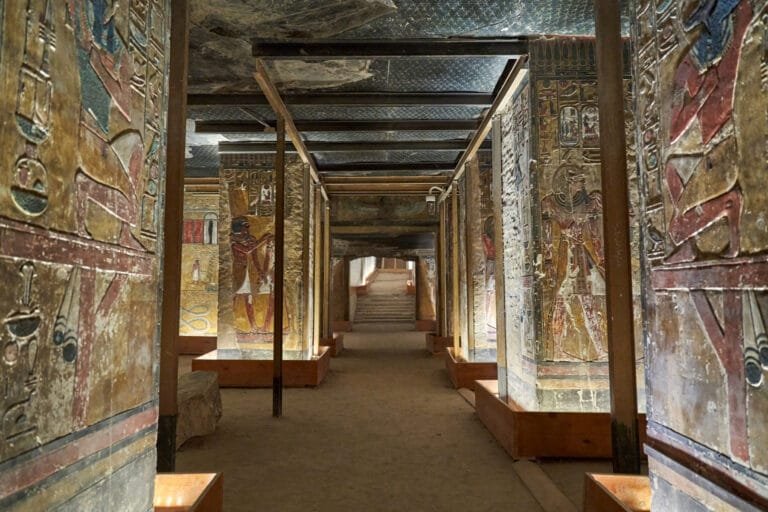
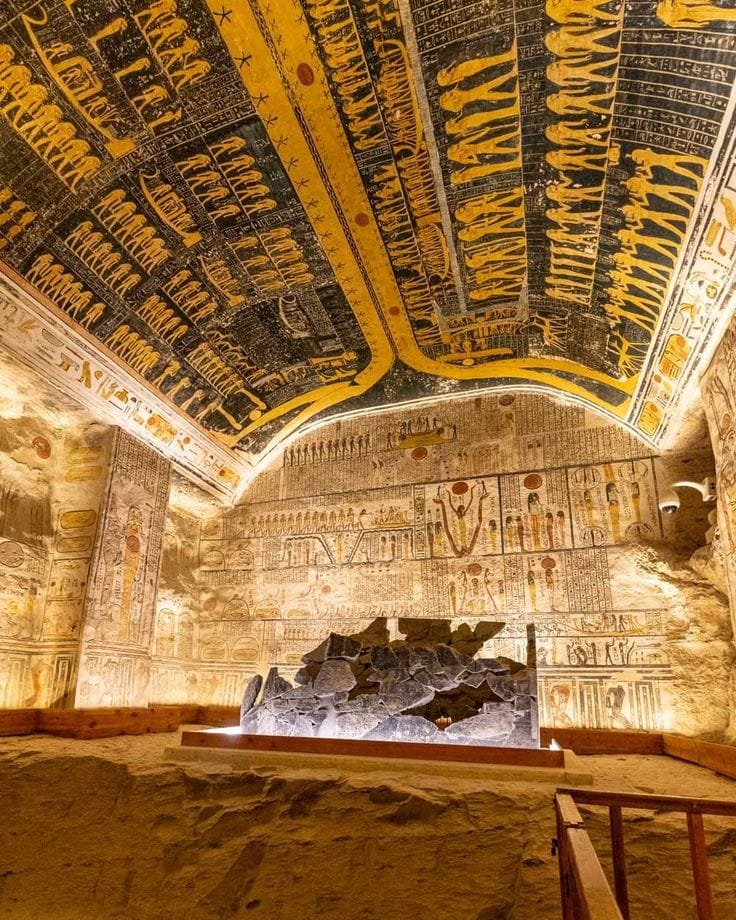
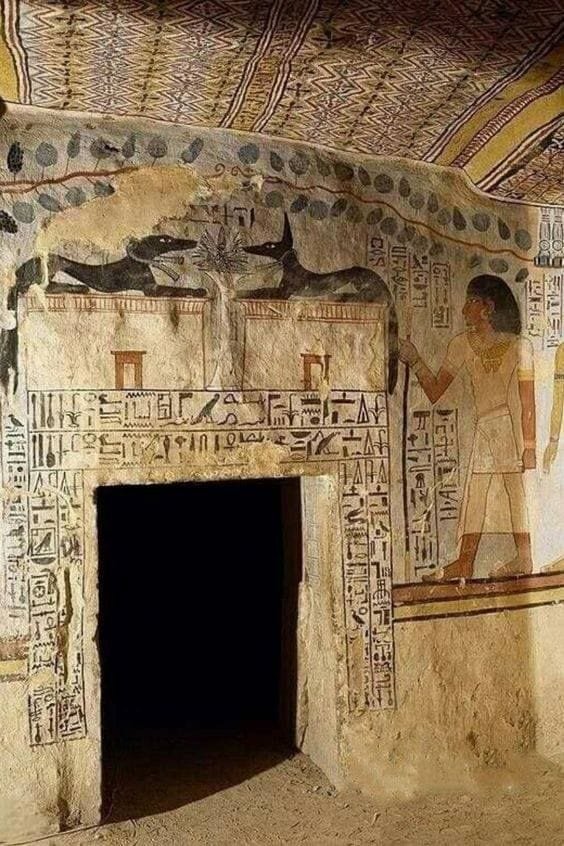
The wall paintings and carved reliefs inside the Tomb of King Seti I are widely regarded as the most beautiful examples of Ancient Egyptian art ever created. No other royal tomb in the Valley of the Kings preserves such an extraordinary combination of detailed carvings, brilliant colors, religious symbolism, and artistic perfection. Nearly every surface of KV17 is covered with finely carved sunk reliefs that were painted using natural mineral pigments, creating vivid scenes that have survived for more than 3,200 years. The artists achieved an astonishing level of realism, portraying gods, goddesses, sacred animals, hieroglyphic inscriptions, and the king himself with graceful proportions and delicate facial expressions rarely matched in Egyptian history. Instead of using flat painted figures alone, the craftsmen first carved every image into the limestone before carefully applying layers of color, giving the artwork exceptional depth and durability. Shades of blue, red, green, yellow, black, and white remain visible today, demonstrating the remarkable quality of Ancient Egyptian pigments. The walls depict King Seti I interacting with powerful deities including Ra, Osiris, Anubis, Horus, Isis, Hathor, Thoth, and numerous guardians of the underworld. Every figure is accompanied by beautifully executed hieroglyphic inscriptions that explain sacred rituals, magical spells, and divine blessings intended to guarantee the king's resurrection. The ceilings are equally spectacular, decorated with golden stars against deep blue backgrounds that symbolize the night sky and the eternal heavens. Some chambers include astronomical diagrams illustrating the movement of celestial bodies, emphasizing the pharaoh's union with the cosmic order. The quality of carving throughout KV17 surpasses nearly every other tomb in Egypt, with exceptionally smooth surfaces, precise outlines, and graceful compositions that reveal the mastery of the royal artisans from Deir el-Medina. Modern conservation studies have shown that many pigments retain their original brilliance because the artists carefully prepared the limestone with fine plaster before painting. These magnificent decorations transformed the tomb into a sacred religious manuscript carved entirely in stone. Every corridor serves as a chapter in the king's spiritual journey through the afterlife, allowing visitors today to experience one of the greatest artistic masterpieces ever produced by human civilization.
6. The Sacred Religious Texts and Symbolism of the Tomb
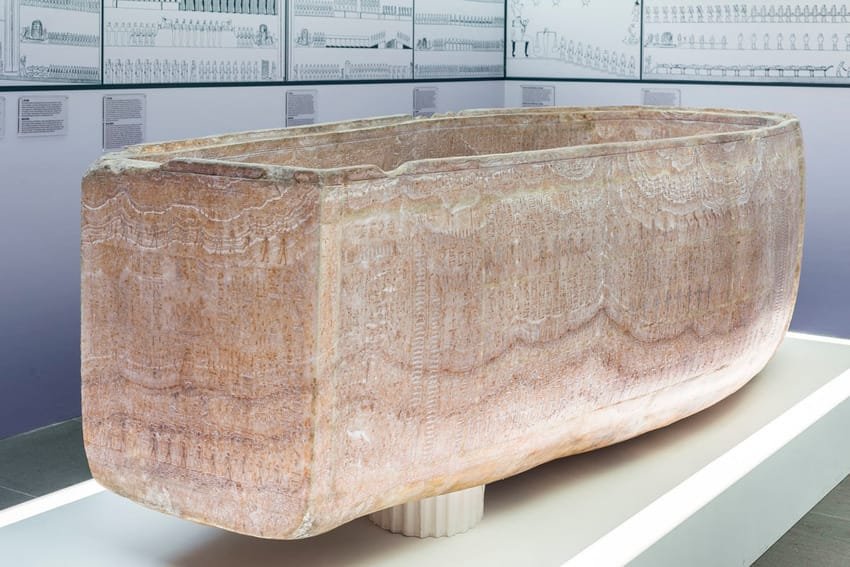
One of the most extraordinary features of the Tomb of King Seti I (KV17) is its extensive collection of Ancient Egyptian funerary texts, making the tomb one of the most important religious monuments from the New Kingdom. Rather than serving as simple decoration, every inscription and illustration functioned as a sacred guidebook that would help the deceased king overcome the dangers of the underworld and achieve eternal life among the gods. The walls contain beautifully illustrated versions of several of Egypt's most important religious compositions, including the Amduat (Book of What Is in the Underworld), the Book of Gates, the Litany of Ra, the Book of the Heavenly Cow, sections of the Book of the Dead, and numerous protective spells. These texts describe the twelve hours of the sun god's nightly journey through the underworld, during which he defeats the forces of chaos before rising again at dawn. By identifying himself with Ra, Seti I hoped to share in the god's eternal cycle of death and rebirth. Throughout the tomb, the king appears making offerings to powerful gods such as Osiris, Anubis, Horus, Thoth, Ptah, Hathor, and Isis, each providing divine protection during different stages of his journey. Massive guardian serpents, mysterious demons, protective spirits, and sacred symbols fill the corridors, representing both the dangers and the magical defenses required to enter paradise. The famous Eye of Horus, Djed Pillar, Ankh, Was Scepter, Scarab Beetle, Solar Disk, and Feather of Ma'at appear repeatedly, symbolizing resurrection, divine authority, balance, protection, eternal life, and cosmic order. Even the architecture itself carries religious meaning, with each descending corridor representing the king's movement deeper into the hidden world beneath the earth. The astronomical ceilings depict constellations and celestial boats carrying the gods across the heavens, emphasizing that the king would join the eternal stars after completing his transformation. Together, these sacred texts and symbolic images transformed KV17 into an enormous three-dimensional religious manuscript. For Egyptologists, the tomb remains one of the richest surviving sources for understanding Ancient Egyptian religion, funerary beliefs, royal ideology, and concepts of immortality, providing unparalleled insight into how the Egyptians envisioned life after death and the eternal destiny of their divine pharaohs.
7. The Burial Chamber and the Magnificent Alabaster Sarcophagus
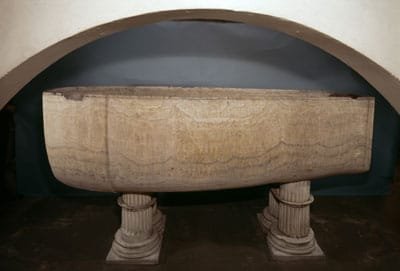
The burial chamber of King Seti I (KV17) is the breathtaking centerpiece of the tomb and is widely considered one of the greatest masterpieces of Ancient Egyptian funerary architecture. After descending through a series of decorated corridors, staircases, and pillared halls, visitors eventually reach this sacred chamber, where the pharaoh's body was originally laid to rest over 3,200 years ago. The chamber is larger than those found in many earlier royal tombs and was designed to represent the final stage of the king's transformation into an immortal divine being. Six massive pillars support the ceiling, while every wall is covered with beautifully carved reliefs and brilliantly painted scenes illustrating the king's journey through the afterlife. The ceiling itself is decorated with astronomical images, including stars, celestial deities, and sacred constellations that symbolize the eternal heavens. At the center of the chamber once stood the magnificent alabaster sarcophagus of Seti I, carved from a single block of translucent Egyptian calcite, often mistakenly referred to as alabaster. This extraordinary masterpiece is regarded as one of the finest royal sarcophagi ever created. Every exterior and interior surface was engraved with delicate hieroglyphic inscriptions from the Book of Gates, providing magical protection for the king during his journey through the underworld. When light passes through the thin stone, the sarcophagus glows with an almost magical appearance, demonstrating the incredible skill of ancient Egyptian craftsmen. Unfortunately, the sarcophagus lid was damaged in antiquity, and the king's mummy had already been removed before modern explorers entered the tomb. Nevertheless, the sarcophagus remains one of the greatest surviving examples of royal funerary art. Today, it is preserved in Sir John Soane's Museum in London, where it continues to amaze visitors with its remarkable beauty and craftsmanship. The burial chamber itself also contains numerous religious scenes featuring Osiris, Ra, Isis, Anubis, and other deities welcoming Seti I into the divine realm. Every architectural detail, decorative motif, and sacred inscription reinforces the belief that death was not an end but the beginning of an eternal existence. Modern Egyptologists consider this chamber the artistic and spiritual climax of KV17, perfectly combining architecture, religion, symbolism, and artistic excellence into one of the greatest achievements of the ancient world.
8. The Discovery of Seti I's Mummy and Its Remarkable Preservation
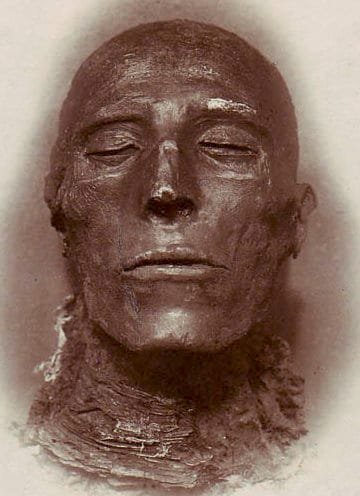
Although the Tomb of King Seti I (KV17) was originally intended to serve as the eternal resting place of one of Egypt's greatest rulers, the pharaoh's mummy was no longer inside when the tomb was rediscovered in 1817. Like many royal burials in the Valley of the Kings, KV17 suffered repeated robberies during antiquity as thieves searched for gold jewelry, precious stones, and valuable funerary equipment. During the political instability of the Third Intermediate Period, Egyptian priests recognized that the royal tombs could no longer be protected from looters. In an extraordinary effort to preserve the bodies of their former kings, they secretly removed many royal mummies from their original tombs and concealed them in a hidden cache at Deir el-Bahari, now known as Royal Cache DB320. There, Seti I's mummy rested alongside dozens of other famous pharaohs, including Ramesses II, Thutmose III, Seqenenre Tao, and Amenhotep I, hidden for nearly three thousand years. The cache was finally discovered in 1881, revealing one of the greatest archaeological finds in Egyptian history. Seti I's mummy proved to be exceptionally well preserved, thanks to the extraordinary embalming techniques developed during the New Kingdom. His facial features remain remarkably recognizable, allowing historians to appreciate the physical appearance of one of Egypt's most celebrated rulers. Scientific examinations have shown that the embalmers demonstrated exceptional skill in preserving the skin, facial structure, and body, confirming the high standards of royal mummification during the Nineteenth Dynasty. The mummy also provides valuable evidence about Seti's health, age, and possible causes of death, suggesting that he died around the age of forty after a successful reign. Today, the mummy is displayed in the National Museum of Egyptian Civilization (NMEC) in Cairo, where visitors can view one of the best-preserved royal mummies ever discovered. Advanced imaging technologies, including CT scanning and forensic analysis, continue to reveal new information about the king's life without damaging the remains. Together with KV17, Seti I's mummy provides an extraordinary connection to Ancient Egypt, allowing both researchers and visitors to encounter one of history's greatest pharaohs with an intimacy that few archaeological discoveries can equal.
9. The Treasures Originally Placed Inside KV17
When King Seti I was buried in KV17, his magnificent tomb was filled with an astonishing collection of royal treasures intended to provide everything he would need throughout eternity. According to Ancient Egyptian religious beliefs, the afterlife closely resembled life on earth, meaning that the king required food, clothing, furniture, jewelry, weapons, sacred statues, ritual objects, and magical equipment to continue ruling forever alongside the gods. Although most of these priceless objects were stolen by ancient tomb robbers long before the modern discovery of the tomb, archaeological evidence and surviving inscriptions allow Egyptologists to reconstruct the extraordinary wealth that once filled its chambers. The burial chamber almost certainly contained an elaborate nested coffin system made from precious woods covered with sheets of gold, enclosing the king's beautifully mummified body. Around the sarcophagus would have stood protective statues representing gods such as Anubis, Horus, Isis, and the Four Sons of Horus, whose role was to guard the king's organs and ensure his resurrection. Richly decorated canopic jars, ceremonial weapons, gold jewelry, necklaces, bracelets, rings, crowns, amulets, cosmetic containers, carved furniture, chariots, and finely crafted alabaster vessels likely filled nearby storage rooms. Hundreds of ushabti figures—small servant statues inscribed with magical texts—would have been included to perform labor on behalf of the king in the afterlife. The walls themselves served as magical treasures, preserving sacred texts that could not be stolen even when physical objects disappeared. Excavations have recovered fragments of pottery, wooden objects, faience decorations, stone vessels, and damaged funerary equipment, offering valuable clues about the original burial assemblage. The magnificent calcite sarcophagus, one of the few surviving royal objects from the tomb, demonstrates the extraordinary level of craftsmanship that characterized the missing treasures. Ancient robbers likely entered the tomb within a relatively short time after the burial, carrying away enormous quantities of gold and precious materials that were easily melted down or reused. Despite these losses, KV17 remains one of the richest archaeological sources for understanding royal burial customs in Ancient Egypt. Every surviving object, inscription, and architectural feature continues to help researchers reconstruct the splendor of one of the most lavish royal burials ever prepared in the Valley of the Kings, offering a glimpse into the immense wealth, religious devotion, and artistic achievements of the New Kingdom.
10. Conservation, Restoration, and Modern Preservation of the Tomb of Seti I
The Tomb of King Seti I (KV17) is not only one of the most magnificent monuments of Ancient Egypt, but also one of the most fragile. More than 3,200 years after its construction, the tomb faces numerous conservation challenges caused by natural weathering, geological instability, groundwater, salt crystallization, earthquakes, humidity, and human activity. Unlike many archaeological sites built above ground, KV17 was carved deep into the limestone cliffs of the Valley of the Kings, making it particularly vulnerable to structural movement and environmental changes. Even before modern tourism, the tomb experienced damage from ancient flash floods that carried mud, rocks, and debris into its corridors. These floods left visible stains on some walls and weakened sections of the plaster supporting the painted reliefs. During the nineteenth and early twentieth centuries, thousands of visitors entered the tomb carrying candles, oil lamps, and later electric lighting, unintentionally exposing the delicate artwork to soot, rising temperatures, and increased humidity. Every human breath introduces moisture into the enclosed chambers, encouraging the growth of microorganisms and causing pigments to deteriorate over time. Recognizing the exceptional importance of KV17, Egyptian authorities and international conservation teams have undertaken extensive restoration projects to stabilize the tomb and preserve its priceless decorations. Specialists carefully monitor temperature, humidity, and air quality while using advanced laser scanning, digital photography, and three-dimensional mapping to document every centimeter of the monument. Cracked walls have been reinforced, unstable rock surfaces stabilized, and damaged plaster consolidated using conservation materials specifically designed for ancient limestone. Restoration experts avoid repainting missing sections, choosing instead to preserve the original artwork while preventing further deterioration. In recent years, visitor numbers have been carefully controlled, and access has occasionally been restricted to protect the fragile environment inside the tomb. High-resolution digital documentation now allows researchers to study the artwork without repeated physical contact. Modern technology has also produced incredibly accurate virtual reconstructions, enabling scholars worldwide to examine details that may eventually become too delicate for public viewing. These preservation efforts ensure that future generations can continue to admire one of the greatest masterpieces of Ancient Egyptian art, architecture, and religion. KV17 stands today not only as a monument to King Seti I but also as an international symbol of archaeological conservation, demonstrating the importance of protecting humanity's shared cultural heritage through science, education, and responsible tourism.
11. Visiting the Tomb of Seti I Today: What Tourists Should Know
For travelers exploring the Valley of the Kings, the Tomb of King Seti I (KV17) represents one of the most extraordinary archaeological experiences in Egypt. Often described as the most beautiful royal tomb ever discovered, KV17 attracts historians, archaeologists, photographers, Egyptology enthusiasts, and visitors from around the world who wish to witness the finest surviving examples of Ancient Egyptian wall paintings. However, because of its exceptional historical value and fragile condition, access to the tomb is much more limited than that of most other royal tombs in the valley. The Egyptian Ministry of Tourism and Antiquities periodically opens and closes KV17 depending on ongoing conservation work, making it one of the most exclusive attractions in Luxor. When access is available, visitors are usually required to purchase a separate premium ticket in addition to the standard Valley of the Kings entrance ticket. This policy helps reduce visitor numbers while generating funds for continued preservation. Upon entering the tomb, visitors immediately notice the remarkable length of its descending corridors, each decorated with colorful religious scenes, intricate hieroglyphs, and beautifully carved reliefs that remain among the finest in Egypt. The vivid pigments, elegant artistic style, and perfectly preserved inscriptions create an unforgettable impression rarely matched elsewhere in the valley. Photography policies may vary depending on current regulations, so travelers should always check the latest rules before visiting. Because the interior passages descend steeply, comfortable walking shoes are highly recommended, especially during the hot summer months when temperatures in Luxor often exceed 40°C (104°F). Visiting early in the morning usually provides a more comfortable experience and smaller crowds. Hiring a knowledgeable Egyptologist guide greatly enhances the visit by explaining the meaning of the religious texts, architectural symbolism, and historical significance of the tomb. Nearby attractions, including the tombs of Tutankhamun, Ramesses III, Merneptah, and Ramesses VI, can easily be combined into a full day exploring the Valley of the Kings and the west bank of Luxor. For many travelers, stepping inside KV17 becomes the highlight of their Egyptian journey, offering an unforgettable opportunity to experience one of the greatest artistic and spiritual achievements of the ancient world while appreciating the remarkable civilization that created it more than three millennia ago.
12. Legacy and Historical Importance of the Tomb of King Seti I
The Tomb of King Seti I (KV17) occupies a unique place in world history as one of the greatest achievements of Ancient Egyptian civilization and one of the finest archaeological monuments ever discovered. More than simply serving as the burial place of a powerful pharaoh, KV17 represents the culmination of centuries of artistic development, architectural innovation, religious belief, and engineering excellence during the New Kingdom. Every corridor, chamber, relief, and hieroglyph demonstrates the extraordinary sophistication of Ancient Egyptian culture, revealing a civilization capable of combining technical mastery with profound spiritual symbolism. Historians often describe KV17 as the benchmark against which all other royal tombs are measured. Its artistic quality surpassed even many monuments commissioned by Seti I's famous son, Ramesses II, influencing generations of craftsmen who continued decorating royal tombs throughout the Nineteenth and Twentieth Dynasties. The exquisite relief carvings, harmonious proportions, brilliant pigments, and extensive religious texts established new artistic standards that shaped Egyptian funerary decoration for centuries. Beyond its artistic importance, KV17 has transformed modern understanding of Ancient Egyptian religion, royal ideology, burial customs, astronomy, and concepts of the afterlife. The beautifully preserved scenes from the Amduat, Book of Gates, Litany of Ra, and other sacred compositions have provided Egyptologists with invaluable evidence for interpreting Egyptian cosmology and funerary rituals. Since its discovery by Giovanni Battista Belzoni in 1817, the tomb has inspired countless archaeological expeditions, scholarly publications, conservation projects, museum exhibitions, documentaries, and educational programs around the world. Advanced technologies such as laser scanning, digital reconstruction, and three-dimensional imaging continue to reveal new details about its architecture and decoration, ensuring that research on KV17 remains active well into the twenty-first century. Today, the tomb stands as a symbol of humanity's shared cultural heritage and demonstrates the extraordinary achievements of one of history's greatest civilizations. Visitors who walk through its decorated corridors experience far more than an archaeological site—they encounter a timeless masterpiece that preserves the beliefs, artistry, and ambitions of Ancient Egypt at their highest level. For historians, travelers, and lovers of ancient history alike, the Tomb of King Seti I remains the ultimate expression of royal burial architecture and an enduring testament to the genius of the ancient Egyptians. Its legacy continues to inspire wonder, reminding the modern world that some of humanity's greatest works were created more than three thousand years ago yet still possess the power to educate, captivate, and amaze every generation.
KV17 vs. Tutankhamun's Tomb (KV62): Which Royal Tomb Is More Impressive?
Although the Tomb of King Seti I (KV17) and Tutankhamun’s Tomb (KV62) are among the most famous royal tombs in the Valley of the Kings, they are celebrated for very different reasons. KV17 is renowned for its breathtaking architecture, exceptional wall paintings, and extensive religious texts, while KV62 gained worldwide fame because of the incredible treasures discovered almost intact in 1922 by Howard Carter. The comparison below highlights the major differences between these two extraordinary monuments.
| Feature | Tomb of King Seti I (KV17) | Tutankhamun’s Tomb (KV62) |
|---|---|---|
| Pharaoh | King Seti I | King Tutankhamun |
| Dynasty | Nineteenth Dynasty | Eighteenth Dynasty |
| Reign | c. 1294–1279 BC | c. 1332–1323 BC |
| Location | Valley of the Kings, Luxor | Valley of the Kings, Luxor |
| Tomb Number | KV17 | KV62 |
| Discovery Date | 16 October 1817 | 4 November 1922 |
| Discovered By | Giovanni Battista Belzoni | Howard Carter |
| Length | Approximately 137 meters (450 ft) | Approximately 30 meters (98 ft) |
| Size | Largest and longest royal tomb in the Valley | One of the smallest royal tombs |
| Architecture | Complex layout with corridors, halls, pillars, side chambers, and unfinished tunnel | Compact four-room layout with annex and treasury |
| Wall Decorations | Nearly every chamber is fully decorated with colorful reliefs and hieroglyphs | Only the burial chamber contains painted decorations |
| Artistic Quality | Considered the finest royal artwork in Ancient Egypt | Beautiful but comparatively simple paintings |
| Religious Texts | Amduat, Book of Gates, Litany of Ra, Book of the Heavenly Cow, Book of the Dead | Limited funerary scenes and burial rituals |
| Burial Chamber | Large chamber with six pillars and astronomical ceiling | Small burial chamber with painted walls |
| Sarcophagus | Magnificent translucent calcite (alabaster) sarcophagus | Quartzite sarcophagus with nested gilded coffins |
| Royal Mummy | Removed in antiquity and later found in Royal Cache DB320 | Found inside the tomb by Howard Carter |
| Treasures Found | Most treasures looted in antiquity | Over 5,000 artifacts discovered largely intact |
| Famous Objects | Calcite sarcophagus and exceptional wall reliefs | Golden funerary mask, golden throne, jewelry, chariots, shrines |
| Historical Importance | Greatest artistic achievement of New Kingdom royal tombs | Greatest archaeological discovery of the twentieth century |
| Tourist Experience | Admired for architecture, artwork, and religious symbolism | Admired for its historical discovery and association with the golden treasures |
| Current Access | Limited access with a separate premium ticket when open | Usually included with a separate ticket in the Valley of the Kings |
| Best Known For | The most beautiful decorated tomb in Egypt | The richest royal tomb ever discovered intact |
Which Tomb Should You Visit?
If your primary interest is Ancient Egyptian art, architecture, religion, and beautifully preserved wall paintings, the Tomb of King Seti I (KV17) is widely considered the superior experience. Its long decorated corridors, magnificent reliefs, astronomical ceilings, and sacred funerary texts make it the masterpiece of the Valley of the Kings.
If you are fascinated by archaeological discoveries, royal treasures, and the story of Howard Carter’s excavation, Tutankhamun’s Tomb (KV62) is an essential visit. Although the tomb itself is relatively small and simply decorated, its discovery transformed Egyptology and revealed the most complete collection of royal burial treasures ever found.
Final Verdict
There is no true “winner” because the two tombs represent different achievements of Ancient Egypt:
Choose KV17 if you want to experience the most spectacular artwork, architecture, and religious decoration in the Valley of the Kings.
Choose KV62 if you want to stand inside the world’s most famous archaeological discovery and see the original burial place of the Boy King.
The ideal choice is to visit both, as they complement each other perfectly and together provide the most complete understanding of Ancient Egyptian royal burials.
Frequently Asked Questions About the Tomb of King Seti I (KV17)
The Tomb of King Seti I (KV17) is located in the Valley of the Kings on the west bank of the Nile River in Luxor, Egypt. It is one of the most famous royal tombs in the valley and is renowned for its exceptional artwork, religious inscriptions, and remarkable architecture.
King Seti I was the second pharaoh of the Nineteenth Dynasty of Ancient Egypt, ruling from approximately 1294–1279 BC. He was the father of Ramesses II (Ramesses the Great) and is remembered for his military victories, impressive temples, and the construction of one of the finest royal tombs in Egyptian history.
KV17 is famous because it is considered the most beautifully decorated royal tomb in the Valley of the Kings. It features incredibly detailed wall reliefs, vivid colors, astronomical ceilings, and sacred texts such as the Book of Gates and the Amduat, making it one of the greatest masterpieces of Ancient Egyptian art.
The tomb extends approximately 137 meters (450 feet) into the limestone mountain, making it the longest royal tomb discovered in the Valley of the Kings.
The tomb was discovered on 16 October 1817 by the Italian explorer Giovanni Battista Belzoni, who uncovered one of the most significant archaeological discoveries of the nineteenth century.
No. When KV17 was rediscovered, Seti I’s mummy was missing. It had been moved by ancient Egyptian priests to the Royal Cache (DB320) at Deir el-Bahari to protect it from tomb robbers. Today, the mummy is displayed at the National Museum of Egyptian Civilization (NMEC) in Cairo.
Yes, but access is limited. Because of its fragile condition and ongoing conservation work, the tomb is only opened periodically. Visitors usually need to purchase a special ticket in addition to the standard Valley of the Kings entrance ticket.
The artwork is famous for its deeply carved reliefs, brilliant mineral pigments, elegant artistic style, and exceptional preservation. Many Egyptologists consider the paintings and reliefs in KV17 to be the finest examples of New Kingdom funerary art.
The tomb contains several important Ancient Egyptian funerary texts, including:
- The Amduat
- The Book of Gates
- The Litany of Ra
- The Book of the Heavenly Cow
- Sections of the Book of the Dead
These texts were intended to guide King Seti I safely through the afterlife.
Most of the royal treasures were stolen by ancient tomb robbers thousands of years ago. However, archaeologists have recovered fragments of funerary equipment, while the magnificent calcite (often called alabaster) sarcophagus survived and is now displayed in Sir John Soane’s Museum in London.
Many experts regard KV17 as the greatest royal tomb because of its extraordinary combination of architecture, religious symbolism, wall paintings, hieroglyphic inscriptions, astronomical ceilings, and overall artistic quality.
Seti I’s sarcophagus was carved from a single block of translucent Egyptian calcite. It is decorated with beautifully engraved hieroglyphs from the Book of Gates and is considered one of the finest royal sarcophagi ever created in Ancient Egypt.
During the New Kingdom, Egyptian pharaohs abandoned pyramids in favor of hidden rock-cut tombs in the Valley of the Kings. Underground tombs offered greater protection against tomb robbers and reflected evolving religious beliefs about the king’s journey through the underworld.
Visitors can explore long decorated corridors, staircases, pillared halls, side chambers, the magnificent burial chamber, colorful wall paintings, astronomical ceilings, intricate hieroglyphs, and some of the best-preserved religious artwork from Ancient Egypt.
Photography regulations vary depending on the current policies of the Egyptian Ministry of Tourism and Antiquities. Visitors should check the latest rules before entering, as restrictions may change to help protect the fragile wall decorations.
While Tutankhamun’s Tomb (KV62) is famous for its incredible treasures, Seti I’s Tomb (KV17) is celebrated for its breathtaking architecture, magnificent artwork, and extensive religious texts. Many Egyptologists consider KV17 to be artistically superior, even though Tutankhamun’s tomb contained more surviving treasures.
The tomb’s paintings and reliefs are extremely delicate. Humidity, temperature changes, visitor traffic, salt deposits, and natural weathering can all damage the artwork. Ongoing conservation ensures that future generations will be able to admire this remarkable masterpiece.
A typical visit lasts 30 to 60 minutes, depending on visitor numbers and personal interest. Travelers who visit with an Egyptologist guide often spend longer exploring the tomb’s religious symbolism and artistic details.
Nearby attractions include the Tomb of Tutankhamun (KV62), the Tomb of Ramesses VI (KV9), the Temple of Hatshepsut, the Colossi of Memnon, the Ramesseum, Medinet Habu, and the Valley of the Queens, making the west bank of Luxor one of the richest archaeological areas in the world.
The Tomb of King Seti I offers an unforgettable journey into the heart of Ancient Egyptian civilization. Its magnificent architecture, world-famous wall paintings, sacred religious texts, stunning burial chamber, and fascinating history make it one of the most extraordinary archaeological sites in Egypt. Whether you are passionate about history, archaeology, photography, or Egyptology, visiting KV17 is a once-in-a-lifetime experience that reveals the artistic brilliance and spiritual beliefs of one of history’s greatest civilizations.