

- Excursions in Egypt
- Egypt Tour Packages
- Cairo Tours and Excursions
- Hurghada Tours and Excursions
- Soma Bay Tours and Excursions
- Makadi Bay Tours and Excursions
- Sahl Hasheesh Tours and Excursions
- El Gouna Tours and Excursions
- Marsa Alam Tours and Excursions
- Port Ghalib Tours and Excursions
- El Quseir Tours and Excursions
- Dendera and Abydos Day Tours
- Aswan Tours and Excursions
- Luxor Tours and Excursions
- Sharm El Sheikh Tours and Excursions
- Top Rated Egypt Tours in 2026
- Optional Excursions in Egypt
- Private Transfer
- Blogs About egypt
- Ancient Egypt
- Historical Sites in Egypt
- Cairo
- Alexandria
- Luxor
- Aswan
- The Red Sea
- Dendera Temple
- El Fayoum Oasis
- Bahariya Oasis
- Siwa Oasis
- Al Alamein
- Marsa Matruh
- Why Egypt Is One of the Safest Countries to Visit in the Middle East
- What You Need To know Before Your First Trip To Egypt
- Egypt Travel Costs in 2026 Full Budget Guide
- Top 10 Tourist Activities in Egypt
- Top 50 Activities You Can’t Miss in Egypt in 2026
- The Guide to Guided Tours in Egypt
- Egypt’s Ancient and Modern History
- The Nile River
- The Deserts of Egypt
- Ancient Egyptian gods
- famous Egyptian dishes
- UNESCO World Heritage sites
- About Us
- Egypt Hotels and Resorts
- Excursions in Egypt
- Egypt Tour Packages
- Cairo Tours and Excursions
- Hurghada Tours and Excursions
- Soma Bay Tours and Excursions
- Makadi Bay Tours and Excursions
- Sahl Hasheesh Tours and Excursions
- El Gouna Tours and Excursions
- Marsa Alam Tours and Excursions
- Port Ghalib Tours and Excursions
- El Quseir Tours and Excursions
- Dendera and Abydos Day Tours
- Aswan Tours and Excursions
- Luxor Tours and Excursions
- Sharm El Sheikh Tours and Excursions
- Top Rated Egypt Tours in 2026
- Optional Excursions in Egypt
- Private Transfer
- Blogs About egypt
- Ancient Egypt
- Historical Sites in Egypt
- Cairo
- Alexandria
- Luxor
- Aswan
- The Red Sea
- Dendera Temple
- El Fayoum Oasis
- Bahariya Oasis
- Siwa Oasis
- Al Alamein
- Marsa Matruh
- Why Egypt Is One of the Safest Countries to Visit in the Middle East
- What You Need To know Before Your First Trip To Egypt
- Egypt Travel Costs in 2026 Full Budget Guide
- Top 10 Tourist Activities in Egypt
- Top 50 Activities You Can’t Miss in Egypt in 2026
- The Guide to Guided Tours in Egypt
- Egypt’s Ancient and Modern History
- The Nile River
- The Deserts of Egypt
- Ancient Egyptian gods
- famous Egyptian dishes
- UNESCO World Heritage sites
- About Us
- Egypt Hotels and Resorts
Welcome to
The Role of Queens in Egyptian Rule
The queens of Ancient Egypt were among the most influential women in the ancient world. Far more than the wives of pharaohs, Egyptian queens played vital roles in government, religion, diplomacy, succession, and royal ideology. Throughout Egypt’s long history, queens helped shape the destiny of the kingdom, supported powerful rulers, acted as regents for young kings, and occasionally ruled as pharaohs themselves. Their influence extended far beyond the royal palace, reaching into temples, state administration, international relations, and the spiritual life of the nation.
Unlike many ancient societies where women had limited political authority, Ancient Egypt granted royal women significant status and privileges. Queens could own property, manage estates, participate in religious ceremonies, and wield considerable influence within the royal court. Their position was not merely ceremonial; many queens became key political figures whose actions affected the course of Egyptian history.
The title of Great Royal Wife was one of the highest honors a woman could achieve in Ancient Egypt. Queens bearing this title often served as trusted advisors to pharaohs and played important roles in maintaining dynastic stability. Through marriage, queens helped legitimize royal succession and strengthen political alliances. Their royal bloodlines were considered essential to preserving the divine nature of kingship.
Several queens achieved extraordinary prominence. Figures such as Hatshepsut, Nefertiti, Tiye, and Cleopatra VII became some of the most powerful women in world history. Their leadership demonstrated that women could exercise authority at the highest levels of Egyptian government.
Queens also held important religious responsibilities. Many served as priestesses, participated in temple rituals, and acted as earthly representatives of powerful goddesses such as Isis and Hathor. Their sacred roles reinforced the divine legitimacy of the monarchy and connected royal authority to Egyptian religious beliefs.
The study of Egyptian queens offers valuable insights into gender, power, politics, and religion in one of history’s greatest civilizations. Their achievements reveal that women could play central roles in governing Ancient Egypt and shaping its future.
This comprehensive guide explores the political, religious, diplomatic, and cultural roles of queens in Egyptian rule, highlighting their contributions to the success and longevity of Ancient Egyptian civilization.
1. The Position of Queens in Ancient Egyptian Society
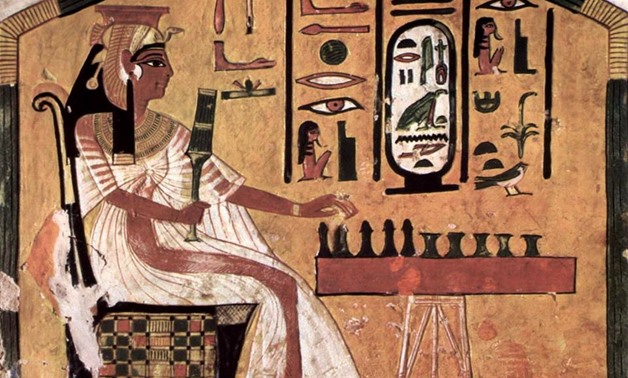
Queens occupied one of the highest social positions in Ancient Egypt and enjoyed privileges unavailable to most women in the ancient world. As members of the royal family, they held immense prestige and were regarded as essential components of the monarchy. Their status reflected both political importance and religious significance. The most important royal title held by a queen was Great Royal Wife. This title identified the principal wife of the pharaoh and distinguished her from secondary wives and concubines. The Great Royal Wife often appeared beside the king in monuments, temple reliefs, and official ceremonies, emphasizing her role within the royal institution. Queens were viewed as symbols of fertility, stability, and dynastic continuity. Their primary responsibility was producing heirs who would continue the royal bloodline. Because kingship was closely linked to divine authority, royal women played a crucial role in maintaining the legitimacy of the monarchy. Unlike women in many other ancient civilizations, Egyptian queens possessed legal rights. They could own land, inherit property, manage estates, conduct business transactions, and oversee large households. Some queens controlled vast economic resources and employed numerous servants, officials, and administrators. Queens frequently accompanied pharaohs during state ceremonies, diplomatic events, and religious festivals. Their visibility in public life reinforced their importance within Egyptian society. Artistic representations often show queens nearly equal in size to the king, a sign of their elevated status. The influence of queens extended beyond the palace. Through their economic, religious, and political activities, they helped support the stability and prosperity of the kingdom. The prominent position enjoyed by Egyptian queens demonstrates the unique role women could play within the structures of power in Ancient Egypt.
2. The Great Royal Wife and Her Responsibilities
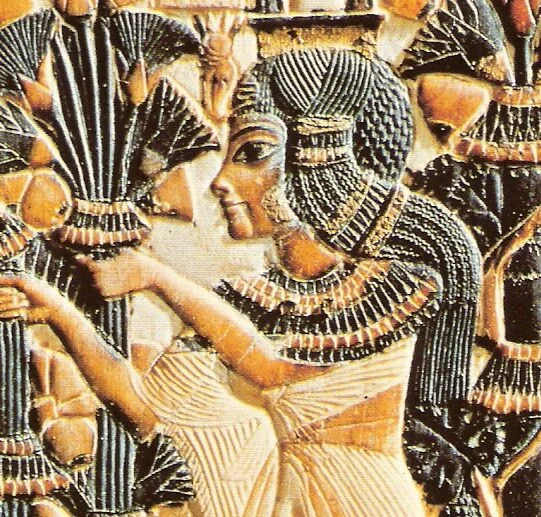
The title Great Royal Wife was the most prestigious position available to a queen in Ancient Egypt. This title designated the principal wife of the pharaoh and carried significant political, religious, and ceremonial responsibilities. The Great Royal Wife served as both partner and supporter of the king while helping maintain the stability of the royal dynasty. One of her most important duties was producing legitimate heirs to the throne. Succession was a critical issue in Ancient Egypt, and the children of the Great Royal Wife often enjoyed stronger claims to kingship than those born to secondary wives. Through motherhood, queens helped secure the continuity of the monarchy. The Great Royal Wife frequently participated in official ceremonies and state functions. She appeared beside the king during religious festivals, diplomatic receptions, military celebrations, and temple dedications. These public appearances reinforced the unity of the royal family and projected an image of stability. Queens also exercised influence within the royal court. Although they did not always hold formal governmental positions, many acted as trusted advisors to pharaohs. Their opinions could affect political decisions, diplomatic strategies, and succession planning. Religious responsibilities formed another important aspect of the queen's role. The Great Royal Wife often participated in rituals associated with major temples and was linked symbolically to powerful goddesses such as Isis, Hathor, and Mut. These connections strengthened the sacred legitimacy of the monarchy. Many queens managed extensive estates that generated agricultural products, livestock, textiles, and other resources. These estates provided economic independence and enhanced the queen's influence. The position of Great Royal Wife was therefore far more than an honorary title. It represented a powerful institution that contributed directly to the political, religious, and dynastic success of Ancient Egypt.
3. Queens as Mothers of Future Pharaohs
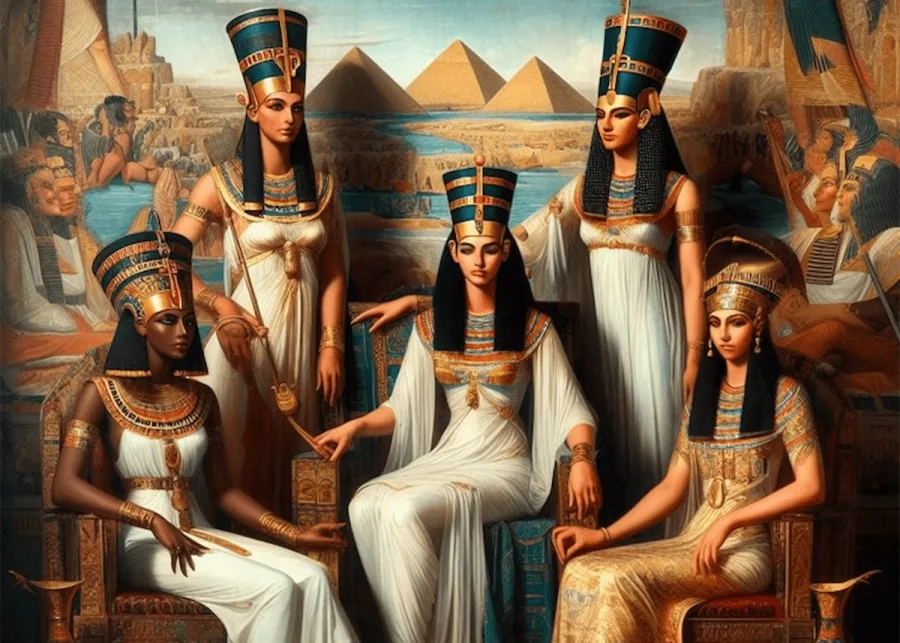
One of the most important roles played by Egyptian queens was that of royal mother. The mother of a future pharaoh held a unique and highly respected position within the royal family because she contributed directly to the continuation of the dynasty. In many cases, the status of a queen increased significantly once her son ascended to the throne. The title King's Mother became one of the most prestigious honors in Ancient Egypt. Mothers of pharaohs often enjoyed exceptional influence and authority within the royal court. Their experience, wisdom, and close relationship with the king made them important political figures. The legitimacy of royal succession frequently depended on maternal lineage. Because the royal bloodline was associated with divine authority, the identity of the king's mother could strengthen his claim to the throne. Queens who produced heirs therefore played a crucial role in maintaining dynastic stability. Several royal mothers became influential advisors. Their guidance helped young rulers navigate the challenges of kingship, especially during the early years of their reigns. In some cases, queens acted as regents when heirs were too young to rule independently. The relationship between mother and son was often emphasized in royal art and inscriptions. Queens appeared with future kings in statues, temple reliefs, and ceremonial scenes that highlighted their role in preserving the monarchy. One notable example is Queen Tiye, whose influence continued during the reign of her son, Akhenaten. Her prominence demonstrates how royal mothers could remain important political figures even after the death of their husbands. The role of queens as mothers of pharaohs was fundamental to Egyptian kingship. Through childbirth, mentorship, and political support, they helped ensure the continuity and stability of one of history's greatest civilizations.
4. Queens as Regents for Young Pharaohs
One of the most significant political roles played by queens in Ancient Egypt was serving as regents for young pharaohs. When a king died and his heir was still a child, the queen—usually the king's mother—often assumed responsibility for governing the kingdom until the new ruler reached adulthood. This position placed queens at the center of Egyptian politics and gave them considerable authority over state affairs. Regency was essential for maintaining stability during periods of transition. Ancient Egypt depended on strong leadership, and a child king could not effectively manage military campaigns, religious ceremonies, diplomatic relations, or government administration. As a result, queens frequently acted as guardians of the throne and protectors of dynastic continuity. A regent queen supervised government officials, oversaw economic administration, directed religious activities, and ensured that royal authority remained intact. Although she ruled in the name of the young king, her influence could be immense. Many important decisions were made under her supervision, allowing her to shape the future of the kingdom. One of the most famous examples is Hatshepsut, who initially served as regent for her stepson, Thutmose III. Over time, her authority expanded, and she eventually assumed the full title and powers of pharaoh, becoming one of the most successful rulers in Egyptian history. Other queens also served as regents throughout Egyptian history, particularly during times when royal heirs were very young. Their ability to preserve political stability during vulnerable periods highlights the trust placed in royal women and their importance within the monarchy. The institution of regency demonstrates that Egyptian queens were not merely symbolic figures. They could become active rulers whose leadership ensured the survival and continuity of the kingdom during times of uncertainty.
5. The Religious Role of Egyptian Queens
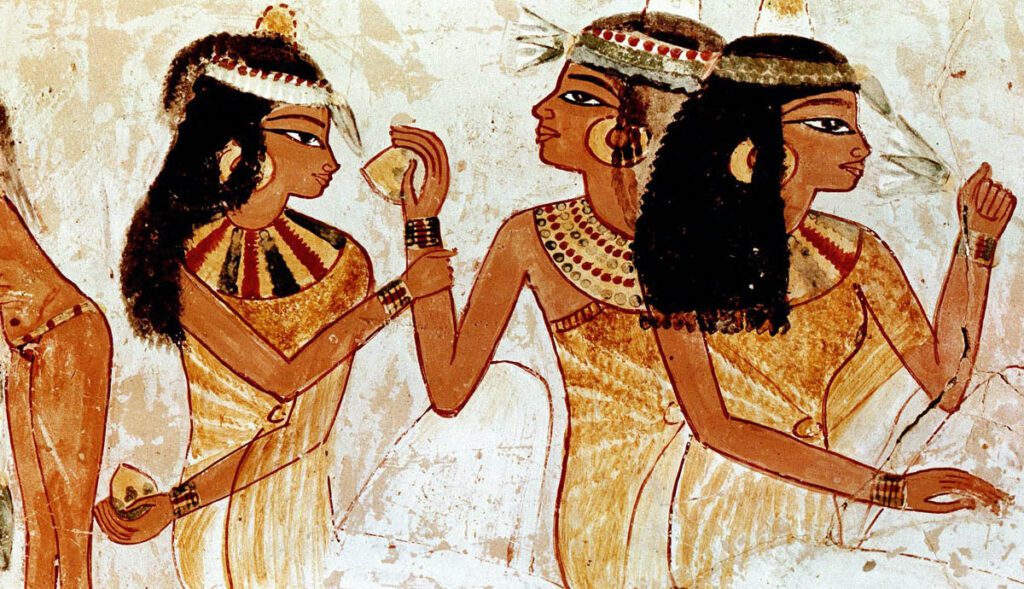
Religion permeated every aspect of Ancient Egyptian life, and queens played a vital role in maintaining the sacred traditions that supported the monarchy. Egyptian queens were not only political figures but also important religious participants who helped connect the royal family with the divine world. Queens frequently took part in temple ceremonies, religious festivals, and sacred rituals. They appeared alongside pharaohs in temple reliefs making offerings to the gods and participating in ceremonies intended to maintain cosmic order, known as Ma’at. Their involvement reinforced the belief that the royal family had a special relationship with the divine. Many queens held religious titles that emphasized their spiritual authority. One of the most prestigious was "God's Wife of Amun," a title associated with the powerful cult of the god Amun. Women holding this position possessed significant religious influence and controlled substantial economic resources linked to temple estates. Queens were often associated with major goddesses such as Isis, Hathor, and Mut. These divine connections enhanced the queen's status and strengthened the sacred legitimacy of the monarchy. Artistic depictions frequently portrayed queens wearing symbols linked to these goddesses, emphasizing their spiritual role. Temple construction and religious patronage were also important responsibilities. Queens donated resources to temples, sponsored religious ceremonies, and commissioned monuments dedicated to the gods. These activities demonstrated their devotion while enhancing their public reputation. The religious role of queens extended into the afterlife as well. Many royal women were honored with elaborate tombs, funerary temples, and religious inscriptions designed to ensure their eternal existence. Through their participation in religious life, queens helped uphold the spiritual foundations of Egyptian society and reinforced the divine nature of kingship.
6. Queens and the Divine Legitimacy of Kingship
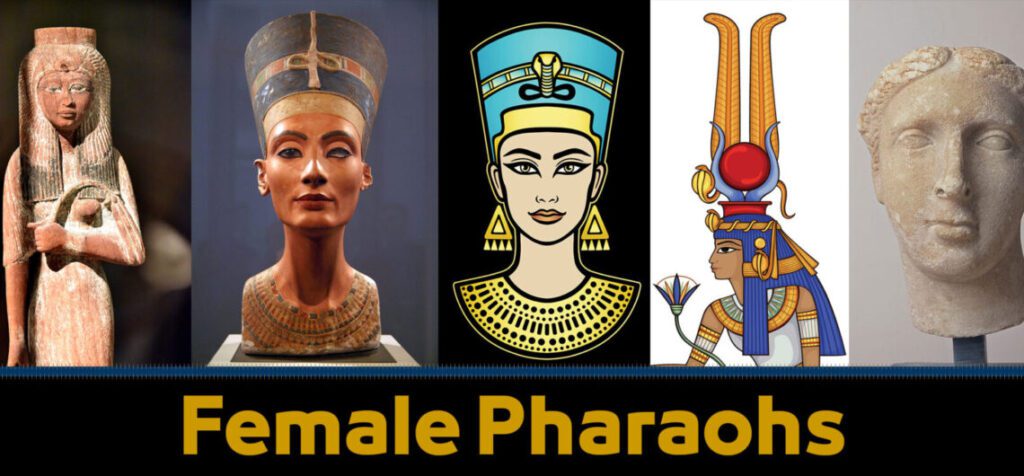
Ancient Egyptian kingship was founded upon the belief that the pharaoh was chosen by the gods and served as a divine ruler on Earth. Queens played an essential role in reinforcing this sacred legitimacy. Through their lineage, religious symbolism, and public representation, they helped strengthen the authority of the monarchy and ensure acceptance of royal rule. Egyptians believed that royal blood possessed a special divine quality. Because of this belief, queens were not merely spouses of kings but crucial participants in maintaining the sacred character of the royal family. Marriages within the royal house often served to preserve this divine lineage and protect dynastic continuity. Queens were frequently associated with powerful goddesses who symbolized motherhood, protection, fertility, and kingship. By identifying queens with deities such as Isis and Hathor, Egyptian religious ideology elevated their status and connected them directly to the divine realm. Royal art and temple reliefs often emphasized the queen's role in supporting the king's authority. Scenes depicting queens accompanying pharaohs during ceremonies reinforced the image of a divinely sanctioned royal family governing Egypt under the protection of the gods. Some queens achieved such prominence that they became central figures in royal ideology. Nefertiti, for example, appeared prominently alongside Akhenaten during the religious reforms of the Amarna Period. Her visibility in official art suggests an important role in promoting the legitimacy of the ruling regime. The queen's role in producing heirs also contributed to dynastic legitimacy. A prince born to a respected queen enjoyed a stronger claim to the throne, helping reduce disputes over succession. Through religion, symbolism, and family lineage, queens became indispensable to the ideology of Egyptian kingship. Their presence strengthened the connection between the monarchy and the gods, helping ensure political stability and public confidence in royal authority.
7. Hatshepsut: The Queen Who Became Pharaoh
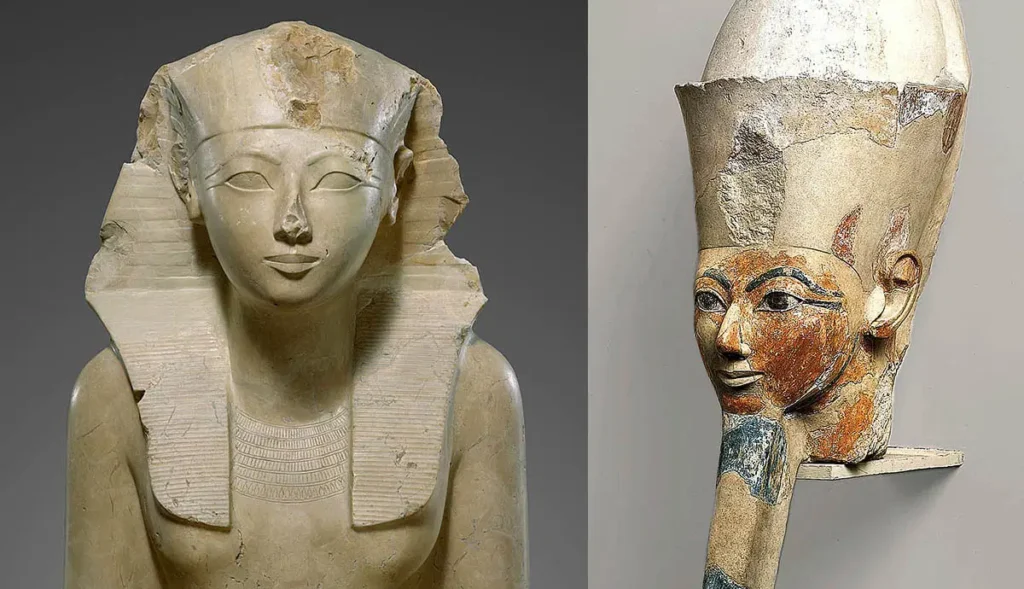
Among all the queens of Ancient Egypt, none achieved greater political success than Hatshepsut. She stands as one of the most remarkable rulers in world history because she successfully transformed herself from queen and regent into a fully recognized pharaoh. Her reign demonstrates the extraordinary influence that royal women could exercise within Egyptian society and government. Hatshepsut was the daughter of Thutmose I and the wife of Thutmose II. Following her husband's death, she initially served as regent for her young stepson, Thutmose III. However, within a few years, Hatshepsut assumed the full titles and authority of a pharaoh. To strengthen her legitimacy, Hatshepsut adopted traditional royal imagery normally associated with male rulers. Statues and reliefs often depict her wearing the royal nemes headdress, ceremonial beard, and pharaonic regalia. Despite these masculine symbols, inscriptions clearly identified her as a woman. Her reign was marked by peace, prosperity, and ambitious construction projects. One of her greatest achievements was the magnificent Mortuary Temple of Hatshepsut at Deir el-Bahari, considered one of the masterpieces of Ancient Egyptian architecture. Hatshepsut also expanded trade through her famous expedition to the Land of Punt. This journey brought valuable goods such as myrrh trees, incense, ebony, gold, and exotic animals to Egypt, enriching the kingdom and demonstrating her effective leadership. Unlike many rulers remembered for military conquests, Hatshepsut focused on economic growth, monumental building, and religious patronage. Her successful reign lasted more than two decades and helped strengthen Egypt during the New Kingdom. Today, Hatshepsut is celebrated as one of the most successful female rulers in history and a powerful example of how queens could shape the destiny of Ancient Egypt.
8. Nefertiti and Her Political Influence
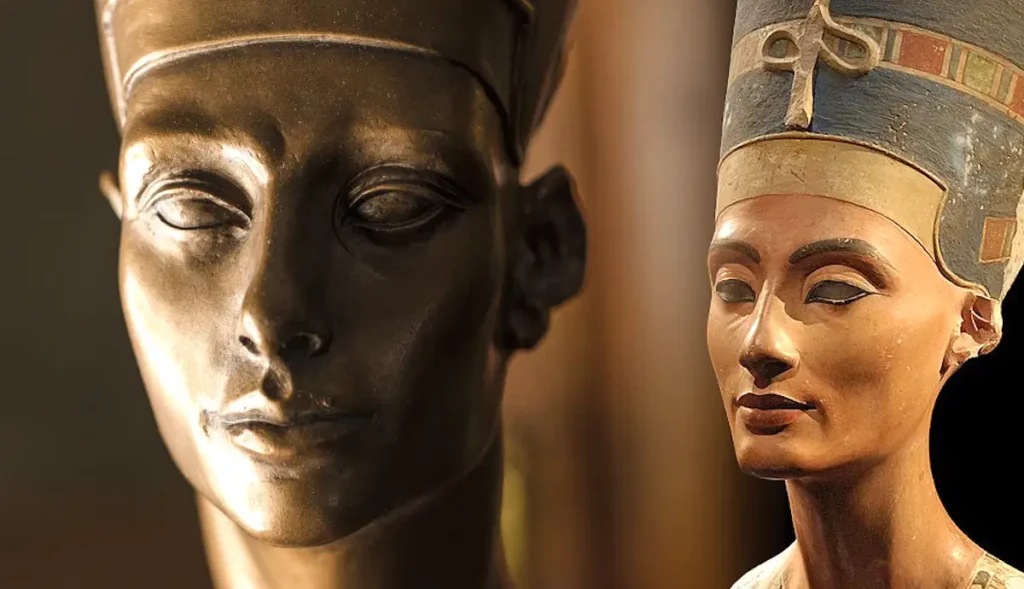
Few queens are as famous as Nefertiti, whose beauty and influence have fascinated historians for generations. Although she never officially ruled as pharaoh, Nefertiti played a major role in one of the most revolutionary periods of Egyptian history and appears to have exercised considerable political and religious authority. Nefertiti was the Great Royal Wife of Akhenaten, the ruler who introduced a dramatic religious transformation centered on the worship of the sun disk Aten. During this period, the royal couple moved the capital to Amarna and established a new religious system that challenged traditional Egyptian beliefs. What makes Nefertiti remarkable is her unprecedented visibility in official art. Unlike many earlier queens, she appears in numerous scenes performing rituals, making offerings, and participating in activities traditionally reserved for kings. Some depictions even show her smiting enemies, an image usually associated with pharaohs. Her prominence suggests that she played an active role in promoting the Aten religion and supporting Akhenaten's reforms. Many scholars believe she exercised significant influence within the royal court and may have been involved in important state decisions. Nefertiti's famous painted bust, discovered in 1912, has become one of the most recognizable works of art from the ancient world. Beyond her beauty, however, Nefertiti's historical importance lies in her political and religious influence during a transformative era of Egyptian history. Some researchers have proposed that she may have ruled briefly after Akhenaten's death, possibly under a different royal name. While this theory remains debated, it highlights the extent of her perceived authority. Nefertiti's life demonstrates that queens could become central figures in Egyptian politics, religion, and royal ideology. Her influence extended far beyond ceremonial duties and helped shape one of the most fascinating periods of Ancient Egyptian history.
9. Queen Tiye and Her Diplomatic Power
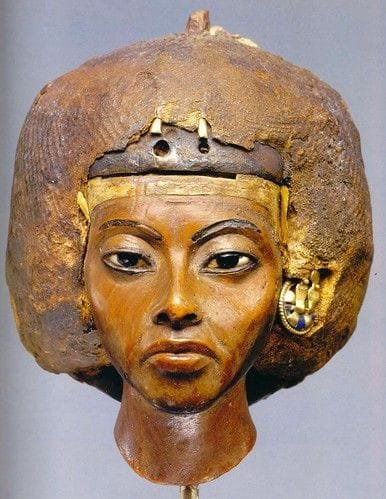
Long before Nefertiti rose to prominence, another queen had already established herself as one of the most influential women in Egyptian history. Tiye, the wife of Amenhotep III, exercised extraordinary political and diplomatic influence during one of the most prosperous periods of the New Kingdom. Unlike many earlier queens, Tiye did not come from a royal family. Despite this, she rose to become Great Royal Wife and achieved a level of prominence rarely seen among Egyptian queens. Her name appeared on monuments, statues, scarabs, and official inscriptions throughout the kingdom. Tiye's influence extended beyond domestic affairs into international diplomacy. Correspondence preserved in the famous Amarna Letters reveals that foreign rulers communicated directly with her. Kings from neighboring states treated her as an important political figure and sought her assistance in diplomatic matters. Even after the death of Amenhotep III, Tiye remained influential during the reign of her son, Akhenaten. Her continued prominence suggests that she served as an advisor and respected authority within the royal family. Artistic representations frequently depict Tiye alongside the king in positions of unusual prominence. Some statues portray her at nearly the same scale as the pharaoh, reflecting her elevated status and influence. Such depictions were rare and demonstrate the respect she commanded. Tiye also participated in religious activities, managed extensive estates, and contributed to royal building projects. Her wealth and authority made her one of the most powerful women of her era. The career of Queen Tiye illustrates how Egyptian queens could exercise influence through diplomacy, political counsel, economic management, and family connections. Her legacy paved the way for later queens such as Nefertiti and demonstrates the important role royal women played in governing Ancient Egypt.

10. Cleopatra VII: The Last Great Queen of Egypt
Among all the queens who ruled Egypt, none is more famous than Cleopatra VII. As the final ruler of the Ptolemaic Kingdom and one of history's most influential female leaders, Cleopatra became a symbol of intelligence, political skill, and royal power. Her reign marked the end of independent Ancient Egypt and the beginning of Roman domination. Cleopatra was born into the Ptolemaic Dynasty, a Greek royal family that had ruled Egypt since the conquest of the country by Alexander the Great. Unlike many of her predecessors, Cleopatra embraced Egyptian culture and was reportedly the first member of her dynasty to learn the Egyptian language. Her reign was characterized by complex political challenges. Egypt faced increasing pressure from the expanding Roman Republic, and Cleopatra worked tirelessly to preserve her kingdom's independence. Through diplomacy, strategic alliances, and political intelligence, she sought to protect Egypt from foreign domination. Cleopatra formed famous relationships with Julius Caesar and later Mark Antony. These alliances strengthened her position but also drew Egypt into Roman political conflicts. Following the defeat of Antony and Cleopatra by Octavian at the Battle of Actium, Egypt lost its independence and became a Roman province. Despite the dramatic end of her reign, Cleopatra proved to be an effective administrator and capable ruler. She managed the economy, supported trade, maintained diplomatic relations, and promoted Egyptian religious traditions. Ancient and modern portrayals often emphasize her beauty, but historical evidence suggests that her intelligence, education, and political abilities were her greatest strengths. Cleopatra's legacy endures as one of the most powerful female rulers in world history. She represents the culmination of centuries of royal female influence in Egypt and remains one of the most recognizable queens of the ancient world.
11. Royal Women and International Diplomacy
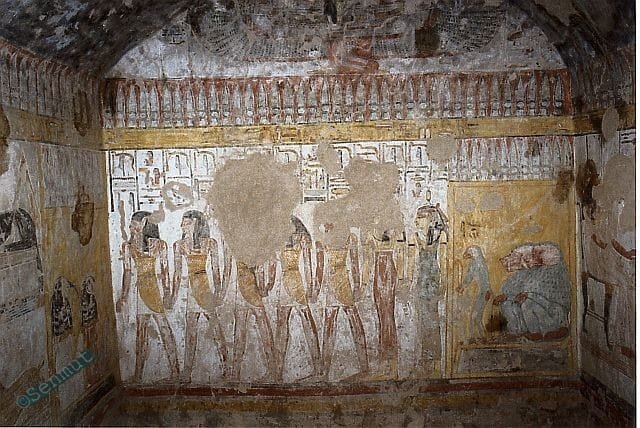
Ancient Egyptian queens often played an important role in diplomacy and foreign relations. While pharaohs directed military campaigns and negotiated treaties, queens helped strengthen alliances, maintain communication with foreign courts, and represent the prestige of the Egyptian monarchy on the international stage. Marriage was one of the most important diplomatic tools in the ancient world. Royal women could serve as symbols of political alliances between kingdoms. Although Egyptian pharaohs rarely married foreign princesses themselves, foreign royal women frequently entered the Egyptian court as part of diplomatic agreements. Queens also participated in diplomatic correspondence. The best evidence comes from the famous Amarna Letters, a collection of diplomatic communications between Egypt and neighboring kingdoms. These letters reveal that foreign rulers sometimes communicated directly with influential queens, recognizing their importance within the royal court. One notable example is Tiye. Following the death of her husband, foreign kings continued to correspond with her, demonstrating the respect and influence she commanded internationally. Her involvement in diplomatic affairs highlights the significant role queens could play beyond the borders of Egypt. Royal women also served as cultural ambassadors. Through ceremonial appearances, religious festivals, and interactions with foreign visitors, queens projected an image of Egyptian wealth, stability, and sophistication. Their presence reinforced the prestige of the monarchy and strengthened Egypt's reputation abroad. Diplomatic activities frequently involved the exchange of gifts, luxury goods, precious metals, jewelry, textiles, and exotic products. Queens often participated in these exchanges and sometimes managed valuable royal estates that contributed resources to diplomatic efforts. The role of queens in diplomacy demonstrates that their influence extended far beyond palace walls. They helped maintain relationships with neighboring powers and contributed to Egypt's position as one of the dominant civilizations of the ancient world.
12. The Economic Power of Egyptian Queens
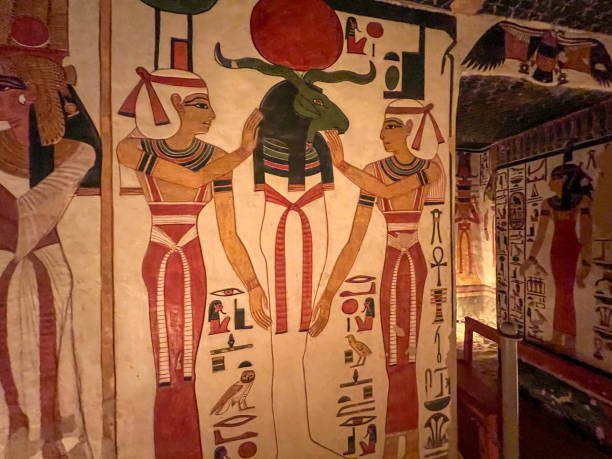
Queens in Ancient Egypt possessed considerable economic influence and often controlled extensive resources. Their wealth enabled them to support religious institutions, fund construction projects, maintain large households, and exercise political influence. Far from being dependent solely on the king, many queens managed substantial economic assets of their own. Royal estates formed the foundation of a queen's wealth. These estates included farmland, vineyards, orchards, livestock, workshops, and storage facilities distributed throughout Egypt. The agricultural products generated by these properties provided food, textiles, and revenue that supported the queen's activities. Many queens employed large staffs of administrators, scribes, craftsmen, servants, and laborers to manage their holdings. These personnel ensured that estates remained productive and profitable. The scale of some royal properties rivaled that of major temples and government institutions. Queens also contributed to temple construction and religious patronage. Donations of land, livestock, gold, and luxury goods helped support priesthoods and temple complexes. Such acts enhanced the queen's reputation while strengthening her relationship with influential religious institutions. Prominent queens such as Hatshepsut used economic resources to finance ambitious building programs and trade expeditions. Her famous voyage to Punt generated valuable imports that enriched Egypt and demonstrated the economic benefits of effective royal leadership. The economic influence of queens extended into diplomacy as well. Wealthy queens could distribute gifts, sponsor ceremonies, and support initiatives that enhanced Egypt's prestige at home and abroad. Control of resources translated into political power. A queen who managed extensive estates and maintained strong relationships with officials, priests, and administrators could become a highly influential figure within the royal court. The economic authority enjoyed by Egyptian queens highlights their importance within the broader structure of Egyptian society and demonstrates that royal women were active participants in the kingdom's prosperity.
13. Famous Tombs of Egyptian Queens
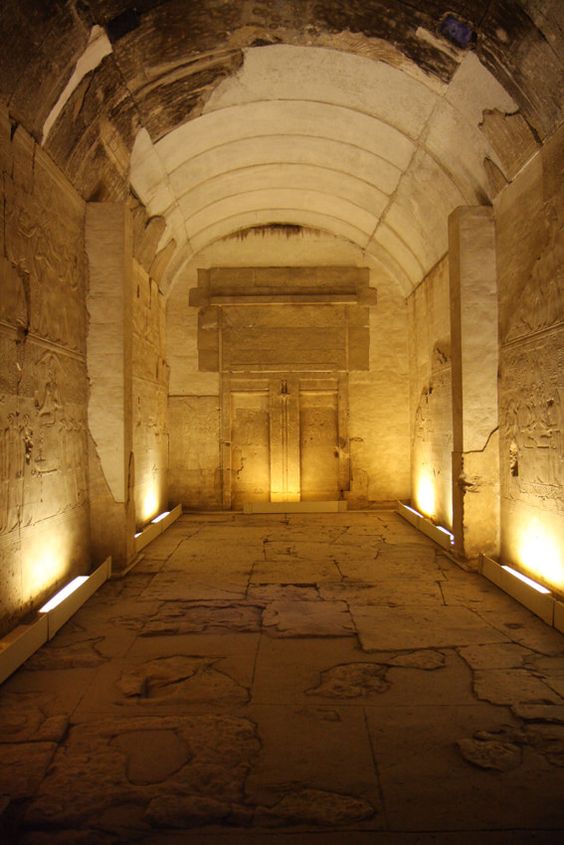
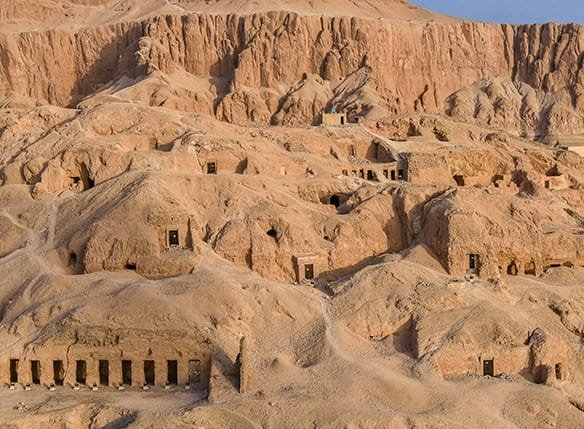
The tombs of Egyptian queens provide some of the most valuable evidence for understanding the lives, status, and influence of royal women in Ancient Egypt. These burial places were not only final resting sites but also powerful symbols of prestige, religious devotion, and eternal life. The scale and decoration of a queen's tomb often reflected her importance within the royal family and her role in Egyptian society. One of the most famous royal tombs belongs to Nefertari, whose magnificent burial chamber is located in the Valley of the Queens. Often described as the most beautiful tomb in Egypt after those of the pharaohs, Nefertari's tomb contains breathtaking paintings that depict her journey through the afterlife. The vibrant colors and artistic quality of the decorations have earned it the nickname "The Sistine Chapel of Ancient Egypt." Another important burial site is the tomb of Hatshepsut in the Valley of the Kings. Because she ruled as a pharaoh, Hatshepsut received a royal burial normally reserved for kings. Her mortuary complex at Deir el-Bahari remains one of the most impressive architectural achievements of Ancient Egypt. The tomb of Tiye also demonstrates the importance of royal women during the New Kingdom. Although many royal burials were robbed in antiquity, surviving artifacts reveal the wealth and prestige associated with queens. The Valley of the Queens served as the principal burial ground for many royal wives, mothers, and princesses during the New Kingdom. More than ninety tombs have been discovered there, providing archaeologists with invaluable insights into royal female life and funerary traditions. The elaborate decoration of these tombs emphasized religious beliefs, divine protection, and hopes for eternal life. Through their burial monuments, queens secured their place in history and demonstrated the high status they enjoyed within Egyptian civilization.
14. The Titles and Honors Held by Queens
Ancient Egyptian queens held numerous titles that reflected their status, responsibilities, and relationship to the monarchy. These titles were not merely ceremonial; they conveyed political authority, religious significance, and social prestige. Understanding these honors helps reveal the important role queens played within Egyptian government and society. The most prestigious title was Great Royal Wife, which identified the principal wife of the pharaoh. This title distinguished the queen from secondary wives and emphasized her importance in producing heirs and supporting the king. Great Royal Wives frequently appeared beside pharaohs in official monuments and religious ceremonies. Another significant title was King's Mother. Mothers of reigning pharaohs often held considerable influence because of their close relationship with the king. In many cases, the King's Mother became one of the most respected figures in the royal court and could exercise substantial political authority. The title King's Daughter highlighted a queen's royal lineage and reinforced her connection to the divine bloodline of the monarchy. Royal birth often strengthened a queen's prestige and enhanced the legitimacy of future heirs. Religious honors were equally important. One of the most influential titles was God's Wife of Amun, associated with the powerful cult of Amun. Women holding this position participated in major religious ceremonies and controlled extensive temple resources. In some periods, the office became one of the most powerful institutions in Egypt. Queens also received titles linking them to goddesses such as Isis, Hathor, and Mut. These associations reinforced the sacred nature of kingship and emphasized the queen's role in maintaining divine order. The variety of titles held by queens demonstrates the many responsibilities they fulfilled. Through these honors, Egyptian society recognized queens as essential figures in religion, politics, dynastic succession, and royal ideology.

15. How Queens Influenced Egyptian Culture and Society
The influence of Egyptian queens extended far beyond the royal palace. Through their political activities, religious patronage, charitable works, artistic sponsorship, and public visibility, queens helped shape the culture and society of Ancient Egypt. Their contributions affected countless aspects of Egyptian life and left a lasting legacy that continues to fascinate historians today. Queens often served as role models for elite women and symbols of ideal womanhood. Their public appearances, religious participation, and family roles reinforced cultural values related to motherhood, loyalty, wisdom, and devotion. Artistic depictions frequently portrayed queens as elegant, powerful, and dignified figures. Many queens sponsored temples, monuments, and public works projects. These contributions supported economic activity, provided employment, and strengthened religious institutions. Construction projects commissioned by royal women enriched Egyptian architecture and demonstrated their commitment to the prosperity of the kingdom. The artistic influence of queens was also significant. Royal women inspired sculptures, reliefs, jewelry, literature, and decorative arts. The famous bust of Nefertiti remains one of the most celebrated masterpieces of ancient art and continues to symbolize Egyptian beauty and sophistication. Queens frequently promoted religious devotion through temple patronage and participation in sacred ceremonies. Their association with powerful goddesses strengthened religious traditions and reinforced the connection between the monarchy and the divine world. The visibility of powerful queens such as Hatshepsut, Tiye, and Cleopatra VII demonstrated that women could hold significant authority within Egyptian society. Their achievements challenged limitations often imposed on women in other ancient civilizations. Through politics, religion, art, and public life, queens played an essential role in shaping Egyptian civilization. Their influence helped define the cultural identity of Ancient Egypt and ensured that royal women remained central figures in the kingdom's history.

16. Comparing Egyptian Queens to Women in Other Ancient Civilizations
One of the most remarkable aspects of Ancient Egyptian society was the relatively high status enjoyed by women, particularly queens. Compared to women in many other ancient civilizations, Egyptian queens possessed greater legal rights, economic independence, religious authority, and political influence. This distinction helped make Egypt one of the most progressive societies of the ancient world regarding the role of elite women. In Ancient Greece, women generally had limited public roles and were largely excluded from political life. Athenian women, for example, could not vote, hold political office, or participate directly in government. Their primary responsibilities focused on household management and family life. By contrast, Egyptian queens regularly appeared in public ceremonies, owned property, managed estates, and influenced political affairs. Women in Ancient Mesopotamia enjoyed certain legal protections but rarely achieved the level of authority seen among Egyptian queens. Although some Mesopotamian royal women exercised influence behind the scenes, they generally did not attain the public prominence associated with figures such as Hatshepsut or Nefertiti. In the Roman world, elite women could wield influence through family connections, but formal political power remained largely in the hands of men. Even powerful Roman women rarely approached the authority exercised by queens who served as regents, religious leaders, or rulers in Egypt. Egyptian queens benefited from a cultural and religious framework that associated women with powerful goddesses such as Isis, Hathor, and Mut. These divine models helped legitimize female authority and contributed to the acceptance of influential royal women. The existence of female pharaohs such as Hatshepsut and powerful queens like Cleopatra VII demonstrates the unique opportunities available to women in Ancient Egypt. While gender inequality certainly existed, Egyptian queens often enjoyed a degree of influence unmatched elsewhere in the ancient world. This comparison highlights why historians continue to view Ancient Egypt as one of the most distinctive civilizations in its treatment of royal women and female authority.
17. The Legacy of Egyptian Queens in History
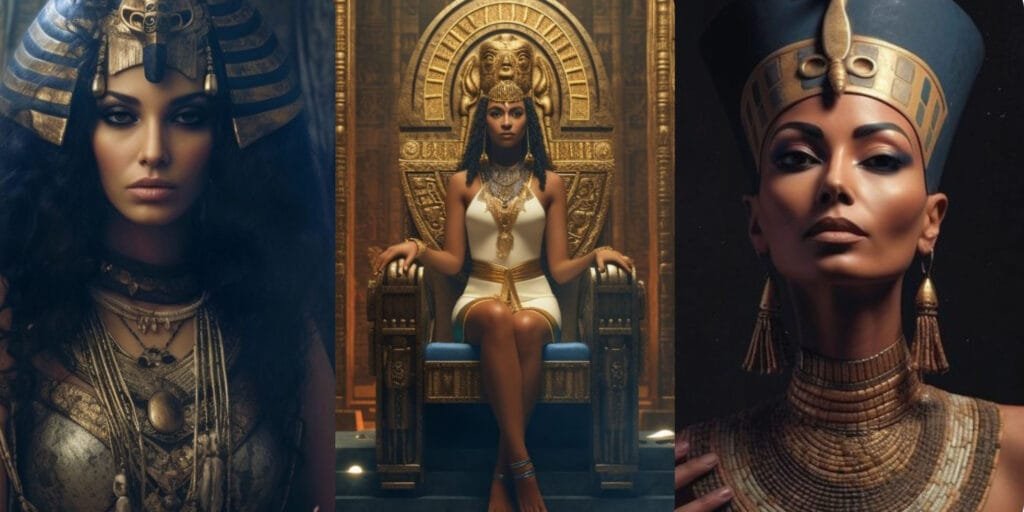
The legacy of Egyptian queens extends far beyond the borders of Ancient Egypt. Through their political achievements, religious influence, cultural contributions, and extraordinary leadership, these women left a lasting mark on world history. Thousands of years after their deaths, Egyptian queens continue to inspire scholars, artists, filmmakers, and travelers from around the globe. One of the most enduring legacies is the example set by powerful female rulers. Hatshepsut remains one of the earliest and most successful female heads of state in recorded history. Her reign demonstrated that women could govern effectively, oversee large construction projects, expand trade networks, and maintain political stability. The image of Nefertiti has become an international symbol of beauty, elegance, and royal power. Her famous bust is one of the most recognizable works of ancient art and continues to attract worldwide attention. Likewise, Cleopatra VII has become one of the most famous women in history. Her story has inspired countless books, plays, films, and historical studies. Although often romanticized, Cleopatra remains admired for her intelligence, diplomacy, and determination to preserve Egypt's independence. The tombs, temples, statues, inscriptions, and monuments associated with Egyptian queens continue to provide valuable information about ancient society. Archaeologists regularly study these sources to better understand politics, religion, family life, and gender roles in the ancient world. The achievements of queens such as Tiye, Nefertari, and many others demonstrate that women were active participants in shaping Egyptian civilization. Today, the legacy of Egyptian queens serves as a powerful reminder that leadership, intelligence, and influence are not limited by gender. Their stories continue to captivate people worldwide and ensure their place among history's most remarkable women.
18. Why Queens Were Essential to Egyptian Rule
Throughout the three-thousand-year history of Ancient Egypt, queens played a fundamental role in maintaining the stability, prosperity, and continuity of the kingdom. Far more than royal spouses, they were political advisors, religious leaders, diplomats, estate managers, mothers of kings, regents, and, in some cases, rulers in their own right. Queens helped secure dynastic succession by producing heirs and protecting royal bloodlines. As Great Royal Wives and King's Mothers, they reinforced the legitimacy of the monarchy and ensured the continuation of Egypt's ruling families. Their influence often extended into the highest levels of government, where they advised pharaohs and helped shape important decisions. In religion, queens served as earthly representatives of powerful goddesses and participated in ceremonies that upheld divine order. Their sacred roles strengthened the connection between the monarchy and the gods, an essential foundation of Egyptian kingship. Economically, queens managed extensive estates, supported temples, financed construction projects, and contributed to Egypt's prosperity. Diplomatically, they helped maintain relationships with foreign kingdoms and enhanced Egypt's prestige on the international stage. The achievements of extraordinary women such as Hatshepsut, Nefertiti, Tiye, Nefertari, and Cleopatra VII demonstrate the extraordinary impact queens could have on Egyptian history. Final Thoughts The story of Ancient Egypt cannot be told through the pharaohs alone. Behind many of Egypt's greatest rulers stood influential queens whose intelligence, leadership, and dedication helped shape one of the world's greatest civilizations. Their contributions touched every aspect of Egyptian life—from politics and religion to culture and diplomacy. For this reason, queens were not simply companions of kings; they were essential pillars of Egyptian rule whose influence helped sustain the monarchy for millennia.