

- Excursions in Egypt
- Egypt Tour Packages
- Cairo Tours and Excursions
- Hurghada Tours and Excursions
- Soma Bay Tours and Excursions
- Makadi Bay Tours and Excursions
- Sahl Hasheesh Tours and Excursions
- El Gouna Tours and Excursions
- Marsa Alam Tours and Excursions
- Port Ghalib Tours and Excursions
- El Quseir Tours and Excursions
- Dendera and Abydos Day Tours
- Aswan Tours and Excursions
- Luxor Tours and Excursions
- Sharm El Sheikh Tours and Excursions
- Top Rated Egypt Tours in 2026
- Optional Excursions in Egypt
- Private Transfer
- Blogs About egypt
- Ancient Egypt
- Historical Sites in Egypt
- Cairo
- Alexandria
- Luxor
- Aswan
- The Red Sea
- Dendera Temple
- El Fayoum Oasis
- Bahariya Oasis
- Siwa Oasis
- Al Alamein
- Marsa Matruh
- Why Egypt Is One of the Safest Countries to Visit in the Middle East
- What You Need To know Before Your First Trip To Egypt
- Egypt Travel Costs in 2026 Full Budget Guide
- Top 10 Tourist Activities in Egypt
- Top 50 Activities You Can’t Miss in Egypt in 2026
- The Guide to Guided Tours in Egypt
- Egypt’s Ancient and Modern History
- The Nile River
- The Deserts of Egypt
- Ancient Egyptian gods
- famous Egyptian dishes
- UNESCO World Heritage sites
- About Us
- Egypt Hotels and Resorts
- Excursions in Egypt
- Egypt Tour Packages
- Cairo Tours and Excursions
- Hurghada Tours and Excursions
- Soma Bay Tours and Excursions
- Makadi Bay Tours and Excursions
- Sahl Hasheesh Tours and Excursions
- El Gouna Tours and Excursions
- Marsa Alam Tours and Excursions
- Port Ghalib Tours and Excursions
- El Quseir Tours and Excursions
- Dendera and Abydos Day Tours
- Aswan Tours and Excursions
- Luxor Tours and Excursions
- Sharm El Sheikh Tours and Excursions
- Top Rated Egypt Tours in 2026
- Optional Excursions in Egypt
- Private Transfer
- Blogs About egypt
- Ancient Egypt
- Historical Sites in Egypt
- Cairo
- Alexandria
- Luxor
- Aswan
- The Red Sea
- Dendera Temple
- El Fayoum Oasis
- Bahariya Oasis
- Siwa Oasis
- Al Alamein
- Marsa Matruh
- Why Egypt Is One of the Safest Countries to Visit in the Middle East
- What You Need To know Before Your First Trip To Egypt
- Egypt Travel Costs in 2026 Full Budget Guide
- Top 10 Tourist Activities in Egypt
- Top 50 Activities You Can’t Miss in Egypt in 2026
- The Guide to Guided Tours in Egypt
- Egypt’s Ancient and Modern History
- The Nile River
- The Deserts of Egypt
- Ancient Egyptian gods
- famous Egyptian dishes
- UNESCO World Heritage sites
- About Us
- Egypt Hotels and Resorts
Welcome to
The Police in Ancient Egypt: Law Enforcement and Security in One of the World's First Civilizations
The police in Ancient Egypt played a crucial role in maintaining law, order, and security throughout one of history’s most powerful civilizations. Long before the establishment of modern police forces, Ancient Egyptians developed organized law enforcement systems to protect communities, guard valuable resources, secure borders, and uphold the authority of the pharaoh. These early police officers were responsible for preventing crime, capturing criminals, protecting temples and royal property, supervising public order, and ensuring that justice was carried out according to the principles of Ma’at—the Egyptian concept of truth, balance, harmony, and justice.
Ancient Egypt’s vast territory, growing population, thriving trade networks, and immense wealth required effective security measures. As a result, specialized police units emerged to patrol cities, protect royal tombs, monitor trade routes, and defend important religious sites. Some officers worked as local law enforcers, while others served as elite guards protecting the pharaoh and government officials.
Archaeological discoveries, tomb inscriptions, temple reliefs, and ancient texts reveal fascinating details about the development of policing in Ancient Egypt. These records show that Egyptian law enforcement was surprisingly organized and sophisticated for its time, making it one of the earliest examples of a professional policing system in world history.
This guide explores the police force of Ancient Egypt, their duties, organization, methods, challenges, and their role in preserving order within one of humanity’s greatest civilizations.
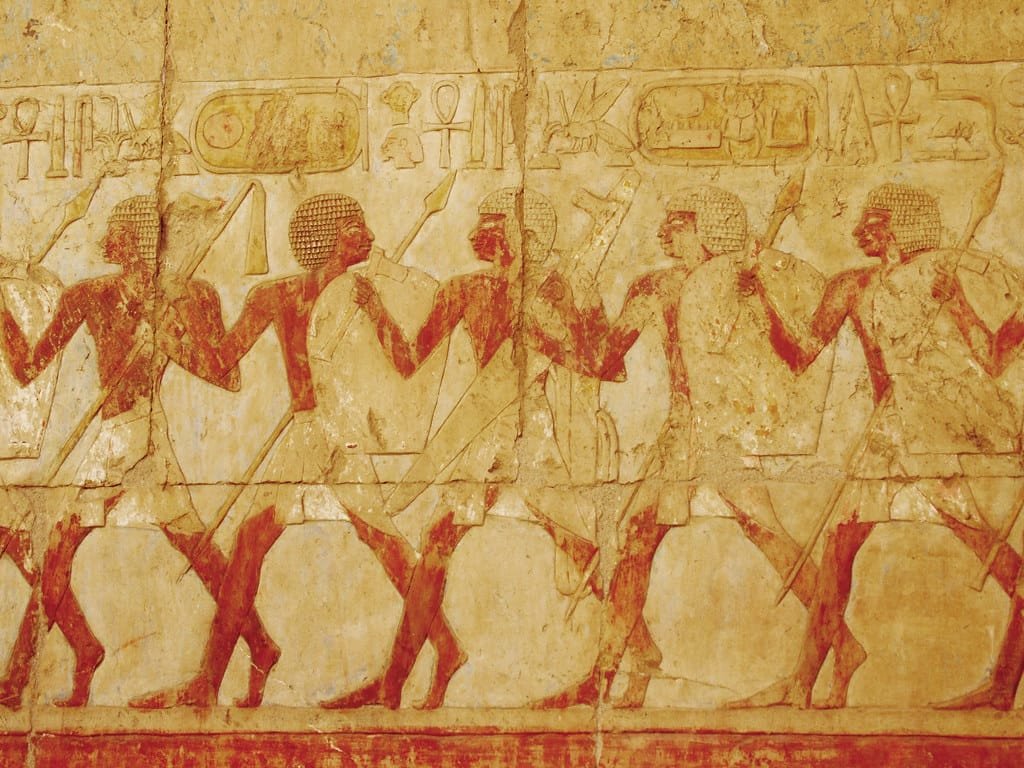
1. The Origins of Policing in Ancient Egypt
Ancient Egypt developed one of the earliest organized law enforcement systems in history. As Egyptian society grew more complex, the need for security, crime prevention, and public order became increasingly important. The emergence of cities, temples, trade routes, government institutions, and royal estates created new challenges that required dedicated personnel to maintain stability. During the Early Dynastic and Old Kingdom periods, local officials and military personnel often carried out policing duties. Over time, these responsibilities evolved into specialized law enforcement roles. The Egyptian government recognized that protecting property, maintaining social order, and enforcing laws were essential for the kingdom's success. The foundation of Egyptian law enforcement was closely connected to the concept of Ma'at. Egyptians believed that maintaining order was a sacred duty. Crime, disorder, and corruption were viewed as threats not only to society but also to the cosmic balance established by the gods. Police officers therefore served both practical and religious functions by helping preserve harmony throughout the kingdom. As Egypt expanded, law enforcement became more organized. Specialized units were assigned to specific tasks, including border security, temple protection, tomb guarding, and urban policing. These developments laid the groundwork for one of the most advanced policing systems of the ancient world.
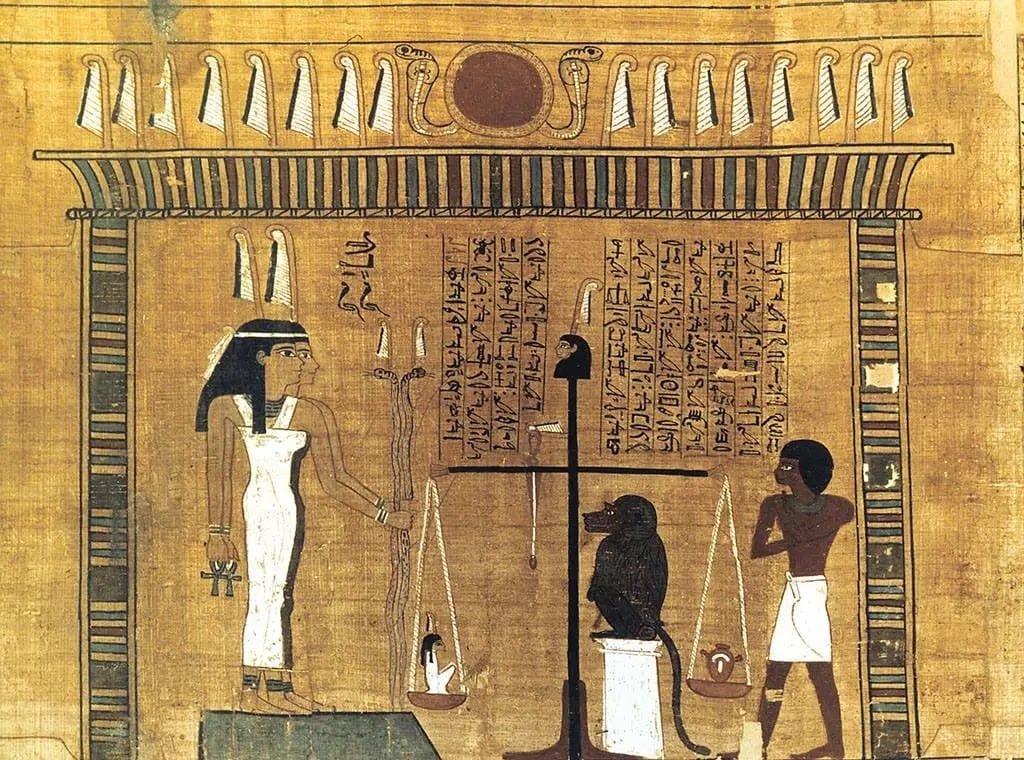
2. Why Ancient Egypt Needed a Police Force
The prosperity and size of Ancient Egypt made law enforcement essential. The kingdom stretched for hundreds of miles along the Nile River and contained numerous cities, villages, temples, palaces, warehouses, and agricultural estates. Protecting these resources required a dedicated security system. One of the primary reasons for establishing a police force was the protection of property. Temples accumulated enormous wealth in the form of gold, grain, livestock, jewelry, and sacred objects. Royal tombs contained priceless treasures that attracted thieves. Police officers guarded these valuable assets and investigated thefts when crimes occurred. Trade also created security challenges. Egypt maintained extensive trade networks with neighboring regions, transporting valuable goods such as gold, incense, ivory, timber, copper, and precious stones. Police units protected merchants and trade routes from bandits and raiders. Public order was another important concern. Population growth led to larger communities where disputes, thefts, and conflicts occasionally occurred. Law enforcement officers helped maintain peace and ensure that legal decisions were respected. The government also relied on police to enforce tax collection, supervise labor projects, monitor workers, and carry out official orders. Their presence reinforced the authority of the state and helped maintain stability across the kingdom. Without an effective police force, Egypt's wealth and prosperity would have been vulnerable to crime, disorder, and corruption.

3. The Medjay: The Elite Police Force of Ancient Egypt
Among the most famous law enforcement officers in Ancient Egypt were the Medjay. Originally a nomadic people from Nubia, the Medjay gradually became integrated into Egyptian society and eventually served as elite police officers and security personnel. The Medjay earned a reputation for loyalty, discipline, and effectiveness. Because of their skills in desert navigation and tracking, they were particularly valuable for protecting Egypt's borders, trade routes, mining expeditions, and remote settlements. Their expertise made them ideal candidates for specialized law enforcement duties. Over time, the term "Medjay" evolved from an ethnic designation into a professional title. By the New Kingdom, Medjay units functioned as a highly respected police force responsible for maintaining security throughout the kingdom. They patrolled desert regions, guarded royal tombs, protected temples, and pursued criminals. The Medjay were often armed and trained to handle dangerous situations. Their responsibilities sometimes overlapped with military duties, particularly in border regions where security threats were more common. Their ability to operate in harsh environments made them indispensable to the Egyptian government. Archaeological evidence and historical records indicate that the Medjay played a crucial role in protecting some of Egypt's most important assets, including royal necropolises and mining operations. Their service contributed significantly to the stability and security of the kingdom. Today, the Medjay remain one of the most recognizable symbols of law enforcement in Ancient Egypt and are frequently featured in modern discussions of ancient policing systems.
4. Duties and Responsibilities of the Ancient Egyptian Police
The police in Ancient Egypt performed a wide variety of duties that extended far beyond simply catching criminals. Their responsibilities covered nearly every aspect of public security, making them one of the most important institutions within Egyptian society. Police officers served as protectors of the state, guardians of valuable property, and enforcers of the law. One of their primary duties was crime prevention. Police patrolled cities, villages, marketplaces, temples, and public gathering places to discourage theft, violence, and disorder. Their visible presence helped maintain public confidence and reinforced the authority of the government. Protecting state property was another major responsibility. Temples, royal palaces, warehouses, granaries, and government buildings contained enormous wealth that needed constant protection. Police guards were stationed at these locations to prevent theft and unauthorized access. Ancient Egyptian police also supervised workers on government projects, including the construction of temples, tombs, canals, and monuments. They ensured that laborers followed regulations and that materials were not stolen or damaged. Border security was equally important. Police units monitored desert routes and river crossings to prevent smuggling, illegal trade, and unauthorized entry into the kingdom. Some officers accompanied mining and trading expeditions to protect valuable resources from bandits. Police officers were frequently called upon to investigate crimes, apprehend suspects, recover stolen property, and assist local officials in carrying out judicial decisions. They also enforced tax collection and supported government administrators in maintaining order. The broad range of responsibilities assigned to Ancient Egyptian police demonstrates the sophistication of the kingdom's law enforcement system. Their work helped preserve stability throughout one of history's longest-lasting civilizations.
5. How Ancient Egyptian Police Caught Criminals
The methods used by Ancient Egyptian police to investigate and capture criminals were surprisingly effective considering the limited technology available at the time. Without modern forensic science, officers relied on observation, witness testimony, local knowledge, and physical evidence to solve crimes and enforce the law. One of the most important investigative tools was questioning witnesses. Police officers gathered information from victims, neighbors, merchants, workers, and other members of the community who might have knowledge about a crime. In close-knit Egyptian villages, people often knew one another, making it easier to identify suspects. Tracking was another valuable skill, particularly among the Medjay police. Their experience navigating deserts and remote regions enabled them to follow footprints, animal tracks, and signs left behind by criminals attempting to escape. This expertise was especially useful when pursuing tomb robbers, smugglers, and fugitives. Ancient Egyptian police also conducted searches of homes, workshops, storage facilities, and marketplaces when investigating thefts. Recovered stolen goods could provide important evidence linking suspects to criminal activity. Written records maintained by scribes often played a role in investigations. Transactions, inventories, tax records, and official documents helped authorities verify ownership of property and identify discrepancies that might indicate theft or fraud. Confessions were highly valued within the Egyptian legal system. Suspects were frequently questioned by officials, and in some cases harsh interrogation methods were used to obtain information. While these practices differ greatly from modern legal standards, they reflected the judicial procedures of the time. The combination of community cooperation, skilled tracking, careful record-keeping, and organized investigations allowed Ancient Egyptian police to maintain order and solve many criminal cases despite the limitations of ancient technology.
6. Protecting the Royal Tombs and the Valley of the Kings
One of the most important responsibilities of the Ancient Egyptian police was protecting royal tombs from theft and vandalism. The tombs of pharaohs and nobles contained enormous quantities of gold, jewelry, statues, furniture, weapons, sacred objects, and other valuable treasures. These riches made tomb robbery one of the most serious crimes in Ancient Egypt. Royal burial sites such as the Valley of the Kings required extensive security measures. Specialized police units, including members of the Medjay, were assigned to guard these sacred locations. Officers patrolled entrances, monitored surrounding areas, and restricted unauthorized access to burial complexes. Despite these efforts, tomb robbery remained a persistent problem, particularly during periods of political instability. Historical records reveal that organized groups of thieves sometimes targeted royal tombs, hoping to steal valuable treasures and precious metals. Such crimes threatened not only royal wealth but also Egyptian religious beliefs regarding the afterlife. The government responded aggressively to tomb theft. Police investigations were launched whenever robberies were discovered, and officials conducted detailed inquiries to identify those responsible. Ancient documents, including records from the famous tomb robbery trials of the New Kingdom, provide remarkable insights into these investigations. Police officers worked closely with judges, scribes, and government administrators to recover stolen property and prosecute offenders. Severe punishments were often imposed on convicted tomb robbers to discourage future crimes. The protection of royal tombs was considered both a legal and religious obligation. Egyptians believed that disturbing the burial of a pharaoh endangered the deceased ruler's journey into the afterlife and threatened the sacred order of society. The efforts of the Ancient Egyptian police to safeguard royal tombs helped preserve some of the most important archaeological treasures ever discovered and highlight the significance of law enforcement in protecting Egypt's cultural heritage.
7. Police and the Egyptian Legal System
The police of Ancient Egypt worked closely with the kingdom's legal system to ensure that laws were enforced and justice was maintained. Unlike modern societies with separate police departments, courts, and legal agencies, Ancient Egyptian law enforcement operated as part of a broader administrative system directed by the pharaoh and government officials. The foundation of Egyptian law was the principle of Ma'at, which represented truth, justice, balance, order, and harmony. Egyptians believed that maintaining Ma'at was essential for the stability of society and the proper functioning of the universe. Police officers, judges, and government officials all played important roles in preserving this sacred order. When crimes occurred, police officers were responsible for investigating incidents, gathering evidence, questioning witnesses, and apprehending suspects. Once an investigation was completed, the accused individual would appear before local courts or government officials for judgment. Scribes carefully documented legal proceedings, ensuring that records of cases, testimonies, and verdicts were preserved. Many legal disputes involved theft, fraud, property disagreements, unpaid debts, assaults, and tomb robberies. More serious offenses could be referred to higher authorities, including the vizier, who served as the chief judge of the kingdom. Police officers also enforced court decisions by collecting fines, carrying out punishments, recovering stolen goods, and ensuring that legal orders were obeyed. Their role was crucial in transforming judicial rulings into practical action. Historical documents such as the Abbott Papyrus and other legal records provide detailed accounts of criminal investigations and court proceedings. These texts demonstrate that Ancient Egypt possessed a surprisingly organized legal system supported by professional law enforcement. The close relationship between police and the courts helped maintain stability throughout Egypt for thousands of years and contributed to the civilization's remarkable longevity.
8. Weapons and Equipment Used by Ancient Egyptian Police
To maintain law and order, Ancient Egyptian police officers needed effective weapons and equipment. Although their tools were relatively simple compared to modern law enforcement technology, they were well suited to the challenges faced by police officers in the ancient world. The most common weapon carried by police officers was the wooden staff or baton. These sturdy staffs served both as symbols of authority and practical tools for controlling suspects and maintaining order. Tomb paintings and reliefs frequently depict officials and guards carrying staffs while performing their duties. Many police officers, especially members of the Medjay, also carried bows and arrows. Archery was a highly developed skill in Ancient Egypt and provided an effective means of pursuing criminals, protecting trade routes, and defending remote locations. Spears and short swords were also used when dealing with dangerous suspects or hostile groups. Shields offered protection during confrontations, while ropes were commonly used to restrain prisoners. Police officers often employed simple restraints when transporting suspects to courts or detention facilities. In addition to weapons, police relied on practical equipment such as boats for river patrols and transportation. Since the Nile River served as Egypt's main transportation route, law enforcement officers frequently used boats to patrol waterways, escort officials, and pursue criminals. The Medjay were particularly known for their tracking skills. Their ability to follow footprints and identify signs in desert environments functioned as one of the most valuable investigative tools available to Ancient Egyptian law enforcement. Although Ancient Egyptian police lacked modern firearms, communication systems, and forensic technology, their combination of weapons, equipment, training, and experience enabled them to effectively maintain security throughout the kingdom.
9. Punishments for Criminals in Ancient Egypt
Punishment in Ancient Egypt was designed to deter crime, protect society, and preserve Ma'at. Egyptians believed that criminal behavior threatened social order and disrupted the balance established by the gods. As a result, penalties for lawbreaking could be severe, especially when crimes involved state property, temples, or royal tombs. For minor offenses, punishments often included fines, repayment of stolen goods, public humiliation, or physical punishment. Individuals convicted of theft might be required to return the stolen property and pay additional compensation to the victim. Public beatings were sometimes used to discourage repeat offenses. More serious crimes carried harsher penalties. Assault, corruption, fraud, and repeated theft could result in imprisonment, forced labor, or severe corporal punishment. Government officials who abused their positions faced particularly strict consequences because they were expected to uphold the principles of justice. Tomb robbery was considered one of the gravest crimes in Ancient Egypt. Since Egyptians believed that disturbing a tomb endangered the deceased person's afterlife, authorities treated such offenses with extreme seriousness. Police investigations often focused heavily on recovering stolen treasures and identifying all participants involved in the crime. Crimes against the state, including treason, conspiracy, and major acts of corruption, could result in execution. Historical records indicate that some criminals were sentenced to death for offenses viewed as threats to the kingdom's stability or the pharaoh's authority. Despite the severity of certain punishments, Egyptian courts generally relied on investigations, witness testimony, and official records before reaching decisions. Police officers played a critical role in gathering the information needed for legal proceedings. The punishment system of Ancient Egypt reflected the civilization's commitment to maintaining order, protecting sacred institutions, and preserving the stability that allowed the kingdom to flourish for more than three millennia.
10. Police Protection of Temples and Sacred Sites
Temples were among the most important institutions in Ancient Egypt, serving as religious, economic, administrative, and cultural centers. Because these sacred complexes contained immense wealth, valuable artifacts, religious treasures, and large food reserves, they required constant protection. The Ancient Egyptian police played a crucial role in safeguarding temples and maintaining security around these holy sites. Many temples owned vast estates, agricultural lands, workshops, livestock, warehouses, and treasuries. Temples dedicated to gods such as Amun, Ra, and Osiris accumulated enormous wealth through donations, taxation, and state support. Protecting these resources became a major responsibility for law enforcement officers. Police guards were stationed at temple entrances to control access and prevent theft. They monitored visitors, protected priests, and ensured that religious ceremonies could be conducted without disruption. During major festivals, additional security personnel were often deployed to manage large crowds and maintain public order. Temple police also protected sacred objects, statues of gods, ritual equipment, and valuable offerings. Theft from temples was considered a serious crime because it was viewed not only as a violation of property rights but also as an offense against the gods themselves. In addition to preventing crime, police officers assisted temple administrators in managing workers, collecting resources, and enforcing regulations within temple estates. Their presence helped maintain discipline and protect the economic interests of religious institutions. Many of Egypt's most famous temples, including Karnak Temple Complex and Luxor Temple, would have relied on organized security systems to safeguard their treasures and religious activities. The protection of temples demonstrates how closely law enforcement, religion, and government were connected in Ancient Egyptian society.
11. Border Police and Desert Patrols
Protecting Egypt's borders was one of the most challenging responsibilities assigned to the Ancient Egyptian police. The kingdom was surrounded by deserts, foreign territories, trade routes, and strategic frontier regions that required constant surveillance. Specialized police units, particularly the Medjay, became experts in border security and desert patrol operations. Egypt's deserts presented unique challenges. Vast stretches of sand and rugged terrain made it difficult to monitor movement and detect potential threats. However, the Medjay developed exceptional tracking skills that allowed them to navigate remote regions and identify signs of travelers, smugglers, bandits, and invading forces. Border police guarded key routes connecting Egypt to neighboring regions such as Nubia, the Sinai Peninsula, Libya, and the Levant. These routes were vital for trade, diplomacy, military campaigns, and mining expeditions. Protecting them ensured the continued flow of valuable goods into the kingdom. One of the primary duties of border police was preventing illegal entry and unauthorized movement across Egypt's frontiers. Officers monitored travelers, inspected caravans, and enforced regulations concerning trade and transportation. Their work helped protect state revenues and maintain national security. Desert patrols also protected mining expeditions searching for gold, copper, turquoise, and precious stones. These operations often took place in remote areas where workers were vulnerable to attacks by bandits or hostile groups. Police escorts provided essential security during these journeys. The combination of tracking expertise, military training, and local knowledge made border police highly effective. Their efforts helped secure Egypt's frontiers and contributed significantly to the kingdom's prosperity and stability. The success of Ancient Egypt's border security system highlights the sophistication of its law enforcement institutions and their ability to adapt to challenging environments.
12. Women and Law Enforcement in Ancient Egypt
While most police officers in Ancient Egypt were men, women also played important roles within the broader legal and administrative systems of Egyptian society. Ancient Egypt granted women more rights and opportunities than many other ancient civilizations, allowing them to participate in legal proceedings, own property, conduct business, and hold certain official positions. Direct evidence of female police officers is limited, but women were involved in activities related to law, justice, and administration. They could serve as witnesses in court cases, file legal complaints, manage estates, and participate in investigations involving family property or inheritance disputes. Women from wealthy families sometimes held influential positions within temple institutions and royal households, where security and administrative responsibilities occasionally overlapped. Female attendants, supervisors, and administrators helped maintain order within areas of society that were largely occupied by women. The legal status of women in Ancient Egypt was remarkably advanced for its time. Women could bring cases before courts, defend their rights, own businesses, inherit property, and enter contracts. These legal protections meant that women interacted regularly with law enforcement officials and judicial authorities. Royal women also exercised considerable authority. Figures such as Hatshepsut demonstrated that women could rise to positions of immense power within Egyptian society. While not police officers, influential women often participated in government administration and decision-making processes that affected law enforcement. Some historians believe that women may have assisted in specific investigations involving female suspects or matters concerning households and family disputes, although direct evidence remains limited. The role of women in Ancient Egypt's legal system highlights the relatively progressive status they enjoyed compared with many contemporary societies and provides important insight into the functioning of Egyptian law and justice.
13. Crimes in Ancient Egypt
Like every civilization, Ancient Egypt faced a variety of criminal activities that threatened social order, economic stability, and public safety. Although Egyptian society was generally well organized, crimes still occurred in cities, villages, temples, marketplaces, and even within government institutions. The police played a vital role in investigating these offenses and bringing offenders before the courts. The most common crime in Ancient Egypt was theft. Valuable goods such as grain, livestock, tools, jewelry, clothing, and household items were frequent targets for thieves. Since agriculture formed the backbone of the economy, stealing food supplies or livestock could have serious consequences for families and communities. Fraud and corruption were also significant concerns. Some officials abused their positions for personal gain, manipulated records, accepted bribes, or misused government resources. Because administrative records were essential to the functioning of the state, dishonest behavior by officials was viewed as a serious threat to social stability. Violent crimes such as assault, robbery, and murder occurred less frequently but were treated with great seriousness. Police officers investigated these offenses and worked with courts to identify and punish offenders. Family disputes, inheritance conflicts, and property disagreements sometimes escalated into criminal cases requiring legal intervention. Tomb robbery was one of the most infamous crimes in Ancient Egypt. The wealth buried with pharaohs and nobles attracted organized groups of thieves willing to risk severe punishment in exchange for enormous rewards. Police units dedicated considerable effort to protecting tombs and investigating robberies. Smuggling, illegal trade, tax evasion, and violations of government regulations also challenged law enforcement authorities. Border police and administrative officials worked together to prevent these activities and protect state revenues. The variety of crimes recorded in ancient texts demonstrates that Egypt faced many of the same challenges that modern societies encounter today. Effective policing was essential for maintaining order and preserving the prosperity of the kingdom.
14. Famous Criminal Cases and Tomb Robbery Trials
Some of the most fascinating records from Ancient Egypt involve criminal investigations and court trials, particularly those concerning tomb robberies. These cases provide remarkable insights into how the Egyptian police, courts, and government officials handled serious crimes. One of the best-known examples comes from the New Kingdom period, when widespread tomb robberies occurred during times of political and economic instability. Royal tombs in the Valley of the Kings and other burial sites became targets for organized criminal groups seeking gold, jewelry, precious metals, and funerary treasures. Ancient documents such as the Abbott Papyrus contain detailed accounts of official investigations into these crimes. Police officers inspected damaged tombs, interviewed witnesses, tracked suspects, and recovered stolen property. These records reveal a surprisingly sophisticated investigative process for the ancient world. Many tomb robbers were not outsiders but individuals familiar with burial sites, including laborers, craftsmen, guards, and local residents. Their knowledge of tomb layouts and security procedures often enabled them to carry out carefully planned thefts. Court proceedings documented confessions, witness testimony, and evidence gathered by investigators. In some cases, entire criminal networks were uncovered, involving multiple participants who shared responsibility for planning and executing robberies. The punishments imposed on convicted tomb robbers were often severe because Egyptians considered these crimes both criminal and religious offenses. Disturbing the resting place of the dead threatened beliefs about the afterlife and violated sacred traditions. The tomb robbery trials remain among the most valuable legal records from Ancient Egypt. They offer historians a detailed view of policing methods, criminal investigations, judicial procedures, and the challenges faced by law enforcement officials thousands of years ago.
15. The Relationship Between the Police and the Pharaoh
The police force of Ancient Egypt ultimately served the pharaoh, who was regarded as the supreme authority in the kingdom. As both a political ruler and a divine figure, the pharaoh depended on law enforcement personnel to maintain order, protect state interests, and preserve the principles of Ma'at throughout the land. Every aspect of Egyptian government operated under the pharaoh's authority. Police officers, judges, military leaders, and administrators carried out their duties in his name. Their responsibility was not only to enforce laws but also to uphold the stability and harmony that the pharaoh was believed to guarantee. The pharaoh relied on police forces to protect royal palaces, government buildings, temples, warehouses, and other important institutions. Law enforcement officers also safeguarded royal tombs and escorted officials traveling throughout the kingdom. Major investigations involving corruption, treason, tomb robbery, or threats to national security often attracted the attention of high-ranking officials who reported directly to the pharaoh or the vizier. This close relationship ensured that serious crimes received swift attention. The police also supported the pharaoh's economic policies by enforcing tax collection, protecting trade routes, and supervising labor on state-sponsored projects. Their work helped maintain the resources necessary for constructing temples, monuments, irrigation systems, and other public works. In return, police officers received authority, resources, and protection from the government. Their position within society reflected the importance of their role in preserving the power and stability of the Egyptian state. The partnership between the police and the pharaoh illustrates how law enforcement contributed to the success of one of history's most enduring civilizations. Through their efforts, the authority of the pharaoh extended across Egypt's cities, villages, deserts, and frontier regions.
16. The Evolution of Policing Through Egyptian History
The police force of Ancient Egypt did not emerge fully developed overnight. Instead, it evolved over thousands of years as Egyptian society became larger, wealthier, and more complex. From the Early Dynastic Period through the New Kingdom and later eras, law enforcement adapted to meet the changing needs of the kingdom. During the earliest periods of Egyptian history, local leaders, military personnel, and government officials were responsible for maintaining order within their communities. As settlements expanded and centralized government became stronger, specialized security personnel began to appear. These early officers protected royal property, supervised workers, and assisted officials in enforcing laws. The Old Kingdom saw significant growth in state administration, particularly during the construction of the pyramids. Security forces became increasingly important for protecting royal projects, government resources, and trade networks. Organized patrols and guards helped maintain order throughout the kingdom. By the Middle Kingdom, Egypt had developed a more sophisticated administrative system. Law enforcement responsibilities became more specialized, with officers assigned to specific regions, government institutions, and economic activities. Increased trade and expanding state authority required more organized policing methods. The greatest development occurred during the New Kingdom, when the famous Medjay police force reached its peak. These elite officers protected borders, royal tombs, temples, trade routes, and mining expeditions. Their reputation for discipline and effectiveness made them one of the most respected law enforcement organizations of the ancient world. As foreign powers such as the Assyrians, Persians, Greeks, and Romans gained influence over Egypt in later periods, policing methods continued to evolve. New administrative practices and military structures influenced law enforcement while preserving many traditional Egyptian approaches to security and justice. The evolution of policing reflects the broader development of Ancient Egyptian civilization itself. As society became more advanced, law enforcement grew increasingly professional and organized, helping maintain stability for more than three thousand years.
17. Ancient Egyptian Police vs. Modern Police Forces
Although separated by thousands of years, there are surprising similarities between the police of Ancient Egypt and modern law enforcement agencies. Both systems were created to maintain public order, protect property, investigate crimes, and enforce laws. However, significant differences also exist due to advances in technology, legal systems, and human rights. One major similarity is the core mission of maintaining security. Ancient Egyptian police protected communities, investigated thefts, guarded important locations, and pursued criminals. Modern police continue to perform many of these same responsibilities, although with more advanced tools and procedures. Both ancient and modern law enforcement organizations rely on specialized units. The Medjay served as elite officers responsible for border security, tracking fugitives, and protecting high-value targets. Today, police agencies employ specialized divisions such as detectives, border patrol units, tactical teams, and forensic investigators. The biggest differences involve technology and investigative methods. Ancient Egyptian police relied on witness testimony, tracking skills, confessions, and local knowledge. Modern police use forensic science, fingerprint analysis, DNA testing, surveillance systems, databases, and advanced communication networks. Legal protections have also changed dramatically. Modern justice systems emphasize due process, legal representation, and the protection of individual rights. Ancient Egyptian courts operated under different standards, and punishments could be significantly harsher than those commonly used today. Training and equipment have evolved as well. Modern officers use vehicles, radios, computers, protective equipment, and specialized weapons. Ancient police depended on staffs, bows, spears, boats, and personal experience. Despite these differences, the fundamental purpose remains remarkably similar. Both Ancient Egyptian police and modern law enforcement agencies exist to protect society, enforce laws, and promote stability within their communities. The comparison highlights how the basic principles of policing have endured across thousands of years of human history.
18. Legacy of the Ancient Egyptian Police and Conclusion
The police force of Ancient Egypt represents one of the earliest and most successful examples of organized law enforcement in human history. Long before modern police departments existed, the Egyptians developed sophisticated systems for maintaining order, protecting valuable resources, enforcing laws, and safeguarding the stability of the kingdom. From local guards and temple protectors to the elite Medjay police force, Ancient Egyptian law enforcement officers played a crucial role in preserving one of the world's greatest civilizations. They protected royal tombs, secured borders, investigated crimes, supervised public order, guarded temples, and supported the legal system. Their efforts helped ensure the prosperity and security that allowed Egypt to flourish for more than three millennia. The principles that guided Egyptian policing were closely connected to the concept of Ma'at, the belief in truth, justice, balance, and harmony. By enforcing laws and combating crime, police officers helped maintain this sacred order and reinforced the authority of the pharaoh and the state. Archaeological discoveries, ancient papyri, temple inscriptions, and tomb paintings continue to reveal valuable information about the organization and activities of Egypt's police force. These sources demonstrate that Ancient Egyptian law enforcement was far more advanced than many people realize and contributed significantly to the success of the civilization. Today, the legacy of the Ancient Egyptian police survives through historical research, museum collections, and ongoing archaeological discoveries. Their story provides fascinating insight into the origins of policing and the development of organized government institutions.