

- Excursions in Egypt
- Egypt Tour Packages
- Cairo Tours and Excursions
- Hurghada Tours and Excursions
- Soma Bay Tours and Excursions
- Makadi Bay Tours and Excursions
- Sahl Hasheesh Tours and Excursions
- El Gouna Tours and Excursions
- Marsa Alam Tours and Excursions
- Port Ghalib Tours and Excursions
- El Quseir Tours and Excursions
- Dendera and Abydos Day Tours
- Aswan Tours and Excursions
- Luxor Tours and Excursions
- Sharm El Sheikh Tours and Excursions
- Top Rated Egypt Tours in 2026
- Optional Excursions in Egypt
- Private Transfer
- Blogs About egypt
- Ancient Egypt
- Historical Sites in Egypt
- Cairo
- Alexandria
- Luxor
- Aswan
- The Red Sea
- Dendera Temple
- El Fayoum Oasis
- Bahariya Oasis
- Siwa Oasis
- Al Alamein
- Marsa Matruh
- Why Egypt Is One of the Safest Countries to Visit in the Middle East
- What You Need To know Before Your First Trip To Egypt
- Egypt Travel Costs in 2026 Full Budget Guide
- Top 10 Tourist Activities in Egypt
- Top 50 Activities You Can’t Miss in Egypt in 2026
- The Guide to Guided Tours in Egypt
- Egypt’s Ancient and Modern History
- The Nile River
- The Deserts of Egypt
- Ancient Egyptian gods
- famous Egyptian dishes
- UNESCO World Heritage sites
- About Us
- Egypt Hotels and Resorts
- Excursions in Egypt
- Egypt Tour Packages
- Cairo Tours and Excursions
- Hurghada Tours and Excursions
- Soma Bay Tours and Excursions
- Makadi Bay Tours and Excursions
- Sahl Hasheesh Tours and Excursions
- El Gouna Tours and Excursions
- Marsa Alam Tours and Excursions
- Port Ghalib Tours and Excursions
- El Quseir Tours and Excursions
- Dendera and Abydos Day Tours
- Aswan Tours and Excursions
- Luxor Tours and Excursions
- Sharm El Sheikh Tours and Excursions
- Top Rated Egypt Tours in 2026
- Optional Excursions in Egypt
- Private Transfer
- Blogs About egypt
- Ancient Egypt
- Historical Sites in Egypt
- Cairo
- Alexandria
- Luxor
- Aswan
- The Red Sea
- Dendera Temple
- El Fayoum Oasis
- Bahariya Oasis
- Siwa Oasis
- Al Alamein
- Marsa Matruh
- Why Egypt Is One of the Safest Countries to Visit in the Middle East
- What You Need To know Before Your First Trip To Egypt
- Egypt Travel Costs in 2026 Full Budget Guide
- Top 10 Tourist Activities in Egypt
- Top 50 Activities You Can’t Miss in Egypt in 2026
- The Guide to Guided Tours in Egypt
- Egypt’s Ancient and Modern History
- The Nile River
- The Deserts of Egypt
- Ancient Egyptian gods
- famous Egyptian dishes
- UNESCO World Heritage sites
- About Us
- Egypt Hotels and Resorts
Welcome to
Ancient Egyptian Languages: The Voice of the Pharaohs Across Time
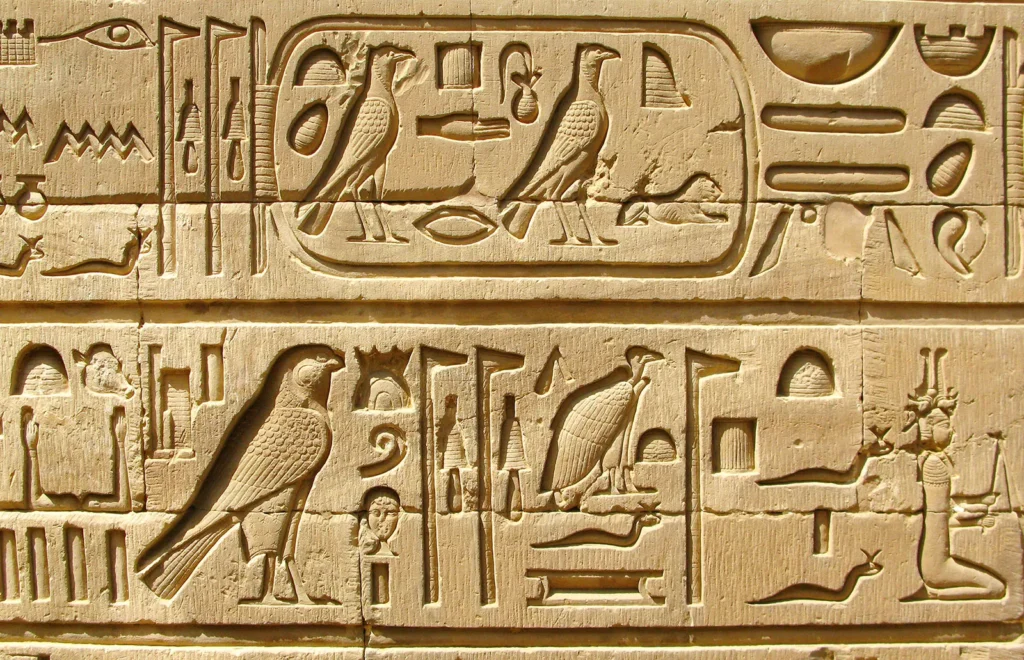
To step onto the sun-drenched sands of Egypt and gaze upon its towering monuments is to confront a profound, echoing silence that begs to be understood. For centuries, the colossal temples of Luxor, the enigmatic gaze of the Sphinx, and the deeply buried tombs of the Valley of the Kings stood as silent sentinels of a vanished world, their walls covered in a mesmerizing tapestry of birds, eyes, and sacred geometric symbols. To the modern traveler, these carvings look like a beautiful, mysterious art form, but to the people of the Nile, they were the literal breath of life—the physical manifestation of a language that shaped one of the longest-lasting civilizations in human history. The story of ancient Egyptian languages is not a tale of a single, frozen dialect, but rather a grand, millennia-long epic of linguistic evolution, cultural adaptability, and brilliant human innovation. For more than four thousand years, the spoken and written words of Egypt transformed alongside its history, adapting to the needs of visionary pharaohs, busy marketplace merchants, devout temple priests, and early Christian saints. It is a language family that bridged the gap between Africa and the Mediterranean, creating a sophisticated communication system that could capture everything from the loftiest cosmic poetry to the most mundane legal receipts. Understanding this linguistic journey is the ultimate key that unlocks the true soul of Egypt’s monuments, transforming a standard sightseeing tour into an intimate, deeply moving conversation with history. As we peel back the layers of this ancient tongue, we discover that the voices of the pharaohs never truly died; they merely waited for us to learn how to read their eternal script, proving that words carved in stone can successfully conquer time itself.
1. The Divine Origin: Medu Netjer and the Sacred Power of Words
To fully appreciate the breathtaking inscriptions carved into the ancient temples of Egypt, a traveler must understand that the Egyptians did not view writing as a mere human invention or a practical tool for daily administration. They called their hieroglyphic script Medu Netjer, which translates beautifully and profoundly to "the words of the gods." According to their deeply rooted spiritual mythology, it was Thoth, the ibis-headed deity of wisdom, magic, cosmic order, and science, who gifted humanity this sacred art of writing at the very dawn of creation. Because of this divine origin, words and symbols carried an immense, almost terrifying magical power within the Nile Valley. Writing something down or speaking it aloud was believed to bring that concept into actual, physical reality for all eternity. This is precisely why the names of pharaohs were lovingly enclosed in protective, oval-shaped ropes known as cartouches, acting as cosmic, magical shields to grant the ruler eternal life and protect them from malevolent spiritual forces. Conversely, the names of despised enemies or dangerous animals like scorpions and snakes were often intentionally left incomplete, broken, or ritually defaced on tomb walls to completely neutralize their threat in the afterlife. For the ancient Egyptian, every carved symbol was not just letters on a surface, but a living, breathing entity vibrating with divine energy and connecting the earthly realm directly to the heavens. When modern tourists gaze at these walls, they are looking at a system where art, magic, and language were indistinguishably fused into a singular cosmic force.
2. Old Egyptian: The Echoes of the Majestic Pyramid Age
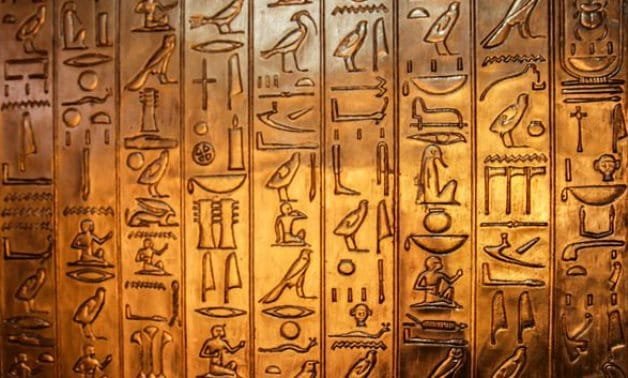
The chronological journey of the spoken tongue begins officially with Old Egyptian, the fascinating language stage that dominated the Old Kingdom from roughly 2686 to 2181 BCE. This was the legendary era of the ultimate monument builders, the monumental age when the great pyramids of Giza, Dashur, and Saqqara first rose to dominate the desert skyline. Old Egyptian is characterized by its highly formal, complex grammatical structures, and it represents the oldest continuous body of writing preserved on the African continent. Its most famous and mystical surviving manifestation is the world-renowned collection known as the "Pyramid Texts." These are thousands of lines of magical spells, royal rituals, protective incantations, and celestial geographic guides meticulously carved into the solid limestone walls of the inner burial chambers inside the pyramids of Saqqara, such as the pyramid of King Unas. These texts were completely hidden from public view, meant only for the eyes of the deceased king and the gods. To read Old Egyptian today is to listen to the earliest, rawest theological concepts of humanity. It offers an unparalleled, mystical glimpse into how the very first pharaohs envisioned their dramatic ascension into the starry cosmos, defying death itself to join the sun god Ra in his eternal solar boat. This language stage sets the foundation for all the cultural and spiritual concepts that would define Egypt for the next three millennia.
3. Middle Egyptian: The Eternal Triumph of Classical Literature
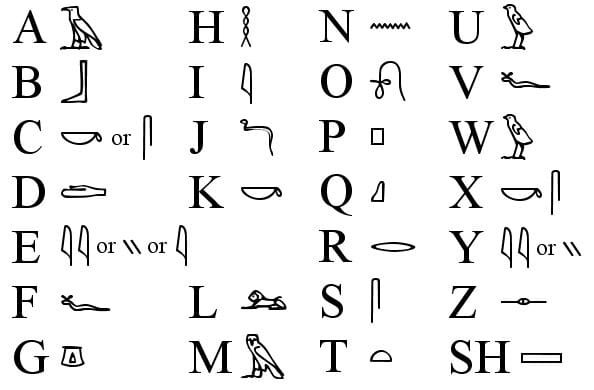
As the political landscape of Egypt shifted, collapsed, and then brilliantly consolidated into the Middle Kingdom, the language naturally evolved into what historians and linguists confidently call Middle Egyptian. Lasting as an active, everyday spoken tongue from around 2000 to 1300 BCE, this specific stage is universally celebrated as the absolute "golden age" or classical standard of Egyptian philology and expression. Middle Egyptian was characterized by an extraordinary grammatical sophistication, precision, elegance, and a poetic rhythm that allowed for the birth of true masterpiece secular literature. Incredible adventure narratives like The Tale of the Shipwrecked Sailor, complex political texts like The Instructions of King Amenemhat, and profound philosophical dialogues like The Eloquent Peasant were composed during this flourishing literary era. What makes Middle Egyptian truly remarkable and unique is its astounding longevity; even long after it died out as an everyday spoken language in the streets of Thebes and Memphis, it was carefully preserved for over a millennium by elite scribes. It remained the sacred, official language for all monumental carvings, temple walls, religious papyri, and royal propaganda throughout the New Kingdom and beyond, functioning much like Latin did in Western Europe after the fall of Rome. It is the language most commonly taught in modern universities to anyone learning to read hieroglyphs today.
4. Late Egyptian: The Language of the People and the Empire
With the dawn of the glamorous New Kingdom (around 1300 to 700 BCE), Egypt transformed into a global superpower, expanding its imperial borders deep into the Levant and Nubia. This era of unprecedented international wealth, cultural exchange, and rapid social change triggered a profound linguistic revolution, leading to the rise of Late Egyptian. Unlike the conservative and rigid Middle Egyptian, Late Egyptian was the vibrant, living vernacular language spoken by ordinary people, royal soldiers, busy market merchants, and administrative scribes in their daily lives. It was famously embraced during the Amarna Period by the revolutionary pharaoh Akhenaten, who encouraged artists and writers to capture life exactly as it was. For the first time in history, the spoken language became the written language for official correspondence, legal disputes, and imaginative folklore. When modern travelers explore the magnificent temples built by Ramesses the Great at Abu Simbel or Karnak, they are looking at an era where the language became more flexible, incorporating foreign loanwords from surrounding Mediterranean cultures and reflecting a dynamic, cosmopolitan society that was deeply connected to the wider ancient world.

5. Demotic Script: The Rapid Shorthand of Commerce and Law
As Egypt entered the first millennium BCE, the sheer volume of daily administrative work, trade contracts, legal disputes, and private letter writing demanded a much faster, more efficient writing system than the beautifully slow, artistic hieroglyphs. The answer to this societal need was the development of Demotic, a term derived from the Greek word demotikos, meaning "of the people." Emerging around 700 BCE and lasting for over a thousand years, Demotic represents both a highly evolved stage of the spoken Egyptian language and an extremely cursive, abstract shorthand script. To a modern traveler looking at a Demotic papyrus, it looks absolutely nothing like pictures or traditional hieroglyphs; instead, it resembles an intricate, flowing cursive text akin to Arabic or ancient Aramaic script. Demotic became the dominant language of law, business, and daily commerce across the country. It was the script of the masses, used to record everything from complex marriage contracts and land deeds to magical recipes and popular fictional stories, serving as the functional backbone of everyday life during the late pharaonic, Persian, Ptolemaic, and Roman eras.

6. Coptic: The Final Evolution and the Greek Alphabet Alliance
The final, extraordinary stage of the ancient Egyptian language family is Coptic, which emerged during the 1st century CE as Egypt became heavily Christianized under Roman rule. Coptic represents a brilliant cultural compromise and a profound linguistic turning point: it is the exact phonetic continuation of the ancient Egyptian spoken language, but it completely abandoned the old, complex pharaonic scripts. Instead, the early Egyptian Christians chose to write their native language using the Greek alphabet, adding seven unique characters adapted from Demotic to represent specific Egyptian sounds that did not exist in Greek. This masterstroke allowed the language to be written easily and accessible to the masses. For travelers exploring the atmospheric old churches of Coptic Cairo or the ancient desert monasteries of Wadi El Natrun, Coptic offers a direct, living bridge to the pharaohs. Although it was eventually replaced by Arabic as the daily spoken tongue by the 17th century, Coptic remains preserved to this very day as the sacred liturgical language of the Coptic Orthodox Church, meaning that the vocal sounds of the ancient Egyptians can still be heard alive in Egypt today.
7. Hieroglyphs Unveiled: The Masterpiece Script of the Monumental Elite
When modern travelers stand in awe beneath the towering columns of the Karnak Temple complex or descend into the brilliantly painted tombs of the Valley of the Kings, the script they are admiring is the legendary hieroglyphic system. This was the absolute crown jewel of Egyptian writing—a formal, monumental, and deeply artistic script that was used exclusively for sacred texts, royal decrees, and historical commemorations. Unlike modern alphabets that use a small set of letters, the hieroglyphic system was an incredibly sophisticated combination of hundreds of symbols. It functioned using three distinct types of signs: phonograms, which represented specific phonetic sounds; ideograms, which depicted the actual object being written; and determinatives, which were silent symbols placed at the end of a word to clarify its precise meaning to the reader. Furthermore, hieroglyphs possessed a unique visual flexibility; they could be written elegantly from right to left, left to right, or in beautiful vertical columns depending on the architectural design of the wall. Scribes carved them with painstaking artistic precision, coloring them with vibrant pigments made from natural minerals, ensuring that the script was not just a means of reading, but a breathtaking visual masterpiece that honored both the pharaohs and the eternal gods.

8. Hieratic: The Fluid Cursive Script of Scribes and Everyday Bureaucracy
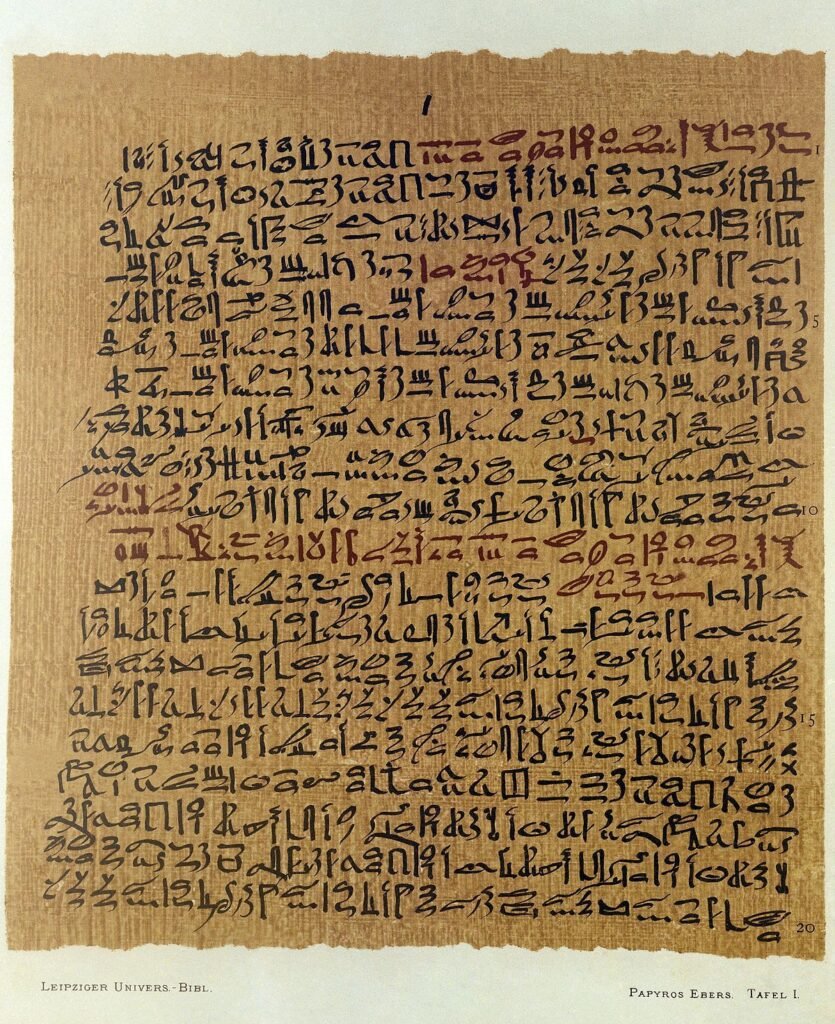
While the grand hieroglyphic script was perfect for carving into eternal stone walls, it was far too slow, complex, and impractical for a busy scribe who needed to record thousands of tax receipts, grain inventories, or legal testimonies on a daily basis. To solve this problem, the ancient Egyptians developed a parallel writing system known as Hieratic, a name derived from the Greek word for "priestly." Emerging almost at the exact same time as hieroglyphs, Hieratic was essentially a highly stylized, fluid cursive version of the pictorial script. Using a reed pen and black or red ink made from soot and ochre, scribes could rapidly sweep across sheets of papyrus, smooth pieces of limestone, or broken pottery fragments known as ostraca. In Hieratic, the detailed pictures of birds, eyes, and seated gods were simplified into abstract lines and loops, making it look much more like modern cursive handwriting than artwork. This vital script served as the primary administrative and bureaucratic engine of the Egyptian state for thousands of years, used to manage royal households, draft military dispatches, compose medical treatises, and teach young students in school, making it the true workhorse of ancient Egyptian civilization.

9. The Rosetta Stone: The Legendary Key that Unlocked a Silent World
For over a thousand years following the fall of pharaonic civilization, the ability to read the ancient Egyptian languages was completely lost to humanity, leaving the temple walls wrapped in a thick shroud of impenetrable mystery. This silence was shattered in 1799 during the French military expedition to Egypt, when a black granodiorite slab known as the Rosetta Stone was discovered near the Mediterranean port city of Rashid. This extraordinary artifact became the ultimate linguistic key because it featured a single royal decree issued in 196 BCE by King Ptolemy V, written in three completely different scripts: Hieroglyphs for the temple priests, Demotic for the daily administration, and Ancient Greek for the ruling government. Because scholars could easily read the Greek text, they finally had a direct translation to compare against the mysterious Egyptian symbols. After decades of intense international intellectual rivalry, a brilliant French scholar named Jean-François Champollion made the ultimate breakthrough in 1822. By decoding the names of royalty like Cleopatra and Ptolemy, Champollion proved that hieroglyphs were both phonetic and symbolic, instantly giving a clear, resonant voice back to the silent monuments and giving birth to the modern science of Egyptology.
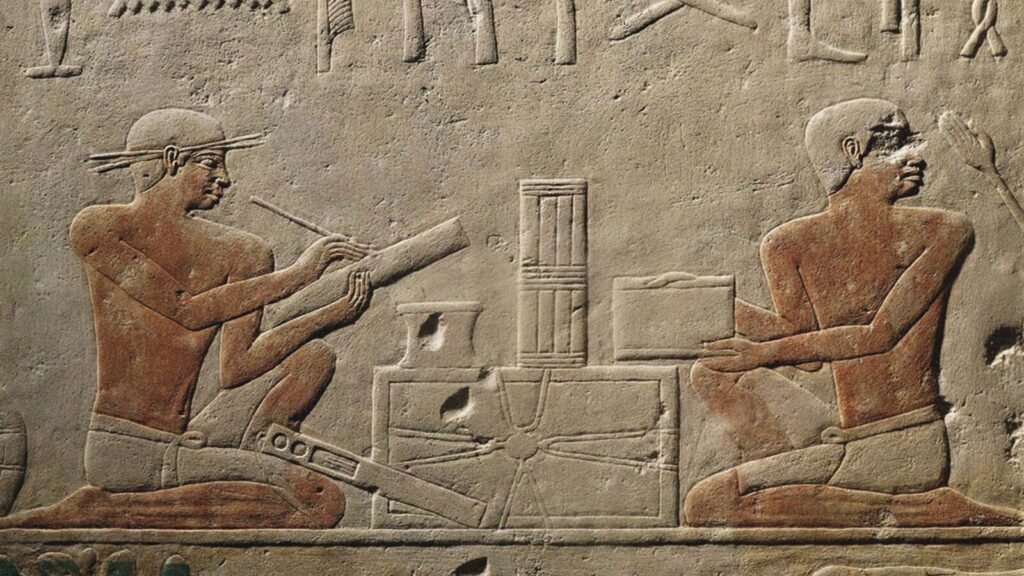
10. The Scribe’s Prestige: Education, Ink, and Social Mobility
In the strictly stratified society of ancient Egypt, knowledge of the complex language and its various scripts was the ultimate ticket to immense wealth, high social status, and political influence. Scribes were part of an elite, highly respected intellectual class that kept the entire machinery of the kingdom running smoothly. Young boys from privileged or promising backgrounds were sent to the Kap—the royal court school—or local temple academies starting around the tender age of five. There, they spent long, grueling years copying classic literary texts, practicing calligraphy on wooden boards, and memorizing thousands of complex characters. The education was demanding, often enforced with strict discipline, but the reward was incomparable. A fully trained scribe was exempt from heavy manual labor, military conscription, and taxation. Equipped with a simple wooden palette containing black and red ink cakes, a leather water jar, and a bundle of rush pens, a scribe could rise from a humble village background to become a powerful royal advisor, a chief architect, or a high priest, proving that in Egypt, the pen was far mightier than the sword.
11. Deciphering the Walls: A Practical Guide for the Modern Traveler
For the modern traveler wandering through the monumental temple halls of Dendera, Edfu, or Luxor, the walls can initially feel like an overwhelming, chaotic maze of symbols. However, knowing just a few fundamental rules about how the ancient Egyptian language functions can completely transform the sightseeing experience. One of the most playful and unique features of the hieroglyphic script is its directional flexibility. Unlike modern languages that are strictly read from left to right or right to left, hieroglyphs could be written in whichever direction looked most aesthetically balanced on an architectural structure. To figure out which way to read an inscription, a traveler simply needs to look closely at the beautifully carved human figures or bird symbols. These figures always face directly toward the beginning of the sentence. If a majestic falcon is looking toward the left, you must read from left to right, walking along with the gaze of the symbol. By unlocking these small, clever visual secrets, tourists can actively engage with the stones, reading the ancient names of gods and kings just as the ancient scribes intended.
12. The Grand Legacy: How Pharaonic Words Shape Our Modern World
As travelers conclude their epic historical journey through Egypt, they might assume that the ancient pharaonic languages are entirely dead, confined forever to museum glass cases and dusty archaeological papyri. In reality, the linguistic legacy of the pharaohs lives on, hidden in plain sight within our modern global vocabulary. When the Greeks and Romans ruled Egypt, they adopted and adapted numerous native Egyptian words into their own tongues, which eventually flowed into English and other European languages. For instance, the word "ebony"—the precious dark wood—comes directly from the ancient Egyptian word hebeny. The word "barge" traces its roots back to the Egyptian river boat, bari. Even the common culinary ingredient "natron" or the chemistry term "ammonia" derive from Egyptian religious and geographical roots tied to the desert. Furthermore, popular modern names like Susan (from sheshen, meaning lotus flower) and Gary (from gere, meaning spear) carry the phonetic DNA of the Nile Valley. By recognizing these deep connections, we realize that whenever we speak, we are subtly echoing the vibrant, eternal voices of the pharaohs who lived thousands of years ago.