

- Excursions in Egypt
- Egypt Tour Packages
- Cairo Tours and Excursions
- Hurghada Tours and Excursions
- Soma Bay Tours and Excursions
- Makadi Bay Tours and Excursions
- Sahl Hasheesh Tours and Excursions
- El Gouna Tours and Excursions
- Marsa Alam Tours and Excursions
- Port Ghalib Tours and Excursions
- El Quseir Tours and Excursions
- Dendera and Abydos Day Tours
- Aswan Tours and Excursions
- Luxor Tours and Excursions
- Sharm El Sheikh Tours and Excursions
- Top Rated Egypt Tours in 2026
- Optional Excursions in Egypt
- Private Transfer
- Blogs About egypt
- Ancient Egypt
- Historical Sites in Egypt
- Cairo
- Alexandria
- Luxor
- Aswan
- The Red Sea
- Dendera Temple
- El Fayoum Oasis
- Bahariya Oasis
- Siwa Oasis
- Al Alamein
- Marsa Matruh
- Why Egypt Is One of the Safest Countries to Visit in the Middle East
- What You Need To know Before Your First Trip To Egypt
- Egypt Travel Costs in 2026 Full Budget Guide
- Top 10 Tourist Activities in Egypt
- Top 50 Activities You Can’t Miss in Egypt in 2026
- The Guide to Guided Tours in Egypt
- Egypt’s Ancient and Modern History
- The Nile River
- The Deserts of Egypt
- Ancient Egyptian gods
- famous Egyptian dishes
- UNESCO World Heritage sites
- About Us
- Egypt Hotels and Resorts
- Excursions in Egypt
- Egypt Tour Packages
- Cairo Tours and Excursions
- Hurghada Tours and Excursions
- Soma Bay Tours and Excursions
- Makadi Bay Tours and Excursions
- Sahl Hasheesh Tours and Excursions
- El Gouna Tours and Excursions
- Marsa Alam Tours and Excursions
- Port Ghalib Tours and Excursions
- El Quseir Tours and Excursions
- Dendera and Abydos Day Tours
- Aswan Tours and Excursions
- Luxor Tours and Excursions
- Sharm El Sheikh Tours and Excursions
- Top Rated Egypt Tours in 2026
- Optional Excursions in Egypt
- Private Transfer
- Blogs About egypt
- Ancient Egypt
- Historical Sites in Egypt
- Cairo
- Alexandria
- Luxor
- Aswan
- The Red Sea
- Dendera Temple
- El Fayoum Oasis
- Bahariya Oasis
- Siwa Oasis
- Al Alamein
- Marsa Matruh
- Why Egypt Is One of the Safest Countries to Visit in the Middle East
- What You Need To know Before Your First Trip To Egypt
- Egypt Travel Costs in 2026 Full Budget Guide
- Top 10 Tourist Activities in Egypt
- Top 50 Activities You Can’t Miss in Egypt in 2026
- The Guide to Guided Tours in Egypt
- Egypt’s Ancient and Modern History
- The Nile River
- The Deserts of Egypt
- Ancient Egyptian gods
- famous Egyptian dishes
- UNESCO World Heritage sites
- About Us
- Egypt Hotels and Resorts
Welcome to
Ancient Egypt Religion: Gods, Beliefs, Temples, and the Spiritual World of the Pharaohs
Ancient Egypt religion was one of the most important foundations of Egyptian civilization, influencing every aspect of life for more than three thousand years. From the rise of the first pharaohs to the end of the ancient kingdom, religion shaped government, culture, architecture, art, social customs, and daily activities. The Ancient Egyptians believed that the universe was governed by powerful gods and goddesses who controlled nature, protected humanity, and maintained cosmic order. Through worship, rituals, festivals, and sacred traditions, Egyptians sought to preserve harmony between the human world and the divine realm.
Religion was deeply integrated into Egyptian society. The pharaoh was considered a sacred ruler chosen by the gods, while temples served as centers of worship, learning, and economic activity. Priests conducted ceremonies to honor the gods, and ordinary people offered prayers and gifts in hopes of receiving protection, health, prosperity, and guidance. Belief in the afterlife also played a central role, inspiring elaborate burial customs, mummification practices, and the construction of magnificent tombs and pyramids.
The Egyptian pantheon included hundreds of deities associated with the sun, sky, earth, fertility, wisdom, death, and creation. Gods such as Ra, Osiris, Isis, Horus, Anubis, Hathor, and Thoth were worshipped throughout the kingdom and became central figures in Egyptian mythology. Their stories explained natural phenomena, moral principles, and humanity’s place in the universe.
Today, temples, inscriptions, tomb paintings, papyri, and archaeological discoveries provide valuable insights into Ancient Egyptian religion. By exploring these beliefs and practices, we gain a deeper understanding of one of the world’s most fascinating spiritual traditions and the civilization it helped sustain for millennia.
1. The Foundations of Ancient Egyptian Religion
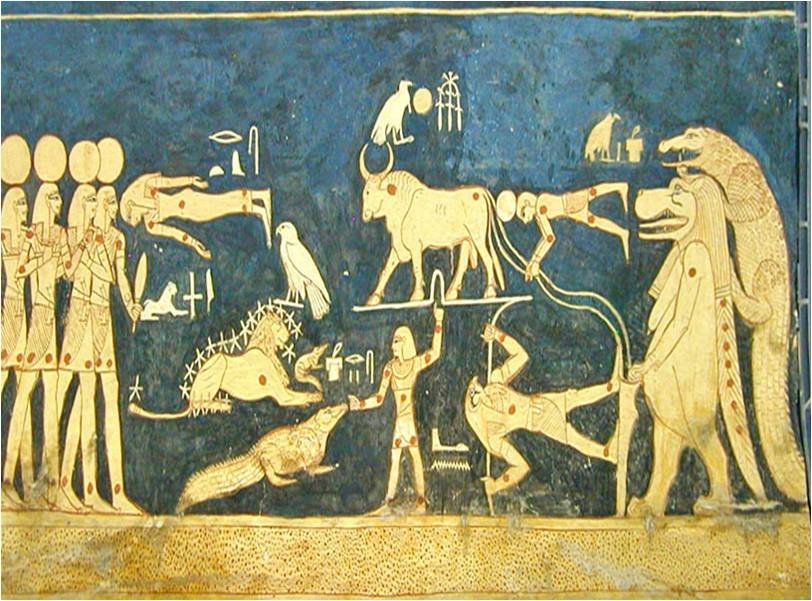
Ancient Egyptian religion was built upon a complex system of beliefs that sought to explain the origins of the universe, the forces of nature, and the relationship between humans and the divine. Unlike many modern religions, Egyptian religion did not revolve around a single sacred text or central doctrine. Instead, it developed gradually over centuries through myths, rituals, local traditions, and the worship of numerous gods and goddesses. At the heart of Egyptian religious thought was the concept of Ma’at, which represented truth, justice, harmony, balance, and cosmic order. Egyptians believed that maintaining Ma’at was essential for the stability of both society and the universe. The gods worked to preserve this order, while humans were expected to support it through proper behavior, worship, and obedience to religious traditions. The natural environment strongly influenced Egyptian beliefs. The predictable flooding of the Nile River, the daily rising of the sun, and the changing seasons were seen as evidence of divine power. Egyptians believed that the gods controlled these natural processes and ensured the continued survival of the kingdom. Religion was not separate from daily life but intertwined with every aspect of society. Government, law, agriculture, medicine, and family life all reflected religious values and beliefs. Temples, shrines, and sacred symbols could be found throughout Egypt, serving as reminders of the presence and influence of the divine. The foundations of Ancient Egyptian religion created a spiritual framework that helped explain the mysteries of existence and provided guidance for both individuals and society as a whole.
2. The Egyptian Pantheon: Gods and Goddesses
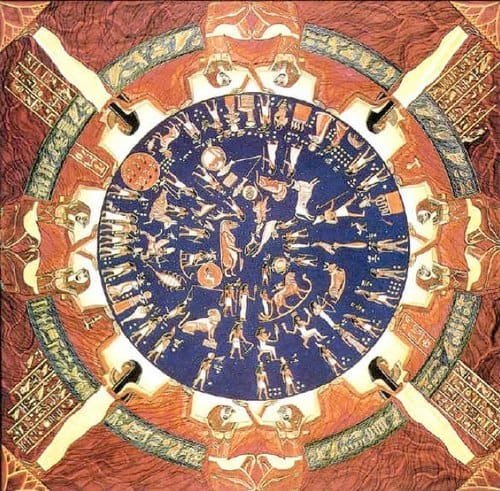
One of the most distinctive features of Ancient Egypt religion was its vast pantheon of gods and goddesses. Egyptians worshipped hundreds of deities, each associated with specific aspects of nature, human life, and the cosmos. These divine beings were believed to possess immense power and influence over the world, and their worship formed the center of religious practice throughout Egyptian history. Among the most important gods was Ra, the sun god and creator deity. Egyptians believed that Ra traveled across the sky each day and through the underworld each night, bringing light and life to the world. Osiris, the god of the afterlife, resurrection, and judgment, played a central role in beliefs about death and eternal life. His wife Isis was revered as a goddess of magic, motherhood, and protection, while their son Horus symbolized kingship and divine authority. Other significant deities included Anubis, the jackal-headed god associated with mummification and funerary rites; Thoth, the god of wisdom, writing, and knowledge; Hathor, the goddess of love, music, and joy; and Sekhmet, a powerful goddess linked to war and healing. Each deity had unique attributes, symbols, and sacred animals. Local communities often worshipped particular gods more intensely than others, resulting in regional variations of religious practice. Despite these differences, the major gods were recognized throughout Egypt and were integrated into a unified religious system. The Egyptian pantheon reflects the richness and diversity of Ancient Egyptian spiritual beliefs and demonstrates how religion helped people understand the natural world and their place within it.
3. Creation Myths and the Origin of the Universe
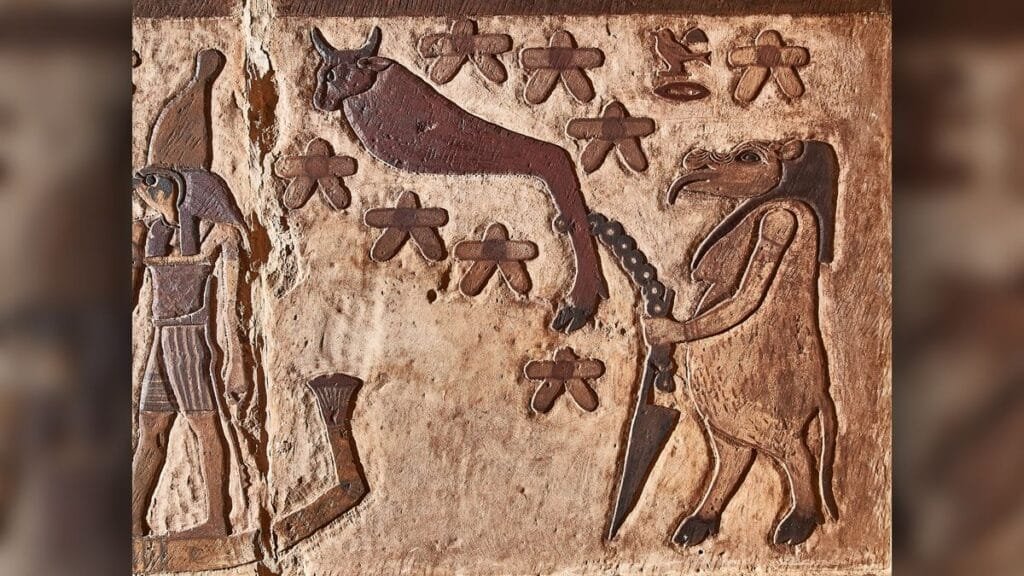
Ancient Egyptian religion included several creation myths that explained how the universe, gods, and humanity came into existence. These stories varied between different regions and temple traditions, but they shared common themes involving order emerging from chaos and the creative power of divine beings. One of the most influential creation myths originated in Heliopolis. According to this tradition, the universe began as a vast, dark ocean known as Nun. From these primordial waters emerged Atum, a creator god who brought himself into existence. Atum then created other gods, including Shu, the god of air, and Tefnut, the goddess of moisture. Their descendants eventually formed the divine family responsible for shaping the world. Another important tradition came from Memphis, where the creator god Ptah was believed to have created the universe through thought and speech. According to this myth, Ptah conceived all things in his heart and brought them into existence through the power of his words. This concept emphasized wisdom, creativity, and divine intelligence. Creation myths also explained the origins of humanity, the natural world, and the divine order governing existence. These stories provided a framework for understanding life and reinforced the importance of maintaining harmony and balance within the universe. The diversity of Egyptian creation myths demonstrates the flexibility of Ancient Egyptian religion. Rather than insisting on a single explanation, Egyptians embraced multiple perspectives that reflected local traditions while supporting broader religious beliefs.
4. The Role of the Pharaoh as a Divine Ruler
The pharaoh occupied a unique and sacred position within Ancient Egypt religion. Unlike ordinary rulers, the pharaoh was considered a divine figure who served as the intermediary between the gods and the people. Egyptians believed that the pharaoh was chosen by the gods to govern the land, maintain cosmic order, and ensure the prosperity of the kingdom. This religious status gave the ruler both political authority and spiritual significance. From the earliest periods of Egyptian history, pharaohs were associated with the god Horus, the divine falcon who symbolized kingship and protection. Upon death, the pharaoh was often linked with Osiris, the god of the afterlife, while the new ruler became the living Horus. This cycle reinforced the continuity of royal power and connected the monarchy to divine forces. One of the pharaoh’s most important responsibilities was maintaining Ma’at, the principle of truth, justice, harmony, and order. Egyptians believed that if the pharaoh failed in this duty, chaos could threaten the kingdom. As a result, religious ceremonies, temple construction, and offerings to the gods were considered essential aspects of royal governance. Pharaohs sponsored the building of magnificent temples, monuments, and sacred structures throughout Egypt. These projects honored the gods while demonstrating the ruler’s devotion and legitimacy. Royal inscriptions frequently emphasized the pharaoh’s relationship with the divine and highlighted acts performed on behalf of the gods. The religious role of the pharaoh strengthened national unity and provided a spiritual foundation for political authority. Through this unique combination of kingship and divinity, the pharaoh became one of the most important figures in Ancient Egyptian religion and society.
5. Temples and Sacred Places of Worship
Temples were among the most important institutions in Ancient Egypt religion, serving as sacred spaces where humans could honor the gods and maintain harmony between the earthly and divine realms. These magnificent structures were not simply places of public worship; they were considered the earthly homes of the gods and played central roles in religious, economic, educational, and political life. Ancient Egyptian temples were carefully designed according to religious principles. Massive entrance pylons led into courtyards, halls, sanctuaries, and sacred chambers. The innermost sanctuary housed a statue of the temple’s primary deity and was accessible only to priests and authorized officials. Daily rituals were performed there to honor and care for the god. Some of the most famous temples in Egypt were dedicated to major deities such as Amun, Ra, Isis, Horus, and Hathor. Temples often possessed extensive lands, workshops, storehouses, and staff members who supported religious activities. As a result, they became powerful institutions that influenced many aspects of Egyptian society. Religious festivals frequently centered around temples. During these celebrations, sacred statues of the gods were carried in elaborate processions, allowing ordinary Egyptians to participate in important ceremonies. These events strengthened community ties and reinforced devotion to the gods. Temple walls were covered with inscriptions, reliefs, and religious scenes that recorded myths, rituals, historical events, and offerings. These artistic works served both decorative and educational purposes while preserving important religious knowledge. The grandeur of Egyptian temples reflects the central role of religion within society and demonstrates the immense resources devoted to honoring the gods and maintaining divine favor.
6. Priests and Religious Duties
Priests played a vital role in Ancient Egypt religion, acting as caretakers of temples, performers of sacred rituals, and guardians of religious knowledge. Although the pharaoh was considered the highest religious authority, priests carried out the daily responsibilities necessary to maintain communication between the gods and the people. Their work was essential for preserving divine order and ensuring the continued protection of Egypt. Priests underwent purification rituals before performing their duties. Cleanliness was considered crucial when serving the gods, and many priests shaved their bodies, bathed frequently, and wore special linen garments. These practices symbolized spiritual purity and respect for the sacred nature of their work. One of the primary responsibilities of priests was caring for divine statues housed within temple sanctuaries. Each day, priests performed ceremonies that included washing, dressing, anointing, and presenting offerings to the statues. These rituals were believed to nourish and honor the gods, ensuring their continued favor toward Egypt. Priests also conducted religious festivals, interpreted sacred texts, supervised temple property, and preserved important knowledge. Many were highly educated and served as scribes, astronomers, physicians, and administrators. Temples often functioned as centers of learning where scientific, medical, and religious information was recorded and transmitted. Different ranks of priests existed within temple hierarchies, ranging from high priests who oversaw major religious institutions to lower-ranking officials responsible for specific tasks. Women could also participate in religious life and occasionally held important positions within temple organizations. The work of priests illustrates the close relationship between religion, education, and government in Ancient Egypt. Through their rituals, teachings, and administrative responsibilities, priests helped sustain one of the world's most enduring spiritual traditions.
7. Religious Rituals and Daily Worship
Religious rituals formed the heart of Ancient Egypt religion and were performed daily to honor the gods, maintain cosmic balance, and ensure the continued prosperity of the kingdom. Egyptians believed that the gods actively influenced the world, controlling natural forces, protecting society, and preserving the principle of Ma’at. Through rituals and worship, people sought to strengthen their connection with the divine and secure blessings for themselves and their communities. The most important daily rituals took place within temples. Priests entered sacred sanctuaries each morning to awaken the deity represented by the temple's statue. The statue was washed, dressed in fresh garments, adorned with jewelry, and presented with offerings of food, drink, incense, flowers, and perfumes. These acts symbolized care and respect for the god and were believed to sustain divine power on Earth. Ordinary Egyptians also practiced religion in their homes. Many households contained small shrines dedicated to protective deities such as Bes, Taweret, or household ancestors. Families offered prayers, burned incense, and presented simple gifts to seek protection, fertility, health, and success. Personal devotion played an important role in everyday life and complemented formal temple worship. Religious rituals accompanied important life events, including birth, marriage, illness, and death. Ceremonies were often performed to invoke divine assistance and ensure favorable outcomes. Special prayers and magical texts were used to ward off evil spirits and attract blessings. The consistency of these practices helped reinforce religious beliefs and cultural values throughout Egyptian society. Through daily worship, Egyptians maintained a strong relationship with the gods and demonstrated their commitment to preserving harmony within the universe.
8. Sacred Animals in Ancient Egyptian Religion
Sacred animals occupied a prominent place in Ancient Egypt religion and were believed to embody the qualities and powers of specific gods. Egyptians observed animals closely and associated many species with divine characteristics such as strength, wisdom, fertility, protection, and courage. As a result, animals became important symbols in religious art, mythology, temple rituals, and everyday worship. One of the most revered sacred animals was the cat, which was associated with the goddess Bastet. Cats were admired for their ability to protect homes from pests and snakes, and harming a cat was considered a serious offense. Bastet represented protection, motherhood, fertility, and domestic harmony, making cats beloved throughout Egyptian society. The falcon symbolized the god Horus and represented kingship, vision, and divine authority. Falcon imagery frequently appeared in royal monuments and religious artwork. Similarly, the ibis bird was linked to Thoth, the god of wisdom and writing, while the jackal was associated with Anubis, guardian of mummification and the afterlife. The bull also held religious significance. The sacred Apis Bull was worshipped as a living manifestation of divine power and was housed in special temples where it received offerings and ceremonial care. Crocodiles were connected to the god Sobek, who symbolized strength, military power, and the fertility of the Nile. Many sacred animals were mummified after death and buried in dedicated cemeteries. Archaeological discoveries have uncovered millions of animal mummies, demonstrating the widespread importance of animal worship in Egyptian religion. The role of sacred animals reflects the Egyptians' belief that divine forces could manifest through the natural world. These creatures served as powerful symbols that connected humans to the gods and reinforced religious teachings throughout the kingdom.
9. Festivals Honoring the Gods
Festivals were among the most colorful and important expressions of Ancient Egypt religion. These celebrations honored the gods, commemorated sacred events, and allowed communities to participate in collective worship. Religious festivals combined ceremony, music, processions, feasting, and entertainment, creating opportunities for both spiritual devotion and social interaction. Many festivals were organized by temples and followed the annual religious calendar. During these events, statues of the gods were placed in ceremonial boats or shrines and carried through towns and cities. This allowed ordinary Egyptians, who rarely entered temple sanctuaries, to see and honor their deities directly. One of the most significant religious celebrations was the Opet Festival, held in Thebes. During this event, the statues of Amun, Mut, and Khonsu traveled from Karnak Temple to Luxor Temple in a grand procession. The festival celebrated divine kingship and renewed the pharaoh's relationship with the gods. Another important event was the Beautiful Festival of the Valley, during which families visited the tombs of deceased relatives and participated in ceremonies honoring both the gods and the dead. These celebrations strengthened connections between the living and the afterlife. Music, dancing, food, and public gatherings formed important parts of festival activities. Priests conducted rituals, while musicians and performers entertained participants. Festivals also stimulated trade and community cooperation, making them significant social as well as religious events. The popularity of religious festivals demonstrates the central role of worship in Egyptian life. Through these celebrations, people expressed gratitude to the gods, reinforced cultural traditions, and strengthened their sense of belonging within the broader religious community.
10. Beliefs About the Afterlife
Belief in the afterlife was one of the most important aspects of Ancient Egypt religion and influenced nearly every part of Egyptian culture. Egyptians believed that death was not the end of existence but rather a transition to another stage of life. Through proper religious practices, moral behavior, and divine protection, individuals could achieve eternal life in a paradise known as the Field of Reeds, a perfect reflection of life on Earth. The Egyptians believed that a person consisted of several spiritual elements, including the Ka, Ba, and Akh. The Ka represented the life force that required nourishment through offerings, while the Ba was associated with personality and individuality. After death, these elements needed to be reunited so the deceased could continue existing in the afterlife. Proper burial rituals and preservation of the body through mummification were essential for this process. Tombs were carefully prepared to support the deceased in the next world. Food, furniture, jewelry, clothing, tools, and religious objects were placed inside burial chambers. Egyptians believed these items would be available to the deceased in eternity. Tomb walls were decorated with scenes of daily life, prayers, and magical texts designed to provide protection and guidance. The journey to the afterlife was considered challenging and filled with obstacles. The deceased needed divine assistance, sacred knowledge, and moral purity to successfully navigate this path. Religious texts such as the Book of the Dead provided instructions and protective spells to help overcome dangers. The Egyptian belief in eternal life inspired many of their greatest religious traditions, including mummification, tomb construction, and funerary rituals. It reflects their deep desire for immortality and their confidence that death could be overcome through faith and divine favor.
11. Osiris and the Judgment of the Dead
Among all the gods of Ancient Egypt religion, Osiris held a special place as the ruler of the afterlife and judge of the dead. His mythology formed the foundation of Egyptian beliefs about resurrection, morality, and eternal life. According to religious tradition, Osiris had once ruled Egypt before being murdered by his brother Seth. Through the efforts of his wife Isis and their son Horus, he was restored to life and became king of the underworld. The story of Osiris symbolized the triumph of order over chaos and life over death. Egyptians believed that just as Osiris had achieved resurrection, they too could attain eternal life through proper religious observance and moral conduct. As a result, Osiris became one of the most widely worshipped deities in Egypt. After death, individuals were believed to appear before Osiris for judgment. This event, often called the Weighing of the Heart ceremony, determined whether a person was worthy of entering the afterlife. During the ceremony, the deceased's heart was weighed against the feather of Ma’at, representing truth and justice. If the heart balanced with the feather, the individual was declared righteous and allowed to enter the Field of Reeds. If the heart was heavy with wrongdoing, it was devoured by the fearsome creature Ammit, resulting in the destruction of the soul. This belief encouraged ethical behavior throughout life and reinforced the importance of honesty, fairness, and respect for others. The judgment before Osiris demonstrates the strong connection between morality and religion in Ancient Egypt. It provided a powerful incentive for virtuous living and offered hope for eternal reward after death.
12. The Book of the Dead and Sacred Texts
Sacred texts played a vital role in Ancient Egypt religion by preserving religious knowledge, guiding rituals, and assisting individuals on their journey to the afterlife. Among the most famous of these texts is the Book of the Dead, a collection of spells, prayers, hymns, and instructions designed to help the deceased navigate the challenges of the underworld and achieve eternal life. The Book of the Dead was not a single standardized book but rather a collection of texts that could be customized according to an individual's needs and resources. Wealthier Egyptians often commissioned beautifully illustrated papyrus scrolls containing selected spells intended to provide protection and guidance after death. These documents were placed inside tombs or coffins to accompany the deceased. Many of the spells focused on overcoming dangers in the underworld, avoiding harmful creatures, and successfully passing divine judgment. Others provided magical assistance, enabling the deceased to transform into different forms, communicate with the gods, or gain access to sacred realms. The texts also included declarations of innocence intended to demonstrate moral purity before Osiris. The Book of the Dead evolved from earlier funerary writings such as the Pyramid Texts and Coffin Texts. These earlier compositions were initially reserved for royalty and elites but eventually became accessible to a broader segment of society. Together, these writings reflect the increasing importance of personal salvation and individual access to the afterlife. In addition to funerary texts, temples preserved hymns, myths, ritual instructions, and theological writings. These sacred documents helped maintain religious traditions and ensured that knowledge was passed from one generation to the next. The Book of the Dead remains one of the most significant religious texts of the ancient world and provides invaluable insight into Ancient Egyptian beliefs about death, judgment, and eternal life.
13. Mummification and Religious Beliefs
Mummification was one of the most recognizable practices associated with Ancient Egypt religion and reflected the Egyptians' profound belief in life after death. Egyptians believed that preserving the physical body was essential for the survival of the soul in the afterlife. Without a recognizable body, the Ka and Ba could not reunite properly, preventing the deceased from achieving eternal existence. As a result, mummification became one of the most important religious rituals in Egyptian society. The mummification process evolved over centuries and eventually became highly sophisticated. Embalmers carefully removed internal organs, dried the body using natron salt, wrapped it in linen bandages, and placed protective amulets between the layers of cloth. Special prayers and rituals accompanied each stage of the process, ensuring divine protection for the deceased. Religious beliefs influenced every aspect of mummification. The god Anubis, guardian of embalming and funerary rites, was believed to oversee the preservation of the dead. Priests often wore jackal masks representing Anubis while performing sacred ceremonies. The preserved body symbolized resurrection and reflected the myth of Osiris, whose body had been restored after death. Mummification was not limited to pharaohs. Over time, wealthy officials, priests, artisans, and even ordinary citizens sought some form of preservation according to their financial means. Animal mummies were also created for religious purposes, particularly for creatures associated with sacred deities. The practice of mummification demonstrates the Egyptians' commitment to preparing for eternity. It was both a scientific and spiritual achievement that reflected their enduring faith in resurrection, immortality, and divine judgment.
14. Magic and the Supernatural in Egyptian Religion
Magic was an integral component of Ancient Egypt religion and was not viewed as separate from religious belief. Egyptians believed that supernatural forces existed throughout the universe and that divine power could be accessed through rituals, sacred words, symbols, and protective objects. The concept of magic, known as Heka, was considered a fundamental force that helped maintain order and enabled both gods and humans to influence events. The Egyptians believed that Heka had existed since the creation of the world and was a gift from the gods. Priests, healers, and educated individuals used magical knowledge to protect people from illness, misfortune, dangerous animals, and evil spirits. Magic was often combined with medicine, creating treatments that addressed both physical and spiritual causes of disease. Amulets played an important role in magical practices. Objects such as the Eye of Horus, scarab beetles, and protective symbols were worn to provide safety and attract divine blessings. Magical spells were inscribed on jewelry, papyri, tomb walls, and household objects. Magic was particularly important in funerary traditions. The deceased relied on protective spells to navigate the dangers of the underworld and successfully reach eternal life. Texts such as the Book of the Dead contained numerous magical formulas designed to assist the soul after death. The widespread use of magic reflects the Egyptian belief that the natural and supernatural worlds were closely connected. Through Heka, individuals sought protection, healing, prosperity, and spiritual guidance while maintaining harmony with divine forces.
15. Akhenaten and the Worship of Aten
One of the most remarkable episodes in Ancient Egypt religion occurred during the reign of Pharaoh Akhenaten in the 14th century BCE. Unlike previous rulers who supported the traditional pantheon of gods, Akhenaten introduced a religious revolution centered on the worship of Aten, the solar disk. This dramatic change challenged centuries of established religious traditions and remains one of the most fascinating periods in Egyptian history. Before Akhenaten's reign, Egyptians worshipped numerous gods and goddesses through a complex system of temples and rituals. Akhenaten sought to elevate Aten above all other deities and gradually reduced the influence of traditional religious institutions, particularly the powerful priesthood of Amun. He established a new capital city called Akhetaten, dedicated to the worship of Aten. Artistic styles also changed during this period. Religious imagery emphasized the solar rays of Aten extending toward the royal family, symbolizing divine blessing and life-giving energy. Traditional depictions of gods were largely replaced by representations of the sun disk. Despite Akhenaten's efforts, the religious reforms faced significant resistance. Many Egyptians remained devoted to traditional gods, and the economic power of established temples was difficult to overcome. After Akhenaten's death, his successors restored the traditional religion and abandoned many of his reforms. Although short-lived, the Atenist experiment remains significant because it represents one of history's earliest attempts to focus worship primarily on a single deity. It demonstrates the dynamic and evolving nature of Ancient Egyptian religion.
16. How Egyptian Religion Changed Over Time
Ancient Egypt religion evolved continuously over more than three thousand years while maintaining many core beliefs and traditions. Changes in political leadership, cultural exchange, economic conditions, and social developments influenced religious practices, creating a dynamic spiritual system capable of adapting to new circumstances. During the Early Dynastic Period and Old Kingdom, religious life focused heavily on royal authority and divine kingship. Pharaohs were viewed as uniquely connected to the gods, and elaborate pyramid complexes reflected beliefs about the afterlife. Over time, religious privileges that had once been reserved for royalty became more accessible to ordinary people. The Middle Kingdom witnessed important developments in funerary beliefs. Texts such as the Coffin Texts expanded opportunities for non-royal individuals to seek eternal life. By the New Kingdom, the Book of the Dead allowed many Egyptians to prepare for the afterlife through personalized collections of prayers and spells. Foreign contact introduced additional influences. Trade and conquest brought interactions with Nubian, Near Eastern, Greek, and Roman cultures. Some foreign deities were incorporated into Egyptian religious practices, while Egyptian gods gained followers beyond Egypt's borders. Despite these changes, core concepts such as Ma’at, divine kingship, the afterlife, and devotion to the gods remained central to Egyptian spirituality. The ability of Egyptian religion to evolve while preserving its essential principles contributed significantly to its longevity and influence.
17. The Influence of Ancient Egyptian Religion on Other Cultures
The religious traditions of Ancient Egypt influenced many neighboring civilizations and left a lasting impact on the broader history of religion. Through trade, diplomacy, migration, and conquest, Egyptian beliefs spread beyond the Nile Valley and interacted with spiritual traditions throughout the ancient Mediterranean and Near East. Greek travelers and scholars were particularly fascinated by Egyptian religion. Many Greek writers described Egyptian temples, rituals, and myths, often viewing Egypt as a source of ancient wisdom. During the Hellenistic Period, the worship of Egyptian deities such as Isis and Serapis expanded throughout the Mediterranean world, attracting followers in Greece, Asia Minor, and even Rome. The cult of Isis became especially popular. Her roles as a protective mother, healer, and compassionate goddess appealed to diverse populations. Temples dedicated to Isis appeared across the Roman Empire, demonstrating the widespread influence of Egyptian religious ideas. Egyptian concepts related to divine judgment, resurrection, sacred kingship, and life after death also contributed to broader religious discussions in the ancient world. While later traditions developed independently, scholars continue to study possible connections between Egyptian beliefs and other religious systems. The artistic and symbolic elements of Egyptian religion likewise influenced architecture, literature, and visual culture in many regions. Hieroglyphic inscriptions, temple designs, and sacred imagery inspired generations of artists and scholars. The international reach of Egyptian religion highlights the significance of Ancient Egypt as one of history's most influential spiritual civilizations.
18. The Legacy of Ancient Egypt Religion
The legacy of Ancient Egypt religion continues to captivate the modern world and remains one of the most important aspects of Egyptian civilization. Through temples, tombs, myths, sacred texts, religious artwork, and archaeological discoveries, the spiritual traditions of Ancient Egypt have survived for thousands of years and continue to inspire fascination among historians, archaeologists, and travelers. Ancient Egyptian religion shaped many of the civilization's greatest achievements. Monumental temples, pyramids, obelisks, and tombs were built as expressions of religious devotion and remain among the most impressive architectural accomplishments in history. These structures provide valuable insights into Egyptian beliefs about the gods, kingship, and the afterlife. The mythology of Egypt, including the stories of Osiris, Isis, Horus, Ra, and Anubis, remains widely recognized throughout the world. These narratives continue to influence literature, film, art, and popular culture. The symbolism associated with Egyptian religion, such as the Eye of Horus, scarabs, and sacred animals, remains instantly recognizable. Modern archaeological discoveries continue to reveal new information about Egyptian spirituality. Temples, papyri, inscriptions, and tomb artifacts provide an unparalleled record of ancient religious life and allow scholars to reconstruct one of humanity's most sophisticated belief systems.