

- Excursions in Egypt
- Egypt Tour Packages
- Cairo Tours and Excursions
- Hurghada Tours and Excursions
- Soma Bay Tours and Excursions
- Makadi Bay Tours and Excursions
- Sahl Hasheesh Tours and Excursions
- El Gouna Tours and Excursions
- Marsa Alam Tours and Excursions
- Port Ghalib Tours and Excursions
- El Quseir Tours and Excursions
- Dendera and Abydos Day Tours
- Aswan Tours and Excursions
- Luxor Tours and Excursions
- Sharm El Sheikh Tours and Excursions
- Top Rated Egypt Tours in 2026
- Optional Excursions in Egypt
- Private Transfer
- Blogs About egypt
- Ancient Egypt
- Historical Sites in Egypt
- Cairo
- Alexandria
- Luxor
- Aswan
- The Red Sea
- Dendera Temple
- El Fayoum Oasis
- Bahariya Oasis
- Siwa Oasis
- Al Alamein
- Marsa Matruh
- Why Egypt Is One of the Safest Countries to Visit in the Middle East
- What You Need To know Before Your First Trip To Egypt
- Egypt Travel Costs in 2026 Full Budget Guide
- Top 10 Tourist Activities in Egypt
- Top 50 Activities You Can’t Miss in Egypt in 2026
- The Guide to Guided Tours in Egypt
- Egypt’s Ancient and Modern History
- The Nile River
- The Deserts of Egypt
- Ancient Egyptian gods
- famous Egyptian dishes
- UNESCO World Heritage sites
- About Us
- Egypt Hotels and Resorts
- Excursions in Egypt
- Egypt Tour Packages
- Cairo Tours and Excursions
- Hurghada Tours and Excursions
- Soma Bay Tours and Excursions
- Makadi Bay Tours and Excursions
- Sahl Hasheesh Tours and Excursions
- El Gouna Tours and Excursions
- Marsa Alam Tours and Excursions
- Port Ghalib Tours and Excursions
- El Quseir Tours and Excursions
- Dendera and Abydos Day Tours
- Aswan Tours and Excursions
- Luxor Tours and Excursions
- Sharm El Sheikh Tours and Excursions
- Top Rated Egypt Tours in 2026
- Optional Excursions in Egypt
- Private Transfer
- Blogs About egypt
- Ancient Egypt
- Historical Sites in Egypt
- Cairo
- Alexandria
- Luxor
- Aswan
- The Red Sea
- Dendera Temple
- El Fayoum Oasis
- Bahariya Oasis
- Siwa Oasis
- Al Alamein
- Marsa Matruh
- Why Egypt Is One of the Safest Countries to Visit in the Middle East
- What You Need To know Before Your First Trip To Egypt
- Egypt Travel Costs in 2026 Full Budget Guide
- Top 10 Tourist Activities in Egypt
- Top 50 Activities You Can’t Miss in Egypt in 2026
- The Guide to Guided Tours in Egypt
- Egypt’s Ancient and Modern History
- The Nile River
- The Deserts of Egypt
- Ancient Egyptian gods
- famous Egyptian dishes
- UNESCO World Heritage sites
- About Us
- Egypt Hotels and Resorts
Welcome to
Abu Simbel: The Eternal Monument of Power and Precision
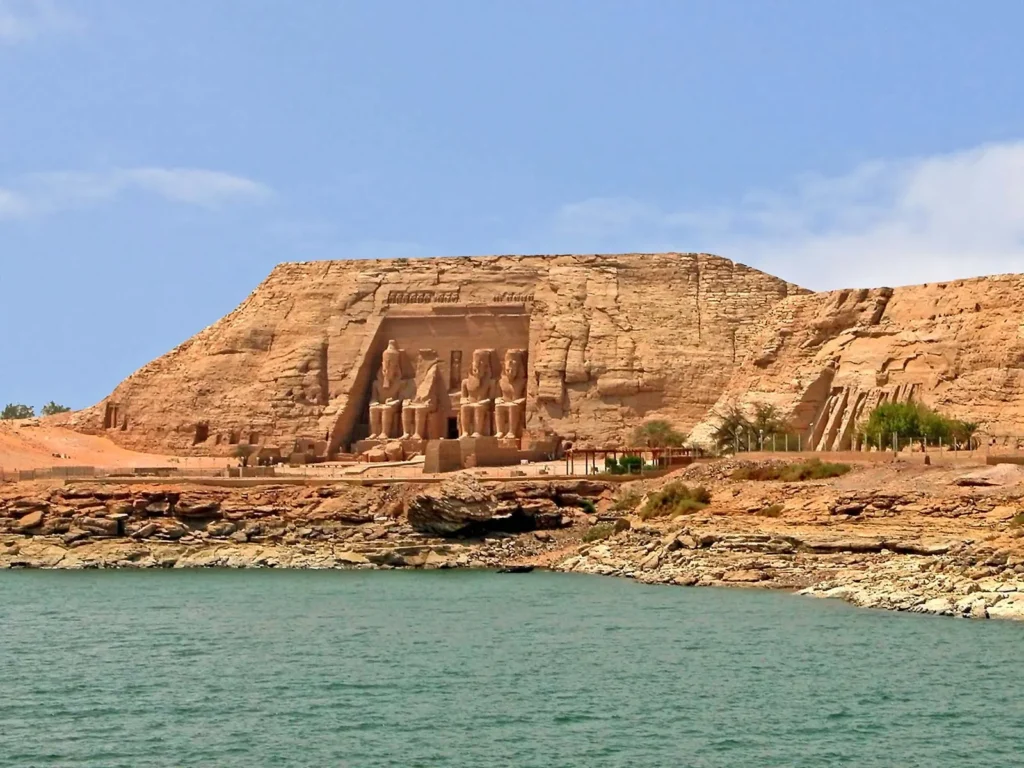
Carved into the golden cliffs on the western bank of the Nile near the southern borders of Egypt, the awe-inspiring Abu Simbel Temples stand as one of the most extraordinary achievements of ancient engineering and artistic vision. Built during the reign of Ramesses II in the 13th century BCE, these colossal temples were designed not only as places of worship, but as powerful symbols of authority, divine connection, and political dominance over Nubia. Their massive scale and precise construction continue to captivate visitors and scholars alike, leaving a lasting impression of a civilization that mastered both stone and symbolism.
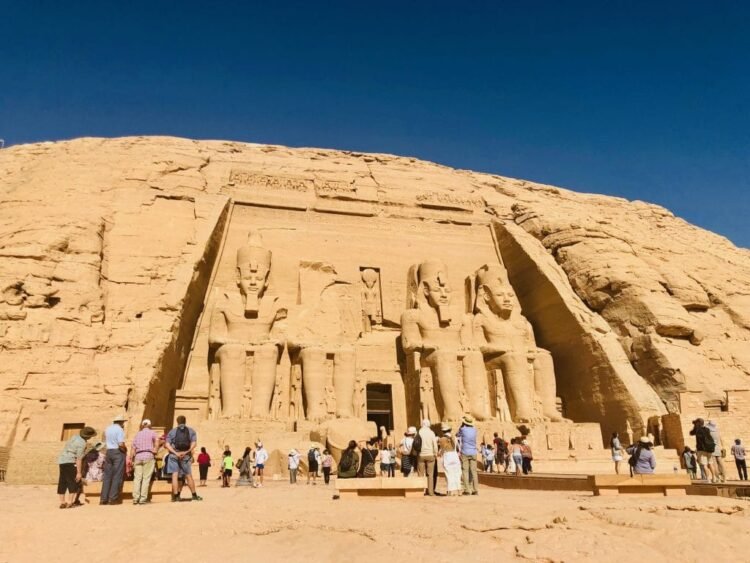
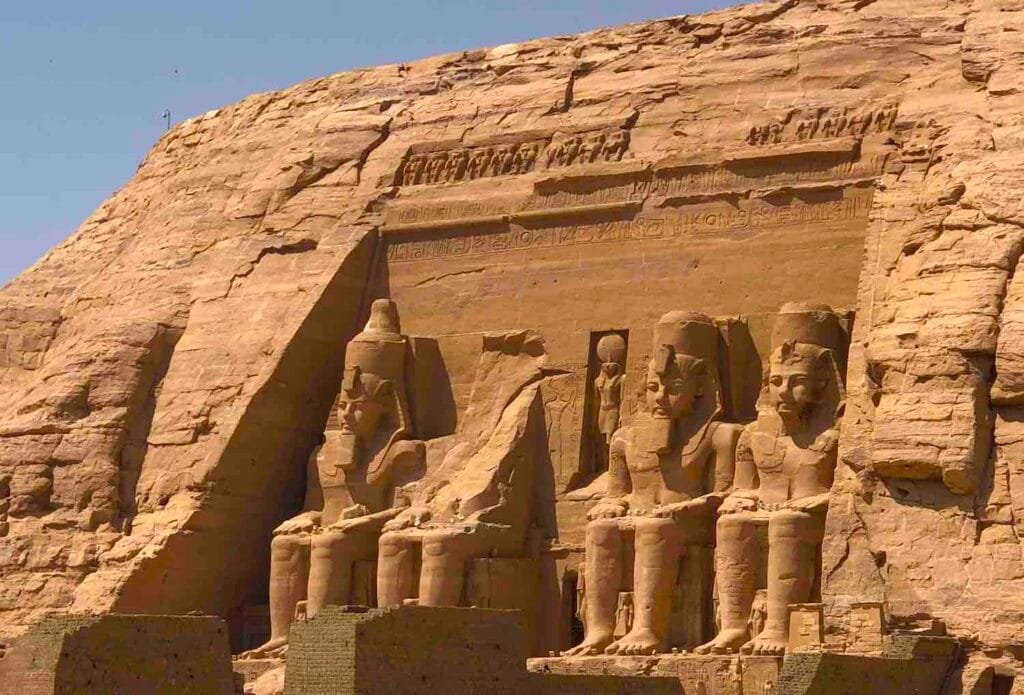
The Great Temple, dedicated to the gods Amun, Ra-Horakhty, and Ptah, as well as to Ramesses himself, is fronted by four colossal seated statues of the king, each towering over twenty meters high. These figures, carved directly from the mountainside, create an overwhelming sense of grandeur and permanence. Nearby, the smaller temple dedicated to Queen Nefertari and the goddess Hathor reflects a rare and powerful tribute to royal partnership and feminine divinity, making the complex unique among Egyptian monuments.
Beyond their beauty and scale, the temples of Abu Simbel are renowned for their remarkable solar alignment, a phenomenon in which sunlight penetrates the inner sanctuary twice a year, illuminating the statues of the gods in a carefully calculated display of cosmic harmony. Like many monuments in southern Egypt, the temples were threatened by flooding after the construction of the Aswan High Dam. In an unprecedented international effort led by UNESCO, the entire complex was relocated to higher ground, preserving its legacy for future generations.
1. Ramesses the Great: The Vision Behind the Monument
At the heart of the Abu Simbel Temples stands the legacy of Ramesses II, one of the most powerful and ambitious rulers in ancient Egyptian history. Known for his long reign and monumental building projects, Ramesses sought to immortalize his achievements and reinforce his divine authority through architecture. Abu Simbel was one of his greatest creations, designed to project strength, stability, and dominance to all who approached Egypt from the south. The temple complex served not only as a place of worship but also as a political statement. Its location near the border with Nubia was carefully chosen to impress and intimidate neighboring regions, showcasing the might of the Egyptian empire. The colossal statues of the king at the entrance were meant to leave a lasting impression, symbolizing his role as both a ruler and a god on earth. Through Abu Simbel, Ramesses II ensured that his image and power would endure for eternity. The temple reflects his vision of kingship, where political authority and divine status were inseparable. Even thousands of years later, his presence remains deeply embedded in the stone, continuing to inspire awe and admiration.
2. The Great Temple: A Monument of Divine Authority
The Great Temple of Abu Simbel Temples is one of the most iconic structures of ancient Egypt, designed to embody the divine authority of Ramesses II. Its massive façade is dominated by four seated statues of the king, each carved with remarkable precision and detail. These colossal figures serve as guardians of the temple, reinforcing the idea that the pharaoh himself was a living god. Inside the temple, a series of grand halls leads visitors toward the inner sanctuary. The walls are covered with intricate reliefs depicting scenes of battle, religious rituals, and offerings to the gods. One of the most famous scenes illustrates the Battle of Kadesh, where Ramesses II is portrayed as a heroic and victorious leader, further enhancing his image as a powerful and divine ruler. The architectural design of the temple reflects a deep understanding of space, symmetry, and symbolism. Every element, from the towering statues to the smallest carvings, contributes to a unified message of power and devotion. The Great Temple stands as a timeless expression of the relationship between kingship and divinity in ancient Egypt.
3. The Temple of Nefertari: A Tribute to Love and Equality
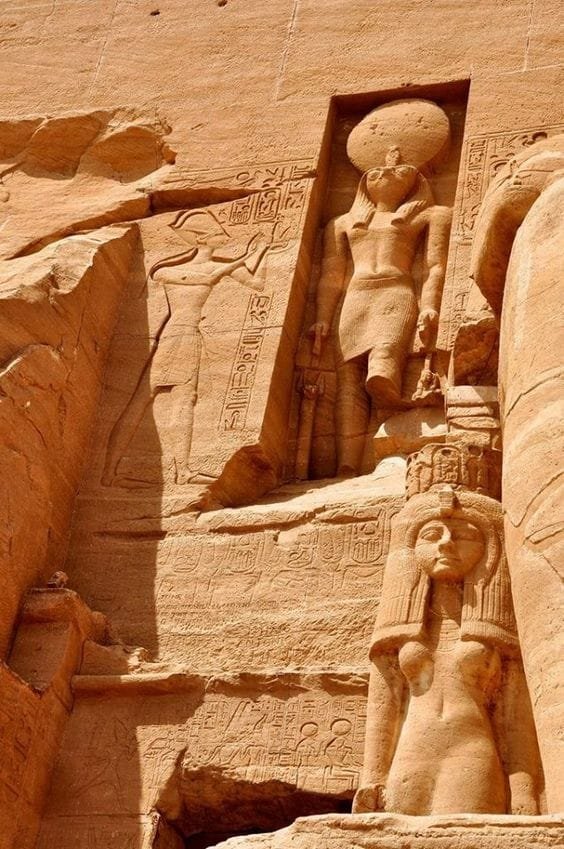
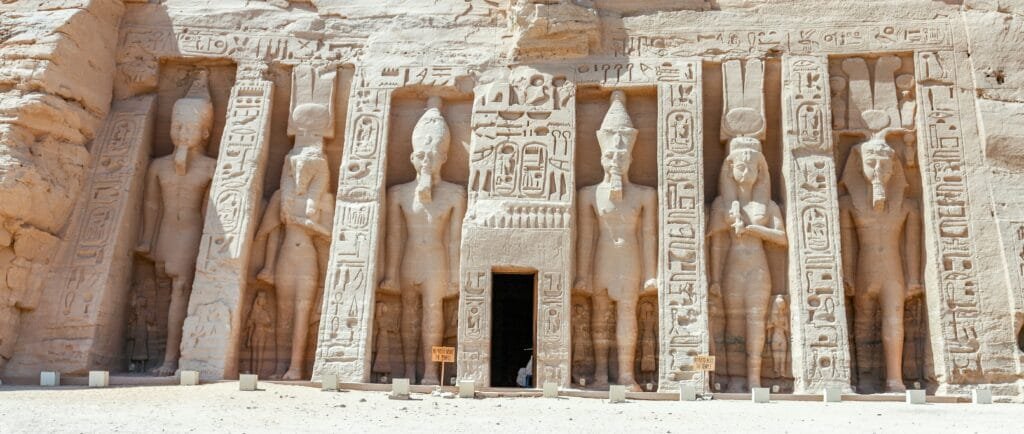
Adjacent to the Great Temple is the smaller yet equally significant temple dedicated to Queen Nefertari and the goddess Hathor. This temple is unique in ancient Egyptian architecture, as it gives the queen a level of prominence rarely seen. The statues on its façade show Nefertari standing alongside Ramesses II at equal height, symbolizing her importance and influence. The temple is dedicated to Hathor, the goddess of love, music, and joy, reflecting themes of harmony and beauty. Inside, the walls are adorned with elegant carvings depicting the queen making offerings and participating in sacred rituals. These scenes emphasize her role not only as a royal figure but also as a spiritual presence within the divine order. This temple represents a powerful expression of royal partnership and affection. It highlights the احترام and admiration that Ramesses II held for Nefertari, immortalizing her in one of the most beautiful monuments in Egypt. Together, the two temples create a balanced and harmonious complex that celebrates both power and love.
4. The Solar Alignment: A Masterpiece of Cosmic Precision
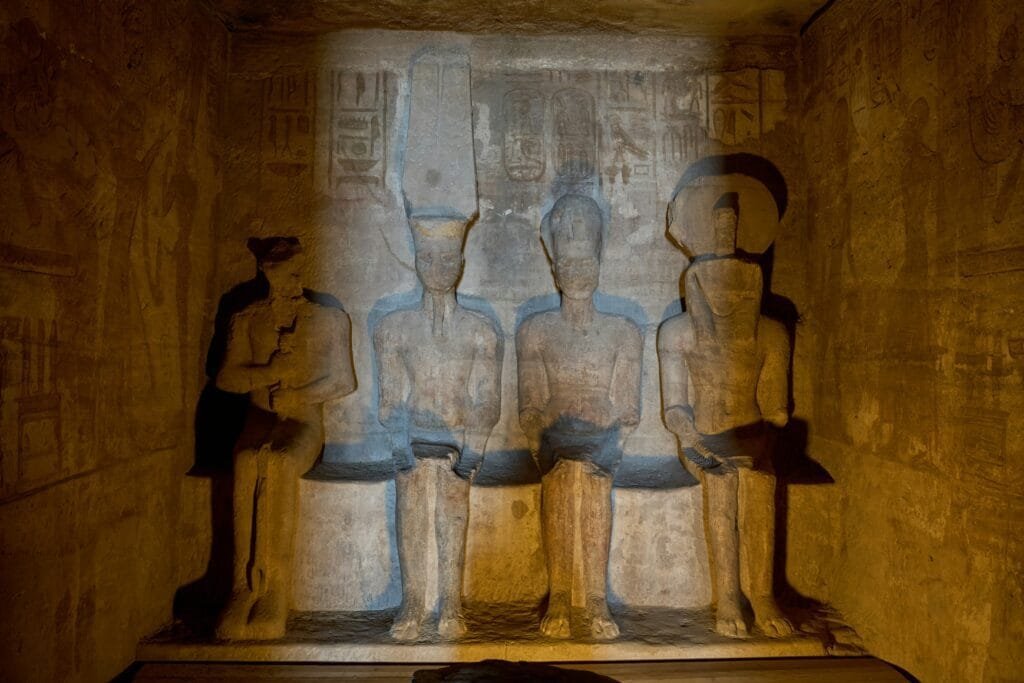
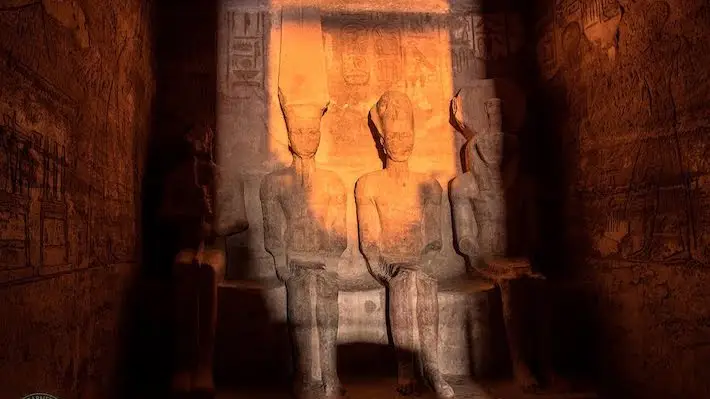
One of the most extraordinary features of the Abu Simbel Temples is its precise solar alignment, a phenomenon that reflects the advanced astronomical knowledge of ancient Egyptian architects. Twice a year, sunlight penetrates the inner sanctuary of the Great Temple, traveling through the long corridor to illuminate the seated statues at the back. This remarkable event occurs around February 22 and October 22, dates often associated with the king’s birthday and coronation. As the sunlight reaches the sanctuary, it lights up the statues of the gods Amun, Ra-Horakhty, and the deified Ramesses II, while the figure of Ptah, the god of the underworld, remains in darkness. This deliberate detail reflects deep religious symbolism, connecting the movement of the sun with divine presence and cosmic order. The precision required to achieve this alignment is astonishing, especially considering the tools available at the time. It demonstrates not only technical brilliance but also a profound understanding of the relationship between architecture, astronomy, and spirituality. This feature continues to attract visitors from around the world, who gather to witness this timeless connection between the heavens and the earth.
5. The Relocation Project: Saving a World Treasure
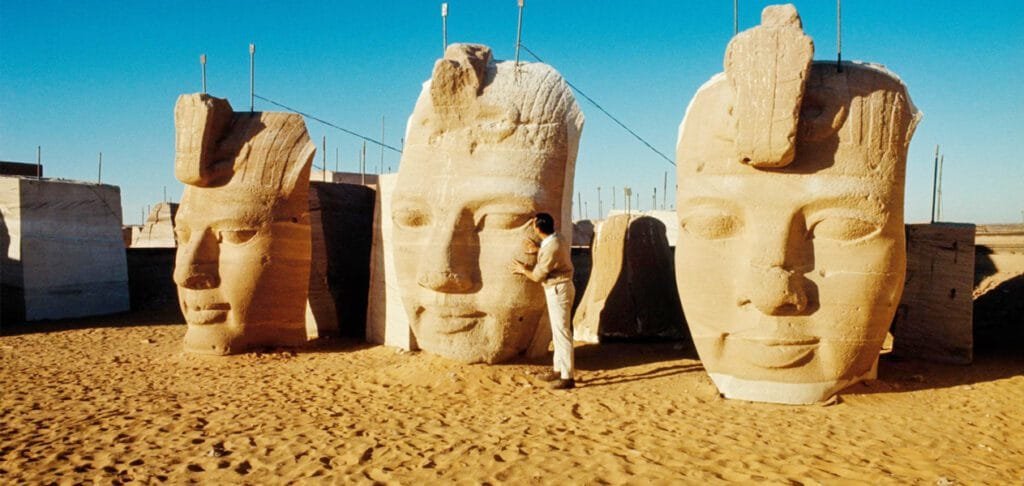
In the 20th century, the survival of the Abu Simbel Temples was placed under serious threat following the construction of the Aswan High Dam. As water levels began to rise, the temples faced the very real danger of permanent submersion beneath the expanding waters of the Nile. What was once a timeless monument carved into stone suddenly became vulnerable, placing one of Egypt’s greatest archaeological treasures at risk of disappearing forever. In response, UNESCO launched an unprecedented international rescue campaign. Experts, engineers, and archaeologists from across the globe collaborated on a bold and highly complex plan to dismantle the temples into carefully measured sections. Each block, some weighing several tons, was meticulously cut, documented, and relocated to a higher artificial cliff, where the entire structure was reassembled with remarkable accuracy. This extraordinary achievement stands as one of the greatest successes in modern preservation history. Not only did it save Abu Simbel from destruction, but it also established a global model for protecting cultural heritage. Today, the temples remain a powerful symbol of both ancient ingenuity and modern human dedication to preserving the legacy of civilization for future generations.
6. The Interior Halls: Stories Carved in Stone
Beyond the colossal façade of the Abu Simbel Temples lies a series of grand interior halls that reveal the artistic and narrative richness of ancient Egyptian civilization. As visitors move deeper into the temple, they encounter walls covered with detailed reliefs that depict scenes of war, worship, and royal power. Among the most striking images are those representing the Battle of Kadesh, where Ramesses II is shown as a fearless warrior leading his army to victory. These scenes are not only historical records but also carefully crafted messages designed to reinforce the king’s strength and divine support. The interior spaces gradually become darker and more intimate, guiding visitors toward the sacred sanctuary at the heart of the temple. This architectural progression reflects a spiritual journey, moving from the public display of power to the private realm of divine presence. Every surface within these halls contributes to a powerful narrative, transforming the temple into a timeless story carved in stone.
7. The Colossal Statues: Guardians of Eternal Power
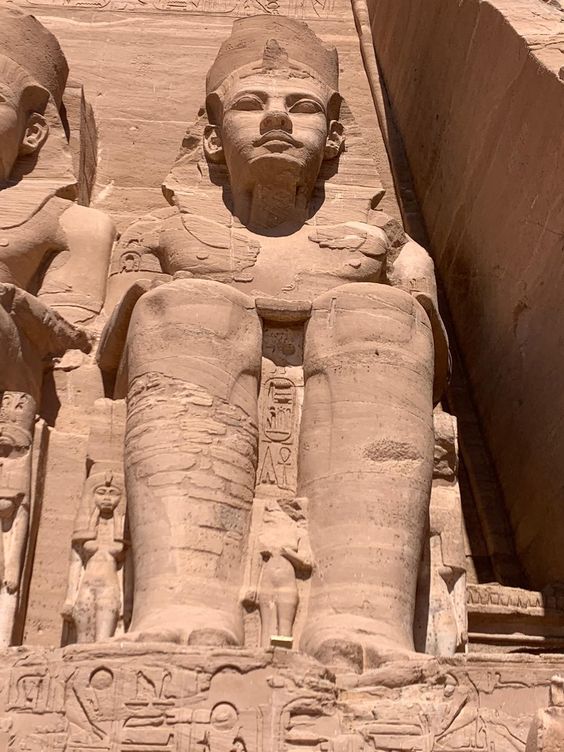
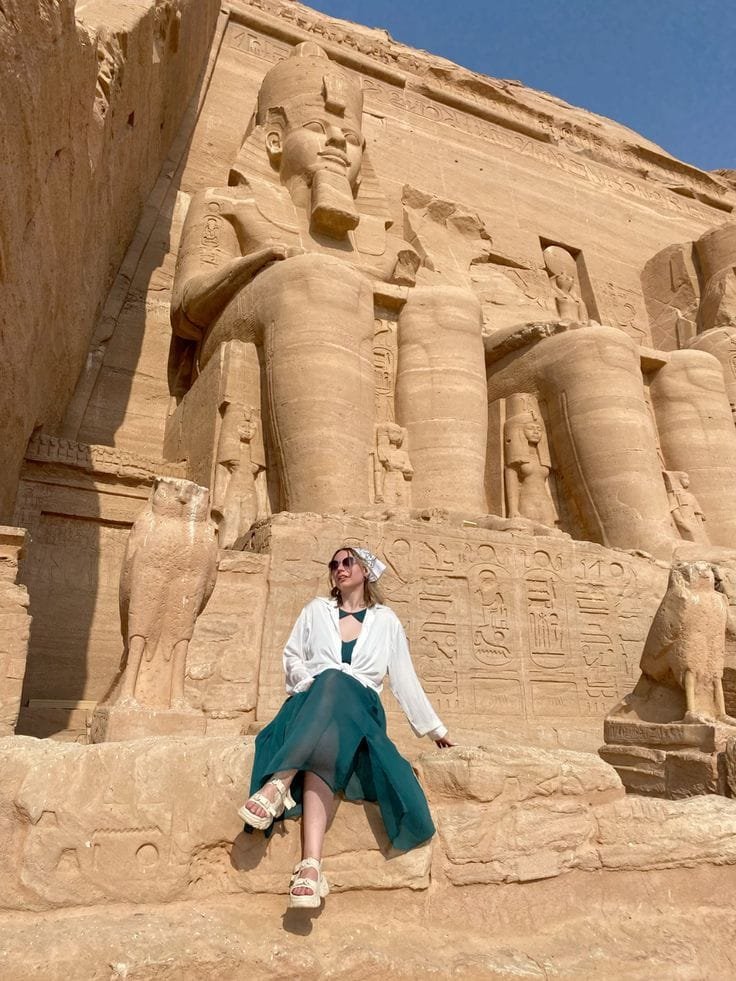
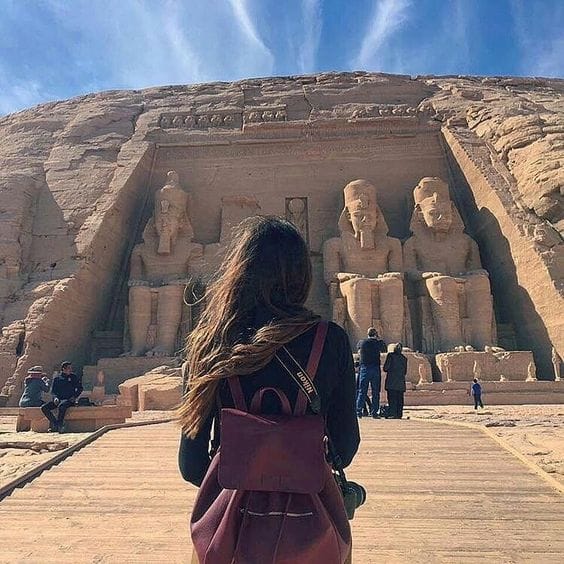
The most striking feature of the Abu Simbel Temples is undoubtedly the four colossal statues of Ramesses II that dominate the façade of the Great Temple. Each statue, towering over twenty meters high, represents the king seated on his throne, gazing outward with a calm yet commanding presence. These monumental figures were designed to project power, stability, and divine authority to all who approached from the south. Carved directly into the mountainside, the statues demonstrate an extraordinary level of craftsmanship and precision. Despite their massive scale, the details of the facial features, royal regalia, and inscriptions remain remarkably refined. Smaller statues at their feet depict members of the royal family, emphasizing the importance of lineage and continuity in ancient Egyptian society. Over time, natural events have left their mark on these statues. One of them partially collapsed in antiquity, with its fallen fragments still visible at the base, adding a sense of history and realism to the scene. Together, these colossal figures stand as silent guardians of the temple, embodying the enduring presence of a king who sought immortality through stone.
8. The Symbolism of Power: Art as Political Message
Every element of the Abu Simbel Temples was carefully designed to convey a powerful political message. Beyond its religious purpose, the temple served as a visual statement of Egyptian dominance, particularly over the southern regions of Nubia. The scale, location, and artistic details all worked together to reinforce the authority of Ramesses II. The reliefs inside the temple depict scenes of military victories, including the famous Battle of Kadesh, where the king is portrayed as a heroic and unstoppable force. These images were not simply historical records; they were tools of propaganda, crafted to shape perception and strengthen the ruler’s image among both his people and foreign visitors. This use of art as a form of communication highlights the sophistication of ancient Egyptian society. Architecture, sculpture, and inscription were all used strategically to express power, belief, and identity. Abu Simbel stands as one of the clearest examples of how art and politics were deeply interconnected in the ancient world.
9. Visiting Abu Simbel: A Journey into the Ancient South
A visit to the Abu Simbel Temples is far more than a typical tour—it is an immersive journey into one of the most remote and awe-inspiring corners of Egypt. Situated near the southern border, the journey itself—whether by road across the desert or by air—creates a sense of anticipation that builds with every mile. This distance is not a drawback; it is part of the experience, making arrival feel like stepping into a hidden world preserved beyond time. As travelers draw closer, the vast desert landscape unfolds in dramatic silence, amplifying the impact of what lies ahead. Then suddenly, the colossal statues emerge from the cliffs, commanding attention with their sheer scale and presence. This powerful first sight is unforgettable, creating a moment of awe that defines the entire visit. Walking through the temples allows visitors to connect directly with the spirit of ancient Egypt. Every wall, carving, and chamber reveals stories of ambition, power, and divine belief. The combination of isolation, history, and monumental design transforms Abu Simbel into more than a destination—it becomes a profound experience that stays with every visitor long after they leave.
10. Lake Nasser: The Vast Horizon of Water and Silence
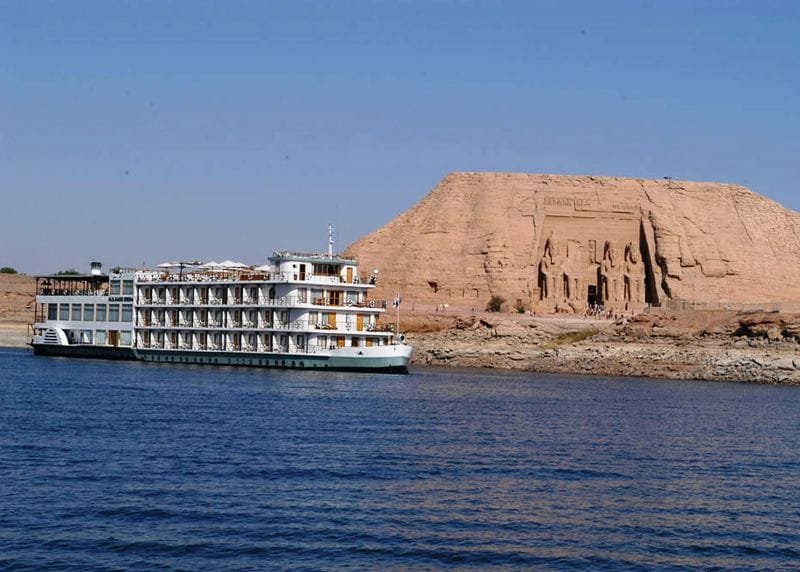
Stretching endlessly beside the Abu Simbel Temples lies the immense Lake Nasser, a man-made wonder that reshaped the landscape of southern Egypt. Formed after the construction of the Aswan High Dam, this vast body of water creates a dramatic contrast against the surrounding desert, offering a breathtaking visual experience. The stillness of the lake enhances the sense of isolation that defines Abu Simbel. Its calm waters reflect the cliffs and the sky, creating a peaceful and almost surreal atmosphere. This natural setting adds depth to the experience of visiting the temples, emphasizing their monumental presence within a vast and open environment. Beyond its beauty, Lake Nasser plays a crucial role in Egypt’s water management and energy production. It stands as a symbol of modern engineering, much like the temples themselves represent ancient mastery. Together, they tell a story of human ability to shape and interact with the natural world across different eras.
11. The Temple Interior: A Journey from Light to Darkness
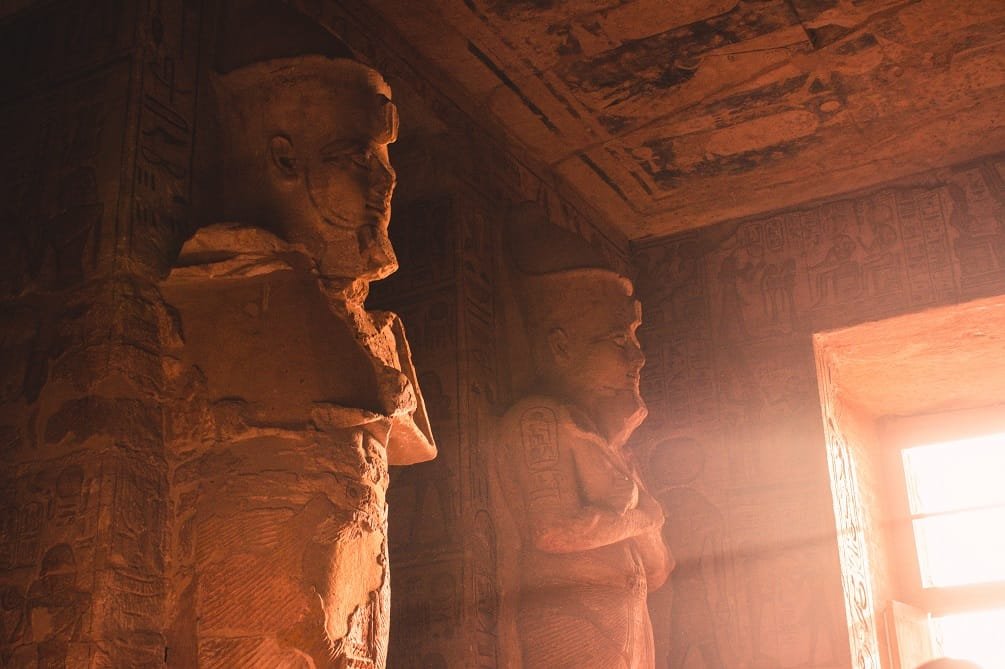
Stepping inside the Abu Simbel Temples reveals a carefully designed progression from light into shadow, guiding visitors deeper into the spiritual heart of the monument. The transition from the bright exterior into the dimly lit halls creates a powerful contrast that enhances the sense of mystery and reverence. The interior walls are covered with detailed reliefs that depict scenes of worship, offerings, and royal achievements. These carvings are not only visually impressive but also rich in meaning, providing insight into the beliefs and values of ancient Egyptian society. Every figure and symbol contributes to a larger narrative of divine connection and political authority. As visitors move further inward, the space becomes quieter and more intimate, leading toward the sanctuary where the sacred statues are placed. This architectural journey reflects a symbolic movement from the human world into the divine realm, reinforcing the spiritual purpose of the temple and its connection to cosmic order.
12. The Timeless Appeal: Why Abu Simbel Continues to Inspire
The lasting impact of the Abu Simbel Temples lies in its ability to inspire awe across generations. It is not only the scale of the monument that impresses visitors, but also the depth of meaning embedded within its design. Every aspect of the temple—from its location and orientation to its carvings and symbolism—reflects a civilization that sought to connect the earthly world with the divine. Abu Simbel represents a perfect balance between art, engineering, and belief. It demonstrates how architecture can be used not only for practical purposes but also as a powerful form of expression. This combination of creativity and purpose is what makes the site truly unique and unforgettable. Today, Abu Simbel continues to attract travelers, historians, and scholars from around the world. Its story, from ancient construction to modern relocation, adds layers of meaning that enrich the visitor experience. It remains a timeless symbol of human ambition and the enduring power of cultural heritage.

13. The Smaller Temple: A Rare Tribute to a Queen
Beside the Great Temple of Abu Simbel Temples stands the smaller yet equally captivating temple dedicated to Queen Nefertari and the goddess Hathor. What makes this temple truly unique is the equality displayed in its façade, where statues of the queen stand at the same height as those of Ramesses II—a rare honor in ancient Egyptian art and architecture. This deliberate choice reflects the deep respect and admiration the king held for Nefertari, elevating her status in a way that few royal women experienced. The temple itself is more delicate in scale compared to the Great Temple, yet it carries a powerful message of partnership, balance, and harmony. Inside, the walls are decorated with elegant reliefs showing the queen making offerings to the gods and participating in sacred rituals. These scenes emphasize her spiritual importance and reinforce her role within the divine order. The temple stands as a timeless symbol of love, respect, and royal unity.
14. The Desert Setting: Power Within Isolation
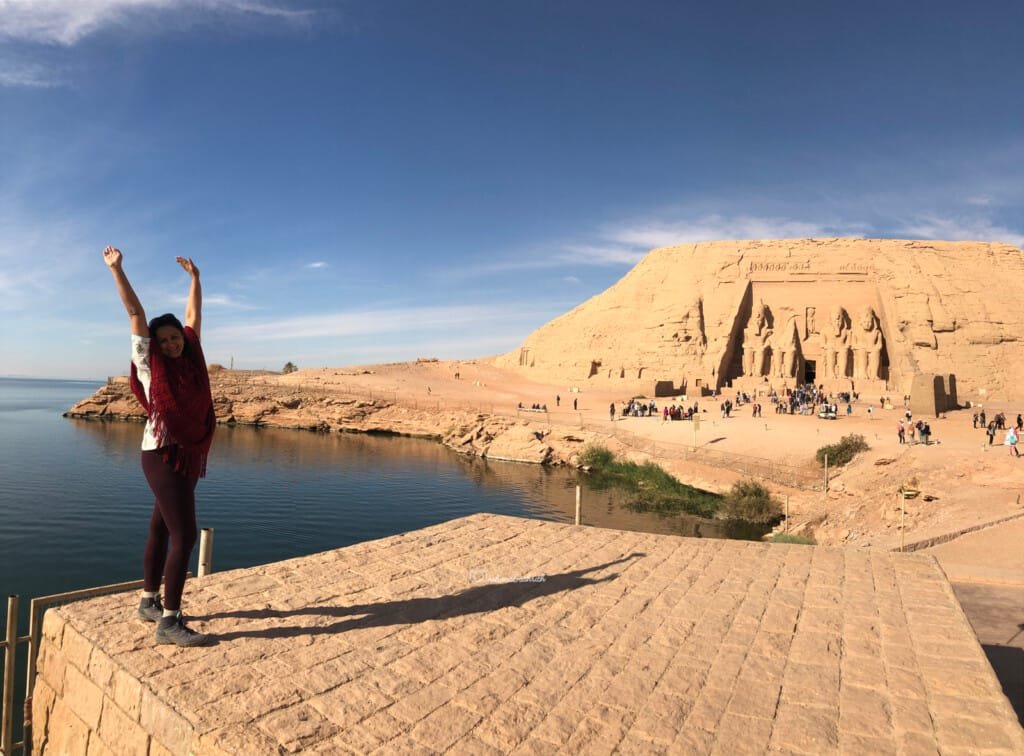
The dramatic location of the Abu Simbel Temples plays a crucial role in shaping its impact. Surrounded by vast stretches of desert and overlooking the waters of Lake Nasser, the temples exist in a landscape defined by silence and openness. This isolation enhances their grandeur, allowing them to dominate the environment without distraction. In ancient times, this remote setting was strategically chosen to mark Egypt’s southern boundary and assert control over Nubia. The temples acted as both a spiritual center and a political statement, projecting the power of Ramesses II to all who entered the region. Today, the surrounding desert continues to amplify the experience of visiting Abu Simbel. The stillness, the endless horizon, and the contrast between stone and sand create a powerful atmosphere that feels both timeless and awe-inspiring. It is a place where nature and human achievement exist in perfect balance.

15. Abu Simbel at Sunrise: A Moment of Pure Magic
Experiencing the Abu Simbel Temples at sunrise is one of the most unforgettable moments a traveler can have in Egypt. As the first light of day begins to touch the cliffs, the colossal statues slowly emerge from the shadows, bathed in a soft golden glow. This gradual transformation creates a sense of anticipation and wonder that builds with each passing minute. The quietness of the early morning enhances the experience, allowing visitors to fully absorb the scale and beauty of the site without distraction. The changing light highlights the details of the carvings, revealing textures and expressions that are less visible during the harsh midday sun. This magical moment reflects the deep connection between the temple and the natural world. Just as the ancient builders aligned the structure with the movement of the sun, modern visitors can witness how light continues to interact with the monument in a meaningful way. Sunrise at Abu Simbel is not just a visual experience—it is a powerful reminder of the timeless relationship between nature, architecture, and human creativity.
16. Abu Simbel by Night: Silence, Stars, and Majesty
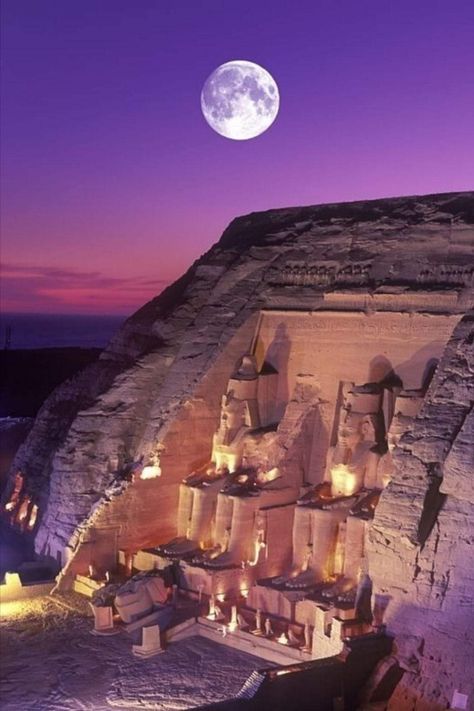
As night falls over the Abu Simbel Temples, the atmosphere transforms into something truly magical. The intense heat of the day fades away, replaced by a cool desert breeze and a deep, calming silence. Under the vast, open sky, the temples take on a new character—one defined by mystery, stillness, and quiet grandeur. Artificial lighting gently illuminates the colossal statues, casting dramatic shadows that enhance their scale and presence. The surrounding darkness isolates the temples visually, making them appear even more monumental against the night sky. Above, countless stars stretch across the horizon, creating a breathtaking backdrop that adds to the sense of timelessness. This nighttime experience offers a completely different perspective from the daytime visit. It allows visitors to connect with the site on a more emotional level, where the absence of crowds and noise reveals the true essence of Abu Simbel—calm, powerful, and eternal.
17. Cultural Significance: A Symbol of Heritage and Identity
The Abu Simbel Temples are not only architectural masterpieces, but also powerful symbols of Egypt’s cultural identity and historical legacy. They represent a peak moment in ancient Egyptian civilization, where art, engineering, and belief came together to create something truly extraordinary. Their story, from their original construction under Ramesses II to their modern relocation, reflects a continuous human effort to preserve and honor the past. This journey connects ancient ambition with modern responsibility, showing how cultural heritage can be protected through innovation and global cooperation. Today, Abu Simbel stands as a source of national pride and international admiration. It reminds the world of Egypt’s rich history and its enduring contribution to human civilization. The temples continue to inspire millions, reinforcing their place as one of the greatest achievements in the story of humanity.

18. The Eternal Legacy of Abu Simbel: Beyond Time and Stone
As the journey through the Abu Simbel Temples comes to an end, what remains is a profound sense of awe and admiration. These temples are more than monuments carved in stone—they are expressions of vision, belief, and the human desire to create something everlasting. Every detail, from the towering statues to the hidden sanctuary, tells a story of ambition and devotion that transcends time. The ability of Abu Simbel to endure—both physically and symbolically—makes it one of the most powerful sites in the world. It bridges the gap between ancient and modern history, reminding us that even the greatest achievements require protection and care. Ultimately, Abu Simbel is not just a destination; it is an experience that stays with every visitor. Its scale, beauty, and meaning leave a lasting impression, ensuring that its legacy will continue to inspire generations for centuries to come.
