- Excursions in Egypt
- Egypt Tour Packages
- Cairo Tours and Excursions
- Hurghada Tours and Excursions
- Soma Bay Tours and Excursions
- Makadi Bay Tours and Excursions
- Sahl Hasheesh Tours and Excursions
- El Gouna Tours and Excursions
- Marsa Alam Tours and Excursions
- Port Ghalib Tours and Excursions
- El Quseir Tours and Excursions
- Dendera and Abydos Day Tours
- Aswan Tours and Excursions
- Luxor Tours and Excursions
- Sharm El Sheikh Tours and Excursions
- Top Rated Egypt Tours in 2026
- Optional Excursions in Egypt
- Private Transfer
- Blogs About egypt
- Ancient Egypt
- Historical Sites in Egypt
- Cairo
- Alexandria
- Luxor
- Aswan
- The Red Sea
- Dendera Temple
- El Fayoum Oasis
- Bahariya Oasis
- Siwa Oasis
- Al Alamein
- Marsa Matruh
- Why Egypt Is One of the Safest Countries to Visit in the Middle East
- What You Need To know Before Your First Trip To Egypt
- Egypt Travel Costs in 2026 Full Budget Guide
- Top 10 Tourist Activities in Egypt
- Top 50 Activities You Can’t Miss in Egypt in 2026
- The Guide to Guided Tours in Egypt
- Egypt’s Ancient and Modern History
- The Nile River
- The Deserts of Egypt
- Ancient Egyptian gods
- famous Egyptian dishes
- UNESCO World Heritage sites
- About Us
- Egypt Hotels and Resorts
- Excursions in Egypt
- Egypt Tour Packages
- Cairo Tours and Excursions
- Hurghada Tours and Excursions
- Soma Bay Tours and Excursions
- Makadi Bay Tours and Excursions
- Sahl Hasheesh Tours and Excursions
- El Gouna Tours and Excursions
- Marsa Alam Tours and Excursions
- Port Ghalib Tours and Excursions
- El Quseir Tours and Excursions
- Dendera and Abydos Day Tours
- Aswan Tours and Excursions
- Luxor Tours and Excursions
- Sharm El Sheikh Tours and Excursions
- Top Rated Egypt Tours in 2026
- Optional Excursions in Egypt
- Private Transfer
- Blogs About egypt
- Ancient Egypt
- Historical Sites in Egypt
- Cairo
- Alexandria
- Luxor
- Aswan
- The Red Sea
- Dendera Temple
- El Fayoum Oasis
- Bahariya Oasis
- Siwa Oasis
- Al Alamein
- Marsa Matruh
- Why Egypt Is One of the Safest Countries to Visit in the Middle East
- What You Need To know Before Your First Trip To Egypt
- Egypt Travel Costs in 2026 Full Budget Guide
- Top 10 Tourist Activities in Egypt
- Top 50 Activities You Can’t Miss in Egypt in 2026
- The Guide to Guided Tours in Egypt
- Egypt’s Ancient and Modern History
- The Nile River
- The Deserts of Egypt
- Ancient Egyptian gods
- famous Egyptian dishes
- UNESCO World Heritage sites
- About Us
- Egypt Hotels and Resorts
Welcome to
Bab Zuweila: The Towering Sentinel of Thousand-Minaret Cairo
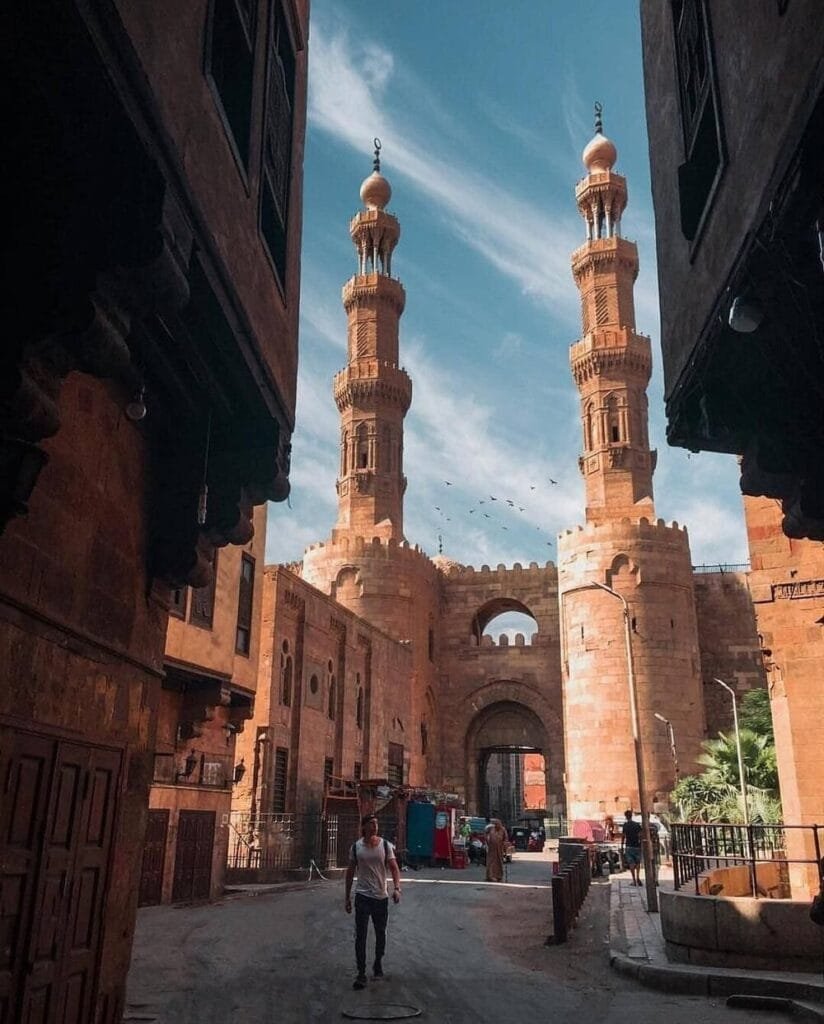
In the heart of Historic Cairo, where the scent of ancient spices mingles with the echoes of a thousand years, stands Bab Zuweila, the last remaining southern gate of the Fatimid city of Al-Qahira. Built in 1092 AD by the legendary vizier Badr al-Jamali, this monumental gate is far more than a mere entrance to a city; it is a towering sentinel of stone that has witnessed the rise and fall of empires, the execution of kings, and the vibrant daily life of the medieval world. Named after the “Zuweila” tribe of Berber soldiers who were stationed nearby to protect the Caliphate, the gate stands as a masterpiece of military architecture, blending brutal defensive strength with a sophisticated aesthetic grace that has made it an icon of the Egyptian skyline. For centuries, it served as the official southern limit of the city, the threshold where the caravans from Upper Egypt and the Red Sea would halt, seeking entry into the “Resplendent City” of the Fatimids.
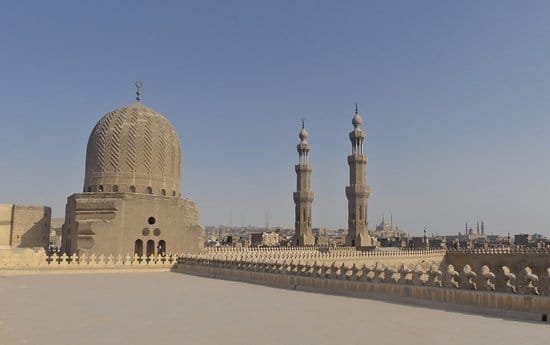
Architecturally, Bab Zuweila is a marvel of the Middle Ages. Its two massive, semi-circular towers rise like giants above the bustling street of Al-Muizz, topped by the elegant twin minarets of the adjacent Mosque of Sultan al-Mu’ayyad Shaykh. This unique combination of military towers and religious spires creates one of the most recognizable silhouettes in all of Africa. However, the gate’s beauty is balanced by its dark and dramatic history. Known locally for centuries as Bawabat al-Mitwali, it was the primary site for public executions and the display of the heads of defeated enemies, including the last Mamluk Sultan, Tuman Bay. This juxtaposition of “majesty and terror” has given Bab Zuweila a legendary status in Egyptian folklore, making it a place where history feels almost physically present. To stand before its massive iron-clad doors is to stand at the gateway of time itself, where every stone tells a story of power, faith, and the enduring spirit of Cairo.
1. The Military Genius: Architectural Defense
Bab Zuweila stands as a masterclass in medieval military engineering. Constructed during the Fatimid era to defend the southern perimeter of Al-Qahira, the gate was designed not just as an entrance, but as a formidable fortress. Its structure consists of two massive, semi-circular towers built from solid limestone, projecting outward to provide defenders with a panoramic view of the approach. The design includes sophisticated defensive features, such as arrow slits, machicolations (openings in the floor through which objects could be dropped), and a bent-entry gate system. This "bent" path was a brilliant tactical choice; it forced any invading force to make a sharp 90-degree turn upon entering, preventing them from charging straight into the city and leaving them exposed to archers from above. The masonry work is particularly impressive, with large, precisely cut stones that have withstood nearly a millennium of earthquakes, erosion, and urban expansion. For the military historian, Bab Zuweila represents the pinnacle of North African fortification techniques of the 11th century. The sheer thickness of the walls—several meters of dense stone—meant that the gate was virtually impenetrable to the weapons of the age. As visitors today climb the steep, narrow staircases within the towers, they can still feel the weight of this defensive strategy. The transition from the chaotic, noise-filled street of Al-Muizz to the narrow, vaulted defensive corridors inside the gate is a journey into the tactical mind of the Fatimid architects. It reminds us that Cairo was once a city under constant watch, and that Bab Zuweila was the iron fist that secured the safety of the Caliph’s seat of power.
2. The Fatimid Foundation: Badr al-Jamali’s Legacy
The construction of Bab Zuweila is inextricably linked to the visionary vizier Badr al-Jamali. In the late 11th century, the Fatimid Caliphate was facing existential threats from internal unrest and external pressure. Badr al-Jamali, an Armenian general, was brought in to restore order, and he immediately embarked on a massive public works project to redefine the geography of the city. He commissioned a new circuit of city walls, replacing the old, crumbling mud-brick defenses with the monumental stone gates we see today: Bab al-Futuh (Gate of Conquest) to the north, Bab al-Nasr (Gate of Victory) to the north-east, and Bab Zuweila (named after the North African Zuweila tribe) to the south. For the Fatimids, these gates were more than defensive necessities—they were declarations of divine right and imperial glory. The refined stone carvings and the grand scale of the arches were designed to overwhelm travelers and foreign diplomats, signaling that the Caliphate was a seat of sophisticated, enlightened, and invincible power. Under Badr al-Jamali’s guidance, Cairo transformed from a military camp into a sprawling, architecturally rich capital. Even as the Fatimid dynasty eventually fell, the legacy of this "Grand Vizier" persisted in the enduring strength of these gates. Standing beneath the towering arch of Bab Zuweila today, one is essentially standing in the shadow of Badr al-Jamali’s ambition. His work defined the "Al-Qahira" (The Victorious) that still survives today, proving that his vision of an impenetrable, majestic capital succeeded far beyond the lifespan of the dynasty he served.
3. The Legend of Al-Mitwali: Spirits and Folklore
Over the centuries, Bab Zuweila acquired a secondary, more mystical identity as Bawabat al-Mitwali. This name is rooted in deep-seated Egyptian folklore. According to local legend, a holy man (a Wali or saint) named Al-Mitwali took up residence at the gate, where he performed miracles and acted as a spiritual mediator for the city's inhabitants. For many Cairenes, the gate became a site of pilgrimage, where they would bring their sick or afflicted, pinning locks of hair or teeth to the massive iron-studded wooden doors in the hope of receiving a divine cure. This transformation from a site of military severity to a place of popular spirituality is a hallmark of Cairo’s rich, multi-layered cultural history. This legend of Al-Mitwali adds a layer of "the supernatural" to the gate’s history. For generations, people believed that the gate possessed its own guardian spirit and that justice was administered here by forces beyond the human realm. This folklore served as a psychological comfort for the populace, who lived through tumultuous times of plague, famine, and political upheaval. Even today, the gate carries an aura of mystery that captivates tourists and locals alike. It is a place where history and myth are indistinguishable, where the cold, hard reality of medieval executions meets the warm, persistent hope of faith. To walk through Bab Zuweila is to engage with this legacy—a reminder that in Cairo, a stone arch is never just a stone arch; it is a vessel for the stories, prayers, and beliefs of a thousand years of people who have called this city home.
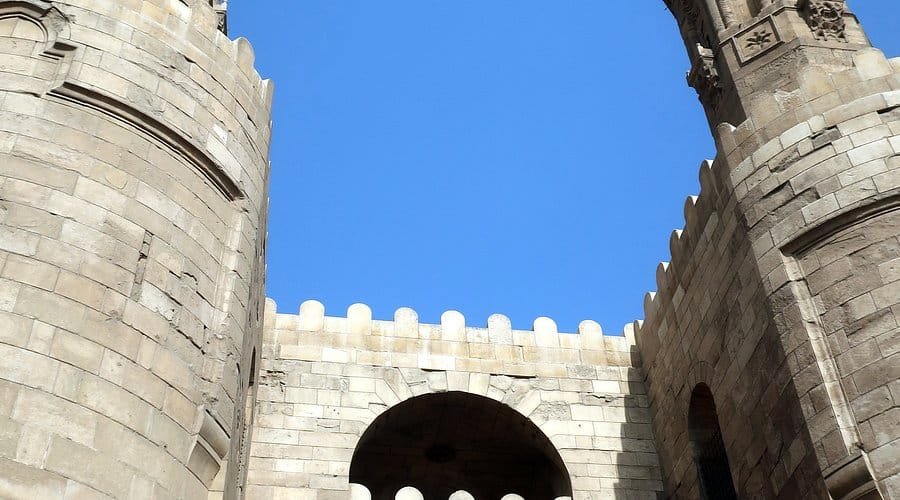
4. The Mosque of Sultan al-Mu'ayyad Shaykh: An Architectural Rival
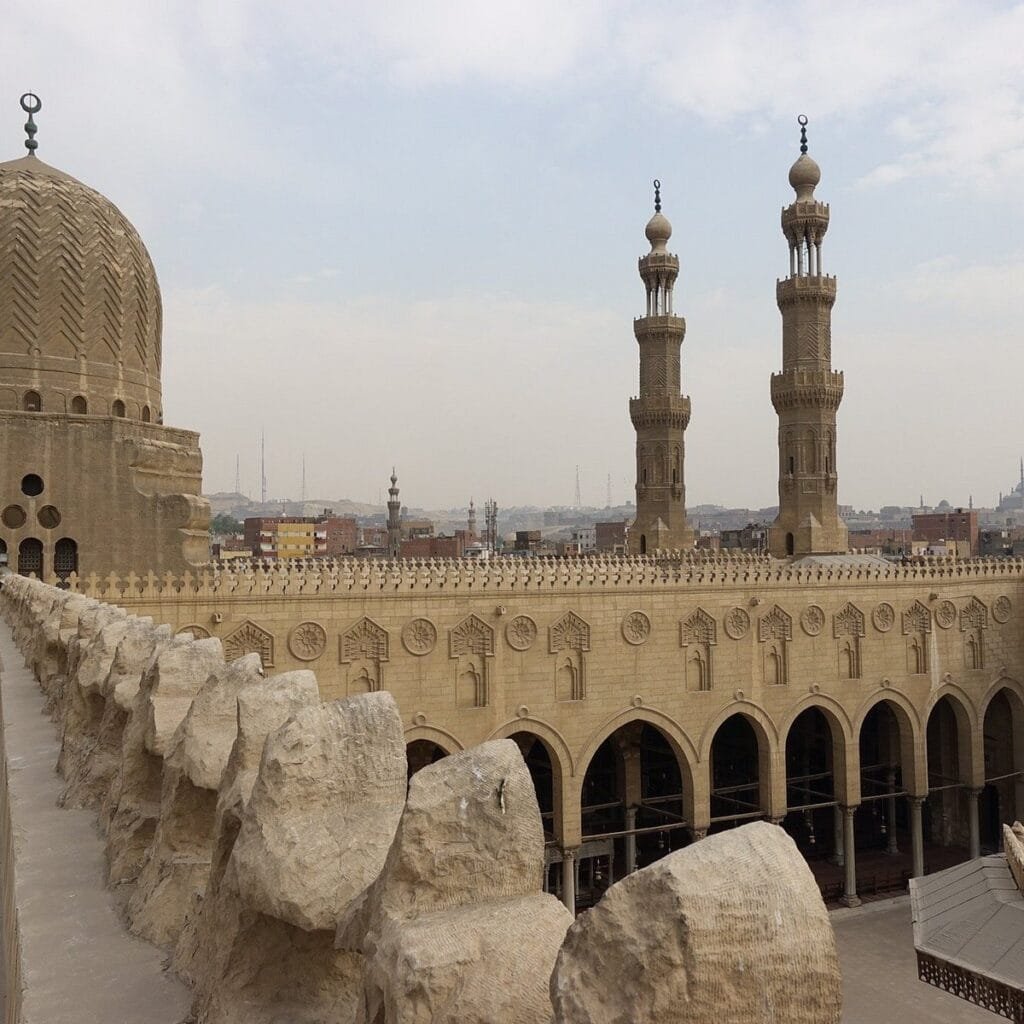
Standing directly adjacent to Bab Zuweila is the majestic Mosque of Sultan al-Mu'ayyad Shaykh, a structure that shares more than just a wall with the gate. According to history, Sultan al-Mu'ayyad had been imprisoned in the dungeon that once existed at the gate before he rose to power. During his imprisonment, he vowed that if he ever became Sultan, he would transform this site of suffering into a place of worship. True to his word, he commissioned this grand mosque in the early 15th century. The most striking architectural decision was his choice to build the mosque's twin minarets directly on top of the two towers of Bab Zuweila. This integration created a unique silhouette where military strength and religious grace are physically fused together. For the art historian, the mosque is a masterpiece of Mamluk architecture, featuring a massive bronze door and a stunning marble-inlaid prayer niche (Mihrab). The mosque’s presence changed the character of Bab Zuweila; it was no longer just a defensive gate, but a religious landmark. The interior courtyard of the mosque provides a quiet, sun-drenched contrast to the narrow, busy street outside. The Sultan’s tomb is also housed within the complex, serving as a reminder of his journey from a prisoner at the gate to the ruler of Egypt. This symbiotic relationship between the gate and the mosque is a perfect example of "architectural recycling" in Cairo, where the ruins or structures of one era are used to elevate the monuments of the next, resulting in a skyline that is both vertically ambitious and historically deep.
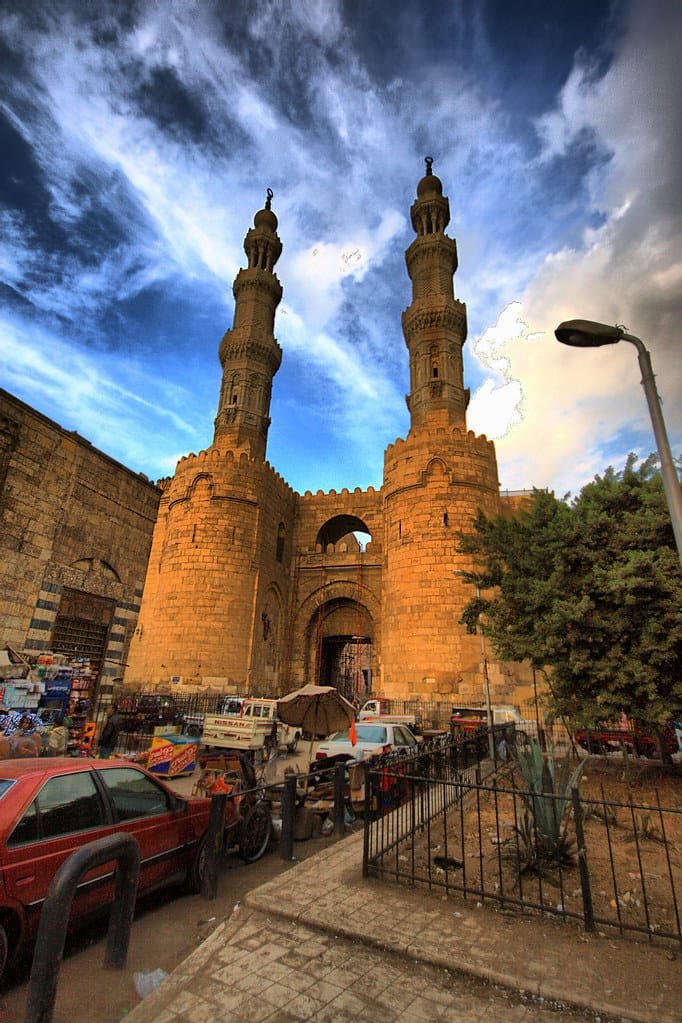
5. The Minarets of Bab Zuweila: A View from the Clouds
The twin minarets of the Al-Mu'ayyad Mosque, perched atop the towers of Bab Zuweila, offer what many consider the best panoramic view of Historic Cairo. For the modern visitor, climbing the steep, winding stone steps inside the minarets is a challenging but rewarding pilgrimage. As you ascend, the sounds of the street below—the honking of horns, the calls of vendors, and the chatter of the crowds—begin to fade, replaced by the whistling of the wind. Reaching the balcony of the minaret provides a breathtaking 360-degree vista of the "City of a Thousand Minarets." From this height, you can see the sprawling Al-Muizz Street stretching northward toward Bab al-Futuh, the distant Citadel of Saladin to the east, and the modern city skyline shimmering in the heat. This vantage point allows one to truly understand the urban geography of medieval Cairo. You can observe the dense network of rooftops, the hidden courtyards of traditional houses, and the proximity of various religious monuments. It is from these balconies that the Adhan (Call to Prayer) has been proclaimed for over six centuries, echoing across the rooftops of the old city. For photographers, the "golden hour" at the top of Bab Zuweila’s towers is legendary, as the setting sun casts a deep amber glow over the limestone domes and spires of the city. Standing at this height, suspended between the medieval gate and the clouds, the visitor gains a profound perspective on the scale of Cairo’s history, realizing that they are looking down upon one of the oldest and most continuous urban civilizations in human history.
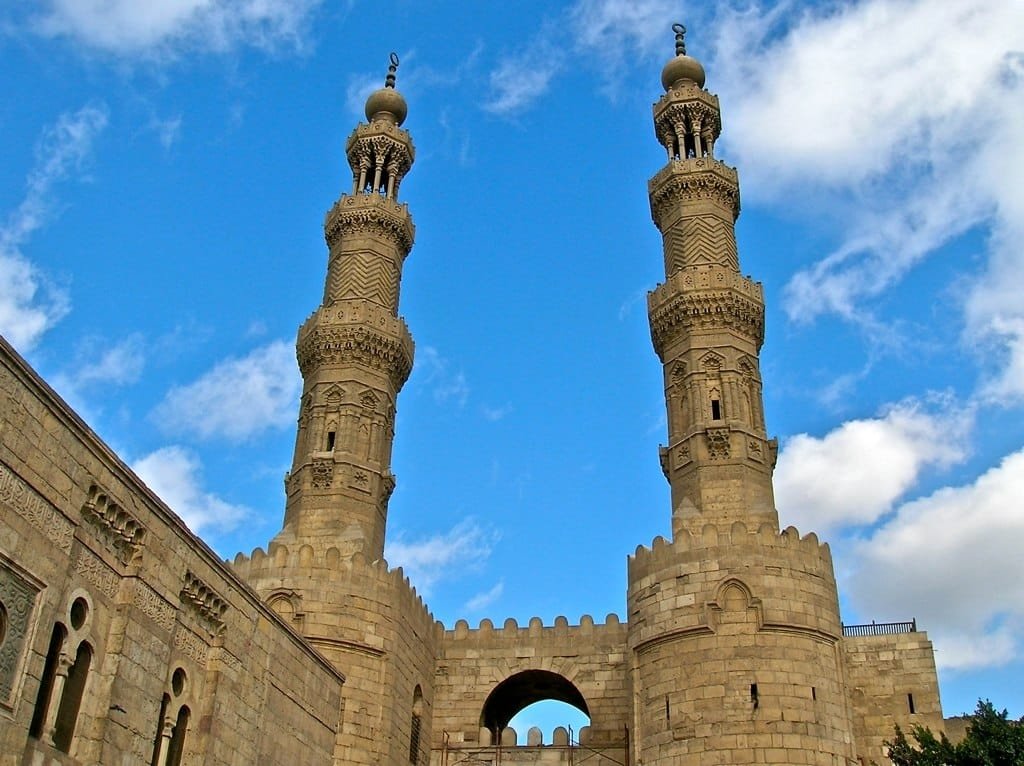
6. The Dark History: Executions and the End of the Mamluks
Despite its architectural beauty, Bab Zuweila holds a grim and chilling reputation as the primary site for public executions in medieval Cairo. For centuries, the gate served as the "gallows" of the city. High-ranking criminals, rebels, and even fallen sultans met their end here. Their heads were often displayed on spikes above the gate as a gruesome warning to the populace. The most significant event in this dark history occurred in 1517, when the Ottoman Turks conquered Egypt. The last Mamluk Sultan, Tuman Bay, was captured and executed by hanging at Bab Zuweila. His death marked the definitive end of the Mamluk Sultanate and the beginning of centuries of Ottoman rule in Egypt. This dark legacy has left a permanent mark on the collective memory of the city. Folklore tells of the gate being "haunted" by the spirits of those who died there, and for a long time, locals would avoid walking under the arch at night. However, this history of violence is also a history of political transition. Bab Zuweila was the stage upon which the drama of Egyptian power was played out; it was the final threshold for those who failed in the game of thrones. Today, while the gate is a peaceful tourist destination, the weight of these events still lingers in the cold limestone. For the history enthusiast, understanding Bab Zuweila requires acknowledging this duality: it was a place of magnificent art and a place of brutal justice, a gateway that welcomed the victors and served as the final exit for the defeated.
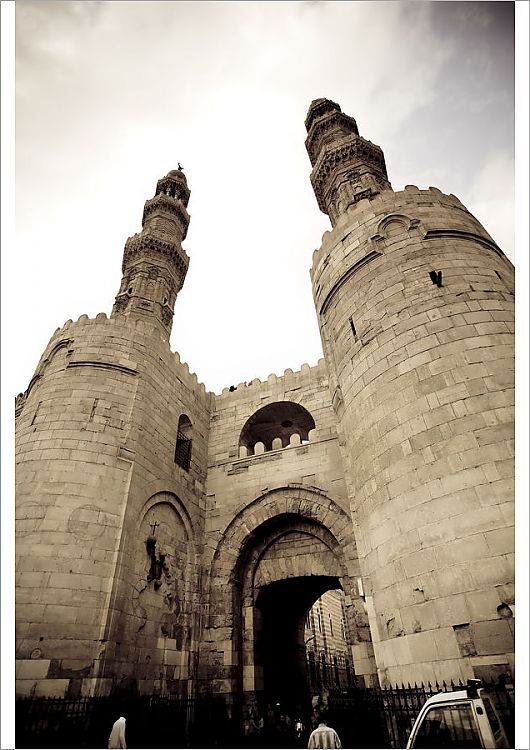
7. The Iron Doors: Symbols of Strength and Superstition
The massive wooden doors of Bab Zuweila, reinforced with heavy iron plating and studs, are a literal shield between the city and the world beyond. These original gates were built to be fireproof and ram-proof, representing the pinnacle of Fatimid defensive craftsmanship. However, over the centuries, these doors became much more than a military barrier; they transformed into a "living" wall of prayer and folklore. Because of the gate’s nickname as Bawabat al-Mitwali, generations of Cairenes believed that the iron-clad surface possessed healing properties. It was a common sight to see people driving nails into the wood, hanging locks of hair, or even attaching fragments of clothing to the iron studs as a form of "votive offering." Each of these items represented a plea for health, fertility, or protection. To the modern observer, the textures of the door tell a story of human desperation and hope. While many of these "relics" were removed during modern cleaning and restoration, the indentations and the history of the practice remain part of the gate’s soul. The iron work itself is a marvel of the blacksmith’s art; the massive bolts and plates are arranged in a way that provides structural integrity while appearing aesthetically imposing. These doors were the last things a traveler would see before entering the "Forbidden City" of the Caliphs, and their sheer scale served to remind everyone—from humble merchants to foreign invaders—that Cairo was a place of immense power, protected not only by stone and iron but by the spiritual guardians believed to dwell within the gate itself.

8. The Tent-Makers Market (Al-Khiyamia): Life Outside the Gate
Just a few steps outside Bab Zuweila lies one of the most vibrant and historically significant markets in Cairo: Al-Khiyamia, or the Tent-Makers Market. For centuries, this covered street was the first stop for travelers and caravans arriving from the south. The artisans here specialized in creating the elaborate, colorful textiles used for desert tents, and later, the magnificent "Khayamiya" appliqués used for ceremonial pavilions and festive occasions. This market is a direct extension of the gate’s history; as Bab Zuweila was the threshold of the city, Al-Khiyamia was the "lobby," where the culture of the desert met the sophistication of the urban capital. Walking through this market today is like stepping back into a medieval Souq. The artisans still sit in their small shops, hand-stitching complex geometric and floral patterns that mirror the Arabesque designs found on Bab Zuweila and the Al-Mu'ayyad Mosque. This craft is one of the few remaining "living heritages" of Islamic Cairo. The relationship between the gate and the market is symbiotic; the gate provided the security that allowed trade to flourish, while the market provided the wealth and international connections that made the gate a global landmark. For the visitor, exploring Al-Khiyamia after climbing the towers of Bab Zuweila offers a complete picture of Cairene life—showing how the city’s monumental architecture and its humble, traditional crafts have coexisted in the same narrow streets for over nine hundred years.
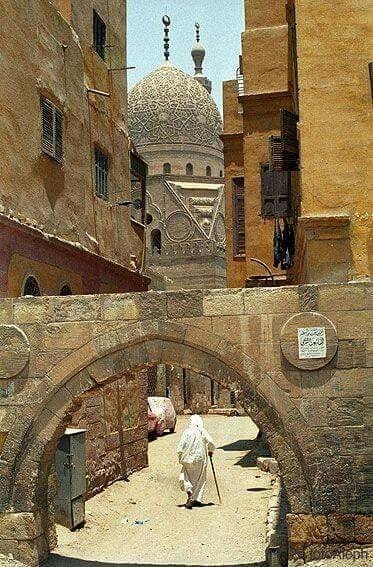
9. Restoration and Conservation: Saving the Gate for the Future
In the late 20th century, Bab Zuweila faced a crisis common to many ancient monuments in Cairo: the "silent enemy" of rising groundwater and salt crystallization. Decades of urban expansion and a rising water table had begun to eat away at the lower limestone blocks of the towers, threatening to destabilize the entire structure. To save this masterpiece, a massive restoration project was launched by the American Research Center in Egypt (ARCE) in collaboration with the Egyptian government. This project was a triumph of modern conservation science, involving the desalination of the stone, the reinforcement of the internal staircases, and the careful cleaning of centuries of soot and pollution that had blackened the façade. The restoration revealed the original colors of the limestone and uncovered hidden inscriptions that had been lost for generations. One of the most critical parts of the project was the stabilization of the twin minarets of Sultan al-Mu'ayyad Shaykh, which put immense pressure on the Fatimid towers below. Engineers used advanced seismic sensors to monitor the building's "breathing" and ensure its safety for future visitors. Today, Bab Zuweila stands as a model for how international cooperation can preserve global heritage. It is no longer a crumbling ruin, but a pristine monument that looks much as it did during the height of the Mamluk era. This conservation work ensures that the "Southern Sentinel" of Cairo will continue to dominate the horizon, allowing future generations to walk through its arches and understand the complex layers of defense, faith, and art that define the city’s heart.
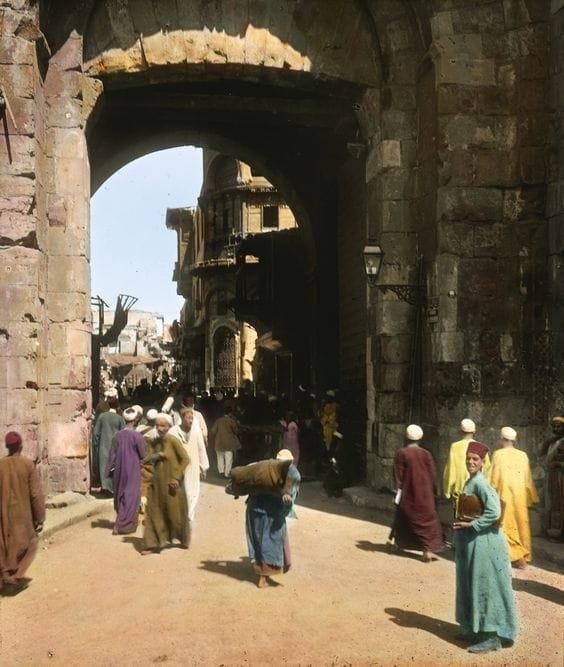
10. The Ritual of the Mahmal: The Gate and the Hajj
For centuries, Bab Zuweila played a central role in one of the most important annual events in the Islamic world: the departure of the Mahmal. The Mahmal was a ceremonial passenger-less palanquin, often draped in exquisite silk and gold-embroidered textiles, which symbolized the authority of the Egyptian Sultan over the holy sites of Mecca and Medina. Every year, a massive caravan would gather at the foot of the gate, carrying the Kiswa (the black cloth covering of the Kaaba), which was traditionally manufactured in the workshops of Cairo. The procession would pass through Bab Zuweila amidst a flurry of trumpets, drums, and cheering crowds, marking the official start of the long pilgrimage journey across the Sinai Desert to the Hejaz. This ritual turned Bab Zuweila into a sacred "threshold of departure." For the people of Cairo, the gate was the last point of contact with the pilgrims before they vanished into the desert. The Sultan himself would often sit in a specially designed loggia near the gate to witness the parade and bestow his blessings upon the travelers. This ceremony reinforced the gate's status as a link between the local capital and the wider Islamic world. Even today, the memory of the Mahmal is preserved in the nearby Tent-Makers Market, where artisans still produce the intricate appliqué work that once adorned these royal caravans. Understanding this ritual allows us to see Bab Zuweila not just as a defensive wall, but as a "Gate of Blessings," a place where the spiritual aspirations of an entire nation were physically mobilized and sent forth toward the heart of their faith.

11. The Secret Rooms: Within the Fatimid Walls
While the exterior of Bab Zuweila is famous for its grand towers, the interior of the structure contains a labyrinth of secret rooms and service chambers that were essential to its function as a military headquarters. Hidden within the thick limestone walls are vaulted rooms that once served as barracks for the Zuweila guards, armories for storing bows and naphtha, and even small prison cells for high-value captives. These rooms are masterpieces of Fatimid stonework, featuring perfectly executed cross-vaults that have supported the immense weight of the towers for nearly a millennium. In many of these chambers, the temperature remains remarkably cool even in the height of the Egyptian summer, a testament to the thermal properties of the massive stone construction. For the architectural enthusiast, exploring these "internal guts" of the gate provides a rare look at the logistical side of medieval warfare. There are hidden staircases that allowed guards to move between floors without being seen from the street, and small, strategically placed ventilation shafts that provided air while remaining invisible to attackers. During the Mamluk and Ottoman periods, some of these rooms were repurposed as administrative offices for the Muhtasib (the market inspector), who would oversee the trade flowing through the gate. Today, many of these rooms have been stabilized and lit as part of the restoration process, allowing visitors to walk through the very spaces where the sentinels of Cairo once slept and stood watch. These hidden voids within the stone remind us that Bab Zuweila was a "living" machine of defense, perfectly designed to sustain a military presence for months at a time if necessary.
12. The Social Hub: Bab Zuweila in Modern Egyptian Literature
Bab Zuweila’s impact extends far beyond history and architecture; it is a central "character" in the modern Egyptian literary imagination. Most famously, the Nobel laureate Naguib Mahfouz used the area surrounding the gate as the primary setting for his "Cairo Trilogy" and his masterpiece Zabalawi. In these works, the gate serves as a powerful symbol of the weight of history and the persistence of tradition in a rapidly modernizing world. To Mahfouz, the gate was a "silent observer" of the triumphs and tragedies of ordinary Cairenes, a place where the past and the present constantly collide. The shadow of Bab Zuweila looms over his characters, representing both the protection of the old ways and the terrifying authority of the state. Beyond Mahfouz, the gate has appeared in countless poems, plays, and novels, often portrayed as a gateway between two worlds: the modern, European-influenced Cairo and the ancient, spiritual "Al-Qahira." In Jamal al-Ghitani’s Zayni Barakat, the gate is a haunting presence, emphasizing the themes of surveillance and power that have defined the site since its inception. This literary legacy has turned Bab Zuweila into a cultural landmark that every Egyptian knows, even if they have never walked through its arch. It represents the "Old Cairo" of the heart—a place of mystery, folklore, and indestructible identity. For the reader who visits the gate, the experience is enriched by these stories; the stones are no longer just limestone, but the physical embodiment of the tales and characters that have shaped the Egyptian soul for generations.
13. The Inscriptions of Power: Reading the Walls
To the trained eye, the limestone exterior of Bab Zuweila is not just stone, but a historical manuscript written in the elegant Kufic script. Throughout the gate, one can find various inscriptions carved by the different dynasties that occupied Cairo. The most prominent are the foundational inscriptions of Badr al-Jamali, which date back to the 11th century. These carvings serve as a "political manifesto" in stone, designed to proclaim the legitimacy of the Fatimid Caliph to any merchant or envoy entering the city. The meticulous nature of this calligraphy—with its elongated letters and rhythmic proportions—shows that even the military infrastructure of the Fatimids was imbued with an aesthetic of high culture and religious authority. In addition to the original inscriptions, later dynasties—particularly the Mamluks and the Ottomans—added their own markings, ranging from royal decrees to the names of the architects who repaired the gate after earthquakes. These layers of epigraphy create a chronological map of Cairo’s history. For the paleography enthusiast, reading these walls is like deciphering the "official voice" of each era; while the Fatimid inscriptions speak of imperial stability, the later Ottoman markings often reflect a more utilitarian or devotional purpose. Many of these inscriptions are located high up on the towers, requiring a keen eye or binoculars to spot. They serve as a constant reminder that Bab Zuweila was the "notice board" of the city; a place where laws were posted, victories were commemorated, and the changing tides of history were literally carved into the fabric of the capital.
14. The Gate as a "Social Leveler": From Beggars to Kings
Throughout history, Bab Zuweila served as a unique "social leveler" in the stratified society of Cairo. Because it was the primary funnel for all traffic entering the city from the south, it forced a collision of classes. Within the shade of its arch, the grand royal caravans carrying silk and gold for the Sultan would have to slow down, rubbing shoulders with the humble donkey carts of farmers bringing vegetables from the Nile Valley. This narrow threshold was where the "high" and "low" of the city met, creating a microcosm of Cairo’s vibrant social life. The gate was equally a site of public display; whether it was a glorious parade of the Mahmal or the public humiliation of a disgraced official, everyone in Cairo—from the poorest street dweller to the wealthiest merchant—participated in the drama that took place under this arch. This social inclusivity was reinforced by the presence of the mosque and the market. The gate acted as an "urban anchor" where identity was communal. For the poor, the gate was a place of potential charity and religious merit, particularly because of its association with the saintly Al-Mitwali. For the powerful, it was a stage for displaying their command over the city. This social duality persists today; the area around Bab Zuweila remains one of the most egalitarian spaces in Cairo, where tourists and locals, historians and street vendors, share the same limestone flagstones. It is this democratic history that makes the gate so beloved—it does not belong to any single social class; it belongs to the collective memory of the city, serving as a reminder that Cairo has always been a city of the people, regardless of who held the keys to the towers.
15. The Evening Glow: Bab Zuweila in the Modern Urban Night
As the sun sets over Cairo, Bab Zuweila undergoes a dramatic transformation, emerging as one of the most photogenic monuments in the modern urban night. The thoughtful installation of professional, low-energy LED lighting has highlighted the gate’s architectural silhouette, casting the two towers and the twin minarets of Al-Mu'ayyad Shaykh in a warm, amber glow against the dark, encroaching sky. Unlike the harsh, flickering lights of the modern metropolis, this focused illumination emphasizes the textures of the limestone, the depth of the arches, and the geometry of the minarets, turning the gate into a beacon of history that floats above the evening haze of the city. For the modern Cairene, the illuminated gate is a reassuring presence, a stable landmark in an ever-changing city. In the quiet hours after midnight, when the frantic energy of Al-Muizz Street finally dies down, the gate stands as a silent guardian, its towers reflecting a sense of peace that is rarely felt during the day. This "evening glow" has turned Bab Zuweila into a major destination for nocturnal photography and peaceful reflection. It serves as a bridge between the ancient city’s past as a place of shadows and secrets, and its present as a hub of tourism and cultural pride. Standing there at night, watching the modern city pulse with light and sound in the distance, one feels the timeless weight of the gate—a witness that has seen the city grow from a walled camp into a megalopolis, and still stands, illuminated and unbowed, at the center of the story.
16. The Spiritual Vibe: A Haven of History in the Urban Pulse
Walking through the arch of Bab Zuweila is akin to stepping through a portal that filters out the relentless noise of modern Cairo. Even as the street of Al-Muizz remains one of the most vibrant, chaotic, and loud thoroughfares in the city, the immediate vicinity of the gate possesses a distinct, gravitational stillness. It is a place where history feels heavy. The stone itself—coarse, weathered, and etched by centuries of climate and human interaction—emits a cool, grounding energy. For the visitor, the experience is not just visual; it is visceral. The scent of ancient dust, the faint metallic tang of the massive iron-clad doors, and the rhythmic sound of one's own footsteps echoing under the vaulted ceiling create a meditative space in the middle of a megalopolis. This "spiritual vibe" is compounded by the site's layers of meaning. Because it has served as both a fortress and a place of popular sainthood, the gate acts as a bridge between the physical and the metaphysical. Whether you are a believer in the miracles associated with Al-Mitwali or a secular historian fascinated by the mechanics of Fatimid defense, the gate commands a sense of reverence. It is a space that demands you stop, look up, and acknowledge the sheer continuity of time. In the quiet corners of the towers, shielded from the sun and the street, one finds a profound sense of perspective—a realization that the human struggle for security, faith, and memory has been playing out in this exact spot for nearly a thousand years.
17. A Practical Guide for Visitors: Navigating the Southern Sentinel
For those planning to visit Bab Zuweila, logistical preparation will enhance your experience significantly. The gate is located at the southern end of Al-Muizz Street, easily reachable by taxi or a short walk from the nearby Bab Zuweila metro station area. It is open to the public daily, typically from 9:00 AM to 5:00 PM, though it is advisable to arrive earlier in the morning to beat the afternoon crowds and the peak heat of the day. As the climb to the top of the minarets involves a series of very steep, narrow, and winding stone stairs, visitors should be prepared for a physically demanding ascent. Comfortable, sturdy footwear is essential. There is a modest entrance fee for the site, which contributes directly to the ongoing conservation efforts managed by the Ministry of Tourism and Antiquities. It is highly recommended to allocate at least two hours for your visit—this allows enough time to explore the defensive chambers within the walls, climb to the top of the minarets for the panoramic view, and stroll through the adjacent Al-Khiyamia (Tent-Makers) market. While there is no strict dress code, dressing modestly is recommended out of respect for the religious nature of the attached mosque. Finally, remember that you are visiting a site of immense historical fragility; avoid leaning on ancient carvings and, if you take photos, be mindful of the uneven surfaces and narrow passages.
18. Conclusion: The Immortal Guardian of Al-Qahira
Bab Zuweila is far more than a stone relic or a tourism landmark; it is the physical embodiment of Cairo’s resilience. It has stood as a guardian through the rise and fall of the Fatimids, the crusades of the Ayyubids, the glory of the Mamluks, the long era of Ottoman rule, and the birth of the modern Egyptian nation. Every scratch on its iron doors, every inscription on its limestone, and every stone shifted by an earthquake tells a chapter of a story that refuses to end. It remains the "Southern Sentinel," a gate that has looked inward to protect the city's intellectual heart and outward to greet the travelers of the world for ten centuries. As you leave the gate and look back at its towering minarets silhouetted against the Egyptian sky, you are left with the undeniable impression that Bab Zuweila is an immortal witness. It bridges the gap between the medieval city of alchemy, philosophy, and war, and the vibrant, bustling capital of today. By preserving this gate, Egypt does not just maintain a wall; it preserves the memory of its own identity. To stand at Bab Zuweila is to touch the very bedrock of Egyptian civilization—a place where the past is not behind us, but literally standing in front of us, reminding us that Cairo is, and will always be, Al-Qahira—the Victorious.