- Excursions in Egypt
- Egypt Tour Packages
- Cairo Tours and Excursions
- Hurghada Tours and Excursions
- Soma Bay Tours and Excursions
- Makadi Bay Tours and Excursions
- Sahl Hasheesh Tours and Excursions
- El Gouna Tours and Excursions
- Marsa Alam Tours and Excursions
- Port Ghalib Tours and Excursions
- El Quseir Tours and Excursions
- Dendera and Abydos Day Tours
- Aswan Tours and Excursions
- Luxor Tours and Excursions
- Sharm El Sheikh Tours and Excursions
- Top Rated Egypt Tours in 2026
- Optional Excursions in Egypt
- Private Transfer
- Blogs About egypt
- Ancient Egypt
- Historical Sites in Egypt
- Cairo
- Alexandria
- Luxor
- Aswan
- The Red Sea
- Dendera Temple
- El Fayoum Oasis
- Bahariya Oasis
- Siwa Oasis
- Al Alamein
- Marsa Matruh
- Why Egypt Is One of the Safest Countries to Visit in the Middle East
- What You Need To know Before Your First Trip To Egypt
- Egypt Travel Costs in 2026 Full Budget Guide
- Top 10 Tourist Activities in Egypt
- Top 50 Activities You Can’t Miss in Egypt in 2026
- The Guide to Guided Tours in Egypt
- Egypt’s Ancient and Modern History
- The Nile River
- The Deserts of Egypt
- Ancient Egyptian gods
- famous Egyptian dishes
- UNESCO World Heritage sites
- About Us
- Egypt Hotels and Resorts
- Excursions in Egypt
- Egypt Tour Packages
- Cairo Tours and Excursions
- Hurghada Tours and Excursions
- Soma Bay Tours and Excursions
- Makadi Bay Tours and Excursions
- Sahl Hasheesh Tours and Excursions
- El Gouna Tours and Excursions
- Marsa Alam Tours and Excursions
- Port Ghalib Tours and Excursions
- El Quseir Tours and Excursions
- Dendera and Abydos Day Tours
- Aswan Tours and Excursions
- Luxor Tours and Excursions
- Sharm El Sheikh Tours and Excursions
- Top Rated Egypt Tours in 2026
- Optional Excursions in Egypt
- Private Transfer
- Blogs About egypt
- Ancient Egypt
- Historical Sites in Egypt
- Cairo
- Alexandria
- Luxor
- Aswan
- The Red Sea
- Dendera Temple
- El Fayoum Oasis
- Bahariya Oasis
- Siwa Oasis
- Al Alamein
- Marsa Matruh
- Why Egypt Is One of the Safest Countries to Visit in the Middle East
- What You Need To know Before Your First Trip To Egypt
- Egypt Travel Costs in 2026 Full Budget Guide
- Top 10 Tourist Activities in Egypt
- Top 50 Activities You Can’t Miss in Egypt in 2026
- The Guide to Guided Tours in Egypt
- Egypt’s Ancient and Modern History
- The Nile River
- The Deserts of Egypt
- Ancient Egyptian gods
- famous Egyptian dishes
- UNESCO World Heritage sites
- About Us
- Egypt Hotels and Resorts
Welcome to
The Grand Egyptian Museum: A Majestic Portal to the Golden Age of Pharaohs
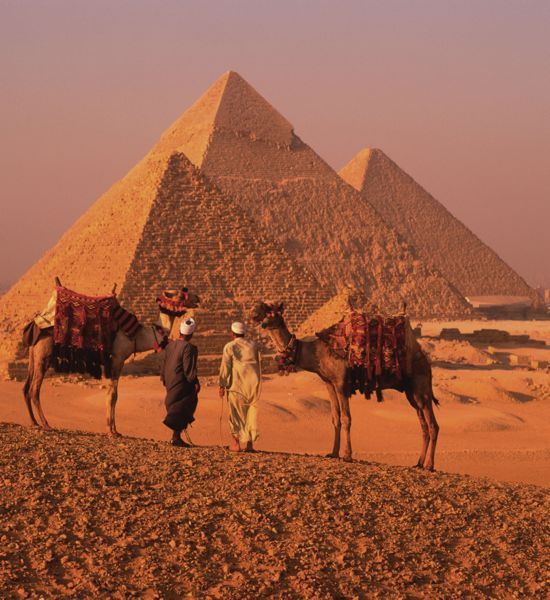
Standing as a breathtaking testament to human ambition and cultural preservation, the Grand Egyptian Museum (GEM) is much more than a building; it is a global landmark that redefines the museum experience for the modern era. Situated just a stone’s throw from the iconic Pyramids of Giza, this monumental structure serves as a physical and symbolic bridge between the ancient wonders of the world and the cutting-edge technology of the 21st century. For travelers, historians, and dreamers, the GEM represents a once-in-a-lifetime opportunity to witness the full glory of Egyptian civilization in a setting that matches its grandeur. As the largest archaeological museum in the world dedicated to a single civilization, it has been designed to house over 100,000 artifacts, offering a narrative depth that spans from the prehistoric roots of the Nile Valley to the sophisticated eras of the Greco-Roman world.
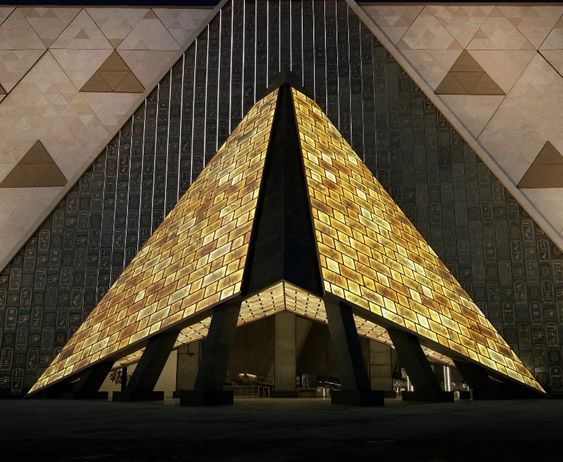
The architectural silhouette of the GEM is a masterpiece in itself, featuring a translucent stone façade that glows at night and a design that aligns perfectly with the rays of the sun and the peaks of the pyramids. However, the true heart of the museum lies in its unprecedented display of the complete Tutankhamun collection, featuring thousands of treasures that have never been seen by the public in their entirety. From the moment you enter the grand atrium and are greeted by the towering Colossus of Ramses II, you realize that the Grand Egyptian Museum is not just a destination; it is a profound emotional journey. It is a place where history is not just stored, but vividly brought back to life through immersive galleries, interactive displays, and a majestic Great Staircase that leads you upward through the layers of time. Get ready to explore the ultimate treasure house of humanity, where every stone tells a story of eternity and every gallery whispers the secrets of the gods.
1: The Architectural Vision – A Symphony of Stone and Glass
The architectural design of the Grand Egyptian Museum (GEM) is nothing short of a modern miracle, conceived to be as timeless as the monuments it neighbors. Designed by the architectural firm Heneghan Peng, the building’s structure is defined by a series of visual axes that align directly with the three Pyramids of Giza, creating a physical and spiritual connection between the ancient and the contemporary. The most striking feature is its massive, translucent stone façade, made of Egyptian alabaster, which transforms the building into a glowing beacon at night. This choice of material is highly symbolic, reflecting the same stone used by ancient artisans for sacred statues and vessels. The museum’s roof is a complex geometric arrangement of triangles, echoing the shape of the pyramids while providing a sophisticated system for natural light and ventilation, ensuring that the GEM is as sustainable as it is beautiful. Moving inside, the architecture continues to evoke a sense of awe through its vast, open spaces and sharp, clean lines. The design team utilized a "folded plate" structure, which allows for massive spans without the need for intrusive support pillars, giving the galleries an airy, limitless feel. This modern museum architecture is not merely for show; it is designed to manage the flow of millions of visitors while providing a safe, climate-controlled environment for the world's most delicate artifacts. The building’s orientation also respects the "Solar Alignment" phenomenon; twice a year, the sun shines directly on the face of the statues in the atrium, mirroring the ancient solar precision found at Abu Simbel. For students of design and engineering, the Grand Egyptian Museum is a masterclass in how to pay homage to the past using the most advanced materials of the future, making it a destination that is as much about the building as it is about the treasures within.
2: The Colossus of Ramses II – The Grand Guardian of the Atrium
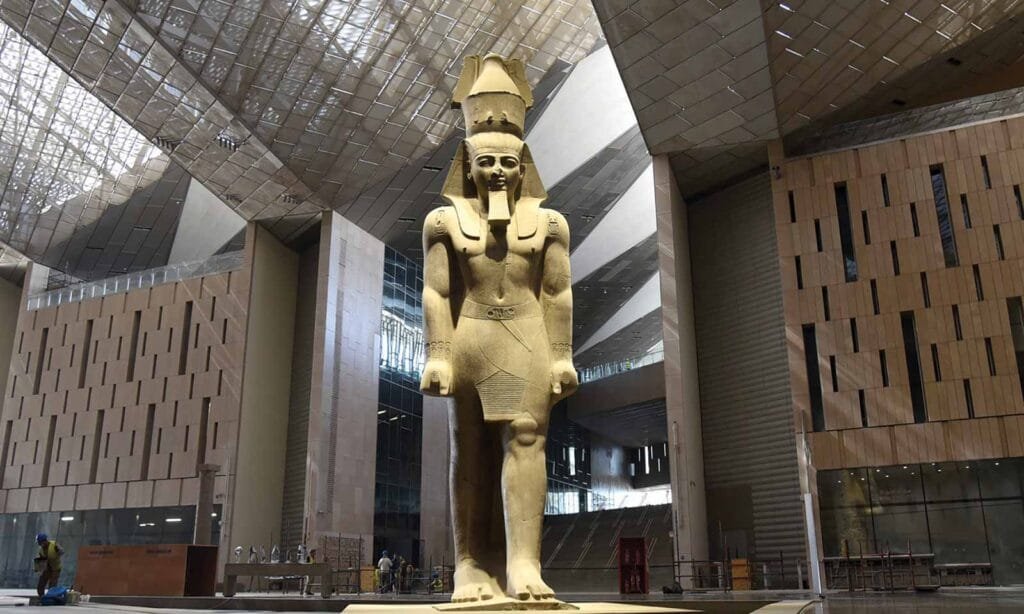
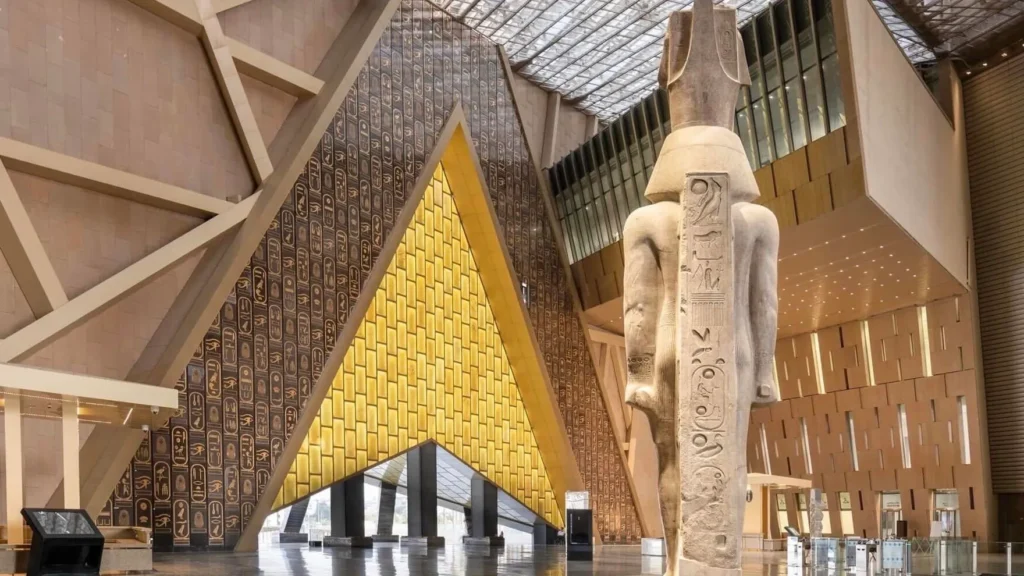
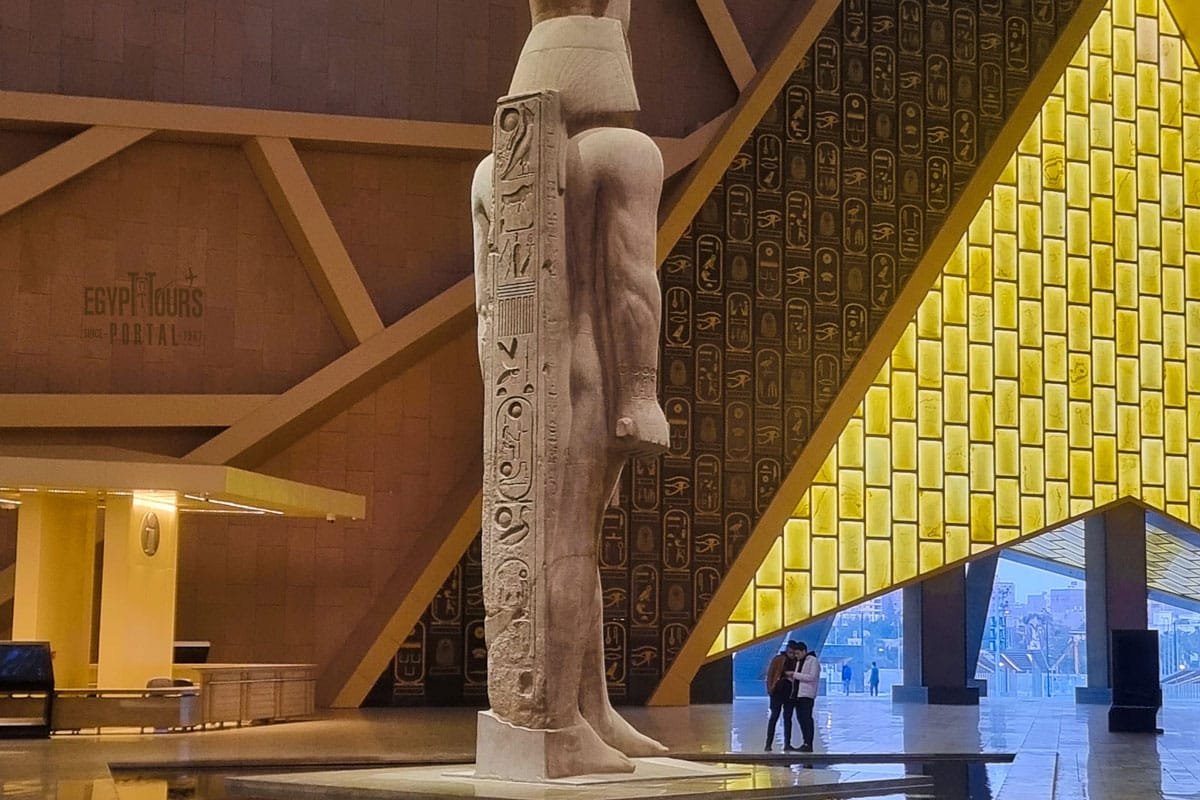
Upon entering the sun-drenched grand atrium of the GEM, visitors are immediately greeted by the breathtaking Colossus of Ramses II. This 3,200-year-old masterpiece, carved from red granite and weighing over 80 tons, stands at a staggering height of 11 meters, serving as the museum’s spiritual and physical guardian. The journey of this statue to its current home was a feat of modern engineering, as it was moved from its previous location in Ramses Square with a full military parade to ensure its safety. Now standing in a specially designed pit that allows visitors to view it from multiple levels, the statue’s presence sets the tone for the entire museum experience. It represents the peak of New Kingdom power and the enduring ego of a king who wanted his name to be remembered for eternity. The placement of the colossus is a deliberate act of storytelling. It stands at the base of the Grand Staircase, welcoming guests into the "House of the Gods." The level of detail on the statue—from the intricate carvings of the royal cartouches on his belt to the serene but firm expression on his face—highlights the incredible skill of ancient Egyptian sculptors. This atrium is designed to be the "heartbeat" of the museum, a bustling crossroads where modern technology meets ancient majesty. For many tourists, this is their first "wow" moment, a tactile connection to the Age of Empires. The Colossus of Ramses II does more than occupy space; it bridges the gap between the monumental scale of the pyramids outside and the intimate artifacts found in the galleries above, acting as a timeless ambassador for Egyptian heritage.
3: The Strategic Location – Linking the GEM to the Giza Plateau
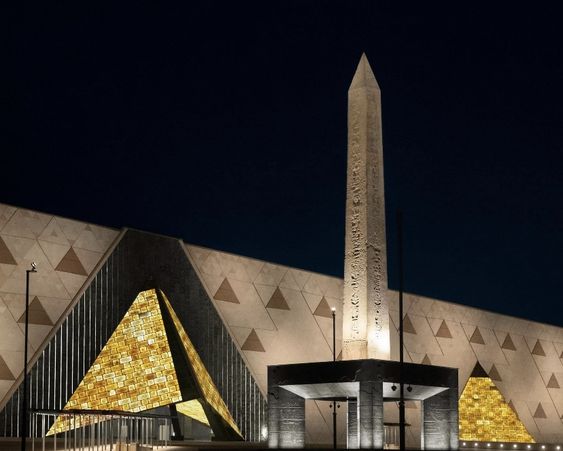
The Grand Egyptian Museum is not just near the pyramids; it is functionally integrated into the Giza Plateau through a visionary master plan. Located only two kilometers away from the Great Pyramid of Khufu, the museum is connected to the plateau via a magnificent "pedestrian causeway" or grand promenade. This allows tourists to move seamlessly between the archaeological site and the museum, creating a unified cultural park that covers hundreds of acres. This strategic positioning was chosen to relieve the pressure on the older museum in Tahrir Square and to provide a more spacious, technologically advanced environment that can handle the massive influx of global tourism. The GEM effectively turns the desert of Giza into a world-class cultural destination that rivals any major museum hub in Europe or North America. Furthermore, the museum’s location was chosen to stimulate the local economy of Giza, turning the area into a vibrant center for international tourism and hospitality. From the museum’s upper terraces, visitors can enjoy unobstructed panoramic views of the pyramids, providing a context that is impossible to replicate anywhere else in the world. This geographical link is essential for the narrative of the museum; it allows visitors to see the artifacts and then look out the window to see the very monuments where those artifacts were once housed. The GEM's proximity to the Pyramids ensures that it is the cornerstone of every traveler's itinerary to Egypt. It is a strategic triumph that honors the sacred landscape of the ancestors while providing a gateway for the future of Egyptian tourism, making the Giza Plateau the undisputed cultural capital of the world.
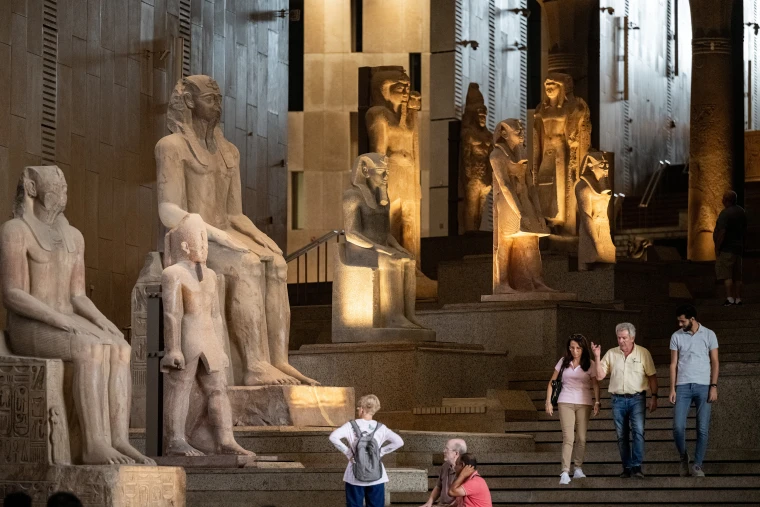
4: The Great Staircase – A Vertical Journey Through History
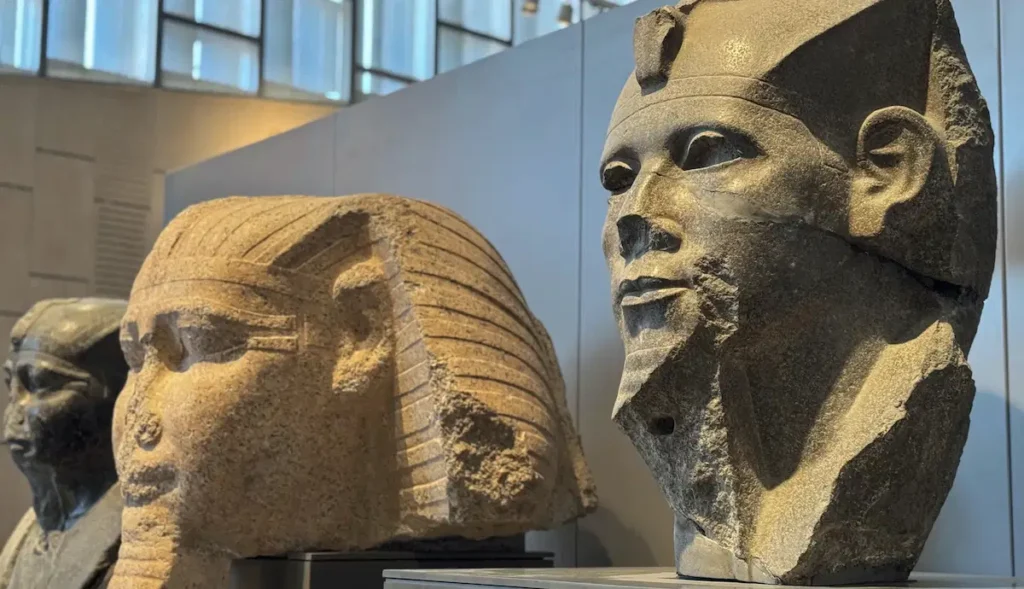
One of the most physically and emotionally evocative features of the Grand Egyptian Museum is the Great Staircase, a massive architectural spine that ascends through the building’s height. This is not merely a means of moving between floors; it is a chronological and thematic ascent that allows visitors to "climb" through the layers of Egyptian history. As you move upward, you are flanked by nearly 100 colossal statues and architectural fragments, ranging from the Old Kingdom to the Greco-Roman period. The staircase is organized into four main themes: the Royal Image, Divine Mansions (Temples), the Gods and Kings, and the Journey to Eternity. This vertical gallery provides a breathtaking sense of scale, reminding every visitor that the Egyptian civilization was built on a foundation of monumental ambition and a deep desire to touch the divine. The experience of walking up the Great Staircase is enhanced by the museum’s clever use of light and perspective. At various landing points, large glass windows offer framed views of the Giza Pyramids, creating a constant dialogue between the artifacts inside and the monuments outside. For photography enthusiasts, this area offers some of the most dramatic angles in the museum, as the statues of kings like Senusret III and Amenhotep III appear to guard the path to the higher galleries. The staircase serves as a transition from the world of humans into the sacred realm of the Pharaohs, preparing the visitor for the ultimate climax of the museum: the Tutankhamun galleries. This vertical museum design is a triumph of storytelling, ensuring that the journey is just as significant as the destination, making every step an encounter with a different century of glory.
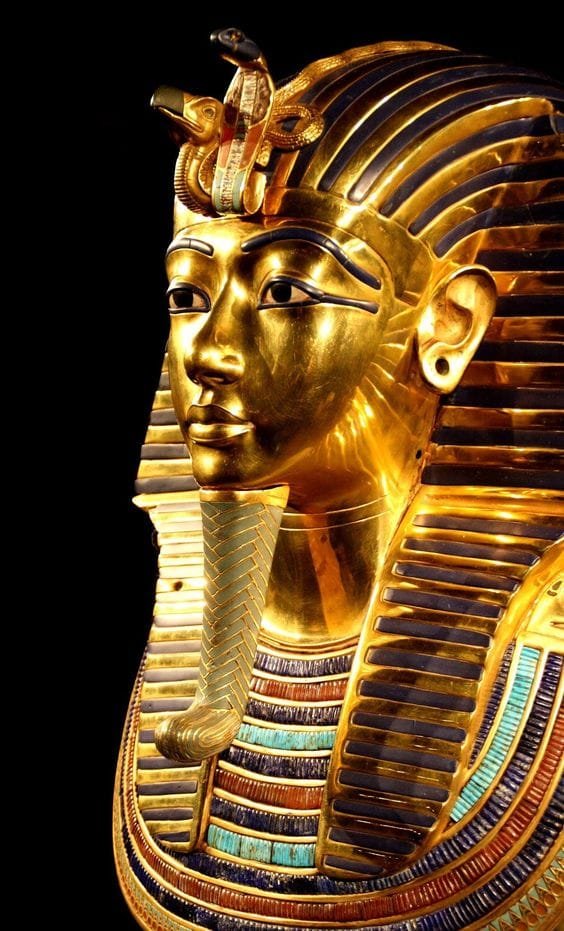
5: The Tutankhamun Gallery – The Full Treasure Revealed
For the first time since the discovery of his tomb in 1922 by Howard Carter, the complete collection of Tutankhamun is displayed in a single, dedicated space within the Grand Egyptian Museum. Spanning over 7,000 square meters, these galleries house more than 5,000 artifacts—many of which have been kept in storage for decades and have never been seen by the public. This is the undisputed crown jewel of the GEM, designed to recreate the sense of wonder that the original excavators felt when they first broke the seal of the tomb. The collection is arranged in a way that follows the King's life, his burial rites, and his journey into the afterlife, featuring everything from his iconic gold mask and nested coffins to his sandals, chariots, and even his childhood toys. The layout of the Tutankhamun Gallery is a masterpiece of modern curation, using state-of-the-art lighting and security cases to protect the gold and organic materials while allowing for intimate viewing. Unlike the crowded displays of the past, the GEM provides enough space to appreciate the sheer volume and intricate craftsmanship of the "Boy King’s" treasures. Visitors can marvel at the gold-clad shrines, the ornate jewelry, and the ceremonial trumpets that have remained silent for millennia. This gallery is a profound study of the 18th Dynasty’s wealth and spirituality, offering a level of detail that humanizes the legendary Pharaoh. For travelers, this is an essential pilgrimage, as it represents the most significant assembly of archaeological treasure in human history, all housed under one magnificent roof.
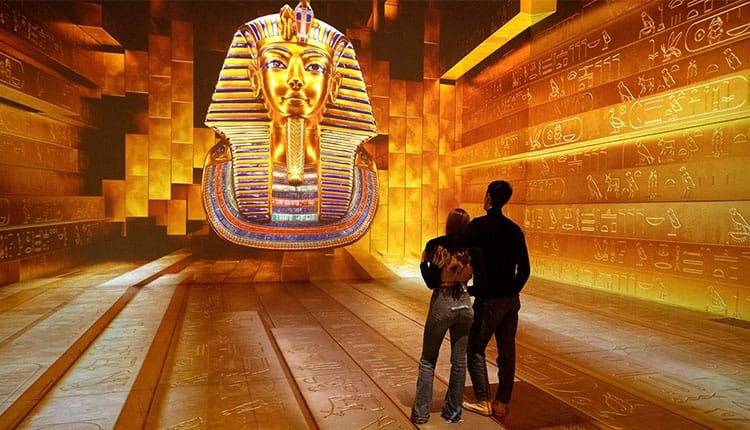
6: Technological Innovation – Interactive Storytelling at the GEM
The Grand Egyptian Museum is a pioneer in the use of museum technology, moving away from traditional "labels on walls" to a fully immersive and interactive experience. Throughout the galleries, augmented reality (AR), virtual reality (VR), and high-definition digital projections are used to breathe life into the stone and gold. For example, visitors can use their smartphones or provided tablets to see how the faded paint on a statue would have originally appeared thousands of years ago, or they can watch a 3D reconstruction of how the pyramids were actually built. This commitment to digital storytelling makes the GEM particularly appealing to younger generations and tech-savvy travelers, ensuring that the ancient world remains relevant and exciting in a digital age. Beyond the visual aids, the museum incorporates smart climate control and lighting systems that adjust based on the time of day and the number of people in the room, ensuring both visitor comfort and artifact preservation. Interactive touchscreens provide deep dives into the hieroglyphs found on sarcophagi, translating the ancient "language of the gods" into multiple modern languages. There are also dedicated "discovery zones" for children, where they can participate in simulated excavations or learn the art of mummification through educational games. This marriage of science and history transforms the GEM into a living classroom, proving that the latest innovations in technology are the best tools we have for honoring the oldest innovations of mankind. It is a museum that doesn't just show you the past—it allows you to interact with it.
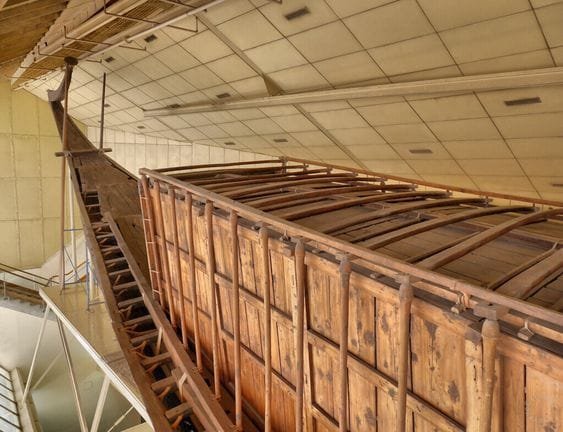
7: The Khufu Solar Boat Museum – A Voyage from the Sands to the GEM
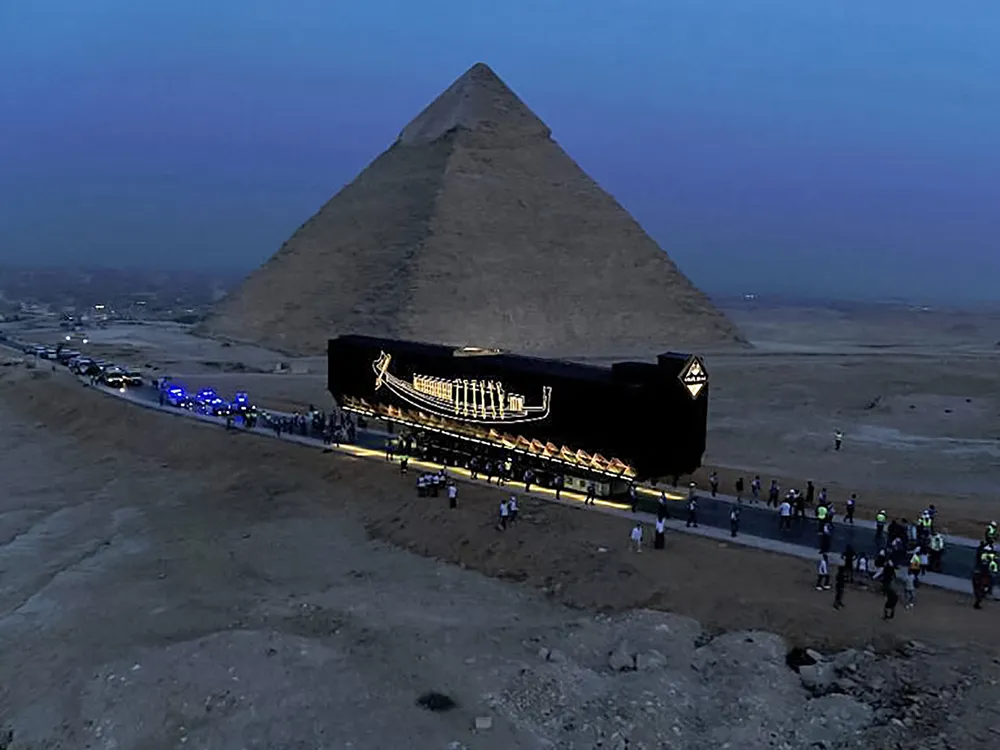
One of the most spectacular additions to the Grand Egyptian Museum complex is the dedicated building for the Khufu Solar Boat, an ancient vessel that is over 4,500 years old. Originally discovered in 1954 in a pit at the foot of the Great Pyramid, this magnificent cedarwood ship was meticulously moved to its new home at the GEM in a high-tech, shock-absorbing container in 2021. The transportation of the boat was a world-class engineering feat, ensuring that the fragile organic material remained intact during the short but delicate journey from the Giza Plateau. Now housed in a specially designed museum-within-a-museum, the solar boat is displayed in a way that allows visitors to view it from multiple levels, offering a 360-degree perspective on one of the oldest and best-preserved vessels from antiquity. The Solar Boat of King Khufu is far more than a ship; it is a religious artifact intended to carry the soul of the resurrected king across the heavens alongside the sun god, Ra. The GEM’s display highlights the incredible joinery and rope-work of the ancient Egyptian boat builders, who used "sewn" construction techniques without a single metal nail. For maritime historians and cultural tourists, this exhibit is a highlight of the GEM experience, providing a tangible link to the engineering prowess of the Old Kingdom. The climate-controlled environment of the new building ensures that the cedar wood is protected from the fluctuations of humidity and temperature that it faced in its previous location. Standing before this "vessel of eternity," visitors can truly appreciate the sophistication of ancient Egyptian technology and the deep spiritual connection the Pharaohs held with the Nile and the cosmos beyond.
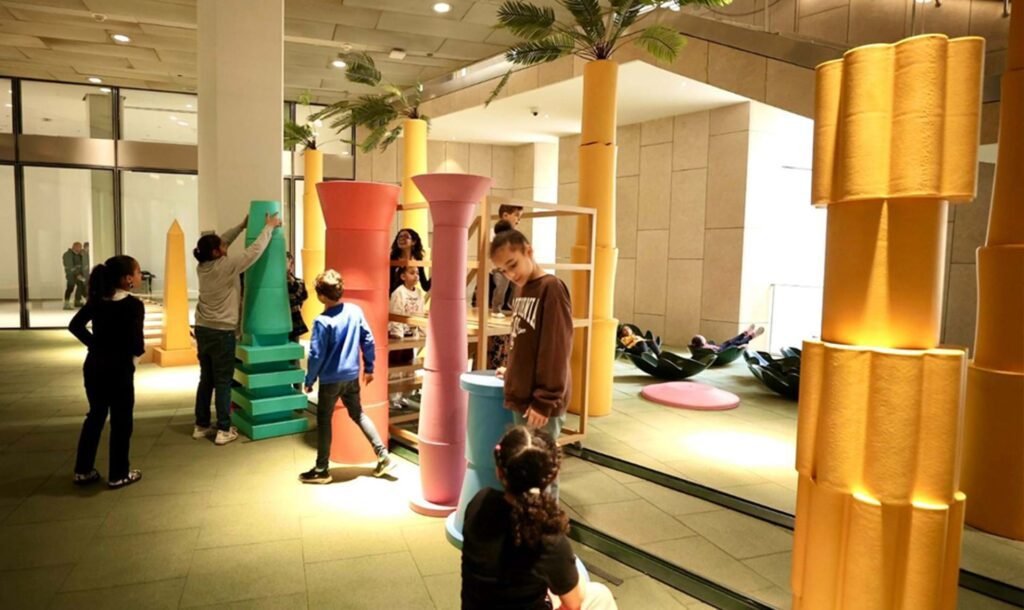
8: The Children’s Museum – Inspiring the Next Generation of Explorers
The Grand Egyptian Museum is deeply committed to its role as an educational powerhouse, and this is best reflected in the GEM Children’s Museum. This dedicated space is designed specifically for younger audiences, using the principles of "edutainment" to introduce the complexities of Egyptian history in a fun, accessible, and interactive way. Through a variety of hands-on exhibits, children can learn about the daily lives of ancient Egyptians, the science of the Nile, and the artistic techniques used to create the masterpieces found in the main galleries. By providing a space where kids are encouraged to touch, play, and experiment, the GEM ensures that the spark of curiosity is lit in the hearts of the next generation of archaeologists and historians. The curriculum of the Children’s Museum at the GEM goes beyond just history; it incorporates elements of STEM (Science, Technology, Engineering, and Math) by showing how the ancients used simple machines to move massive stones or how they utilized chemistry in the mummification process. Interactive workshops allow children to try their hand at hieroglyphic writing, pottery making, and traditional weaving. This focus on educational tourism makes the GEM a perfect destination for families, providing a balanced experience where children can burn off energy while learning valuable lessons about human progress. By fostering a sense of ownership and pride in heritage, the museum ensures that the legacy of the Pharaohs will be cherished and protected for decades to come, proving that the past is the best teacher for the future.
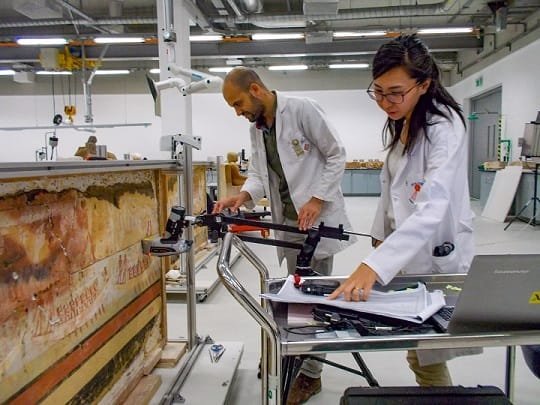
9: The GEM Conservation Center – A Global Hub for Restoration Science
Long before the museum opened its doors to the public, the GEM Conservation Center was already operating as one of the world's most advanced facilities for archaeological restoration. This state-of-the-art laboratory complex is where the "magic" happens, as thousands of artifacts are cleaned, stabilized, and restored by a team of elite Egyptian and international experts. The center is divided into specialized labs for different materials, such as organic substances (textiles and wood), heavy stone, ceramics, and metals. For the scientific community, the Grand Egyptian Museum is not just a place of display, but a leading research institution that utilizes scanning electron microscopes, 3D laser imaging, and chemical analysis to unlock the secrets of the past. Many of the treasures in the Tutankhamun collection underwent years of meticulous restoration at the center to ensure they were ready for their grand debut. The work done here is vital for heritage preservation, as it addresses the damage caused by time, humidity, and previous restoration attempts. What makes the GEM unique is its transparency; visitors can often get a glimpse into the labs or watch documentaries about the restoration process, gaining a deeper appreciation for the labor and expertise required to maintain these artifacts. The GEM Conservation Center has successfully positioned Egypt as a global leader in museum science, serving as a training ground for conservators from across the Middle East and Africa. It is the silent engine that powers the museum, ensuring that every object on display is preserved in its absolute best condition for the eyes of the world.
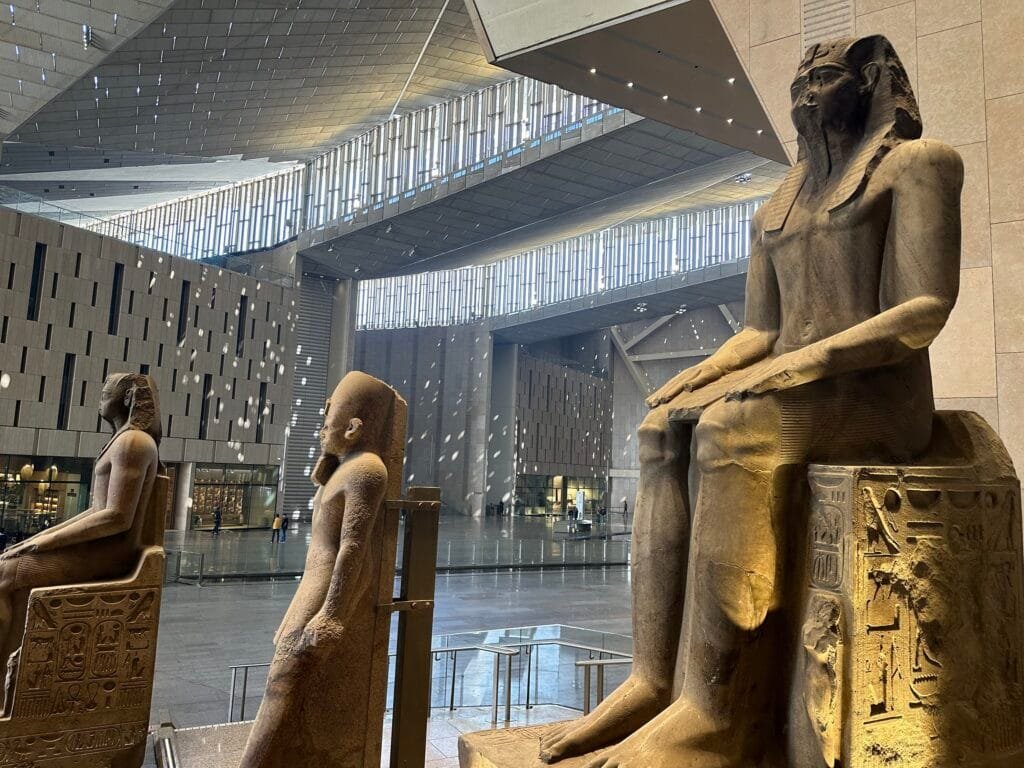
10: The Grand Atrium – A Cultural Meeting Point for the World
The Grand Atrium of the GEM is more than just an entrance; it is designed to be a "Global Plaza," a massive public space where cultures from around the world converge. This soaring, sun-lit hall is the heart of the museum’s social life, capable of hosting thousands of visitors simultaneously without ever feeling crowded. Its architectural grandeur, dominated by the Colossus of Ramses II, creates a sense of communal awe that breaks down language barriers. The atrium serves as the starting point for all tours, but it also functions as a venue for high-profile cultural events, international diplomatic receptions, and operatic performances. For the international traveler, this space provides a welcoming transition from the heat of the Giza Plateau into the refined, cool atmosphere of the museum’s interior. What makes the atrium truly special is its accessibility and its role as a "living room" for the city of Cairo. Even before entering the ticketed gallery areas, visitors can experience the majesty of the architecture and the energy of the museum. The space is equipped with digital information hubs and multi-language kiosks that help tourists plan their journey through the vast complex. This focus on visitor experience ensures that the GEM is perceived as an open, inviting institution rather than a distant fortress of history. The grand atrium is a celebration of human connection, proving that the Grand Egyptian Museum is not just a repository for the dead, but a vibrant, breathing space for the living to celebrate the shared heritage of all mankind.
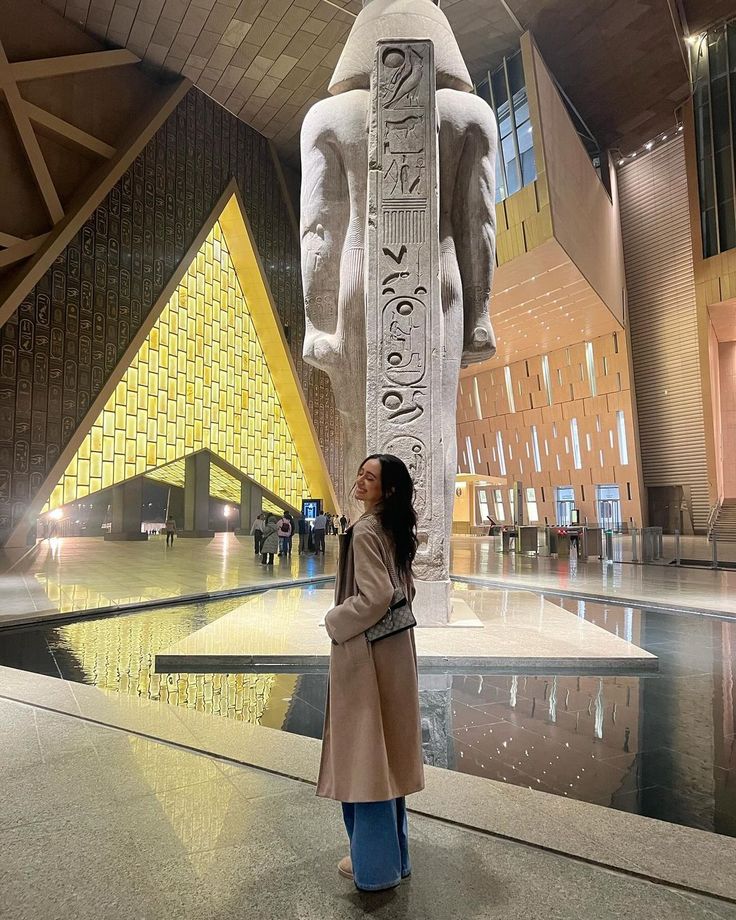
11: Dining and Shopping – A World-Class Commercial Experience
The Grand Egyptian Museum recognizes that a modern museum visit is an all-day affair, and its commercial zone is designed to rival the best shopping and dining districts in the world. The museum features a wide array of high-end restaurants, casual cafes, and international food chains, many of which offer stunning, unobstructed views of the Pyramids of Giza. Imagine enjoying a traditional Egyptian meal or a gourmet coffee while looking out at the last remaining wonder of the ancient world; it is a dining experience that is truly unparalleled. This focus on luxury tourism ensures that visitors can rest and recharge in a setting that is just as beautiful as the galleries they have just explored. In addition to dining, the GEM houses a sophisticated retail area featuring a "Grand Bazaar" concept. Here, travelers can find high-quality replicas certified by the Ministry of Antiquities, alongside luxury jewelry, textiles, and books. This is not your average souvenir shop; the museum collaborates with local artisans and designers to create exclusive products that reflect Egyptian identity with a modern twist. For the savvy shopper, the GEM’s commercial area is a destination in its own right, offering authentic Egyptian crafts that support the local economy. By integrating world-class amenities with historical education, the GEM ensures that every aspect of the visitor’s journey is catered to, making it a gold standard for international cultural tourism.
12: The GEM Gardens – Landscaping the Ancient Landscape
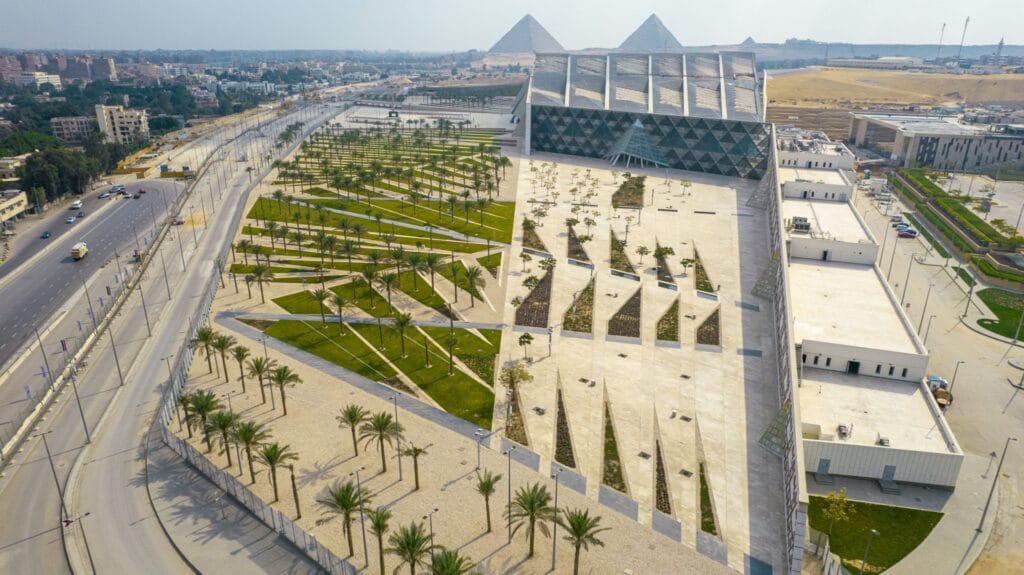
The exterior of the Grand Egyptian Museum is just as meticulously planned as its interior, featuring over 20 acres of beautifully landscaped gardens and parks. These gardens are not merely decorative; they are designed to be a "Botanical Museum" that showcases the flora of ancient Egypt, including papyrus reeds, lotus flowers, and sycamore trees. The layout of the gardens follows geometric patterns that mirror the museum’s architecture, creating a harmonious transition between the building and the desert plateau. For families and photography enthusiasts, these green spaces provide a tranquil escape from the bustling city, offering plenty of spots for children to play and for tourists to take the perfect "pyramid-view" photo. One of the most innovative features of the landscape is the "Land of Egypt" park, which uses different levels and water features to represent the geography of the Nile Valley. This outdoor museum experience allows visitors to learn about ancient Egyptian agriculture and irrigation while enjoying the fresh air. The gardens also serve as a venue for outdoor sculptures and temporary art installations, bridging the gap between ancient stone and modern artistic expression. As you stroll through the shaded walkways, the sound of water and the scent of jasmine create a peaceful atmosphere that encourages reflection on the history you’ve just witnessed. The GEM gardens are a vital part of the museum’s mission to provide a holistic experience, blending nature, history, and modern design into a single, unforgettable destination.
13: The Panoramic Views – A Unique Perspective on the Pyramids
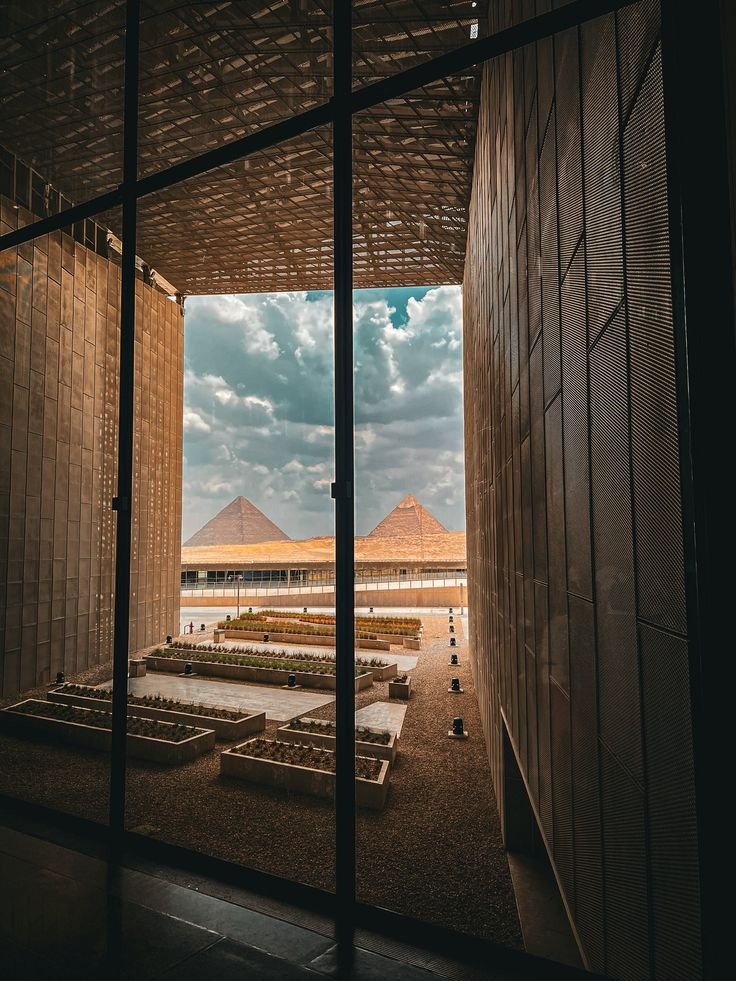
One of the most profound design achievements of the Grand Egyptian Museum is its visual transparency, which offers visitors a perspective on the Giza Pyramids that was previously impossible. Throughout the museum, and especially from the upper "Panoramic Level," the Great Pyramid of Khufu and its neighbors are perfectly framed by massive glass walls. This isn't just a scenic bonus; it is a vital part of the museum's storytelling strategy. By keeping the pyramids in constant view, the GEM provides an immediate, real-world context for the artifacts inside. You aren't just looking at a statue of a king in isolation; you are looking at him while his eternal monument stands proudly in the background. This creates a powerful cinematic experience that reinforces the scale and majesty of Pharaonic ambition. For photographers and social media enthusiasts, these panoramic viewpoints are the highlight of the tour. The museum’s terraces allow for unobstructed views where the modern architecture of the GEM meets the ancient stone of the plateau, symbolizing the continuity of Egyptian history. During the "Golden Hour" at sunset, the light reflects off the museum’s translucent stone façade and the pyramids simultaneously, creating a glow that is nothing short of spiritual. This visual integration ensures that the GEM is not a closed box of history, but a gateway that looks outward toward the landscape. It encourages visitors to contemplate the relationship between the objects in the cases and the massive structures on the horizon, making the GEM the ultimate vantage point for the Wonders of the Ancient World.
14: Sustainable Design – The GEM as a Global Green Museum
In an era where environmental responsibility is paramount, the Grand Egyptian Museum stands as a pioneer of sustainable architecture in the Middle East. The building was designed with "Green Museum" principles at its core, utilizing a variety of passive and active technologies to reduce its carbon footprint. The most impressive feature is the museum’s self-shading roof and the translucent façade, which maximize natural daylight while minimizing heat gain—a crucial factor in the Egyptian desert climate. This reduces the need for artificial lighting and heavy air conditioning, significantly lowering energy consumption. Furthermore, the museum employs advanced water recycling systems to irrigate its vast gardens, ensuring that every drop of water is used efficiently in this arid environment. The GEM has received numerous international certifications for its eco-friendly construction, setting a new benchmark for large-scale cultural projects. By using locally sourced materials, such as Egyptian limestone and alabaster, the museum reduced the environmental impact of transportation while supporting the local economy. The interior also features smart systems that monitor air quality and light levels to protect the sensitive organic artifacts without wasting energy. This commitment to sustainability reflects a modern interpretation of the ancient Egyptian concept of "Maat" (balance and order). For the environmentally conscious traveler, knowing that the GEM is a protector of both the past and the future adds another layer of appreciation to the visit. It proves that Egypt is not only a guardian of history but also a leader in the global movement toward a greener, more responsible future for world-class tourism.
15: The Royal Mummies Clarification – Navigating GEM vs. NMEC
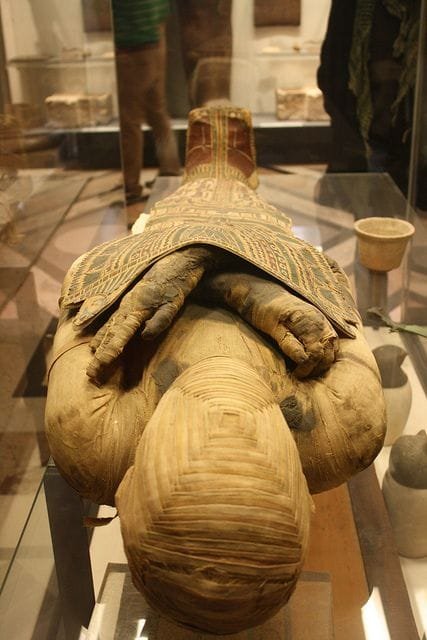
A common point of confusion for international tourists is the location of Egypt’s famous Royal Mummies, and the GEM addresses this with a clear and distinct narrative. While the Grand Egyptian Museum is the home of Tutankhamun’s treasures and the vast majority of Pharaonic artifacts, it is important to note that the 22 royal mummies—including Ramses II and Queen Hatshepsut—reside at the National Museum of Egyptian Civilization (NMEC) in Fustat. This division is intentional; the NMEC focuses on the "human" and "civilizational" journey of the Egyptian people, whereas the GEM is a monumental tribute to the "state" and the "divine royalty" of the Pharaonic era. Understanding this distinction is key for travelers planning their Cairo itinerary, as both museums offer complementary but very different experiences. The GEM focuses on the lives and achievements of the Pharaohs through their statues, jewelry, and everyday objects, while the NMEC provides a solemn, respectful encounter with their physical remains. However, the GEM does house a significant number of non-royal mummies and elaborate sarcophagi within its thematic galleries to explain the ancient Egyptian belief in the afterlife. This layout ensures that visitors still get a comprehensive understanding of mummification and funerary rites without duplicating the specific "Royal Mummies" experience found elsewhere. By specializing its collection, the Grand Egyptian Museum allows for a deeper dive into the artistry and politics of the Pharaohs, ensuring that each museum in Cairo tells a unique and vital part of the overarching Egyptian story. This clarity helps tourists manage their expectations and appreciate the diverse ways in which Egypt’s heritage is being preserved across the city.
16: A Center for Discovery – The GEM as a Global Research Institute
Beyond its role as a premier tourist destination, the Grand Egyptian Museum is designed to be a "Global Research Institute," a vibrant hub for the world’s leading archaeologists, Egyptologists, and scientists. The museum houses a massive digital library and a state-of-the-art database that catalogs every artifact in its collection, making it an indispensable resource for international researchers. By hosting symposia and providing specialized study rooms, the GEM fosters a collaborative environment where new theories about ancient Egyptian society, language, and technology can be explored. This commitment to academic excellence ensures that the museum is not just a place where history is viewed, but where it is actively studied and reinterpreted for a modern audience. The research conducted within the GEM’s walls often utilizes the latest non-invasive technologies, such as CT scanning and DNA analysis, to study artifacts without causing any damage. This scientific rigor has already led to new discoveries regarding the health, diet, and lineage of ancient Egyptians. For the educational traveler, knowing that the museum is a site of active discovery adds a layer of intellectual excitement to the visit. It transforms the GEM from a silent treasure house into a dynamic laboratory where the past is constantly giving up its secrets. This focus on scholarly contribution ensures that Egypt remains the world leader in the field of Egyptology, providing a platform for both local and international experts to work together in preserving the cultural legacy of the Nile Valley for future generations.
17: Accessibility and Transit – Reaching the GEM in the 21st Century
As the world’s largest archaeological museum, the Grand Egyptian Museum has been integrated into Egypt’s modern infrastructure with remarkable foresight. One of the most significant developments is its proximity to the new Sphinx International Airport (SPX), located just a short drive away. This allows international tourists to fly directly into the Giza area, bypassing the heavy traffic of central Cairo and making the GEM more accessible than ever before. Additionally, the museum is a key stop on the new Cairo Metro line and the "Monorail" project, ensuring that it is well-connected to all parts of the capital. This focus on smart transportation is a vital part of the GEM’s mission to provide a seamless and stress-free experience for millions of annual visitors. Inside the museum complex, accessibility remains a top priority. The entire facility is designed to be fully inclusive, featuring ramps, elevators, and sensory-friendly zones to ensure that visitors of all physical abilities can enjoy the treasures of the Pharaohs. There are also dedicated shuttle services that transport guests between the museum and the Giza Pyramid Plateau, facilitating a comfortable and efficient flow between the two sites. For the independent traveler, the museum offers ample parking and clear, multi-lingual signage that makes navigation simple. By investing in modern transit and accessibility, the GEM has removed the traditional barriers to cultural tourism, ensuring that the wonders of ancient Egypt are available to everyone, regardless of where they are coming from or how they choose to travel.
18: A Legacy for Humanity – The GEM as Egypt’s Gift to the World
As we conclude our journey through the Grand Egyptian Museum, it becomes clear that this institution is more than just a collection of stone and gold; it is a profound gift from the people of Egypt to the entire world. The GEM stands as a symbol of resilience, pride, and the eternal human desire to remember where we came from. By investing billions of dollars and decades of labor into this project, Egypt has created a sanctuary for the common heritage of mankind. It is a place where the barriers of time and geography fall away, allowing a visitor from the 21st century to stand eye-to-eye with a king from 3,000 years ago and recognize a shared spark of creativity and ambition. The legacy of the GEM will be measured not just by the beauty of its galleries, but by the inspiration it provides to future generations. It is a lighthouse of knowledge in an ever-changing world, a reminder that the achievements of the past are the foundation for the dreams of the future. For every traveler who walks through its doors, the Grand Egyptian Museum offers a sense of perspective and a deeper understanding of the human story. It is a monument to the idea that civilization is a continuous thread, and that by protecting our history, we are protecting our identity as a global family. The GEM is truly the "Fourth Pyramid" of Giza—a modern wonder that will stand the test of time, inviting the world to come and witness the immortal glory of the land of the Pharaohs.