- Excursions in Egypt
- Egypt Tour Packages
- Cairo Tours and Excursions
- Hurghada Tours and Excursions
- Soma Bay Tours and Excursions
- Makadi Bay Tours and Excursions
- Sahl Hasheesh Tours and Excursions
- El Gouna Tours and Excursions
- Marsa Alam Tours and Excursions
- Port Ghalib Tours and Excursions
- El Quseir Tours and Excursions
- Dendera and Abydos Day Tours
- Aswan Tours and Excursions
- Luxor Tours and Excursions
- Sharm El Sheikh Tours and Excursions
- Top Rated Egypt Tours in 2026
- Optional Excursions in Egypt
- Private Transfer
- Blogs About egypt
- Ancient Egypt
- Historical Sites in Egypt
- Cairo
- Alexandria
- Luxor
- Aswan
- The Red Sea
- Dendera Temple
- El Fayoum Oasis
- Bahariya Oasis
- Siwa Oasis
- Al Alamein
- Marsa Matruh
- Why Egypt Is One of the Safest Countries to Visit in the Middle East
- What You Need To know Before Your First Trip To Egypt
- Egypt Travel Costs in 2026 Full Budget Guide
- Top 10 Tourist Activities in Egypt
- Top 50 Activities You Can’t Miss in Egypt in 2026
- The Guide to Guided Tours in Egypt
- Egypt’s Ancient and Modern History
- The Nile River
- The Deserts of Egypt
- Ancient Egyptian gods
- famous Egyptian dishes
- UNESCO World Heritage sites
- About Us
- Egypt Hotels and Resorts
- Excursions in Egypt
- Egypt Tour Packages
- Cairo Tours and Excursions
- Hurghada Tours and Excursions
- Soma Bay Tours and Excursions
- Makadi Bay Tours and Excursions
- Sahl Hasheesh Tours and Excursions
- El Gouna Tours and Excursions
- Marsa Alam Tours and Excursions
- Port Ghalib Tours and Excursions
- El Quseir Tours and Excursions
- Dendera and Abydos Day Tours
- Aswan Tours and Excursions
- Luxor Tours and Excursions
- Sharm El Sheikh Tours and Excursions
- Top Rated Egypt Tours in 2026
- Optional Excursions in Egypt
- Private Transfer
- Blogs About egypt
- Ancient Egypt
- Historical Sites in Egypt
- Cairo
- Alexandria
- Luxor
- Aswan
- The Red Sea
- Dendera Temple
- El Fayoum Oasis
- Bahariya Oasis
- Siwa Oasis
- Al Alamein
- Marsa Matruh
- Why Egypt Is One of the Safest Countries to Visit in the Middle East
- What You Need To know Before Your First Trip To Egypt
- Egypt Travel Costs in 2026 Full Budget Guide
- Top 10 Tourist Activities in Egypt
- Top 50 Activities You Can’t Miss in Egypt in 2026
- The Guide to Guided Tours in Egypt
- Egypt’s Ancient and Modern History
- The Nile River
- The Deserts of Egypt
- Ancient Egyptian gods
- famous Egyptian dishes
- UNESCO World Heritage sites
- About Us
- Egypt Hotels and Resorts
Welcome to
The Bent Pyramid: A Turning Point in Ancient Egyptian Architecture
The Bent Pyramid stands as one of the most fascinating and unique structures in Ancient Egypt, representing a critical moment in the evolution of pyramid construction. Built during the reign of Sneferu, the founder of the Fourth Dynasty, this pyramid reflects experimentation, innovation, and the determination to achieve architectural perfection. Unlike other pyramids, its unusual shape immediately captures attention, making it one of the most distinctive monuments in Egypt.
The pyramid is known for its sudden change in angle, shifting from a steep incline at the base to a more gradual slope near the top. This unique design has led to many theories, with scholars suggesting that the change was made to prevent structural collapse or to correct earlier construction challenges. Regardless of the reason, the Bent Pyramid provides valuable insight into the trial and error process that defined early pyramid building.
Constructed primarily from limestone, the pyramid retains much of its original smooth casing stones, offering a rare glimpse of how ancient pyramids once appeared. Its well preserved exterior enhances its importance as an archaeological site, allowing researchers and visitors to study its design in detail. The internal chambers and passageways further demonstrate the complexity of its construction.
Today, the Bent Pyramid remains a powerful symbol of architectural progress. It marks a transitional phase between earlier step pyramids and the later true pyramids, such as those at Giza. For visitors, it offers not only a visual spectacle but also a deeper understanding of the ingenuity and ambition of ancient Egyptian builders.
1. The Vision of Sneferu: Building the First True Pyramid
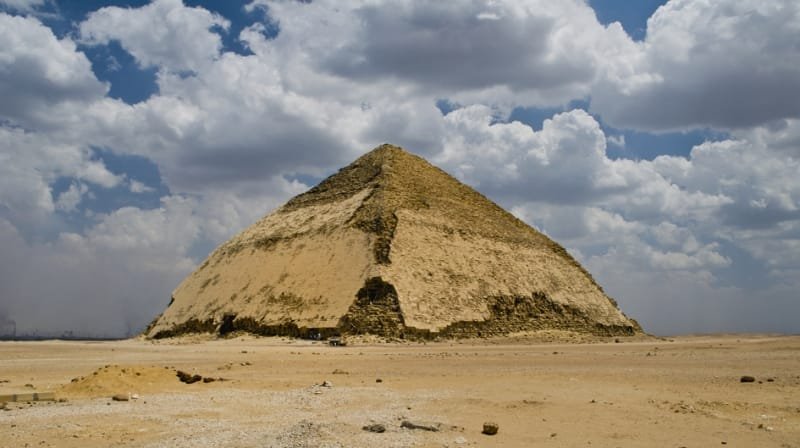
The Bent Pyramid was constructed during the reign of Sneferu, one of the most innovative rulers in Ancient Egypt. His ambition to create a smooth sided pyramid marked a turning point in Egyptian architecture, moving beyond the earlier step pyramid designs. This project represented a bold attempt to achieve a new level of structural and aesthetic perfection. Sneferu’s vision was not limited to a single monument. He initiated multiple pyramid projects, each contributing to the development of construction techniques. The Bent Pyramid was part of this experimentation, reflecting both progress and the challenges faced by ancient builders. It stands as evidence of a learning process that would eventually lead to the creation of the first true pyramids. The pyramid’s design reveals the determination to achieve stability and balance. Builders adjusted their methods as construction progressed, responding to structural concerns that threatened the integrity of the monument. These adjustments demonstrate a practical understanding of engineering principles and a willingness to innovate. Today, the Bent Pyramid represents more than a royal tomb. It symbolizes the beginning of a new architectural era, where ambition and experimentation led to groundbreaking achievements. Visitors can see in its form the story of trial, adaptation, and success that defined the early stages of pyramid construction in ancient Egypt.
2. The Unique Shape: Understanding the Change in Angle
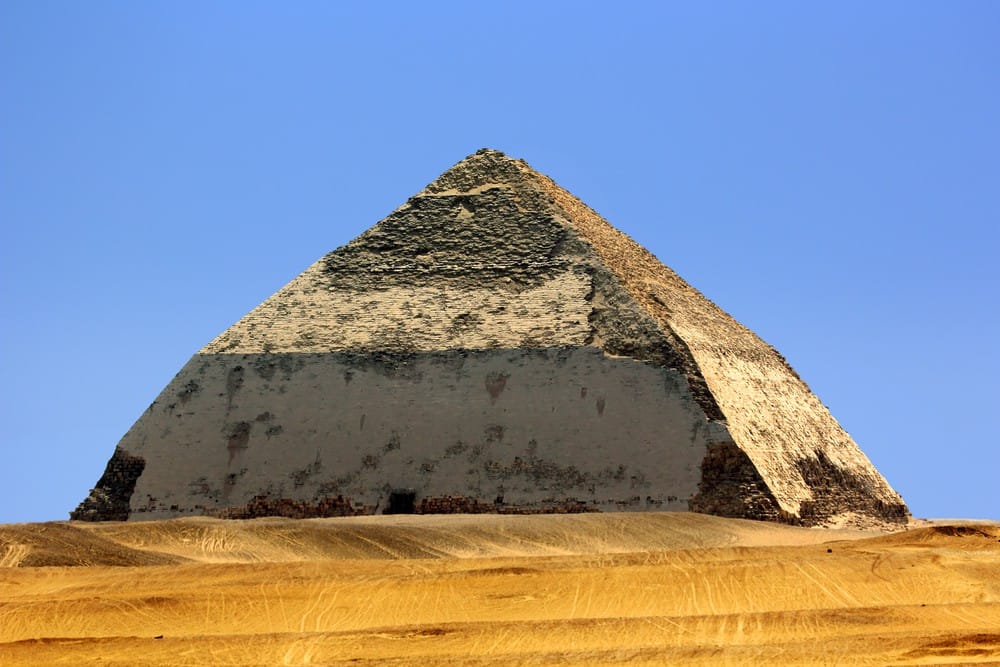
One of the most striking features of the Bent Pyramid is its unusual shape, characterized by a noticeable change in angle halfway up its structure. This distinctive design sets it apart from other pyramids and has made it a subject of fascination for historians and archaeologists studying Ancient Egypt. The lower portion of the pyramid was built at a steep angle, reflecting the original intention to create a tall and impressive structure. However, as construction progressed, signs of instability began to appear, prompting builders to adjust the angle to a more gradual slope. This change likely prevented potential collapse and ensured the completion of the monument. This alteration provides valuable insight into the engineering challenges faced by ancient builders. It demonstrates their ability to recognize problems and adapt their techniques in response. Rather than abandoning the project, they modified the design, creating a stable structure that could stand the test of time. The Bent Pyramid’s shape has become a symbol of experimentation and innovation. It reflects a transitional moment in the history of pyramid construction, bridging the gap between earlier designs and the later true pyramids. Today, its unique form continues to capture the imagination of visitors and researchers alike.
3. Construction Materials and Techniques: A Step Toward Perfection
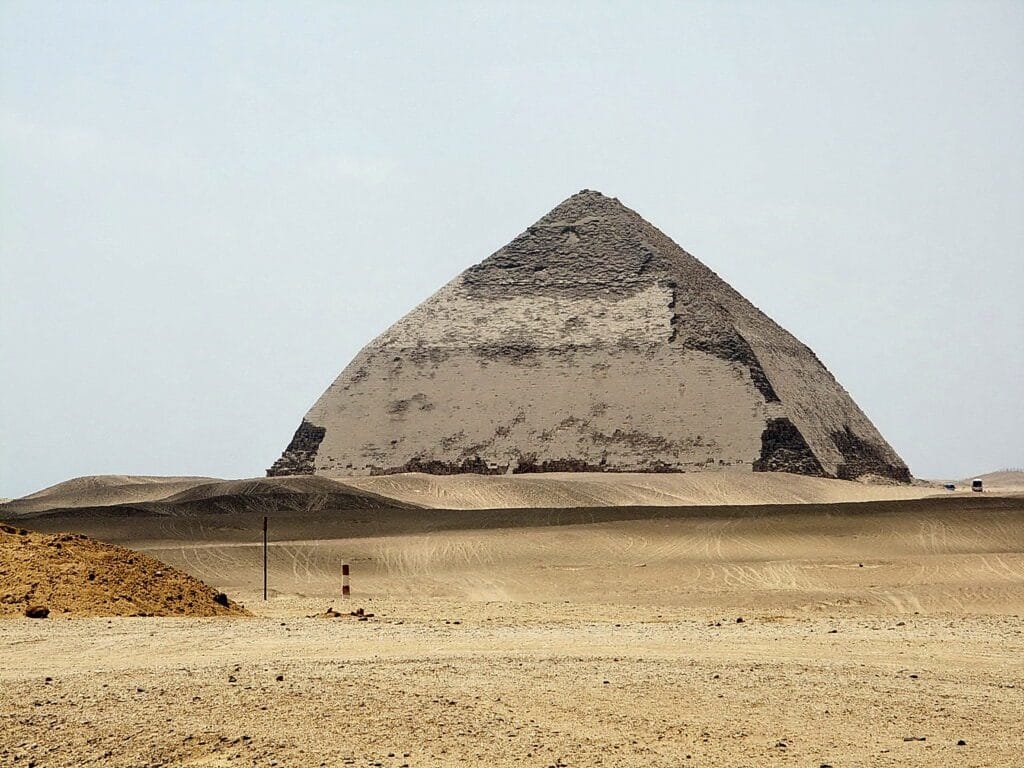
The construction of the Bent Pyramid demonstrates the advanced techniques and materials used by builders in Ancient Egypt. Limestone was the primary material, carefully cut and arranged to create a strong and stable structure. The precision of this work reflects a high level of skill and organization. One of the most remarkable features of the pyramid is the preservation of its outer casing stones. Unlike many other pyramids, which have lost their smooth surfaces over time, the Bent Pyramid retains much of its original exterior. This allows visitors to see how pyramids once appeared, with polished surfaces reflecting sunlight. The construction process required careful planning and coordination. Workers transported heavy stones, positioned them with accuracy, and ensured that each layer supported the overall structure. The adjustments made during construction also demonstrate an understanding of weight distribution and stability. The techniques used in building the Bent Pyramid laid the foundation for future developments in pyramid construction. They represent a crucial step toward achieving the true pyramid form seen in later monuments. Today, the pyramid stands as a testament to the ingenuity and determination of ancient Egyptian builders.
4. Interior Design: Chambers and Passageways
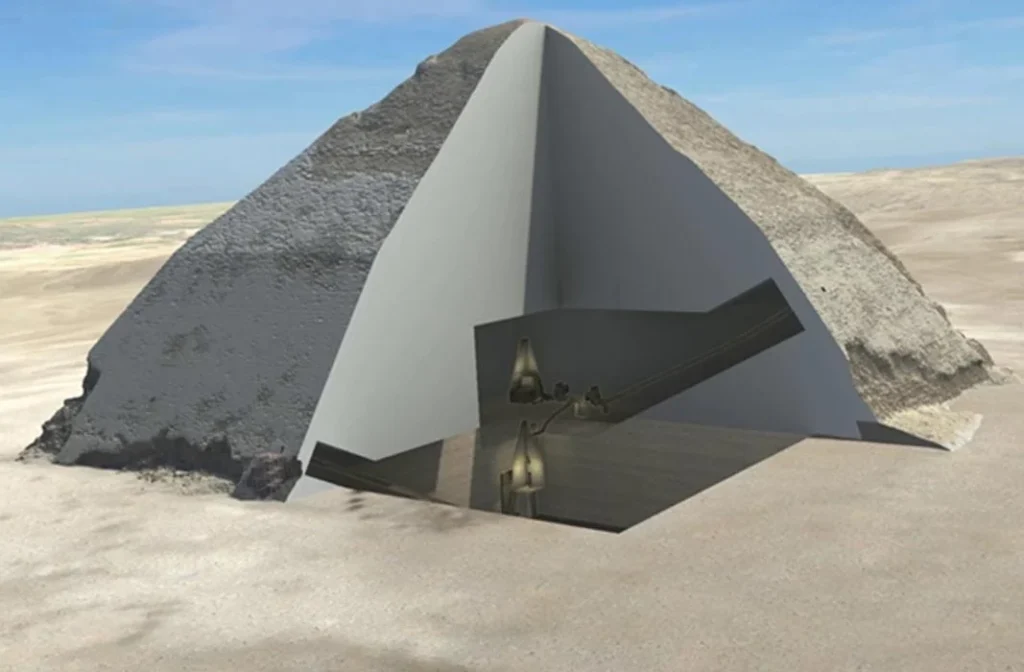
The Bent Pyramid features a complex and innovative internal structure that reflects the evolving architectural knowledge of Ancient Egypt. Unlike earlier pyramids, which often had simpler internal layouts, the Bent Pyramid includes multiple chambers and passageways designed to enhance both functionality and security. This complexity demonstrates the ambition of its builders to refine burial architecture. One of the most unique aspects of the pyramid is the presence of two separate entrances, one located on the north face and another on the west side. Each entrance leads to a different set of corridors and chambers, creating a more intricate internal network. This design may have been intended to confuse potential intruders or to serve specific ritual purposes. The chambers inside the pyramid are constructed using corbelled ceilings, a technique that involves layering stones to gradually narrow the space until it can be covered. This method helps distribute weight and prevent collapse, showing an advanced understanding of structural engineering. The height of these chambers also creates an impressive sense of space within the pyramid. Exploring the interior of the Bent Pyramid provides valuable insight into the development of pyramid design. It reveals how ancient builders experimented with new ideas and techniques to improve stability and functionality. Today, these internal features continue to fascinate visitors and researchers, highlighting the innovation that defined this important stage in Egyptian architectural history.
5. The Bent Pyramid Complex: Temples and Surroundings
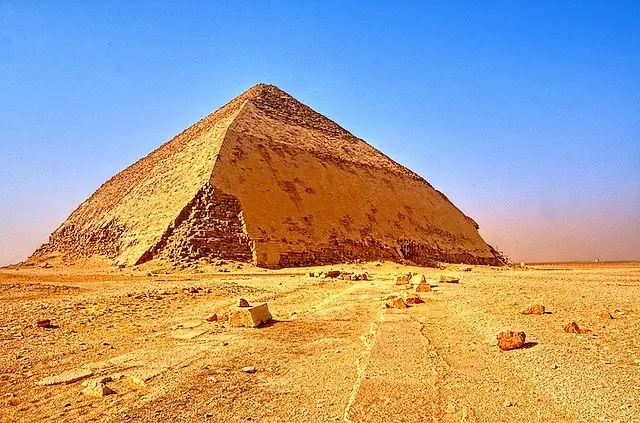
The Bent Pyramid is not an isolated structure but part of a larger complex that reflects the full scope of royal burial practices in Ancient Egypt. This complex includes a valley temple, a causeway, and a mortuary temple, all designed to support the religious and ceremonial functions associated with the pyramid. The valley temple, located at the edge of the cultivated land, served as the starting point for funeral processions. From there, a causeway connected the temple to the pyramid itself, symbolizing the journey from life to the afterlife. This arrangement reflects the importance of ritual movement within Egyptian belief systems. The mortuary temple, situated near the pyramid, was used for offerings and ceremonies dedicated to the deceased king. Priests performed rituals to ensure the continued well being of the king in the afterlife, maintaining a spiritual connection between the living and the dead. The surrounding structures add depth to the understanding of the Bent Pyramid. They show that the pyramid was part of a carefully planned environment designed to fulfill religious and symbolic purposes. Today, exploring the entire complex allows visitors to gain a more complete picture of ancient Egyptian burial traditions and their architectural expression.

6. The Role of Dahshur: A Royal Necropolis
The Bent Pyramid is located within Dahshur, an important royal necropolis that played a central role in the development of pyramid construction in Ancient Egypt. This area was carefully selected by Sneferu as a place where new architectural ideas could be tested and refined. Its location south of Saqqara provided a relatively open and stable environment, ideal for large scale building projects. Dahshur became a center of experimentation during the Fourth Dynasty, particularly under Sneferu’s rule. In addition to the Bent Pyramid, the site is home to the Red Pyramid, which represents the first successful example of a true smooth sided pyramid. The proximity of these monuments allows historians and archaeologists to observe the evolution of pyramid construction within a single landscape. The natural conditions of Dahshur also contributed to its importance. The ground offered greater stability compared to earlier construction sites, reducing the risk of structural failure. Access to quality limestone further supported large scale building efforts, enabling builders to achieve more precise and durable designs. Today, Dahshur remains one of Egypt’s most significant archaeological sites, offering visitors a quieter and more immersive experience compared to more crowded locations. The presence of the Bent Pyramid within this setting highlights its importance as part of a broader architectural journey. Together, the monuments of Dahshur tell a story of innovation, adaptation, and progress, marking a crucial chapter in the history of ancient Egyptian civilization and its enduring legacy.
7. The Red Pyramid Connection: Completing the Vision
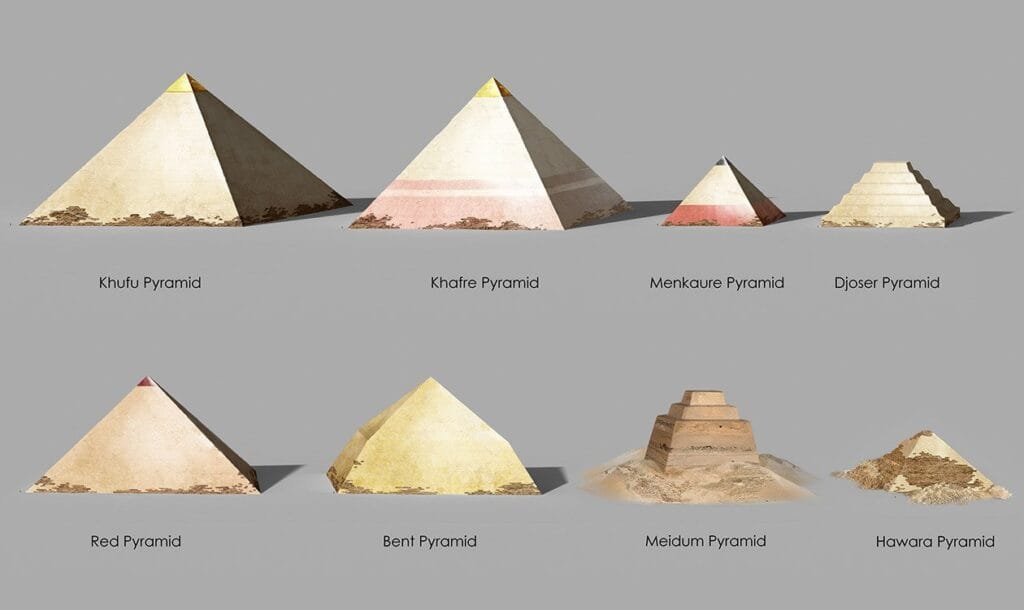
The Bent Pyramid is closely connected to the nearby Red Pyramid, both constructed during the reign of Sneferu. Together, these two monuments represent a crucial stage in the development of pyramid architecture in Ancient Egypt. While the Bent Pyramid reflects experimentation, the Red Pyramid demonstrates the successful realization of a true smooth sided pyramid. The challenges encountered during the construction of the Bent Pyramid provided valuable lessons for builders. The change in angle highlighted the importance of stability and proper weight distribution. These insights were applied in the construction of the Red Pyramid, resulting in a more consistent slope and a structurally sound design. The relationship between these two pyramids illustrates a process of learning and adaptation. Rather than viewing the Bent Pyramid as a failure, it can be understood as a necessary step toward architectural perfection. This perspective emphasizes the innovative spirit of ancient Egyptian builders. Today, visitors to Dahshur can explore both pyramids and observe the differences in design and construction. This comparison offers a deeper understanding of the evolution of pyramid building, making the Bent Pyramid an essential part of a larger historical narrative that led to the creation of Egypt’s most iconic monuments.
8. Preservation and Condition: A Rare Glimpse of Original Design
The Bent Pyramid is one of the best preserved pyramids in Ancient Egypt, offering a rare opportunity to observe the original appearance of these monumental structures. Unlike many pyramids that have lost their outer casing stones over time, the Bent Pyramid retains a significant portion of its smooth limestone covering. This preservation allows visitors and researchers to see how pyramids once looked when they were newly constructed. The polished surfaces would have reflected sunlight, creating a bright and impressive visual effect. This feature highlights the aesthetic as well as the structural goals of ancient Egyptian builders. The condition of the pyramid also provides valuable information about construction techniques. The alignment of the stones and the quality of the materials demonstrate a high level of precision and craftsmanship. These details help researchers better understand the methods used in ancient construction. Efforts to preserve the Bent Pyramid continue today, ensuring that it remains accessible for future generations. Conservation work focuses on maintaining its structure and protecting it from environmental damage. As a result, the pyramid stands as one of the most important examples of ancient Egyptian architecture, offering insight into both its original design and its enduring strength.
9. Visiting the Bent Pyramid: A Unique Experience in Dahshur
Visiting the Bent Pyramid offers a unique and memorable experience for those exploring Ancient Egypt. Located in the quieter area of Dahshur, the site provides a peaceful alternative to more crowded tourist destinations, allowing visitors to appreciate the monument in a relaxed setting. The journey to the pyramid itself is part of the experience. Surrounded by desert landscapes, the Bent Pyramid rises dramatically against the horizon, creating a striking visual contrast. Its unusual shape immediately captures attention, making it one of the most distinctive pyramids in Egypt. Visitors have the opportunity to explore both the exterior and parts of the interior, gaining insight into its construction and design. Walking through the surrounding area allows for a closer look at the preserved casing stones and the overall structure of the pyramid. Today, the Bent Pyramid is considered a must visit destination for those interested in ancient Egyptian architecture. Its combination of history, innovation, and preservation makes it a fascinating site. Visitors leave with a deeper understanding of the development of pyramid construction and the achievements of ancient Egyptian civilization.
10. Engineering Challenges: Lessons from Structural Adjustment
The Bent Pyramid provides a remarkable example of how ancient Egyptian builders responded to engineering challenges during construction. Unlike later pyramids that followed a consistent design, this structure reveals a process of adaptation and problem solving in Ancient Egypt. The change in angle is the most visible sign of these challenges. Initially, the pyramid was constructed with a steep slope intended to create a tall and impressive monument. However, as building progressed, signs of instability began to appear, including cracks and structural stress. These issues forced the builders to reconsider their approach and make adjustments to ensure the pyramid’s survival. The decision to reduce the angle of the upper portion demonstrates a practical understanding of weight distribution and structural balance. By altering the design, the builders were able to complete the pyramid while preventing potential collapse. This solution reflects both creativity and technical knowledge. Today, the Bent Pyramid is studied as an important case of early engineering. It shows that ancient builders were capable of learning from experience and adapting their methods. These lessons contributed to the success of later pyramids, making the Bent Pyramid a key step in the development of architectural excellence in ancient Egypt.
11. Religious Purpose: The Pyramid as a Royal Tomb
The Bent Pyramid was constructed as a royal tomb for Sneferu, reflecting the deep religious beliefs of Ancient Egypt. Pyramids were not only burial structures but also spiritual monuments designed to ensure the king’s transition to the afterlife. They symbolized a connection between the earth and the divine realm. The internal chambers of the pyramid were designed to protect the king’s body and provide a space for burial rituals. These chambers were carefully constructed to maintain stability while also serving symbolic purposes related to the journey of the soul. Religious beliefs played a central role in the design of the pyramid. The shape itself was associated with the rays of the sun, linking the king to the sun god Ra and reinforcing his divine status. This connection was essential for the king’s rebirth in the afterlife. The Bent Pyramid reflects these beliefs while also showing the evolution of burial practices. It combines traditional religious concepts with new architectural ideas, creating a structure that is both functional and symbolic. Today, it offers insight into the spiritual world of ancient Egypt and the importance of the afterlife in royal ideology.
12. The Bent Pyramid Today: Heritage and Exploration
Today, the Bent Pyramid stands as one of the most important historical monuments in Dahshur, attracting visitors who are interested in the evolution of pyramid construction in Ancient Egypt. Its unique design and well preserved structure make it a key destination for those exploring Egypt’s rich heritage. Visitors to the site can experience both the exterior and parts of the interior, gaining a deeper understanding of its construction and purpose. The quiet setting of Dahshur allows for a more relaxed and immersive visit compared to more crowded locations. The pyramid also plays an important role in education and research. Scholars continue to study its design and construction techniques, using modern technology to uncover new details about its history. These efforts contribute to a greater understanding of ancient Egyptian architecture. As a preserved monument, the Bent Pyramid represents the importance of protecting cultural heritage. It stands as a reminder of the achievements of ancient Egyptian civilization and the value of preserving these achievements for future generations. Today, it continues to inspire curiosity and admiration, making it a lasting symbol of innovation and history.
13. Architectural Legacy: Influence on Later Pyramids
The Bent Pyramid holds a crucial place in the architectural history of Ancient Egypt, as it directly influenced the development of later pyramids. Although its unusual shape resulted from structural adjustments, the lessons learned during its construction played a vital role in refining pyramid design. This makes it an essential link between early experiments and the perfected structures that followed. The challenges faced during the building of the Bent Pyramid provided valuable insights into weight distribution and stability. Builders realized the importance of maintaining a consistent angle and ensuring that the foundation could support the structure. These lessons were applied in the construction of subsequent pyramids, particularly the Red Pyramid, which achieved a true smooth sided form. The Bent Pyramid also contributed to the evolution of construction techniques. The experience gained from working with large stone blocks and complex internal structures allowed builders to improve their methods. This progress led to greater efficiency and precision in later projects. Today, the pyramid is recognized as a key milestone in the journey toward architectural perfection. It demonstrates how experimentation and adaptation can lead to significant advancements. Its legacy continues to influence the study of ancient Egyptian architecture, offering valuable insights into the development of one of the world’s most iconic building traditions.
14. The Pyramid’s Unique Identity: A Monument of Experimentation
The Bent Pyramid stands out among Egyptian monuments because of its distinctive shape and the story behind its construction. Unlike other pyramids that follow a consistent design, the Bent Pyramid reflects a moment of experimentation in Ancient Egypt, where builders adapted their methods in response to challenges. This unique identity has made the pyramid a subject of fascination for historians, archaeologists, and visitors. Its change in angle is not seen as a flaw but as evidence of innovation and problem solving. It shows that ancient builders were capable of adjusting their techniques to achieve a successful result. The pyramid’s appearance also contributes to its appeal. Its unusual form creates a striking visual impression, distinguishing it from other monuments in Egypt. This uniqueness attracts visitors who are interested in exploring a different aspect of pyramid construction. Today, the Bent Pyramid is celebrated as a symbol of creativity and resilience. It represents a period of transition and growth in Egyptian architecture, highlighting the importance of experimentation in achieving progress. Its identity as a monument of innovation continues to inspire admiration and curiosity.
15. Conservation and Protection: Safeguarding a Historic Treasure
The Bent Pyramid is a valuable historical monument that requires ongoing conservation efforts to preserve its structure and significance. Located in Dahshur, the pyramid faces challenges related to environmental conditions, including wind, temperature changes, and natural erosion. These factors can gradually affect the stability and appearance of the structure. Conservation work focuses on protecting the pyramid’s outer casing stones, which are among its most important features. These stones provide insight into the original appearance of ancient pyramids and must be carefully maintained to prevent damage. Specialists use modern techniques to monitor and stabilize the structure. Efforts are also made to manage visitor access in a way that minimizes impact on the site. By controlling movement and providing clear guidelines, authorities ensure that the pyramid can be explored without compromising its preservation. Protecting the Bent Pyramid is essential for maintaining Egypt’s cultural heritage. It represents a key stage in the development of pyramid construction and offers valuable insights into ancient engineering and design. Through continued conservation, this remarkable monument will remain a source of knowledge and inspiration for future generations.
16. The Bent Pyramid and Tourism: A Hidden Gem in Egypt
The Bent Pyramid has become an increasingly important destination for travelers seeking a deeper understanding of Ancient Egypt beyond the more crowded sites. Located in the quieter region of Dahshur, the pyramid offers a unique experience that combines history, architecture, and tranquility. Its distinctive shape immediately captures attention, making it a memorable highlight for visitors. Tourists are often drawn to the Bent Pyramid because of its unusual design and well preserved structure. Unlike many other pyramids, it retains a significant portion of its original casing stones, allowing visitors to see how these monuments once appeared. This feature enhances its value as both a historical and educational site. The surrounding landscape also adds to the appeal of the pyramid. The open desert environment provides a peaceful setting that contrasts with the busy atmosphere of more popular destinations. Visitors can explore the site at a relaxed pace, enjoying both the monument and its natural surroundings. Today, the Bent Pyramid plays an important role in promoting diverse tourism in Egypt. It encourages visitors to explore lesser known sites and gain a broader perspective on Egyptian history. As a result, it stands as a hidden gem that offers a unique and rewarding travel experience.
17. The Legacy of Innovation: Lessons from the Bent Pyramid
The Bent Pyramid represents a lasting legacy of innovation in Ancient Egypt. Its construction reflects a period of experimentation and learning that played a crucial role in the development of pyramid architecture. Rather than being viewed as a flawed design, the pyramid is now recognized as an essential step toward achieving architectural perfection. The challenges faced during its construction provided valuable lessons in engineering and design. Builders learned how to manage weight distribution, adjust angles, and ensure structural stability. These insights were applied in later projects, leading to the successful construction of true pyramids. The Bent Pyramid also highlights the importance of adaptability. The ability to respond to challenges and modify plans demonstrates a high level of problem solving skill. This approach contributed to the overall success of ancient Egyptian architecture. Today, the legacy of the Bent Pyramid continues to inspire researchers and visitors. It serves as a reminder that progress often comes through experimentation and learning. Its story reflects the determination and creativity that defined one of the greatest civilizations in history.
18. Conclusion: A Monument of Transition and Achievement
The Bent Pyramid stands as one of the most important monuments in Ancient Egypt, representing a critical moment in the evolution of pyramid construction. From its unique shape to its innovative design, the pyramid tells a story of transition, experimentation, and achievement that continues to capture the imagination of visitors. Built during the reign of Sneferu, the pyramid reflects the ambition to create a new architectural form. The lessons learned from its construction laid the foundation for later successes, including the development of the true pyramid shape seen in monuments such as the Red Pyramid and the pyramids of Giza. Today, the Bent Pyramid serves as both a historical landmark and a source of inspiration. Its preservation allows visitors to explore a key stage in the development of ancient Egyptian architecture and to appreciate the ingenuity of its builders. In conclusion, the Bent Pyramid is more than just a unique structure. It is a symbol of progress, creativity, and resilience. Its enduring presence ensures that its story will continue to be told, offering valuable insights into the achievements of ancient Egypt and the evolution of one of the world’s most iconic architectural traditions.