

- Excursions in Egypt
- Egypt Tour Packages
- Cairo Tours and Excursions
- Hurghada Tours and Excursions
- Soma Bay Tours and Excursions
- Makadi Bay Tours and Excursions
- Sahl Hasheesh Tours and Excursions
- El Gouna Tours and Excursions
- Marsa Alam Tours and Excursions
- Port Ghalib Tours and Excursions
- El Quseir Tours and Excursions
- Dendera and Abydos Day Tours
- Aswan Tours and Excursions
- Luxor Tours and Excursions
- Sharm El Sheikh Tours and Excursions
- Top Rated Egypt Tours in 2026
- Optional Excursions in Egypt
- Private Transfer
- Blogs About egypt
- Ancient Egypt
- Historical Sites in Egypt
- Cairo
- Alexandria
- Luxor
- Aswan
- The Red Sea
- Dendera Temple
- El Fayoum Oasis
- Bahariya Oasis
- Siwa Oasis
- Al Alamein
- Marsa Matruh
- Why Egypt Is One of the Safest Countries to Visit in the Middle East
- What You Need To know Before Your First Trip To Egypt
- Egypt Travel Costs in 2026 Full Budget Guide
- Top 10 Tourist Activities in Egypt
- Top 50 Activities You Can’t Miss in Egypt in 2026
- The Guide to Guided Tours in Egypt
- Egypt’s Ancient and Modern History
- The Nile River
- The Deserts of Egypt
- Ancient Egyptian gods
- famous Egyptian dishes
- UNESCO World Heritage sites
- About Us
- Egypt Hotels and Resorts
- Excursions in Egypt
- Egypt Tour Packages
- Cairo Tours and Excursions
- Hurghada Tours and Excursions
- Soma Bay Tours and Excursions
- Makadi Bay Tours and Excursions
- Sahl Hasheesh Tours and Excursions
- El Gouna Tours and Excursions
- Marsa Alam Tours and Excursions
- Port Ghalib Tours and Excursions
- El Quseir Tours and Excursions
- Dendera and Abydos Day Tours
- Aswan Tours and Excursions
- Luxor Tours and Excursions
- Sharm El Sheikh Tours and Excursions
- Top Rated Egypt Tours in 2026
- Optional Excursions in Egypt
- Private Transfer
- Blogs About egypt
- Ancient Egypt
- Historical Sites in Egypt
- Cairo
- Alexandria
- Luxor
- Aswan
- The Red Sea
- Dendera Temple
- El Fayoum Oasis
- Bahariya Oasis
- Siwa Oasis
- Al Alamein
- Marsa Matruh
- Why Egypt Is One of the Safest Countries to Visit in the Middle East
- What You Need To know Before Your First Trip To Egypt
- Egypt Travel Costs in 2026 Full Budget Guide
- Top 10 Tourist Activities in Egypt
- Top 50 Activities You Can’t Miss in Egypt in 2026
- The Guide to Guided Tours in Egypt
- Egypt’s Ancient and Modern History
- The Nile River
- The Deserts of Egypt
- Ancient Egyptian gods
- famous Egyptian dishes
- UNESCO World Heritage sites
- About Us
- Egypt Hotels and Resorts
Welcome to
Tomb of Ramesses X (KV18): Complete Guide to the Unfinished Royal Tomb in the Valley of the Kings
The Tomb of Ramesses X (KV18) is one of the most intriguing yet least explored royal tombs in the Valley of the Kings, located on the west bank of Luxor, Egypt. Built for Pharaoh Ramesses X, one of the later rulers of the Twentieth Dynasty, KV18 provides valuable insight into the political and economic decline that marked the final years of the New Kingdom. Unlike the magnificent tombs of Seti I (KV17) or Ramesses III (KV11), KV18 was never fully completed or decorated, reflecting the increasingly limited resources and instability of Egypt during the late Ramesside Period. Despite its unfinished state, the tomb remains an important archaeological monument that helps historians understand how royal burial practices evolved as the power of the pharaoh gradually weakened.
Excavation of KV18 began during the reign of Ramesses X, but construction appears to have been abandoned before the tomb could be completed. Only a small portion of the planned monument was excavated, and very little decorative work was ever carried out. No burial chamber was finished, no extensive religious texts were carved onto the walls, and there is no convincing evidence that the king was ever buried inside the tomb. Nevertheless, the surviving corridors, architectural features, and construction marks left by the ancient workmen offer a fascinating glimpse into the methods used to create royal tombs in the Valley of the Kings. These unfinished elements provide archaeologists with rare evidence of the excavation process itself, something that is largely hidden in fully completed royal tombs.
Today, KV18 stands as an important reminder of the changing fortunes of ancient Egypt during the closing decades of the New Kingdom. Although modest in size and lacking the spectacular decoration of earlier royal tombs, it remains a valuable source of information about late Ramesside architecture, royal funerary traditions, and the challenges faced by Egypt’s final New Kingdom rulers. This complete guide explores the life of Pharaoh Ramesses X, the architecture of KV18, archaeological discoveries, historical significance, conservation efforts, visitor experience, and the enduring legacy of one of the Valley of the Kings‘ most enigmatic royal tombs.
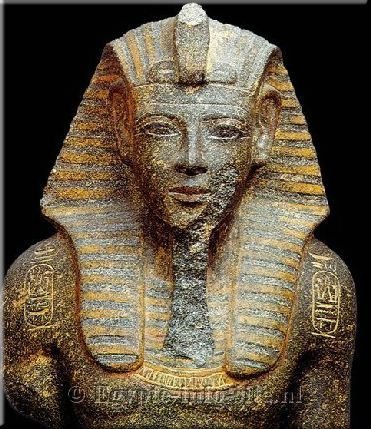
1. Pharaoh Ramesses X – One of the Last Kings of the Twentieth Dynasty
Pharaoh Ramesses X was one of the final rulers of the Twentieth Dynasty, governing Egypt during a period of significant political, economic, and social decline near the end of the New Kingdom. Although the exact length of his reign remains uncertain, most Egyptologists believe he ruled for approximately three to four years during the late twelfth century BC. By this time, the vast Egyptian Empire established by earlier pharaohs such as Thutmose III, Seti I, and Ramesses II had begun to shrink, while royal authority weakened throughout Upper and Lower Egypt. Internal unrest, financial difficulties, increasing power held by the High Priests of Amun at Thebes, and frequent tomb robberies created serious challenges for the royal administration. Despite these obstacles, Ramesses X continued the traditional duties of kingship, maintaining temple worship, overseeing government administration, and attempting to preserve the stability of Egypt during one of its most difficult historical periods. Historical records from the reign of Ramesses X are relatively scarce compared with those of earlier New Kingdom rulers, making him one of the more mysterious pharaohs of ancient Egypt. Administrative papyri discovered at Deir el-Medina, the village of the royal tomb builders, reveal growing concerns about security in the Theban Necropolis, where robberies and lawlessness became increasingly common. These documents also indicate interruptions in work caused by instability and shortages of supplies, reflecting the broader economic problems affecting the kingdom. Unlike the reigns of powerful warrior kings such as Ramesses III, there is little evidence that Ramesses X undertook major military campaigns or ambitious building projects. Instead, his reign appears to have been focused on maintaining order within an increasingly fragile state. Although Ramesses X remains one of the lesser-known pharaohs, his reign is historically important because it illustrates the gradual transformation of Egypt from an imperial superpower into a kingdom facing political fragmentation. His unfinished tomb, KV18, perfectly reflects this changing era. The limited progress made on the monument suggests that reduced royal resources, administrative difficulties, or the king's premature death prevented its completion. Today, Ramesses X is remembered not for monumental achievements but for ruling during one of the final chapters of the New Kingdom, making KV18 a valuable monument for understanding the decline of the Ramesside Period and the end of Egypt's age of great royal tombs.
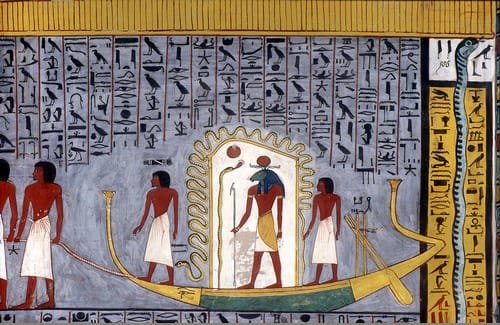
2. Architecture and Layout of KV18
The Tomb of KV18 is one of the smallest and least complete royal monuments in the Valley of the Kings, providing archaeologists with a rare opportunity to study the early stages of royal tomb construction. Unlike the elaborate burial complexes built for Seti I (KV17), Ramesses III (KV11), or Ramesses VI (KV9), KV18 was abandoned before the excavation reached its intended final form. The monument consists primarily of an entrance staircase followed by a descending corridor and the beginnings of additional passageways, but construction stopped before a burial chamber or decorated halls could be completed. As a result, KV18 offers a unique glimpse into the practical methods used by ancient Egyptian workmen as they carved royal tombs directly into the limestone cliffs of the Theban Mountains. One of the most interesting aspects of KV18 is the evidence left behind by the ancient builders. Chisel marks, unfinished wall surfaces, rough excavation lines, and partially completed architectural features remain clearly visible throughout the monument. These traces reveal the sequence in which the workers excavated the tomb, beginning with the entrance and gradually extending deeper into the mountain as construction progressed. Because later decorative work was never completed, modern archaeologists can observe details of the excavation process that are normally hidden beneath layers of plaster, carved reliefs, and painted decoration in finished royal tombs. Although modest in scale, KV18 still follows the traditional principles of New Kingdom royal tomb architecture. The monument was intended to guide the deceased king through a symbolic journey into the underworld, eventually reaching a richly decorated burial chamber where the royal sarcophagus would have been placed. Had construction continued, the walls would likely have been covered with scenes from major funerary texts such as the Book of Gates, the Amduat, and the Book of Caverns, following the artistic traditions established by earlier Ramesside rulers. Even in its unfinished condition, KV18 remains an important architectural record of how royal tombs were planned and excavated during the final decades of the New Kingdom.
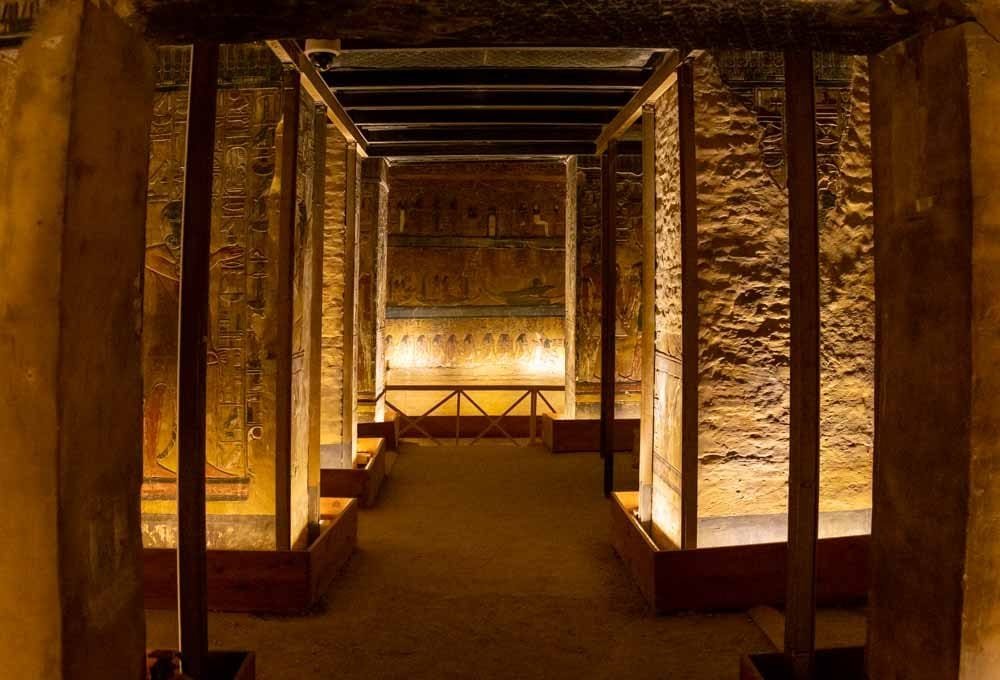
3. Why Was KV18 Left Unfinished?
One of the greatest mysteries surrounding KV18 is why construction stopped before the tomb could be completed. Unlike many royal tombs in the Valley of the Kings, which contain richly decorated corridors, pillared halls, and elaborate burial chambers, KV18 was abandoned during the early stages of excavation. Although no ancient document directly explains the reason, Egyptologists generally believe that a combination of political instability, economic decline, and the brief reign of Pharaoh Ramesses X contributed to the project's abandonment. As royal authority weakened during the late Twentieth Dynasty, fewer resources were available for the ambitious construction programs that had characterized earlier New Kingdom rulers. Another possible explanation is the king's premature death. If Ramesses X died before the tomb had progressed beyond its initial excavation, there may simply have been insufficient time to complete the monument according to traditional royal standards. Some scholars suggest that emergency burial arrangements could have been made elsewhere, although no definitive royal burial place for Ramesses X has ever been identified. The absence of a finished burial chamber, funerary equipment, and decorated walls has led many researchers to conclude that KV18 was never used as the king's final resting place. Instead, the unfinished monument may represent a project that was permanently abandoned following changes in royal succession. The incomplete state of KV18 also reflects the broader decline of royal tomb building during the closing years of the New Kingdom. By the late Ramesside Period, Egypt faced financial shortages, administrative corruption, labor disruptions, and widespread tomb robbery. These difficulties affected even the highly skilled craftsmen of Deir el-Medina, whose work on royal monuments became increasingly difficult to sustain. As a result, KV18 stands as an important historical symbol of a kingdom in transition. Rather than showcasing the artistic grandeur of earlier royal tombs, it reveals the practical challenges and political realities that accompanied the final generations of pharaonic rule in the Valley of the Kings.

4. Archaeological Discoveries Inside KV18
Although KV18 is one of the least complete royal tombs in the Valley of the Kings, it remains an important archaeological site because it preserves valuable evidence of how ancient Egyptian royal tombs were excavated and planned. Unlike richly furnished tombs such as KV62 (Tutankhamun) or beautifully decorated monuments like KV17 (Seti I), KV18 contains very few artifacts because construction stopped long before the king's burial could take place. Nevertheless, archaeologists have carefully documented the unfinished corridors, tool marks, architectural planning lines, and partially excavated rock surfaces, all of which provide unique information about the techniques employed by the craftsmen of Deir el-Medina. These surviving features allow researchers to reconstruct the sequence of excavation and better understand the organization of royal construction projects during the closing years of the New Kingdom. One of the most significant discoveries within KV18 is the remarkable preservation of the excavation process itself. Chisel marks remain clearly visible on the limestone walls, while unfinished ceilings and rough rock faces reveal the methods used by ancient workers as they gradually carved the tomb deeper into the mountain. Archaeologists have identified evidence showing that excavation proceeded in carefully planned stages, beginning with the entrance corridor before extending toward the intended burial chamber. Because the decorative phase was never completed, these construction details were never concealed beneath plaster or painted reliefs, making KV18 one of the best places in the Valley of the Kings to study ancient engineering techniques directly. Excavations have also confirmed the absence of most features normally expected in a completed royal tomb. No decorated burial chamber, royal sarcophagus, funerary furniture, or significant burial equipment has been discovered inside KV18. This strongly suggests that the monument was abandoned before it could fulfill its intended purpose. Despite the lack of spectacular treasures, the tomb continues to play an important role in archaeological research through detailed architectural surveys, geological studies, laser scanning, and three-dimensional digital mapping. These modern investigations have transformed KV18 into an important source of information about unfinished royal monuments, construction methods, and the gradual decline of royal tomb building during the late Ramesside Period.
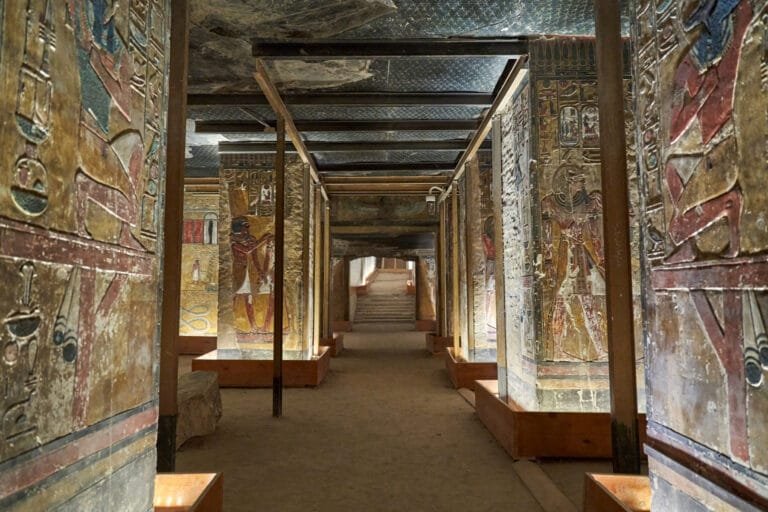
5. Historical Importance of KV18
The historical importance of KV18 lies not in its size or decoration but in what it reveals about the final decades of the New Kingdom. Constructed for Pharaoh Ramesses X, one of the last rulers of the Twentieth Dynasty, the tomb reflects a period when Egypt's political authority, economic resources, and imperial influence were steadily diminishing. Earlier kings such as Seti I, Ramesses II, and Ramesses III had commissioned magnificent royal tombs filled with elaborate religious artwork and extensive funerary texts. In contrast, KV18 remained unfinished, illustrating the changing realities of a kingdom struggling to maintain the monumental traditions that had once symbolized royal power. The monument also provides important evidence concerning the gradual decline of the royal necropolis at Thebes. Administrative papyri from Deir el-Medina describe growing problems with delayed wages, shortages of supplies, labor interruptions, and increasing tomb robberies during the late Ramesside Period. These records suggest that the royal administration faced serious financial and organizational difficulties that affected major construction projects, including work in the Valley of the Kings. KV18 therefore serves as a physical reflection of these broader historical developments, demonstrating how political instability influenced even the burial preparations of the pharaoh himself. From an archaeological perspective, KV18 occupies a unique position because it preserves an unfinished stage of royal tomb construction rarely visible elsewhere in Egypt. Most completed royal tombs conceal the original excavation beneath layers of plaster, carved reliefs, and painted decoration. In KV18, however, researchers can examine the raw architectural process almost exactly as it was left by the ancient workmen more than three thousand years ago. This makes the tomb an invaluable resource for understanding New Kingdom engineering, project planning, and labor organization. Today, historians regard KV18 as one of the most informative monuments for studying the end of Egypt's great age of royal tomb building. Although lacking the grandeur of earlier monuments, its unfinished state provides crucial evidence about the political, economic, and cultural transformations that marked the closing chapter of the New Kingdom.
6. Conservation and Preservation of KV18
Despite its unfinished condition, KV18 requires careful conservation to protect its fragile limestone surfaces and preserve the valuable archaeological evidence it contains. Because the tomb lacks extensive painted decoration, conservation efforts focus primarily on stabilizing the exposed rock, preventing structural deterioration, and documenting the unfinished architectural features left by the ancient builders. Specialists from the Egyptian Ministry of Tourism and Antiquities, together with international archaeological missions, continue monitoring the monument to ensure that it remains protected for future research and education. One of the principal conservation challenges involves the natural deterioration of the limestone cliffs surrounding the tomb. Over thousands of years, temperature fluctuations, occasional rainfall, salt crystallization, and geological movement have caused cracks and erosion within the rock. Conservation teams regularly inspect the monument for signs of instability, reinforcing vulnerable areas where necessary while minimizing intervention to preserve the tomb's original appearance. Because the unfinished walls still display ancient chisel marks and construction traces, every effort is made to protect these valuable features from accidental damage caused by environmental conditions or human activity. Modern technology has greatly improved the preservation of KV18. High-resolution photography, laser scanning, photogrammetry, and three-dimensional digital modeling have created detailed records of every corridor, tool mark, and architectural feature. These digital archives allow archaeologists to conduct precise research without excessive physical contact with the monument while providing permanent documentation for future generations. Geological surveys also help experts monitor changes within the surrounding rock, ensuring that any structural risks can be addressed before serious damage occurs. Although KV18 does not attract the same number of visitors as larger royal tombs, responsible visitor management remains important for its long-term preservation. Controlled access, designated pathways, and ongoing scientific monitoring help protect one of the Valley of the Kings' most informative unfinished monuments. Through these conservation efforts, KV18 continues providing invaluable insight into ancient Egyptian engineering, royal tomb construction, and the final years of the New Kingdom.
7. Visiting KV18 Today – What to Expect
Unlike many of the richly decorated royal tombs in the Valley of the Kings, KV18 offers a very different experience for visitors. Rather than showcasing vibrant wall paintings and elaborate religious scenes, the tomb provides a rare opportunity to observe an unfinished royal monument almost exactly as it was left by the ancient workmen more than 3,000 years ago. Although it lacks the visual grandeur of KV17 (Seti I), KV11 (Ramesses III), or KV9 (Ramesses V and VI), KV18 is especially fascinating for travelers interested in archaeology, architecture, and the construction techniques of ancient Egypt. Its unfinished corridors reveal details that are normally hidden in completed royal tombs, making it an exceptional educational site for anyone wishing to understand how these magnificent monuments were created. As visitors enter KV18, they immediately notice the rough limestone walls, visible chisel marks, unfinished ceilings, and partially excavated passageways. These features clearly illustrate the different stages of excavation carried out by the craftsmen from Deir el-Medina before work unexpectedly stopped. Although there are no colorful religious reliefs or decorated burial chambers, the monument provides an authentic impression of a royal tomb during the construction process. Egyptologist guides often explain how workers measured the corridors, carved the limestone, and gradually extended the monument deeper into the mountain before artists and sculptors would have begun decorating the walls. Because KV18 is relatively small and simple, a visit can usually be completed in a short time. However, for archaeology enthusiasts, it offers valuable insights that complement visits to the Valley's more famous tombs. Seeing both unfinished and fully decorated monuments allows visitors to appreciate the remarkable skill, planning, and labor required to produce the spectacular royal tombs of the New Kingdom. Although KV18 is not among the Valley of the Kings' most frequently visited monuments, it remains an important stop for travelers seeking a deeper understanding of ancient Egyptian engineering and the final stages of royal tomb construction during the late Ramesside Period.
8. Fascinating Facts About KV18
The Tomb of KV18 contains several fascinating features despite its unfinished appearance. One of its most remarkable characteristics is that it preserves the original work of the ancient builders almost exactly as they left it. Unlike completed royal tombs where polished plaster, painted reliefs, and carved hieroglyphs conceal the excavation process, KV18 still displays rough limestone surfaces, visible tool marks, and incomplete architectural details. These surviving traces provide archaeologists with rare evidence of how the craftsmen of Deir el-Medina transformed solid rock into royal burial chambers. Another interesting fact is that Pharaoh Ramesses X may never have been buried inside KV18. Because the tomb was abandoned before a burial chamber or decorative program could be completed, many Egyptologists believe that alternative burial arrangements were made following the king's death. However, no confirmed royal burial place for Ramesses X has ever been identified, making his final resting place one of the enduring mysteries of the Twentieth Dynasty. This uncertainty continues to inspire archaeological research and scholarly debate. KV18 also reflects the broader decline of Egypt's royal building projects during the closing years of the New Kingdom. Earlier kings commissioned enormous monuments decorated with thousands of painted figures and religious inscriptions, while KV18 demonstrates how limited resources, political instability, and economic difficulties affected even the pharaoh's own burial preparations. For this reason, historians often regard the monument as an important symbol of the gradual end of Egypt's great age of royal tomb construction. Although small and unfinished, KV18 remains one of the most informative monuments in the Valley of the Kings. Its unique combination of historical mystery, archaeological value, and architectural evidence makes it an essential site for understanding the final chapter of Ramesside Egypt.
9. KV18 Compared with Other Tombs in the Valley of the Kings
Among the royal monuments of the Valley of the Kings, KV18 is unique because it represents an unfinished stage of construction rather than a completed royal burial. While famous tombs such as KV17 (Seti I), KV11 (Ramesses III), KV9 (Ramesses V and VI), and KV62 (Tutankhamun) attract visitors with magnificent decoration and spectacular archaeological discoveries, KV18 offers something entirely different. It allows historians and archaeologists to study the practical process of tomb excavation before artists began covering the walls with reliefs and sacred inscriptions. This makes KV18 one of the most valuable monuments for understanding how royal tombs were actually built. Architecturally, KV18 is much smaller than most royal tombs of the Nineteenth and Twentieth Dynasties. The absence of a completed burial chamber, decorated halls, or religious artwork immediately distinguishes it from neighboring monuments. However, these apparent limitations are also its greatest strengths. The unfinished corridors preserve construction techniques rarely visible elsewhere, enabling researchers to examine the planning methods, engineering practices, and working procedures employed by the royal craftsmen. In this respect, KV18 complements rather than competes with the Valley's larger and more elaborate tombs. From a historical perspective, KV18 illustrates the dramatic changes that affected Egypt during the final years of the New Kingdom. While earlier pharaohs possessed the wealth and authority to commission vast underground palaces decorated with thousands of carved figures, the unfinished state of KV18 reflects a kingdom facing political uncertainty, financial pressures, and declining royal power. The monument therefore serves as an archaeological record of Egypt's transformation during the late Ramesside Period. Although it lacks the artistic splendor of the Valley's most famous tombs, KV18 occupies an important place within the royal necropolis. Its unfinished architecture, historical significance, and exceptional research value ensure that it remains one of the most informative monuments for anyone seeking to understand the evolution—and eventual decline—of royal tomb construction in ancient Egypt.
10. Conclusion – Why KV18 Is an Important Royal Tomb
Although KV18 lacks the spectacular paintings, elaborate burial chamber, and magnificent treasures associated with the most famous royal tombs in the Valley of the Kings, it remains one of the most historically valuable monuments in the royal necropolis. Built for Pharaoh Ramesses X, one of the final rulers of the Twentieth Dynasty, the tomb provides a rare glimpse into the political, economic, and administrative challenges that marked the closing years of the New Kingdom. Its unfinished corridors and abandoned excavation reveal a period when Egypt's royal building projects could no longer match the scale and grandeur of earlier centuries. One of KV18's greatest contributions to archaeology is the opportunity it provides to study the actual process of tomb construction. Visible chisel marks, unfinished ceilings, rough limestone walls, and incomplete passageways preserve the work of the craftsmen exactly as they left it more than three thousand years ago. These features offer invaluable evidence of ancient Egyptian engineering, planning methods, and construction techniques that are normally hidden beneath decorated surfaces in completed royal tombs. For archaeologists and historians, KV18 is therefore far more than an abandoned monument—it is an open record of the building process itself. Although modest in appearance, KV18 plays an essential role in understanding the final chapter of Egypt's royal tomb tradition. Its historical importance, architectural evidence, and unfinished state ensure that it remains one of the Valley of the Kings' most informative archaeological sites and a valuable monument for studying the decline of the New Kingdom.
11. Why KV18 Matters to Egyptologists Today
Although KV18 is often overlooked because it lacks the magnificent decoration of other royal tombs, it has become one of the most valuable monuments for modern Egyptological research. Unlike completed tombs, where finished plaster and painted reliefs conceal the excavation process, KV18 preserves the original work of the ancient craftsmen in remarkable detail. Archaeologists can study chisel marks, excavation techniques, corridor alignment, and unfinished architectural features to better understand how royal tombs were planned and carved into the limestone cliffs of the Valley of the Kings. This makes KV18 an exceptional "workshop in stone," providing direct evidence of the engineering skills and construction methods employed by the artisans of Deir el-Medina during the late New Kingdom. The tomb also serves as an important historical marker for the decline of royal authority during the Twentieth Dynasty. Its incomplete state reflects the economic hardships, political instability, labor shortages, and administrative difficulties that affected Egypt during the reign of Pharaoh Ramesses X. By comparing KV18 with earlier masterpieces such as KV17 (Seti I) and KV11 (Ramesses III), historians can clearly trace the gradual transformation of royal burial practices from the height of imperial prosperity to the final years of the Ramesside Period. This contrast makes KV18 an essential monument for understanding the broader history of ancient Egypt, not simply the life of one pharaoh. Today, KV18 continues to benefit from modern archaeological research using laser scanning, digital documentation, geological surveys, and architectural analysis. Although the tomb may never display spectacular treasures or colorful wall paintings, its scientific value grows with every new study. For researchers, students, and visitors interested in the practical realities of ancient Egyptian construction, KV18 remains one of the most informative and revealing monuments in the Valley of the Kings, demonstrating that even an unfinished royal tomb can make an extraordinary contribution to our understanding of one of the world's greatest civilizations.
12. Legacy of KV18 in Ancient Egyptian History
The legacy of KV18 lies not in its artistic grandeur but in the important historical story it tells. As one of the last royal tombs begun during the New Kingdom, it illustrates the changing political and economic realities of ancient Egypt during the late Twentieth Dynasty. The unfinished monument reflects a time when the centralized power of the pharaoh was weakening, financial resources were becoming increasingly limited, and the magnificent royal building programs of earlier centuries were gradually coming to an end. In this way, KV18 represents the closing chapter of one of the greatest traditions in ancient Egyptian civilization. For modern Egyptology, KV18 has become an invaluable archaeological resource. The monument preserves evidence of ancient construction techniques that cannot easily be observed in fully decorated tombs. Every unfinished corridor, rough-cut wall, and visible chisel mark contributes to a better understanding of how the skilled craftsmen of Deir el-Medina planned and excavated royal burial places inside the limestone cliffs of the Valley of the Kings. Combined with modern technologies such as laser scanning, photogrammetry, and geological analysis, KV18 continues to provide new information about New Kingdom engineering and royal architecture. Although it will never rival the fame of Tutankhamun's Tomb (KV62) or the artistic brilliance of Seti I's Tomb (KV17), KV18 occupies an essential place in the history of ancient Egypt. It reminds us that unfinished monuments can be just as valuable as completed masterpieces, offering unique insights into the realities of royal construction, political decline, and the final years of Egypt's imperial age. Today, KV18 remains one of the Valley of the Kings' most significant archaeological monuments, preserving an important chapter in the remarkable story of the pharaohs.