


- Egypt Tour Magic
- Egypt Tour Packages
- Excursions in Egypt
- Cairo Tours and Excursions
- Hurghada Tours and Excursions
- Soma Bay Tours and Excursions
- Makadi Bay Tours and Excursions
- Sahl Hasheesh Tours and Excursions
- El Gouna Tours and Excursions
- Marsa Alam Tours and Excursions
- Port Ghalib Tours and Excursions
- El Quseir Tours and Excursions
- Dendera and Abydos Day Tours
- Aswan Tours and Excursions
- Luxor Tours and Excursions
- Alexandria Egypt Tours and Excursions
- Sharm El Sheikh Tours and Excursions
- Top Rated Egypt Tours in 2026
- Optional Excursions in Egypt
- Private Transfer
- Blogs About egypt
- Ancient Egypt
- Why Egypt Is One of the Safest Countries to Visit in the Middle East
- What You Need To know Before Your First Trip To Egypt
- Egypt Travel Costs in 2026 Full Budget Guide
- Top 10 Tourist Activities in Egypt
- Top 50 Activities You Can’t Miss in Egypt in 2026
- The Guide to Guided Tours in Egypt
- Egypt’s Ancient and Modern History
- The Nile River
- The Deserts of Egypt
- Historical Sites in Egypt
- Cairo
- Alexandria
- Luxor
- Aswan
- The Red Sea
- Dendera Temple
- El Fayoum Oasis
- Bahariya Oasis
- Siwa Oasis
- Al Alamein
- Marsa Matruh
- Ancient Egyptian gods
- famous Egyptian dishes
- UNESCO World Heritage sites
- About Us
- Why Egypt Tour Magic
- Egypt Tour Magic
- Egypt Tour Packages
- Excursions in Egypt
- Cairo Tours and Excursions
- Hurghada Tours and Excursions
- Soma Bay Tours and Excursions
- Makadi Bay Tours and Excursions
- Sahl Hasheesh Tours and Excursions
- El Gouna Tours and Excursions
- Marsa Alam Tours and Excursions
- Port Ghalib Tours and Excursions
- El Quseir Tours and Excursions
- Dendera and Abydos Day Tours
- Aswan Tours and Excursions
- Luxor Tours and Excursions
- Alexandria Egypt Tours and Excursions
- Sharm El Sheikh Tours and Excursions
- Top Rated Egypt Tours in 2026
- Optional Excursions in Egypt
- Private Transfer
- Blogs About egypt
- Ancient Egypt
- Why Egypt Is One of the Safest Countries to Visit in the Middle East
- What You Need To know Before Your First Trip To Egypt
- Egypt Travel Costs in 2026 Full Budget Guide
- Top 10 Tourist Activities in Egypt
- Top 50 Activities You Can’t Miss in Egypt in 2026
- The Guide to Guided Tours in Egypt
- Egypt’s Ancient and Modern History
- The Nile River
- The Deserts of Egypt
- Historical Sites in Egypt
- Cairo
- Alexandria
- Luxor
- Aswan
- The Red Sea
- Dendera Temple
- El Fayoum Oasis
- Bahariya Oasis
- Siwa Oasis
- Al Alamein
- Marsa Matruh
- Ancient Egyptian gods
- famous Egyptian dishes
- UNESCO World Heritage sites
- About Us
- Why Egypt Tour Magic
Welcome to
Tomb of KV12 – Unfinished Tomb (Unknown Owner): Complete Guide to One of the Valley of the Kings' Greatest Mysteries
The Tomb of KV12 is one of the most mysterious and least understood monuments in the Valley of the Kings on the west bank of Luxor, Egypt. Unlike the magnificent royal tombs of Tutankhamun, Seti I, Ramesses II, or Ramesses VI, KV12 has never been conclusively linked to a specific pharaoh or royal owner. Instead, it remains an unfinished tomb whose original occupant is still unknown, making it one of the Valley’s greatest archaeological puzzles. Although modest in appearance compared with the famous royal tombs nearby, KV12 has provided archaeologists with valuable evidence concerning tomb construction, changing burial practices, and the reuse of monuments during the New Kingdom and later periods. Its incomplete architecture and mysterious history continue attracting Egyptologists seeking to understand the evolution of the royal necropolis.
Most scholars believe KV12 was begun during the late Eighteenth Dynasty or the early Nineteenth Dynasty, a period when the Valley of the Kings was experiencing extensive royal building activity. Based on its architectural style, the tomb may originally have been intended for a prince, queen, or another high-ranking member of the royal family rather than a reigning pharaoh. Construction appears to have stopped before completion, leaving unfinished corridors, partially excavated chambers, and rough quarry marks that preserve valuable evidence of ancient engineering methods. Over the following centuries, KV12 was reused for multiple burials, especially during the Twentieth Dynasty, when members of the royal court and elite officials were interred within abandoned monuments. These later occupations transformed KV12 into an important archaeological record spanning several generations of Egyptian history.
Although KV12 lacks the spectacular painted decoration and golden treasures associated with Egypt’s most famous royal tombs, its archaeological significance is immense. Excavations have uncovered pottery, coffin fragments, funerary equipment, ushabti figures, faience ornaments, inscriptions, and architectural evidence that illuminate the practical realities of tomb construction and reuse in ancient Egypt. Today, KV12 serves as an important resource for studying unfinished architecture, New Kingdom burial customs, and the changing organization of the Valley of the Kings. This complete guide explores every aspect of KV12, including its uncertain ownership, architecture, archaeological discoveries, historical importance, conservation efforts, visitor experience, and the enduring mystery surrounding one of Egypt’s most enigmatic tombs.
1. The Mystery of the Original Owner of KV12
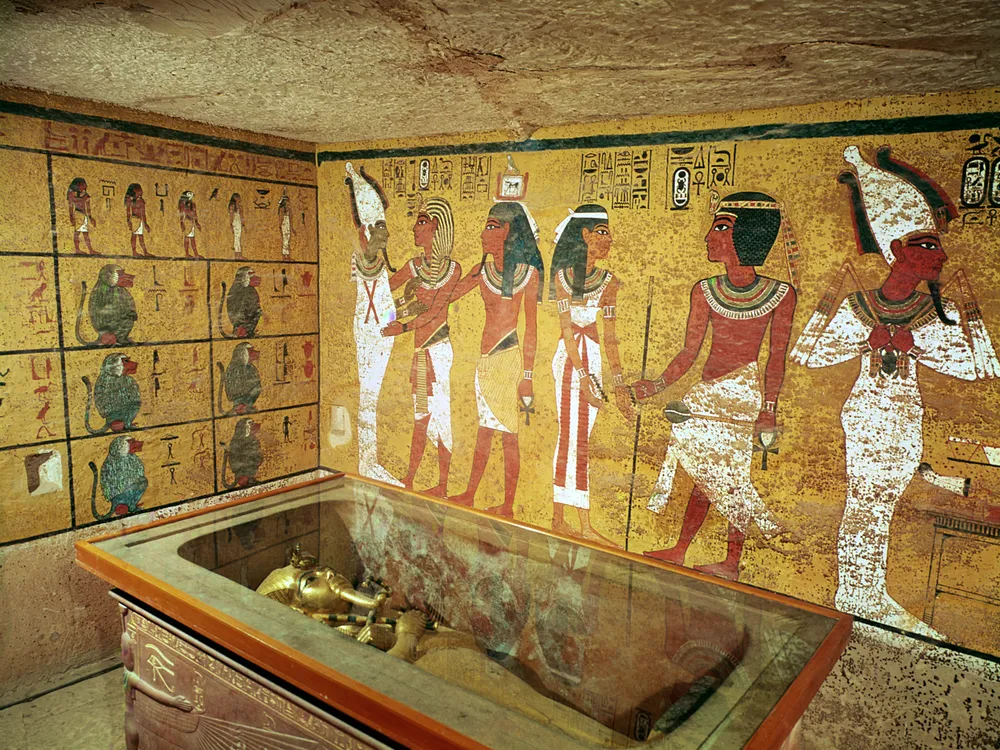
One of the greatest unanswered questions in the study of the Valley of the Kings concerns the identity of the original owner of KV12. Unlike most tombs in the royal necropolis, which preserve inscriptions identifying the pharaoh or royal family member buried within, KV12 contains no surviving evidence that conclusively names its intended occupant. This absence of identifying inscriptions has made the monument one of the most intriguing archaeological mysteries in ancient Egypt. For more than a century, Egyptologists have examined the tomb's architecture, construction techniques, location, and archaeological discoveries in an effort to determine who commissioned it. Although no definitive answer has yet emerged, several theories continue to shape scholarly discussion, making KV12 an important case study in New Kingdom archaeology. Based on architectural style and its position within the Valley of the Kings, most scholars believe KV12 was begun during the late Eighteenth Dynasty or the early Nineteenth Dynasty. Rather than serving as the tomb of a reigning pharaoh, the monument was probably intended for a prince, queen, or another high-ranking member of the royal family. Some researchers have suggested connections with members of the royal court during the reigns of Horemheb, Ramesses I, or Seti I, although no archaeological evidence has confirmed these proposals. The relatively modest scale of the tomb compared with major royal monuments such as KV17, KV7, or KV9 supports the theory that it was designed for an elite royal individual rather than the king himself. However, because construction ended before completion, many clues that might have identified the owner were never added. Another factor contributing to the mystery is the later reuse of KV12. During the Twentieth Dynasty, abandoned tombs throughout the Valley of the Kings were frequently adapted for secondary burials belonging to members of the royal administration, priests, military officials, and elite families. Archaeological excavations inside KV12 have uncovered artifacts dating from several different historical periods, making it difficult to distinguish material associated with the original construction from objects introduced centuries later. This complex archaeological sequence has complicated efforts to reconstruct the tomb's earliest history while simultaneously providing valuable evidence concerning the evolution of burial practices during the later New Kingdom. Although the original owner of KV12 remains unknown, the monument continues contributing significantly to Egyptological research. Every new archaeological investigation, geological survey, and architectural study improves scholarly understanding of the Valley of the Kings and the organization of its royal cemetery. Until new inscriptions or artifacts are discovered, KV12 will remain one of ancient Egypt's most fascinating historical mysteries, demonstrating that even after more than two centuries of archaeological exploration, the Valley of the Kings still holds unanswered questions.
2. Construction and Architectural Development of KV12
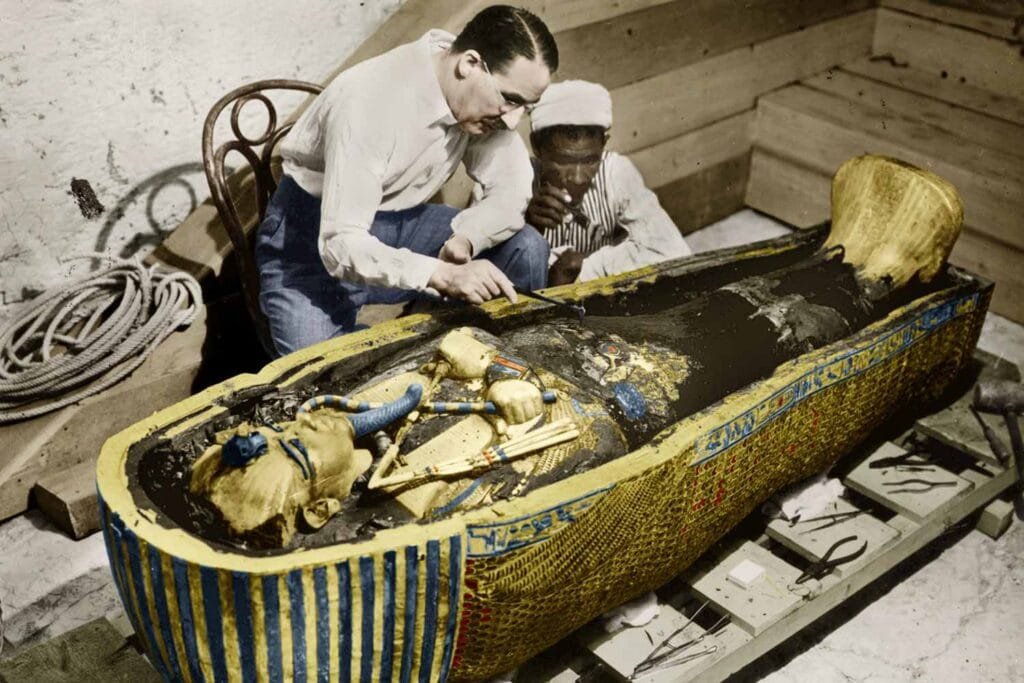
The construction of KV12 demonstrates the remarkable engineering abilities of the royal craftsmen who worked in the Valley of the Kings during the New Kingdom. Like neighboring royal tombs, the monument was excavated directly into the limestone cliffs on the west bank of Luxor by skilled workers from the village of Deir el-Medina. The original design followed many of the architectural principles used throughout the royal necropolis, including a descending entrance corridor leading toward deeper chambers carved inside the mountain. However, unlike the great royal tombs built for pharaohs such as Seti I or Ramesses II, construction of KV12 stopped before the monument reached its intended final form, leaving behind valuable evidence of the excavation process itself. Visitors and archaeologists can observe numerous unfinished architectural features throughout the tomb. Rough quarry marks left by stonecutters remain visible on the walls and ceilings, while several chambers were only partially excavated before work ceased. Unlike completed royal monuments covered with painted plaster and elaborate reliefs, many surfaces inside KV12 preserve the bare limestone left by the excavation teams. These unfinished areas provide rare insight into the methods employed by ancient Egyptian engineers, allowing researchers to study how tombs were planned, measured, and excavated before decorative work began. Such evidence is rarely preserved in fully completed monuments, making KV12 especially valuable for understanding ancient construction techniques. Although construction stopped unexpectedly, later generations adapted KV12 for additional burials by modifying parts of the original architecture. Secondary chambers were expanded, burial niches were added, and certain areas were cleared to accommodate new occupants during the Twentieth Dynasty. These modifications illustrate the practical approach adopted by ancient Egyptians during periods of economic and political change, when reusing existing monuments often proved more efficient than excavating entirely new tombs. The combination of unfinished original construction and later architectural alterations makes KV12 one of the most archaeologically complex monuments in the Valley of the Kings. Modern architectural surveys using three-dimensional laser scanning, photogrammetry, and geological analysis continue documenting every corridor, chamber, and unfinished surface within KV12. These studies have greatly improved understanding of the monument's original design while helping conservators protect its fragile limestone structure. Today, KV12 serves not only as an archaeological monument but also as an invaluable record of ancient Egyptian engineering and the evolution of royal tomb construction during the New Kingdom.
3. The Later Reuse of KV12 During the New Kingdom
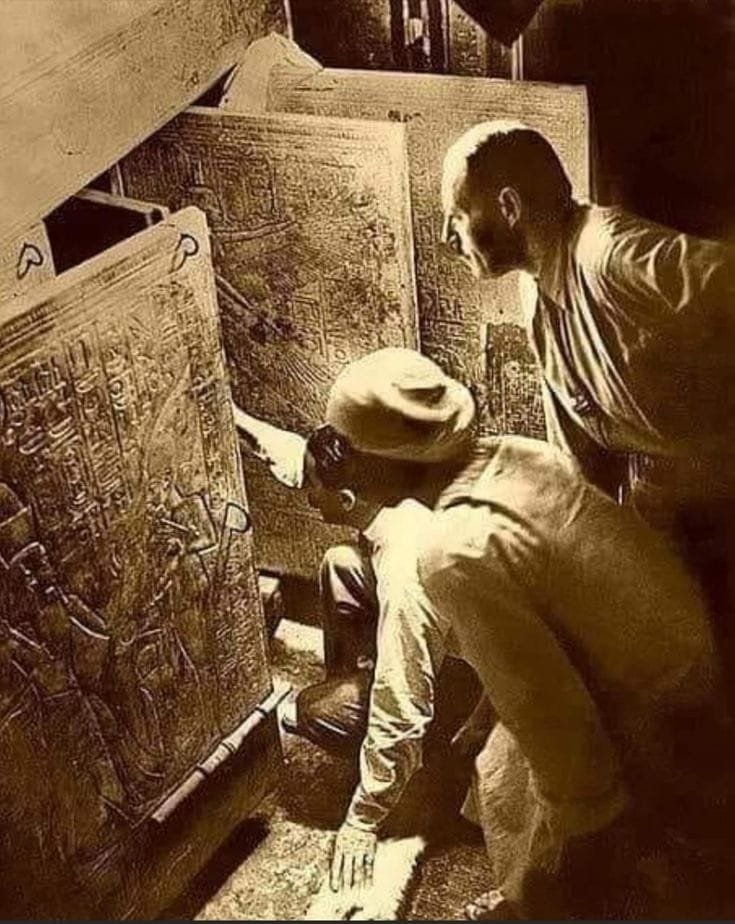
Although KV12 was never completed for its original owner, the monument acquired a second life through extensive reuse during the later New Kingdom. As political conditions changed and economic resources became increasingly limited, abandoned tombs throughout the Valley of the Kings were frequently adapted for new burials. Rather than excavating entirely new monuments, members of the royal family, high-ranking officials, priests, and military administrators often chose to modify unfinished or unused tombs. KV12 represents one of the clearest examples of this practice, preserving archaeological evidence from multiple periods rather than a single royal burial. Excavations have revealed that KV12 was used by several elite individuals during the Twentieth Dynasty, although many of their identities remain uncertain. Archaeologists have discovered fragments of coffins, pottery vessels, ushabti figures, faience beads, linen wrappings, funerary equipment, and burial furniture belonging to later occupants. These artifacts indicate that the tomb served as a collective burial place for members of the royal court rather than remaining exclusively associated with its unknown original owner. The diversity of objects recovered from different areas of the monument demonstrates that the tomb experienced repeated episodes of occupation over an extended period, creating a rich archaeological sequence that reflects changing funerary customs. The reuse of KV12 also illustrates broader developments affecting ancient Egyptian society during the closing centuries of the New Kingdom. Increasing political instability, declining royal finances, and growing threats from tomb robbers encouraged more practical approaches to burial. Existing monuments offered secure underground spaces that could be adapted more quickly and economically than constructing entirely new tombs. Similar patterns of reuse can be observed elsewhere in the Valley of the Kings, making KV12 an important example of how Egypt's royal cemetery continued evolving long after its initial construction. Today, the archaeological evidence preserved within KV12 provides historians with valuable information about burial practices extending beyond the reign of a single ruler. Instead of representing one royal funeral, the monument records generations of adaptation, reuse, and changing religious traditions. This complex history makes KV12 one of the most informative archaeological sites in the Valley of the Kings, offering unique insight into the practical realities of life—and death—during the later New Kingdom.
4. Archaeological Discoveries Inside KV12
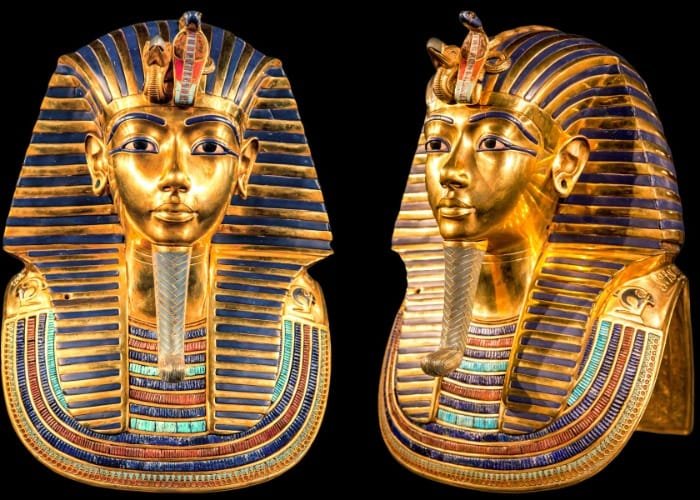
Although KV12 is not famous for spectacular treasures like those found in Tutankhamun's Tomb (KV62), it has yielded numerous archaeological discoveries that have greatly improved our understanding of the Valley of the Kings and the evolution of royal burial practices during the New Kingdom. Since the tomb was reused several times over many centuries, excavations have uncovered artifacts belonging to different historical periods rather than a single burial assemblage. This unique archaeological record allows researchers to trace changes in funerary customs, craftsmanship, and social organization while revealing how abandoned monuments continued serving important religious purposes long after their original construction ceased. Among the most significant discoveries inside KV12 are fragments of wooden coffins, decorated limestone blocks, pottery vessels, faience beads, ushabti figures, linen wrappings, funerary amulets, plaster fragments, and pieces of painted burial equipment. These objects belonged to various later occupants who reused the unfinished monument during the Twentieth Dynasty and subsequent periods. Although most precious materials were removed by ancient tomb robbers, many everyday funerary objects remained undisturbed beneath accumulated debris. Archaeologists have carefully documented these finds to reconstruct the sequence of burials within the tomb and distinguish the original construction phase from later occupations. Every artifact contributes valuable information concerning burial rituals, religious beliefs, and the practical organization of funerary ceremonies in ancient Egypt. One of the most valuable aspects of the archaeological evidence is what it reveals about unfinished construction. Excavators identified quarry marks, measurement lines, unfinished excavation surfaces, and partially carved architectural features left by the craftsmen of Deir el-Medina. These traces provide rare insight into the methods used to excavate royal tombs before decorative work began. In completed monuments such evidence is usually hidden beneath painted plaster and carved reliefs, but the unfinished nature of KV12 preserved these early construction stages almost exactly as they were left thousands of years ago. For archaeologists studying ancient engineering, KV12 functions almost like a workshop frozen in time. Modern excavations continue using advanced technologies such as digital mapping, three-dimensional laser scanning, photogrammetry, microscopic artifact analysis, and geological surveys to document every feature of the monument. These scientific investigations have significantly expanded knowledge of KV12 while helping conservators protect its fragile remains. Although the tomb lacks the spectacular golden treasures associated with Egypt's most famous discoveries, its archaeological importance lies in the wealth of historical information preserved within its unfinished corridors and reused burial chambers.
5. Religious Significance and Funerary Purpose of KV12
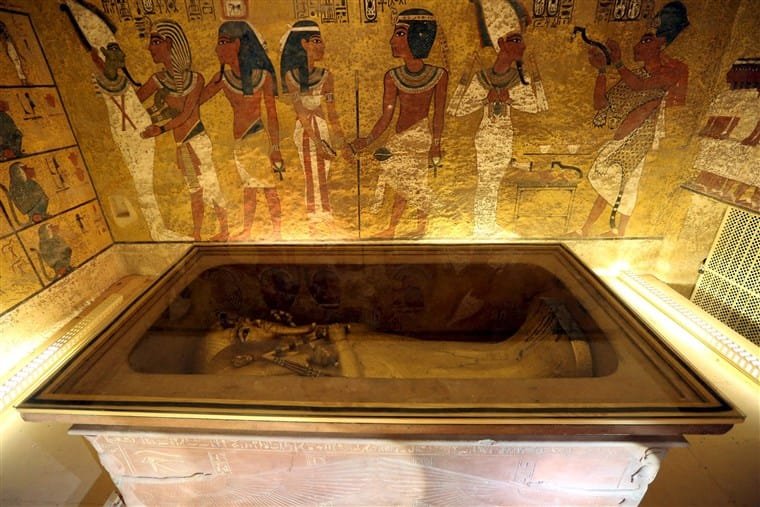
Although the original owner of KV12 remains unknown, the monument was unquestionably designed to serve as a sacred funerary complex following the religious traditions of the New Kingdom. Like every tomb constructed in the Valley of the Kings, KV12 was intended to provide its occupant with a protected environment in which the rituals of death, rebirth, and eternal life could be successfully completed. Ancient Egyptians believed that death marked the beginning of a spiritual journey through the underworld, where the deceased would encounter numerous gods, demons, and supernatural challenges before achieving eternal existence alongside Osiris and the solar god Ra. Even though the tomb was never completed, its architectural design reflects these deeply rooted religious beliefs. The descending corridors symbolized the deceased's journey into the hidden realm beneath the earth, while the deeper chambers were intended to function as sacred spaces where magical rituals and burial ceremonies could be performed. Had construction continued, the walls would almost certainly have been decorated with scenes from important funerary compositions such as the Book of Gates, Book of the Dead, Litany of Ra, or the Book of Caverns, all commonly found in royal tombs of the late Eighteenth and Nineteenth Dynasties. These sacred texts provided divine guidance, magical protection, and instructions for safely navigating the dangers of the underworld. Although KV12 lacks these finished decorations, its architectural layout clearly follows the same symbolic principles observed throughout the Valley of the Kings. The later reuse of KV12 demonstrates that its religious importance continued long after the original construction project ended. Members of the royal court and elite officials who selected the monument for secondary burials clearly regarded it as a sacred location associated with royal power and divine protection. By placing their dead within an abandoned royal tomb, they hoped to benefit from the holiness of the Valley of the Kings and share symbolically in the eternal destiny reserved for Egypt's rulers. This practice reflects the continuing prestige of the royal necropolis even during periods of political and economic decline. Today, KV12 provides historians with valuable insight into the spiritual beliefs that shaped ancient Egyptian funerary architecture. Even in its unfinished state, the monument illustrates how architecture, religion, and royal ideology were inseparably connected within the burial traditions of the New Kingdom. Its combination of incomplete construction and later religious reuse makes KV12 one of the most informative monuments for understanding ancient Egyptian concepts of death and the afterlife.

6. Historical Importance of KV12 in the Valley of the Kings
The historical importance of KV12 extends far beyond the mystery of its unknown owner. Although the monument never became the magnificent royal tomb originally intended, it provides archaeologists with an exceptional opportunity to study the development of the Valley of the Kings during one of the most active periods of royal construction. Its unfinished architecture preserves evidence rarely visible elsewhere, while its later reuse documents the practical adaptations that occurred as Egypt's political and economic circumstances evolved. Together, these features make KV12 one of the most informative archaeological sites within the royal necropolis. One of KV12's greatest contributions to Egyptology is the information it provides concerning ancient construction methods. The monument preserves quarry marks, excavation techniques, unfinished corridors, partially completed chambers, and measurement systems employed by the skilled craftsmen of Deir el-Medina. Historians studying ancient engineering frequently compare KV12 with completed royal tombs to reconstruct the chronological stages through which every Valley of the Kings monument passed during excavation and decoration. This evidence has significantly improved understanding of labor organization, architectural planning, and construction management during the New Kingdom. KV12 is equally important because it demonstrates how ancient Egyptians adapted existing monuments for new purposes. Rather than abandoning unfinished tombs permanently, later generations modified them to accommodate additional burials belonging to members of the royal family, priests, military officers, and high-ranking officials. This practice reflects broader social and economic changes affecting Egypt during the later New Kingdom, when financial pressures encouraged the reuse of existing funerary monuments instead of constructing entirely new complexes. The archaeological sequence preserved inside KV12 therefore records centuries of changing burial traditions rather than a single historical event. Today, KV12 continues serving as an invaluable research site for archaeologists, historians, architects, and conservation specialists. Ongoing excavations, digital documentation, and scientific analysis continue revealing new information about its construction, reuse, and historical significance. Although overshadowed by more famous royal tombs, KV12 remains one of the Valley of the Kings' most important archaeological resources for understanding the evolution of ancient Egyptian funerary architecture and the enduring history of the royal necropolis.

7. Conservation and Preservation of KV12
Although KV12 is less famous than many neighboring tombs in the Valley of the Kings, it remains an important archaeological monument that requires continuous conservation and scientific monitoring. More than three thousand years of natural weathering, occasional flooding, earthquakes, human activity, and repeated reuse have affected the stability of the tomb's limestone walls and unfinished chambers. Unlike fully decorated royal tombs, much of KV12 consists of exposed bedrock that was never covered with protective plaster or painted reliefs. These unfinished surfaces provide invaluable archaeological evidence, but they are also particularly vulnerable to erosion and environmental deterioration. For this reason, the preservation of KV12 has become an important component of broader conservation efforts throughout the Valley of the Kings. One of the greatest conservation challenges involves protecting the unfinished quarry marks, tool traces, and excavation surfaces that distinguish KV12 from other monuments. Because these features preserve direct evidence of ancient construction techniques, conservators avoid unnecessary restoration that could obscure or damage the original workmanship. Instead, specialists focus on stabilizing fragile limestone, preventing rock fractures, monitoring humidity and temperature fluctuations, and limiting erosion caused by moisture and salt crystallization. High-resolution photography, digital microscopy, and periodic structural assessments allow conservation teams to detect even minor changes before significant deterioration occurs. Modern technology has greatly improved the documentation and preservation of KV12. Three-dimensional laser scanning, photogrammetry, digital mapping, and geological surveys have created highly accurate records of every corridor, chamber, and unfinished architectural feature. These digital archives assist archaeologists studying the monument while also providing valuable information for future conservation work. Should any section of the tomb become damaged through natural causes, researchers possess precise digital models capable of preserving its archaeological record for generations to come. Visitor management also plays an important role in protecting KV12. Although it receives far fewer visitors than tombs such as KV62, KV17, or KV9, responsible tourism remains essential. Controlled access, designated walking routes, protective barriers, and educational programs help minimize accidental damage while allowing travelers to appreciate one of the Valley of the Kings' most fascinating unfinished monuments. Through careful conservation and scientific research, KV12 continues preserving important evidence of ancient Egyptian engineering and burial practices.
8. Visiting KV12 Today – Exploring One of the Valley's Hidden Treasures
For travelers seeking experiences beyond Egypt's most famous attractions, KV12 offers a fascinating glimpse into the lesser-known history of the Valley of the Kings. While visitors are often drawn to spectacular monuments such as Tutankhamun's Tomb (KV62) or the richly decorated tombs of Seti I and Ramesses VI, KV12 provides something equally valuable—a rare opportunity to observe an unfinished royal monument and understand how ancient Egyptian tombs were actually constructed. Archaeology enthusiasts, students, and history lovers frequently regard KV12 as one of the valley's hidden treasures because of the unique evidence it preserves. As visitors enter the tomb, they encounter broad corridors carved into the limestone cliffs, unfinished chambers, rough quarry marks, and partially excavated spaces that reveal the practical work of ancient stonecutters. Unlike fully decorated monuments covered with painted religious scenes, KV12 allows visitors to observe the engineering process itself. The unfinished walls display tool marks, excavation lines, and construction stages that are normally concealed beneath finished decoration. These features provide exceptional educational value, illustrating the remarkable skill and organization of the craftsmen from Deir el-Medina who created the royal necropolis during the New Kingdom. The tomb also offers insight into the long history of reuse within the Valley of the Kings. Guides often explain how abandoned monuments such as KV12 were adapted for secondary burials belonging to members of the royal court and elite officials during the Twentieth Dynasty. Archaeological discoveries recovered from the tomb—including pottery, coffin fragments, ushabti figures, and funerary equipment—help visitors understand how burial customs evolved over several centuries. Rather than representing a single historical moment, KV12 tells a story of continuous adaptation, demonstrating the changing needs of ancient Egyptian society. Although KV12 may not possess colorful astronomical ceilings or magnificent painted reliefs, it rewards visitors interested in archaeology, architecture, and ancient engineering. Combined with visits to nearby royal tombs, it provides a broader understanding of how the Valley of the Kings developed over time. For anyone wishing to explore beyond Egypt's most famous monuments, KV12 offers a unique and intellectually rewarding experience.
9. Fascinating Facts About KV12 – The Unfinished Tomb
The Tomb of KV12 contains numerous fascinating features that distinguish it from every other monument in the Valley of the Kings. Perhaps the most remarkable fact is that its original owner remains unknown despite more than a century of archaeological investigation. While nearly every royal tomb can be associated with a specific pharaoh or member of the royal family, KV12 continues challenging historians with one of ancient Egypt's greatest archaeological mysteries. The absence of identifying inscriptions has encouraged numerous theories concerning its intended occupant, yet none has been conclusively proven. Another unique characteristic of KV12 is its unfinished state. Because construction stopped before decoration began, the monument preserves exceptionally clear evidence of the techniques employed by ancient Egyptian engineers and stonecutters. Visitors can observe quarry marks, unfinished excavation surfaces, architectural guide lines, and rough limestone walls exactly as they were left thousands of years ago. These features provide archaeologists with invaluable information concerning the planning and construction of royal tombs, making KV12 one of the best preserved examples of an ancient building project interrupted before completion. KV12 is also notable for its extensive reuse during later periods of Egyptian history. Rather than remaining abandoned, the tomb became the burial place of several members of the royal administration and elite families during the Twentieth Dynasty. Archaeological excavations uncovered pottery, coffin fragments, faience ornaments, ushabti figures, linen wrappings, and other funerary objects belonging to these later occupants. This combination of unfinished construction and repeated reuse provides historians with a rich archaeological sequence spanning several centuries rather than a single burial event. Today, KV12 remains one of the Valley of the Kings' most informative archaeological monuments. Its mystery, unfinished architecture, and evidence of changing burial practices continue attracting researchers from around the world. Although it lacks the treasures of Tutankhamun or the magnificent decoration of Seti I, KV12 offers something equally valuable: an authentic glimpse into the engineering, history, and evolving funerary traditions of ancient Egypt.

10. KV12 Compared with Other Tombs in the Valley of the Kings
The Tomb of KV12 occupies a unique place among the monuments of the Valley of the Kings because it differs significantly from the famous royal tombs that surround it. While tombs such as KV17 (Seti I), KV62 (Tutankhamun), KV9 (Ramesses V and Ramesses VI), KV7 (Ramesses II), and KV11 (Ramesses III) are celebrated for their magnificent wall paintings, richly decorated burial chambers, and royal treasures, KV12 is renowned for entirely different reasons. Its historical importance lies in its unfinished architecture, uncertain ownership, and evidence of repeated reuse over several centuries. Rather than preserving the completed vision of a single ruler, KV12 records the practical realities of tomb construction and the changing funerary practices of the later New Kingdom. Architecturally, KV12 is more modest than the grand royal monuments built for Egypt's greatest pharaohs. It lacks the extensive corridors, massive pillared halls, astronomical ceilings, and elaborate funerary texts found in tombs such as KV17 or KV9. However, this apparent simplicity offers important advantages for archaeologists. Because construction stopped before decoration was completed, the monument preserves quarry marks, unfinished chambers, excavation techniques, and engineering details that are almost completely hidden within finished royal tombs. Historians studying the organization of labor at Deir el-Medina frequently compare KV12 with completed monuments to reconstruct the chronological stages of ancient Egyptian tomb construction. Another major difference is the uncertainty surrounding KV12's original owner. Nearly every other royal tomb in the Valley of the Kings can be connected to a known pharaoh or royal family member through inscriptions, cartouches, or burial equipment. In contrast, KV12 remains anonymous despite extensive archaeological investigation. This mystery distinguishes it from monuments such as KV15 (Seti II), KV10 (Amenmesse), or KV16 (Ramesses I), where ownership has been securely established. The absence of definitive evidence has made KV12 one of the most debated archaeological sites in Egypt, encouraging continual research into its construction date, intended occupant, and later history. For modern visitors, KV12 complements the Valley's more spectacular monuments by presenting a different perspective on ancient Egyptian civilization. Rather than focusing solely on royal wealth and artistic achievement, it reveals the practical engineering skills, architectural planning, and long-term reuse that characterized the development of the royal necropolis. Together with the Valley's famous decorated tombs, KV12 contributes to a complete understanding of how this extraordinary cemetery evolved throughout the New Kingdom.
11. Conclusion – Why KV12 Is Archaeologically Important
Although KV12 lacks the colorful decoration, magnificent sarcophagi, and extraordinary treasures that have made other tombs in the Valley of the Kings world famous, it remains one of the most valuable archaeological monuments in ancient Egypt. Its importance lies not in royal wealth but in the unique historical evidence preserved within its unfinished corridors and reused burial chambers. The monument provides exceptional insight into ancient engineering, tomb construction, changing funerary traditions, and the continued development of the Valley of the Kings over several centuries. For Egyptologists, KV12 represents an archaeological archive documenting processes that are rarely visible elsewhere. One of the greatest contributions of KV12 is the information it provides concerning the practical work of the craftsmen from Deir el-Medina. Rough quarry marks, unfinished excavation surfaces, partially completed chambers, and architectural planning techniques reveal the systematic methods employed when carving royal tombs into the limestone cliffs of western Luxor. Modern scientific investigations using laser scanning, photogrammetry, geological surveys, and digital documentation continue expanding scholarly understanding of the monument while ensuring its long-term preservation. Every new archaeological discovery contributes to a deeper understanding of the organization, technology, and craftsmanship that supported one of history's greatest building projects. KV12 also demonstrates that the Valley of the Kings was never a static cemetery. Instead, it evolved continuously as abandoned monuments were reused, modified, and adapted to meet the changing needs of later generations. The archaeological sequence preserved inside the tomb reflects centuries of religious practice, political change, and social adaptation rather than a single royal burial. This complex history provides invaluable evidence for reconstructing the broader development of ancient Egyptian funerary customs during the closing centuries of the New Kingdom. Today, KV12 remains one of the Valley of the Kings' hidden archaeological treasures. While it may never attract the same attention as Tutankhamun's Tomb, it offers something equally meaningful—a rare opportunity to explore an unfinished monument that reveals how ancient Egyptian tombs were actually created and reused. For historians, archaeologists, students, and travelers seeking a deeper understanding of Egypt's royal necropolis, KV12 stands as one of the most informative and fascinating monuments in the Valley of the Kings.
12. Frequently Asked Questions About KV12 – The Unfinished Tomb
The Tomb of KV12 raises many questions among visitors because, unlike most monuments in the Valley of the Kings, its original owner has never been identified. Archaeologists continue studying its architecture, excavation techniques, and artifacts in the hope of discovering new evidence that may eventually reveal who commissioned the monument. Based on its architectural style, most scholars believe KV12 was begun during the late Eighteenth Dynasty or early Nineteenth Dynasty, probably for a prince, queen, or another member of the royal family rather than a reigning pharaoh. Until new inscriptions or definitive archaeological evidence are discovered, the identity of its intended occupant remains one of the Valley's greatest mysteries. Another common question concerns why the tomb was never completed. Although no ancient document explains the reason, historians believe construction probably stopped because of changing political circumstances, the death of the intended owner, or alterations in royal burial plans. Similar interruptions affected several other tombs within the Valley of the Kings, demonstrating that monumental construction projects could be abandoned when historical events changed unexpectedly. The unfinished condition of KV12 has proven especially valuable because it preserves evidence of ancient engineering techniques normally concealed beneath completed decoration. Visitors also ask whether important archaeological discoveries have been made inside KV12. The answer is yes, although they differ from the spectacular treasures found in KV62. Excavations have uncovered coffin fragments, pottery vessels, ushabti figures, faience ornaments, linen wrappings, funerary equipment, plaster remains, and architectural evidence documenting both the original construction and the later reuse of the tomb during the Twentieth Dynasty. These discoveries have significantly improved scholarly understanding of burial customs, tomb reuse, and the evolution of the Valley of the Kings. Today, KV12 continues attracting archaeologists and travelers interested in the hidden history of ancient Egypt. Its unfinished corridors, mysterious ownership, evidence of repeated reuse, and exceptional archaeological value make it one of the most intriguing monuments within the royal necropolis. Although less famous than the tombs of Egypt's greatest pharaohs, KV12 remains an essential part of the story of the Valley of the Kings and the remarkable civilization that created it.
