


- Egypt Tour Magic
- Egypt Tour Packages
- Excursions in Egypt
- Cairo Tours and Excursions
- Hurghada Tours and Excursions
- Soma Bay Tours and Excursions
- Makadi Bay Tours and Excursions
- Sahl Hasheesh Tours and Excursions
- El Gouna Tours and Excursions
- Marsa Alam Tours and Excursions
- Port Ghalib Tours and Excursions
- El Quseir Tours and Excursions
- Dendera and Abydos Day Tours
- Aswan Tours and Excursions
- Luxor Tours and Excursions
- Alexandria Egypt Tours and Excursions
- Sharm El Sheikh Tours and Excursions
- Top Rated Egypt Tours in 2026
- Optional Excursions in Egypt
- Private Transfer
- Blogs About egypt
- Ancient Egypt
- Why Egypt Is One of the Safest Countries to Visit in the Middle East
- What You Need To know Before Your First Trip To Egypt
- Egypt Travel Costs in 2026 Full Budget Guide
- Top 10 Tourist Activities in Egypt
- Top 50 Activities You Can’t Miss in Egypt in 2026
- The Guide to Guided Tours in Egypt
- Egypt’s Ancient and Modern History
- The Nile River
- The Deserts of Egypt
- Historical Sites in Egypt
- Cairo
- Alexandria
- Luxor
- Aswan
- The Red Sea
- Dendera Temple
- El Fayoum Oasis
- Bahariya Oasis
- Siwa Oasis
- Al Alamein
- Marsa Matruh
- Ancient Egyptian gods
- famous Egyptian dishes
- UNESCO World Heritage sites
- About Us
- Why Egypt Tour Magic
- Egypt Tour Magic
- Egypt Tour Packages
- Excursions in Egypt
- Cairo Tours and Excursions
- Hurghada Tours and Excursions
- Soma Bay Tours and Excursions
- Makadi Bay Tours and Excursions
- Sahl Hasheesh Tours and Excursions
- El Gouna Tours and Excursions
- Marsa Alam Tours and Excursions
- Port Ghalib Tours and Excursions
- El Quseir Tours and Excursions
- Dendera and Abydos Day Tours
- Aswan Tours and Excursions
- Luxor Tours and Excursions
- Alexandria Egypt Tours and Excursions
- Sharm El Sheikh Tours and Excursions
- Top Rated Egypt Tours in 2026
- Optional Excursions in Egypt
- Private Transfer
- Blogs About egypt
- Ancient Egypt
- Why Egypt Is One of the Safest Countries to Visit in the Middle East
- What You Need To know Before Your First Trip To Egypt
- Egypt Travel Costs in 2026 Full Budget Guide
- Top 10 Tourist Activities in Egypt
- Top 50 Activities You Can’t Miss in Egypt in 2026
- The Guide to Guided Tours in Egypt
- Egypt’s Ancient and Modern History
- The Nile River
- The Deserts of Egypt
- Historical Sites in Egypt
- Cairo
- Alexandria
- Luxor
- Aswan
- The Red Sea
- Dendera Temple
- El Fayoum Oasis
- Bahariya Oasis
- Siwa Oasis
- Al Alamein
- Marsa Matruh
- Ancient Egyptian gods
- famous Egyptian dishes
- UNESCO World Heritage sites
- About Us
- Why Egypt Tour Magic
Welcome to
Tomb of KV9 – Ramesses V and Ramesses VI: Complete Guide to One of the Most Spectacular Tombs in the Valley of the Kings
The Tomb of KV9, built for Pharaoh Ramesses V and later expanded for Pharaoh Ramesses VI, is one of the most magnificent and richly decorated royal tombs in the Valley of the Kings on the west bank of Luxor, Egypt. Famous for its breathtaking astronomical ceilings, vibrant wall paintings, extensive religious texts, and exceptional state of preservation, KV9 stands among the greatest masterpieces of New Kingdom funerary architecture. Originally commissioned during the reign of Ramesses V of the Twentieth Dynasty, the tomb was later enlarged, completed, and occupied by his successor and likely uncle, Ramesses VI. This unusual history makes KV9 one of the few royal tombs in Egypt associated with two pharaohs, giving it extraordinary archaeological and historical significance.
KV9 is internationally renowned for preserving one of the finest collections of ancient Egyptian religious literature ever discovered inside a royal tomb. Its walls and ceilings feature beautifully executed scenes from the Book of Gates, Book of Caverns, Book of the Earth, Book of the Dead, Litany of Ra, Book of the Heavenly Cow, and the extraordinary Book of the Day and the Book of the Night. These sacred compositions guided the deceased king through the dangerous journey of the underworld while illustrating the eternal cycle of the sun, the resurrection of Osiris, and the cosmic order maintained by the gods. The spectacular astronomical ceiling inside the burial chamber is considered one of the greatest surviving examples of ancient Egyptian cosmological art, making KV9 a favorite destination for historians, archaeologists, photographers, and visitors alike.
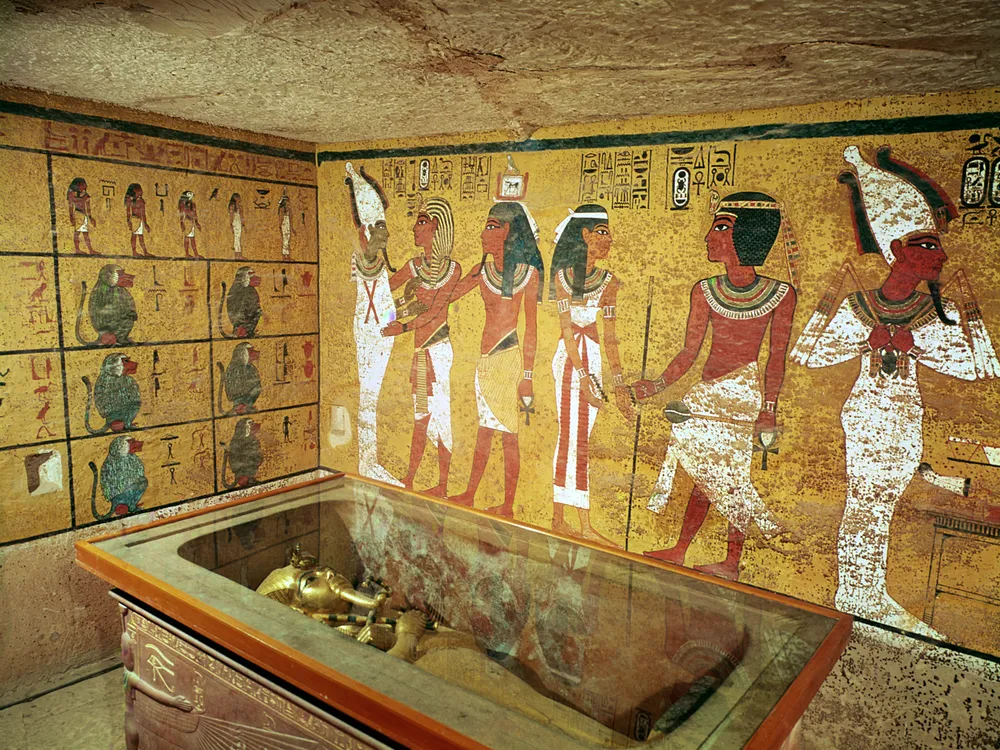
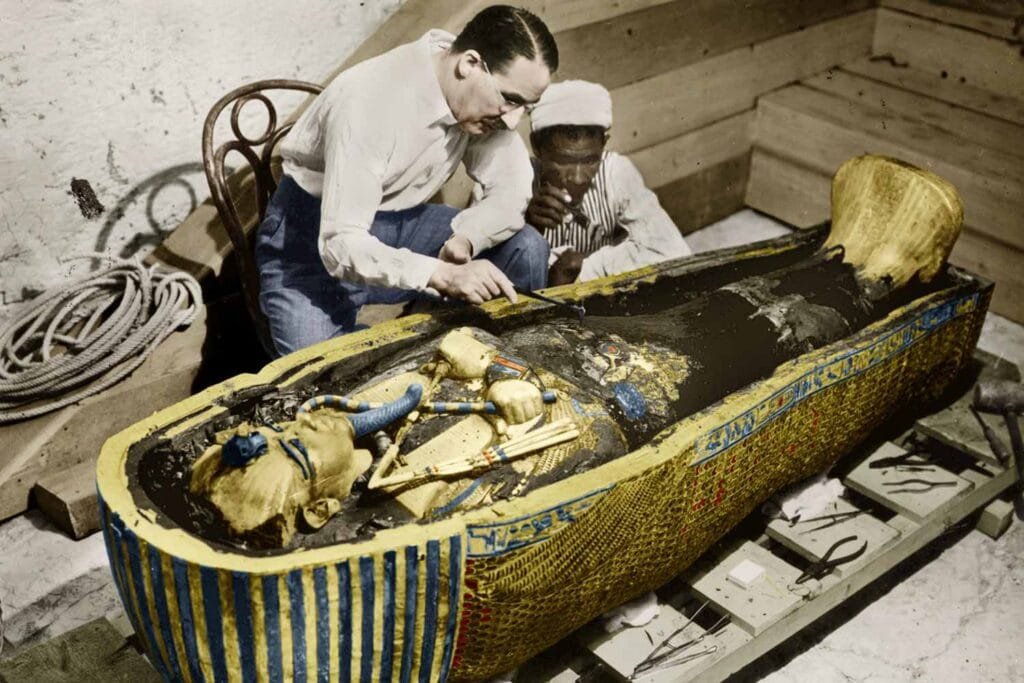
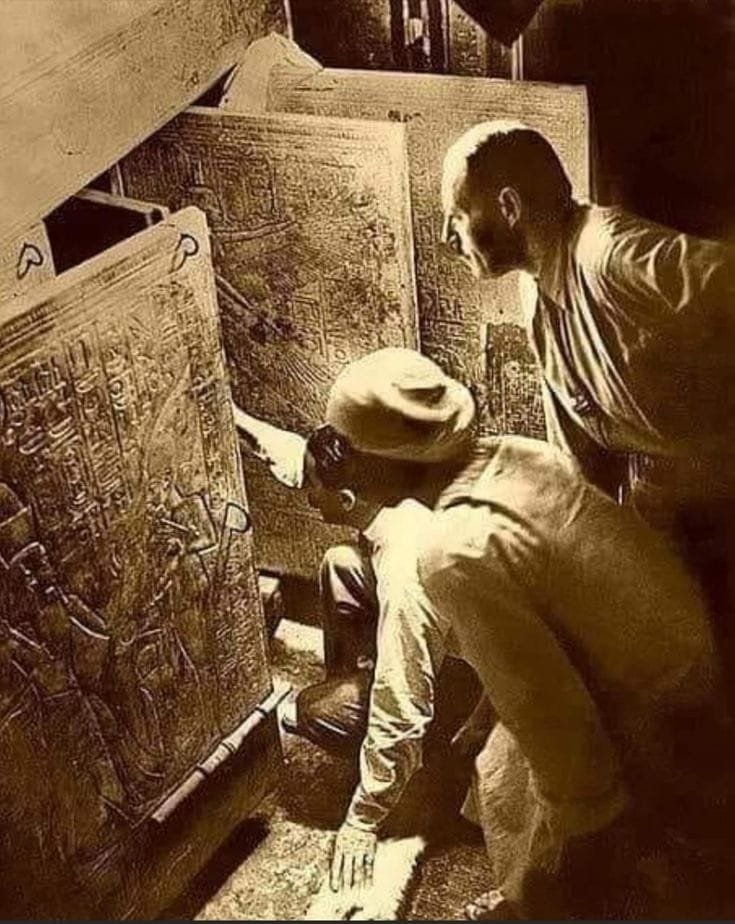
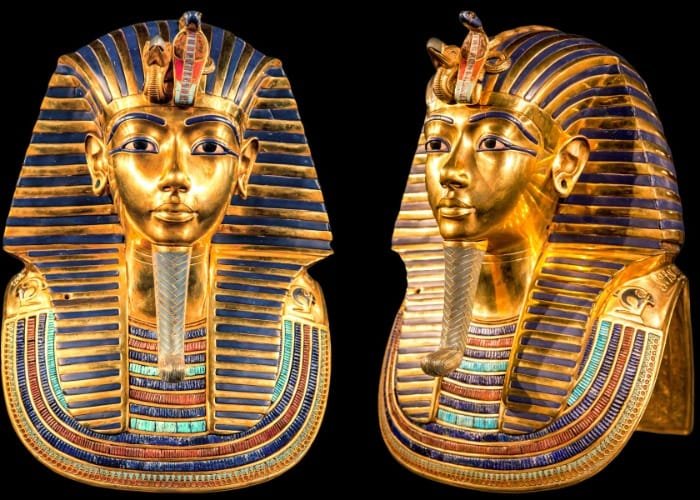
Beyond its artistic beauty, KV9 played a surprising role in one of archaeology’s greatest discoveries. During the construction and later occupation of this tomb, workmen discarded excavation debris outside its entrance, unintentionally covering and helping preserve the nearby entrance to Tutankhamun’s Tomb (KV62). This accidental protection contributed directly to the remarkable preservation of Tutankhamun’s nearly intact burial until its discovery by Howard Carter in 1922. Today, KV9 remains one of the most visited and admired monuments in the Valley of the Kings, offering an unforgettable journey into the religion, astronomy, architecture, and royal traditions of ancient Egypt. This comprehensive guide explores every aspect of KV9, including the lives of Ramesses V and Ramesses VI, its architecture, decoration, religious symbolism, archaeological discoveries, conservation, and visitor experience.
1. Who Were Pharaohs Ramesses V and Ramesses VI?
The Tomb of KV9 is unique among the royal tombs of the Valley of the Kings because it served as the burial place of two pharaohs from Egypt's Twentieth Dynasty—Ramesses V and Ramesses VI. This unusual circumstance reflects the political and economic challenges that characterized the later years of the New Kingdom, when royal succession became increasingly complex and resources available for monumental construction began to decline. Originally commissioned by Ramesses V, the tomb was inherited, enlarged, and completed by Ramesses VI after the former king's relatively short reign. As a result, KV9 preserves the artistic vision and religious beliefs associated with both rulers while providing archaeologists with exceptional insight into the final centuries of Egypt's imperial age. Ramesses V, the son of Ramesses IV, ruled Egypt for only a few years during the early twelfth century BC. His reign appears to have been marked by growing economic difficulties, reduced royal authority, and increasing administrative problems throughout the kingdom. Historical evidence suggests that Egypt experienced financial strain, labor shortages, and possible outbreaks of disease during this period. Although Ramesses V initiated the construction of KV9 according to established Ramesside traditions, his premature death prevented the monument from being fully completed for his burial. Some scholars believe he may have died from illness, while modern examinations of his mummy have revealed evidence of smallpox-like lesions, making him one of the earliest known historical figures possibly affected by the disease. Despite his short reign, Ramesses V remains an important figure because his unfinished tomb became one of the greatest masterpieces of Egyptian funerary art. Following the death of Ramesses V, the throne passed to Ramesses VI, who was probably the brother or uncle of the deceased king. Rather than beginning an entirely new royal tomb, Ramesses VI chose to appropriate KV9, extending its corridors, enlarging its burial chamber, and commissioning one of the most elaborate decorative programs ever created inside a royal tomb. His reign witnessed continuing political decline as Egypt gradually lost influence over its foreign territories, yet the remarkable artistic quality of KV9 demonstrates that royal workshops remained capable of producing works of extraordinary sophistication. Under Ramesses VI, the tomb became an immense theological monument illustrating the king's eternal union with Ra, Osiris, and the divine forces governing the universe. Today, both pharaohs are remembered primarily through KV9, one of the most spectacular monuments in the Valley of the Kings. Although their reigns occurred during a period of political transition, the tomb they share represents the culmination of centuries of artistic development, religious innovation, and architectural mastery. It stands as a lasting testament to the resilience of ancient Egyptian culture during the final decades of the New Kingdom.
2. Construction and Historical Development of KV9
The construction of KV9 began during the reign of Ramesses V, following the long-established architectural traditions developed by the royal craftsmen of Deir el-Medina. By the Twentieth Dynasty, these highly skilled builders possessed generations of experience in designing elaborate royal tombs carved deep into the limestone cliffs of the Valley of the Kings. The original plan called for a straight-axis tomb with descending corridors, ceremonial halls, side chambers, and a spacious burial chamber decorated with sacred religious texts. However, Ramesses V died before the monument could be completed, leaving sections of the tomb unfinished at the time of his burial preparations. When Ramesses VI succeeded to the throne, he made the unusual decision to adopt KV9 as his own royal tomb rather than commission a completely new monument. Extensive modifications followed. The burial chamber was enlarged, additional corridors and chambers were completed, and a magnificent decorative program covering nearly every wall and ceiling was commissioned. These expansions transformed KV9 into one of the largest and most elaborately decorated tombs of the late New Kingdom. The work carried out under Ramesses VI reflects not only practical considerations but also evolving religious concepts, with increased emphasis on cosmic regeneration, solar theology, and the king's eternal rebirth alongside the gods. The exceptional quality of the decoration demonstrates that despite Egypt's declining political influence, the royal workshops still maintained remarkably high artistic standards. One of the most fascinating chapters in KV9's history occurred unintentionally during its construction. Large quantities of limestone rubble excavated from the tomb were dumped near its entrance, gradually covering the nearby entrance to Tutankhamun's Tomb (KV62). Over the centuries, this debris concealed KV62 beneath layers of rock and sediment, protecting it from many of the robbers who plundered other royal tombs. This accidental preservation played a crucial role in the remarkable discovery made by Howard Carter in 1922, when Tutankhamun's nearly intact burial became one of the greatest archaeological finds in history. Few monuments in Egypt have influenced archaeological history as profoundly as KV9. Although KV9 itself suffered ancient robberies, many of its artistic masterpieces survived remarkably well. Later Greek, Roman, and early Christian visitors left inscriptions within parts of the tomb, demonstrating that it remained accessible long after the end of pharaonic civilization. Modern archaeological expeditions have carefully documented every architectural feature, inscription, and decorative scene, making KV9 one of the best-studied royal tombs in the Valley of the Kings.
3. Architecture and Layout of the Tomb of Ramesses V and VI
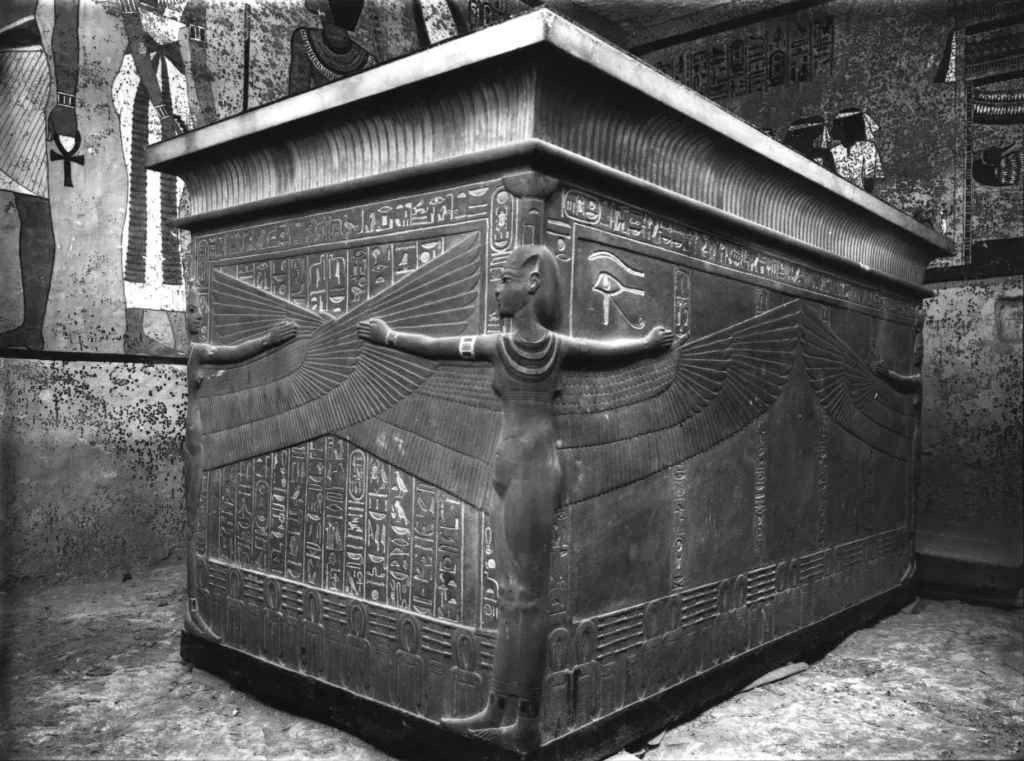
The architecture of KV9 represents one of the greatest achievements of Ramesside royal tomb design. Following the traditional straight-axis plan favored during the New Kingdom, the monument extends deep into the limestone mountain through a carefully organized sequence of descending corridors, monumental gateways, spacious halls, side chambers, and an enormous burial chamber. Every architectural feature was designed according to religious principles that symbolized the king's journey through the underworld before his resurrection as an eternal divine ruler. The modifications introduced by Ramesses VI expanded the monument beyond its original design, creating one of the most impressive architectural compositions in the Valley of the Kings. Visitors enter the tomb through a broad descending staircase leading into a series of long corridors richly decorated with colorful reliefs and hieroglyphic inscriptions. Massive doorways separate each section, symbolizing the sacred gates of the underworld described in the Book of Gates. Side chambers branch from the principal corridor and originally housed funerary equipment, ritual objects, furniture, food offerings, canopic jars, clothing, statues, and countless ceremonial items intended to sustain the king throughout eternity. The spacious proportions of these corridors distinguish KV9 from many earlier royal tombs and provide ideal surfaces for its extensive decorative program. The burial chamber is undoubtedly the architectural centerpiece of KV9. Supported by massive pillars and dominated by one of the most spectacular astronomical ceilings in ancient Egypt, this chamber originally contained the king's granite sarcophagus surrounded by elaborate funerary equipment. The ceiling illustrates complex cosmological scenes depicting the goddess Nut, constellations, solar boats, stars, and divine beings participating in the eternal cycle of the heavens. Surrounding walls feature magnificent representations of Ra, Osiris, Anubis, Isis, Horus, Thoth, and numerous protective deities who accompany the king through the underworld. The harmonious integration of architecture, astronomy, and theology transforms the burial chamber into a symbolic model of the universe itself. One of the most remarkable aspects of KV9 is the exceptional state of preservation of its architectural layout. Despite ancient robberies, the monument remains structurally intact, allowing modern visitors to experience one of the finest examples of New Kingdom royal engineering. The precision of the carved corridors, the monumental scale of the chambers, and the breathtaking decorative program demonstrate why KV9 is widely regarded as one of the greatest masterpieces of ancient Egyptian architecture and one of the highlights of any visit to the Valley of the Kings.
4. The Extraordinary Wall Paintings, Astronomical Ceilings, and Sacred Funerary Texts
The Tomb of KV9 is universally regarded as one of the finest artistic masterpieces in the Valley of the Kings because of its extraordinary decorative program. Nearly every corridor, hall, gateway, and chamber is covered with brilliantly preserved reliefs and colorful paintings that illustrate the religious beliefs of ancient Egypt during the Twentieth Dynasty. Unlike many royal tombs that contain only selected funerary compositions, KV9 presents one of the most comprehensive collections of sacred texts ever assembled inside a single monument. The decoration was designed not only to honor Ramesses VI but also to function as a magical guide that would ensure his successful journey through the underworld, his resurrection alongside Osiris, and his eternal union with the sun god Ra. The exceptional quality of the artwork demonstrates that even during the political decline of the New Kingdom, Egypt's master craftsmen continued producing monuments of astonishing beauty and sophistication. Among the religious texts preserved inside KV9 are the Book of Gates, Book of Caverns, Book of the Earth, Book of the Dead, Litany of Ra, Book of the Heavenly Cow, and the magnificent Book of the Day and Book of the Night. Each composition explains a different aspect of the king's passage through the afterlife. The Book of Gates describes the twelve gates of the underworld that must be crossed during the hours of darkness. The Book of Caverns portrays hidden regions inhabited by gods who reward the righteous and punish the enemies of cosmic order. The Book of the Earth focuses on regeneration beneath the earth, while the Book of the Day and Book of the Night illustrates the continuous movement of the sun through the heavens and underworld. Together, these texts create a complete theological system explaining death, rebirth, divine protection, and eternal existence. The greatest artistic highlight of KV9 is undoubtedly its breathtaking astronomical ceiling. Stretching across the burial chamber, the ceiling depicts the sky goddess Nut, whose elongated body arches over the world while swallowing the evening sun and giving birth to it again each morning. Surrounding Nut are beautifully painted stars, constellations, solar boats, celestial deities, and astronomical symbols representing the movement of heavenly bodies through time. These scenes are among the finest surviving examples of ancient Egyptian cosmology and provide historians with invaluable evidence concerning Egyptian astronomy, religion, and concepts of the universe. The vivid colors—particularly deep blues, bright yellows, rich reds, and crisp whites—remain remarkably well preserved despite more than three thousand years of history. The decorative program also reflects the extraordinary skill of the artisans from Deir el-Medina. Their precise carving techniques, harmonious proportions, elegant hieroglyphs, and sophisticated use of mineral pigments transformed the tomb into a sacred work of art. Modern Egyptologists continue studying every inscription and painted scene because KV9 preserves one of the richest collections of religious literature ever created for a royal burial. As both an artistic masterpiece and a theological encyclopedia, the tomb remains one of the most important monuments of ancient Egypt.
5. The Burial of Ramesses VI, Ancient Tomb Robbery, and the Royal Mummies
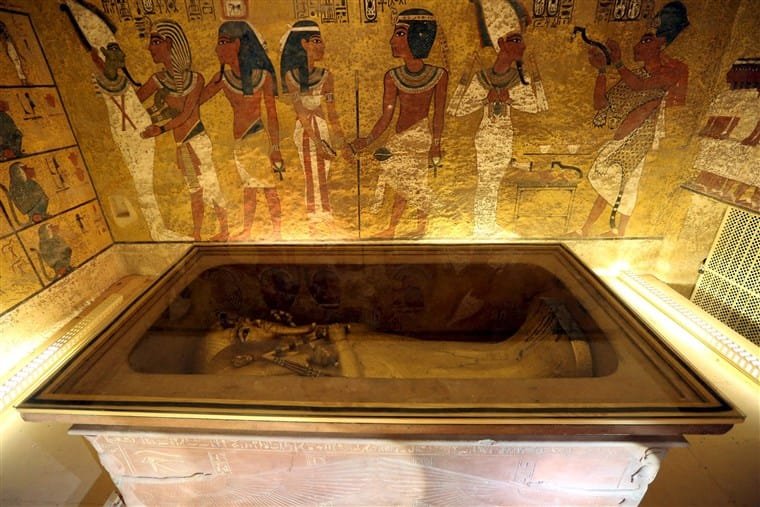
Although KV9 was originally begun for Ramesses V, the tomb ultimately became the final resting place of Ramesses VI, who enlarged and completed the monument before his death. Following traditional New Kingdom funerary customs, the king underwent the elaborate process of mummification lasting approximately seventy days. Priests carefully preserved his body, wrapped it in fine linen, placed protective amulets between the bandages, and performed sacred rituals intended to restore his senses for eternal life. The mummy was then placed inside richly decorated coffins enclosed within a massive stone sarcophagus positioned at the center of the burial chamber. Surrounding the king were valuable treasures, ritual furniture, food offerings, canopic jars, statues, jewelry, weapons, clothing, and countless ceremonial objects intended to sustain him throughout eternity. Despite the elaborate precautions taken during the burial, KV9 eventually fell victim to the widespread wave of tomb robberies that affected the Valley of the Kings during the late New Kingdom and early Third Intermediate Period. Organized groups of robbers entered numerous royal tombs searching for gold, silver, precious stones, and luxury goods that could easily be melted down or sold. Like many other pharaohs, Ramesses VI lost much of his original funerary equipment during these raids. Valuable metals were stripped from coffins and burial objects, while portable treasures disappeared forever. Nevertheless, the robbers generally ignored the painted walls and carved reliefs, allowing the magnificent decorative program of KV9 to survive largely intact. Recognizing the growing danger, priests of the Twenty-first Dynasty organized one of the greatest preservation efforts in ancient history by relocating many royal mummies to secret caches hidden within the Theban hills. The mummies of both Ramesses V and Ramesses VI were eventually transferred to the famous Royal Cache (TT320) at Deir el-Bahari, where they rested alongside rulers such as Seti I, Ramesses II, Thutmose III, and many other New Kingdom pharaohs. This carefully planned operation protected dozens of royal mummies from further desecration and ensured their survival until their rediscovery during the nineteenth century. Modern scientific examinations using X-rays, CT scanning, and forensic analysis have revealed valuable information concerning the health, age, and mummification techniques of both kings. These studies continue contributing to modern understanding of royal medicine, embalming practices, and the physical lives of Egypt's rulers. Together with the magnificent decoration preserved inside KV9, the surviving royal mummies make this monument one of the most important sources for studying the final centuries of the New Kingdom.

6. Archaeological Importance and Modern Scientific Research
The Tomb of KV9 is considered one of the most significant archaeological monuments in Egypt because it preserves an extraordinary combination of architecture, religious literature, astronomical art, and historical evidence. Unlike tombs that are famous primarily for their treasures, KV9 provides scholars with one of the most complete surviving collections of royal funerary texts from the Twentieth Dynasty. Every corridor and chamber contributes valuable information about ancient Egyptian theology, cosmology, artistic techniques, royal ideology, and architectural planning. As a result, KV9 has become one of the most intensively studied monuments in the Valley of the Kings, serving as a primary reference for Egyptologists investigating New Kingdom religion and royal burial customs. Systematic archaeological documentation of KV9 began during the eighteenth and nineteenth centuries when European travelers copied its inscriptions and produced some of the earliest detailed drawings of its spectacular wall paintings. Later scientific expeditions created accurate plans of the architecture, photographed every decorative surface, and carefully recorded each hieroglyphic inscription. These efforts greatly expanded scholarly understanding of the tomb's religious program and revealed how its decorative sequence differs from earlier royal monuments. Researchers also identified evidence showing how Ramesses VI modified and expanded the unfinished tomb originally commissioned for Ramesses V, providing rare insight into the evolution of royal tomb construction during the late New Kingdom. Modern technology has transformed research within KV9. High-resolution digital photography, multispectral imaging, three-dimensional laser scanning, photogrammetry, microscopic pigment analysis, and digital epigraphy now allow scholars to document every detail without damaging the fragile decoration. These methods reveal faded inscriptions invisible to the naked eye, identify ancient restoration work, analyze mineral pigments, and monitor long-term deterioration caused by humidity and tourism. Geological surveys further examine the stability of the surrounding limestone cliffs, ensuring that conservation efforts remain based upon accurate scientific evidence. Today, KV9 continues serving as both an archaeological laboratory and one of the Valley of the Kings' greatest educational resources. Ongoing conservation, digital documentation, and interdisciplinary research continue uncovering new information about ancient Egyptian religion, astronomy, engineering, and artistic achievement. More than three thousand years after its construction, KV9 remains one of the world's finest surviving monuments, preserving the extraordinary legacy of Ramesses V, Ramesses VI, and the final flowering of New Kingdom civilization.

7. Conservation, Restoration, and the Preservation of KV9
The Tomb of KV9 is one of the best-preserved royal monuments in the Valley of the Kings, yet maintaining its remarkable condition requires continuous conservation and scientific monitoring. More than three thousand years of natural weathering, ancient tomb robberies, earthquakes, flash floods, and modern tourism have placed enormous pressure on the monument's delicate painted surfaces and limestone structure. Fortunately, the tomb's elevated location protected it from the severe flood damage experienced by some neighboring tombs, allowing much of its magnificent decoration to survive in exceptional condition. Today, the Egyptian Ministry of Tourism and Antiquities, together with international conservation teams, carries out extensive preservation programs to ensure that KV9 remains accessible while safeguarding one of ancient Egypt's greatest artistic masterpieces. One of the primary conservation challenges involves protecting the colorful wall paintings and astronomical ceilings. Humidity produced by thousands of visitors each year can cause microscopic changes within the limestone and painted plaster. Moisture entering the rock dissolves mineral salts that later crystallize beneath the painted surfaces, gradually causing plaster to crack or separate from the walls. Conservation specialists regularly monitor temperature, humidity, air quality, and carbon dioxide levels throughout the tomb using sophisticated environmental sensors. High-resolution photography, digital microscopy, and multispectral imaging help identify tiny areas of deterioration before they become serious, allowing conservators to stabilize fragile paint layers while preserving every original brushstroke created by the artists of Deir el-Medina. Modern digital technology has revolutionized the preservation of KV9. Three-dimensional laser scanning, photogrammetry, digital epigraphy, and virtual modeling have produced extraordinarily accurate records of every corridor, inscription, ceiling, and architectural feature. These digital archives serve several important purposes. They allow scholars to study the tomb remotely, reduce unnecessary physical contact with fragile surfaces, assist conservators during restoration work, and create permanent records should any future deterioration occur. Geological monitoring also evaluates the structural stability of the surrounding limestone mountain, ensuring that the monument remains secure for generations to come. Visitor management has become equally important in preserving KV9. Carefully designed walking paths, protective barriers, improved lighting systems, restricted touching of surfaces, and regular maintenance all help minimize human impact without reducing the visitor experience. Educational programs encourage responsible tourism while emphasizing the global importance of protecting Egypt's cultural heritage. Thanks to decades of careful conservation, KV9 continues to rank among the finest preserved and most visually spectacular royal tombs anywhere in the world, allowing visitors to admire its extraordinary beauty almost exactly as it appeared during the reign of Ramesses VI.
8. Visiting KV9 Today – One of the Highlights of the Valley of the Kings
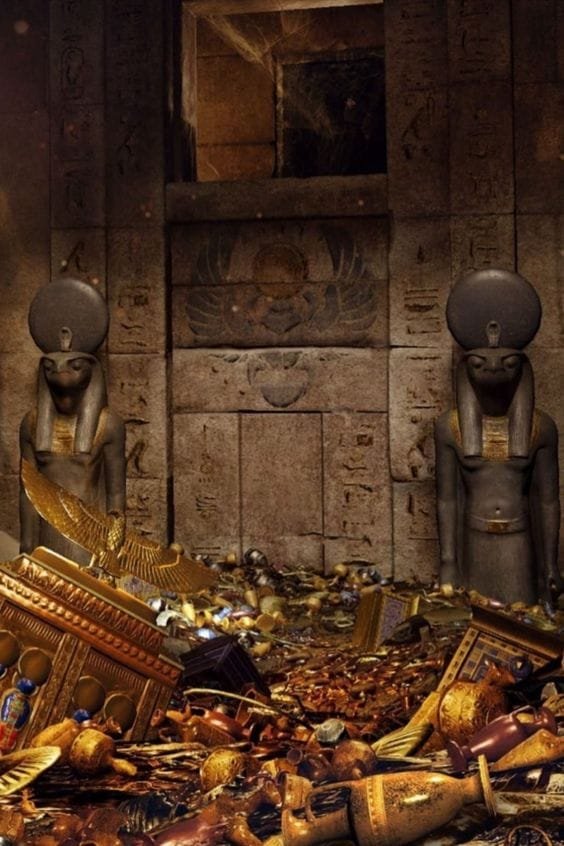
For many travelers, the Tomb of KV9 is one of the absolute highlights of a visit to the Valley of the Kings. Widely regarded as one of the most visually impressive royal tombs open to the public, it offers visitors an unforgettable opportunity to experience the grandeur of ancient Egyptian royal burial traditions. From the moment visitors descend the entrance staircase, they are surrounded by vibrant paintings, beautifully carved hieroglyphs, and some of the finest examples of New Kingdom religious art ever created. The combination of outstanding preservation, spacious architecture, and breathtaking astronomical decoration makes KV9 one of the most rewarding monuments in Luxor. As visitors walk through the long descending corridors, they encounter magnificent scenes illustrating the king's journey through the underworld. The walls display detailed representations of Ra, Osiris, Anubis, Isis, Horus, Thoth, and many other Egyptian deities, accompanied by sacred texts from the Book of Gates, Book of Caverns, Book of the Earth, and the Book of the Dead. Egyptologist guides often explain the meaning of these scenes, helping visitors understand how every corridor represented another stage in the king's eternal voyage through darkness toward resurrection. The remarkable clarity of the hieroglyphs and the vivid preservation of the original pigments create one of the most immersive archaeological experiences in Egypt. The greatest highlight of any visit is undoubtedly the magnificent burial chamber. Here, visitors can admire one of the most famous astronomical ceilings in ancient Egypt, featuring the sky goddess Nut, constellations, stars, solar boats, and celestial deities arranged across a brilliant blue background. These extraordinary paintings provide rare insight into ancient Egyptian astronomy and cosmology while creating an atmosphere unlike any other royal tomb in the valley. The chamber also preserves the remains of the king's granite sarcophagus and beautifully decorated pillars illustrating the pharaoh's eternal union with the gods. KV9 is particularly popular among photographers, historians, archaeologists, and travelers interested in ancient religion because it combines nearly every aspect of New Kingdom royal culture in a single monument. Together with neighboring tombs such as KV17 (Seti I), KV62 (Tutankhamun), KV11 (Ramesses III), and KV2 (Ramesses IV), KV9 offers one of the most complete introductions to the history, architecture, and spiritual beliefs of ancient Egypt. Few monuments provide such a comprehensive and unforgettable experience.
9. Fascinating Facts About KV9 – The Tomb of Ramesses V and Ramesses VI
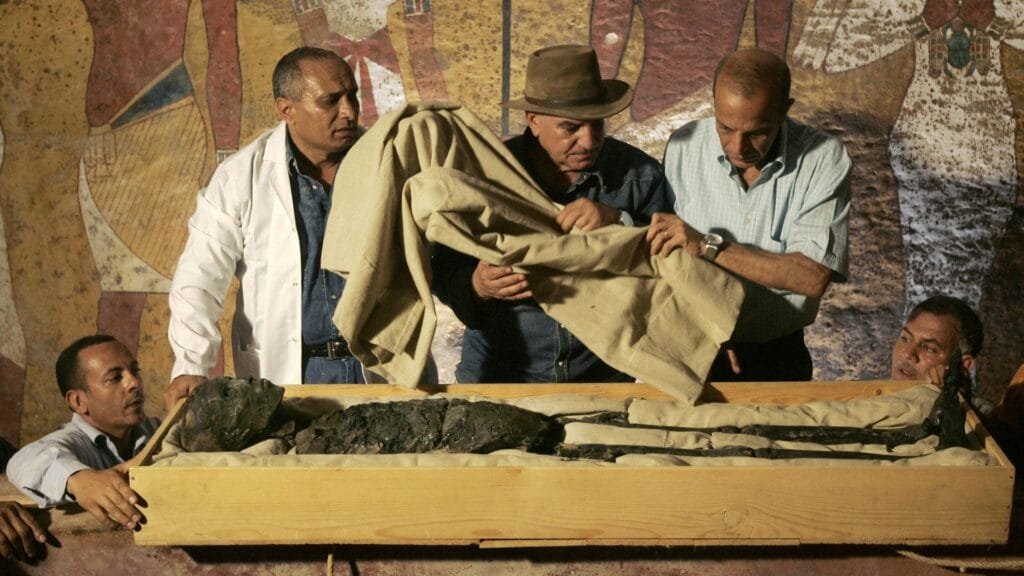
The Tomb of KV9 is filled with remarkable features that distinguish it from every other royal tomb in the Valley of the Kings. One of its most unusual characteristics is that it served as the burial place of two pharaohs—Ramesses V and Ramesses VI. Although Ramesses V originally commissioned the monument, his successor enlarged and completed it, creating one of the most elaborate funerary complexes of the Twentieth Dynasty. This rare architectural history provides Egyptologists with valuable evidence about royal succession, tomb construction, and political conditions during the later years of the New Kingdom. Perhaps the most famous fact about KV9 is its unexpected connection with the discovery of Tutankhamun's Tomb (KV62). During the excavation of KV9, workers discarded huge quantities of limestone rubble outside the entrance. Over time, this debris gradually covered the nearby entrance to KV62, effectively hiding it beneath layers of stone and sand. Because of this accidental protection, Tutankhamun's tomb escaped many of the robberies that devastated other royal burials. When Howard Carter uncovered KV62 in 1922, it became one of the greatest archaeological discoveries in history. Without the construction of KV9, Tutankhamun's treasures might never have survived intact. Another fascinating aspect of KV9 is its extraordinary astronomical decoration. The burial chamber ceiling is considered one of the finest surviving examples of ancient Egyptian cosmological art anywhere in the world. The beautiful figure of the sky goddess Nut, together with celestial boats, stars, constellations, and divine beings, illustrates sophisticated religious ideas concerning the movement of the sun, the structure of the universe, and the eternal cycle of life, death, and rebirth. Historians studying ancient astronomy frequently regard KV9 as one of the most important visual sources for understanding Egyptian cosmology. In addition to its artistic brilliance, KV9 remains one of the best-preserved royal tombs in Egypt. Its colorful reliefs, extensive religious texts, impressive architectural design, and outstanding state of conservation continue attracting archaeologists and visitors from across the globe. More than three thousand years after its completion, KV9 stands as one of the crowning achievements of New Kingdom architecture and one of the greatest surviving masterpieces of ancient Egyptian civilization.

10. KV9 Compared with Other Tombs in the Valley of the Kings
The Tomb of KV9 is widely regarded as one of the greatest royal tombs in the Valley of the Kings, standing alongside monuments such as KV17 (Seti I), KV62 (Tutankhamun), KV7 (Ramesses II), and KV11 (Ramesses III). While every royal tomb possesses unique historical and artistic qualities, KV9 distinguishes itself through the exceptional completeness of its religious decoration, the brilliance of its astronomical ceilings, and its unusual association with two pharaohs—Ramesses V and Ramesses VI. Unlike many monuments that emphasize either architecture or decoration, KV9 successfully combines monumental engineering, theological sophistication, and artistic excellence into a single masterpiece. For historians and travelers alike, it represents one of the finest surviving examples of Twentieth Dynasty royal funerary architecture. When compared with KV17, the magnificent tomb of Seti I, similarities in artistic ambition become immediately apparent. Both tombs preserve extensive religious texts and beautifully carved reliefs that illustrate the king's journey through the underworld. However, KV17 is generally admired for the elegance of its sculpted reliefs and delicate painting style, while KV9 is especially celebrated for its spectacular astronomical ceilings and comprehensive collection of funerary compositions. In contrast with KV62 (Tutankhamun), which gained worldwide fame because of its extraordinary treasures, KV9 contains relatively few surviving burial objects due to ancient robberies. Nevertheless, the artistic decoration of KV9 is vastly more elaborate than that of Tutankhamun's small burial chamber, making it one of the best places to study ancient Egyptian religious beliefs. KV9 also shares important similarities with nearby Ramesside tombs such as KV2 (Ramesses IV), KV6 (Ramesses IX), and KV11 (Ramesses III). All follow the classic straight-axis architectural plan developed during the New Kingdom and include scenes from sacred funerary texts such as the Book of Gates, Book of Caverns, and Book of the Dead. However, KV9 surpasses most of these monuments in the sheer variety of religious compositions represented within its walls. The inclusion of the Book of the Day, Book of the Night, Book of the Earth, and the magnificent astronomical ceiling makes KV9 one of the most theologically complete royal tombs ever discovered. This exceptional diversity provides Egyptologists with an unparalleled opportunity to study the evolution of New Kingdom religious thought. For modern visitors exploring the Valley of the Kings, KV9 consistently ranks among the most memorable tombs. Its spacious corridors, vivid colors, extraordinary preservation, and breathtaking celestial artwork create an unforgettable experience that complements visits to every other royal monument in the valley. Whether viewed from an artistic, architectural, historical, or religious perspective, KV9 remains one of ancient Egypt's greatest masterpieces and an essential stop for anyone wishing to understand the civilization of the pharaohs.
11. Conclusion – Why KV9 Is One of Ancient Egypt's Greatest Royal Tombs
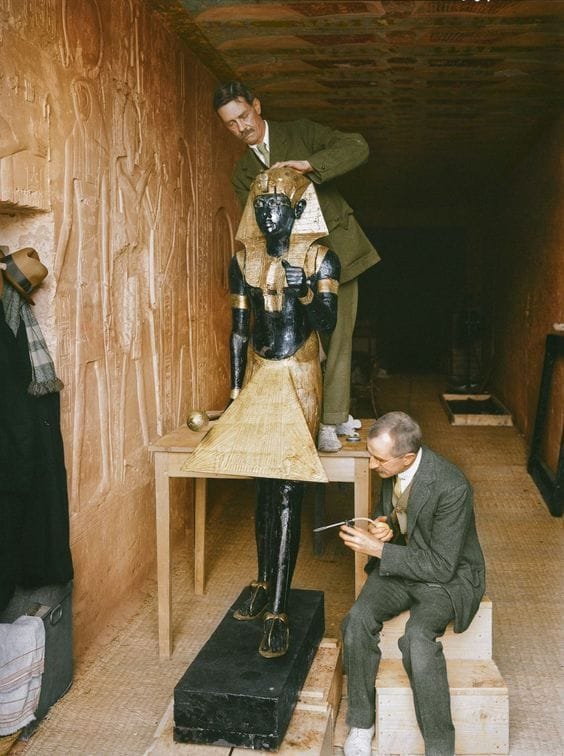
The Tomb of KV9 represents the culmination of centuries of architectural innovation, artistic excellence, and religious development within the Valley of the Kings. Originally begun for Ramesses V and magnificently expanded by Ramesses VI, the monument preserves one of the richest collections of funerary texts and astronomical artwork ever created in ancient Egypt. Every corridor, gateway, and chamber reflects the profound spiritual beliefs that shaped New Kingdom royal burial traditions, transforming the tomb into both a sacred temple of resurrection and an enduring work of art. More than three thousand years after its completion, KV9 continues to inspire admiration from archaeologists, historians, artists, and travelers around the world. The monument is equally important from a historical perspective. Its association with two pharaohs provides rare insight into royal succession during the later Twentieth Dynasty, while its accidental role in concealing the entrance to Tutankhamun's Tomb (KV62) forever linked KV9 with one of archaeology's greatest discoveries. Modern research using digital imaging, laser scanning, pigment analysis, and conservation science continues revealing new details about its construction, decoration, and theological symbolism. Every inscription and painted figure contributes to a deeper understanding of ancient Egyptian religion, astronomy, architecture, and royal ideology during the final centuries of the New Kingdom. For visitors to Luxor, KV9 offers one of the most extraordinary experiences available anywhere in Egypt. Walking beneath its magnificent astronomical ceilings, observing brilliantly preserved scenes of the sky goddess Nut, and following the sacred journey of the king through the underworld creates an unforgettable connection with one of history's greatest civilizations. The monument's exceptional preservation allows modern audiences to experience the beauty and sophistication of ancient Egyptian art almost exactly as royal priests and craftsmen intended over three millennia ago. Whether you are researching ancient Egyptian history, planning a tour of the Valley of the Kings, or seeking to understand the religious beliefs of the pharaohs, KV9 deserves recognition as one of the world's most important archaeological monuments. Its remarkable architecture, breathtaking decoration, historical significance, and continuing scientific importance ensure that it will remain one of the crowning achievements of ancient Egyptian civilization for generations to come.
12. Frequently Asked Questions About KV9 – The Tomb of Ramesses V and Ramesses VI
The Tomb of KV9 is one of the most visited royal monuments in the Valley of the Kings, and travelers frequently ask why it is considered so exceptional. The answer lies in its remarkable combination of history, art, architecture, and religion. KV9 served as the burial place of both Ramesses V and Ramesses VI, making it one of the very few royal tombs associated with two pharaohs. It also preserves one of the most complete collections of ancient Egyptian funerary literature, including the Book of Gates, Book of Caverns, Book of the Earth, Book of the Dead, Book of the Day, Book of the Night, and the Litany of Ra. Combined with its spectacular astronomical ceilings, these features make KV9 one of the finest examples of New Kingdom funerary art. Another common question concerns the famous connection between KV9 and Tutankhamun's Tomb (KV62). During the excavation and enlargement of KV9, workers dumped limestone rubble outside the entrance. Over time, these spoil heaps buried the nearby entrance to KV62, unintentionally protecting Tutankhamun's tomb from many of the ancient robbers who plundered other royal burials. This accidental preservation played a crucial role in the remarkable discovery made by Howard Carter in 1922, making KV9 indirectly responsible for one of the greatest archaeological finds in history. Few monuments have influenced Egyptology in such an unexpected way. Visitors also ask whether the royal mummies of Ramesses V and Ramesses VI remain inside KV9. The answer is no. Like many New Kingdom rulers, both kings were removed from their original burial place by priests of the Twenty-first Dynasty after increasing tomb robberies threatened the royal necropolis. Their mummies were transferred to the famous Royal Cache (TT320) at Deir el-Bahari, where they remained hidden until their rediscovery during the nineteenth century. Modern CT scanning and forensic examinations have provided valuable information about the health, age, and mummification of both rulers, adding significantly to historical knowledge of the later New Kingdom. Today, KV9 remains one of the greatest attractions in Luxor and a highlight of every visit to the Valley of the Kings. Its extraordinary preservation, magnificent religious artwork, unparalleled astronomical ceilings, and unique historical significance continue attracting scholars and visitors from around the world. As one of the masterpieces of ancient Egyptian architecture and theology, KV9 offers an unforgettable journey into the beliefs, artistry, and enduring legacy of the civilization of the pharaohs.
