

- Excursions in Egypt
- Egypt Tour Packages
- Cairo Tours and Excursions
- Hurghada Tours and Excursions
- Soma Bay Tours and Excursions
- Makadi Bay Tours and Excursions
- Sahl Hasheesh Tours and Excursions
- El Gouna Tours and Excursions
- Marsa Alam Tours and Excursions
- Port Ghalib Tours and Excursions
- El Quseir Tours and Excursions
- Dendera and Abydos Day Tours
- Aswan Tours and Excursions
- Luxor Tours and Excursions
- Alexandria Egypt Tours and Excursions
- Sharm El Sheikh Tours and Excursions
- Top Rated Egypt Tours in 2026
- Optional Excursions in Egypt
- Private Transfer
- Blogs About egypt
- Ancient Egypt
- Why Egypt Is One of the Safest Countries to Visit in the Middle East
- What You Need To know Before Your First Trip To Egypt
- Egypt Travel Costs in 2026 Full Budget Guide
- Top 10 Tourist Activities in Egypt
- Top 50 Activities You Can’t Miss in Egypt in 2026
- The Guide to Guided Tours in Egypt
- Egypt’s Ancient and Modern History
- The Nile River
- The Deserts of Egypt
- Historical Sites in Egypt
- Cairo
- Alexandria
- Luxor
- Aswan
- The Red Sea
- Dendera Temple
- El Fayoum Oasis
- Bahariya Oasis
- Siwa Oasis
- Al Alamein
- Marsa Matruh
- Ancient Egyptian gods
- famous Egyptian dishes
- UNESCO World Heritage sites
- About Us
- Egypt Hotels and Resorts
- Excursions in Egypt
- Egypt Tour Packages
- Cairo Tours and Excursions
- Hurghada Tours and Excursions
- Soma Bay Tours and Excursions
- Makadi Bay Tours and Excursions
- Sahl Hasheesh Tours and Excursions
- El Gouna Tours and Excursions
- Marsa Alam Tours and Excursions
- Port Ghalib Tours and Excursions
- El Quseir Tours and Excursions
- Dendera and Abydos Day Tours
- Aswan Tours and Excursions
- Luxor Tours and Excursions
- Alexandria Egypt Tours and Excursions
- Sharm El Sheikh Tours and Excursions
- Top Rated Egypt Tours in 2026
- Optional Excursions in Egypt
- Private Transfer
- Blogs About egypt
- Ancient Egypt
- Why Egypt Is One of the Safest Countries to Visit in the Middle East
- What You Need To know Before Your First Trip To Egypt
- Egypt Travel Costs in 2026 Full Budget Guide
- Top 10 Tourist Activities in Egypt
- Top 50 Activities You Can’t Miss in Egypt in 2026
- The Guide to Guided Tours in Egypt
- Egypt’s Ancient and Modern History
- The Nile River
- The Deserts of Egypt
- Historical Sites in Egypt
- Cairo
- Alexandria
- Luxor
- Aswan
- The Red Sea
- Dendera Temple
- El Fayoum Oasis
- Bahariya Oasis
- Siwa Oasis
- Al Alamein
- Marsa Matruh
- Ancient Egyptian gods
- famous Egyptian dishes
- UNESCO World Heritage sites
- About Us
- Egypt Hotels and Resorts
Welcome to
Unfinished Obelisk: A Glimpse into Ancient Engineering
Hidden within the ancient granite quarries of Aswan lies one of the most fascinating archaeological discoveries in the country—the remarkable Unfinished Obelisk. Unlike completed monuments that stand tall across Egypt, this massive obelisk remains attached to the bedrock, offering a rare and invaluable insight into the techniques and challenges of ancient Egyptian stonework. It is not just a monument, but a frozen moment in the process of creation, revealing how one of the most iconic symbols of ancient Egypt was actually made.
Believed to date back to the reign of Hatshepsut during the 18th Dynasty, the obelisk was intended to be the largest ever constructed, measuring over 40 meters in length and weighing more than 1,000 tons. Had it been completed, it would have surpassed all other obelisks in scale and ambition. However, a large crack appeared in the stone during the carving process, forcing the ancient workers to abandon the project entirely. This unexpected flaw transformed the obelisk into a unique archaeological treasure.
Today, the site allows visitors to see the precise methods used by ancient craftsmen, including the tool marks left behind by pounding stones and the trenches carved around the monument. These details provide direct evidence of the extraordinary skill, planning, and effort required to shape such massive structures. The Unfinished Obelisk stands as a powerful reminder that even in one of the greatest civilizations in history, not every project reached completion—but every attempt contributed to knowledge and innovation.

1. The Granite Quarries of Aswan: Source of Monumental Stone
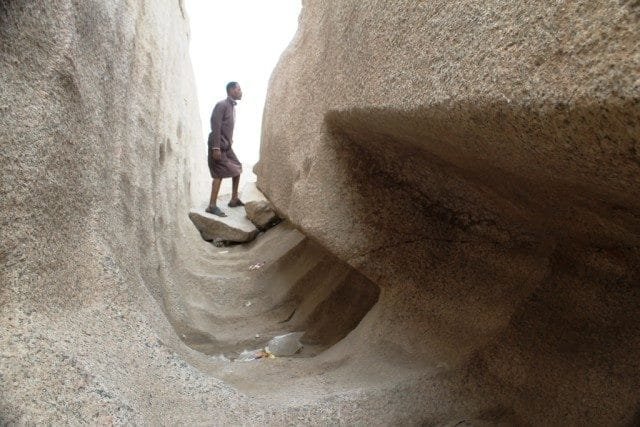
The Unfinished Obelisk is located within the historic granite quarries of Aswan, which once provided the essential building material for many of ancient Egypt’s most iconic monuments. From towering obelisks to massive temple columns, the high-quality red granite extracted from these quarries was highly valued for its strength, durability, and distinctive appearance. It played a fundamental role in the construction of major sites across Egypt, including those in Luxor and Karnak. The quarry landscape itself reveals a powerful story of ancient industry and human effort. Massive sections of stone were carefully cut directly from the bedrock, a process that required precision, organization, and immense physical labor. Evidence of this work can still be seen today in the form of partially cut stone blocks, abandoned sections, and clear tool marks, all of which highlight the complexity of extracting such enormous materials. More than just the location of a single unfinished monument, these quarries represent the foundation of ancient Egyptian construction. They reflect a highly organized system of labor and advanced engineering knowledge that enabled one of the greatest civilizations in history to build on a truly monumental scale.
2. Ancient Tools and Techniques: Carving the Impossible
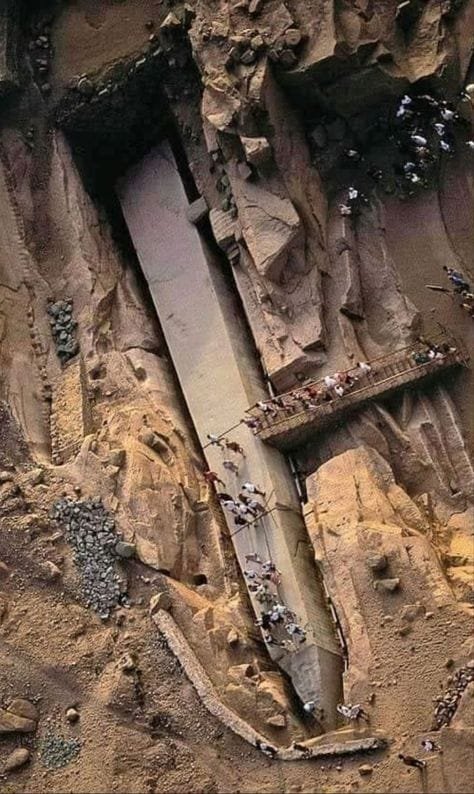
One of the most fascinating aspects of the Unfinished Obelisk is the clear evidence it provides of the tools and techniques used by ancient Egyptian workers. Unlike modern machinery, these craftsmen relied on simple yet effective methods to shape the hardest stone. Dolerite pounding stones were used to chip away at the granite, gradually forming the desired shape. The surface of the obelisk still bears the marks of these tools, offering a direct connection to the hands that worked on it thousands of years ago. Long trenches were carved around the obelisk to separate it from the surrounding rock, a process that required both precision and patience. Workers had to ensure that the stone remained intact while removing the material around it. This method highlights the incredible skill and determination of ancient Egyptian laborers. Despite limited technology, they were able to achieve remarkable results through careful planning and teamwork. The Unfinished Obelisk provides one of the clearest examples of how ancient engineering was carried out in practice.
3. The Crack That Stopped History
The story of the Unfinished Obelisk is defined by a single critical moment—the appearance of a large crack in the granite. As the workers continued to carve the obelisk, this flaw became increasingly visible, threatening the structural integrity of the entire monument. In a project of such scale, even a small weakness could lead to complete failure. Recognizing the risk, the builders made the difficult decision to abandon the obelisk entirely. This choice reflects a practical understanding of engineering limitations, showing that even in ancient times, quality and stability were essential considerations. Rather than risk transporting a damaged structure, the project was left unfinished. Today, this crack is what makes the obelisk so valuable to historians and archaeologists. It provides insight into the challenges faced by ancient builders and the decisions they had to make. The unfinished state of the monument transforms it into a powerful lesson in both ambition and limitation, revealing that even the greatest civilizations encountered obstacles they could not overcome.
4. Precision and Planning: Designing a Monument in Stone
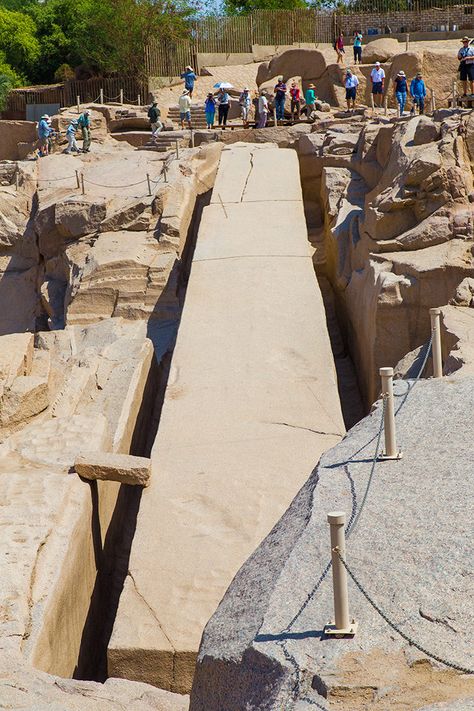
The creation of the Unfinished Obelisk required exceptional precision and careful planning, reflecting the advanced engineering knowledge of ancient Egypt. Before any carving began, the workers had to outline the full shape and dimensions of the obelisk directly onto the bedrock. This step was crucial to ensure perfect proportions and structural balance throughout the process. Ancient craftsmen relied on simple but effective tools such as measuring cords, straight edges, and leveling techniques to maintain accuracy. Even the smallest mistake could result in structural weakness or cracks, which would ultimately ruin the entire monument. This level of detail highlights how important planning and precision were in ancient Egyptian construction. The unfinished state of the Unfinished Obelisk offers a rare and valuable insight into the construction process, revealing that monumental architecture was not only about size and strength, but also about precision, planning, and technical mastery. It stands as a powerful testament to the advanced skills and ingenuity of ancient Egyptian builders.

5. The Challenge of Transportation: Moving a Giant Across Egypt
If the Unfinished Obelisk had been completed, transporting it would have been one of the most challenging stages of the entire project. Weighing more than 1,000 tons, moving such an enormous structure would have required precise planning, coordinated teamwork, and highly effective engineering solutions. Ancient Egyptians are believed to have transported heavy stones using large wooden sledges, pulling them across prepared surfaces. Water may have been used to reduce friction and make the movement smoother and more efficient. Once the obelisk reached the Nile, it would have been placed onto a specially designed barge and transported along the river to its final destination. Although this obelisk was never moved, it offers valuable insight into the logistical complexity of ancient construction. It shows that creating a monument was only part of the challenge—transporting and positioning it was equally important. This reflects the remarkable organizational and engineering capabilities of ancient Egyptian society.
6. A Living Museum: Understanding Ancient Techniques Today
Today, the Unfinished Obelisk serves as a unique open-air museum, providing an extraordinary opportunity to understand ancient construction techniques in their original context. Unlike finished monuments, where the process is hidden, this site reveals every stage of the work in clear and visible detail. Visitors can walk around the obelisk and observe the deep trenches carved into the surrounding rock, as well as the tool marks left by ancient workers. These details create a direct and tangible link to the past, allowing visitors to imagine the effort and skill required to shape such a massive structure using simple tools. This accessibility makes the site one of the most educational archaeological locations in Egypt. It transforms history into a real experience, offering insight not only into how ancient Egyptians built their monuments, but also into the dedication and ingenuity that made their achievements possible.
7. Labor and Organization: The Human Effort Behind the Stone
The creation of the Unfinished Obelisk was not the work of a few individuals, but the result of a highly organized workforce operating with discipline and coordination. Hundreds of laborers, skilled craftsmen, and supervisors would have been involved in the process, each contributing to different stages of carving and shaping the granite. This level of organization reflects the strength of ancient Egyptian administration. Workers had to be supplied with tools, food, and water, while maintaining a consistent workflow in the harsh conditions of the quarry. The ability to manage such a large-scale operation highlights the efficiency and planning behind ancient construction projects. The site serves as a reminder that behind every monumental structure in Egypt was a vast human effort. It brings attention not only to kings and architects, but also to the العمال who transformed raw stone into symbols of eternity. Their work, though often unrecorded, remains visible in every mark left on the obelisk.
8. Symbolism of the Obelisk: Power, Sunlight, and Eternity
Obelisks held deep symbolic meaning in ancient Egyptian culture, and the Unfinished Obelisk was intended to carry that same significance. These tall, tapering monuments were associated with the sun god Ra and were believed to represent a ray of sunlight frozen in stone. They were often placed at the entrances of temples to symbolize divine presence and cosmic order. The smooth surfaces of obelisks were typically inscribed with hieroglyphs praising the pharaoh and the gods, reinforcing the connection between political power and divine authority. Their vertical form directed attention upward, linking the earth with the heavens and emphasizing the eternal nature of the king’s rule. Although this obelisk was never completed or erected, its intended purpose still provides valuable insight into ancient beliefs. It reflects how architecture was used not only for decoration or function, but also as a powerful expression of religion and ideology.
9. Visiting the Site: A Direct Connection to the Past
A visit to the Unfinished Obelisk offers a unique and immersive experience that differs from other historical sites in Egypt. Instead of observing a finished monument, visitors encounter a project frozen in time, allowing them to see the actual process of construction rather than just the final result. Walking through the quarry, visitors can closely examine the scale of the obelisk and the techniques used to carve it. The visible tool marks, trenches, and unfinished surfaces provide a hands-on understanding of ancient engineering that cannot be found elsewhere. It creates a sense of connection between the modern observer and the ancient worker. This experience makes the site both educational and memorable. It transforms history into something tangible and real, offering insight into the challenges, decisions, and achievements of ancient Egyptian civilization. The Unfinished Obelisk stands not only as a monument, but as a story still being told through stone.
10. Engineering Lessons: What the Obelisk Teaches Us Today
The Unfinished Obelisk serves as an invaluable source of knowledge for modern engineers and historians alike. By studying its unfinished state, experts can better understand the step-by-step methods used by ancient Egyptian builders, from initial planning to the carving process. It provides a rare opportunity to analyze techniques that are otherwise hidden in completed monuments. The site emphasizes the importance of precision, patience, and risk management in large-scale construction. The crack that ultimately halted the project reveals that even the most skilled builders had to confront natural limitations and unforeseen challenges. It highlights the reality that engineering—both in ancient times and today—is a continuous process of problem-solving, adaptation, and careful decision-making. Today, the obelisk continues to educate and inspire. It bridges the gap between past and present, showing that the principles of design, planning, and execution remain timeless. It stands as a lasting lesson in both ambition and practical decision-making.
11. Tourism and Education: A Must-Visit in Aswan
As one of the most unique archaeological sites in Aswan, the Unfinished Obelisk attracts visitors from around the world who are eager to understand how ancient monuments were created. Its open and accessible layout allows tourists to explore the site freely, making it both engaging and educational. Guided tours often provide deeper insights into the techniques used, the historical context of the project, and the reasons behind its abandonment. Visitors leave not only with photos, but with a clearer understanding of the effort and skill required to build ancient Egypt’s most iconic structures. The site plays an important role in promoting cultural tourism and preserving historical knowledge. It adds depth to the visitor experience in Aswan, complementing the region’s temples and monuments with a behind-the-scenes look at ancient construction.
12. The Timeless Message: Ambition Meets Reality
The story of the Unfinished Obelisk carries a powerful and timeless message. It represents both the ambition of a civilization that sought to build on a monumental scale and the reality that not every project reaches completion. This balance between vision and limitation makes the site deeply human and relatable. The abandoned obelisk reminds us that even the greatest achievements require careful execution and sometimes difficult decisions. Rather than being a failure, it stands as evidence of learning, adaptation, and respect for structural integrity. In this way, the Unfinished Obelisk becomes more than an archaeological site—it becomes a symbol of the creative process itself. It reflects the challenges faced by builders across time and highlights the enduring pursuit of excellence that defines human civilization.
13. The Scale of Ambition: A Monument That Could Have Been the Largest
The Unfinished Obelisk represents one of the most ambitious construction projects ever attempted in ancient Egypt. Had it been completed, it would have stood as the largest obelisk ever created, surpassing all others in both size and weight. This extraordinary scale reflects the confidence and vision of the civilization that sought to shape massive blocks of stone into symbols of eternity. Its unfinished form allows visitors to fully appreciate the sheer magnitude of the project. Unlike completed obelisks that stand upright and polished, this one lies embedded in the bedrock, revealing its full length and volume in a way that is rarely seen. The size alone demonstrates the boldness of ancient Egyptian engineering and their willingness to push the limits of what was possible. This sense of ambition is what makes the site so powerful. It is a reminder that ancient builders were not only skilled but also fearless in their designs, constantly striving to achieve greater scale and perfection in their monuments.
14. The Surrounding Quarry: A Landscape of Ancient Industry
The Unfinished Obelisk is part of a vast quarry landscape that once functioned as a major center of stone production in Aswan. This region supplied high-quality granite used in the construction of temples, statues, and monumental structures across ancient Egypt, making it one of the most important industrial zones of the ancient world. As visitors walk through the quarry, they can observe clear evidence of continuous activity, including partially cut stone blocks and visible tool marks carved into the bedrock. These features reveal a highly active and organized environment where workers were constantly extracting and shaping stone for large-scale building projects. The quarry itself stands as a historical record of ancient labor, skill, and productivity. Understanding this broader context enhances the significance of the Unfinished Obelisk. It was not an isolated project, but part of a complex and well-coordinated system that supported the grand architectural achievements of ancient Egyptian civilization.
15. A Unique Perspective: Seeing the Process, Not Just the Result
What makes the Unfinished Obelisk truly unique is the perspective it offers on ancient construction. Most monuments in Egypt are admired for their finished beauty, but this site reveals the process behind that perfection. It allows visitors to understand not just what was built, but how it was built. By observing the unfinished surfaces, the carved trenches, and the visible tool marks, visitors gain a deeper appreciation for the effort and skill required to create such massive structures. It transforms the experience from simple observation into active understanding, bridging the gap between past and present. This perspective makes the site invaluable for both education and inspiration. It highlights the importance of process, effort, and learning, reminding us that every great achievement begins with careful planning and hard work—even if the final result is never completed.
16. The Experience of Visiting: Walking Through Ancient Effort
Visiting the Unfinished Obelisk is a unique experience that allows travelers to step directly into the working environment of ancient Egyptian craftsmen. Unlike temples and tombs that present a finished vision, this site exposes the raw process of creation, offering a deeper and more personal connection to history. As visitors walk around the massive stone, they can clearly see the trenches cut into the bedrock and the tool marks left behind thousands of years ago. These details create a vivid impression of the effort, precision, and physical labor required to shape such an enormous monument. The scale of the obelisk becomes even more impressive when viewed up close. This experience transforms history into something tangible and real. It allows visitors to imagine the workers, the tools, and the challenges they faced, creating a strong emotional connection to the past that goes beyond simple observation.
17. Preservation and Importance: Protecting a Unique Site
Today, the Unfinished Obelisk is carefully preserved as one of Egypt’s most important archaeological sites. Its value lies not only in its size, but also in the insight it provides into ancient construction techniques and decision-making processes. Protecting the site ensures that future generations can continue to learn from this extraordinary example of unfinished work. Conservation efforts focus on maintaining the integrity of the stone while allowing visitors to explore the site safely. The balance between preservation and accessibility is essential, as it allows the obelisk to remain both protected and educational. The importance of this site extends beyond Egypt. It contributes to global understanding of ancient engineering and highlights the need to preserve cultural heritage worldwide. It stands as a reminder that even incomplete monuments hold immense historical value.
18. The Legacy of the Unfinished Obelisk: A Story of Ambition and Reality
The story of the Unfinished Obelisk is ultimately one of ambition, skill, and reality. It reflects a civilization that aimed to achieve greatness, pushing the limits of what was possible in stone. At the same time, it reveals that even the most advanced builders faced challenges that could not always be overcome. Rather than representing failure, the unfinished obelisk stands as a powerful symbol of the creative process. It shows that progress often comes through experimentation, learning, and sometimes difficult decisions. Its incomplete form gives it a unique character, making it one of the most informative and meaningful sites in Egypt. Today, it continues to inspire visitors, historians, and engineers alike. Its legacy is not defined by what it became, but by what it teaches—a timeless lesson about human ambition, resilience, and the pursuit of excellence.
