- Excursions in Egypt
- Egypt Tour Packages
- Cairo Tours and Excursions
- Hurghada Tours and Excursions
- Soma Bay Tours and Excursions
- Makadi Bay Tours and Excursions
- Sahl Hasheesh Tours and Excursions
- El Gouna Tours and Excursions
- Marsa Alam Tours and Excursions
- Port Ghalib Tours and Excursions
- El Quseir Tours and Excursions
- Dendera and Abydos Day Tours
- Aswan Tours and Excursions
- Luxor Tours and Excursions
- Sharm El Sheikh Tours and Excursions
- Top Rated Egypt Tours in 2026
- Optional Excursions in Egypt
- Private Transfer
- Blogs About egypt
- Ancient Egypt
- Historical Sites in Egypt
- Cairo
- Alexandria
- Luxor
- Aswan
- The Red Sea
- Dendera Temple
- El Fayoum Oasis
- Bahariya Oasis
- Siwa Oasis
- Al Alamein
- Marsa Matruh
- Why Egypt Is One of the Safest Countries to Visit in the Middle East
- What You Need To know Before Your First Trip To Egypt
- Egypt Travel Costs in 2026 Full Budget Guide
- Top 10 Tourist Activities in Egypt
- Top 50 Activities You Can’t Miss in Egypt in 2026
- The Guide to Guided Tours in Egypt
- Egypt’s Ancient and Modern History
- The Nile River
- The Deserts of Egypt
- Ancient Egyptian gods
- famous Egyptian dishes
- UNESCO World Heritage sites
- About Us
- Egypt Hotels and Resorts
- Excursions in Egypt
- Egypt Tour Packages
- Cairo Tours and Excursions
- Hurghada Tours and Excursions
- Soma Bay Tours and Excursions
- Makadi Bay Tours and Excursions
- Sahl Hasheesh Tours and Excursions
- El Gouna Tours and Excursions
- Marsa Alam Tours and Excursions
- Port Ghalib Tours and Excursions
- El Quseir Tours and Excursions
- Dendera and Abydos Day Tours
- Aswan Tours and Excursions
- Luxor Tours and Excursions
- Sharm El Sheikh Tours and Excursions
- Top Rated Egypt Tours in 2026
- Optional Excursions in Egypt
- Private Transfer
- Blogs About egypt
- Ancient Egypt
- Historical Sites in Egypt
- Cairo
- Alexandria
- Luxor
- Aswan
- The Red Sea
- Dendera Temple
- El Fayoum Oasis
- Bahariya Oasis
- Siwa Oasis
- Al Alamein
- Marsa Matruh
- Why Egypt Is One of the Safest Countries to Visit in the Middle East
- What You Need To know Before Your First Trip To Egypt
- Egypt Travel Costs in 2026 Full Budget Guide
- Top 10 Tourist Activities in Egypt
- Top 50 Activities You Can’t Miss in Egypt in 2026
- The Guide to Guided Tours in Egypt
- Egypt’s Ancient and Modern History
- The Nile River
- The Deserts of Egypt
- Ancient Egyptian gods
- famous Egyptian dishes
- UNESCO World Heritage sites
- About Us
- Egypt Hotels and Resorts
Welcome to
The Great Pyramid of Khufu: The Zenith of Human Ambition
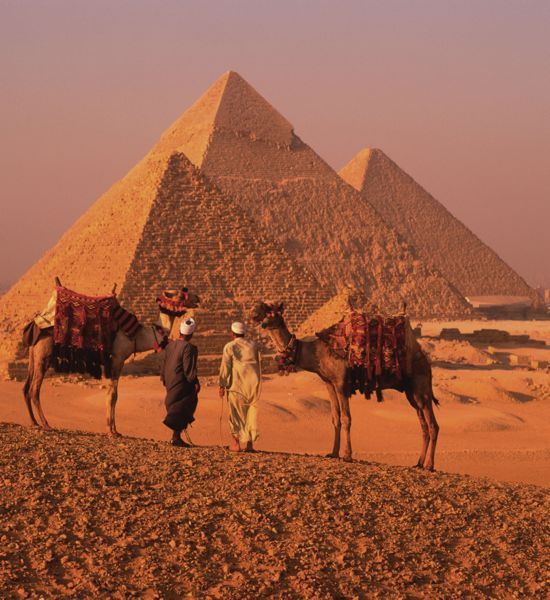
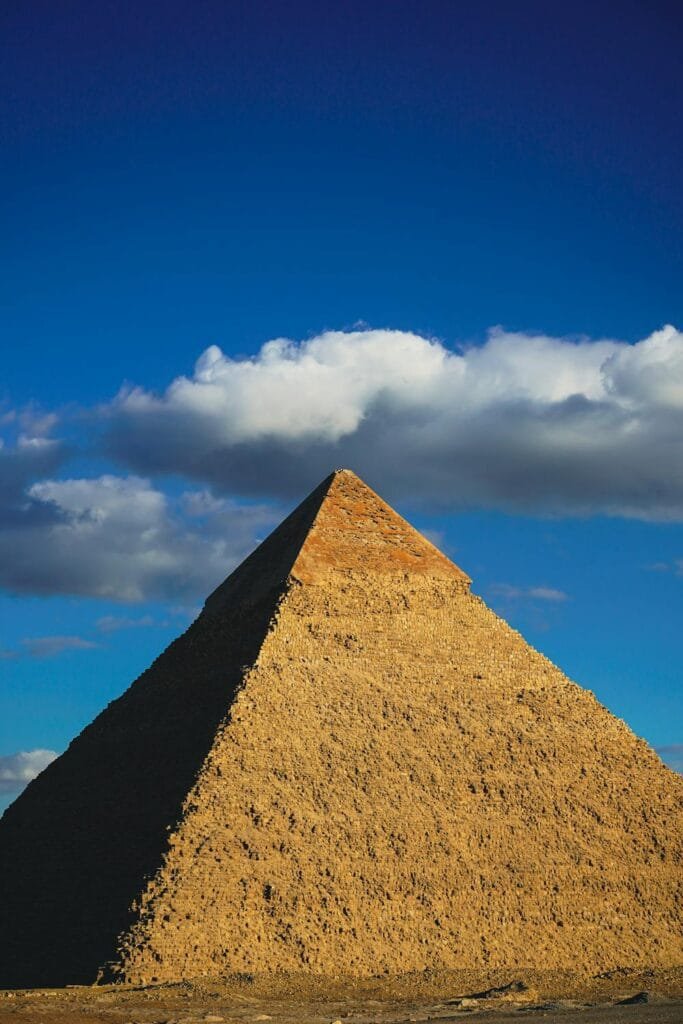
Standing as the ultimate crown of the Giza Plateau, the Great Pyramid of Khufu is not merely an ancient monument; it is the most formidable testament to human ingenuity and celestial alignment ever conceived by a civilization. Built during the Fourth Dynasty for the Pharaoh Khufu, this mountain of stone remained the tallest man-made structure in the world for over 3,800 years, a record that speaks to its unparalleled scale and the divine vision of its creators. Composed of an estimated 2.3 million blocks of limestone and granite, each weighing several tons, the pyramid is a marvel of precision engineering, with its base aligned almost perfectly to the four cardinal points of the compass. For the traveler, approaching Khufu’s pyramid is a humbling experience that defies modern logic. It is a structure where mathematics meets mysticism, and where every corridor and chamber tells a story of a nation’s collective devotion to the eternal life of their King. Beyond its sheer size, the pyramid’s internal architecture—featuring the breathtaking Grand Gallery and the enigmatic King’s Chamber—remains one of the world’s greatest archaeological puzzles. It is a place where the air feels charged with the weight of four and a half millennia of history, inviting every visitor to ponder the secrets locked within its silent, massive walls. To witness the Great Pyramid is to witness the zenith of the Pyramid Age, a moment when humanity reached for the stars and anchored its legacy in the bedrock of the desert. It is the heart of Egypt, a timeless sentinel that continues to inspire awe, curiosity, and a profound respect for the enduring power of the human spirit to conquer the impossible.
1. Pharaoh Khufu: The Architect of Eternity
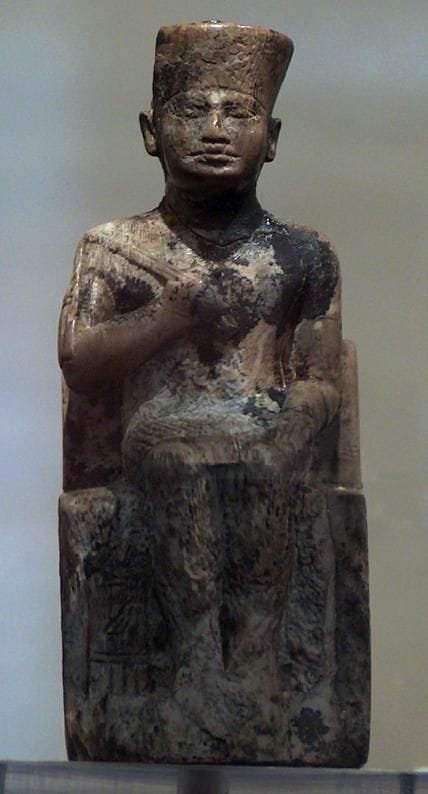
To understand the Great Pyramid, one must first encounter the formidable persona of Pharaoh Khufu (known to the Greeks as Cheops). Ruling during the Fourth Dynasty of the Old Kingdom, Khufu was a monarch of absolute power and singular vision. Unlike his father Sneferu, who built three different pyramids to perfect the form, Khufu focused his entire reign's resources on creating a single, incomparable masterpiece. Historical accounts of Khufu are often polarizing; while later traditions, influenced by Herodotus, painted him as a stern and even tyrannical leader who closed temples to focus on his tomb, contemporary evidence suggests a highly organized and prosperous state. Khufu was not merely a king; he was a living god on earth, and his pyramid was designed to be the physical manifestation of his divine authority. His administration mobilized the most skilled architects, astronomers, and laborers the world had ever seen, creating a bureaucratic machine that functioned with the same precision as the stones they laid. For the modern traveler, Khufu represents the ultimate expression of human ambition. His legacy is not found in surviving statues—interestingly, the only confirmed likeness of him is a tiny ivory figurine—but in the massive stone mountain that bears his name. Exploring his history allows us to appreciate the sheer willpower required to command the most ambitious construction project in human history. Khufu’s reign was the moment when the Egyptian state reached its peak of centralized efficiency, turning the desert plateau into a sacred landscape that would define the identity of a nation for thousands of years. He remains a figure of immense mystery, a king who hid his mortal self away while ensuring his name would be whispered by every generation that followed.
2. A Mountain of Stone: The Engineering Miracle
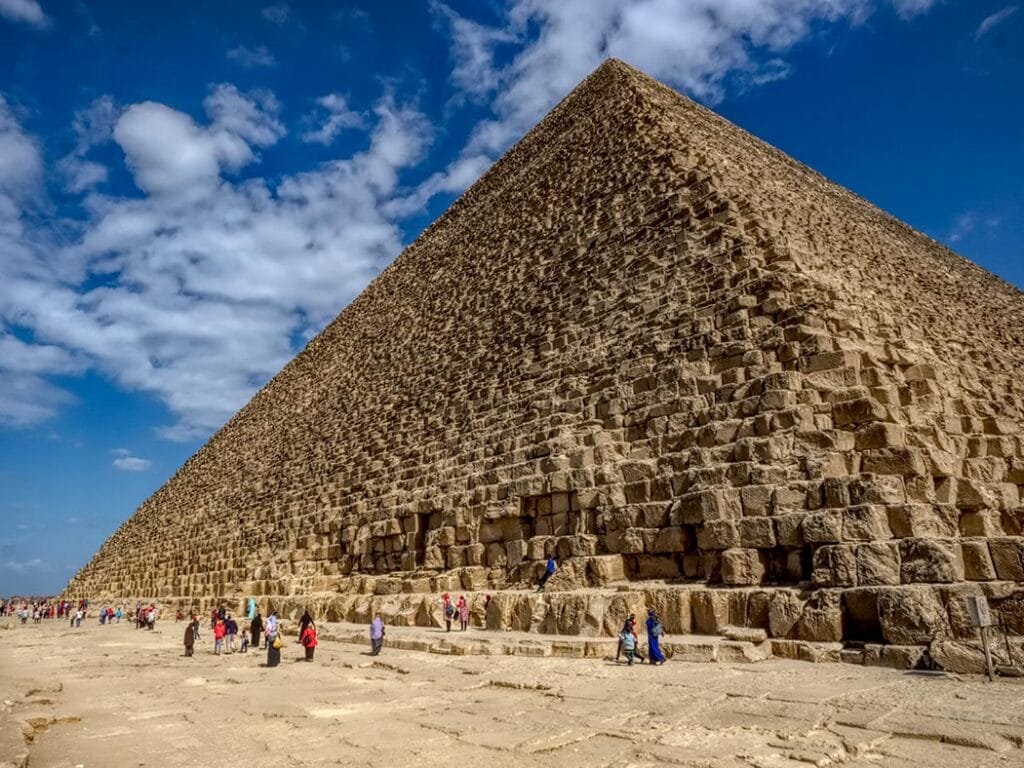
The sheer scale of the Great Pyramid of Khufu is a feat of engineering that continues to baffle modern scientists and architects alike. Composed of approximately 2.3 million limestone and granite blocks, the structure originally rose to a height of 146.6 meters, though it stands slightly shorter today due to the loss of its outer casing and capstone. The logistics of its construction are staggering: it is estimated that the workers moved 6 million tons of stone with such precision that the base of the pyramid is level to within just a few centimeters. The blocks were quarried locally on the Giza plateau, while the fine white Tura limestone for the casing and the massive red granite for the burial chambers were transported hundreds of kilometers down the Nile. What makes Khufu’s pyramid truly miraculous is its mathematical accuracy. The base is aligned almost perfectly to true north, a feat achieved without the aid of modern compasses or GPS, likely through sophisticated astronomical observations. The four sides of the pyramid have a mean error of only 58 millimeters in length, a level of precision that is difficult to achieve even with contemporary technology. For the traveler standing at its base, the pyramid is a vertical ocean of stone that dwarfs everything in its vicinity. It is a testament to the fact that the ancient Egyptians possessed a deep understanding of geometry, physics, and project management. This "Mountain of Stone" was not just a pile of masonry; it was a calibrated instrument, a monument where every angle and every joint was calculated to reflect the harmony of the cosmos. To touch its surface is to touch the peak of ancient achievement, a moment where human capability reached a level of perfection that remains unsurpassed.
3. The Grand Gallery: A Cathedral in the Dark
For those brave enough to venture inside the Great Pyramid, the Grand Gallery is the architectural climax of the journey. After navigating a cramped ascending passage, the space suddenly opens up into a soaring, corbelled hall that is unlike anything else in the ancient world. Rising at a steep angle of 26 degrees, the Gallery is nearly 9 meters high and 47 meters long. Its walls are composed of seven layers of polished limestone, each projecting slightly inward to create a majestic, vaulted effect that distributes the immense weight of the pyramid above. The precision of the stonework here is so fine that a razor blade cannot be inserted between the joints. To walk through the Grand Gallery is to experience a "cathedral in the dark," where the silence is heavy and the atmosphere is charged with ancient intent. Scholars believe this space served as a massive storage area for the granite portcullis slabs used to seal the King’s Chamber after the funeral, but its aesthetic power suggests a deeper, ritualistic purpose. For the traveler, the climb through the Gallery is a physical and emotional challenge that rewards the senses. The acoustics are haunting; even a whisper echoes against the polished stone, creating a visceral connection to the funeral processions that once moved through this space. The Grand Gallery represents the transition from the physical world to the heart of the pyramid, a breathtaking display of internal engineering that proves the Egyptians were just as concerned with the beauty of their hidden spaces as they were with the grandeur of their external ones. It remains one of the most awe-inspiring interior spaces on earth, a masterclass in light, shadow, and the enduring power of sacred architecture.
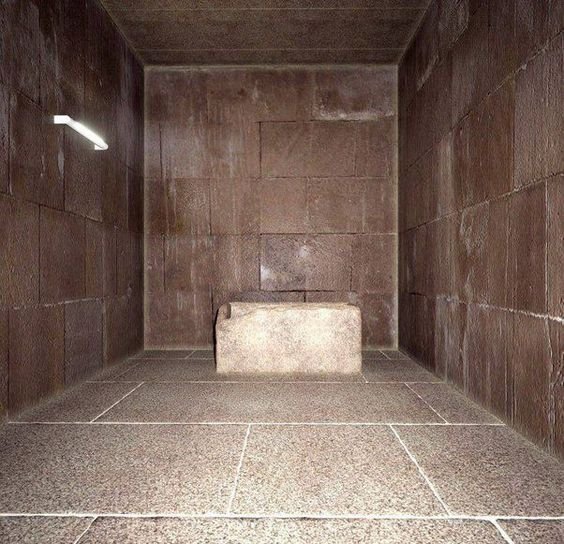
4. The King’s Chamber: A Granite Fortress
At the heart of the Great Pyramid lies the King’s Chamber, a room of profound simplicity and immense structural power. Unlike the limestone that forms the bulk of the pyramid, this chamber is constructed entirely from massive blocks of red Aswan granite, transported over 800 kilometers. The chamber contains the only object left inside: a lidless, granite sarcophagus, roughly carved and slightly larger than the entrance, suggesting it was placed there during construction. Above the ceiling of this chamber are five "relieving chambers," an ingenious engineering feat designed to distribute the astronomical weight of the stone above and prevent the burial chamber from collapsing. For the traveler, standing inside this room is a transformative experience. The air is still, and the resonant acoustics amplify even the softest breath, creating a sense of being suspended in the center of a mountain. There are no inscriptions or decorations here; the majesty comes from the raw, polished stone and the sheer mathematical perfection of its dimensions. It is a space designed for eternity, a granite fortress intended to protect the Pharaoh’s spirit as it transitioned into the afterlife. To remain in the silence of the King’s Chamber is to feel the true weight of history—a moment where the scale of Khufu’s ambition becomes tangible, and the mystery of the ancient world feels closer than ever.
5. The Air Shafts: Celestial Alignments
One of the most enigmatic features of Khufu’s pyramid is the series of narrow shafts that radiate from the King’s and Queen’s Chambers toward the exterior. Often called "air shafts," they were long thought to be for ventilation, but modern astronomical research suggests a far more spiritual and sophisticated purpose. These shafts, only about 20 centimeters wide, were precisely angled to point toward specific stars and constellations as they appeared in the sky 4,500 years ago—most notably Orion’s Belt and Sirius. To the ancient Egyptians, these stars were the celestial homes of Osiris and Isis, and the shafts likely served as "stellar runways" for the Pharaoh’s soul to ascend directly to the heavens. For the modern visitor, these shafts are a reminder of the pyramid’s role as a bridge between earth and sky. They represent a culture that lived in perfect synchronization with the cosmos, where architecture was an extension of astronomy. In recent years, robotic exploration of the shafts in the Queen’s Chamber has revealed hidden "doors" with copper handles, fueling ongoing speculation about undiscovered chambers. These narrow tunnels prove that the Great Pyramid was not just a tomb, but a complex, calibrated machine designed to facilitate a journey through the stars, ensuring the King’s place in the eternal cycle of the universe.
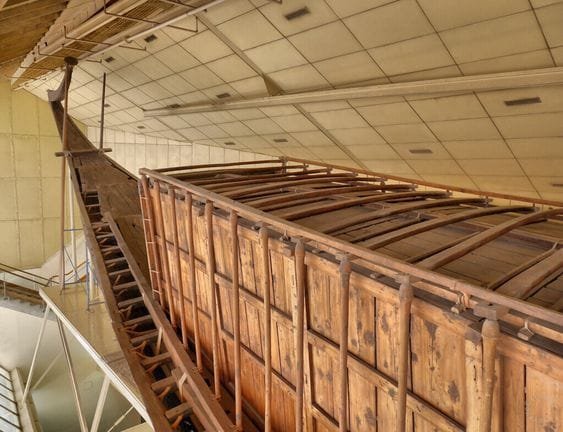
6. The Solar Boat: A Vessel for the Afterlife
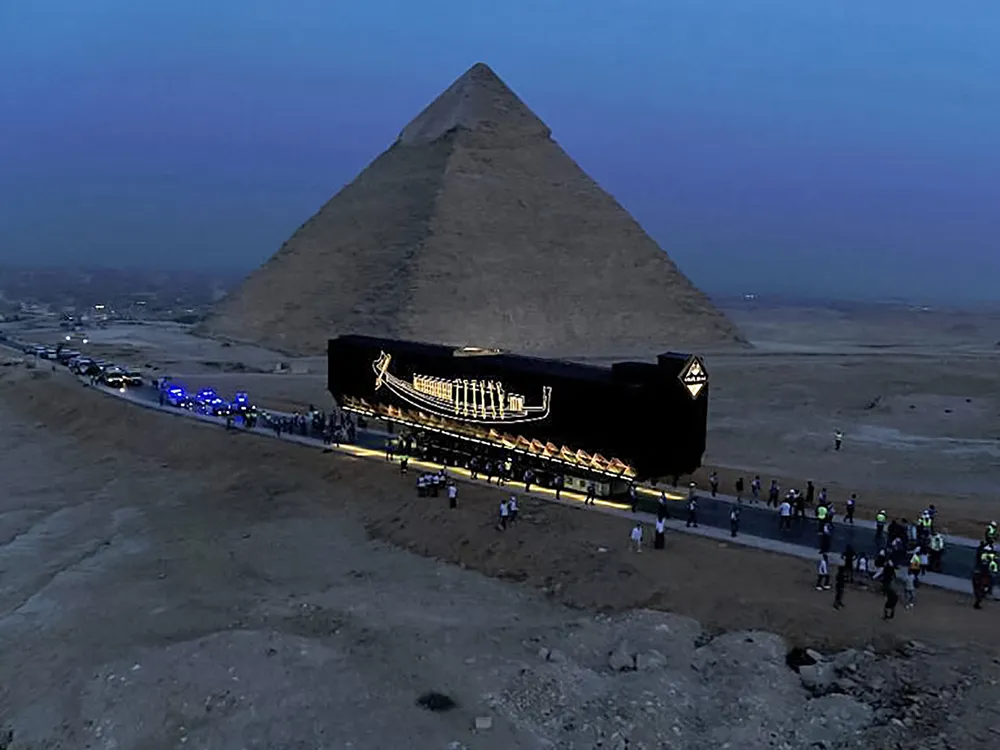
In 1954, a remarkable discovery was made at the foot of the Great Pyramid: a disassembled cedarwood ship, perfectly preserved in a sealed limestone pit. Known as the Solar Boat (or Khufu Ship), this vessel is one of the oldest, largest, and best-preserved ships from antiquity. Measuring over 43 meters in length, it was reconstructed from 1,224 individual pieces without the use of a single metal nail, held together by an intricate system of ropes and pegs. Scholars believe this "solar barque" was intended to carry the resurrected Pharaoh across the sky in the company of the sun god, Ra. For the traveler, the boat (now housed in the Grand Egyptian Museum) offers a stunning look at the technological prowess of the Old Kingdom’s master craftsmen. Its elegant, curved hull and sophisticated design show that the Egyptians were as skilled at navigating the water as they were at building in stone. The boat provides a vital human connection to the pyramid complex, illustrating the immense resources and devotion poured into the King’s funerary equipment. It serves as a physical metaphor for the journey beyond death—a literal and spiritual vessel that reminds us that for Khufu, the pyramid was only the beginning of a magnificent, eternal voyage through the celestial Nile.
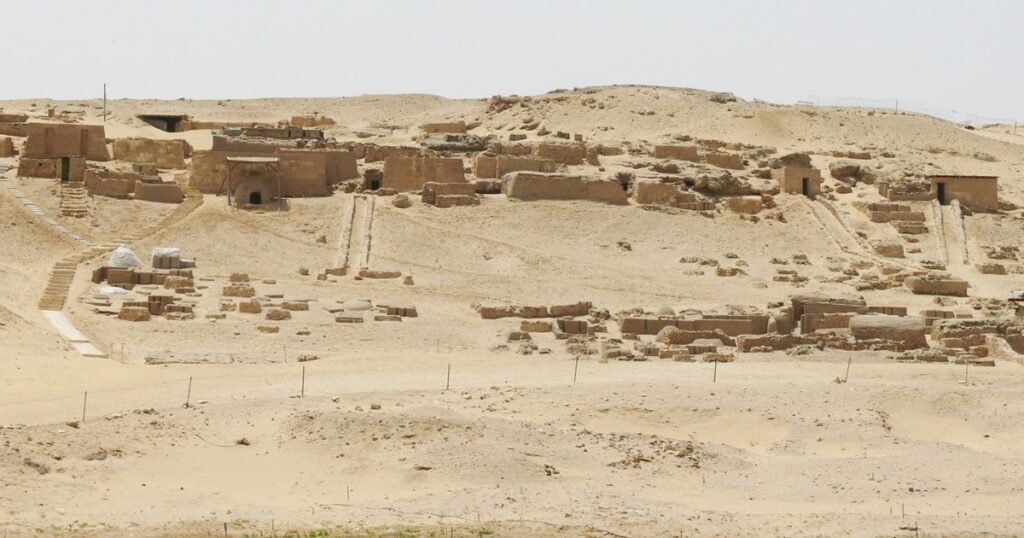
7. The Workers' Village: A City of Purpose
For centuries, the myth persisted that the Great Pyramid was built by enslaved people toiling under a cruel regime. However, archaeological excavations in the late 20th century near the Giza plateau have revealed a much different reality: a highly organized "Workers' Village." This "Lost City" housed thousands of skilled laborers, masons, and architects who were well-fed and provided with professional medical care. Evidence shows they consumed vast quantities of high-quality beef and bread, and their graves reveal that they underwent successful bone surgeries and lived in a structured society. For the traveler, understanding the existence of this village humanizes the massive stones of the pyramid. It transforms the monument from a symbol of tyranny into a masterpiece of national unity and collective effort. These workers were not victims; they were respected craftsmen who took immense pride in their contribution to the divine king’s journey. Walking through the ruins of their barracks and bakeries, one can almost feel the pulse of a thriving community that moved millions of tons of stone through sheer willpower and administrative genius. The village proves that the Great Pyramid was a national project that mobilized the entire Egyptian economy, creating a legacy that belonged to every citizen who provided grain, stone, or labor. It is a story of human cooperation on an unprecedented scale, reminding us that the greatest wonders of the world are built not just of stone, but of the dedication and spirit of the people behind them.
8. Celestial Alignment: The Pyramid as a Compass
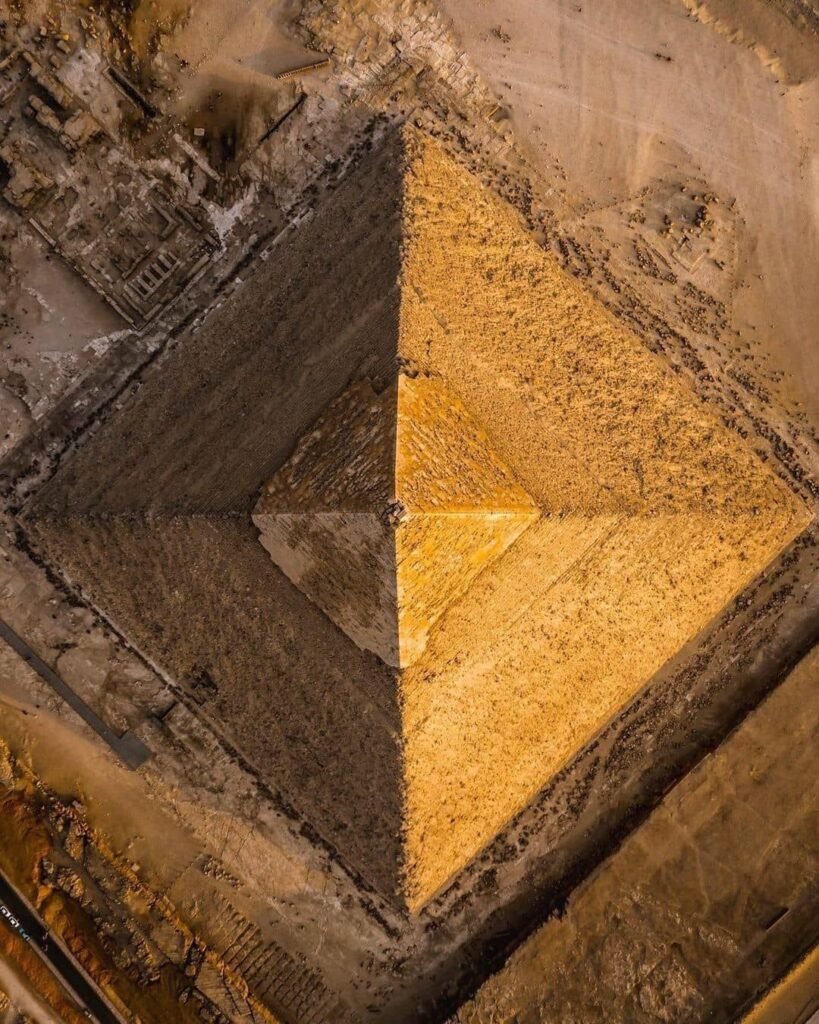
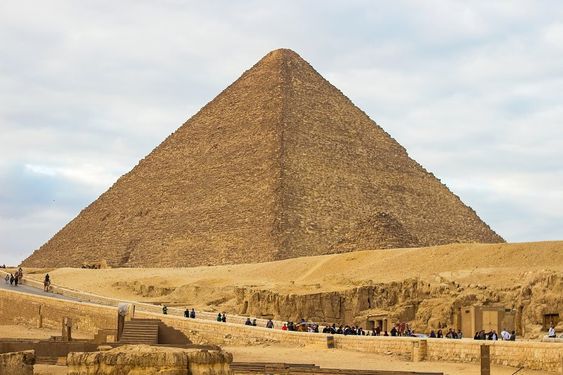
The Great Pyramid is not merely a tomb; it is perhaps the most precisely aligned structure on the face of the Earth. Its four sides are oriented toward true north, south, east, and west with an accuracy of within three-sixtieths of a degree—a feat that modern architects find staggering. This was achieved by ancient astronomers who observed the stars with meticulous care, likely using the "circumpolar stars" as their guide. For the modern visitor, this alignment transforms the pyramid into a massive stone compass that connects the desert floor to the movements of the cosmos. The pyramid’s layout reflects the ancient Egyptian belief in Ma'at—divine order and balance. Even the perimeter of the base, when measured, reveals a deep understanding of mathematical constants like $\pi$ (Pi) and the Golden Ratio, centuries before they were formally "discovered" by later civilizations. To stand at the corner of the pyramid is to stand at the intersection of heaven and earth. This mathematical and astronomical precision suggests that the pyramid was intended to be a permanent anchor for the Egyptian world, a fixed point in time and space that resonated with the eternal rhythm of the stars. It serves as a hauntingly beautiful reminder that for the builders of Giza, architecture was a sacred science, and the Great Pyramid was the ultimate instrument through which they harmonized human life with the infinite laws of the universe.
9. The Queen’s Chamber: A Mystery in White
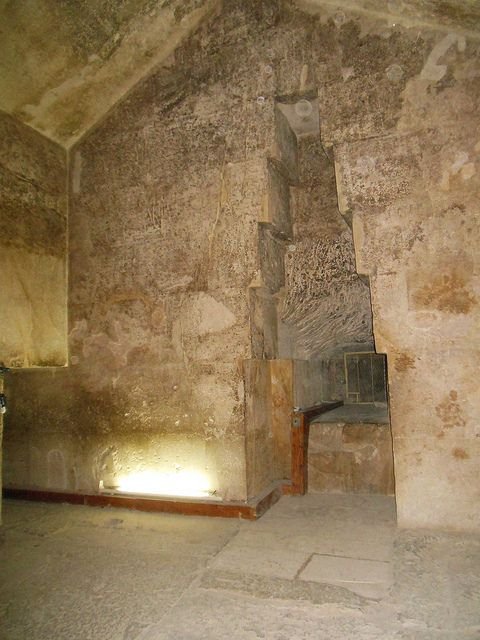
Located lower than the King's Chamber, the so-called "Queen's Chamber" is another enigma within the Great Pyramid. Despite its name, given by early Arab explorers, it was likely not intended for a queen but served a symbolic or ritualistic purpose. This chamber is built entirely of fine white limestone and features a beautiful pointed, gabled ceiling that distributes the pressure of the pyramid’s core. One of its most fascinating features is a high, corbelled niche in the eastern wall, which many believe once held a Ka statue of King Khufu—a physical vessel for his spirit to inhabit after death. For the traveler, the Queen's Chamber offers a quieter, more atmospheric experience compared to the grander halls above. It is here that the famous "robotic explorations" took place, where tiny cameras were sent through narrow shafts only to find secret "doors" with copper handles. These discoveries have kept the world’s imagination captured for decades, fueling hope that more chambers lie hidden behind its walls. The chamber’s pristine white stone and perfect geometry create an air of purity and mystery. It reminds us that the Great Pyramid still holds its breath, guarding secrets that modern technology is only beginning to whisper. To visit this chamber is to stand on the edge of the unknown, in a space designed for a spirit that has been traveling through the shadows and light of history for over four thousand five hundred years.

10. Mathematical Perfection: Pi and the Golden Ratio
The Great Pyramid is often described as a "mathematical encyclopedia in stone" due to the astonishing constants embedded in its dimensions. Most notably, the relationship between the pyramid’s height and the perimeter of its base expresses the mathematical constant $\pi$ (Pi) with incredible accuracy—a discovery that predates the formal recognition of the ratio by over two thousand years. Furthermore, the proportions of the structure appear to incorporate the "Golden Ratio," a principle of harmony found throughout nature and later in classical art. For the modern visitor, these aren't just dry numbers; they represent a profound intellectual achievement. The builders didn't just pile stones; they encoded a deep understanding of the universe's geometric laws into the very fabric of the monument. This level of sophistication suggests that the Great Pyramid was intended to be more than a tomb—it was a sacred library of physical laws. To stand before it is to confront the reality that the ancient Egyptians possessed a scientific depth that we are still struggling to fully map. Every angle, slope, and stone was a deliberate choice aimed at reflecting a divine and mathematical order. Understanding this allows the traveler to view the pyramid as a bridge between human logic and the infinite, a structure that speaks the universal language of mathematics across the vast chasm of time, proving that the brilliance of the Fourth Dynasty was as much intellectual as it was physical.
11. The Visitor’s Ascent: A Physical and Spiritual Challenge
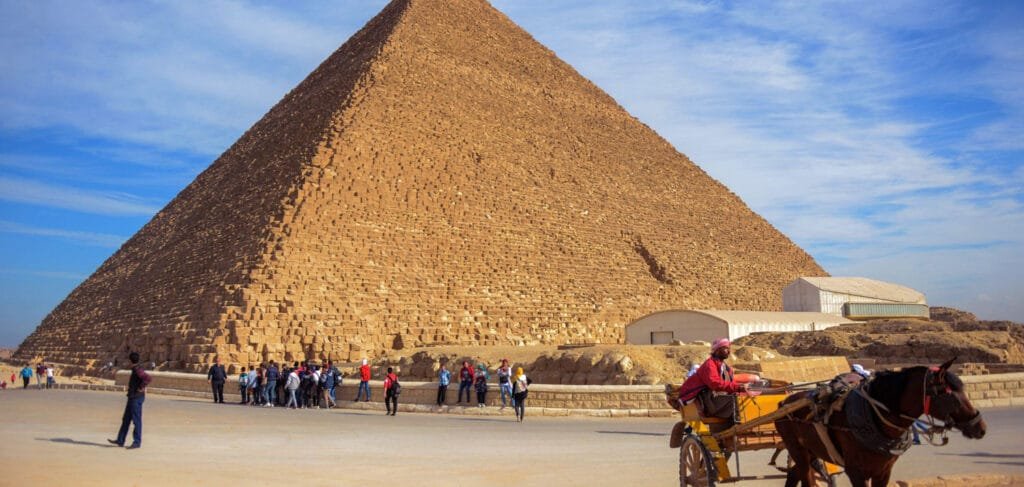
For the modern traveler, entering the Great Pyramid is a rite of passage that demands both physical stamina and mental preparation. The journey begins through the "Robbers' Tunnel," carved by Caliph Al-Ma'mun in the 9th century, which leads you deep into the heart of the structure. Navigating the steep, narrow passages requires a slow, deliberate pace, often forcing you to crouch and focus on each step. This physical effort is part of the experience, mirroring the symbolic journey of the Pharaoh from the darkness of the earth toward the celestial light. As you ascend, the temperature rises and the air grows heavy with the scent of ancient stone, creating a visceral sense of time-travel. Emerging into the Grand Gallery after the cramped ascent provides a momentary feeling of exhilaration, followed by the quiet awe of the King’s Chamber. It is important for visitors to pace themselves and remain mindful of the pyramid’s unique atmosphere. For many, the experience is not just about seeing a historical site; it is a profound internal journey that challenges one’s perspective on human capability. Reaching the center of Khufu’s mountain is an achievement that stays with you long after you’ve returned to the desert sunlight. It is a rare opportunity to occupy the same space as a god-king, standing in the very spot where the ancient and modern worlds collide in a silent, powerful embrace of stone and history.
12. The Great Void: Modern Science and Hidden Mysteries
Even in the age of satellites and advanced technology, the Great Pyramid continues to reveal new secrets. In 2017, the "ScanPyramids" project, using cosmic-ray muon radiography, detected a massive, previously unknown space inside the pyramid, now referred to as the "Great Void." Located directly above the Grand Gallery, this hidden cavity is at least 30 meters long, and its purpose remains one of the most exciting mysteries in modern archaeology. Is it a hidden burial chamber, a structural feature to relieve weight, or a secret repository of ancient knowledge? For the traveler, this discovery adds a layer of contemporary drama to the ancient site. It reminds us that we are not just looking at a finished museum piece, but a living enigma that still defies total comprehension. The Great Void proves that despite centuries of exploration, the Great Pyramid has successfully guarded its inner core from the prying eyes of history. It invites a sense of wonder and humility, suggesting that Khufu and his architects were always one step ahead of future generations. Knowing that there are still unexplored spaces within the very stone you are standing next to makes the visit feel like a participation in an ongoing detective story. The pyramid remains a frontier of discovery, a silent sentinel that continues to whisper about the "unseen," ensuring that the allure of Giza will never fade as long as there are mysteries left to solve.
13. The Casing Stones: A Gleaming Ghost of Grandeur
To truly visualize the Great Pyramid as it appeared in antiquity, one must look at the few remaining "casing stones" at its base. Originally, the entire structure was covered in 5.5 million tons of highly polished white Tura limestone. These stones were cut with such precision that the seams were nearly invisible, creating a smooth, mirror-like surface that would have reflected the Egyptian sun with a blinding brilliance. In its prime, the pyramid did not look like a stepped mountain of brown rock; it was a gleaming, white tetrahedral jewel that could be seen from miles away, perhaps even from the mountains of Sinai. Over the centuries, these precious stones were stripped away to build the mosques and palaces of medieval Cairo, leaving behind the rugged core we see today. For the visitor, finding these surviving blocks at the base is like finding a fragment of a lost world. They offer a tactile connection to the "perfection" that Khufu intended. Touching the smooth, cool limestone allows you to imagine the pyramid as a beacon of light—a literal "stairway to heaven" that connected the dusty earth to the radiant path of the sun god, Ra. This lost splendor reminds us that time is a relentless editor, yet even in its "undressed" state, the pyramid’s skeleton possesses a majesty that needs no adornment. The casing stones are the ghosts of a golden age, whispers of a time when humanity successfully transformed the raw earth into a celestial diamond.
14. The Eternal Legacy: A Beacon of Human Potential
As your journey through the history and mysteries of the Great Pyramid of Khufu comes to a close, its ultimate legacy reveals itself not in stone, but in inspiration. This monument is the "North Star" of human achievement, a constant reminder that with vision, unity, and mathematical precision, the impossible becomes permanent. For over four thousand years, it has watched empires rise and fall, religions change, and the very climate of the earth shift, yet it remains anchored in the bedrock of Giza, unmoving and profound. For the traveler, leaving the shadow of Khufu’s pyramid is often a bittersweet experience; you leave behind a piece of history, but you carry away a new perspective on what it means to be human. The pyramid teaches us that we are a species of builders and dreamers, capable of aligning our work with the stars themselves. It stands as a bridge across the millennia, connecting the aspirations of an Old Kingdom Pharaoh with the curiosity of a modern-day explorer. As the desert sun sets, casting a long, triangular shadow toward the Nile, the Great Pyramid becomes a silhouette of pure geometry—a symbol of order in a chaotic world. It is the heart of Egypt and the soul of antiquity, a silent guardian that will continue to challenge, inspire, and awe every generation that dares to look upward. To witness Khufu’s pyramid is to witness the best of us: our intellect, our persistence, and our eternal desire to touch the infinite. It remains, forever, the greatest wonder of them all.
15. The Sphinx’s Neighbor: A Symbiotic Landscape
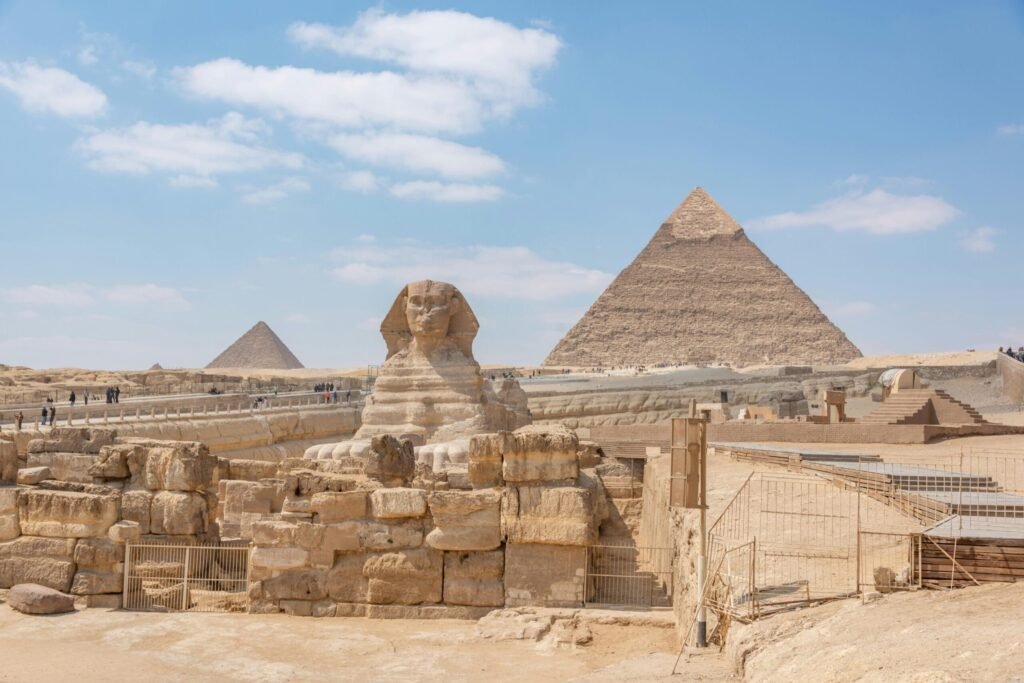
While the Great Pyramid is a masterpiece in its own right, its majesty is deeply intertwined with the sacred landscape that surrounds it. To the east and south lie the smaller pyramids of the queens and the massive mastaba tombs of the royal family and high officials. This "city of the dead" was a carefully planned mirror of Khufu’s court in life. For the traveler, exploring these peripheral sites offers a richer understanding of the pyramid's purpose. It was the central sun around which the entire Fourth Dynasty gravitated. The proximity to the Great Sphinx, although built by Khufu’s son Khafre, adds to the atmospheric power of the site. Standing between these two giants, one feels the weight of a civilization that sought to freeze time itself. The layout of the plateau reflects a sophisticated urban planning that balanced religious ritual with logistical efficiency. Walking from the towering blocks of Khufu toward the silent, watchful gaze of the Sphinx, you realize that the Great Pyramid is not a solitary monument but the heart of a cosmic engine. This symbiotic relationship between the various structures creates a sense of harmony that is palpable. It reminds visitors that the pyramid was the anchor of a living, breathing community that dedicated centuries to the pursuit of the eternal. To see Khufu’s pyramid within this broader context is to appreciate the full scale of the Egyptian vision—a landscape where stone, spirit, and stars converged to create the most enduring sacred space on Earth.
16. Photography and Perspective: Capturing the Infinite
For the modern visitor, capturing the Great Pyramid through a lens is a challenge of scale and light. The structure changes character with every hour of the day; in the soft light of dawn, it appears almost ethereal and translucent, while the harsh midday sun emphasizes the rugged texture of its massive limestone blocks. At sunset, the pyramid becomes a dramatic silhouette against the fiery Saharan sky, a golden triangle that seems to pulsate with the energy of the desert. The most iconic vantage points are found at the "Panorama" area, where you can see the alignment of all three pyramids, but the most intimate shots are found at the base, looking straight up toward the apex. Here, the perspective shifts, and the pyramid ceases to be a shape and becomes an infinite wall of stone. For photographers, the challenge is to convey the sheer mass that the human eye struggles to process. Including a person or a camel in the frame provides a much-needed sense of scale, highlighting the insignificance of the individual against the backdrop of eternity. Beyond the visual, the pyramid offers a "texture" that is uniquely photogenic—the jagged edges, the weathered surfaces, and the play of shadows in the deep crevices. Capturing the Great Pyramid is an exercise in humility; it reminds us that some things are too grand to be fully contained in a frame. These images serve as digital echoes of an experience that is fundamentally beyond words, a visual testament to a monument that remains the ultimate subject for any storyteller.

17. The Architecture of the Void: The Hidden Internal Balance
While the exterior of the Great Pyramid is a triumph of mass, its interior is a masterpiece of the "void." The way the internal chambers and passages are distributed shows a profound understanding of structural physics. Architects today are still amazed by how Khufu’s builders managed to create large open spaces—like the King’s Chamber and the Grand Gallery—deep inside a structure weighing six million tons without the whole monument collapsing under its own pressure. This was achieved through the use of "relieving arches" and gabled ceilings that divert the downward force away from the hollow spaces and into the solid core. For the traveler, this engineering genius creates a sense of safe enclosure rather than oppressive weight. When you are deep inside, you are technically standing beneath millions of tons of rock, yet the airiness of the Grand Gallery provides a feeling of soaring verticality. This "Architecture of the Void" suggests that the interior was just as carefully "sculpted" as the exterior. It wasn't just about making a pile of stones; it was about creating a precise internal environment where the Pharaoh’s spirit could move through structured space. This hidden complexity is what truly elevates Khufu’s pyramid above all others. It is a harmonious balance between the solid and the hollow, the visible and the invisible—a stone-carved breath held for four and a half thousand years at the center of the world.
18. Farewell to the Horizon: The Spirit of Giza
As you take your final steps away from the Great Pyramid and the dust of the plateau settles behind you, the spirit of Gufu (Khufu) follows you into the modern world. This monument does not stay in the desert; it settles in the mind as a benchmark for what humanity can achieve when it refuses to accept the limits of the possible. Leaving Giza often feels like waking from a dream of stone and stars. The Great Pyramid is more than an archaeological site; it is a psychological landmark that reassures us of our capacity for greatness, precision, and longevity. You carry with you the memory of the cool granite in the King’s Chamber and the overwhelming silence of the Grand Gallery. The "Horizon of Khufu"—the ancient name for the pyramid—remains a fixed point in your own personal history. It serves as a reminder that while our lives are fleeting, the work we leave behind can echo through the millennia. The pyramid’s ultimate lesson is one of persistence; it has stood through every storm of history, a silent guardian of human potential. As the lights of Cairo begin to flicker in the distance, the pyramid stands dark and resolute against the night sky, a bridge between the earth we walk upon and the heavens we aspire to reach. It is the eternal sentinel, a masterpiece that will continue to inspire wonder in every heart that dares to look toward the horizon. To have stood in its shadow is to have touched the very fabric of eternity, a gift that remains with the traveler forever.