- Excursions in Egypt
- Egypt Tour Packages
- Cairo Tours and Excursions
- Hurghada Tours and Excursions
- Soma Bay Tours and Excursions
- Makadi Bay Tours and Excursions
- Sahl Hasheesh Tours and Excursions
- El Gouna Tours and Excursions
- Marsa Alam Tours and Excursions
- Port Ghalib Tours and Excursions
- El Quseir Tours and Excursions
- Dendera and Abydos Day Tours
- Aswan Tours and Excursions
- Luxor Tours and Excursions
- Alexandria Egypt Tours and Excursions
- Sharm El Sheikh Tours and Excursions
- Top Rated Egypt Tours in 2026
- Optional Excursions in Egypt
- Private Transfer
- Blogs About egypt
- Ancient Egypt
- Why Egypt Is One of the Safest Countries to Visit in the Middle East
- What You Need To know Before Your First Trip To Egypt
- Egypt Travel Costs in 2026 Full Budget Guide
- Top 10 Tourist Activities in Egypt
- Top 50 Activities You Can’t Miss in Egypt in 2026
- The Guide to Guided Tours in Egypt
- Egypt’s Ancient and Modern History
- The Nile River
- The Deserts of Egypt
- Historical Sites in Egypt
- Cairo
- Alexandria
- Luxor
- Aswan
- The Red Sea
- Dendera Temple
- El Fayoum Oasis
- Bahariya Oasis
- Siwa Oasis
- Al Alamein
- Marsa Matruh
- Ancient Egyptian gods
- famous Egyptian dishes
- UNESCO World Heritage sites
- About Us
- Egypt Hotels and Resorts
- Excursions in Egypt
- Egypt Tour Packages
- Cairo Tours and Excursions
- Hurghada Tours and Excursions
- Soma Bay Tours and Excursions
- Makadi Bay Tours and Excursions
- Sahl Hasheesh Tours and Excursions
- El Gouna Tours and Excursions
- Marsa Alam Tours and Excursions
- Port Ghalib Tours and Excursions
- El Quseir Tours and Excursions
- Dendera and Abydos Day Tours
- Aswan Tours and Excursions
- Luxor Tours and Excursions
- Alexandria Egypt Tours and Excursions
- Sharm El Sheikh Tours and Excursions
- Top Rated Egypt Tours in 2026
- Optional Excursions in Egypt
- Private Transfer
- Blogs About egypt
- Ancient Egypt
- Why Egypt Is One of the Safest Countries to Visit in the Middle East
- What You Need To know Before Your First Trip To Egypt
- Egypt Travel Costs in 2026 Full Budget Guide
- Top 10 Tourist Activities in Egypt
- Top 50 Activities You Can’t Miss in Egypt in 2026
- The Guide to Guided Tours in Egypt
- Egypt’s Ancient and Modern History
- The Nile River
- The Deserts of Egypt
- Historical Sites in Egypt
- Cairo
- Alexandria
- Luxor
- Aswan
- The Red Sea
- Dendera Temple
- El Fayoum Oasis
- Bahariya Oasis
- Siwa Oasis
- Al Alamein
- Marsa Matruh
- Ancient Egyptian gods
- famous Egyptian dishes
- UNESCO World Heritage sites
- About Us
- Egypt Hotels and Resorts
Welcome to
Old Cairo: The Eternal Cradle of Civilizations and Faiths
Deep within the southern reaches of the modern Egyptian capital lies a sacred enclave where the foundations of history are laid bare, layer upon magnificent layer. Old Cairo, known to locals as Masr al-Qadima, is far more than a mere district; it is the primordial soul of the city and a timeless sanctuary where the world’s three Abrahamic faiths have coexisted in harmony for nearly two millennia. Stepping into this historic neighborhood is akin to walking through a living chronicle of humanity, where Roman fortifications, Coptic cathedrals, ancient synagogues, and the first mosques of Africa stand side by side in a profound display of religious and cultural unity. This area marks the very spot where the ancient city of Fustat was born, rising from the desert sands to become a beacon of trade, art, and spirituality in the medieval world. For the discerning traveler, Old Cairo offers an immersive sensory experience that transcends the ordinary tourist path. Here, the scent of centuries-old incense from the Hanging Church mingles with the evening call to prayer from the Mosque of Amr ibn al-As, while the silent stones of the Ben Ezra Synagogue whisper secrets of a diverse and pluralistic past. Every narrow, sun-drenched alleyway and every weathered limestone wall tells a story of resilience, from the flight of the Holy Family to the triumphant arrival of early Islamic leaders. It is a place where the majestic Nile once lapped against the bastions of the Babylon Fortress, marking a strategic crossroads that changed the course of world history forever. Whether you are a seeker of spiritual peace, a dedicated historian, or a lover of breathtaking architecture, Old Cairo promises an unforgettable journey into the heart of Egypt’s eternal heritage, revealing a landscape where time itself seems to bow in reverence to the enduring power of faith and the unbreakable spirit of a city that truly is the “Mother of the World.”
1. The Babylon Fortress: The Roman Bedrock of Cairo
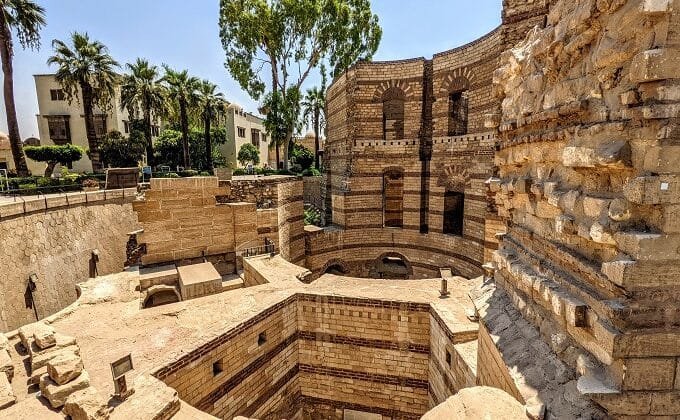
The story of Old Cairo begins beneath the massive, circular bastions of the Babylon Fortress, a monumental relic of Roman military engineering that dates back to the late 1st century AD. Strategically positioned at the precise boundary between Lower and Middle Egypt, this fortress was designed by the Romans to control the vital navigation of the Nile. Today, its weathered limestone and red brick layers serve as the literal foundation for the most significant religious sites in the district. Walking along the base of these towering walls, you can observe the distinctive Roman "lace" masonry, a technique that has survived centuries of earthquakes and urban expansion. The fortress originally housed a full legion of Roman soldiers, marking the transition of Egypt from a Pharaonic kingdom to a crucial province of the Roman Empire. For the modern traveler, the Babylon Fortress is the gateway to understanding the layered complexity of the city. It represents the first major urban settlement in this area, long before the foundation of Fustat or modern Cairo. As you touch the ancient stones, you realize that this site was once the highest point of local power, protecting the granaries of the empire. The fortress is not just a military ruin; it is the skeletal frame upon which the Christian and Islamic identities of Egypt were later built. Its preservation allows us to visualize the moment when the ancient world began to transform into the medieval era. Standing in its shadow, you feel the weight of nearly two thousand years of history, providing a profound sense of continuity that defines the unique character of Old Cairo as a bastion of permanence in an ever-changing world.
2. The Mosque of Amr ibn al-As: Africa’s First Sanctuary
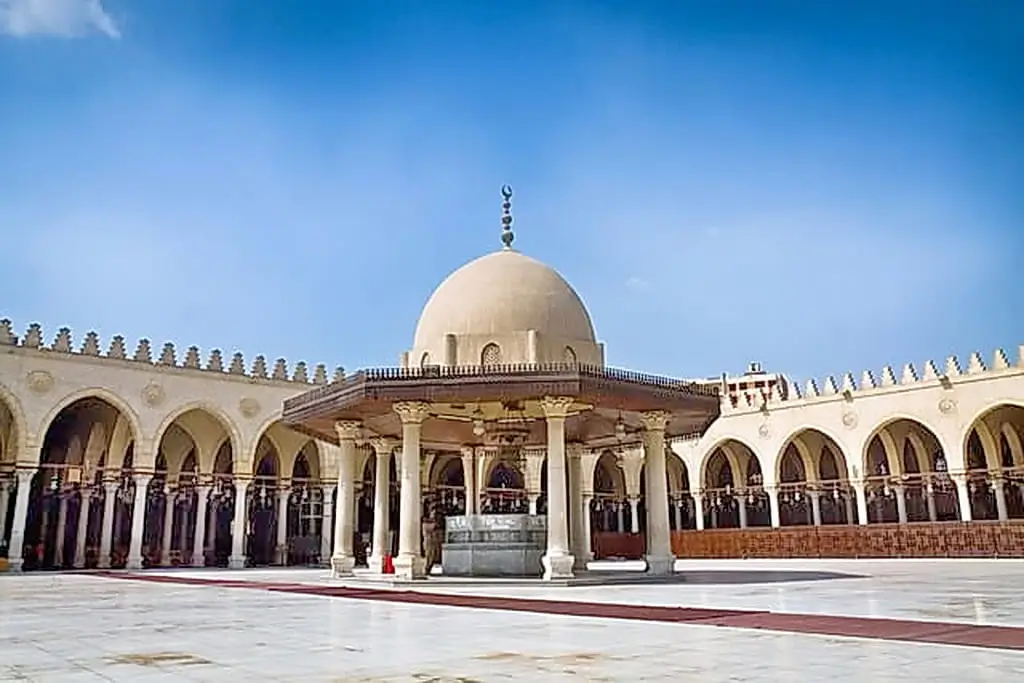
Just a short distance from the Roman walls lies the Mosque of Amr ibn al-As, a site of immense historical and religious prestige as the first mosque ever built in Egypt and the entire continent of Africa. Founded in 641 AD by the commander of the Muslim army, Amr ibn al-As, this mosque marked the birth of Fustat, the original capital of Islamic Egypt. While the structure has been expanded and rebuilt many times over the centuries, the spirit of its early foundation remains palpable. The mosque’s architecture is a testament to the simplicity and grandeur of early Islamic design, featuring a vast open courtyard surrounded by shaded porticos supported by hundreds of antique columns salvaged from Roman and Byzantine buildings. This "forest of columns" creates a mesmerizing perspective, drawing the eye toward the qibla wall where thousands of worshippers have gathered for over fourteen centuries. For the traveler, visiting this mosque is an act of historical pilgrimage. It serves as a reminder of the dawn of a new era that reshaped the cultural and linguistic landscape of Egypt. The atmosphere within the mosque is one of profound tranquility, offering a stark contrast to the busy streets of the surrounding city. It was once the center of administrative and judicial life in Egypt, acting as both a house of prayer and a university long before Al-Azhar was established. Standing in the center of the courtyard, you are in the very birthplace of Islamic Cairo, where the echoes of early Arabic poetry and theological debates still seem to linger in the warm Egyptian breeze. It is a monumental landmark that honors the beginning of a legacy that continues to define the nation’s identity today.
3. The Flight into Egypt: The Holy Family’s Sacred Path
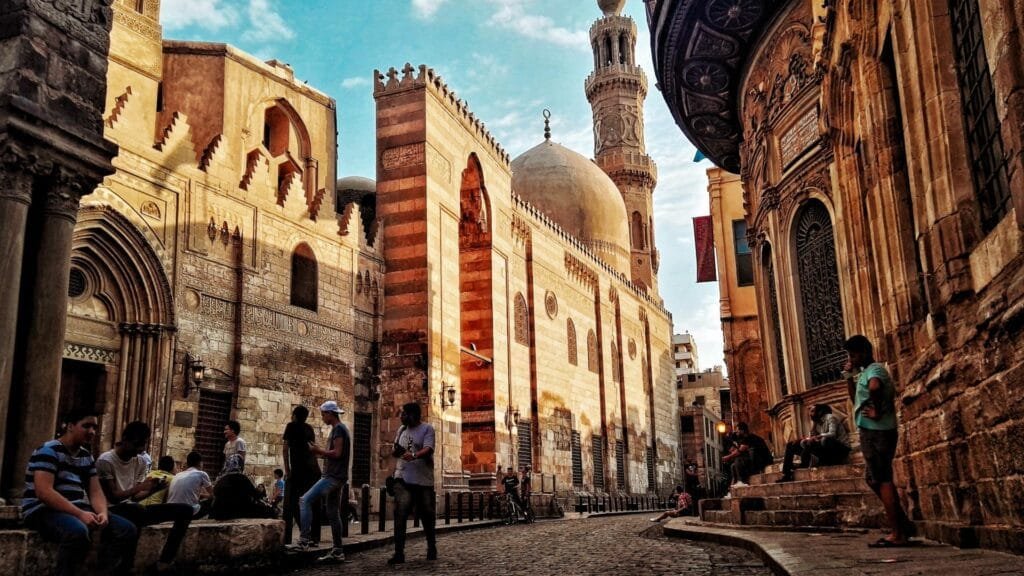
Old Cairo holds a place of supreme importance in the hearts of Christians worldwide because of its deep connection to the biblical narrative of the Flight into Egypt. According to centuries of tradition and local records, it was within the hidden caves and quiet corners of this district that the Holy Family—the Virgin Mary, Joseph, and the infant Jesus—found sanctuary after their arduous journey across the desert to escape the persecution of King Herod. This sacred presence transformed the area into a focal point for early Christianity, leading to the construction of some of the world’s oldest and most revered churches directly over the spots where the family was said to have rested. For the traveler, walking through the narrow alleys of Old Cairo is like tracing the footsteps of a divine journey. The area is filled with a unique spiritual energy, a sense of "blessing" or baraka that transcends religious boundaries. Sites like the Abu Serga Church, which houses the holy crypt, allow visitors to descend into the very space where the Holy Family lived during their three-month stay in the area. This historical layer adds a profound emotional depth to the district, making it more than just an architectural museum. It is a living sanctuary of refuge and hope, symbolizing Egypt's historical role as a land of hospitality and protection for the displaced and the sacred. Exploring these sites provides a rare opportunity to connect with a story that has influenced global culture and faith for two thousand years, grounding the abstract stories of the Bible in the very real stone and soil of Egypt, and reinforcing Old Cairo’s status as a universal heritage site for all of humanity.
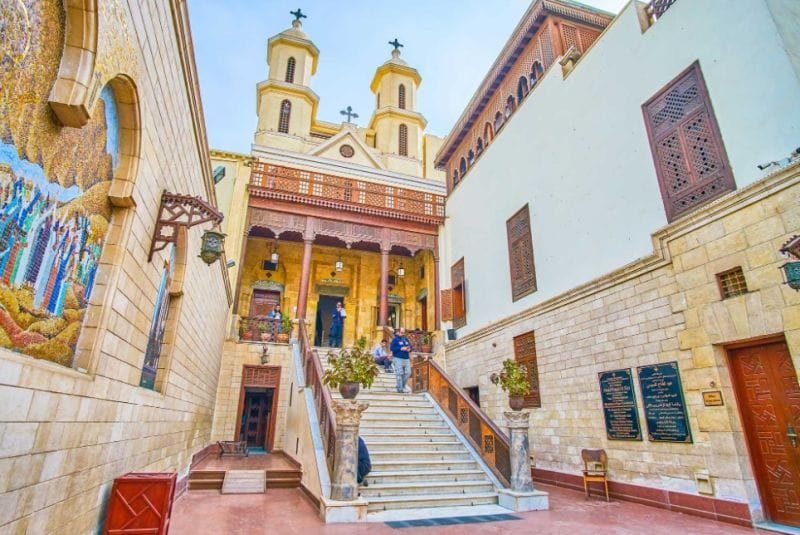
4. The Hanging Church: Architecture Suspended in Time
Perched atop the ancient gatehouse of the Babylon Fortress, the Saint Virgin Mary's Coptic Orthodox Church, famously known as the Hanging Church, is an architectural marvel that defies the conventional laws of construction. Its name, Al-Muallaqa, refers to its unique position; the nave is suspended over a passage, giving visitors the sensation of being held between the earth and the heavens. To enter, one must climb a grand staircase of twenty-nine steps, leaving the noise of the modern street behind for a sanctuary of profound peace. Inside, the church is a masterpiece of Coptic art, featuring a magnificent wooden roof shaped like an inverted Noah’s Ark, symbolizing salvation and divine protection. The interior is divided by three rows of thirteen marble pillars, representing Jesus and his disciples, with one pillar of dark basalt symbolizing the betrayal of Judas. The walls are adorned with priceless icons dating back to the 8th century, while the intricately carved marble pulpit is considered one of the finest in the world. For the traveler, the Hanging Church is more than a religious site; it is a symbol of the resilience of the Coptic faith, which has flourished here for nearly two millennia. The interplay of light through the stained-glass windows and the scent of ancient incense create an atmosphere of ethereal beauty. This church has served as the seat of the Coptic Pope for centuries, making it a central pillar of Egyptian Christian identity. Standing in its hushed aisles, you are surrounded by the whispers of history and the enduring spirit of a community that has guarded its traditions with grace and unwavering devotion through the changing tides of time.

5. Ben Ezra Synagogue: A Testament to Pluralism
In a beautiful display of Egypt's historical religious diversity, the Ben Ezra Synagogue sits peacefully in the heart of the Coptic quarter, marking a site of immense significance for the Jewish faith. According to local folklore, this is the very spot where the infant Moses was found in the bulrushes by Pharaoh's daughter, adding a layer of biblical mystery to the location. The synagogue was originally a Christian church that was sold to the Jewish community in the 9th century to help pay taxes, reflecting the complex social and economic interconnections of medieval Cairo. Architecturally, the building is a stunning blend of styles, featuring intricate geometric patterns and floral motifs that mirror the artistic traditions of its Christian and Muslim neighbors. However, its greatest contribution to history was the discovery of the Cairo Geniza—a hidden room containing over 300,000 document fragments. These papers, ranging from personal letters to legal contracts, provided historians with the most detailed record of medieval Mediterranean life ever discovered, showcasing a society that was deeply interconnected across faiths and borders. For the modern visitor, walking into Ben Ezra is an act of honoring the multi-cultural tapestry of Egypt. The synagogue stands as a silent sentinel of tolerance, reminding us of a time when Cairo was a true melting pot of civilizations. Though the Jewish community in Cairo is now small, the synagogue remains a beautifully preserved landmark that celebrates the shared heritage of the "Children of Abraham." It is a place of quiet dignity, where the stones speak of ancient prophets and the enduring power of a community that helped shape the intellectual and commercial history of the Middle East.
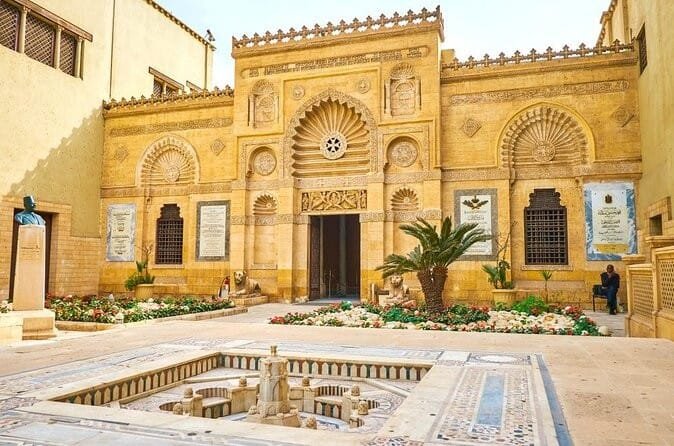
6. The Coptic Museum: Bridging the Eras of Egypt
No journey through Old Cairo is complete without a visit to the Coptic Museum, an institution that houses the world's largest and most significant collection of Coptic Christian art and artifacts. Established in 1908, the museum was built to preserve the unique heritage of Egypt’s Christian community, which serves as a vital bridge between the Pharaonic past and the Islamic era. The building itself is an architectural gem, featuring exquisite mashrabiya windows and intricately carved wooden ceilings that reflect the very art it protects. Inside, the galleries are filled with thousands of treasures, ranging from delicate textiles and stone friezes to the world-famous Nag Hammadi library—a collection of Gnostic gospels that revolutionized our understanding of early Christianity. You can see how Coptic artists adapted ancient Egyptian symbols, such as the Ankh, and transformed them into Christian icons, demonstrating a fascinating continuity of culture. The museum’s collection of metalwork, woodwork, and manuscripts showcases a level of craftsmanship that was highly sought after throughout the Byzantine and early Islamic worlds. For the traveler, the museum provides the essential historical context needed to appreciate the surrounding churches and mosques. It tells the story of a people who maintained their distinct identity while contributing to the broader mosaic of Egyptian civilization. Walking through its quiet halls, you gain a deeper understanding of how the Coptic faith acted as a vessel for ancient Egyptian traditions, preserving the spirit of the Pharaohs within a new spiritual framework. It is a place of discovery and education, offering a profound look at the creative brilliance and cultural resilience that have defined Egypt’s Christian heritage for over eighteen hundred years.

7. The Church of St. Sergius and Bacchus: The Sacred Crypt
Deep beneath the soaring columns of the Church of St. Sergius and Bacchus, known locally as Abu Serga, lies what many consider the most sacred spot in all of Cairo. This 4th-century church is built directly over a subterranean cave that is traditionally believed to be the resting place of the Holy Family during their exile in Egypt. Descending into this cool, quiet crypt, one feels an immediate and profound connection to a biblical narrative that has shaped the spiritual consciousness of millions for two millennia. The air in the crypt is heavy with the weight of centuries, and the stone walls seem to echo with the silent prayers of countless pilgrims who have journeyed here from every corner of the globe. The church above the crypt is a masterpiece of basilican architecture, featuring twelve massive columns that support a magnificent wooden roof. The icons depicting the life of Christ and the martyrdom of Saints Sergius and Bacchus are among the most beautiful in the district, rendered with a raw, emotional intensity that is characteristic of Coptic art. For the traveler, a visit to Abu Serga is a moment of deep reflection. It is a place where the abstract stories of faith become tangible, rooted in the very earth of Egypt. The church serves as a reminder that Old Cairo has always been a place of sanctuary, offering protection to those in need. Whether you are moved by religious devotion or historical curiosity, standing in the presence of the sacred cave is an experience that transcends time, grounding your journey in the ancient and enduring promise of peace and refuge that defines this holy ground.
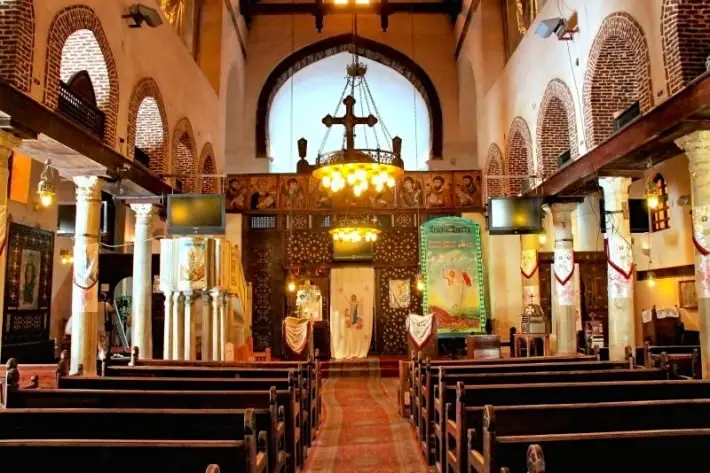
8. St. Barbara’s Church: A Monument to Unwavering Faith
Nestled in the eastern part of the Babylon Fortress complex, the Church of Saint Barbara stands as one of the most beautiful and largest Coptic churches in Old Cairo. Dedicated to the 3rd-century martyr Barbara of Nicomedia, this church is a stunning example of the classic basilican style that flourished in early Christian Egypt. Its interior is defined by a sense of verticality and grace, with rows of marble columns separating the nave from the side aisles and supporting a high, arched wooden roof. The church is famous for its exquisite icons and its rare collection of woodwork, particularly the intricate screens that separate the sanctuary from the congregation. These screens, inlaid with ivory and ebony in complex geometric patterns, showcase the incredible skill of Coptic artisans who were masters of their craft long before the medieval era. The church also houses the relics of Saint Barbara, making it a focal point for local devotion. Legend tells of Barbara’s secret conversion to Christianity and her subsequent persecution at the hands of her own father, a story that continues to inspire the faithful today. For the modern visitor, Saint Barbara’s offers a hallowed atmosphere of stillness and light. The way the sun filters through the high windows, illuminating the ancient stone floors, creates a serene environment for contemplation. It is a place where the history of martyrdom and the beauty of sacred art are inextricably linked, providing a window into the soul of the Coptic community. Exploring its quiet corners, you begin to appreciate the layers of history that have been preserved within these walls, making it an essential stop for anyone seeking the spiritual heart of Old Cairo.
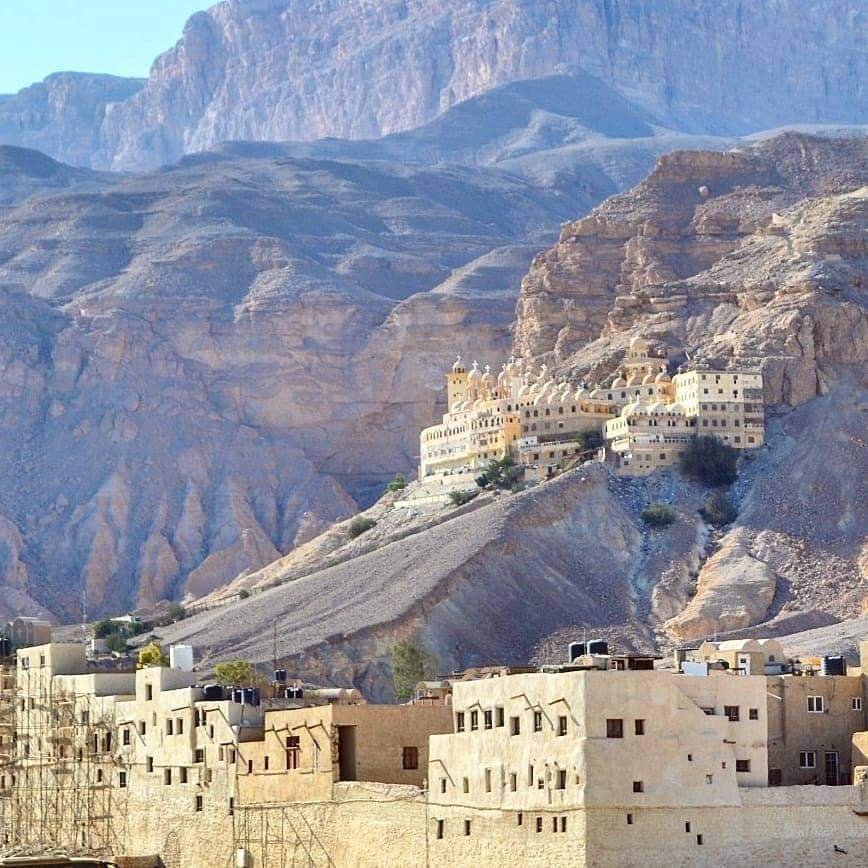
9. The Nunnery of St. George: A Sanctuary of Feminine Devotion
Amidst the grand cathedrals and historic fortresses of Old Cairo, the Nunnery of St. George offers a more intimate and quiet perspective on the district’s religious life. This peaceful enclave is home to a community of Coptic nuns who have dedicated their lives to prayer, service, and the preservation of ancient traditions. The nunnery is famous for housing the "Chain of St. George," a heavy iron relic believed to have been used to torture the saint during his martyrdom. Today, pilgrims visit the nunnery to wrap the chain around their bodies, seeking St. George’s intercession for healing and spiritual strength. The atmosphere within the nunnery is markedly different from the larger tourist sites; it is a place of profound silence, punctuated only by the soft murmur of prayers and the gentle rustle of the nuns' robes as they go about their daily tasks. The courtyard is filled with flowers and greenery, providing a rare green space within the dense stone environment of the old city. For the traveler, a visit to the Nunnery of St. George is a chance to witness the living monastic tradition of the Coptic Church. It highlights the significant role that women have played in the preservation of the faith throughout Egypt’s history. The simplicity and devotion found here offer a moving contrast to the imperial grandeur of the nearby Roman ruins. It is a place that invites you to slow down and connect with the human side of spirituality, offering a glimpse into a world of quiet conviction and enduring grace that has remained unchanged for centuries in the heart of this ancient city.
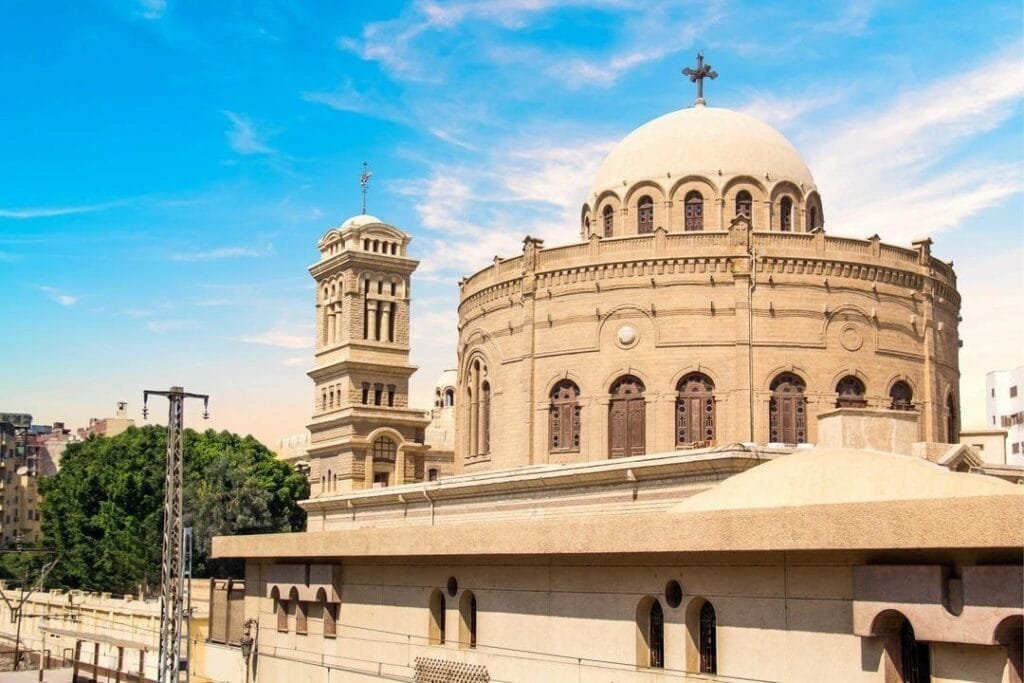
10. The Church of St. George: The Greek Orthodox Rotunda
Rising majestically above the northern Roman tower of the Babylon Fortress, the Church of St. George is a striking architectural anomaly that commands the skyline of Old Cairo. Unlike the traditional rectangular basilicas of the Coptic tradition, this church is the only round church in Egypt, built in a magnificent rotunda style that evokes the grand Byzantine churches of Constantinople. Its massive, soaring dome and twin towers serve as the spiritual seat of the Greek Orthodox Patriarchate of Alexandria, marking a distinct cultural and linguistic thread within the district's Christian tapestry. To enter the church, visitors must ascend a grand, sweeping staircase that leads to a monumental entrance adorned with a vivid relief of St. George slaying the dragon— a symbol of the triumph of faith over evil that resonates deeply with both locals and travelers. Inside, the circular nave creates a sense of infinite space, with light pouring in from the high windows to illuminate the gold-leafed icons and vibrant frescoes that cover every inch of the walls. The atmosphere is thick with the scent of Greek incense, and the sound of the liturgy in the ancient Greek language provides a hauntingly beautiful soundtrack to your exploration. For the traveler, St. George’s represents the diversity of Eastern Christianity and its deep roots in Egyptian soil. Whether you are admiring the intricate marble floors or descending into the smaller chapels housed within the Roman tower itself, the church offers a sensory experience that is both regal and deeply spiritual. It stands as a powerful sentinel of the Orthodox faith, bridging the gap between the Roman military past and the enduring religious vibrancy of modern Egypt.
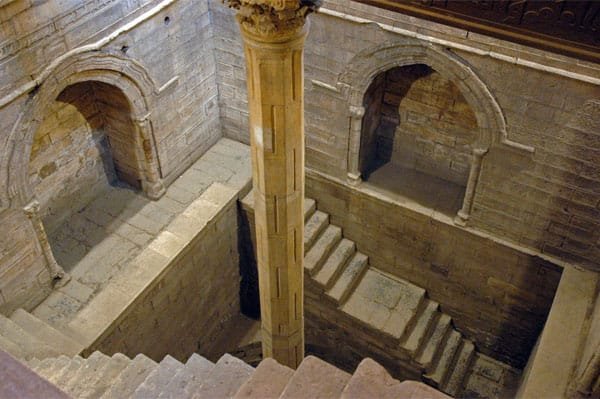
11. The Nilometer: Measuring the Lifeblood of Egypt
Just across the water from the main religious complex of Old Cairo lies the Nilometer on Rhoda Island, an extraordinary piece of civil engineering that for centuries determined the economic fate of the entire nation. Built in 861 AD by order of the Abbasid Caliph al-Mutawakkil, this elegant structure was designed to measure the rise and fall of the Nile River during its annual flood. For the people of Old Cairo, the Nilometer was much more than a scientific instrument; it was a divine oracle that predicted either prosperity or famine. If the water reached the "perfection" mark on the central marble column, the country celebrated; if it fell short, taxes were lowered in anticipation of a poor harvest. The architecture of the Nilometer is a masterpiece of early Islamic design, featuring a deep stone-lined well connected to the river by three tunnels at different levels. The interior walls are decorated with some of the earliest examples of Cufic inscriptions found in Egypt, which feature verses from the Quran relating to water and life. For the modern visitor, standing at the edge of the pit and looking down into the dark, cool depths is a humbling experience that highlights humanity’s ancient dependence on the natural world. The sophisticated geometry of the structure and its enduring accuracy are a testament to the scientific brilliance of the medieval Islamic era. Exploring the Nilometer allows you to connect with the primal heartbeat of Egypt— the Nile— and understand why the strategic location of Old Cairo was so vital to every ruler who sought to control this fertile land. It is a quiet, contemplative site that bridges the gap between science, religion, and the elemental forces of nature.
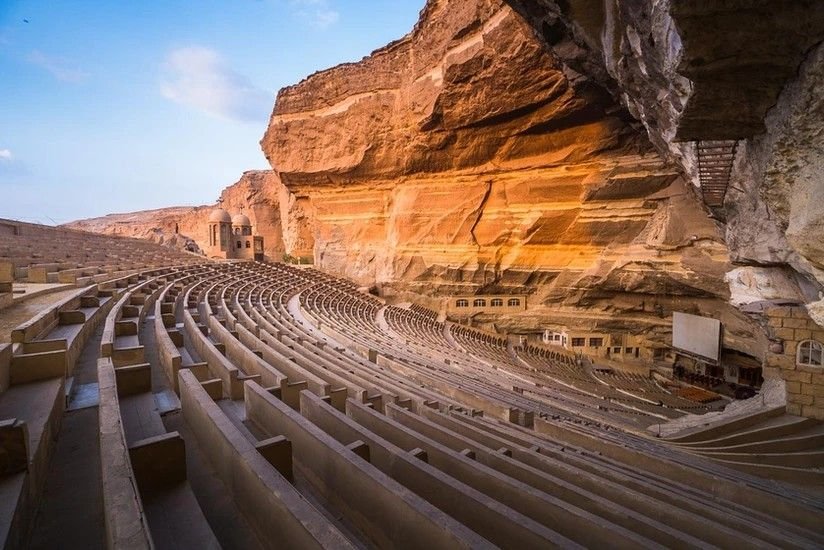
12. Monastic Traditions: The Living Heart of the Desert
While Old Cairo is famous for its monumental churches, it also serves as a vital urban hub for the Coptic monastic tradition, which is one of the oldest and most influential in the Christian world. Throughout the district, you will find small, tucked-away monasteries and convents where the spiritual practices of the early Desert Fathers are still meticulously observed. These institutions are not merely historical relics; they are vibrant centers of community life where monks and nuns dedicate themselves to a rhythm of prayer, manual labor, and the preservation of sacred manuscripts. For the traveler, catching a glimpse of this monastic life offers a profound insight into the resilience of the Coptic identity. You might see a monk in traditional black robes crossing a quiet courtyard or hear the rhythmic chanting of the "Midnight Praises" echoing from a hidden chapel. The monasteries often maintain workshops where they produce traditional incense, hand-painted icons, and embroidered liturgical vestments, keeping ancient crafts alive in the heart of the modern city. This monastic presence provides Old Cairo with an aura of "otherworldliness," a sense that despite the surrounding urban chaos, there is a core of stillness and devotion that remains unshaken. Exploring these traditions helps you understand that the beauty of the district is not just in its stones, but in the people who have carried the flame of faith through centuries of change. It is a living heritage that invites the visitor to move beyond the role of a tourist and become a witness to a spiritual endurance that is as old as the Nile itself. These quiet sanctuaries of devotion offer a rare opportunity to reflect on the values of simplicity, silence, and service that continue to define the Coptic soul today.

13. Navigating the Alleys: A Sensory Experience
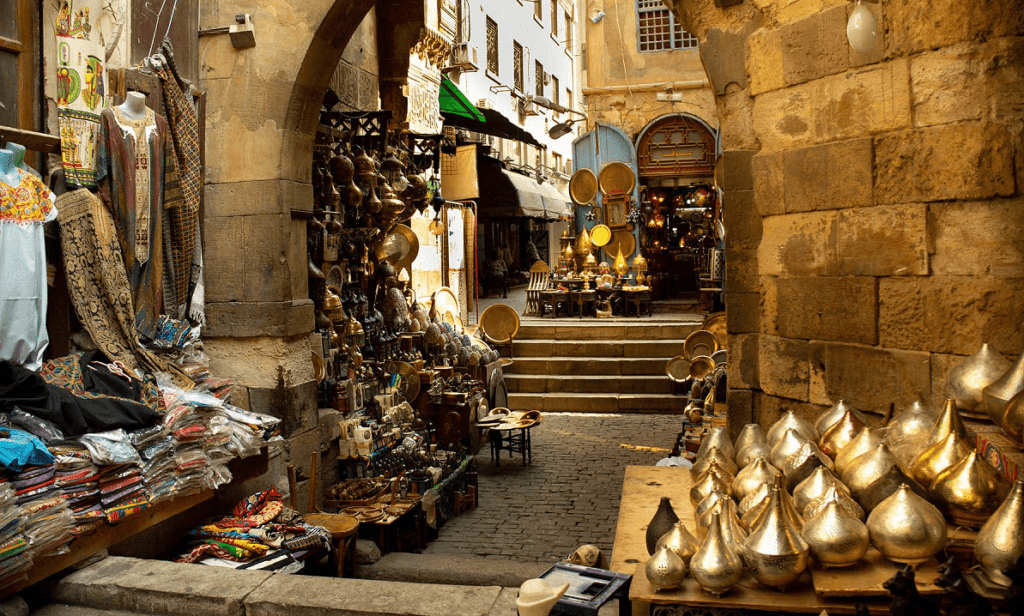
Beyond the monumental churches and the grand history of the fortresses, the true charm of Old Cairo lies in its narrow, winding, and sun-dappled cobblestone alleys. Stepping away from the main tourist plazas and into these ancient passages is a complete immersion into a sensory world that feels largely untouched by the modern era. Walking through these corridors, your nostrils are immediately greeted by the sweet, heavy scent of frankincense drifting from open church doors, mingling with the earthy aroma of damp stone and the occasional whiff of fresh bread from a nearby hidden bakery. The soundscape is equally captivating; the distant, rhythmic chanting of the Coptic liturgy, spoken in a language that sounds like the speech of the Pharaohs, bounces off the high limestone walls, while the soft cooing of pigeons nesting in the Roman ruins provides a peaceful backbeat. The walls themselves are a tactile history book, with uneven surfaces worn smooth by centuries of passing shoulders and hands seeking balance. You will find small, tucked-away shops selling handmade olive-wood crosses, intricate hand-painted icons, and vibrant woven textiles that reflect the artistic heritage of the people who live here. There is a specific kind of light in these alleys—a golden, filtered glow that shifts as the sun moves across the Egyptian sky, casting long shadows that dance over the ancient ground. For the traveler, this is where the "magic" of the district is truly found. It is an experience that grounds the grand historical narratives in a living, breathing reality, allowing you to feel the pulse of a community that has navigated these same paths for nearly two thousand years. It is a place to lose your sense of time and simply exist within the layers of history.
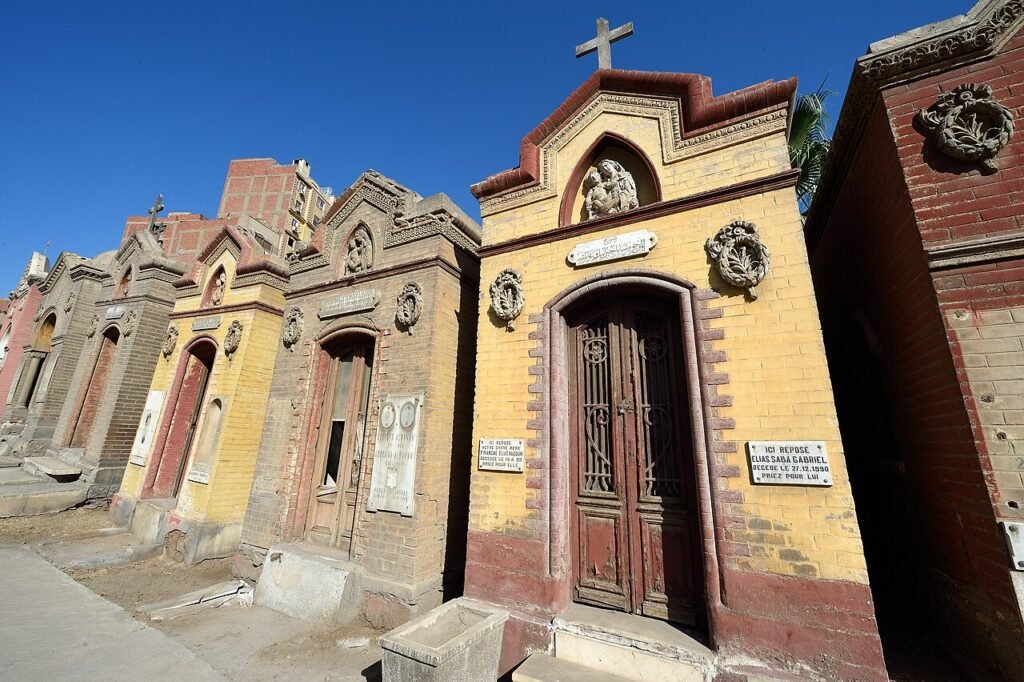
14. The Cemetery of Old Cairo: Resting Place of Generations
Adjacent to the historic churches and the Coptic Museum lies the sprawling and architecturally fascinating Coptic Cemetery. While cemeteries may seem like somber places to some, this site is actually a magnificent outdoor museum of mausoleums, vaults, and family chapels that tells the story of Cairo's Christian population over the centuries. It is an architectural marvel where death is treated with a grand, reverent beauty that mirrors the community's belief in eternal life. As you walk through the rows of tombs, you will see a stunning variety of styles, from simple stone markers to elaborate neo-Gothic and neo-Byzantine structures that look like miniature cathedrals. The cemetery serves as a physical record of the social and cultural history of the city, housing the remains of the elite, the intellectual, and the humble alike. Many of the inscriptions are carved in both Arabic and Coptic, providing a linguistic bridge that highlights the dual identity of the Egyptian people. The quietude here is profound, offering a sharp contrast to the chaotic traffic of the surrounding city. It is a place for reflection, where the names on the stones remind visitors of the families who have called this ancient land home for nearly two millennia. The cemetery is often shaded by old, gnarled trees that have watched over the dead for generations, adding a sense of natural peace to the man-made monuments. For the historian or the curious traveler, the cemetery offers a unique perspective on the Coptic identity, showcasing how they have honored their ancestors while looking toward the future. It is a site of deep dignity and historical importance, proving that even in silence, the stories of Old Cairo continue to resonate with power and grace.
15. Culinary Delights: Tastes of the Old Quarter
After hours of intensive exploration through the crypts, museums, and winding alleys of the district, the local cafes and small eateries near the entrance offer a perfect sanctuary for rest and a taste of authentic Egyptian hospitality. Eating in the shadow of the Roman walls provides a moment of reflection and a chance to fuel up on the traditional flavors that have sustained this city for centuries. You might find yourself seated on a wooden bench, sipping a steaming cup of sweet mint tea or a thick, aromatic Turkish coffee that wakes up the senses. The food here is simple, hearty, and deeply connected to the land. You can enjoy a bowl of Koshary, Egypt's national dish, which is a comforting mix of pasta, rice, lentils, and chickpeas topped with a spicy tomato sauce and crispy fried onions. Alternatively, you might try fresh Falafel (known as Ta'ameya in Egypt) served in warm, fluffy Aish Baladi bread, perhaps accompanied by creamy tahini and pickled vegetables that burst with flavor. These culinary experiences are more than just meals; they are an extension of the cultural journey. The vendors and cafe owners often have stories to share, having spent their lives in the shadow of the Hanging Church. There is a sense of communal warmth in these spaces, where tourists and locals sit side-by-side, sharing a meal in one of the most historic locations on earth. The simple joy of a well-prepared meal, combined with the view of ancient steeples and Roman towers, creates a memory that is as much about the spirit as it is about the palate. It is the perfect way to conclude a morning of discovery, allowing the flavors of Egypt to settle into your soul alongside the history you have just witnessed.
16. The Legacy of Fustat: Cairo’s First Capital
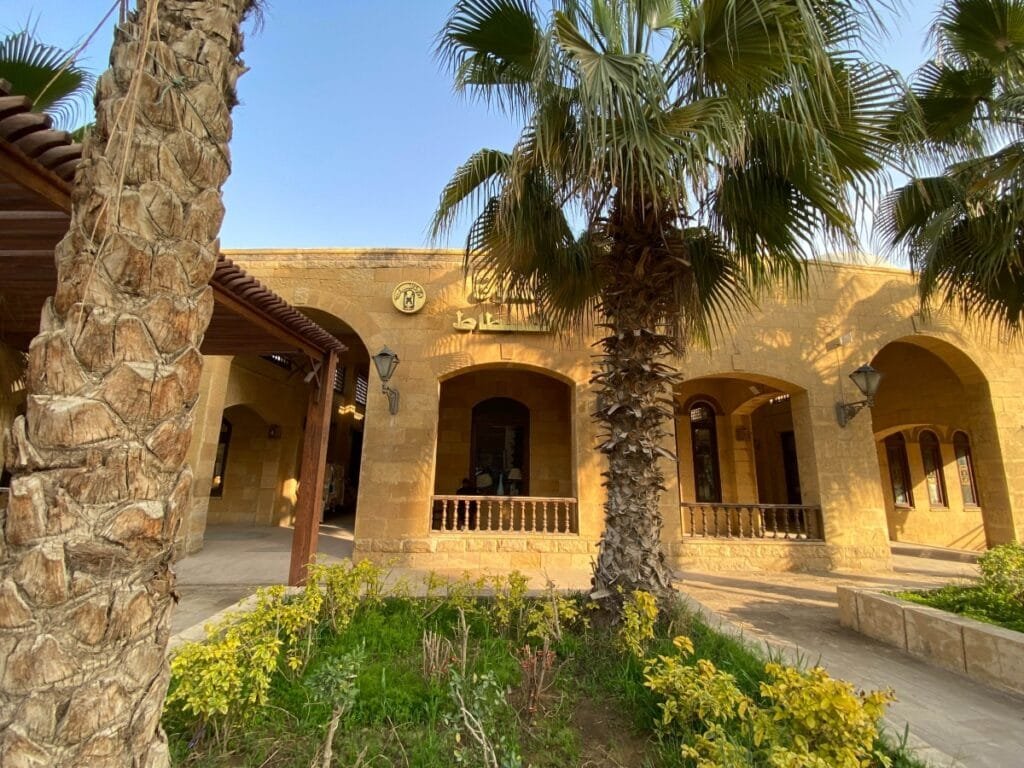
To truly appreciate Old Cairo, one must look beyond the visible stone walls and understand the invisible foundation of Fustat, the first Islamic capital of Egypt. Established in 641 AD, Fustat was a sprawling metropolis that once rivaled Baghdad and Constantinople in beauty and intellectual output. Although much of the original city now lies in ruins or remains buried beneath the modern district, its legacy is the reason Old Cairo exists in its current form. Fustat was a city of innovation, where the first advanced plumbing systems were developed and where scholars from across the Mediterranean gathered to exchange ideas. The strategic choice of this location—near the Roman fortress and the Nile—ensured that Egypt would transition from a province of empires to a central powerhouse of the medieval world. For the traveler, walking through the archaeological areas near the Mosque of Amr ibn al-As is a journey into the very birth of the Egyptian identity we know today. It was here that the Arabic language began to blend with Coptic traditions, creating a unique cultural synthesis. The pottery, glassware, and manuscripts unearthed from Fustat are now prized possessions of museums worldwide, showcasing a society that valued art and science as much as faith. Understanding Fustat allows you to see Old Cairo not just as a religious enclave, but as the experimental ground where a new civilization was forged. It is a reminder that cities are living organisms, growing and changing over time, yet always anchored by the stories of their founders. Standing on this historic soil, you are witnessing the beginning of Cairo’s long journey to becoming the "Mother of the World."
17. The Modern Coptic Community: A Living Heritage
It is essential for every visitor to recognize that Old Cairo is not a museum of the past, but a vibrant and pulsating center of modern religious life. Every Sunday, and during the numerous feast days that celebrate the saints and the Virgin Mary, the ancient churches are filled to capacity with a devoted Coptic community. To witness a liturgy at the Hanging Church or Abu Serga is to see a faith that has remained unbroken for nearly two thousand years. The air is filled with the sound of the Coptic language—the final evolutionary stage of the language of the Pharaohs—used in hymns that have been passed down through generations. The local residents, many of whom have lived in these narrow streets for their entire lives, act as the guardians of this sacred ground. You will see families visiting the shrines, children playing near the Roman towers, and elders sharing stories of the miracles they have witnessed within these walls. This living heritage provides a depth to your visit that architecture alone cannot offer. It shows the resilience of a people who have maintained their identity with grace, contributing to the rich mosaic of Egyptian society. The hospitality of the community is legendary; a simple "Welcome to Egypt" from a local shopkeeper carries the weight of a tradition that dates back to the Holy Family’s arrival. By engaging with the modern life of Old Cairo, you are not just a tourist observing history, but a guest in a home that has been open for two millennia. This human connection is the heartbeat of the district, ensuring that the spirit of the past continues to flourish in the hearts of the living.
18. Planning Your Journey: Tips for the Soulful Traveler
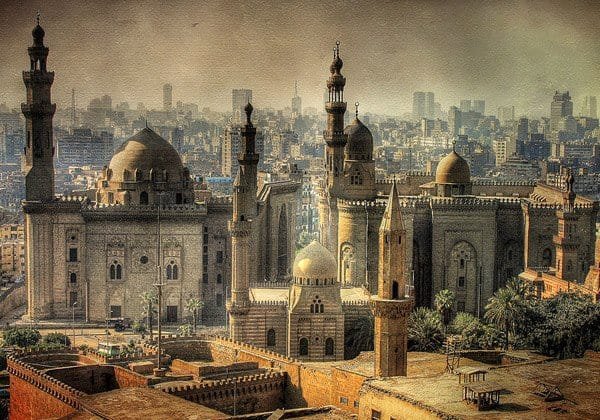
As you prepare to depart from the timeless sanctuary of Old Cairo, a few practical considerations will ensure that your memories of this sacred place remain as vivid and peaceful as the district itself. To experience the area at its most tranquil, it is highly recommended to arrive early in the morning, just as the sun begins to illuminate the golden limestone of the churches. Dressing modestly is a sign of respect that is deeply appreciated by the local community and is required for entry into most religious sites. While many of the landmarks are free to enter, carrying small change for donations helps support the ongoing preservation of these ancient structures. The district is best explored on foot, so comfortable walking shoes are a must for navigating the uneven, historic paths. Beyond the physical preparations, the most important advice for any traveler is to allow yourself the luxury of time. Do not rush from one church to the next; instead, sit in a pew, listen to the distant echoes of prayer, and let the historical weight of the Babylon Fortress sink in. Old Cairo is a place that rewards the patient observer with hidden details—a faint fresco, a carved wooden bird, or a Roman inscription tucked into a corner. As you leave and head back toward the bustling skyscrapers of modern Cairo, take a piece of the district's stillness with you. The journey through Old Cairo is more than a sightseeing tour; it is a pilgrimage into the heart of human faith and architectural brilliance. Whether you came seeking history, spirituality, or art, you leave with a sense of the eternal, having walked the same paths as prophets, saints, and caliphs in this truly immortal city.