- Excursions in Egypt
- Egypt Tour Packages
- Cairo Tours and Excursions
- Hurghada Tours and Excursions
- Soma Bay Tours and Excursions
- Makadi Bay Tours and Excursions
- Sahl Hasheesh Tours and Excursions
- El Gouna Tours and Excursions
- Marsa Alam Tours and Excursions
- Port Ghalib Tours and Excursions
- El Quseir Tours and Excursions
- Dendera and Abydos Day Tours
- Aswan Tours and Excursions
- Luxor Tours and Excursions
- Alexandria Egypt Tours and Excursions
- Sharm El Sheikh Tours and Excursions
- Top Rated Egypt Tours in 2026
- Optional Excursions in Egypt
- Private Transfer
- Blogs About egypt
- Ancient Egypt
- Why Egypt Is One of the Safest Countries to Visit in the Middle East
- What You Need To know Before Your First Trip To Egypt
- Egypt Travel Costs in 2026 Full Budget Guide
- Top 10 Tourist Activities in Egypt
- Top 50 Activities You Can’t Miss in Egypt in 2026
- The Guide to Guided Tours in Egypt
- Egypt’s Ancient and Modern History
- The Nile River
- The Deserts of Egypt
- Historical Sites in Egypt
- Cairo
- Alexandria
- Luxor
- Aswan
- The Red Sea
- Dendera Temple
- El Fayoum Oasis
- Bahariya Oasis
- Siwa Oasis
- Al Alamein
- Marsa Matruh
- Ancient Egyptian gods
- famous Egyptian dishes
- UNESCO World Heritage sites
- About Us
- Egypt Hotels and Resorts
- Excursions in Egypt
- Egypt Tour Packages
- Cairo Tours and Excursions
- Hurghada Tours and Excursions
- Soma Bay Tours and Excursions
- Makadi Bay Tours and Excursions
- Sahl Hasheesh Tours and Excursions
- El Gouna Tours and Excursions
- Marsa Alam Tours and Excursions
- Port Ghalib Tours and Excursions
- El Quseir Tours and Excursions
- Dendera and Abydos Day Tours
- Aswan Tours and Excursions
- Luxor Tours and Excursions
- Alexandria Egypt Tours and Excursions
- Sharm El Sheikh Tours and Excursions
- Top Rated Egypt Tours in 2026
- Optional Excursions in Egypt
- Private Transfer
- Blogs About egypt
- Ancient Egypt
- Why Egypt Is One of the Safest Countries to Visit in the Middle East
- What You Need To know Before Your First Trip To Egypt
- Egypt Travel Costs in 2026 Full Budget Guide
- Top 10 Tourist Activities in Egypt
- Top 50 Activities You Can’t Miss in Egypt in 2026
- The Guide to Guided Tours in Egypt
- Egypt’s Ancient and Modern History
- The Nile River
- The Deserts of Egypt
- Historical Sites in Egypt
- Cairo
- Alexandria
- Luxor
- Aswan
- The Red Sea
- Dendera Temple
- El Fayoum Oasis
- Bahariya Oasis
- Siwa Oasis
- Al Alamein
- Marsa Matruh
- Ancient Egyptian gods
- famous Egyptian dishes
- UNESCO World Heritage sites
- About Us
- Egypt Hotels and Resorts
Welcome to
Serapeum Tombs: The Sacred Burial of the Apis Bulls
Hidden beneath the desert sands of Saqqara lies one of the most mysterious and fascinating archaeological sites in ancient Egypt—the Serapeum of Saqqara. This vast underground complex was not built for kings or queens, but for the sacred Apis bulls, animals that were worshipped as living manifestations of divine power. For the ancient Egyptians, these bulls were not ordinary creatures; they were considered earthly embodiments of the god Ptah and later associated with Osiris, symbolizing strength, fertility, and renewal.
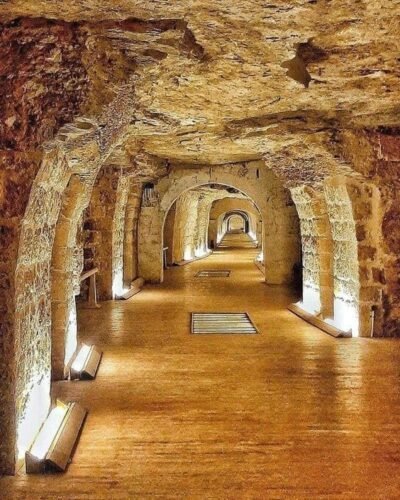
The Serapeum consists of long underground tunnels carved deep into the bedrock, lined with massive granite sarcophagi, some weighing over seventy tons. These enormous stone coffins once held the mummified remains of the Apis bulls, each carefully prepared through elaborate rituals similar to those used for human burials. The scale and precision of these structures continue to amaze archaeologists and visitors alike, raising questions about the engineering skills of ancient Egyptian builders.
Discovered in the 19th century by the French archaeologist Auguste Mariette, the Serapeum opened a new chapter in the understanding of ancient Egyptian religion and funerary practices. Today, it remains one of the most intriguing sites in Egypt, offering visitors a rare opportunity to explore a hidden world beneath the surface and uncover the spiritual beliefs that shaped one of the greatest civilizations in history.
1. The Origins of the Serapeum: Worship of the Sacred Apis Bull
The Serapeum of Saqqara was established as a sacred burial site dedicated to the Apis bulls, one of the most revered symbols in ancient Egyptian religion. These bulls were believed to be living manifestations of the god Ptah, representing strength, fertility, and divine presence within the physical world of Ancient Egypt. Their worship formed a unique connection between the spiritual and natural realms. The selection of an Apis bull followed strict religious criteria, as priests searched for specific markings that identified the animal as divine. Once chosen, the bull was placed in a temple, where it lived under careful supervision and was treated with honor and respect. Worshippers visited the temple to seek blessings and guidance, believing the bull acted as a mediator between humans and the gods. Upon the death of an Apis bull, a period of mourning spread across the land, followed by an elaborate mummification process similar to that used for kings. The body was carefully preserved, wrapped in fine linen, and prepared for burial through sacred rituals. This process reflected the high status of the bull and its importance within Egyptian belief systems. The development of the Serapeum allowed these sacred animals to be buried in a dedicated and monumental setting. Over time, the site became a place of pilgrimage and spiritual significance, attracting visitors who came to honor the divine connection between the Apis bulls and the gods. Today, it remains a remarkable example of ancient Egyptian religious traditions.
2. The Underground Complex: Engineering and Design
The Serapeum of Saqqara is one of the most impressive underground structures in Ancient Egypt, showcasing advanced engineering and architectural skill. Carved deep into the limestone bedrock, the complex consists of long tunnels and chambers designed to house the massive sarcophagi of the Apis bulls. These underground corridors create a mysterious and powerful atmosphere that continues to fascinate visitors and researchers alike. The layout of the Serapeum is both functional and symbolic. The main corridor extends for hundreds of meters, with side chambers branching off to hold individual burials. Each chamber contains a large stone sarcophagus, carefully placed to protect the remains of the sacred bulls. The organization of the space reflects careful planning and an understanding of both structural stability and religious purpose. One of the most remarkable features of the site is the precision with which it was constructed. The walls and ceilings of the tunnels were carved with accuracy, creating smooth surfaces that have endured for thousands of years. This level of craftsmanship demonstrates the advanced knowledge and technical ability of ancient Egyptian builders. The underground nature of the Serapeum also adds to its significance. It represents a hidden world beneath the surface, where sacred rituals and burials took place away from public view. Today, exploring these tunnels offers a unique experience, allowing visitors to step into a space that combines engineering excellence with deep spiritual meaning.
3. The Giant Sarcophagi: Mystery and Mastery of Stone
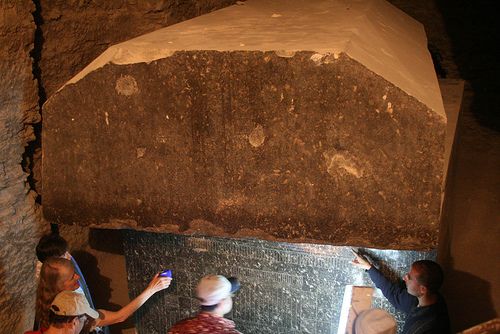
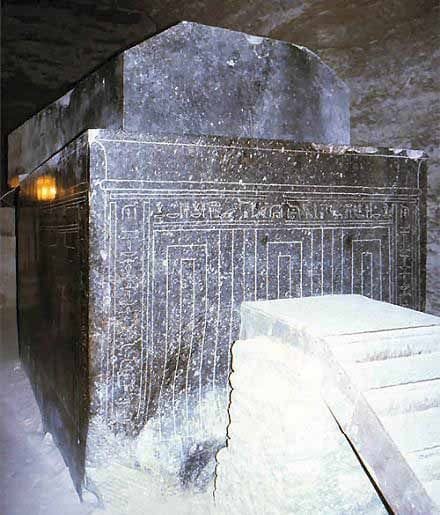
One of the most striking features of the Serapeum of Saqqara is the presence of enormous granite sarcophagi, which stand as powerful examples of ancient Egyptian craftsmanship. These massive stone coffins, some weighing over seventy tons, were used to house the mummified remains of the Apis bulls. Their size and precision continue to raise questions about the methods used to create and transport them. Each sarcophagus was carved from a single block of granite, requiring immense effort and skill. The surfaces are smooth and precisely shaped, with tight fitting lids that demonstrate an advanced understanding of stonework. The scale of these structures suggests that they were not only functional but also symbolic, reflecting the importance of the sacred bulls. Transporting these heavy stones into the underground chambers would have required careful planning and coordination. Although the exact techniques remain a subject of debate, it is clear that the builders possessed significant knowledge of engineering and logistics. This achievement highlights the capabilities of ancient Egyptian civilization. The presence of these sarcophagi adds an element of mystery to the Serapeum. Visitors often find themselves in awe of their size and craftsmanship, wondering how such structures were created with the tools available at the time. Today, they remain one of the most fascinating aspects of the site, representing both technological mastery and religious devotion.
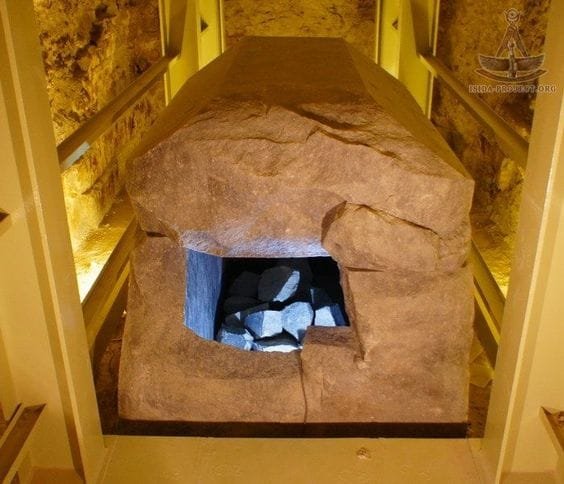
4. Discovery of the Serapeum: Auguste Mariette’s Great Find
The Serapeum of Saqqara remained hidden beneath the sands of Saqqara for many centuries until its dramatic rediscovery in 1850 by the French Egyptologist Auguste Mariette. At that time, knowledge about the burial of sacred animals in ancient Egypt was limited, making this discovery an important milestone in the study of ancient religion and funerary traditions across the region. Mariette’s work began with a simple observation. While exploring Saqqara, he noticed a partially buried avenue lined with sphinx statues. This unusual arrangement suggested the presence of a significant structure beneath the surface. Following this path, he initiated careful excavations that eventually revealed the entrance to a vast underground complex hidden for thousands of years beneath the desert landscape. As excavation continued, Mariette uncovered long corridors carved into the bedrock, leading to chambers containing massive granite sarcophagi. Many of these coffins were still intact, providing valuable evidence about the burial practices of the sacred Apis bulls. The scale of the site and the precision of its construction astonished researchers and offered new insights into ancient Egyptian engineering and religious beliefs. The discovery of the Serapeum transformed Saqqara into a major archaeological destination and expanded global understanding of ancient Egyptian culture. Today, visitors walking through these tunnels are directly connected to Mariette’s remarkable achievement, experiencing the same sense of wonder that accompanied the uncovering of this hidden and extraordinary world beneath the Egyptian desert.
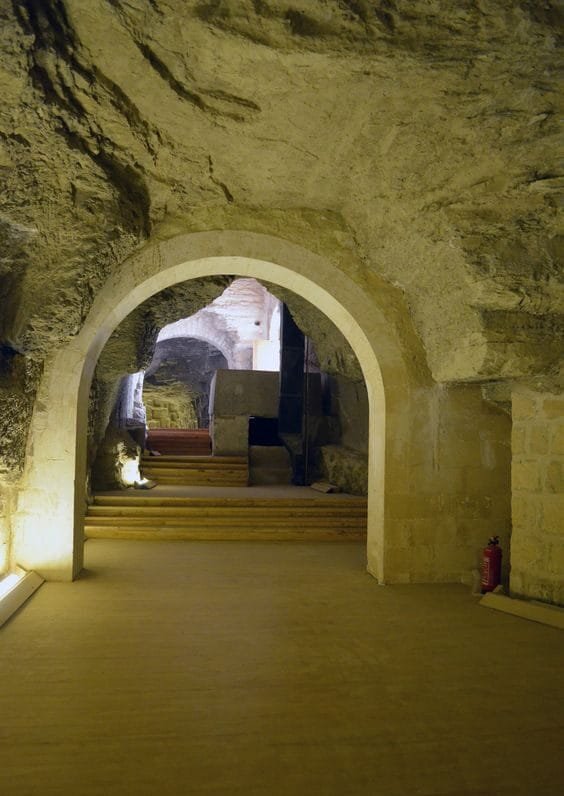
5. Religious Significance: Life, Death, and Rebirth
The Serapeum of Saqqara holds deep religious significance, reflecting ancient Egyptian beliefs about life, death, and rebirth. The Apis bulls buried within the complex were not only sacred during their lives but also played an important role in the afterlife. They were associated with the god Ptah and later connected to Osiris, the god of the underworld, symbolizing regeneration and eternal life. The burial process of each Apis bull followed elaborate rituals designed to ensure a successful transition into the afterlife. Priests performed ceremonies that included mummification, prayers, and offerings, treating the bulls with the same reverence given to royal figures. This process reflected the belief that the bulls continued to exist in a spiritual form. The Serapeum itself was designed to support these beliefs. Its underground location symbolized the realm of the dead, while the massive sarcophagi represented protection and permanence. Each chamber served as a sacred space where the divine presence of the bull could continue beyond death. Pilgrims and worshippers visited the site to honor the sacred bulls and seek blessings. The Serapeum became a place of spiritual connection, where the boundaries between the human and divine worlds were believed to be closer. Today, it remains a powerful example of how religion shaped the architecture and practices of ancient Egypt.
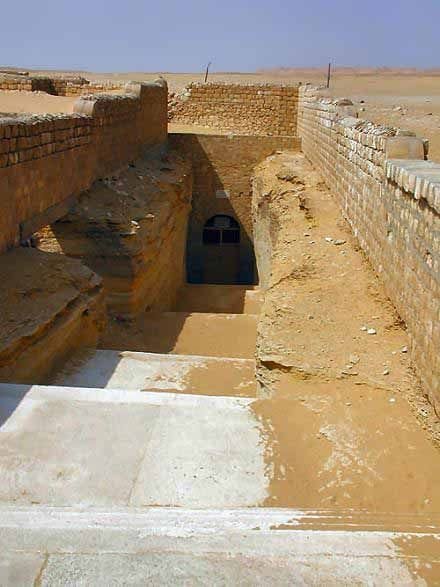
6. The Serapeum Experience: Exploring a Hidden World
Visiting the Serapeum of Saqqara offers a unique and unforgettable experience, allowing visitors to explore a hidden world beneath the surface of Saqqara. As one descends into the underground tunnels, the atmosphere changes dramatically, creating a sense of mystery and anticipation. The quiet surroundings and dim lighting enhance the feeling of stepping back in time. The long corridors of the Serapeum lead visitors through a series of chambers, each containing massive granite sarcophagi. The sheer size of these structures creates a powerful impression, highlighting the scale of ancient Egyptian engineering. Walking through these tunnels allows visitors to connect directly with the past in a way that few other sites can offer. The experience is not only visual but also emotional. The underground setting and the knowledge of the site’s purpose create a sense of awe and respect. Visitors often find themselves reflecting on the beliefs and traditions that led to the creation of such a remarkable place. Today, the Serapeum is considered one of the most intriguing attractions in Egypt. Its combination of history, mystery, and architectural achievement makes it a must visit destination for those interested in ancient civilizations. Exploring this hidden world leaves a lasting impression, offering insight into a unique aspect of Egyptian culture and belief.
7. Symbolism of the Apis Bull: Power and Divine Connection
The Serapeum of Saqqara is closely connected to the powerful symbolism of the Apis bull, one of the most important sacred animals in Ancient Egypt. The Apis bull was believed to be a living manifestation of the god Ptah, representing strength, fertility, and divine authority. This belief gave the animal a unique role in Egyptian religion. The presence of the Apis bull in religious life created a direct link between the physical world and the divine realm. Worshippers viewed the bull as a mediator who could communicate with the gods, offering guidance and blessings. This connection made the bull a central figure in religious ceremonies and public devotion. After death, the Apis bull was associated with Osiris, the god of the afterlife. This transformation symbolized rebirth and eternal life, reinforcing key beliefs about the cycle of existence. The burial of the bulls within the Serapeum reflected these ideas, creating a sacred space where the divine presence continued beyond death. The symbolism of the Apis bull highlights the depth of Egyptian religious thought. It shows how animals were integrated into spiritual beliefs and treated with reverence. Today, this symbolism continues to fascinate visitors, offering insight into the values and worldview of ancient Egyptian civilization.
8. Construction Techniques: Mystery of Moving Massive Stones
The Serapeum of Saqqara remains a remarkable example of engineering achievement in Ancient Egypt, particularly in the construction and placement of its massive granite sarcophagi. These structures, some weighing over seventy tons, continue to raise questions about how they were transported and installed within the underground chambers. Ancient builders likely used a combination of ramps, rollers, and manpower to move these heavy stones across the desert and into the tunnels. Although no written records fully explain the process, archaeological evidence suggests that careful planning and coordination were essential to achieve such results. The precision with which the sarcophagi were carved also demonstrates advanced knowledge of stoneworking. Smooth surfaces, sharp edges, and perfectly fitted lids indicate a high level of craftsmanship. This level of detail required both skill and patience, reflecting the importance of the burial process. The mystery surrounding these construction techniques continues to inspire research and debate. Visitors to the Serapeum often marvel at the scale of these achievements, recognizing them as a testament to the ingenuity of ancient Egyptian builders and their ability to accomplish complex tasks.
9. The Serapeum Today: A Journey into Ancient Mystery
Today, the Serapeum of Saqqara stands as one of the most intriguing archaeological sites in Saqqara, offering visitors a unique journey into the hidden world of ancient Egypt. Unlike open temples and monuments, the Serapeum provides an underground experience that is both mysterious and immersive. Walking through the tunnels, visitors encounter massive chambers and stone sarcophagi that create a powerful visual impact. The quiet atmosphere and dim lighting add to the sense of exploration, making the visit feel like a discovery rather than a simple tour. The site continues to attract historians, archaeologists, and travelers who are interested in understanding ancient Egyptian beliefs and engineering techniques. Each visit offers an opportunity to learn about a different aspect of this complex civilization. Today, the Serapeum is not only a historical site but also a place of fascination and inspiration. Its combination of mystery, history, and architectural achievement makes it a must visit destination, leaving visitors with a deeper appreciation for the ingenuity and spirituality of ancient Egypt.
10. Rituals and Ceremonies: Honoring the Sacred Bulls
The Serapeum of Saqqara was not only a burial site but also a center of elaborate rituals and ceremonies dedicated to the sacred Apis bulls. These ceremonies reflected the deep religious beliefs of Ancient Egypt, where the bull was considered a living representation of divine power. Every stage of the bull’s life and death was marked by carefully organized rituals that reinforced its sacred status. When an Apis bull died, a period of national mourning was observed. Priests and worshippers participated in ceremonies that honored the animal’s divine role, treating it with the same respect given to royalty. The mummification process was carried out with precision, involving purification, wrapping, and the use of sacred oils and materials. The burial itself was a significant event, accompanied by prayers, offerings, and processions. The bull was placed inside a massive sarcophagus within the Serapeum, symbolizing protection and eternal preservation. These rituals were believed to ensure the continuation of the bull’s spiritual existence in the afterlife. The ceremonies associated with the Serapeum highlight the importance of religious practice in ancient Egyptian society. They demonstrate how belief systems influenced daily life and cultural traditions. Today, the remains of these rituals provide valuable insight into the spiritual world of ancient Egypt and its complex relationship with the divine.
11. Archaeological Importance: Insights into Ancient Beliefs
The Serapeum of Saqqara holds great archaeological importance, offering valuable insights into the religious beliefs and practices of Ancient Egypt. The site provides physical evidence of how sacred animals were integrated into spiritual traditions, revealing a unique aspect of Egyptian culture that differs from many other ancient civilizations. The discovery of the Serapeum helped researchers understand the role of the Apis bull in religious life. Inscriptions, artifacts, and burial structures found within the site have provided information about rituals, beliefs, and the connection between humans and the divine. These findings have expanded knowledge of ancient Egyptian theology. The structure of the site itself also offers important information about engineering and construction techniques. The design of the tunnels and chambers demonstrates advanced planning and an understanding of structural stability. This combination of religious and technical knowledge makes the Serapeum a valuable subject of study. Today, the Serapeum continues to be an important location for archaeological research. Ongoing studies aim to uncover more details about its history and significance. For visitors, the site offers an opportunity to explore a place where history, science, and spirituality come together, providing a deeper understanding of ancient Egyptian civilization.
12. Visiting the Serapeum: A Unique Historical Experience
Visiting the Serapeum of Saqqara offers a unique opportunity to explore one of the most mysterious sites in Saqqara. Unlike many ancient Egyptian monuments that are open and exposed, the Serapeum provides an underground experience that immerses visitors in a hidden world of history and discovery. As visitors descend into the tunnels, they encounter a series of chambers containing massive granite sarcophagi. The scale of these structures creates a powerful impression, highlighting the achievements of ancient Egyptian builders. The quiet environment and dim lighting add to the sense of mystery. Exploring the Serapeum allows visitors to connect directly with the past. Walking through the same corridors used thousands of years ago creates a strong sense of continuity and historical awareness. Each chamber tells a story of religious belief and cultural practice. Today, the Serapeum is considered a must visit destination for those interested in ancient Egypt. Its combination of history, architecture, and mystery makes it a memorable experience. Visitors leave with a deeper appreciation for the complexity and richness of Egyptian civilization and its enduring legacy.
13. Historical Evolution: Expansion Through the Dynasties
The Serapeum of Saqqara did not emerge as a single construction project but developed gradually over several dynasties, reflecting the continuity of religious traditions in Ancient Egypt. Early burials of the Apis bulls were relatively simple, but as their religious importance grew, the need for a more monumental and organized burial space became evident. During the New Kingdom, particularly under the reign of Ramesses II, the Serapeum underwent significant expansion. New tunnels were carved into the bedrock, and larger chambers were constructed to accommodate increasingly massive sarcophagi. This period marked a turning point in the development of the site, transforming it into a complex and highly structured burial system. Later periods continued to contribute to the expansion of the Serapeum, adding new corridors and refining existing structures. Each phase of construction reflected changes in religious practices and architectural techniques, creating a layered historical record within the site. The gradual evolution of the Serapeum highlights the enduring significance of the Apis cult and its role in Egyptian society. Today, this development can still be observed through the different sections of the complex, offering visitors a unique opportunity to trace the history of religious architecture across centuries.
14. The Serapeum in Modern Research: Ongoing Discoveries
The Serapeum of Saqqara continues to play a vital role in modern archaeological research, providing new insights into Ancient Egypt. Despite being discovered in the nineteenth century, the site still holds many unanswered questions that attract researchers from around the world. Recent studies have focused on understanding the construction techniques used to create the massive sarcophagi and underground tunnels. Advanced technology, including scanning and analysis methods, has allowed researchers to examine the site in greater detail without causing damage to its structure. The Serapeum has also contributed to a deeper understanding of religious practices in ancient Egypt. Inscriptions and artifacts found within the tunnels continue to provide valuable information about the rituals associated with the Apis bulls and their role in society. Ongoing research ensures that the Serapeum remains an active site of discovery rather than a closed chapter of history. Each new finding adds to the knowledge of ancient Egyptian civilization, helping scholars piece together a more complete picture of its beliefs and achievements.
15. Preserving the Serapeum: Protecting a Hidden Treasure
The Serapeum of Saqqara is a unique and fragile historical site that requires careful preservation to protect its structure and significance. Located beneath the surface of Saqqara, the Serapeum faces challenges related to environmental conditions, human activity, and the passage of time. Conservation efforts focus on maintaining the stability of the tunnels and protecting the massive sarcophagi from damage. Specialists work to control humidity, reinforce structural elements, and ensure that the site remains safe for visitors while preserving its authenticity. Public awareness also plays an important role in preservation. Educating visitors about the importance of the site encourages responsible behavior and helps reduce the risk of damage. Guided tours and informational materials provide context and promote respect for this ancient monument. Preserving the Serapeum is essential for future generations. It represents a unique aspect of Egyptian history and offers valuable insights into ancient beliefs and engineering. By protecting this hidden treasure, Egypt ensures that the Serapeum will continue to inspire curiosity and admiration for years to come.
16. The Serapeum and Tourism: A Unique Destination in Egypt
The Serapeum of Saqqara has become an increasingly popular destination for travelers seeking a deeper understanding of Ancient Egypt beyond the more famous monuments. Located within the historic necropolis of Saqqara, the site offers a distinctive experience that sets it apart from traditional temple visits and pyramid tours. Tourists are drawn to the Serapeum because of its mysterious underground setting and the impressive scale of its construction. Walking through the tunnels provides a sense of exploration and discovery that is rarely found at other archaeological sites. The massive granite sarcophagi leave a lasting impression, showcasing the remarkable engineering skills of ancient Egyptian builders. The site also plays an important role in diversifying Egypt’s tourism landscape. While many visitors focus on iconic locations such as the pyramids, the Serapeum offers a more specialized and immersive experience. This helps distribute tourism across different sites, supporting broader cultural appreciation. Guided tours enhance the visit by providing historical context and detailed explanations of the site’s significance. Visitors gain insight into religious practices, construction techniques, and the cultural importance of the Apis bulls. Today, the Serapeum stands as a must visit destination for those who seek a deeper and more unique connection with Egypt’s ancient past.
17. The Mystery and Legacy of the Serapeum
The Serapeum of Saqqara continues to captivate visitors and researchers with its enduring mystery and historical significance. Despite extensive study, many questions remain about how the site was constructed and how the massive sarcophagi were transported into the underground chambers. These unanswered questions add to the fascination of the site. The legacy of the Serapeum lies not only in its physical structure but also in the beliefs it represents. The worship of the Apis bulls and their connection to the gods highlight a unique aspect of ancient Egyptian religion. This tradition reflects a worldview in which the divine was present in both human and animal forms. The site also serves as a reminder of the advanced knowledge possessed by ancient Egyptian builders. Their ability to create such a complex and precise structure demonstrates a high level of skill and organization. This achievement continues to inspire admiration and curiosity. Today, the Serapeum stands as a symbol of both mystery and discovery. It invites visitors to explore its tunnels and reflect on the knowledge and beliefs of an ancient civilization. Its legacy continues to grow as new research and exploration reveal more about this remarkable site.
18. Conclusion: The Timeless Significance of the Serapeum of Saqqara
The Serapeum of Saqqara remains one of the most extraordinary and mysterious archaeological sites in Saqqara, offering a unique perspective on the spiritual and technological achievements of Ancient Egypt. From its origins as a sacred burial place for the Apis bulls to its rediscovery in the modern era, the Serapeum has played an important role in expanding our understanding of ancient Egyptian culture. Its underground tunnels, massive sarcophagi, and complex design reflect both religious devotion and engineering excellence. These elements combine to create a site that is as intellectually fascinating as it is visually impressive. Visitors who explore the Serapeum gain insight into a world where belief, art, and technology were deeply interconnected. The significance of the Serapeum extends beyond its historical context. It continues to inspire curiosity, research, and admiration, serving as a bridge between the past and the present. Its preservation ensures that future generations will have the opportunity to explore and learn from this remarkable site. In conclusion, the Serapeum of Saqqara is more than just an archaeological monument. It is a symbol of human creativity, spiritual belief, and the enduring legacy of one of the world’s greatest civilizations. Its story continues to unfold, inviting all who visit to become part of its ongoing journey through history.